All posts by Amy Tuteur, MD

I am so not judging you

How many times have we heard this? A lactivist, birth activist, attachment parenting proponent who insists:

Honestly, I don’t understand why other mothers think that I am judging them. If they want to raise their children by doing whatever is easiest for them instead of what’s best for their babies, that’s their decision and I don’t question it. I understand that some women love their jobs more than their children, and, after all, who wouldn’t if she had some fancy-pants career where she made tons of money. It probably makes more sense to her to put money ahead of her children’s well being.

Take my next door neighbor, for example. She makes oodles of money practicing law and leaves her baby each and every day in the care of strangers. I am impressed that her baby welcomes her home by reaching out to her, smiling and giggling. Fortunately, nature designed babies to recognize their mothers, no matter how little time those mothers spend caring for their children.

I’ll admit that I finder it harder to understand how women who aren’t even working give up on breastfeeding so easily, or refuse to allow their children to sleep in the family bed. What’s so valuable about their time or convenience anyway? But I keep my opinion to myself. I don’t let on that I am perfectly aware that there is no such thing as a breastfeeding difficulty that can’t be overcome with enough love and dedication. When other women claim they had a low milk supply or that breastfeeding was excruciatingly painful, I merely feel sad that they never had the unique opportunity to bond with their children that only breastfeeding offers.

And when it comes to childbirth, how can I possibly judge other women who haven’t taken the time to educate themselves the way that I have? I’ve read Henci Goer’s book three times, and Ina May Gaskin is my idol. Everyone knows that the first step to becoming educated on a topic is to join an internet message board. If I hadn’t joined the message boards at Mothering.com, I probably wouldn’t have known that birth is inherently safe and that all that stuff about “risk” was made up by doctors trying to steal business from midwives.

The uneducated women who don’t understand this can’t be blamed for acting like birth is some sort of disease and needs to take place in a hospital. Of course they give in and get an epidural at the drop of a hat because they don’t realize that there’s a difference between good pain and bad pain. And they don’t even understand the real risks of epidurals.

Oh, and don’t accuse me of looking down on women who’ve had C-sections. Sure, they didn’t actually give birth, and they have missed out on the peak experience of a woman’s life, but is that their fault? I know that almost all C-sections are unnecessary, but those poor women actually think that the C-section “saved” their baby’s life.

I don’t judge them, but I do think that I have a responsibility to open their eyes to the ways in which they have been misled. It would be wrong for me to refrain from enlightening them merely because it might hurt their feelings. Women need to understand that anyone who thinks her C-section was “medically necessary” is being duped by those who seek to medicalize childbirth for their own benefit.

Many women don’t realize it, but if they had more encouragement, they’d happily do what’s best for their babies. That’s why I tell my birth story to everyone, whether they want to hear it or not. It may seem unbelievable, but it’s often the very first time they’ve heard that they could have been empowered like me if only they’d made the same decisions I made.

And let’s face it, women don’t get enough encouragement to breastfeed. Some women actually think that a baby who is fed artificial milk (formula) can be as healthy as a baby fed with breast milk as nature intended. I consider it my duty to broadcast the dangers of formula feeding far and wide. It’s unfortunate that we have to scare mothers into doing what’s best by exaggerating the benefits of breastfeeding, but everyone knows that the ends justify the means.

Please do not accuse me of judging those other mothers who don’t love their children as much as I love mine. I’m well aware that different ways of mothering are right for different families. Of course women who are obsessed with their own convenience find that bottle feeding is right for them and their families. Obviously women who have been duped by doctors into fearing birth are going find that hospital birth is right for them. And inevitably those who aren’t really attached to their children are not going to be comfortable with attachment parenting.

I just want to be clear:

To those women who haven’t really given birth because they’ve had a C-section, to those women who gave in to the pain and got an epidural, to anyone who doesn’t understand that only breastfed babies are truly bonded to their mothers …

I am so not judging you.

This piece is satire.

The dominant mothering ideology

In my last post, I wrote about Harmony Newman’s PhD thesis Cross-Cultural Framing Strategies of the Breastfeeding Movement and Mothers’ Responses. What I found most compelling about Newman’s explication of lactivism is her claim that lactivism can only be understood within the framework of the dominant mothering ideology, intensive mothering. As she explains:

… [I]ntensive mothering is a belief system that demands that mothers provide unlimited amounts of care, attention and affection to their children. This dominant discourse of motherhood has been described as one that sees mothers as “selfless” and “sacrificial)”. That is, mothers are expected to focus primarily, if not exclusively, on their children’s needs rather than on their own desires and needs. Furthermore, mothers are increasingly being held responsible not only for the health and well being of their children, but also for their cognitive and intellectual development, and their overall short-term and long-term success in life.

Lactivism is best understood as a product of this ideology:

Breastfeeding fits within this dominant intensive mothering ideology as it is constructed as the ultimate infant feeding method—the healthiest way to feed a child and one of the best ways for an infant and mother to bond. Breastfeeding very often requires a considerable amount of time from the mother, as she is the only one who can provide the child this sustenance. A breastfeeding (and/or pumping) mother must also have dedication to persevere through the physical struggles that she may encounter. We see activists in the breastfeeding movement draw on this ideology in the construction of their persuasive arguments, encouraging mothers to fear for their children’s future health and possibly even feel responsible for failing to best protect their children if they do not breastfeed.

Newman points out that while all mothers are aware of the dominant ideology and most believe in it (hence the fact that it is the dominant ideology), there is wide variation in how rigidly mothers follow the prescriptions that flow from the ideology.

The strictly committed women believed that motherhood could not be understood in any way other than according to the dominant standards. In contrast, other mothers were resistant to the idea that one conception of motherhood should be applied to all women. These women were much more flexible in their ideological commitment to intensive mothering.

Those who are rigidly committed to intensive motherhood believe and behave in different ways than those women who have a more flexible commitment.

The women committed to intensive motherhood as ideal had a very particular conceptualization of what “good” motherhood meant. The mothers with a strict commitment described characteristics of good mothers as those who are “selfless” and “present.” …

These women are explicit in their construction of a good mother as someone who puts herself on the backburner, first addressing any needs her children might have. [Some] even [argue] that mothers who do not align with this ideology of selflessness should be considered “bad mothers.”…

This perspective—that “good” motherhood requires an unending amount of attention, affection, and selflessness—is a very demanding expectation for mothers. These women strictly believed in the standards of intensive mothering and expected those behaviors (and sacrifices) both from themselves and other mothers.

In contrast:

… [W]omen with a flexible commitment to the dominant standards of motherhood tended to agree that there was not one cut-and-dried way to parent. Instead, 65 percent of these women argued that mothers needed to figure out what sort of parenting style worked best for them and their children…

These women are critical of the idea that there are … rigid rules for parenting… [T]hey believe that different parents, children, and situations call for flexibility, and spontaneity in figuring out what the most appropriate response should be.

I consider Newman’s most important insight to be the recognition that contemporary mothering reflects one ideology out of many possible ideologies. The contemporary mothering ideology is not “The Truth,” but rather simply the currently popular viewpoint, differing dramatically from mothering ideologies of the past and possibly of the future as well. There is not one “right” way to approach mothering and what is right from one family may be inappropriate for another.

I would expand on Newman’s characterization of the flexibly committed mother to include another variation. It is possible to be personally committed to the ideology of intensive mothering for one’s own family, while being flexible in expectations of other mothers.

When I write about breastfeeding, lactivists often insist that my personal commitment to breastfeeding my four children is at odds with my medical advice to others. I don’t see any conflict. My commitment to breastfeeding is part of my personal commitment to intensive mothering. It would be fair to say that I raised my children in accordance with all the major principles of intensive mothering, particularly the commitment to always being present. BUT, and this is a very important but, my commitment to intensive mothering does not extend to belief that intensive mothering is the “right” way or the only way to raise children. It was right for me and my family; that doesn’t mean that it is right for everyone. Moreover, I now have the advantage of seeing how my children and other children are turning out. It is more obvious to me than ever that there are many ways to raise happy, healthy, well adjusted children.

There’s nothing wrong with the dominant ideology of intensive mothering. There is something wrong with insisting that the dominant ideology is the only correct ideology.

How lactivists try to scare women and why it doesn’t work

In a fascinating PhD dissertation, sociology graduate student Harmony Newman explains the strategies of the lactivist movement. Cross-Cultural Framing Strategies of the Breastfeeding Movement and Mothers’ Responses portrays lactivism as a social movement with the avowed goal of increasing breastfeeding rates. Lactivism exists in both the US and Canada, but the Canadian effort has been more successful. Newman looks at the strategies (“framing”) in both countries to determine if there is a difference. I found the dissertation valuable for the way in which Newman explains the American lactivist movement.

Increasing breastfeeding rates is certainly a noble motivation, but the tactics that have been adopted can be called into question, both on ethical grounds, and on performance grounds. The aim of lactivist tactics is to scare women into breastfeeding by inflating the benefits and concomitantly exaggerating the so called “risks” of formula feeding. Not only is this framing strategy disingenuous, it is a failure since it has not made any difference in breastfeeding rates.

Newman explains this strategy:

Through the active construction of formula feeding as a dangerous behavior, breastfeeding activists intend to change mothers’ health beliefs and behaviors such that they feel compelled to breastfeed rather than formula feed their children…

Specifically:

Fifty-nine percent of the documents sampled used a “baby-saving” approach in their endorsement of breastfeeding, which is more than twice as much as any other approach. In this argument, activists make the case that breastfeeding is a key ingredient in raising a healthy child and preventing a variety of illnesses, even death. Activists created three versions of the baby-saving frame, including a scare tactics approach, a focus on the child’s emotional health, and an emphasis on the mental development of the child.

Scare tactics represent the most common approach:

[Scare tactics] attempt to increase the urgency with which mothers should accept breastfeeding as the preferred infant feeding method by linking the failure to breastfeed with serious health risks, including the possibility of death (i.e., SIDS)…

Even though these arguments are portrayed as absolute, scientific fact, these arguments are better understood as a rhetorical strategy to persuade mothers of the health threats to their children (c.f., Best’s (1990) work on the construction of the child-victim). In contrast to this absolutist presentation, the evidence is more accurately described as suggestive and inconclusive…

Lactivists also invoke emotional and intellectual benefits:

… This framing strategy, which constructs breastfeeding as an “act of love,” puts another layer of pressure on mothers to breastfeed insofar as mothers might interpret the reverse of this argument to mean that those who fail to breastfeed their child somehow love their children less than mothers who breastfeed. Statements such as these, however, have very little evidentiary support…

And:

[An] information sheet on the benefits of breastfeeding contends that one of the “Costs of Not Breastfeeding” is a “3- to 11- point IQ deficit in formula-fed babies; [and] Less educational achievement noted with formula-fed children.” This push for parents to be concerned with the intelligence and learning capacity of their child resonates in a contemporary climate where education is key to accessing successful careers. However, this argument is certainly contestable. Although some research makes the claim that breastfeeding increases IQ, other research suggests that the relationship between breastfeeding and intelligence is much more complicated …

These strategies are scientifically suspect because they depend on the erroneous assumption that correlation means causation. It is true that breastfeeding is associated with a variety of benefits, but there is no evidence that breastfeeding itself leads to health, emotional or cognitive benefits. Breastfeeding rates are closely related to economic and educational achievement, both known to be important confounding factors. It could be the observed benefits can be ascribed to improved access to health care, and educational opportunities, rather than to breastfeeding itself.

These strategies are also ethically fraught because they deliberately misrepresent the state of the literature. Virtually none of the purported benefits are established science, but rather suggestive results of selected studies, much of which is contradicted by other scientific studies. In addition, even if the benefits are real, most are quite small, and not even clinically relevant.

Why have these scare tactics failed to increase breastfeeding rates? In large part it is because the scare tactics do not comport with what women have seen and experienced. Almost all women know many formula fed babies who grew into happy, healthy, intelligent children. Indeed, many women who consider themselves happy, healthy and intelligent were formula fed babies. Since it is difficult to reconcile lactivists’ claims with the life experience of these women, it follows that many conclude that the lactivist’s claims are false and nothing more than scare tactics.

Ultimately, the lactivists’ plan to scare women into breastfeeding is so transparent a tactic, it is doomed to failure.

A midwife resents UC. Oh, the irony!

Navelgazing Midwife, Barbara Herrera, continues her evolution as a clinician. She has gone from someone who had a UC (and nearly lost her child in the process), to a CPM, to a student CNM. During that time, her philosophy has evolved as well. Consider her current feelings toward those who reject the use of a midwife at homebirth (The UC Oxymoron):

I’m sure that part of it has to do with many UCer’s arrogance about their knowledge and abilities to avert complications or use wishful thinking to eliminate anything negative from happening at all. The puffed out chests, bragging that they don’t need anybody sours my desire to offer assistance – because I am “anybody.” So, if they don’t need anybody, don’t need anybody!

What’s striking to me is that Herrera recognizes that her changing views reflect her increased knowledge, but fails to understand that obstetricians’ view reflect the fact that they know more than midwives, indeed far more than CPMs who are undereducated and undertrained.

Homebirth advocates complain that obstetricians will not work with CPMs. It is ironic that they fail to see that obstetricians view CPMs in the same way that she views those who choose UC. Paraphrasing Herrera:

I’m sure that part of it has to do with many CPMs arrogance about their knowledge and abilities to avert complications or use wishful thinking to eliminate anything negative from happening at all. The puffed out chests, bragging that they don’t need an obstetrician sours an obstetricians’ desire to offer assistance.

This is not the first time that Herrera has expressed resentment of those who don’t think they need a midwife. Over 2 years ago, she wrote:

When I am hired to be someone’s midwife, I am being hired as a consultant. I am being asked to share my experience and knowledge, to utilize my skills – the ones that can save a life. As a consultant, one that differs from an interior designing consultant, I am being asked to take the lives of two people in my hands and to accept the consequences of the outcome whether that is a spritz of champagne or a cell in a prison. I’ve had a long time to adjust my considerations with my practice – and they might change again (I’d be shocked if they didn’t!). I see women as individuals, listen to their needs and concerns and if we both feel we could work together, I’m game to give it a go. If I find a woman lied to me about her medical or obstetric history, if she hides behaviors she doesn’t want me to know about or if she continually jabs at me questioning my concerns with her pregnancy (and all of these have happened in the last 2 years), I’m going to send her on her way. She is a liability I don’t need to take on… a risk to my profession and life.

She failed to see the irony that time, too.

How many homebirth advocates does it take to change a light bulb?

Ten:

One to teach the course “Empower yourself by changing your own light bulb.”

One to whisper affirmations encouraging the light bulb to be in the correct position.

One to photograph the event.

One to twitter the event live.

One to fill the fishy pool. (Note: professional electricians claim that standing in water while changing a light bulb is dangerous, but they just say that to ruin your light bulb changing experience.)

One to call 911 if you get electrocuted while standing in water while changing the light bulb.

One to reassure you that people get electrocuted changing light bulbs even when they are not standing in water, so you shouldn’t let the warnings of those stupid electricians scare you.

One help you eat while changing the light bulb in order to keep up your strength.

One to tell you to turn the bulb only when you get the urge.

And finally, one to actually change the light bulb and pretend to have an orgasm while doing it.

Surprise! Fruits and vegetables don’t prevent cancer

Last week I wrote about the evidence that vitamins don’t prevent cancer. Now a new study demonstrates that the fruits and vegetables that contain those vitamins don’t prevent cancer.

The study, Fruit and Vegetable Intake and Overall Cancer Risk in the European Prospective Investigation Into Cancer and Nutrition (EPIC), by Buffetta et al. appears in the latest issue of the Journal of the National Cancer Institute. The study has two major strengths. It is large (over 400,000 people) and prospective, meaning that it followed people over time instead of depending on long term recall of dietary habits. The editors of JNCI have responsibly included a summary for the press, to be sure that the results are reported correctly:

… Paolo Boffetta, M.D., M.P.H., of the Mount Sinai School of Medicine in New York, and colleagues analyzed data from the EPIC study (European Prospective Investigation into Cancer and Nutrition), which included 142,605 men and 335,873 women recruited for the study between 1992 and 2000. The participants were from 23 centers in ten Western European countries–Denmark, France, Germany, Greece, Italy, the Netherlands, Norway, Spain,Sweden and the United Kingdom. Detailed information on their dietary habit and lifestyle variables was obtained. After a median follow-up of 8.7 years, over 30,000 participants were diagnosed with cancer.

The authors found a small inverse association between high intake of fruits and vegetables and reduced overall cancer risk. Vegetable consumption also afforded a modest benefit but was restricted to women. Heavy drinkers who ate many fruits and vegetables had a somewhat reduced risk, but only for cancers caused by smoking and alcohol.

Most importantly, the press summary explains the interpretation of the findings.

The authors caution against attributing any risk reduction to diet and they conclude that any cancer protective effect of these foods is likely to be modest, at best.

In this population, a higher intake of fruits and vegetables was also associated with other lifestyle variables, such as lower intake of alcohol, never-smoking, short duration of tobacco smoking, and higher level of physical activity, which may have contributed to a lower cancer risk,” they write.

In other words, the tiny observed benefits are more likely to be due to confounding factors than to represent any protective effect of fruits and vegetables.

In an accompanying editorial, Dr. Walter Willet, from the Department of Nutrition at the Harvard School of Public Health that the data suggesting a cancer protective effect of fruits and vegetables was never strong.

During the 1990s, enthusiasm swelled for increasing consumption of fruits and vegetables with the expectation that this would substan­tially reduce the risk of many cancers. Potential reductions as large as 50% were suggested. The National Cancer Institute’s 5-A-Day program was developed in 1991 to promote increasing the average consumption of fruits and vegetables to five or more servings per day … However, the evidence for a large preventive effect of fruits and vegetables came primarily from case–control studies, which can be readily biased by differences in recall of past diet by patients with cancer and healthy control subjects. Even more problematic, participation rates in surveys have fallen sharply over the past 50 years so that those who agree to be interviewed as control subjects are likely to overrepre­sent health conscience persons who smoke less, exercise more, and eat more fruits and vegetables compared with those who do not participate…

Yet despite the weak evidence, lay people and professionals alike embraced the conclusions enthusiastically. Why? As a society we have a disturbing tendency to promote simple (and often unproven) answers to complex issues. It would be wonderful if cancer, a complex and multifaceted disease, could be prevented by eating fruits and vegetables. Such a simple answer sounds (and is) too good to be true, and should have been greeted with skepticism instead of uncritical acceptance.

Within the scientific community, it has been known for quite some time that the protective effect of fruits and vegetables had been vastly overstated. As Willet explains:

… In the late 1990s, the results of large prospec­tive cohort studies of diet and cancer began to accrue, and these did not confirm the strong inverse associations found in most case–control studies. Furthermore, a series of analyses that pooled the data from prospective studies for specific cancer sites confirmed the weak and non-statistically significant associations. In a comprehensive 2007 review, these findings led to the reversal of conclusions for strong benefits of fruits and vegetables for many cancer sites that had been considered convincing or probable in a similar earlier review 10 years before.

That message has not reached the general public and even many healthcare providers.

Fortunately, there was no harm done, and there was possibly a benefit in a decrease in cardiovascular disease as a result. Nonetheless, it is yet another example of a disturbing trend in preventive medicine, the tendency to issue public health recommendations on the basis of weak data. As a result, public health recommendations are often modified or even withdrawn after only a few short years, leading to distrust of science in general and the medical profession in particular.

Brave has nothing to do with it; it’s all about ignorance

Morgan McLaughlin McFarland, in a guest post at Bring Birth Home entitled Brave Has Nothing to Do With It, helpfully illustrates the self aggrandizing ignorance that is the hallmark of homebirth advocacy. She is annoyed:

“When hearing the news that I had my last baby at home and am planning to have this one at home as well, the first response from most people is, “You’re so brave.”

This has to be one of the most irritating things that people say to homebirthers. The implication is that birth is dangerous and that we are willing to take on a tremendous risk to do it anywhere but a hospital.

It negates the research and planning that we’ve done to come to this decision. It makes the choice about balls, not brains. After all, homebirth is “dangerous.” Hospital birth is “safe.” Therefore, it must be bravado alone that would lead a woman to choosing such an option. Right?”

Research? Now that’s a hoot. In the homebirth community, what passes for “research” is being impressed by the bibliography salad cited by professional homebirth advocates who don’t understand (and probably have not even read) the papers that they cite.

Let’s see what McLaughlin has “learned” from her “research.”

“Over 30% of women in the US have cesarean sections, while overwhelming research has led the World Health Organization to set an ideal standard rate of cesarean sections at 10-12%, with 15% being the rate where more harm is being done instead of good.”

Hey, Morgan, you just made that up. Marden Wagner, then at the WHO, pulled the 15% number out of thin air. There has been NO research, none, zip, zero, nada, to support the 15% recommendation, a point that Wagner himself has publicly acknowledged.”

“Kenneth C Johnson and Betty-Anne Daviss’s Outcomes of planned home births with certified professional midwives: large prospective study in North America, BMJ 2005;330:1416 (18 June), found that the outcomes of planned homebirths for low risk mothers were the same as the outcomes of planned hospital births for low risk mothers, with a significantly lower incident of interventions in the homebirth group.”

See what happens when you don’t read and analyze the study? You don’t know what it actually shows. The Johnson and Daviss study actually shows that homebirth with a CPM has nearly triple the rate of neonatal mortality of low risk hospital birth. Guess you didn’t pick up the bait and switch. J & D compared low risk homebirths to high risk hospital births. Funny what you learn when you do real research.

“The Netherlands, where 36% of babies are born at home, has lower maternal and neonatal mortality rates than the US.”

The Netherlands has the highest perinatal mortality rate in Europe! The US has a lower perinatal mortality rate than Denmark, the UK and the Netherlands. By the way, according to the World Health Organization, the correct statistic for international comparisons is perinatal mortality (neonatal mortality plus late stillbirths). That’s because countries like The Netherlands like to boost their international rankings in neonatal mortality by pretending that premature babies born alive are stillbirths and not live births. I guess you didn’t learn that basic fact in your “research.”

“Call me stubborn, because I wasn’t willing to accept out of hand the culturally held belief that hospitals are safer.”

No, I’d call you ignorant, so ignorant that you actually think you know what you are talking about. You’ve done no research. You’ve read no papers. You lack even the most basic understanding of science and statistics. You don’t even realize that virtually everything you’ve written is factually false.

“Call me an idealist, because I believe that birth can be a positive, safe, and empowering experience for child and mother.”

No, once again I’d call you ignorant. Birth is inherently dangerous. It is and has always been a leading cause of death of young women and babies in every time, place and culture. “Believing” birth is safe just shows that you don’t know much about birth.

“Call me a nonconformist, because I choose to birth at home in defiance of a powerful technocratic system.”

No, I’d call you ignorant, and self aggrandizing to boot. Only a fool would proudly risk her baby’s life to “defy the system.”

“But brave? Don’t call me brave. “Brave” has nothing to do with it.”

That’s right. Brave has absolutely nothing to do with it. It’s all about ignorance.

Breastfeeding is hard

Yet another paper on the benefits of breastfeeding (real and purported) was released today (Bartick and Reinhold, The Burden of Suboptimal Breastfeeding in the United States: A Pediatric Cost Analysis) in the ongoing, well meaning but basically futile effort to “educate” (i.e. bully) women into higher rates of exclusive breastfeeding. Using highly fanciful methods, Bartick and Reinhold “estimate” that the US could save 900 infant lives and $13 billion if 90% of US women breastfed. These numbers are grossly misleading since not even a single US infant death (let alone 900 per year) has ever been attributed to not breastfeeding and since the purported savings are primarily the “lost wages” of the 900 dead infants.

But let’s leave aside for the moment, the fact that the figures on which Bartick and Reinhold based their claims are profoundly suspect. Let’s look at their potential motivation.

Breastfeeding advocates like to pretend that women stop breastfeeding because of lack of education, because hospitals give out formula, because of lack of professional support, because of lack of peer support, etc. etc. etc. All this pretending reflects the profound unwillingness of breastfeeding advocates to avoid addressing the real reasons that women stop breastfeeding or fail to start in the first place. The dirty little secret about breastfeeding is that starting is hard, painful, frustrating and inconvenient. And continuing breastfeeding is hard, sometimes painful, and incredibly inconvenient especially for women who work, which in 2010 is most women.

Any article such as this virtually requires the author to demonstrate her bona fides, so let me get that out of the way. I have four children, I breastfed them all nearly exclusively until they weaned themselves. I breastfed even when I was working up to 70 hours a week and was on call every 3rd night. I always had access to an office that could be locked, a state of the art breast pump, and a fair degree of control over my own schedule. I never contemplated doing anything else, but that doesn’t change the fact that it was hard, painful in the early stages and incredibly inconvenient. I did it despite the difficulties.

Breastfeeding advocates insist on eliding or ignoring these difficulties. And because they insist on ignoring the experiences of women, their well meaning attempts at encouraging breastfeeding are almost complete failures. Education efforts, counseling efforts and banning of formula gift bags have made little or no difference in breastfeeding rates. Bartick and Reinhold’s latest paper on the purported economic benefits of breastfeeding, even if true (and there is a great deal of extrapolation that is probably not true) is destined to have an equally negligible effect.

I don’t really understand why breastfeeding activists refuse to acknowledge the reality of breastfeeding. They prefer to sugarcoat it with little maxims like “breast milk is always available,” breast milk is always the perfect temperature,” and “breast feeding saves money.” Those statements are true, but they ignore the very real challenges in initiating and maintaining breastfeeding.

Perhaps breastfeeding activists fear that women will not attempt breastfeeding if they are informed honestly about the difficulties. Yet it appears that the opposite is true. By not acknowledging these difficulties up front, breast feeding activists set women up for failure, when those women encounter pain, frustration and inconvenience.

Breastfeeding is a learned behavior. It is not instinctual on the part of the mother and although a baby has the instinct to suckle, latching on properly and actually getting milk requires practice. A new mother and a new baby may get frustrated very quickly when things do not proceed smoothly.

New mothers are often emotionally labile, due to the effect of hormones. A baby screaming desperately in hunger (and all babies begin to screaming desperately within seconds of realizing they are hungry) can upset even an experienced mother. It’s much worse for a new and inexperienced mother who can easily become frantic to satisfy the baby, fearing that the baby is starving. Prior to the advent of formula, there was no choice but to stick with the first inexperienced attempts. Now, with formula at hand and able to satisfy an infant in seconds, it may seem pointless or even cruel (not to mention harrowing to the mother) to force a baby to figure out breastfeeding.

Initiating breastfeeding is often painful. Cracked and bleeding nipples are every bit as unpleasant as it sounds. Countless new mothers tell stories of bursting into tears whenever the baby starts to cry, in anticipation of the pain of nursing. For most women, the pain disappears over time, but it can take days or even weeks. Breastfeeding advocates like to blame women themselves for their pain, insisting that they are positioning the baby in the wrong way. The truth is that women can do everything right, and still have pain. It simply has to be ignored until it goes away and it is hardly surprising that some women do not want to wait that long.

Maintaining breastfeeding while working is incredibly difficult. During the typical work day, a woman may need to pump twice or more, each session taking 20-30 minutes and requiring a clean and private place to pump, a breast pump, and a refrigerator to store the milk. Professional women may be able to assemble these resources, but the average working woman has neither the facilities, nor the time to pump at work.

The demographics of breastfeeding reflect the fact that it is difficult. Breastfeeding is associated with higher levels of maternal education and higher income levels. Successful and long term breastfeeding require a willingness to delay personal gratification, and a willingness to shoulder burdens in exchange for long term benefits. Those traits are closely associated with higher levels of education and professional success. Economic success also makes it easier to continue breastfeeding because women don’t have to work, enjoy extended maternity leaves, have private space at the workplace in which to pump and can afford high quality equipment.

Should we encourage breastfeeding? Of course, we should, but we should not forget that the health benefits are relatively small and the difficulties can be large. We should stop spending money on trying to convince women to breastfeed, since most efforts are ineffective. Instead, we should devote smaller sums to providing counseling to women who truly want to breastfeed and leave everyone else alone.

Don’t ignore obstetrician liability concerns

Everyone agrees that the current C-section rate, at 33%, is a national scandal. How has it reached this level?

Obstetricians have been desperately trying to explain how liability concerns are driving the rising C-section rate, yet they are consistently ignored. That’s rather surprising since obstetricians perform the C-sections and have much greater insight into their motivations than anyone else. But everyone from insurance company executives to health policy experts to “natural” childbirth advocates disparage and ignore doctors’ explanations. How do they justify ignoring the very people whose behavior they wish to change?

Law professor Sandra Johnson offers insights into doctors’ concerns and how they are ignored in, of all places, a law review article entitled, Regulating Physician Behavior: Taking Doctors’ “Bad Law” Claims Seriously.

Doctors frequently claim that the very law intended to improve the lot of their patients is instead making the doctors provide poor care. These “bad law” claims are levied against malpractice litigation that makes doctors practice “defensive medicine”; … against antitrust laws that prevent doctors from organizing themselves in ways that would produce more cost-effective and accessible care; and against regulations that impede important medical research. These “bad law” claims assert that the law’s effort to promote patient health and well-being has actually caused significant harm.

And why have these concerns been ignored?

Medicine’s complaints … [have come] to be characterized as the work of a self serving guild, rather than a profession motivated by altruism and armed with expertise, or at least as the work of the recalcitrant “bad apples” who continued to resist improvements that the more enlightened among them embraced. These narratives marginalized physicians’ … claims and diminished them as a source of legitimate information about the effectiveness of reform efforts.

Rather than addressing the substance of doctors’ arguments, experts and lay people have denied that there the complaints are legitimate, ascribing them to greed and self interest. Yet in the case of medical liability, as in other areas of medical “reform,” doctors are often right.

What if we take doctors’ claims seriously? What can we learn about the impact of liability concerns on medical practices including Cesarean sections?

Professor Johnson explains that doctors’ liability concerns are not simply ignored; even when they are directly addressed, they are often dismissed as irrelevant by those who don’t or won’t understand their impact on individual practitioners. She identifies a number of these dismissive behaviors.

All’s not well that ends well

Policy experts and lay people alike often point to the fact that physicians win most malpractice suits as evidence that doctors shouldn’t worry about being sued. But as Prof. Johnson notes:

The enforcement process itself [in this case, the lawsuit] also imposes significant penalties in the course of identifying violators. These penalties are distinct from formal penalties levied after a conclusive finding that a violation has occurred. These “penalties of the process” exert their own deterrent effect. When substantial, they will produce avoidance behaviors on the part of those who might fall within the investigative net even though the likelihood that they will be subject to formal sanctions is nil or close to it.

In other words, the risk of being sued has a deterrent effect, regardless of whether the doctor wins or loses. And who would know better than the doctors themselves?

The deterrence effect of these informal penalties may produce results that actually undermine the goals of the formal legal requirements. Yet, they are all but invisible—they make no appearance in the formal description of the standards and procedures incorporated in the law. The best information available concerning the operation of this shadow system of enforcement comes from the people who experience it, those doctors who claim that there is “bad law” causing them to avoid doing the right thing.

The interminacy of law

Lay people in particular like to claim that if the doctor “does the right thing,” he or she has nothing to worry about. That is startlingly naive view.

… It is hardly ever the case that lawyers can tell doctors: “I assure you that you have nothing to be concerned about … You are safe.” … So, instead, what doctors often hear lawyers say is: “Well, anyone with a filing fee can sue you, but they are not going to win.” This consolation … has to ring hollow to anyone who has been the defendant in any suit, even one that is eventually dismissed. Instead of reassurance, one could understand that this phrase would be heard as confirmation of the unpredictability of the legal hammer.

Asymmetrical legal risk

At times, legal risk is lined up entirely on one side as the doctor looks at the risks of particular decisions… [W]hen we began our work on pain management in 1995, only the doctor who prescribed opioids for his patients in pain faced investigation, sanctions, and liability claims. The doctor who used the less effective medications and neglected their patient’s pain faced no legal risk at all.

The same asymmetrical risk applies to C-sections. An obstetrician who fails to perform a C-section can be accused of negligence if there is anything wrong with the baby. An obstetrician who performs a C-section, even one that is not medical necessary, faces no legal risk at all.

Professor Johnson’s most important message is that it is time to start taking physician liability concerns seriously instead of dismissing such complaints are motivated by greed and self interest:

[We] must accept that well-intentioned regulatory standards and enforcement systems can have negative outcomes as physicians react, and patients suffer as a result. Taking physicians’ “bad law” complaints seriously brings physician behavior to the table as a credible and legitimate factor in evaluating the performance of the law… Taking “bad law” claims seriously appreciates that the behavior-inducing effects of the enforcement effort may thwart the goals of the regulation itself.

Ignore obstetricians liability concerns and the C-section rate will continue to rise.

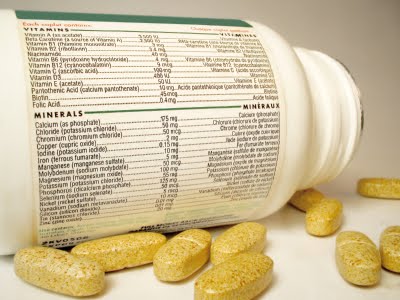
Do vitamins cause cancer?

Among believers in alternative health, it is an article of faith that vitamin supplements prevent all manner of serious diseases including cancer. Yet the reality is almost exactly the opposite. According to Kristal and Lippman, writing in the Journal of the National Cancer Institute (Nutritional Prevention of Cancer: New Directions for an Increasingly Complex Challenge):

The prospects for cancer prevention through micronutrient supplementation have never looked worse. Several large, randomized cancer prevention trials have recently reported no reduced risk from micronutrient supplementation, and [there is] a growing body of evidence that micronutrient supplementation may be harmful…

The authors are commenting on a paper that appears in the same issue of JNCI that investigated whether folate supplementation decreased the risk of precancerous growths in the colon. Folate did not decrease the risk; it increased it by 67%. Further analysis revealed that folate supplementation increased the risk of prostate cancer by 167%.

The authors note:

… Among studies addressing micronutrient supplementation for the prevention of cancer, only a single randomized trial, testing 1200 mg of calcium for preventing the recurrence of colorectal polyps, has reported a statistically significant and positive result for its primary cancer outcome, whereas large trials testing supplementation with multivitamins, folate, selenium, β-carotene, and vitamins E, C, D, B 6 , and B 12 have found no benefits.

In fact:

… Even clinical trials designed to test agents that were found to reduce cancer risk in secondary analyses of previous trials, such as vitamin E and selenium for prevention of prostate cancer, have failed to find benefit from supplementation. The harmful effects of β-carotene supplementation in heavy smokers are well established, and it now appears that folate supplementation may increase cancer risk as well…

The scientific rationale for testing vitamin supplements for cancer prevention was sound. A variety of studies have shown that people who don’t have cancer have higher levels of certain micronutrients. Unfortunately, the assumption that these vitamins and minerals prevent cancer was unjustified.

… the notion that some is good and therefore more is better has been proven wrong; it is more likely that for any given micronutrient, there is an optimal range of intake.

That’s not surprising, considering how vitamins and minerals function within the body. Micronutrients are like nails in a house. Without enough nails to hold the various parts together, a house will fall apart. However, once the optimal number of nails has been reached, adding more will not increase the stability of the house and in large amounts, might even decrease stability.

That explains why vitamin supplements fail to prevent cancer. How would supplements act to cause cancer?

… using the folate supplementation trial as an example, it is not unreasonable to assume that optimal levels of folate are associated with more fidelity in DNA replication and thus a lower risk of spontaneous mutations, but high folate may also support more rapid cell growth and promote carcinogenesis in previously initiated cells.

Another possibility is that large quantities of specific vitamins or minerals may be consumed by particular types of cancer. In that case, low levels of that vitamin or mineral in cancer patients reflect the fact that the cancer needs the micronutrient. The level has dropped not because high levels of the vitamin or mineral prevent cancer, but because the cancer has used up what is available. Far from preventing cancer, supplements might actually feed the cancer and promote rapid growth.

Whatever the reason, it is clear that supplements do not represent the next frontier in cancer prevention. As the authors acknowledge:

… It is safe to conclude that cancer prevention is not going to be as simple as recommending high-dose micronutrient supplements for middle-aged and older adults.

In fact, the opposite may turn out to be true. Vitamin and mineral supplements may promote cancer growth.