All posts by Amy Tuteur, MD

Baby decapitated in hideous case of obstetric malpractice

Trauma

Warning! This story is not for the faint of heart.

According to a story in The Independent:

A doctor caused an unborn baby to be accidentally decapitated inside her mother’s womb while performing a delivery, a medical tribunal has heard…

The obstetrician at Ninewells Hospital in Dundee is accused of wrongly going ahead with a vaginal labour in spite of several complications that meant a Caesarean delivery would have been safer because the premature infant was in a breech position.

The 30-year-old patient’s baby boy died during childbirth. Dr Laxman was suspended by NHS Tayside in the wake of the incident in March 2014.

How could something so hideous have happened? It appears that in the midst of an life threatening emergency, the obstetrician resorted to a last ditch procedure appropriate in a low resource setting instead of an immediate C-section.

[pullquote align=”right” cite=”” link=”” color=”” class=”” size=””]The baby deserved every reasonable attempt to save its life; instead it was dismembered. [/pullquote]

The woman’s waters had broken early at 25 weeks and upon examination her unborn baby was found to have a prolapsed cord, was in a breech position while the mother’s cervix was around 2-3cm dilated. It can be 10cm when fully dilated.

The prolapsed cord posed an immediate threat of death to the baby. That’s because the umbilical cord goes into spasm in room temperature air, cutting off blood supply and therefore oxygen to the baby. The baby must be delivered immediately by C-section to save his life. Although the mother was in labor, the cervix was not dilated enough for the baby to pass through. Furthermore, premature babies in the breech position are at even higher risk of injury from a vaginal birth than term babies. That’s why C-section is almost always recommended for premature breech babies.

But what if you’re in a setting where you don’t have access to a C-section and the baby is dying? In that case, you might use Durhssen’s incisions to cut open the cervix and allow the baby’s trapped head to come through.

What are Durhssen’s incisions?

Three surgical incisions of an incompletely dilated cervix, corresponding roughly to positions at 2-, 6-, and 10o’clock,used as a means of effecting immediate delivery of the fetus when there is an entrapped head during a breech delivery.

The use of Durhssen’s incisions carries serious risks for the mother including hemorrhage, injury to the urinary tract and the possibility of incompetent cervix leading to second trimester miscarriage in subsequent pregnancies. That’s why they’re reserved for situations in which an immediate C-section cannot be performed.

In contrast, this situation was a hideous case of malpractice. According to the mother:

I remember them saying I was two to three centimetres dilated and I was told to push. Nobody said I was not having a c-section and doing something else instead. Whilst this was going on I was in pain.

… I had the doctors putting their hands inside me and I had them pushing on my stomach and then pulling me down.

I tried to get off the bed but they pulled me back three times and just said they had to get the baby out. They twice tried to cut my cervix and nobody told me they were going to do it. There was no anaesthetic. I said to them ‘it doesn’t feel right, stop it, what’s going on, I don’t want to do it’ but nobody responded to me in any way.

Apparently the obstetrician pulled on the baby’s legs until the baby’s head detached inside the uterus. The details are nearly beyond belief:

They tried to coerce the birth through traction as the baby was coming feet first followed by the lower abdomen, upper abdomen and head,” lawyer for the General Medical Council Charles Garside QC said.

“However, there was an obstruction during the birth which proved to be fatal. Dr Laxman allegedly delivered the legs, torso and arms successfully but whilst trying to deliver the head, it got stuck in the cervix.

“The attempt to manipulate the baby’s head to come out of the cervix failed because the cervix has clamped onto the baby’s head and despite effort made to assist, these efforts failed. Dr Laxman made three attempts to cut the cervix with scissors but Baby B’s head was separated from his body and his head was stuck inside Patient A’s body.

“The doctors had to arrange for the head to be removed. A Caesarean was then carried out – not by Dr Laxman who had become overcome by events – but by Dr C and Dr D, and his head was removed in that way.

“As a matter of compassion the head was reattached so the appearance of the baby was not too extreme. The baby was shown to his mother so she had the consolation of seeing him.

I cannot image what the obstetrician was thinking. I wonder if she is mentally ill because I can’t find a remotely logical explanation for this entirely preventable tragedy. That’s does not mean that the baby would necessarily have lived. Cord prolapse is often fatal, and extremely premature infants face monumental risks. But the baby deserved every reasonable attempt to save its life; instead it was dismembered. And that doesn’t even count the horror that this mother had to endure and cope with for the rest of her life.

If the facts are as presented in the newspaper accounts, this doctor should never practice again.

Breastopia vs. the real world

23479931 - utopia cloud word

It’s the ur-myth of lactivism, the belief that we came from Breastopia and we should return to Breastopia.

There’s just one problem: Breastopia never existed and frantic efforts to “reclaim” it are harming babies and mothers.

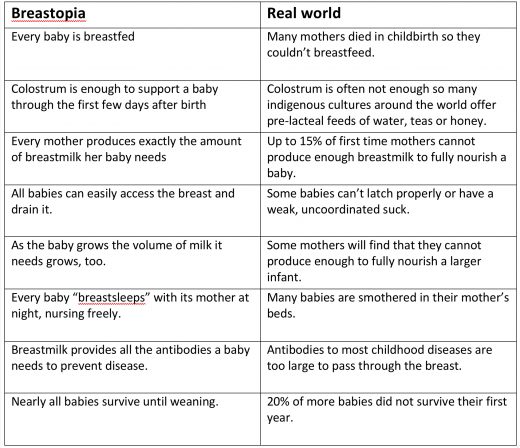
To understand why it helps to compare Breastopia to the natural world. That’s why I created the handy chart below.

292A33E1-7D74-4A0E-A8A8-0BB36C28E2AC

In Breastopia every baby is breastfed, but in the real world many mothers died in childbirth and therefore couldn’t breastfeed. Many of these babies died.

[pullquote align=”right” cite=”” link=”” color=”” class=”” size=””]Breastopia never existed and frantic efforts to “reclaim” it are harming babies and mothers.[/pullquote]

In Breastopia colostrum is enough to support a baby through the first days after birth. In the real world many babies suffer dehydration, hypoglycemia and severe jaundice as a result of insufficient breastmilk. That’s probably the reason why indigenous cultures around the world offer pre-lacteal feeds. Many of these babies died.

In Breastopia a mother’s breastmilk production completely matches her baby’s needs. In the real world up to 15% of first time mothers don’t produce enough breastmilk to fully nourish an infant. Many of these babies died.

In Breastopia all babies can easily latch and can effectively suck. In the real world some babies can’t latch properly or have a weak, uncoordinated suck. Many of these babies died.

In Breastopia every baby “breastsleeps” with its mother, nursing freely throughout the night. In the real world many babies are smothered their mothers beds.

In Breastopia nearly all babies survive until weaning. In the real world anywhere from 20-40% babies or more do not survive their first year.

The clever among you are probably sensing a theme: breastfeeding, like any natural process, is far from perfect. As a result there are high rates of infant wastage. In other words, many babies naturally die in infancy.

Despite the fact that Breastopia literally never existed, many lactation professionals insists that we can and should return to it.

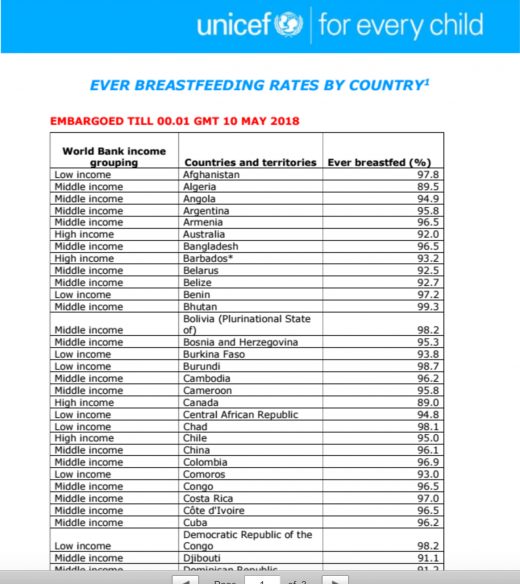
Consider the latest data dump on breastfeeding released by UNICEF.

According to a CNN article entitled The countries where 1 in 5 children are never breastfed:

A new UNICEF report released Wednesday that ranks countries by breastfeeding rates shows that in high-income countries, more than one in five babies is never breastfed, whereas in low- and middle-income countries, one in 25 babies is never breastfed…

“The data and the analyses are a confirmation of a trend that we have seen for a number of years now,” said Victor Aguayo, UNICEF’s chief of nutrition, who was involved in the report’s policy analysis.

Aguayo bemoans the fact that many children are never breastfed and insists that we must make breastfeeding the norm.

“In higher-income countries, we see that the proportion of children who have never been breastfed is significantly higher than the number of children in low- and middle-income countries. That is a fact,” he said. “We need to create environments — including in the US — that make breastfeeding the norm.”

It’s almost as if he thinks breastfeeding makes infants healthier and saves lives. But that’s NOT what the data shows.

186CB685-A9DA-4B14-B999-28451E903B69

You can examine the full chart of international breastfeeding rates embedded in the article.

Let’s look at a few representative countries.

Afghanistan has a breastfeeding rate of 97.8%. It also has an astronomical infant mortality rate of 102.9/1000.

Burundi has an even higher breastfeeding rate of 98.8%. It’s infant mortality rate is also appalling at 81.1/1000.

How about the countries that UNICEF chastises for low breastfeeding rates like the US and France?

The US has a breastfeeding rate of 74.4% and an infant mortality rate of 5.87/1000.

France has an even lower breastfeeding rate of 63% and an even lower infant mortality rate of 3.2/1000.

Are you noticing a trend? That’s right, breastfeeding rate has NOTHING to do with infant mortality.

Moreover, as far as I know, there is no evidence that increasing the breastfeeding rate in a country leads to any measurable benefit in reduced infant mortality. The only exception to this is the case of very premature babies who have a reduced incidence of necrotizing enterocolitis when fed breastmilk.

None of this should be remotely surprising. Breastfeeding was far from perfect in nature and it is far from perfect now. Indeed, as I’ve written many times in past, the benefits of breastfeeding in countries with clean water are trivial, and not particularly compelling elsewhere, either.

So what’s driving the relentless pressure to increase breastfeeding rates? It obviously isn’t scientific evidence since no one can demonstrate any real world benefit to increased breastfeeding rates for term babies.

What’s driving it is the lactivist belief in Breastopia — the belief that Breastopia existed in the past and we could return to Breastopia in the future if we just offered greater support pressure to breastfeed. Lactivists are longing for a past that literally never existed. By relentlessly seeking to recapture it they are coming up against the real world limitations of breastfeeding … and seriously harming babies and mothers as a result.

Claiming breastfeeding has major benefits is politically correct, but sadly not true

Caution - Politically Correct Area Ahead

In a world of vicious clashes over ideas and even over facts themselves, there is one thing on which everyone can agree. Thought leaders on the left and the right, among every possible ethnic and religious group, among scientists and lay people are united in their insistence that breastfeeding has major benefits for babies.

Too bad it’s not true.

Consider these papers detailing the dangers of aggressive breastfeeding promotion. Even they start with the premise that breastfeeding has major benefits.

[pullquote align=”right” cite=”” link=”” color=”” class=”” size=””]Lactivists have constructed a narrative about breastfeeding that allows them to insist — against factual evidence to the contrary — that they are being discriminated against.[/pullquote]

The revised United States Preventive Services Task Force (USPSTF) guidelines

There is convincing evidence that breastfeeding provides substantial health benefits for children …

The Baby Friendly Hospital Initiative and the ten steps for successful breastfeeding. a critical review of the literature

There is no doubt regarding the multiple benefits of breastfeeding for infants and society in general…

Or this opinion piece:

Are Breastfeeding Messages Actually Hurting Mothers?

There is no dispute that breast milk and feeding has innumerable benefits and is the gold standard.

But the scientific evidence shows the opposite. The benefits of breastfeeding in industrialized countries are limited to a few less colds and episodes of diarrheal illness across the entire population of infants in their first year. While there are a variety of mathematical models that claim to show how much money and how many more lives could be saved if breastfeeding rates were higher, there’s no evidence that the tripling of breastfeeding rates in the past 40 years has saved any lives (except for premature infants) or any money.

The insistence that breastfeeding has major benefits is political correctness run amok.

According to Wikipedia:

The term political correctness is used to describe language, policies, or measures that are intended to avoid offense … to members of particular groups in society. Since the late 1980s, the term has come to refer to avoiding language or behavior that can be seen as excluding, marginalizing, or insulting groups of people considered disadvantaged or discriminated against …

No one dares offend lactivists and professional breastfeeding advocates, people whose self-esteem or income depend on their insistence that breast is best. Lactivists have constructed a narrative about themselves and breastfeeding that allows them to insist — against the massive amount of factual evidence to the contrary — that they are disadvantaged and being discriminated against.

For lactivists and lactation professionals, the history of formula begins in the 1970s when Nestle, in an immoral effort to increase market share convinced African mothers to forgo breastfeeding in favor of powdered formula. Thousands of babies died because the water used to prepare that formula was contaminated with pathogens, a fact of which Nestle was well aware. To hear lactivists tell it, formula use is rarely necessary and was foisted on mothers by an avaricious industry with the collusion of doctors who were both ignorant and greedy.

Though it was black African women whose babies died as the result of corporate malfeasance, lactation professionals — almost exclusively white and well off — expropriated the tragedy to insist that they were victims of the formula industry, discriminated against for their heroic efforts to feed babies the best way, the way nature intended.

The truth is that formula was invented 100 years before Nestle ventured to Africa and it was invented to save the lives of countless babies who were dying for lack of breastmilk because their own mothers had died or couldn’t produce enough. Those babies were being supplemented with raw cow’s milk that proved to be deadly for many.

Doctors, far from discriminating against breastfeeding, were the original lactivists. As Jacqueline Wolf explains in the chapter Saving Babies and Mothers: Pioneering Efforts to Decrease Infant and Maternal Mortality, in the book Silent Victories: The History and Practice of Public Health in Twentieth Century:

The custom of feeding cows’ milk via rags, bottles, cans and jars to babies rather than putting them to the breast became increasingly common in the last quarter of the nineteenth century progressed… In 1912, disconcerted physicians complained bitterly that the breastfeeding duration rate had declined steadily since the mid-nineteenth century “and now it is largely a question as to whether the mother will nurse her baby at all. A 1912 survey in Chicago … corroborated the allegation. Sixty-one percent of those women fed their infants at least some cows’ milk within weeks of giving birth…

The medical community deemed human milk so vital to infants’ health that doctors even feared that providing clean cows’ milk to babies might be counterproductive since it tended to exacerbate low breastfeeding rates…

Infant formula, far from being a corporate plot to harm infants and discriminate against breastfeeding, was designed to save babies from the reality that breast is often not best.

But in 2018 very few dare to point that out because they will be subjected to a torrent of lactivist abuse.

And that brings us to the Baby Friendly Hospital Initiative. I’ve been told (and I can find no evidence to contradict this) that the BFHI is the only private organization allowed to operate within and determine policies for hospitals. Until the BFHI, private organizations were prevented from operating within hospitals because it was understood that their beliefs, no matter how well intentioned, might be in conflict with patient values, provider values or even safety.

And that’s exactly what has happened with the BFHI. The BFHI privileges a process, breastfeeding, over the outcome of healthy mothers and healthy babies. It privileges belief over scientific facts. The facts are that insufficient breastmilk is common (up to 15% of first time mothers), formula supplementation makes successful breastfeeding more likely, pacifiers prevent SIDS and extended skin to skin contact lead to babies falling from their mothers’ hospital beds or suffocating while in them. In addition, it is well known that the leading cause of jaundice induced brain damage (kernicterus) is breastfeeding.

I have no ax to grind. I breastfed four children successfully with minimal problems. My babies were fat and happy and I enjoyed breastfeeding. But as a physician I have become increasingly alarmed at the number of babies and mothers who are being harmed by aggressive breastfeeding promotion. These harms are often justified by the claim that breastfeeding has major benefits. There’s no doubt that it is politically correct to say so, but there’s also no doubt that it is absolutely untrue.

Oops, C-section does NOT impact the neonatal gut microbiome much at all!

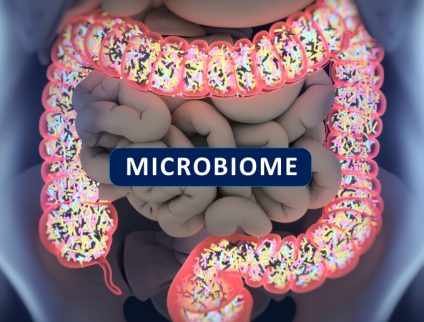
Gut bacteria , gut flora, microbiome. Bacteria inside the small intestine, concept, representation. 3D illustration.

The more research we do, the LESS support there is for the claim that C-sections impact the neonatal microbiome in ways that are ultimately harmful to health.

Research on the impact of C-section on the neonatal microbiome has been plagued with major problems, the most important of which is the naturalistic fallacy: the belief that if something is a certain way in nature, that must be the best possible way. Since passage through the vagina was the only way to give birth for most of human history, there are many people who believe it must be the best way to give birth.

[pullquote align=”right” cite=”” link=”” color=”” class=”” size=””]The claim that C-sections alter the neonatal microbiome in ways that are harmful has never been proven and is likely to be nothing more than wishful thinking.[/pullquote]

Vaginal birth is obviously not the best way to maximize maternal and infant survival. C-sections save literally hundreds of thousands of mothers and babies each and every year. Research has shown that a minimal C-section rate of 19% is necessary to achieve low maternal and perinatal mortality. Those clinging to the naturalistic fallacy continue to search for something, anything, with which to demonize C-sections. The latest object of their affections is the neonatal microbiome. Many within the natural childbirth industry, and some within the medical profession, are claiming that C-section alters the neonatal microbiome in ways that are ultimately harmful to longterm health.

Last year I reported on the largest study to that date that looked at the impact of mode of delivery on the neonatal microbiome. Maturation of the infant microbiome community structure and function across multiple body sites and in relation to mode of delivery was published in Nature Medicine.

The authors found:

…[T]here was no discernable effect of the cesarean mode of delivery on the early microbiota beyond the immediate neonatal period (and never inclusive of that in the meconium or stool) …

Now comes a new literature review that further undermines the claim that C-sections alter the neonatal microbiome. A Critical Review of the Bacterial Baptism Hypothesis and the Impact of Cesarean Delivery on the Infant Microbiome was published just this week.

The authors take aim at the bacterial baptism hypothesis.

…[E]pidemiological studies have linked Cesarean delivery with increased rates of asthma, allergies, autoimmune disorders, and obesity. Mode of delivery has also been associated with differences in the infant microbiome. It has been suggested that these differences are attributable to the “bacterial baptism” of vaginal birth, which is bypassed in cesarean deliveries, and that the abnormal establishment of the early-life microbiome is the mediator of later-life adverse outcomes observed in cesarean delivered infants. This has led to the increasingly popular practice of “vaginal seeding”: the iatrogenic transfer of vaginal microbiota to the neonate to promote establishment of a “normal” infant microbiome.

The investigators who first proposed the bacterial baptism hypothesis noted differences in the microbiota of the nose and mouth between infants delivered by C-section vs vaginal birth.

Given that neonates were swabbed within seconds of delivery, and thus it would be coated with vaginal fluids, this result is hardly surprising. This does not necessarily demonstrate colonization, however.

What about the initial neonatal gut microbiome?

Numerous studies describing the bacterial microbiota of first pass meconium (the first fecal material, passed shortly after birth) support the notion that CSD and VD neonates do not differ in their bacterial microbiomes in the first few days following birth.

How about thereafter?

Although most studies report no differences in the microbiome of VD and CSD neonates in the first days of life, evidence is compelling that differences begin to develop shortly thereafter and persist for weeks or months.

And the differences almost entirely disappear when infants start eating solid food.

Do the temporary differences reflect mode of delivery or confounding factors? It is very likely they are the result of confounding factors such as:

1. Antibiotics:

All mothers delivering by CS are administered intrapartum antibiotic prophylaxis (IAP), as is routine for any type of surgery. In some countries, IAP is administered after the cord is clamped, minimizing direct antibiotic exposure of the neonate. In others, antibiotics are given prior to commencement of surgery… Mothers delivering vaginally are not routinely administered antibiotics, with the notable exception of those who are vaginally colonized with Group B Streptococcus (GBS). Overall, rates of intrapartum antibiotic use are low in vaginally delivering mothers.

2. Labor:

…[L]abor causes changes in levels of endocrine, inflammatory, and contractile factors. These changes might influence the maternal microbiome or the establishment of the neonatal microbiome. Additionally, labor is often accompanied by rupture of the fetal membranes, exposing the fetus to maternal vaginal bacteria…

3. Breastfeeding:

Source tracking studies have shown that 27% of an infant’s gut microbiota is vertically derived from its mother’s breast milk, while an additional 10% is sourced from the skin around the areola.

4. Maternal obesity:

Obesity and high-fat diets have repeatedly been correlated with aberrations to the gut microbiome in humans. Maternal obesity alters the maternal gut microbiome during pregnancy, and the milk microbiome during lactation …

The microbiome of obese mothers may have a harmful effect on weight gain in toddlers:

Mother-to-child transmission of obesogenic microbes continues to disrupt microbiome patterns into early childhood. Galley et al. found that the gut microbiomes of toddlers born to obese mothers of high socioeconomic status (SES) clustered away from those of toddlers born from lean high SES mothers. In particular, children born to obese mothers had differences in abundances of Faecalibacterium spp., Eubacterium spp., Oscillibacter spp., and Blautia spp., all of which have been correlated to diet and body weight in previous studies.

5. Gestational age and NICU exposure:

Rates of CS delivery increase with decreasing gestational age at delivery. Preterm infants differ from their full-term counterparts in terms of their gut microbiota, immune development, and health outcome…

The NICU environment is likely to influence the microbiome, so duration of residence and the environmental microbiome of the unit are likely to have a significant impact…

6. Inter-individual variation:

Studies that compare the microbiomes of infants born by CS or vaginal delivery must have sufficient power to account for variation in the maternal microbiome, as this is likely to exert a large influence on an infant’s microbiome through breastfeeding and physical contact. Large cohorts are thus required with the ability to control variables, such as home environment, presence of pets, and exposures to other microbiome-altering factors including hygiene and maternal/infant diet.

To date there have been no studies involving large cohorts.

In summary:

…[G]iven the numerous and significant confounding factors present in studies comparing the microbiota after CS and vaginal delivery, it is impossible to say with any certainty that it is the act of delivering vaginally itself which confers this optimal microbiota, or what species/genera of bacteria might be responsible. Differences in antibiotic administration, labor onset, maternal body weight and diet, gestational age, and breastfeeding frequency and duration undoubtedly contribute to differences observed between CSD and VD infants. Further, it is likely that differences between CSD and VD infants do not develop until several days after birth. Given recent evidence that infant microbiome colonization begins in utero, it may be that the importance of “bacterial baptism” of vaginal birth has been significantly over-estimated.

Although numerous studies have demonstrated an association between CS delivery and altered microbiome establishment, no studies have confirmed causality.

The authors recommend abandoning the practice of vaginal seeding:

Health practitioners should not bow to popular pressure to perform vaginal seeding in the absence of data on need, effectiveness, and appropriate protocols for ensuring safety.

The natural childbirth industry is not going to give up on demonizing C-sections any time soon, but women need to know that the claim that C-sections alter the neonatal microbiome in ways that are harmful has never been proven and is likely to be nothing more than wishful thinking.

La Leche League’s ugly response to women struggling with postpartum depression: a badge!

Crying girl

Have you no shame, La Leche League?

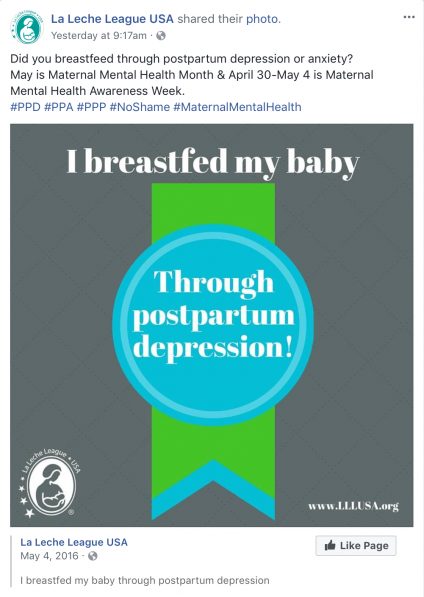
Once again you cruelly posted this “badge.”

C0F030DF-A800-473E-8F21-4D41CFB9A262

I breastfed my baby through postpartum depression!

Never mind that women are literally killing themselves and their babies because of postpartum depression, and breastfeeding has been implicated in the suffering of these women:

[pullquote align=”right” cite=”” link=”” color=”” class=”” size=””]Do you make a stick-on version of the badge that undertakers can affix to the coffins of new mothers who commit suicide?[/pullquote]

Florence Leung killed herself in despair over breastfeeding difficulties.

Charlotte Bevan discontinued her anti-psychotic medication while still in the hospital because it was not compatible with breastfeeding. With her baby she went directly from the hospital to a gorge and jumped; both she and the baby died.

Mary Jo Trokey used a gun to kill her baby, her husband and herself. According to her mother:

A combination of stressful factors, especially breastfeeding and returning to work, “all compounded” and led up to the killings.

Inquiring minds want to know, La Leche League: do you make a stick-on version that the undertakers could have affixed to the coffins of these women?

But what’s more important than LLL continuing to profit from the business of breastfeeding? Certainly not women’s mental health, right?

It’s instructive to juxtapose LLL’s ugly indifference to the suffering of those struggling with postpartum depression to the response to a new movie depiction of postpartum depression:

“Tully,” a movie about motherhood starring Charlize Theron that doesn’t open until Friday, is already generating a heated conversation about its portrayal of postpartum depression, a subject rarely depicted onscreen.

Some women are upset by the film:

Ann Smith, the president of Postpartum Support International, a nonprofit group, said her organization has been fielding complaints about the film since March, when spoilers began to circulate…

“The mommy world is up in arms,” she said, referring to survivors of perinatal mood disorders, which are diagnosed in one out of every seven women during pregnancy or postpartum. “I can see why there’s a lot of anger out there, and I think they have a right to it.”

What bothered many survivors of postpartum depression is that the suffering mother never gets mental health treatment.

According to midwife Diana Spaulding writing for Mother.ly:

The reason that people are so excited about Tully is because they feel like it is the first time that true motherhood is being portrayed on the big screen—but this is not true motherhood. Motherhood is hard, yes, but it is not this. This is mental illness. Brushing aside her mental illness again refuses to give it the attention it deserves.

Marlo needs immediate mental health treatment, and there is no direct acknowledgment in the film that she is getting it. Yes, a doctor tells her husband that she has PPD. Perhaps we can assume that means she’s getting help?

Here’s the thing though—all too often in mental health we assume that someone is fine and getting the care they need. So we don’t do anything or say anything.

We need to create a culture that is done assuming and starts ensuring.

I don’t know about the movie because I haven’t seen it, but this incisive criticism makes a perfect rebuke to La Leche League.

Breastfeeding through mental illness is not something to celebrate with a badge. Postpartum depression is a form of mental illness and its sufferers need immediate treatment. Yes, the badge acknowledges the existence of PPD but it says nothing about appropriate care and treatment; indeed it sends the message that treatment is unimportant compared to continued breastfeeding.

LLL utterly ignores the fact that sometimes the best treatment for an individual woman involves stopping breastfeeding in order to get more rest or to be able to take antidepressant medications incompatible with breastfeeding. To those women the badge conveys the repugnant message that they are bad mothers at the exact moment they are struggling desperately to feel like good mothers.

It implies that the good mother is nothing more than a milk dispenser, not a valued person whose mental health takes priority over the trivial benefits that breastfeeding provides.

That message isn’t merely reprehensible; it could be deadly.

What do breastfeeding and electronic fetal monitoring have in common ?

72282408 - trust your intution concept

It made intuitive sense that it would improve outcomes for babies. In fact, it made so much sense that it was implemented before large scale testing was conducted. Now, years later, it turns out that the benefits were dramatically overstated and the risks were ignored.

I could be talking about electronic fetal monitoring (EFM) that both monitors and records the fetal heart rate during labor. It made intuitive sense that it would improve outcomes for babies because the all too common phenomenon of stillbirth was preceded by abnormal fetal heart rate patterns. Once the equipment became available it was rushed into clinical practice rather than wait for large scale studies to prove its benefits. Now, decades later, we find that the impact on neonatal health is far less that we predicted and the side effects — particularly a dramatically increased rate of C-section for fetal distress — are far greater than we ever imagined.

[pullquote align=”right” cite=”” link=”” color=”” class=”” size=””]Professional lactivists should learn from the mistakes of obstetricians. Just because something has intuitive appeal for improving outcomes doesn’t mean that it will.[/pullquote]

But I’m not talking about EFM; I’m talking about breastfeeding.

It made intuitive sense that breastfeeding would improve outcomes for babies because it had evolved to become the natural food for babies. In the wake of the Nestle debacle of the 1970’s, when African mothers were convinced to switch from breastfeeding to formula and their babies died as a result of the contaminated water used to prepare it, aggressive promotion of breastfeeding was rushed into clinical practice rather than wait for large scale studies to prove its benefits. Now, decades later, we find that the impact on neonatal health of term babies is nearly non-existent (though it is beneficial for preemies) and the side effects — including a doubling of neonatal hospital readmissions, an increase in neonatal hypernatremic dehydration and jaundice induced brain damage, and an epidemic of newborns dying in the hospital after being smothered in mothers’ beds or injured falling out of them — are far greater than we ever imagined.

The benefits of breastfeeding keep shrinking.

Consider the new paper from Kramer et al. on the latest results from the PROBIT study, Breastfeeding during infancy and neurocognitive function in adolescence: 16-year follow-up of the PROBIT cluster-randomized trial:

A total of 13,557 participants (79.5% of the 17,046 randomized) of the Promotion of Breastfeeding Intervention Trial (PROBIT) were followed up at age 16 from September 2012 to July 2015. At the follow-up, neurocognitive function was assessed in 7 verbal and nonverbal cognitive domains using a computerized, self-administered test battery …

We observed no benefit of a breastfeeding promotion intervention on overall neurocognitive function…

This is big news because the PROBIT studies were among the first to claim neurocognitive benefits from breastfeeding. But it is not surprising news since the Colen study, Is Breast Truly Best? Estimating the Effects of Breastfeeding on Long-term Child Health and Wellbeing in the United States Using Sibling Comparisons, demonstrated that nearly every puported benefits of breastfeeding disappeared when researchers corrected for maternal socio-economic status.

What should we do when we find that our intuitive sense of benefit is not supported by the scientific evidence?

In the case of electronic fetal monitoring, we are stuck between a rock and a hard place. Research shows that EFM has a high false positive rate meaning that it suggests fetal distress in many cases where the baby is not distressed. On the other hand, when the baby is distressed, it will be accurately reflected in the heart rate tracing and should be acted upon; so it does have important clinical utility. Moreover, though we understand the limitations of EFM, we have nothing yet with which to replace it. We continue using it despite its limitations because it does have significant benefits that outweigh the risks. In the meantime, ongoing research is looking for more reliable ways of monitoring babies in labor.

In the case of breastfeeding, we are not stuck at all. We have infant formula, an excellent form of nutrition for babies that has been shown over multiple generations and tens of millions of babies to produce healthy offspring indistinguishable from those who were breastfed. In fact, despite mathematical models claiming that lives and money are saved when breastfeeding rates increase, professional lactivists are unable to point to any lives of term babies or money saved as the breastfeeding rate has triple over the past 40 years.

What do breastfeeding and electronic fetal monitoring have in common? Both have failed to produce the benefits predicted; both have serious risks, and both are in need of revision.

We’ve stopped overstating the benefits of EFM and we should stop overstating the benefits of breastfeeding.

We are working assiduously to reduce the risks of EFM and we should be working assiduously to reduce the risks of breastfeeding.

We’re looking for a substitute for EFM that has the same advantages without the unfortunate side effects. We already have a substitute for breastfeeding that has nearly all the same advantages without the unfortunate side effects. It’s called formula and instead of demonizing it, we should be promoting its use when needed or wanted.

Professional lactivists should learn from the mistakes of obstetricians. Just because something has intuitive appeal for improving outcomes doesn’t mean that it will. And when it doesn’t, we should reassess our claims instead of doubling down on them.

Why are natural childbirth advocates vilifying a black obstetrician who wants to reduce racial disparities in maternal mortality?

2B9A49C3-F809-44D3-98B8-2556FB28721E

Privilege can be very ugly.

Witness the specter of a black obstetrician being upbraided primarily by white people for a speech about reducing racial disparities in maternal mortality.

[pullquote align=”right” cite=”” link=”” color=”” class=”” size=””]Vilifying Dr. Brown for stating an incontrovertible medical fact — contraception saves women’s lives — reflects the privilege of well off, white women who have easy access to birth control and the money to pay for it.[/pullquote]

Dr. Brown made an incontrovertible claim: the single most effective way to prevent maternal mortality is birth control and now he’s being pilloried for it.

Comments, predominantly from white women, make three main accusations;

  • Claiming that Dr. Brown wants women at risk of maternal death to stop reproducing.
  • Implying that maternal death is due to an overuse of technology.
  • Insisting that midwives could reduce the maternal death rate.

These commenters are blinded by pregnancy privilege.

As I wrote in a recent post, pregnancy privilege is a set of assets a woman can count in on cashing in, and to which she is by and large oblivious. By far and away the most important asset in pregnancy privilege is this: The pregnancy is planned and wanted.

That’s not the case for many women. While it is difficult to imagine anything more tragic than a woman dying to give birth to a baby she wanted, dying as a result of an unintended pregnancy is possibly worse. Since 45% of US pregnancies are unintended — and possibly an even higher percentage of pregnancies of women of low socio-economic status — that means that easy access to birth control, including insurance that covers the cost, is a simple, effective, relatively inexpensive way to prevent maternal deaths.

That was Dr. Brown’s point and it is hardly a trivial point in the current political atmosphere where reproductive rights are under sustained assault and “pro-life” means pro-fetus, not pro-mother. If all women had access to the means to control their fertility, maternal deaths would likely fall precipitously.

But apparently privileged women can’t grasp this basic point and are accusing Dr. Brown of blaming the victim. That’s the last thing he has in mind. Reproductive rights — specifically the right to avoid unplanned pregnancy — is the sine qua non of women’s health, both physical and economic.That disparities in access to contraception exacerbate disparities in maternal mortality is a preventable tragedy.

Pregnancy privilege blinds women to other realities about maternal death. The leading causes of maternal death are cardiac disease, chronic pre-existing health conditions and complications of pregnancy like pre-eclampsia. Many women die of these problems because they lack access to the high tech care that saves privileged women. They aren’t healthy to begin with; they don’t have health insurance; they receive care from clinics; they must deliver at hospitals with poor safety records.

Invoking the rhetoric of natural childbirth: that obstetricians don’t follow scientific evidence (false), that unmedicated vaginal birth is safest (false), that interventions cause more health problems than they prevent (false) is worse than useless. In nature, childbirth is inherently dangerous with a “natural” maternal mortality rate of 1000 per 100,000. That nearly 50X HIGHER than our current maternal mortality rate, which is unacceptably high. It is ludicrous to imagine that a return to nature — a beloved affectation of privileged white women — is going to save the lives of chronically ill black women when nature itself is deadly.

The same thing applies to calls for more midwifery care. How is a midwife going to save a woman dying during pregnancy or postpartum of cardiomyopathy or congenital heart disease or kidney disease or eclamptic seizures? She isn’t, but the privileged women who recommend midwifery care are thinking of themselves and what they want instead of poor women of color and what they need.

The ugly truth is that vilifying Dr. Brown for stating an incontrovertible medical fact — contraception saves women’s lives — is a reflection of the privilege of women who have easy access to birth control and the money to pay for it. Recommending natural childbirth and midwifery care to reduce racial disparities in maternal mortality is the obstetric equivalent of “let them eat cake”: repugnant, clueless and entirely ignorant of the reality of life for anyone other than the privileged.

ACOG, why recommend screening for postpartum depression when most women can’t access treatment?

Woman with distressed expression holding a baby

Yesterday I wrote about the new ACOG recommendations for postpartum care and the fact that they are cheap, low tech window dressing for expensive, high tech problems. The most obvious example is the recommendation to screen for postpartum depression.

Screening for postpartum depression is literally the first mandate in the long list of recommendations.

Screen for postpartum depression and anxiety with a validated instrument.

Postpartum depression and anxiety are serious, and in some cases life threatening, mental health conditions. Screening for it is easy and cheap. But what’s the point of screening for it if the majority of women who have it can’t access treatment because it is expensive and not covered by most insurance?

[pullquote align=”right” cite=”” link=”” color=”” class=”” size=””]The stark reality is that mental health care after pregnancy is available only to the privileged: well off and well insured.[/pullquote]

Just last month California radio station WQED asked: To Screen or Not to Screen? Doctors Debate Post Partum Depression Testing.

Lawmakers will begin debate next month on a bill that would require doctors to screen new moms for mental health problems – once while they’re pregnant and again, after giving birth.

But a lot of doctors don’t like the idea. Many obstetricians and pediatricians are afraid to screen new moms for depression and anxiety.

“What are you going to do with those people who screen positive?” said Laura Sirott, an OB/GYN who practices in Pasadena. “Some providers have nowhere to send them.”

It’s a serious problem:

Of women who screen positive for postpartum depression, 78 percent don’t get mental health treatment, according to a 2015 study review published in the journal Obstetrics & Gynecology.

There are three primary reasons why women don’t get treatment for postpartum depression.

1. They can’t access it because there is no provider in their area trained in reproductive psychiatry, the mental health care of pregnant and breastfeeding women.

2. They can’t access it because insurance doesn’t cover it and out of pocket costs are exhorbitant.

3. They can’t access it because they can’t get the childcare, transportation and/or time off from work to see a mental health professional.

The stark reality is that mental health care after pregnancy is available only to the privileged: well off and well insured. Mandating postpartum depression and anxiety screening will likely help them and no one else, further exacerbating the gulf in health outcomes between the privileged and the less privileged. The new ACOG recommendations ignores this reality.

ACOG also ignores ways that we could prevent or mitigate postpartum depression. The most important of these would be to back off on aggressive breastfeeding promotion.

As I noted yesterday, the lead author of the new recommendations made this odious comment:

The baby is the candy, the mom is the wrapper,” said Alison Stuebe, who teaches in the department of obstetrics and gynecology at the University of North Carolina School of Medicine and heads the task force that drafted the guidelines. “And once the candy is out of the wrapper, the wrapper is cast aside.”

She was slandering obstetricians but the reality is that lactation professionals, of which Dr. Stuebe is one, are the guilty parties. They treat babies like kings and mothers like cows.

Despite the fact that the benefits of breastfeeding for term babies in industrialized countries are trivial (limited to 8% fewer colds and 8% fewer episodes of diarrheal illness across all infants in their first year), lactation professionals evince complete disregard for maternal well being.

Maternal autonomy is ignored in the effort to pressure every woman to breastfeed regardless of her own health, needs and priorities. Maternal exhaustion is not merely ignored, it is promoted by closing well baby nurseries, recommending the barbaric practice of triple feeding (nursing, pumping and supplementing) and insisting, despite scientific evidence to the contrary, that anything that makes life easier for new mothers — i.e. formula, pacifiers — must not be allowed.

Worst of all, women’s mental health is viewed as irrelevant. Lactation professionals are much more concerned with whether treatments for postpartum depression are compatible with breastfeeding than with whether they are the best possible treatment for the mother’s psychological condition. Women are encouraged to continue dispensing breastmilk even when they are inexorably approaching complete psychological collapse.

Postpartum depression and anxiety are very serious problems and they require very serious — and expensive — treatment. ACOG can congratulate themselves on recommending screening but until they tackle the problems of prevention and access to treatment, it’s nothing more than window dressing.

New ACOG postpartum recommendations are cheap, low tech window dressing for expensive, high tech problems

F08BB17D-BCC8-4302-A1E1-2FC17BA57B98

I am going to look a gift horse in the mouth.

ACOG has just released new guidelines for postpartum care. They were long overdue but sadly they are more window dressing than substantive improvement. Moreover, the way they are being promoted is odious.

The American College of Obstetricians and Gynecologists (ACOG) have published the guidelines as Optimizing Postpartum Care.

[pullquote align=”right” cite=”” link=”” color=”” class=”” size=””]How can the recommendations for postpartum care prevent  maternal deaths when the majority (65.5%) occur during pregnancy, on the day of birth or the first 6 days postpartum?[/pullquote]

The weeks following birth are a critical period for a woman and her infant, setting the stage for long-term health and well-being. During this period, a woman is adapting to multiple physical, social, and psychological changes. She is recovering from childbirth, adjusting to changing hormones, and learning to feed and care for her newborn. In addition to being a time of joy and excitement, this “fourth trimester” can present considerable challenges for women, including lack of sleep, fatigue, pain, breastfeeding difficulties, stress, new onset or exacerbation of mental health disorders, lack of sexual desire, and urinary incontinence. Women also may need to navigate preexisting health and social issues, such as substance dependence, intimate partner violence, and other concerns… [M]ost women in the United States must independently navigate the postpartum transition until the traditional postpartum visit (4–6 weeks after delivery). This lack of attention to maternal health needs is of particular concern given that more than one half of pregnancy-related deaths occur after the birth of the infant. Given the urgent need to reduce severe maternal morbidity and mortality, this Committee Opinion has been revised to reinforce the importance of the “fourth trimester” and to propose a new paradigm for postpartum care.

Sounds great, huh? But right off the bat it is completely misleading.

Let’s start with the implication that this is going to reduce maternal mortality. How could that possibly be when the majority of maternal deaths (65.5%) occur during pregnancy, on the day of birth or the first 6 days postpartum?

According to Pregnancy-Related Mortality in the United States, 2011–2013:

532 (30.5%) died before delivery, 293 (16.8%) on the day of delivery or pregnancy termination, 317 (18.2%) between 1 and 6 days postpartum, and 372 (21.3%) between 7 and 41 days postpartum; only 229 (13.2%) died on or after 42 days postpartum.

Why do they die?

Because pregnancy and childbirth are inherently dangerous, because some women lack access to the high tech childbirth care that could save their lives and because women’s complaints are ignored. One of the most notable things about the recent prize winning ProPublica/NPR series on maternal mortality is the high proportion of deaths due to malpractice. A consistent thread runs from Lauren Bloomstein whose preventable death framed the initial piece in the series to Shalon Irving, the black CDC epidemiologist whose preventable death was featured in the piece about black women dying in pregnancy and childbirth, and many of the women in between: medical professionals dismissed their symptoms as variations of normal when they were signs of impending death. These women died of malpractice and no amount of optimizing of postpartum care would have saved them.

60% of maternal deaths are (potentially) preventable. But in order to prevent a death you have to suspect that something is going wrong, diagnose it and correct it. Unfortunately, there has been a relentless trend in the US and other developed countries to promote “normal birth.” Hospitals emphasize their decor and the availability of waterbirth, women bring their doulas and their birth plans, and doctors are cautioned repeatedly to reduce the routine application of technology like fetal monitoring and C-sections. It’s as if everyone has developed collective amnesia for the fact that pregnancy, in every time, place and culture (including our own) has ALWAYS been one of the leading causes of death of young women.

Everyone involved in the care of women giving birth should have a high index of suspicion for life threatening complications and instead they’ve been fooled into developing a low index of suspicion. All providers should drill for deadly complications like hemorrhage and eclamptic seizures. Labor and delivery suites should be set up to provide easy access to life saving technologies like blood, uterotonic agents, anti-seizure treatments, etc.

California has been leading the way. In their initial assessment of maternal deaths in their state they found that the most preventable deaths were from “hemorrhage (70 percent) and preeclampsia (60 percent).” California researchers created a series of “tool kits” for doctors, nurses and hospitals and have achieved impressive result. The limiting factor in rolling out these programs to other hospitals is complacency.

I find Dr. Alison Stuebe’s misrepresentation of the problem particularly ugly.

“The baby is the candy, the mom is the wrapper,” said Alison Stuebe, who teaches in the department of obstetrics and gynecology at the University of North Carolina School of Medicine and heads the task force that drafted the guidelines. “And once the candy is out of the wrapper, the wrapper is cast aside.”

Perhaps that is Dr. Stuebe’s attitude as a perinatologist. Her patients are referrals for pregnancy problems and she doesn’t care for them for very long after birth. If she wants to smear herself and her perinatology colleagues, she can have at it.

But she does a tremendous disservice to OB-GYN’s who traditionally have life long relationships with their patients. They’ve known these women before pregnancy, providing care for contraception, sexually transmitted diseases and GYN health; they will care for the same women after pregnancy, providing contraception, treatment for menstrual disorders, incontinence and menopause. For most OB-GYNs the mother — far from being the “wrapper” — is the primary patient and the one with whom they have an ongoing relationship; the baby is a temporary patient and out of mind once delivered.

Dr. Stuebe’s claim is particularly ironic considering that it is the natural mothering industry that treats the mother as the “wrapper” and ignores the long term risks of vaginal birth on future continence and sexual function, ignores the risks of aggressive breastfeeding promotion on maternal mental health, and shames women for choosing pain relief, C-sections or formula.

That’s not to say that postpartum care can’t be improved. There’s plenty of room for improvement but even there the new ACOG recommendations fall short of what is needed. In particular, they fail to prevent many serious problems that are intrinsic to childbirth (like perineal tears, prolapse and subsequent incontinence) or problems that we make worse with our aggressive promotion of breastfeeding (like maternal exhaustion as a result of closing well baby nurseries and mental health problems exacerbated by pressure to breastfeed).

The recommendations are cheap, low tech window dressing for expensive, high tech problems. We’ll explore their limitations in a future post.

What do beauty standards and mothering standards have in common? Denialism.

29673378 - eraser deleting the word patriarchy

New York Times movie critic Amanda Hess has written one of the best takedowns of contemporary patriarchal ideology I have ever read. She explains how women are pressured not merely to meet male needs and desires but duped into believing they are empowered by the very ideology that is designed to constrain them.

But part of the conditioning of the “patriarchal ideal” is to make women feel empowered by it on their “own terms.” That way, every time you critique an unspoken requirement of women, you’re also forced to frown upon something women have chosen for themselves. And who wants to criticize a woman’s choice?

Hess is writing about beauty standards, but should could just as easily have written about motheng standards. Both have never been stricter.

[pullquote align=”right” cite=”” link=”” color=”” class=”” size=””]Mothering-standard denialism, like beauty-standard denialism, allows women to pretend that they are empowered by knuckling under to patriarchal ideals.[/pullquote]

Hess is reviewing Amy Schumer’s new movie ‘I Feel Pretty.”

In the film, the down-on-herself Renee (played by Amy Schumer) conks her head in a SoulCycle accident and awakens believing that she has miraculously become supermodel-hot. She revels in it — charging into a bikini contest, snagging a promotion and basking in the affections of a beefy corporate scion — only to discover that her looks never changed a bit. The benefits she thought she accrued through beauty were won instead through her newfound self-confidence.

The movie suggests that the only thing holding back regular-looking women is their belief that looking regular holds them back at all. That attitude puts the onus on individual women to improve their self-esteem instead of criticizing societal beauty standards writ large…

But:

The reality is that expectations for female appearances have never been higher. It’s just become taboo to admit that.

This new beauty-standard denialism is all around us. It courses through cosmetics ads, fitness instructor monologues, Instagram captions and, increasingly, pop feminist principles. In the forthcoming book “Perfect Me,” Heather Widdows, a philosophy professor at the University of Birmingham, England, convincingly argues that the pressures on women to appear thinner, younger and firmer are stronger than ever. Keeping up appearances is no longer simply a superficial pursuit; it’s an ethical one, too. A woman who fails to conform to the ideal is regarded as a failure as a person.

Entire industries — the weight loss industry, the cosmetic industry, the fashion industry — exist to market the male ideal of the female body to women and to pressure them into denying that reality by calling it “empowerment.”

We see it, for example, in the health moralism around weight: Every woman is still expected to torture her body into the male ideal of thin, lithe and cellulite free, but now it is presented as “healthier” instead of the ugly truth that it is what appeals to men.

[T]he beauty ideal is so pervasive that it is internalized in many women, who are haunted by idealized visions of their own bodies — fantasies of how they might look after undergoing extreme diets or cosmetic procedures. But because nobody can ever achieve perfection, we instead begin to fetishize the striving for it — spinning on bikes and slathering on lotions. So even after Renee experiences her awakening to self-acceptance, she ends up right back at SoulCycle, this time having completely swallowed the “I’m doing this for me” line.

Sound familiar? It should because it’s also the tactic behind marketing natural mothering ideology. Expectations for mothering have never been higher but it’s taboo to admit it.

The natural mothering ideal is a traditional male ideal, tens of thousands of years old: women immured in the home restricted to fulfillment through their use of their vaginas, uteri and breasts and barred from fulfillment through their intellect, talents and character. All the while, the industries that profit from these sexist philosophies — natural childbirth, breastfeeding and attachment parenting — are promoting them as “empowering.”

This new mothering standard is all around us. It flows through natural childbirth and breastfeeding websites, parenting Facebook groups, Instagram photos and efforts to “normalize” unmedicated vaginal birth, exclusive breastfeeding, and baby wearing. The patriarchal ideal of women barefoot, pregnant and in servitude to her children has been refashioned. The denialism of the mothering standard involves insisting that women are empowered by it. That way, every time someone critiques an unspoken requirement of mothers — unmedicated vaginal birth, exclusive breastfeeding, attachment parenting — you’re forced to frown upon something women have ostensibly chosen for themselves.

Mothering-standard denialism is like beauty-standard denialism in yet another way.

[A]ll regular women need to succeed is a healthy dose of confidence. That new beauty mantra mirrors corporate messaging around “impostor syndrome” and “leaning in” — the idea that women’s lack of confidence is holding them back from professional success, not discrimination. In fact, our culture’s ideal woman is beautiful and modest.

According to midwives and lactation consultants, the only thing women need to “succeed” at childbirth and breastfeeding is more confidence, not the reality that childbirth is dangerous and excruciating or the reality that the natural failure rate of breastfeeding is high. And, inevitably, the best way to get that confidence is by purchasing the services of — you guessed it — midwives and lactation consultants.

Hess concludes:

The amount of brainpower I spend every day thinking about how I look is a monumental waste. The sheer accumulation of images of celebrity bodies in my browser history feels psychopathic…

The amount of brain power, energy, guilt, shame and suffering spent trying to attain the mothering standard is a monumental waste. The accumulation of images “celebrating” and “normalizing” natural childbirth and breastfeeding is nothing short of oppressive. It doesn’t make babies healthier, safer, smarter or better in any way.

Mothering-standard denialism serves the same purpose as beauty-standard denialism. It allows women to pretend that they are empowered by knuckling under to patriarchal ideals instead of recognizing that they are being manipulated.