All posts by Amy Tuteur, MD

The pro-gun lobby imagines guns as vaccines; in reality they’re the disease.

Weapons and military equipment for army, Assault rifle gun (M4A1) and pistol on camouflage background.

Today’s New York Times features an opinion piece by journalist Bethany Mandel entitled I Wanted to Be a Good Mom. So I Got a Gun.

She tells the standard “good guy with a gun” story from her childhood:

[pullquote align=”right” cite=”” link=”” color=”” class=”” size=””]Guns don’t “immunize” against gun deaths; they make them MORE likely.[/pullquote]

It was a spring night and I was sleeping with my window open, which was right above my bed; I loved breathing in the fresh air. That night, in that open window, I heard the banging of a ladder, and by the time my mother made it into the room and began loading her gun, a man was about to climb in.

She said something along the lines of: “Bethany, come over here. I don’t want you to get his brain matter on your face.” I backed up behind her and my mother raised her gun. The would-be intruder slowly backed down the ladder. As he climbed down, my mother approached. The barrel of her rifle was inches away from his face and she told him, “Next time you come here, I won’t hesitate.”

And she points out that she faces a known threat:

After years of receiving death threats for my conservative views, months of being attacked by the alt-right and then having our address published online by the neo-Nazi Daily Stormer, I pushed myself to finally go through the process of asking friends for letters attesting to my character, obtaining fingerprints and submitting to background checks.

I was given a reason to feel that I needed to defend myself and my family. And I acted on it.

Mandel, like many in the pro-gun lobby, seems to view guns as a vaccination against crime and violence. The thinking — at an unconscious level — is that a gun will protect its owner in the same way that a vaccine will protect its recipient. In both cases the potential victim will be armed and ready when the unwelcome intruder or disease comes to call.

Unfortunately Mandel, like most of the pro-gun lobby, has drawn the wrong analogy. A weapon in the home isn’t a vaccine against violence. It’s the disease!

But wait, you say, the connection between owning a gun and preventing victimization is just a matter of common sense. Science tells us differently and is filled with countless example of “common sense” views that were destroyed by careful scientific research. It was “common sense” for countless generations to believe that the Earth is flat since it seems flat. Scientific research showed otherwise. It was common sense for countless generations to believe that disease was caused by just about anything except its true cause: bacteria and viruses too small to see with the naked eye.

Similarly, it is common sense to believe that owning a gun is protective. Scientific evidence shows otherwise.

According to Children’s Hospital of Philadelphia:

  • …In 2014, 2,549 children (age 0 to 19 years) died by gunshot and an additional 13,576 were injured…
  • Among children, the majority (89%) of unintentional shooting deaths occur in the home. Most of these deaths occur when children are playing with a loaded gun in their parent’s absence.
  • People who report “firearm access” are at twice the risk of homicide and more than three times the risk of suicide compared to those who do not own or have access to firearms.
  • Suicide rates are much higher in states with higher rates of gun ownership, even after controlling for differences among states for poverty, urbanization, unemployment, mental illness, and alcohol or drug abuse.
  • Among suicide victims requiring hospital treatment, suicide attempts with a firearm are much more deadly than attempts by jumping or drug poisoning — 90 percent die compared to 34 percent and 2 percent respectively…
  • States implementing universal background checks and mandatory waiting periods prior to the purchase of a firearm show lower rates of suicides than states without this legislation…
  • In states with increased gun availability, death rates from gunshots for children were higher than in states with less availability.
  • The vast majority of accidental firearm deaths among children are related to child access to firearms — either self-inflicted or at the hands of another child.
  • Domestic violence is more likely to turn deadly with a gun in the home. An abusive partner’s access to a firearm increases the risk of homicide eight-fold for women in physically abusive relationships.

Guns may protect people in certain situations, but overall they dramatically increase the risk of death. Claiming that the solution to a “bad guy with a gun” is a “good guy with a gun” is like claiming that the solution to a smallpox epidemic is to give everyone smallpox. True, you won’t catch smallpox from your neighbor if you already have it, but you’ll be just as dead when you die of smallpox given to you instead of caught by another.

Similarly if you own a gun you might be less likely to be shot by a stranger, but you’ll be far more likely to be shot by a family member or yourself. You’ll be just as dead whether the gun was held by friend or foe.

Guns are not vaccines. They don’t “immunize” you from gun violence. The gun is the disease. As a result owning a gun makes you and your family MORE likely to die from gun violence than to prevent it. That may not be “common sense,” but it is true nonetheless.
Natural childbirth industry shocked; pretending vaginal birth has no risks increases women’s suffering

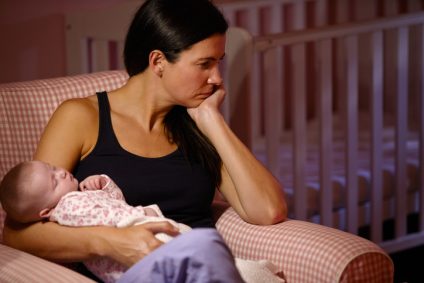
Woman with distressed expression holding a baby

Who knew?

It turns out that vaginal birth has risks and the suffering doesn’t end when the baby is delivered.

Among the typical symptoms women face in the first week after childbirth: heavy bleeding, abdominal cramping, constipation, hemorrhoids, chills, night sweats, difficulty going to the bathroom, engorged breasts, back pain, headaches. And it goes on: pain in the perineum (the diamond shaped sling of muscles in the pelvis), incision pain (if the woman has had a C-section), pain and difficulty walking (after an episiotomy or tear), depression, anxiety, and exhaustion.

The pain can last for weeks:

[pullquote align=”right” cite=”” link=”” color=”” class=”” size=””]They demonize the one procedure that can protect the pelvic floor and recommend the one that is most likely to destroy it.[/pullquote]

About half of women who give birth are still in pain weeks later. More than 40 percent of women who delivered vaginally reported perineal pain, and nearly 60 percent who had C-sections experienced incision pain within two months of childbirth … Nearly 80 percent of mothers surveyed said pain interfered with their daily activities. One in three reported urinary or bowel problems.

Why is this happening? It’s doctors’ fault!

OB-GYNs and midwives who deliver babies don’t often find postpartum problems like nerve damage and incontinence because they aren’t looking for them. As Kari Bø, pelvic floor expert at the Norwegian School of Sports Science, explains, “Gynecologists, urologists and colorectal surgeons concentrate on their areas of interest and tend to ignore the pelvic floor common to them all.”

Rather than focusing on the “three holes in the pelvis,” practitioners owe it to women to see the “whole pelvis.” Since they don’t, pelvic pain or dysfunction often goes overlooked. Nearly a quarter of women have a pelvic floor disorder. The prevalence increases with each child a woman has.

And that is pure unadulterated bullshit!

A substantial portion of gynecologic practice involves dealing with the consequences of childbirth injuries including uterine prolapse, cystocele, rectocele, urinary incontinence, fecal incontinence and fistula. Indeed there is an entire sub-specialty, urogynecology, that is devoted to nothing else.

What is a urogynecologist?

Urogynecologists are physicians who complete medical school and a residency in Obstetrics and Gynecology or Urology. These physicians are specialists with additional years of fellowship training and certification in Female Pelvic Medicine and Reconstructive Surgery. The training provides expertise in the evaluation, diagnosis, and treatment of conditions that affect the muscles and connective tissue of the female pelvic organs…

What do they treat?

Urinary incontinence: Loss of bladder control …
Interstitial cystitis and bladder pain syndromes: Discomfort related to the bladder and/or urethra
Pelvic organ prolapse: Dropping of the pelvic organs (bladder, bowel, retum, uterus, vagina)
Fecal incontinence/Accidental bowel leakage: Loss of bowel control
Urogynecologic fistula: Abnormal hole between the bladder and the vagina (vesicovaginal), the urethra and the vagina (urethrovaginal), or the rectum and the vagina (rectovaginal) …

Yarrow’s insistence that doctors don’t know anything has become something of a cottage industry for her.

The day after this nonsensical piece claiming that doctors are ignorant of pelvic floor injuries she had a different piece in The Washington Post entitled Why do we understand so little about breast-feeding?. The subtitle of the piece is “Despite the emphasis on breast-feeding, the medical establishment can offer little help to nursing moms.” That’s not true, either.

It is Yarrow who is ignorant, not doctors and her ignorance reflects the know-nothingism of the natural childbirth industry. It’s an industry based on the premise that if it is natural, it must be good. And now it is shocked to discover that natural can be very bad indeed.

Doctors have known this for millennia. Consider the episiotomy. It is anathema within the natural childbirth industry, which utterly ignores its purpose. The episiotomy was designed to protect the pelvic floor. It turns out that it didn’t work the way it was intended (it made the most serious perineal injuries more likely not less) but it reflects both the fact that obstetricians understood that childbirth led to serious pelvic floor disorders and the hope that they could be prevented.

We do know a way to mitigate pelvic floor disorders; a C-section protects the pelvic floor from the ravages of childbirth, but C-sections are anathema, too. How dare a woman have the choice of an elective C-section to protect her pelvic floor?

What’s the biggest risk factor for pelvic disorders? Obstetric forceps. That’s not surprising when you consider that it is the baby’s head that causes pelvic damage; the bigger the head, the greater the damage. Forceps, basically giant metal salad tongs, effective increase the diameter of the baby’s head while simultaneously increasing the forces on the pelvic tissues by adding the doctor’s pulling force.

Yes, a C-section is major abdominal surgery, but it is generally easy and can be accomplished in 30 minutes or less. In contrast, I’ve seen massive vaginal injuries that were caused by forceps that required multiple hours and hundreds of stitches to close. That’s one of the reasons why I never used forceps.

In the absurd moral panic around C-sections, natural childbirth advocates have promoted forceps deliveries as a way to avoid C-sections. They demonize the one procedure that can protect the pelvic floor and, in its place, recommend the one procedure that is most likely to destroy it. Does that make any sense at all?

Vaginal birth has serious risks and can lead to significant, debilitating, lifelong injuries. Doctors have always known this and tried to prevent it. Now the natural childbirth industry is shocked to discover that fact and instead of taking responsibility for their dangerous beliefs they’ve done what they always do. They reflexively blame doctors, the very people who were warning them of the risks all along.

Life in nature was nasty, brutish and short; why would we want to emulate it?

human skeleton

I’ve heard that the latest fashion look is a return to the 1970’s. I lived through those years and I can assure you the fashion had little to recommend it.

Polyester was the material of choice and bright colors were everywhere. Men and women alike were wearing very tight fitting pants and platform shoes. By 1973, most women were wearing high cut boots and low cut pants…

By the late 1970s the pant suit, leisure suit and track suit was what the average person was sporting…

Chest hair, medallions, polyester, butterfly collars, bell bottoms, skin-tight t-shirts, sandals, leisure suits, flower patterned dress shirts, sideburns and, yes, tennis headbands.

No harm comes from a shared delusion that 1970s fashion is worth emulating or from editing leisure suits and polyester out of our memories of the decade. Sadly, a lot of harm can come from a different shared delusion — that life in the state of nature is worth emulating.

[pullquote align=”right” cite=”” link=”” color=”” class=”” size=””]The idea that natural is best and technology ruined everything is nothing short of ludicrous.[/pullquote]

The idea that natural is best and technology ruined everything is nothing short of ludicrous.

Hobbes wrote that life in the state of nature was ‘solitary, poor, nasty, brutish and short’ and he wasn’t far off the mark. Consider that the natural human lifespan is at least 70 years, but for most of human existence life expectancy was only 35 years.

What accounts for the dramatic difference? Nature.

For example:

One of the most famous hominid fossils is the skull of a 3-year-old child found in Taung, South Africa. The Taung child was a member of the Australopithecus africanus species, which lived in Africa from about three million to two million years ago. The skull has holes neatly punched into its eye sockets; they were made by the talons of a large bird akin to an African crowned eagle.

We may be at the top of the food chain now, but in nature we — especially our children — were prey. That’s what happens when you live in the state of nature.

But even if we weren’t eaten by other animals, there were tremendous dangers. Our vaunted “natural lifestyle” left us at the mercy of weather and climate and other natural phenomena. We could and did die of exposure, famine, drought, volcanos and earth quakes. Technology — in the form of fire, shelter and agriculture protect us, though even today people are killed natural disasters.

Our genetic history speaks to a bottleneck.

Around 70,000 years ago, humanity’s global population dropped down to only a few thousand individuals, and it had major effects on our species.

One theory claims that a massive supervolcano in Indonesia erupted, blackening the sky with ash, plunging earth into an ice age, and killing off all but the hardiest humans…

But archaeological evidence shows that human hunter-gatherer settlements in India weren’t too affected by the eruption and quickly recovered. Temperature data embedded in the geology of Lake Malawi, in East Africa, also suggests that the region didn’t cool off that drastically.

So what did cause that major bottleneck 70,000 years ago, if not a giant volcano and an ice age?

Scientists aren’t sure, but they have some new ideas. A catastrophic spread of disease, for example, may have played a role. Or perhaps the way we currently think humans dispersed out of Africa needs some adjustment.

That was hardly the last time that infectious disease killed large swathes of the population. As recently as the 1300’s nearly one third of the world population annihilated by plague. More recently still, the influenza epidemic of 1918 killed more people than died in WWI that proceeded it.

Infectious disease has always killed millions. Technology — in the form of sanitation, water purification, antibiotics and vaccines — now routinely saves lives, often by preventing children and adults from getting sick in the first place.

But not all threats to humans come from the outside; many come from within. Childbirth is notably unsafe and more babies die as a result of birth than of any other factor in the entire 18 years of childhood. Women routinely died of hemorrhage, infection, eclampsia and obstructed labor and babies routinely died of prematurity, birth injuries, infections and obstructed labor. Babies also died of insufficient breastmilk. Technology —- modern obstetrics and neonatology and all the interventions they represent, as well as infant formula — saves countless mothers and babies every single day.

Human beings are also vulnerable to injury from broken bones and wounds sustained battling both predators and each other. They are vulnerable to non-infectious diseases like asthma, epilepsy, diabetes, and anything that compromises biological function like poor vision or hearing. Technology — casting broken bones, stitching wounds, eyeglasses and hearing aids — mean that previously life threatening injuries or deficits are easily addressed and often completely remedied.

The bottom line is that in nature there is very little connection between natural lifespan and actual life expectancy. Very few animals in nature die of old age; they are eaten, injured or sickened long before that. In contrast, in countries with easy access to technology, human beings routinely exceed natural lifespan. US life expectancy is 76 years for men and 81 years for women. Without technology it would still be 35.

Only the deluded or the ignorant would pretend otherwise. And who would want to emulate that?

The blatant misogyny of “too posh to push”

Sad and stressed pregnant woman

Oxford University Hospitals, in violation of UK medical guidelines and a recent British legal case, has banned maternal request C-sections.

A major hospital trust has banned women from having caesareans unless there is a medical reason.

Oxford University Hospitals will not offer them to those who are frightened or have had previous traumatic births…

The trust’s policy breaches guidelines from health watchdog Nice, which say women should be allowed a caesarean without a medical reason once the risks and benefits have been explained.

Why? Is it to lower costs? Is it to meet C-section targets?

[pullquote align=”right” cite=”” link=”” color=”” class=”” size=””]It’s about punishing women for having sex.[/pullquote]

Oxford University Hospitals said its decision was ‘not related to targets but to good practice and reducing harm to women’.

The trust’s Dr Veronica Miller said: ‘A caesarean section which is not clinically indicated may have serious consequences for a woman and her baby.’

Caesareans take longer to recover from than natural births. The wound may cause severe pain and some women need to be in hospital for three or four days.

Oh, it’s paternalism! The administrators are substituting their judgment for women’s needs and desires since they “know better.”

But, but, but safety. Are they banning homebirths for those who don’t meet safety guidelines. No, they’re not. Any woman can still have a homebirth regardless of the risk, so clearly this is not about safety.

But, but, but the incision may cause severe pain. So women ought to be protected from the pain of C-section by being forced to endure hours of agony in labor?

A C-section may have serious consequences for mother and baby? No more and no less than vaginal birth. C-sections are definitely safer for babies, protecting them from birth injuries and potential oxygen deprivation, and they can be safer for mothers, protecting them from debilitating lifelong consequences like incontinence and painful sex.

So if Oxford University Hospitals’ decision is not about safety and not about protecting mothers and babies, what is it about?

The vitriolic comments to the article and on a Facebook post discussing the decision make it quite clear: it’s about punishing women for having sex.

0E4F7D41-E833-4BBA-8599-65ED99CBA895

Too posh to push!!

Another comment in case that one was too subtle:

If you don’t want a baby as nature intended, don’t get pregnant. Life isn’t about everything your own way. For gods sake you’ve had the sweet, now time for the sour.
Women of today,you want all your own way.

Nature wants women to suffer:

I think some people are missing the point on here…women have been given birth naturally for years and years and they all knew what pain was in front of them and considered it a small price to pay for the little bundle at the end…

And:

If someone chooses to have a caesarean then they should pay for it. All none medical surgery should have to be paid for.

In other words, you chose to have sex, you must take the punishment. “You’ve had the sweet, now time for the sour.”

The idea of labor pain as punishment for women who have sex is as old as the Bible. The pain of labor was so impressive to our Bronze Age forebears that the only explanation they could think of was that it was a punishment for sex meted out to Eve and all her descendants. The idea of labor pain as punishment was so powerful that it was harnessed by the founder of natural childbirth, Grantly Dick-Read, for his own ends; according to him pain was the punishment for “over-civilized” white women who strayed from the home to pursue political and economic rights.

The ugly misogyny of insisting that women must suffer the excruciating pain of labor and expose herself to the risk of life long incontinence and sexual dysfunction is captured by the phrase “too posh to push.”

Are men who take pain medication for broken bones “too posh” to endure the pain? It would be heartless to claim that.

Are men who choose less invasive treatments for prostate cancer “too posh” to deal with the lifelong incontinence and sexual dysfunction that may result from more aggressive treatment? That would be a cruel to conclusion to draw.

Aren’t people who suffer the agonizing pain of advanced lung cancer avoiding the natural result of smoking? Shouldn’t they be forced to endure the pain or pay out of pocket for pain relief? Only a vicious person would be believe that.

The phrase “too posh to push” is equally heartless, cruel and vicious. But there is such a deeply embedded cultural prejudice that women deserved to be punished for having sex that even the Oxford University Hospitals see no reason to respect a woman’s wish to avoid the agony of childbirth and the resulting lifelong injuries.

That’s not good healthcare; that’s blatant misogyny.

Midwives use dubious math to promote themselves

11733938 - word on keyboard made in 3d

Suppose you wanted to do a study that showed that a larger role for midwives could improve US healthcare outcomes. Imagine that you believed in your heart of hearts that midwifery care was better and you were sure that statistical analysis would prove your claims. Or, if you are cynical like me, imagine that you were intent on increasing midwife employment opportunities and you planned to massage the data until it showed what you wanted.

Where would you start?

[perfectpullquote align=”right” cite=”” link=”” color=”” class=”” size=””]The point of the paper is to try to create a relationship between midwifery and outcomes no matter how spurious or tenuous.[/perfectpullquote]

I know! You’d start by showing that outcomes improve as the numbers of midwives increase. You could show what happened to infant mortality as the number of midwives decreased dramatically in the early 20th Century and rose steeply at the end.

CB31DE91-7BAC-4F9B-8C98-973B6D39C135

Oops! This shows that infant mortality dropped steeply as the number of midwives decreased sharply and that the increase in midwives at the end of the 20th Century had little to no impact.

Let’s look at maternal mortality.

0D9E99A1-0853-42AC-8AE3-CCA8FF86DF60

That certainly doesn’t show that midwives improve outcomes. Moreover, US maternal mortality appears to have risen in the early 21st Century as the role of midwives increased (not shown).

Drat! I know. You could look at the density of midwives in each state and compare it to outcomes.

Here’s the density of CNMs per state:

C4F4D04B-54CA-45F7-853C-4B8A5C26CFA0

And here’s perinatal mortality rate by state:

FACF794D-1767-4F6F-81A5-2BFE8722D2A4

Dammit! That doesn’t prove the point, either. There are states with lots of CNMs that have poor mortality rates (Maine, Colorado) and states with few CNMs that have excellent outcomes (Nebraska, Iowa).

I’ve got it! You could create a composite score for midwifery integration and massage the components until it shows what you wanted it to show! That’s just what midwives have done.

The new paper is Mapping integration of midwives across the United States: Impact on access, equity, and outcomes by a group of authors containing Holly Powell Kennedy, former head of the American College of Nurse Midwives, Melissa Cheyney, forder Director of Research for the Midwives Alliance of North America, Marian MacDorman, Editor of the Lamaze owned Birth: Issues in Perinatal Care, and Eugene DeClercq, advisor to Ricki Lake on The Business of Being Born.

You’ll never guess what they found!

Using a modified Delphi process, we selected 50/110 key items to include in a weighted, composite Midwifery Integration Scoring (MISS) system. Higher scores indicate greater integration of midwives across all settings. We ranked states by MISS scores; and, using reliable indicators in the CDC-Vital Statistics Database, we calculated correlation coefficients between MISS scores and maternal-newborn outcomes by state …

The MISS scoring system assesses the level of integration of midwives and evaluates regional access to high quality maternity care. In the United States, higher MISS Scores were associated with significantly higher rates of physiologic birth, less obstetric interventions, and fewer adverse neonatal outcomes.

Who could have seen that coming??!!

Nina Martin of ProPublica reports on the results:

Now a groundbreaking study, the first systematic look at what midwives can and can’t do in the states where they practice, offers new evidence that empowering them could significantly boost maternal and infant health. The five-year effort by researchers in Canada and the U.S., published Wednesday, found that states that have done the most to integrate midwives into their health care systems, including Washington, New Mexico and Oregon, have some of the best outcomes for mothers and babies. Conversely, states with some of the most restrictive midwife laws and practices — including Alabama, Ohio and Mississippi — tend to do significantly worse on key indicators of maternal and neonatal well-being.

Sounds impressive on the surface, but if you dig deeper, you find a lot of problems with the analysis.

The most obvious problem is related to race. Since African Americans have 3X higher rates of perinatal and maternal mortality, we KNOW that the mortality rates in each state are related to the proportion of African Americans within the state. Let’s compare the midwifery integration scores to the “whiteness” of each state.

Here’s the midwifery integration scores:

D595CF45-1C5D-47AF-A039-E6C30CAC5EC3

Here is the “whiteness” of each state (created by inverting the colors on a map of the proportion of African Americans per state):

98BE97FC-CE92-4A6B-BE66-3AE956336684

Although it doesn’t map exactly, it’s pretty clear that the whiter the state, the greater the midwifery integration. That’s not surprising since midwifery in the US is almost exclusively the province of white women. So while it looks as though midwifery integration is correlated with better outcomes, the reality is that midwifery integration is correlated with race and it is RACE that is correlated with outcomes.

That is not the only way that the authors have played fast and loose with the truth. Remember, the reason this paper exists is precisely because there is NO direct relationship either historical or by state, between the number of midwives and childbirth outcomes. The whole point of the paper is to try to create a relationship no matter how spurious or tenuous.

The authors created a composite score of maternity integration.

Using a modified Delphi process, we selected 50/110 key items to include in a weighted, composite Midwifery Integration Scoring (MISS) system.

What does that mean? It means that the authors convened a group of people deemed experts to decide what constituted midwifery integration and to give different weights to different factors.

They offered this example:

E385A099-43BE-4D10-87FC-E0BC283F6B10

What is a summary score?

Summary scores combine many measures into one “overall” score, even though the individual measures may address quite different aspects of quality. While composites include a few measures that are highly related, a summary score reflects many more measures that may address different issues. However, all the measures are about a single specific provider or service.

What is weighting?

Summary scores must either give the same “weight” to all the measures they include or give some measures more weight than others. Weightings inherently involve judgments of what is more important and consequential. Individual report users may have different views on this than report sponsors, so the summary score may not reflect their preferences.

As you might imagine there are serious limitations to creating a weighted scoring system.

Sponsors who decide to set weights will need a strong rationale for their decision. Tips for weighting the measures include the following:

Involve people with multiple perspectives (clinicians, patients, managers, and payers) in setting the weights to make sure they are not biased in the direction of a single group’s perspective…

As the brief example offered by the authors demonstrates, weighting is deeply subjective. The authors of this study offer no rationale for weighting outcomes. Moreover, weighting offers an easy way to manipulate the data. Correlations that otherwise would not exist can be created by careful manipulation of relative weights.

The validity of a composite scoring system can be evaluated but as far as I can determine, the authors made no attempt to validate their scoring system.

The authors conclude (not surprisingly) that “greater midwifery integration” is associated with better outcomes:

This greater integration was significantly associated with higher rates of spontaneous vaginal birth, VBAC and breastfeeding at birth and at six months, as well as lower rates of obstetric interventions, preterm birth, low birth weight infants, and neonatal death…

They give lip service to the fact that correlation is not causation and then proceed to ignore it, spinning all sort of scenarios in which outcomes could be improved and money saved if only there were more jobs and autonomy for midwives.

The bottom line is this: there is NO historical correlation between number of midwives and outcomes and there is NO contemporary relationship between availability of midwives per state and outcomes. In response, midwives have created an unvalidated, subjective scoring system that purports to measure midwifery integration. Adjusting the weights of the variables leads to a possibly spurious correlation between midwifery integration and outcomes, a correlation that in no way proves causation.

What have these midwifery partisans demonstrated (beyond the fact that they are willing to go to great lengths to generated some sort of correlation)? Absolutely nothing.

How did the WHO determine what women consider a positive birth experience? They asked midwives.

39FA39DC-A523-490D-AAC5-C98B3FD397C3

In 2010 Thomas Balmes produced a delightful documentary entitled Babies following four babies through their first year, one each from San Francisco, Namibia, Japan and Mongolia.

The film shows that Baby Hattie from San Francisco had to be hospitalized after her home birth. Baby Bayarjargal, in contrast, was born in a Mongolian hospital. Why? Because his mother insisted on the filmmaker providing a hospital birth, which she otherwise could not afford, as the price of her participation.

[pullquote align=”right” cite=”” link=”” color=”” class=”” size=””]The report uses the views of what midwives believe women want (unpublished, no less!) instead of the actual views of women.[/pullquote]

I thought of that when I saw first saw the new World Health Organization recommendations Intrapartum care for a positive childbirth experience. How could the WHO determine what women consider a positive birth experience when there are such widely divergent views? Did they conduct focus groups? Did they consult the wide variety of literature on maternal satisfaction? Did they turn to mental health professionals for insights?

It turns out that they didn’t bother with any of that. They asked midwives instead.

The WHO published 56 recommendations and each one addresses a specific “intervention,” ranging from having a companion in labor to vitamin K injection for newborns. Each recommendation is accompanied by brief sections exploring women’s values and the acceptability of the intervention.

For example, in considering electronic fetal monitoring vs. intermittent auscultation, the authors note:

Values

Findings from a review of qualitative studies looking at what matters to women during intrapartum care (23) indicate that most women want a normal childbirth with good outcomes for mother and baby …

Acceptability

In a review of qualitative studies exploring women’s experiences of labour and childbirth, results suggest that women would prefer a more hands-on, woman- centred approach to care and are likely to favour any technique that allows for this  … (26).

Findings on health care professionals’ experiences of labour and childbirth from the same review (26), show that sta like to use a Doppler device because it offers reassurance and potentially leads to better outcomes for women (compared with CTG) (low confidence in the evidence). In certain settings, health care professionals prefer to use a Pinard fetal stethoscope because it facilitates a more woman- centred approach to care …

Compare that to the section of defining labor progress:

Values

Findings from a review of qualitative studies looking at what matters to women during intrapartum care (23) indicate that most women want a normal childbirth with good outcomes for mother and baby …

Acceptability

In a review of qualitative studies exploring health care professionals’ views of intrapartum care, with a separate sub-analysis of papers exploring staff attitudes towards the partograph (26), these studies … showed that health care professionals generally agreed that it was a useful way of monitoring labour progression …

Or the section on epidural use:

In a review of qualitative studies looking at what matters to women during intrapartum care (23), findings suggest that most women, especially those giving birth for the firate time, are apprehensive about childbirth … and in certain contexts and/or situations may welcome interventions that provide relief from pain …

Acceptability

In a qualitative systematic review exploring women’s experiences of epidural analgesia usage (126) there were mixed views. Views were influenced by the availability of epidural analgesia and by accounts of others …

Another qualitative systematic review on women’s and health care professionals’ experiences of labour and childbirth included health care professionals’ views on epidural analgesia (26) … The evidence suggests that some midwives feel that epidural analgesia is incongruous with the midwifery philosophy, and associate it with side-e ects, disconnection from the baby and the potential for further intervention…

Notice a certain similarity? Two references are cited repeatedly for nearly every recommendation in fact. In the 215 pages of the report reference 23 is cited 36 times and reference 26 is cited 81 times. These, along with reference 126 cited in connection with pain relief (19 times) are essentially the ONLY references for women’s views

What are these references?

23. Downe S, Finlayson K, Lawrie TA, Oladapo OT, Bonet M, Gülmezoglu AM. What matters to women during childbirth: a systematic qualitative review. PLoS One. 2018 (in press).

26. Downe S, Finlayson K, Thomson G, Hall-Moran V, Feeley C, Oladapo OT. WHO recommendations for interventions during labour and birth: qualitative evidence synthesis of the views and experiences of service users and providers. 2018 (unpublished).

126. Thomson G, Feeley C, Hall Moran V, Oladapo OT. Women’s experiences of pharmacological and non- pharmacological pain relief methods for childbirth: a review and qualitative comparative analysis. 2018 (unpublished).

Downe, Finlayson, Thomson and Oladapo are all members of the committee that put together the report.

Nearly every single determination of what women consider a positive birth experience relies on three unpublished papers, two by midwifery professor Soo Downe and one by midwifery professor Gill Thomson.

In yesterday’s post I was deeply suspicious of the claim that “Many women want a natural birth and prefer to rely on their bodies to give birth to their baby without the aid of medical intervention” when the reality is that many women, perhaps the majority of women, prefer to have pain relief, inductions, C-sections and all possible safety interventions.

I asked: Why do the WHO’s concerns map almost exactly to the concerns of midwives in industrialized countries?

Now we know why. The report uses the views of what midwives believe women want (unpublished, no less!) instead of the actual views of women. On that basis alone, the report is a farce.

Midwives want fewer interventions in childbirth, particularly interventions that they themselves cannot provide. Women want a wide variety of things, but most especially healthy babies and health mothers. There is no one-size-fits all recipe for a positive birth experience.

Sadly, this is yet another example of the way that midwives manipulate childbirth recommendations to suit themselves, women be damned.

Natural childbirth, breastfeeding and the narcissistic fallacy

CDAB9AFA-1475-4A9F-B15F-ADF68C722118

Most people are aware that natural childbirth and lactivism are based on the naturalistic fallacy. I’d like to propose an new logical fallacy that also animates them, the narcissistic fallacy.

The naturalistic fallacy, also known as the is/ought fallacy, assumes that because something is a certain way, it ought to be that way. If all childbirth in nature is unmedicated vaginal birth, than all childbirth everywhere at all times ought to be unmedicated vaginal birth. If all infant feeding in nature is breastfeeding than all children everywhere regardless of circumstances ought to be breastfed.

[pullquote align=”right” cite=”” link=”” color=”” class=”” size=””]The narcissistic fallacy: if I don’t want it, you can’t have it.[/pullquote]

The narcissistic fallacy, in contrast, is the I/you fallacy: if I don’t want it, you can’t have it.

The naturalistic fallacy uses the past as the touchstone for how the present should be ordered. The narcissistic fallacy — as it’s name implies — uses an individual’s preference for how the world should be ordered.

But, but, but SCIENCE! Science shows that natural childbirth and breastfeeding are best!

No, science actually shows the opposite. As Hobbes wrote in the political context, life in the state of nature was solitary, poor, nasty, brutish and short. Indeed, there once was a time when all childbirth was unmedicated vaginal birth, all infant feeding was breastfeeding and in that glorious time gone by … babies and mothers died in droves. The natural neonatal death rate is 7%, meaning that nearly every woman lost at baby at birth or knew someone who had lost a baby at birth. The natural maternal death rate is 1%; to put that in perspective, if maternal deaths still occurred at the natural rate as many women would die in childbirth each year as die from breast cancer.

The naturalistic fallacy assumes that nature cannot be improved upon, a conceit that none of us — even the most ardent partisans of the wisdom of nature — actually believe. Houses aren’t natural; clothes aren’t natural; deliberately growing our own food is not natural. I’ve yet to find anyone willing to live “as nature intended,” though I find plenty of women willing to berate others who don’t give birth or feed their infants “as nature intended.” The ultimate irony is that these women use their computers and smart phones to gather in cyberspace to preach the superiority of natural birth and breastfeeding.

The narcissistic fallacy reduces the purported state of nature to whatever a particular individual or group wishes to do. The narcissistic fallacy says things like:

“If I want a vaginal birth without an epidural, you should be prevented from, or denigrated for, getting one.”

“If I want to breastfeed, you should be forced to breastfeed.”

“If I want 24 hour rooming in with my baby, they should close the newborn nursery so you’ll be forced to room in, too.”

Both the naturalistic fallacy and the narcissistic fallacy are logical fallacies. Like all logical fallacies, they are errors in reasoning that undermine the argument being made. The naturalistic fallacy is a fallacy because determining what something is, tells us nothing about how it ought to be. The narcisstic fallacy is a fallacy because an individual’s personal preferences tell us nothing about what others can or should prefer. Neither, of course, is supported by science.

If you don’t want an epidural, don’t have one.

If you don’t want to formula feed, don’t do it.

If you don’t want to send your newborn to the nursery, don’t.

Just don’t tell the rest of us that if you don’t want it, we can’t have it.

B55160D7-0F7F-4340-BF4C-85DDC05DADC4

UK midwives’ deadly contempt for obstetricians

64156504 - contempt word cloud concept

I recently came across a slide from a UK healthcare conference that offered a truly horrifying fact: The UK National Health Service is now spending more on maternity negligence claims than on maternity care! It’s hard to imagine a greater indictment of UK midwife led maternity care.

EAE71B16-2577-40AD-A5EF-D0DAA2D295C4

If you want to understand why this tragic situation has come about, you can’t do better than to watch this video clip from a midwifery conference.

It’s from a question and answer session after lactivist Prof. Amy Brown has just finished bewailing the fact that the UK has the lowest breastfeeding rate in the world (while ignoring the fact that it has one of the lowest infant mortality rates in the world). The retired midwife* who is speaking is explaining the “cause” of low breastfeeding rates. It’s obstetricians, midwives’ favorite target.

[pullquote align=”right” cite=”” link=”” color=”” class=”” size=””]There’s nothing more natural than a dead baby.[/pullquote]

The midwife is repeating the ideological cant that she has been taught by other midwives and it is this: obstetricians have “ruined” childbirth and have thereby “ruined” breastfeeding, too. She claims the problem for women is:

Their physiologic processes and being messed about and that’s to do with the fact that there are too many obstetricians and the fact that we are dominated by obstetric practice…

Get rid of half the obstetricians. That money could actually produce zillions of midwives and it would be safer for God’s sakes!

She continues:

Doctors are hopeless at childbirth! They are surgeons …

The ignorance on display — both ignorance of history and ignorance of human physiology — is truly astounding. It seems never to have occurred to this midwife and the others in the room cheering for her that there was a time when all birth was physiological and midwives were the exclusive providers for women and in that glorious past gone by perinatal and maternal mortality rates were HIDEOUS!

Midwives had thousands of generations in which to improve childbirth outcomes and they failed. It took obstetricians less than 100 years to reduce the neonatal death rate by 90% and the maternal death rate by more than 95%.

Why did women die? Because childbirth is INHERENTLY dangerous. Anyone who forgets that — and UK midwives seem to have utterly forgotten it — is not fit to provide care to pregnant women and their babies.

Childbirth is and has always been, in every time place and culture, a leading cause of death of young women and THE leading cause of death of babies. Pretending that childbirth is safe is like pretending that nearsightedness doesn’t exist. Eyes have evolved to see, but more than 30% of people are nearsighted. Women have evolved to give birth, but more than 1% of them as well as 7% of babies are doomed to death in childbirth.

There is nothing more “natural” than a dead baby.

Yes, obstetricians are surgeons; that’s why they can save the lives of mothers and babies who would inevitably die if the baby was too large to transit the mother’s pelvis. But obstetricians save maternal and infant lives without surgery because they are non-surgical physicians, too. Obstetricians save lives by preventing, diagnosing and treating pre-eclampsia and the concomitant high blood pressure and seizures that may result. They save lives by giving blood transfusions since hemorrhage is a major cause of maternal death and they save lives using antibiotics to treat and prevent infections in mothers and babies. They save lives by managing pre-existing chronic conditions in mothers, conditions that are becoming ever more prevalent as the age and weight of pregnant women continues to rise.

This graph below, which I have shared before, shows maternal mortality before and after advances in obstetrics:

A4A21A1F-96AE-4E2D-8A21-915F7EA2B3E1

If you graphed neonatal mortality over time it would show a similar trend.

The left side of the graph, the side with appalling mortality rates, occurred when midwives were in charge of childbirth. The right side of the graph, where mortality has dropped to a tiny fraction of “natural” mortality, is presided over by obstetricians.

Obstetricians didn’t “ruin” childbirth; they made it safe. They were and remain laser focused on OUTCOMES of childbirth — healthy babies and healthy mothers — and recognize that nature can and should be improved upon. Midwives remain laser focused on PROCESS, obsessing about C-section rates and intervention rates as if childbirth is a piece of performance art and midwives are the directors who can craft the best performance.

It’s not hard to imagine how babies and mothers are being injured and allowed to die in a system where process is valued and outcome is basically ignored. When midwives wrongly believe childbirth is inherently safe they wrongly conclude that “physiological birth” is safest. They blithely (and fatally) pretend that obstetric complications are “variations” of normal and risk factors should be ignored. That’s why babies and mothers died at Morecambe Bay and a host of other locations where midwives promoted normal birth instead of healthy outcomes.

What’s most shocking is that they’ve learned nothing from the debacle they have precipitated. They’ve accepted NO responsibility for maternity disasters like Morecambe Bay and they’ve accepted NO responsibility for the massive growth in maternity liability payments. Indeed, they seem to have utterly ignored them.

UK midwives’ contempt for obstetricians, so clearly articulated and cheered at this conference, reveals them to be blinded by a failed ideology. Tragically, mothers and babies are injured and dying as a result.

*Addendum: I’ve just learned that the midwife, Caroline Flint, was found guilty of serious professional misconduct in the death of a baby, making her comments particularly chilling.

A FORMER president of the Royal College of Midwives was found guilty of serious professional misconduct yesterday after she mishandled the delivery of a breech birth which left the baby girl dead and the mother collapsed and bleeding on the floor.

Caroline Flint, a pioneer of natural childbirth who founded the first private “birth centre”, in south London, escaped with a caution after the disciplinary body, the UK Central Council for Nurses Midwives and Health Visitors, found she had failed to recognise maternal collapse in the third stage of labour and had failed to make adequate observations and keep adequate notes…

Has breastfeeding promotion led to a dramatic rise in babies dying in their sleep?

Sweet Newborn Baby Girl Asleep in Crib

The headlines are chilling: Dramatic’ rise in babies dying in their sleep: Harvard study warns safe-sleep guidelines have done nothing to reduce infant deaths in 25 years.

Sudden deaths in newborns have not fallen in the last 25 years despite safe sleep guidelines, according to new research.

In fact, the rate of babies dying from suffocation has increased since safe-sleep recommendations were published in 1992.

Why?

[pullquote align=”right” cite=”” link=”” color=”” class=”” size=””]There is growing evidence that the Baby Friendly Hospital Initiative harms babies.[/pullquote]

According to study author Dr. Ronald Kleinman:

He pinpoints the increase in public health campaigns promoting breastfeeding as a factor that may have led to more mothers sleeping with their babies in their beds.

‘Overall, we think it is possible certain neonatal practices resulting in unsafe sleep circumstances both during and after the birth hospitalization, along with pacifier avoidance, may have inadvertently interfered with the implementation of safe-sleep messages and prevented a decrease in the death rate,’ he said.

Specifically:

The researchers believe several recommended practices designed to promote breastfeeding, the importance of which they fully support, may inadvertently contribute to the risks.

The practice of skin-to-skin care, in which an infant is placed in a prone position on the mother’s chest has been noted in other reports to have a strong association with SUPC [sudden unexplained postnatal collapse].

If the mother is also exhausted or sedated, she may even fall asleep with the infant on her chest resulting in co-bedding, an established risk factor for SIDS.

Another recommendation that may have unintended consequences is avoiding the use of pacifiers, which some breastfeeding advocates suggest eliminating and the AAP advises should not be used until breastfeeding is well established.

As pacifier use is strongly associated with a reduced risk of SIDS, the authors feel that recommendation should be reconsidered.

According to the paper itself:

The percentage of SUIDs attributed to MSBC/ASSB [Mechanical Suffocation Bed or Cradle/Accidental suffocation and strangulation in bed] increased over time in both the neonatal and postneonatal populations, from 2.1% in the neonatal population and 3.4% in the postneonatal population in 1995, to 22.7% and 24.9%, respectively, in 2014, representing an 11-fold proportionate increase in the neonatal population and a 7-fold proportionate increase in the postneonatal population. Neonatal increases ex- ceeded postneonatal increases in 13 of the 20 years. SUIDs attributable to MSBC/ASSB were significantly higher in 2014 compared with 1995 (P < .0001; OR 9.7; 95% CI 8.1-11.7). SUIDs attributable to MSBC/ASSB did not differ signifi- cantly between postneonatal and neonatal populations (P = .14; OR 1.2; 95% CI 0.9-1.5).

The accompanying graph tells the tale:

Print

Or does it?

Look closely at the scales on either side of the graph. They are deeply misleading because they don’t measure rates but rather measure the proportion of deaths represented by sudden unexpected infant death. The distinction is crucial.

Here’s what it looks like when you graph RATES of sudden unexpected infant death over time:

Print

The purportedly dramatic rise almost completely disappears.

That’s not the only problem with the study.

The authors acknowledge:

Although the deaths reported in the included age range and ICD codes assigned to them are consistent with the most commonly accepted definition of SUPC, the lack of a single specific ICD code for SUPC is a limitation. Miscoding of inpatient deaths during the birth admission could result in failure to capture SUID/SIDS cases. Location (hospital or home) is not available in the CDC WONDER database. In addition, because the detailed circumstances of the reported deaths cannot be ascertained from the CDC WONDER site data, MSBC/ASSB codes may be an imperfect marker for deaths owing to unsafe sleep conditions.

In other words, it is impossible to tell whether the increased proportion of deaths from mechanical or accidental suffocation is due to a real increase or better coding of sudden unexplained infant deaths. Though the study echoes the findings from other US and European studies, the conclusions we can draw from this data are limited.

That doesn’t let breastfeeding promotion off the hook, though. Another new study, The Baby Friendly Hospital Initiative and the ten steps for successful breastfeeding. a critical review of the literature, just published in the Journal of Perinatology calls into question nearly every facet of the Baby Friendly Hospital Initiative. It is based solidly on multiple studies. Though the conclusions are more measured, they are equally devastating.

The evidence on rooming in and encouragement of skin to skin show significant risk of serious injury and death:

There are multiple reports on cases of sudden unexpected postnatal collapse in the neonate (SUPC) since 1994. Sudden Infant Death Syndrome (SIDS) differs from SUPC as the latter tends to occur in term or near-term infants who were well at birth and collapses unexpectedly in a state of cardiorespiratory compromise within the first 7 days of life. As the BFHI expands in the US, there is also a growing concern of the associated risks because of the increase in the reported cases of SUPC.

The emphasis on exclusive breastfeeding is also harming babies.

As the BFHI was implemented, health care facilities started to restrict the access to feeding supplements. Conversely, the lack of adequate feeding supplementation may result in excessive weight loss and hyperbilirubinemia among other medical conditions. Therefore, this generated a controversy regarding the safe use of supplemental formula while at the same time focusing on increasing breastfeeding rates.

Flaherman et al. performed a randomized control trial (RCT) in 2013 which gave limited formula feedings to 40 term infants with ≥ 5% of weight loss at 24 to 48 h of age by using a syringe. They found that these infants had decreased formula intake at 1 week of life and continued breastfeeding for longer duration to 3 months of age. A similar trial in 2016 by Stranak et al. with 100 infants, found no differences in the rate of breast feeding initiation and its duration. Schbiger et al. randomized 602 infants to either restrictive supplement or pacifiers vs. conventional feeding practices during the first 5 days of life (supple- mentation after breastfeeding and pacifiers were offered without restriction). When comparing the groups, the study did not find a difference in breastfeeding rates at six months of life …

The avoidance of pacifiers isn’t merely unsupported by the scientific evidence; pacifiers actually have important benefits:

Medical benefits associated with the use of pacifiers include providing comfort, contributing towards neurobehavioral organization, and reducing the risk of SIDS.

Crucially the existing data indicated that the BFHI increases DOESN’T increase breastfeeding rates:

Robert et al. in Belgium reported their experience with over a thousand infants and observed that being born in a BFHI facility did not influence the breastfeeding rates and duration. A survey from 6752 women in Australia showed that infants born at a BFHI hospital had lower odds of breastfeeding at 1 and 4 months of age. The conclusion conveyed was that in places where breastfeeding rates are high and evidence-based practices that support breastfeeding are in place, the BFHI accreditation does not have an influence on breastfeeding rates. This finding was also supported by the study of Yotebieng et al.

The authors conclude:

…[T]he Ten Steps are in urgent need of an update. Moreover, evidence is non-conclusive and not in full support of the BFHI as a program that can successfully increase initiation and long-term breastfeeding rates. Therefore, using the increase of breastfeeding initiation rates does not serve as a suitable or appropriate outcome to reflect the success of the BFHI. Consequently, it would be problematic to regard the BFHI as best practice for the improvement of breastfeeding initiation rates and duration.

The Baby Friendly Hospital Initiative is not based on scientific evidence, harms babies, and doesn’t accomplish its stated goal of increasing breastfeeding rates. It should be dramatically revised immediately, or better yet, it should be ended.