All posts by Amy Tuteur, MD

What’s our ethical responsibility if a stranger’s baby might be dying?

Decision at a crossroad - Right or Wrong

Someone just asked me the following question on Facebook.

If you had an interview where you stated you don’t even care about your own births, they have “no bearing on your life”… then why do you have to be up someones vagina the minute a fucking baby pops out of THEIR crotch?

image

What prompted that expostulation?

[pullquote align=”right” cite=”” link=”” color=”” class=”” size=””]The issue is medical neglect.[/pullquote]

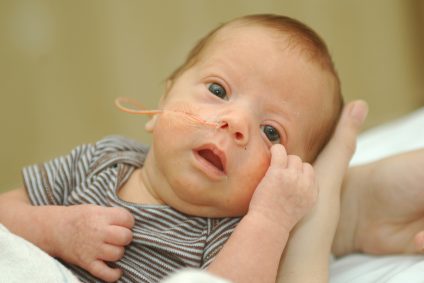
Yesterday I was sent this photo:

image

The caption reads:

Baby born unassisted tonight. Slow recovery but I’m curious about the cord. My others didn’t look like this, they just turned white. This was candy cane striped for more than an hour after her birth. We cut it and she seemed fine.

It was an apt description. A “candy cane” cord can be associated with severe infection.

As I wrote on my Facebook page:

This baby needs to be seen in the emergency room immediately. A baby can have a life threatening infection without showing any symptoms until it collapses and dies.

If anyone is a member of this group, could they please pass along this information. The mother is planning to take her baby to the pediatrician tomorrow. The baby could be dead long before that.

Obviously, it’s impossible for me (or anyone) to make a diagnosis from a picture, but the picture is sufficiently unusual and the consequences so dire that someone needs to tell the mother.

As I had hoped, the mother learned what I had written. What did she do?

She took herself to the hospital because she had fainted repeatedly, apparently due to excessive blood loss, but, by her own admission:

I did not tell them we had concerns about the baby.

In an effort to justify hiding the truth about the baby, she noted:

Her temperature, color and breathing have remained good (although she is quite grunty and seems to have a lot of birth gook in her nose and throat, congestion sounds)… [W]e’re going to watch her closely for signs of infection and take her to see a doctor on Monday…

But signs of infection in a newborn can be extremely subtle. Newborns with serious infections do not have the same symptoms as toddlers and older children. They may have no fever or even a lower than normal body temperature. Grunting can be a subtle sign of infection. A baby grunts because she is having trouble keeping her airway open. Grunting may be the only sign of a life threatening infection. Everything else might seem fine until the baby has a cardio-respiratory arrest and dies.

The mother appeared on my Facebook page in order to defend herself (she has since deleted her comments), and, of course, her friends swooped in to tell me to mind my own business. As usual, I was accused of being mean to the mother. The issue, according to the mothers defenders, is that I had publicly shamed her. Curiously no one seemed to be the least bit concerned about the health of the baby.

Why did I make a public plea? For two reasons: 1. It was the only I way I could be sure that she would see it; 2. The mother publicly solicited advice about the umbilical cord and I wanted to inform as many people as possible about what it could mean.

The mother is embarrassed? I should hope so. She’s committing medical neglect. Sure, the baby might be perfectly fine, but this is like the case of the Canadian couple who let their toddler die of meningitis. They were told the baby might have meningitis, but instead of getting it checked out by a medical professional, they waited until he was in extremis and then it was too late.

The issue here is medical neglect. The mother has no fear of hospitals; she took herself to the hospital because she doesn’t feel well. She was warned that the baby could be very sick DESPITE the fact that she looks fine. I can imagine many reasons why the mother does not want to have any contact with the hospital (all having to do with protecting herself), but I’m struggling to imagine any reason why getting the baby checked by a pediatrician could have any downside for the baby.

So what, if any, are the ethical obligations of bystanders? If we see a child who may be seriously ill or even dying, and a parent who doesn’t seem to understand the seriousness of the situation, do we have an ethical obligation to let her know? And what if we let her know about the risks and she chooses to ignore them? Do we have an ethical obligation to attempt to change her mind? Do we have an ethical obligation to inform child protection authorities?

I think I do, not because I’m a doctor, but because I’m a human being. It is entirely possible that the baby is fine; I recognize that. In fact, as time goes by and the baby does well, it becomes more likely that she is fine. But then it is entirely possible that any child subject to medical neglect will end up fine, but that doesn’t mean it isn’t medical neglect.

The mother understood that something was wrong. That’s why she sought reassurance on Facebook; but when she couldn’t be reassured she decided to ignore the issue. Should the rest of us ignore it along with her? I don’t think so.

To do so seems to me to be fundamentally unethical.

The Childbirth Olympics

golden podium of top 3 winner isolated on white background

Hi, folks, we at the Extreme Sports Network are proud to be reporting from this year’s Childbirth Olympics. We’re especially fortunate to have world renowned childbirth expert Ima Frawde, CPM here with us as a commentator.

Ima, tell us about competitive childbirth.

Ima Frawde, CPM here. I want to start by thanking the Extreme Sports Network for inviting me to comment on this very important event. Many people may not know about competitive childbirth, but it’s an obvious outgrowth of our understanding about birth. We used to think that childbirth was about having a healthy baby and a healthy mother, but we now realize that birth as a piece of performance art whose goal is to perfectly replicate birth in prehistoric times.

[pullquote align=”right” cite=”” link=”” color=”” class=”” size=””]In addition to her medal, the winner receives a golden pessary and a lifetime supply of Depends.[/pullquote]

I like to think of the sport as akin to rhythmic gymnastics. In rhythmic gymnastics participants are judged on how closely they execute a variety of stylized moves and how closely they mimic each other. In competitive childbirth, the judges evaluate each mother for how closely she executes the pre-approved moves of competitive childbirth and how closely she mimics childbirth in prehistory as imagined by a bunch of high school graduates thoroughly ignorant of both obstetrics and history.

The competition involves 3 phases. Competitors are awarded marks in each area: each competitor receives risk points, the object being to enter the arena with as many pre-existing childbirth risks as possible. Basic individual risks —breech, twins, postdates, VBAC —- receive small numbers of points. The key in this phase of the competition is to combine risks for bonus points. Bonus points are also awarded for women who willingly expose their babies and themselves to above average risks —- like a history of a previous stillbirth, intrauterine growth restriction, or a history of postpartum hemorrhage. pushing for more than 6 hours, ignoring thick meconium, or failing to monitor the fetal heart rate for hours at a time.

The strategy in this phase is come as close as possible to killing your baby and yourself without actually dying. No, there’s no point penalty if your baby or you actually die, but you can’t brag about the award if you don’t live to see it.

The second phase, which we’ll be watching today, awards style points for how closely the competitor mimics childbirth in nature as a imagined by a bunch of ignorant clowns. Style points are awarded for prolonged latent phase (regular contractions for two or more days BEFORE labor really starts), arrest of labor lasting 6 hours of more (extra style points for going over 8 hours), and pushing for more than 6 hours (extra style points for pushing more than 12 hours). Style points are also awarded for how much food a woman consumes during labor (it doesn’t matter if she vomits it up later), how much time she spends in the fecally contaminated birth pool, and how many herb preparations she consumes. Bonus points are awarded for pushing for more than 6 hours, ignoring thick meconium, or failing to monitor the fetal heart rate for hours at a time. Giving birth in creative place, such as in the Amazon rainforest or on top of Mount Everest also merits bonus points. Additional bonus points are awarded for being accompanied by animals like dolphins or sharks.

The final phase awards points for defiance of authority, but don’t thinks it’s merely about refusing postpartum interventions meant to protect the health of your child. Competitors are judged both on the seriousness of withholding those interventions; as you might expect, refusing the vitamin K shot, which could result in the baby bleeding into its brain and sustaining permanent damage, gets more points than refusing the eye ointment, which might only lead to blindness. Points are also awarded for bizarre childbirth practices attributed to indigenous peoples but actually made up by white women like lotus birth or eating the placenta. Additional bonus points are awarded for tricky maneuvers like attempting to breastfeed a non-responsive baby, or breastfeeding while in hypovolemic shock due to hemorrhage.

The winner of the competition is determined by adding together risk points, style points and defiance points. The winner has the satisfaction of knowing that she met the highest standards fabricated by a bunch of ignorant clowns.

Wait, what? The baby? Oh, yes, a live baby can be an unexpected bonus of the Childbirth Olympics, but that’s hardly a requirement, especially because many women enter because they want to experience a “healing” birth after a previous loss (of the competition, silly, not the previous baby), as opposed to wanting another child. There’s so much more to childbirth than whether the baby lives or dies!

The prize? Thanks for reminding me. In addition to her medal, the winner receives a golden pessary and a lifetime supply of Depends, which is going to come in very handy when she develops urinary incontinence after the inevitable uterine prolapse.

What do the runners-up receive? They receive a consolation prize for failing to meet the high standards of the competition: a lifetime supply of guilt!


Adapted from a piece that first appeared in September 2013.

What we can learn about obstetric violence from the $16 million Malatesta verdict: nothing!

18957911 - zero sign created from text - illustration

The birth community is buzzing with news of a $16 million dollar judgement in an Alabama obstetric case.

According to the Yahoo article Mom Who Sued Hospital for Traumatic Birth Wins $16 Million by Beth Greenfield:

[pullquote align=”right” cite=”” link=”” color=”” class=”” size=””]The jury did not find anyone guilty of obstetric violence.[/pullquote]

Malatesta was 32 years old and halfway through her fourth pregnancy when she switched hospitals, lured from one that had taken a typically medicalized approach to her three previous births … to Brookwood Medical Center in Birmingham, which used a new marketing campaign that offered women “autonomy,” birthing tubs, and cushy suites, and promised to honor their birth plan.

But what Malatesta experienced on the night she gave birth to her son at Brookwood in 2012 could not have been further from the picture the hospital had laid out. Instead … she was met with a staggering series of aggressive medical interventions — including being forced onto her back by nurses who held her son’s crowning head inside her for six minutes as they waited for a doctor to arrive. It left the mother of four (ages 10, 9, 6, and 4) with a rare and debilitating nerve injury, pudendal neuralgia, which causes her severe and chronic pain to this day — not to mention lingering psychological trauma for both Malatesta and her husband, J.T., an attorney.

Cristen Pascucci of ImprovingBirth.org has spun this as a victory against obstetric violence, going so far as to provide the jury verdict form on the organization’s Facebook page.

image

Other websites, Facebook pages and Tweets have echoed Pascucci’s spin.

There’s just one problem: As you can see from the verdict form, the jury did not find anyone guilty of obstetric violence. The jury found for Malatesta on two counts: the hospital nurses violated the standard of care and the hospital was guilty of false advertising.

According medical anthropologist Lola Ruiz-Berdun, the definition of obstetric violence is:

… the appropriation of the body and reproductive processes of women by health personnel, which is expressed as dehumanized treatment, an abuse of medication, and to convert the natural processes into pathological ones, bringing with it loss of autonomy and the ability to decide freely about their bodies and sexuality, negatively impacting the quality of life of women.

In other words, it is positioned as distinct from harming the patient or her baby (malpractice) defying the patient’s expressed refusal of treatment (medical battery) or failing to inform the patient of risks and benefits (informed consent).

As Law Journal Newsletters explains:

Reports of the types of acts that fall under the larger umbrella of obstetric violence include:

physical violence during labor and delivery, including slapping, pushing on the abdomen to force the baby out, and excessive force on the fetus;
lack of informed consent;
misinformation about delivery options and methods;
disrespect for non-medical delivery methods such as water births, use of a doula, and home delivery;
lack of confidentiality; or
forced sterilization.

The initial reaction is that tort claims based on problems such as these are unlikely to be as prevalent in the United States as in countries with a less robust health care system. Likewise, it is easy to fit many of these issues into traditional tort categories — assault and battery, violation of informed consent statutes, invasion of privacy or administrative claims for violation of the HIPAA Privacy Rule or state confidentiality regulations, or traditional medical malpractice cases. But, as we explore below, the concept of “obstetric violence” may ripen into new claims under American tort law.

Obstetric violence does not exist as a tort in American law.

…[W]e searched the “All States and All Federal” database on Westlaw for the term “obstetric /2 violence.” There were no reported cases in the results and no secondary sources that specifically discussed “obstetric violence” as a concept. A broader Internet search yielded three state trial level cases: 1) Caroline Malatesta’s case against Brookwood Medical Center in Alabama; 2) Kimberly Turbin v. Alex Abbassi, M.D., Superior Court of California, County of Los Angeles (http://bit.ly/1O5zvSt); and 3) Michelle Mitchell v. Mark Brooks, M.D., Augusta County, VA (http://bit.ly/1ObsRYS).

In Mitchell v. Brooks, the plaintiff lost.

According to the news articles, Ms. Mitchell alleged that Dr. Brooks forced her to have a C-section based on concerns of gestational diabetes and fetal macrosomia (larger than normal-sized) (http://bit.ly/1ObsRYS). Although Mitchell consented to the C-section, she claimed she signed the consent form under duress because Dr. Brooks threatened to call child protective services. The issue appeared to be the unwanted surgery because, according to the article, both mother and baby were “fine.” Ms. Mitchell initially sought $2.5 million in damages, but reduced her claim to $200,000. An Augusta County, VA, jury returned a defense verdict for Dr. Brooks.

Turbin v. Abbassi is the case of the forced episiotomy discussed several times on this blog. The plaintiff has been featured repeatedly on ImprovingBirth.org., which produced a press release at the time the lawsuit was filed.

The incident involved the outdated use of episiotomy—vaginal cutting that has been discredited for decades as harmful to women and not beneficial to babies when performed routinely (link). Despite the weight of medical evidence, episiotomy is still sometimes imposed on women without medical need and often without consent (link), apparently for provider convenience. Such treatment is characterized as obstetric violence, which has now been criminalized in a handful of other countries.

But Turbin filed a case of battery an established cause in law, not obstetric violence. The claim is that the doctor performed a medical procedure against the patient’s expressed wishes. That procedure could have been ANY procedure. The issue is not the episiotomy but the lack of consent.

The Malatesta case is not a case of obstetric violence, either. It’s just a straightfoward malpractice case alleging a violation of medical standards by nurses applying pressure to the baby’s head in an attempt to prevent delivery and the nerve injury to the mother that resulted. It was malpractice; and malpractice should never be tolerated and ought to be punished.

It was also a case of false advertising. The hospital advertised the availability of waterbirth more than a year after they had banned it. That, too, is unacceptable and should be punished.

Cristen Pascucci is insisting that Malatesta’s victory strikes a great blow against obstetric violence and for women everywhere; she’s wrong on both counts. It yet another one of a myriad of victories against nursing malpractice and has nothing to do with obstetric violence. It’s a victory for Malatesta personally, but does nothing for any other woman.

Sorry food fascists, nutrition is not the key to health

Pretty Woman makes a choice between bad food

There are seemingly a million different dietary prescriptions for health and they’re all based on a fundamental misapprehension. In contrast to popular belief, nutrition is NOT the key to health.

You’d never know that to look at the food fascists among us. They insist that they can control their health through diet, though the specific diet differs dramatically from faddist to faddist, conjuring ideal values of protein, carbohydrate, fat and supplement intake essentially from thin air.

[pullquote align=”right” cite=”” link=”” color=”” class=”” size=””]The rise of heart disease and cancer as major causes of death is the inevitable result of being healthier than ever. [/pullquote]

Pretending that nutrition is the key to health makes about as much sense as pretending that the reason your car eventually stops working is because you didn’t use the right gas. Fuel can’t prevent the effects of wear and tear or accidents.

Similarly, food is fuel and it can’t prevent the effects of wear and tear on our bodies, either. It is only magical thinking that leads some people to believe that it can.

Why would anyone think that nutrition was the key to health?

Most people are ignorant of what life in general and diet in particular was like in prehistoric times. As I explained in the recent post Paleo-suckered, many imagine that the Paleolithic Era was a time of human flourishing, a literal Garden of Eden. That’s certainly the central premise of the Paleo-diet: in contrast to Americans, our Paleolithic ancestors were purportedly healthy and if we copy their diet we could be healthy, too.

It’s hard to imagine anything further from the truth. We are the ones who are healthy; they were scraping along and barely surviving. Had human beings not developed technology, they might have become extinct just like every other hominid species that has ever existed. There is not a single health parameter that was better in Paleolithic times than today. In every possible way that you can measure health, we are exponentially healthier than at any other time in human history.

So why do we think that we are not healthy now?

Let’s look at causes of death in the Paleolithic:

Starvation
Infection
Childbirth
Accidents/Violence
Cancer
Heart Disease

Cancer and heart disease killed relatively few people because they’re diseases of wear and tear, far more common in old age than in youth or early adulthood. Very few people lived long enough to get them.

Let’s look at common causes of disease in our country today:

Starvation
Childhood Infections
Childbirth
Accidents/Violence
Cancer
Heart Disease

Starvation, childhood infection and deaths in childbirth have dramatically decreased to the point that they represent only a small fraction of deaths. Not surprisingly, accidents/violence and the diseases of old age kill a larger proportion of the population than ever before.

This chart illustrates the 10 leading causes of death by age group in the US:

image

Cancer and heart disease are primarily diseases of old age. As the average lifespan approaches 80 years, the majority of deaths are obviously going to be diseases of old age.

A key point that many people forget is that everyone dies. It didn’t have to be this way. Bacteria are essentially immortal. Unless they’re eaten, they will continue to split into daughter cells forever. As higher organisms evolved, finite life expectancy evolved with it. Although we often say that people die of “old age,” they die of wear and tear on critical organs like the brain and heart.

You can’t prevent wear and tear in a car, but if you treat it poorly you can make it worse. However, there is no way that you can prevent wear and tear by changing the formulation of the gas that you put in the car. Similarly, you can’t prevent wear and tear in the human body (yet), but you can make it worse. Obesity increases the wear and tear on the heart. Certain behaviors (tanning, smoking) dramatically increases the wear and tear on the skin and lungs respectively, leading to skin cancer and lung cancer. But there is no reason to believe that changing what you eat will prevent natural wear and tear.

Human beings have never been healthier than we are today. That heart disease and cancer (diseases of wear and tear) are the major causes of death is the inevitable result of being HEALTHIER. Unless we find a way to live forever, cancer and heart disease will continue to represent a growing proportion of deaths.

Could we be healthier still?

It’s possible, but we will die nonetheless; the only difference is that we might be older at the time of death. There is NO WAY to completely prevent wear and tear, and it is wear and tear that kills us.

Avoiding obesity can reduce wear and tear on the heart and avoiding certain behaviors can reduce the wear and tear that leads to cancer, but there’s no reason to think that food has a greater impact on health beyond reducing obesity.

Nutrition is not the key to health and never has been; it is only wishful thinking that makes people believe otherwise.

Paleo-suckered: Worshiping the Paleolithic lifestyle that nearly led our ancestors to extinction

The word 'Paleo' written with fresh vegetables on a wooden background.

Are you a Paleo-sucker?

Paleo-suckers believe in the central conceit of modern alternative health — everything from the paleo-diet to natural parenting to herbal supplements — that human beings reached the apogee of our evolution during the Paleolithic Era. According to advocates of “natural living,” our bodies were designed for the demands of life in the Paleolithic and technology, whether modern diets, modern medicine or modern parenting, is making us sick; and returning to the Paleolithic lifestyle will make us healthy.

[pullquote align=”right” cite=”” link=”” color=”” class=”” size=””]We came mighty close to extinction during the Paleolithic Era only to be saved by technology.[/pullquote]

From The Paleo-Diet Revised by Loren Cordain:

When you put into practice the nutritional guidelines of the Paleo Diet, you will be getting the same protection from heart disease that the Eskimos had. You will also become lean and fit, like your ancient ancestors. This is your birthright. By going backward in time with your diet, you will actually be moving forward.

From Positive Birth Stories:

What if we knew pregnancy and giving birth was the most normal natural thing on earth and millions of women go through it without ‘complications’, fear or intervention?

What if we were reminded that our bodies are perfectly designed to give birth?

From Jennifer Grayson in HuffPo:

Of course, if prehistoric mothers had been facing problems of milk insufficiency with the global pervasiveness that exists today, it is pretty conceivable that mankind would have died out a long time ago. It’s been estimated that anywhere from 1 to 5 percent of women are physically unable to produce breast milk, which is known medically as “failed lactation.”

Nothing could be further from the truth!

The dirty little secret about our Paleolithic ancestors is that they were relatively poorly designed from an evolutionary perspective. Indeed, we came mighty close to extinction during that era and our closest hominid relatives, the Neanderthals, did become extinct. The fact that we are still here has nothing to do with our biology and everything to do with technology.

This graph illustrates the point:

image

As you can see, the Paleolithic era was characterized by relatively flat population growth, and though you can’t see it on this graph, there were periods of time where human evolution encountered bottlenecks. The population actually dropped as low as 50,000 individuals and possibly even as low as 10,000 breeding pairs.

The average annual growth rate was approximately 1 per 1000. In other words, a group of 1000 people would end up with 1001 people who survived to reproduce. Why did the population grow so slowly? It grew slowly because up to half of all children died before age 5, and as many as three-quarters died before reproductive age.

Paleolithic life expectancy was appallingly low: approximately 35 years. It didn’t improve very much until the mid 1800’s as this graph demonstrates:

image

Just about every health parameter you can name was execrable in the Paleolithic Era. Far from being the period of our greatest health success, it was a period of our greatest health vulnerabilities. Based on our health in the Paleolithic, human beings aren’t particularly evolutionarily successful at all. Our success comes from our technology. The ultimate Paleolithic hominids were the Neanderthals and they were literally driven to extinction by Homo sapiens because their prehistoric “technology” was better.

We are healthier now than we have ever been at any period in human history. There is no other period of time during the entirety of our evolution that even comes close. The key to our health has NOTHING to do with diet, NOTHING to do with supplements, NOTHING to do with breastfeeding, NOTHING to do with the quackery that masquerades under the name of alternative health.

We are healthiest now because of technology:

  • Clean water
  • Sewage systems
  • Central heating
  • The germ theory of disease
  • Cooked food
  • Modern obstetrics
  • Vaccines
  • Antibiotics
  • Surgery
  • Anesthesia

I could go on and on, but you probably get the point by now.

Why would we want to recapitulate the diet of our Paleolithic ancestors if they died in droves? Why would we want to copy childbirth in nature if it led to massive perinatal death rates? Why would we want to treat our illnesses with natural remedies if they didn’t help our ancestors at all? Why would we glory in the parenting methods of our ancestors if 3 out of 4 children didn’t survive to reproduce?

Why? Because some people are suckers. They have literally no idea what life was life in the Paleolithic and they’ll believe any nonsense fed to them if it has a pretty book cover or website. They are so desperate to feel smarter and better than others that they can’t tell the difference between stupidity and wisdom, mistaking the former for the latter.

Don’t be a Paleo-sucker. Diet, childbirth, remedies and health weren’t better in the Paleolithic Era. They were far, far worse and only a fool would believe otherwise.


Modern Alternative Mama admits she doesn’t believe in science; who would have guessed?

Scientific method word cloud concept with abstract background

You can’t make this stuff up!

Yesterday, Modern Alternative Mama Kate Tietje posted this to her Facebook page:

I don’t believe in science…

I appreciate the process of science. I like to use science to inform my choices. But I do not “believe” in it.

Who would have guessed?

[pullquote align=”right” cite=”” link=”” color=”” class=”” size=””]Science is a process of inquiry; alternative health is a belief system.[/pullquote]

How about anybody who knows the difference between science and the nonsense that Tietje peddles? … And I do mean peddles since this is a money making proposition for her.

Let’s parse her words to see what I mean.

…[S]cience is NOT a belief system!!

Science is a process. It is a method of inquiry. It is a way in which we try to understand the world around us.

It appears that Kate is trying to justify the fact that she routinely ignores scientific evidence. In doing so, she conflates the process of science with scientific evidence, the yield of that process.

What is the process of science?

  1. Make an observation or observations.
  2. Ask questions about the observations and gather information.
  3. Form a hypothesis — a tentative description of what’s been observed, and make predictions based on that hypothesis.
  4. Test the hypothesis and predictions in an experiment that can be reproduced.
  5. Analyze the data and draw conclusions; accept or reject the hypothesis or modify the hypothesis if necessary.
  6. Reproduce the experiment until there are no discrepancies between observations and theory.

Let’s contrast that with the “process” of alternative health.

  1. Make an observation.
  2. Conclude that the observation is reproducible, generalizable and immutable.

In other words, while science is a process, alternative health is a belief system. You see it; you believe it.

Here’s the critical distinction:

Science tells us that what we think may not be true. Alternative health tells us that what we think must always be true.

Kate continues:

If you believe in science, and think the science is settled and clear and will never change of any topic, then you do not understand what science is. You are worshiping that topic like a religion instead.

Please, join me in saying: ‪#‎ScienceIsNotaBelief‬ We can’t change how people think until we understand what science actually is and use it appropriately. That means continuing to question, continuing to look for new information and new interpretations of the available information. This is critical to our future.”

But believing in “science,” does not entail thinking that scientific evidence is settled and clear. In fact, confidence in the process of science means that you DON’T think that scientific evidence is settled and clear. The process of science is based on the assumption that there will ALWAYS be new evidence and that the new evidence will help us come closer to understanding the truth about the particular issue under study.

In contrast, believing in alternative health means that you DO think that the truth is settled. The truth is whatever you have observed (or believe that you have observed). It will not change. For people like Kate Tietje, their belief that vaccines cause autism is immutable. It cannot be changed by any amount of contradictory information. That’s why purveyors of alternative health don’t bother to subject their beliefs to testing; what would be the point?

The massive power of science comes precisely from the fact that it is not a belief system, but a system of constant inquiry that allows us to approach the truth of the matter. The central defect of alternative health, like all pseudoscience, is that it is a belief system and that it involves no inquiry.

And the process of science, far from being a highly technological endeavor, is an innate process. Babies are little scientists. They sit in a high chair and drop food and toys over the side, repeatedly checking to make sure that objects fall down, not up. They’re testing a hypothesis and will modify it based on what they find. They don’t learn about gravity by reading a book. They learn by testing.

Alternative health, in contrast, is a belief system like religion. It is taught in books and on websites and message boards. There are no hypotheses and there is no testing. It is a matter of faith.

When we say we “believe in science,” we mean that we believe that the process of science provides the best approximation of the workings of the natural world and the most predictive power. We believe that scientific evidence is the most accurate evidence. The virtue of science is that it isn’t a belief system. The problem with alternative health is that it is.

The BoobGeek gaslights women who complain about lactivists

image

Lactivists have woken up to the fact that their ugly behavior — placing the process of breastfeeding above the wellbeing of mothers and babies — has been noticed.

Whether it’s grossly exaggerating the benefits of breastfeeding, promoting the humiliation of women who formula feed through the cruelly named “Baby Friendly” Hospital Initiative, or engaging in acts notable for their ignorance and viciousness like telling women who have had mastectomies that they ought to try to breastfeed, lactivists apparently believe they cannot promote breastfeeding by sticking to truth and kindness.

[pullquote align=”right” cite=”” link=”” color=”” class=”” size=””]As practiced by The BoobGeek, gaslighting means responding to stories of hurt and harm with a wall of denial.[/pullquote]

Now you might think that having become aware of the fact that many women view lactivists in general, and lactation consultants in particular, as disingenuous, dishonest and cruel might cause them to reassess their approach. It hasn’t. Instead it has given rise to a new lactivist technique: gaslighting. Tipper Gallagher, IBCLC, known as The BoobGeek, is an expert in this form of psychological abuse.

What is gaslighting?

According to Wikipedia:

Gaslighting … is a form of psychological abuse in which a victim is manipulated into doubting their own memory, perception, and sanity. Instances may range from the denial by an abuser that previous abusive incidents ever occurred, up to the staging of bizarre events by the abuser with the intention of disorienting the victim.

The term comes from the play Gas Light:

… The plot concerns a husband who attempts to convince his wife and others that she is insane by manipulating small elements of their environment, and subsequently insisting that she is mistaken, remembering things incorrectly, or delusional when she points out these changes.

As practiced by The BoobGeek and her colleagues, gaslighting means responding to stories of hurt and harm with a wall of denial.

For example, yesterday Gallagher wrote on her Facebook page:

Let me be blunt. The people who say that lactivists, breastfeeding advocates, and lactation professionals care only about breastfeeding (rather than individual parents and babies) and believe that breastfeeding is perfect, easy, magical, and foolproof are lying to you.

I don’t know if it was in response to my piece The irrational worship of breastmilk, but it was posted approximately 2 hours later. In my piece I tore apart a lactivist article, 15 Magical Benefits of Breastfeeding. I concluded:

There’s absolutely nothing magical about breastfeeding, and the endless efforts of lactivists to insist that there is tells us more about their need for self-justification than about breastfeeding itself.

If the BoobGeek’s Facebook post was in response, it represents gaslighting at its finest. Though I was discussing an article that claimed from the title onward that breastfeeding is magical, Gallagher has the temerity to insist that lactivists don’t claim that breastfeeding is magical. Who are you going to believe, Tipper Gallagher or your lying eyes?

It seems that gaslighting is something of a specialty for The BoobGeek.

Last fall she produced this gaslighting confection, How to write an anti-breastfeeding article. It appears to have been written in response to Courtney Jung’s NYTimes Op-Ed Over-selling Breastfeeding. Apparently, in the world of lactivists anyone who doesn’t offer full throated support of their methods is “anti-breastfeeding.”

Gallagher starts with this delicious bit of psychological projection:

Congratulations on your decision to write your first anti-breastfeeding article! Although this is no doubt a column, opinion piece, or blog post, we will use the word “article” to describe the outcome for simplicity’s sake, and not to imply any degree of journalistic integrity. We can’t, after all, get people riled up about breastfeeding if we are moderate or accurate.

Gallagher proceeds to engage in one logical fallacy after another including the fallacy of the lonely fact:

…[P]lease avoid telling stories where you met an IBCLC who was helpful and mindful of your goals and limitations, your baby-friendly hospital provided formula supplementation and did not make you sign a scary waiver, you had a difficult start but going to some La Leche League meetings got you on the right track with no judgment whatsoever, or your lactation consultant taught you how to use a bottle or counseled you through weaning when it was necessary or desired. No one wants to hear this.

Gallagher apparently believes that if even one lactivist was kind or helpful, it proves that all lactivists are kind and helpful.

The argument from authority:

All of those silly breastfeeding advocates like the World Health Organization, United Nations Children’s Fund, American Academy of Pediatrics, Centers for Disease Control, Agency for Health Care Research and Quality (AHRQ), et al. use really awful studies to talk about how great breastfeeding is.”

Two wrongs make a right:

Remember, though, that no formula company has ever undermined breastfeeding by providing free samples of their products. There is no proof that advertising affects us in any way.

Gallagher also denies the role of privilege in overselling of breastfeeding:

You also will increase your cred to do a shout-out to those less fortunate. Remember, it is upper-middle-class people like you who are protecting those in poverty from the predatory lactation industry. Breastfeeding absolutely doesn’t matter when it comes to outcomes for black babies, or those babies born in poverty, no matter what experts have to say on the issue.

Gallagher ends with the logical fallacy beloved of lactivists that anyone who decries the exaggeration of benefits believes that there are no benefits:

Assure the reader that since he/she was fed formula and is fine, breastfeeding doesn’t matter at all, on any level …

Gallagher engages in zero introspection. She never questions her personal beliefs and motivations, while misrepresenting and dismissing out of hand the personal beliefs and motivations of anyone else. If you are hurt or angry because of the overselling of breastfeeding benefits, the cruel nature of programs to promote breastfeeding, or the inappropriate behavior of lactation consultants don’t tell it to The BoobGeek.

She’ll just say you misunderstood … the classic gaslighting response.

The irrational worship of breastmilk

Praying for the sun.

A visitor from outer space might be forgiven for thinking that breastfeeding is a fundamentalist religion.

What do I mean?

Breastfeeding is routinely touted as having “magic” powers. Breastfeeding advocates (lactivists) have continually come forward with ever more outrageous claims about the benefits of breastmilk. At the same time, they’ve dreamt up ever more stringent requirements around breastfeeding to make what was once modestly difficult even harder. And they’ve justified it all by invoking a past that never existed.

[pullquote align=”right” cite=”” link=”” color=”” class=”” size=””]The real benefits of breastfeeding are never enough for breastfeeding advocates.[/pullquote]

It’s almost as if they cannot tolerate the idea that breastfeeding, a bodily function, is no more likely to be perfect than any other bodily function. It’s absurd when you think about it. We know that pregnancy has a natural miscarriage rate of 20%. That means that 1 in 5 pregnancies end in the death of the embryo and most women will have at least one miscarriage in their reproductive lives. There’s no reason to think that breastfeeding is any more magical than pregnancy, but that hasn’t stopped the outrageous claims.

Consider this recent piece on the website BlogHer, 15 Magical Benefits of Breastfeeding. The piece is filled with lie after lie after lie.

Breastfeeding does NOT promote bonding. There’s no evidence to support that claim, zip, zero, nada. Lactivists just made it up.

Breastfeeding is NOT nature’s greatest protector. Consider that the countries with the highest breastfeeding rates have the HIGHEST infant mortality rates. The truth is that our brain is nature’s greatest protector. Only countries with easy access to technology (including infant formula) have low rates of infant mortality.

Breastfeeding does NOT provide any greater support for developing brains than formula. That’s hardly surprising since formula is designed to mimic breastmilk as closely as possible.

Breastfed babies do NOT have better facial muscle and speech development compared to formula fed babies.

There’s NO evidence that breastfeeding is more environmentally friendly than formula feeding. Sure you cut out the cow and the packaging of formula, but the calories have to come from somewhere. In breastfeeding, they come from the food the mother eats, which is obviously more elaborate and requires more elaborate packing materials than grass.

Breastfeeding mothers do NOT get more sleep. That is absolutely nonsensical. A bottle feeding mother can get a full, uninterrupted night’s sleep every night so long as there is someone else with whom she can share bottlefeeding duties. That lactivists would even make such a ridiculous claim is a testament to their desperation to inflate the benefits of breastfeeding.

Perhaps the most outrageous lie currently making the rounds is the theory of spit backwash.

Breastfeeding researcher Katie Hinde and others have noted that when babies are sick, the antibodies content of breastmilk rises. They’ve fabricated an extraordinary mechanism for how the baby communicated to its mother that it was sick. Their theory is known as “spit backwash.” Baby saliva is literally sucked into the breast where the mother’s body senses the pathogen and makes antibodies in response. There is NO evidence of any kind, zip, zero, nada that spit backwash occurs.

There’s a far simpler explanation for Hinde’s observations. It’s hard for two people to be much closer than a mother and her feeding infant. If a baby has a cold, for example, the mother can simply breathe in the virus expelled when the baby sneezes and make antibodies to the virus to protect herself from the cold. Those antibodies then end up in the breastmilk incidentally as a result of being in the mother’s bloodstream. If researchers had looked, they would likely have found that the father and siblings were making the same antibodies as the mother, not to transmit them to the baby, but to protect themselves.

That would be impressive enough, but the real benefits of breastfeeding are never enough for breastfeeding advocates.

Breastmilk worship is like a religion, but how is it like a fundamentalist religion?

Activists are constantly creating ever more arcane restrictions for breastfeeding itself in the breastfeeding version of asceticism: You must breastfeed in the first hour! You must breastfeed exclusively! Even one bottle of formula is risky! Never use a pacifier! You must breastfeed exclusively for 4 months! … no for 6 months! … no for a year! Food before one is just for fun!

There is no evidence that breastfeeding needs to be surrounded by so many restrictions. There is no evidence that breastfeeding is such a tenuous behavior among babies that a pacifier or bottle of formula will ruin the breastfeeding relationship. These restrictions are part of the oneupsmanship beloved of breastfeeding advocates and have nothing to do with what is good for babies.

The outrageous claims and the ridiculous restrictions are justified by appeals to “Nature.” But the “Nature” that lactivists envision never existed. Nature is filled with infant death in spite of breastfeeding and in some cases because of breastfeeding. Not all mothers make enough milk to fully nourish a baby. Not all babies can extract enough milk from the breast to fully nourish themselves. Moreover, indigenous peoples around the world have always given babies fluids in addition to breastmilk. There’s very little about contemporary breastfeeding that recapitulates breastfeeding in nature.

There’s absolutely nothing magical about breastfeeding, and the endless efforts of lactivists to insist that there is tells us more about their need for self-justification than about breastfeeding itself.

If they want to worship something about the human body, they ought to worship the brain. It is our brains and the resultant technology that save countless infant lives each year, NOT breastfeeding.

No, breastfeeding in the first hour does NOT reduce the risk of death by 40%

Black and white shot of newborn baby right after delivery

Extraordinary claims require extraordinary evidence.

UNICEF has made the extraordinary claim that breastfeeding within the first hour after birth reduces the risk of neonatal death by 40%:

[pullquote align=”right” cite=”” link=”” color=”” class=”” size=””]Breastmilk saves lives in the developed world NOT because breastmilk is magical, but because contaminated water and lack of basic medical care are deadly.[/pullquote]

Delaying breastfeeding by two to 23 hours after birth increases the risk of a baby dying in its first month by 40 percent … UNICEF said…

UNICEF, which has been campaigning to promote early breastfeeding, estimates 77 million babies around the world each year are not breastfed within the first hour of their life. It estimates about 130 million babies are born each year.

“Breast milk is a baby’s first vaccine, the first and best protection they have against illness and disease,” France Bégin, UNICEF senior nutrition adviser, said in a statement.

“Making babies wait too long for the first critical contact with their mother outside the womb decreases the newborn’s chances of survival, limits milk supply and reduces the chances of exclusive breastfeeding.”

What evidence did they provide to support that assertion?

It’s not clear what they are referring to since they failed to provide citations, but there are only a handful of studies that have looked at the issue. As far as I can determine, UNICEF seems to be relying primarily on two papers, one from Ghana and the other from Nepal, yet UNICEF does not make it clear that the data they are relying on comes from underdeveloped countries with contaminated water.

So right off the bat, the claim that initiating breastfeeding within the first hour compared to later in the first day reduces the risk of death by 40% is deeply disingenuous. Many cultures believe that babies need pre-lacteal feeds of water, tea or other liquids. These may be prepared with contaminated water raising the possibility that the cause of increased mortality is NOT delaying breastfeeding but substituting contaminated water for breastfeeding.

Second, a large proportion of babies are born in industrialized countries where the threats to babies are much smaller. UNICEF offers no evidence that the risks that babies face in the developing world extend outside it.

Third, correlation is not causation. The fact that delayed initiation of breastfeeding is associated with an increased risk of neonatal mortality does not mean that delayed initiation of breastfeeding caused the increased risk of neonatal mortality. Contaminated water and lack of basic medical care are only two among many possible confounding variables. The authors of both papers tried to correct for the confounding variables that they recognized, but there may have been others that they did not recognize.

But there’s even a bigger problem here. The papers that UNICEF appears to rely upon reach conclusions that are not supported by their data.

The first paper is Delayed Breastfeeding Initiation Increases Risk of Neonatal Mortality that appeared in the March 2006 issue of Pediatrics.

The study took place in Ghana where breastfeeding rate are very high. Indeed breastfeeding was initiated in the first 24 hours in 71% if infants and 98.7% of infants were breastfeeding by day 3.

The following chart presents the authors’ findings:

image

As you can see, the neonatal death rate for babies breastfed in the first hour is taken as the reference point. Compared to babies breastfed within the first hour, the odds ratio of neonatal deaths for babies first breastfed between hours 1-24 is 1.45, meaning that there is a 45% increased risk of death. But take a look at the 95% confidence interval. It ranges from 0.9-2.35.

What are confidence intervals? They tell us the likelihood that the difference we observed experimentally represents a real difference.

If a 95% CI for the relative risk includes the null value of 1, then there is insufficient evidence to conclude that the groups are statistically significantly different.

And that’s just what we see here. The confidence interval includes the number 1 and therefore, there is insufficient evidence that the groups are statistically significantly different.

How about the second paper Breast-Feeding Patterns, Time to Initiation, and Mortality Risk among Newborns in Southern Nepal?

Here’s the relevant chart from that paper:

image

Once again we see that delaying initiation of breastfeeding from the first hour to the any time later in the day has a relative or 1.43 or a 43% increased risk of neonatal death. But once again we also see that the confidence interval (0.5-3.89) includes the value 1. Therefore we cannot conclude that the groups are statistically significantly different.

In other words, we cannot rely on the conclusions of either of these papers.

The idea that breastfeeding initiation within the first hour saves lives compared to the second hour or later is an extraordinary claim. Yet UNICEF does not merely fail to provide extraordinary evidence to support it; it fails to provide ANY evidence to support it.

No doubt the folks at UNICEF mean well, but they don’t seem to understand that scaremongering based on bad data is unethical.  They seem to be unable to avoid grossly exaggerating the benefits of breastfeeding. Moreover, it is deeply disingenuous to imply that what is lifesaving for infants in developing countries has any bearing on the health of babies in the rest of the world.

Breastfeeding is good; in certain parts of the world it may even be lifesaving. But that’s NOT because breastmilk is magical, but because contaminated water and lack of basic medical care are deadly. Perhaps if they spent less time making unsupported claims about breastfeeding and more time providing clean water and basic medical care, they could save far more lives than promoting breastfeeding ever would.

No, breastmilk does NOT improve neurocognitive development in preemies

Premature baby

Another day, another crappy breastfeeding study.

A new study was recently released by the Journal of Pediatrics purporting to show the benefit of breastmilk of neurocognitive development in premature infants. Unfortunately the study, Breast Milk Feeding, Brain Development, and Neurocognitive Outcomes: A 7-Year Longitudinal Study in Infants Born at Less Than 30 Weeks’ Gestation, is fundamentally disingenuous and deeply misleading.

[pullquote align=”right” cite=”” link=”” color=”” class=”” size=””]There is no remotely plausible reason to use number of days on which infants received >50% breast milk as a measure of breastmilk intake.[/pullquote]

Here’s what the authors claimed they found:

We studied 180 infants born at < 30 weeks gestation or < 1250 grams birth weight enrolled in the Victorian Infant Brain Studies cohort from 2001-2003…

Predominant breast milk feeding in the first 28 days of life was associated with a greater deep nuclear gray matter volume at term equivalent age and better IQ, academic achievement, working memory, and motor function at 7 years of age in very preterm infants.

Before we look at the actual data, let’s consider what we would need to show to be sure that increased breastmilk intake caused improved neurocognitive development. As I explained recently in the post How we know that cigarettes cause lung cancer and vaccines DON’T cause autism, we’d need to be sure that there was a a dose-response relationship and consideration and rejection of alternative explanations among other things.

In other words, we’d need to show that the improvement in neurocognitive development was closely tied to the amount of breastmilk an infant received (ml/kg) and that there were no other plausible alternative explanations for the findings.

What did the authors find?

… [W]e found favorable associations of maternal breast milk intake in the first 28 days of life with neurodevelopmental outcomes at 7 years of age. For example, IQ was 0.5 points higher per additional day that breast milk intake was >50% of total enteral intake, and 0.7 points higher per additional 10 mL/kg/d breast milk ingested…We also saw associations of breast milk intake with size of the deep nuclear gray matter and hippocampus at term equivalent age, although this effect was not present on brain volumes assessed at 7 years of age.

Why is this data a bunch of crap?

First, as I noted above, in order to show that breastmilk improves neurocognitive outcomes, you MUST show a correlation between breastmilk VOLUME (ml/kg) and neurocognitive outcomes. The authors did not do that, almost certainly because there was no association.

Instead, it appears they engaged in “p-hacking,” slicing and dicing the data in different ways until they found a bizarre parameter (days breast milk intake was >50% of total enteral intake) that was associated with outcomes.

Wikipedia defines p-hacking as:

Data dredging (also data fishing, data snooping, equation fitting and p-hacking) is the use of data mining to uncover patterns in data that can be presented as statistically significant, without first devising a specific hypothesis as to the underlying causality.

I’d be willing to bet serious money that the authors NEVER hypothesized a relationship between number of days on which infants received >50% breast milk and neurocognitive outcomes. There is no remotely plausible reason to use number of days on which infants received >50% breast milk as a measure of breastmilk intake.

We know that every data set contains patterns due entirely to chance. Slicing and dicing the data until you find a chance pattern (number of days on which infants received >50% breast milk is associated with neurocognitive outcomes!) is not scientific evidence of anything at all.

Second, the authors claim to find an association with breastmilk intake and neurocognitive outcomes at 7 years of age but NOT at 2 years of age. In addition they claim to find an association of breastmilk intake and brain volume at term equivalent age, but NOT at 7 years. That suggests that neither is a real finding; merely a chance result.

According to the authors:

These results provide support for national and international recommendations to provide breast milk as the primary diet for preterm infants.

Actually, the results suggest precisely the opposite. Since there is NO association between breastmilk volume and neurocognitive outcomes, this study offers NO support for recommendations to provided breastmilk as the primary diet for preterm infants.

Breastmilk should be provided to preterm infants because it prevents necrotizing enterocolitis, but there is no evidence that it improves neurocognitive outcomes, nor any reason to suppose it would.