Category Archives: Uncategorized

Homebirth midwife requirements “tightened” to include high school diploma

How pathetically inadequate is the homebirth midwifery CPM “credential”?

Requiring a high school degree or (its equivalent) constitutes “tightening.”

The CPM (certified professional midwife)is the pretend “credential” fabricated by Ina May Gaskin and colleagues, and awarded to themselves. Its purpose is to trick lay people and legislators into believing homebirth midwives are trained. It is not recognized by any other first world country because it does not meet even minimal education and training requirements in the UK, the Netherlands, Australia, Canada or anywhere else.

In keeping with its purpose of awarding a “credential” to anyone who wants one, the Midwives Alliance of North America (MANA), the organization started by Gaskin and colleagues, refused to create formal educational requirements. Or as euphemistically explained, MANA:

embraces multiple educational routes of entry into the profession of midwifery including institutionally-based programs, university-based programs, at-a-distance learning, and apprenticeship

As Professor Katherine Beckett acknowledged:

… Many in the midwifery community have been concerned that the extensive educational requirements associated with professionalization will exclude midwives already trained through apprenticeship, as well as aspiring midwives who are unable to relocate and/or pay for a formal education. In order to include such women, MANA acknowledges ‘‘multiple routes of entry’’ to the profession and allows applicants for the CPM degree to acquire their knowledge and skills through either formal education or apprenticeship; a woman whose education ends with high school can therefore be certified as a CPM. In public and political forums such as state capitol buildings, most midwives do not stress that they may be certified without extensive formal education …

But now, in an effort to bring rigor unseen heretofore to the CPM credentialing process, the North American Registry of Midwives (NARM), the sister organization of MANA, has declared:

All applicants will be required to submit evidence of a high school diploma or equivalent.

That’s right. In an age in which 92.7% of American women graduate from high school, homebirth midwives have taken the unprecedented step of instituting the requirement for a degree that everyone already has.

Why the change? There are two possible explanations that I can think of.

First, it may have finally occurred to MANA that awarding credentials to women who don’t even have high school diplomas has the potential to undermine the legitimacy of the CPM in the eyes of the general public.

Second, they may have been required to do so by the National Commission on Certifying Agencies (NCCA).

Homebirth midwives like to boast that the CPM is accredited by the NCCA. The NCCA accredits:

… a variety of certification programs/organizations that assess professional competence. Certification programs that receive NCCA Accreditation demonstrate compliance with the NCCA’s Standards for the Accreditation of Certification Programs…

NCCA accredited programs certify individuals in a wide range of professions and occupations including nurses, automotive professionals, respiratory therapists, counselors, emergency technicians, crane operators and more.

The NCCA does NOT evaluate the validity of the certification, whether that is the CPM or a license to operate a crane. It merely evaluates the credentialing process to ensure that it is impartial, properly administered, and includes relevant requirements. I would not be surprised if NARM’s Portfolio Education Process (PEP) ran afoul of Standard 8 of the NCCA Standards for the Accreditation of Certification Programs:

Once a program is accredited, “grandfathering,” or any other procedure for granting a credential in the absence of evaluating the knowledge and/or skill of an individual, is not acceptable…

Grandfathering is generally seen as a conflict with stakeholder interests. It is used from time to time in licensure as a means of protecting the rights of individuals who entered a profession prior to its regulation and should not be excluded from the right to practice…

One of the fundamental purposes of the PEP is to grandfather in self proclaimed midwives who practice without ever completing the basic certification requirements. Indeed, in 2000, when Johnson and Daviss conducted their famous study, more than 90% of the CPMs in the study had obtained the CPM through PEP. That might have been reasonable then since the requirements for certification had been codified only in 1994. But now, more than a decade later, as many as 2/3 of CPMs obtain the credential through PEP. According to the NCCA, that is unacceptable.

In other words, NARM may have been forced to institute the requirement for a high school diploma (or its equivalent) or risk losing the accreditation of its credentialing process.

The CPM credential is a joke perpetrated on unsuspecting lay people and legislators. The fact that a high school diploma represents a “tightening” of the requirements makes that quite clear.

A tale of two births

First child: Trusting birth

The mother is a homebirth midwife who decided to have an unassisted homebirth.

Alternate video link here.

Trust led to:

Second child: Fearing birth

Fear led to:

The take home message is pretty stark:

Trusting birth (ignoring post dates, protracted labor, homebirth, lack of a trained attendant) = Death.

Fearing birth (hospital birth, multiple trained attendants, postdates induction, IV, etc) = Joy.

Why are you bragging about your breech homebirth?

Would you boast about dangling your baby over the edge of a balcony to please your fans?

It’s really no different from what homebirth advocates do when they boast about a breech homebirth to impress their peers. Oh, wait; it is a bit different. A breech homebirth is far more dangerous than dangling your baby off a balcony.

Yesterday, the twitter feed on #homebirth was filled with worshipful retweets of a frank breech delivery at homebirth (“Graphic!”), breathlessly subtitled “A frank breech at home, against all odds.”

No less an authority than Gina Crossly-Corcoran, The Feminist Breeder, weighed in with:

This is one of the coolest things you’ll ever see. A graphic video of a frank breech homebirth …

Why was TFB praising this irresponsible, dangerous choice as cool? Perhaps she wanted to offer confirmation of what I wrote last week about Homebirth, immaturity and risk taking:

… [T]he more contraindications you have to homebirth, the more prestige you will get from having a homebirth…

In the case of homebirth advocates, it’s not that they are unaware of the risk. They do it and then publicize it specifically because they know about the risks but wish to preen within a subculture that admires taking a dare more than ensuring a safe outcome.

The next time you see a blog post, tweet, or homebirth video boasting about twins, or footling breech or premature birth at home, keep that in mind. These don’t demonstrate that the risk taking behavior is safe. They’re no different than boasting that you drove home drunk and stoned and made it there without killing yourself.

QED!

Why was the mother chortling that she defied the odds? I suspect the mother is referring the odds of having a breech vaginal delivery in the face of a massive amount of evidence that it is a dangerous, selfish, stupid choice. She defied those odds all right.

How about the odds that the baby might die or suffer a serious injury? She defied those odds, too, although considering the typical ignorance of homebirth advocates, she probably had no idea what they were.

According to this Medscape article on breech, discussing the outcome of the Hannah study:

The composite measurement of either perinatal mortality or serious neonatal morbidity by 6 weeks of life was significantly lower in the planned cesarean group than in the planned vaginal group (5% vs 1.6%, P < .0001). Six of 16 neonatal deaths were associated with difficult vaginal deliveries, and 4 deaths were associated with fetal heart rate abnormalities. The reduction in risk in the cesarean group was even greater in participating countries with overall low perinatal mortality rates as reported by the World Health Organization. The difference in perinatal outcome held after controlling for the experience level of the obstetrician.

And that’s in the hospital with every possible type of emergency assistance available.

How dangerous is breech homebirth?

Consider the verdict of Marc J. N. C. Keirse MD, DPhil, DPH, FRCOG, FRANZCOG, one of the leading exponents of breech vaginal birth and an editor of the journal Birth, the de facto journal of the natural childbirth movement. Dr. Kierse shared this view in a commentary bemoaning the impact of the Hannah breech trial (which found that breech increases the risk of neonatal death) in promoting C-section for the delivery of breech babies.

Home birth is a well-established recipe for disaster for a baby in breech presentation and contrary to any sensible guidelines that have ever been developed.

It’s hard to get more definitive than that.

All in all, it’s an object lesson in the ignorance, narcissism and immaturity of homebirth advocates. Michael Jackson did something incredibly stupid when he dangled his baby over a balcony, but, in reality, the odds that he would injure or kill the baby were very low. This mother did something far more stupid in attempting a breech homebirth; the odds that the baby would be permanently injured or die were high.

At least Michael Jackson did not boast about his stupidity, but then again, he probably didn’t care whether The Feminist Breeder and her ilk thought that risking a baby’s life is “cool.”

The homebirth playbook for lobbying legislators

In Challenging Medicine: Law, Resistance, and the Cultural Politics of Childbirth (Law & Society Review, Volume 39, Number 1, 2005), Katherine Beckett and Bruce Hoffman explore the public face of the homebirth movement.

Homebirth midwives have set themselves some key tasks. No, not obtaining a better education, not monitoring their outcomes, and not instituting appropriate disciplinary measure for midwives who, through their lack of education and training, hurt patients. The key task they have set for themselves is obtaining more money. They want access to insurance company reimbursements, and they can only get that by becoming licensed.

You might think that homebirth midwives, including CPMs (certified professional midwives) face an up hill battle. After all, they are a second, inferior class of midwife; they have less education and training than any midwives in the first world; they are ineligible for licensure in any other industrialized country specifically because of their lack of education and training. But good PR can elide a multitude of sins, and playing fast and loose with the truth doesn’t hurt either.

Beckett and Hoffman (who are sympathetic to the homebirth movement) examine the rhetoric used in efforts to gain licensure for direct entry midwives. They note that alternative childbirth advocates have crafted their claims for public consumption, modifying them to appeal to legislators, and, when deemed necessary, concealing their true beliefs.

Homebirth lobbyists employ techniques that can be categorized as follows:

Midwifery-as-Tradition
Birth activists located their claims and arguments in a narrative of tradition and continuity, depicting midwifery (like motherhood) as an age-old practice and long-honored profession …

They conveniently neglect to mention that certified nurse midwives are heir to that respected profession, not themselves, a bunch of high school graduates who can’t be bothered to get a college level degree or a real midwifery degree.

Safety
Birth activists have gone to great lengths to assure lawmakers that their primary concern is maternal – and especially infant- safety… One simply must be concerned about safety in order to be seen as credible. For this reason, many activists have stressed that midwives screen their clients carefully and serve only those deemed ‘‘low-risk.’’ In fact, one of midwives’ main concerns about licensure is that it necessarily limits the kinds of clients they may legally attend and requires them to refuse to serve a ‘‘high-risk’’ client … In this way, birth activists seeking midwifery licensure have been compelled to adopt a stance that many find objectionable.

This is simply a lie. If safety were their primary concern, they would get real midwifery degrees. Although when speaking for public consumption they stress screening, the reality is that they accept anyone who will pay. In reality, they ignore safety standards, and they make vigorous efforts to remove standards. Oregon is a perfect example. Melissa Cheyney, head of the Oregon Board of Direct Entry Midwifery, is on record insisting that any birth junkie who wants to call herself a “midwife” should be entitled to do so.

Science
Midwives and their supporters have [attempted] to position themselves as the truly scientific ones. Toward this end, birth activists cite a seemingly endless supply of epidemiological studies that conclude that planned home births attended by trained birth attendants are ‘‘as safe or safer’’ than hospital birth for low-risk women. In fact, their lobbying materials consist largely of abstracts of such studies, occasionally accompanied by an article concerning high rates of cesarean section or rising medical costs.

That’s the homebirth canard du jour. What could sound more impressive that shouting from every hilltop that obstetricians ignore the scientific evidence, while homebirth midwives are slaves to scientific rigor? The fact that the claim is a lie is beside the point. Homebirth midwives neither know the truth, nor care.

If you say “obstetricians ignore the scientific evidence” fast enough, people won’t stop to consider if it makes sense. But if we do stop to consider it, we might amplify it as follows:

We are supposed to believe that obstetricians (with 8 years of higher education, extensive study of science and statistics, and four additional years of hands on experience caring for pregnant women), the people who actually DO the research that represents the corpus of scientific evidence, are ignoring their own findings while homebirth midwives (generally high school graduates with no background in college science or statistics, let alone advanced study of these subjects, and limited experience of caring for pregnant women), the people who NEVER do scientific research, are assiduously scouring the scientific literature, reading the main obstetric journals each month, and changing their practice based on the latest scientific evidence.

Technology
… [F]aith in technology is only part of the cultural story; discourses expressing fear of technology gone awry also abound, and many contemporary social movements -especially the environmental movement- highlight the risks associated with modern technology to great effect. The idiom of ‘‘the natural’’ has proliferated in this context, and the spread of natural foods, natural clothing, and natural medicine suggests that this rhetoric has significant cultural appeal. The importance of living and giving birth ‘‘naturally’’ has likewise been a key theme for the alternative birth movement…

Oh, the irony. Homebirth midwives will use any technology at their disposal: computers, the internet, e-books published on demand to rail against technology at birth.

Professionalism
This definition of professional midwifery is quite useful to those seeking licensure. First, it neatly distinguishes midwifery from medicine to bolster the case that midwives are neither medical practitioners nor para-professionals, but rather autonomous health care providers with a distinct area of expertise (i.e., out-of-hospital birth)…

Yet even as they tout their professional qualifications, midwives are (more quietly) modifying what it means to be a professional. Many in the midwifery community have been concerned that the extensive educational requirements associated with professionalization will exclude midwives already trained through apprenticeship, as well as aspiring midwives who are unable to relocate and/or pay for a formal education. In order to include such women, MANA acknowledges ‘‘multiple routes of entry’’ to the profession and allows applicants for the CPM degree to acquire their knowledge and skills through either formal education or apprenticeship; a woman whose education ends with high school can therefore be certified as a CPM. In public and political forums such as state capitol buildings, most midwives do not stress that they may be certified without extensive formal education …

In other words, as I have written repeatedly, homebirth midwifery is about letting any birth junkie call herself a “midwife” and bill for her services and has nothing to do with protecting babies and mothers.

Choice
Midwives and their supporters consistently frame this debate as one centrally about individual choice, arguing vigorously that women have the right to choose where and with whom they will give birth. As the legislative sponsor in California stated, ‘‘At the core of this issue are two simple beliefs: first, that childbirth is a natural process of the human body and not a disease. And second, that a parent has the responsibility and the right to give birth where and with whom the parent chooses . . .’

Choice is red herring. The reality is that women already have the right to give birth wherever they choose, and they already have to right to surround themselves with the friends, family and attendants they prefer. The “choice” that is at stake here is the homebirth midwife’s “choice” to charge money for her attendance.

Turf Battles
Birth activists further justify their emphasis on choice by arguing that planned home birth with a midwife is a safe choice for most women. As was discussed previously, the claim that midwife attended out-of-hospital birth is relatively safe is supported by references to scientific studies and to midwives’ professional qualifications and expertise. But it is also supported by the suggestion that the doctors who oppose midwife-attended births are engaged in a ‘‘turf battle,’’ and thus that medical claims about lack of safety are suspect…

Through such statements, birth activists invoked a kind of David and Goliath imagery, raising suspicions of opponents’ veracity by highlighting organized medicine’s professional and economic interests in the outcome of these debates.

As I wrote recently, framing the issue as one of “turf” has important advantages for homebirth advocates. At a deep (possibly unconscious) level, most homebirth advocates suspect that homebirth may be risky for babies. The few professional homebirth advocates who are familiar with the literature and statistics know that homebirth increases the risk of neonatal death. Moreover, the idea that being far from emergency personnel and equipment in the event of an emergency defies common sense. Therefore, they’ve chosen to frame the argument as doctors bullying midwives over “turf.”

These claims are the public face of the homebirth movement. I have made it my task to look beyond the public face to the reality: the shoddy training of homebirth midwives, the extensive efforts to stymie any regulation and, above all, the ever growing number of deaths and serious injuries that occur at the hands of homebirth midwives.

A version of this piece appeared on Homebirth Debate in January 2007.

Real mothers burn the umbilical cord

It’s been an interesting week in the world of homebirth crazy. We’ve talked about supreme narcissist Janet Fraser who let her own baby die for no better reason than bragging rights, a Fraser acolyte who described her second trimester miscarriage with retained placenta and major hemorrhage as “physiological“, and the incredible immaturity of homebirth advocates who think the bigger the risk, the better the birth.

Let’s end on a high note with homebirth nonsense even more ridiculous than what typically passes for “knowledge” among homebirth advocates. Did you know that the best mothers burn their babies’ umbilical cords?

This bit of wisdom stupidity comes from Clare Loprinzi, an Oregon homebirth midwife who was forced to resign her license rather than face criminal prosecution. Unable to practice in Oregon, she moved to Hawaii to peddle her deadly nonsense there.

How stupid and dangerous is Clare Loprinzi? Consider the “explanation” of severing the umbilical cord by burning it:

The umbilicus is the entry place to all abdominal organs. It is the core. by heating it and driving the last of the blood in there you are giving a profoundly tonic treatment for the baby who has just run a marathon.

It would reduce the risk of bleeding and entry of infections. You are warming digestion which will reduce the tendency for jaundice, besides just creating a strong baby which means a good nurser.

Colostrum as we know aids in setting up the digestive system and binds the iron in the gut. This stops them from reabsorbing the iron and eliminating it with healthy bowel movements from a healthier baby.

How moronic is this? Let us count the ways.

  1. The umbilical cord contains blood vessels and does not provide entry to the abdominal cavity. Any blood still in it drains to the inferior vena cava and thence to the heart.
  2. Heating the blood in the cord by candle flame does not “drive” it anywhere. It simply burns it.
  3. Warming the digestion? Last I heard, the abdominal organs work best at 98.6°, standard body temperature.
  4. Reduces the risk of jaundice? How could that be when jaundice is caused by an excess of bilirubin, not “cold” abdominal organs?
  5. Colostrum? Iron? Bowel movements? What does this have to do with cord burning? Nothing, but LoPrinzi apparently thought it sounded good so she threw it in.

Loprinzi demonstrates cord while stretching the cord over a metal kidney basin. Don’t worry, though, you don’t have to use something so unnatural. You can actually buy purpose built wooden (all natural!) boxes to get the job done.

Here’s what surprises me about umbilical cord burning: no not the elaboration of this nonsense by a homebirth midwife. Most of what homebirth midwives have to say is nonsense.

What I want to know how can any woman with a modicum of intelligence fall for this crap and hire someone who promotes it?

Homebirth, immaturity and risk taking

Homebirth advocates have a lot in common with teen drunk drivers. They appear to have the same insight, intelligence and maturity level of those teens. How else to explain that the greatest prestige comes from taking the biggest dare?

Homebirth advocates can be found in newspapers, and on blogs and message boards claiming that homebirth has been shown to be safe for low risk women. Let’s leave aside for the moment the fact that it’s not true (existing scientific evidence, state and national statistics show that homebirth increases the risk of neonatal death). The women writing these comments believe it is true. So how then to explain the fascination and approval given to stories of high risk women attempting high risk homebirth?

Consider this story that got wide play in the homebirth community: Home Birth of Twins Born Past 41 Weeks, One Footling Breech featured on that festival of ignorance and stupidity known as Birth Without Fear.

At that appointment the day before they were born, [the doctor] ran through a host of frightening ‘risks’ and recommended we get to a hospital and get the babies out by whatever means necessary…

What risks might those be? Twins are high risk, post term is high risk and footling breech is so high risk as to be absolutely contraindicated.

No problem. As with teenagers, the bigger the risk, the greater the prestige. Note the use of scare quotes around the word risk. The first step in building prestige for risk taking is pretending that only cowards believe that the behavior is actually risky.

A homebirth advocate who boasts that she will have postdates twins at home is like a teen who boasts that he can race another teen while drunk and stoned. See how brave the homebirth advocate is?

I knew that the best way to have my boys born safely, whole and healthy was to rely on my own body and mind and allow for a spontaneous natural labor to begin.

See how brave the drunk, stoned teenager is? He “knows” (his teen “intuition” tells him) that its going to turn out fine.

Why do they do it? For bragging rights, of course.

A growing body of research demonstrates that teen risk taking can be attributed to psychosocial immaturity.

… [R]isk taking in the real world is the product of both logical reasoning and psychosocial factors. However, unlike logical-reasoning abilities, which appear to be more or less fully developed by age 15, psychosocial capacities that improve decision making and moderate risk taking—such as impulse control, emotion regulation, delay of gratification, and resistance to peer influence—continue to mature well into young adulthood. Accordingly, psychosocial immaturity in these respects during adolescence may undermine what otherwise might be competent decision making…

Homebirth advocates are impaired in both aspects of decision making. They lack the the knowledge of science and statistics and the logical reasoning ability to make safe decisions about birth. In addition, they are incredibly vulnerable to the influence of peers within the homebirth subculture. The web is filled with birth stories and birth videos that exist for no other reason than to proclaim their authors’ superiority as mothers and to impress their peers.

Everyone knows that teens do stupid things, the stupider the better. Homebirth advocates are exactly the same. They do stupid things, the stupider the better.

That’s why the more contraindications you have to homebirth, the more prestige you will get from having a homebirth. Twins are contraindicated, so having twins at home gets lots of positive attention. Triplets are even riskier so that’s even better. Postdates are contraindicated at home, so that’s good for prestige points. Ditto for breech.

It is worth noting that there is not a shred of scientific evidence supporting twins, postdates or breech at home. In every study, and in every country where homebirth is regulated, twins, postdates and breech are absolute contraindications to homebirth. No matter. Being drunk and/or stoned is an absolute contraindication to driving, but there’s no prestige in following the rules.

In the case of homebirth advocates, it’s not that they are unaware of the risk. They do it and then publicize it specifically because they know about the risks but wish to preen within a subculture that admires taking a dare more than ensuring a safe outcome.

The next time you see a blog post, tweet, or homebirth video boasting about twins, or footling breech or premature birth at home, keep that in mind. These don’t demonstrate that the risk taking behavior is safe. They’re no different than boasting that you drove home drunk and stoned and made it there without killing yourself.

Driving drunk and stoned is about succumbing to peer pressure and seeking peer approval. It demonstrates psychosocial immaturity. Homebirth in a high risk situations is about succumbing to peer pressure and seeking approval. It demonstrates a chilling level of psychosocial immaturity in which a woman risks her baby’s life for no better reason than to impress her (equally immature) friends.

Since when is it physiological to have a retained placenta and major hemorrhage?

Natural childbirth and homebirth advocates have made “physiological” birth a gold standard. Unfortunately, they seem to have confused “physiological” with “refusing medical care” regardless of complications.

Consider this acolyte of Janet Fraser’s who boasts of her “physiological” 16 week miscarriage. In the first place, miscarriage by definition is pathological. Second, retaining the placenta for days, hemorrhaging and requiring assistance in evacuating the uterus is not even normal for a miscarriage.

No matter. The mother tells her tale as if it were something other than objective evidence that her midwife is ignorant and she is completely clueless.

… I’ve already begun to think of this miscarriage as my first home birth, which gives me some comfort.

On Tuesday 3rd of Jan I woke up feeling like my body was gearing up for a period. I had a loose bowel movement, normal for me on the first day of my period. My body felt crampy. I was not surprised when I wiped after a pee to see a small amount of mucusy blood…

For the next 24 hours or so I was filled with fear. Not for my dead baby. But for what might lay ahead for my miscarriage…

Nice. No fear for the baby, only for herself.

The next morning, my waters broke… It struck me with full force then- my instincts were right …

Her instincts? She didn’t have instincts; she had symptoms. You don’t need any special insight to figure out that bleeding and cramping is a sign of an impending miscarriage.

I had mild cramping exactly like period pain… I stood up from the toilet and took a step towards the door. My baby just fell out of me…

She called the midwife, whose behavior was nothing short of criminally negligent:

I began passing clots and blood, not a crazy amount but constant. The cramping was coming and going, rhythmic like in labour…

… I lay back to rest and tried to see my baby, still between my legs, attached to his/ her cord but it was tricky… I really wanted to give him/ her a chance to stay connected to his/ her placenta.

Around 4 pm, with no cramping or passing of blood/ clots, 8 hours after I birthed my baby we decided to cut the cord. I finally got a good look. It was a girl.

Now the real crazy begins. The mother had a retained placenta for 8 hours, a pathological complication by any stretch of the imagination, and the midwife … left. Retained placenta leads to pain and bleeding or both. Far from demonstrating “physiological” miscarriage, the patient and her midwife demonstrated the natural history of untreated miscarriage complications.

Fully 4 days after passing the baby (but not the placenta), the mother began to hemorrhage. The midwife offered more midwifery nonsense (tincture of angelica).

The midwife returned 36 hours later:

We both felt that my miscarriage was coming to an end…

The next day, Tuesday … around 5pm, very suddenly and with a force and pain that left the previous big bleeds for dead my contractions started up again…

My midwife came and supported me through the next few hours. I passed some significant lumps of membrane and many smaller dense lumps and so much free running blood into a bowl, into the toilet, into towels…

Despite continuing bleeeding, the mother and her midwife felt no sense of urgency:

Before my wonderful midwife left … we decided I would see my GP the next day…

I saw a doctor I’d never met before… [S]he did a blood test and organised a scan to take place within 20 mins down the road.

… Later that day my doctor phoned to say the scan was clear, it looked like I had nothing left in my uterus. She said to go to bed and rest and let my body recover…

Later that evening my doctor called back with the blood results. Suddenly she was not so relaxed. My haemoglobin was very low, 75 for those that know what it means. She gave me her mobile number and said I absolutely must not bleed anymore and to go to hospital if I started to…

Guess what? Cramping started up again.

It was about 10pm I think when we arrived in emergency at RPA…

Eventually a female Ob walked in…

… Within moments of inserting the speculum – this terrifying large cold metal thing that she turned a screw and expanded once inside my vagina- she said she could see a ‘clot’ or something and was going to give it a little tug… She had to use considerable strength to remove it, a huge compacted piece of placenta about the size and shape as an erect penis…

My body felt so different. Even as soon as the piece of placenta was removed colour returned to my lips. Within a few hours I felt entirely different and realised just how fucking awful I had been feeling with my cervix blocked up…

The mother was called back to the hospital to discuss the issue of her extremely low hematocrit (blood count). She was offered a transfusion, but declined.

The next couple of days are again a blur… I had long spells of shortness of breath, numb or tingly weak limbs and at times chest pain. The only position my body could handle when like this was flat on my back with my feet raised above my head…

This woman is lucky that she did not die from hemorrhage or infection or both. There was absolutely nothing “physiological” about the miscarriage or about the major complications that she experienced. Declining treatment does not turn a pathological situation into a physiological one. It merely turns a pathological situation into a life threatening one.

In pursuit of a bizarre ideal, this women nearly killed herself … and she’s proud of it.

Janet Fraser: Why not an unassisted coroner’s inquest?

I’ve been debating whether to write once again about unassisted childbirth advocate and supreme narcissist Janet Fraser. Since everything is always and only about Janet, she no doubt will enjoy the attention.

Nonetheless, I think it is important to point out that when it counts, Janet Fraser seeks professional assistance. No, silly reader, not for something as trivial as whether her baby girl Roisin lives or dies. Only when it’s really, really important: when it concerns Janet herself. Even though there is no requirement to bring a barrister to a Coroner’s inquest, Janet Fraser decided she needed assistance. How ironic.

Fraser was interviewed in late March 2009, supposedly after labor with her third child had begun:

Janet Fraser is in labour… Has she called the hospital to let them know what’s happening? “When you go on a skiing trip, do you call the hospital to say, ‘I’m coming down the mountain, can you set aside a spot for me in the emergency room?’ I don’t think so,” says Fraser, whose breathing sounds strained.

This is pretty much where we end the conversation that started with me calling Fraser and asking if it was true that her organisation, Joyous Birth, was advocating that women go it alone giving birth at home, with no midwife or GP or bags of resuscitation gadgets…

Fraser is 40. She hasn’t seen a doctor or any health professional since becoming pregnant this time. No ultrasound, no genetic testing, no internal examinations, no stethoscope. Does she have any feeling for how long the labour will go? “I could do this for days. My daughter’s birth was 50-something hours. You just do it — it’s just birth, a normal physiological process.”

Oops!:

… [T]he natural water birth of her third child, a girl, at her home went horribly wrong in the early hours of March 27.

Ambulances were sent to the address following a triple-0 call made at 1.13am.

An ambulance service spokesman said paramedics were called to a Croydon Park address for a newborn baby who had suffered cardiac arrest and was not breathing.

Paramedics failed to revive the baby throughout the journey to the Royal Prince Alfred Hospital at Camperdown.

Does Janet blame herself for Roisin’s senseless, preventable death? Of course not. Narcissists never blame themselves and when anyone suggests that they take responsibility for their own actions, narcissists declare that they are being persecuted. Indeed, according to Janet, Roisin’s death wasn’t even traumatic.

My birthrape with my first child is traumatic. My stillbirth was not.

But evidently her Coroner’s inquest is traumatic and she wants not only the assistance of a barrister, but your assistance, too.

I hope that you, dear readers, will consider a donation to help my family out in this instance. It is because of the work I do in birth that I have been targetted in this way and while I will never stop doing this work, I have paid high prices professionally and personally and now in a very real and literal sense, for speaking the truth about birth in Australia.

You can paypal to janetlegalfees … if you feel moved to donate. I will be eternally grateful and each one of you will know that you did something concrete towards helping me and the families with whom I’ve worked. Thank you.

Why doesn’t she go to the Coroner’s inquest unassisted. All she has to do is answer questions truthfully. Talking is completely natural. Does she really need assistance just to talk?

Of course, Janet isn’t just talking, she’s lying:

But Ms Rees said that Ms Fraser told doctors at RPA that she had detected a pulse in the umbilical cord just after the birth.

The inquest heard Ms Fraser now believes there was no pulse, and that she had taken it at a time of “high agitation.”

But lying to save yourself is utterly natural, too. Why shouldn’t Fraser lie “unassisted” instead of having her barrister “deliver” her lie for her?

Janet Fraser let her daughter die unassisted because she was more interested in meeting her narcissistic needs than in preserving her daughter’s life. And now Janet Fraser is telling bold faced lies with legal assistance because meeting her narcissistic needs is far more important to her than the truth.

Is labor longer? Does it matter?

13E4FEB1-088C-47B8-A074-0E140C37AF1B

I’ve spent quite a few hours puzzling over an important new obstetric paper, and I’m still not sure what to make of it.

The paper is Changes in labor patterns over 50 years by Laughton, Branch, Beaver and Zhang; it was released online in advance of print publication. The authors assert that labor is longer now than it was 50 years ago, that obstetric interventions are to blame and that longer labor is a bad thing.

Specifically:

Data from pregnancies at term, in spontaneous labor, with cephalic, singleton fetuses were compared between the Collaborative Perinatal Project (CPP, n= 39,491 delivering 1959 – 1966) and the Consortium on Safe Labor (CSL, n=98,359 delivering 2002 – 2008).

Results

Compared to the CPP, women in the CSL were older (26.8 ± 6.0 versus 24.1 ± 6.0 years), heavier (BMI 29.9 ± 5.0 versus 26.3 ± 4.1 kg/m2), had higher epidural (55% versus 4%) and oxytocin use (31% versus 12%), and cesarean (12% versus 3%). First stage of labor in the CSL was longer by a median of 2.6 hours in nulliparas and 2.0 hours in multiparas, even after adjusting for maternal and pregnancy characteristics, suggesting that the prolonged labor is mostly due to changes in practice patterns.

Conclusions

Labor is longer in the modern obstetrical cohort. The benefit of extensive interventions needs further evaluation.

There is no doubt that the data demonstrate that labor is longer in the modern cohort of patients investigated by the authors, but it is not clear that interventions are responsible, or that this is a bad thing, given that neonatal outcomes were better in the modern cohort.

The authors compared two large datasets:

The course of labor and method of delivery were compared between the National Collaborative Perinatal Project (CPP) and the Consortium on Safe Labor (CSL). The National Collaborative Perinatal Project was a prospective study of approximately 54,000 births to 44,000 women recruited from 1959 to 1965 (last delivery in 1966)…

The Consortium on Safe Labor was a retrospective cohort study conducted by the Eunice Kennedy Shriver National Institute of Child Health and Human Development, National Institutes of Health and included women giving birth between 2002 and 2008, with the majority (87%) between 2005 and 2007. There were 228,668 deliveries …

They restricted the analysis to women who started labor spontaneously and who went on to have a vaginal delivery.

They found that the maternal characteristics and intervention rates differed markedly between the two cohorts:

Compared to women in the CPP study, women in the CSL study were older (26.8 ± 6.0 versus 24.1 ± 6.0 years), had a higher average pre-pregnancy BMI (24.6 ± 5.6 versus 22.6 ± 4.2 kg/m2), had a higher average BMI at delivery (29.9 ± 5.0 versus 26.3 ± 4.1 kg/m2), and were more racially diverse (P Data analysis of the first stage of labor showed:

The median time for first stage of labor increased significantly between the CPP and CSL for all parities, regardless of cervical dilation upon admission. In nulliparas, even though the median cervical dilation and effacement were slightly more favorable on admission, the median time for first stage of labor from 4 cm to completely dilated was 2.6 hours longer in the CSL. After adjusting for maternal age, race, BMI at delivery, gestational age at delivery, spontaneous rupture of membranes and birth weight, the median time for first stage of labor was still 2.6 hours longer. Both secundagravidas and multiparas had similar cervical dilation and slightly greater effacement upon admission in the CSL compared to the CPP From 5 cm to completely dilated, the median time for first stage of labor was 1.8 hours for secundagravidas (P1) and 1.7 hours for multiparas (P2+) in the CSL. After adjusting, these times were slightly longer (2.0 hours for both).

The authors looked at the second stage of labor, but felt they could not draw valid conclusions because the extensive use of forceps in the earlier cohort artificially shortened the second stage.

How about neonatal outcomes?

Neonates weighed more in the CSL: 113 g more for nulliparas, 117 g for secundagravidas (P1), and 93 g for multiparous women (P2+). Neonatal Apgar scores at 1 and 5 minutes were higher in the CSL compared to CPP, regardless of parity. After adjusting for maternal and obstetrical characteristics, there was still a lower percentage of Apgar scores < 7 at 5 minutes in the CSL compared to CPP for all parities (3-4% lower difference, P The authors conclude:

Labor patterns differ in contemporary practice in the CSL compared to approximately 50 years ago in the CPP. The first and second stages of labor were longer in the CSL, with an overall slower latent phase, a less obvious inflection point in nulliparas, and a later inflection point in multiparas. After adjusting for the differences in maternal and pregnancy characteristics, labor was still significantly longer in the modern CSL cohort compared to the older CPP cohort… In nulliparous women, changes in obstetric practice appear to have contributed the most to the longer median first stage of labor (from 4 cm to 10 cm cervical dilation) in the modern CSL cohort compared to the older CPP cohort. In secundagravidas (P1) and multiparous women (P2+), changes in obstetric practice contributed to almost all of the difference to the longer median first stage of labor (from 5 cm to fully dilated).

Of note, the principal difference in labor patterns between the two groups appears to be a longer latent phase in the contemporary group. In other words, active labor now starts closer to 6cm instead of the classic active phase which began at 4 cm. Once active labor started, the length of the remaining labor was very similar.

As I said above, the data seems to clearly demonstrate that labor patterns have changed. However, the conclusion drawn by the authors, that obstetric interventions (specifically epidurals and oxytocin augmentation) are responsible for this change is only one possible explanation.

As the authors acknowledge, oxytocin use can only shorten labor, so it cannot be responsible for lengthening labor. Indeed the increased use of oxytocin may be the result of longer labors, not the cause. That leaves only (in the authors’ judgment) epidurals.

Could epidurals be the cause of longer labors? It’s certainly possible. What puzzles me, however, is that the authors could have analyzed their data to clarify the role of epidurals, but they chose not to do so. The authors could have compared labor patterns in women who did and did not have epidurals in each cohort. It’s a mystifying omission. Why conclude that epidurals are responsible when the data could be analyzed to demonstrate whether epidurals are or are not responsible?

Let’s assume for the moment that epidurals are leading to longer labors? Is that necessarily a bad thing?

The authors are quick to dismiss the substantial difference in Apgar scores between the two cohorts and don’t even bother to mention the substantial difference in perinatal mortality between the two cohorts (overall perinatal mortality in the early 1960’s was more than 3 times higher than in the early 2000’s). The authors plainly state their assumption that the bulk of the improvement in neonatal outcomes can be attributed to advances in neonatology. While that might hold true for mortality rates, it is difficult to see why credit for higher Apgar scores should be assigned to neonatologists when Apgar scores are often determined before neonatologists arrive on the scene.

The authors make much of the fact that longer labors contribute to higher healthcare costs:

…In 2010, Intermountain Healthcare obstetric facilities managed 5,439 vaginal births in nulliparous women entering into spontaneous labor. A conservative estimate of the nursing cost alone for labor care in the Intermountain Healthcare system is 46.00 per hour (an average cost derived from analysis of women in active labor). Thus in terms of the longer median time in labor for nulliparous women in the CSL study, the attributable cost is $110.40 per case, amounting to an annual cost of $600,466 within the Intermountain Healthcare system. The implications for healthcare systems and payors are obvious and should drive a reconsideration of modern-day labor process management with an eye towards process improvement.

I’m not sure why they are so excited by this since by definition, epidurals are going to increase the cost of labor. The catheters, anesthetics and involvement of an anesthesiologist increase costs whether labor is longer or not. What I find completely inexplicable is that the authors ignore the benefit of pain relief.

As is so often the case, women’s severe pain is completely ignored as if it is entirely meaningless. The pre-print version of the paper contains 29 pages and nowhere is those 29 pages do the authors acknowledge that a pain free labor is, for most women, the most important benefit of contemporary obstetric practice. Would anyone bemoan the fact that the immediate recovery from amputations is longer since the introduction of general anesthesia than it was in the “good old days” when they strapped the patient down and hacked off his limb as quickly as possible. No one seems to begrudge the additional cost of an anesthesiologist and all the anesthesiology equipment and medications used in performing an amputation. Yet, we are supposed to begrudge the cost of safe effective pain relief in labor, which is arguably more painful than an amputation.

Is labor longer with an epidural? Could be, but why is that a problem? Neonatal outcomes are far better, and women experience far less severe pain. Shouldn’t that be take home message from this study, and not dismay over longer labors?

Can’t suture? Apply homebirth midwifery stupidity instead.

It’s hard to beat homebirth midwives when it comes to stupidity. Consider this bit of midwifery “wisdom” shared by Denise Gilpin-Blake and Summer Elliott in “A Natural Alternative to Suturing,” Sharing Midwifery Knowledge, Tricks of the Trade, Vol. IV:

Upon examination, I found a second-degree tear and told the couple that suture repair would be necessary. The couple refused suturing on the basis that they believed the tear should heal naturally. … While on an Indian reservation, I had studied with a shaman and observed the use of seaweed to heal burns and deep lacerations. … I [took] a piece of seaweed that was twice the length of the width of the tear, folded it in half and moistened it with sterile water. I placed it down the center of the tear and brought the edges of the tissue together, carefully aligning them. I also covered the entire length of the tear with a second patch of moistened seaweed. Before departing, I included in my postpartum care plan instructions to replace the outer patch of seaweed each time she used the bathroom. … Upon my arrival 24 hours later for the first postpartum check, all was well with mom and baby. … I discovered the tissue had healed miraculously well. … Ever since that birth in 1986, I have been using seaweed patches with great success as an alternative to suturing.

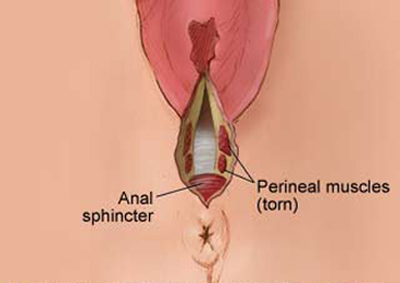
Why is it incredibly stupid? Consider the rationale for suturing the perineum> As I explained in a recent post on vaginal tears:

As you can see, this tear extends into the muscles that surround the vagina. The tear can be short in length or it can extend the entire distance between the bottom of the vagina and the top of the anal sphincter. A median episiotomy produces a second degree tear like this.

Putting the muscles back together makes sense if you want to preserve the natural shape and anatomy of the vagina. If it is not repaired, the opening to the vagina will gape, but there are usually no serious consequences of failing to repair it. Theoretically it is possible that the muscles will be able to heal back together on their own, but it is extremely unlikely. With the exception of very tiny tears, there are no circumstances under which a second degree heals “better” if it is not stitched.

Generally, when muscles are severed, their fibers retract to either side, and no longer meet in the middle. They will not heal together unless they are brought together by stitches. The overlying tissue (what you see when you look at the perineum) will almost always heal regardless of whether or not it is stitched. It’s like a cut. The skin heals by itself.

According to the homebirth midwives, the patient declined suturing, but the real reason the midwives didn’t suture is almost certainly tripartite:

1. they didn’t know how to suture
2. they didn’t understand the consequences of not suturing
3. they didn’t understand that healing of the overlying tissue is completely independent of healing the underlying muscle.

What are the consequences of not suturing a second degree tear? To understand, it helps to analogize to an elastic waistband in a pair of pants. Imagine that you tore through the overlying fabric right through the complete thickness of the elastic. Then imagine that you “repaired” it by closing the hole in the fabric without sewing the ends of the elastic back together. It might looked “fixed” from the outside, but those pants are not going to stay up and therefore, it isn’t fixed at all.

Similarly, if you do not suture the vaginal muscles back together, they will no longer meet in the middle. The patient may suffer a gaping vagina, and is at risk for an enterocele or rectocele, where the outer wall of the intestine or rectum pushes into the vagina. It’s not a fistula; there’s no hole between the vagina and rectum, but the large bulge into the vagina can be very uncomfortable and interfere with intercourse.

What did the seaweed contribute in this case? Absolutely, positively NOTHING. The overlying, outermost tissue was going to heal anyway. It didn’t need to be “treated” with seaweed, and I’m not aware of any scientific evidence that seaweed has any beneficial effects on wound healing of perineal lacerations. The seaweed did not heal the torn muscles together since they are too far apart to heal together. Only sutures could have preserved normal vaginal structure and the midwives didn’t suture. It’s difficult to imagine that if the midwives told the mother that her vaginal anatomy was likely to be severely compromised in the absence of sutures, she would have refused the sutures. They almost certainly didn’t tell her because they didn’t know and because they didn’t know how to suture at all.

So they screwed up in a major way, and the mother wil have to live with the consequences. That’s the worst part. However a close second is the fact that they have no idea that they screwed up and are actually proud of themselves for using a completely inane, totally useless “treatment.”