Category Archives: Uncategorized

Birthzilla

We’ve all heard about bridezillas, the women who are so obsessed with having the perfect wedding that they become tyrants toward everyone else. There’s an argument to be made that many homebirth and natural childbirth advocates are “birthzillas” who justify their hypersensitivity, obsessive need for control, and rudeness to everyone else with the all purpose excuse “It’s my special day.”

Consider:

Obsessive need for control – One of the hallmarks of the bridezillas is the obsessive need for control. No detail is too small for consideration, planning and decrees.

Birthzillas? It’s difficult to imagine anything more obsessive than birth plans. Birthplans, in addition to being useless for their stated purpose of improving the birth, are attempts to plan the unplannable. You might as well have a “weather plan” for the day of birth for all the good it’s going to do you. Birthplans, like obsessive wedding plans, have the added drawback of irritating everyone around you. The need to ruminate on every aspect of the day, and share those ruminations with everyone else is boring at best and narcissistic at worst.

Hyersensitivity – Bridezillas spend a lot of time being angry. Things aren’t going according to plan. People are not taking their desires as seriously as they take them. People don’t behave as instructed. Everything is perceived as a slight. Flowers the wrong color? Have a fit. Napkins not folded just so? Accuse the caterer of incompetence. Groom expresses a different preference that has not been preapproved? Who does he think he is? After all, it’s not about him. It’s all about, exclusively concerned with, revolving only around Bridezilla.

Homebirth and natural childbirth advocates spend a lot of time being angry. The birth is not going according to plan. The hospital staff are not taking their desires as seriously as they take them. The hospital staff are not behaving as instructed. Everything is a slight. Offered an epidural? Have a fit. Labor support not exactly as desired? Accuse the nurses of evil intentions. Baby needs something different than the pre-approved birth plan? Who does that baby think he is? After all, birth is not about the baby. It’s all about, exclusively concerned with, revolving only around Birthzilla.

Outsize feelings of disappointment – Bridezillas are psychologically very fragile, and make no apologies for their fragility. Cake filling the wrong flavor? The wedding is ruined.

Birthzillas are psychologically very fragile and make no apologies for their fragility. Baby needs resuscitation before being placed skin to skin with Birthzilla? The birth is ruined. C-section needed to deliver a healthy baby? That no longer qualifies as a birth at all!

Using others as characters in performance art – This is perhaps the worst of the many unattractive traits of Bridezilla. Everyone, from the guests, to the bridesmaids, to the groom himself, are nothing more than bit players in Bridezilla’s ultimate piece of performance art, her wedding. Bridezilla feels free to dictate what the guests should wear, how much the bridesmaids should weigh, and every possible details of the groom’s existence. What if those people feel badly about the way they’re treated? Bridezilla doesn’t care. It’s her day and that means she’s entitled to use people any way she wants.

Birthzilla is the same. Everyone, medical personnel, her partner, even the baby are nothing more than bit players in Birthzilla’s ultimate piece of performance art, “her” birth. Birthzilla feels free to dictate what everyone involve is allowed to do or say. What if her requests compromise the obligation of medical personnel to provide safe care? Birthzilla doesn’t care. It’s her day and that means she’s entitled to use people any way she wants.

Bridezillas are narcissists. They have an outsize view of their own importance, a hypersensitivity to slights, a feeling a being persecuted when things don’t go their own way, and an insensitivity to others who work with or for them. Homebirth and natural childbirth advocates often behave like narcissists, too. They have an outsize view of their own importance, a hypersensitivity to slights, a feeling of being persecuted when the birth does not go as planned, and an imperiousness and insensitivity to others who work with or for them.

Ultimately, both bridezillas and birthzillas are psychologically fragile. Instead of integrating the inevitable disappointments associated with a wedding or birth, they get psychologically “stuck.” They experience their disappointments as narcissistic injuries and respond with rage and accusations of persecution. They have no time for and no interest in the feelings of others, and feel entitled to use other people for their own ends.

Ironically, the behavior of birthzillas often fails to produce the perfect birth, just as the behavior of bridezillas cannot produce the perfect wedding. Because of their psychological neediness and fragility, they are unable to appreciate that every change in plan is not the “fault” of someone, unable to accept that unwillingness of providers to follow commands is not a sign of persecution and, worst of all, unable to enjoy what they have.

A version of this piece first appear in August 2009.
Natural childbirth is like anorexia, and neither is feminist

Consider this portrayal of the online natural childbirth community:

Natural childbirth website and blogs constitute is an online community consisting of a number of informational and personal webpages. They offer information and advice on how to achieve a natural birth including advice on nutrition strategies, natural remedies, affirmations and ways of thinking that help maintain commitment to natural childbirth in the face of the actual pain of labor. They also provide access to a range of birth stories used to inspire commitment to NCB. As a social movement, NCB employs a range of inter-textual strategies of narration to express its political concerns – from personalized webpages and blogs, to petitions, and videos. In these ways, NCB occupies a complex boundary between commentary and practice, it is both a meta-discourse and a lived phenomenon.

It seems fairly accurate to me. However, these words were not originally written about NCB. They are actually a paraphrased description of pro-anorexia websites.

I was inspired to examine the similarities between the NCB and pro-anorexia movements because of the strikingly similar rhetoric of empowerment. In both cases, believers derive a sense of empowerment through a natural body function. In the case of the pro-anorexia community purported empowerment comes from resisting the natural urge to eat in response to need. In the case of the NCB community purported empowerment comes from resisting the natural urge to seek pain relief in response to severe pain. The key difference, of course, is that the pro-anorexia community is viewed with horror and concern, while the NCB community receives a great deal of respect in certain quarters.

I can imagine the protests from the NCB community against this unflattering parallel. I suspect they would claim that NCB is about following natural urges, not denying them, but even the most cursory consideration will reveal that claim to be false. The key component of NCB is not so called “unhindered” birth; the sine qua non of NCB is the refusal to accept pain relief when it is available. Hence there is no praise for women who give birth “unhindered” because they have no access to healthcare and there is no praise for women who endure unmedicated childbirth because they arrive at the hospital too late for an epidural or when there is no anesthesiologist. Since women who don’t have access to pain relief cannot refuse it, they are not eligible to be empowered by NCB.

Of course, we understand that no one can actually be empowered by refusing to eat while barraged (consciously or unconsciously) by hunger. Any sense of empowerment is purely illusory; strikingly, it is a desperate attempt by the powerless who are reduced to torturing themselves (through hunger) in order to have control of something. Similarly, any sense of empowerment through NCB is also purely illusory and also represents an attempt by the powerless who are reduced to tortunring themselves (with pain) in order to have control over something.

It is not an accident that throughout history, up to the present day, pain in childbirth has been viewed as women’s punishment and aggressively promoted by those men believed that women should remain powerless or those women who are powerless.

It is not a coincidence that Grantly Dick-Read, the father of NCB, was a sexist who opposed any attempt of women to seek economic, legal or educational power. Similarly, it is not a coincidence that the primary American exponent of NCB is Ina May Gaskin, a woman who lives in a cult run by her husband, a cult leader who exercises the same level of control over his wife as over his other followers. (Many people do not realize that The Farm is a commune for a cult, not a refuge for NCB believers.) Moreover, it is not a coincidence that one of the primary goals of first wave feminists was widespread access to pain relief in labor. They recognized that true empowerment of women could be achieved only when women have the ability to control reproduction (including childbirth pain), not through encouraging women to be slaves to reproductive biology.

Claiming that empowerment can be found through a bodily function is a cri de coeur of those believe themselves to be throughly powerless. It is a way to find meaning in their powerlessness, controlling the only thing they believe they are entitled to control, forcing themselves to face pain that eveyone else would “naturally” avoid.

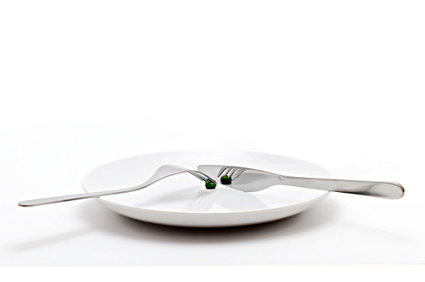
Claiming that NCB is feminist makes no more sense than claiming that anorexia is feminist. Women torturing themselves (whether by refusing food or refusing pain relief) is the heartrending act of someone who secretly believes herself to be powerless, not someone who is empowered.

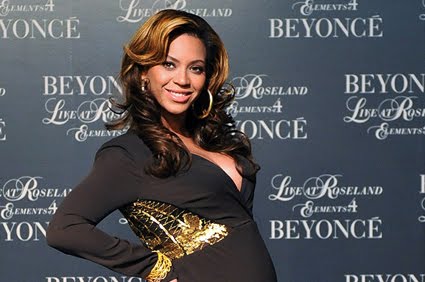
What? Natural childbirth advocates don’t support Beyonce’s choice?

If there is one thing that natural childbirth advocates are very clear about it is supporting women’s choices in childbirth. Women have the right to make whatever decisions they want about their own bodies. Therefore, NCB advocates loudly and wholeheartedly support Beyonce’s decision to have a C-section.

Wait, what? They DON’T support Beyonce’s decision?

Well maybe it’s because it wasn’t medically indicated. There was no reason for Beyonce to have a C-section. She was just too posh to push.

Wait, what? There was a medical indication? The baby was breech?

Okay, but that doesn’t mean she couldn’t have had a vaginal birth. Breech vaginal birth is safe for all babies. That’s what studies show.

Wait, what? Breech birth is only safe under certain very stringent conditions? And even then it increases the risk of neonatal death?

Okay, maybe the C-section was medically indicated, but certainly not the timing of the delivery.

Wait, what? Beyonce could have had premature rupture of membranes, pre-eclampsia, intra-uterine growth retardation or any of a host of other medical indications for early delivery?

But think of everything that could have gone wrong! These very serious, indeed life threatening complications are very common.

Wait, what? These complications are rare? They are far less common than the life threatening conditions of pre-eclampsia, intra-uterine growth retardation or neonatal sepsis?

Well at least Beyonce took to heart the natural childbirth advocacy belief that women must give birth in privacy and in the way that they are the most comfortable. That’s why NCB advocates thoroughly support Beyonce’s decision to rent an entire hospital floor to be sure that her privacy was not invaded.

Wait, what? They don’t support her decision to create privacy for herself? Privacy is only for those who choose to give birth at home?

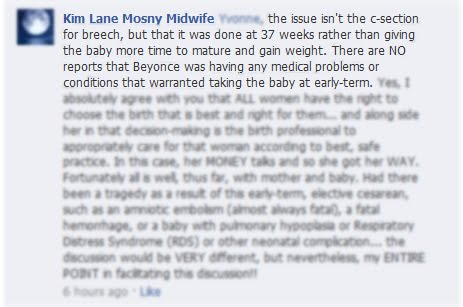
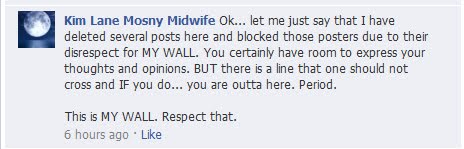
But good people can disagree. That’s why Kim Mosny, CPM allows everyone to express their opinions on her Facebook page.

Wait, what? Dissent will not be tolerated?

In the end, though, all that matters is a healthy baby. That’s why NCB advocates support women in choosing breastfeeding or bottlefeeding.

Wait, what? …

Trust breasts

Hi. My name is Ima Frawde, CPM. The initials after my name stand for “certified professional mammarist.” I am an expert in normal breasts.

I don’t know about you, but I am sick and tired of the hegemonic, patriarchal, male medical system that is constantly telling women that their breasts are “broken” and need to be scanned regularly to detect breast cancer. Breasts are designed perfectly.

Are we suppose to believe we’re inferior to squirrels, cows, rabbits and elephants? We have about 5000 species of mammal and we’re encouraged to believe that we’re the only one that needs routine mammograms. How did we managed to get along for thousands of years before mammography? If breast cancer were really that dangerous, we wouldn’t be here as a species.

It’s not a coincidence that my comments sound similar to those made by Ina May Gaskin on Feministing. Ina May is my hero. Everything she says goes double for me (heh, heh, heh, just a little breast humor).

Why should you listen to me? As a CPM (certified professional mammarist), I am an expert in normal breasts. In fact, certified professional mammarists are trained specifically to manage breast health at home. In order to obtain my certification, I had to meet rigorous standards; I was required to submit a portfolio of 20 breasts examined within the home (right and left breasts are each counted separately). Plus I had to observe examination of an additional 20 breasts done by my preceptor. That means I had contact with 20 separate women before I began practicing on my own!

How did routine mammography become so popular? As my friend Ina May says, it’s all the hegemonic, patriarchal medical system “which views women’s bodies as defective designs and allows for profit to be made from women’s fears of their own bodies.”

In fact, it is fear that causes breast cancer. How do we know? Primitive women don’t get breast cancer. Think about it. All those charities in Africa are soliciting money for malnutrition, infant mortality, maternal mortality, and obstetric fistulas. Have you seen even one commercial for an African breast cancer charity? That proves it.

What? You don’t believe that fear causes breast cancer? You mean you deny that there is a mind-body connection?

Once you understand that fear causes breast cancer, you can see why trusting breasts is the best way to ensure good outcomes. Having a routine mammogram in unnecessary when you trust breasts. Mammography has a high false positive rate, and those false positives lead to a cascade of unnecessary interventions like breast ultrasounds and breast biopsies, not to mention undermining women’s faith in their own bodies.

But you shouldn’t think that certified professional mammarists reject technology. Far from it. If we feel a breast mass and it gets bigger despite breast affirmations, cranio-sacral adjustment, blue and black cohosh, garlic and Hibiclens, we refer women to breast cancer specialists. Since breast cancer is very, very rare, particularly in low risk women, we have very low referral rates.

Are we always correct? Unfortunately, no, but some women are just meant to die from breast cancer. They probably would have eventually died in the hospital anyway (it might have been 10 or 20 years later, but the principle holds true).

We’re also working on developing our own technology for identifying early breast cancer. We are creating our own mammography equipment. Even as we speak, several groups of women are currently fabricating mammography machines to our own specifications; they are knitting them from steel wool!

Our machines will have two major advantages over conventional, Western, allopathic mammography machines. First, they won’t involve painfully compressing women’s breasts, and second, they don’t use ANY radiation at all. As soon as the mammography machines are fully knitted, we plan large qualitative studies comparing the experience of having a mammogram with a knitted machine vs. a conventional machine.

You might be wondering why we are bothering with mammography machines at all. In answer, I will paraphrase anthropologist and midwife Melissa Cheyney:

The rituals of home breast care are not simply about assuring personal transformation via the transmission of counter hegemonic–empowering value —although many women certainly described their experiences this way. Home breast care rituals, are also self-consciously political in their intent. As the popular bumper sticker “Mammarists: Changing the World One Breast at a Time” suggests, home breast care is a performative medium for the promotion of social change.

This piece is satire.

Feminist Breeder wails that she was victimized

The Feminist Breeder (Gina Crosley-Corcoran) is upset. Here she was, thoughtfully contracting with a sponsor to video blog every moment of “her” home VBAC live and no one is grateful.

You may recall me writing about the pathetic narcissism of live blogging a homebirth:

Silly me. I though birth was about having a baby. Evidently not. Gina’s baby is not mentioned even once. It’s about Gina and her willingness to graciously educate YOU, show YOU that birth doesn’t have to be perfect, and because YOU are so excited that you can’t imagine anything better to do with your time than follow every moment of stranger’s labor.

Evidently Gina can’t tolerate anyone who is not overwhelmed with gratitude for her self-absorbed-less effort to “educate” the rest of us with audio of her grunts of pain, pictures of vomit during transition and actual video of fecal contamination of the birth pool.

Now Gina is claiming, of course, that she is a victim. And how was she victimized? Apparently my failure to appreciate the sacred nature of her publicity stunt is cyber-bullying.

Here’s what Gina wailed in the comment section of a piece on Feministing about Ina May Gaskin. Her comment is a classic in the annals of self-absorbed, self-promoting, insecure NCB advocates who desperately seek validation for their “achievement” of pushing a baby through a vagina. I have helpfully annotated it (for your education).

Of course this article attracted the infamous, vile “Dr.” Amy (who isn’t even a practicing physician and NOT a member of the ACOG anymore.) [When a woman doesn’t agree with you, put her professional title in quotes. It is helpful to imply that “real” obstetricians (apparently those who belong to ACOG) think differently, even though everyone knows that the overwhelming majority of obstetricians consider homebirth to be dangerous and would be just as underwhelmed about Gina’s publicity stunt as I was (had they bothered to pay any attention to her).]

She and her unstable little cronies attacked, tortured, and cyberbullied me throughout my entire 9 month pregnancy – WHY? [Histrionic much? Hmmm, the entire 9 month pregnancy? Contrary to Gina’s belief that I am so interested in her that I followed her pregnancy from conception onward, my first post about her occurred when she was 7 months pregnant, and in response to her announcement that she would be live-blogging the birth.]

Because I chose to have a homebirth after two intensely traumatic hospital births. Anyone who’s reading her site and listening to it needs to check their head. That lady PUBLICLY wished that my baby would die. IN PUBLIC. ON HER NUTTY BLOG. [An example of the utter disrespect for the truth that is characteristic of natural childbirth advocacy. No one ever wished her baby would die, but, hey, it sounds so much more dramatic to pretend that it happened.]

As for whether birth and our reproductive autonomy is a feminist issue, HELL YES it is. The maternal mortality rate in this country is the WORST of any industrialized nation. [It isn’t, but when you are trying to make a point a lie is often far better than the truth].

Is that because a few women are birthing at home? NOPE! It’s because our cesarean rate is 32%, and our rates of intervention are nearly 100% in some hospitals. [Another lie that is ever so much better than the truth (see above).]

That’s not because those interventions are necessary, unless you believe that women are born fundamentally broken. We are NOT broken. [I never said or implied that Gina was “broken.” Ignorant, self-absorbed and desperately insecure, yes, but not broken.]

As Ina May says, “Your body is not a lemon.” We’ve internalized this misogyny for too long. Yes, some women need modern science for birth. MOST women do not. I’ve had the cesarean that nearly killed my spirit. [Oh, the tragedy. Her spirit was almost killed!]

I had the vaginal birth in the hospital that I practically needed lawyers at my bedside for. And I had the beautiful, swift, safe, practically PAINLESS homebirth that made me feel more connected to my body and baby than I ever thought possible. [And it needed to be video taped and live blogged because?]

Dr. Amy’s “science” is junk. It’s embarrassing to other physicians. And she’s just a plain horrible human being.

Here’s a few helpful hints, Gina (in the interests of education, of course).

  • Writing satisfying lies does not make them true.
  • Pushing a baby through a vagina is not an “achievement” and certainly not a feminist achievement. It’s what is known as biological essentialism, in short, the belief that women can and should be defined by their reproductive organs.
  • Cyber-bullying is a serious problem and its significance should not be demeaned by wailing “cyber-bully” at anyone who doesn’t praise the ignorant and self-promoting gibberish you publicly post on the internet.

Finally, and most importantly, refusing to cater to your insatiable need for praise and recognition does not make other people horrible.

Thanks to my readers

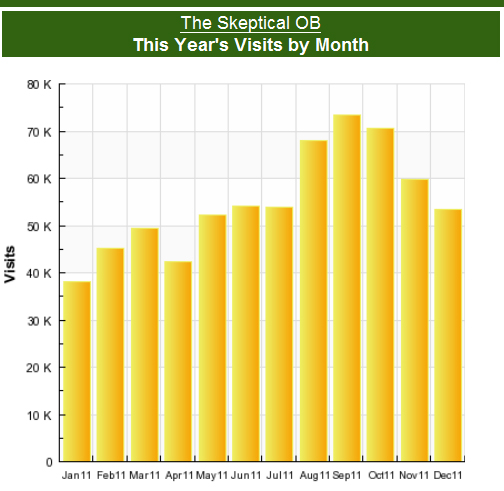
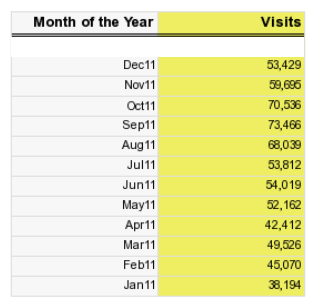
I am extremely grateful to the readers, and especially the commentors, who made 2011 the best year ever for the Skeptical OB. There were more than 650,000 visits to the blog and over 58,000 comments! Thank you for a very good year.

Can you be empowered by a normal bodily function?

iStock_000017025415XSmall

It is axiomatic among natural childbirth advocates and homebirth advocates that an unmedicated childbirth is an empowering experience. I would like to make three claims about this. First, by definition, it is impossible to be empowered by a normal bodily function. Second, that the use of empowered in this setting bears no relationship to the actual meaning of the word, and third, that “empowered” is simply a code word for “better than other women”.

According to the American Heritage Dictionary, empower means:

To invest with power, especially legal power or official authority. See Synonyms at authorize. Usage Note: Although it is a contemporary buzzword, the word empower is not new, having arisen in the mid-17th century with the legalistic meaning “to invest with authority, authorize.” Shortly thereafter it began to be used with an infinitive in a more general way meaning “to enable or permit.” Both of these uses survive today but have been overpowered by the word’s use in politics and pop psychology… The Usage Panel has some misgivings about this recent broadening of usage… and frown[s] on … psychological empowering because it resonates of the self-help movement, which is notorious for trendy coinages.

So there are a variety of accepted usages for the word “empowered” all relating to investing an individual with power or authority. Its pop psychology usage is even more popular; in that setting, it means to be in control of one’s destiny.

Regardless of which usage is employed, it is simply not possible to be “empowered” by a normal bodily function. Normal bodily function extends to all people indiscriminately. It has nothing to do with whether those people have either power or authority. When used outside the realm of childbirth, this is quite obvious. Could people be empowered by digesting their own food? No. Are women empowered by enduring painful menstrual cramps without medication? No. Are people who don’t need glasses more empowered than people who do? Certainly not.

Similarly, unmedicated childbirth is the default mode. Virtually every mother who ever lived had unmedicated childbirth (or died trying), and most women around the world have unmedicated childbirth each and every day. Does this make them more powerful than they would be otherwise? Of course not. By the same token, it is not going to make Western, white, relatively well off, and relatively well educated women any more powerful, regardless of what they would like to pretend.

So what do “natural” childbirth advocates mean when they claim that unmedicated childbirth is “empowering”? What they mean is that it makes them feel better about themselves in relation to their peers. The desire for unmedicated childbirth is a fad, no different than the fad for fancy handbags, or fast cars. Owning a fancy handbag or a fast car does not make one person superior to another, except for those who believe in the value of the fad object. There is nothing intrinsically better about fancy handbags, and there is nothing intrinsically better about unmedicated childbirth. However, for those who move in a particular milieu, a fancy handbag is a sign of status. For those in the “natural” childbirth community, being able to boast about an unmedicated childbirth is a sign of status.

Women who proclaim unmedicated childbirth to be “empowering” are slaves to the ideology of the group, not independent actors taking control of their own lives. No one can be empowered by a normal bodily function that is the default mode. They simply mistake their unmerited feelings of superiority for empowerment.

This piece first appeared on Homebirth Debate in May 2008.

Natural childbirth advocates parroting lies

Natural childbirth advocates often appear to be nothing more than a bunch of parrots. One of them makes up something and the rest of them mindlessly repeat it.

Consider the issue of maternal mortality. Fittingly, Ina May Gaskin, the biggest fraud in the world of NCB advocacy, misconstrued the most basic information (possibly deliberately) and fashioned the biggest lie. And once she made it up, Ina May played it for all it was worth.

In creating and promoting this lie, Gaskin harkens to a classic technique in pseudoscience. As described by Paul Wolpe in The Holistic Heresy: Strategies of Ideological Challenge in the Medical Profession an attack by purveyors of “alternative” medicine on an established discipline in medicine includes specific elements. The first is that the critic:

must portray the discourse as in crisis, must provide an alternative ideology to rescue the discourse, must legitimize their ideology through appeal to a reframed historical myth, and must portray the orthodoxy as a betrayer of the discourse.

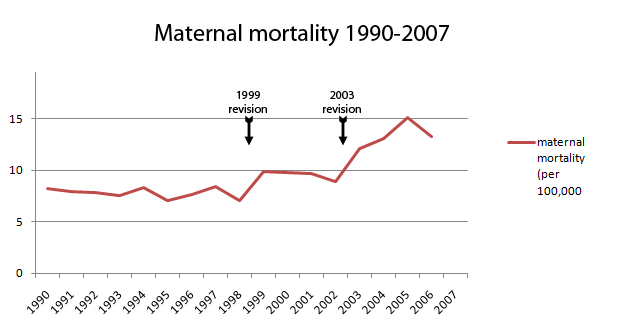
According to Gaskin, rising US maternal mortality is an indication that contemporary obstetrics is in crisis. There’s just one problem: US maternal mortality is not rising.

In 1999 and again in 2003, the standard birth certificate was redesigned to capture all maternal deaths by expanding the maternal mortality criteria. Not surprisingly, maternal mortality appeared to rise as a result. There is no evidence that it actually rose (indeed the CDC has established that it did not rise) but that didn’t matter to Gaskin. She grabbed the issue and exploited it to promote homebirth midwifery. In a public relations master stroke, she even created a quilt (consciously modeled on the AIDS Quilt) to foster the illusion that the maternal mortality rate was rising and that modern obstetrics was the cause.

In May, Amy Romano, CNM of the Childbirth Connection parroted this falsehood in honor of Mother’s Day. Now Kimmelin Hull of Lamaze has jumped on the bandwagon. Hull, who (as she never tires of telling us) is working on an master’s in public health, ought to know better. However, the opportunity to criticize contemporary obstetrics is just too tempting, facts be damned.

Hull begins by parroting the lie that US maternal mortality has been rising. Hull quotes the WHO, the CDC, Amnesty International, and (of course) Gaskin, but she neglects to quote the specific studies that show that the apparent increase in maternal mortality is due to the birth certificate revisions.

From Deaths: Final Data for 2008:

Research done on this issue indicates that this increase represents an improvement in identifying maternal deaths. For example, a study in Maryland that used multiple data sources as the standard showed an improvement (from 62 percent to 98 percent) in identifying maternal deaths after adoption of a pregnancy checkbox item consistent with the 2003 standard certificate.

And Changes in Pregnancy Mortality Ascertainment: United States, 1999–2005:

The maternal mortality ratio increased significantly from 11.6 in 1995–1997 to 13.1 for 1999–2002 and 15.3 in 2003–2005 … Vital statistics identified significantly more indirect maternal deaths in 2002–2005 than in 1999–2002. Between 2002 and 2005, mortality ratios increased significantly among 19 states using the revised death certificate with a pregnancy checkbox; ratios did not increase in states without a checkbox. (my emphasis)

Having parroted the lie, Hull then proceeds to parrot the claim that contemporary obstetrics is in crisis:

… Perhaps then, the simplistic question to ask is, “If we are spending so much money each year on maternity care, why is the maternal death rate in our country climbing when expenditures—estimated to be in the hundreds of billions of dollars—on other health conditions, such as cardiovascular disease, are resulting in declining death rates?”

Then, nonsensically, Hull parrots the assertion that midwifery theory is the answer:

… By encouraging the perspective that pregnancy and birth are inherently normal, healthy processes (as opposed to disease/disease states) the eventual clinician is more likely to approach patients with a sense of trust in the germane mechanics associated with pregnancy and birth as opposed to a pessimistic assumption that each pregnant patient is a “ticking time bomb” to be weary of.

What? The solution to an increase in maternal mortality is to trust birth? That makes no sense. But making sense, like the truth itself, is irrelevant to the NCB parrots.

2011 ends with 5th North Carolina homebirth death

Sadly, 2011 ended with an appalling 5th confirmed homebirth death in North Carolina. The fourth homebirth death had actually occurred several days later. The death was, as is typically the case with homebirth deaths, needless, senseless, utterly predictable, and totally preventable.

The mother is a doula and had a waterbirth. The baby was a breech with a trapped head. The mother transferred to the hospital with the breech suspended from her vagina. By the time doctors could extricate the baby, she was dead.

This brings the confirmed homebirth death rate in North Carolina in 2011 to an extraordinary 12X times the expected death rate for comparable risk hospital birth (0.4/1000), and proves, yet again, that breech is NOT a variation of normal.

How many babies have to die before homebirth advocates realize that “trusting” birth is a recipe for disaster?

Homebirth 2011: Statistics and scientific papers

On Wednesday I reviewed the homebirth deaths that appeared on this blog in the past year. Today, we’ll take a look at the state, national and international homebirth statistics I wrote about in 2011 as well as scientific papers that looked at the safety of homebirth.

1. Western Australia: 20 fold increase in hypoxic deaths at homebirth

From The 13th Report of the Perinatal and Infant Mortality Committee of Western Australia for Deaths in the Triennium 2005–07 full report (here). The results are truly appalling AND entirely consistent with the terrible homebirth death rate in the US. The major finding is that homebirth QUADRUPLED the risk of perinatal death compared to hospital birth. Indeed, homebirth dramatically increased the risk of death at every level, from stillbirth to infant death.

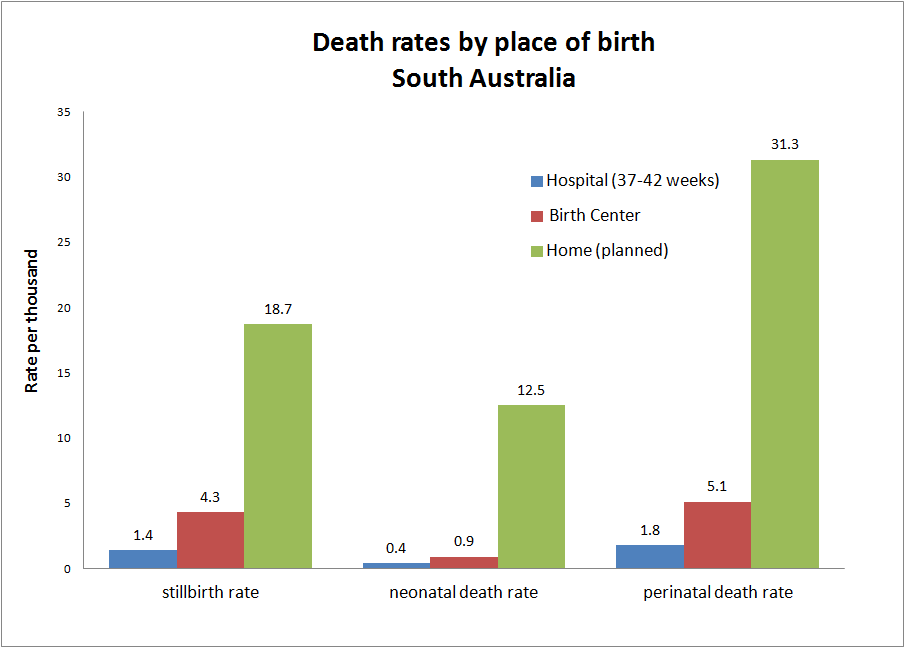
2.South Australia: Homebirth death rate 17 times higher than comparable risk hospital birth

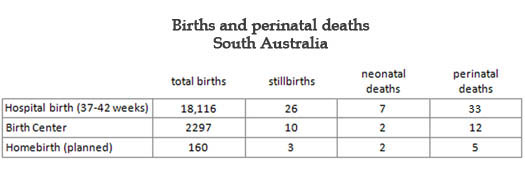
The state of South Australia, which includes the city of Adelaide, has published it’s perinatal mortality rates. The data shows that planned homebirth has a perinatal mortality rate more than 17X higher than comparable risk hospital birth.

The report, Pregnancy Outcome in South Australia 2009, is a dry recitation of birth statistics without editorial comment. The statistics are analyzed in every possible way to give a vivid picture of birth in the state. Among the ways the data is analyzed is according to place of birth and the results are surprising and distressing.

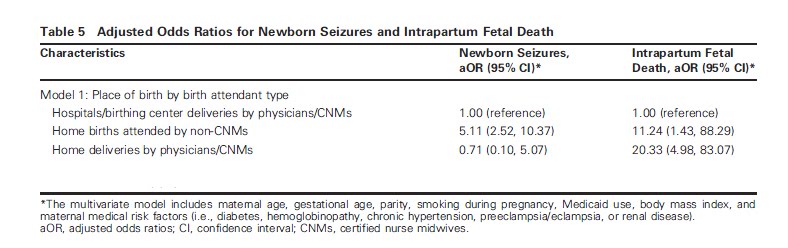
3. Missouri: homebirth has a 20 fold increase in intrapartum death

From Birth outcomes of planned home births in Missouri: a population-based study by Chang and Macones published in the American Journal of Perinatology in August 2011:

… We observed that planned home births attended by non-CNMs remained positively associated with odds of newborn seizures after controlling for confounders. Specifically, the adjusted OR of newborn seizure among births delivered by non-CNMs was more than 5 times as much as the odds in hospital/birthing center births delivered by physicians/CNMs … For intrapartum fetal death, planned home births attended by non-CNMs and physicians/CNM yielded adjusted ORs of 11.24 and 20.33 respectively relative to hospital/birthing center births attended by physicians/CNMs …

4. New Dutch study raises troubling questions about the safety of homebirth

Planned Home Compared With Planned Hospital Births in The Netherlands by van der Kooy et al. is large, comprehensive and raises troubling questions about the safety of homebirth.

The large amount of data is analyzed in a bewildering number of ways, but the bottom line is that homebirth is safe when nothing goes wrong; in the presence of life threatening problems, homebirth increases the risk of death. Moreover, while homebirth with a Dutch midwife in the absence of complications is nearly as safe as hospital birth with a Dutch midwife, the perinatal mortality rate in both groups is 33% higher than comparable risk women delivered in hospitals by obstetricians just across the border in Flanders.

5. How many babies died at the hands of Colorado homebirth midwives this year?

Drum roll please …

The death toll of planned homebirths attended by licensed Colorado hoomebirth midwives in the last reported year is so high that the midwives, in violation of Colorado law, refuse to relase them!

Let me repeat that. After 4 years of high, rising, and nothing short of appalling death rates, Colorado homebirth midwives are now refusing to report how many babies are dying at their hands. They published an annual report. as they always do, but they left out the homebirth deaths.

6. How many babies died at the hands of Oregon homebirth midwives?

A new website, Oregon Homebirth Midwife Info, has compiled a Midwife Directory that makes for stomach-churning reading. The directory lists midwives by name and includes reports of deaths as well as other major morbidity and actions taken against the midwives.

It is an incomplete list; not all Oregon midwives are included and there may have been additional deaths that are not recorded. Nonetheless, the statistics are no less than horrifying.

In the past decade, no less than 19 babies have died at the hands of Oregon homebirth midwives.

To put that in perspective, consider that there are approximately 1000 homebirths per year in Oregon and that the neonatal death rate for low risk women in a hospital setting is 4/10,000 (0.4/1000). That means that you would expect approximately 4 homebirth deaths per decade. Instead there were at least 19 deaths, for a rate more than 4X higher (375%) than expected.

7. NZ study tries to bury increased homebirth death rate

From Planned Place of Birth in New Zealand: Does it Affect Mode of Birth and Intervention Rates Among Low-Risk Women?

the homebirth group had lower rates of major interventions and the homebirth group had lower rates of minor interventions. How about deaths?

Well, funny you should mention that. There was a little bit of a problem there and the authors made a valiant attempt to hide it.

A total of six neonatal deaths (a death occurring up to 27 days after birth) occurred in the sample, two (0.11%) from women planning a home birth and four (0.15%) from women planning to give birth in the tertiary hospital. No intrapartum, intrauterine deaths were reported.

Hey, the death rates are exactly the same! Wait, what? The authors deliberately used the wrong denominator for calculating the hospital birth death rate?

Indeed they did. They compared the death rate at homebirth with the death rate in tertiary [high risk] facilities, but that’s not what we want to know. We want to know how the death rate at homebirth compares with the death rate at all hospital births, not the death rate at tertiary facilities.

What the authors should have told us was that there were two neonatal deaths (0.11%) among women planning a home birth and four (0.03%) from women planning to give birth in the hospital. In other words, the homebirth death rate was more than triple that of the hospital birth death rate. Oops!

8. The Birthplace Study

The Birthplace Study is the most important homebirth study published this year, and it is one of the most important homebirth studies ever published. In involved a large multi-year study, was designed to address the safety of place of birth by controlling for the many factors that had not been handled properly in other studies. The study looked at intended place of birth to rule out improperly assigning transferred patients to the hospital group, and included only the lowest possible risk women. The study was conducted by The National Perinatal Epidemiology Unit in the United Kingdom.

What did it show?

Homebirth increases the risk of perinatal death and brain damage in the lowest risk women receiving care from highly trained midwives (often two) and liberal access to transfer.

Homebirth increases the risk of perinatal death and brain damage even when, at the start of labor, breech, twins, VBAC. positive GBS status, gestational diabetes and obesity were excluded. All routinely occur at homebirths in the US, the UK and Australia.

And how about the purported “risks” of interventions that homebirth advocates are always taking about?

Homebirth increases the risk of perinatal death and brain damage even though the incidence of epidural use was 5 times higher in the hospital group.

Homebirth increases the risk of perinatal death and brain damage even though the incidence of pitocin augmentation was 5 times higher in the hospital group.

Homebirth increases the risk of perinatal death and brain damage even though the incidence of operative vaginal delivery was 3-4 times higher in the hospital group.

Homebirth increases the risk of perinatal death and brain damage even though the C-section rate was 4 times higher in the hospital group.

In other words, any way you choose to look at it, no matter how carefully you slice and dice the data, there is simply no getting around the fact that homebirth increases the risk of perinatal death and brain damage.

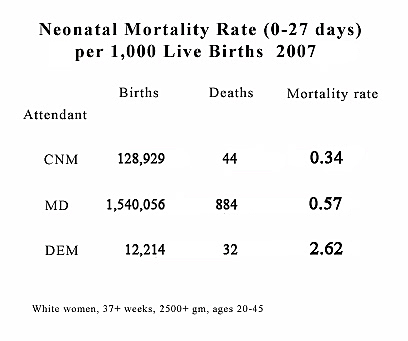
9. Latest CDC data: Homebirth killing more babies than ever

American homebirth with a homebirth (non-CNM) midwife had a neonatal mortality rate 7.7 times higher than comparable risk hospital birth!

The table shows that the neonatal mortality rate for homebirths attended by an American homebirth midwives (CPM, LM) is 7.7 time higher than comparable risk hospital birth attended by a CNM (certified nurse midwife). This extraordinarily high death rate is all the more remarkable because it actually under-counts the homebirth death rate. That’s because homebirth transfers ended up in the hospital MD group and were not counted in the homebirth group. The real number of homebirth deaths is almost certainly significantly higher.

*****

It’s a pretty damning collection of evidence. In every state, province and country where the issue of homebirth safety was examined, homebirth increased the risk of newborn death and serious injury.

There is, of course, one set of statistics that is missing. That would be the safety data compiled by MANA (Midwives Alliance of North America) on the 24,000 homebirths in its database. MANA explicitly refuses to release the death rates to the American public. The executives of MANA know that homebirth increases the risk of neonatal death; they just don’t want American women to find out.