Category Archives: Uncategorized

Insured breasts matter more

Every year, for lack of timely screening and treatment, hundreds of women will die of breast cancer. No, I’m not talking about the change in mammography screening guidelines for women aged 40-49. I’m talking about women of any age who will not have access to mammography or treatment if a healthcare reform bill is not passed. Without health insurance, these women will die preventable deaths.

Republicans have exploited the release of the new mammography guidelines to argue that the Obama administration does not care if more women die of breast cancer. Ironically, their opposition to a public option for health insurance virtually condemns up to 600 women per year to die a preventable death from breast cancer. Republicans apparently believe that insured breasts matter more.

That seems a rather bizarre distinction to make. I could understand, though not agree, if they claimed that Republican breasts matter more. They have an interest in making sure that women who will vote for them will live to return to the polls each year. But the distinction between women who are insured and those who are uninsured crosses political lines.

I could understand, though not agree, if Republicans insisted that profits matter more and supported the new guidelines to benefit their friends in Big Insurance who depend upon them to vote against healthcare reform. The US Preventive Services Task Force recommended ending routine yearly mammograms for women aged 40-49 because the data show that the risks of false positives, unnecessary biopsies and unnecessary breast cancer treatment outweigh the benefits. That can only be helpful to insurance companies who can increase profits by reducing marginally effective and ineffective procedures.

But, instead, the Republicans claim to base their opposition to the new screening guidelines on their reverence for life. They insist that President Obama, in a crass effort to save money, is rationing mammography. To hear them tell it, it is worth virtually any amount of money to save even one additional woman from becoming a breast cancer fatality. Yet the reality is that they are only concerned about the breasts already covered by health insurance.

Republicans are apparently unmoved by the fact that up to 600 women die each year because their lack of health insurance prevents timely access to mammograms, diagnostic procedures and breast cancer treatment. Insuring the breasts of the uninsured would have a far larger effect than merely saving those 600 lives (each one of which is supposedly valuable enough to justify the spending of any amount of money). That’s because the benefit would not be limited to preventing deaths from breast cancer. Current estimates suggest that as many as 45,000 people die preventable deaths every year because of lack of health insurance.

Republicans claim to oppose healthcare reform because it is too expensive. But according to them it’s worth almost any amount of money to prevent a single death. They also oppose healthcare reform because they claim it will lead to rationing. But there is no more brutal form of rationing than to ration health insurance itself, giving it arbitrarily to those who happen to work for an employer who chooses to provide access to insurance and denying it to everyone else.

Do insured breasts really matter more? Or are the Republicans hypocritically exploiting women’s fear and misunderstanding over the new guidelines in order to score political points? If Republicans truly care about making sure that not a single woman dies a preventable death from breast cancer, they’d be clamoring for a quick vote on healthcare reform, and they’d vote for a public option as the best way to end preventable deaths from breast cancer.

Otherwise, we’d be forced to conclude that Republicans don’t really care at all about saving lives and are just a bunch of hypocrites using fear mongering to divert attention from their self serving support of the insurance industry. And they wouldn’t want us to reach that conclusion, would they?
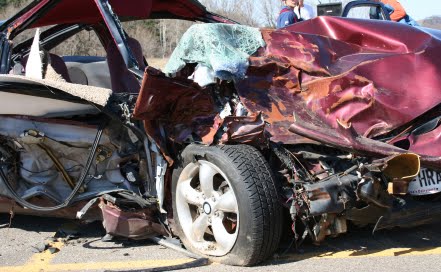

OMG, they changed the rules to save money! No, not mammograms, speed limits.


There has been much righteous indignation expressed in response to the new US Preventive Services Task Force changes that no longer recommend routine mammograms for women aged 40-49. The indignation takes two basic forms. The first is the assertion that it is worth any amount of money to save even one life. The second is that the recommendations are cynically motivated by a desire to save money by “rationing” healthcare.

Yet people fail to consider that we make policy decisions all the time because we don’t believe that it is worth any amount of money to save even one life, and because we want to save time and money. Consider the case of highway speed limits.

It is well known that lower speed limits decrease fatalities. Since over 37,000 people die each year on our nation’s highways, this is not merely an academic point. If we reduced the highway speed limit to 25 mph we could undoubtedly save tens of thousands of lives. If, in addition, we mandated that all cars were armored like Sherman tank, we might be able to save every one of those more than 37,000 people each year. Yet we don’t do that. Why? Because it would cost time and money and we don’t think that it’s worth it.

We won’t even take less drastic measures to reduce highway fatalities. Knowing full well that increasing the highway speed limit from 55 mph to 65 mph would cost lives even as it saved time. That’s exactly what happened. According to researchers Ashenfelter and Greenstone:

In 1987 the federal government permitted states to raise the speed limit on their rural interstate roads, but not on their urban interstate roads, from 55 mph to 65 mph for the first time in over a decade. Since the states that adopted the higher speed limit must have valued the travel hours they saved more than the fatalities incurred … We find that the 65 mph limit increased speeds by approximately 3.5% (i.e., 2 mph), and increased fatality rates by roughly 35%. In the 21 states that raised the speed limit and for whom we have complete data, the estimates suggest that about 125,000 hours were saved per lost life. Valuing the time saved at the average hourly wage implies that adopting states were willing to accept risks that resulted in a savings of $1.54 million (1997$) per fatality …

Of course not every hour saved is money earned, so the real cost per fatality is probably far lower. Regardless, as a matter of policy, the American people don’t think it is worth the amount of time and money it takes to save one additional person from a fatal car crash.

The relationship between fatalities and the highway speed limit is just one example of the myriad policy decisions that are made every year that must balance lives saved against cost. Although opponents of the new mammography guidelines are trying to characterize such decisions as tawdry at best and immoral at worst, there is no other choice. We are always forced to draw arbitrary guidelines. Why, for example, should the highway speed limit be 65 mph? Why not 75 mph? Or for that matter, why not 69.3 mph since there is nothing particularly special about whole numbers ending in 5? Each decision represents an arbitrary balancing of costs against human lives.

Similarly, though people claim to be outraged at dropping the recommendation for yearly mammograms in women aged 40-49, why aren’t they clamoring that the recommendations should be extended to yearly mammograms for women aged 30-39? If they truly believed, as they claim that they do, that it is worth any amount of money to save one life, they should be insisting on screening for women aged 30-39 since breast cancer can occur in that group, too.

Moreover, there’s nothing special about whole numbers that end in 0. Why not recommend yearly screening women aged 28-39? For that matter, there’s nothing special about yearly intervals. Why aren’t they recommending screening for all women every 6 months instead of every 12 months? Surely we could save a few more lives that way, too.

The fact is that we are forced to make relatively arbitrary policy decisions when it comes to safety issues of any kind. We are always forced to balance benefits and costs. We don’t really believe that it is worth any amount of money to save even one life. We don’t even believe that it is worth getting to our destination a little later to save 37,000 lives lost on the highway each year.

That’s why the outrage over rationing is entirely misplaced. If by rationing people mean considering cost when making safety decisions, we ration every day in many ways. We live in the real world, and in the real world there is not unlimited money. A dollar spent on mammograms is a dollar not spent on another form of healthcare that may have a much better benefit to cost ratio. It is not rationing to suggest that some money spent on mammograms might be better spent elsewhere. It is merely common sense.

Medicine, mammography and the imperfect view

Americans, particularly American women, are shocked, bewildered and angered over the change in mammography guidelines. Many emphasize that it is changes like these that foster distrust in the medical system and lead people to seek alternative practitioners. That’s unfortunate because the change in guidelines highlights one of the most important strengths of modern medicine: medicine is constantly changing in response to new scientific evidence; “alternative” health doesn’t change because its not based on scientific evidence; its based on belief.

In other words, what lay people perceive to be the biggest weakness of modern medicine is actually its biggest strength.

Medicine is like a frost covered windshield. We cannot yet see the full view because we lack a complete understanding of how the body works, and we lack a complete understanding of many diseases, particularly cancer. Unlike the real world, where we can totally wipe away the frost obscuring our view through the windshield, in medicine we have to content ourselves with ever increasing clearing of various spots. And unlike the real world, where we can wait to totally wipe away the frost before we start to drive, in medicine we must keep moving forward despite our incomplete view.

We get into trouble when we try to shortcut the process by making assumptions instead of waiting for definitive evidence. Medical screening is just one area in which we’ve been forced to backtrack on our assumptions when new evidence becomes available. We have assumed that because some screening is good, more screening is better. That assumption was never supported by scientific evidence.

There is a large body of scientific evidence showing that biennial mammographic screening of low risk women aged 50-75 leads to lower death rates from breast cancer. There is no evidence that the same approach has a similar impact on death rates in women aged 40-49. Yet we implemented routine screening because we assumed that more screening is always better. The thinking was “better safe than sorry.”

With more experience and with more scientific evidence we’ve cleared away more of the mist obscuring our view. Routine yearly mammographic screening in low risk women has minimal if any impact on death rates. That’s because it picks up small tumors that aren’t likely to develop into aggressive cancer and does not increase the diagnosis rate of the aggressive tumors that are likely to kill women.

Paradoxically, the failure of routine screening mammography has convinced American women of its success. All of us know women, or are women, whose small breast cancer was diagnosed by a routine mammogram, who had lumpectomy, and perhaps radiation or chemo, and are now cured. The scientific evidence tells us that almost all of those cancers would have remained stable or possibly even disappeared if they had not been found and treated.

In some ways, that’s even more distressing information than the change in mammography guidelines. It means that thousands of women have undergone unnecessary biopsies, unnecessary surgeries and unnecessary chemo and radiation, not to mention unnecessary anxiety and fear. We didn’t cure these women. We treated them even though they didn’t need it and then took credit for what would have happened anyway.

A disaster like this would never happen in “alternative” health because it doesn’t change with new scientific evidence since it is not based on scientific evidence. That’s one of the reasons why “alternative” health remedies are never tested before they are implemented. What would be the point? And it’s one of the reasons why advocates of “alternative” health ignore evidence that their treatments don’t work.

“Alternative” health does not advance new theories, acquire new information and modify theories based on new information. The same “remedies” that were used hundreds of years ago are offered now as if nothing has changed in the interim. Classic books in “alternative” health tend to have only one edition. There’s no need to have more editions when nothing changes.

In “alternative” health, things are simple, remedies are static, and certainty is prized. That is very comforting to human beings who value certainty in an uncertain world. Medicine is messier. The human body is complicated, and disease is complicated. We are constantly acquiring new information about both. Treatments and medical recommendations change in response to this new information. No one can be sure that the therapy recommended today won’t be superseded by a better therapy found tomorrow.

Only one thing is certain. The recommendations issued this week are sure to be amended at some point in the future, most probably because we find a better screening tool for breast cancer than mammography. We need, and we are looking for, a screening tool that will be able to tell the difference between aggressive breast cancers and those that will go away on their own.

It is unfortunate that we are periodically forced to reassess medical recommendations. However, it would be tragic if people viewed this reassessment as a failure and stopped listening to recommendations. Returning to the windshield analogy: it is a shame that we sometimes need to change course when our view expands, but it would be tragic if people decided on that basis to drive without ever looking through the windshield at all.

Homebirth midwives don’t want you to know

What would you think if the package insert for your new medication said the following?

Our company, Drugs4All has tested this medication in 20,000 people and collected copious data about its effects. But we made a promise to Drugs4All shareholders that we will not let anyone see that data unless they can demonstrate that they will use it to promote the well being of our company.

Therefore, we’ve created a two-step process for access to the data. If you’d like to learn about the safety of this medication please complete the application attached and explain your commitment to the well being of Drugs4All. Please include the your name and the names of anyone you have ever associated with. A committee will review your ideological commitment to the well being of Drugs4All to be sure that you will not use the data to harm our interests.

If you meet with our approval you will be eligible to see our safety data. That’s step 1. In step 2 you must sign our non-disclosure agreement promising not to share the data with anyone else under the pain of legal penalties.

We’re sorry for any inconvenience, but our first commitment is naturally to our shareholders, not to our customers.

Your first assumption might be that Drugs4All withheld the safety data from the public because it shows that the drug is not safe. Therefore, they must restrict access to the data to those who can demonstrate in advance that they are committed to the interests of Drugs4All and have instituted penalties to be sure that no one else sees it.

Crazy, right?

Evidently not. This the procedure that the Midwives Alliance of North America (MANA), the official organization of homebirth midwives, has instituted to protect the safety data they have gathered in the past decade. In periodic public announcements over the past few years, MANA has announced the existence of the data and promised that it will be the largest and most extensive database of its kind.

Unfortunately for MANA, though, it does not show what they want it to show. Since their first commitment is to homebirth midwives, not their patients, they have publicly announced that only those who pass an ideological litmus test and sign a legal non-disclosure agreement will be allow access to the data.

According to the MANA Handbook for Researchers Interested in Obtaining Access to the Manastats Database:

[MANA} is responsible for representing the midwifery community in its relationship with investigators…Therefore [MANA] expects all investigators interested in collaboration with this community to consider how they can cooperate … and to describe how they intend to do so in their request for data access.

Upon approval of a research application, access will be predicated on the signing of a … a Confidentiality and Non-Disclosure Agreement…

It is difficult to imagine a more unethical procedure for gaining access to the database. MANA has made several things clear.

1. It’s first priority is the benefit of its shareholders.
2. MANA does not believe that patients have any right to know the truth about homebirth safety
3. The data is potentially so damaging to homebirth midwives that it must not be allowed to get out to anyone who hasn’t been vetted in advance and promised to keep it secret from the public.

It does not take a rocket scientist to surmise that MANA’s own data show that homebirth with an American homebirth midwife is not safe. Withholding that information from patients is both unethical and immoral.

MANA should publicly release all their available safety data immediately. Will that hurt the employment prospects of homebirth midwives? Probably, but that’s just too bad.

No one can make an informed decision about homebirth without access to information. But I guess that’s the point. An informed patient might not become a customer, and as MANA has helpfully informed us, representing the interests of homebirth midwives is its most important priority.

Men fake orgasm?

Everyone has heard about women faking orgasm, but most people assume that men would never do so, and that it is impossible in any case.

A new study in the Journal of Sex Research aims to over turn the conventional wisdom. Men’s and Women’s Reports of Pretending Orgasm, Muehlenhard and Shippee, Journal of Sex Research, 46, 1–16, 2009 investigated the issue among college students:

Research shows that many women pretend or “fake” orgasm, but little is known about whether men pretend orgasm… Participants were 180 male and 101 female college students … Participants completed a qualitative questionnaire anonymously. Both men (25%) and women (50%) reported pretending orgasm (28% and 67%, respectively, for PVI-experienced participants). Most pretended during PVI [penile vaginal intercourse], but some pretended during oral sex, manual stimulation, and phone sex…

The authors found that 50% of women reported having faked orgasm, and, surprisingly, 25% of men also reported faking orgasm. However, the rationale and reasons varied dramatically between the two groups. Women were more likely to fake orgasm because they considered themselves incapable of achieving orgasm in similar situations, or at all. The main reason offered by women for faking orgasm was to protect a partner’s feelings. In contrast, the men who faked orgasm most often did so because they were either too drunk to perform or had had one more orgasms within the previous hours. The most common reason for faking orgasm offered by men was wanting to end the encounter.

The authors helpfully provide examples:

My 1st girlfriend in high school and I lost our virginity to each other. She wanted to have sex ALL the time, even at times I wasn’t—Approx. 5–7x daily—able to. I would motivate myself, we’d have sex, and she wouldn’t stop till we both orgasmed. I’d fake it to get it over with. (After the 3rd orgasm, it’s REALLY hard to go again.)

As the authors explain:

Men most often wanted sex to end because they were tired or wanted to sleep. For example, one man wrote, “After a while my body was getting tired and worn out so I decided to act like I came so she would get off of me.”

Men were more creative than women in pretending. While 90% of women reported acting out orgasm, only 78% of men faked orgasm in that way.

Over one-fourth of the men … reported telling their partners after the supposed orgasm (e.g., “I was getting tired and she wasn’t that cute so my dick couldn’t stay hard so I just told [her] I came and I got up and left,”)… Interestingly, several men (18%), but no women, mentioned that they had pretended by stopping having sex. One man, who checked that he had pretended, mentioned no method of pretending other than stopping … One wrote that he pretended by “[saying] That felt good and stopping.” Another wrote, “I just stopped and told her I was done and left.”

The authors were apparently exhaustive in their analysis, but, curiously, one important detail was not examined. The questionnaires asked if the person had ever faked an orgasm, not how often they had done so. So we do not know if men the men who faked orgasm did so habitually or only when drunk or otherwise impaired.

Though men and women differed in many parameters, on one they were united. Most women and most men who faked orgasm did so to please the men. Women faked orgasm to make the men happy, and men faked orgasm to make themselves happy.

Detailed report on infant mortality neglects the most important detail

The new CDC report on infant mortality, Behind International Rankings of Infant Mortality: How the United States Compares with Europe, is an object example of how to deceive with statistics. It purports to be a detailed investigation of infant mortality, but it inexplicably fails to investigate the most important detail.

According to today’s article in the NYTimes:

High rates of premature birth are the main reason the United States has higher infant mortality than do many other rich countries, government researchers reported Tuesday in their first detailed analysis of a longstanding problem.

In Sweden, for instance, 6.3 percent of births were premature, compared with 12.4 percent in the United States in 2005, the latest year for which international rankings are available. Infant mortality also differed markedly: for every 1,000 births in the United States, 6.9 infants died before they turned 1, compared with 2.4 in Sweden. Twenty-nine other countries also had lower rates.

If the United States could match Sweden’s prematurity rate, the new report said, “nearly 8,000 infant deaths would be averted each year, and the U.S. infant mortality rate would be one-third lower.”

The use of this example highlights to disingenuousness of the authors. In their supposedly “detailed” report on infant mortality, they fail to analyze the most important detail: race. Unfortunately, African descent is a major risk factor for prematurity, and prematurity is a major cause of infant mortality. Therefore, it is hardly surprising that the US has a higher infant mortality rate than Sweden. The US has the highest proportion of women of African descent of any first world country. Sweden, of course, has virtually none.

The authors, however, seem more interested in jeering the US for its supposedly low standing in international comparisons than they seem in actually getting to the source of the problem. The report is filled with grim looking graphs that show how “poorly” the US fares when compared to other first world countries.

The first graph highlights the fact that the US is ranked 30th in the world for infant mortality. But the authors acknowledge that the US has a more comprehensive definition of infant mortality than other first world countries, many of which exclude the deaths of very premature infants even when they are born alive. The authors present a second graph adjusting for this discrepancy. In that more accurate graph, the US ranks 18th.

The authors mention the impact of race on prematurity, but they never adjust for it. The CDC Wonder website gives us access to the same database that MacDorman used in the study. Therefore, we can adjust for race. Doing so, would put the US 14th in the rankings.

The authors also mention assisted reproductive technology, but they don’t adjust for that either. The rates of twins, triplets and higher is greater in the US than in many European countries because of differing rates of assisted reproductive technologies and the difference in techniques.

The authors acknowledge that on an age specific basis, the US actually does better than almost all European countries. In other words, we are better at saving premature babies. Our relatively low ranking is the result of a higher rate of prematurity.

So our higher rate of infant mortality does not reflect poor medical care. It reflects factors beyond the control of doctors. Race is an uncontrollable factor; obstetricians and pediatricians have no control over assisted reproductive techniques. In fact, the data actually show obstetricians and pediatricians do a remarkable job of ensuring infant health.

Dr. MacDorman’s bias is most evident is her gratuitous swipe at obstetricians. According to the Times article:

Another factor in the United States, she said, is the increasing use of Caesarean sections and labor-inducing drugs to deliver babies early. The American College of Obstetricians and Gynecologists has guidelines stating that babies should not be delivered before 39 weeks without a medical reason, but doctors may be declaring a medical need more quickly than they did in the past.

“I don’t think there are doctors doing preterm Caesarean sections or inductions without some indications,” Dr. MacDorman said, “but there sort of has been this shift in the culture. Fifteen or 20 years ago, if a woman had high blood pressure or diabetes, she would be put in the hospital, and they would try to wait it out. It was called expectant management.

“Now I think there’s more of a tendency to take the baby out early if there’s any question at all.”

Dr. MacDorman neglects to mention that there is no evidence that such births are contributing in any way to the infant mortality rate. Indeed, the existing evidence suggests that these births actually save lives. During the time period when early deliveries increased, the rate of stillbirth dropped by 29%.

Infant mortality and prematurity are real and serious problems, and they won’t be solved by pretending they are simply medical problems. Infant mortality in general, and prematurity in particular, is the result of racial, social and economic disparities that must be investigated and addressed. MacDorman’s report risks obscuring this critical point in favor of castigating medical practitioners. Doctors are not responsible for the US ranking in infant mortality statistics, and therefore, they cannot fix it. If our goal is to prevent infant deaths, we must be honest about the real causes.

Skin cream made from aborted fetus?

It sounds like a horror story made up by an anti-abortion group, but it is not. Neocutis, a Swiss “cosmeceutical,” is being marketed as a “Bio-restorative Skin Cream with PSP™” for “sensitive, stressed and irritated skin.” PSP are processed skin-cell proteins and the manufacturer, Neocutis SA, is honest about where they came from:

Inspired by fetal skin’s unique properties, Neocutis’ proprietary technology uses cultured fetal skin cells to obtain an optimal, naturally balanced mixture of skin nutrients including cytokines, growth factors and antioxidants.

Neocutis SA, cognizant of the ethical objections, declares:

Since the 1930s, the international medical community has used donated fetal tissue to better understand cell biology and as an essential tool in the development of vaccines, which are credited with saving millions of lives worldwide. The 1954 Nobel Prize for medicine was awarded to researchers who utilized fetal kidney cells to develop the polio vaccine… Our view—which is shared by most medical professionals and patients—is that the limited, prudent and responsible use of donated fetal skin tissue can continue to ease suffering, speed healing, save lives, and improve the well-being of many patients around the globe.

In other words, Neocutis SA believes that this is yet another benefit of stem cell research. But is this what proponents have in mind when urging the funding of stem cell research? Does support for stem cell research to cure fatal diseases extend to support for stem cells in cosmetics?

Dr. Summer Johnson of Bioethics.net asks:

… [W]hat moral complicity exists for those who choose to put fetal skin protein creams on their faces?

She acknowledges that consumers are likely to have one of two responses:

Yet for some, this will have no moral implication at all. For them, fetal proteins in a face cream aren’t any different from animal or plant protein because for them the moral status of the aborted fetus doesn’t have the moral status to give one concern if consent to both abortion and research took place.

But for many, it would be unthinkable to fetal ANYTHING into their deepening wrinkles to make them become less so. In fact, many would rather have crow’s feet deeper than the Grand Canyon than have a fetal tissue cell touch their face as a result of their moral conviction…

I must admit that this issue has never occurred to me. When I think of stem cell research, I think of life saving technologies, not cosmetics. Does it matter, though, what the stem cells will be used for once you’ve decided they can be used? Is there any moral difference between using the tissue of aborted fetuses to cure cancer and using it to cure wrinkles? And if it does matter, what does this tell us about the status of fetal tissue? Are fetal cells no different from the animal and plant cells often used in the manufacture of cosmetics?

At a minimum, people deserve to know when products are manufactured using the tissue of aborted fetuses so they can decide for themselves whether to buy and use them. The real question is whether we should go further. Instead of leaving the moral decision to individuals, should we restrict the use of fetal tissue to life saving products, or even to no products at all?

After the homebirth death

The message boards at Mothering.com contain one of the largest repositories of homebirth death stories that can be found anywhere. It’s rather ironic that Mothering continues to promote homebirth as completely safe when they have more evidence than most that it leads to unnecessary deaths.

Consider the following stories gathered over the past few months:

I want to start by telling you that homebirth is a wonderful thing and I think it can be done by first time moms with breech babies. I also want you to know that I am NOT trying to scare you. But – I am a first time mom, with fantastic, educated midwives and I had my first baby at home in June. He was breech, which we were pretty sure about beforehand, his head got trapped, he suffered a lack of oxygen and was declared brain dead. He lived 4 days on a ventilator in the NICU.

I know this is completely terrifying. I also know that statistically we should have been fine. I have researched this TO. DEATH. and the three big risk factors for vaginal breech birth are 1) preemie – my son was 40w5d; 2) large babies – my son was 6lb 12oz; and 3) first time moms with “unproven” pelvis. We cannot point to any one definitive thing that led to this issue. [My son’s] head was actually pretty small and my pelvis is just fine. I know that we did the best we could for our son, and that there are no guarantees in a hospital either. The risks of epidural and c-section are about equal to a vaginal birth. I just want you to know that it can be done, but it can also end in tragedy. I know that hospital births sometimes end in tragedy too so I refuse to allow myself to think about what would have happened to me or [my son} in a hospital.

I find it particularly sad that this woman who supposedly research the topic “to death” did not know that C-section is safer than vaginal breech delivery.

At the following homebirth, the baby was born with a serious undiagnosed congenital anomaly. It is not clear if the baby would have survived the necessary surgical repair, but the baby was certainly doomed by being born at home:

My peaceful homebirth turned into a full-out trauma complete with dozens of officers coming in to take pictures of the “crime scene” before I could even get covered or stitched or anything. They kept telling me that there will be nothing doctors can do- he was born wrong and you caused this- it was absolutely my worst nightmare come true. I kept passing out on my way out of the house and there were officers and firemen just standing there watching me- not offering to help at all. It was absolutely horrendous.

Now, I still support homebirth and know that it was not the cause of my son’s death- my midwife is very competent and did what she could- his condition was undiagnosed or else we would have delivered at a hospital. However, I suspect that many people (this being their first/only experience with home birth) think that the home birth is the cause, or at least contributed to, his death. My DH is still passing over the born at home part when he tells the story and I feel like it all has to be some dirty little secret or something. My relatives were whispering about it at the graveside service.

I guess I just wish in a way that I hadn’t had a home birth- because losing my son is hard enough without dealing with these aspects of the trauma… I will never have the home birth experience I was hoping for. I guess I’m mourning that loss as well as the loss of all the experiences I expected to have with my son.

Another mother replied with the story of her loss:

… I too had fire and police arrive and turn what was also a beautiful HB (until that nightmarish moment when my son was born dead) into a seriously traumatic event. They treated it like a crime scene, wanting to take the placenta and videotape as evidence … [A]fter a battery of tests, placenta pathology and a full autopsy they found no proof of an abruption and nothing wrong with my son which several doctors have come to the only conclusion, that is was a cord-compression.

I too felt my midwives were very capable and I have been told babies die in hospitals too. I don’t want to add insult to injury here but babies die in hospitals for different reasons… most stillbirth occurs [before] arriving at the hospital … whereas intrapartum loss is rare at hospitals. I feel if I had been on consistent monitoring they would have been able to track the HR decels better and probably done a c-section (my worst fear) but he would have LIVED (most probably)!

There is not a day that goes by that I don’t feel the pain of being guilty for killing my son. I have been told over and over again it was not my fault which I have come to accept [as] different than the HB being at fault …

The decision to HB is not something someone enters into lightly, it is usually well researched and considered and a decision made out of a deep intense love for what we believe to be best for our babies … and I unlike you was very vocal about our decision to HB for this proudful reason shooting my mouth off like we were better than all my friends who I thought were radical but chickened out and have to have their epidurals, etc. and now I feel like I am eating crow, BIG TIME! …

The mother of the baby who died of a congenital anomaly sums it up most poignantly:

It is so hard. We both chose homebirth because we believed in making the best choice for our babies – and we thought this was it. To have that belief snatched from us, along with our babies, is so very, very hard.

Should doctors fire families who refuse to vaccinate?

We are currently in the midst of an epidemic. No, not the H1N1 epidemic, though that’s the most immediate threat. What threatens the long-term health of our nation, particularly our nation’s children, is an accelerating epidemic of ignorance. Vaccine rejectionism, the flat-earth theory of the 21st Century, previously the domain of the crazies, has gone mainstream.

Doctors are frustrated. As Dr. Nancy Snyderman angrily declared on her NBC show, we are just a “stone’s throw” from witnessing a return of polio to the US. Measles and pertussis (whooping cough) are already making a comeback. Although the absolute number of cases is still in the hundreds, the effects of vaccine rejection on medical practice extend beyond the number of children who are sick.

Pediatricians and family practice physicians are wasting extraordinary amounts of time counseling parents contemplating vaccine rejection. Counseling is, of course, part of any doctor’s job, and we routinely counsel against ignorance in other areas of medicine (HIV, sexually transmitted diseases, etc.). But in those cases we counsel against prejudice and lack of knowledge. What makes vaccine rejectionism extraordinary is that we are forced to counsel against the ignorance deliberately disseminated by professional vaccine rejectionists.

Within the medical community, doctors are beginning to debate the possibility of “firing” families who refuse to vaccinate their children for deadly illnesses like polio and pertussis. Dr. Gary Marshall speaking at a recent American Academy of Pediatrics conference explained that it is both legal and ethical to refuse care:

In the middle of treatment, you can’t just say, I’m done, …

But if it becomes obvious that you and the family will never see eye to eye on a specific issue, there’s no reason not to “fire” them, providing you follow the steps necessary to avoid charges of abandonment. Those include providing written notice that you will no longer treat their children and giving them a set time frame — at least 30 days — to find another physician.

Doctors are and have always been legally entitled to refuse to care for specific patients as long as they did not abandon them in the midst of an acute event. This drastic step is usually reserved for patients who are difficult, disruptive or openly disrespectful. It is an acknowledgment that every doctor is not right for every patient.

It is rarely used merely because patients disagree or are non-compliant. Patients have every right to disagree with recommendations or to ignore them. Non-compliance is a serious problem, but it is often a case of “the spirit is willing, but the flesh is weak.” Smokers know they need to quit and generally make good faith efforts to do so. Alcoholics are often more distressed about their conditions than their doctors, but they are addicted and have great difficulty doing what they know is right.

There is something fundamentally different about vaccine rejectionism because it is a rejection of the principles of science and medicine. It is illogical and “evidence resistant.” When the patient does not agree with the doctor on the absolute requirement that medicine should be based on science, there is no common ground. And since vaccine rejectionism depends on absurd conspiracy theories regarding the financial motives of doctors and vaccine manufacturers, it destroys the trust necessary in the doctor patient relationship.

While individual doctors are certainly free to legally “fire” families who reject vaccination, it is a poor way to address the problem. It places children at risk for being unable to obtain good medical care in a crisis. Those most likely to suffer, the children, are not the ones who made the foolish and uneducated decision. Moreover, at this point, the problem has grown too large to be solved by physicians acting individually.

This is a public health problem of the most basic kind, and should be solved with government based public health measures. The government should more strictly enforce vaccination policies. Technically children cannot go to school if they are not vaccinated, but it has become all too easy to obtain vaccination waivers on the grounds of religious or personal beliefs. The government should end the policy of allowing philosophical exemptions.

All children should be fully vaccinated against fatal childhood infectious diseases as a requirement for being allowed to attend school. It makes particular sense to apply a vaccination requirement to attending school because schools are where non-vaccinated children posed the greatest threat to other children.

In an effort to placate parents with religious and philosophical objections, the government has fueled the epidemic of ignorance. It is time to address that ignorance head on. If you want your child to go to school, your child must be vaccinated. Period.

The time for endless discussions about irrational, non-scientific claims is over. The rest of the population deserves to be protected from the effects of this ignorance. Individual doctors cannot, and should not be expected to, handle this serious problem alone. The government must step in and put an end to this nonsense.