Category Archives: Uncategorized

New study shows how homebirth COULD be safe in the US

To date there has not been a single US study that shows that homebirth in the US is safe. All the existing studies show that US birth at home has a perinatal death rate from 3-9X higher than comparable risk hospital birth.

Until now.

A recently published study from Washington State shows how homebirth COULD be safe in the US by applying strict eligibility requirements, the same requirements that apply to out of hospital birth in countries like Canada, the UK and the Netherlands.

The paper is Birth Outcomes for Planned Home and Licensed Freestanding Birth Center Births in Washington State.

The study population included 10,609 births: 40.9% planned home and 59.1% planned birth center births. Intrapartum transfers to hospital were more frequent among nulliparous individuals (30.5%; 95% CI 29.2–31.9) than multiparous individuals (4.2%; 95% CI 3.6–4.6). The cesarean delivery rate was 11.4% (95% CI 10.2–12.3) in nulliparous individuals and 0.87% (95% CI 0.7–1.1) in multiparous individuals. The perinatal mortality rate after the onset of labor (intrapartum and neonatal deaths through 7 days) was 0.57 (95% CI 0.19–1.04) per 1,000 births. Rates for other adverse outcomes were also low. Compared with planned birth center births, planned home births had similar risks in crude and adjusted analyses.

CONCLUSION:

Rates of adverse outcomes for this cohort in a U.S. state with well-established and integrated community midwifery were low overall. Birth outcomes were similar for births planned at home or at a state-licensed, freestanding birth center.

These two charts summarize the outcomes:

And:

Why doesn’t this show that homebirth and birth center birth in Washington State is safe? There are two reasons.

First, the study included only those midwives in Washington State who are members of the Midwives Association of Washington State (MAWS) and only those who participate in data collection.

As the authors note:

…[O]ur findings must be interpreted in the context of several limitations. Because some Washington midwives are not Midwives’ Association of Washington State members or do not participate in data collection, our study population is representative of this organization’s members and may not include all planned community births in the state during our study period.

Second, the study includes only those who met the STRICTER eligibility requirements of the study, NOT everyone who planned to give birth with a participating MAWS member outside the hospital. More than 7% of the homebirths attended by MAWS members did not meet the eligibility requirements used in other countries.

…[R]esults reported in this study may not be generalizable to states with different legislation, training, and integration of community midwives.

This study confirms what we already know. Out of hospital birth in the US COULD be safe if midwives practiced according to established international guidelines. Sadly for women choosing out of hospital birth in the US, they often fail to do so. Therefore out of hospital birth in the US is still not safe.
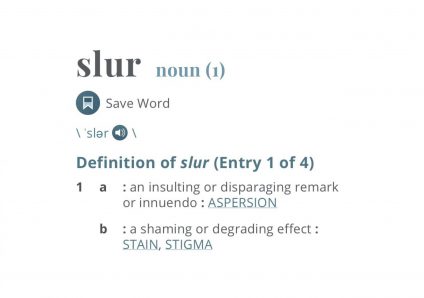
This slur should be banned from the lactivist lexicon

It’s appalling to find that at the outset of the year 2022, lactation professionals are still using their favorite slur.

Do they continue to use the slur because they think women are inherently untrustworthy?

Do they continue to use the slur because they refuse to learn from scientific evidence?

Or do they continue to use the slur because the alternative — admitting that breastfeeding has a significant failure rate — is unacceptable?

Consider the title of this paper in the forthcoming issue of Breastfeeding Medicine, Maternal Variants in the MFGE8 Gene are Associated with Perceived Breast Milk Supply:

A major reason why mothers undergo early, unplanned breastfeeding cessation is perceived inadequate of milk supply (PIMS).

The slur, for those who haven’t already guessed, is “perceived.”

Why is “perceived” a slur?

Imagine if the scientific literature were filled with papers referring to sexual harassment at work as “perceived sexual harassment”. The implication would be that women who report sexual harassment cannot be believed; they must have “misperceived” the interaction. Only others can judge what “really” happened because a woman’s judgment is not reliable.

Yet the breastfeeding literature is filled with papers referring to insufficient breastmilk as “perceived insufficient milk.” The implication is that women who report insufficient breastmilk cannot be believed; they must be “misperceiving” their babies cries of hunger. Since women’s judgment can be dismissed out of hand as unreliable, only breastfeeding professionals can judge what “really” happened.

It seems that lactation professionals are incapable of learning from their own literature. A major paper Evidence-Based Updates on the First Week of Exclusive Breastfeeding Among Infants ≥ 35 Weeks published in April 2020 could not possibly have been clearer:

Most, but not all, women experience lactogenesis II, referred to as “milk coming in,” by 72 hours post partum. In the Infant Feeding Practices Survey II, 19% of multiparous women and 35% of primiparous women reported milk coming in on day 4 or later…

Occasionally, a woman does not experience lactogenesis II and only produces small volumes of milk (prevalence 5%–8%).

Literally 1 in 3 first time mothers don’t begin to produce breastmilk until day 4 or later. Literally 1 in 20 mothers NEVER produces enough breastmilk to fully nourish an infant. Their “perceptions” are 100% reliable.

What’s particularly remarkable about the continued use of the smear is that there is a growing body of literature revealing that insufficient breastmilk is the result of genetics not perception.

There is even a biomarker for low supply. The paper The Relation between Breast Milk Sodium to Potassium Ratio and Maternal Report of a Milk Supply Concern reported that high Na:K ratio in breastmilk at day 7 was associated with maternal perception of low supply and with decreased breastfeeding rates at day 60.

Indeed the authors concluded:

…This result challenges the belief that milk supply concern in the context of exclusive breastfeeding is primarily maternal misperception.”

A 2018 paper, Milk cell gene expression of mothers with low breast milk production, found differences in gene expression between mothers with low supply and those with normal supply:

Preliminary findings suggest variations in cell signalling and function, examined through gene expression that might contribute to low milk production. Further investigations will potentially determine significant roles of key genes enabling successful human lactation.

Ironically, the newest paper — the one that continues to use the slur — examines the genetic basis of low milk supply.

…An SNP in the MFGE8 gene (rs2271714) may be associated with the risk of PIMS. Within our cohort, a polymorphism at this locus was associated with a sevenfold increase in PIMS risk, and heterozygotes displayed significantly shorter durations of exclusive breastfeeding (4.7 weeks)…

Why do breastfeeding professionals continue to slur women who report low supply when they know that 1. low supply is common, 2. there is a biomarker for low supply and 3. low supply has a genetic basis?

I suspect it is because they can’t bear to admit what the scientific evidence clearly shows: breastfeeding — far from being best for every baby — has a significant failure rate that puts babies’ lives at risk.

How the social construction of breastfeeding leads to recommendations that are often faulty and sometimes deadly

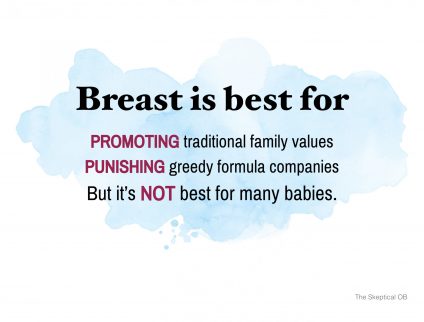
If you want to understand contemporary lactivism — and its tenets that exist independent of or even in direct opposition to — scientific evidence, you need to understand the social movements behind them. The phrase ”breast is best” is a social construct masquerading as a medical claim.

Contemporary lactivism owes its origins to two social movements, the effort to re-immure women back in the home and the desire to punish formula companies for unethical behavior in Africa that occurred 50 years ago. Simply put, nearly every claim advanced by lactivists is designed to make mothering incompatible with work outside the home and/or designed to punish formula companies.

Consider the The Baby Friendly Hospital Initiative. The very name is meant to set the terms at the outset: women who believe they have responsibilities, needs or desires beyond full-time breastfeeding are deviant; they are “unfriendly” to their babies. Forcing women to be counseled in breastfeeding by such an initiative is like forcing left handed children to be instructed in handwriting by the “Right-handed is Best Initiative” or forcing gay and transgender teens to be counseled by the “Heterosexuality is Best Initiative.” It’s both unscientific and cruel.

That’s why there are so many tenets of lactivism that have not been changed despite having been debunked by scientific evidence:

– Why do hospitals, states and even countries have breastfeeding targets though they have not been shown to have a meaningful impact on the health of term babies?

To force mothers to stay home to breastfeed and to punish formula companies.

– Why do lactivists tell women formula will sabotage breastfeeding even though literally millions of women successfully combo-feed their babies.

To force mothers to stay home to breastfeed and to punish formula companies.

– Why do lactivists tell women that breastfeeding promotes bonding when it doesn’t?

To force mothers to stay home to breastfeed and to punish formula companies.

– Why do lactivists lie about newborn stomach size?

To force mothers to stay home to breastfeed and to punish formula companies.

Some tenets of lactivism — like banning pacifiers, discouraging solid food until 6 months and promoting the deadly practicing of bedsharing — rest solely on the effort to keep women tied to their babies and restricted to their homes.

Why does the World Health Organization, the American Academy of Pediatrics and just about every organization concerned with babies insist that breast is best when often it’s not? Their recommendations rest largely on the repugnance they feel toward formula companies. That’s why when supplementation is unavoidable many organizations insist on donor breastmilk — hideously expensive, in desperately short supply, and with no evidence of benefit for term babies. In their view (conscious or subconscious) it is better for a mother to spend $8/ounce to buy breastmilk that may be contaminated with pathogens or recreational drugs than to give formula companies pennies/ounce in income.

The bottom line is that when it comes to breastfeeding, you can’t trust lactivists and you can’t trust medical organizations. You can only trust the scientific evidence and the scientific evidence has already debunked many of the most beloved claims about breastfeeding.

“Breast Is Best” is a social construct masquerading as a medical claim

Why do so many good mothers feel bad about breastfeeding?

Why has breastfeeding become the leading risk factor for newborn hospital readmission resulting in tens of thousands of readmissions each year?

Why have none of the benefits predicted for term babies (decreased mortality, severe morbidity and healthcare expenditures) come to pass?

It’s because “breast is best” is a social construct masquerading as a medical claim.

What does that mean?

Consider other examples of social constructs presented as medical claims:

– Women are flighty and nervous because of hysteria, located in and named for the uterus.
– Homosexuality is deviant behavior.
– Gender is always congruent with chromosomes.

Each is a belief or bias — a social construct — presented as a medical claim. These beliefs/biases are not disingenuous. People who insist that women are inferior, that homosexuality is a form of deviance and that transgenderism simply doesn’t exist don’t recognize that their beliefs are social constructs and not medical facts.

“Breast is best” is also a social construct, or rather a number of social constructs, and not a medical fact. Hence the damage, both physical and psychological, that is the inevitable result of presenting belief/bias as medical fact.

How is “breast is best” a social construct?

La Leche League was started by religious fundamentalists who deeply believed that keeping mothers out of the workforce and at home was “best” for babies. They reasoned that if convinced to breastfeed, mothers wouldn’t be able to work outside the home.

In the book La Leche League:At the Crossroads of Medicine, Feminism, and Religion, Jule DeJager Ward explains:

[A] central characteristic of La Leche League’s ideology is that it was born of Catholic moral discourse on family life … The League has very strong convictions about the needs of families. These convictions are the normative heart of its narrative… The League’s presentations and literature carry a strong suggestion that breast feeding is obligatory. Their message is simple: Nature intended mothers to nurse their babies; therefore, mothers ought to nurse…

For many lactivists “breast is best” really means “breast is best for enforcing traditional family norms.” That’s why lactivism is popular among the religious Right.

But the phrase “breast is best” wasn’t coined until the advent of a different social movement, anti-corporatism. Nestle, looking for new markets, promoted formula feeding in Africa despite awareness that the water to prepare it was often contaminated. Thousands of babies died as a result and revulsion toward Nestle’s unethical behavior was and is appropriate.

For many lactivists “breast is best” really means (whether they realize it or not) “breast is best for punishing greedy corporations.” That’s why lactivism is so popular among the anti-corporatist Left and why any attempt to point out the lifesaving properties of infant formula is met with a chorus of “formula companies are evil!”

Everyone is entitled to their beliefs. There is nothing wrong with believing that breastfeeding is best for traditional families or that breastfeeding is best for punishing greedy corporations. There’s something very wrong with presenting these beliefs/biases as a medical claim — breastfeeding is healthiest for babies — when it’s not and it never was.

US government REMOVES exclusive breastfeeding as a hospital quality metric!

In a victory for both babies and mothers, the Centers for Medicare and Medicaid Services (CMS) has REMOVED exclusive breastfeeding rate as a hospital quality metric!

Specifically, the government removed PC-05.

What is PC-05?

PC-05 assesses the rate of newborns exclusively fed breast milk during the newborn’s entire hospitalization.

As I’ve written in the past, this purported quality metric has been the cause of a great deal of infant and maternal suffering. It is almost certainly the proximate cause of the epidemic in newborn hypernatremic dehydration.

How did a quality measure designed to improve infant health end up harming infants? The answer can be found in data science: Goodhart’s Law.

When a measure becomes a target, it ceases to be a good measure.

Campbell’s Law, a corollary of Goodhart’s Law, is equally instructive:

The more any quantitative social indicator is used for social decision-making, the more subject it will be to corruption pressures and the more apt it will be to distort and corrupt the social processes it is intended to monitor.

When hospitals are incentivized to maximize rates of exclusive breastfeeding at discharge, they ignore dehydration, hypoglycemia (low blood sugar) and jaundice because treating them would involve formula and that would reduce the rate of exclusive breastfeeding.

When hospitals are incentivized to maximize rates of exclusive breastfeeding at discharge, they make formula hard to get: they restrict access to it, lock it up and force women to sign odious, shaming “consent forms” to get it.

When hospitals are incentivized to maximize rates of exclusive breastfeeding at discharge they make sure that hospital personnel will not have to endure the anguished cries of starving infants by closing well baby nurses and leaving babies in mother’s rooms around the clock. And should nurses break down because of simple human compassion and offer formula, they are excoriated by official policy.

Is it any wonder then that exclusive breastfeeding has become the leading risk factor for hospital readmission, responsible for literally tens of thousands of newborn hospital readmissions each year? By setting the wrong target, PC-05 incentivized poor, even deadly, care.

Interestingly, the stated reason for removing the exclusive breastfeeding quality metric is maternal health.

According to a recent announcement (page 1659):

In the FY 2022 IPPS/LTCH PPS proposed rule (86 FR 255801) we proposed to remove PC-05 beginning with the CY 2024 reporting period/FY 2026 payment determination under removal Factor 5—the availability of a measure that is more strongly associated with desired patient outcomes for the particular topic

… We believe that the Maternal Morbidity structural measure is more strongly aligned with our current focus on maternal health than the PC-05 eCQM. The Maternal Morbidity structural measure focuses on determining hospital participation in a Statewide or national Perinatal QI Collaborative and implementation of patient safety practices or bundles within that QI initiative, which includes breastfeeding, while PC-05 targets only breastfeeding, a less holistic area of maternal health.

Like all changes to CMS rules, this was open to public comment and the comments are addressed.

A few commenters did not support our proposal to remove PC-05, because the Maternal Morbidity structural measure does not specifically focus on breastfeeding, and therefore, is not a true replacement of PC-05. A few commenters did not support our proposal to remove PC-05 because of their concern that removing it would result in less focus on and investment in supporting breastfeeding in hospitals…

The response:

…[W]e note that the Maternal Morbidity structural measure does address breastfeeding. It focuses on determining hospital participation in a State or national Perinatal QI Collaborative and implementation of patient safety practices or bundles within that QI initiative, which includes breastfeeding, whereas PC–05 targets only breastfeeding, a less holistic area of maternal health.

In other words, hospitals WILL continue to support breastfeeding but exclusive breastfeeding rates will no longer be used as a quality metric to evaluate and compensate hospitals. The pressure on hospitals — and therefore new mothers — to value exclusive breastfeeding above infant needs and maternal desires is dramatically reduced.

Hallelujah!

What if higher socioeconomic status CAUSES breastfeeding?

Countless studies have demonstrated a high correlation between breastfeeding and all sorts of desirable health and economic outcomes from reduced infant mortality to reduced obesity, from higher IQ to higher educational achievement. That’s led breastfeeding researchers to erroneously conclude that breastfeeding CAUSES improved outcomes.

In fact nearly all studies attributing benefits to breastfeeding are riddled with what is known as confounding variables. A confounding variable is a third phenomenon that influences both of the other two.

But there’s another serious problem that afflicts nearly all breastfeeding studies and that is the possibility of REVERSE causation. Just because two variables X and Y are closely associated even after being corrected for confounding variables does NOT mean that X causes Y. It is possible that Y causes X.

For example, imagine we did a study of substance abuse and mental health disorders and found that adolescent drugs abuse is highly correlated with mental health disorders. Should we conclude that substance abuse causes mental health disorders? Of course not. It is well known that adolescents with mental health issues abuse drugs in an effort to self-medicate. Substance abuse does not cause mental health disorders; mental health disorders cause substance abuse.

What does that mean about breastfeeding? While breastfeeding seems to cause various health and economic benefits, we may have the relationship precisely backward. Instead of breastfeeding causing benefits, it is entirely possible that the benefits “cause” breastfeeding.

How can that be? It is well known that breastfeeding is socially patterned. The value ascribed to breastfeeding is determined by income, education, ethnicity and place of residence among other things. Moreover, the ability to maintain a breastfeeding relationship depends on the availability of partner support, household wealth and maternity leave that also depend on income, education, ethnicity and place of residence.

It isn’t merely that these factors are confounding variables, though they are. It’s that higher socioeconomic status leads to strong social pressure to breastfeed and strong social stigma toward bottle feeding. In other words, breastfeeding doesn’t cause higher socioeconomic status; higher socioeconomic status causes breastfeeding and then the offspring inherent all the benefits of having higher socioeconomic status.

The distinction could not be more critical. The US has been spending countless millions each year under the mistaken impression that breastfeeding causes better outcomes yet the return on investment has been basically zero. Though breastfeeding rates have skyrocketed, the predicted decreases in infant mortality, severe morbidity and healthcare expenditures simply haven’t materialized. That’s just what you’d expect if we’ve fallen into the mistake of reverse causation.

It’s long past time to take those countless millions away from promoting breastfeeding and use them to directly improve the socioeconomic status of those who are disadvantaged:

Instead of spending millions on lactation consultants, spend it on primary school teachers, pediatricians for underserved areas and maternity leave for everyone.

Instead of spending millions on breastfeeding promotion, spend it on cleaning up pollution and reducing crime in disadvantaged areas.

And while we’re at it we could spend money making college education — a virtual prerequisite for socioeconomic success — more affordable for those with low incomes.

If we want to improve both health and economic outcomes for babies we should stop wasting money on breastfeeding. Breastfeeding doesn’t cause those health and intellectual benefits for which is has been touted; those health and intellectual benefits cause breastfeeding.

New Lancet paper does NOT show that breastfeeding reduces post-neonatal mortality

There’s a new study in The Lancet that claims to show that breastfeeding saves lives.

According to Breastfeeding and Post-perinatal Infant Deaths in the United States, A National Prospective Cohort Analysis:

Breastfeeding initiation is significantly associated with reduced odds of post-perinatal infant deaths in multiple racial and ethnic groups within the US population. These findings support efforts to improve breastfeeding in infant mortality reduction initiatives.

No, the study supports nothing of the kind. It’s no different than doing a study that shows that Volvo ownership is significantly associated with reduced odds of post-perinatal infant deaths and concluding that we need to improve access to Volvos for all families.

The problem with studies like this — and there are many studies like this — is that breastfeeding is socially patterned. Women who breastfeed differ in substantial and meaningful ways from women who don’t breastfeed. Families of women who breastfeed differ in substantial and meaningful ways from families where of women who don’t breastfeed. And it is those substantial differences that account for the differences in post-neonatal mortality rates.

There are three major limitations to the study:

1. Correlation is not causation. Yes, breastfeeding is CORRELATED with reduced post-perinatal mortality, but the study provides NO evidence that breastfeeding CAUSES reduced post-perinatal mortality.

2. There was no dose response relationship since the authors only compared ever breastfed to never breastfed. In other words, the primary difference between the two cohorts is mother’s intention not the amount of breastmilk received.

3. As mentioned above, breastfeeding is socially patterned. Breastfeeding is associated with lower rates of post-perinatal death for the same reason Volvos are associated with lower rates of post-perinatal death. Both are proxies for a host of social and economic factors.

It is true that the authors tried to correct for some of these variables but the corrections are imperfect. For example, they did not correct for maternal socio-economic status though they did correct for things like maternal education and insurance status that are related to socio-economic status.

The authors acknowledge these limitations:

An important limitation of our analysis is the lack of data regarding duration and exclusivity of breastfeeding from birth certificates… [U]sing the vital statistic data alone, this study could not identify the causal pathway between initiating breastfeeding and infant mortality, such as structural racism and other social determinants of health that impact breastfeeding practices and infant outcomes especially among Black women… Despite our statistical efforts towards a more robust study design, we may not have completely ruled out the reverse causality and residual confounding effects given the nature of this study…”

Finally, the authors are NOT independent researchers looking to advance the state of knowledge. They’re part of a breastfeeding lobby looking to increase funding for their efforts.

Consider their conclusion:

…[W]e have identified significant associations between the initiation of any breastfeeding and reduced post-perinatal deaths in the US population, with consistent findings in various stratified analyses representing different demographics and health status. These findings support integrating efforts to promote, protect, and support breastfeeding for US infant mortality reduction efforts.

But the findings — as the authors themselves admit — did NOT demonstrate that breastfeeding reduces infant mortality so they don’t support ANYTHING and certainly not promotion of breastfeeding.

The sad fact is that the real cause of post-perinatal mortality is almost certainly financial and structural inequities, NOT breastfeeding, and focusing on breastfeeding just benefits the breastfeeding lobby without doing anything for babies.

How many dead babies does it take for a homebirth doctor to lose her license?

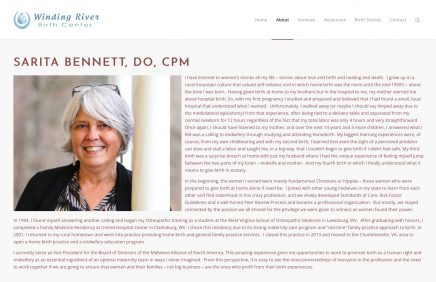
I’ve been writing about homebirth in one forum or another for more than 25 years. During that time I’ve seen some egregiously incompetent providers, but the case of Sarita Bennett, DO CPM, Secretary to the Board of Directors of the Midwives Alliance of North America may be the most chilling yet. Again and again and again Bennett “trusted birth” and again and again and again babies died at her hands. Now the state of Virginia has finally taken both her medical and midwifery licenses.

How many brain-injured and dead babies did it take?

Brain-injured Baby A:

Upon arrival to the hospital, the infant was noted to be in respiratory distress and hypothermic, with a heart rate of 70. He underwent extensive inpatient treatment and, upon discharge on or about October 1, 2016, his active problems included enteral feeding due to tachypnea, moderate hypoxic ischemic encephalopathy, respiratory distress, meconium aspiration syndrome, hyponatremia, and seizures.

Dead Baby B:

…[T]he infant was delivered at approximately 2:53 p.m. with nuchal cord wrapped five times around the neck. She was not breathing…

According to hospital records, upon arrival at the home, EMS performed CPR for approximately 20 minutes and then transported the infant to a local hospital emergency department, where she was intubated. She was then transferred to the NICU at another hospital. Despite intensive supportive measures, the. infant expired on January 22, 2017. The cause of death was documented as hypoxic ischemic injury secondary to nuchal cord.

Dead Baby C:

…[O]n or about September 30, 2017, Patient C went into labor. She arrived at the Birthing Center at 5:30 p.m. and the infant was delivered at 8:48 p.m… [T]he infant had no respiratory effort, did not respond to stimuli, and was limp, and that her extremities were blue… [Bennett’s] records indicate that she called EMS at 9:09 p.m., approximately 21 minutes after the infant was delivered (according to EMS records, the call was made at 9:12 p.m.).

According to hospital records, the infant suffered from severe hypoxic ischemic encephalopathy and expired after birth.

Dead Baby D:

[Bennett] returned to Patient D’s home at 10:00 p.m. on December 13, 2017 and found, as she recorded, “surprise! At introitis.” At 10:42 p.m., Respondent noted that the fetus was again in breech position, with the buttocks emerging. Despite this high-risk position, Respondent decided to proceed with the delivery at home…

[T]he infant was fully delivered at 11:22 p.m. on December 13, 2017. He was noted to be apneic, and Respondent performed positive pressure ventilation for approximately 30 minutes commencing at 11:22 p.m. In a statement to the DHP investigator, Respondent stated that she kept the umbilical cord unclamped in order to improve the infant’s oxygenation and blood supply; when the placenta was delivered, the infant’s heart beat stopped and Respondent started chest compressions and called EMS… Patient D and the infant arrived at the hospital emergency department … at 12:50 a.m. on December 14, 2017. The infant was pronounced deceased at 1:08 a.m. on December 14, 2017.

Brain-injured Baby E:

At approximately 11 :00 p.m., according to Respondents’ records, an ultrasound indicated that the infant was presenting in breech position. Respondent made the decision to continue with the labor at the birthing center rather than transferring Patient E’s care…

Patient E labored until 2:49 a.m. on October 27, 2019, when the infant’s buttocks emerged. The infant was fully delivered at 3 :00 a.m., 11 minutes after his buttocks had emerged. Respondent noted that he was not breathing and that she started chest compressions at 3:01 a.m. and provision of oxygen at 3:04 a.m. She documented that the infant was breathing at 3:25 a.m. Despite having to provide resuscitative care to the infant for 14 minutes, [Bennett] allowed the parents to return home with the infant.

[Bennett] provided post-natal care to Patient E’s infant for approximately 28 days. [She] failed to refer care of the infant to a pediatrician or pediatric neurologist when he displayed risks for developmental delays, including plagiocephaly; feeding concerns including no suck/swallow reflex, aspiration of milk, and spitting up; seizures; passing out; and increased muscle tone and agitation.

A brain MRI of the infant conducted at a hospital on November 26, 2019 revealed severe subacute hypoxic ischemic encephalopathy. In addition, hospital records indicate that the infant suffered other complications including bilateral hip dysplasia; poor state regulation; fibromatosis colli; and hearing deficiency.

Dead Baby F:

Patient F informed Respondent that four of her prior pregnancies had resulted in delivery by cesarean section … Patient F’s height was 5 feet, 2 inches, for a Body Mass Index (“BMI”) of 37.5.

…[O]n or about April 6, 2020, Patient F experienced spontaneous rupture of membranes at her home out of state. She and her husband drove to the Birthing Center and spent the night there… Patient F related that [Bennett] informed her that she was not satisfactorily dilated and that she would like to see Patient F in a hospital setting. However, Patient F related that Respondent failed to convey the urgency of the situation and even suggested that Patient F could return to a hospital in her home state… [Parents] left the Birthing Center and returned to their home.

At approximately 10:53 p.m. on April 7, 2020, the father called 911 from their home, reporting that the infant’s mn had anerged. Shortly !hereafter, Patient F arrived at the emergency department ofa ncarliy hospital via EMS. Hospital recolds indicate that upon arrival, the fetus was noted tobavc an ann hanging out of the cervix that was blue, 8Dd there was no disoemible fetal heart tone. The dead infant was delivered by emergency cesarean section at 11:39p.m. on April 7, 2020.

In a period of approximately 3 1/2 years, Sarita Bennett, DO LM presided over the deaths of FOUR babies and the brain injuries of TWO others.

How many dead babies does it take for a homebirth doctor to lose her license?

Too many!

The politics of ignorance

Ignorance is not merely an absence of knowledge. Sometimes it’s the product of a deliberate effort to replace knowledge with doubt or even lies.

Classic examples come from business. The opioid crisis was triggered when Purdue Pharma lied to doctors about the addictive potential of OxyContin. We were told that it was not addictive so long as it was used to treat real pain; that, of course, was a lie as doctors themselves eventually demonstrated but not before millions were harmed.

[perfectpullquote align=”right” bordertop=”false” cite=”” link=”” color=”” class=”” size=””]Conservative COVID denialists are not ignorant in the traditional sense.[/perfectpullquote]

The tobacco industry determined it isn’t even necessary to lie to create ignorance; simply encouraging doubt that smoking causes lung cancer was enough. As this famous memo makes clear:

Doubt is our product since it is the best means of competing with the “body of fact” that exists in the mind of the general public… If we are successful in establishing a controversy at the public level, then there is an opportunity to put across the real facts about smoking and health.

In politics the efforts to replace knowledge have been culturally mediated.

Religious fundamentalists have always feared that scientific knowledge about evolution would undermine religious belief. They have opposed teaching evolution in public schools and when that tactic was prohibited, they insisted on creating doubt by “teaching the controversy” between evolution and so called ‘intelligent design.’ Just as in the case of tobacco and lung cancer, there has never been a controversy; one side is right and the other is wrong but by creating ignorance, religious fundamentalists hoped to keep that information from their children.

Such culturally mediated efforts to deliberately replace knowledge with doubt and lies appears to have reached an apogee in the conservative response to the COVID epidemic.

The facts are there for anyone to see:

COVID is deadly.
Treatments like hydroxychloroquine and ivermectin don’t work.
The COVID vaccine save lives.

Not surprisingly the success of these culturally mediated tactics is also culturally mediated. It is mainly political conservatives who accept the lies; the rest of us are gob-smacked that anyone could believe such nonsense.

It is important to understand that conservative COVID denialists are not ignorant in the traditional sense; they do not suffer from a lack of knowledge since the facts are obvious to anyone who is paying attention. They are victims — albeit willing and enthusiastic victims — of a deliberate effort to replace knowledge about COVID with lies and doubt. That’s why they imagine they are educated when they are simply — and sometimes fatally — duped.

What do anti-vaxxers mean when they talk about freedom?

First they refused to wear masks to protect themselves and prevent the transmission of the deadly coronavirus. Now they’re refusing to take a vaccine that will both protect them and reduce transmission of the disease.

Why do they refuse?

[perfectpullquote align=”right” bordertop=”false” cite=”” link=”” color=”” class=”” size=””]They’re talking about decision rights.[/perfectpullquote]

– In part it’s conservative Republican political motivations and the desire to signal loyalty.
– In part it’s ignorance.
– In part it’s Dunning Kruger; those who know the least often imagine they know the most.
– In part it’s betrayal anxiety, making them fear the minuscule risk of side effects more than the much larger risk of the disease.

But anti-vaxxers themselves, particularly conservative Republican anti-vaxxers, often describe their refusal in terms of freedom. But there is no “freedom” to refuse to wear a mask in a public health emergency just like there is no “freedom” to demand service in a restaurant when not wearing the appropriate attire. There is no “freedom” to refuse vaccination in a massive, deadly pandemic just like there is no “freedom” to refuse to stop at stop signs when driving.

What are they talking about if there are no such “freedoms”?

I believe they’re talking about “decision rights” or to put it another way, they’re talking about the very real freedom to decide for oneself.

As Bartling et al explain in The Intrinsic Value of Decision Rights:

Social psychologists argue that human needs constitute a source of the intrinsic value of power and autonomy… Frey et al. argue that independence and autonomy at the workplace are sources of procedural utility that raise happiness. In economic philosophy, the capabilities approach by Sen and Nussbaum advances a related argument. They emphasize that not only outcomes, but also the freedom of choice, are important for a person’s quality of life …[I]n moral and political philosophy, John Stuart Mill argues that liberty is “one of the elements of wellbeing”, and individual autonomy is regarded as a basic moral and political value.

It isn’t merely about the decisions made, it’s about the right to make decisions.

As Ferreira et al note in On the Roots of the Intrinsic Value of Decision Rights:

…[D]ecision rights carry an intrinsic value beyond their instrumental value either due to a desire to implement one’s decision (a sense of self-reliance) or a preference for independence from the interference of another person. An alternative reason is a preference for power associated with holding the decision right.

When anti-vaxxers, particularly Republican anti-vaxxers, complain about mask and vaccine mandates, it’s about more than masks and vaccines. It’s about personal autonomy, a concept highly valued in both political philosophy and medical ethics.

Doesn’t everyone have both the freedom and the right to make decisions about their own bodies? Who would contest that freedom?

Ironically, the group that has done the most to eviscerate the concept of decision right is conservative Republicans themselves.

Surely if you have the purported right to be served in any restaurant regardless vaccine status, you have the right to order your wedding cake in any bakery regardless of whether you are gay or straight.

Not according to conservative Republicans. The same people who insist that restaurant employees should be forced to risk their health and perhaps their lives to serve anti-vaxxers insist that bakers can’t be forced to risk their moral scruples to serve gay couples.

But they can’t have it both ways.

If there is no freedom to order a wedding cake for a gay marriage, there is no freedom to demand access to venues without a vaccine.

Surely if you have the right to decide for yourself about masks and vaccines in the face of a deadly, world-wide pandemic, you have the right to decide your own gender.

Not according to conservative Republicans.

The same people who feel no allegiance to “science” when it comes COVID, invoke “science” when insisting that transgender persons cannot be allowed to use the restrooms in which they feel most comfortable.

But they can’t have it both ways.

If there is no freedom to choose your own gender, there is no freedom to ignore COVID science.

Surely if you have the right to decide whether or not to protect yourself and others from coronavirus, you have the right to decide to terminate a pregnancy.

Not according to conservative Republicans. The same people who insist that their rights supersede the wellbeing of children who are too young to be protected by vaccination are vociferous in their belief that abortion must be banned because it harms unborn babies.

But they can’t have it both ways.

If there is no freedom to terminate a pregnancy, there is no freedom to refuse masks and vaccines.

What’s it to be, Republicans? Freedom for everyone or just freedom for you?