Want to be successful at breastfeeding? Bring formula to the hospital.

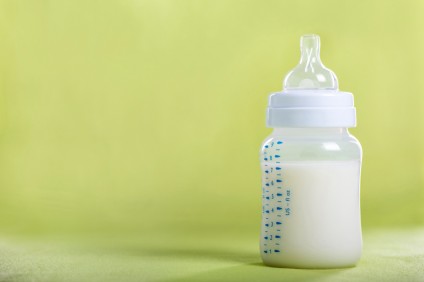
Baby milk bottle on a green sheet

Yesterday I wrote about the ways in which the Baby Friendly Hospital Initiative (BFHI) is hurting babies (Help me stop the Baby Friendly Hospital Initiative before more mothers and babies are harmed). It appears that the incidence of severe dehydration, sometimes accompanied by permanent brain damage, is rising as well as the incidence of skull fractures of babies who fall from their mothers’ hospital beds, and infants being accidentally smothered by their mothers who fall asleep while feeding or cuddling them.

I advocated for ending the BFHI on the twin grounds that it is not friendly to babies and it doesn’t work to promote breastfeeding. The BFHI is going to be around for the near future, though. How can mothers protect their babies and themselves from the misguided totalitarian rules of the BFHI that muzzle nurses preventing them from telling you about the options for feeding your baby?

[perfectpullquote align=”right” cite=”” link=”” color=”” class=”” size=””]Women who have easy access to formula supplementation in the first few days are MORE likely to breastfeed successfully.[/perfectpullquote]

If you want to be successful at breastfeeding, I recommend bringing formula to the hospital.

I recommend it for both practical reasons and philosophical reasons.

The practical reasons include:

  • We KNOW that many women won’t have their milk come in for more than two days after birth, but babies may get hungry before then.
  • We KNOW that 5-15% don’t make enough breastmilk to fully nourish and infant.
  • We KNOW, as even Dr. Alison Stuebe of the Academy of Breastfeeding Medicine acknowledges, that as many as 44% of babies will need formula supplementation in the early days.
  • We KNOW that judicious formula supplmentation INCREASES rates of successful breastfeeding.

In other words, women who have easy access to formula supplementation in the first few days are MORE likely to breastfeed successfully, not less. The BFHI explicitly ignores this.

Why?

In my view it’s because the BFHI is designed to be both humiliating and punitive.

  • The BFHI mandates refusing to offer supplementation to hungry babies.
  • It forces mothers to beg for formula and subject themselves to lectures on the benefits of breastfeeding (as if they are idiots and aren’t already aware).
  • It muzzles postpartum nurses from appropriately counseling women about the risks of dehydration and the benefits of supplementation.
  • It prohibits soothing hungry infants with pacifiers even though there is no evidence that pacifiers interfere with breastfeeding and a growing body of evidence that they reduce the risks of SIDS (sudden infant death syndrome).

Why is it designed to be humiliating and punitive?

Because the proponents of the BFHI cling to the beloved fiction that women don’t breastfeed or stop breastfeeding because they are too stupid and gullible to resists the marketing of formula manufacturers when the truth is quite different. The truth is that women don’t breastfeed because initiating breastfeeding can be frustrating for both mother and babies, and painful. They stop breastfeeding because continuing may be frustrating, painful,  inconvenient and may fail to provide the baby with enough nutrition.

The BHFI folks fear that if mothers see how easy, convenient and satisfying formula is, women will be seduced into using it instead of breastfeeding. So they prattle on about how easy and convenient breastfeeding is when it’s neither. They babble that breastmilk is the perfect food when it isn’t perfect if there is not enough of it. And, of course, they grossly exaggerate the benefits of breastfeeding when the truth is that in countries with clean water the benefits are limited to a few less ear infections and episodes of diarrheal illness across the entire population of babies in the first year.

Women are not selfish fools who must be forced into breastfeeding. Most women want to breastfeed and will make strenuous efforts to do so.

If you are one of those women I recommend that you take both formula and pacifiers to the hospital. Your baby will probably never need the formula, but knowing you have it will be reassuring. If your baby screams incessantly from hunger, you can offer a little formula to settle her and allow her (and you) to get some sleep. Pacifiers can also help in bridging the gap between your baby feeling distressed and your milk coming in.

The practical reason for bringing formula and pacifiers is that they can promote successful breastfeeding, but there’s a philosophical reason, too:

Having easy access to formula and pacifiers puts mothers, not lactation professionals, in charge of both babies and their own bodies. It eliminates the ability of hospital personnel to pressure and humiliate women into fulfilling the hospital agenda and leaves personal decisions to the person actually affected by them, the mother.

Lactation professionals and all healthcare providers should never forget:

HER baby, HER body, HER breasts, HER choice!

If you want to control your own body AND ensure a successful breastfeeding relationship, take formula to the hospital. You probably won’t need it, but if you do, you’ll be very glad you brought it.

Help me end the Baby Friendly Hospital Initiative before more babies and mothers are harmed

image

Dear Neonatologists, Pediatricians, Neonatal Nurses, and the organizations that represent them:

Please help me help babies and mothers. The Baby Friendly Hospital Initiative is killing babies and you’ve got to stop it.

Nearly every day I get another email or Facebook message about a baby who has been injured seriously or even fatally by the Baby Friendly Hospital Initiative (BFHI). And it’s not just mothers who are writing to me. It is postpartum nurses, neonatologists, pediatricians and other physicians who can’t believe what they are witnessing and seek my assistance in publicizing it and putting an end to these preventable tragedies.

[pullquote align=”right” cite=”” link=”” color=”” class=”” size=””]Babies are being harmed and even die, yet the physicians and nurses who care for them feel powerless to help them in the face of the BFHI.[/pullquote]

In the last few months I’ve heard about multiple infants sustaining skull fractures by falling from their mothers’ hospital beds, multiple infants who have suffered brain damage from dehydration and greater numbers of hospital re-admissions to treat dehydration before it leads to permanent injury, and countless cases of poor weight gain and failure to thrive.

Babies are being harmed and even die, yet the physicians and nurses who care for them feel powerless to help them in the face of lactation professionals who have seduced hospital officials with the promise of saving money by implementing the BFHI.

What is the Baby Friendly Hospital Initiative and how is it hurting babies?

The BFHI is a hospital credential that is given to institutions that can demonstrate that they follow the ten steps of the initiative (and have given a big slug of money to BFHI to pay for it). It’s meant to encourage breastfeeding though there is evidence that it doesn’t even work.

You can find the Ten Steps here. The most dangerous steps are these:

  • Give infants no food or drink other than breast-milk, unless medically indicated.
  • Practice rooming in – allow mothers and infants to remain together 24 hours a day.
  • Give no pacifiers or artificial nipples to breastfeeding infants.

This despite the fact that:

We KNOW that 5-15% of mothers will not produce enough breastmilk to fully nourish an infant.
We KNOW that judicious formula supplementation in the days after birth INCREASES breastfeeding rates.
We KNOW that there is no evidence that rooming in has ANY impact on breastfeeding rates.
We KNOW that there is NO EVIDENCE that pacifiers or artificial nipples reduce breastfeeding rates.

And most importantly:

We KNOW that the benefits of breastfeeding term infants in industrialized countries are SMALL.

No one can point to even a single term infant whose life was saved by breastfeeding whereas we can now point to many infants lives that have been destroyed or ended by letting a special interest group control infant care. And that doesn’t even take into account the suffering of mothers forced to endure their babies’ screams of hunger and are deprived of desperately needed sleep by the closing of well baby nurseries and enforced 24 hour rooming in.

Lactation professionals and the breastfeeding industry mean well. They honestly believe, in the face of copious evidence to the contrary, that breastfeeding has nearly magical health benefits, and that virtually any risk is worth taking to enforce breastfeeding among new mothers. But they aren’t medical professionals.

Neonatologists, pediatricians and postpartum nurses are medical professionals, and as such, are charged above all with ensuring infant well being. Outcome (a healthy baby) is far more important to medical professionals than any specific process like breastfeeding.

Neonatologists, pediatricians and postpartum nurses should immediately institute three specific measures:

  1. Easy access to infant formula and a low threshold for supplementation in the first few days.
  2. Routine access to pacifiers to soothe babies who are comforted by them.
  3. Mandatory access to well baby nurseries where every mother can send her baby for large blocks of time so she can sleep.

I don’t doubt for a moment that the breastfeeding industry is sincere in its beliefs, but babies are being harmed by those beliefs. We are experiencing an upsurge in serious adverse outcomes like infant skull fractures, severe neonatal dehydration, and even smothering deaths of infants left to sleep in their mothers’ beds because of forced rooming in. We should be tracking those adverse outcomes and doing everything in our power to prevent them.

I know that it is difficult to buck the hospital administration when it finds intellectual cover for financial decisions like closing well baby nurseries by insisting that it will boost breastfeeding rates. But babies have no one to defend them besides neonatologists, pediatricians and postpartum nurses.

Please, please stand up for them.

I wrote in the NYTimes that US homebirth is dangerous and no one could rebut my claim

Risks word on table

It’s been nearly two weeks since my Op-Ed, Why is American Home Birth So Dangerous?, was published in The New York Times in which I explained that American homebirth has higher death rates because of substandard self-proclaimed midwives known as CPMs (certified professional midwives). It seems to me that if anyone were going to rebut my claims, they would have done so by now. Yet no one in the homebirth industry has addressed them; that tells you something very important:

The American homebirth industry has no data to show it safe and even they can’t think of a reason why CPMs should fail to meet international midwifery standards.

[pullquote align=”right” cite=”” link=”” color=”” class=”” size=””]Why no rebuttal from Ricki Lake? Gene DeClercq? Lamaze International? The Childbirth Connection? Because American homebirth IS dangerous.[/pullquote]

Where are its public champions?

Where is Ricki Lake, who has made a career of promoting homebirth?

Where is Melissa Cheyney? She didn’t even bother to defend her 2014 paper that purported to show that homebirth is safe but actually showed it has a mortality rate 450% higher than comparable risk hospital birth.

Where is Marian MacDorman, who in her role as a CDC statistician has published several papers extolling the rise of homebirth while never mentioning the death rate?

Where is Gene DeClercq? He has argued repeatedly, and in a variety of forums, that American homebirth is safe, but apparently he couldn’t step forward to provide any proof.

Where is Henci Goer?

Where is Lamaze International?

Where is the Childbirth Connection?

Not a single one could present even a single bit of data to rebut my claims.

How about my assertion that CPMs are essentially lay people who want to attend births but fail to meet international midwifery standards?

No one denied it.

What about my claim that American homebirth is more dangerous than homebirth elsewhere because of a woeful lack of regulation?

No one offered anything to rebut that either.

Which suggests:

Professional American homebirth advocates and organizations know that American homebirth has a high rate of preventable deaths, deaths that do not occur in homebirth in the Netherlands, the UK, Canada or Australia. They known and they haven’t done anything about it.

Why not?

The American homebirth industry thinks it’s more important to protect itself than to protect babies and mothers.

It’s just that simple.

When confronted with the evidence that American homebirth is dangerous, professional homebirth advocates and organizations couldn’t deny it.

They didn’t even bother.

What’s the difference between promoting breastfeeding because it’s natural and promoting heterosexuality because it’s natural?

image

For years many US and world health organizations have behaved likely wholly owned subsidiaries of the breastfeeding industry. La Leche League has been an advisor to such organizations for decades and had engineered near complete replacement of scientific evidence with the goals and personal beliefs of lactivists.

[pullquote align=”right” cite=”” link=”” color=”” class=”” size=””]Whether or not a woman breastfeeds is no more your business than whether or not a woman is gay.[/pullquote]

The United States Preventive Services Task Force (USPSTF) has begun to push back ever so gently and the Academy of Breastfeeding Medicine is not happy, not happy at all.

The latest piece on their blog is dripping with their hallmark contempt for women who can’t or don’t want to breastfeed.

Dr. Joan Meek lays out the problem as the ABM sees it:

Recently, the USPSTF proposed a new recommendation: “The USPSTF recommends providing interventions during pregnancy and after birth to support breastfeeding.” Note that this statement does not state “promote and support,” but just “support.” … In explanations about this change, a member of the Task Force, Dr. Alex Kemper, as quoted in MedPage Today, stated that “the reason the Task Force made this slight word change is to recognize the importance of a mother doing what she feels is best for her and her baby and not wanting to, for example, make mothers feel guilty or bad if they decide not to breastfeed,” he said. “It’s really a personal choice that needs to be made based on her own personal situation.”

In other words, the USPSTF has decided to support ALL new mothers in choosing the feeding method that is right for them and their babies, not only the mothers who breastfeed.

According to the USPSTF:

“We systematically reviewed the literature for a variety of potential adverse events associated with breastfeeding interventions, including mothers reporting feeling criticized by the interventionist, guilt related to not breastfeeding, increased anxiety about breastfeeding, and increased postpartum depression. Only two of our included studies reported adverse events that mothers experienced related to the intervention and included reports of increased anxiety, feelings of inadequacy, and concerns regarding their family’s confidentiality. Although the goals of these interventions focused on initiating and continuing breastfeeding and empowering women to do so, it is important that interventionists respect family’s individual decisions.”

Meek responds with a statement of doublespeak that would make George Orwell proud:

If breastfeeding is truly a public health issue with benefits that have been widely documented for both women and children, then health care providers should be promoting breastfeeding to empower women to make an informed decision about their infant feeding choice.

Pro tip: You aren’t empowering women when your goal is to convince them to do it YOUR way.

Why isn’t supporting breastfeeding enough for the ABM? Because they like shaming and humiliating women who don’t knuckle under to their efforts to intimidate them into breastfeeding.

We don’t seem to worry so much about guilt when counseling patients about smoking cessation, weight reduction, or need to increase exercise.

Actually, physicians DO worry about inducing guilt and have long recognized that it is not effective in motivating people to undertake healthy behaviors. Moreover, last I heard smoking cessation, weight reduction and increasing exercise can and do save thousands of lives while promoting breastfeeding doesn’t save the life of ANY term infant.

Dr. Meek’s protestations remind me of our long national debate about homosexuality. In just a few generations we have gone from viewing it as a form of deviancy to legalizing gay marriage and there are large groups of people (particularly religious fundamentalists) who are still upset about it. They spend their time devising ways to promote heterosexuality such as privileging “traditional marriage” and promulgating laws to allow discrimination against the LGBT community. They insists that heterosexuality is normal because “that’s what nature intended.”

Dr. Meek, what’s the difference between insisting that we promote breastfeeding because “our bodies are designed for it” and religious fundamentalists insisting that we promote heterosexuality because “our bodies are designed for it”?

I don’t see much difference at all. In both cases those who demand that we promote the preferred choice instead of merely supporting it WANT to shame those who don’t make their preferred choice. It’s ugly when fundamentalists do it, and it’s ugly when breastfeeding advocates do it.

Whether or not a woman breastfeeds is no more your business than whether or not a woman is gay. There is no more need to promote breastfeeding than there is to promote heterosexuality. Promoting either does not empower women, it humiliates and shames … just as it is designed to do.

Homebirth: sacrificing babies on the altar of normal birth

image

Last week I wrote about the theology of quackery.

Homebirth advocacy meets many of the same criteria. It imagines a Paleolithic Garden of Eden where every woman gave birth in a state of grace, easily and safely. It ascribes The Fall to the advent of modern obstetrics that “pathologized” birth. It believes in predestination; the elect can be recognized by their unmedicated vaginal births; and it has a religious hierarchy of midwives, doulas and childbirth educators who are needed to reach spiritual fulfillment.

[pullquote align=”right” cite=”” link=”” color=”” class=”” size=””]Awe is reserved for women who insist on homebirth with twins, a breech baby or a previous C-section. The bigger the sacrifice, the greater the risk, the higher the praise.[/pullquote]

It also has stories of human sacrifice akin to the biblical story of Isaac.

You may remember that to test his faith, God commands Abraham to sacrifice his only son. God wants to find out if Abraham would be willing to kill the person most precious to him simply because He commanded it. Would Abraham being willing to make the supreme sacrifice to demonstrate his devotion to God?

If you know the story, you know that at the last minute, when Isaac is already bound on the altar and about to be killed, God sends an angel to stay Abraham’s hand. Evidently God never meant that Abraham should actually sacrifice Isaac. God does not want or need human sacrifice.

The sacrifice of Isaac is meant to demonstrate that the God of monotheism, of Judaism, Christianity and Islam, abhors human sacrifice. Unfortunately, it appears that Birth, the goddess in which homebirth advocates place such trust, has no such qualms.

“Birth,” like any goddess demands worship. Her power must be acknowledged and her essential goodness must be constantly praised through birth “affirmations.” “Birth” also demands constant evidence of belief. What could possibly be more demonstrative of true faith than the willingness to sacrifice your newborn child?

Unlike the God of the Old Testament, though, “Birth” does not send an angel to stay your hand. Quite the opposite, “Birth” sends tests; hence the praise for women who take the greatest risks at homebirth.

You can demonstrate your trust in “Birth” by having a homebirth in a low risk situation, where an unpredictable emergency can kill or maim you child. But women who really trust “Birth” are those who choose homebirth when they are at high risk of killing their babies. That’s why the greatest praise and awe is reserved for women who insist on homebirth with twins, a breech baby or a previous C-section. The bigger the sacrifice, the greater the faith, the higher the praise.

Unlike the God of the Old Testament, “Birth” apparently does want and need human sacrifice.

Babies die all the time at homebirth, and the biggest risk factors lead to the greatest number of deaths. As with any religion, believers must then deny that the deity had anything to do with it. Yes, they trusted “Birth” and the baby died, but that was just an incredible coincidence. They vehemently insist that the baby would have died in the hospital anyway, and they might have ended up with a C-section scar, too. A C-section scar is a horror because it is a permanent brand, marking its wearer as one who lost faith in “Birth.”

It’s easiest to figure out who are the truest believers. They are women who lost babies at homebirth but still trust “Birth.” To demonstrate their continued faith, they immediately being planning for the next “healing” homebirth.

Sacrificing your baby on the altar of “Birth” isn’t the highest form of devotion. That honor is reserved for deliberately placing your next child on the same altar and trusting that the goddess who killed your last baby won’t kill this one, too.


Adapted from a piece that appeared in September 2011.

Childbirth is dangerous

Cancel button

Natural childbirth advocates are distressed that in the space of one week The New York Times published my piece on the dangers of homebirth and The Washington Post published my piece on the role of shame and guilt in promoting the natural childbirth industry.

What seems to make them most upset is that I point out that childbirth is inherently dangerous. It is a reflection of their profound ignorance of the medical and historical reality of childbirth that they are unaware of this basic fact. Sure, childbirth seems safe to them, but they are clueless that it only looks safe because of the liberal use of the routine interventions of modern obstetrics.

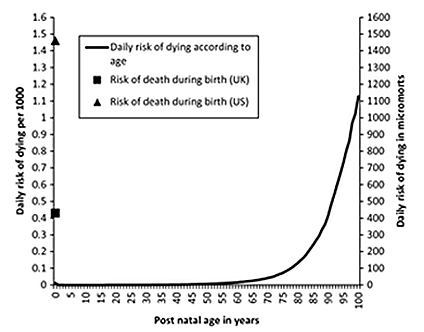
[pullquote align=”right” cite=”” link=”” color=”” class=”” size=””]The risk of a baby dying on the day of its birth is greater than the average daily risk of death until the 92nd year of life.[/pullquote]

Perhaps they’ve never considered how the many tiny graves in old cemeteries got there or why family genealogies tend to be full of forefathers who survived to old age having buried two or three young wives along the way.

In that respect, the natural childbirth industry has a lot in common with the anti-vaccine industry. Both looks at the US as it is, with low rates of death from vaccine preventable diseases and low rates of death from childbirth, and imagine in their naïveté that this is how it has always been. It’s the intellectual equivalent of pretending that we know no longer need to use car seats for babies because the motor vehicle fatality rate for infants is so low. Both modern obstetrics and vaccines are the equivalent of car seats. Take them away and the appalling death rates will return.

But you don’t have to take my word for it.

The dangers of the day of birth was published in the British Journal of Obstetrics and Gynecology in Februrary 2014. One of the authors wrote about it on his personal blog.

The authors recognize that most people in industrialized countries think that childbirth is safe:

… these risks are generally perceived to be low, and as a result many parents resent the intrusiveness of hospital birth, fetal monitoring, and other recommendations…

Much of the risk of childbirth remains concentrated in a relatively short period: the day of labour and delivery. In addition, when death occurs so early in life it results in more life years lost on average than when death occurs at an older age.

We speculated that expressed on a daily risk scale, instead of as per thousand births, childbirth risks would appear very different. We aimed to calculate the risk of dying on each day of your life, and compare these risks with other activities or events that an individual may encounter. This information would then be used to calculate the loss of life expectancy sustained with death occurring on the day of birth.

What did they find?

Even with modern obstetric practice the risk of a baby dying on the day of its birth in the UK is greater than the average daily risk of death until the 92nd year of life. We have shown that this risk is comparable with many other high-risk activities, and results in many life years lost.

So childbirth isn’t safe for babies. It is quite dangerous, comparable to the risk of death for the average 92 year old adult and comparable to the risk of death for those facing major surgery. The graphic representation is impressive:

image

The risk in the US is even higher as a result of a higher rate of risk factors and a lower rate of health care access than in the UK.

And that’s the risk when the baby has access to immediate life saving care. The risk at homebirth is higher still.

When natural childbirth or homebirth advocates tell you that childbirth is safe, show them the graph, and see what they have to say then.

If they still tell you to trust birth, you have learned why you should never trust them.


Adapted from a piece that first appeared in April 2014.

What we fail to talk about when we talk about medical mistakes: time pressure

image

I find pseudoscience anathema, but that does not mean that I am apologist for contemporary medicine.

I am quite critical of some aspect of medical practice. The subject of medical errors has particular personal resonance for me as my father died at age 60 in the wake of a major medical error that occurred at the hospital where I was on staff and which my professional colleagues tried (stupidly and unsuccessfully) to hide from me.

So when I read papers like the recent BMJ piece Medical error—the third leading cause of death in the US, it makes me angry and frustrated in equal measure that the problem has not gotten any better in the nearly 30 years since my father died.

[pullquote align=”right” cite=”” link=”” color=”” class=”” size=””]The relentless emphasis on performance metrics forces doctors and nurses to care for ever more, ever sicker patients in ever less time.[/pullquote]

But I’m also concerned that we are missing something important. When we talk about medical errors we fail to talk about the role of the relentless emphasis on performance metrics that force providers to care for ever more, ever sicker patients in ever less time.

In the last few decades we’re witnessed an extraordinary change in the delivery of medical care. Medicine, typically viewed as a profession guided by elaborate professional ethics, became a business. We let it become a business, indeed we encouraged the change, because we thought it would save money. It’s not clear that much money has been saved, but it’s very clear that the nature of medical care has changed dramatically.

Forty years ago, most people had family doctors that they knew and who knew them and worked directly for them. They were admitted to the hospital early in the course of an illness and stayed until they were nearly fully recovered. Many diseases now successfully treated with elaborate high tech methods couldn’t be treated at all.

Now, in contrast, patients are forced to change physicians frequently as they change jobs or insurance. Doctors work for large corporations who make demands on them that aren’t always in the best interests of patients. There is tremendous emphasis on keeping patients out of hospitals, and when admitted sending them home quicker and sicker. Doctors have no control over the number of patients they are required to care for and may receive bonuses for moving ever more patients through the system ever faster. They waste tremendous amounts of time justifying their medical decisions to functionaries whose only goal is to avoid paying for expensive care.

Nurses are under similar pressure to be more “efficient.” Patient loads have been increased so that a nurse who might have been responsible for 5 patients in various stages of recovery on each shift are now responsible for 6 or more very sick patients, all in need of elaborate monitoring and complicated medical care.

Both doctors and nurses are constantly prodded to care for more patients, and sicker patients, in less time than ever before.

The error that preceded my father’s death was an administrative error. No one told him that a routine pre-op chest X-ray done before minor surgery showed a cancer in his chest since everyone thought someone else had already told him. But there are a limitless array of medical errors, including medication errors, surgical errors, iatrogenic complications and more.

How deadly are they? According to authors Makary and Daniel:

… We calculated a mean rate of death from medical error of 251 454 a year using the studies reported since the 1999 IOM report and extrapolating to the total number of US hospital admissions in 2013. We believe this understates the true incidence of death due to medical error because the studies cited rely on errors extractable in documented health records and include only inpatient deaths. Although the assumptions made in extrapolating study data to the broader US population may limit the accuracy of our figure, the absence of national data highlights the need for systematic measurement of the problem. Comparing our estimate to CDC rankings suggests that medical error is the third most common cause of death in the US. (my emphasis)

This is just an estimate since there is no standard for keeping track of medical errors. Lest you think this is a US problem, the authors point out that both Canada and the UK have a similar problem.

Makary and Daniel offers suggestions for dealing with deadly errors, summarized in the graphic below:

image

These suggestions include making errors more visible so we can understand the dimensions of the problem, making remedies available and creating a culture of safety by engineering more fail safe measures into the delivery of medical care. We might start by acknowledging that the provision of safe medical care requires TIME.

We have elaborate rules for airline pilots that involve strict limitations on how long they are allowed to work and what they are required to do during that period. What would happen if we insisted that pilots, instead of flying one plane at a time, should be responsible for flying multiple planes at a time AND supervising dozens of others who are also flying planes at the same time? Would we be surprised to find pilots making deadly errors in those condititions?

Yet we have no problem forcing nurses to care for ever greater numbers of ever more seriously ill patients at one time. Should we be surprised that they make errors?

We have no problem increasing “patient panels,” the number of patients a doctor is require to take on, by 10, 20 or 50%, expecting them to be able to provide the same level of care to each patient in a much shorter period of time. Should we be surprised that they make errors?

We have no problem forcing doctors to spend endless hours on phone calls and paper work attempting to get reimbursed for work they have already done, or attempting to get permission for care that they want to deliver. Should we be surprised that they make errors during ever shorter patient appointments?

In forcing doctors and nurses to be more “efficient,” have we made them more prone to errors?

I don’t know the answer to that question; I don’t think anyone knows. It seems to me, though, that if we want to take steps to reduce deadly medical errors, answering that question would be a good place to start.

On Mother’s Day: skin to skin vs. heart to heart

image

At its best, the relationship between mother and child is a transcendent experience.

The love at its core is different than any other.

It is larger and more selfless than any other love. It is the love that leads a mother to nurture a helpless infant through toddlerhood and school age, through teenage angst to adulthood and beyond. It is the love that leads a son or daughter to tenderly nurture a frail parent through the end of life.

[pullquote align=”right” cite=”” link=”” color=”#D33883″ class=”” size=””]It’s not skin to skin that matters in mothering; it’s heart to heart.[/pullquote]

It expands to fill the decades and there is no limit to the miles it can cross and the separations it can endure. It is the love that leads an 80 year old mother to check up on the wellbeing of her 60 year old son and it is the love that leads a 60 year old daughter to turn to her 80 year old mother when either is distressed.

It is deeper than the ocean, wider than the sky and stronger than death.

That’s why the reductionism of natural parenting is so dispiriting to me. It reduces the transcendence of mother love to bodily functions. It reduces both mothers and babies to animal or prehistoric forebears. It fetishizes physical proximity and ignores emotional proximity.

It asks mothers the wrong questions:

Do they breastfeed?
Did they have an unmedicated childbirth?
Did they have vaginal deliveries?
Do they use cloth diapers?
Do they have a family bed?
Do they “wear” their babies?

Yet we know how meaningless these questions are. Think of your own mother. Is your relationship loving, fraught or both? Does the quality of your relationship have anything, anything at all, to do with how she parented you when you were an infant? Or does it depend on how she treated you when you were a child, a teenager, an adult? Do you even know if and how long she breastfed you, if she used cloth diapers, whether she “wore” you? Do you care? Or do you care far more about whether she accepts you for who you are, and does not try to change you into who she is?

We ought to be asking mothers:

Do you love your children?
Do you let them know it?
Do you accept them for who they are or do you try to change them into who you want them to be?
Do you acknowledge and praise their interests, strengths and talents or do you try to channel them toward your interests and talents?
Do you recognize their learning and personality challenges and help them meet them?
Do you spend the time and effort to properly discipline your children so they show kindness and consideration to others?
Do you expect (and provide support if necessary for) them to reach their full academic potential?
Do you provide support and encouragement for them to pursue the sports and hobbies that they want to pursue?
Do you get to know their friends?
Do you accept their choices in lifestyle, marriage, parenting, even when those choices differ from yours?
Do you recognize that they are people, different and separate from you and treat them with the respect that all people deserve?

We can, if we want, have both physical proximity and emotional proximity, but let’s not get confused about which is more important.

It’s not skin to skin that matters in mothering; it’s heart to heart.

Happy Mother’s Day!

The theology of quackery; how pseudoscience has become a secular religion

Adam and Eve

As any doctor or public health official can tell you, it’s hard to combat quackery.

It makes no sense on the face of it. A group of otherwise logical people have fallen headlong for nonsense. It might be anti-vaccine advocacy; it might be supplements; it might be cancer quackery. None of it can be proven and all of it is too good or too easy to be true.

So why are people so gullible?

[pullquote align=”right” cite=”” link=”” color=”” class=”” size=””]Detoxes and cleanses are pseudoscience exorcisms.[/pullquote]

Perhaps we’ve been approaching this the wrong way. Instead of viewing quackery as a form of knowledge, albeit wrong, we might try approaching it as a religion.

What do I mean?

It seems to me that for a large proportion of people, particularly people on the political Left, pseudoscience has become a secular religion, complete with creation myth, demons and ultimate salvation.

Don’t get me wrong: there’s plenty of pseudoscience on the political Right, too. But often that is motivated by adherence to standard religious philosophy, the idea that the Bible is the world of God and that anything that contradicts it cannot be allowed to be true. On the Left, where many abjure religion, quackery has become the new religion.

When you think about it, the religious nature of contemporary quackery is hard to miss.

1. The creation myth

Every religion has a creation myth and quackery is no different. Indeed the quackery creation myth bears a startling resemblance to the creation myth of Judeo-Christian tradition with the difference that God is replaced by “Nature.”

Nature designed human beings to function perfectly in all respects (a state of grace known as “wellness”) and to live in a Paleo Garden of Eden where everyone ate organic, exercised regularly, used only natural remedies and lived to ripe old age and beyond. So what happened?

2. The fall

Human beings fell from grace. The serpent in the Garden was technology, which lured people farther and farther from the state of nature. As a result, people developed diseases like autism, cancer and obesity.

We got sick because we ate from the Tree of Knowledge.

3. Demons

We are now plagued by demons. We might not be able to see them, and we certainly can’t find them with our scientific technology despite its sophistication. Of course we don’t call them demons. We call them toxins.

Toxins function like demons. They are everywhere; they are insidious; and they lie in wait to prey on the weak.

4. Predestination

Just like the Calvinist belief in predestination allowed the spiritual elect to be identified by their wealth and success, quackery has its own version of predestination. In quackery, the spiritual elect can be identified by their good health.

Luck played no role in Calvinist predestination. You weren’t wealthy because you were lucky or even skillful. You were lucky because you had been chosen by God. Luck plays no role in pseudoscience. You aren’t healthy because you are lucky; you’re healthy because you are one of the health elect.

It goes without saying that people who get sick must have done something to deserve it or must have been damaged by demons.

5. The Devil

The Devil is a shape shifter. One day The Devil is technology; the next it is Big Pharma; or perhaps it’s Big Medicine. The Devil is responsible for illness and the only way to remain healthy is to thwart The Devil’s machinations. How? By refusing what the Devil is offering: CHEMICALS!

What are chemicals in quack theology? In contrast to the scientific definition of chemicals that encompasses every single substance both inside and outside the human body, “chemicals” means something different in quackery. It is any substance that has a long, scary name.

6. Exorcism

Disease is caused by toxins, the demons of pseudoscience, so it is hardly surprising that preventing and treating disease involves exorcism, forcing demons from your body by cleansing and detoxifying it.

7. Faith

Like all religions, quackery requires faith in the face of the inability to prove that it works or is true. Of course in quackery they call it “intuition.”

For example, it doesn’t matter to anti-vax advocates that there is no science to support the claim that vaccines cause autism, because their intuition tells them that it does. They explicitly reject rational explanations, and, like true believers everywhere, the persistence of faith in the face of ever greater evidence is treated as a sign of devotion, not gullibility.

8. Priests

Like any religion, quackery has its own priests, the purveyors of quackery goods and services. Instead of offering rational prescriptions for health, quacks offer (for money) superstitions, affirmations, and support in rejecting rationality. They sell substances with no efficacy (herbs, homeopathy) and provide friendship and companionship as a substitute for knowledge.

Andrew Wakefield, the doctor deprived of his medical license because of research misconduct, is one such priest of pseudoscience, though there are many others.

9. Prayer

Affirmations are the pseudoscience version of prayer. Visualizing the destruction of cancer cells and birth affirmations reflect the magical thinking that thoughts have the power to affect outcomes.

10. Salvation

The goal of quackery, like the goal of many religions, is to be saved and welcomed into paradise. In the case of quackery, paradise is a return the imagined state of perfect health “designed” by Nature for blissful life in The Garden.

*****

Approaching quackery as a secular religion has important implications for how we address belief in pseudoscience. It is very difficult to reason people out of beliefs that they didn’t reasons themselves into. Hence education in the sciences, or specific disciplines of immunology, oncology, etc. is doomed to be ineffective. That’s especially true when persisten faith in the face of evidence to the contrary is venerated as devotion.

Pseudoscience as secular religion goes a long way toward explaining the vehemence and vitriol of those who believe in it. When we question anti-vax advocacy, we aren’t merely questioning a specific empirical claim, we’re questioning an entire theology. Is it any wonder then that prominent physicians who try to combat anti-vax beliefs received death threats.

It might be helpful, and more effective, to alert people to the nature of quackery as a secular religion and their faith in it as akin to religious belief. Quackery is more than just ignorance of basic scientific precepts. It reflects a world view that allows people to control their fears around health and disease and imagine themselves as destined for return to the state of wellness afforded by the original health Garden of Eden.

Turning people away from the religion of quackery is going to require more than science education; it’s going to require spiritual conversion.

Why did we suddenly stop mothering new mothers?

Post Natal Depression

Living as we do in the midst of contemporary maternity culture, it’s difficult to recognize that that the beliefs and priorities that drive US childbirth care are not universal; indeed they are hardly more than a generation old. Our beliefs and priorities in regard to maternity care are particular to this time and place. Sadly they are more likely to reflect the needs of the natural childbirth industry and the hospital industry than the needs of women.

For most of human existence childbirth was recognized as arduous and life threatening. Although we’ve all heard apocryphal stories of indigenous women giving birth in the fields and going right back to work, cultural anthropology tells a different story. Most cultures consider new motherhood a special time that should be spent isolated from the larger society and nurtured by other women.

[perfectpullquote align=”right” cite=”” link=”” color=”” class=”” size=””]The natural childbirth and breastfeeding industries insist that childbirth is not an ordeal; women should room-in with their babies 24/7 since they need no rest at all.[/perfectpullquote]

Many cultures and religions specify a period of “confinement,” weeks in which new mothers are relieved of their daily duties and allowed to concentrate on caring for a newborn. They don’t even have to take care of themselves; mothers, mothers-in-law and other women take care of them. Today women may not live near family members, but in some societies they can avail themselves of “baby hotels” to rest and recuperate after leaving the hospital.

Our own culture mothered new mothers until a little more than a generation ago. My mother spent 5 days in the hospital after each birth, and could send her babies to the nursery whenever she wanted to rest. By the time I started my obstetric residency, that period of nurturing had dropped to three days and by the time I finished my residency, “drive-through” deliveries (staying in the hospital for only one day after birth) were being promoted.

Why did we suddenly stop mothering new mothers?

It happened because of an unholy alliance between the natural childbirth industry, which sought to “normalize” birth, and the hospital industry, which relentlessly searches for new ways to save money.

Contemporary natural childbirth advocacy is to a distressingly large extent about wresting back economic control of childbirth from obstetricians. Midwives, doulas and childbirth educators have woven a convenient fantasy about how obstetricians “stole” childbirth (and the money it represents) from midwives. That fantasy rests on a profound unwillingness to acknowledge both historical and scientific fact.

It is a historical fact that women came to prefer obstetrician hospital care because of its safety and increased comfort. So the natural childbirth industry/midwifery has fought back by deriding both the safety and the comfort of obstetrician led hospital birth. The natural childbirth/midwifery plan to wrest childbirth back from obstetricians is predicated on the following:

If obstetricians and hospitals medicalized childbirth to make it safer, then midwives would de-medicalize it to make it more enjoyable, and, for added impact, would declare that childbirth was safe before obstetricians got involved.

If obstetricians offered pain relief, midwives would proclaim that feeling the pain improved the experience, tested one’s mettle and made childbirth safer.

If hospitals nurtured new mothers allowing them to recover from the physical ordeal of childbirth, the natural childbirth industry/midwifery would insist that childbirth was not an ordeal and that women should have their babies room in with them 24/7 so they could get no rest at all.

Obstetricians have resisted these efforts and in the beginning hospitals resisted them, too. But hospitals now receive global maternity fees from insurance companies instead of itemized fees based on services supplied. The only way for many hospitals to continue to operate is to cut services. The natural childbirth industry and breastfeeding industries have given them moral and intellectual cover. If childbirth is “normal,” why shouldn’t they force new mothers out of the hospital ever earlier? If the breastfeeding industry insists based on no evidence at all that mandatory rooming in increases breastfeeding rates, why shouldn’t they close well baby nurseries and recoup the savings for themselves?

The natural childbirth and breastfeeding industries benefit in other ways, too. Being forced out of the hospital early makes a postpartum doula and her fee more attractive. Being pressured to breastfeed makes a lactation consultant and her fee seem less like a luxury than a necessity.

So the hospital wins and the natural childbirth/breastfeeding industry wins and mothers lose!

We have stopped mothering new mothers NOT because they no longer need nurturing. In an age where many live far from family and where mothers are likely to return to work only a few weeks after birth, new mothers need nurturing more than ever. But no one cares about women’s needs, least of all the natural childbirth industry and the hospital industry.

The bottom line is that we stopped mothering new mothers in order to increase the profits for both the natural childbirth/breastfeeding industries and for the hospital industry.

I have no hope that the hospital industry could be brought to care about taking services away from new mothers, but the natural childbirth/breastfeeding industries are built nearly entirely on discretionary income and are therefore vulnerable to consumer pressure.

It’s time to push back against the natural childbirth/breastfeeding industries’ insistence that new mothers should be forced to begin the work of motherhood the moment the placenta detaches. We must demand that well baby nurseries remain open, that breastfeeding is treated as optional, and that women be allowed to rest after birth.

Simple human compassion mandates that we do at least that.

Dr. Amy