Improve your science information diet

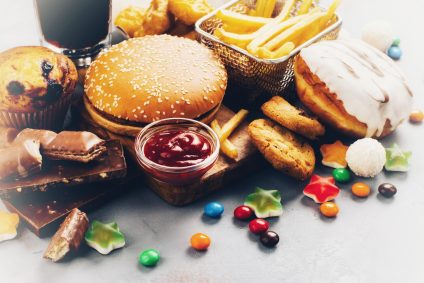
Fast carbohydrates food

To stay healthy you need to eat right and exercise. Those who don’t can end up obese and sick.

To stay informed about science you need to read “right” and exercise your critical faculties. Those who don’t often end up intellectually flabby and sick.

[perfectpullquote align=”right” bordertop=”false” cite=”” link=”” color=”” class=”” size=””]Science denialists — be they COVID denialists, vaccine denialists or climate denialists — are intellectually flabby and sick.[/perfectpullquote]

Science denialists — be they COVID denialists, vaccine denialists or climate denialists — are intellectually flabby and sick.

Why? Because they subsist on a steady diet of scientific “junk food,” a diet that is exceedingly satisfying but very unhealthy.

How can they get back into shape?

The first step is to get people to improve their information diet. If you’re eating nothing but candy or toxic food you are going to get sick. If you can improve your … diet to include things that you like but also other things that might be challenging to you then you are going to have a much better understanding of life…

Right wing media creator Matthew Sheffield is talking about political information, but the same principle applies to science information.

For denialists, the science content they love best — Facebook, websites, YouTube — is intellectual junk food. Who wouldn’t adore a steady diet of fatty, sugary, salty processed snacks? But imagine that was all you ate. You would have trouble maintaining a healthy weight and might have difficulty fending off chronic illnesses like adult onset diabetes or heart disease.

To stay healthy, you need to eat a balanced diet that includes foods like fiber and vegetables you may not like. Those foods are healthy food. To stay intellectually healthy you need to read a balanced diet of sources including scientific sources that offer scientific information about COVID, vaccines or global warming that you may not like. Those sources are healthy sources.

Imagine what would happen if you decided that vegetables and fiber were “fake foods” and junk food was the only real food. Do you think believing — even believing fervently — that a diet of only junk food was healthy for you would keep you at a healthy weight? Do you think proclaiming loudly to yourself and other junk food lovers that you are the only ones who see past the lies of dieticians and public health officials would keep you from getting the chronic diseases associated with overweight and obesity? No and no.

Why? Because there is a reality independent of what you think. In reality a steady diet of junk food is not healthy no matter who might tell you it is and no matter how fervently you might insist that junk food is the only “real” food.

Science is like that, too. There is a scientific reality independent of what you think. In reality COVID is a widespread, deadly disease. In reality vaccines are safe and effective. In reality anthropogenic climate change is happening. And if you made a good faith effort to read and understand the scientific consensus you’d know that.

We can take the analogy to a healthy diet even further. Diet — even the healthiest diet — can only do so much. Exercise is also needed. Science information, even the best information for laypeople, tells you what to think. Exercising your mind teaches you how to think.

Instead of simply reading mainstream sources that tell you that COVID is both real and deadly, read books and articles on the scientific method so you can understand how scientists know what they know. Instead of simply dipping in to websites that tell you that vaccines are safe and effective, learn some basic statistics so you will understand how to interpret the existing data. Instead of watching YouTube videos that declare that anthropogenic climate change is happening, watch YouTube videos that detail the climate history of the past 100,000 years so you can understand why what is happening today differs so dramatically from all that has gone before.

How can you stay physically healthy? Eat a balanced diet that includes foods you may not like and exercise regularly. Neither guarantees that you will be healthy, but both together give you the best chance of remaining healthy.

How can you stay intellectually healthy in regard to science. Read a balanced diet of sources including those you don’t like. Exercise regularly by increasing your store of knowledge about basic science, statistics and public health. Neither guarantees that what you learn from scientists and public health officials will always be correct, but together they give you the best chance of becoming truly knowledgeable.

Anti-maskers are COVID snowflakes

F71C2A3D-D639-4735-A24C-234A5C5B44F3

One of the greatest ironies of the alt-right is how conservatives have eagerly embraced previously despised attributes of liberals. After years of decrying political correctness, micro-aggressions and trigger warnings, we now have a group of people — COVID denialists — who think they are special snowflakes.

What’s a special snowflake?

[perfectpullquote align=”right” bordertop=”false” cite=”” link=”” color=”” class=”” size=””]When confronted with the “micro-aggression” of being required to wear a mask, they are “triggered” and react with narcissistic rage.[/perfectpullquote]

According to Urban Dictionary:

A malady … wherein the afflicted will demand special treatment, conduct themselves with a ludicrous, unfounded sense of entitlement, and generally make the lives of everyone around them that much more miserable.

The danger of this disease is that the sufferers rarely, if ever, know that they have contracted it, and continue about their merry way under the assumption that EVERYONE ELSE is the problem.

This condition, if left untreated, can radically alter the carrier’s demeanor, to include any of the following: a complete devolution to child-like behavior, temper tantrums, and/or fits of narcissistic rage.

Sound familiar?

In Florida, a shopper was recorded shoving a Walmart employee. In New Jersey, a man was charged with making terroristic threats when he allegedly became combative after being asked to leave a store. In Texas, a woman started flinging groceries from her cart after reportedly refusing to keep her mask on.

In California, two locations of a taco shop had to close after customers kept berating employees over the restaurant’s new mask policy.

It’s hard to imagine anything more child-like and narcissistic then the temper tantrums of COVID snowflakes who refuse to wear masks to prevent the spread of COVID-19. They assume they are entitled to ignore public health directives and transmit deadly diseases to others. In their immaturity and self-absorption, they actually pretend that everyone else is the problem. And when confronted with the “micro-aggression” of being required to wear a mask in stores or restaurants, they are “triggered” and react with narcissistic rage.

The actions of COVID snowflakes, which are inexplicable to most mature adults make perfect sense when viewed from the prism of the snowflakes’ heightened sense of both self-regard and grievance.

COVID snowflakes are everything they professes to despise about the “libs”: exquisitely sensitive to slights, self-absorbed and fragile.

Mask refusal is like drunk driving

382A99D5-0579-46A0-A081-77BCF7C73B65

Hi, folks! Jack Daniels here, spokesperson for CPRDD, the Committee to Promote Responsible Drunk Driving.

I’m sure you’ve seen newspaper accounts of horrific crashes that happened after someone drove drunk, but I’m here to tell you that just because a person died or killed someone else while driving drunk, does NOT mean that drunk driving led to those deaths.

Surprised? I’ll bet you are. But that’s because you’ve been subjected to the blandishments of Big Medicine working tirelessly to marginalize the role of alcohol in treating medical ailments. For hundreds of years surgery, from amputations to tumor removals, was performed with alcohol as the only anesthetic. Then along came doctors who could not tolerate the economic competition and marginalized medicinal use of alcohol just to protect their own incomes.

How do we know that drunk driving is a safe and responsible choice? There are many reasons, but before I list them, I want to give thanks to Ima Frawde, CPM (certified professional mask denialist) and her colleagues who have come up with these fabulous arguments; I’ve merely adapted them for drunk driving.

1. Sober drivers die, too.

If you listen to those shills from Big Medicine, you’d think that no one sober ever dies in a car accident. Sure some drunk drivers are killed or kill others, but that hardly means that driving sober can guarantee that you will live. Ice is a major cause of car accidents; fog is another, but no one tries to demonize ice or fog the way that they demonize drunk driving.

2. Over 99% of drunk drivers will make it home without killing themselves or others.

Sure, you see reports of spectacular drunk driving accidents blaring from newspapers and TV, but those are the rare cases. As the many, many people who have successfully driven drunk can tell you, most drunk drivers will arrive home safely.

3. Even when they crash, the death rate for drunk drivers and the people they hit is low.

To hear Big Medicine tell it, everyone who drives drunk will end up dead, but since that’s obviously untrue, drunk driving must be safe!

4. The people killed by drunk drivers often have pre-existing conditions.

We’ve all heard about people hit by a drunk driver who survived the initial accident but then died in the hospital of a heart attack or a complication of the surgery designed to save them. We can’t blame drunk drivers for their deaths! We must blame their underlying fragile health

5. God is my co-pilot

Nothing happens that God does not intend should happen. If He wants a drunk driver to arrive home safely, it will happen. If the drunk driver dies or kills someone that surely means that God intended those deaths.

6. Freedom!!!

Who is the government or Big Medicine to tell me that I can’t care for myself in the way that I think is best? Making sober driving mandatory is the first step toward world domination by jack booted thugs who will implant us all with data chips to control our minds.

There you have it, folks. These are just six of many reasons why drunk driving is safe. The next time you’re thinking about drinking and driving, remember, if those arguments are good enough to promote mask refusal, they’re good enough to promote anything.

Masks are like stop signs

EE1E2B5C-4450-4AAF-8FDD-80EB6D63416C

Carl has done his research and believes stop signs don’t work. That doesn’t give Carl the “right” to ignore stop signs.

Masks are like stop signs.

The theory behind stop signs is that if you stop before entering an intersection, there’s less chance of being hit by another driver traveling through the intersection. If stop signs work, then every time you stop, you avoid a potential accident.

[perfectpullquote align=”right” bordertop=”false” cite=”” link=”” color=”” class=”” size=””]There is no “freedom” to give others a deadly illness just as there is no “freedom” to ignore stop signs.[/perfectpullquote]

But suppose Carl doesn’t believe that stop signs work; or perhaps Carl believes that there are too many stop signs. Carl has done his research and made his own decision. Carl points out that he’s not blind. It is entirely possible to tell when another car is coming and stop only then. If the intersection is clear and Carl doesn’t believe that stop signs work, isn’t it his right to refuse to stop?

Isn’t the decision to stop at a stop sign a matter of personal freedom?

And if Carl is wrong and he’s T-boned at an intersection, what’s the problem if he’s willing to accept the responsibility?

It doesn’t take deep thinking to recognize that stop signs work best when everyone stops at them. Indeed, they work in large part because everyone stops at them.

Sure, if there’s great visibility at an intersection you can avoid other cars because you can see them coming. If Carl is barreling through the intersection, you can wait however long it takes for him to get through the intersection before you move into it.

But what if visibility is poor and you can only see cars that are very close to the intersection? In that case, simply stopping at the stop sign before entering the intersection is not enough to protect you. You could be T-boned by Carl because you didn’t see him coming, and he was too far away to see you entering the intersection in time to stop. In other words, you could be injured or killed even though you stopped at the stop sign.

How can that happen if stop signs work? Doesn’t the mere fact that accidents like these can and do happen prove that stop signs don’t work?

No and no.

Stop signs do protect people who heed them even when others do not. But stop signs work best when everyone heeds them. Even if only one person ignores a stop sign, multiple people can be killed. Indeed, it happens nearly every day when people ignore stop signs because they are drunk or they are in a rush.

Masks are like stop signs. They work to protect those who wear them, just as stopping at a stop sign protects those who do. But they work best when everyone wears them, just as stop signs work best when everyone can be counted on to stop.

But what about Carl who has done his research and concludes that the fact that stop signs don’t always protect people means that they don’t work? Does he have the right to refuse to stop because he believes that stop signs are ineffective or harmful? I suspect that most people, even the most ardent libertarians, believe that Carl’s rights don’t cover refusing to stop at stop signs.

Why not? Because stopping at stop signs is a public good and the burden of stopping even if Carl does’t want to do so — and even if Carl believes it doesn’t benefit him to do so — is outweighed by the tremendous harm that is prevented.

Masks are like that, too. The extensive rights enjoyed by people in a free society don’t extend to an ethical right to refuse masking. Some things — like stop signs and masks — work best when everyone does them. Masking to prevent COVID is a public good that prevents tremendous harm to others. Refusing to wear a mask is immoral.

There is no “freedom” to give others a deadly illness just as there is no “freedom” to ignore stop signs.

Mark Zuckerberg, why do you allow the mob to censor science communicators?

FA031014-74E2-4FE8-ACA9-5C86319BEA96

Dear Mr. Zuckerberg,

It must be extremely difficult to run Facebook, a multi-billion dollar business spread around the globe. A lot of things are automated — for obvious reasons —and therefore subject to unforeseen error. That’s why I suspect you never intended for Facebook to become an instrument to censor science communicators. But sadly, that’s what has happened.

Facebook allows the anti-science mob to shut down the pages of doctors and scientists who dare to provide accurate information about the COVID-19 pandemic, just as it has been allowing the mob to shut down pages of doctors and scientists who dare to provide accurate information about a myriad of scientific issues. How? By automating the complaint process, Facebook lets the mob “vote” against scientific information it doesn’t like.

[perfectpullquote align=”right” bordertop=”false” cite=”” link=”” color=”” class=”” size=””]There should be a special category of Facebook page for science communicators requiring a higher level of complaint vetting.[/perfectpullquote]

For example, in April 2019 I was banned from Facebook for 24 hours for daring to note a scientific fact: I was banned for calling into question the naturalistic fallacy by pointing out that while unmedicated vaginal birth and breastfeeding are natural, so is rape.

Entire books have been devoted to this issue, including A Natural History of Rape: Biological Bases of Sexual Coercion. Predictably, some people were upset, reasoning — wrongly — that if rape is natural, it must follow that rape is excusable. Ironically, they were demonstrating the point I had set out to prove: that natural childbirth advocates and lactivists have become blind to the real meaning of the word “natural.”

The mob reported my post for using the word ‘rape’ and the post was removed and I was banned from Facebook for 24 hours. In other words, Mr. Zuckerberg, you let the mob censor me, a science communicator, because I offended their unscientific sensibilities.

Now I’ve been banned for 7 days for daring to promote masking during the ongoing COVID-19 pandemic. I wrote a post suggesting — tongue in cheek — A Modest Proposal: No COVID Coverage For Anti-Maskers:

How can we combat health conspiracies among anti-maskers, people who don’t understand or don’t believe scientific evidence? I suggest a simple expedient; insurance companies should refuse to pay for COVID-19 infections and complications of those who refuse to follow public health recommendations on masks and social distancing.

The post reached tens of thousands of people and generated nearly 2,000 comments, most of them from hysterical anti-maskers. When their “arguments” and insults failed to convince me that masks are unnecessary, they “voted” their dissatisfaction by reporting the post to Facebook.

Mr. Zuckerberg, for the life of me I can’t understand what community standards the post has violated. Perhaps you have more insight into my supposed malfeasance, but it doesn’t matter. The mob has convinced Facebook to punish me and — because I had a previous (inappropriate) punishment on my record — I have been banned for 7 days. Of course I appealed, but I have heard nothing.

Fortunately, I have a co-administrator who can still post but I’m calling on that person sparingly to avoid that person being banned.

So here’s my question, Mr. Zuckerberg: why do you allow the mob to censor science communicators on Facebook?

Is it, as I hope, unintentional? Is it an unintended consequence of being forced to rely so heavily on automation? If so, I have a proposal that I hope you will consider:

Could you create a special — verified — category of Facebook page for science communicators that would trigger a higher level of complaint vetting? Once you verified the professional qualifications of the doctor, scientist or science journalist, those pages would no longer be subject to banning on the basis of the volume of complaints but would require human scrutiny before posts were removed or writers censored. This would effectively disempower the mob and free science communicators from their wrath.

I recognize that would involve more work, and therefore less profit. So why would you do it? I hope you would do it to keep the world safe for science. Do you want your children to grow up in a world where doctors, scientists and science communicators can be easily muzzled by an angry mob that despises them? Or do you want them to grow up in a world where science and education are venerated?

It’s your choice, Mr. Zuckerberg. Please do the right thing and accord science — and science communicators — the respect they deserve.

Choice-centered childbirth

Feet and arrows on road background. Pair of foot standing on tarmac road with colorful graffiti arrow sign choices

Contemporary midwives and their advocates suffer from a lack of imagination. They view childbirth in Manichean terms, pitting the so-called midwifery model against the so-called biomedical model. It’s a false duality.

There is a framework for maternity care that rises above both. It’s a framework that should govern the provision of all childbirth care. I call it the choice-centered model of childbirth.

[perfectpullquote align=”right” bordertop=”false” cite=”” link=”” color=”” class=”” size=””]Choice-centered childbirth puts control back to where it belongs: with mothers themselves.[/perfectpullquote]

How did we arrive at a false duality?

Modern obstetrics has been spectacularly successful. Science based childbirth has led to an extraordinary drop (over 90%) in both perinatal and maternal mortality in only 100 years.

Indeed, as Dr. Atul Gawande has noted:

Nothing else in medicine has saved lives on the scale that obstetrics has.

Moreover, modern obstetrics has made childbirth more easily endurable. Epidural anesthesia has freed women from pain so excruciating that the ancients could only imagine it as a punishment from God.

In response to their loss of market share to science-based childbirth, midwives have spent the past 40 years promoting grievance-based childbirth.

Grievance-based childbirth starts from the assumption that midwives “own” childbirth and doctors have stolen it from them. It postulates — laughably — that doctors medicalized childbirth for their own benefit and ignores the fact that obstetricians have made childbirth safer in three generations than midwives managed in thousands of generations.

Grievance-based obstetrics insists – preposterously and with no evidence — that childbirth prior to modern obstetrics was a peak spiritual experience for women and that doctors have stolen that imaginary experience away from them.

Of course, midwives don’t refer to it as grievance-based childbirth; they wouldn’t attract many customers by accurately portraying their attempt to claw back market share. They call it “natural” childbirth even though the only thing natural about it is midwives’ lack of life-saving skills.

The false duality of natural childbirth vs. biomedical childbirth results from a fundamental misunderstanding of the locus of control in childbirth. Midwives imagine that childbirth should be governed by their preferences as opposed to by the preferences of obstetricians. Choice-centered childbirth puts control back to where it belongs: with mothers themselves.

In choice-centered childbirth, all choices are valid.

– The choice to forgo interventions is valid as is the choice to opt for maximal interventions.
– The choice to experience the pain of childbirth is valid as is the choice of an epidural.
– The choice to wait for labor to begin on its own is valid as is the choice for induction.
– The choice to avoid a C-section is valid as is the choice to have one by maternal request.
– The choice to room-in is valid as is the choice to send a baby to the nursery.
– The choice to breastfeed is valid as is the choice to formula feed or combine both.

As a result, childbirth education would involve presenting the complete menu of existing choices, not just the ones of which midwives approve.

In others words, midwives and natural childbirth advocates would be forced to respect women’s choices instead of trying to manipulate them. How radical!

Hold the guilt! Yet more evidence that breastfeeding has NO impact on cognitive development.

4B95363A-3D55-43F8-9CD0-71AE4195897D

A new study shows — yet again — that breastfeeding has NO benefit for cognitive development.

Let’s start with the money quote from Associations between breastfeeding and cognitive function in children from early childhood to school age: a prospective birth cohort study published yesterday in the International Breastfeeding Journal:

[perfectpullquote align=”right” bordertop=”false” cite=”” link=”” color=”” class=”” size=””]Any observed benefit of breastfeeding on cognitive development DISAPPEARS when corrected for maternal IQ.[/perfectpullquote]

Breastfeeding should not be interpreted to have medical benefits for cognitive development.

The key point in the study is that any observed benefit of breastfeeding on cognitive development DISAPPEARS when corrected for maternal IQ.

The authors started with the following premise:

Despite evidences of breastfeeding for preventing acute physical illnesses in infants, the evidence for the association between breastfeeding and long-term cognitive development is not yet convincing.

How did they test the premise?

The data of nationwide representative sample of 1752 children born between 2008 and 2009 in Korea were prospectively assessed from the fetal period to examine the benefits of breastfeeding and cognitive development. Breastfeeding duration was prospectively assessed by parents. The Korean Ages and Stages Questionnaire and the Korean version of Denver II were used to assess early development annually from 5.5 to 26.2 months of age. Language development at 3 years of age was assessed with Receptive and Expressive Vocabulary Tests. Cognitive function at 8 years of age was assessed using multifactorial intelligence test.

What did they find?

The following chart shows the comparison of cognitive scores on a variety of tests at various ages based on the duration of breastfeeding. Statistically significant differences appear in bolded type. (Full size chart here.)

758E8E8F-70CB-46DA-B3BD-360BE5BC2944

At the far right of the chart is the crude comparison between children who were ever breastfed and children who were never breastfed. Only 2 of the 9 cognitive tests showed statistically significant differences. The rest showed no difference.

But even those few statistically significant differences DISAPPEARED when adjusted for children’s sex, age, gestational age, birth weight, parental educational level, and household income level (circled results).

In other words, any observed differences in IQ were the result of factors OTHER than breastfeeding.

The authors conclude:

… Many previous studies support the finding that there are positive associations between breastfeeding and cognitive development. However, the mean difference (effect size) in cognitive development due to breastfeeding was only 3.44 points (about one-third of a standard deviation), which is reduced again by the adjustment for maternal IQ. Considering these findings comprehensively, breastfeeding is not considered a critical factor in the cognitive development of children. Other studies have also reported that the observed advantage of breastfeeding on IQ score is actually due to genetic and socioenvironmental factors. When the results are adjusted for covariates such as maternal IQ, the effect of breastfeeding on cognitive function was insignificant. Thus, breastfeeding should not be interpreted to have medical benefits for cognitive development…

This should not be news to anyone who has followed breastfeeding research in for the past decade.

In 2014 the study, Is Breast Truly Best? Estimating the Effects of Breastfeeding on Long-term Child Health and Wellbeing in the United States Using Sibling Comparisons was published by Colen and Ramey.

The authors looked at the impact of breastfeeding on 11 different variables (including several measurements of cognitive development) in three different groups. There were difference between breastfed and bottle fed children in 10 of the 11 measured variables when looking at children overall. Those differences persisted when comparing families in which all the children were breastfed to families where all the children were bottlefed. But when the authors looked within families, there was no significant difference between breastfed and bottle fed children.

Looking within families takes ethnic, cultural and socio-economic factors out of the picture. When you do that, you find NO difference (including NO cognitive difference) between breastfed and bottlefed children.

In other words breastfeeding is a proxy for other factors that impact cognitive development. Since women who breastfeed are more likely to have higher IQ, higher educational achievement and higher socio-economic status, their children end up with higher IQ. It’s NOT the breastfeeding that causes the increased IQ, it’s the maternal advantages that lead to the resulting enhanced cognitive development.

What does this mean?

While every mother should be able to breastfeed for as long she wants to do so, there is NO reason to feel guilty if you don’t want to breastfeed or don’t want to breastfeed for long.

Hold the guilt! The benefit of breastfeeding on cognitive development has been overstated. It is time to correct our advice to mothers to reflect the real benefits of breastfeeding, not imagined benefits that don’t exist.

Why is lactivist Dr. Melissa Bartick lying about her own words?

2F79F276-BB96-49EE-8277-84D32AE8DC93

Melissa Bartick, MD committed a Kinsley Gaffe.

According to journalist Michael Kinsley:

A gaffe is when a politician tells the truth – some obvious truth he isn’t supposed to say.

Furthermore:

Another definition is a statement made when [he] privately believes it to be true, realizes the dire consequences of saying it, and yet inadvertently utters, in public, the unutterable.

What was Bartick’s Kinsley Gaffe?

[perfectpullquote align=”right” bordertop=”false” cite=”” link=”” color=”” class=”” size=””]Dr. Bartick shouldn’t lie about something that is so easy to check.[/perfectpullquote]

She ADMITTED that there is no evidence for most of the purported benefits of breastfeeding.

In the comment section of a piece on the Academy of Breastfeeding Medicine blog, I asked Dr. Bartick directly:

Where is the evidence that term babies lives has been saved? Where is the evidence that the diseases you insist are decreased by breastfeeding are actually decreasing as a result of breastfeeding? Where are the billions of healthcare dollars you claimed would be saved as the breastfeeding rates rose?

Her response:

…To my knowledge, no one has actually dug it up yet.

Oops!

She admitted what she privately knows to be true without realizing that she uttered for the unutterable.

What does a politician do when he commits a Kinsley Gaffe? He’s lies about it. If he’s particularly unprincipled, he lies blantantly even when his “gaffe” has been in print for years and he’s never challenged it before.

What does Melissa Bartick do when caught in a Kinsley Gaffe. She lies about it, even though it’s been in print for years, I’ve written about it for years and she never challenged it before.

9DD2820E-5194-4B8F-B9E6-05C300E582C6

I hope it’s obvious that I would have never said such a ridiculous thing. Truth and scientific integrity is not this person’s strong suit. Thanks for letting me know.

Dr. Bartick shouldn’t lie about something that is so easy to check:

2888E2DF-40EB-4EB2-9506-56733259ABED

Oops!

Why do breastfeeding researchers like Bartick exaggerate and mislead repeatedly? They have become confused about their ethical obligation. They proudly boast about supporting breastfeeding as if any process could or should be supported above the wellbeing of patients themselves.

Lactivism is like creationism; neither are science.

Science starts with a hypothesis and then tests it to see if it is true. The possibility always exists that the hypothesis is false. The conclusion of scientific testing is drawn from data gathered in the course of experiments and studies. It is not known a priori.

Creationism, the belief that the universe was created by an intelligent designer, is considered unfalsifiable by its adherents. They start with the conclusion that a Creator was necessary for our current existence and then arrange any experimental data to lead to that conclusion, carefully editing the data so that anything that could falsify the conclusion is excluded.

For creationists, there is no possibility that the conclusion is wrong since they start with the conclusion and, working backwards, do whatever is necessary to arrive at it. That means that creationism is not science.

Lactivist “science” also starts with a conclusion and works backward to justify it. The central tenet of breastfeeding “science” is that breast is best, despite the copious scientific evidence that in many cases it makes no difference and may even be harmful for some babies. No matter; all data is manipulated until it is forced to fit the predetermined conclusion.

Startling facts about breastfeeding — the historically high mortality rates of exclusively breastfed infants prior to the 20th century and that fact countries with the highest contemporary breastfeeding rates have the highest mortality rates — are simply ignored. There is no possibility that lactivist “science” will ever show that breast is not best; and that means it isn’t science at all.

Real science tells us that the benefits of breastfeeding for term infants in industrialized countries are trivial. Breastmilk is neither magical nor mysterious just as immunity is neither magical or mysterious. We can mimic it and we can even improve upon it.

Melissa Bartick knows this and admitted it.

And now she’s been caught lying about it.

Oops!

Why don’t midwives respect women’s choice for medicalization of birth?

4B134BE1-F30F-4660-A41C-FC3193701255

Midwives have a fraught relationship with maternal autonomy.

They tell themselves they are committed to autonomy. They believe deeply that women are entitled to choose place of birth, birth attendant, birth support, vaginal birth, refusal of procedures, refusal of pain medication and refusal of hospital policies (e.g. separation of mother and child after birth) that do not serve their needs. They glorify women’s agency.

[perfectpullquote align=”right” bordertop=”false” cite=”” link=”” color=”” class=”” size=””]Her baby, her body, her choice! And that includes epidurals, 39 weeks inductions and maternal request C-sections.[/perfectpullquote]

Until the moment a woman chooses an epidural, an induction at 39 weeks or a C-section without medical indications. They oppose those decisions and they rationalize their opposition by insisting that women have been hoodwinked by the structure of contemporary maternity care.

I’ve been writing about and puzzling over midwifery hypocrisy on autonomy for more than a decade. I recently came across a Master’s thesis that offers a compelling explanation: it’s the difference between succeeding waves of feminist philosophy.

Choosing Surgical Birth: Personal Choice and Medical Jurisdiction was written by Alexandria Vasquez, now a sociology faculty member at Mills College.

Vasquez seeks to understand whether a woman’s choice of C-section without medical indication is a choice that is worthy of respect. Midwives and other healthcare professionals have made it clear that they are NOT respectful of such decisions, going so far as to mandate psychiatric assessment for any woman who makes such a request.

Think about that for a moment: the same midwives who argue that women’s decisions to choose a medically contraindicated homebirth or refuse even lifesaving interventions in childbirth MUST be respected also insist that women’s decisions to choose surgery SHOULDN’T be respected and can be understood as psychiatric disability.

Vasquez argues that it reflects the difference between second wave and third wave feminism.

Second wave feminists argue that the intervention of medicalized childbirth has led many women to experience more pain, confusion, and ultimately less control over their own birth. Second wave feminists maintain that the pathologization of childbirth has created a rationalized, technocratic order where women’s bodies are seen as predictable machines as opposed to natural beings… To second wave feminists, the consequences harm all women as it has become customary for any woman to give birth in a hospital setting with unnecessary medical intervention…

In other words, midwives — as second wave feminists — believe childbirth interventions are only chosen as a result of the structure of contemporary maternity care. They deny that women choosing medical interventions in childbirth are exercising moral agency. Hence these women’s choices for interventions can and should be ignored.

In contrast:

…[T]hird wave feminism argues that the [second wave] perspective idealizes natural childbirth… [T]he valorization of natural childbirth fails to consider childbirth as a burden on women, and not something they have to believe defines their very being…

…[T]hey believe medicalized childbirth has proven beneficial for expecting mothers by providing less painful, more manageable, and lower stress births for those who seek out this alternative. In this regard, they contend that a woman should have full autonomy in choosing what mode of childbirth is best for her and her unborn child, and to take away or criticize this right is oppressive rather than feminist.

In the view of third wave feminists, women who choose interventions in childbirth like maternal request C-sections ARE exercising moral agency and are NOT victims of an oppressive structure of maternity care.

How can we reconcile these two perspectives? We can acknowledge the existence of structural pressures while understanding that they are not the only explanation for women’s choices.

We can analogize to the decisions women make to have children.

No one would deny that there is tremendous structural pressure to have children. Baby girls are given dolls to prepare them for the role of future mothers and girls of every age, from every ethnic background and economic stratum are encouraged to imagine futures that include children.

We recognize that women who are child-free by choice have resisted that pressure. They have exercised moral agency in the face of major structural constraints; their decisions are worthy of respect.

But — and this is the critical point — it does not mean that women who choose to have children are not moral agents or that their decisions are not EQUALLY worthy of respect. Just as we should never force women to have children against their will, we should never denigrate the choice to have children as merely the result of societal pressure.

The same principles ought to apply to childbirth interventions. We can acknowledge that there is structural pressure to medicalize childbirth. We can respect the moral agency of women who reject medicalization. But that does NOT mean that women who do choose to have childbirth interventions are not moral agents or their decisions are not equally worthy of respect. Just as we should never force women to have medical interventions against their will, we should never denigrate the choice to have medical interventions in childbirth as merely the result of structural pressure.

Her baby, her body, her choice! And that choice includes epidurals, 39 weeks inductions and maternal request C-sections.

Women love epidurals!

D903254D-1963-46DC-B2DA-64FB827A5021

Midwives are desperate for market share.

As I wrote in my book Push Back: Guilt in the Age of Natural Parenting:

No matter what obstetricians offered, midwives would insist that it was unnecessary, disempowering, harmful, and contradicted by the scientific evidence. Midwives would wrest childbirth back from paternalistic doctors and give it to those to whom they believed it rightly belonged—the midwives themselves. And the entire project would be promoted as being in the best interests of women and babies.

Obstetricians offer epidurals, a remarkably safe and effective form of pain relief. Therefore midwives demonize them. But women continue to love them!

[perfectpullquote align=”right” bordertop=”false” cite=”” link=”” color=”” class=”” size=””]Why is there such a disconnect between what women are told to choose and what they actually choose?[/perfectpullquote]

That’s the take home message from a new paper, The “good” epidural: Women’s use of epidurals in relation to dominant discourses on “natural” birth.

Sadly, in addition to negotiating childbirth itself, women in Western societies are forced to negotiate pressure to avoid effective pain relief. The authors wanted to understand how women handle the pressure and how they construct their birth experiences in retrospect.

Making the decision to have an epidural is, therefore, not merely a straightforward matter of weighing the advantages and disadvantages of the procedure, as women’s decisions to undergo an epidural for pain management during birth actually influences what “kind” of childbirth they are thought to have had, both by themselves and by others.

In the end, the majority choose epidurals and the majority love them. Why is there such a disconnect between what women are told to choose and what they actually choose? In large part it’s because during labor women discover that midwives and other natural childbirth advocates have lied to them.

Unrealistic expectations of pain led to disappointing birthing experiences. During the post-birth interviews, the participants described feeling overwhelmed by the pain they experienced during birth… Some participants felt that the pain they experienced during birth went far beyond what they had expected and prepared for.

For example:

For instance, Bergdıs commented: “Yeah, I knew that it would be painful, but I never expected this . . . you can’t explain just how painful it is you know”. Similarly, Katrın felt that the amount of pain associated with childbirth is sometimes glossed over. Although she still felt happy with her decision to give birth without an epidural, she did question the validity of some of the information she had been given during her pregnancy, and she felt that, despite the end justifying the means, childbirth had been romanticized and misrepresented…

Sigrıður had a similar experience. She felt that her positive outlook with regard to the birth and the pain involved had not been based on reality…

Pain management turned out to be integral to having a good birth experience:

The women who experienced prolonged labour mostly asked for and received an epidural. Those participants who had an epidural described their experience of giving birth as being very positive. They did not feel let down by their need for an epidural, and the side effects of the epidural were not experienced as excessive or having a negative effect on the birthing experience…

Some participants described the epidural as a “massive relief” after having been in labour and in considerable pain for hours. They described the effects of the epidural as “wonderful”, “cosy” and “comfortable”. With the help of the epidural, they felt like they could finally have some rest and relax.

How did the women make sense of the difference between what they had been led to expect and what they actually experienced?

The findings presented in this paper indicate that … “natural” childbirth is constructed as the optimal goal for birthing women. It should, therefore, be considered the dominant institutionalized discourse concerning childbirth… The continued association of women with nature and the demands made on the maternal body to act in ways that are deemed “natural” reveal how biology is still seen as a prescriptive, determining factor for women.

Ultimately most women rejected the pressure placed on them by midwives and other natural childbirth advocates:

…[D]espite only two women initially wanting to have an epidural, the majority ended up having epidurals, and they constructed the experience as wonderful and immensely helpful. Interestingly, those who ended up having “natural” childbirth did not tend to describe the experience as empowering, while those who had a “medicalized” birth did not, in the end, perceive the experience as a failure or a disappointment…

The authors note that natural childbirth advocates might deride these women’s conclusions as the result of false consciousness. They reject that assessment:

We would argue that it would be unhelpful to take women’s positive views on epidural analgesia as an indication of the increased medicalization of birth, or in the words of Beckett, to “treat some women’s use and appreciation of technology as indicative of a kind of false consciousness, a violation of their true (essential) nature”. The participants in our research made the decision to have an epidural based on the progression of childbirth and their self-knowledge… [T]he birthing women recognized “natural” childbirth as a dominant narrative that was supposed to be better for both them and their babies, although they were still able to reject it as a normative rule because it was not suitable or achievable for everyone.

They conclude:

The agency and self-determination of the birthing woman were originally a major focus of the “natural” childbirth movement. Thus, the agency of women who freely choose, and feel empowered by, an epidural should be deemed equally important.

That means providing women with an accurate description of labor pain and honest assessment of the epidural. That’s what respecting women’s agency requires and that’s what leads to better birth experiences.

Dr. Amy