Natural parenting embodies twin fears of industrial modernity: pollution and alienation

Smoke Billows from Oil Refinery Chimneys

The conceit of natural parenting is that it recapitulates the way that children were parented in nature. The reality is that the mythical past to which natural parenting advocates hark back never existed. Natural parenting is actually a thoroughly contemporary movement reflecting thoroughly contemporary fears of the modern industrialized society: pollution and alienation.

Suprisingly, the philosophy of natural parenting owes a great deal to contemporary environmentalism. A new paper in the Journal of Women’s History explores the connection around childbirth, but it extends to breastfeeding, attachment parenting and vaccine hesitancy. In Mothers’ Nature: Feminisms, Environmentalism, and Childbirth in the 1970s, Flannery Burke and Jennifer Seltz explain:

[pullquote align=”right” cite=”” link=”” color=”” class=”” size=””]Anti-vax is fear of the pollution of children’s bodies causing the alienation of autism [/pullquote]

In the 1970s, natural childbirth proponents paired their activism with two critiques of industrial modernity: worries about pollution, especially of infants’ and mothers’ bodies, and worries about alienation, especially of parents and children from each other.

The thalidomide tragedy of the early 1960’s highlighted that substances in the mother’s bloodstream could cross the placenta and wreak havoc on the developing baby. This observation was immediately incoporated into natural childbirth ideology:

…Suzanne Arms, author of Immaculate Deception, stressed the point even more. “How many times must it be said? Drugs get to the baby. Drugs adversely affect the baby. Drugs may permanently damage the baby.” Ina May Gaskin recalled her husband Stephen saying of their early intentional community: “If we had a platform, it was clean air, sane people, and healthy babies.” Natural meant unpolluted and healthy in the minds of many natural childbirth advocates, qualities embodied by women laboring naturally and the children they bore.

Pollution is no longer called pollution, however. Its new name is “toxins,” and fear of them is a pervasive thread in every area of natural parenting.

Similarly, breastfeeding activists have portrayed breastmilk as “pure” and formula as if it were poison. They emphasize formula’s industrialized origins by calling it “artificial baby milk” and cautioning mothers about the “dangers” of just one bottle.

The fear of alienation is also central to natural childbirth and breastfeeding advocacy, but it masquerades under a different name: bonding.

If there’s one thing that natural childbirth and breastfeeding advocates are sure of, it’s that mothers and babies are “designed” for vaginal birth and breastfeeding. Yet the same people who insist that birth and breastfeeding happen naturally insist that bonding does NOT happen naturally. It must be prodded and controlled in a series of ritualized behaviors (vaginal birth without pain relief, skin to skin contact, no formula use, baby wearing) promoted by attachment parenting advocates; otherwise children will presumably end up “detached.”

Ironically, given that attachment parenting is promoted as “natural,” the idea that maternal-infant attachment occurs naturally, that mother and child might love each other simply because they belong to each other, is rejected out of hand.

As Charlotte Faircloth notes in the essay The Problem of ‘Attachment’: the ‘Detached’ Parent in the book Parenting Culture Studies:

It hardly seems controversial to say that, today, we have a cultural concern with how ‘attached’ parents are to their children. Midwives encourage mothers to try ‘skin-to-skin’ contact with their babies to improve ‘bonding’ after childbirth, a wealth of experts advocate ‘natural’ parenting styles which encourage ‘attachment’ with infants…

Previously a mother’s love for her child had been romanticized and ascribed to inherent characteristics of women, mother love has now been medicalized, requiring participation in rituals prescribed by experts.

But there is nowhere in natural parenting more emblematic of the twin fears of pollution and alienation than anti-vaccine advocacy.

After all, what is the central claim of the contemporary anti-vaccine movement — vaccines cause autism — if not a fable of the pollution of children’s bodies by chemicals causing the ultimate alienation of children from parents?

The characteristics of the vaccines may vary (live attenuated, killed), the route of administration may vary (oral, injection), the characteristics of the diseases that they are designed to prevent may vary (everything from smallpox, to polio, to pertussis), but supposedly they all cause autism.

The purported active agent may vary. The harmful ingredient might be the vaccine itself, the preservative, a contaminant, combinations of vaccines, the list is endless. But the purported harm is always autism: particular dreaded, typically diagnosed within years of childhood vaccinations, and perceived to be on the increase.

Natural parenting is concerned not so much about children as it is with rejecting the purported ills of modern Western civilization. As Flannery and Seltz note:

Childbirth was the first step in raising a child in a less artificial world. In an article advocating co-sleeping, one author in Mothering lamented: “It is interesting that during the past 150 years . . . mother began to be replaced by the bottle, the crib, the stroller, the playpen, the pacifier, the daycare center, other natural things began to be replaced by unnatural ones. There seems to have been, and still is, a weirdly enthusiastic movement to ‘better nature’, and to find synthetic and chemical substitutes for natural originals.” Readers concurred. “I have decided to raise my child with breast milk, whole foods, and lots of love and cuddling,” wrote one mother. “I look around me and see the results of following the advice of child rearing specialists—drugs, crime, people in search of themselves and love from others. And when I see all this I figure I can’t do any worse with my methods.”

In other words, by avoiding industrial pollution of children’s bodies, natural parenting promises to avoid alienation. In contrast to what its advocates believe, natural parenting has nothing to do with historical “nature” and everything to do with contemporary angst.

“Artisanal obstetrics” is deadly folly

8EF5EE18-C480-4E1E-B1AC-F8813C8D6424

At the turn of the 20th Century, obstetricians were deeply concerned about the inherent dangers of childbirth. Both infant and maternal mortality were approximately 10X higher than they are today. Obstetrics Prof. Joseph De Lee thought that preventive care was the answer and recommended routine use of forceps. The result of that hubris was disaster.

Based on a theory that childbirth is inherently ‘pathogenic,’ prominent American obstetricians recommended sweeping reforms. Leaders exhorted their colleagues to mitigate the perils of childbirth by performing operative deliveries prophylactically — a leap that resulted in catastrophic suffering…

Sadly, we don’t seem to have learned much about the dangers of hubris in obstetrics. Based on the theory that childbirth is inherently normal, a prominent American obstetrician is recommending sweeping reforms. He exhorts his colleagues to mitigate poor outcomes in childbirth by reducing the C-section rate — a leap that has resulted elsewhere (the United Kingdom) in catastrophic suffering.

[pullquote align=”right” cite=”” link=”” color=”” class=”” size=””]There’s not much daylight between artisanal obstetrics and the deadly Campaign for Normal Birth.[/pullquote]

That American obstetric leader is Neel Shah, MD, and ironically, he is the one who wrote the quote above.

Recently he recently had this to say on Twitter:

The best obstetricians I know *are* artisans, using their hands, minds, and hearts to solve for the gray zones in our field

The opposite of artisanal is industrial…

Not exactly. According to Oxford Dictionaries, artisanal means “a product made in a traditional or non-mechanized way.“

In that sense, the opposite of artisanal is modern and as between the two, modern obstetrics is far safer than traditional practice.

Dr. Shah’s Team Birth Project aims to reduce the C-section rate by practicing artisanal obstetrics.

Avoiding C-sections is also better for many moms. With Cesareans, there’s a longer recovery period, a greater risk of infection and an association with injury and death. And most are not medically necessary, says Dr. Neel Shah, who directs the Delivery Decisions Initiative at Ariadne Labs.

“We’re fairly confident that when you look nationally the plurality — if not the majority — of C-sections are probably avoidable,” says Shah.

Such beliefs probably sound familiar; midwives, self-proclaimed avatars of “traditional” childbirth practices, have been promoting them for decades.

No doubt Dr. Shah believes this every bit as fervently as Dr. De Lee believed in the need for widespread use of forceps. But this belief — that C-sections are “bad” and mostly unnecessary, was the foundation of the Royal College of Midwives’ Campaign for Normal Birth and we all know how that turned out.

Sadly, there’s not much daylight between artisanal obstetrics and the deadly Campaign for Normal Birth. Both focus on process (C-section rates) and assume that good outcomes (low perinatal and maternal mortality) will inevitably follow.

That’s not what happens. The RCM was forced to shutter their campaign in August of 2017 after tens, possibly hundreds, of babies and mothers died preventable deaths in the pursuit of lower C-section and intervention rates.

Overall:

Tens of thousands of mothers and babies in England were harmed by potential lapses in maternity care in the past two years, the BBC has learned.

More than 276,000 incidents were logged by worried hospital staff between April 2015 and March 2017 – the equivalent of one mistake for every five births.

Most were minor or near misses, but almost a quarter of the incidents led to the mother or baby being harmed – and in 288 cases there was a death.

The cost has been astronomical.

Maternity is also the biggest cause of clinical negligence payouts, accounting for half of the cost of all claims.

Last year, £1.9bn of claims were made – a rise of 91% since 2004-05.

Is this what we wish to emulate? Apparently so since Dr. Shah has publicly aligned himself with UK midwifery leaders and their Normal Labour and Birth Research Conference.

There’s an additional reason why artisanal obstetrics is likely to be deadly. That’s because failing to follow guidelines leads to maternal deaths. The US maternal death rate is viewed as a scandal and the State of California lauded as the only state that has lowered its mortality rate.

What did they do in California?

…[I]mplementing large-scale interventions by integrating providers with public health services, begins with a bundle, a quality improvement toolkit defining best practices and the creation of learning collaboratives. The largest of CMQCC’s learning collaboratives, which includes 99 hospitals that collectively report more than 250,000 annual births, reduced severe maternal morbidity among women with hemorrhage by 20% using an obstetric hemorrhage toolkit.

A cornerstone of their approach is:

Hospitals must implement and sustain a standardized approach to managing known obstetric complications and emergencies involved in pregnancy and childbirth.

That is the exact opposite of artisanal obstetrics. A standardized — modern and industrialized —approach saves lives!

Artisanal obstetrics is deadly folly. It’s already been tried on a large scale in the UK and it has led to tremendous tragedy. Failing to follow standardized protocols is known to be a factor in preventable US maternal deaths. It’s an affection; it plays off the American upper class obsession with artisanal products, which is fundamentally a way to flaunt status not a reflection of quality.

Obstetricians have learned this lesson the hard way. A century ago, very little in obstetric practice was codified. Care was artisanal, variable, and sometimes dangerous.

Why go back to that?

Dr. Shah would do well to heed this warning and hopefully he will, since he is the one who actually wrote it.

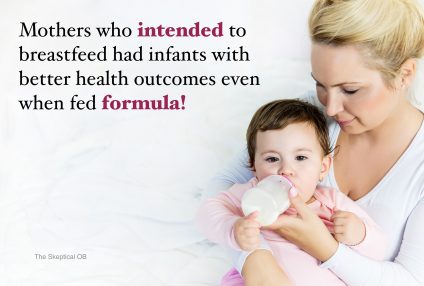
Mothers who intended to breastfeed had infants with better health outcomes even if they DIDN’T breastfeed!

465DA897-68F5-43C0-B579-086A8A58A052

Hold the guilt! A new study shows — once again — that the purported benefits of breastfeeding are actually benefits of privilege. Breastmilk has little if anything to do with it.

That was already demonstrated powerfully in the 2014 Colen study, Is Breast Truly Best? Estimating the Effects of Breastfeeding on Long-term Child Health and Wellbeing in the United States Using Sibling Comparisons. The answer was “No.”

The authors looked at breastfeeding vs. bottlefeeding WITHIN families by comparing siblings who were fed differently. In that way they eliminated the impact of race and socio-economic status. When they did, there was no difference between breastfed and bottlefed children.

[perfectpullquote align=”right” cite=”” link=”” color=”” class=”” size=””]It isn’t breastfeeding that improves infant health; it is privilege. [/perfectpullquote]

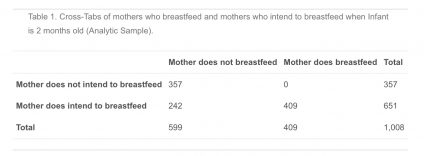
Now an even more ingenious study has confirmed those finding, The best of intentions: Prenatal breastfeeding intentions and infant health. The authors correct for the impact of race and socio-economic status by focusing on intention to breastfeeding instead of breastfeeding itself.

The authors looked at more than 1000 women and categorized them based on whether they intended to breastfeed or not.

88A3BBF6-C262-4803-BD14-ACE3BF039E91

They noted:

…Approximately one-third of mothers who intend to exclusively breastfeed are able to achieve this goal. There are several exogenous factors that may prevent mothers from fulfilling their intentions. For example, biological barriers include low milk supply, pain, infections (mastitis), or clogged milk ducts. The baby may have a poor latch, be an ineffective nurser, or have food intolerances… Some factors may act as both an influence on a mother’s intentions as well as her ability to realize those intentions. For example, maternal employment, lack of social support, limited knowledge, or limited access to professional support such as lactation consultants may first undermine intentions and then breastfeeding success.

In sum, prenatal breastfeeding intentions may be an important factor in examining the relationship between breastfeeding and infant health as they help us to overcome a key identification challenge in measuring the effect of breastfeeding on infant health: that the same characteristics that lead a mother to breastfeed may also lead to an infant having improved health. (my emphasis)

They looked at three infant health outcomes: ear infections, respiratory syncytial viruses (RSV), and antibiotic usage in the infant’s first year.

They found that women who intended to breastfeed had infants with better health outcomes even if they DIDN’T breastfeed!

An infant born to a mother who intended and did breastfeed had approximately 35% (or 0.165) fewer ear infections than infants born to mothers who had no intention of breastfeeding, but an infant born to a mother who intended and did not breastfeed had approximately 29% (or 0.136) fewer ear infections compared to the same omitted group. There is no statistically significant difference in ear infections between intending mothers who did and did not breastfeed.

Next, we examine the RSV outcome. Compared to infants whose mothers did not breastfeed and did not intend to do so, infants with mothers who intend and do breastfeed are 83% less likely to have an episode of RSV in their first year of life (a marginal effect of 0.056 fewer episodes). The coefficient for infants born to mothers who intended but did not breastfeed is not significant but suggests a qualitatively large difference (36% less likely to have an RSV diagnosis, which is 0.024 fewer diagnoses). This substantial percent difference (83% vs 36%) is likely due to RSV being a rare outcome; only 7% of mothers in our sample reported RSV.

Finally, we focus on antibiotic usage, and our analysis suggests that prenatal intentions are negatively linked to incidents of antibiotic use. The infants whose mothers intended and did breastfeed had 38% fewer incidents where antibiotics were used, compared to infants of non-intending mothers, while infants whose mothers intended but did not breastfeed had 40% (or 0.293) fewer incidents where antibiotics were used compared to infants of non-intending mothers. Both coefficients are statistically different from the omitted group, but the difference between breastfeeding and formula-feeding mothers who intended to breastfeed is insignificant.

What’s going on?

The authors investigated differences in nutrition knowledge and sources between groups of mothers and found that women who intended to breastfeed but did not were very similar to women who intended to breastfeed and were able to do so. Both differed in important ways from women who had not intended to breastfeed. It is the differences between mothers that are responsible for the differences in outcome, not breastfeeding.

The authors summarize:

[O]ur findings help to contextualize the finding that “breast is best,” and add nuance to a body of literature on the benefits of breastfeeding for infant health. Although we do not dispute that breastmilk is an excellent source of nutrition, our results suggest that formula offers similar health benefits for our relatively advantaged sample of infants, once we take prenatal intentions into account. (my emphasis)

The authors amplify their findings in an interview in the mainstream press:

“By sinking so much energy into getting moms to breastfeed, we miss something very important: That access to health care and the ability to take medical advice is critically important to a mother and her infant,” said Raissian. “By exploring factors influencing better infant health outcomes, information from the study helps contextualize the trade-offs that a lot of mothers have to make when deciding how to feed their children.”

It isn’t breastfeeding that improves infant health; it is privilege.

That explains why efforts to promote breastfeeding have been spectacular failures when it comes to improving outcomes. With the exception of premature babies, breast milk doesn’t have many benefits at all.

There is no correlation between breastfeeding rates and infant mortality rates. Countries with the highest infant mortality rates have the highest breastfeeding rates and countries with the lowest breastfeeding rates have the lowest infant mortality rates. Increasing breastfeeding rates within a country has no impact on infant mortality or other health outcomes. The promised monetary savings have also failed to materialize.

The authors have elegantly demonstrated that breastfeeding is a proxy for privilege. It is intention to breastfeed that leads to improved outcomes, not breastfeeding itself.

If breastfeeding reduces obesity why did obesity soar as breastfeeding rates rose?

A5A2048C-028A-4231-9298-11D9BC14C7A5

There’s a new paper about breastfeeding and obesity, Infant Feeding and Weight Gain: Separating Breast Milk From Breastfeeding and Formula From Food, being highlighted in the mainstream press. It claims to show that breastfeeding reduces obesity.

Really? Then why did obesity soar as breastfeeding rates rose?

[pullquote align=”right” cite=”” link=”” color=”” class=”” size=””]It’s almost like breastfeeding has no relationship with obesity at all![/pullquote]

Because breastfeeding does not reduce obesity. The claim is a product of the motivated reasoning that characterizes nearly all breastfeeding research.

Let’s take a look at what has been happening with obesity rates in the US:

2B41F7EC-587F-4323-8C23-044C530E3614

As this graph from the CDC shows, US adult obesity has risen at an astounding rate. The prevalence of obesity has more than tripled from 10.7% in 1960 to 35.9% in 2010.

What was happening to breastfeeding rates at the same time?

49D33D48-5B30-4BC7-B6BF-E51901640257

I added the green line for breastfeeding rates. You can see that the rate of breastfeeding rose dramatically during that time. That DOESN’T mean that breastfeeding causes obesity, but it does show that it doesn’t prevent it.

What about childhood obesity? Perhaps there’s a benefit in children that we haven’t seen yet in adults.

C65D3AE4-CFA7-4343-ABE7-44D069300CAA

Obesity has risen dramatically in every age group from 2 to 19 years even though breastfeeding rates were soaring.

How does childhood obesity vary by race?

0127EBAB-EBC2-4A1F-A431-05C4927A7474

That’s curious. Though Hispanics have breastfeeding rates comparable to or higher than white babies in the US, they also have the highest rate of childhood obesity.

It’s almost like breastfeeding has no relationship with obesity at all!

So how can breastfeeding researchers claim with a straight face that breastfeeding reduces obesity?

The authors of the new paper acknowledge that the connection between breastfeeding and obesity is tenuous at best and possibily non-existent:

Breastfeeding has many established benefits for maternal and child health, but its impact on obesity is unclear. In a meta-analysis of 113 studies, it was found that breastfed infants have a 26% reduced risk of obesity later in life; however, considerable heterogeneity was observed, and the association was attenuated among high-quality studies.

No matter. Breastfeeding researchers really, really want to claim that breastfeeding prevents obesity so they’ve undertaken a series of mental gymnastics to reach that conclusion. It involves creating the new diagnosis of infant “obesity” and recalibrating infant growth curves downward. I wrote about those mental gymnastics when critiquing a previous paper published by members of the same group that published this one.

Infant “obesity” was defined as more than 2 standard deviations from the mean of infant weight for length.

The Obesity Medical Association defines obesity as:

a chronic … disease, wherein an increase in body fat promotes adipose tissue dysfunction … resulting in adverse metabolic, biomechanical, and psychosocial health consequences.

As far as I can determine, there’s no evidence that infants whose weight for length is more than 2 standard deviations from the mean are suffering from any adverse metabolic or biomechanical consequences. So infant “obesity” may not be obesity at all.

Furthermore, this “diagnosis” is only made possible by a change in infant growth charts.

Why were infant growth charts changed? Previous standards evaluated growth based predominantly on formula fed infants since most infants were formula fed at the time they were developed. Many breastfed infants were diagnosed as underweight using these charts. Breastfeeding advocates claimed that it was wrong to evaluate breastfed infants using formula fed infants as the standard.

They had a point, but it’s not clear that it was a valid one. It’s based on the assumption that every breastfed infant is fully fed when the reality is that breastfeeding has a significant failure rate and some breastfed babies are actually underfed. Far fewer babies receiving formula are underfed since they can eat until satiety instead of merely until the milk runs out.

The WHO charts purportedly show “how infants and children should grow rather than simply how they do grow.” But they don’t measure how infants “should” grow, they measure how breastfed infants, including underfed infants, grow. It’s a classic example of the naturalistic fallacy: if something is a certain way in nature, that’s how it ought to be. But that’s makes as much sense as constructing a child growth chart including those with rickets to evaluate contemporary children who have easy access to calcium and vitamin D.

The conclusions of the new paper must be considered in light of this information.

The authors report:

Among 2553 mother-infant dyads, 97% initiated breastfeeding, and the median breastfeeding duration was 11.0 months. Most infants (74%) received solids before 6 months. Among “exclusively breastfed” infants, 55% received some expressed breast milk, and 27% briefly received formula in hospital. Compared with exclusive direct breastfeeding at 3 months, all other feeding styles were associated with higher BMIzs: adjusted β: +.12 (95% confidence interval [CI]: .01 to .23) for some expressed milk, +.28 (95% CI: .16 to .39) for partial breastfeeding, and +.45 (95% CI: .30 to .59) for exclusive formula feeding. Brief formula supplementation in hospital did not alter these associations so long as exclusive breastfeeding was established and sustained for at least 3 months. Formula supplementation by 6 months was associated with higher BMIzs (adjusted β: +.25; 95% CI: .13 to .38), whereas supplementation with solid foods was not. Results were similar for weight gain velocity.

CONCLUSIONS: Breastfeeding is inversely associated with weight gain velocity and BMI. These associations are dose dependent, partially diminished when breast milk is fed from a bottle, and substantially weakened by formula supplementation after the neonatal period.

The implication is that babies who receive anything other than breastmilk directly from the breast are “overfed,” because the authors assume that all breastfed babies are fully fed.

But the reality that a substantial proportion of women (up to 15% of first time mothers) will be unable to produce enough breastmilk to fully nourish their babies. Therefore some breastfed babies are almost certainly being underfed. Those babies are more likely to need supplementation and early introduction of solids in order to thrive. In other words, the supplemented babies may be the normal ones, and the breastfed babies may be underweight.

The authors insist:

This study confirms that sustained and exclusive breastfeeding is associated with favorable anthropometric outcomes during infancy…

But that’s not what the study shows at all. It merely shows that sustained and exclusive breastfeeding is associated with LOWER anthropometric outcomes; the authors assume lower is better but it may actually be worse.

The bottom line is that if breastfeeding doesn’t reduce obesity in adulthood and it doesn’t reduce obesity in childhood, there is no practical import to reducing “obesity” in infancy.

Let me amend that: there’s no practical benefits to babies, children and adults, but there is a practical benefit for breastfeeding researchers. By making up “benefits” of breastfeeding, they justify their cult-like belief that breast must be best.

GOP: Gang of Putzes

2F57B45D-4444-4342-81D0-11050862A439

No matter how cynical you get, it is impossible to keep up.

The spectacle of Brett Kavanaugh’s nomination to the Supreme Court reminds me of that Lily Tomlin quote.

Is there anything more ironic than a Supreme Court nominee, chosen explicitly to repeal a woman’s right to control her own body during pregnancy, accused of sexually assaulting women?

[pullquote align=”right” cite=”” link=”” color=”” class=”” size=””]The traditional gender hierarchy does not look askance at sexual assault; it’s merely someone with a penis terrorizing someone who doesn’t have one.[/pullquote]

Is there anything more cynical than a US Senator, anxious to deprive women of abortion rights, announcing in advance of hearing a woman’s testimony that he intends to “plow right through” and ignore it to confirm Kavanaugh?

Surely there’s nothing more contemptible than a President who is a self-proclaimed sexual predator (“Grab them by the pussy!”) declaring Kavanaugh “is one of the finest people that I’ve ever known.”

The Republican Party, which came into being as the party that championed black rights, has evolved into a party that champions “mens’ rights.” Its moniker GOP stood for Grand Old Party, but now more accurately represents Gang of Putzes, men who seek to punish women for having sex while lauding men for the very same thing.

Wait, what? Abortion is about the “lives” of the unborn? Surely you jest.

As sociologist Kristin Luker has written:

While on the surface it is the embryo’s fate that seems to be at stake, the abortion debate is actually about the meaning of women’s lives.

Or as anti-choice columnist Ross Douthat explained recently in the New York Times:

…As much as opponents of abortion claim to care about the killing of the unborn, the argument goes, in reality abortion restriction is a means to a different end: The restraint of women’s choices, the restriction of their sexual freedom, their subordination to the rule of fathers and husbands and patriarchy writ large.

Opposition to abortion has a relatively recent history and it didn’t start with Roe v. Wade. Evangelical Christians, now the leading exponents of the anti-choice movement, did not seem especially concerned about abortion in the wake of the Court decision.

…Few evangelical leaders publicly condemned or even commented on the Court’s action; Religious Right leader Jerry Falwell, for example, did not preach against abortion until 1978… But as leaders … pushed the issue, more and more evangelicals in the late 1970’s and early 1980’s began to view abortion as a unique evil requiring mobilized opposition…

…The opposition of Christian conservatives also stemmed from their commitment to traditional gender roles. They interpreted feminists’ abortion advocacy as part of their larger antagonism to conventional families and motherhood itself… Falwell regarded the Equal Rights Amendment and abortion as coupled threats to God’s designed gender hierarchy

Indeed:

“Simply stated, the man is to be the provider, and the woman is to be the childbearer,” wrote Beverly LaHaye, who founded Concerned Women for America in 1979. “Motherhood is the highest form of femininity,” she argued, but “radical feminists” spurned their maternal calling by defending abortion.

The ugly truth is that the GOP opposes abortion rights not because they value the lives of the unborn (white, black, brown); we know they don’t since they eagerly promote contempt for many of those same lives black and brown lives after birth. The GOP opposes abortion rights because it is threat to traditional gender hierarchy where those who have penises are free to terrorize those who don’t.

And that’s why — as McConnell has signaled — it almost certainly doesn’t matter how compelling the testimony of Prof. Christine Blasey Ford might when she recounts the alleged assault. The vicious way she has been treated (she’s had to go into hiding because of death threats) is just another example of women being punished when they dare to deny their subservience to the desires of men. The traditional gender hierarchy does not look askance at sexual assault since it is merely someone with a penis terrorizing someone who doesn’t have one.

Republicans should think carefully before they make the fateful mistake they seem determined to commit. As Ross Douthat noted:

…Even if it wins its long-desired victory at the high court and more anti-abortion legislation becomes possible, a pro-life cause joined to a party that can’t win female votes and seems to have no time for women will never be able to achieve those legislative goals, or at least never outside a very few, very conservative states. And having that long-awaited victory accomplished by a male judicial appointee confirmed under a cloud of #MeToo suspicion seems like a good way to cement a perception that’s fatal to the pro-life movement’s larger purposes — the perception that you can’t be pro-woman and pro-life.

There is nothing in Republican Party philosophy that mandates brazenly ignoring sexual assault or cavalierly dismissing women’s right to control their own bodies. Senate Republicans could easily request an FBI investigation of Blasey Ford’s claim and Kavanaugh’s denial as was done in the case of Anita Hill and Clarence Thomas. They could easily refrain from prejudging the testimony of both. They could easily let their consciences be their guide instead of their desperation to be re-elected.

In other words, the GOP could choose to be the Guardians of Probity, not the Gang of Putzes they have been up to this point.

Why don’t we believe women?

51932070 - inconvenient word on keyboard button

Women tell inconvenient truths.

That leaves us with two choices: we could believe them and deal with the resulting cognitive dissonance or we could ease our discomfort by insisting, without evidence, that they are wrong.

Guess which is easier.

[perfectpullquote align=”right” cite=”” link=”” color=”” class=”” size=””]Women tell inconvenient truths.[/perfectpullquote]

For years women have been telling inconvenient truths about sexual aggression, harassment and assault. I doubt there is a woman alive who has not been the recipient of unwanted attention, unwanted touching or unwanted attacks. The problem is not rare; it is commonplace and equally commonplace is the response: that didn’t happen; it wasn’t him; you misunderstood; you’re overreacting; boys will be boys.

Thus it is no surprise that Christine Blasey Ford’s recollection of sexual assault by Brett Kavanaugh when they were teenagers has led to the typical accusations against her: it didn’t happen; it wasn’t him; she misunderstood; boys will be boys.

The tendency to ignore women’s incovenient truths is not limited to accusations of sexual assault and it is not limited to men ignoring women. For example, within medicine it is well known that women’s pain is often undertreated. When women complain of severe pain, they are often dismissed in ways that men never are: it’s not that painful; you can tolerate it; you’re overreacting; it’s all in your head.

As Hoffman and Tarzian explain in The Girl Who Cried Pain: A Bias Against Women in the Treatment of Pain:

A deeper examination of why women are treated this way is explored by several feminist authors. They attribute it to a long history within our culture of regarding women’s reasoning capacity as limited and of viewing women’s opinions as “unreflective, emotional, or immature.” In particular, in relation to medical decision-making, women’s moral identity is “often not recognized…”

Some researchers have argued that a “bias toward psychogenic causation for disorders in women has occurred even in well defined painful biological processes: ‘Despite the well documented presence of organic etiologic factors, the therapeutic literature is characterized by an unscientific recourse to psychogenesis and a correspondingly inadequate, even derisive approach to their management.'” These findings are consistent with studies reporting that female pain patients are less likely than their male counterparts to be taken seriously or are more likely to receive sedatives than opioids for the treatment of their pain.

Sadly, this tendency to dismiss women’s pain and perceptions about their own bodies is not restricted to paternalistic male doctors. It is widespread among women midwives and lactation consultants.

Women tell inconvenient truths about the agonizing pain of childbirth and the relief they obtain from technology like epidurals. Midwives, who can’t provide epidurals, respond by dismissing women’s agony: it’s not that painful; you can tolerate it; you’re overreacting; it’s all in your head. And my personal favorites: you just need more support; you’ve been socialized to believe that childbirth is painful.

Women tell inconvenient truths about the difficulties of breastfeeding, the pain they experience and the fact that many produce insufficient breastmilk to fully nourish an infant. Lactation consultants, who only make money when they convince women to breastfeed, respond dismissively: you must be doing it wrong; you’re overreacting; it’s all in your head; you’re a victim of formula manufacturers; you just need more support.

Although sexual assault appears to have nothing in common with childbirth and breastfeeding difficulties, they are linked by the fact that they are inconvenient truths. Listeners have two choices: they could believe women and deal with the resulting cognitive dissonance: It is entirely possible for Brett Kavanaugh to be a deeply conservative judge and a man who sexually assaulted a women. It is entirely possible childbirth pain is no different from any other type of pain and worthy of a technological response despite the fact that midwives aren’t capable of providing that technology. It is entirely possible for breastfeeding to be natural and for it to be painful and/or insufficient nourishment for a baby.

It’s easy to see what Brett Kavanaugh and his supporters have to lose by believing Christina Blasey Ford; it’s easy to understand the impetus to dismiss her perceptions as flawed or invalid. So what if it’s both disrepectful and untrue; the ends — conservative beliefs — purportedly justify the means.

It’s harder to see what midwives and lactation consultants have to lose by believing women; they lose autonomy, income and ideological satisfaction; that’s why they have no trouble dismissing women’s perceptions as flawed, invalid or manufactured by doctors or formula companies. So what if it’s both disrespectful and untrue; the ends — midwives and lactation consultants’ beliefs — purportedly justify the means.

But there are no ends that justify disrespecting and refusing to believe women. It’s just misogyny in the service of self-dealing.

What Puritans’ search for religious freedom teaches about natural childbirth and breastfeeding advocacy

64972610 - freedom card on blurred blue background

Natural childbirth advocates insist they seek freedom for women — freedom to give birth when, how and attended by whomever they wish. Breastfeeding advocates, lactivists, insist they seek freedom for breastfeeding women — freedom to nurse their children when, where, and in front of whomever they wish.

Not exactly.

They seek freedom for women the same way that the Puritans sought freedom of religion and the results are similar.

Generations of American children have been taught that the Puritans came to Massachusetts, like the Pilgrims who arrived shortly before them, in search of religious freedom. Religion was the purview of the State. They had been born in England in the wake of a bitter religious reformation, wresting the country from Catholic to Protestant in only a few decades. The Puritans believed in a radical “pure” form of Protestantism. King James I believed in a Protestantism that veered back toward Catholicism. He persecuted them; they sought the freedom to worship as they wished and they journeyed across an ocean in order to do so.

[pullquote align=”right” cite=”” link=”” color=”” class=”” size=””]Puritans sought to “normalize” Puritanism.[/pullquote]

In the parlance of natural childbirth and breastfeeding advocacy, the Puritans sought to “normalize” Puritanism. No one should imagine that they sought religious toleration. Nothing could be further from the truth. They sought to create a theocracy with themselves in charge.

As explained in Smithsonian Magazine:

From the earliest arrival of Europeans on America’s shores, religion has often been a cudgel, used to discriminate, suppress and even kill the foreign, the “heretic” and the “unbeliever” — including the “heathen” natives already here…

They did not seek co-existence, as the word toleration implies; they sought domination. The parallels with contemporary natural childbirth and breastfeeding advocacy are clear and deeply unfortunate. Ihe Puritans didn’t intend to make Puritanism “normal”; they sought to make it “normative.”

Natural childbirth and breastfeeding advocates also wish to “normalize” their views of how women ought to use their reproductive organs. They publicly insist that they want nothing more than to make it possible for women who choose natural childbirth or breastfeeding to feel comfortable with their choice and not face discrimination of any kind.

For example, they claim they want to normalize breastfeeding so that women who breastfeed can feel free to feed their children any time and anywhere they are hungry without embarrassment, harrassment or stigma. That is a worthy goal.

However, among themselves, in their journals, on websites and Facebook pages, it is quite clear that they wish to make breastfeeding normative regardless of whether women want to breastfeed and regardless of babies who fail to thrive on breastfeeding.

Dianne Weissinger, an originator of contemporary breastfeeding ideology described lactation consultants thus:

All of us within the profession want breastfeeding to be our biological reference point. We want it to be the cultural norm.

The Baby Friendly Hospital Initiative is the product of that view. Its goal is not helping women to breastfeed; it affirmatively seeks to force women to breastfeed by hectoring them, restricting formula use, grossly exaggerating the benefits of breastfeeding and lying about the real and potentially deadly risks.

If the goal were to help women breastfeed, hospitals would be measuring satisfaction among women who wish to breastfeed. Instead they are measuring the percentage of women who leave the hospital breastfeeding with the assumption that 100% is the goal, regardless of women’s desires and babies’ wellbeing. Like the Puritans before them, they seeks to elevate their personal beliefs not merely to be normal but to be normative, the standard against which everything else is found wanting.

Another, even deadlier example is the UK midwifery Campaign for Normal Birth, emulated by midwives in the US, Canada, Australia and New Zealand. The Campaign for Normal Birth has been implicated in dozens, if not hundreds, of preventable neonatal brain injuries and deaths as well as preventable maternal deaths. It has also led to a massive increase in maternity liability payments, £2 billion per year at last count. In the wake of public outcry, the Campaign has been suspended.

The Royal College of Midwives didn’t merely wish to normalize unmedicated vaginal birth without interventions, it openly sought to make it normative.

As explained in the RCM journal at the time of launch:

Ultimately what do we want to happen? The outcomes of the campaign are as follows:

  • Midwives to be energised and confident in practices that facilitate normal birth
  • Birth experiences for women and job satisfaction for midwives to be improved
  • Greater rates of normal birth and a decrease in unnecessary intervention rates to be achieved.

It’s not a coincidence that you don’t see women’s goals and desires on that list. The Campaign was not about making normal birth available to those who wanted it; it was never about normalizing unmedicated vaginal birth. The Campaign was always about forcing it on women who didn’t want it ostensibly for their own good; it was all about making unmedicated vaginal birth normative.

The theology of breastfeeding and the theology of normal birth bear a striking similarity to the theology of Puritanism; both recognize only one world view and seek to impress that view on everyone else. Therefore, it is instructive to look at what happened to the Puritans.

For a time Puritanism was the official religion, indeed the only religion allowed. Ultimately, however, the Puritans were forced to give way to other forms of Protestantism as their members came to the American colonies. Puritanism itself fragmented into a variety of sects. In other words, while Puritans remained free to practice their religion, those who did not want to be Puritans were also free to pursue their beliefs.

That is what will inevitably happen to natural childbirth and breastfeeding advocacy. They will remain normal and but they will not remain normative. The only question is how many babies and mothers will be harmed before we recognize that natural childbirth and breastfeeding are just two choices among other equally valid choices. Their adherents should be free to pursue their vision of what birth and infant feeding should look like without the power to force others to share their vision.

Costs of motherhood are rising, forcing women out of the workforce? Of course, that was the goal!

4046F9CB-3965-4469-9C4C-EA70589CE487

Natural parenting is working.

No, not for children, silly! There’s no evidence that it has improved children’s lives. Rates of children’s psychiatric problems, including suicide, have never been worse.

It’s working on mothers just as it was designed to do. The holy trinity of natural child-rearing — natural childbirth, breastfeeding and attachment parenting — was designed explicitly to force women back into the home by problematizing infant safety, promoting maternal sacrifice as critical to child health and fetishizing physical proximity of mother to child. The result is that women who could work, who have been trained to work, are opting out of the workforce.

[pullquote align=”right” cite=”” link=”” color=”” class=”” size=””]Those who feared women’s emancipation set out to make motherhood more demanding, intending to force women back into the home. It’s working.[/pullquote]

Finally others are taking note.

Claire Cain Miller, writing in the New York Times observes The Costs of Motherhood Are Rising, and Catching Women Off Guard.

An economic mystery of the last few decades has been why more women aren’t working…

The share of women in the United States labor force has leveled off since the 1990s, after steadily climbing for half a century…

The new analysis suggests something else also began happening during the 1990s: Motherhood became more demanding. Parents now spend more time and money on child care. They feel more pressure to breast-feed, to do enriching activities with their children and to provide close supervision.

A result is that women underestimate the costs of motherhood. The mismatch is biggest for those with college degrees, who invest in an education and expect to maintain a career …

But motherhood itself did not become more demanding. Children did not become more challenging or more needy. Socially constructed expectations of mothers became more demanding. Why? People who feared women’s political and economic emancipation set out to make them more demanding with the explicit intent of forcing women out of the workforce.

Think natural childbirth is about childbirth? Wrong. It’s about forcing women out of the workforce.

Grantly Dick-Read, the father of natural childbirth, wrote:

Woman fails when she ceases to desire the children for which she was primarily made. Her true emancipation lies in freedom to fulfil her biological purposes …

Think lactivism is about breastfeeding? Wrong. It’s about forcing women out of the workforce.

As psychologist Susan Franzblau has explained:

Out of concern that recently instituted bottle-feeding and drug-assisted births would break family bonds, these religious advocates of breastfeeding prescribed a regimen that included suckling on demand day and night with no pacifier substitute … Any work that competed with the infant’s need for continuity of maternal care was out of the question. One La La Leche League International group leader said that she was “pretty negative to people who just want to dump their kids of and go to work eight hours a day.”

Think attachment parenting is about children’s needs? Wrong. It’s about forcing women out of the workforce.

Bill and Martha Sears are explicit in their belief that God wants women to stay home and care for their children:

The type of parenting we believe is God’s design for the father-mother-child relationship is a style we call “attachment parenting.” Our intent in recommending this style of parenting to you is so strong that we have spent more hours in prayerful thought on this topic than on any other topic in this book… We have a deep personal conviction that this is the way God wants His children parented.

These socially constructed expectations of motherhood were designed by privileged white people in order to control privileged white women and that’s precisely where they’ve achieve their greatest success.

As Miller notes:

For many women, the researchers show, stopping work was unplanned. Since about 1985, no more than 2 percent of female high school seniors said they planned to be “homemakers” at age 30, even though most planned to be mothers. The surveys also found no decline in overall job satisfaction post-baby. Yet consistently, between 15 percent and 18 percent of women have stayed home…

The people most surprised by the demands of motherhood were those the researchers least expected: women with college degrees, or those who had babies later, those who had working mothers and those who had assumed they would have careers. Even though highly educated mothers were less likely to quit working than less educated mothers, they were more likely to express anti-work beliefs, and to say that being a parent was harder than they expected.

It’s harder than the expected because the social constructed expectations of mothers have increased dramatically since they were children. They did not foresee the demands since those demands — natural childbirth, breastfeeding and attachment parenting — didn’t exist until recently. In each and every case, these demands have meant more work, more pain and more self-abnegation for mothers.

The cost of motherhood fell for most of the 20th century because of inventions like dishwashers, formula and the birth control pill. But that’s no longer the case, according to data cited in the paper. The cost of child care has increased by 65 percent since the early 1980s. Eighty percent of women breast-feed, up from about half. The number of hours that parents spend on child care has risen, especially for college-educated parents, for whom it has doubled.

And natural parenting advocates oppose virtually anything that decreases the cost of motherhood like epidurals, C-sections, formula, pacifiers, disposable diapers, commercially produced baby food, etc. That’s not a coincidence. Under the guise of what’s good for babies, they have ratcheted up the pressure on mothers. The worst part is that babies don’t truly need any of what’s touted to be good for them.

Miller quotes researchers:

“It is deeply puzzling that at a moment when women are more prepared than ever for long careers in the labor market, norms would change in a manner that encourages them to spend more time at home.”

It’s not deeply puzzling; it was intended all along.

Melissa Bartick and the Academy of Breastfeeding Medicine give a master class in motivated reasoning.

A3EF07F8-FECF-4F65-8182-7F4F35A2AB52

Head over to the Academy of Breastfeeding Medicine blog and watch Melissa Bartick, MD put on a master class in motivated reasoning in her post Worldwide study on sudden infant death finds factors associated with poverty and racism are more important than bedsharing.

What is motivated reasoning?

Motivated reasoning is confirmation bias taken to the next level. Motivated reasoning leads people to confirm what they already believe, while ignoring contrary data. But it also drives people to develop elaborate rationalizations to justify holding beliefs that logic and evidence have shown to be wrong. Motivated reasoning responds defensively to contrary evidence, actively discrediting such evidence or its source without logical or evidentiary justification…

In this case, Dr. Bartick is desperately trying to rationalize her belief that bed sharing must be safe for babies in the face of copious evidence that it is in fact deadly.

[pullquote align=”right” cite=”” link=”” color=”” class=”” size=””]Does the Academy of Breastfeeding Medicine have the will to promote infant health above breastfeeding?[/pullquote]

It’s hardly surprising that the Academy of Breastfeeding Medicine encourages motivated reasoning. They essentially announce it in their motto: “A Worldwide Organization Of Medical Doctors Dedicated To The Promotion, Protection and Support Of Breastfeeding.”

Call me old-fashioned, but I was taught that doctors are ethically obligated to promote the health and wellbeing of PATIENTS, not the protection and support of specific processes:

As a practicing obstetrician, I strove for safe pregnancy, but understood it was my obligation to provide contraception for women who didn’t want to be pregnant.

I strove for safe childbirth, but not when a woman requested a termination.

And although I strove for safe childbirth, I gave way, as I was legally obligated to do, when patients chose a more dangerous course such as Jehovah’s Witnesses refusing blood transfusions in the face of massive hemorrhage.

Why? Because it wasn’t my job to promote anything beyond a patient’s health and wishes.

The members of the Academy of Breastfeeding Medicine apparently don’t see it that way. They have committed themselves to promoting the process of breastfeeding regardless of whether it is what women want, what is safe for babies or what the scientific evidence shows. Like many doctors before them, they are up front about their paternalistic belief that they know what is good for patients better than patients themselves.

Dr. Bartick and her ABM colleagues have been stunned by the growing number of scientific papers highlighting the dangers of bed sharing. I was too … at first. When I initially saw the evidence about the deadly risks of bed sharing, I wrote posts to debunk them. I had bed shared with my own babies and it was difficult to contemplate that I might have put them at risk. Over the years, however the evidence has become overwhelming and I have accepted that bed sharing nearly triples the risk of sudden infant death syndrome.

Dr. Bartick has engaged in motivated reasoning instead.

Last year she published Babies in boxes and the missing links on safe sleep: Human evolution and cultural revolution, making the absurd claim that bed sharing must be safe because it is a product of human evolution.

Recommendations enforcing separate sleep are based on 20th century Euro‐American social norms for solitary infant sleep and scheduled feedings via bottles of cow’s milk‐based formula, in contrast to breastsleeping, an evolutionary adaptation facilitating the survival of mammalian infants for millennia…

No, Dr. Bartick, recommendations for avoiding bed sharing are based on 21st Century scientific evidence that shows that it nearly triples the risk of SIDS!

That “argument” apparently didn’t persuade anyone beyond the ABM so Bartick now offers a new one, Sudden Infant Death and Social Justice: A Syndemics Approach.

It sounds fancy, but it is basically a plea to ignore the role of bed sharing in sudden infant death.

Employing syndemics theory, we suggest that disproportionately high prevalence of SUID/SIDS is primarily the result of socially driven, co‐occurring epidemics that may act synergistically to amplify risk. SUID must be examined through the lens of structural inequity and the legacy of historical trauma. Emphasis on bedsharing may divert attention from risk reduction from structural interventions, breastfeeding, prenatal care, and tobacco cessation.

In other words, let’s ignore the role of bed sharing, which is easy to modify, and focus on structural inequality, which is extroardinarily difficult to modify.

That makes no sense … unless you are committed to promoting breastfeeding above preventing infant deaths.

In her ABM post, Dr. Bartick offers this deadly nonsense:

While the issue of improving overcoming the world’s worse SUID rates may seem daunting, some of these problems are low-hanging fruit. Bedsharing combined with smoking is extremely hazardous, and while it’s difficult to change bedsharing behavior as it’s a strong biological imperative, we can affect smoking by raising tobacco prices.

Do these folks ever listen to themselves? Smoking, despite being pharmacologically addictive, is “easier” to prevent than bed sharing? A strong biological imperative? Where’s the evidence for that claim? Oh, right; there isn’t any.

Dr. Bartick asks:

The question is, does the US have the political will to prevent its own infants from dying?

Yes, we have the political will to prevent infant deaths. That why we counsel women not to bed share since bed sharing KILLS!

The real question is: does the Academy of Breastfeeding Medicine have the will to promote infant health above breastfeeding? When you consider their sluggish to non-existent responses to scientific evidence showing aggressive breastfeeding promotion is injuring and killing infants through dehydration, kernicterus and smothering, the tragic answer is “no.”

The UK midwifery empire strikes back

107457118 - self pity word in a dictionary. self pity concept.

I almost feel sorry for the older generation of UK midwives. They were taught by other midwives that midwifery hegemony was the key to safer outcomes, maternal satisfaction and tremendous cost savings. Faced with evidence of major failures on all three counts, they are struggling with serious cognitive dissonance.

There have been a myriad of midwifery scandals in the UK involving the preventable deaths of dozens of babies and many mothers. In nearly all cases babies and mothers died because midwives chose to arrogate their care to themselves and did not call obstetricians and pediatricians for assistance in high risk situations.

[pullquote align=”right” cite=”” link=”” color=”” class=”” size=””]Babies and mothers have died and billions have been paid out in liability, but midwives feel sorriest for themselves.[/pullquote]

There has been an increasing outcry from women who resent the way that midwives have privileged their priority for so called “normal” birth over women’s personal priorities. Women resent that midwives promote their vision, discourage and interfere with obtaining epidurals, prevent women from accessing C-sections, and refuse to honestly inform women about the longterm risks of vaginal birth including prolapse, incontinence and sexual dysfunction.

To the horror of both government and population, maternity liability payments have exploded. They now stand at approximately £2 billion per year. Fully 20% of the annual budget for maternity care is spent on liability costs.

UK midwives have two choices:

1. They could apologize for their deadly mistakes and vow to learn from them.
or
2. They could insist they are being persecuted and feel sorry for themselves.

The older generation of midwives behind a new website, Birth Practice and Politics Forum, have chosen the second course.

Before analyzing what they have written, it is helpful to consider what an ethical childbirth ideology would look like. It’s relatively simple:

Her baby, her body, her birth, HER choice. Midwives’ preference are irrelevant.

Now, let’s look at the way that UK midwives ignore issues of safety, maternal satisfaction, and liability expenditures to focus on … their cherished beliefs.

Women are not being nurtured and cared for during pregnancy and birth in a way that supports and enhances their well-being or confidence in their abilities to give birth and become competent confident mothers. There is an on-going undermining of women’s rights and agency, and of the understanding that most women can give birth physiologically and without interference.

So what if mothers and babies are dying? So what if women are unsatisfied with midwifery care? So what if the government is paying billions each year to settle liability claims? In the view of these midwives the real issue is that they are being persecuted!

I kid you not.

Midwives and their support for normal birth are being unfairly attacked, if not demonised. This is preventing them from using their midwifery knowledge and skills to give women and families the kind of care they know is best and that has been repeatedly shown to provide excellent physical, emotional and psychological outcomes for mothers and babies. (my emphasis)

What about the dead babies and mothers?

The concept of risk is wheeled out at every turn. Risk and its avoidance have become so embedded in maternity care that decision-making has been all but removed from the mother and her midwife. Health practitioners’ fears of reprisal and fears of the birth process itself can and do lead to women being threatened either that their baby will die or be damaged, or with referral to social services if they do not follow medical advice.

It seems never to have crossed the midwives’ minds that the problem here is that risk and its avoidance have NOT become embedded in midwifery care and that the plethora of dead babies and dead mothers is the direct and predictable result.

Anyway there’s more to birth than a live baby and a live mother, right?

Although the rhetoric in maternity care focuses on safety and safe care, this is still largely restricted to short-term outcomes, often measuring only or mainly the survival of mother and baby…

If anyone has been ignoring the long-term outcomes of birth it’s the midwives themselves. Although they go into extraordinary detail with women about the purported long term risks of NOT having a vaginal birth, they don’t deign to mention the far more common long-term risks of HAVING a vaginal birth. For example, the absolute risk of urinary incontinence after vaginal birth is literally 10,000% higher than the absolute risk of placenta accreta after a C-section. You read that right, 10,000% higher, but midwives don’t seem to think that long-term outcome is worth talking about.

The midwives have the temerity to claim:

Maternity care is increasingly influenced by current ideological and financial considerations rather than rooted in what is best for women, babies and families.

Doing everything possible to avoid preventable deaths is not an ideology, it is an ethical requirement.
Doing everything possible to meet the stated preferences of mothers is not an ideology, it’s an ethical mandate.
Doing everything possible to reduce the liability payments for babies and mothers who are injured or die at the hands of midwives is not an ideology nor a financial consideration, it is basic medical ethics.

No matter!

We are concerned about a range of different but related influences on health care that are worsening maternity services for women, babies and families, for midwives and for other birth workers.

How could preventing perinatal and maternal deaths, improving maternal satisfaction and reducing liability payments “worsen” care for women, babies and families? It won’t; it will IMPROVE care. The real problem is that changes that improve safety and address women’s preferences will undercut the hegemony of UK midwives and therefore “worsen” their experience. But their experience is irrelevant.

Can you imagine if doctors had greeted the scientific evidence that routine episiotomy is harmful to women by insisting that the practice must be maintain to address the needs of obstetricians? Can you imagine if anesthesiologists rejected a woman’s preference to avoid medication and gave her an epidural anyway to improve the anesthesiologists’ experiences? There would be outrage and rightfully so. Patients don’t exist to meet providers’ needs; providers exist to meet patients’ needs.

As I said above, I almost feel sorry for these midwives. But I don’t for the simple reason that their happiness is not and should never be the goal of the maternity care system. The goal is patient safety and patient satisfaction, a point that seems to have utterly escaped midwives’ attention during their pity party for themselves.

Dr. Amy