If stop signs work, why should my refusal to stop hurt you?

Stop Traffic Sign On Country Road

If vaccines work, why should my refusal to vaccinate my children hurt your children?

In the world of anti-vax, this is supposed to be an incisive, penetrating question. Of course, in the world of anti-vax, there’s not a whole lot of thinking going on. To understand the foolishness of the question, it helps to think about a similar issue.

[pullquote align=”right” cite=”” link=”” color=”” class=”” size=””]Joe has done his research and decided that stop signs don’t work.[/pullquote]

If stop signs work, why should my refusal to stop hurt you?

There’s a plethora of stop signs at intersections everywhere. The theory behind stop signs is that if you stop before entering an intersection, there’s less chance of being hit by another driver traveling through the intersection. If stop signs work, then every time you stop, you avoid a potential accident.

But suppose Joe doesn’t believe that stop signs work; or perhaps Joe believes that there are too many stop signs. Joe has done his research and made his own decision. As Joe points out he’s not blind. It is entirely possible to tell when another car is coming and stop only then. If the intersection is clear and Joe doesn’t believe that stop signs work, isn’t it his right to refuse to stop? And if Joe is wrong and he’s T-boned at an intersection, what’s the problem if he’s willing to accept the responsibility?

If stop signs work, how could Joe’s decision to ignore stop signs at his discretion harm you? If you stop at every stop sign, how could you possibly be hurt by Joe?

It doesn’t take deep thinking to recognize that stop signs work best when everyone stops at them. Indeed, they work in large part because everyone stops at them.

Sure, if there’s great visibility at an intersection you can avoid other cars because you can see them coming. If Joe is barreling through the intersection, you can wait however long it takes for him to get through the intersection before you move into it.

But what if visibility is poor and you can only see cars that are very close to the intersection? In that case, simply stopping at the stop sign before entering the intersection is not enough to protect you. You could be T-boned by Joe because you didn’t see him coming, and he was too far away to see you entering the intersection in time to stop. In other words, you could be injured or killed even though you stopped at the stop sign.

How can that happen if stop signs work? Doesn’t the mere fact that accidents like these can and do happen prove that stop signs don’t work?

No and no.

Stop signs do protect people who heed them even when others do not. But stop signs work best when everyone heeds them. Even if only one person ignores a stop sign, multiple people can be killed. Indeed, it happens nearly every day when people ignore stop signs because they are drunk or they are in a rush.

Vaccines are like stop signs in that regard. They work to protect those who receive them, just as stopping at a stop sign protects those who do. But they work best when everyone receives them, just as stop signs work best when everyone can be counted on to stop.

But what about Joe who has done his research and concludes that the fact that stop signs don’t always protect people means that they don’t work? Does he have the right to refuse to stop because he believes that stop signs are ineffective or harmful? I suspect that most people, even the most ardent libertarians, believe that Joe’s rights don’t cover refusing to stop at stop signs. Why not? Because stopping at stop signs is a public good and the burden of stopping even if Joe does’t want to do so — and even if Joe believes it doesn’t benefit him to do so — is outweighed by the tremendous harm that is prevented.

Vaccines are like that, too. The extensive rights enjoyed by people in a free society don’t extend to the ethical right to refuse vaccination. Having everyone vaccinated is a public good that prevents tremendous harm to others. Refusing vaccines is immoral. That’s not an admission that vaccines don’t work anymore than forcing everyone to stop at stop signs is an admission that stop signs don’t work.

Some things only work best when everyone does them. That’s not an admission of failure; it’s reality.

#IBelieveHer about breastfeeding

9DF2DAA6-99A1-405F-A30A-BEADBD1EF1A9

Why do breastfeeding professionals thinking it is acceptable to refuse to believe women about insufficient breastmilk and blame them when it happens? Why do they insist that it almost never happens when it is actually quite common? Why do they offer all sorts of excuses that place primary responsibility on a woman’s behavior?

Isn’t refusing to believe women who suffer from insufficient breastmilk merely re-victimizing them? Isn’t it just an effort to protect breastfeeding professionals and their colleagues at the expense of women and babies?

When a woman tells me about insufficient breastmilk or breastfeeding difficulties, #IBelieveHer.

Why don’t breastfeeding professionals believe her, too?

The amount breastfeeding professionals don’t know about neonatal hypernatremic dehydration could fill a small coffin

The coffin with a baby which was found dead at bus stop on 15 October 2015 is carried by Pastor Steffen Paar from the church in Suelfeld, Germany, 20 October 2015. The municipality gave the girl the name Teresa. The child's mother has proven yet untrace

For people who claim to know so much about breastfeeding, many lactivists are profoundly ignorant on the topic. Indeed, the amount that they don’t know about breastfeeding dehydration is enough to fill a small coffin … and sadly sometimes does.

That’s one of the reasons why so much ire is directed toward the Fed Is Best Foundation. By highlighting the risks of breastfeeding as well as the benefits, they’ve forced lactivists to look long and hard at their cherished assumptions and they can’t bear what they see. Their need to soothe their own cognitive dissonance leads them to write nonsense like FED IS BEST: Twisting the facts to fit the agenda by IBCLC Valerie McClain. The tragic irony is that it is lactivists who have spent years twisting the facts to fit their agenda and babies have been injured and died as a result.

[pullquote align=”right” cite=”” link=”” color=”” class=”” size=””]Why is it so hard for lactivists to acknowledge that breastfeeding isn’t perfect?[/pullquote]

Watch McClain twist facts to suit HER agenda

Currently breastfeeding is under fire by an organization that twists the facts to fit their agenda. The Fed Is Best Foundation had the initial media appearance of being a “parent-led” organization that was using social media to invalidate exclusive breastfeeding. But the organization denies that they are a parent-led group. They list their credentials: physicians, scientists, IBCLCS, NICU nurses, attorneys, public health advocates.

But it’s not breastfeeding that’s under fire, it’s the fantasy that breastfeeding is perfect. No one is trying to “invalidate” breastfeeding; they’re demanding honesty about the true risks and benefits.

What’s truly hilarious is that nonsensical claim that Fed Is Best can’t possibly be parent led because of the credentials of its founders and leaders. Pro-tip: Women can be mothers AND have professional credentials and expertise, too.

McClain’s piece is a guide to the lies that lactivists tell themselves and new mothers.

Lie #1 Breastfeeding is natural so it must be perfect.

McClain starts with a classic quote from Ina May Gaskin:

We are the only species of mammal that doubts our ability to give birth. It’s profitable to scare women about birth. But let’s stop it.” Ina May Gaskin

Let us add to Ina May Gaskin’s comment that we are also the only species of mammal that doubts our ability to breastfeed.

I’m never sure whether the amazing thing is that Ina May believes women are stupid enough to fall for such nonsense or that many women are indeed stupid enough to fall for this nonsense.

We are also (so far as we know) the only species of mammal that doubts our ability to outrun a cheetah. That doesn’t mean that lots of mammals aren’t caught and eaten by cheetahs.

Just because other mammals don’t doubt their ability to give birth doesn’t mean their babies don’t die in childbirth; like humans, most higher mammals have HIGH rates of perinatal mortality. Just because other mammals don’t doubt their ability to nurse their young doesn’t mean that they make enough to do so. Primate infant mortality mortality is 20% is some species.

The sad fact is that dying in childbirth or in infancy is both natural and common. No amount of confidence can prevent it.

Lie #2 Neonatal hypernatremic dehydration is rare … but it is as common as SIDS and the incidence appears to be rising.

McClain writes:

The word, starvation, is a strong emotive word. Equating exclusive breastfeeding with starvation, is a propaganda technique (use of emotional words to persuade people) not a scientific fact. Card stacking or cherry picking evidence is another propaganda technique used to persuade people that your side is right. The use of evidence that only supports your “beliefs” is not science it is propaganda.

Here’s some science from Breastfeeding-Associated Hypernatremia: A Systematic Review of the Literature:

…[F]ollowing the seminal report by Clarke et al in 1979, there are increasing reports on hypernatremia in exclusively breastfed late preterm or term newborn infants…

Textbooks only marginally refer to breastfeeding-associated hypernatremia…

And:

In a retrospective study in the United Kingdom, the frequency of breastfeeding-associated neonatal hypernatremia was found to be greater than all-causes combined of hypernatremia among late preterm and term newborns.81 In the mentioned report, the incidence of sodium level ≥ 160 was 71 per 100 000 breastfed infants (1 in 1400).

That’s more than double the UK risk of SIDS of 30/100,000 and slightly great than the US risk of SIDS of 54/100,000. We spend millions of dollars each year in public health campaigns to warn parents about the risk of SIDS, yet the World Health Organization has blithely admitted that warning parents about the risks of hypernatremic dehydration is “not a priority.”

The consequences of dehydration can be severe:

Neonatal hypernatremic dehydration secondary to lactation failure may result in brain damage owing to either dehydration or hypernatremia. Fluid volume depletion may cause, on one hand, circulatory shock and consequently hypoxic damage, and on the other hand, thrombosis, whereas hypernatremia may cause capillary dilatation that gives rise to rupture with cerebral hemorrhage.

Jaundice, which is common among infants with breast-feeding-associated hypernatremia, might also result, if severe, in brain damage…

Lie #3 Neonatal hypernatremic dehydration is easy to diagnose by the number of wet diapers … though hydration status is an unreliable marker of dehydration.

Though McClain doesn’t mention it in her piece, it’s commonly asserted my many lactivists.

But that’s not what the scientific literature shows. From the paper Hypernatremic dehydration in newborns:

Hypernatraemic dehydration is notoriously difficult to diagnose on clinical examination alone, as skin turgor is preserved; the anterior fontanelle can retain its normal fullness, and urine output, although reduced, is maintained even in the face of severe dehydration. The clinical features are a spectrum, from an alert and hungry child who appears relatively well to a child who is lethargic, irritable and even moribund…

Why is it so hard for lactivists to acknowledge the truth: breastfeeding isn’t perfect; dehydration from insufficient breastmilk is common; we should undertake science based interventions (regular infant weights, formula supplementation as necessary) to prevent it? Why are they so desperate to shoot the messenger, the Fed Is Best Foundation, for telling women the truth about the risks of breastfeeding?

Shooting the messenger calls both the knowledge and the credibility of breastfeeding into question. The truth is that the amount breastfeeding professionals don’t know about neonatal hypernatremia could fill a small coffin, and tragically has filled quite a few already.

Lactivism represents a profound lack of empathy

26235543 - woman consoling her friend

One of the most amazing traits of human beings is the ability to empathize with others.

We don’t have to lose a parent to imagine how devastating the loss of a parent could be and therefore we offer our support.

We don’t have to experience a divorce to imagine how devastating the end of a marriage might be and therefore we offer our support.

[pullquote align=”right” cite=”” link=”” color=”” class=”” size=””]Why don’t lactivists, who undoubtedly could feel empathy for another’s loss, have no empathy for women who can’t breastfeed?[/pullquote]

We don’t have to become paralyzed to imagine how shocking and life altering that would and therefore we offer our support.

We don’t have to have inadvertently starved our infant trying to breastfeed to imagine how horrible we might feel and therefore we offer … blistering condemnation accusing such women of being lazy, selfish and unable to bond with their own children.

Wait, what?

Why don’t lactivists, who undoubtedly could feel empathy for another’s loss of a parent, a marriage or the ability to walk have no empathy for women who can’t breastfeed?

I suspect that there are three reasons for this.

The first is that it’s easiest to imagine the suffering of others when we know the same thing might happen to us. There is no one who can pretend that they will never lose a parent, never have a spouse cheat on them, never become paralyzed in an accident. It really could happen to them and they express the same empathy that they would hope for and rely upon in such a situation. In contrast, many lactivists already know that they can successfully breastfeed; they don’t bother to imagine what it would be like to be unsuccessful precisely because (so they believe) it couldn’t happen to them.

The second reason is that lactivists have constructed infant feeding as a source of self-esteem. In truth, they have no more control over their breastmilk supply than they have over an impending miscarriage, yet they pretend that they do. In truth, deliberately choosing not to breastfeed is no more or less selfish than deliberately choosing to have a another child to give your existing child a sibling. Sure, many people consider their siblings to be among the joys of their life but we recognize that the detrimental impact of an additional child on the parents may outweigh the benefits to the child.

The third reason is that lactivists have constructed infant feeding as a zero sum game. Breastfeeding mothers imagine that they can only be considered “good” mothers if formula feeding mothers are labeled “bad.” They seem to be incapable of recognizing that infant feeding really has no bearing at all on whether a woman is a good mother. That’s why they abhor the rather basic and obvious concept that “fed is best.” If fed is best, they’re not best and that is simply unacceptable. It seems never to have occurred to them that there is more than one way to produce healthy, happy children.

The inability of lactivists to empathize with women who make (or are forced to make) different feeding choices is quite ugly.

Here’s a Facebook post from Kristy of Breastfeeding Mama Talk. She leads with the acknowledgement that this is going to make other women feel terrible but she doesn’t care:

I know I’m opening a can of worms with this , but I just cannot remain silent. I know this will rile up many and while that isn’t my intent, it needs to be stated. If I shy away from speaking out in fear of backlash and being bullied then I wouldn’t be true to all of you. Just like they are getting the floor to refute , we get the floor too. So here goes nothing…

Kristy is upset that the Fed Is Best Foundation has called out the World Health Organization for admitting that babies who are injured or die because of insufficient breastmilk are “not a priority.”

She continues:

They are pushing really hard to fear monger moms into supplementing, especially in the first few weeks when developing the breastfeeding relationship is the most crucial. Moms already have the doubt, fear, and concern , that they aren’t making enough milk. The answer is not to rush to supplementation (unless that is what the mom wants to do of course) but if her goal is to exclusively breastfeed she should seek assistance from a reputable IBCLC who can then assess what the issue is and may come to find there is no issue at all. Rather than just handing over those premade formula bottles. Often times , moms will assume they aren’t making enough when in actuality they are making just enough. There are ways to figure out if baby is getting enough without the need to supplement right off the bat.

In just a few short sentences I see constructing breastfeeding as a zero sum game: preventing infant injuries and deaths is transformed into pushing supplementation. There’s refusal to acknowledge both that breastfeeding has a significant failure rate and that not every woman can exclusively breastfeed. There’s gaslighting of women who are concerned that their babies are starving. But most of all, there’s an incredible lack of empathy.

What if the WHO had claimed that providing access for the disabled was “not a priority”? Would Kristy have claimed that those who are arguing for improved access are pushing paralysis? Would she have gaslighted them by implying that those who think they are paralyzed aren’t really paralyzed? Would she have declared that they just needed more “support” to walk, not ramps and elevators? Would she have insisted that those in wheelchairs figure out how to use the stairs and wait to see if ramps were really medically necessary?

I doubt it, and if she did behave that way to people who are paralyzed, most of us would be repulsed by her utter lack of empathy.

I’m going to guess that if a woman showed up in a wheelchair and told Kristy that she was paralyzed from the waist down, Kristy would believe her and certainly wouldn’t demand medical proof. But when a woman shows up with an infant who is failing to thrive and says she isn’t producing enough breastmilk to fully nourish her baby, Kristy feels no compunction about gaslighting her and demanding “proof.”

Why the difference? Because while Kristy and other lactivists can empathize with people who are paralyzed, they can’t or they won’t empathize with women who suffer from insufficient lactation. I suspect that Kristy would willingly acknowledge that it is simply a matter of luck that she is not paralyzed and others are. It’s easy to do that because she hasn’t contructed being able to walk as a source of her self esteem. She hasn’t created a Walking Mama Talk Facebook page to celebrate women who can walk and denigrate those who can’t. In contrast, she has constructed being able to breastfeed as a source of self-esteem and a zero sum game.

If Kristy were to acknowledge the truth, that breastfeeding is a matter of luck not will or skill, she wouldn’t be able to feel superior to others. For lactivists, that desperation to feel superior to other mothers is so powerful that they’d let babies die rather than admit that the ability to breastfeed is no different from the ability to walk.

Surprise, laboring on your back increases the chance of spontaneous vaginal birth

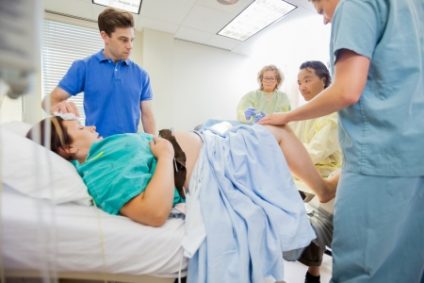
25301359 - mid adult man looking at doctor delivering baby in hospital

Most of what passes for natural childbirth “knowledge” is entirely made up. Why? Because in large part, natural childbirth advocacy is just reflexive defiance of obstetric practice without any scientific evidence to support it.

The latest natural childbirth claim to bite the dust is the insistence that upright positions improve the chances of vaginal birth.

[pullquote align=”right” cite=”” link=”” color=”” class=”” size=””]The authors set out to show that upright position improves the chance of vaginal birth, but instead found the opposite.[/pullquote]

According to Lamaze Health Birth Practice #5:

Avoid giving birth on your back and follow your body’s urges to push.

There was never any evidence to support the claim that giving birth on your back impeded vaginal delivery and now there is evidence of the opposite.

The new paper is Upright versus lying down position in second stage of labour in nulliparous women with low dose epidural: BUMPES randomised controlled trial. The authors set out to show that upright position improves the chances of vaginal birth, but instead found the opposite.

Evidence shows that lying down in the second stage of labour results in more spontaneous vaginal births in nulliparous women with epidural analgesia, with no apparent disadvantages in relation to short or longer term outcomes for mother or baby.

Surprise!

It shouldn’t have been a surprise because there had never been a study that showed that upright position was superior:

A Cochrane review of position in the second stage of labour in women without epidural showed a reduction in instrumental vaginal delivery in the upright group, although the quality of the included trials was reported to be generally poor… A Cochrane review of position in the second stage of labour for women with epidural analgesia was published in 2017 … This review included trials that compared upright with recumbent positions and suggested no effect. The risk ratio of operative birth (caesarean section or instrumental vaginal delivery) reported in the five included trials, comprising 879 women in total, was 0.97 (95% confidence interval 0.76 to 1.25)…

This is the largest study of its type ever undertaken:

Between 4 October 2010 and 31 January 2014, 3236 women were randomised and 3093 (95.6%) included in the primary analysis (1556 in the upright group and 1537 in the lying down group). Significantly fewer spontaneous vaginal births occurred in women in the upright group: 35.2% (548/1556) compared with 41.1% (632/1537) in the lying down group (adjusted risk ratio 0.86, 95% confidence interval 0.78 to 0.94). This represents a 5.9% absolute increase in the chance of spontaneous vaginal birth in the lying down group (number needed to treat 17, 95% confidence interval 11 to 40). No evidence of differences was found for most of the secondary maternal, neonatal, or longer term outcomes including instrumental vaginal delivery (adjusted risk ratio 1.08, 99% confidence interval 0.99 to 1.18), obstetric anal sphincter injury (1.27, 0.88 to 1.84), infant Apgar score

Although the authors report that there was no difference in most secondary outcomes, they also note:

Of infants born to mothers in the upright group one was a stillbirth, one experienced birth trauma, one had cardiorespiratory collapse one hour post birth, and one had suspected Erb’s palsy.

Moreover:

The duration of the active second stage of labour showed a statistically significant difference at the 1% level, with a shorter duration of labour in the lying down group (median difference of 7 minutes, 99% confidence interval 0 to 13). Other secondary maternal outcomes, such as instrumental vaginal delivery, caesarean section and perineal trauma, were suggestive of an increased risk associated with the upright position, but these differences were not statistically significant at the 1% level. For example, the incidence of episiotomy increased in the upright group (58.8%, 914/1556) compared with the lying down group (54.6%, 838/1537) (although not statistically significant at the 1% level). There seemed to be a higher incidence of obstetric anal sphincter injury in the upright group (6.7%, 104/1556) compared with the lying down group (5.3%, 81/1537), but again this difference was not statistically significant at the 1% level.

The authors conclude:

This study provides evidence that adopting a lying down position in the second stage of labour results in more spontaneous vaginal births in nulliparous women with epidural analgesia, with no apparent disadvantages for short or longer term outcomes for mother or baby. The intervention seems to be easy to adopt and is cost free. This evidence will allow pregnant women, in consultation with their healthcare providers, to make informed choices about their position in the second stage of labour.

Kudos to the authors for being willing to acknowledge that their hypothesis was disproven. My personal view is that the authors made a bit too much of their data. The actual differences between the upright group and the lying down group were so small as to be trivial. It seems to me that a more accurate conclusion is that position in labor makes no difference to the likelihood of spontaneous birth, so women should be encouraged to adopt the position that they prefer.

We don’t know if the results of the study are generalizable to multiparous women or to women who don’t have epidurals, but as I pointed out above, there’s never been any evidence that position makes any difference for those groups either.

The bottom line is that another piece of natural childbirth “wisdom” has been shown to be false. That’s not surprising since there was never any data to support it in the first place. Natural childbirth advocates simply made it up as part of their reflexive demonization of modern obstetrical practice.

World Health Organization appoints Robert Mugabe as ambassador, suggesting it values politics over health

Business partnership meeting. Picture businessmans handshake. Successful businessmen handshaking after

StatNews describes it as a blunder:

The global health community is struggling to make sense of a blunder that has shaken confidence in the new director-general of the World Health Organization and given rise to concerns — both outside and within the WHO — about the impact the episode will have on the credibility of the agency he leads.

… Tedros Adhanom Ghebreyesus appointed Zimbabwean President Robert Mugabe to a ceremonial position of honor, naming the longtime authoritarian as a WHO goodwill ambassador …

…[T]he stunning incident has created a sense of deep unease about why Tedros made the sure-to-be-challenged appointment …

Was it a blunder or just politics as usual?

[pullquote align=”right” cite=”” link=”” color=”” class=”” size=””]Does the WHO play politics with its health recommendations?[/pullquote]

Some have questioned whether the move was an attempt by Tedros to reward those who supported him in the race for director-general. Though balloting during the May election was secret and there’s no way to be certain who voted for whom, the 55-member African Union had unanimously endorsed his candidacy.

The road to that endorsement was paved by a vote by the union’s executive council in January 2016, which came just as Mugabe ended a year’s term as the African Union’s chair. Mugabe chaired the meeting.

Human Rights Watch and others denounced the appointment:

HRW’s Kenneth Roth said Mr Mugabe’s appointment was a cause for concern because the president and some of his officials travel abroad for treatment.

“When you go to Zimbabwean hospitals, they lack the most basic necessities,” he said.

Zimbabwe’s main MDC opposition party also denounced the WHO move.

“The Zimbabwe health delivery system is in a shambolic state, it is an insult,” spokesman Obert Gutu told AFP.

“Mugabe trashed our health delivery system… he allowed our public hospitals to collapse.”
Other groups who have criticised Mr Mugabe’s appointment include the Wellcome Trust, the NCD Alliance, UN Watch, the World Heart Federation and Action Against Smoking.

The appointment of Mugabe was a spectacularly bad decision, and has since been rescinded, but those of us who care about the health of women and infants have long suspected that the WHO plays politics with its recommendations as well as its appointment.

Consider the WHO’s longstanding endorsement of an optimal C-section rate of 10-15%. It was fabricated from whole cloth in 1985, apparently to suit the prejudices of the man behind it, Marsden Wagner, MD, a noted supporter of natural childbirth pseudoscience. There was never any evidence to support it.

In 2009, buried deep in its handbook Monitoring Emergency Obstetric Care, you can find this acknowledgment:

Although the WHO has recommended since 1985 that the rate not exceed 10-15 per cent, there is no empirical evidence for an optimum percentage … the optimum rate is unknown …

Yet the WHO has returned to promoting this nonsensical “optimal” C-section rate despite the fact that the existing scientific evidence shows that a C-section rate of 19% is the MINIMUM C-section rate compatible with low rates of perinatal and maternal mortality.

Think about that for a moment. The WHO is publicly advocating an optimal C-section rate that not merely has no basis in scientific evidence, but has actually been shown to be INCOMPATIBLE with safety. Why? I suspect it’s just politics as usual. It suits the needs and prejudices of executives at the WHO, science be damned.

The WHO is also playing politics with its breastfeeding recommendations. Most are unsupported, or even contradicted by the existing scientific evidence. For example, pacifiers are banned despite the fact that they don’t interfere with breastfeeding and actually prevent sudden infant death syndrome. The WHO grossly exaggerated the benefits of breastfeeding and utterly ignores the risks. They tout the “lifesaving” benefits of breastfeeding without being able to cite any population data showing that breastfeeding has an impact on infant mortality rates.

And most recently, despite a presentation to WHO executives by a panel of professionals concerned about high rates of breastfeeding complications and deaths, those executives actually declared that such injuries and deaths are “not a priority.”

That’s not healthcare, that’s politics. Decision makers at the WHO are promulgating recommendations that reflect their personal prejudices, rather than recommendations that follow scientific evidence.

The WHO should be a beacon of accurate health information for the world. Instead, it plays politics.

Any group that appoints an authoritarian despot as a health ambassador indicates that it values politics above health; it cannot necessarily be believed when it makes health recommendations. Those recommendations may represent political accommodations within the organization rather than the actual scientific evidence. Sadly, it appears that’s just what has happened with WHO recommendations on C-sections and breastfeeding.

Dear Dr. Wen, you missed an opportunity to educate women about breastfeeding risks

9BCF5EF7-60C8-4497-ADE2-0CDEE7E37456

Dear Dr. Wen,

I just read your piece on NPR, Learning To Care For My Newborn Was A Humbling Experience, and I’m disappointed.

You wrote about how your son suffered breastfeeding complications, and it sounds like he really did suffer, screaming desperately from hunger for 48 hours:

[pullquote align=”right” cite=”” link=”” color=”” class=”” size=””]Eli didn’t need to suffer the way he did and for as long as he did; he just needed some formula.[/pullquote]

The night we arrived home, Eli wouldn’t stop crying. Crying is normal in newborns, my husband and I assured each other. We held him and rocked him. Over the next 48 hours, we took shifts, staying up with Eli to try to soothe him through the near-nonstop crying. We called our friends for advice on how to deal with what we now labeled a “difficult baby.”

Things went downhill quickly. Our pediatrician confirmed that he was noticeably jaundiced. In just three days, he had lost 15 percent of his body weight. Though I was feeding him every two hours, it turned out that Eli never had a good latch on my breasts, and I wasn’t producing enough milk. We were told that he might need to be readmitted to the hospital.

Why didn’t you give your baby some formula to ease his suffering and protect his brain from potential injuries due to hypoglycemia, dehydration and hyperbilirubinemia?

You offer a clue as to why you let him scream.

I was overcome with shame and guilt. What kind of mother am I who was barely keeping my own baby alive? What is wrong with my body that something so natural didn’t happen? How could I, as a physician, not recognize that my baby was actually starving — and instead, blame him for expressing hunger in the only way he was able to?

Who taught you to judge yourself by the function of your breasts?

Would you have been equally ashamed to find that your eyes didn’t focus appropriately and you needed glasses or contact lenses to help you see? Probably not. Would you have been ashamed to learn that your pancreas didn’t work and you needed help to control your blood sugar? I doubt it.

The sad truth is that breastfeeding activists (lactivists) have been dishonest about breastfeeding. They’ve grossly exaggerated the benefits, repeatedly ignoring the fact that the scientific evidence is weak, conflicting and riddled by confounders. Even worse, they’ve lied by omission about the high incidence of breastfeeding complications.

It took until 2016 for Allison Stuebe, MD of the Academy of Breastfeeding Medicine to finally acknowledge the suffering of babies like Eli:

… a substantial proportion of infants born in the US require supplementation. Delayed onset of lactogenesis is common, affecting 44% of first-time mothers in one study, and 1/3 of these infants lost >10% of their birth weight. This suggests that 15% of infants — about 1 in 7 breastfed babies — will have an indication for supplementation.

Fifteen percent is an extraordinarily high number of babies. Approximately 4 million babies are born in the US each year of which 1.5 million are first babies. More than 1 million of those women will try breastfeeding and 150,000 babies will have a need for supplementation with formula.

Lactivists been dishonest about the benefits of judicious formula supplementation for these babies. There has been a lot of fear mongering about formula supplementation interfering with women’s ability to breastfeed and “ruining” a newborn’s gut flora such as this, “Just One Bottle Won’t Hurt”—or Will It?” from Massbreastfeeding.org.

You would never know that judicious formula supplementation in the first few days leads to higher rates of exclusive breastfeeding, not lower rates.

Eli didn’t need to suffer the way he did and for as long as he did; he just needed some formula. But you, even with your professional training or possibly because of your medical training, didn’t know about the high incidence of delayed onset of lactation and about the beneficial effects of formula supplementation.

Fortunately Eli survived his bout with dehydration and starvation, but not every baby does. Jillian Johnson’s baby Landon had a very similar experience to Eli, but Landon’s story does not have a happy ending. He died from dehydration.

Landon cried. And cried. All the time. He cried unless he was on the breast and I began to nurse him continuously. The nurses would come in and swaddle him in warm blankets to help get him to sleep. And when I asked them why he was always on my breast, I was told it was because he was “cluster feeding.” …

So we took him home … not knowing that after less than 12 hours home with us, he would have gone into cardiac arrest caused by dehydration …

Sadly, Landon’s tragedy is far from the only death or brain injury resulting from the relentless promotion of exclusive breastfeeding, yet no one seems to care.

Only recently leaders of the Fed Is Best Foundation, an organization devoted to safe infant feeding, met with officials of the World Health Organization and implored them to alert providers and patients to the risks of insufficient breastmilk. Literally millions of breastfed infants suffer (and sometimes die) from the effects of temporary starvation. The WHO officials had the temerity to respond that it’s “not a priority.”

I and 2000 mothers and medical professionals have signed a petition urging the WHO to reconsider. Perhaps you could sign it, too.

Your baby is now thriving:

My hospital has a wonderful lactation consultant and I have a terrific pediatrician; together, they helped us to get back on track…

I am thrilled that he has more than made up for the initial weight loss and is now a happy and chubby 11-pounder.

Your piece makes it sound like that was the inevitable result when the result could have been tragedy. Your piece implies that Eli’s suffering and screaming was a necessary prerequisite to a successful breastfeeding relationship when it was completely unnecessary. Sadly, Dr. Wen, you missed an amazing opportunity to educate women and protect their babies from breastfeeding complications — almost certainly because you didn’t know. And you didn’t know because lactivist organizations are not honest with women.

Babies are suffering and dying. Please help us protect every baby by sharing truthful information about the risks of breastfeeding … as well as the benefits.

World Health Organization declares babies dying from breastfeeding complications are “not a priority”

081AD560-437F-467F-ACCA-B7C102FEE1AB

I’m not often surprised these days, but I was surprised about this.

Christie del Castillo-Hegyi, MD and Jody Segrave-Daly RN, IBCLC of the Fed Is Best Foundation recently met with breastfeeding experts at the World Health Organization about the issue of babies starving, suffering brain injuries and dying due to insufficient breastmilk. They were told that it is “not a priority.”

Please join me in imploring them to reconsider by signing the petition, World Health Organization, please make preventing breastfeeding deaths a priority!

[pullquote align=”right” cite=”” link=”” color=”” class=”” size=””]Please join me in imploring them to reconsider.[/pullquote]

On Sept. 22, 2017, senior members of the Fed is Best Foundation, and guests including a neonatologist and a pediatric endocrinologist, Dr. Paul Thornton, M.D, lead author of the Pediatric Endocrine Society’s newborn hypoglycemia guidelines, met via teleconference with top officials of the WHO Breastfeeding Program: Dr. Laurence Grummer-Strawn, Ph.D., Dr. Nigel Rollins, M.D. and Dr. Wilson Were, M.D. to express their concerns about the complications from the BFHI [Baby Friendly Hospital Initiative], and to ask what, if any, monitoring, research, or public outreach the WHO has planned regarding the risks of accidental starvation.

WHO officials reported that they have not specifically studied the complications from exclusive breastfeeding and have no studies commissioned to monitor complications of the BFHI. The WHO convened a group of global infant nutrition experts last year to review and revise their guidelines, but no one on the panel raised the issue of complications as a priority for discussion.

As Kavin Senapathy reported in Forbes:

When asked whether WHO plans to inform mothers of the risks of brain injury from insufficient breast milk, and that temporary supplementation can prevent complications, Dr. Rollins responded that this recommendation was not identified as a “top priority.”

Don’t get me wrong: I’m not surprised that babies harmed by breastfeeding complications are not a priority for the WHO and the BFHI; they’ve made that very clear by their actions. I’m only surprised that they are willing to state it outright.

Sadly, breastfeeding advocates have become just like the Nestle Corporation that they so deplored. They’ve privileged the product over the outcome. In the case of Nestle, they aggressively promoted baby formula in Africa despite the fact that making formula with contaminated water harms babies. It was more important to them to promote their product than whether babies lived or died. In the case of the WHO and the BFHI, they aggressively promote breastfeeding despite the fact that up to 15% of mothers may have difficulty producing suffient breastmilk. It is more important to them to promote their product than whether babies live or die.

In response to this news, Jillian Johnson, a mother and advocate whose newborn son Landon died five years ago from complications of starvation at a BFHI hospital states, “I am appalled by the lack of concern shown by the WHO regarding such an important issue. I shared the pain of losing my son by a senseless practice and they aren’t interested in preventing it from happening to other families.”

You may remember the tragedy of Landon Johnson that his mother [pictured above] shared with the Fed Is Best Foundation, If I Had Given Him Just One Bottle, He Would Still Be Alive:

Landon cried. And cried. All the time. He cried unless he was on the breast and I began to nurse him continuously. The nurses would come in and swaddle him in warm blankets to help get him to sleep. And when I asked them why he was always on my breast, I was told it was because he was “cluster feeding.” I recalled learning all about that in the classes I had taken, and being a first time mom, I trusted my doctors and nurses to help me through this – even more so since I was pretty heavily medicated from my emergency c-section and this was my first baby…

So we took him home … not knowing that after less than 12 hours home with us, he would have gone into cardiac arrest caused by dehydration…

I am also appalled by the lack of concern shown by the WHO and the BFHI for babies harmed by breastfeeding complications. If you feel the same way, please sign the Change.org petition imploring the them to revise their guidelines to alert parents an providers to the signs of insufficient breastmilk and and how to judiciously supplement with formula to prevent both brain injuries — from hypoglycemia (low blood sugar), dehydration and severe jaundice — and deaths.

Nothing will bring back babies who have already died or reverse brain injuries that have already occured. Nothing will assuage their parents’ heartbreak. But we can hope that publicizing the signs and symptoms of insufficient breastmilk as well as the treatments will prevent similar tragedies. Both the WHO and BFHI should do everything in their power to prevent future breastfeeding injuries and deaths.

Sign the petition here!

Natural parenting harms mothers … as it’s meant to do

D31C603E-0EA7-4076-8CF5-16CE7572B22B

I’ve been writing about this issue for more than a decade: the stress, shame and guilt of contemporary mothering ideology. Now it has hit the mainstream with the cover of TIME Magazine: The Goddess Myth, How a Vision of Perfect Motherhood Hurts Moms.

As Claire Howorth notes in the cover article, Motherhood Is Hard to Get Wrong. So Why Do So Many Moms Feel So Bad About Themselves?

[pullquote align=”right” cite=”” link=”” color=”” class=”” size=””]Maternal guilt, shame and suffering is not a bug in the philosophy, it’s the ultimate purpose.[/pullquote]

…Call it the Goddess Myth, spun with a little help from basically everyone–doctors, activists, other moms. It tells us that breast is best; that if there is a choice between a vaginal birth and major surgery, you should want to push; that your body is a temple and what you put in it should be holy; that sending your baby to the hospital nursery for a few hours after giving birth is a dereliction of duty. Oh, and that you will feel–and look–radiant.

The myth impacts all moms. Because they partly reflect our ideals, hospital and public-health policy are wrapped up with it. But even the best intentions can cause harm. The consequences vary in degree, from pervasive feelings of guilt to the rare and unbearable tragedy of a mother so intent on breastfeeding that she accidentally starves her infant to death.

I spoke to Howarth for her piece and she mentioned my book Push Back: Guilt in the Age of Natural Parenting:

Luckily, An anti-shame canon is growing. Political scientist Courtney Jung’s recent book Lactivism argues that breast milk has become an industry the way formula once was, compounding the incentives and pressures that potentially hurt moms. Amy Tuteur, a former OB, wrote Push Back, a polemic against natural parenting. In Blaming Mothers, legal scholar Linda Fentiman writes that “mothers–and pregnant women–are increasingly seen as exclusively responsible for all aspects of their children’s health and well-being.”

Howarth concludes:

Motherhood in the connected era doesn’t have to be dominated by any myth. Social media can just as easily help celebrate our individual experience and create community through contrast. Moms have to stick together even as we walk our separate paths. We have to spot the templates and realize there are no templates. We have to talk about our failures and realize there are no failures.

But it isn’t an accident that the goddess myth —— natural parenting —— is pitting women against each other and causing shame and guilt. That’s what it was designed to do. Natural parenting is not about raising children; it’s about controlling women.

Specifically, it’s about re-immuring them back into the home. If you were a misogynist who felt threatened by competition from women in business, science and politics, what better way is there to marginalize women once again than to divert them into competing over who has the better vagina and breasts?

That was the conscious plan of the founders of the natural childbirth, lactivism and attachment parenting movements. Grantly Dick-Read, fabricated the racist lie that “primitive” (read black) women had painless childbirth and that white women of the “better classes” who wanted to have painless childbirth, too, simply had to withdraw from competing with men to compete with other women over who had the more “authentic” birth.

That was the conscious plan of the founders of the La Leche League, 7 devout Catholic women, who saw the promotion of breastfeeding as a way to keep mothers of young children out of the workforce and send them back home where they belonged.

Dr. William Sears, the popularizer of attachment parenting, is a religious fundamentalist who promulgated a philosophy that fetishizes physical proximity of mother and child (“baby wearing”) effectively forcing women back into the home.

Natural parenting justifies its intrusiveness into maternal choice by promoting fear in regard to infant and child health. Natural parenting advocates inflate risks of rare events to monstrous proportions or invent theoretical risks that have never been seen in real life. Using and misusing the language of science, natural parenting advocates problematize infant and child safety.

For example:

Lactivists howl that low breastfeeding rates compromise infant health despite the fact that breastfeeding rates have no correlation at all with infant health. Infant mortality rates dropped precipitously through the 20th century despite the fact that for most of that time period breastfeeding rates dropped like a rock. Indeed, the countries with the highest infant mortality rates in the world have the highest breastfeeding rates.

By promoting fear about their children’s well-being, the philosophy of natural parenting causes women to tightly regulate their behavior so it conforms with the “rules” of natural parenting and to pathologize and blame themselves when they fail in conforming to those rules. Hence the outpouring of guilt and recrimination for epidurals, C-sections, formula feeding and other deviations from natural parenting diktat.

Why has natural parenting become popular despite the fact that it imagines threats to children that don’t exist? Because it fits neatly into our cultural myths about motherhood: the motherhood is a woman’s highest calling, that suffering is integral to motherhood and that women belong in the home not in politics, business or the academy.

Natural parenting harms mothers through guilt, shame and suffering; it is critical to understand that that’s not a bug in the philosophy, it’s both a defining feature and the ultimate purpose.

Revised labor guidelines touted to reduce C-sections don’t work and harm babies

B85C6FD5-175C-494C-92A2-5E2916A2392A

They were announced with great fanfare.

In a document entitled Safe Prevention of the Primary Cesarean Delivery, The American College of Obstetricians and Gynecologists and the Society for Maternal-Fetal Medicine recommended dropping the Friedman curves of labor progress and offered new standards for normally progressing labor:

[pullquote align=”right” cite=”” link=”” color=”” class=”” size=””]Despite delaying the diagnosis of labor arrest for hours, the C-section rate didn’t fall, but the maternal and neonatal morbidity rates increased by 60% and 80% respectively.[/pullquote]

Specifically:

…[C]esarean delivery for active phase arrest in the first stage of labor should be reserved for women at or beyond 6 cm of dilation with ruptured membranes who fail to progress despite 4 hours of adequate uterine activity, or at least 6 hours of oxytocin administration with inadequate uterine activity and no cervical change.

And:

…[B]efore diagnosing arrest of labor in the second stage and if the maternal and fetal conditions permit, at least 2 hours of pushing in multiparous women and at least 3 hours of pushing in nulliparous women should be allowed. Longer durations may be appropriate on an individualized basis …

They were greeted rapturously at the time they were introduced.

Judith Lothian wrote on Science and Sensibility:

These guidelines offer great promise in lowering the cesarean rate and making labor and birth safer for mothers and babies. They also suggest an emerging respect for and understanding of women’s ability to give birth and a more hands off approach to the management of labor. Women will be allowed to have longer labors. Obstetricians will need to be patient as nature guides the process of birth. Hospitals will have to plan for longer stays in labor and delivery. And women will need to have more confidence in their ability to give birth… The prize will be safer birth and healthier mothers and babies.

Now comes word that not only do the guidelines fail to reduce the C-section rate, they increase both maternal and neonatal morbidity.

The new paper is New Labor Management Guidelines and Changes in Cesarean Delivery Patterns by Rosenbloom et al.

The authors followed the labors of nearly 8000 women that occurred at their institution from 2010 to 2014. They found:

The CD [Cesarean delivery] rate in 2010 was 15.8% and in 2014 17.7% (p-trend 0.51). In patients undergoing CD for arrest of dilation, the median cervical dilation at the time of CD was at 5.5 cm in 2010 and 6.0 cm in 2014 (p-trend 0.94). In these patients, there was an increase in the time spent at last dilation: 3.8h in 2010 to 5.2h in 2014 (p-trend 0.02)…

There were 206 CDs for arrest of descent. The median pushing time in these patients increased in multiparous patients from 1.1h in 2010 to 3.4h in 2014 (p-trend 0.009); in nulliparous patients these times were 2.7h in 2010 and 3.8h in 2014 (p-trend 0.09). There was a significant trend towards increasing adverse neonatal and maternal outcomes (p<0.001 for each). The aOR for adverse maternal outcome for 2014 compared to 2010 was 1.66 (95%CI 1.27, 2.17) … The aOR of adverse neonatal outcome in 2014 compared to 2010 was 1.80 (95%CI 1.36, 2.36).

In other words, despite delaying the diagnosis of labor arrest for hours, the C-section rate didn’t fall, but the maternal and neonatal morbidity rates increased by 60% and 80% respectively.

This is precisely what Dr. Friedman came out of retirement at age 89 to warn about in Misguided guidelines for managing labor:

Using untested guidelines for the management of labor may adversely affect women and children. Even if those guidelines were to reduce the currently excessive cesarean delivery rate, the price of that benefit is likely to be a trade-off in harm to parturients and their offspring. The nature and degree of that harm needs to be documented before considering adoption of the guidelines.

Of course, the latest study is hardly the last word on the topic. As the authors themselves point out:

A similar study from Pennsylvania examined the adoption of the new labor guidelines in nulliparous patients; researchers found a decrease in cesarean rates from 26.9% to 18.8% and the frequency of CD for arrest of dilation dropped from 7.1% to 1.1% …

But:

…[T]heir primary outcome was the CD rate among induced or augmented patients, while ours was the total CD rate. Our study also incorporated a far greater number of patients and took place over 5 years.

The bottom line is that in this study, the “hands off approach” recommended by natural childbirth advocates not only didn’t reduce the C-section rate, it actually harmed mothers and babies. That’s nothing to cheer about.

Dr. Amy