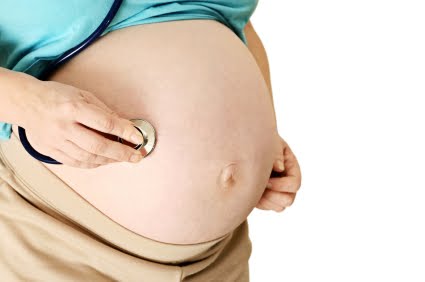
Essentialism: the beliefs of midwives take precedence over the needs of women

Earlier this week I wrote about the fact that contemporary midwifery has been hijacked by biological essentialists and feminist anti-rationalists. I’m not the first to notice that this has compromised the care that midwives provide to women.

Canadian midwife Mary Sharpe and colleagues have written about the situation in Ontario in Essentialism as a Contributing Factor in Ideological Resonance and Dissonance Between Women and Their Midwives in Ontario, Canada. Sharpe starts with a definition of essentialism:

Essentialism is understood as the tendency to view entities according to a set of distinct and limiting characteristics, or essences. Furthermore, an essentialist approach regards these characteristics or essences as inherently true or correct…

Sharpe details how essentialism is expressed in the foundational documents of Ontario midwives:

While the values embedded within the document, when viewed pragmatically, simply set ideals for practice, they also tend to support the culture of essentialism within the midwifery community by making certain assumptions about the meaning of midwifery care, the women who seek midwifery care and the nature of the woman-midwife relationship…

But those beliefs and assumptions are not shared by a large proportion of women. Instead of acknowledging that essentialist beliefs are not held by all women, the Ontario midwives react with disdain and an unwillingess to care for women who have different beliefs.

While some midwives interviewed stated that they were delighted to be able to provide care for the more diverse group of women seeking midwifery care … they nevertheless noted that they remained wary of those who do not overtly behave in ways that correspond to Ontario midwifery’s stated values and philosophies… Some Ontario midwives indicated that they felt there are “ideal” or “peak” midwifery clients and that certain women are therefore particularly “deserving” of midwifery…

As midwife Vicki Van Wagner explains:

There is a real tension in the midwifery community between narrow essentialist views of women, midwives and birth, connected with the lure of the “natural” and other concepts such as choice and diversity… In a countercultural movement such as midwifery, the need for strength to combat outer forces can create narrow views, dogmatism and a fear of diversity…

Sociologist Helen Lenskyj notes:

It does not serve women’s interests well for midwifery supporters to essentialize women as either mothers or midwives… Where does this leave the non-conforming mother who does not view the midwife as her best friend … One [also] needs to consider the messages that [such] rhetoric convey[s] to a woman who has no … regrets about her conventional medicalized birth experience. Is she less female/ feminine/ feminist because she does not … reflect on [her] birth experiences with feelings of anger, regret, mourning and loss?

Ultimately:

Ontario’s model of midwifery care reflects the essentialist tendencies of the feminist movements of the 1970s and 1980s that led to the legislation of midwifery in Ontario… The essentialist tendencies revealed by midwives and women in Sharpe’s study tend to pose dilemmas for midwives in the manner in which care is provided, the manner in which women are selected for care and the ways in which the philosophy of midwifery care is upheld.

Helen Lenskyj offers midwives advice that they should take to heart:

It is not productive for midwifery’s advocates to cling to exclusory or essentialist notions of woman and midwife. Rather, it is important to respect the feminist principle of choice … and to allow for diversity and difference among women, both midwives and clients.

What I find most intriguing about the views expressed in this paper is that they highlight the fact that midwifery has become obsessed with the feelings of midwives to the detriment of patients. It suits certain midwives and virtually all midwifery theorists to claim that “the natural” represents the pure essence of what women should want and how women should behave.

The profession of midwifery has been led astray from the values that have preserved midwifery across time, place and cultures. Those values were to minimize the risk of death to baby and mother by observing the ways that treatments and preventive measures could improve outcome. In contrast, contemporary midwifery often seems devoted to a stylized piece of performance art where the process is viewed as more important than the outcome. It is ironic that a profession that proposed in the mid-twentieth century to offer women more choices has devolved into a profession that insists that only one choice is acceptable.
UK midwives demand more cake


In a gesture worthy of Marie Antoinette, the head of the Royal College of Midwives, Cathy Warwick, has reviewed the growing problem of women being turned away from hospitals when in labor and demanded greater access to … homebirths.

Marie Antoinette, you may remember, when confronted with starving thousands demanding bread famously declared “let them eat cake.” That simple phrase crystallized how entirely out of touch the French queen was with the condition of her people. Similarly, Cathy Warwick, on being confronted by the reality that there are not enough staff and equipment to provide care for women in labor now declares that what midwives women really need is access to a specialized service that is appropriate for only a tiny proportion of the population and represents a dreadfully inefficient use of scarce resources.

Consider the problem. According to a report in the Daily Telegraph, Two women every day ‘being turned away from overstretched maternity units’:

Almost 750 heavily pregnant women were forced to travel to other units, up to 100 miles away, to give birth last year.

Almost half of the women who were sent to other units were in Greater Manchester, where four maternity units are facing cuts, the figures show.

The figures have been uncovered by the Conservatives using the Freedom of Information Act.

They also show that many maternity units had been forced to close to new patients more than 10 times in 2009.

The Royal College of Midwives (RCM) estimates that an extra 5,000 midwives are needed across England to provide just a decent standard of care.

Faced with these statistics, that there are not enough midwives to care for multiple women at a time in hospital units, Cathy Warwick thinks that what midwives women really need is greater access to a service that is only appropriate and desired by a tiny fraction of women and which requires not one, but TWO midwives, to attend a single patient, far away from all the other patients who need care.

The BBC reports today that Cathy Warwick acknowledges that maternity services in the UK are “stretched to the breaking point” but offered this bizarre response:

“We want to make sure that all women know that the choice of a home birth is available to them.

“We feel that there is a concerted and calculated backlash by sectors of the establishment against homebirth and midwife-led care.

“We are not sure what the coalition Government’s position is on home birth – or whether they are honouring their pre-election promises for adequately staffed maternity services for 3,000 more midwives.

“To begin providing more home births, there needs to be a seismic shift in the way maternity services are organised.

“The NHS is simply not prepared to meet the potential demand for home births because we are still embedded in a medicalised culture.

“The recently reported drop in the home birth rate in England from 2.9 % in 2008 to 2.7% in 2009 is a real disappointment.”

So let me get this straight. There are not enough midwives to provide the most basic level of care for pregnant women in the UK, and Cathy Warwick thinks the response should be to encourage women to demand that two midwives attended each woman at home while many other women have no care at all?

The problem is a “medicalised culture”? Evidently not since many women cannot access any care, let alone “medicalised” care.

And the drop in the homebirth rate is a “real disappointment”? For whom? No doubt the bakers in Marie Antoinette’s France were disappointed that the starving were not buying lots of cake, too, but that doesn’t mean that their distress was the problem that should have received priority..

Who is this woman? We met Cathy Warwick this past summer when the UK’s leading midwife was caught making up facts. Once again promoting the benefits to midwives women of homebirth, Warwick declared that we should look to the Netherlands, where 30% of women give birth at home and where perinatal mortality is the lowest in Europe. Since the Netherlands has the HIGHEST perinatal mortality rate in Europe that statement was either an expression of profound ignorance or a bald-faced lie. Indeed, the newspaper that conducted the interview was forced to print a retraction of Warwick’s fabricated claim.

Cathy Warwick epitomizes that self-serving blatherer that characterizes contemporary British midwifery: the biological essentialist who believes that “natural” birth is more important than safe birth, the anti-rationalist who invokes “quantum theory” to explain why scientific evidence should be ignored in favor of midwives’ opinions, the self-absorbed, self-referential, selfish woman who pretends that the needs of midwives are the same as the needs of women.

Cathy Warwick and the Royal College of Midwives should be ashamed of themselves.

Who hijacked childbirth?

There have always been midwives.

Ever since our ancestors acquired the ability to walk upright, human childbirth has been fraught with extreme risk to both mother and baby. The first midwives were those who recognized that assistance in childbirth can minimize those risks.

They understood that something as simple as massaging a woman’s uterus after childbirth could prevent life threatening hemorrhage and that different fetal positions like breech posed specific problems that could be overcome with specific maneuvers. Over time they acquired knowledge of the pharmacologic properties of certain plants and gave extracts to women with the intention of starting labor or stopping bleeding.

Above all, ancient midwives were empiricists. Their very existence was predicated on the inherent dangers of childbirth and everything they did was devoted to preventing death and injury. They abjured magic incantations in favor of empirical observation. They noted what worked and what did not and faithfully strove to incorporate those scientific observations into practice.

Despite profound changes in the human condition, midwifery changed very little. Midwifery knowledge grew, of course, and that knowledge was supplemented by appeals to whatever forces were deemed to be in charge at the time (nature, gods, the Church), but the purpose always remained the same. And the faithful adherence to empiricism (as opposed to the often outlandish theories held by doctors up to the 19th century), ensured that midwives provided the best possible care to the women they served.

That was certainly what I understood midwifery to be when I entered medical school, and that view was reinforced by working extensively with certified nurse midwives in the hospital setting. I found them to be highly educated, very experienced and capable of providing a more personalized form of care. But gradually I came to understand that midwifery has been pervaded by distinctive forms of feminist philosophy that rejected the traditional empiricism of ancient midwives in favor of philosophical theories. In fact, I think it is fair to say that childbirth in general and midwifery in particular have been hijacked by radical feminists.

These feminists were part of the second wave of feminists, who moved from insisting that women are equal to men (and therefore have the same rights) to insisting that women are different from men, and that those differences make women superior. Among the second wave feminists were two types of radical feminists that have profoundly changed the way that childbirth is understood. These two groups of feminists are biological essentialists and feminist anti-rationalists.

Broadly speaking, the biological essentialists are characterized by a belief that women are defined by their biology and that their biological differences should be celebrated; the premier biological essentialist in the natural childbirth movement is Sheila Kitzinger. The anti-rationalists are essentialists with a twist. In their view, empiricism and rational thought are the preserves of men, and that women have “different ways of knowing.” The premier anti-rationalist in the childbirth movement is Robbie Davis-Floyd.

The essentialists and the anti-rationalists share quite a few characteristics. Almost exclusively Western, white women of privileged classes, they believe that they speak for all women because all women have the same needs and desires. They simply assume that they represent non-Western women and women of color. They are sociologists and anthropologists. Curiously, they have little or no practical knowledge of childbirth or modern obstetrics, but don’t view that lack of knowledge to as a problem.

You can recognize them by what they say. The biological essentialists are fond of catch phrases like “trust birth” and “pregnancy is not a disease.” They insist that obstetrics has “pathologized” childbirth and they can display a shocking and callous fatalism by dismissing deaths with the dictum that “babies die, that’s just the way it is” or “some babies are not meant to live.”

The anti-rationalists are distinguished, not surprisingly, by their anti-rationalism. They dismiss science as a male form of “authoritative knowledge” on the understanding that there are “other ways of knowing” like “intuition.” Many are post modernists who believe that reality is radically subjective, that rationality is unnecessary and that “including the non-rational is sensible midwifery”

How do professional childbirth advocates line up? To some extent, all are biological determinists who deliberately conflate the is/ought distinction. Since childbirth in nature IS a certain way, it OUGHT to be allowed to proceed in exactly in that way at all times. Natural is understood to be superior and technology is automatically inferior.

The difference between biological essentialists and feminist anti-rationalists is primarily in their view of rationalism. Among the true biological essentialists are Henci Goer and Amy Romano. The biolgical essentialists are represented by organizations like Lamaze and the American College of Nurse Midwives (ACNM). They worship the “natural” on the assumption that biology determines what is best for all women. Nonetheless, they believe that science is non-gendered, valuable and the standard by which claims about childbirth should be judged. They freely quote scientific papers and insist that their views of childbirth are “evidence based” even when they are not. They value empirical knowledge and advanced education.

The non-rationalists reject science as male, and unfairly regarded as authoratative merely because it is male. To the extent that science supports their beliefs, they are willing to brandish scientific papers as “proof,” but explictly reject rationalism when it does not comport with their personal beliefs, feelings and opinions. They do not value empirical knowledge and reject rigorous education.

The grandmother of anti-rationalism among childbirth advocates is Ina May Gaskin and MANA, which is her creation, is the primary organizational exponent of anti-rationalism in childbirth. Radical midwifery theorists like Soo Downe and Jenny Parratt provide the ideological underpinnings of anti-rationalism within midwifery. Also included under the anti-rationalist umbrella are the “freebirthers” like Laura Shanley and Janet Fraser, and the Quiverful movement that rejects rationalism in favor of religious belief.

As far as I (and most women) are concerned biological essentialism and feminist anti-rationalism are two radical theories that have come and gone. Women are not determined by their biology and women differ in their needs and desires even if they share common biology. Anti-rationalism is the preserve of educated social theorists and uneducated laypeople. It is a doctrine of sour grapes. Rationalism does not support their opinions and rather than changing their opinions, they prefer to reject rationality itself. Anti-rationalism cannot account for the fact that some women not only believe in science, but they are scienttists.

Ultimately, the natural childbirth movement is wrong, not merely in its scientific and historical claims, but especially in its underlying philosophy. Most women no longer accept that they are supposed to be defined and determined by their biology. They believe that just because something is a certain way in nature, it does not mean that it ought to be that way today. In nature “some babies aren’t meant to live,” but that doesn’t mean that we should withhold our technological expertise and let those babies die. In nature, women give birth in agony, but that does not mean that women ought to give birth in agony or that it is an “achievement” to do so.

Most women are not, and never were anti-rationalists. They do not view reality as radically subjective; they embrace science and become scientists and doctors themselves. They value knowledge and respect advanced education.

Midwifery has been pervaded and in some sense perverted by the biological essentialists and the anti-rationalists. Childbirth has been hijacked by radical feminist theorists, and it is time for the rest of us to take it back.

Fighting logophobia

What do Jenny McCarthy, Riki Lake and Susan Somers have in common (beside the fact that they are B movie starlets who give medical advice)? All three women, like all believers in pseudoscience, suffer from logophobia. That’s right, they have a pathological fear of logical thought.

It actually goes deeper than a simple fear of logic, however. The real object of their fear is rationalism itself. Indeed, the term logophobia was jokingly coined by Nicholas Shackel to describe a serious phenomenon. In his paper The Vacuity of Postmodernist Methodology, Shackel explains that logophobia arises from:

… a sceptical doctrine about rationality (which they mistake for a profound discovery): namely, that rationality cannot be an objective constraint on us but is just whatever we make it, and what we make it depends on what we value….

Or, as philosopher Massimo Pigliucci succinctly observed:

In other words, they claim that reason cannot possibly solve every problem, so you can proceed with dismissing reason altogether.

Unfortunately, logophobia is widespread:

[It] can strike adult humans of all ages, genders and cultural backgrounds, especially when they have never been seriously exposed to the basics of critical thinking, or when they have grown up in the thralls of a powerful ideological system. The disease is preventable by early education, although it requires painful effort on the part of teachers and students alike. Once the subject is past middle school, it becomes increasingly difficult, and in most cases essentially impossible, to provide a cure; huge amounts of financial resources and time are wasted as a result.

There’s a version of logophobia that is particularly endemic among midwifery theorists. Midwifery logophobics are not timid about their anti-rationalism. Consider a recent paper entitled Beyond evidence-based medicine: complexity and stories of maternity care by Soo Downe, the doyenne of goofy midwifery theory. Evidence, a key requirement of rational argument, does not comport with the central claims of midwifery practice, so, of course, the very concept of evidence must be discarded:

From a Khunian perspective of ‘normal science’ as a social construct, current authoritative science thinking in medicine and health care has, until very recently, been strongly rooted in positivism. This has translated into a hierarchy that strongly favours the randomized controlled trial, based on the concept that bias in any experiment will corrupt the result…

Despite the entrenched acceptance of normal science in health care, it appears that authoritative, positivist, linear, risk averse, certainty-based thinking can only get us so far along the route of optimum health. This paper … illustrate[s] how maternity care clinicians can be introduced to [another way of] thinking through reflexive analysis of real life clinical narratives… a basis for answering the question, what is likely to work for this person, in this situation, given the range of evidence, and given their values and beliefs, my values and beliefs, and my clinical skills and knowledge?

It is truly remarkable how closely this adheres to Shackel’s explanation of logophobia: midwives shouldn’t be constrained by rationality, because rationality does not support many of the claims of midwifery. Since reality is nothing more than what midwives make of it, midwives based can base their “own” reality on what they value. And what they value is their personal beliefs about childbirth.

Those who value rationality, who are logophiles instead of logophobes, should not stand by idly while midwifery theorists brazenly attempt to replace science with “stories.”

As Piglucci reminds us:

… fighting the spread of logophobia is a primary responsibility of every critically thinking person and practicing scientist, despite the highly unfavourable odds against defeating it — which is why a thorough knowledge of the disease and of its symptoms is so crucial.

In the case of childbirth, this means a thorough knowledge of modern obstetrics, basic science and statistics. That’s why this blog exists: to fight the good fight against logophobia in contemporary childbirth discourse.

Look at the death rate in Katie Prown’s state

The Big Push Campaign runs one of the most visible drives for licensing of CPMs (certified professional midwives also known as direct entry midwives). According to their website:

The Big Push campaign all began on the Birth Policy Yahoo Group, established in 2004 by Katie Prown, PhD, a birth activist who was one of the leaders of the successful efforts to achieve CPM licensure in Wisconsin in 2006, and a pivotal leader in the larger movement.

Who is Katie Prown?

… A consultant, press liaison and advocate for organizations developing legislation to license Certified Professional Midwives (CPMs), Katherine is the Campaign Manager of the Big Push for Midwives Campaign. As Legislative Chair for the Wisconsin Guild of Midwives, Katherine drafted legislation to license Certified Professional Midwives in Wisconsin and co-led a statewide, bi-partisan grassroots advocacy campaign to successfully pass the bill into law in 2006. In support of that effort, she founded Wisconsin Birth Options, a statewide grassroots network devoted to maternity care reform in Wisconsin.

Prown speaks widely and often about the purported safety of homebirth with a CPM. Curiously she never mentions that Wisconsin collects statistics about homebirths and year after year those statistics show that homebirth triples the rate of neonatal death.

I have tangled with Prown in the past. I posted the Wisconsin neonatal mortality statistics in a comment thread on a Newsweek article about midwifery which quoted Prown, asking why she did not mention that homebirth midwives in Wisconsin had triple the neonatal death rate of low risk hospital birth. Here’s Prown’s reply:

The Wisconsin statistics that Dr. Amy cites are irrelevant… [T]hey were compiled before Certified Professional Midwives in the state attained legal status (which happened in May, 2007)…

But now the statistics for 2008 are in and they the same as the statistics before licensure.

The chart above (I love Excel!) graphically demonstrates two things. First, homebirth in Wisconsin with a direct entry midwife has triple the neonatal death rate of low risk hospital birth. Second, licensing midwives has made no difference in the death rate. That’s not surprising since a license is a legal document and confers no addition education or training. It merely stamps the imprimatur of the state of Wisconsin on a group of women who were undereducated and undertrained to begin with.

The website for the Big Push Campaign is very attractive and filled with information. There are numerous assertions that homebirth with a CPM is a safe option, but no statistics to support that claim. That’s not surprising when you consider that there are no national or state statistics exist that would support that claim. Even in Katie Prown’s own state, the data tell the same sad tale over and over again. Homebirth increases the risk of neonatal death, and, of course, that information must be kept from American women.

The Big Push Campaign is not about birth and it is obviously not about safety. It is about one and only one thing: money. Without a state license, CPMs cannot bill insurance companies or Medicaid. They must accept payment out of pocket and most women who choose homebirth cannot afford the thousands in fees that CPMs demand. But why should we license and pay a group of women who provide substandard care?

So I have a public question for Katie Prown, who was instrumental in gaining licensure for CPMs in Wisconsin, and who insisted that licensure would ensure the safety of homebirth in Wisconsin:

How can you tout the safety of homebirth when the statistics from your own state show that homebirth increases the risk of neonatal death?

Homebirth midwives: birth is my hobby!

As I wrote in I am a special snowflake, dammit!, Barbara Herrera, Navelgazing Midwife, has unintentionally displayed the self referential character of natural childbirth advocacy, She demonstrated an inability to treat other women respectfully and the rather bizarre belief that when women make different childbirth choices, they are judging her and her specialness.

In addition to illustrating the self referential nature of NCB advocacy, Herrera unintentionally revealed some astounding facts about natural childbirth advocates in general and homebirth (direct entry) midwives in particular. First, natural childbirth is not about babies, and it’s not about birth; it is all about them:

I absolutely acknowledge the near-obsession with birth some of us have… the birth junky-ness of us. But, don’t *most* people have *something* that drives them? That is a place in their lives that creates a great deal of pleasure, whether doing or listening?

Second, for natural childbirth advocates and general, and homebirth midwives in particular, birth is their hobby!

For some, it’s collecting trains… others, talking about airplanes… and still others, it’s religion that’s the obsession. Might we not acknowledge that for some people (people like me!) that obsessive/constant/overwhelming passion has been and is birth? That if we *have* that drive within us, it isn’t *wrong*, but just different?

Well that explains a lot, doesn’t it? According to Dictionary.com, a hobby is:

an activity or interest pursued for pleasure or relaxation and not as a main occupation

For homebirth midwives, attending births is an activity pursued for pleasure and not an occupation. Since it’s a hobby, they see no reason to get bogged down with years of college and hours of in hospital training. A certification program is enough. After all, where’s the pleasure and relaxation in studying hard or learning about the prevention, diagnosis and management of complications when all you really want to do is catch babies?

It’s kinda like fishing. Fishing is an interest pursued for pleasure or relaxation. There’s no reason to get a degree in veterinary medicine just to catch a few fish, right? Why get a degree in midwifery (a real, college degree) just to catch a few babies?

Here’s the problem: birth is serious and women giving birth deserved to be cared for by professionals. That’s because birth, unlike fishing, has a very real potential to end in the death of the baby or mother. It’s not about, nor should it be about a birth junky getting her fix. Homebirth (direct entry) midwives do all midwives a disservice by pretending that birth is a hobby. Midwifery is a profession, not an opportunity for voyeurism.

Interestingly, the less training a homebirth midwife has, the more likely she is to refer to herself as a “granny midwife,” but that’s an insult to the real granny midwives of yore. Those women were not indulging their personal passion; they were providing medical care to the best of their ability. They attended births to prevent death, not to get their birth junky fix. They administered herbs because those were the best medicines they had at the time, not because they were “natural.” They delivered breech babies vaginally (and lost quite a few) because they had no other choice, not because they were “respecting the process.” They lamented their limitations, and tried to extend their knowledge; they didn’t glory in ignorance and pretend that knowledge was not worth the effort expended to learn it.

Herrera inadvertently spoke the truth. Direct entry midwifery should be abolished because is nothing more than a hobby for women who love watching other women’s births. They refuse to acquire real training because they are too lazy, and can’t see the point if all they want to do it catch a few babies. Direct entry midwifery is by, about and for midwives. Patients exist merely to provide the fix.

Direct entry midwifery is an insult to midwifery and to women. Midwifery, real midwifery, is about the needs of the mother and baby, not the needs of the midwife. It’s about providing safe care, anticipating emergencies and treating complications. It’s not about pretending that birth is safe, insisting that emergencies never occur and imagining that complications can be treated by dialing 911.

American women and babies deserve real midwives, not hobbyists.

Normal sex

Natural childbirth advocates profess puzzlement that the promotion of their personal preferences as “normal” birth is disrespectful to women who make different choices. To help them understand why their rhetoric is hurtful, hateful and utterly self referential, I offer a thought experiment. Let’s apply the Lamaze philosophy on “normal” birth to sex.

Below is a paraphrase of the Lamaze position paper, Promoting, Supporting, and Protecting Normal Birth. Natural childbirth advocates: do you see the parallels and why the insistence that your personal preferences represent nature’s ideal is so distasteful?

Promoting, Supporting, and Protecting Normal Sex
by The Institute for Safe and Healthy Sex

Sex in the 21st century is characterized by choices and practices directly antithetical to normal, natural and physiologic processes. Nature designed sex to occur only between one man and one woman, within the context of a permanent pair-bonded relationship, and always leading to pregnancy. In contrast to what we know about the physiologic process of sex, society now countenances homosexual relationships, sex outside of marriage or even outside of a relationship and artificial contraception. These practices are alarming because there is no research demonstrating that choices like homosexuality, oral sex and contraception respect and facilitate normal physiology.

The normal, natural, physiologic process of sex involves a sequence of interacting events: the male erection, vaginal lubrication, ejaculation, etc. It is exquisitely orchestrated by male and female hormones and facilitated by the missionary position. Restriction to the missionary position helps men and women tolerate increasing levels of oxytocin (the love hormone), and this ultimately ensures not only that sex will progress, but they will benefit from the release of endorphins, nature’s narcotic.

The Institute for Safe and Healthy Sex encourages men and women to be confident in their ability to have heterosexual sexual intercourse. The Institute further encourages health-care providers and policy makers to understand and trust the normal, natural process of heterosexual intercourse and to promote, support, and protect men’s and women’s confidence and their ability to have heterosexual intercourse without the unnatural distractions of abnormal sexual practices or artificial contraception.

The Institute of Safe and Healthy Sex has identified six care practices, that promote, support, and protect normal heterosexual intercourse:

Practice #1: All men and women must recognize and acknowledge that Nature designed sex to occur only between one man and one woman.

Practice #2: Sex should be restricted to only heterosexual, monogamous, long term relationships (ideally marriage), because that is the only physiologic situation.

Practice #3: No artificial interference with fertility.

Practice #4: All sex should have to potential for conception. Accordingly, there should be no homosexual sex and no oral or anal sex.

Practice #5: Sex should be restricted to the missionary position because it affords the best possibility for conception, which is what Nature intended.

Practice #6: There should be no artificial components to heterosexual intercourse. Synthetic lubricants, vibrators and sex toys interfere with the physiologic sex that nature intended.

The goal of the Institute for Safe and Healthy Sex preparation for sex is that men and women have confidence in their inherent ability to have normal, heterosexual intercourse. In Institute for Safe and Healthy Sex sex education classes, men and women learn to understand and trust normal, natural, physiologic sex and avoid homosexual tendencies, non-normal sexual practices, and artificial contraception. The Institute for Safe and Healthy Sex encourages all men and women to attend sex education classes that promote the six care practices described above and that increase their confidence in their ability to have sex normally.

The mission of the Institute of Safe and Healthy Sex the is to promote, support, and protect normal sex through education and advocacy. The Institute for Safe and Healthy Sex was launched to support initiatives that provide credible, relevant, and useful information about normal sex to young men and women and to advance the agenda of promoting, supporting and protecting normal sex.

Lord, send me a sign

Have you heard the joke about the man who refused help during a flood?

There was a huge flood in a village. One man said to everyone as they evacuated, “I’ll stay! God will save me!”

The flood got higher and a boat came, and the man in it said “Come on mate, get in!” “No” replied the man. “God will save me!”

The flood got very high now and the man had to stand on the roof of his house. A helicopter soon came and the man offered him help. “No, God will save me!” he said.

Eventually the man drown. He got by the gates of heaven and he said to God, “Why didn’t you save me?”

God replied, “For goodness sake! I sent a boat and a helicopter. What more do you want!”

I was reminded of that joke when contemplating the musings of Shannon who is planning a home VBAC after 4 C-sections. Not surprisingly, Shannon is having a difficult time finding a homebirth midwife who will care for her. Indeed, several have already turned her down. But Shannon is sure “God [is] still wanting me to continue with a midwife.”

That’s a truly amazing coincidence when you think about it. Isn’t it great that God wants for Shannon exactly what she wants for herself!

I believe God designed our bodies and He designed our bodies to birth vaginally. There is a place for doctors when they are needed, but I do not believe pregnancy is an illness. I believe too many interventions are taking place by doctors and their staff that are creating an epidemic of c-section births. I also believe that one day they are going to answer to God for it.

It’s downright miraculous that God’s plan mirrors Shannon’s plan so well.

So why have homebirth midwives been turning down Shannon’s plan for a home VBA4C? Homebirth midwife Diana initially agreed to provide care, but:

About six weeks ago Diana had a VBAC client in labor that started screaming in pain and grabbing her incision site. With any VBAC client there is a risk of uterine rupture and they made the judgement call to transfer to the hospital, which resulted in an emergency c-section. The client did NOT have a rupture, but the fear of losing the mother or the baby was very traumatizing for the midwife.

Evidently it had occurred to Diana that a patient could sustain a uterine rupture at home and disaster might result. And then:

Fast forward a few weeks as the wait was on for the birth of Diana’s precious grandbaby. Finally, the mother went into labor on November 30th, but it ended in tragedy. The baby was stillborn. Horrifying!

At this point Diana declared that she could not participate in a VBA4C, but she did offer Shannon names of other local homebirth midwives. Unfortunately, on the exact same day that Diana’s grandbaby died:

one of Diana’s fellow midwives had attended a funeral for baby that was the result of a uterine rupture.

She wasn’t interested in attending a home VBA4C, either. Along came Sallie:

Much to my surprise she said she would take my case. She even told me a story about a birth she attended of someone who had a VBA4C in which the baby was over 11 pounds to encourage me that it can be done. So, Sallie will be my new midwife.

But here’s the best part:

[Sallie] wants to take Diana to lunch and try to be an encouragement to here during this traumatic time. Also, there are always two midwives present at a birth nd she wants to see if Diana will be the second midwife in my case. I just love the compassion that midwives have for their patients and fellow midwives.

So God sent Shannon a boat and a helicopter, but she’d rather take her chances with Sallie.

I guess the prophet Jeremiah was right when he said: There are none so blind as those who will not see.

I am a special snowflake, dammit!

Barbara Herrera, Navelgazing Midwife, is mad. Ostensibly, she’s mad about the ripping apart of natural birth, but even a cursory examination of her post reveals that she’s really mad about being denied special status because of unmedicated childbirth. She and her philosophical compatriots who gave birth through the vagina without pain medication are special snowflakes, dammit, and how dare anyone question that specialness?

Barbara starts in on Gina Telling who implores “Don’t judge me because I had a C-section.” That sounds rather uncontroversial, but not when you consider that judging other women is half the fun of being a special snowflake. Herrera gives NO consideration to Telling’s plea. Instead, she attempts to justify the judging with a rather startling example of projection:

Women healing from birth trauma often find the telling and re-telling of their stories an integral part on their paths to normalcy (not the old normal, but the new normal). But those around them seem to hit a saturation point and it is a rare woman who has not heard, “Can’t you just get on with your life already?”

There are other topics that make people uncomfortable… death and illness are two of the most common… but I find anger, pain and disappointment about a woman’s own birth experience all but taboo…

Those women who berate Telling are really not berating her. They need to work through their trauma at their own tragically imperfect birth experiences, by informing Telling of what was wrong with hers. And what if Telling does not want to be a foil for other women’s self exploration? She must be uncomfortable with the pain and disappointment of other women. Huh? When did Telling’s birth experience become the property of other women to use for their own needs?

Another article leads Herrera to make her self concern explicit. She is mad, mad, mad about “Looks Like Nobody Ever Had a Baby Before” by Daphne Caruana Galizia. Ms. Caruana Galizia, mother of two (born with midwives, no less) dares to suggest that having a baby is not an achievement:

“Imagine just how much less angst there would be if the breathing trainer, or whatever they’re called, were to say repeatedly: ‘Remember that trillions of women have had babies throughout history, and that you’re doing nothing special. Even if it feels like you’re the only woman in the world to give birth, you’re not.'”

Oh, the horror. Ms. Caruana Galizia must be deeply dysfunctional. According to Herrera:

… Did she not feel special having her baby? Unique? How does that not happen? How can a woman who’s, in a sense, birthing “God”, not feel amazingly gifted/special/unique?

How sad for her that she is a special snowflake and does not even realize it. Suddenly Herrera has an insight:

But, if I think about it longer, maybe she doesn’t feel that birth-breastfeeding is that important after all. Isn’t that the implication …? That we’re navelgazingly obsessed with our biological performances?

Ya think?

Herrera concludes with the all out self-referential, self-pitying claptrap that characterizies NCB:

Those of us that write need to get louder, more aggressive in our countering articles such as those mentioned above. I challenge natural birth-oriented bloggers (myself, included!) to attack these overt slams against our birthing choices word for word.

So let me get this straight. Two women write articles about their own feelings and Herrera thinks this is all about her choices? Two women write that they don’t want to be assaulted with the self-congratulatory posturing of NCB advocates and Herrera thinks the appropriate response is to yell into their faces even louder?

I guess it’s not all that surprising. Herrera and her friends are special snowflakes, dammit, and the whole world should be forced to acknowledge it.

Australian Supreme Court rules against homebirth midwife

Australian midwife and homebirth advocate Lisa Barrett has lost her bid to avoid an inquest into the birth and death of a baby who died under her care.

Barrett claimed that the death of Tate Spencer-Koch should not be investigated because a baby who dies before birth is not legally a person. In other words, because Barrett was so inept at resolving the shoulder dystocia (40 minutes until delivery of the shoulders) that the baby died before the entire body was born. And because she was incapable of saving the life of an otherwise healthy baby, as opposed to merely rendering it brain damaged, she should escape investigation.

But the ambulance crew, which arrived several minutes after the baby’s birth, pointed out that Tate was alive at the time of birth. Although she had no heartbeat, an EKG revealed electrical activity of her heart (pulseless electrical activity or PEA), the last stage before death. If she had electrical activity when they arrived, she was surely alive at the time of birth.

Barrett countered that electrical activity of the heart should be ignored since it was not mentioned at the time that the definition of a “person” under Australian law was issued in the 1800’s. That definition required independent breathing on the part of the baby. Barrett thought she had found a way to avoid an inquest by invoking a technicality and appealed to the Australian Supreme Court.

The Court rejected Barrett’s argument. The opinion came down yesterday.

In a unanimous decision, the Full Court today rejected a midwife’s application for a judicial review of a decision by Deputy Coroner Anthony Schapel.

Lisa Barrett claimed Mr Schapel had exceeded his jurisdiction by conducting an inquest into the July 2007 death of newborn Tate Spencer-Koch…

Common law dating back 130 years holds that only babies who breathe independently of their mothers are “born alive” and have legal rights.

However, Mr Schapel ruled a weak, electrical rhythm in Tate’s heart was a sign of life and held an inquest…

Ms Barrett asked the Full Court to overturn that decision, saying rhythms were only “a precursor to life”.

Today, Justice Richard White disagreed.

He said a NSW decision held the “born alive” rule was based on “anachronistic and antiquated factors” and “primitive” medical knowledge.

“It would be incongruous, to my mind, that the presence of a bodily activity indicating a successful resuscitation may be possible … should nevertheless be disregarded as a sign of life,” he said.

“The Coroner’s Court is not confined only to the kinds of evidence available to the courts in the 18th or 19th Centuries.”

The investigation will now proceed and Barrett is right to be concerned that she may be found guilty of malpractice. Moreover, the case has implications beyond the malpractice of a specific midwife.

Attorney-General John Rau said the inquest would significantly impact regulation of the homebirths industry.

“One of the questions no doubt the Corner will have to consider is had this delivery been managed in a medical setting, whether the child would have been in any way compromised let alone died,” he said…

“It shines a bit of light on an area that’s been of concern for quite some time.”

No wonder Barrett has made such strenuous efforts to avoid investigation.

Dr. Amy