All posts by Amy Tuteur, MD

Birth, breastfeeding and class: indigenous poor women are exotic, but poor women in this country are ignorant and lazy

image

I just finished reading ‘The New Reproductive Regimes of Truth,’ a chapter in Alison Phipps outstanding book The Politics of the Body: Gender in a Neoliberal and Neoconservative Age.

Phipps explains her project:

In this chapter, I have introduced what I see as the new reproductive ‘regimes of truth’: the consensus around ‘normal birth’ and ‘breast is best’ which dominates policy, academia and the activist field… [A]gendas which began in feminist efforts to empower women have now been transformed into messages which can put pressure on mothers in a number of different ways while excluding other caregivers. In my analysis, I have attempted to apply the principle of intersectionality: seeing the new reproductive activism as largely a politics of white, middle-class women with abundant cultural, social and economic capitals, I have explored how such agendas might intersect with the politics of class and ‘race’ and access to economic, social and cultural resources.

[pullquote align=”right” cite=”” link=”” color=”” class=”” size=””]Where would natural childbirth and breastfeeding advocates be without poor women to exploit?[/pullquote]

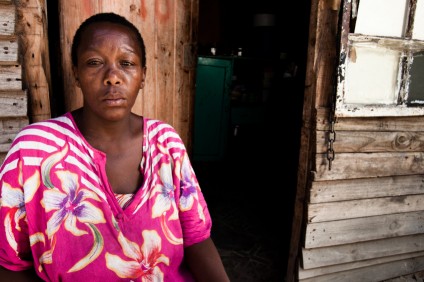
There is a great deal of intellectual meat to chew on, but what struck me most forcefully was the central importance of class and race in natural childbirth and breastfeeding advocacy. Specifically, natural childbirth advocates and lactivists identify with an exoticized view the poor indigenous Other (generally black or brown), and simultaneously distinguish themselves from the poor industrialized Other (both black and white) whom they conceptualize as ignorant and lazy.

Complementing this focus on the ‘natural’, there is a tendency to search for authenticity and origins in the discussion of alternative birth practices. This … often involves the Orientalizing of ‘traditional’ cultures, whether prehistoric or from developing countries. American childbirth educator Judith Lothian describes her Lamaze class as modelling ‘traditional ways of passing information about birth from generation to generation’, and advice to mothers to pursue on-demand or extended breastfeeding often makes reference to the fact that these practices are common outside the West, but without highlighting pertinent differences in culture and lifestyle.

Natural childbirth and breastfeeding advocates are channeling Grantly Dick-Read’s notions of “primitive” women, but:

… Like the claims of many contemporary activists, however, Dick-Read’s points were made despite the fact that he had not spent extensive time in non-western countries. The lack of an evidence base to corroborate such assertions is particularly problematic when non-western birthing practices are appropriated in the service of authenticity rather than effectiveness.

Contrast that with the view of poor women in their own countries:

… [W]omen who choose childbirth interventions or formula feed (who are largely from working-class and minority ethnic groups) [are] presented as ignorant and lazy or at best in need of education (which feeds racist and classist stereotypes). A generous formulation is that women lack the confidence to give birth without technology and need to be educated to trust themselves … Less judiciously, British activist the Alpha Parent blogs that formula companies ‘exploit the lazy’ –women who ‘can’t be bothered’ –by claiming their products are convenient.

The surprising paradox is that natural childbirth and breastfeeding advocates claim to emulate poor indigenous women, whom they view as authentic and close to nature, while simultaneously demonizing poor women in their own countries whom they stigmatize as too ignorant to recognize the birth and breastfeeding “regimes of truth,” and too lazy to employ them when they learn of them.

The notion that women who have different preferences in childbirth and infant feeding are both ignorant and slothful justifies the beloved preoccupation of natural childbirth and breastfeeding advocates with the coercion of “informed choice.”

Within this framework of compulsory empowerment through ‘informed choice’, deviant behaviours are positioned as being a product of ignorance or weak-mindedness, rather than affirmative choices in favour of an alternative. This is clear in Lothian’s question: ‘why are women seemingly uninterested in choosing normal birth, in spite of our best efforts?’

Phipps concludes:

… [A]lthough birth and breastfeeding activists have a tendency to present themselves as counter-cultural, and identify themselves with global Others in their appropriation of ‘traditional’ practices, there is little attention paid to the stigmatizing effect this might have upon our own social Others, the working-class and minority ethnic women who may choose birth interventions or infant formula for a variety of structural reasons.

Natural childbirth and lactivism aren’t about babies, but rather are about privileged women and how they wish to see themselves, especially in contrast to the poor Other. It makes you wonder: where would natural childbirth and breastfeeding advocates be without poor women and their misfortunes to exploit?


The Baby Friendly Hospital Initiative is coercive and violates women’s medical autonomy

coercion

The American College of Obstetrician Gynecologists Committee on Ethics recently issued an important position paper entitled Refusal of Medically Recommended Treatment During Pregnancy. Their most important conclusion is this:

Forced compliance—the alternative to respecting a patient’s refusal of treatment—raises profoundly important issues about patient rights, respect for autonomy, violations of bodily integrity, power differentials, and gender equality.

I agree completely, but I have one question. When will ACOG condemn the Baby Friendly Hospital Initiative for its coercive approach to breastfeeding?

[pullquote align=”right” cite=”” link=”” color=”#FD842B” class=”” size=””]The Baby Friendly Hospital Initiative represents a deliberate and fundamental assault on women’s bodily autonomy.[/pullquote]

The BFHI — whose cornerstones include forced lectures on the benefits of breastfeeding, prohibitions on formula supplementation and pacifiers, and mandated 24/7 rooming in of babies  — is profoundly (and proudly) coercive, violating patient rights, respect for women’s autonomy, power differentials and gender equality.

The ACOG opinion brilliantly lays out the issues and principles at stake. These issues and principles apply equally to breastfeeding, another medically recommended treatment. Among them:

Pregnancy is not an exception to the principle that a decisionally capable patient has the right to refuse treatment, even treatment needed to maintain life. Therefore, a decisionally capable pregnant woman’s decision to refuse recommended medical or surgical interventions should be respected.

Breastfeeding is also not an exception to the principle that a decisionally capable patient has the right to refuse to medical recommendations. Therefore her decision should be respected.

The use of coercion is not only ethically impermissible but also medically inadvisable because of the realities of prognostic uncertainty and the limitations of medical knowledge… Obstetrician–gynecologists are discouraged in the strongest possible terms from the use of duress, manipulation, coercion, physical force, or threats, including threats to involve the courts or child protective services, to motivate women toward a specific clinical decision.

The use of coercion to promote breastfeeding is also ethically impermissible as well as medically inadvisable because of the realities of prognostic uncertainty as well as the limitations to the benefits of exclusive breastfeeding. Lactation consultants, nurses and physicians should be discouraged in the strongest possible terms from use of duress, manipulation or coercion to motivate a woman to breastfeed.

Forced lectures on the benefits of breastfeeding, forced visits by lactation consultants, and prohibition of formula supplementation and pacifiers represent both coercion and duress. The closing of well baby nurseries, justified by the desire to promote breastfeeding, represents duress, manipulation and blatant coercion.

Eliciting the patient’s reasoning, lived experience, and values is critically important when engaging with a pregnant woman who refuses an intervention that the obstetrician–gynecologist judges to be medically indicated for her well-being, her fetus’s well-being, or both…

Respect for a patient’s reasoning, lived experience and values is critical to engaging with a woman who cannot or does not want to breastfeed. When a woman tells you that she does not want to breastfeed, that decision should be respected, not viewed as an opportunity to change her mind.

It is not ethically defensible to evoke conscience as a justification to attempt to coerce a patient into accepting care that she does not desire.

There is no ethical justification for most of the principles of The Baby Friendly Hospital Initiative. Indeed, there is less justification for coercive treatment around breastfeeding, which has only small benefits for term babies, than there is for coercive treatment around medically recommended procedures designed to save a baby’s life or brain function, like C-sections.

The Baby Friendly Hospital Initiative represents a deliberate and fundamental assault on women’s bodily autonomy, and as such is deeply sexist. Men have the right to control their reproductive organs free from interference by governments, hospitals and providers. Women are entitled to the exact same right and the fact that the BFHI treats women and their breasts as if they constitute an exception to basic principles of patients’ rights is deeply disconcerting.

That’s why the rush to close well baby nurseries is profoundly unethical. Not only is it bad for babies because it increases the risk of in hospital deaths from falling out of bed or being smothered; not only is it bad for mothers because it keeps them from getting the sleep they desperately need to heal from labor and birth; but it is unethical because it is a deliberate effort to coerce women into 24 hour rooming in against what they might actually wish.

The truth is that there is nothing special about breastfeeding. It isn’t life saving for term babies and its benefits are trivial — a few less colds and episodes of diarrheal illness across the entire population of infants in the first year. If women have the absolute right to an informed refusal of a potentially life saving C-section — and they do — they most certainly have the right to opt out of every single provision of the BFHI.

The Baby Friendly Hospital is deliberately both manipulative and coercive. It depends on power differentials, violates women’s’ fundamental right to bodily autonomy, and is deeply sexist because it treats women’s bodies differently than men’s bodies.

ACOG is absolutely right that it is ethically indefensible to coerce women into accepting obstetric care that they do not desire. Will they affirm the fact that it is equally indefensible to coerce women into breastfeeding?

Lactation consultants care about breastfeeding; pediatricians care about babies.

image

To a hammer, everything looks like a nail.

To a lactation consultant (LC), every problem looks like it can be solved by breastfeeding harder.

And just as hammering a screw harder will make things worse, breastfeeding harder in the face of infant weight loss may make things much worse. In the first situation you could permanently strip the threads. The potential consequences in the case of a baby losing weight while breastfeeding are far worse: dehydration, seizures, permanent brain damage, and even death.

[pullquote align=”right” cite=”” link=”” color=”” class=”” size=””]Weight loss means that a baby is cannibalizing her own body to fuel her vital organs.[/pullquote]

That’s why in any conflict between a pediatrician and a lactation consultant over a baby who is losing weight, you should IGNORE the lactation consultant.

Consider this post that appeared recently on Reddit:

My baby girl just turned 12-weeks yesterday. She was born 16 days early, and only weighed 5lbs 12oz at birth. On May 6th, she weighed 7lbs 12oz. A little light, but no big deal. A few days ago, my wife felt something was wrong, so she made an appointment with a lactation consultant. We went and weighed her there. She was down to 7lbs 10oz.

She feeds all the time, and just isn’t making enough. Breastfeeding alone isn’t working anymore. I desperately want to supplement her with formula (I’d even be happy with just 4-6 ounces a day), but my wife isn’t having it. She completely refuses, screaming to the point of tears when I suggest it…

A pediatrician left an excellent response and I sincerely hope that the father followed it:

… [T]his is a pediatric emergency. Please take your daughter to an emergency room (at a Children’s Hospital if available) or her pediatrician’s office NOW, today! Do not wait until the holiday weekend is over. She needs assessment and treatment immediately! I cannot emphasize this enough. Please get her medical care immediately!

There is no question that this is an emergency. Beyond the first few days, an infant should NEVER lose weight. Weight loss means that the baby has been so deprived of nutrients that she is beginning to cannibalize her own body to continue fueling her vital organs.

Infancy is a period of extraordinarily rapid brain growth and the brain can only grow if nutrients are available in ample supply. When an infant is losing weight, she is potentially losing brain growth and the loss may be permanent. Even if you believe that breastmilk is superior to formula in promoting optimal brain function (I don’t), there is simply no question that adequate formula is far superior in all respects to inadequate breastfeeding.

Malnutrition is not the only problem. Breastmilk is the only source of fluid for exclusively breastfed infants. When they are not getting enough breastmilk, they quickly become dehydrated. Their electrolyte levels can rise very high and high sodium levels lead to seizures, brain damage and death. Indeed a baby can die of dehydration long before it would die from malnutrition.

Sadly, many LC have an unreasoning fear of formula. They have spent so much time and energy demonizing it that they are incapable of recognizing when it might be necessary.

They believe erroneously that inadequate breastmilk is always better than adequate formula. They believe erroneously that formula supplementation interferes with breastfeeding when the scientific evidence shows that judicious supplementation promotes breastfeeding. They believe erroneously that even one bottle of formula harms the infant gut (it doesn’t), failing to realize that when it an infant is losing weight, protecting the BRAIN is more important than protecting the gut. And they believe the biggest breastfeeding lie of them all, the fantasy that all women can produce enough breastmilk when we KNOW that 5-15% or more are biologically incapable of doing so under any circumstances.

Pediatricians, in contrast, have only one goal, keeping babies healthy, growing and able to reach their full physical and intellectual potential. Unlike LCs who have only hammers at their disposal, they have a full tool belt including tools of every type and size. A baby who is losing weight NEEDS supplementation, either formula or donor breastmilk. Pediatricians recognize that an adequate amount of milk is far more important than whether the baby is fed breastmilk exclusively.

There’s another factor that we must consider: letting a baby starve is CRUEL.

Hunger is painful. You might believe that tofu is healthier than steak and that water is healthier than soda, but suppose that you were given only one small piece of tofu and 3 ounces of water each day even though you need 1400 calories and 2 liters of fluid a day to survive. You’d quickly become painfully hungry and desperately thirsty with all the signs and symptoms of malnutrition and dehydration. If meat were available, would you ignore your hunger pangs day after day hoping that more tofu will magically become available in the near future? If soda were available would you ignore you desperate thirst hoping that more water will magically appear? Or would you eat the meat and drink the soda in order to survive?

I’d be willing to bet that you would find your hunger and thirst to be so painful that you would quickly decide that eating and drinking enough is infinitely more important than eating inadequate amounts of healthiest foods. If you wouldn’t allow yourself to starve, how could you possibly think it is okay to let your baby starve?

Lactation consultants mean well, but they’re not medical professionals and have only the vaguest knowledge of infant metabolic needs. They are hammers and everything looks like a nail to them. Pediatricians ARE medical professionals and they have a firm and detailed understanding of infant metabolic needs. More importantly, their primary goal is to meet those needs, not allegiance to any particular feeding method. They are handymen and handy women with every possible tool at their disposal.

Is your baby more than a few days old and losing weight? It’s a medical emergency.

Take your child to a medical professional and follow their medical recommendations. Listening to an LC and letting your baby suffer hunger pangs and desperate thirst in an effort to promote breastfeeding is missing the forest for the trees. It is shockingly cruel and startlingly dangerous.

Never forget: Fed Is Best!

Guest post: Here’s what happens AFTER the shoulder dystocia

I am sorry text on hand

Natural childbirth advocates often imply that shoulder dystocia is not big deal when successfully resolved. But the consequences of shoulder dystocia don’t end when the baby is born safely. Rachel Acosta and her son have been living with the consequences of his shoulder dsytocia: a brachial plexus nerve injury leading to a partially paralyzed arm known as Erb’s palsy. She is suffering terrible regret and wrote to tell me her story, hoping that she might prevent other babies from being injured and other women from feeling responsible as a result.

No natural childbirth advocate or OB-GYN ever mentioned brachial plexus injuries.

It was not in the 2008 What To Expect it was not in my silly birth plan book I bought. In fact no one ever said (my peers, SAHMs, or doctors or hippy friends for lack of better word) ever said: if the baby gets stuck he could die of brain damage or have a permanently damaged arm.

[pullquote align=”right” cite=”” link=”” color=”” class=”” size=””]Natural birth advocates made it seem like doctors are referees trying to foul you out so they can slice you open.[/pullquote]

Natural birth people I met consistently made it seem like doctors are referees trying to foul you out so they can slice you open. The Business of Being Born scared me.

I sat in front of a doctor and asked him how do I avoid a C-section. The doctor asked, “What did your first baby weigh? Did you tear, did he have shoulder dystocia?”

He recommended I have a C-section. No explanation. If only he had said, “Babies get stuck and die; a second labor is not always shorter or easier than the first.”

Maybe I would have understood if only I was thinking straight and was less guarded.

I joined a baby wearing group. I hired a doula for $450. I asked around for a low intervention OB and he was recommended by all the AP and baby wearers and natural birth people.

I attended the natural birthing class and apparently my interest in the subject made the doula say, “Are you sure you don’t want a home birth? You’re a great candidate!” Now I shudder at that thought. The saving grace was that I was in a hospital with trained professionals when the shoulder dystocia happened.

Apparently desire is the only thing you need to be a home birth candidate. I was obese, had a history of large babies and a previous shoulder dystocia. And in Ohio, home birth is illegal. I should have known then that the doula was wonky.

Wonderful people were telling me big babies are born easily and flawlessly. They said there were so many pros for vaginal delivery, but they were all cancelled out by shoulder dystocia:

No major surgery if I go vaginal:

The consequence but now I have a grade 2 cystocele. My bladder bulges out; it’s visible and I can’t barely hold urine in. I have to have procedure to fix the prolapse.

Speaking of surgery my son will have nerve transfer surgery from his Erb’s palsy brachial plexus injury if he doesn’t meet the next few milestones. That’s a major surgery for a little 1 year old. That certainly cancels out a pro of avoiding a C-section.

Better bonding skin to skin:

Bullshit! They were trying to get my child to breathe and I did not hold him for the longest time. It’s hard to bond with a baby who was perfect and that you were supposed to protect but you didn’t research enough. It’s hard to bond with a baby who’s arm is completely limp because of my choice. It’s hard to bond with a baby when you regret being a diva I did not know my demands were stupid; that’s a source of my postpartum depression.

Being able to go home sooner if you have a vaginal birth:

No that was canceled out we had to wait for him to be cleared to leave.

Faster recovery time, my favorite!

The vaginal birth canceled that out because my second was 11.5 lbs (sad I can not even be proud when I say his weight) so I got a third degree tear.

Lastly vaginal birth is not traumatic.

No, that was cancelled out. What’s really traumatic is almost losing your baby from your defiance fueled by ignorance.

I got postpartum depression. I had tons of stitches. I still have to have surgery and my bonus prize for begging and begging for a vaginal is a beautiful baby with arm issues that are slowly resolving, but I am one of the lucky ones.

I really want to raise awareness of Erb’s palsy. Often we look for the positive stories, but had I only heard one negative story of big babies I would have never risked my child’s arm use. Even if someone told me “your child will not have arm use for just one day,” I still would not risk it.

That’s not all:

In my overzealous search for this stupid ideal birth I alienated the women in my husband’s family who had medically necessary C-sections (breech and twins and emergency). But when I turned to the natural birth people who had encouraged me, they kept asking me “well, did you have an epidural??”

“Did you try squatting?”

“You’re overweight; were you eating a lot of sugar?” Somehow the latter become important only they wanted to discredit my story.

Every thing I have shared was turned around and used against me as if everything that saved my sons life and mine was an error and my fault.

My birth plan seems so narcissistic when I read it now. One source of my depression was the stupid affirmation, “your body would not make a baby to big to birth.”

The birth plan said “only intermittent monitoring so I can have free movement.” But I couldn’t move I could only screech and hold my breath and beg for my husband to punch me so I can pass out. I did get a regional epidural only because I lost all energy from just the hours of being alive and in pain. My doula kept blaming me, saying, “When you tense up your pain will be higher.”

I have to clarify I absolutely did try squatting and every position to open me up laying down with the hospital tray table elevated to lay in between my legs to open me up.

Once I had reviewed the epidural I could actually make sentences and I felt so bad about getting it even though I could feel the pain and could move; I felt like a sell out.

My doula told me that I could have done it had I been mentally stronger, even though I had been “strong” enough to push out a 11.5 lb 22.5 inch baby. She implied that the shoulder dystocia and 3rd degree tear happened because I had caved from the pain.

But it’s funny and sad that now I’ve met some very nice women in the Erb’s palsy group. There’s even one from my state and we go to the same brachial plexus center. She had a home birth and a brachial plexus injury more severe than my son’s injury. She really saved my life and my marriage when she told me that no epidural plus free movement does not always equal no shoulder dystocia. Because she had done just that in her home and still encountered a consequence of it a shoulder dystocia and brachial plexus injury. When I heard she had done everything I attempted to do and still got I thought to myself that the epidural and the doctor were my SAVING GRACE.

For months when I put my son onesies over his head and I had trouble I would think back to the terror that childbirth was. How he was stuck and we were coded and they saved him but his arms didn’t work symmetrically. My poor little guy he was trying to be born safely and here I was making deals against his survival

The shocking part I have received more sympathy from the doctor than anyone else even though he had recommended a C-section.

I had worried about the cost of a c-section as if I were refused coverage by insurance and thought of the horror stories of how costly a c-section bill would be. But weekly physical therapy visits for 9 months combined with 3 trips Cincinnati Children’s Hospital brachial plexus clinic is not cheap either.

I feel like the doubt that is spread online is insidious and I treated my doctors like biased referees in a ball game instead of guardians of my child’s life and mine.

image


Is midwifery/breastfeeding research real scientific research?

image

There’s a critical difference between midwifery/breastfeeding research on the one hand and real scientific research on the other. Indeed, midwifery/breastfeeding research has more in common with Big Pharma research than it does with actual science.

What’s the difference?

Scientific research seeks to learn, specifically to learn how the human body works and how to maximize healthy outcomes. Midwifery/breastfeeding research, like Big Pharma research, seeks to justify the product that they are already selling.

[pullquote align=”right” cite=”” link=”” color=”” class=”” size=””]Midwifery/breastfeeding research, like Big Pharma research, seeks to justify the product that they are already selling.[/pullquote]

Don’t believe me?

The hallmark of Big Pharma research is that it always shows that the drug being tested is safe, efficacious and worthy of being prescribed routinely. No doubt Big Pharma does research that shows that it’s drugs aren’t safe, don’t work and shouldn’t be prescribed, but that research is never allowed to reach the light of day.

Search any midwifery journal for whichever years you choose and you will find that anything a midwife can do is safe, efficacious and worthy of being prescribed routinely. You will never find a paper that calls into question any aspect of contemporary natural childbirth advocacy.

Similarly, if you search any breastfeeding journal, you will find that every single article concludes that breastfeeding is safest, always better than formula and therefore worthy of being forced on every mother and baby. You won’t find papers that call into question the assumed superiority of breastmilk.

That difference extends to professional conferences.

Attend obstetric conferences and you will find countless sessions on “controversies in obstetrics.” When is induction appropriate? What’s the right C-section rate? What’s the best way to prevent postpartum infections? In those sessions there are always people on both sides of the controversy, arguing their point of view vigorously and the attendees are encouraged to make their own decisions based on what they have heard.

Attend any midwifery conference, in contrast, and it is a festival of mutual support and midwifery promotion. There are no controversies in midwifery because everyone agrees a priori that midwifery care is the ideal, vaginal birth is the goal, and safe outcomes are secondary and perhaps not even mentioned.

There are no controversies in breastfeeding either. Everyone in the profession agrees a priori that breastfeeding is the one and only spectacularly superior way for every mother to nourish every child. Everyone agrees that the central focus of breastfeeding research should be finding new benefits and. New ways to promote it and no one is discussing any drawbacks.

This reflects a profound difference in focus.

Scientific research always starts with the null hypothesis: the new technique/drug/intervention is no better than the old. The object of scientific research is to determine if the null hypothesis is true or false. Either conclusion is acceptable since the point is to learn.

Midwifery/breastfeeding research starts with the conclusion: unmedicated vaginal birth/breastfeeding is superior and worthy of being promoted and sold. It bears a striking resemblance to Big Pharma research which starts with the conclusion that the product under study is great and should be marketed as such.

That’s why it’s nearly impossible to take most of midwifery/breastfeeding research seriously. It isn’t research if the conclusion has been determined in advance.

There’s another important difference in midwifery/breastfeeding research and real scientific research and that is the arrow of time.

Real scientific research looks forward and believes that we can often do better than nature, cure more disease, save more lives. Midwifery/breastfeeding research, in contrast, always looks backward to prehistory, believing that we can’t possibly improve on nature and ignoring the fact that infant and maternal mortality in nature are astronomically high.

That means that we should approach midwifery/breastfeeding research the same way we approach Big Pharma research, alert for conflicts of interest and aware that the research was designed to reach a predetermined conclusion. That doesn’t mean that all midwifery/breastfeeding research is wrong; just like Big Pharma research, there is plenty that is correct. But no one should think that either is real scientific research.

False dichotomy: the favorite logical fallacy of the natural childbirth and breastfeeding industries

image

Natural childbirth advocates and lactivists don’t do nuance. For them, everything is black or white. You’re either with them or against them.

Consider the response of The Academy of Breastfeeding Medicine to my comments on their recent piece It’s time to disarm the formula industry.

The piece itself is a classic example of rallying the faithful by invoking an outside enemy. Rather than take responsibility for the shaming and humiliation of women and the outrageous exaggerations of the purported benefits of breastfeeding, both integral to lactivism, professional lactivists try to divert attention from their own deceptions and deficiencies by blaming their failures on “the other.”

[pullquote align=”right” cite=”” link=”” color=”” class=”” size=””]If you aren’t agreeing, you’re “bullying.”[/pullquote]

When I tried to direct them back on track — demanding scientific evidence that their claim that if more women breastfed we could save hundreds of infant lives and billions of healthcare dollars — they invoked their favorite logical fallacy, false dichotomy.

What is a false dichotomy? It’s when a range of possible options is deliberately reduced to only two extremes. In the case of breastfeeding, the range is everything between “breastfeeding is the perfect way for every mother to feed every child” and “breastfeeding is a terrible way for every mother to feed every child.” The false dichotomy is presenting the extremes as the only two options.

How does it work? In the case of the ABM, whenever I ask for scientific evidence for the claim that breastfeeding has tremendous public health benefits, ABM members respond by accusing me of hating breastfeeding or trying to sabotage it.

Dr. Casey Rosen-Carole writes:

However, I would hope that you can at least agree that advertising campaigns designed to undermine a woman’s confidence in her own body are sadly off-target and should not be tolerated. After all, aren’t we all on the side of our patients, not industry?

False dichotomy: if you’re not with us in demonizing formula, you are against the wellbeing of babies.

Dr. Anne Eglash writes:

Have you ever thought about what your diet will look like when/if you are 90 years old? How would you feel if the doctor of your nursing home/assisted living (or maybe you will be lucky enough to stay at home with in home care) puts you on a formula diet of 6 servings of Ensure or Glycerna per day, as opposed to 5 servings of fruits and veggies, lean proteins, whole grains, and healthy fats each day? If you believe that Ensure or Boost is a good substitute for a healthy balanced diet, that would explain why you believe that a diet of infant formula can lead to equal health outcomes as breastfeeding.

She seems completely unaware that there’s a range of options between those two starkly opposing choices.

Dr. Eglash is so angry that I dare question the perfection of breastfeeding that she is reduced to libeling me:

You know as well as those of us reading this blog that your rants are analogous to those of anti-climate change individuals, choosing to ignore carefully evaluated science, for your own personal gains. Breastfeeding specialists don’t become wealthy from their research and support of breastfeeding. Much of our time spent advocating to improve infant and maternal health is done thru volunteerism. You, on the other hand, can easily rake in money by promoting large multinational corporations.

In this laughably fallacious view, you either promote breastfeeding or a are a corporate shill for the formula industry. Eglash seems to be incapable of even imaging that a physician could promote breastfeeding and choose it for her own children as I did, while recognizing that it isn’t the right choice for every mother and every baby.

Dr. Melissa Bartick, who has made extraordinary claims about the public health benefits of breastfeeding that she has been unable to substantiate with scientific evidence insists:

I would like to see Amy Tuteur obtain grant funding and conduct actual scientific research and publish it in a peer review journal so she would understand how it is actually done and what goes into this process. She has repeatedly demonstrated that she has no such understanding of science.

Because in the world devoid of nuance that lactivists inhabit you either agree with Dr. Bartick and her compatriots or you don’t understand science. It seems to have never occurred to her that I disagree precisely because I DO understand science and she hasn’t provided any.

The natural childbirth industry is also a world devoid of nuance.

I was recently interviewed by Medscape (a division of WebMD) and they titled the interview Ob/Gyn Wants Women to Stop Feeling Guilty About the Birthing Process. That title is made up of simple words, easy to understand, but members of the natural childbirth industry affect not to understand them.

Deborah Gedel-Beer, CNM writes:

As a nurse-midwife I find this “interview” disturbing and degrading. Instead of supporting services which help to educate and empower women, Dr. Tuteur expresses a patronizing point of view and pretends to reference this with scientic articles.

False dichotomy: if you don’t promote guilt among childbearing women, you oppose education and empowerment. That false dichotomy is especially ironic because I believe that making women feel guilty about their childbirth choices is the OPPOSITE of educating and empowering them.

New Zealand nurse midwife Robin Jones insists:

Dr. Tuteur is well known in childbirth circles for her unswerving belief in the superiority of obstetric care for women (as opposed to midwifery or any other sort of care). As a professional with strong beliefs she should know better than to take her experiences of her own four births and extrapolate these into data that she then applies to all other women. She could try to appreciate that for most women (who do not have her extensive pro-obstetric socialisation) the emotional content of their pregnancy/labour/birth experiences are dependent on their outcome vs their expectations, which will have been influenced by factors not at all under their control (such as their care providers preferences that they may not be aware of).

False dichotomy: either you want women to feel guilty about their childbirth choices or you think obstetric care is perfect.

Nurse Practitioner Holly E goes even further:

Dr. Tuteur is one of many people who find it inconvenient to witness the emotional fallout that occurs when the women she (sexually) violated and coerced are in recovery. Yes, women, the doctor said stop having feelings!

False dichotomy: if you aren’t making women feel guilty about not choosing unmedicated vaginal birth, you are promoting sexual violation and coercion!

Childbirth educator Amy Haas says:

Here’s the problem. There is a long history with this particular retired physician. She has bashed, bullied, belittled, and just been down right nasty to anyone who attempted to have an intellectual conversation with her about research, that differs from her opinion. She is known as a spin doctor in our industry. Fellow researchers stopped attempting to even communicate with her a long time ago, because there was no logical conversation that one could have. If she did not bash you, her cohort would. Promoting someone with such a skewed point of view ends up invalidating the few points she might have. All of this is not about guilt, but control. Her way or the highway. This is not the way to have a professional discourse about health care matters.

False dichotomy: if you aren’t agreeing, you’re “bullying.” Their way or the highway.

In the world of lactivism and natural childbirth, there is no nuance and no shades of gray, but in the real world, there are a range of choices available to women.

For professional lactivists and natural childbirth advocates you’re either with them or against them.

I’m neither because I’m with BABIES and WOMEN.

A fine natural childbirth whine: don’t listen to Dr. Amy!

Lying Down

If you can, head over to Medscape to read the comments on an interview with me, OB/Gyn Wants Women to Stop Feeling Guilty About Birthing Process. How evil of me! Natural childbirth advocates are appalled and fall back on a rather nonsensical whine, the same whine I see whenever I appear in a major media publication:

“How dare you take Dr. Tuteur seriously:

1.Just because she is a Harvard educated, Harvard trained obstetrician-gynecologist?

2. Just because she has written for The New York Times, The Washington Post, The London Times, TIME.com, etc.?

3. Just because she has been invited to speak by a variety of physician organizations including ACOG itself?

4. Just because HarperCollins published her book, PUSH BACK: Guilt in the Age of Natural Parenting that highlights the fact that natural childbirth is a business and is a deeply sexist, retrograde philosophy.

You shouldn’t let her express her views; the natural childbirth industry despises her because we can’t rebut her factual claims so we are reduced to flinging ad hominems!”

You’d think after 10 years of ineffectual whining, natural childbirth advocates would give it up and try a different tactic, but apparently they can’t think of a different tactic.

If we ban formula advertisements surely we should ban homebirth advertisements, right?

Hypocrisy Concept

Lactivists don’t trust women to make their own decisions about infant feeding choices. Hence they have come up with a never ending series of coercive and shaming tactics promote breastfeeding over formula. The Baby Friendly Hospital Initiatve insists that women must be “educated” about the benefits of breastfeeding, deprived of access to formula, forced to endure the attentions of lactation consultants and deprived of formula gifts. This week The Lancet even suggested that the ban on formula advertising in industrialized countries should be extended to a ban from social media.

Why? Because breastfeeding is “better” for babies even though lactivists can’t point to even a single term baby who died from properly prepared formula.

[pullquote align=”right” cite=”” link=”” color=”” class=”” size=””]Only hypocrites would fail to ban homebirth advertising.[/pullquote]

Surely, then, they should be desperate to apply the same reasoning to homebirth in the US. So why aren’t lactivists calling for a never ending series of coercive and shaming tactics to promote hospital birth over homebirth? Why aren’t they insisting that women must be educated about the benefits of hospital birth, deprived of access to homebirth and forced to endure counseling from hospital consultants? Shouldn’t lactivists be supporting a ban on all advertising by homebirth midwives as well as banning them from social media? After all, babies die each and every week at the hands of poorly educated, poorly trained CPMs (certified professional midwives) and doulas.

Why don’t they call for a ban on homebirths? Because they’re hypocrites. They aren’t worried about the well being of babies; they adore having their own choices ratified as superior.

Shouldn’t lactivists be calling for a ban on anti-vax activism? The harms of anti-vaccine advocacy are several orders of magnitude greater than the purported harms of formula. Children die as a result of vaccine refusal and the harms extend beyond unvaccinated children to other people’s babies too young to be vaccinated and immunocompromised children for whom any exposure to a vaccine preventable illness poses a deadly threat.

Shouldn’t we start by banning Dr. Bob Sears, Dr. Joe Mercola, and Jennifer Margulis (among others) from the Internet and social media? Shouldn’t their books be removed from print and their supplement stores banned from their websites? Shouldn’t every mother be visited repeatedly by a vaccine consultant to hammer the benefits of vaccines into her silly little head? Shouldn’t it be impossible to get a vaccine exemption? Shouldn’t unvaccinated children be banned from leaving the house until they can demonstrate they are up to date on immunizations?

Why stop there? If we are mandated to prevent formula feeding, shouldn’t we be mandated to prevent chiropractic, homeopathy and any form of alternative health? Shouldn’t chiropractors, homeopaths and herbalists be banned from advertising in on TV, in newspapers, on the Internet or social media? Should their books be taken out of print? Shouldn’t we be sending anti-quackery consultants to every home to educate everyone about the dangers of quackery?

I’m going to guess that the same folks who gleefully support bans of formula advertisements would be horrified by bans on advertising by homebirth midwives, chiropractors and homeopaths. I’m willing to bet that the woman who are adamant that formula should be locked up in hospitals would howl if they were deprived of access to homebirth or if they were compelled to endure vaccines consultants hammering away at their resistance to vaccines.

Why? Because they’re hypocrites. They aren’t worried about anyone’s well being. They simply want their personal choices to breastfeed to be held up as the ideal to which other women should aspire.

What about existing bans on tobacco advertising? They are only defensible to the extent that tobacco represents a unique threat to health, responsible for literally millions of deaths each year.

Formula doesn’t harm term babies. Lactivists can’t even point to one death from properly prepared formula, let alone thousands or millions of deaths.

But if we’re going to ban formula advertisements, we should immediately ban advertising by homebirth midwives and doulas, as well as chiropractors, homeopaths, herbalists and all other purveyors of alternative health.

Anything else would be hypocrisy, right?

When it comes to breastfeeding, The Lancet infantilizes mothers

image

I just finished reading The Lancet’s new editorial on breastfeeding with its recommendation to ban all formula advertising. I have some advice for the editors:

Stop infantilizing women and mind your own business!

The piece, No ifs, no buts, no follow-on milk, is a masterpiece of elitist nonsense.

[pullquote align=”right” cite=”” link=”” color=”” class=”” size=””]Trust women to make their OWN decisions.[/pullquote]

…[T]he International Code of Marketing of Breast-Milk Substitutes was drafted in 1981 amid widespread concern about the advertising and promotion of infant formula, particularly in settings where mothers lacked access to the clean drinking water and sterilisation equipment needed to safely prepare formula milk. The Code prohibits direct advertising of breastmilk substitutes to mothers, claims that formula milk provides health benefits, and gifts or free supplies to health-care workers and facilities…

Strikingly, it is high-income countries (including the USA, Australia, and much of western Europe) … that have the fewest legal protections—and some of the lowest breastfeeding rates, particularly beyond 6 months…

And the consequences of that are … nothing, zip, zero, nada. Many of these countries have the lowest infant mortality rates in the world and there is ZERO EVIDENCE that even a single term baby has ever been harmed by formula feeding.

You’d never know that to read the hysterical pronouncements of The Lancet:

From tobacco, to sugar, to formula milk, the most vulnerable suffer when commercial interests collide with public health. Robust advertising regulation—covering all milk products for children up to 3 years, and banning social media promotion—is the next step to protect them.

That is pure bombast.

Tobacco kills millions around the world each year. Sugar doesn’t kill anyone and infant formula does not harm term babies. Why put them in the same category? Because condemning infant formula (and sugar) is a contemporary cultural conceit based on the firmly held belief that the less privileged should adopt the preoccupations of their betters.

Privileged, Western, white women are preoccupied with producing children who look perfect on paper, racking up achievements that position them to compete in a modern economy. They are obsessed with the idea that breastfeeding produces superior children despite a lack of scientific evidence that it provides significant benefits. They have made breastfeeding into a form of virtue signaling.

What is virtue signaling?

Virtue signaling is the popular modern habit of indicating that one has virtue merely by expressing disgust or favor for certain political ideas, cultural happenings, or even the weather…

Celebrities who publicly express panic about the environment without knowing much about science are virtue signaling. So are those who seize on current events to publicize their supposedly virtuous feelings …

Breastfeeding selfies are a form of virtue signaling, equally beloved of celebrities and ordinary women. “Normalizing breastfeeding” is a form of virtue signaling, as well as decrying formula feeding. Advocating bans on formula advertising and formula gifts are yet another form of virtue signaling that benefits no one except those signaling their virtue.

The Lancet is signaling its virtue in advocating a ban of advertising and formula gifts in industrialized despite a complete lack of evidence that either practice has any impact on breastfeeding rates in those countries. But that’s not the worst aspect of such bans. The worst part is that they treat women like idiots who must, for their own good, be manipulated by their betters.

Banning ads and gifts rests on ugly assumptions

1. The ugly assumption that women are morons. Despite decades of incessant blathering about the purported benefits of breastfeeding, women who can’t or choose not to breastfeed are imagined as unaware of the benefits.

2. The ugly assumption that women are silly creatures easily manipulated by industry. The editors of The Lancet imagine that women aren’t smart enough to form and maintain their own philosophies on parenting. They are so flighty that a packet of powder will entice them away from plans to breastfeed.

3. The ugly assumption that women are incapable of protecting themselves and their babies from evil corporations and need their betters to do it for them.

Given that the benefits of breastfeeding in industrialized countries are trivial, the editors have no business dictating to women how they should use their breasts. Given that women are intelligent, there is no need for endless hectoring in an effort to force them to breastfeed. Given that women are capable of protecting themselves from industry, there is no reason to infantilize them by banning formula advertising and gifts.

My advice to the editors of the Lancet (and to the breastfeeding industry itself) is simple:

Keep your virtue signaling to yourself, mind your own business and trust women to make their OWN decisions not the decisions that you prefer.

Obsessing about the C-section rate is not thinking outside the box; it is the box.

image

In a recent piece on HuffPo, Dr. Neel Shah bemoans The Massive Marketing Failure of Motherhood.

He writes:

While over $500 billion is spent annually on healthcare during the last nine months of life, less than $50 billion is spent on the arguably higher leverage first nine months of life.

Might that be because people like Dr. Shah see obstetric care as the perfect opportunity to save money by demonizing C-sections?

[pullquote align=”right” cite=”” link=”” color=”” class=”” size=””]The solution to imperfect technology is not forgoing technology; it is improving technology.[/pullquote]

Indeed, according to Shah:

… Over the last generation of American moms, we have misguidedly attempted to make childbirth safer by intervening much more than strictly necessary, delivering one in three human beings through C-sections (a form of major abdominal surgery). Although these surgeries are sometimes lifesaving, since the 1970’s C-sections have become 500 percent more common while our rates of childbirth complications have not improved. In fact, they have actually gotten worse. Nearly half of the C-sections we perform appear unnecessary in retrospect …

Oh, the horror! One in three human beings are delivered by C-section. It’s almost like insisting that one in three human beings need eyeglasses … Oh, wait! One in three people DO need eyeglasses. That’s because the human body is constantly failing in important ways. Childbirth has more failure and more deadly failure than most bodily processes.

What’s the solution to our childbirth dilemma? It’s not obsessing over C-section rates. Though people like Dr. Shah appear to believe that they are thinking creatively about maternity care in condemning the current C-section rate, they aren’t. In fact, obsessing about the C-section rate is the opposite of thinking “outside the box”; at this point, it is the box.

What would thinking outside the box involve?

As Dr. Shah correctly notes, we don’t spend too much money on maternity care. The truth is that we don’t spend nearly enough.

Consider the problem of maternal mortality. In light of repeated adjustments to death certificates, it is unclear whether US maternal mortality is actually rising or whether we are finally capturing cases of maternal mortality that we previously missed. In any case, it is not falling.

Many of the causes of increased maternal mortality are out of our control. Childbirth evolved to occur in women in their teens and twenties, but in our culture childbearing is routinely postponed to the thirties and even forties. The cultural imperative to delay pregnancy means that childbearing women routinely enter pregnancy with pre-existing medical conditions, including conditions that would have been incompatible with survival in the past. Women with high blood pressure, diabetes and serious chronic illness now routinely get pregnant and routinely suffer high rates of pregnancy complications.

One of the great ironies of contemporary maternity care is that we have failed to apply what we learned in caring for sick infants to caring for sick pregnant/postpartum women. We have developed a system of triage to direct very sick newborns to the specialized care that they need. We grade newborn nurseries by the services they can provide, from Level I that provides only basic care to Level III that can provide advanced life sustaining support. When a seriously compromised baby is born in a hospital with a Level I nursery, the baby is immediately transferred to a regional facility with a Level III nursery.

There is nothing similar for pregnant/postpartum women. Most hospitals don’t have an obstetric ICU and there is a woeful under-supply of perinatologists trained to care for critically ill mothers. There’s no system in place to seamlessly transfer critically ill mothers to facilities where they can get the lifesaving care that they need. If we are serious about reducing maternal mortality, we would start creating and grading obstetric ICUs and arranging immediate transfer of critically ill pregnant women.

Another key to improving maternity care lies in Dr. Shah’s own words: half the C-sections we perform appear unnecessary in retrospect.

The problem is not that a 30% C-section rate is “too high.” After all, 30% of Americans are nearsighted and we aren’t advocating saving money by lowering the rate of vision correction. What’s the difference between the two? We have sophisticated and highly accurate ways of determining who needs vision correction. When an optometrist tells you that you need glasses, you definitely need glasses. But when an obstetrician tells you that you need a C-section, often you do not. That’s because we are incapable of accurately measuring the risk that your baby will be injured or die during labor.

We know that many babies die during labor for lack of oxygen but we don’t know how to accurately measure a fetus’ oxygen level. We are forced to resort to crude methods like measuring the baby’s heart rate to determine if it is at risk, and therefore are forced to perform C-sections that turn out to be unnecessary in retrospect. We know that some babies will die during breech birth because their heads will get trapped but we have no way of predicting in advance which babies will get stuck and therefore we recommend routine C-section for breech even though we know that nearly all of those C-sections are unnecessary. We know that some babies, particularly large babies, will suffer serious complications from shoulder dystocia, up to and including death, but we don’t know how to determine which babies will suffer shoulder dystocia so we are forced to recommend C-section in many cases where it is unnecessary.

Natural childbirth advocates like to pretend that the solution to imperfect technology is no technology. Since electronic fetal heart rate monitoring has a high false positive rate, we should just stop using it. Since most breech babies will fit, we should just stop doing C-sections for breech. Since most big babies won’t be harmed by shoulder dystocia, we should simply stop worrying about it.

But the solution to imperfect technology is not forgoing technology; it is improving technology. We need to spend tens of millions of dollars (or more) perfecting a way to determine fetal oxygen levels during labor. We need to spend tens of millions of dollars (or more) perfecting a way to determine whether a specific baby in a specific position will fit through a specific pelvis. When we create such technologies, the C-section rate will drop precipitously because we learn in advance which C-sections are unnecessary and stop doing them.

Our perinatal and maternal mortality rates are as high as they are because childbirth is inherently dangerous. Our C-section rate is as high as it is because our technology is relatively primitive. Demonizing C-sections is not the answer and demonizing imperfect technology is simply foolish. The “market failure” alluded to by Dr. Shah is not the high C-section rate; it is the low rate of investment in more sophisticated technology.

Obsessing about the C-section rate is not thinking outside the box; it is the box.