All posts by Amy Tuteur, MD

Asking if being a stay at home mother is a job or a luxury misses the point

image

This week the mommy blogosphere was roiled by its perennial favorite topic: stay at home mothers vs. working mothers.

The proximate cause was a piece on xoJane entitled Being a Stay-at-Home Mom Is Not a Job, written by a former stay at home mother Liz Pardue-Schultz:

I also understand a stay-at-homer wanting to validate her or his life choice by calling it a “job.” We get a lot of grief from academics and professionals, and we’re very often belittled by our society for not contributing anything “valuable.” There’s a sense that we need to defend ourselves against a culture that wants to make us feel inferior or useless because of the way we’re spending our time, but trying to argue its worth by identifying it as something identical to a full-time career isn’t helping the cause. If you’re proud of how you’re living your life, there’s no need to rephrase it to make it more palatable to those who don’t agree with its worth.

Being a stay-at-home mother to your own kids is not a “job,” no matter how difficult it is or how hard we work. Period. Getting to do nothing but raise a person you opted to bring into the world is a privilege, and calling it anything else is ignorant and condescending.

She elaborates:

parenting is hard work, but so is going camping or throwing a party for a friend or having sex with someone I love; I don’t go around calling those things my “jobs.” And FUN FACT: While there are obviously labor-intensive tasks involved with running a household like cleaning and cooking, those are things every person has to do (or pay someone else to do) regardless of their status as parents, and they don’t define our life’s work.

Obviously, staying at home and taking care of people in lieu of working for wages is a valued lifestyle, but it is not a “career”; people who retire early to care for their elderly parents don’t suddenly tell everyone they’ve gone into the health care profession. Choosing to care for your own small child is no different.

Not surprisingly, there was tremendous push back to this view, including 1200 comments and counting.

This piece in The Motherlode, written by Allison B. Carter, appears to be at least partially in response, A Stay-at-Home Parent Is Not a ‘Luxury’:

He looked at me from across the table and said, “Well, you are lucky you have the luxury to stay at home.”…

I do, indeed, hate it when the word “luxury” is used to define my role as a stay-at-home mom. But not for the reasons you might think.

I am not here to argue who works harder: a working mother or a stay-at-home mother. I stand firm on my belief that it is hard for everyone. What goads me are the financial and lifestyle implications this statement carries.

“Luxury” is a loaded word. Yes, it is absolutely true that my husband and I are lucky that he has been able to secure and keep a job that can pay for us all to live. I am aware that there are many families who require a dual income to successfully sustain their children’s basic needs. Raising children is expensive and on the rise and, for many families, the financial equation is hard.

So in some ways, yes, we are lucky that I can stay home. But a luxury is a nonessential item. An indulgence. What I do is essential, and certainly not self-indulgent.

So which is it? Is being a stay at home mother a job or a luxury?

Neither. Asking that question misses the point. It is just a choice, and women’s obsession with what other women choose tells us more about them than about the issue itself.

There are, of course, some women for whom staying home with their children is not a choice at all. For them, working is the difference between feeding their children and letting them go hungry. But most women who have a partner do have a choice. A job for them is not the difference between food and starvation. How the woman and her partner make that choice depends on many factors including children’s needs, parents’ needs, financial goals, the health of the partnership or marriage, beliefs about money and beliefs about the importance and respect accorded to earning money.

There is no one-size-fits all approach.

A child with special needs alter the calculus.
A history of paternal abandonment and poverty alters the calculus.
Lifestyle goals alter the calculus.
Power relationships within the partnership alter the calculus.
The list of modifying factors is endless.

The two authors quoted above are both wrong in large part.

They’re both wrong because they assume that money inevitably take pride of place in these choices.

Pardue-Schultz is wrong because she implies that the only valuable work is paid work. She conveniently ignores the fact that volunteer work (think healthcare workers who go to underserved areas around the world) is real work.

Carter is wrong because she implies that she is making a sacrifice that working mothers are unwilling to make, never considering that her definition of “sacrifice” is limited to money and the goods it can buy. What she considers a worthwhile sacrifice could easily be an intolerable burden for another woman.

Both women fall into the trap that many other women fall into when considering the value of staying home with children vs. working. They believe that the choice a woman makes tells us about her worth as a mother and person and therefore, they fight fiercely to justify their personal choices.

But motherhood is not a zero sum game with a limited about of child happiness, parental success, and personal self-worth to be doled out among the mothers of the world. It’s not an “I win; she loses” world. Two women making opposite choices can BOTH raise happy children … or not. Two women making opposite choices can both point to the same parenting success … or not. Two women making opposite choices can both be proud of what they have done … so long as they aren’t always judging themselves by what others are doing.

Asking whether being a stay at home mother is a job or a luxury is the wrong question. It’s just a choice, one that should be made based on the needs of the families and individuals involved. One woman’s choice tells us nothing about the validity of another woman’s different choice.

Women don’t need to fight to prove who has made the best decision. Everyone can be right at the very same time.

RCM’s Campaign For Normal Birth = Campaign Against Preventive Care

image

Imagine if the Royal College of Midwives (RCM) treated breast health the way they treat childbirth.

Imagine a Campaign For Normal Breasts.

It would be premised on the assumption that most women (8 out of 9) will go through life without developing breast cancer. It would be premised on the notion that a breast biopsy that does not end with a diagnosis of cancer is simultaneously a failure, a waste of money and an indictment of the technology that discovered the lump in the first place. It would rest on an ideological commitment to “trust breasts” and rely on the provision of care by those who are NOT experts in the diagnosis, treatment and cure of breast cancer. A breast cancer specialist would only be consulted in the event that the patient was near death from cancer.

What would happen?

Inevitably, women would die of breast cancer who didn’t have to die.

Why?

Because we would not diagnose breast cancer until the tumor was large or until it had caused other symptoms by metastasizing. That’s what happens when you deprive patients of the opportunity of early diagnosis and early treatment. That’s what happens when you refuse to use preventive care.

Yet the RCM has done precisely that in its Campaign For Normal Birth. The Campaign For Normal Birth = A Campaign Against Preventive Care.

The RCM Campaign for Normal Birth is a campaign against obstetric interventions and C-sections, but obstetric interventions and C-sections are the pillars of preventive care in childbirth.

Ceseareans are like breast biopsies; most are unnecessary in retrospect. When a woman finds a lump in her breast, the odds that is breast cancer are quite low. When a mammogram detects an abnormality the odds that it is breast cancer are quite low. Therefore, applying the reasoning that RCM applies to cesareans would mean that the rate of breast biopsies should be cut dramatically. In most cases, watchful waiting is all that is necessary to demonstrate that the lump or abnormality was not breast cancer.

Applying the reasoning that the RCM applies to obstetric interventions, women should never have mammograms because most of what they diagnose turns out to be benign. Women probably shouldn’t examine their breasts and if they find a lump, they should watch it until other, more serious, symptoms develop.

Think about how much money we could save. All those mammograms and biopsies cost a fortune; just waiting to see what happens costs nothing.

Think about women’s experiences. If we did far fewer breast biopsies, women would not have permanent scars on their breasts. There would be no need for pain medication, dressing changes, etc. if you just watch and wait to see what happens.

Think of the midwife’s experience. She could maintain control of the patient until the last possible moment. She wouldn’t have to call a breast cancer doctor until it was clear that the patient was dying.

Of course if you think that a policy of watchful waiting is inappropriate for breast lumps and mammogram abnormalities, even considering that most biopsies are unnecessary, why would you think a policy of watchful waiting is appropriate for C-sections simply because many of them are unnecessary in retrospect?

Preventive care is not defective, unnecessary or a waste of money just because we find out later that it wasn’t needed. There is nothing better about “normal breasts” as compared to those that have been scanned or those that have been biopsied. It would be wrong and deadly to campaign for normal breasts by eschewing preventive care.

In medicine, the reasons for a procedure are known as “indications.” So, for example, the indications for a breast biopsy would be a lump in the breast or an abnormality on a mammogram. There is no expectation when undertaking a breast biopsy that a woman would die without it; indeed there is every expectation that a woman doesn’t even have breast cancer. We expect that most breast biopsies will turn out to be unnecessary in retrospect.

There are a variety of indications for obstetric interventions. There is no expectation when emplying interventions that the baby would die without them; indeed there is every expectation that the baby would have survived an unmonitored vaginal delivery just fine. But claiming that a healthy baby means obstetric interventions were unnecessary is like claiming that a benign breast lump means a breast biopsy was unnecessary.

The RCM Campaign For Normal Birth = an RCM Campaign Against Preventive Childbirth Care.

Dead babies, such as those who died at the hands of midwives ideologically committed to “normal birth” in the Morecambe Bay horror, are the INEVITABLE result of any campaign for normal birth.

The RCM should immediately suspend the Campaign For Normal Birth as unethical and deadly. I predict, however, that they will do no such thing. They will emulate the midwives of Morecambe Bay in protecting their turf while babies and mothers continue to die.

Agreeing to disagree on homebirth is like agreeing to disagree on seatbelts: deadly and wrong.

image

Dr. Whitney You, a maternal fetal medicine specialist, writing on the Huffington Post suggests: Maybe We Should Agree to Disagree: A Perspective on Homebirth.

It’s not that she thinks homebirth is safe; she doesn’t.

I am not in favor of home birth. I believe the safest place for a laboring woman is in a hospital or birthing center. Labor and the associated complications are not predictable. When potentially life-saving interventions are delayed because a woman is laboring outside a hospital setting, the consequences can be catastrophic…

She wonders whether agreeing to disagree on homebirth can be beneficial by maintaining the relationship between doctor and patient, thereby maintaining the potential that the doctors may influence the patient to make safer choices.

In an era where patients are seeking information beyond the advice of a medical provider and are vying for control of their medical care, medical professionals need to learn how to enter conversations where their recommendations may not be followed. Attempting to dissuade a convinced patient can be alienating, pushing the patient further away, and driving a chasm between the patient and provider ultimately benefiting no one. It is still the job of the medical community to offer information and voice a recommendation. Sometimes coming along side patients in shared decision-making, even when it goes against medical advice, may offer a chance for the best possible outcome.

But if we’ve learned anything from the vaccine debacle, it’s that agreeing to disagree is both ineffective and dangerous.

Why? Because homebirth, like anti-vaccine advocacy is not about science, it’s about an unmerited sense of maternal superiority.

Homebirth, like anti-vax advocacy, is about privilege. Nothing screams “privilege” louder than rejecting the hospital obstetric care that the majority of women around the world are literally dying to have. The “empowerment” of homebirth reinscribes the privilege of the Western, white, well off women who choose it in the most obvious possible way. The entire homebirth movement is premised on the privilege of having a fully equipped and staffed hospital nearby to rescue your baby when you’ve screwed up by choosing homebirth.

Homebirth, like anti-vax advocacy, is based on the delusion of women who believe they have “done their research” and pose as “educated” despite the fact that they are astoundingly ignorant on the subject of childbirth. Homebirth advocates are no more educated about childbirth than creationists are educated about evolution. Neither group has done research; they’ve simply read propaganda, and both groups need to be disabused of their delusions.

Homebirth advocates need to understand that they have been hoodwinked by an alternate world that bears no relationship to what science actually shows. Just about every premise of homebirth advocacy — that childbirth is inherently safe, that interventions are dangerous, that interventions interfere with breastfeeding and bonding, and that obstetric emergencies always allow for enough time to get to the hospital — are utter lies.

Obstetricians MUST explain to homebirth advocates that their fundamental assumptions are fabrication by the homebirth movement and that the only people who claim homebirth is safe are those who profit from it. I’ve corresponded with all too many women who have lost babies at homebirth, and if there is one common theme it is that these mothers never realized the massive gulf between what they were told and the actual scientific evidence. Obstetricians MUST explain what the scientific evidence really shows, and MUST encourage women to view homebirth advocacy with the same skepticism they would view any industry promoting its products.

Homebirth, like anti-vax advocacy, is a matter of life and death. Agreeing to disagree with homebirth advocates sends the WRONG message: that their claims have merit. Would we agree to disagree about carseats for infants? Would we agree to disagree about bicycle helmets for children? No, we wouldn’t because we recognize that children’s lives depend on parents understanding the deadly risks. The fact is that choosing homebirth is more deadly than forgoing a carseat, or letting children ride bicycles without helmets.

Finally, though every patient deserves to be treated with respect, every idea does NOT deserve to be treated with respect. Homebirth, like any other choice that places children at risk of death, is unworthy of respect. That’s why we must not agree to disagree on homebirth.

So many homebirth deaths I can barely keep track

image

Homebirth dramatically increases the risk of a baby’s death and appears to increase the risk of a mother’s death.

When I first started blogging about homebirth deaths back in 2006, homebirth was such a rare and remarkable occurrence that I could keep track of most homebirth deaths. I wrote a post about nearly every death that I heard about.

As homebirth has become more popular, the deaths have been coming fast and furious and I can no longer keep up. If I wrote a post for every death I heard about, the blog were be dominated by deaths and the posts would have a depressing sameness: baby drops nearly dead into clueless midwife’s hands, uterus ruptures at home, massive maternal post partum hemorrhage. “Trusting birth” hasn’t lowered the incidence of these lifethreatening emergencies. “Trusting birth” has simply increased the death rate because they happen far from lifesaving experts and equipment.

“Trusting birth” to prevent a homebirth death is as effective as “trusting pregnancy” is at preventing miscarriages. “Trusting” doesn’t do a damn thing to prevent anything.

In the last few weeks I have learned about:

A baby who died at homebirth in Florida 12 weeks ago, unexpectedly born dead.

A baby who died in Texas 6 weeks ago, unexpectedly born pulseless.

A baby who died in Phoenix last week whose mother, a doula, had a previous HBAC. I have not been able to establish whether the caregiver knew that the baby was dead before birth or was not expecting it.

A baby who died in October after his mother labored at The Farm and was transferred to the hospital for failure to progress. On arrival at the hospital, fetal distress was noted and the mother had an emergency C-section. It was too late. The baby could not be resuscitated.

A mother who died in December in Texas after postpartum transfer from homebirth. The baby was born lifeless but surived after cooling therapy to mitigate brain damage from lack of oxygen at birth. The mother died despite days of heroic efforts to save her life at the hospital.

These are the deaths I could personally confirm. I have been told of others.

Five mothers who trusted birth: 4 dead babies and one dead mother.

Thinking about homebirth? This could be YOU or YOUR BABY. These women were no different from you. Their midwives were no different from yours. Your trust in birth can’t protect you just like it didn’t protect them.

Why do homebirth midwives counsel women to trust birth? It’s marketing ploy to elide the fact that you can’t trust homebirth midwives to save your baby’s life or your life; all you can do it trust (i.e. pretend) that your birth won’t develop life threatening complications. If you pretend wrong, your baby dies or you die, or both.

I have come to realize that it is going to take the death of a celebrity’s baby or her own death to wake people up to the deaths that are occurring all the time at homebirth. That will be the tipping point, in the same way the the Disneyland measles outbreak became the tipping point that definitively discredited the anti-vaccination movement. There had been outbreaks of vaccine preventable diseases before; there had been deadlier outbreaks (pertussis); but for some reason, the Disneyland outbreak gripped the public consciousness. It will take something like that for homebirth deaths to grip the public consciousness.

There is a steady stream of preventable homebirth deaths. They happen in every state, with every type of midwife. Most people, including most homebirth advocates aren’t paying any attention, partly because homebirth midwives are lying about the deaths, hiding them, refusing to discipline the midwives involved and publishing deliberately misleading papers that slice and dice the data to obscure hideous death rates.

I BEG any woman contemplating homebirth to consider:

Trusting birth is like trusting the gun at Russian roulette. Sure the odds are high that when you fire the gun, there won’t be a bullet in the chamber and you will survive, but no amount of trusting the gun changes the fact that there is a bullet in one of the chambers and it’s just simple probability whether that bullet will wind up in your head. Similarly, the odds are high that when you have a homebirth, you won’t have a life threatening complication and you and your baby will survive. But no amount of trusting birth changes the fact that life threatening complications will happen and it’s just simple probability whether they will happen to you.

Please, please, please give birth in a hospital. You might not like the experience; the chance of ending up with interventions is high; the chance of ending up with a C-section may even be higher than it should be. But the chance of ending up DEAD (you or your baby) is very, very low.

I am so weary of writing about dead babies who didn’t have to die, reading soul crushing stories of mothers who risked their babies and lost, and contemplating the anguish of small children growing up motherless.

Thinking about homebirth? Think about the fact that what happened to these women could happen to you … and trusting birth won’t do a damn thing to stop it.

A health system was no match for the power of a father’s love

image

The Morecambe Bay report has been published and the scramble to avoid responsibility is on. At least 11 babies and 1 mother died at Furness General Hospital because the midwives cared more about promoting natural birth and preserving their own autonomy than they did about whether babies and mothers lived or died. The midwifery administration refused to discipline the midwives involved, and the hospital was more concerned with its business status than protecting patients. A massive health care system, the National Health Service (NHS) failed in its legal and moral responsibility at every level, bottom to the very top, hiding, eliding and dissembling to protect the wrong doers initially, and eventually to protect themselves. They brought an enormous amount of bureaucratic power to bear, essentially everything they could muster, and yet they lost.

They were defeated by the power of a father’s love.

image

Joshua Titcombe died when, despite the pleading of his parents for 24 hours, midwives refused to call a pediatrician to care for him when he was obviously ill. They waited until he was nearly dead to call for help and by then it was too late for the help that almost certainly would have cured him had it arrived earlier. The midwives rebuffed his parents, the hospital administration tried to convince them that no one did anything wrong, and the bureaucracy of the NHS insisted that appropriate care had been provided.

But James Titcombe, Joshua’s father, refused to be put off and he refused to be silent. He was treated to stonewalling and abuse on a scale that is difficult to imagine, but he did not give up. Why? Because his love for his son was stronger than even the mighty NHS.

They say that statistics are human beings with the tears wiped off, and that’s certainly true in this case. It is important to deal with the statistics: how many died, how many midwives valued natural childbirth above safety, how many levels charged with oversight ignored their responsibilities in favor of their reputations. It is appropriate that, going forward, attention will be focused on statistics, but we should take a moment to consider the human beings and the floods of tears behind those statistics.

image

I first wrote about Joshua in November 2011 after being contacted by his father James (Joshua’s easily preventable, tragic hospital birth death).

[He] contacted me to share more details about Joshua’s birth and needless death. He gave me permission to share with you the presentation he created to ensure that Joshua will be remembered and that his death will serve a purpose, focusing attention on the substandard midwifery care that is the result of midwives protecting their “turf” and refusing to refer complicated cases to obstetricians and pediatricians.

James was treated appallingly by those who were supposed to search for the truth.

According to The Independent:

The family were left deeply hurt on two occasions after seeing internal email exchanges between Trust staff. One followed an email from Mr Titcombe in June 2010 saying he would be stepping back from his inquiries after “becoming extremely distressed and anxious” about the investigations progress.

Informing the Trust’s head of midwifery of the email, the Trust’s customer care manager wrote: ‘Good news to pass on re [Mr Titcombe]’, and received the reply: ‘Has [Mr Titcombe] moved to Thailand? What is the good news?’

In another email from August 2009, later seen by Mr Titcombe, a discussion of a midwife’s statement to the Nursing and Midwifery Council (NMC) concerning the circumstances of Joshua’s death was subject lined: “NMC shit”.

Despite that, James pressed ahead. In February 2014, he and his wife received an apology for the NHS Ombudsman acknowleding that the hospital had failed to properly investigate Joshua’s death and that the Ombudsman’s office had subsequently refused to investigate at all.

James was quoted at the time of the apology:

Joshua’s death has had an unbearable impact on our family, we miss him every day and continue to be haunted by the trauma of his short life and his horrific preventable death. The last five years have been made so much worse because of the way the trust and other organisations responded to his loss.

The Morecambe Report on Joshua’s death and the deaths of other babies and mothers was published last week and it corroborated everything that James had claimed. The midwives DID have a cult of natural childbirth that took precedence over safety; they DID refuse to call other specialists when they were needed: they DID fail to investigate Joshua’s death and discipline their colleagues; the hospital DID cover up the midwives’ wrong doing; at every level the NHS DID ignore the concerns of the family, fail to properly investigate, and treat James contemptibly.

The Morecambe Bay report is vindication, but it does not bring Joshua back. James was once again quoted in The Independent:

I really recognise now when we talk about missed opportunities in this report, that for me means not having a six-year-old. Even after all these things were going wrong, nothing was done and patients were allowed to die.

It is very hard to forgive the deliberate covering up when it’s had such an impact…

Joshua Titcombe died a preventable death because the people who were supposed to be caring for him put their needs ahead of his needs. A family was shattered and his parents will grieve for the rest of their lives.

But though his life was short, his impact will be profound. His death was not in vain, because the failings that led to his death have been exposed and now can be addressed. His death was not in vain because his father loved him so much that he never stopped fighting for the truth.

The NHS is an extremely powerful organization. But it was no match for the power of a father’s love.

Let’s review: Is it ethical to promote normal birth?

image

Kudos to bioethicist Anne Drapkin Lyerly for the natural childbirth version of speaking truth to power.

Lyerly is is Associate Professor of Social Medicine and Associate Director of the Center for Bioethics at the University of North Carolina, Chapel Hill. She writes about social and moral issues in women’s health and reproductive medicine. She has also been a member of the Editorial Board of the journal Birth: Issues in Perinatal Care, published by Lamaze International. She has dared to question the ethics of “normal birth” within the pages of the premier journal of the normal birth industry.

The abstract succinctly summarizes her argument.

The concept of “normal birth” has been promoted as ideal by several international organizations, although debate about its meaning is ongoing. In this article, I examine the concept of normalcy to explore its ethical implications and raise a trio of concerns. First, in its emphasis on nonuse of technology as a goal, the concept of normalcy may marginalize women for whom medical intervention is necessary or beneficial. Second, in its emphasis on birth as a socially meaningful event, the mantra of normalcy may unintentionally avert attention to meaning in medically complicated births. Third, the emphasis on birth as a normal and healthy event may be a contributor to the long-standing tolerance for the dearth of evidence guiding the treatment of illness during pregnancy and the failure to responsibly and productively engage pregnant women in health research. Given these concerns, it is worth debating not just what “normal birth” means, but whether the term as an ideal earns its keep.

Lyerly explains the problem:

… [I]n its emphasis on birth as a physiological but not pathological or “medical” process, the concept of normal birth has served to highlight the harms of unreflective and routine medical intervention, and promote access to low intervention or what some have termed “natural” birth for women who desire it. Second, in its emphasis on birth as a social process, the concept of normal birth has helpfully promoted an understanding of birth as meaning imbued… [E]thically speaking, as an organizing principle for the good, the notion of normalcy raises a trio of concerns.

Specifically:

1. Not all women need or want a “normal” birth, and therefore, it is wrong to suggest that this type of birth is “normal.”

… “normal” indicates something that is normative or morally preferable—a state we ought to strive for. The result is a “fundamental tension” between normal as an “ordinary healthy state” and a “state of perfection toward which communities can strive.” In this way, the “normal” birth becomes (in hearts and minds) the good birth, potentially leaving women who use technology to conclude that they have somehow failed or missed out during their entrée to motherhood.

2. Why should avoiding technology be a goal when many women don’t want to avoid technology?

… [M]edical interventions— pharmacological or epidural analgesia, for example—can improve the experience of birth for women who desire them. In both cases, normalcy as a goal for populations does not track well with normalcy as an ideal for particular women. An unintentional and untoward consequence is that women who use and benefit from technology may nevertheless conclude that their births are somehow less than ideal, at a distance from a notion of the “good” that was either out of reach or inconsistent with their values and preferences.

3. The emphasis on “normal” birth as a socially meaningful experience misses the point:

… [A]re not all births, whatever the degree of intervention, socially meaningful? … Among the approaches {Diony Young, Editor of Birth] lists are respectful care, antenatal education, support in labor, informed choice and consent, supportive environment, evidence-based information and practice, mother baby togetherness, and availability of midwives for
one-to-one care… [N]one is specific to normal birth—that most if not all would be beneficial to a childbearing woman regardless of how medically complicated or involved her delivery.

… [N]ormalcy raises particular problems from the standpoint of justice, to the extent that it fails to attend to the needs of those who are disadvantaged, physiologically or otherwise. Some
prominent theories of justice require attention to, in some cases priority for, the interests of the least well-off. My concern is that the linking of social and psychological meaning and the nonuse of technology under the umbrella of normalcy implies that in complicated pregnancies, the social aspects of birth are somehow less relevant. Of course, they are not; indeed, women who face birth and illness together feel perhaps more pressingly the need for supportive, respectful care.

4. Many women experience pregnancies that are not normal. Natural childbirth advocates simply ignore these women, reinforcing the tendency of researchers to ignore these women.

… [I]n a 2010 Research Forum held at the National Institutes of Health entitled “Issues in Clinical Research: Enrolling Pregnant Women,” the tag-line read “Pregnant Women Get Sick, Sick Women Get Pregnant.” Of course they do—but that it was an extremely effective phrase was a telling reminder of our myopia when it comes to illness and pregnancy.

Lyerly’s critique, while measured and understated, is nonetheless devastating. It’s especially powerful because Lyerly takes NCB advocates at their word that they are acting on behalf of women and demonstrates that it’s fatuous to claim to be acting on behalf of women when you ignore, marginalize and denigrate a substantial proportion of them.

I agree with Lyerly that the promotion of “normal” birth is ethically suspect. However, the reason is simpler than Lyerly supposes. It’s money.

Midwives, doulas and childbirth educators can only make money from births that involve minimal or no technology. Therefore, they have idealized the births that represent their profits. The promotion of “normal” birth is a marketing strategy. Like Mitt Romney and the 47%, Those who promote normal birth believe that it is “not their job to worry about those people” who want services other than those that midwives, can provide.

Lyerly is clearly a less cynical person than I am. That makes her critique all the more powerful. She takes NCB advocates at their word and finds their word to be ethically suspect.

This piece first appeared in November 2012. It is worth revisiting in light of the deaths at Morecambe Bay.

Ad Mominems: Hateful, hurtful and potentially deadly

Ad Mominem

We need a term for the subtle and not so subtle put downs favored by lactivists and natural childbirth advocates to assert their superiority over other mothers.

I suggest ad mominem.

Ad mominems are hateful, hurtful and potential deadly claims made by individual mothers, mommy bloggers and, unfortunately, professionals such as midwives and lactation consultants, as well as the organizations that represent them.

Classic ad mominems wielded by individuals include:

Infant formula is poison.

Epidurals cause babies to be drugged.

Women who have C-sections can’t bond to their babies, and haven’t given birth in any case.

Apparently, the current ad mominem of choice is to give the side-eye to women bottle feeding their babies or, better yet, approach them to evangelize on the benefits of breastfeeding.

Although these are outrageous, and deeply upsetting in the moment, most of us recognize that while they are hateful and hurtful, they reflect the insecurity of the women uttering them. Those who casually drop ad mominems are deeply insecure about their own parenting and make themselves feel better by disparaging others.

What about mommy bloggers?

It takes a special kind of narcissism to imagine that the world is waiting for your advice on parenting, and that you should set up a website where you display your children, violate their privacy, and dispense your special brand of wisdom. Mommy bloggers are virtuosos of the ad mominem.

Consider:

The Feminist Breeder

I am brave (foolish) enough to admit that while I totally and completely support any woman’s right and choice to feed her babies however she needs to, I still, deep down in a place I don’t like to admit, don’t really “get” it when a woman chooses, without any medical or social barrier, not to breastfeed. To me it’s sorta like deciding not to take prenatal vitamins because you just don’t wanna, without recognizing that they do help build a healthier baby. I will NOT be all sanctimonious about it, I’m just saying I’m human and that one’s a head scratcher for me. We have lactating boobs for a reason: to feed the babies we make.

The Alpha Parent

The Feminist Breeder is a rank amateur when compared to The Alpha Parent, master of the graphic ad mominem:

formula feeder excuses

Mamabirth

Blogger Mama Birth is master of my favorite form, the meta ad mominem, where the blogger attempts to blame women for feeling bad after she shames them. A shining example is I Can’t Make You Feel Ashamed of Your Birth (Unless You Really Are Ashamed of It):

Shaming is a hot topic in the birth world though, isn’t it? If you are dumb enough to have an opinion and share it then you are undoubtedly going to be accused of shaming somebody who did otherwise. If you state that formula is a poor substitute for breast-milk or mention that the cesarean section is a perverse form of birth control … or (gasp) talk about how much you loved your natural birth, then stand back. Because what happens next is you will be accused of shaming people.

Many mommy bloggers are bullies and like most bullies, they have extremely fragile egos. That’s why most have to delete and ban anyone who disagrees with their ad mominems and then, in a feat of magic worthy of Houdini, claim that everyone else is bullying them.

But the greatest damage, pain and suffering occurs at the hands of the professionals who casually drop ad mominems to fragile new mothers, and the organizations that represent them, which use ad mominems to market themselves.

Lactation consultants

Emily Wax-Thibodeux, who survived breast cancer and endured a double mastectomy, was subjected to ignorance and cruelty for bottle feeding her newborn son:

“You really should breast-feed,” the hospital’s lactation consultants, a.k.a. “lactivists,” said.

When I simply said, “I’m going to do formula,” they didn’t want to leave it at that.

So holding my day-old newborn on what was one of the most blissful days of my life, I had to tell the aggressive band of well-intentioned strangers my whole cancer saga…

“Just try,” they advised. “Let’s hope you get some milk.”

“It may come out anyway, or through your armpits,” another advised later …

The Royal College of Midwives

The RCM’s Campaign for Normal Birth is unprofessional, unethical and unsafe. It relies on the ultimate ad mominem, that unmedicated vaginal birth is safest for babies (it isn’t). It has given British midwives license to bully women out of effective pain relief, and life saving interventions.

“Most women, in every country across the world, would prefer to give birth as physiologically as possible. For most women and babies, this is also the safest way to give birth, and to be born, wherever the birth setting. If routine interventions are eliminated for healthy women and babies, resources will be freed up for the extra staff, treatments and interventions that are needed when a laboring woman and her baby actually need help. This will ensure optimal outcomes for all women and babies, and sustainable maternity care provision overall.”

No, most women would NOT prefer to give birth without technology interventions. Most MIDWIVES would prefer it, because that allows them to maintain control over patients.
It is NOT the safest way to give birth, as the deaths of 11 babies and one mother on the altar of natural childbirth at Morecambe Bay demonstrate.
Resources are NOT “freed up” for when they are needed; they are DENIED to babies and women when they are needed.
This does NOT ensure optimal outcomes for women and babies. It ensures optimal outcomes for MIDWIVES.

The RCM Campaign for Normal Birth is an abomination. It kills babies; it kills mothers and it has become an all purpose excuse for midwives to bully patients. It should be disavowed immediately.

The Baby Friendly Hospital Initiative

Even its name is not so subtle ad mominem, but if there’s a bigger oxymoron in contemporary health care, I’m not aware of it. This campaign to promote breastfeeding (and, not coincidentally, lactation consultants) is not friendly to babies, and is cruel to mothers. There is nothing baby friendly about efforts to promote breastfeeding to the exclusion of a mother and baby’s actual needs. There is not, and there can never be, anything “baby friendly” about destroying the confidence of new mothers and making them feel guilty about a decision with trivial consequences.

And it is literally deadly, as detailed in the paper Deaths and near deaths of healthy newborn infants while bed sharing on maternity wards:

Although bed sharing with infants is well known to be hazardous, deaths and near deaths of newborn infants while bed sharing in hospitals in the United States have received little attention … These events occurred within the first 24 h of birth during ‘skin-to-skin’ contact between mother and infant, a practice promoted by the ‘Baby Friendly’ (BF) initiative … We report 15 deaths and 3 near deaths of healthy infants occurring during skin-to-skin contact or while bed sharing on maternity wards in the United States. Our findings suggest that such incidents are underreported in the United States and are preventable…

Ad mominems are hateful, hurtful and deadly.

It’s time to put an end to them.

Are natural childbirth and lactivism ableist?

Tag or word cloud disability related

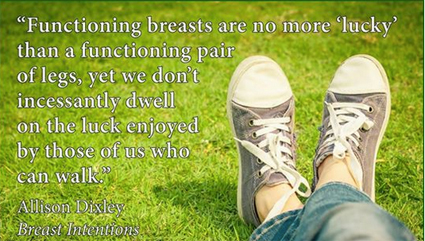
I first began wondering if natural childbirth and lactivism are ableist when I saw the image below on The Alpha Parent’s Facebook page, labeled #Truth.

Presumably the quote is from Allison Dixley’s recently published book:

Functioning breasts are no more ‘lucky’ than a functioning pair of legs, yet we don’t incessantly dwell on the luck enjoyed by those of us who can walk.

TAP legs

The commentors quickly schooled Dixley that people who can walk ARE lucky, and when we stop to think about it, we acknowledge this.

That’s what led me to consider whether natural childbirth, with its relentless focus on and praise of functioning uteri, ample pelves, and transit of babies through vaginas, and lactivism, with its relentless focus on and praise of lactating breasts, are part of a subset of discrimination known as ableism.

What is ableism?

According to Stop Ableism.org:

Ableism – a set of practices and beliefs that assign inferior value (worth) to people who have developmental, emotional, physical or psychiatric disabilities…

An ableist society is said to be one that treats non-disabled individuals as the standard of ‘normal living’…

Natural childbirth is a set of practices and beliefs that assigns inferior value to women who do not have unmedicated, vaginal births.

Lactivism is a set of practices and beliefs that assigns inferior value to women who do not use their breasts to feed their babies.

Dixley’s original claim that “we don’t incessantly dwell on the luck enjoyed by those of us who can walk” is also ableist. To paraphrase Stop Ableism.org, the failure to appreciate that not everyone can walk results in public and private places and services, education, and social work that are built to serve those who can walk, thereby inherently excluding those who cannot. That is discrimination. It is wrong and fortunately we are working to overcome that by making venues accessible to all.

Although it is discrimination, it’s hard to imagine that anyone would go so far as to write blog posts and books accusing those who cannot walk of not trying hard enough. That would be cruel as well as discriminatory. Yet natural childbirth advocates and lactivists write incessant blog posts and books accusing women who have had C-sections of not trying hard enough, and accusing women who can’t exclusively breastfeed of not trying hard enough.

Indeed both natural childbirth advocacy and lactivism have created ideals of childbirth and infant feeding that don’t merely exalt perfect body function, they insist that all but a vanishingly small few are capable of perfect body function. It is but a short hop then, if other women’s uteri, pelves, or breasts didn’t work perfectly, to blame them for their “failures.”

Natural childbirth advocates and lactivists view body function almost in terms of Calvinist predestination. Those who have unmedicated vaginal births and breastfeed exclusively are the Mothering Elect. Everyone else is destined for everlasting Mothering Hell. That explains in part why women are willing to risk their babies’ lives by attempting vaginal birth in high risk situations, ignoring medical complications, and laboring for days in an effort to demonstrate to themselves and others that they are part of the Mothering Elect. It explains why they are “traumatized” by not having a vaginal birth. Natural childbirth advocates have convinced them that their worth is located in their vaginas.

It explains why some women are willing to starve their newborns nearly to death with their insistence on exclusive breastfeeding even though they are not producing enough milk in an effort to demonstrate to themselves and others that they are part of the Mothering Elect. It explains why they are willing to feed their babies almost anything (goat’s milk, self-made formula) rather than commercially prepared formula, which is the lactivist equivalent of the mark of Satan.

Simply put, natural childbirth advocates are prejudiced against women who don’t have unmedicated vaginal births. Lactivists are prejudiced against women who don’t breastfeed. Their ableism is all the more remarkable when we consider the very high natural failure rate of human (and animal) reproduction. The natural miscarriage rate for established pregnancies is 20%; the natural rate of neonatal mortality is in the range of 7%; the natural rate of maternal mortality is 1%. It is estimated that 5% of women don’t make enough breastmilk to fully nourish a child. When you consider that most women would (in the absence of birth control) experience 8 or 10 or more pregnancies across a reproductive lifespan that’s a lot of miscarriages, dead babies and dead mothers.

Despite the stark reality of death as a prominent part of human reproduction, natural childbirth advocates aggressively pretend otherwise. Despite the stark reality of lactation failure as a natural part of human reproduction, lactivists aggressively pretend that it is so rare as to be unworthy of consideration.

Veneration of perfect body function, and discrimination against those who don’t have perfect body function (not to mention blaming them for their imperfect body function!) is  pure ableism. By that definition, natural childbirth advocacates and lactivists are ableist. They assign inferior worth to women who don’t have unmedicated vaginal births and who don’t exclusively breastfeed.

That is prejudice, it’s wrong, and women should speak out in one voice against it.

Midwife-led care kills babies and mothers

iStock_000003296116XSmall

Despite my misgivings about midwife-led care, I would not have predicted this.

The Dutch experience with midwife-led care kills babies (and possibly mothers). The Netherlands has one of the worst perinatal mortality rates in Western Europe, and, remarkably, Dutch midwives caring for low risk women (home or hospital) have a HIGHER perinatal mortality rate than Dutch obstetricians caring for high risk patients.

Dutch midwives have acknowledged this hideous reality [link no longer active]:

In 2011 Dutch midwifery is under a microscope. Maternity care in general in The Netherlands has come under scrutiny by governments, media, the public and care providers themselves after two consecutive European Perinatal Statistical Reports ranked The Netherlands among those with the highest rates of perinatal and neonatal mortality compared to other members of the European Union (and Norway)…

… We have learned that infants born to women of low risk whose labour started in primary care with midwives had higher rates of perinatal death associated with delivery compared to those beginning labour in secondary care…

Yesterday’s publication of the Morecambe Bay report on a Cumbrian midwife-led hospital unit shows that midwife-led care has been a deadly failure in the United Kingdom as well. The report identifies 16 perinatal deaths and 3 maternal deaths that had taken place in the unit as potentially preventable, and concluded that the deaths of 11 babies and 1 mother almost certainly could have been prevented and the other deaths might have been averted.

My objection to midwife-led care came from my belief that care should be led by the most knowledgeable, most skilled members of the team. In this case that would be obstetricians and pediatricians. But the National Health Service (NHS) made a proverbial deal with the devil in order to save money. Midwives appear to be less expensive because their salaries are lower. Dutch authorities made the same deal for the same reasons.

I would have predicted a slight decline in the quality of care. Even I’m shocked that midwives have placed their needs and desires ahead of patient care, with the inevitable deadly consequences.

Midwife-led care kills babies and mothers because in the early 21st Century, midwife-led is ideology-led care.

The ideology is the philosophy of natural childbirth and the belief that unmedicated vaginal birth is healthier, safer and better than childbirth with interventions.

That ideology is utterly, spectacularly, fatally wrong. Interventions don’t kill babies and mothers; LACK of interventions is what kills them.

Childbirth is inherently dangerous. Obstetrics is preventive medicine, and the liberal use of childbirth interventions saves lives. Neither Dutch nor British midwives believe that, but both have unwittingly proven it yet again. The Dutch and British experience with midwife-led care merely confirms the fundamental truth of these historical facts.

Why do Dutch and British midwives place ideology over the health and lives of the patients they are ethically mandated to protect? Because the ideology of natural childbirth dovetails neatly with the self-interest of midwives. “Normal birth” is the holy grail of contemporary midwifery. Normal birth is distinguished from non-normal birth by a bright line; if it is under the purview of a midwife, she calls it normal and pronounces it “good”; if only an obstetrician can do it, she derides it an unnatural, dangerous and traumatic.

Midwives have an economic incentive to keep births for themselves. Normal birth provides the ideological justification for failure to acknowledge high risk situations, failure to acknowledge when low risk changes to high risk, and failure to acknowledge that greater expertise (of obstetricians and pediatricians) is needed. Babies and mothers die because it is more important to the midwife to keep the patient for herself than to provide the care that the mother and her baby need.

I would argue, though, that at some level, both British and Dutch midwives understand that they are providing substandard care. This recognition reinforces the midwives’ antipathy to calling for assistance when it is needed. By the time they urgently need to call for help they know that they have discounted risk factors, mischaracterized high risk patients as low risk, and ignored glaring warning signs. Paradoxically, the bigger the disaster they create, the less likely they are to call for help, because a laundry list of their errors will be revealed.

Many midwives want to practice in a way that violates safety standards, hence the relentless calls for autonomy. Within The Netherlands homebirth is promoted aggressively; in the UK, midwives are relentless in their promotion of homebirth as well as midwife-led units such as that in Morecambe Bay. They want to avoid any oversight.

Consider President of the Royal College of Midwives (RCM) Cathy Warwick’s tone deaf response to the horrors that occurred in Morecambe Bay.

The Morecambe Bay report stated:

…Whilst natural childbirth is a beneficial and worthwhile objective in women at low risk of obstetric complications, we heard that midwives took over the risk assessment process without in many cases discussing intended care with obstetricians, and we found repeated instances of women inappropriately classified as being at low risk and managed incorrectly. We also heard distressing accounts of middle-grade obstetricians being strongly discouraged from intervening (or even assessing patients) when it was clear that problems had developed in labour that required obstetric care. We heard that some midwives would “keep other people away, ‘well, we don’t need to tell the doctors, we don’t need to tell our colleagues, we don’t need to tell anybody else that this woman is in the unit, because she’s normal’” …

In her response, Warwick IGNORES the central role of midwives in the deaths of babies and mothers. Warwick does not use the word “midwife” even once!

What does she claim that the report showed?

The report recommends that there should be a national review of the provision of maternity care and paediatrics in challenging circumstances, including areas that are rural, difficult to recruit to, or isolated…

The report states that the educational opportunities afforded by smaller units, particularly in delivering a broad range of care with a high personal level of responsibility, have been insufficiently recognised and exploited…

Finally, the report expresses concern about the ad hoc nature and variable quality of the numerous external reviews of services that were carried out at the University Hospitals of Morecambe Bay NHS Foundation Trust…

Warwick’s response is an affront to those who lost loved ones at the hands of RCM midwives and it is an insult to our intelligence. Not only does it fail to acknowledge the problem, it IS the problem. Warwick puts the interests of midwives ahead of patients’ health and lives.

The very first step in improving midwifery care in the UK would be to fire Cathy Warwick and reorganize the RCM; she has led the way in demonstrating utter contempt for the health and lives of British babies and mothers. It is under her watch that the reprehensible RCM “Campaign for Normal Birth” was created and promoted.

Midwife-led care kills babies and mothers. It has been in a failure in The Netherlands and it has been a failure in The UK. It’s time to call an end to this deadly practice before even more babies and mothers die on the altar of “normal birth.”

Maternity horror at Morecambe Bay is the inevitable result of the radicalization of midwifery

bloody campaign for normal birth

Ideas have consequences.

Bad ideas have deadly consequences.

Today’s report on the deaths more than a dozen babies and mothers at a UK hospital is a catalog of horrors.

According to The Guardian:

Frontline staff were responsible for “inappropriate and unsafe care” and the response to potentially fatal incidents by the trust hierarchy was “grossly deficient, with repeated failure to investigate properly and learn lessons”.

Kirkup [the author of the report] said this “lethal mix” of factors had led to 20 instances of significant or major failures of care at Furness general hospital, associated with three maternal deaths and the deaths of 16 babies at or shortly after birth.

“Different clinical care in these cases would have been expected to prevent the outcome in one maternal death and the deaths of 11 babies.

In 2008 alone there were 5 deaths:

A baby was damaged due to a shortage of oxygen during labour, while another died from an unrecognised infection.

“All showed evidence of the same problems of poor clinical competence, insufficient recognition of risk, inappropriate pursuit of normal childbirth and failures of team-working,” Kirkup said. (my emphasis)

And most damning of all:

The midwives at Furness general were so cavalier they became known as “the musketeers”.

Those midwives are directly responsible for the deaths and should be held responsible to the full extent of the law. But the individual midwives are just the proximate cause. The real cause is radicalization of midwifery that values process above outcome, and midwife autonomy above all else.

Outcome, whether mothers and babies live or die, is the MOST important goal in obstetrics. It’s not the only goal, of course; safe care can and should be accompanied by compassionate, comfortable care. But is the sine qua non of all maternity care.

Midwives have forgotten that. Instead they have elevated process, specifically process that is good for them, above the health and even the lives of mothers and babies.

The goal of many midwives has become unmedicated vaginal birth, and professional autonomy.

The deadly results are not restricted to Morecambe Bay. The relentless promotion of “normal birth” has led to bad outcomes and soaring liability costs, now accounting for 20% of total obstetric spending.

I’ve written about these issues relentlessly and repeatedly over the years:

Promoting normal birth is killing babies and mothers
Midwife: UK deaths result of failing to meet the needs of … midwives?
New document on British maternity services is fundamentally unethical
In the UK, babies continue to die on the altar of vaginal birth
Government report: UK midwives put the lives of mothers and babies at risk
#FightFear: the hateful truth at the heart of UK midwifery
When UK midwives put the lives of mothers and babies at risk, the solution is not more homebirths

Who radicalized midwifery?

Biological essentialists.

They are fond of catch phrases like “trust birth,” “pregnancy is not a disease,” and #FightFear They insist that obstetrics has “pathologized” childbirth and they can display a shocking and callous fatalism by dismissing deaths with the dictum that “some babies are not meant to live.” Such views lead inevitable to the “poor clinical competence, insufficient recognition of risk, inappropriate pursuit of normal childbirth” highlighted in the report.

Feminist anti-rationalists

They dismiss science as a male form of “authoritative knowledge” on the understanding that there are “other ways of knowing” like “intuition.” Many are post modernists who believe that reality is radically subjective, that rationality is unnecessary and that “including the non-rational is sensible midwifery.”

Midwifery theorists

Consider Normal Childbirth: Evidence and Debate by Professor Soo Downe who dismisses the importance of scientific evidence in guiding clinical care:

The implication of the new subatomic physics was that certainty was replaced by probability, or the notion of tendencies rather than absolutes: ‘we can never predict an atomic event with certainty; we can only predict the likelihood of its happening’… This directly contradicts the mechanistic model we explored above, and it implies that a subject such as normal birth needs to be looked at as a whole rather than its parts…”

When we turn to the implications of this paradigm shift for our understanding of health, it becomes clear that the benefit or harm of an intervention for an individual can only be established with reasonable certainty by identifying and taking into account all the relevant “noise”. This includes environment, carer, attitudes, skills and beliefs, and the expectation of the woman and her family. Similarly, the appraisal of research and evidence needs to consider the concept of attitudes and roles of researchers and how these may have framed or influenced the process of generating evidence…

Not only is this NOT a justification for ignoring scientific evidence; it is utter nonsense that betrays a fundamental ignorance of physics.

The philosophy of “normal birth”

The definition of normal birth is simple and straightforward: If a midwife can do it, she calls it normal. If she lacks the skill to provide the needed care, she insists that the birth is not normal even if it results in a healthy mother and a healthy baby. “Normal birth” and “midwives” are interchangeable. In other words, “normal birth” is nothing more than a marketing term designed to promote full employment for midwives.

Midwifery leaders

Cathy Warwick, leader of the Royal College of Midwives, has not yet met a major problem that can’t be fixed by promoting increased midwife autonomy through homebirth and free standing midwife led units. Too bad for babies and mothers that Cathy Warwick believes the central problem in contemporary maternity care is meeting the needs of midwives, mothers and babies be damned.

The deaths at Morecambe Bay, and the subsequent coverup, are the inevitable consequences of a maternity system whose gatekeepers are biological essentialists, feminist anti-rationalists, believers in nonsensical theories, promoters of process over outcome, who appear to think that their primary responsibility is to themselves and not their patients.

The UK National Health System made a Faustian bargain with midwives to install them as gatekeepers in exchange for the promise of saving money; midwives are less expensive than obstetricians. It turns out that dead and injured babies cost a lot of money, though, not to mention the fact that allowing preventable perinatal and maternal deaths is fundamentally unethical.

The NHS needs to reorganize midwifery care to place obstetricians in control of patient care and midwives as their assistants. The radicalization of midwives, which provides the theoretical justification for placing their needs ahead of patient needs, means they can no longer be trusted to act independently.

The result is babies and mothers who didn’t have to die, shattered families, grieving parents and massive liability payments.

Horror, indeed.


Addendum

A direct quote from the report:

[M]idwifery care in the unit became strongly influenced by a small number of dominant individuals whose over-zealous pursuit of the natural childbirth approach led at times to inappropriate and unsafe care. One interviewee told us that “there were a group of midwives who thought that normal childbirth was the… be all and end all… at any cost… yeah, it does sound awful, but I think it’s true – you have a normal delivery at any cost”.2 Another interviewee “… was aware that there were certain midwives that would push past boundaries”.3 A third told us that there were “… a couple of senior people who believed that in all sincerity they were processing the agenda as dictated at the time… to uphold normality… there’ve been one or two influential figures who’ve perpetrated that… sort of approach and… there’s nobody challenging…”.4 Whilst natural childbirth is a beneficial and worthwhile objective in women at low risk of obstetric complications, we heard that midwives took over the risk assessment process without in many cases discussing intended care with obstetricians, and we found repeated instances of women inappropriately classified as being at low risk and managed incorrectly. We also heard distressing accounts of middle-grade obstetricians being strongly discouraged from intervening (or even assessing patients) when it was clear that problems had developed in labour that required obstetric care. We heard that some midwives would “keep other people away, ‘well, we don’t need to tell the doctors, we don’t need to tell our colleagues, we don’t need to tell anybody else that this woman is in the unit, because she’s normal’”.5 Over time, we believe that these incorrect and damaging practices spread to other midwives in the unit, probably quite widely. Obstetricians working in the unit were well-placed to observe these lapses from proper standards, and it is clear that they did, but seemingly lacked the determination to challenge these practices. This in turn represents a failure to maintain professional standards on their part.