All posts by Amy Tuteur, MD

Natural childbirth advocacy lacks scientific integrity

Earlier this month I used the example of “cargo cult science” to explain confounding bias. But cargo cult science can teach us about something even more fundamental, scientific integrity. Natural childbirth advocacy is a “cargo cult” because it fails to address the problem of confounding. More importantly, though, natural childbirth advocacy, like cargo cult science, lacks scientific integrity.

To understand what I mean, it helps to go back to the original exposition of the term “cargo cult science.” Physicist Richard Feynman coined the expression in his 1974 commencement address at CalTech.

… In the South Seas there is a cargo cult of people. During the war they saw airplanes land with lots of good materials, and they want the same thing to happen now. So they’ve arranged to imitate things like runways, to put fires along the sides of the runways, to make a wooden hut for a man to sit in, with two wooden pieces on his head like headphones and bars of bamboo sticking out like antennas –he’s the controller– and they wait for the airplanes to land… So I call these things cargo cult science, because they follow all the apparent precepts and forms of scientific investigation, but they’re missing something essential, because the planes don’t land.

Natural childbirth advocacy often follows the form of scientific investigation and even some of the precepts of science, but it, too, is missing something essential:

… It’s a kind of scientific integrity, a principle of scientific thought that corresponds to a kind of utter honesty … For example, if you’re doing an experiment, you should report everything that you think might make it invalid–not only what you think is right about it: other causes that could possibly explain your results; and things you thought of that you’ve eliminated by some other experiment, and how they worked — to make sure the other fellow can tell they have been eliminated.

Specifically:

…If you make a theory, for example, and advertise it, or put it out, then you must also put down all the facts that disagree with it, as well as those that agree with it… [T]he idea is to try to give all of the information to help others to judge the value of your contribution; not just the information that leads to judgment in one particular direction or another.

This is something that natural childbirth advocates almost never do.

Feynman gives an amusing real life example of lack of scientific integrity:

… Last night I heard that Wesson oil doesn’t soak through food. Well, that’s true. It’s not dishonest; but the thing I’m talking about is not just a matter of not being dishonest, it’s a matter of scientific integrity, which is another level. The fact that should be added to that advertising statement is that no oils soak through food, if operated at a certain temperature. If operated at another temperature, they all will — including Wesson oil.

This is a critical point. The empirical claim is true, but the implication is false and those making the claim are aware of it.

Consider the following NCB claims:

1. The US infant mortality rate is higher than many other first world countries.

That’s true, just like the claim that Wesson oil doesn’t soak through food is true. The implication, however, that other countries provide better obstetric care is completely false, because infant mortality (death from birth to one year of age) is not a measure of obstetric care; it’s a measure of pediatric care. The correct statistic is perinatal mortality (death from 28 weeks of pregnancy to 28 days of age) and the US has one of the lowest rates in the world, lower than Denmark, the UK and The Netherlands.

2. C-sections are associated with higher levels of maternal mortality.

That’s true, just like the claim that Wesson oil doesn’t soak through food is true. The implication, however, that C-sections cause maternal mortality is completely false. Women who undergo C-sections are much more likely to have life threatening pregnancy complications or serious pre-existing health problems and C-sections usually are undertaken as an effort to save their lives.

Look at any natural childbirth advocacy website or book. Lots of empirical claims are made, but there is no attempt at scientific integrity. Where are the facts that put those empirical claims into perspective? You won’t find any. Where are the alternative explanations? You won’t find any. Where is the rest of the information, the information that obstetricians have and that leads them to make different recommendations? Nowhere to be found. Not only is there no attempt to provide “all of the information … not just the information that leads to judgment in one particular direction or another,” to the extent any effort is made, it is effort to obscure and mislead.

Natural childbirth advocacy websites and books are advertisements, in the exact same way that the Wesson Oil commercial is an advertisement. The creators decide in advance what the conclusions must be and selectively supply information that appears to support those conclusions.

That’s why the idea of becoming “educated” about childbirth by reading natural childbirth websites and books is ludicrous. It makes as much sense as claiming to be “educated” about the physico-chemical properties of cooking oil by watching a Wesson commercial.

Natural childbirth quacktivists

Drumroll, please!

I’d like to introduce a new word to the lexicon: quacktivist.

A quacktivist is a person who proselytizes demonstrably false medical claims with cult-like intensity. The anti-vax folks are quacktivists by definition. Jenny McCarthy is a quacktivist and so is Joe Mercola. Andrew Wakefield is a quacktivist extraordinaire.

Natural childbirth is promoted by its own band of quactivists such as Amy Romano, Barbara Harper and even Henci Goer. There are entire organizations devoted to natural childbirth quactivism like Lamaze and ICAN (the International Cesarean Awareness Network).

How do you recognize quactivists?

Here are a few helpful hints:

1. The natural habitat of a quacktivist is her own blog or book.

2. Quactivists almost never stray outside their natural habitat because they are defenseless in the presence of scientific evidence. They never go to mainstream conferences and they certainly don’t attend scientific meetings because quacktivism is threatened by science

3. Quacktivists invite visitors to their natural habitats, but protect themselves from potentially devastating facts by deleting and banning any commentors who dare to question the quactivist cult.

4. Quacktivists are relentless self promoters. Live blogging your own homebirth, like the Feminist Breeder just did, is a classic quacktivist move.

5. Ignorance is the main nutrition source for quacktivists. They generally lack even the most basic information on science, statistics, immunology or obstetrics.

6. Quacktivists love “bibliography salad.” That’s a mishmash of scientific citations (often copied from a website or book) that the quacktivist has never read, couldn’t understand if she did read it, and doesn’t say what she thinks it says.

7. Quacktivists have a highly evolved defense mechanism. They are evidence-resistant. Show quacktivists that vaccines have dramatically reduced death and disease and they dismiss it out of hand. Explain and demonstrate that death is a natural part of childbirth and natural childbirth quacktivists question your sources. Point out that their arguments are riddled with logical fallacies and quacktivists have no idea what you are talking about.

8. Quacktivists proselytize. Professional quacktivists proselytize because that’s how they make money. They sell books, sell advertising on their websites, solicit free products in exchange for favorable reviews (Rixa Freeze, I’m thinking about you), and sell bogus “remedies.”

9. Natural childbirth quacktivists are very needy. They hold “conferences” that are nothing more than echo chambers because they need to have their beliefs reinforced by others and cannot tolerate questioning or disagreement.

10. Natural childbirth quactivists have a further defining feature. They spend an inordinate amount of time being ostentatiously “sad” for those who don’t believe in natural childbirth quacktivism. That’s not surprisingly, really, when you consider that self-glorification is an intrinsic part of quacktivism of all kinds. Quacktivists believe they are in possession of special knowledge that is being hidden by grand conspiracies involving virtually everyone else on the planet.

How do the rest of us protect ourselves against quacktivists?

The best defense is knowledge, the real kind that is a product of college and graduate education, not the pseudo-knowledge found on websites and beloved of every quacktivist. Keep an eye open for the defining signs of quacktivism. Does the “expert” refuse to leave her website except to go to “conferences” of like minded believers? Does she delete comments because they challenge her claims? Does she offer “bibliography salad” to support her claims? Is she “sad” that everyone else is not like her? If the answer to these question is “yes,” you know you are dealing with a quacktivist.

Feminist Breeder doesn’t kill baby; supporters dazzled

You may remember back in early February, notorious narcissist Gina Crosley-Corcoran, announced her plan to broadcast her genitalia to adoring fans:

Women of the world rejoice! Gina Crosley-Corcoran, The Feminist Breeder, is planning to live blog her homebirth for your edification. I know, I know; you’re overcome with gratitude that a self important person like Gina has arranged to exploit share what ought to be an private, intimate and deeply personal experience with everyone in the whole world in order to publicize herself homebirth.

Well, she’s done it. Crosley-Corcoran dazzled her gullible, easily impressed fans by risking the life of her baby and herself at homebirth AND she managing to avoid killing anyone in the process. But best of all, through the miracle of modern technology, she was able to feed her voracious need for praise by soliciting inane compliments during the process.

You really have to give her credit for intensity of purpose. No, silly reader, the purpose was not the birth of the baby. Her purpose was to shovel more praise into the maw of her seemingly endless need. Best of all, she created a permanent record of lots of women exclaiming over the fact that she can do something that EVERY other woman in the world can do. What’s next, live blogging her own breathing?

I can understand the narcissism that leads a woman to expose herself to the world in a desperate attempt to garner praise, but what I have trouble understanding is why her followers responded by contributing inane comments like “you are a strong mama” to fulfill that need. It reminds me of the letters women write to People Magazine to praise Angelina Jolie for her parenting decisions or condemn various celebrities behaving badly for their immature behavior. Do those writers actually think that Angelina is paying attention? Do Gina’s fans think that being duped into meeting her need for comments carefully culled to leave only those filled with praise is a worthy use of their time?

And why are they so impressed. Because she had a baby? Thousands of women do the same thing every day. That she had her baby at home? Thousands of women do the same thing every day. That she had no pain relief? Thousands of women do that every day. That neither she nor her baby died in the process? Maybe. Not everyone is as lucky as she apparently was. But that’s hardly an accomplishment.

That she exposed her genitalia to the world? Ahhh, that’s something different. But anyone can do that if they want to. It was a business deal. She gave up the intimate personal experience of childbirth to make money and garner fame. Is there anything more American than that?

Serial killer paroled by vaccine rejectionists

From The Boston Globe 4/17/11:

How Andrew Wakefield’s campaign against vaccines threatens public health

Amy Tuteur

A serial killer has been released on parole — even though the original case was air-tight, the evidence overwhelming, and the public clamored for the ultimate punishment.

To understand what happened, we need to know the identity of the predator — and why it’s been let loose. The killer, in this case, is vaccine-preventable illness. And it’s free because of parents who refuse to vaccinate their children. Many of those parents have been duped by charlatans like Andrew Wakefield, the now-discredited British researcher who brought his anti-vaccine campaign to Brandeis on Wednesday night.

Wakefield’s advocacy against vaccines has had tragic consequences by letting dangerous diseases back on the streets. Megan Campbell’s 10-month-old son was one of the first victims in January 2008. He had the misfortune to be in the pediatrician’s waiting room when an intentionally unvaccinated child was brought in with undiagnosed measles. Campbell’s son became desperately ill and his parents thought he might die.

In an interview on the radio program This American Life, Campbell remembered: “There were moments I was worried he wouldn’t make it because this fever just wasn’t letting up. This 106-degree fever, and this rash that made my son look like an alien almost, and I wondered if he was going to be the same boy he was a week before.”

What would lead a parent to intentionally withhold a vaccine, endangering their own child and others? Vaccination to arrest childhood infectious diseases is one of the greatest public health achievements of all time, and was widely hailed when first developed. For example, in 1920, there were more than 450,000 cases of measles per year in the US, with over 7,500 deaths. By the early part of the last decade, measles had dropped to approximately 50 cases per year with no deaths. There were comparable drops in cases and deaths for other vaccine-preventable illnesses. Unfortunately, as the decades passed, memories have faded — so much that some parents now doubt that the deaths even happened.

Instead, they’ve been fooled by anti-vaccination hucksters like Wakefield, who reportedly received a standing ovation at Brandeis. Wakefield’s claim that vaccines cause autism has been thoroughly disproved, and his original paper has been withdrawn as a fraud by the journal that published it. He has lost his medical license, and journalists have documented that he stood to gain financially from a purported “replacement” vaccine in which he held a financial interest. Nonetheless, anti-vaccine activists like actress Jenny McCarthy insist that Wakefield is being “silenced” for telling the truth.

Like members of a misguided parole board, anti-vaccine activists are no longer shocked by the original deaths. They insist that the victim has been reformed, that vaccine-preventable illnesses are no longer dangerous to the public. Rather than keeping a serial killer at bay, they have released it, and now the threat extends to everyone in the community.

Only a few parents withholding vaccines can have a widespread impact. Vaccines imprison an illness, by depriving the bacteria or viruses of an opportunity to spread. That’s not because vaccines are 100 percent effective, and that’s not because 100 percent of people can be vaccinated. All vaccines have a failure rate (just like any other form of medical treatment) and there are some members of society who cannot be vaccinated because they are too young or they are immuno-compromised by illness or cancer treatment. But when the vast majority of children are fully vaccinated, vaccine-preventable illnesses cannot take hold in the community because they cannot spread. Therefore, even if the vaccine is not 100 percent effective on an individual level and even if some people cannot be vaccinated, everyone is protected.

When parents refuse to vaccinate their children, as Wakefield urges, they offer vaccine-preventable illnesses a hideout within the community. And that is the greatest danger of Wakefield’s misguided campaign: purposefully unvaccinated children will suffer, but, inevitably, the most vulnerable members of society, like Megan Campbell’s son, will suffer, too.

Homebirth midwives’ contempt for the law


Consider the following scenario:

A doctor, practicing without a license, presides over a risky procedure that results in the entirely preventable death of a patient.

Or how about this scenario:

A lawyer, practicing without a license, rejects the standard legal procedures in a murder case, mounts an unusual defense that results in the death penalty for a client who could have expected no more than a ten year sentence.

Can you imagine the American Medical Association insisting that it didn’t matter that the doctor wasn’t licensed? Can you imagine the AMA defending the entirely preventable death of a patient? Can you imagine the American Bar Association claiming that it was irrelevant that the lawyer was unlicensed? Can you imagine the ABA holding a fundraiser to support the lawyer whose risky strategy sent his client to the death penalty?

It is difficult to imagine any of these responses because the AMA and ABA are professional organizations that expect to follow professional standards. Both state medical and legal boards have procedures to evaluate incompetent practitioners and safeguard the public against them.

Is it any surprise, then, that homebirth midwives, in contrast, are supporting one of their number, Karen Carr, who has been charged with practicing without a license and who presided over the entirely preventable death of a newborn? Carr has been charged by the state of Virginia with practicing without a license and with involuntary manslaughter? It’s not suprising since homebirth midwives are not professionals; they are merely pretending to be professionals, complete with pretend “professional” degrees that they award to themselves.

Carr has been charged for presiding over the entirely preventable death of a baby known to be in the breech position, known to be at substantially increased risk of death, who died far from any competent medical help that could have and would have saved the baby’s life. No matter. Homebirth midwives and their supporters could not care less about the dead baby.

There has been no investigation into the midwife’s conduct. Why investigate when it makes no difference to her supporters that she made a choice that killed a baby? There has been no attempt to discipline the midwife for practicing without a license. Why bother when a license is just a public relations ploy designed to trick unwitting parents into believing that high school graduates who couldn’t or wouldn’t get a college degree, a nursing degree, or any training in preventing and managing complications, are “professionals”?

Carr’s supporters are “heart-broken” that she has been inconvenienced by the legal proceedings. The same supporters have expressed not a whit of concern for the dead baby or the parents who will have to live with the knowledge that they hired a “professional” who led them to refuse the medical help that could have saved their baby’s life. Why bother pretending to express “support” for the baby or the parents, when homebirth midwifery is all about the midwives, those “birth junkies” who entertain themselves by attending births, but can’t be bothered to meet professional standards. At least homebirth midwives and their supporters don’t have to worry about being labeled hypocrites.

Just as in the case of North Carolina “midwife” Amy Medwin, also charged with practicing without a license and presiding over a preventable neonatal death, homebirth advocates have made it crystal clear that the law if for suckers, not for them. Accountability is for real professionals, not for them. Investigations of competence are for doctors, nurses, lawyers, and everyone else, but not for them.

home birth midwifery is all about homebirth “midwives” and has nothing to do with babies or pregnant women. It’s all about feeding the “birth junkie” habit and has nothing to do with meeting, or even acknowledging, professional obligations. The strongest, best argument for refusing to license homebirth midwives is repeatedly provided by homebirth midwives themselves. They are uneducated, they are dangerous and they believe that they are unaccountable to anyone.

Natural childbirth and victimology

The most over-used concept in natural childbirth discourse is “empowerment.” But an equally important concept, one that is rarely spoken aloud, but underlies natural childbirth advocacy, is victimization. To a greater or less extent, NCB advocates take it for granted that they are victims … of men, of doctors (almost always portrayed as men), of other women, and just about everyone else in the universe.

They are victims, dammit, and that’s why they are “traumatized.” And anyone who questions or rejects their exalted victim status is promptly accused of victimizing them.

The celebration of their “victimization” serves several important roles in the NCB cosmology. First, and foremost, it guarantees moral superiority. As Sommer and Baumeister explained in the book The human quest for meaning

… [C]laiming the victim status provides a sort of moral immunity. The victim role carries with it the advantage of receiving sympathy from others and thereby prevents [one’s own behavior] from impugning one’s character…

In the world of NCB advocates, being a victim means never having to say you’re sorry, even when your behavior is obnoxious and disrespectful.

Second, the insistence on “victimization” serves to simplify the world by creating a false dichotomy. For NCB advocates, women giving birth are either empowered or victimized. Not only is there no middle ground, but the possibility that women might feel neither empowered nor victimized is not even recognized.

Freud purportedly said, “Sometimes a cigar is just a cigar.” That aphorism applies to the way that most women view childbirth. Giving birth is just the process whereby a child emerges from inside the mother. It has no meaning beyond that and certainly does not have anything to do with the way the mother views her agency within the world at large. In contrast, in NCB advocacy, the actual birth of a child is secondary to the mother’s feelings about her performance during that birth.

Third, the insistence on “victimization” presupposes an old fashioned, sexist view of women. Only men are doctors and scientific knowledge and technology are inherently male. In the world of NCB advocates, there are no women doctors or scientists. Science is “too hard” for mere women and since they can’t be expected to know or understand science, they are free to reject it. Women must glorify the functions of their bodies because they have no achievements of their intellects.

That belief has its highest expression in homebirth advocacy. Medical school? Too hard. Midwifery master’s degree? Too hard. College? Too hard. Solution? Give yourself a pretend “degree” to masquerade as a professional even though meeting real professional requirements is too hard.

Who has convinced NCB advocates that they are victims? Strangely enough, it is male doctors, the exact same people who have purportedly victimized them. From Grantly Dick-Read, the father of natural childbirth, who believed implicitly in the inferiority of women, through Bradley and Lamaze, right down to Odent who claims that viewing a wife giving birth will render a man impotent, the leading exponents of women’s victimology are men who view women as capable of being nothing more than victims.

This faux sense of victimization has led NCB advocates to create faux “empowerment.” In the world of NCB advocacy, you can be “empowered” by being obnoxious and disrespectful to healthcare professionals, and no one can hold you to account because you are a “victim.” You can be empowered by pretending that reading books written by laypeople makes you “educated.” You can be empowered by ignoring medical advice. And, with homebirth, you can be empowered by hiding from anyone and anything that might not agree that your ignorance, defiance and denial mark you as “empowered.”

When you are an NCB victim, the fact anyone others don’t agree with you, or at least validate your feelings of victimization, is viewed as a form of re-victimization. Doctor thinks he knows more about obstetrics than you? He’s victimizing you with his technocratic hegemony. Nurse asks you if you would like an epidural? She’s victimizing you by attempting to destroy your opportunity to be empowered. Other women bottle feed? They are victimizing you by refusing to validate your decision to breastfeed.

Victimization is so central to NCB advocacy that it is possible that NCB cannot exist without encouraging and validating victimization.

Traumatized by being a size 4

Many natural childbirth advocates who don’t have the unmedicated vaginal delivery they planned mourn the loss of “their” ideal birth. Is that appropriate? Is it appropriate for them to be “traumatized” by a C-section? Or is idealizing a vaginal delivery like idealizing a specific weight or size, a cultural stereotype that we should question, not a universal standard?

Professional NCB advocates like Penny Simkin have been stung by accusations that the NCB movement ignores or even celebrates women’s pain. They’ve developed a novel excuse theory. Pain isn’t important; “suffering” is important.

… “[S]uffering,” can be distinguished from pain, in that by definition, it describes negative emotional reactions, and includes any of these: perceived threat to body and/or psyche; helplessness and loss of control; distress; inability to cope with the distressing situation; fear of death of mother or baby. If we think about it, one can have pain without suffering and suffering without pain.

To Simkin, suffering is a hop, skip and a jump from “trauma,” a recognized psychiatric entity.

According to the American Psychiatric Association, the definition of trauma comes very close to the definition of suffering.

And using what passes for “logic” in the world of NCB, Simkin concludes that reducing birth “trauma” is infinitely more important than reducing labor pain. What causes birth “trauma”? You guessed it; “trauma” is caused by not achieving the NCB approved “ideal” of birth.

Simkin never asks the obvious question: Is failing to reach the NCB “ideal” a legitimate reason to be traumatized. Simkin insists that even asking the question is forbidden:

One’s perception of the event is what defines it as traumatic or not. As it pertains to childbirth, “Birth trauma is in the eye of the beholder,” and whether others would agree is irrelevant to the diagnosis.

Really?

Many American women are “traumatized” by being unable to meet an idealized weight and dress size. Just like there are some women who think that an unmedicated vaginal delivery is an “achievement”, there are other women who think that wearing a size 2 is an achievement. We live in a society that venerates women who wear a size 2, looks down on a woman who is a size 12, and despises and feels sorry for women who are a size 22.

But women’s feelings about weight are not objectively “true.” They are a product of cultural stereotypes, and as such, should be questioned. Similarly, women’s feelings of “trauma” over a C-section are not objetively “true,” either. They are also a product of cultural stereotypes, in this case the stereotypes created by NCB advocates.

Women who are a size 2 aren’t inherently better or superior in any way to women who are not. While the individual woman may have bought into the cultural stereotype of what a woman “should” look like, and while she may diet obsessively to get there and stay that way, and while she may feel “empowered” and happy because she is a size 2, that does not mean the rest of us should agree with her. It also does not mean that the rest of us should aim to be a size 2, should feel empowered by being a size 2 or should sympathize with her over the disappointment of having to wear a size 4.

Women who have an unmedicated vaginal birth aren’t inherently better or superior in any way to women who don’t. While the individual woman may have bought into the NCB stereotype of how a woman “should” give birth, and while she may plan obsessively to follow the stereotype, and while she may feel “empowered” and happy because she has an unmedicated vaginal birth, that does not mean the rest of us should agree with her. It also does not mean that the rest of us should aim to have an unmedicated vaginal birth, should feel empowered by having an unmedicated vaginal birth or should offer sympathy over the “disappointment” of having a C-section.

There are many, many women who are depressed about their weight. I would guess, in fact, that there are far more women depressed about their weight than their birth experience. That’s not surprising, because the obsession with being thin reflects the values of the dominant culture, while obsession with unmedicated childbirth reflects the values of a small subculture.

What is the appropriate response to a woman who feels depressed about her weight? Is being depressed the appropriate response to being a size 4 or 6 or 8?

If a woman sought psychotherapy for being a size 4 or 6 or 8, should the therapist counsel her that the disappointment of being size 6 instead of size 2 is a reasonable response, that her sense of self worth should be dependent on her weight and that the best thing to do would be to make determined efforts to become a size 2 in the future?

Or might the therapist suggest instead exploring what being thin “means” to this woman? Might the therapist suggest questioning the cultural stereotype that thin=good woman? Might the therapist might suggest that the depression over being a size 4 or 6 or 8 is actually not about weight, but about feelings of low self esteem that affect the woman’s entire life, but are currently expressed through disappointment about weight?

What is the difference between being “traumatized” about not matching the cultural ideal of being a size 2 vs. not matching the subcultural ideal of having a unmedicated vaginal delivery? The woman who is depressed about being a size 4 has “chosen” to adopt the value of being thin every bit as much as the woman who has “chosen” to adopt the value of venerating unmedicated childbirth. It is based on what she has seen, what she has read, what she believes is important.

Does that mean that if we do not sympathize with her all too real feelings of self doubt or even “trauma” that we are mean people who trivialize other people’s feelings? Or does it mean that we are demonstrating an appropriate response to obsession with cultural stereotypes that have no objective validity and ought to be questioned?

Adapted from a post that appeared on Homebirth Debate in January 2008.

How many babies died for a 5% C-section rate at homebirth?

For years, MANA (the Midwives Alliance of North America), the organization that represents homebirth midwives*, has refused to release their death rates (How do homebirth midwives handle mistakes?) But this past weekend, they had no problem publicly discussing their C-section rate. According to participants at the ICAN (International Cesarean Awareness Network) 2011 conference, MANA officials publicly boasted of a 5% C-section rate at CPM attended homebirth.

How many babies died to “achieve” that 5% C-section rate? We don’t know, because MANA is still hiding their death rates.

In July 2008, MANA President Geradine Simkins explained the database:

Data collection includes “evaluation of all aspects of midwifery care in terms of safety, optimal maternal, fetal, and family outcomes,and cost effectiveness.

Data collection “uses a very extensive data form! ~360 questions.”

MANA estimates approximately 20,000 cases will be in the database by the end of 2008.

The data was collected ostensibly to prove the safety of homebirth, but once the data was analyzed, MANA decided to hide the results … or at least the bad results. It doesn’t take a rocket scientist to speculate that an extraordinarily high number of babies die at the hands of homebirth midwives.

The public discussion at ICAN 2011 demonstrates two things: MANA is appallingly cynical in its willingness to boast about a low C-section rate while refusing to acknowledge how many dead babies CPMs left in their wake, and homebirth advocates are pathetically gullible. Conference attendees happily transmitted this MANA “achievement” on their Twitter feeds, but no one had the common sense to ask the obvious question. If MANA can release the C-section rate at homebirth, why didn’t they release the death rate to put it into context?

*American midwives who hold a post high school certificate (CPMs and LMs), as opposed to American certified nurse midwives and European, Canadian and Australia midwives who have university degrees.

Science and Sensibility, from bad to worse

I’ve written a number of posts over the years about the ways in which the Lamaze blog Science and Sensibility routinely misrepresented scientific evidence. I blamed it in large part on the editor, Amy Romano, CNM and her apparent inability to even read, let alone interpret scientific studies. Romano has moved on to spread her misinformation at the Childbirth Connection. Lamaze International was evidently forced to scrape the bottom of the barrel to come up with a new editor who is even more incompetent and less knowledgeable.

Kimmelin Hull, “a Lamaze Certified Childbirth Educator, Physician Assistant, American Red Cross First Aid/CPR instructor, novelist and freelance writer for local and international parenting magazines,” is, sadly, grossly ignorant about childbirth, science and scientific evidence. Moreover, she has lots of personal friends who know as little or less than she does and she lets them post guest columns on the website. Today’s post is a case in point. Even the title isn’t true.

FDA Bans Terbutaline for the Treatment of Preterm Labor is written by Darline Turner-Lee, “BS, MHS, PA-C, the owner and founder of Next Step Fitness, Inc” whose main claim to “expertise” in obstetrics is that she experienced premature labor.

Her piece is the classic NCB mix of factually false claims and innuendo. Contrary to Ms. Turner-Lee’s claim, the FDA did NOT ban terbutaline. Here’s a helpful hint for Turner-Lee: when the FDA bans a drug, they use the word “ban” in their press release and the drug is no longer available. If the word “ban” is nowhere to be found, the medication is not banned.

Before we look at what the FDA really said, let’s review the use of terbutaline. Terbutaline is a beta-2-agonist developed for the treatment of asthma and used off-label for the treatment of premature labor. Using an asthma medication to treat premature labor is not as strange as it sounds. Terbutaline works by relaxing the smooth muscle constriction that is part of an asthma attack. The muscle fibers of the uterus relax in response to terbutaline in the same way that pulmonary muscle fibers relax in response to terbutaline.

Terbutaline, like many powerful medications, has side effects. These side effects apply to people taking terbutaline for asthma:

Terbutaline sulfate, like all other beta-adrenergic agonists, can produce a clinically significant cardiovascular effect in some patients as measured by pulse rate, blood pressure, and/or symptoms. Although such effects are uncommon after administration of Terbutaline sulfate at recommended doses, if they occur, the drug may need to be discontinued. In addition, beta-agonists have been reported to produce electrocardiogram (ECG) changes, such as flattening of the T wave, prolongation of the QTc interval, and ST segment depression…

As with any medication, terbutaline should only be used if the potential benefits outweigh the risks. And like any medication, the risks of terbutaline depend on the dose, route of administration, and length of treatment.

Terbutaline has been used for the treatment of premature labor for more than 35 years. The risks of terbutaline were recognized and acknowledged in the earliest papers on the topic, written in the 1970s. For decades, however, terbutaline was the only treatment option for premature labor, and was therefore used, albeit with caution.

So what has changed in the intervening decades? We’ve learned a lot more about terbutaline and the treatment for premature labor and, in response, the FDA has made new recommendations (February 17, 2011):

The U.S. Food and Drug Administration (FDA) is warning the public that injectable terbutaline should not be used in pregnant women for prevention or prolonged treatment (beyond 48-72 hours) of preterm labor in either the hospital or outpatient setting because of the potential for serious maternal heart problems and death. The agency is requiring the addition of a Boxed Warning and Contraindication to the terbutaline injection label to warn against this use. In addition, oral terbutaline should not be used for prevention or any treatment of preterm labor because it has not been shown to be effective and has similar safety concerns. The agency is requiring the addition of a Boxed Warning and Contraindication to the terbutaline tablet label to warn against this use.

Clearly, the FDA did NOT ban the use of terbutaline. It recommended that the use of INJECTABLE terbutaline (more powerful than oral terbutaline) be restricted to the ACUTE treatment of premature labor. Oral terbutaline should not be used for the CHRONIC treatment of premature labor because it is not effective.

The FDA is a little late to the party. ACOG made the same recommendations in 2003, eight years ago, in Practice Bulletin 43, Management of Preterm Labor:

* There are no clear “first-line” tocolytic drugs to manage preterm labor. Clinical circumstances and physician preferences should dictate treatment…

* Neither maintenance treatment with tocolytic drugs nor repeated acute tocolysis improve perinatal outcome; neither should be undertaken as a general practice.

* Tocolytic drugs may prolong pregnancy for 2 to 7 days, which may allow for administration of steroids to improve fetal lung maturity and the consideration of maternal transport to a tertiary care facility.

The FDA has finally caught up with clinical practice.

So contrary to Ms. Turner-Lee’s claims and innuendo, the FDA did not ban terbutaline, and did not create or even suggest new guidelines. It merely codified current obstetric practice. Nothing has changed. Premature labor is still a serious problem. Terbutaline is still appropriate acute treatment for premature labor. Terbutaline is not effective as chronic treatment for premature labor. The risks of injectable terbutaline use rise over time and outweigh any benefits accrued after 48 to 72 hours.

At the end of her piece, Ms. Turner-Lee acknowledges that terbutaline has not been banned by suggesting that it should be banned.

Perhaps the FDA feels that by prohibiting the use of Terbutaline, they will be reducing the number of treatments available for obstetricians to use with cases of preterm labor. But if this treatment has no evidence that it is efficacious, I fail to see the loss…

She fails to see the loss! But, as with many statements from birth activists, it tells us more about her lack of knowledge than anything else. Neither the FDA, nor ACOG, nor anyone else has claimed that terbutaline does not work. Indeed, it is the RECOMMENDED acute treatment for premature labor because it allows for administration of steroids, a treatment that is highly efficacious in preventing respiratory distress syndrome in premature neonates.

And, like most NCB advocates, she has the typical inane “advice” for clinicians:

If the FDA, obstetricians and others are truly concerned that there aren’t enough efficacious treatments available for preventing preterm labor, I believe that their efforts would be better spent canvassing for support and funding for research for effective treatments rather than trying to make a clearly inappropriate treatment suitable.

If they were concerned? What, besides wishful thinking and spite, makes Ms. Turner-Lee believe that they aren’t truly concerned? What, besides wishful thinking and spite, makes Ms. Turner-Lee believe that they are using terbutaline INSTEAD of researching and developing more effective treatments? What, besides wishful thinking and spite, makes Ms. Turner-Lee believe anyone is trying to make an inappropriate treatment “suitable”? Clinicians are doing everything in their power to stop premature labor and terbutaline is still the best weapon in the armamentarium to do that.

I have a few questions for Ms. Turner-Lee. Why did you falsely claim that terbutaline has been banned? Why did you misrepresent the obstetrical treatment of prematurity? Who is served by falsely declaring that terbutaline is an inappropriate treatment for prematurity? How many premature births are prevented by insinuating that obstetricians would rather push an ineffective treatment than develop an effective one?

The answer, or course, is that no premature babies are helped by Ms. Turner-Lee’s attempt at a smear of obstetricians. But of course helping premature babies was never the goal. It’s all about destroying trust in obstetricians and trying to replace it with trust of uneducated lay people who are interested in nothing more than promoting themselves. That’s the purpose of this piece, of the entire blog “Science and Sensibility” and of Lamaze International itself.

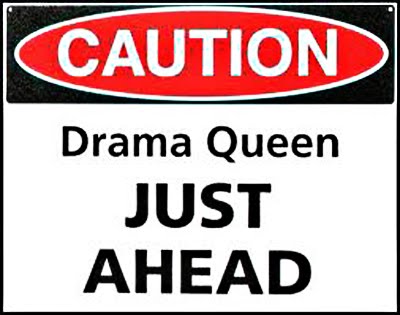
ICAN 2011: a gathering of drama queens

At the ICAN (International Cesarean Awareness Network) 2011 conference, attendees basked in an atmosphere that emphasized their psychic “scarring” and “mutilation” as inevitable results of C-section. But the truth is precisely the opposite of what ICAN acolytes believe and promote. Their hyperbolic, self-pitying response to C-section is NOT an inevitable result, but rather determined by their cultural beliefs. When it comes to C-section, only natural childbirth advocates are such drama queens.

In the paper Cesarean Birth Outside the Natural Childbirth Culture in Nursing and Health in 1986. Authors Margarete Sandelowski and Rosa Bustamante note that natural childbirth is a philosophy that is not universal, but particular, the product of the NCB subculture. NCB emphasizes process over outcome, and while C-section itself is not particularly emotionally traumatic, it has the power to be traumatic among women schooled in the rhetoric of “natural” childbirth.

Sandelowski and Bustamante describe the philosophical underpinnings of natural childbirth:

There is a new emphasis on cesarean birth as a psychosocial rather than a surgical event. Since the mid-l970s, a small body of literature has emerged describing the negative “soft” outcomes of what is increasingly viewed as the “unkindest cut of all”.

Women experience cesarean birth not only as a somatic wound, but also as a psychic one; women who have cesarean births are literally and figuratively scarred. This psychosomatic wounding of women may impact on infants, fathers, and families.

A notable feature of the literature describing the negative psychosocial consequences of cesarean birth is its emphasis on a particular group of women. Specifically, this literature emphasizes the values, expectations, and experiences of women who belong to what can loosely be termed the “natural childbirth culture”. For women interested in natural childbirth, typically from the middle classes, the experience of birth is an end in itself, and cesarean birth is a devastating interference with nature.

In other words, “natural” childbirth philosophy does not represent universal truths; it is merely a reflection a cultural preoccupation of subset of Western, white, middle class women.

The authors are concerned that “natural” childbirth advocates spend a lot of time studying themselves, as if they are representative of women as a whole. Moreover, the values, expectations and reactions of women outside the charmed circle of NCB advocates (the vast majority of women) are ignored; to listen to the folks at ICAN, those women simply don’t exist.

The study was based on open ended interviews with 50 women who were medically indigent. In contrast to NCB advocates, the interviewees were predominantly African-American, of limited economic means, and of limited educational achievement. When discussing the births, the interviewees were very unlikely to refer to standard NCB tropes like “normal” birth or empowerment.

The women viewed cesarean birth as similar to and different from, as well as better and worse than, vaginal birth… The women described vaginal, or what they called “natural” or “regular” birth in terms of physical features and sensations, normality, and mastery… Only 4 women expressed the normality theme in such comments as: “the way other people have children,” “normal,” “coming out the way it’s supposed to come,” and “more like a woman.” Only 3 women expressed the mastery theme in such remarks as having the baby “by my own body movements” and “having it yourself.”

Not surprisingly, since the women were not particularly concerned with concepts of normality or mastery, their responses to cesarean were very different from those associated with NCB advocates.

… In contrast to published reports of women agonizing over what might have been and blaming themselves for constitutional and emotional flaws, the majority of women accepted the cesarean as fate, and a few managed to display pride in themselves.

The women emphasized the outcomes of birth rather than the process of birth, and frequently rated those outcomes high despite complaints about the process… Childbirth literature, oriented to the middle class model of childbirth, increasingly emphasizes the process of birth as separate from its outcomes. Women suffer when the birth process itself is not as imagined or desired. While failed expectations concerning the birth process is a major theme in the natural childbirth culture, the women in this study had few expectations or clear imaginings concerning birth-giving, and as a consequence were less likely to be disappointed. In fact, neutrality or an “it’s OK” feeling prevailed over intense joy or intense sorrow…

The authors conclude:

Despite its limitations, the study raises key questions about ways of coping and helping in childbirth. The findings suggest a model of childbirth other than the middle class model that emphasizes choice, control, preparation, self-reliance, and nature. Indeed, for the women who equalized vaginal and cesarean birth, natural childbirth is indistinguishable from cesarean birth…

The critical finding of this study is that it is NOT the experience of C-section itself that leads to disappointment, feelings of failure, and psychic “scarring”. Rather it is the expectations encouraged by organizations like ICAN that lead to these negative outcomes.

There is nothing objectively “better” about having a vaginal delivery; only women who have been socialized to believe that vaginal delivery is best are disappointed when the baby is born by C-section instead. There is no objective reason to promote the process of birth as something separate from and equal to, or even more important than, the outcome of birth. Only women who have been socialized to believe that “choice, control, preparation, and self-reliance” are paramount actually believe that those factors are important.

NCB advocates like to say that “trauma is in the eye of the beholder,” but that’s not really true. While feelings themselves are in the eye of the beholder, their appropriateness is not. In many cultures, women are traumatized by the birth of a daughter. There’s nothing inherently wrong with girls, but certain cultures place a tremendous premium on boys and women who fail to produce sons experience tremendous distress. Their distress is real, but that does not make it appropriate. Though these women may feel traumatized by the birth of a daughter, there is nothing inherently traumatic about giving birth to a girl. To observers outside the culture, the solution is NOT to abort girls, but to change the cultural belief that girls are inferior.

Similarly, there’s nothing inherently psychically scarring about having a C-section, but there is something wrong with a subculture that places a tremendous premium on vaginal birth. The distress of the ICAN drama queens is real, but it is inappropriate nonetheless. That’s the genesis of the expression “drama queen.” According to wisegeek.com:

The term “drama queen” … is usually applied to someone … who tends to overreact to seemingly minor incidents. A drama queen often views the world in absolutes, and only has two settings on her emotional control button; zero and ten…

Though ICAN 2011 attendees may feel “mutilated” by a C-section, there is nothing inherently mutilating about a cesarean. Feeling “mutilated” is an overreaction. To observers outside the ICAN subculture, it is obvious that the solution is NOT to encourage overreaction or to demonize C-sections. Rather, the solution lies in addressing the subcultural belief that cesareans are inferior, inherently traumatic and “mutilating.”