All posts by Amy Tuteur, MD

The road to patient hell is paved with quality metrics: breastfeeding edition

Road to hell

Why do hospitals let bad things happen to good people?

The reason can often be found in efforts to meet government quality metrics. As a recent editorial in JAMA, Unintended Harm Associated With the Hospital Readmissions Reduction Program, explains:

… The HRRP [Hospital Readmissions Reduction Program] imposed financial penalties on hospitals based on rates of 30-day risk-standardized hospital readmission for heart failure, acute myocardial infarction, and pneumonia, with up to 3% of a hospital’s total Medicare revenue from admissions for any condition (target or nontarget) at risk. In fiscal year 2018, 80% of the hospitals subject to the HRRP have been penalized, amounting to $564 million in reduced payments by Medicare.

The government wanted to improve the quality of care of those who had to be readmitted ostensibly because they hadn’t been adequately treated during the initial hospitalization.

[pullquote align=”right” cite=”” link=”” color=”” class=”” size=””]Many babies are starving and some are starving to death.[/pullquote]

And it worked! Hospital readmissions were reduced and payments to hospitals were also reduced.

There was just one teeny, tiny problem:

Using an interrupted time-series analysis approach, an analysis of clinical data from Get With The Guidelines – Heart Failure linked to Medicare data demonstrated an increase in 30-day and 1-year mortality associated with the implementation of the HRRP…

The analysis also demonstrated that the overall increase in mortality associated with the HRRP was mainly driven by patients who were not readmitted to the hospital, but who died within 30 days of discharge. This finding, in particular, enhances the likelihood of a causal relationship between the HRRP financially incentivized restricting of inpatient readmissions and the harm observed.

The “successful” program killed patients by restricting access to the medical care they needed to survive.

How did things go so very wrong? It’s all about the assumptions:

Assumption 1: Cardiac patients readmitted within 30 days would not have been readmitted if they had been better treated in the initial admission. In other words, readmission was a sign of low quality.
Assumption 2: Refusing to pay for readmissions would incentivize hospitals and providers to improve quality of the initial admission.
Assumption 3: Patient health would be improved while money was being saved.

All three assumptions turned out to be wrong and a modicum of understanding of both medical care and human nature would have made that it clear that the deadly results were practically inevitable.

1. Readmission rates are not a quality metric in this setting of frail, elderly people suffering chronic diseases. Readmission is a function of how sick the patients are not how good the treatment is.
2. Since readmission rates are not a quality metric, no amount of incentivization can improve the health of discharged patients.
3. By penalizing hospitals for relapses they could not prevent, they incentivized hospitals to refuse to readmit the very patients that needed readmission most. Those patients died.

This is what happens when government (or any institution) chooses to make a metric that has little to do with quality of care into a quality metric and penalizes hospitals and providers who can’t reach it.

The same thing has happened to breastfeeding support with the same deadly result, although in this case the patients who are harmed are newborn babies and their mothers.

Contemporary breastfeeding promotions efforts, in particularly the Baby Friendly Hospital Iniative (BFHI), have made breastfeeding rates into a quality metric by employing the same faulty assumptions that let to the deaths of heart patients.

Assumption 1: All women can and would breastfeed exclusively if they received enough education and support.
Assumption 2: Incentivizing hospitals to improve breastfeeding rates will lead to more babies being breastfed successfully.
Assumption 3: Infant health will be improved.

Aggressive breastfeeding promotion efforts have also “worked.” Exclusive breastfeeding rates on discharge have risen by more than 200%.

At the same time newborn hospital readmissions for breastfed babies are double that of bottle fed babies accounting for tens of thousands of hospital readmissions each year in the US alone. Indeed the single biggest risk factor for newborn hospital readmission is exclusive breastfeeding on discharge. Breastfeeding is a leading factor or the leading factor in an increase in neonatal hypernatremic dehydration, kernicterus (severe jaundice) and the permanent brain injuries and deaths that can result.

Many babies are starving and some are starving to death.

What went wrong? All three assumptions turned out to be wrong and a modicum of understanding of both medical care and human nature would have made that it clear that deadly results were practically inevitable.

1. Breastfeeding rates are NOT a quality metric; not all women can produce enough breastmilk to fully nourish a baby and not all women want to breastfeed.
2. Since not every mother can or wants to breastfeed, incentivizing hospitals to increase breastfeeding leads them to pressure, shame and punish mothers who wish to use formula.
3. Incentivizing hospitals to improve breastfeeding rates to 100% when approximately 15% of first time mothers cannot produce enough breastmilk in the early days to adequately nourish an infant leads hospitals to withhold formula from babies who desperately need it. Incentivizing hospitals to increase rates of skin-to-skin contact and rooming in leads to an increase in newborn deaths as infants smother in or fall from their mothers’ hospital beds.

These deadly results were nearly inevitable once government decided to make breastfeeding rates — which are not and never were a metric of quality — into a quality metric.

When government makes readmission rates a quality metric, hospitals respond by withholding readmission and patients die as a result. When government makes breastfeeding rates a quality metric, hospitals respond by withholding formula and babies die as a result.

The road to patient hell is paved with quality metrics. In the case of breastfeeding promotion, it’s pretty easy to save babies and mothers from hell: just stop pretending that breastfeeding rates have anything to do with either hospital quality or infant health.
Breastfeeding and the arrogance of preventive medicine

Arrogance word concept.

Does this remind you of any providers you know?

Preventive medicine displays all 3 elements of arrogance. First, it is aggressively assertive, pursuing symptomless individuals and telling them what they must do to remain healthy. Occasionally invoking the force of law …, it prescribes and proscribes for both individual patients and the general citizenry of every age and stage. Second, preventive medicine is presumptuous, confident that the interventions it espouses will, on average, do more good than harm to those who accept and adhere to them. Finally, preventive medicine is overbearing, attacking those who question the value of its recommendations.

It reminds me of most of the prominent lactation professionals who have made it their mission to promote breastfeeding.

[pullquote align=”right” cite=”” link=”” color=”” class=”” size=””]As the evidence mounts it is becoming clear that breastfeeding term babies is a lifestyle choice, NOT a health choice.[/pullquote]

Professional lactivists are aggressively assertive because they are true believers. They not only pursue mothers of symptomless infants, they corral them in programs like the Baby Friendly Hospital Initiative, tell them what is “best” for their babies and then force them to do it.

They are indiscriminate in their recommendations. No nuance for them. As Dianne Weissinger, arguably the mother of contemporary breastfeeding advocacy, wrote:

All of us within the profession want breastfeeding to be our biological reference point. We want it to be the cultural norm; we want human milk to be made available to all human babies, regardless of other circumstances…

They are so presumptuous as to defy belief. They don’t know you; they don’t know your baby, but they actually imagine that care more about your baby than you do.

And they are oh, so overbearing, viciously attacking anyone who dares to question the benefits of breastfeeding as shills, liars and losers.

But the quote is not about breastfeeding. It was written in 2002 by David Sackett, a physician, epidemiologist and one of the pioneers in the discipline of evidence based medicine (EBM). He was writing about the hormone replacement therapy debacle. Estrogen/progestin was recommended for nearly all healthy postmenopausal women to protect them against cardiovascular disease. All the major professional societies backed it and it was used as a metric to judge the performance of doctors within health organizations.

The Women’s Health Initiative randomized controlled trial … was stopped when it became clear that the participating women’s risk of cardiovascular disease went up, not down, on active therapy. This damage began to develop soon after randomization, and after a mean follow-up of 5.2 years the trial was stopped for harm. In human terms, the 8506 women treated with estrogen plus progestin had about 40 more coronary events, 40 more strokes, 80 more episodes of venous thromboembolism and 40 more invasive breast cancers than the 8102 women assigned to placebo. Given the frequency with which this treatment is prescribed to postmenopausal women worldwide, hundreds of thousands of healthy women have been harmed.

How could good people have done something so bad?

I place the blame directly on the medical “experts” who, to gain private profit (from their industry affiliations), to satisfy a narcissistic need for public acclaim or in a misguided attempt to do good, advocate “preventive” manoeuvres that have never been validated in rigorous randomized trials. Not only do they abuse their positions by advocating unproven “preventives,” they also stifle dissent. Others, who should know better than to promote “preventive” manoeuvres without clinical trials evidence, are simply wrong-headed. When a 1997 systematic review of 23 trials of postmenopausal hormone therapy concluded that this treatment substantially increased the risk of cardiovascular disease, the attack on its results included a public announcement from a prominent editorialist: “For one, I shall continue to tell my patients that hormone replacement therapy is likely to help prevent coronary disease.”

The purported benefits of HRT had been shown in observational trials and the experts believed. Never mind that not only could those benefits not be reproduced in larger studies, but they were debunked by larger studies. No matter. The purported benefits of breastfeeding have not been reproduced in larger studies and have never come to pass in large populations. No matter. Prominent lactation professionals (and many medical professionals) ignore those results and criticize anyone who tries to publicize the fact that the benefits don’t exist and the harms (neonatal dehydration, starvation, injury and death) are very real. When pressed, they typically retort ‘I shall continue to tell my patients that breastfeeding is best regardless.’

Over the past few days I have been involved in a discussion on Twitter that was precipitated by a meme I posted.

1A1A93CB-05D5-463F-835B-B2D51624DAFA

Imagine we learned that a product promoted as healthy for babies was responsible for 90% of cases of jaundice induced brain damage, a dramatic increase in brain injuries and deaths from dehydration and double the risk of newborn hospital readmission. Now imagine that we refused to do anything about it. That product is breastfeeding.

The response from some providers was basically ‘how dare you?’

One participant, a nutritionist/dietician from Colombia went so far as to write:

That point of view just makes no sense. It will never come to my mind the idea of recommending something different from breastfeeding, formula will never be my first advice to patients, just in some special cases…

It no longer matters to many lactivists what the data shows. They are so arrogant that the data is irrelevant and anyone who dares to disagree is maligned and shouted down.

The most astounding comment came from a woman representing herself as a physician. Pointing to my Harvard credentials she wrote:

Sigh….how much traction would you get if your bio said you were an ob/gyn from _____unknown to most University, college.

I was taken aback by this, but the more I think about it, the more pleased I am. I try to be a voice for women/babies whose suffering is routinely dismissed. Providers should stop ignoring them, but if the alternative is they can’t ignore me/my Harvard credentials, that will do.

So let me speak directly to mothers struggling to breastfeed:

As a Harvard educated, Harvard trained obstetrician who breastfed her own four children I can assure you that the benefits of breastfeeding term babies in industrialized countries are so trivial as to be undetectable.

IT DOESN’T MATTER WHETHER OR NOT YOU BREASTFEED. It’s a lifestyle choice, not a health choice.

The lactation professionals and medical professionals who tell you otherwise are no different from those who continued to aggressively promote hormone replacement therapy despite mounting evidence that it didn’t work and actually caused harmed. They are arrogant.

Please don’t let their arrogance harm your baby’s physical health or your mental health!

What’s missing from contemporary breastfeeding advice? Compassion!

doctor hand comforting patient in a hospital room background

Shell shock was first described one hundred years ago:

During the early stages of World War I in 1914, soldiers from the British Expeditionary Force began to report medical symptoms after combat, including tinnitus, amnesia, headaches, dizziness, tremors, and hypersensitivity to noise. While these symptoms resembled those that would be expected after a physical wound to the brain, many of those reporting sick showed no signs of head wounds. By December 1914 as many as 10% of British officers and 4% of enlisted men were suffering from “nervous and mental shock”.

Today we would call it PTSD (post traumatic stress disorder). Back then many people called it cowardice:

[pullquote align=”right” cite=”” link=”” color=”” class=”” size=””]Lactivists treat women struggling to breastfeed the same way the British Army treated men suffering from shell shock: with contempt.[/pullquote]

Some men suffering from shell shock were put on trial, and even executed, for military crimes including desertion and cowardice. While it was recognised that the stresses of war could cause men to break down, a lasting episode was likely to be seen as symptomatic of an underlying lack of character.For instance, in his testimony to the post-war Royal Commission examining shell shock, Lord Gort said that shell shock was a weakness and was not found in “good” units. The continued pressure to avoid medical recognition of shell shock meant that it was not, in itself, considered an admissible defence.

It’s appalling when you think about it. Men who were suffering quite severely were treated with contempt instead of compassion. Why? Two reason. First, the army needed men to fight the battles; offering compassion would limit the number of men they could press into service in their enterprise. Second, it was a powerful rebuttal to the story the army told itself about the glory of war.

Sadly, such behavior is still common. We see it today in contemporary breastfeeding advice.

Consider these responses by a lactivist in a Twitter conversation about women suffering as a results of pressure to breastfeed. She is responding to others in the thread and I’ve arranged them in chronological order from earlier to later tweets (not all responses are included).

66AC2794-5FEA-4AC0-8326-99A9B15F02A5
A7E78832-AD9F-4106-85F1-6E5D88B4C675

Sabire’s contempt for women who don’t breastfeed, or worse question the glory and absolute necessity of breastfeeding, oozes from her words.

..you never much liked the idea of breastfeeding to start with and are more in your social and emotional ‘comfort zone’ with bottlefeeding. Impossible for some women to be honest about it:

You were always weak.

…Most people think that if they can’t ^see^ the benefits, then they’re not real.

How dare you question what we tell you!

…If women aren’t reading or accessing this information, if they spend 10x the amount of time researching what buggy to buy as to ‘what are the challenges of establishing breastfeeding and where can I get help?’ then whose fault is that?

It’s all your fault!

… in countries where breastfeeding is the social norm, you don’t get huge numbers of women who feel ‘broken’ – not by pathological breastfeeding (thrush, tongue tie etc) – by but by NORMAL and functional breastfeeding as you see here in the U.K.

If other people can do it, so can you.

We should be asking what it is about U.K. culture that so many new mums feel broken by a normal physiological function that most women in other countries manage without loads of emotional distress.

Perhaps it’s a defect in your upbringing.

It made a relevant point about normalising dysfunction, which people do all the time in relation to breastfeeding and is part of the reason so many women lose heart with it. I’m sorry you can’t see that.

Don’t expect any sympathy for your whining.

Instead of treating women who are sharing their struggles with compassion, Sabire cannot be bothered to hide her contempt. Women who have difficulty breastfeeding are ‘weak, lazy, defective, and incapable of doing what real women do routinely.’ They are malingerers who want to be coddled instead of doing their duty.

Which is precisely what they told shell shocked soldiers in an effort to get them to ‘snap out of it.’

Another lactivist in the conversation is equally contemptuous. Psychology professor Amy Brown recently wrote a piece entitled Here’s Why You Should Ignore Those Breastfeeding Horror Stories:

Try not to pay too much attention to breastfeeding horror stories. People like to share stories – it makes them feel better – without thinking about the consequences for you …

It boggles the mind that a psychology professor — a psychology professor!! — looks at women who are desperate to be seen and supported and responds by telling us to ignore them. Would she tell military personnel to “ignore” the PTSD of returning veterans, not pay “too much” attention to them and treat them as nothing more than a drag on morale?

Perhaps the most famous incident involving shell shock occurred during WWII when General George Patton became enraged when finding a man among the hospitalized troops who was not obviously injured. Told that it was his nerves:

He began yelling: “Your nerves, hell, you are just a goddamned coward. Shut up that goddamned crying. I won’t have these brave men who have been shot at seeing this yellow bastard sitting here crying.” Patton then reportedly slapped Bennett again, knocking his helmet liner off, and ordered the receiving officer …. not to admit him. Patton then threatened Bennett, “You’re going back to the front lines and you may get shot and killed, but you’re going to fight. If you don’t, I’ll stand you up against a wall and have a firing squad kill you on purpose. In fact, I ought to shoot you myself, you goddamned whimpering coward.”

It was an ugly incident and Patton was ultimately reproved for it and a similar reaction to another soldier. Eisenhower himself was involved and wrote to Patton:

I clearly understand that firm and drastic measures are at times necessary in order to secure the desired objectives. But this does not excuse brutality, abuse of the sick, nor exhibition of uncontrollable temper in front of subordinates…

Soldiers diagnosed with shell shock were not weak, lazy, defective or incapable of doing what others do “easily.” They deserved to be treated with compassion, not contempt. Women struggling with breastfeeding are not weak, lazy, defective or incapable of doing was others do easily. They deserved to be treated with compassion and lactivists should be deeply ashamed of themseleves and should apologize immediately and profusingly for treating them cavalierly and with contempt.

I’m not holding my breath, though. Just as army officers viewed the sufferers of shell shock as a powerful rebuttal to the story they told themselves about the glory of war, lactivists view women who struggle to breastfeed as a powerful rebuttal to the story they tell themselves about the perfection of breastfeeding. Compassion would lead to cognitive dissonance. It’s easier and more satisfying for lactivists to treat suffering women brutally and with contempt.

Breastfeeding increases right-handedness? Yet another example of misusing data to make insupportable claims about breastfeeding.

Left-handed man shows a dirty hand after writing mockup

No sooner did I finish writing a post reviewing the large and growing body of evidence that the benefits of breastfeeding have been exaggerated out of all proportion to the data, another researcher comes along making another unsupportable and absurd claim.

I’m glad because it can serve as an object lesson and in how and why breastfeeding has been promoted beyond reason, sometimes to the detriment of the physical health of babies and the mental health of mothers.

[pullquote align=”right” cite=”” link=”” color=”” class=”” size=””]Nearly all babies born in industrialized countries between 1955-1975 when formula use peaked were left-handed! Wait, what? They weren’t?[/pullquote]

The paper is Breastfeeding and handedness: a systematic review and meta-analysis of individual participant data published in the journal Laterality: Asymmetries of Body, Brain and Cognition.

Publicized by the author’s institution, it has received widespread public notice.

Want a right-handed baby? Breastfeeding may play a role, study finds is typical.

New parents might not be able to control a baby’s sleep habits or crying, but new research suggests mothers could play a role in determining if an infant becomes right-handed or left-handed.

Babies who are breastfed are less likely to be left-handed compared to infants who were raised on baby formula, University of Washington researchers found. Their study analyzed more than 60,000 mother-child pairings, and took into account other factors linked to handedness, making sure the research zeroed in on the link with breastfeeding in particular.

What did the actual study show? According to the author:

In summary, the findings of this study offer an independent line of evidence that breastfeeding may enhance brain lateralization. This finding provides additional evidence to counter the arguments of those whom dismiss breastfeeding despite its evolutionary normality, and despite the precautionary principle…

Now we understand why nearly all babies born in industrialized countries between 1955-1975 when formula use peaked were left-handed!

Wait, what! They weren’t left-handed? The incidence of left-handedness didn’t change at all?

What’s going on here?

The author gives us an important clue. He reveals that white hat bias — bias in the service of perceived righteous ends — drove him to respond to those who dismiss breastfeeding has having limited benefits by “finding” a new benefit. It seems never to have occurred to him that there is no reason to conduct a systematic analysis and meta-analysis when we already have the population data on what actually happened. And he was so fixated on finding a benefit that he ignored reality: large scale use of formula has had no impact on handedness.

Handedness seems to have a strong genetic component.

Two right-handed parents produce fewer left-handed offspring than parents with any other handedness combination and two left-handed parents produce the highest proportion of left-handed children, i.e. approximately 30–40%…

Handedness is observable is archeological evidence:

Handedness in ancient humans has been inferred by analysis of archaeological samples from skeletons, stone tools and various other artefacts (see Steele & Uomini (2005) for a review). By studying arm bone length, Trinkaus et al. (1994) observed a prevalence of right hand dominance in Neanderthal skeleton samples (dating from approx. 35 000 BP)…

With the advent of ultrasound, handedness can be detected before birth:

At 9–10 weeks, the foetus begins to exhibit single arm movements: a majority (75%, n=72) exhibited a greater number of right arm movements, 12.5 per cent a greater number of left arm movements, and 12.5 per cent an equal number of left and right arm movements… From 15 weeks of gestation, the foetus exhibits a preference for sucking its right thumb and the sucking behaviour at foetal state is related to hand preference at a later age…

Handedness, or rather expression of handedness, is culturally mediated. According to the author of Laterality: Exploring the enigma of left-handedness:

The highest rates of left-handedness, 10%, occur in North America, Australia, New Zealand and western Europe. The lowest rates, 4 to 6%, are in Asia, Africa and South America…

… Countries with higher rates of left-handedness are societies that tolerate left-handedness, do not punish left-hand use and do not pressure left-handers to convert to right-handedness…

How has handedness in the US changed over time?

DFEF8CDB-7F17-4CD3-BC98-D6DE337ABE19

Left-handedness fell in the late 1800’s to a nadir around 1910 and then rose steadily until 1960. Formula feeding rates were rising during part of that time, but then they began to fall precipitously and there has been no drop off in the incidence of left-handedness suggesting that formula feeding has no impact on handedness.

The disconnect between the data that the author analyzed and what has actually happened with handedness over the same period of time is similar to that found in much of the literature purporting to show benefits of breastfeeding. For example, various authors have claimed that by increasing breastfeeding rates we could save thousands of infants lives. But population data involving tens of millions of babies gathered over decades during which breastfeeding rates fell precipitously and then rose precipitously show that the predicted saving of lives did not occur. The theory has been utterly disproven by reality, yet breastfeeding researchers (and lactation professionals) still cling to the theory and ignore reality.

That’s why when you read about various claimed benefits for breastfeeding you should ask what has actually happened over time. We don’t have to rely on mathematical models of what was supposed to happen when we have the data on what actually happened.

That the author of this paper on handedness made no attempt to test his conclusion against reality is typical of breastfeeding research. All claims of breastfeeding’s benefits should be viewed with a great deal of skepticism unless and until they comport with what actually happens in the real world. Otherwise we risks being duped by researchers whose primary goal is to “counter the arguments of those whom dismiss breastfeeding despite its evolutionary normality.”

Recent paper confirms that benefits of breastfeeding have been overstated

exaggerate

I have been arguing for years that the benefits of breastfeeding have been exaggerated far beyond what the scientific evidence could justify. In large part that exaggeration has occurred because of a massive marketing effort on the part of lactivists who repeated “breast is best” so often that it became conventional wisdom even though it wasn’t true.

It’s been 5 years since the publication, Is Breast Truly Best? Estimating the Effects of Breastfeeding on Long-term Child Health and Wellbeing in the United States Using Sibling Comparisons by Colen and Ramey that found the purported benefits of breastfeeding nearly all disappeared with corrected for confounding variables like socio-economic status and ethnicity. Multiple papers by other authors debunking various claimed benefits of breastfeeding have since been published.

[perfectpullquote align=”right” cite=”” link=”” color=”” class=”” size=””]“…[E]xclusive breastfeeding at discharge from the hospital is likely the single greatest risk factor for hospital readmission in newborns.”[/perfectpullquote]

A recent paper tactfully titled Is the “breast is best” mantra an oversimplification? summarizes the evidence that the benefits have been overstated and the risks ignored.

The authors note:

Recommendations about breastfeeding — absent critical analysis and removed from context — may overvalue its benefit…

The benefits of breastfeeding for infants have long been touted as numerous and supported by overwhelming evidence…

Massive public health campaigns citing data for the many benefits of breastfeeding have been launched with the goal of increasing the breastfeeding rate…

In recent years, an increasing number of researchers, physicians, and authors have begun to question whether, in the United States, the benefits of breastfeeding children are exaggerated and the emphasis on breastfeeding might be leading to feelings of inadequacy, guilt, and anxiety among mothers…

The authors review the existing scientific evidence in order to bring clarity to the discussion. They start by confirming the well known but small decrease in upper respiratory infections and episodes of diarrheal illness, but they find little support for most other claimed benefits, especially long term benefits.

IQ:

Several studies conducted in developed countries have linked breastfeeding to positive cognitive outcomes in children, including higher intelligence quotient (IQ).

These effects are conflicting, however, in studies that include sibling analysis and ones that control for maternal IQ. In the 2013 WHO meta-analysis, breastfeeding was associated with an increase of 2.2 points on normalized testing when only high-quality studies were included. A 2015 meta-analysis identified 4 high-quality studies with a large sample size and recall time

Obesity:

The relationship between breastfeeding and obesity later in life is debatable. A large, systematic 2014 review of 15 cohort and 10 cross-sectional studies found a significantly reduced risk of childhood obesity among children who were breastfed (adjusted OR=0.78; 95% CI, 0.74- 0.81). However, the review included studies that controlled for different confounders, and smaller effects were found in studies in which more confounders were taken into account.

The 2013 WHO meta-analysis found a small (approximately 10%) reduction in the prevalence of overweight or obese children, but cautioned that residual confounding and publication bias were likely. At 6.5 and 11.5 years of follow-up, PROBIT failed to demonstrate a protective effect for exclusively or “ever” breastfed infants. Sibling analysis similarly fails to demonstrate a statistically significant relationship.

A 2015 meta-analysis of 23 high-quality studies with a sample size >1500 children and controlled for important confounders showed a pooled reduction in the prevalence of overweight or obesity of 13% (95% CI, 6-19).57 The protection in this meta-analysis showed a dilution of the effect as the participants aged and an inverse relationship of the effect with sample size.

Breastfeeding is, therefore, unlikely to play a significant, if any, role in combating the obesity epidemic.

NEC (necrotizing enterocolitis)

In preterm infants, breastfeeding has been associated with a lower rate of necrotizing en- terocolitis. In the 2007 Agency for Healthcare Research and Quality report, the association was found to be only marginally statistically sig- nificant, and the authors warned that, first, evidence is old and heterogeneous and, second, present preterm formula is much different than the formula used in earlier studies of preterm infant nutrition and necrotizing enterocolitis. A 2012 Cochrane review included newer stud- ies in its analysis but reached the same conclusion on the quality and heterogeneity of available evidence, with a NNT of 25.

SIDS (Sudden Infant Death Syndrome)

There is a statistically significant association between sudden infant death syndrome (SIDS) and feeding method. Infants whose cause of death is SIDS are approximately one half as likely to have been breastfed as matched controls…

The protective effect exists for any amount of breastfeeding and is stronger for exclusive breastfeeding, suggesting a protective role — not simply an association. Caution should be employed with this conclusion, however, because the studies included in the meta-analysis used univariate analysis primarily and did not control sufficiently for known confounders. In addition, the authors warn that publication bias might overestimate the association…

Assuming a protective role, available data suggest that more than 3500 infants need to be breastfed to prevent one case of SIDS.

Does breastfeeding save lives?

No clear association has been found between mortality and breastfeeding status in developed countries, except for the association with SIDS.

And breastfeeding has risks including dehydration, failure to thrive, weight loss, and hyper- bilirubinemia.

…[E]xclusive breastfeeding at discharge from the hospital is likely the single greatest risk factor for hospital readmission in newborns. Term infants who are exclusively breastfed are more likely to be hospitalized compared to formula-fed or mixed-fed infants, due to hyperbilirubinemia, dehydration, hyper- natremia, and weight loss (number needed to harm (NNH)=71). For weight loss >10% of birth weight with or without hospitalization, the NNH for breastfed infants is 13.

Many of these hospitalizations and events could be avoided with appropriate monitoring and medically indicated supplementation; the likelihood of long-term harm is low. Formula supplementation is often avoided if possible in hospitals to promote exclusive breastfeeding; however, several small randomized clinical trials have demonstrated that limited formula supplementation in breastfed infants does not affect the breastfeeding continuation rate at 3 and 6 months, and, therefore, might be a way to decrease in- fant rehospitalization.

The bottom line?

The evidence for infant breastfeeding status and its association with health outcomes faces significant limitations; the great majority of those limitations tend to overestimate the benefits of breastfeeding. Nearly all evidence is based on observational studies, in which causality cannot be determined and self-selection bias, recall bias, and residual confounding limit the value or strength of the findings.

Is breastfeeding advocacy harmful?

The “Ten Steps to Successful Breastfeeding” program of the Baby-friendly Hospital Initiative (BFHI; launched by UNICEF and WHO) has come under scrutiny because of an increasing number of reports of sudden unexpected postnatal collapse; fall injuries; modeling and encouragement of unsafe sleep practices; an overly rigid resistance to the use of formula supplementation; and the ban on pacifier use…

Some of the “Ten Steps,” such as the call for skin-to-skin care and 24-hour rooming-in, have well-established benefit yet, when performed without supervision, can have the rare but serious unintended consequences of sudden unexpected postnatal collapse (the incidence of which may be higher than that of SIDS) and unsafe sleeping practices.

Furthermore, despite evidence that early formula supplementation, when medically necessary, does not adversely impact the breastfeeding rate, the “Ten Steps” program advises that giving formula before breast milk comes in might “lead to failure to breastfeed.”

Similarly, the ban on pacifiers is contrary to available evidence. The use of pacifiers before last sleep is more protective against SIDS than breastfeeding (NNT=2733) …

What about the harms to mothers?

The literature that does investigate harm consistently finds that women who have difficulty breastfeeding or choose formula feeding report feelings of inadequacy, guilt, loss of agency, anxiety, and physical pain during breastfeeding that interferes with 1) their ability to bond or otherwise care for their infant and 2) competing work obligations…

What do mothers need to know? The authors offer compelling statistics about both short and long term benefits including:

Greater than 99% will not realize benefit from either the prevention of SIDS … or from improvement in long-term health measures …

Balancing the abundant, but often limited-quality, data on the benefits of breastfeeding and the sheer lack of data regarding the risks of advocacy represents a clinical and an ethical challenge for physicians. It is a challenge that can only be resolved through individualization of care and shared decision-making, in which the physician is expert on the benefits of breastfeeding, and the mother is expert on the personal circumstances to be weighed against those benefits.

Her baby, her body, her breasts, her choice!

CORRECTION and apology to breastfeeding researcher Dr. Ronald Kleinman

I was wrong concept on notebook

Last month I wrote a piece condemning Harvard breastfeeding safety researcher Dr. Ronald Kleinman for failure to disclose financial conflicts of interest. My piece was based on an expose featured in WomensENews.

This morning I received an email from Harry Orf, PhD, Senior Vice President for Research, and Research Integrity Officer Massachusetts General Hospital informing me that I disseminated incorrect information. Much to my regret I repeated false claims and mischaracterized the situation. For that I am deeply sorry and want to correct the record as soon as I can.

[perfectpullquote align=”right” cite=”” link=”” color=”” class=”” size=””]Was this character assassination of a respected breastfeeding safety researcher by the breastfeeding industry?[/perfectpullquote]

Orf shared with me the letter he sent to the reporter and her editor detailing the falsehoods:

  • The premise in your headline and lead paragraph that Dr. Kleinman has come under scrutiny is flawed. He has not come under scrutiny. Harvard received one complaint, which was reviewed, as we are obligated to do. Our assessment identified no problems or concerns – nothing.
  • In response to your question about whether industry-funded research influences outcomes, Dr. Kleinman said, “There certainly have been some high-profile examples of industry-initiated studies that have not had the appropriate firewalls between the funder and the investigators, and the influence of the funder is obvious.” Your article, however, twisted his comment around, saying, “Kleinman believes ‘appropriate firewalls’ exist, even in the face of other high-profile examples where industry influence is present.” This is a total mischaracterization of his response.
  • You wrote that Dr. Kleinman has financial connections to juice manufacturers. This is not true, yet you included it even though Dr. Kleinman told you he has never received compensation nor had a relationship with the Fruit Juice Association. Perhaps you should have checked with the association directly if you didn’t accept Dr. Kleinman’s response.
  • You wrote, “Harvard’s review did not find any official fault, but due to recent investigative reporting by the New York Times and ProPublica, light has been shed on the conflict of interest for scientists in all fields.” Dr. Kleinman was not part of the NYT/ProPublica piece, and attempting to draw such a connection is grossly misrepresentative.
  • You repeatedly suggested that Dr. Kleinman has published articles critical of breastfeeding. Dr. Kleinman has been a consistent and strong supporter of breastfeeding for 40 years and made this clear in his responses to you.
  • The story alleged Dr. Kleinman has had an ongoing relationship with Nestle. Dr. Kleinman explained in his response that the relationship with Nestle involved him co-chairing two international symposia – one more than 20 years ago, the other more than 10 years ago. These were two discrete interactions with no relationship between Dr. Kleinman and Nestle since.
  • Similarly, your story said Dr. Kleinman is a consultant for Burger King. As he noted in his response, Dr. Kleinman attended a one-day advisory meeting more than 10 years ago aimed at improving the nutritional profile of the meals Burger King serves. This advisory group included a future surgeon general and other prominent scientists and nutritionists from across the country. He has had no further interaction with Burger King since that single meeting.
  • Your story suggested that Dr. Kleinman’s engagement as a member of the Alliance for Potato Research and Education led to a paper promoting potato consumption among children. In fact, nothing in the cited review paper, which was about vegetable consumption and young children, promoted potatoes or concluded that children should eat more potatoes. In addition, Dr. Kleinman had explained that his role as an advisory committee member involved evaluating research proposals seeking funding from the APRE. He himself never received research funding from the organization.
  • You said Dr. Kleinman was on the board for US Dietary Guidelines 2010. He was not and never has been.(my emphases)

How could the reporter have gotten it so wrong? Where did she come up with these accusations if not from the Harvard investigation?

Let’s look at whom she quotes: all three earn their money from the billion dollar breastfeeding industry.

  • Kimberly Seals Allers, author of The Big Letdown—How Medicine, Big Business and Feminism Undermine Breastfeeding
  • Lucy Sullivan,executive director of 1,000 Days
  • Trish MacEnroe, Executive Director of Baby-Friendly USA

Another leading avatar of the breastfeeding industry, Melissa Bartick, MD, apparently filed the original complaint.

I also filed a complaint about Kleinman’s conflicts of interest to the Harvard Medical School Office of Academic and Research Integrity in December 2017, which was never addressed.

She wrote that in November 2018 and it, too, appears to be a mischaracterization. The complaint WAS addressed and it was dismissed as unsubstantiated.

What happened here? The final paragraph in Orf’s letter to the reporter and editor suggests a possibility:

Finally, Ms. Gale, at the end of your article, Women’s eNews acknowledges that this investigative series has been funded by the W.K. Kellogg Foundation. It has come to my attention that the Kellogg Foundation also provides significant support for the Baby Friendly Hospital Initiative and funds research of some of the individuals who have led the campaign to discredit Dr. Kleinman. Given that the focus of your article is on appropriate disclosure of conflicts, particularly around the Baby Friendly Hospital Initiative, it is surprising to me that Women’s eNews would not require that these relationships be fully disclosed to its readers.

Was this character assassination of a respected breastfeeding safety researcher by the breastfeeding industry? Was this an attempt by breastfeeding professionals to preserve the Baby Friendly Hospital Initiative at the expense of the health of babies and the wellbeing of mothers? We need more information to know for sure but it certainly looks like it.

I want to offer a heartfelt apology to Dr. Kleinman for my original piece. I repeated misinformation and for that I am deeply sorry. I’ll be waiting for Bartick, Seals Allers, Sullivan and McEnroe to do the same.

How formula became the new crack cocaine

drugs in the form of crystals on a black background

The New York Times recently issued an extraordinary mea culpa for its role in fanning hysteria around the purported epidemic of crack babies.

Today, with some notable exceptions, the nation is reacting to the opioid epidemic by humanizing people with addictions … That depth of sympathy for a group of people who are overwhelmingly white was nowhere to be seen during the 1980s and 90s, when a cheap, smokable form of cocaine known as crack was ravaging black communities across the country.

News organizations shoulder much of the blame for the moral panic that cast mothers with crack addictions as irretrievably depraved and the worst enemies of their children. The New York Times, The Washington Post, Time, Newsweek and others further demonized black women “addicts” by wrongly reporting that they were giving birth to a generation of neurologically damaged children who were less than fully human and who would bankrupt the schools and social service agencies once they came of age.

In other words:

[pullquote align=”right” cite=”” link=”” color=”” class=”” size=””]The idea that formula is uniquely harmful to babies has about as much science behind it as the idea that crack cocaine was uniquely harmful to babies.[/pullquote]

Bad science and a moral panic, fueled in part by the news media, demonized mothers and defamed a generation.

But no one seems to have learned anything from the experience. Instead, we are recapitulating it, but this time infant formula is the new crack cocaine. The idea that formula is uniquely harmful to babies has about as much science behind it as the idea that crack cocaine was uniquely harmful to babies.

The similarities are remarkable.

…[T]he scourge of crack was still new in 1985 when the New England Journal of Medicine published a research paper that changed how the news media — and by extension the public — viewed the epidemic.

The author, Dr. Ira Chasnoff, asserted, based on a handful of cases, that the children of mothers who had used crack remained smaller, sicker and less social than other infants. He noted the limitations of his study and cautioned that rigorous research would be needed.

The lactation profession was still new in the mid-1980’s and there was little scientific evidence to support the insistence that breastfeeding is “best,” but that didn’t stop lactation consultants from making all sorts of extravagant claims about the benefits of breastfeeding and the risks of formula feeding.

No sooner was the evidence for an epidemic of crack babies presented than it was rebutted by further evidence. In addition, the predicted harms never appeared.

The myth of the “crack baby” … was debunked by the turn of the 2000s. But by then, the discredited notion that cocaine was uniquely and permanently damaging to the unborn had been written into social policies and the legal code.

The evidence for harms from formula feeding has been repeatedly debunked in the 2000’s and 2010’s. In addition, the predicted benefits of raising breastfeeding have rates never appeared. But by then, the discredited notion that formula was uniquely and permanent damaging to babies had been written into social policy and the legal code.

Why did fear about crack babies take hold in the absence of solid scientific evidence? Because it resonated with prejudices about race, class and privilege.

The idea of a mentally impaired “crack baby” resonated with long-held racist views about black Americans. It captured the imaginations of reporters, politicians, school officials and others who were historically conditioned to believe just about anything about the African-American poor.

As the medical writer Harriet Washington wrote of this period in her book “Medical Apartheid,” Dr. Chasnoff’s provisional research “was swallowed whole, then regurgitated in a racialized form by newspaper, magazine and even medical accounts.”

Why did fear about the “harms” of formula take hold in the absence of solid scientific evidence. Because it resonated with prejudices about race, class and privilege.

As researcher Catherine Robinson has written:

Successfully establishing and maintaining breastfeeding has arguably become a woman’s ultimate maternal makeover … The growth of a specifically maternal instance of broader ‘makeover culture’ supports breastfeeding as important transformative work …

Further, the breastfeeding makeover is furnished by all manner of expensive consumer and fashion products special to the breastfeeding body. Women prepared for breastfeeding by buying expensive nursing bras and singlets designed to be seen, breastfeeding clothing (including gym-wear), comfort cushions, footrests and armchairs …

Most importantly, breastfeeding’s needed time and space as specific middle class affordances mean that it is middle class women who have the capacity to forego paid work, access both paid and unpaid maternity leave, and focus on developing this tricky bodily competency …

It is hardly a coincidence that breastfeeding rates are lowest among poor women and women of color. Therefore breastfeeding serves the critical functions of making middle class white motherhood normative and demeaning poor women and minority women.

Many of the purported harms of crack were actually the result of other substances or of poverty itself.

Researchers debunked the “damaged generation” theory numerous times, finding no indication that children exposed to crack in the womb faced long-term debilitation and that the effects once tied to exposure were attributable to other drugs like alcohol and tobacco, or to factors associated with poverty, including homelessness and domestic violence.

Many of the purported harms of formula are actually the result of other factors like maternal education, socio-economic status and racial discrimination. This has been demonstrated repeatedly over the past decade.

Activists deployed punitive tactics toward mothers supposedly to improve the wellbeing of babies.

…[L]egislators seized upon the twin fallacies of the “crack baby” epidemic — the notion that the drug was uniquely and permanently damaging and that pregnant women used it by choice instead of because of the disease of addiction — to promote the view that fetuses “needed to be protected from dangerous mothers who would kill them.”

Lactivists deploy draconian tactics toward mothers supposedly to improve the wellbeing of babies. They’ve seized upon the twin fallacies of breastfeeding advocacy — that formula is uniquely and permanent damaging and that new mothers use it by choice instead of by necessity — to support the claim that women must be forced to breastfeed through mandatory exposure to the education policies of the Baby Friendly Hospital Initiative.

Innocent women were profoundly harmed by efforts to control the behavior of women who used crack.

…[C]rack hysteria drove a draconian new welfare policy that “sacrificed poor women — especially black, crack smoking mothers — on the altar of ‘reform.’” In 1996, for example, Congress denied food stamps and welfare payments for life to people convicted of drug felonies — many of whom happened to be women with children in desperate need of medical or mental health care.

Innocent women (and babies) are being profoundly harmed by efforts to control the feeding choices of new mothers. Formula hysteria is driving the punitive tactics of the Baby Friendly Hospital Initiative such as locking up infant formula and forcing women to sign consent forms detailing its “dangers.”

The New York Times summarizes the debacle:

The story of the “crack baby” shows how weak science, poorly informed crusaders and racist attitudes can work together to shape public policy… [T]he science around pregnancy needs to be approached with humility and humanity. Because when that’s lost, even in a quest for social good, the results can be irreversible.

That applies equally well to the demonization of formula. Weak science, poorly informed but highly motivated crusaders and privileged attitudes can work together to shape public policy. The science around infant feeding needs to be approached with humility and humanity. Because when that’s lost in the quest for a social good — as it has been lost by contemporary lactation professionals — the results can be devastating.

Disciplining the uncompliant breastfeeder

severe young woman grumbling, acting like a judge mental

Breastfeeding professionals have discovered a problem. After nearly a generation of aggressive breastfeeding promotion undertaken at their instigation a lot of women and babies have been harmed. Sadly, that’s not the problem. The problem for breastfeeding professionals is that the women are fighting back.

These women are uncompliant breastfeeders. Formula was not their initial choice. They fully embraced the mythology of breastfeeding as having major benefits (though its benefits are trivial), its inherent perfection (though like all biological functions it has a high failure rate) and were completely socialized to believe that breastfeeding is an integral part of good mothering (when it is irrelevant to the mother-child bond).

[pullquote align=”right” cite=”” link=”” color=”” class=”” size=””]Uncompliant breastfeeders are those who learned the hard way that breast is NOT best for many mothers and babies.[/pullquote]

But they were disillusioned by reality. They couldn’t breastfeed successfully; they sacrificed their mental health trying to breastfeed; they put their babies’ health at risk or actually harmed their babies trying to breastfeed. In other words, uncompliant breastfeeders are those who learned the hard way that breast is NOT best for many mothers and babies.

Professional lactivists tried their favorite tactic first: they ignored them. But in the last few years uncompliant breastfeeders have become impossible to ignore because there are so many of them and they have begun to organize. So now they must be disciplined and managed.

The first effort at disciplining uncompliant breastfeeders in still playing out. It involves characterizing them as ignorant, lazy and selfish, thereby exacerbating the trauma they already experience. This tactic has been gleefully deployed by both professional and lay lactivists to torment women who can’t or don’t wish to breastfeed.

The second effort has been institutional, in the form of the Baby Friendly Hospital Initiative that literally forces women to breastfeed or endure unpleasant consequences. The BFHI is truly dystopian in its tactics, ranging from mandatory education efforts, through muzzling of providers, to locking up infant formula and forcing women to sign consent forms detailing its “dangers.”

Not surprisingly, both these methods of disciplining uncompliant breastfeeders have brought a feminist backlash with academics and lay people arguing that the choice of whether and how a woman uses her breasts should be left to women themselves. So professional lactivists have turned from exacerbating the trauma of uncompliant breastfeeders to expropriating the trauma.

Psychology professor Amy Brown has been leading the way in attempting to manage uncompliant breastfeeders by mischaracterizing their trauma and prescribing more “support.” Brown is one of the contributors to a new book Social Experiences Of Breastfeeding; Building bridges between research, policy and practice.

Writing about the conference that serves as a source for the book its authors note:

We wanted to create a space where people could meet to consider how to further our understanding of women’s embodied, affective and day-to-day experiences of trying to breastfeed their babies, and to talk about how more UK women might be helped to breastfeed their babies for longer…

They should have talked to mothers but instead they talked to each other and thereby ignored the harmful impact they have on women. The chapter headings reveal lactation professionals insistence that uncompliant breastfeeders are traumatized a “lack of support”:

Changing cultures of night-time breastfeeding and sleep in the US
Breastfeeding and modern parenting culture: when worlds collide
Parenting ideologies, infant feeding and popular culture
Cultures of breastfeeding: reflections for policy and practice

No matter that there has never been more support for breastfeeding than exists today.

The contributors to the book should have read Misshapen motherhood: Placing breastfeeding distress by Catherine Robson, who found something very different when she did talk to mothers. Contemporary culture isn’t unsupportive of breastfeeding; it is obsessed with breastfeeding.

I became intrigued with the lived dynamics of breastfeeding struggle after being thoroughly immersed in the world of breastfeeding remedies and lactation support as a mother-patient … From the birth of my first child in 2008 to my third in 2014, the grief and frustration at failing to ever exclusively breastfeed slowly translated into a drive to shed narrative light on the maternal underworld of breastfeeding struggle…

As both a distressed mother and academic researcher it was difficult to find lived accounts of what exactly brought women into this zone of struggle and support, of what it was like, of how they and their babies survived, and of how they experienced and made sense of the clash between the unthinking expectation to breastfeed and the surprising corporeal and emotional mess this could end in. I developed a great hunger, as the women who took part in my eventual research likewise reported, to encounter alternative narratives of breastfeeding where anger, disappointment, fear, intense pain, struggle, failure, deep sadness and an enormous corporeal workload were vocalized, nutted out, engaged with front and centre…

She came to understand:

…[T]he breastfeeding distress I focus on here also emerges within a broader socio-spatial context of ‘total motherhood’ and within privileged, white, middle-class motherhood with which the principles of total motherhood most closely align. I will argue that it is the particular coalescence of these corporeal and sociospatial geographies which works to frame and maximize feelings of maternal distress – including grief, loss, shame and failure. As such, this research can be understood as a micro case study of how notions of the ideal proximate motherhood … are currently being socio-culturally amplified and with deep effect on maternal feelings, practices and identities…

Such an imperative to breastfeed … is framed by the emergence of a form of ‘total motherhood’ in which mothers are held responsible for the complete risk-management of their own and their infants’ bodies. This is a style of mothering which requires proximity, monitoring and information gathering, and which emphasizes the role of personal choice. In this context, breastfeeding becomes a widely relevant venue through which contemporary anxieties about general health risks and healthy choices play out, with extraordinary public pressure being brought to bear on mothers to mobilize scientifically evidenced best-practice in their feeding… Here personal morality powerfully melds with risk-management such that the breastfeeding mother is unquestionably the good mother who not only knows that breast is best and but who is prepared to make every sacrifice to ensure breastmilk is what her infant receives.

Robinson is eloquent in explaining the source of distress for women who want to breastfeed but find they can’t:

…[T]he contemporary call to make motherhood so specifically through exclusive, direct breastfeeding remains dangerously structured by a ‘dichotomous spatial logic of proximity and distance’. The fetishising of breastfeeding as the key or even only venue of authentic infant-maternal connectedness positions all other infant-maternal contact as a form of separated and artificial interaction. This stigmatizing spatial logic and the broader embeddedness of breastfeeding as ‘trope’ of ‘risk culture’ combine to produce a paralyzing maternal landscape in which the effects of not breastfeeding creates social and emotional risks for women.

In contrast, the contributors to Social Experiences of Breastfeeding, rather than acknowledging and unpacking this source of maternal distress — the relentless pressure to breastfeed in a world that equates breastfeeding with good mothering — gaslight women by denying their experiences.

Women are telling breastfeeding professionals that they are reeling from too much pressure to breastfeed and breastfeeding professionals are trying to discipline them by misappropriating and mischaracterizing their trauma.

Protect your baby from toxins … unless the toxins are in breastmilk, then don’t worry about them

F76E7F99-6026-48D5-8D76-F9B12DA02B9D

Natural mothering advocates have a problem. They live in terrible fear that their babies and children will be exposed to “toxins” and go to great lengths to prevent exposure.

But toxins — real, not imaginary — can be transmitted through breastmilk the purported elixir of life. What to do? Ignore the toxins, of course!

[pullquote align=”right” cite=”” link=”” color=”” class=”” size=””]Lactivists value breastfeeding more highly than a baby’s exposure to toxins, no matter how dangerous those toxins may be.[/pullquote]

Meg Nagle of The Milk Meg offered this message on New Year’s Eve:

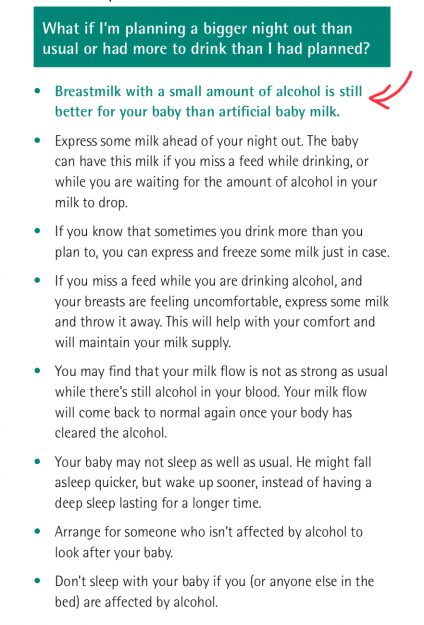
Breastmilk with a small amount of alcohol is a better option than formula.

Today she explained further:

This statement is take directly from the Australian Breastfeeding Association’s PDF, Alcohol and Breastfeeding: A Guide for Mothers.

Indeed it does … without any attribution or citations. In other words, the lactivists at the ABA appear to have simply made it up.

691A1318-FDCE-4EA8-B6EF-778C85CA22A6

The hypocrisy of lactivists is truly remarkable given the critical role that “toxins” play in natural mothering ideology and exhortations.

In The Polluted Child and Maternal Responsibility in the US Environmental Health Movement, a new paper in the Journal of Women in Culture and Society, Norah MacKendrick and Kate Cairnes explain that the idea of women’s bodies as the appropriate target of medical and moral anxiety has a long history.

The result is a culture that holds women responsible for protecting their children from toxins:

As disease risk is located in the maternal body, medical surveillance has extended in both temporal directions to include not only the pregnant body but also the pre-conception body, the breastfeeding body, and the feeding of young children. As women’s bodies come under greater scrutiny, so too do their actions and choices that might affect the fetus, infant, and child. This scrutiny corresponds to a culture of mother-blame that holds mothers accountable for their child’s health or behavioral problems…

Women’s desires are framed as dangerous:

Women are implored to eschew self-interest for the sake of the future child, whether by forgoing butter, skipping nail polish, or making homemade personal care products. These directives add to the long list of “rules” for controlling indulgences during pregnancy, where cigarettes, alcohol, unpasteurized milk, and raw fish are entirely forbidden, and balanced diets are a must, along with regular exercise (but not too much).

In Healthy Child Healthy World, women are warned against laziness:

The language of the “lab experiment” implies that mothers who fail to practice necessary vigilance are “experimenting” with the health of their baby. The guide presents fatigue as no excuse for lax control over the pregnant appetite:

“You’re tired and the last thing you want to do is cook. We get it. But consider this: When you dine out, order in, or consume processed packaged foods, you can never be entirely sure what you’re eating. Pre- paring your own meals at home using fresh, whole ingredients, on the other hand, gives you maximum control over what ends up on your plate. It’s the best way to ensure an optimally safe and healthy diet for both you and your baby. Besides, cooking tired is a necessary parenting skill…

Sound familiar? It should because it’s the language of the natural mothering movement, depicting women who choose epidurals, C-sections and formula feeding as weak and selfish.

… By taming cravings and “bad” habits during pregnancy, a woman begins her socialization into “good” motherhood, as she has perfected the careful, toxic-free habits of caregiving. The postpartum period puts this hard work to the test, as women are exhausted by breastfeeding and sleepless nights…

I found this statement particularly striking:

…[I]t is the pregnant woman’s desire to treat herself that puts her baby at risk.

The same goes for new mothers … unless the toxins are in breastmilk.

In the overwrought literature of lactivism, breastmilk is portrayed as perfect in every way: always available, always the right temperature, always the right amount and imbued with the power to improve health, prevent obesity and maximize intelligence. But breastmilk, like the pregnant mother’s blood, can transmit toxins and even concentrate them into higher amounts than in the maternal bloodstream.

Lactivists face a terrible quandary. They could eschew toxins altogether as they do in pregnancy. They could employ the same attitude to maternal indulgence in pregnancy and make it forbidden altogether. No smoking, no alcohol, no drugs and no medications (including pain relief for labor) can be countenanced during pregnancy. But whereas women cannot discontinue pregnancy in order to indulge their desires and still end up with a healthy baby, women can easily discontinue breastfeeding in order to indulge their desires and still end up with a health, formula fed baby. So lactivists have decided to take a laissez-faire attitude to substances in breastfeeding bodies that they would never countenance in pregnant bodies.

Professional lactivist Dr. Jack Newman helpfully lists the many toxins that would otherwise be verboten but are perfectly okay when found in breastmilk:

Tobacco smoking

A mother who cannot stop smoking should breastfeed. Breastfeeding has been shown to decrease the negative effects of cigarette smoke on the baby’s lungs …

Alcohol

…The mother can take some alcohol and continue breastfeeding as she normally does. Prohibiting alcohol is another way we make life unnecessarily restrictive for breastfeeding mothers.

Recreational drugs

These drugs, for example, marijuana and cocaine, have the same negative associations as does alcohol … But what I said about alcohol is true of these drugs as well…

Medications

Almost no medication taken by the mother requires her to stop or interrupt breastfeeding.

Anesthesia

Mothers are usually told that they will have to interrupt breastfeeding for 24 to 48 hours after surgery under general anesthetic… This is completely unnecessary. After all, we frequently give babies having surgery the very same medication.

What about the fact that these toxins can be easily avoided by using formula instead? Here Newman comes to the heart of the matter:

…[W]hy do so many physicians assume that any and every drug is contraindicated during breastfeeding? Basically, because they don’t believe that it matters if the mother breastfeeds or not. Formula=breastmilk, bottle feeding=breastfeeding, it’s all the same. But it’s not all the same.

In other words, Newman and other lactivists value breastfeeding more highly than a baby’s exposure to toxins, no matter how dangerous those toxins may be.

My hope for 2019: we recognize the harm we are doing to mothers and babies by promoting the “natural”

Countdown to midnight

Why do good mothers feel so bad?

Because in the guise of doing what’s “best” for them, we are harming women and their babies with the dominant parenting ideology of natural mothering.

How do I know? Because for decades, I have served as a witness. First as a practicing obstetrician and then as blogger, I have been present literally and figuratively as women cried their hearts out over the many ways they are supposedly failing the infants and children they love so desperately.

[pullquote align=”right” cite=”” link=”” color=”” class=”” size=””]Mothers should trust themselves … and be kinder to themselves.[/pullquote]

Our views on mothering have changed dramatically in the past 70 years. It’s easy to see when you compare the advice of the legendary Dr. Benjamin Spock, author of Dr. Spock’s Baby and Childcare, to the advice natural parenting experts offer today.

Dr. Spock told new mothers:

Trust yourself, you know more than you think you do.

Natural parenting experts tell new mothers, ‘Don’t trust yourselves, you know nothing until you’ve read my book.’

Dr. Spock said:

The more people have studied different methods of bringing up children the more they have come to the conclusion that what good mothers and fathers instinctively feel like doing for their babies is usually best after all.

Natural parenting experts say, ‘If you love your baby you’d do exactly what we tell you because that’s what mothers did in nature; otherwise you are a lazy, selfish cow.’

He was remarkably perceptive and forgiving:

All parents do their best job when they have a natural, easy confidence in themselves. Better to make a few mistakes from being natural than to try to do everything letter-perfect out of a feeling of worry.

Natural parenting experts are notably unforgiving. They tell women, If you don’t have an unmedicated vaginal birth, breastfeed for more than a year, and practice attachment parenting, your child will end up obese, illiterate and unhappy and it will be YOUR fault.’

Dr. Spock counseled:

Don’t take too seriously all that the neighbors say. Don’t be overawed by what the experts say. Don’t be afraid to trust your own common sense.

Natural parenting experts say, ‘All your friends on Facebook expect you to follow my advice. But ignore what doctors say; they’re all in the pockets of Big Pharma.‘

The result?

While women stake their self-esteem on having an unmedicated vaginal birth and obstetricians obsess endlessly about the C-section rate, poor women of color die in ever increasing numbers for LACK of obstetric interventions.

While new mothers torment themselves in making sure not even a drop of formula is allowed to touch their precious baby’s lips, breastfed babies are being re-admitted to the hospital at double the rate of formula fed babies and brain injures and deaths from dehydration and jaundice are making a shocking comeback.

While women imagine themselves as educated for refusing newborn vitamin K injections, their babies suffer ghastly injuries and deaths from bleeding into the brains.

While women preen over refusing vaccines, their babies die of pertussis as measles and other nearly eradicated infectious diseases return.

While new mothers tell themselves they are responsive and exhaust themselves catering to a child’s every whim, those same children show no evidence that their mental health is improved and considerable evidence that they are less resiliant, less capable of handling disappointment and less able to cope with the demands of adulthood.

So who has benefited?

Natural parenting experts and no one else.

The lactation profession is the paradigmatic example. Prior to the 1990’s if you needed help with breastfeeding, you could consult a La Leche League volunteer. But that was a matter of your discretion; you sought help and support only if you felt you needed it and wanted it. No one was getting paid for providing breastfeeding advice.

Now breastfeeding is a multibillion dollar business with lactation professionals providing breastfeeding advice for money whether you want it or not. The Baby Friendly Hospital Initiative, to my knowledge the only private group that is allowed to operate within hospitals, has forced hospitals to promote breastfeeding and demonize formula feeding, pacifiers and well baby nurseries. They have whipped up hysteria about breastfeeding rates as if breastfeeding rates had anything to do with infant health. Thus far NONE of the claimed benefits of increasing breastfeeding rates has been realized and the only obvious health impact has been making some babies suffer starvation related brain injuries and deaths … and making mothers suffer guilt if they can’t or don’t want to breastfeed.

The ultimate irony is that there is nothing natural about natural mothering.

Can you imagine an indigenous woman refusing pain relief in labor if it were available? That would be unnatural.

Can you imagine a prehistoric foremother refusing a C-section that might save her baby’s life? That would be unnatural.

Can you imagine a woman in a developing country letting her baby die of dehydration just so she could brag to her friends that nothing but breastmilk was allowed to touch her baby’s lips? That would be unnatural.

Can you imagine any mother from any age up to the present one refusing possible protection of her child from hemorrhage or infectious disease? That would be unnatural.

In truth mothers in nature, including many animal mothers, fight fiercely to give their offspring EVERY chance of survival. They also fight fiercely to protect themselves, recognizing that their ability to mother is critical to their baby’s survival.

My hope for 2019 is that we recognize that natural mothering is a cultural construct that has nothing to do with mothering in nature. May both mothers and obstetricians focus on maximizing maternal and child survival. I want to see the demise of the Baby Friendly Hospital Initiative; it’s only a matter of time before we stop sacrificing newborn brains and lives on the altar of breastfeeding. May anti-vaxxers recognize that they are victims of a massive effort on the part of charlatans to sell worthless services and products.

But most of all my hope for 2019 is a return to the philosophy of Dr. Spock, encouraging mothers to trust themselves and be kinder to themselves. May they stop trying to be letter-perfect in recapitulating an image of mothering in nature that never actually existed and concentrate on simply doing the best they can.