Category Archives: Uncategorized

No, the new PLOS study does NOT show that C-sections cause obesity

overweight woman biting cake

What would you say if I told you that a study was just published that showed that visiting Weight Watchers causes obesity?

The authors looked at more than 150,000 people across multiple states and found that those who visited Weight Watchers were 25% more likely to be obese. This relationship was true for all subgroups: male, female, white, African-American, and across all ages.

I can imagine you rolling your eyes, but wait! How about if I added the the authors had provided all manner of charts, including funnel plots, and corrected for publication bias?

I bet I know what you would say (after you picked yourself up from rolling on the floor laughing). You’d point out that Weight Watchers doesn’t cause obesity. You’d probably point out that the people who visit Weight Watchers differ substantially from the people who never visit Weight Watchers. At a minimum, the people who visit Weight Watchers are more likely to be obese to begin with.

You’d be right. In other words, the study is meaningless if the authors did not correct for confounding variables. The investigators might have identified a correlation between visiting Weight Watchers and obesity, but that doesn’t mean that visiting Weight Watchers causes obesity. In fact the opposite is true, being obese makes it more likely that you will visit Weight Watchers.

There is no study that shows that visiting Weight Watchers causes obesity, but if you understand that example, you will understand why the new study published in PLOS ONE, Mode of Delivery and Offspring Body Mass Index, Overweight and Obesity in Adult Life: A Systematic Review and Meta-Analysis, by Darmasseelane, Hyde, Santhakumaran, Gale, and Modi is equally meaningless.

What did the authors do?

15 studies with a combined population of 163,753 were suitable for inclusion in the meta-analysis. Comparing all CS to VD in pooled-gender unadjusted analyses, mean BMI difference was 0·44 kg·m-2 (0·17, 0·72; p = 0·002), OR for incidence of overweight was 1·26 (1·16, 1·38; p<0·00001) and OR for incidence of obesity was 1·22 (1·05, 1·42; p = 0·01). Heterogeneity was low in all primary analyses. Similar results were found in gender-specific subgroup analyses. Subgroup analyses comparing type of CS to VD showed no significant impact on any outcome.

In other words, they found that for people born by C-section, the risk of obesity in later life was increased by 22%. The association was robust, meaning that it was found in most subgroups, but it is actually rather small.

But it is well known that women who undergo C-section differ substantially from those who do not. They are more likely to be obese themselves, more likely to be carrying large babies and more likely to have gestational diabetes, which impacts metabolism. The authors are aware of this, and even mention it, but they do not correct for these confounders, making their conclusions rather suspect.

In media interviews, the authors have indulged themselves in flights of fancy:

Study co-author Dr. Matthew Hyde suggested possible ways that C-sections might influence later body weight.

“The types of healthy bacteria in the gut differ in babies born by cesarean and vaginal delivery, which can have broad effects on health,” Hyde said in the news release. “Also, the compression of the baby during vaginal birth appears to influence which genes are switched on, and this could have a long-term effect on metabolism.”

No, Dr. Hyde, we have as yet no evidence that the differences in gut flora in the first few days of life have any impact on health, let alone broad effects. Furthermore, I am unaware of any studies that show that “compression” of the baby influences which genes are switched on, let alone whether that affects metabolism.

Speaking to The New York Times, Dr. Hyde said:

… [A] woman cannot make a reasoned choice [about a C-section] unless she’s fully informed not only about the short-term outcomes, but also the long-term outcomes. We want to give you the data you need to make an informed decision.”

But you haven’t given us that data, Dr. Hyde. You haven’t given us any evidence of any causal relationship.

In the paper, the authors are a bit more circumspect:

… [S]everal factors associated with increased risk of CS are also associated with increased BMI in offspring, including high maternal BMI [70], gestational diabetes [71], and lower socioeconomic status . Of these, maternal obesity is probably the most significant confounding factor in the relationship between CS and offspring BMI. This needs elucidation in datasets which can be properly controlled for maternal BMI. (my emphasis)

No fooling!

Simply put:

Although the authors analyzed data from more than 150,000 individuals, although the relationship between C-section and obesity was found in most (but not all) subgroups, although the authors provide all sorts of elaborate tables and charts, they never corrected for confounding variables, meaning that they are not entitled to conclude anything about a causal relationship between C-sections and obesity.
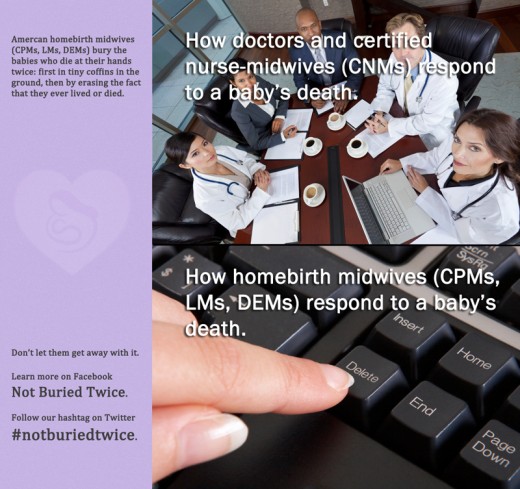
How homebirth midwives respond to a baby’s death

Interracial Medical Business Team Meeting in Boardroom

If you needed any more evidence that homebirth midwives (CPMs, LMs, DEMs) are not medical professionals, compare the way that they respond to the death of a term baby with the way that real medical professionals respond.

For doctors and certified nurse midwives (CNMs) there would be a lot of soul searching both informal and official. At a minimum, the case would be presented at weekly Grand Rounds and discussed with the entire department. The obstetricians and CNMs involved would most likely be required to meet with the head of the Obstetrics department to explain what happened and to determine how to prevent it from ever happening again. There might be grief counseling for the nurses, midwives and physicians and there would be teaching conferences arranged to reinforce safety procedures.

Contrast that to the response of the midwives involved in the debacle of crowd sourcing a life and death situation on Facebook while a baby was literally dying. Christy Collins, CPM was the midwife caring for the patient, and Jan Tritten, Editor of Midwifery Today, crowd sourced the case on Facebook and provided real time follow up on the death of the baby. The mother was 2 1/2 weeks over her due date, and ultrasound revealed that there was no longer any amniotic fluid, a sign of severe fetal compromise and impending death. The appropriate treatment was to induce this mother as soon as possible, and, at the first sign that the baby was not tolerating labor, to proceed to an emergency C-section.

Let’s leave aside for the moment the asinine comments of the homebirth midwives who were discussing the case on Facebook. Stevia? Accupuncture?

Let’s look at how these midwives and the homebirth community as a whole responded to the preventable death of a baby.


1. Violating patient privacy by sharing details on Facebook


image


2, Lying. I asked Christy on her own Facebook page whether she was the primary midwife in the case. She responded by deleting my question, deleting the entire area on her Facebook page where people can ask questions, and she sent me a Facebook message:

No, I’m not, but enough details had been passed around to select midwives to realize it was not what got created on Jan’s page, and it was NOT Jan. Someone needed to say something …


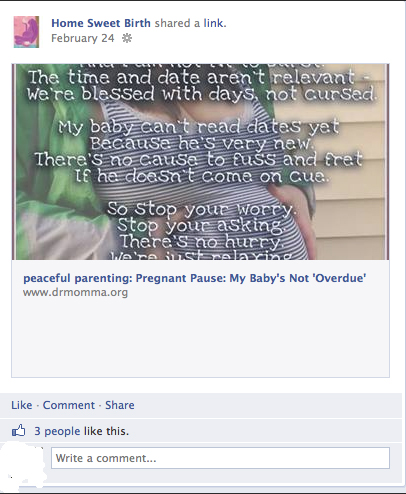
3. In an unspeakably insensitive and witless move, linking to an idiotic poem (??!!) implying that there is no danger to a baby in a pregnancy that goes overdue.


Home Sweet Birth poem

This is the poem:

Pregnant Pause

My baby’s not a library book,
So he’s not overdue.
My baby won’t take too long to cook
‘Cause he’s not veggie stew.

My baby’s not an elephant.
And I am not fit to burst.
The time and date aren’t relevant –
We’re blessed with days, not cursed.

My baby can’t read dates yet
Because he’s very new.
There’s no cause to fuss and fret
If he doesn’t come on cue.

So stop your worry.
Stop your asking.
There’s no hurry.
We’re just relaxing
In this golden pregnant time,
This pause… just his and mine.

Now, you leave us be…
We are just fine.

~Rachel Pritchard

Collins linked to this only 4 days after the baby died, possibly even before the baby was buried.


4. Sending a letter simultaneously admitting guilt and attempting to blame the mother.

Instead of … telling you to “be prepared that the perinatologist doing the NST is likely to tell you that your baby could die if he doesn’t come out;” those should have been MY words. You might have been really pissed at me for pushing you into a corner where you felt you didn’t have a choice, but … I wouldn’t care… I am angry at myself for being the midwife who tried to be as firm but gentle as possible when advising to go in when I could’ve waved the dead baby flag …

I blame me. I would rather have you hate me for pushing you harder into a bad birth experience … so you could hold a live baby instead.


How about Jan Tritten, the midwifery clown who thought the appropriate response to a baby showing every sign of imminent death was to discuss it with the other midwife clowns who are her Facebook friends?

5. Tritten deleted her Facebook post and all the responses. But the Internet never forgets and you can download and read the whole thing here:

Tritten thread


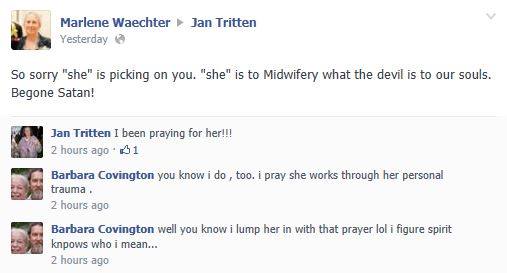
6. Tritten disappeared. She has been conspicuous by her absence. She is apparently hoping that she can ride out this disaster by ignoring it. She did surface to say that she is “praying for me” even though I am Satan.


Waechter 2


7. Tritten has offered no apology for her grossly unethical, unprofessional behavior.

How about the wider midwifery community?

8. With the exception of one homebirth midwife, there has been absolute silence from the midwifery community. Indeed one might call it a conspiracy of silence. Homebirth websites have refused to discuss the tragedy and have deleted posts and comments from those who have tried to discuss the tragedy.

9. Professional homebirth organizations, including Midwifery Today and the Midwives Alliance of North America have refused comment despite being bombarded by Facebook messages and Tweets.


The bottom line is that the homebirth community, both the midwives who were involved, and the organizations and individuals who promote homebirth have invoked standard operating procedure: Bury the baby in the ground and then bury the fact that he ever existed so no midwife will be held accountable for the death, and no American women will learn that homebirth midwives are ignorant, incompetent fools who let babies die preventable deaths.

But this time, we’re not going to let homebirth midwives bury a baby twice. We are not going to let Christy Collins and Jan Tritten avoid accountability. We have started a petition drive (557 signatures so far), a Facebook page for the Not Buried Twice campaign, and one particularly brilliant commentor devised the perfect Twitter hashtag #notburiedtwice.

Next step?

Convince skeptic bloggers, mommy bloggers and mainstream websites like Salon and Slate, that babies who die at the hands of homebirth midwives are worthy of their concern.

Introducing the Not Buried Twice Facebook page

Facebook notburiedtwice

A homebirth midwife crowd sourced a life and death decision with her Facebook friends while a baby was literally dying. He’s not the only one who has died at the hands of homebirth midwives. Indeed, even the recent study from the Midwives Alliance of North America (MANA), the organization that represents homebirth midwives, shows that homebirth has a perinatal death rate 450% higher than comparable risk hospital birth.

The homebirth midwifery community has not merely been silent on this baby’s death (like the deaths of all the babies that have died at their hands), they have deleted and banned and attempted to erase the evidence that this baby lived and died. Their plan appears to be to do nothing about it, investigate no one, hold no one to account.

Let’s not let them bury this baby twice, once in a tiny coffin in the ground and then again by erasing him from public consciousness. To prevent that, let’s leverage the power of social media to finally hold homebirth midwives to account.

Introducing the Not Buried Twice Facebook Page.

Please visit the page, “like” the page, and share your thoughts.

If you haven’t done so already, please sign the Change.org petition expressing our revulsion to Jan Tritten, Editor of Midwifery Today, who was the midwife who solicited the advice of her Facebook friends while the baby was dying. 537 people have signed so far. Many have left comments, some heartbreaking.

Please keep sending Facebook messages, Tweets and emails to:

Jan Tritten
Jan Tritten’s Facebook page
@JanTritten on Twitter

Midwifery Today
Midwifery Today’s Facebook page

The Midwives Alliance of North America (MANA)
MANA’s Facebook Page
@MANACommunity on Twitter

and

Melissa Cheyney, CPM in her role as Head of the Board of Direct Entry Midwifery in the state of Oregon (where Jan Tritten lives).
Email: melissa.cheyney@oregonstate.edu (She does not appear to have a separate email address at MANA or the Board of Direct Entry Midwifery)

What should you write? I leave that up to you, but for those who aren’t sure, I have a suggestion:

Can you tell us what you plan to do to investigate the death of the home birth baby whose care Jan Tritten crowd sourced on Facebook?

Short, simple, polite and to the point.

In my judgment, the most important thing we can accomplish is to raise public awareness of the hideous death rate at homebirth, the fact that American homebirth midwives (CPMs, LMs, DEMs and lay midwives) are NOT real midwives, and don’t meet the standards for ANY other midwives in the industrialized world, and the fact that American homebirth midwives are trying to erase the existence of babies who died at their hands by deleting and banning on their own websites, message boards, Facebook pages and Twitter accounts.

Let everyone know that this baby, and many babies like him, die preventable deaths at homebirth and henceforth, we will make sure that these babies are #notburiedtwice.

In memory of a baby boy who did not have to die

notburiedtwice black

The ignorance, unprofessionalism, and corruption in the world of homebirth midwifery is beyond belief. Jan Tritten, Editor of Midwifery Today, crowd sourced a life and death situation on Facebook and the baby died. She didn’t think the dead baby was the problem, but when people questioned her role in a preventable death she reacted the way that homebirth midwives typically do. She deleted the Facebook post in an attempt to bury the dead baby twice, once in a tiny coffin in the ground, and then again by erasing him from the public consciousness. And if all that weren’t bad enough, she made it quite clear that she would not disclose the identity of the primary midwife, so that the midwife could be held accountable.

But social media is very powerful and by employing it, we’ve made sure that this baby’s life and death cannot be erased by a midwife who is more concerned with protecting other midwives than whether a baby lives or dies. Because of the publicity, an individual who was searching out where to report this debacle came across my blog posts and learned the story of the Facebook crowd sourcing. Distress at the preventable death of the baby prompted this individual to share as much as he or she knows about it. The facts are every bit as ugly as we surmised.

The primary midwife was, of course, Christy Collins, CPM. She outed herself publicly when she shared details of the disaster on Facebook. I contacted her on her Facebook page and told her that I had details of what had happened and offered her the opportunity to contact me through email to learn those details and correct anything she thought was wrong. She deleted the Facebook post and has not responded.

What really happened? This is what my source had to say (paraphrased):

The parents and midwife had gone for a biophysical profile on Wed 2/19 in the morning. The amniotic fluid was 0, supposedly everything else was normal. The midwife then did a NST with a hand held doppler and told the parents baby sounded good and to go home and drink lots of fluid and take a bath. They repeated the BPP later that afternoon. There was still no amniotic fluid and an NST with hand held doppler was again “good”.

A biophysical profile was repeated the following day, Thursday 2/20. There was still no amniotic fluid, and listening with hand held doppler revealed a heart rate in the 90’s.

The midwife called Dr. X (he provides backup for many homebirth midwives their city) and told him the biophysical profile was normal, but heart tones were “variable.” He told her to immediately come in. She didn’t share with Dr. X that they were at at an ultrasound office attached to Hospital Y. They left that hospital and the midwife got in the car with the clients, put oxygen on the mother and drove 30 minutes to Hospital Z where Dr. X was located. They were immediately taken for a cesarean. They worked on baby for 47 minutes before they stopped.

Christy attended a neonatal resuscitation workshop on Friday 2/21. It seems the case was discussed at this workshop.

Christy’s explanation?

In Christy’s version, it is the physician who is caring for the patient, the midwife is an innocent bystander, and it is the midwife who recognizes that the baby is having a bradycardia.  Christy insists that the doctor declared that the baby had been doomed from the previous day and could not have been saved under any circumstances.

When I asked Christy directly if she was the primary midwife, she told me she would not reveal the identity of the primary midwife, because:

Coming to the defense of others is something I will do if I feel that their actions were defensible. With what I have heard, and with what others posted, they were. It was presented by the midwife poorly, but the actions taken up to that point and past appear to have been within OB protocol …

Coming to the defense of OTHERS?

What information do I have to confirm the source’s claims?

  • The identity of the doctor who performed the biophysical profiles.
  • The identity of the obstetrician who delivered the baby.
  • The name of both hospitals.
  • The details on the workshop where the case was discussed (and where another midwife who also revealed details on Facebook was present).
  • Considerable material in Christy’s own words.

This is not the first time that Christy Collins has found herself in trouble. Christy is one of the “Sister in Chains,” a group documents that the “persecution” of American homebirth midwives, apparently for no better reason than a pile of dead bodies and a few injured mothers. It does not mention a single dead baby by name; in fact, in the case of many of the deaths, neither the babies, not the fact of their deaths are mentioned at all.

According to their Facebook page:

… [T]his group exists for the sole function of supporting persecuted midwives, doctors, students, doulas and families who are facing undue sanction for choosing or supporting birth choices. Nobody is saying anyone is perfect, but we ask only that sanctions faced by out of hospital supporters and parents be equal to those faced in hospital…

The list of sisters is a roll call of homebirth midwives who presided over the deaths of babies at homebirth. It includes:

Christy Collins, CPM (midwife), 2011

Charged with practicing medicine without a license. Took a plea of misdemeanor practicing midwifery without a license. Ordered to pay nearly $10,000 in restitution to the state and put on probation for three years.

Looks like Christy left her troubles behind and crossed the border to Nevada to continue practicing midwifery there.

It’s hard to imagine anything more damning that Collin’s own words (written to a third party):

I wish I could go back in time, and have said stronger words – enough to make you hate me, and fell you had no choice but to go into the hospital the day before. I could’ve lived with you hating me, over this feeling of devastation.

I know we say that we don’t know if it would’ve been any different; maybe he would’ve been very sick, but alive. I don’t know. But I wish I wouldn’t pushed much hard and said the things that we never want to hear the ‘experts’ say…

Instead of … telling you to “be prepared that the perinatologist doing the NST is likely to tell you that your baby could die if he doesn’t come out;” those should have been MY words. You might have been really pissed at me for pushing you into a corner where you felt you didn’t have a choice, but … I wouldn’t care… I am angry at myself for being the midwife who tried to be as firm but gentle as possible when advising to go in when I could’ve waved the dead baby flag…

I wanted so badly to see a change in fluid … while you just wanted time/space to think … If I hadn’t agreed, and used the words “your baby could die because of this …”, maybe he would still be here.

My back up doctor was amazing and the whole team worked so fast. Then the longest 47 minutes of our lives while they worked on your baby who had clearly been soaking in mec for weeks. Acidosis … bad blood gases … the worst of which had occurred in the last 20 minutes. An induction yesterday, just one day after a perfect NST may not have mattered anyhow we were told…

Baby sounded perfect the next morning and we had the same BPP result after you rehydrated. You still wanted more time. I said I didn’t feel we had any, and read to you what even other midwives had to say. That I wasn’t the only one who felt a sense of urgency. Only 20 minutes later, your baby showed distress. And hour later, your baby was out … and gone.

I wish I would’ve been so harsh with my words the day before, that you would’ve hated me. Maybe you would be nursing your baby, angry about your induced birth experience, and refusing my visits. Instead you and the daddy slept with your dead baby all night in a hospital bed …

I blame me. I would rather have you hate me for pushing you harder into a bad birth experience … so you could hold a live baby instead.

Midwifery implies choices. Informed consent. Informed refusal. No woman would refuse an induction if she knew what having a dead baby felt like. In the future, I’ll pressure until my client hates me. I won’t care.

Let us mourn for a baby who didn’t have to die and a family who didn’t have to suffer a horrific loss.

Then let us resolve to hold Christy Collins, Jan Tritten and the homebirth midwifery community accountable for this senseless tragedy.

What you need to know about “stats junkie/guru” Jamie Bernstein

got integrity

I have many tools at my disposal in combating the mistruths, half truths and outright lies of homebirth advocacy. I have my years of medical education, my years of medical training, and my years of obstetric practice. I have the ability to read and understand the entire obstetric literature, and I have the ability to be forthright and forceful. But the most important tool in my armamentarium by far is my credibility.

Regardless of what homebirth advocates tell each other about me, their private behavior indicates that they feel they can trust what I write. You would be amazed with whom I correspond privately, and amused to learn that some of my most vehement public foes have, in times of medical need, contacted me to discuss their medical problems.

Of course, I make mistakes like everyone else. Sometimes I misunderstand what I have read; sometimes I make silly math errors; often I have typos strewn throughout a piece. But I am lucky to have what must be the best trained, best educated comment tribe of any blog on the Web and within moments I am publicly and privately informed of any mistakes and I hasten to correct them. My husband often laughs at me because he’ll find me awake at 2 AM scouring the literature or redoing my math for fear that I have misspoken, and he knows why I am stricken if I feel I have made a mistake: my credibility is the most important attribute I have.

Therefore, while I cheerfully ignore many internet conversations where people are taking my name in vain, I can’t ignore an attack on my credibility, and that’s just what I interpreted the hatchet job that Jamie Bernstein did on my analysis of the MANA stats to be. I went back and forth all day yesterday with Bernstein and with Elyse Anders, editor at Grounded Parents, demanding that they publicly correct their factual and math errors. Not only have they failed to do so, but their “rationale” is mind boggling.

Their response to the first factual mistake I noted perfectly illustrates their journalistic integrity or lack thereof.

Bernstein wrote in her piece:

I clicked the link Dr. Tuteur gave where she got the Citizens for Midwifery quote but didn’t see anything with that quote …

I don’t know about you, but to me that implies that I fabricated the quote, a damning implication.

I pointed out in the comments section:

How could you not find it? I gave an exact quote in my piece and linked to the place where the original can be downloaded? It is on page 3 of the 5 page CfM press release, the beginning of the second full paragraph. Please check to confirm.

I was gobsmacked by the Bernstein’s response:

Thanks for letting me know where that quote came from. I felt it was a waste of my time to click on every single link on the page you linked to …

As it happens, I linked to the page where the CfM press release could be downloaded. You can’t link directly to something that must be downloaded. But even if I could have linked directly to the exact page with the exact quote and didn’t do so, Bernstein was out of line implying that I had fabricated a quote that she never bothered to look for. At the very least, she could have noted that she couldn’t be bothered to look and people could check for themselves. But I guess when the piece is meant to be a hatchet job, little details like that are better left unmentioned.

Lest you think that Bernstein and Anders might be uncomfortable with their lack of journalistic integrity, this Twitter conversation indicates that it’s all hunky-dory with them.

Grounded Parents 2

So let’s see if I get this straight. As the editor of the piece Anders felt that Bernstein should have accused me of fabricating a quote that she never checked for, but Bernstein, righteous warrior for journalistic truth, knew that she hadn’t checked and therefore didn’t write it? And Bernstein thinks no fixes are needed? Really?

You can read my entire 8 point indictment of Bernstein’s piece and Bernstein’s astounding reply in the comments section of her post. Of course, if you are like Bernstein herself, you probably can’t be bothered to click on a link (So much time! So much effort!), so you can just take my word for it, just like she thinks you should take hers.

Not surprisingly, MANA is directing people to Bernstein’s piece:

MANA tweet

I don’t blame them. Beggars can’t be choosers and so far the only other independent person who has backed their creative “interpretation” of their own horrific death rates is a reporter from The Daily Beast.

But even though Bernstein refuses to correct her attack on my credibility, I’m not entirely defenseless. I have my blog, which has had nearly 60,000 visitors in the past week alone. So the next time someone Googles “stats junkie/guru” Jamie Bernstein, they can learn about her sloppy math, her sloppy journalism and her utter lack of journalistic interity. That’s what you need to know about “stats junkie/guru” Jaime Bernstein.

Update 3: Not Satan, I’m the serpent in MANA’s Garden of Eden

notburiedtwice green

You may remember from yesterday that homebirth midwife Marlene Waechter equated me with Satan. I beg to differ!

It’s not surprising that she’s confused. I’m not Satan; I’m the serpent in MANA’s Garden of Eden.

Think about it: MANA created a Garden of Eden where it has free rein to trick women about the death rate at homebirth,  with no onerous education or training requirements, and no pesky safety standards. They told all the homebirth advocates living in their Garden that they could attend any birth, that every complication is a variation or normal, and that some babies are just meant to die. There was only one rule: don’t eat from the Tree of Knowledge.

Then I come along and tell the residents of the Garden that if they eat of the Tree of Knowledge, they will learn that MANA lies about its death rates, that Jan Tritten crowd sources life or death decisions on Facebook, and that the folks from MANA couldn’t meet the licensing requirements for any other country in the industrialized world.

See! I’m the serpent!

But don’t worry. Jan and Marlene are praying for me.

Waechter 2

You know what? I’m not praying for them; I’m praying ABOUT them. I’m praying that “midwives” like them are recognized as ignorant, unethical fools who think nothing of crowd sourcing a life or death decision on Facebook, and then deleting the evidence when the baby dies.

If Jan Tritten thinks that I’m going to let this baby be buried twice, she doesn’t know me very well.

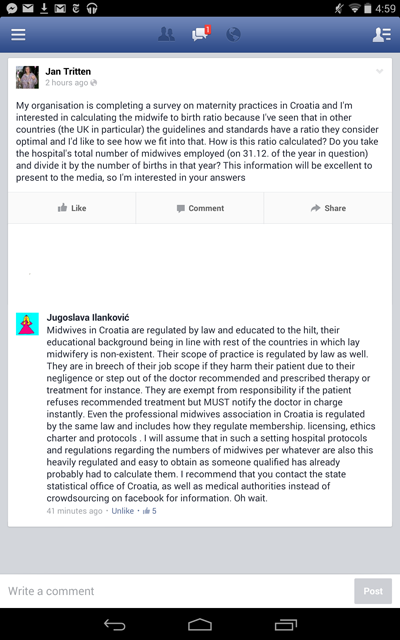
I’ve publicized this every way I know how and revulsion with Jan’s behavior has been noted as far away as Croatia:

Croatia

You are your buddies are not getting away with it this time.

A baby is dead, and you are acting like a callous clown, as if this is some sort of joke. I don’t know if this poor baby’s body is in the ground yet, but you’ve already deleted him from your Facebook page and apparently from your conscience, too.

You are the poster child for everything that is wrong with American homebirth midwifery:

Uneducated

Untrained

Unethical

Unconcerned with safety, and

Unmoved by the deaths of babies who didn’t have to die.

Instead of apologizing for your role in this tragedy, you’ve treated it like some sort of inconvenience; just delete the existence of the baby, hide for awhile and try to divert attention to hating on me.

But people have noticed. So far 475 people have signed the petition expressing revulsion with your behavior.

Stop hiding! Stop deleting! Stop pretending that this baby’s death doesn’t matter!

I may not be Satan, but I’ll be damned if I let you get away with this outrage!

Grounded Parents does a hatchet job on my analysis of the MANA statistics paper

iStock_000009765932XSmall

Jamie Bernstein, in a guest post at Grounded Parents, has performed a hatchet job on my analysis of the paper from the Midwives Alliance of North America (MANA), which claimed that homebirth is safe when it’s own data showed the opposite.

The worst part is that Bernstein, described as Skepchick’s resident stats junkie/guru, was incredibly sloppy. There are at least 8 separate errors of fact, of numbers or of math. Frankly, I think Berstein and Grounded Parents owe me an apology and well as owing their readers a correction of the many egregious errors.

Jamie failed to understand the most basic fact about the MANA data. This is not a study; it is a non-randomized survey, which was ignored by more than 70% of the midwives who were supposed to participate. Even then, 25% of the respondents did not provide complete data. Far from being a “study,” this represents MANA’s best efforts to cherry pick it’s own data. That’s what makes the high mortality rate so concerning.

Let’s go through Bernstein’s error one by one:

1. Bernstein wrote: “I clicked the link Dr. Tuteur gave where she got the Citizens for Midwifery quote but didn’t see anything with that quote or numbers on the linked page. I did download and read the study which these numbers supposedly came out of …”

How could you not find it? I gave an exact quote in my piece and linked to the place where the original can be downloaded? It is on page 3 of the 5 page CfM press release, the beginning of the second full paragraph. Please check to confirm.

2. Bernstein wrote: “I’m not really sure exactly where this quote came from and these numbers don’t seem to match anything in the study.”

Wrong again. On page 7 of the study, under the section Fetal and Neonatal Morbidity and Mortality, second full paragraph, last sentence: “When lethal congenital anomaly-related deaths were excluded (n = 0 intrapartum, n=8 early neonatal, n = 1 late neonatal), the rates of intrapartum death, early neonatal death, and late neonatal death were 1.30 per 1000 (n = 22), 0.41 per 1000 (n = 7), and 0.35 per 1000 (n = 6), respectively (Table 5).”

1.3+ 0.41+ 0.35 = 2.06

Bernstein quoted those exact numbers but never bothered to add them together to get the total.

3. She wrote: “First of all, can I first point out that it’s a 4x increase, not 5.5x (1.6/0.4 = 4).”

Except that the correct number of MANA deaths was 2.06/1000 not 1.6/1000.

4. She wrote: “I seriously have no idea how Dr. Tuteur came up with 5.5x or 450% increase in mortality from the numbers that she cited.”

That says more about Bernstein than about me. I explained how I got it in my post and I just explained it again.

5. Bernstein wrote: “What we’re really looking at here is a risk of death increasing from 0.0004% to 0.0016%. This is a difference of 0.0012 percentage points.”

No, that’s not what we are looking at. Bernstein is off by more than 100 fold. 0.4 deaths/1000 is 0.04%. She added two extra zeros. The homebirth death rate was 2.1/1000, which is 0.21%. So the difference is 0.17%. That sounds like a tiny number, but when you are talking about thousands of births, it’s the difference between 4 deaths for every 10,000 babies born in the hospital and 21 deaths for every 10,000 babies born at home.

6. Bernstein wrote: “All we know about the info Dr. Tuteur got from the CDC website was that it was for white women with low-risk births. This includes hospital births, homebirths, and births in locations other than the home and hospital (though she labeled them as hospital births on the chart she posted).

Clearly she never bothered to look at the CDC Wonder database, which contains an complete description of contents. I specifically noted that I looked at white women, 37+ weeks, 2500 gm babies.

7. Bernstein wrote: “This includes hospital births, homebirths, and births in locations other than the home and hospital (though she labeled them as hospital births on the chart she posted).”

Wrong again! I did not include locations other than home or hospital and label them hospital births. I don’t know where she got that idea.

8. She wrote: “Women who choose to have a homebirth are likely very different from all white women giving birth, so it’s not really a fair comparison.”

Really? White women who give birth in the hospital tend to be younger, poorer, of lower socio-economic class and more likely to smoke than the homebirth group, which means that the 450% higher homebirth death rate actually UNDERCOUNTS the difference in deaths between home and hospital.

Finally, Berstein wrote: “The “homebirths are killing babies” review by Dr. Amy Tuteur was less “focusing on some parts of the study while downplaying others” and more just a sloppy and unscientific attempt at calculating relative risk by using two completely non-comparable data sources in order to scare readers away from homebirths.”

No, what’s sloppy and unscientific is Bernstein’s hatchet job. She is WRONG about the numbers, WRONG about the math, WRONG about the quotes, WRONG about the CDC Wonder database, WRONG about the differences between the home and hospital group and therefore, completely WRONG about her conclusion.

I hope Bernstein and Grounded Parents will acknowledge these errors and correct them. I’d like to see them apologize.

It’s the least they can do after writing and publishing this sloppy hatchet job.

Update 2 to the #notburiedtwice campaign

notburiedtwice red

We continue to add signatures to the Change.org petition expressing revulsion at the behavior of Midwifery Today Editor Jan Tritten in connection with the death of a baby. As of this moment, 439 people have signed.

If you haven’t signed yet, I urge you to do so. In addition, the comments left at the bottom of the petition are worth reading. Some are very moving.

It was only a matter of time before homebirth midwives began leaking details of the case, and making manifest what I had only suspected. Many homebirth midwives, in addition to Jan Tritten, are aware of what happened in this case. Their highest priority is to make sure that the midwife or midwives responsible are never held to account.

Christy Collins, a Las Vegas Midwife, shared quite a bit on Facebook (since deleted):

image

The story strains credulity to say the least. Suddenly there is a physician involved. Jan Tritten didn’t mention a physician, and specifically stated that the midwife did NOT have to transfer care to any physician. But in Christy’s version, it is the physician who is caring for the patient, the midwife is an innocent bystander, and it is the midwife who recognizes that the baby is having a bradycardia, not the obstetrician or the radiologist doing the scan. Really? And if that isn’t enough, Christy insists that the doctor announced that the baby had been doomed from the previous day and could not have been saved under any circumstances, raising the question of why the obstetrician was ordering tests on a baby he knew could not survive.

Christy was not the only one sharing. Laura Hopper, a Utah homebirth midwife (who was coincidentally as a neonatal resuscitation workshop in Las Vegas last weekend) weighed in, too.

I asked Christy on her own Facebook page whether she was the primary midwife in the case. She responded by deleting my question, deleting the entire area on her Facebook page where people can ask questions, and she sent me a Facebook message:

No, I’m not, but enough details had been passed around to select midwives to realize it was not what got created on Jan’s page, and it was NOT Jan. Someone needed to say something…

Good to know, Christy. So tell us who is the midwife.

I’m sorry, you know I can’t do that. Coming to the defense of others is something I will do if I feel that their actions were defensible. With what I have heard, and with what others posted, they were. It was presented by the midwife poorly, but the actions taken up to that point and past appear to have been within OB protocol…

So Christy has considered the situation, absolved the midwife and is moving on. But that’s not how it works, Christy. Impartial medical personnel should be evaluating the care that the patient received, not the friends of the midwife. And as long as we are discussing principles, Christy, you have nothing to be proud of. “Coming to the defense” of a midwife involved in a fatality by hiding the identity of that midwife is not ethical behavior. It’s the exact opposite.

I conveyed that to Christy, and she revealed her knowledge of the law to be as deficient as her knowledge of ethics:

… If I see my name associated with her situation per your doing again though, I will take legal action.

Ummm, Christy? YOU associated your name with the baby’s death on a public Facebook page. YOU have no basis to take legal action against anyone.

Where does that leave us?

We now know that quite a few midwives are aware of this debacle because the primary midwife shared the details. They have deliberately chosen to maintain a conspiracy of silence to protect the homebirth midwife from accountability.

Jan Tritten has disappeared, supposedly to be with her family. Rather ironic considering that what she is hiding from is the destruction of someone else’s family. Midwifery Today is refusing to make any statement of any kind. The Midwives Alliance of North America is utterly silent (of course, they are currently having bigger problems; the integrity of their study claiming that homebirth is safe has been demolished by Brooke Orosz, PhD). Melissa Cheyney, Head of the Board of Direct Entry Midwifery in Oregon has ignored the dead baby entirely.

They don’t seem to realize that their efforts to obliterate the life and death of this baby confirms so much of what I have been writing about them over the years.

I’d like to end this update with a shout out to my new best buddy, homebirth midwife Marlene Waechter. Marlene posted the following on Jan Tritten’s Facebook page:

image

Why is Marlene my new best buddy?

I spend my days trying to alert American women to the dangers of homebirth midwives and the horrific deaths at their hands. I can tell women that they are uneducated, untrained and unacceptable in any other country. I can tell women that they aren’t midwives, but lay “birth junkies” who care more about their experience than whether a baby lives of dies. I can tell women that there are no safety standards in homebirth midwifery and no accountability. But I can’t do it alone. People like Marlene, demonstrating a stomach turning contempt for the death of this baby, whining that being held to account is being “picked on,” and offering support to the midwife involved in a baby’s death instead of to the family of the dead baby, make my job so much easier.

American women need to ask themselves: do you really want to be attended at birth by women like these, who won’t care if your baby lives of dies, and will protect themselves and each other from any accountability?

It’s time to abolish the CPM credential. It is nothing more than a public relations ploy that allows homebirth midwives to prey on unsuspecting women and their babies.

Hold the guilt! New study finds benefits of breastfeeding dramatically overstated.

iStock_000018442327Small copy

Gee, who could have seen this coming?

I, and others, have been pointing out for years that although the benefits of breastfeeding are real, they are small and restricted to relatively unimportant risks like colds or episodes of diarrheal illness during the first year of life. To hear lactivists tell it, however, breastmilk has super powers and women who do not breastfeed are bad mothers.

Now a new study, Is Breast Truly Best? Estimating the Effects of Breastfeeding on Long-term Child Health and Wellbeing in the United States Using Sibling Comparisons by Colen and Ramey, confirms what the scientific evidence has shown all along. The benefits of breastfeeding are trivial.

This, in many ways, is the study that we have been waiting for. We have always known that breastfeeding varies among ethnic, cultural and economic groups and indeed, previous studies that corrected for these factors show that breastfeeding has only small advantages. The new study looks at breastfeeding vs. bottlefeeding WITHIN families by comparing siblings who were fed differently.

The authors explain:

Breastfeeding rates in the U.S. are socially patterned. Previous research has documented startling racial and socioeconomic disparities in infant feeding practices. However, much of the empirical evidence regarding the effects of breastfeeding on long-term child health and wellbeing does not adequately address the high degree of selection into breastfeeding. To address this important shortcoming, we employ sibling comparisons in conjunction with 25 years of panel data from the National Longitudinal Survey of Youth (NLSY) to approximate a natural experiment and more accurately estimate what a particular child’s outcome would be if he/she had been differently fed during infancy.

The paper is 55 pages long and packed with charts, graphs and statistical analyses. The authors analyzed the impact of breastfeeding vs. bottlefeed in the whole group, between different families, and within the same family.

What did the authors find?

In Table 3, we present descriptive statistics by breastfeeding status (yes/no) for the eleven outcomes of interest across three different subgroups – the full NLSY-Children’s sample, the sibling sample, and the discordant sibling sample. Results for the first two subgroups are remarkably similar. Mean levels of BMI, hyperactivity, math skills, reading recognition, vocabulary word identification, digit recollection, and scholastic competence as well as the percentage of respondents who are obese all appear to significantly (p < 0.05) differ between children who were breastfed and those who were not and are in the predicted direction, with breastfed children exhibiting better outcomes. When the sample is restricted to discordant siblings, mean scores across all eleven indicators of child health and wellbeing are comparable and differences between breast- and bottle-fed respondents are small enough to be attributable to random chance alone.

Here is a modified version of Table 3:

Breastfeeding siblings

I modified it to make it easier to read by color coding each group and by masking the number of individuals in each group. You can find the original chart here.

The authors explain:

Findings from the full sample (Model 1) suggest that children who were breastfed during the first year of life were significantly better off than their bottle-fed counterparts. Asthma was the only endpoint of interest that did not adhere to the expected patterning of results, in which breastfed children do better than their bottle-fed counterparts. Results from Model 2 demonstrate the consistency of our findings between the full and sibling subsamples. With the exception of one outcome (hyperactivity), regression coefficients remain remarkably similar between Models 1 and 2, standard errors increase only slightly, and the conclusions that can be drawn are virtually identical.

The most stringent test of the hypothesis that breastfeeding during infancy positively influences long-term childhood outcomes occurs when we include fixed effects for each NLSY79 mother, thus limiting comparisons to within rather than across families (Table 4, Model 3). What is most striking about these findings is the extent to which regression coefficients are attenuated, with a few even changing signs. Furthermore, none of the estimates maintain statistical significance (p < 0.05)...

In other words, there were difference between breastfed and bottle fed children in 10 of the 11 measured variables when looking at the overall group. Those differences persisted when comparing families in which all the children were breastfed to families where all the children were bottlefed. But when the authors looked within families, there was no significant difference between breastfed and bottle fed children.

Simply put, looking within families takes ethnic, cultural and socio-economic factors out of the picture. When you do that, you find no difference between breastfed and bottlefed children.

Colen and Ramey also looked at the impact of duration of breastfeeding and found the findings were the same:

…Findings from Model 1, which reflects the standard multiple regression approach, illustrate that each additional week of breastfeeding is associated with significant decreases in BMI, the odds of obesity, and hyperactivity as well as significant increases in parental attachment, math achievement, reading recognition, vocabulary identification, memory based intelligence (WISC), and scholastic competence. Results from Model 2, which is restricted to the sibling sample, are almost identical to those from Model 1, suggesting that selection into the sibling subgroup is not likely to bias our findings.

Finally, estimates from fixed effects regression models that limit comparisons to those occurring within, as opposed to between, families reveal a different story – one in which breastfeeding for longer periods of time does not necessarily result in better childhood health and wellbeing. When moving from Model 2 to Model 3, the coefficients for PIAT Math, PIAT Reading, PPVT, and scholastic competence decrease by 79%, 83%, 92%, and 88%, respectively. Moreover, the sign of the coefficient is not only reduced but actually changes direction for three additional outcomes (BMI, obesity, and WISC)…

Once again, it appears that breastfeeding improves a variety of health and educational outcomes, but when hold ethnic, cultural and socio-economic factors constant by looking only within families, the improvements not only vanish, but in some cases the breastfed children do poorly compared to their bottlefed siblings.

The authors summarize their findings:

Results from between-family comparisons suggest that both breastfeeding status and duration are associated with beneficial long-term child outcomes. This trend was evident for 10 out of the 11 outcomes examined here. When we more fully account for unobserved heterogeneity between children who are breastfed and those who are not, we are forced to reconsider the notion that breastfeeding unequivocally results in improved childhood health and wellbeing. In fact, our findings provide preliminary evidence to the contrary. When comparing results from between- to within-family estimates, coefficients for 10 of the 11 outcomes are substantially attenuated toward zero and none reach statistical significance (p < 0.05). Moreover, the signs of some of the regression coefficients actually change direction suggesting that, for some outcomes, breastfed children may actually be worse off than children who were not breastfed.

Colen and Ramey are mindful of the policy implications of their findings:

Efforts to increase breastfeeding that solely focus on individually based behavior change without addressing the economic and social realities women face and the difficult tradeoffs they are forced to make in the months following the birth of their child risk alienating and stigmatizing the very women they hope to help…

… A truly comprehensive approach to increasing breastfeeding in the U.S., with a particular focus on reducing racial and SES disparities, will need to work toward increasing and improving parental leave policies, flexible work schedules and health benefits even for low-wage workers, and access to high quality child care that can ease the transition back to work for both mother and child. Hopefully, this multifaceted approach will allow women who want to breastfeed to do so for as long as possible without promoting a cult of “total motherhood” in which women’s identities are solely constructed in terms of providing the best possible opportunities for their children and the risks associated with a failure to breastfeed are drastically overstated (Wolf, 2011).

Simply put, every mother should be able to breastfeed for as long she wants to do so, but there is no reason to make women feel guilty if they don’t want to breastfeed or don’t want to breastfeed for long. The benefits of breastfeeding have been dramatically overstated and it is time to correct our advice to mothers to reflect the real benefits of breastfeeding, not the imagined super powers that simply don’t exist.