Category Archives: Uncategorized

Attachment parenting is about the need of parents for validation, not the needs of children

image

Imagine a cocktail party where everyone introduced him or herself with reference to a car.

Hi, I’m Debbie and I drive a Ford Explorer

Nice, to meet you Debbie. I’m Karen and I drive a Lexus RX350. Let me introduce Kathy; she drives a Subaru. And here’s Margie. She drives a Ford Explorer just like you.

Hi, Margie. I’m so glad to meet someone else who drives a Ford Explorer. It can be tough to be a Ford driver in this culture when no one else cares enough about their country to buy American cars.

What might we conclude from this brief exchange? First, it is clear that the people in this group have constructed their identity around car ownership, not simply differentiating between those who own cars and those who don’t, but tying identity directly to specific brands. Second, even in this short exchange, we can see that identity creation through brand choice leads to a form of security, through a sense of belonging to a self-chosen group. Third, although the car appears to be central, this is not about cars at all; it is really about self-definition.

Sounds ludicrous to create an identity around car brands, doesn’t it? Yet is strikingly similar to the current penchant for creating identity around specific parenting choices, also known as parental tribalism. According to Jan Macvarish:

The idea of ‘parental tribalism’ … [is] descriptive of a tendency among individuals to form their identities through the way they parent, or perhaps more precisely, through differentiating themselves from the way some parents parent and identifying with others …

Macvarish is a scholar in the relatively new field of “parenting culture.” She is a member of the Centre for Parenting Culture Studies. The Centre’s key areas of research are common topics for discussion on this blog, including (among others): risk consciousness and parenting culture; the management of emotion and the sacralisation of ‘bonding’; the policing of pregnancy (including diet, alcohol consumption, smoking); the moralization of infant feeding (including breast and formula feeding, weaning); and The experience of the culture of advice/’parenting support’. Each of these topics is also a basis for parental tribalism.

Parental tribalism involves constructing an identity around parental choices, or rather constructing an identity centered on differentiating themselves from parents who make different choices. It is perhaps not coincidental that Mothering.com, the leading publication in the “natural” parenting community, refers to its individual message boards, each denoting a different parenting choice, as “tribes”, thereby highlighting differences and encouraging the construction of maternal identity around these differences.

Strikingly, many of these choices, although they appear to concern the well being of children, are really about the self image of parents. As Macvarish explains:

…[T]the focus on identities reflects adult needs for security and belonging and, although the child appears to be symbolically central, in fact ‘the cultural politics of parents’ self-definition have eclipsed a concern with the needs of children.

I have often said that homebirth, for example, is not about babies, and it is not even about birth. Homebirth is about mothers, their experiences, their needs and their desires.

As with all forms of tribalism, parental tribalism leads to conflicts:

[T]there is a frailty and sometimes hostility in real or imagined encounters between parents, where the parenting behaviour of one can either reinforce or threaten the identity of another. What is noticeable in contemporary mothers’ descriptions of their parenting experiences is that many feel stigmatised or assume a defensive stance about their parenting choices, even those apparently making officially sanctioned choices. For example, some breastfeeding mothers express the view that society still sees breastfeeding as abnormal, despite the fact that they are very much swimming with the tide of official advice …

Websites and publications concerned with attachment parenting, natural childbirth, homebirth and lactivism emphasize and encourage this hostility. There is an almost paranoid certainty that other mothers are watching and criticizing. The resultant defensiveness is the true source of the hostility. By aggressively promoting their own choices, aggressively demeaning the choices of other mothers, and aggressively insisting that anyone who makes different choices is implicitly criticizing them, advocates of attachment parenting, homebirth, lactivism, etc. encourage the very conflicts that they claim to deplore.

These conflicts do not benefit children, anyone’s children, in any way. That’s not surprising since it’s not about children, but about parental self image. Indeed, constructing identity around parenting choices has the potential to harm children, by ignoring the actual needs of children in favor of promoting the mother’s sense of security and belonging.

This piece first appeared in November 2010.

Two new papers raise serious questions about banning elective deliveries before 39 weeks

image

I’m a mainstream obstetrician. Most of my views about obstetric practice are in line with that of other obstetricians, pediatricians and neonatologists. In one area in particular, though, I am bucking the conventional wisdom, and that is in my oppposition to the hard stop policy banning elective deliveries before 39 weeks gestation.

I realize that the March of Dimes believes strongly that this is an effective and necessary policy (and a lot easier to accomplish than trying to prevent the prematurity that actually kills babies), and I know that the American Congress of OB-GYNs (ACOG) and the American Academy of Pediatrics (AAP) have enthusiasticly climbed on the bandwagon. And almost every time I write about this issue I get emails of other obstetricians (including regular readers of this blog) disagreeing with me.

But I view this issue as a subset of a serious problem plaguing American medical practice: the implementation of “preventive” care guidelines (particularly those that promise to save money) in the absence of evidence to support those guidelines. As I’ve written in the past, I’m afraid of preventive medicine. From routine estrogen replacement therapy to routine use of prostate cancer screening, preventive measures have been implemented without appropriate, large scale, long term studies to determine unanticipated side effects. I’m afraid that the 39 weeks ban will also turn out to have serious side effects, and in this case, we can’t even claim that they were unanticipated.

Why should we anticipate the serious consequences of banning elective deliveries before 39 weeks? Because we know (as demonstrated by the chart below) that each additional week of pregnancy beyond 36 weeks raises the stillbirth rate.

image

I’m not the only obstetrician to point this out. Indeed two new papers address this issue specifically, one in a theoretical argument, the other using the results of a study.

The first paper is Theoretical and Empirical Justification for Current Rates of Iatrogenic Delivery at Late Preterm Gestation by Joseph and Dalton, published in the most recent issue of Pediatric and Perinatal Epidemiology.

The authors point out that the 39 week ban is based on 3 erroneous beliefs:

1. The erroneous belief that the difference in death rates between babies born at 34 weeks and babies born at 39 weeks is merely due to gestational age.

Numerous studies have quantified the excess morbidity and mortality among late preterm infants compared with term infants. Although such quantification accurately reflects differences between the two groups due to differences in pregnancy duration and pregnancy complications, it is disingenuous to suggest that a pregnancy with evident fetal compromise at 34 weeks gestation could be safely delivered at term.

2. The erroneous belief that “too many” babies are born before 39 weeks.

Expectant management given fetal compromise at late preterm gestation is associated with a potential risk of fetal demise, neonatal death or serious neonatal morbidity (due to progression of the fetal compromise). On the other hand, iatrogenic late preterm birth given fetal compromise is associated with a potential risk of neonatal death or serious neonatal morbidity (especially respiratory morbidity due to lung immaturity). Studies show that recent increases in iatrogenic preterm birth have been associated with declines in perinatal mortality. To our knowledge, no population-based study has demonstrated an increase in rates of neonatal mortality or respiratory morbidity due to the recent increases in iatrogenic late preterm birth.

It is also noteworthy that about one-third of iatrogenic late preterm birth is carried out for maternal indications.Yet no study to date has examined the effects of increases in iatrogenic late preterm birth on maternal health status…

3. The erroneous belief that multiple studies show that unindicated premature deliveries are rampant.

… These studies have been criticised because of their weak retrospective design; two studies were based on retrospective abstraction of medical charts and the third was based on a national database with information from birth certificates (known to overestimate non-indicated labour induction). The lack of detail regarding the clinical context makes judgement regarding the appropriateness of iatrogenic late preterm birth in these studies uncertain. The absence of an indication in the medical chart could imply an elective delivery or could represent a problem with the documentation of a legitimate indication.

So the purported theoretical basis for banning deliveries before 39 weeks is very weak.

What happens to the stillbirth rates if such bans are implemented? That’s the question addressed by the second paper, The risk of fetal death: current concepts of best gestational age for delivery by Mandujano et al., published in this month’s issue of the American Journal of Obstetrics and Gynecology.

According to the authors:

Linked birth and infant death data for the US from the National Center for Health Statistics analyzed nonanomalous singleton pregnancies between 2003 and 2005. Pregnancies were classified as high risk or low risk based on preexisting maternal complications. Out- comes of 8,785,132 live births and 12,777 FDs between 34 and 42 completed weeks’ gestation were examined…

What did they find?

Between 34 and 40 weeks’ gestation, the FD [fetal death] risk of those remaining undelivered for all pregnancies declined and then increased at term. For high risk pregnancies, the FD risk of those remaining undelivered is substantially higher than for low risk pregnancies. The number of FDs that can be avoided by delivery exceeds the neonatal death rate between 37 and 38 weeks’ gestation in low risk pregnancies and at 36 weeks’ gestation in high risk pregnancies.

The inevitable conclusion is:

These findings suggest that delivery at 39 weeks’ gestation in both high and low risk pregnancies would result in an increased number of perinatal deaths. Decisions regarding the “optimal time for delivery” should include the risk of remaining undelivered.

The authors note:

Much of the na- tional conversation and literature on this subject have surrounded the neonatal morbidities associated with a delivery before 39 weeks’ gestation. Although these analyses have demonstrated that delayed delivery reduces neonatal morbidities and the subsequent neonatal mortality from prematurity, they failed to include stillbirth in their analysis. We hope that by directly comparing fetal and neonatal mortality, we highlight what must be considered when determining optimal GA for delivery: both the risk of delivery and the risk of non-delivery. Recommendations that consider only one element should be considered incomplete.

That’s the very point I’ve been striving to make in multiple posts I have written on this issue. The underlying assumption of banning elective delivery before 39 weeks is that morbidity can be reduced without increasing mortality from stillbirths. As these two papers show, that is an assumption that is entirely unjustified. It is probably impossible to reduce morbidity without increasing mortality from stillbirths. As between the two, a short NICU admission is far preferable to a preventable perinatal death.

The Vaginal Mystique

image

This week is the 50th anniversary of the publication of Betty Friedan’s The Feminine Mystique, widely credited with being one of the most influential books of the 20th Century.

As The New York Times explains:

That phrase, of course, became famous when “The Feminine Mystique” was published, 50 years ago on Tuesday, to wide acclaim and huge sales, and it remains enduring shorthand for the suffocating vision of domestic goddess-hood Friedan is credited with helping demolish.

But that suffocating vision of domestic goddess-hood was a lot harder to kill than most of us ever imagined. In fact, it still exists, although it goes by a new name: attachment parenting.

Attachment parenting, the currently dominant parenting ideology, is just the feminine mystique writ large. In the 1950’s, the “good” mother was obsessed with various irrelevant measures of her value, like having the whitest wash or the cleanest floor. In the 2010’s, the “good” mother is obsessed with enduring the longest labor without pain relief, never putting her child down and never letting her children cry.

Wikipedia has an excellent synopsis of The Feminine Mystique and several chapters have particular relevance to this modern day incarnation of domestic goddess-hood.

Chapter 9: Friedan shows that advertisers tried to encourage housewives to think of themselves as professionals who needed many specialized products in order to do their jobs, while discouraging housewives from having actual careers, since that would mean they would not spend as much time and effort on housework and therefore would not buy as many household products, cutting into advertisers’ profits.

Chapter 10: Friedan interviews several full-time housewives, finding that although they are not fulfilled by their housework, they are all extremely busy with it. She postulates that these women unconsciously stretch their home duties to fill the time available, because the feminine mystique has taught women that this is their role, and if they ever complete their tasks they will become unneeded.

The attachment parenting industry, comprised of childbirth educators, doulas, midwives, lactation consultants, parenting advisors, sling manufacturers, etc. encourage mothers to think of themselves as needing many specialized services and products in order to be “good” mothers, while discouraging them from having actual careers, which would interfere with their ability to consume the services and goods offered by the attachment parenting industry.

Moreover, the attachment parenting industry insists on practices that fill 24 hours in each and every day, from extended breastfeeding, to constantly carrying young children, to letting them sleep in the parental bed on a regular basis. Attachment parenting has insisted that this is women’s role and if they ever complete these tasks, which used to be confined to infancy and toddlerhood, they will become unneeded.

Attachment parenting is obsessed with the mother’s body, emphasizing the vaginal mystique, the breast mystique and the mystique of the mother’s arms. As philosopher Rebecca Kukla has observed, attachment parenting fetishizes proximity, insisting that the mother’s body must always be in contact with the child’s body, making it impossible for her to accomplish anything in the larger world, effectively confining her to the home.

If anything, the philosophy of attachment parenting is even more restrictive than the 1950’s view of mothering. At least back then, women owned their own bodies. The 1950’s emphasis was on the perfect home and lifestyle; the contemporary emphasis is on the maternal body that performs perfectly (“It’s what women are designed to do.”), ignores even severe pain like labor pain (“It’s good pain.”) or insists that women brought their pain on themselves (“If only you didn’t fear birth …” “If only you were breastfeeding correctly …”).

The philosophy of attachment parenting requires more than goods; it requires services, expensive services. The feminine mystique required purchasing the best laundry detergent and floor wax. The vaginal mystique requires a small army of service providers — childbirth educators, doulas, midwives, and lactation consultants — who charge hundreds or even thousands of dollars for their services. The products of the feminine mystique were economically within reach of even the poorest women. The products of the vaginal mystique are so expensive that women are actually publicly soliciting money to finance things like homebirth.

Make no mistake: attachment parenting and the vaginal mystique are every bit as suffocating and retrograde as the feminine mystique. Whether or not a child is born vaginally is no more important than whether or not your laundry is the whitest in the neighborhood. Neither makes any difference to the well-being of children. They are artificial conceptions of motherhood that serve the needs of everyone but mothers and children.

The natural childbirth industry: devoted to ignoring, demeaning and ridiculing women’s pain

woman screaming

There’s something perverse about an entire industry predicated on the concept that excruciating pain is good for women. I’m talking, of course, about the natural childbirth industry, and the books, blogs, courses, videos and celebrities that comprise it. The”natural childbirth industry isn’t always sure that the pain of labor exists, but they are sure that if it does, it’s desirable that women feel it.

The unalterable bedrock of “natural” childbirth advocacy is that women should refuse effective pain relief in labor. The “ideal” situation is for women to embrace their pain and pretend that it is “good pain.” Of course, there is no such thing as “good pain”: they just made that up. The pain of contractions and the pain of vaginal distention do not differ in any way from any other kind of pain. It is not carried by different nerves, it is not conducted through the action of different neurotransmitters, it is not routed to different areas in the brain. It is exactly the same as any other kind of pain. So the take home message of NCB is that the excruciating pain of childbirth should be ignored.

And not merely ignored. What’s worse is that the NCB movement pretends that women are improved by experiencing the agonizing pain of childbirth, although they cannot think of any other instance in which human beings are improved by agonizing pain. The irony is that “natural” childbirth advocates have beliefs that are strikingly similar to the Victorian clergymen who opposed anesthesia in childbirth when it was first introduced in the second half of the nineteenth century. The clergymen believed that is was wrong to abolish labor pain with anesthesia because God intended for women to feel the pain. NCB advocates appear to believe that it is wrong to abolish labor pain because “Nature” intended for women to feel the pain. There is precisely zero concern for the effect of that pain on a woman herself.

The natural childbirth movement routinely demeans women who do not want to tolerate the pain. They are portrayed as weak, as “giving in,” as uneducated and uncaring because they don’t understand the “risks.” Or worse. The ultimate insult, implied, but not always stated is that “authentic” women can and should accept the pain, and that, therefore, women who opt for an epidural are somehow less womanly.

There is one strain of NCB advocacy that simply denies the reality of the pain. In this view, the pain of childbirth is psychosomatic in the true sense of the word. It does not reflect actual neurologic signals, but rather the social conditioning of women by a medical, technocratic culture. Pain is a manifestation of the fact that the woman has not “educated” herself that the pain doesn’t exist, doesn’t “trust” birth, and, once again, is not an “authentic” woman.

There is another strain of natural childbirth advocacy that acknowledges that the pain exists but that it can and should be “managed” in ways that are “natural” and inherently ineffective. The goal is not to abolish the pain; that would be wrong. The goal is to tolerate the pain so that the incentive to abolish it will be reduced. Hence the emphasis on hypnosis, water, and labor support. The pain is real, the pain is severe, and it is acceptable to reduce the pain. But it is only acceptable to reduce the pain in ways that involve no technology, and it is never acceptable to actually abolish the pain.

The “support” people in the NCB movement exist primarily for indoctrination. The childbirth educator exists to convince women that pain is good for her, and pain relief is bad. The primary function of a doula is to interfere with a woman’s desire for pain relief. At every point, the doula counsels the laboring mother that she does not “need” pain relief, that she’s doing “great” and she “can do it,” with “it” being enduring labor without an epidural.

At the fringes of the natural childbirth movement is a group that not only denies the existence of the pain, but inverts it. Childbirth is not painful, it is pleasurable. No remotely plausible physiologic explanation is advanced for this claim, beyond the inane observation that the tissues that produce the pain of childbirth could, in different circumstances produce sexual pleasure. The explanation makes as much sense as the claim that kicking a man in the groin could induce orgasm because sexual pleasure can be produced by contact in the same area.

Why are NCB advocates so invested in the idea that women should experience excruciating pain in labor? Why are they invested in the idea that women benefit from experiencing labor pain? Why do they direct the bulk of their efforts, both before and during labor, to pressuring women to forgo effective pain relief? Why do these efforts include misinformation about the risks of epidurals, and insinuations about the fitness of the laboring women as a mother, and even insinuations about her fitness as a woman?

I don’t know all the answers to these questions, but I do know this: it is inherently wrong to ignore the pain of women and to pretend that agonizing pain is good for them.


This piece first appeared in April 2010.

Don’t listen to Dr. Amy … because she hasn’t practiced in years

iStock_000012186011XSmall

Natural childbirth and homebirth advocates have serious problems with basic logic and that is often highlighted in their criticisms of me. Notice that I refer to criticism of me, not criticisms of my claims or analyses. That’s because NCB and homebirth advocates know that they cannot rebut my empirical claims; most of them have never even read the scientific literature that I present and discuss and most of them have problems with basic arithmetic, let alone statistics.

My personal favorite, because it is so nonsensical, is “don’t listen to Dr. Amy because she hasn’t practiced in years.”

It reminds me of that old joke about the patient facing surgery:

“Doctor, doctor, will I be able to play the violin after the operation?”
“Yes, of course…”
“Great! I never could before!”

We laugh because we recognize that if he couldn’t play the violin before, he won’t be able to play the violin after regardless of whether or not he has surgery.

Similarly, if obstetricians, pediatricians and neonatologists have not revised their view that homebirth increases the risk of perinatal death, homebirth is still unsafe, regardless of whether or not I have been in practice.

The reality is that I represent the mainstream of contemporary medical practice. The overwhelming majority of obstetricians, pediatricians and neonatologists agreed with me 20 years ago and they agree with me today: homebirth increases the risk of perinatal death.

After all, what has changed in the interim?

American homebirth midwives still don’t meet the educational and training standards of all other midwives in the first world.

There is still no evidence that American homebirth midwives are safe practitioners.

The statistics that have been generated in the past decade confirm that homebirth increases the risk of perinatal death.

The only thing that has changed in the interim is that more babies have died preventable deaths because their mothers, lacking basic knowledge of obstetrics, science and statistics, have trouble thinking logically about the dangers of homebirth.

Homebirth baby dies of virus contracted during waterbirth

underwater sunbeams

Just about every practice central to homebirth midwifery has never been tested or has been tested and shown to be dangerous. Waterbirth is no exception.  The American Academy of Pediatrics Committee on the Fetus and Newborn released a comprehensive report in 2005 that waterbirth is not safe for babies and the central conclusions were reaffirmed at a conference of the committee in 2011.

The report, Underwater Births, notes:

Throughout human existence, women have typically given birth to their offspring on land. Over the last 25 years, however, underwater birth has become more popular in certain parts of the world despite a paucity of data demonstrating that it is either beneficial or safe.1–22 Underwater birth occurs either intentionally or accidentally after water immersion for labor, a procedure promoted primarily as a means of decreasing maternal discomfort. A review of the available literature indicates that the risks of underwater birth to the newborn seem to outweigh the benefits, and caution is urged before widespread implementation.

After reviewing the existing scientific literature, the committee concludes:

The safety and efficacy of underwater birth for the newborn has not been established. There is no convincing evidence of benefit to the neonate but some concern for serious harm. Therefore, underwater birth should be considered an experimental procedure that should not be performed except within the context of an appropriately designed RCT after informed parental consent.

Homebirth midwives have ignored this report and continue to conduct what amounts to uncontrolled experimentation on newborns by recommending under water birth. I have written about deaths and injuries of babies at waterbirth from freshwater drowning, hyponatremia from ingesting large quantities of pool water and uncontrolled hemorrhage from snapped umbilical cords.

Now comes report of an infant who died following a home waterbirth into a pool containing her mother’s virally contaminated diarrhea. The paper is Case Report: Severe Disseminated Adenovirus Infection in a Neonate Following Water Birth Delivery published in this month’s issue of the Journal of Medical Virology.

A female infant was born at home by spontaneous vaginal delivery at 40 weeks and 4 days gestation via a planned water birth. The pregnancy was complicated by a maternal diarrheal illness with low-grade fevers for about 1 week prior to delivery with maternal defecation occurring into the water bath during labor. Following delivery, the infant appeared healthy until 4 days of age when she developed a rectal temperature of 388C. She was hospitalized and a sepsis work up was initiated. A chest radiograph showed findings consistent with viral pneumonia…

The patient was started on two antibiotics and one anti-viral medication to presumptively treat for the most common neonatal infections (group B strep and herpes simplex). She did not respond to the treatment and became progressively worse.

At 10 days of age, the patients breathing became labored requiring transfer to the neonatal intensive care unit (NICU). She was placed on high frequency oscillatory ventilation followed by venoarterial extracorporeal membrane oxygenation (ECMO) due to worsening chest radiograph, respiratory acidosis, and poor oxygenation…

Further testing for unusual organisms revealed adenovirus in the baby’s trachea and blood stream. Cidofovir was started but it was too late.

The infant developed a coagulopathy and became anuric on ECMO day 5 (17 days of age) and then developed worsening metabolic acidosis, poor perfusion, grossly bloody stools, and bloody endotracheal tube secretions. Her parents decided to withdraw medical support at this point, and she died shortly after being taken off ECMO (19 days of age).

Autopsy findings were consistent with adenovirus pneumonia.

The baby did not have to die.

In the present case, the neonate’s HAdV infection likely occurred by vertical transmission during the water birth since the mother had symptoms of gastroenteritis with defecation into
the water bath immediately prior to delivery (maternal laboratory testing was not performed). Delivery into water laden with HAdV may have increased the infant’s risk of pathogen contact with mucous membranes (eyes/nose), the gastrointestinal tract by swallowing, and the lungs by aspiration.

The baby could have been infected with adenovirus by vaginal delivery in the absence of waterbirth, but it could not have helped to be submerged into virally contaminated pool water.

There is nothing natural about waterbirth. Yes, water is natural and birth is natural, but the combination is not. Pretending that it is natural and therefore beneficial is the intellectual equivalent of pretending that since poisonous mushrooms are natural and eating is natural, eating poisonous mushrooms is natural and therefore beneficial.

No primates give birth in water, and waterbirth was first proposed for humans only 200 years ago. There is considerable evidence that being born underwater is dangerous for babies and there is no evidence that it is beneficial for babies in any way. This case report adds yet another death to the waterbirth literature.

Another devastated homebirth loss mother

iStock_000001224965XSmall

I’m grieved to point out a new and growing genre of mommy blogs: blogs set up specifically to recount the death or serious injury of babies at homebirth and the aftermath for their devastated mothers and families.

I came across a new one yesterday, Dreams That You Dare To Dream.

As the mother explains:

I once dared to dream that I could have a family of my own. I, who was told I could not get pregnant, astoundingly did. My dream was shattered on October 2, 2012 when my daughter died at birth. I now write about how life, love and who I am has changed to my very core.

Every one of the blogs in this new genre are deeply moving. Some are deeply infuriating. This one is particularly eloquent. The author has a gift with words such that her story has a raw immediacy and her pain is almost palpable.

I will remember the way it felt when I delivered my child’s head. The sense of relief knowing that just another push or two and I would to hear my baby cry, hold my baby in my arms, and watch my baby suckle at my breast… I will remember the moments of anguish that followed as my body betrayed both myself and my child. The moments when I was forced to pivot onto my hands and knees in hopes that my body would release and my beautiful child would be born into this world pink and bewildered. I will remember the intense yet defeasible [sic] pushing, my midwife’s profanities, the impenetrable words NINE-ONE-ONE. I will remember the sirens, the voices of the rescue team…

You feel as if you were there with her in the hospital ER:

I will remember the entry to trauma room, the extreme abandon I felt for my own safety, and my focus on my daughter’s wellbeing. I will remember having to deliver my placenta and attempt to be stitched without proper anesthesia all while a curtain was drawn between myself and my daughter…

And you shudder as the mother recalls hearing the words that she (hopefully) was not supposed to hear:

I know the first words I remember after coming out of … anesthesia were from the lips of [my husband’s] mother “She robbed everyone of this baby,” she accused.

Finally, you read how she was forever changed. The person that she was before her daughter died no longer exists.

Looking at the picture of her beautiful daughter you can see how easy it is to imagine that the baby is sleeping, soon to wake crying for her mother’s breast. Instead she will never awaken, a deeply wanted child inadvertently sacrificed to a strange cult-like philosophy that denies that childbirth is inherently dangerous and thereby denies babies the emergency assistance they need when things do go wrong.

Another homebirth, another shoulder dystocia, another dead baby and another homebirth midwife who will never be held accountable for presiding over the preventable death of a beautiful baby girl.

Ricki Lake, Ina May Gaskin, Melissa Cheyney, the Midwives Alliance of North America, the Big Push for Midwifery and other homebirth advocates and organizations have blood on their hands. With the possible exception of Ricki Lake, they know that homebirth increases the risk of perinatal death and they are doing everything in their power to hide that information from women considering homebirth.

When will it stop?

The hideous racial insensitivity of white homebirth advocates

iStock_000003869667XSmall

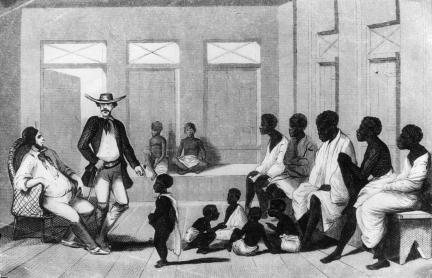
Nothing says “racial insensitivity” quite like invoking slavery to describe something that you don’t like. I’ve written before about the unbearable whiteness of homebirth advocates, and the white homebirther’s burden, but Jan Tritten’s histrionic blather in this month’s issue of Midwifery Today reaches a new low.

Even as I copy these words, I cannot believe that Tritten had the unmitigated gall to write them:

… [The] anti-slavery movement parallels our movement to free women in pregnancy and birth from the jaws of the medical establishment. This plays out all around the world with some countries being worse than others. The treatment of motherbaby is often abusive—horrendously so. Perhaps nothing is as horrible as slavery and I don’t mean to downplay it in any way by this comparison, but the effects of pregnancy, birth and the first year of life affect both mother and child for their entire lives.

Before we parse this nonsense, let’s stipulate a basic principle: NOTHING is like slavery except slavery. Slavery, particularly the American enslavement of Africans in the pre-Civil War era, is uniquely evil. Treating people like property, stealing the work of their hands, tearing families apart: there is no parallel in human existence. To compare anything to slavery is to mitigate the evil of slavery. It is deeply insensitive at best and racist at worst.

Tritten’s claims skate perilously close to racism.

Homebirth advocacy does not parallel the anti-slavery movement and it is hideous to suggest that it does. The anti-slavery movement involved people willing to give their very lives to save the lives of those in bondage. The homebirth movement is a bunch of privileged white women mouthing off about their ignorant views of childbirth. The only people giving their lives in the homebirth movement are the babies who die at the hands of homebirth midwives.

The treatment of mothers and babies in first world countries is NOT abusive and it is hysterical to suggest that it is. Even the Childbirth Connection was forced to acknowledge in its Listening to Mothers II Survey that the vast majority of American women are very happy with modern obstetric care. It is hideous to compare the whippings, rapes and lynching of slavery to the hurt feelings of a fringe group of privileged white women who didn’t get the “birth experience” of their dreams.

Perhaps nothing is as horrible as slavery? Damn straight, nothing short of genocide is as horrible as slavery. I cannot begin to imagine how Tritten thinks there might be different opinions on this issue.

She doesn’t mean to downplay slavery in any way by this comparison? Merely making this horrific, absurd comparison DOES downplay slavery and that is inexcusable. I understand that she was trying to shock and outrage her readers by elevating childbirth disappointment to the level of slavery and that is every bit as disgusting.

Contrary to the fantasies of Tritten and her colleagues, homebirth midwives are not abolitionists. They are ignorant clowns who preside over the preventable deaths of infant. I’ve said this before, and I’ll say it again, I can write nothing as damning of the ignorance, narcissism and histrionics of homebirth advocates as they write about themselves.

Tritten should be deeply embarrassed by her racial insensitivity, but that, of course, is an oxymoron. Anyone willing to equate modern obstetrics with slavery lacks the intelligence and insight to realize the utter moral bankruptcy of her position.

If quoting homebirth advocates makes them look like fools, perhaps they should reconsider what they say

Fool Rubber Stamp

I’ve done it again. I’ve quoted someone word for word and exposed her as (choose one or more) selfish, ignorant, narcissistic, immature, willing to risk the life of her own baby, or all of the above. According to Kelly Winder of BellyBelly Australia, that makes The Skeptical OB a hate site.

As she wrote in the letter that accompanied her almost certainly frivolous filing of a DMCA notice:

I sincerely hope you can put an end to her site. She has caused so much stress, grief and negativity, this is not about informing people. This is a HATE website.

Really? I presume that a hate website is filled with hate speech, so it makes sense to define hate speech. According to Wikipedia:

Hate speech is, outside the law, communication that vilifies a person or a group on the basis of one or more characteristics such as color, disability, ethnicity, gender, nationality, race, religion, and sexual orientation.

Notice that the definition does not include stupidity, selfishness or related characteristics. It is not hate speech to point out ignorance or narcissism. In fact, in cases such as homebirth, pointing out the ignorance and/or narcissism of its purveyors could be considered a public service. Consider what is in the balance: lives of babies vs. self-esteem of homebirth advocates. No contest, if you ask me.

Here’s a newsflash for Kelly and other homebirth advocates: exposing you as a fool is not hate speech no matter how much you wish it were.

So Kelly and other homebirth advocates are as uneducated about hate speech as they are about birth, but there’s an even deeper issue that they fail to address.

I am scrupulous about quoting people accurately as opposed to paraphrasing them, and about linking to the original articles so my readers will have every opportunity to make their own judgments, whether that is on the validity of scientific papers or the impact of women’s birth stories.

The deeper issue that homebirth advocates fail to address is this:

If quoting you word for word, and linking back to everything you have written makes you look selfish or ignorant, perhaps you should reconsider what you are writing.

I’m not making you look like a fool, you are!

Sure I call attention to it, but as I’ve mentioned many times in the past, this website practically writes itself. Every day I wake up to a plethora of selfish, ignorant, narcissistic, immature statements made by homebirth advocates willing to risk the lives of their babies; all I have to do is choose which one to highlight. Unfortunately, some days I wake up to stories of babies who died preventable deaths all because their mothers believed that selfish, ignorant, narcissistic, immature claims of other homebirth advocates. I don’t flinch from exposing those, either. Frankly I think it is the least I can do for those poor babies, so their suffering (and many do suffer terribly) may prevent the senseless homebirth deaths of other babies.

If you publish something on the internet, it is PUBLIC. Therefore, anyone is entitled to read it and comment on it. There is no law that says that everyone has to view you as you view yourself. There is no law that says that hurting your feelings is illegal.

Let’s face, the NCB and homebirth advocates who post their birth experiences on the web are doing so in a deliberate attempt to garner support, and some people will support them. But just because they sought validation does not mean they are entitled to it or that anyone who doesn’t validate them is peddling “hate.”

I don’t hate any NCB or homebirth advocates. Frankly, they are simply not important enough to me. I don’t maintain this site for monetary gain; I lose money on it. I certainly don’t maintain the site because it makes me widely beloved. Writing for the site attracts a fair amount of abuse.

I don’t need anyone on the Web to like me or validate me. I have actual friends in real life to whom I can turn. I do this to educate people and my efforts seem to be pretty successful. Lots of NCB and homebirth advocates are afraid of me, refuse to debate me and try to convince others not to read me. What I write must be pretty compelling to engender such strong reactions from strangers.

NCB and homebirth advocates need to think about why they are condemning me. I quote you. If you seem foolish or ignorant or selfish it is because of what you write, not because of what I write. Maybe you should give some thought to whether you are foolish, ignorant or selfish instead of blaming me for pointing it out.

In the meantime I’ll continue speaking out on behalf of babies who don’t have to die. Someone has to since NCB and homebirth advocates apparently couldn’t care less.

My marriage: long – contains wedding disappointment/trauma

iStock_000000934163XSmall

What would you think of a woman who wrote the following:

“The morning after the wedding, I was alone with my new husband and all I could do was cry. I never thought the words trauma would come out of my mouth and be associated to my wedding but that was what I felt. I felt traumatised. Its horrible saying that because you feel like you should be grateful for this wonderful man you married. And I totally am grateful for him, but it’s 3 weeks later now but I still feel like I wish we weren’t married so we could start all over again, to try for a different wedding under different circumstances.”

What went wrong?

The bride had planned an outdoor wedding on a beautiful mountain top. She excitedly hired a tent and caterer and planned that guests would take the tram to the top.

On the day of the wedding disaster struck. No not the hurricane itself or the fact that it occurred smack in the middle of hurricane season, but the caterer who refused to work on a mountain top in a hurricane, the tent owner who insisted that the high winds would damage the tent and the tram operator who never showed up just because the wind was so high that the tram could not be used. She was forced to get married not on the lovely, sunny mountain top as she had planned, but in the spacious ballroom of the lodge. Yes the ceremony was exactly the same, the food was delicious and the guests were thrilled, but that doesn’t matter. The wedding was ruined and now she wishes she could have a do-over.

What would we think of such a woman? Most of us would probably think she was a spoiled and immature woman who made unrealistic plans for an outdoor wedding during hurricane season, who fixated on the venue and not the marriage, and who was ruining the honeymoon for herself and her husband because she could not let go of her unrealistic expectations and insisted on dwelling on her disappointment instead of enjoying her marriage.

We rarely hear such stories about weddings, but in the NCB and homebirth communities, stories of dashed unrealistic expectations among privileged women are par for the course. Consider the following on which the above example is based ([DRUG FREE] Daley Brae’s Birth *Long – Contains Birth Disappointment/Trauma*):

There is so much disappointment tied to this birth experience for me. The next morning I was alone with him and all I could do was cry. I never thought the words trauma would come out of my mouth and be associated to my own birth experience but that was what I felt. I felt traumatised. Its horrible saying that because you feel like you should be grateful for this beautiful little person you’ve been gifted with. And I totally am grateful for him – he has my heart and is such a beautiful little boy. Its 3 weeks later now but I still feel like I wish he was back inside me so we could start all over again, to try for a different birth under different circumstances.

What happened?

She had chosen an unassisted homebirth and “a physiological third stage this time, despite much criticism … as I’d had a retained placenta and PPH with DD2.” I’m not sure why she thought that was going to work out well. It’s the equivalent of planning an outdoor wedding in hurricane season.

When she went into labor, neither her family nor her doula was available to assist her as she had planned, so she went to the hospital. She had an uncomplicated, unmedicated vaginal birth, but that was not good enough:

My contractions were extremely intense and on top of each other and I hopped into the shower. I gradually felt the urge to push but the pressure in my bottom was unbearable… His was the longest 2nd stage out of my births… I pushed and I pushed and I pushed. The pressure in my bottom was unlike any pain I’ve felt. It literally felt like he was coming out of my bottom and not my vagina. At this point I lost control. I remember crying, screaming and swearing because it was too much… I needed those women who I had envisioned in my mind to be there. Women who knew me and what I needed and knew that I needed to feel like I wasn’t alone.

… [A]t some point the midwife revealed that he was posterior… I had a moment of clarity where I spoke to myself about just doing it. And I did. I pushed him to a point where he could no longer slide back in and finally he was born. It was 12.44am. I was on all fours and immediately spun around to take my son into my arms. He was quiet at first and needed some vigorous rubbing up to take his much needed breath. I talked to him and kissed and cuddled him – so relieved that he was alive

Then came the entirely predictable hurricane retained placenta and postpartum hemorrhage.

… I however continued to bleed sporadically and would not let go of my placenta. More hormones were injected into me, I was blew into a bottle and squatted over the toilet but my placenta was not ready to come. I even tried telling myself that it was time to let go of my placenta and birth it. But sadly that didn’t work either. So I was taken away from my baby yet again and whisked off to theatre for a manual removal where I lost a further litre of blood making a total of 1.7L blood loss

So let’s see. She had a healthy baby after an uncomplicated, unmedicated vaginal delivery. Then she had a retained placenta and hemorrhage (which had been predicted) and her life was saved by a manual removal. Now she’s disappointed. Why? Because it wasn’t exactly the way she envisioned it should be even though she was foolish to imagine that it could ever be the way that she envisioned it.

In other words, she experienced what passes for “trauma” in the NCB and homebirth community. She didn’t get exactly what she wanted dammit and she was disappointed.

That’s not trauma; that’s life.

Only the immature and self-centered believe that they are entitled to have all their dreams come true (no matter how unrealistic) and then cry “trauma” when it turns out that everything cannot always be the way they want it.


Addendum (2-14-13): Another legal eagle has decided to abuse the DMCA process. Kelly Winder the creator of the Australian website BellyBelly has filed a DMCA notice for the express purpose of shutting down my website. She helpfully explains why she is filing what is almost certainly a frivolous DMCA notice.

“… I am seeking that this ‘hate’ website get taken down as Dr Amy has an appalling history of trolling websites and doing this to women, but I don’t know if many of her victims have realized they can report this sort of thing (or understand how to do it).”

Apparently Kelly’s knowledge of the law is no better than her knowledge of birth. She doesn’t appear to understand that you cannot shut down a website with a DMCA notice or that using a DMCA notice for this express purpose is a violation of the statute, leaving her open to a lawsuit and monetary damages.

Kelly doesn’t understand that a DMCA notice merely requires that I remove the blocks of text temporarily. It does not prevent me from discussing the original post located on her website, linking to it, or linking to the cached version that anyone can read. And the best part: if Kelly doesn’t file suit against me within 14 days, I can put it all back. [3-4-13: She didn’t file suit and I put the quotes back.]

As you can see, the post is still here and we are still discussing it. So basically Kelly has made a complete fool of herself for no purpose at all and managed to expose herself to legal risk for abusing the DMCA process.