Category Archives: Uncategorized

Why are homebirth advocates lauding a sexual predator?

I’ve been getting lots of emails about People Magazine’s article on Kimberly Van Der Beek’s homebirth.

Kimberly is the wife of sitcom star James Van Der Beek. Facing a C-section for a breech baby, Kimberly met with Dr. Stuart Fischbein, “an angel in the birthing world,” who ultimately presided over the breech homebirth of her son.

My correspondents wanted to know why an MD would preside over a breech homebirth. I don’t know for sure, but it could be because Dr. Fischbein is a convicted sexual predator who lost his hospital privileges.

The offense was described by the Ventura County Star:

His patient, identified in Medical Board records as S.K., was 14 years younger than he and earning her doctorate degree in psychology. She came to Fischbein’s office in Century City with her fiancee. They wanted to have a baby.

… He performed surgery … to remove a mass in her uterus and called her “sweet pea” in the recovery room. He sat at her bedside for long intimate talks, testifying in a hearing he viewed her as not just a patient, but as a woman…

S.K. said Fischbein told her he would be a better father than her fiancee. He persuaded her to leave him.

They talked about the ethics of doctor-patient relationships. She said he told her he dated “bushels” of patients. Fischbein denied the comment or any other relationship with a patient.

She said he advised her not to have sex for four to six weeks after surgery. Fischbein said in court he didn’t remember the discussion.

Five days after she was released from the hospital and eight days after surgery, he called and asked to visit her at her home in Los Angeles. They had sex then and again two days later at Fischbein’s home.

He testified it was consensual. She said she viewed him as a doctor who had performed a surgery that was going to enable her to have a baby. He had become a hero who seemed almost “godlike.” And he was interested in her.

“I would have done anything he would have told me to do,” said the woman, who is suing Fischbein. “I look back with my hindsight and with my mind today and say, How could I have done this?'”

As a result, the California Board of Medicine placed him on probation for 7 years. The Board recently voted to continue the probation, expressing astonishment that Dr.Fischbein was attempting to produce a movie entitled Bedside Man to tell “his side” of the story.

In an effort to promote “Bedside Man” for financial investment to make a full length movie, the trailer was made accessible over the internet. One hospital where Petitioner was affiliated found out about it and contacted Petitioner’s psychotherapist… From her letter detailing the events, it appears that [she] was readily able to see the impropriety of the project while Petitioner had not. She told him that the project “did not represent him as a man who had made a terrible error in judgment.” [The psychotherapist] persuaded Petitioner that the project was an error and for the trailer to be removed from the internet. Petitioner has done so.

The Board did not terminate the probation, writing:

[He] views probation as punishment and an inconvenience… Although he no doubt has encountered difficulties practicing while on probation, he still tends to overstate those difficulties. He has openly chaffed at the requirement that he have a third party chaperone during interactions with female patients. It is clear that once off probation, the chaperone requirement would quickly disappear from his practice as the lessons learned from these events fade and the inconvenience grows…

The report concludes:

More alarming was Petitioner’s participation in the movie script and trailer. This activity shows that Petitioner still harbors bad feelings about what happened to him, suggesting that he does not fully believe he engaged in misconduct… Such a state of mind does not bode well for the proposition of removing Petitioner completely from the Board’s probationary oversight. In all, these events demonstrate sufficient concern over the course of Petitioner’s rehabilitation as to indicate that continuing probation with all terms should continue in order to protect the public…

How “educated” about homebirth was Ms. Van Deer Beek if she didn’t know her own provider is a convicted sexual predator?

And why are homebirth advocates lauding him?

As usual, Gina Crossly-Corcoran, The Feminist Breeder, captures the utter cluelessness of homebirth advocates:

I spent a dinner with the doctor who assisted her, Dr. Stuart Fischbein, OB/GYN, and wish we could clone him a thousand times. THIS is how you support women and healthy birth!

How charming. He’s a sexual predator and she wants to clone him a thousand times. I suspect it would be more accurate to say this is WHY Dr. Fischbein is promoting the grossly irresponsible practice of breech homebirth. How else is the guy going to make any money?

What’s Ricki Lake’s excuse for featuring a convicted sexual predator on her talk show.

Why is the Society of Obstetricians and Gynecologists of Canada (SOGC) supporting a conference on breech birth where a convicted sexual predator is one of the featured speakers.

I’d love to hear their explanations. I guess it adds new meaning to the expression “with women.”

Sexual exploitation of a patient is probably the most egregious violation of professional conduct that any obstetrician-gynecologist can commit. I am appalled that homebirth advocates are lauding a man who is a convicted sexual predator, one who doesn’t even acknowledge the gravity of his offense. Ricki Lake, the SOGC and everyone else should sever ties with this man immediately or explain to the rest of us why they are promoting the career of a man who has committed a hideous violation of a woman’s trust.

Except for the nerve damage, the baby was “unscathed”

How selfish and immature do you have to revel in the homebirth of a baby who suffered nerve damage as a result?

An initial check reveals a brachial plexus palsy in her right arm, a tender neck, and some bruising, but otherwise Virginia has come away unscathed.

Melanie, you ought to stop congratulating yourself for risking and then injuring her daughter. She did not come away unscathed. She suffered nerve damage which may lead to lifelong paralysis of her arm.

The story is classic homebirth stupidity and self-deception:

The next day (42+1) I called Debbie to talk options. I was DONE. I was pretty sure that if she broke my water I’d go quick, but neither of us really wanted to do that cold. We also discussed doing a biophysical profile with the OB on Monday, but I didn’t like that much either. We finally decided to try stripping my membranes again, and if that triggered labor Debbie would come break my water. We were committing–no fizzling out this time. At the appointment I measured 37 weeks and wondered if the baby was losing weight. Ha!

Awesome! Postdates and possible failing placenta.

Anyway, the stripping worked and on the way home I started having some decent contractions, about two minutes apart. They remained consistent throughout the car ride and during a brisk walk with my mom at home. After about an hour of consistent contractions I called Debbie to tell her I was in labor, and she said she’d come over. I also called my sister Jenny and friend (and doula) Pam.

We packed the girls off with my dad, and Jamie, my mom, and I waited, me laboring on the birth ball. Jenny arrived, followed by Rachael, Corrinna (the apprentices), and Pam. I felt strange that all these people were here to watch me, and a little self-conscious. Were there too many people? Later I’d be grateful for all those hands…

Her husband and 6 other people watching. So much for the intimacy of homebirth.

Melanie’s labor progressed uneventfully. Then:

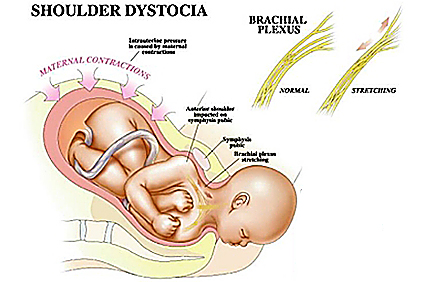
At this point things get a little hazy for me. I remember what happened but not really how it felt. It seemed quick and so slow at the same time. I was semi-sitting as I pushed the head out. When Debbie told me to flip onto my hands and knees, the doula in my head immediately turned to that page in Ina May’s Guide to Childbirth about the Gaskin Maneuver. Shoulder Dystocia.

Don’t think, just do what she tells me. Stand up. No, this isn’t working. Walk (waddle) to the bed. I end up on my hands and knees, gripping the headboard, pushing with all my might while Debbie pulls desperately on the baby’s head. Please, baby, please come out! I had no urge to push, but was trying as hard as I could. Still not working. Flip over, Melanie. Knees to your ears. PUSH!

I don’t remember the pain, but I remember how hard it was. How ineffective it felt. Everyone around me encouraging me, begging me to push, and feeling like it wasn’t doing a damn thing. How much time has gone by?

Surprise, being able to move freely does not prevent shoulder dystocia! Surprise, the Gaskin maneuver fails! What works? Surprise, being flat on her back, purple pushing and the McRoberts maneuver!

Debbie finally reaches her arm inside me, behind the head, and releases the shoulder that is stubbornly caught on my pubic bone. I feel the baby come out of me. Finally! I cry. I can’t look down, not yet. I’m waiting. Debbie is rubbing the baby with a towel. Then I hear it, the sound I’m waiting for. A sweet baby cry. Oh my God! The sweetest sound in the whole world. I cry harder and look down at my baby. My relief in this moment is as powerful as the contractions that were gripping my body minutes ago. Debbie places Virginia on my belly and I meet my baby girl. She is beautiful and perfect…

No, Melanie. She is not perfect. She is hurt. Her arm is paralyzed. It may be temporary; it may be permanent. That’s going to be a serious problem if she is right handed. You’ve just paralyzed her dominant arm.

Perhaps Melanie thought that the only danger to her baby was the danger of death. That was indeed a real danger and is the worst possible outcome of a shoulder dystocia. However that is not the only outcome. A much more common outcome of shoulder dystocia is damage to the nerves that supply the arm with temporary or permanent paralysis as a result.

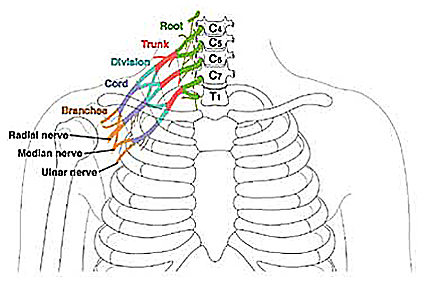
What is the brachial plexus? According to the University of Pittsburgh Department of Neurological Surgery:

Brachial relates to the arm and plexus pertains to a network of nerves. The brachial plexus forms a network of nerves that conduct signals that control the muscles of the shoulder, arm, elbow, wrist, hand and fingers.

How does an injury occur?

The mechanism(s) by which the brachial plexus is injured is most often attributed to severe lateral flexion of the neonate’s neck when the shoulder is stopped most often at the pubic bone (“shoulder dystocia”) during delivery. The extent of the traction on the brachial plexus may result in various types of injuries to the nerves, from a simple mild stretch injury up to and including avulsion (separation) of the nerves from the spinal cord.

The following illustration shows how the nerves travel through the neck to the arm.

You can see how pulling the head down to dislodge the shoulder can stretch and injury these nerves.

The result is a specific type of paralysis, an Erb’s palsy, also known as the waiter’s tip deformity, because it looks like a waiter reaching back for a discreet tip.

The nerve damage my resolve on its own, improve with physical therapy or require surgery under general anesthesia to repair. If a nerve has been severed, as opposed to stretched, repair may not be possible and the deficit will be permanent.

Melanie does not understand this yet:

We all slowly start breathing normally again, and then even begin smiling, laughing, joking. Crisis over! A child is born! Joy! About 90 minutes later Debbie does the newborn exam. The moment of truth: Debbie weighs Virginia. “Mind if I snicker?”, she says after reading the scale to herself. She turns it around and we all shriek. 10 pounds!! What?! I just gave birth to a 10 pound baby. In my bed. At home. Surrounded by people I love and trust. More Joy. My heart swells. What an experience!

If the deficit is permanent, Melanie will learn a lot more than she ever wanted to know about nerve damage.

She’s right about one thing, though. It was all about the experience, HER experience. I wonder how she will explain to her daughter that a permanently disabled arm was a small price for Virginia to pay for Melanie’s birth experience.

The firemen ruined my hearth experience

OMG, Mamas, I am so traumatized by my latest hearth experience. I was planning to go entirely natural at home and then everything was ruined by the firemen.

The story of this trauma begins with my last hearth experience. I was so uneducated that I believed all the fear mongering around fire in our society. I built my first fire in a fireplace, induced it with chemical saturated matches, and sped it up by artificial means (a Duraflame block). My husband thought that I should be grateful for a warm and pretty fire, but I felt completely violated. Where was the wildness, the raw, primeval power of fire? Where was the spirituality that our foremothers associated with this precious miracle?

This time I vowed things would be different. I educated myself by reading books and websites about natural fires. Human beings have been using fires since before the beginning of recorded history. They spent countless nights sheltering in the warm glow of fires built at the mouths of caves, safe in the knowledge that the sacred fire would scare off predators and illuminate dozens of intimate sexual acts occurring simultaneously among the many members of the tribe.

I learned that fear mongering about fire is vast conspiracy created by those who stand to profit from denying the safety of the fire experience … like Big Extinguisher and the brick manufacturers who create the bricks that line fireplaces. And let’s not forget firemen. They make 100% of their income by convincing people that fires are dangerous and ought to be put out. If fires are so unsafe, how could the human race have survived millions of people sitting around millions of fires for millions of years? If fire were dangerous, we wouldn’t be here.

I planned a completely natural home bonfire. I decided that I would not be forced into managing fire by building my fire in a hearth. No, if my ancestors could build fires in caves, then I could build one in my living room. I used only all natural materials; no matches for me. I waited until I spotted a small brush fire near my neighborhood, ran out with the candle I dipped by hand (I crocheted the wick from hemp) and capture the sacred natural fire. The I piled the branches and kindling high in a kiddie pool in my living room and trusted fire.

My husband and I caressed each other in the glow of our totally natural bonfire. Sure, it was painful when my eyebrows got singed, but I was empowered by that pain.

Unfortunately, our bonfire was one of the exceedingly rare, entirely unpredictable times that fire did a bit of damage to the structures around it. Yes, it is true that the drapes did go up in the conflagration, the whole second story of our house burned off and the neighbor’s house caught fire. Complications do sometimes occur, and that’s why I was prepared. I immediately dialed 911 to summon the fire department and that was when all hell broke loose.

Instead of respecting the sacred nature of our hearth experience, the firemen charged in and immediately started using technology. Sure, they saved the rest of the house (the second floor was a total loss) and the other houses in the neighborhood, but they used far more water than necessary and cut the parts of our house that were still standing with axes. It will be along time until we can remove the scars from the walls. And don’t get me started on the water damage inflicted on the drapes that had survived the flames.

I have been deeply traumatized that our house was violated by total strangers.

I still trust fire, though, and will prove it.

As soon as I recover from my third degree burns I plan to build an even bigger all natural fire in the living room of our homeless shelter.

Sheila Kitzinger and the ultimate first world problem: I didn’t have an orgasm in childbirth

Childbirth activist and social anthropologist Sheila Kitzinger has helpfully identified the ultimate first world problem:

I didn’t have an orgasm during childbirth.

That’s what I took away from today’s piece in The Telegraph entitled Is childbirth orgasmic? I think not, Sheila Kitzinger.

Don’t be misled by the title. The article is a puff piece (“Would you like a cocktail?” she twinkles. It is 11.50am. I immediately soften.” “She has an impish gleam in her eye, and I can’t help but smile …”), but it serves to highlight many of the themes of this blog.

1. First world problems

What are first world problems? As the website First World Problems explains, “It isn’t easy being a privileged citizen of a developed nation.”

Consider:

The sun is too bright for me to read my iPhone screen.

Or:

I can’t find the remote.

Sheila Kitzinger is deeply concerned with first world childbirth problems:

“Poor, poor you! I hear from women in their sixties and seventies who are still unable to recover emotionally from the terrible births they went through half a century previously.

Kitzinger cites the example of a distraught woman, a teacher who could control a class of 30 unruly 10 year-olds, but was “powerless” when she had her baby because agreeing to pain relief led to a cascade of other interventions.

“Because women are terribly self-critical, if a mother has a bad birth experience at the hands of an overwhelming technocratic system, she feels in some way responsible and is tormented about whether or not she did the right thing,” says Kitzinger.

2. Problematizing childbirth interventions

As Madeline Akrich and colleagues explain in Practising childbirth activism: a politics of evidence:

What do childbirth organisations in Western countries do? A review of existing literature reveals a degree of similarity in their causes which cluster around four key goals: (1) problematising medical/technical intervention in birth; (2) promoting “natural”/”normal” or “mother friendly” birth; (3) demanding birth practices and settings that are attentive to and respectful of the desires of birthing women and their families and (4) championing women’s right to make informed choices about type and place of birth.

Or, as Kitzinger explains:

“Doctors use threats that undermine women’s confidence in themselves and their bodies. They say, ‘You must think of your baby,’ even in cases that are low-risk, and once a birth is medicalised then the woman becomes a vessel, she is treated like a child – and a not terribly bright child at that.”

3. Re-enchanting childbirth

Rutherford and Gallo-Cruz in an article entitled Selling the Ideal Birth: Rationalization and Re-enchantment in the Marketing of Maternity Care describe the re-enchantment of childbirth:

In many ways, the contemporary scene of childbirth services can be characterized as one of cyclical rationalization, re-enchantment, and rationalization. In the first half of the 20th century, childbirth was subject to intense rationalization and birth was culturally transformed from a potentially risky even to a pathogen-like state to be medically managed and controlled…

As is often the case, rationalization came with dehumanizing consequences … The birth experience was stripped of many of its subjective qualities… [A] techno-scientific approach to birth often denied — and at least downplayed — the sense of mystery, spirituality and aesthetic beauty that have accompanied childbirth throughout most of human history. Scientific rationalization, in Weber’s words, meant that the birth experience was “disenchanted.” …

However, the natural birth movement attempts to re-enchant birth by allowing nature — unpredictable and uncontrollable — to have free reign and by recapturing the subjective experience of birth with its sensuality and mystery. This is most clearly seen in the emphasis by homebirth advocates on the spiritual and/or symbolic meaning of birth…

[I]t is also seen in the emphasis on the birthing mother’s individual empowerment as well as the important of birth being a shared family experience, as these themes reassert the power of human autonomy and interpersonal connection over the dehumanizing aspects of birth in the technocratic model.

Hence Kitzinger’s instance on the intimacy of birth.

[Midwives] can draw on their own knowledge and experience to help the woman have the best, most intimate birth possible.” …

There are few more intimate places than the house, possibly even the room, where the baby was conceived…

“Too many women end up giving birth in a roomful of people, which doesn’t make for an intimate experience,” says Kitzinger. “If they crowded around when you were making love, you wouldn’t have many orgasms then either, would you?”

4. Lies

When all else fails, childbirth activists resort to lies like “orgasmic birth.”

Orgasmic birth was never described in the long history of human birth until the 1990’s and still is to be restricted only to upper and middle class white women in first world countries who have read the natural childbirth literature. In other words, it is a complete, and self-serving fabrication of childbirth activists. Sheila Kitzinger is no exception:

In … her 34th publication, Kitzinger celebrates the eroticism of childbirth, and likens the second stage of labour to “a multiple orgasm that comes in great rushes with each longing to push” and “the most intensely sexual feeling a woman ever experiences”.


The amalgamation of problematizing interventions, re-enchanting birth and outright lies is undoubtedly seductive. The author of the piece, who came to the interview angry with Kitzinger, left appropriately devastated by her “loss.”

Would reading Kitzinger’s book before my second baby have changed my view of childbirth? If I’m honest, no. I was too damaged. But I do wish I’d called her Birth Crisis helpline.

She says she would have recommended that I seek out the services of an independent midwife, not just to care for me, but to be my advocate.

I had fully intended to be in control when I brought my babies into the world, but having ceded a little power, I somehow lost it all. And looking back I realise that sometimes what women truly need in childbirth isn’t drugs, but a voice. A voice a little like Sheila Kitzinger’s, perhaps.

Kitzinger’s voice may be seductive, but what she whispers is poison.

“Poor, poor you.” You shouldn’t be happy with a beautiful child; you have been robbed; it was fear, not childbirth, that caused your excruciating pain.

“Poor, poor you.” You gave birth all you got was a healthy baby … and you didn’t even have an orgasm.

The difference between skepticism and denialism

Why are those who battle pseudoscience called skeptics?

It’s not because they are skeptical in the colloquial sense. Rather, the term refers to the philosophy of skepticism. According to Wikipedia:

Philosophical skepticism is an overall approach that requires all information to be well supported by evidence…

In philosophy, skepticism refers more specifically to any one of several propositions. These include propositions about:

(a) an inquiry,
(b) a method of obtaining knowledge through systematic doubt and continual testing,
(c) the arbitrariness, relativity, or subjectivity of moral values,
(d) the limitations of knowledge,
(e) a method of intellectual caution and suspended judgment.

Why aren’t those who are skeptical of scientific consensus on issues like vaccines and evolution skeptics? They are denialists as Andrew Dart explains in an chapter from Building your Skeptical Toolkit:

… [T]here are a lot of people who like to call themselves skeptics but who it can be strongly argued are anything but. There’s HIV/AIDS skeptics, global warming skeptics, moon landing skeptics, evolution skeptics, holocaust skeptics, 9/11 skeptics and vaccination skeptics, to name but a few. But while there may be some people who would use these labels who could legitimately be described as skeptics the vast majority of them are not practicing skepticism at all, but rather skepticism’s evil twin, denialism.

What’s the difference between skeptics and denialists?

Denialism … is driven by ideology rather than evidence. Now denialists may claim they care about the evidence and will happily display any that supports their point of view, but in most cases they reject far more evidence than they accept. Furthermore, denialists will cling to evidence no matter how many times they have been shown that it is flawed, incorrect or that it does not support their conclusions; the same old arguments just come up again and again. Denialism also tends to focus on trying to generate a controversy surrounding the subject at hand, often in the public rather than scientific arena, and does so more often than not by denying that a scientific consensus on the matter even exists.

It’s easy to see how vaccine rejectionists and creationists are denialists. Though it isn’t as obvious, natural childbirth and homebirth advocates are denialists, too. They deny the scientific consensus of modern obstetrics. And natural childbirth and homebirth advocates share key attitudes with vaccine rejectionists, creationists and other denialists.

1. Denialists love of conspiracy theories.

As Dart explains:

So the vast majority of the scientific community and an overwhelming mountain of evidence is aligned against you, what are you going to do? Well you could always claim that there is a conspiracy to supress the truth and that the scientists working in the field are engaged in a complex cover up for some bizarre and often undefined reason…

Vaccine rejectionists are blunt about their favorite conspiracy: Big Pharma is in cahoots with Big Medicine to make money from useless and/or harmful vaccines.

Natural childbirth and homebirth advocates do include some blunt conspiracy theories like the idea that C-sections occur because obstetricians want to get to their golf games, but professional NCB and homebirth advocates are more subtle. They assert an acculturation conspiracy, whereby doctors are “socialized” to participate in the conspiracy to foist harmful/scientifically unsubstantiated practices on women.

Most scientists are viewed as simply towing the party line and it is assumed that none of them ever comes to their own conclusions based upon the evidence; they just believe what they are told to believe. As for the peer review process, well that is just a tool of the conspiracy to make sure that only those papers that agree with the conspirator’s message get published.

Conspiracy theories, whether blunt or subtle are nothing more than evasions.

These conspiracy theories never attempt to actually address the evidence; rather they seek to dismiss it entirely as a fabrication of unseen forces. Furthermore no explanation as to how a conspiracy so vast that it encompasses every scientist in a given field, as well as every student studying to become a scientist in that field, can maintain itself without someone blowing the whistle is ever given, and reasons why the conspiracies exist in the first place are equally rare and incoherent.

2. Denialists love fake experts.

Fake experts are defined as people who claim to be experts in a given field but whose opinions differ greatly from the consensus of scientists working in that field and from
established knowledge…

NCB and homebirth advocacy are filled with fake, self-appointed “experts,” like Henci Goer who has no training in obstetrics, midwifery or statistics or Barbara Harper who cheerfully acknowledges that her entire career promoting waterbirth is based on an article she read in the National Enquirer.

3. Denialists love cherry-picking.

Cherry picking is the act of selecting papers and evidence that seem to support your point of view, whilst at the same time ignoring the far greater body of evidence that goes against
your position.

NCB and homebirth advocates make cherry-picking even easier than usual since they don’t even bother to read the articles they cite.

4. Denialists love impossible expectations

Hence the insistence by vaccine rejectionists that we don’t know if vaccines are effective if we don’t have a randomized controlled trial of vaccines vs. placebo, an experiment that would be unethical. The latest garbage on homebirth from the Cochrane Review falls into the same category; the authors make the absurd claim that in the absence of randomized controlled trials of homebirth means that there is no evidence that hospital birth is safer than homebirth.

5. Denialists love logical fallacies.

I’ve written extensively about the logical fallacies favored by NCB and homebirth advocates including the argument from ignorance, and the fallacy of the lonely fact.

Dart’s conclusion is one that anyone who cares about scientific integrity should keep in mind:

It is not the topic that makes someone a skeptic or a denier, it is how they handle evidence that contradicts their pre-existing beliefs. Do they resort to claiming there is a conspiracy to suppress the truth in order to explain why the evidence is against them? Are the people presenting the argument actually experts in the topic at hand? Do they cherry pick the data and only present those findings that agree with them? And do they constantly move the goalposts and make use of logical fallacies in defense of their claims? If you keep a look out for these five things then you should have a good idea whether you are dealing with a genuine skeptic or a closed minded denier.

How does a dead baby heal from a failed homebirth?

Ever notice how often the word “healing” is bandied about in homebirth circles?

Type the words “healing homebirth” into Google and you get more than 750,000 links almost all of which describe the “trauma” of a “failed” attempt at vaginal birth, or the need for a C-section or a failed previous homebirth.

I have a question for all those women contemplating “healing” through homebirth. How does a dead baby “heal” from a failed homebirth?

Today’s post on Guggie Daly’s cesspit of misinformation website is typical. Entitled Healing from a Homebirth Transfer, it  includes the usual self-absorbed, self-serving drivel:

I gave birth on Saturday to my fourth baby. A boy. He is beautiful and healthy. It was an intended homebirth. I had seen a well respected midwife beginning at 8 weeks into the pregnancy. I got to 41 weeks 3 days when she wanted me to have a biophysical profile done.

Well, my baby failed the test. They gave me a 2 for fluid levels and said my placenta was a grade 3. She came to my home to tell me we needed to induce… I was made to feel selfish, and that I would be saved by this almighty induction.

Now, I am grieving. I will never have my peaceful home birth. I will never be without the trauma of 36 hours of labor. I will never get back the lost moment …

In other words: I had a hospital birth and all I got was a healthy baby.

I feel as if I cannot forgive them and I am struggling so badly with this. I am of course very thankful for my boy. He’s perfect. And I thank God he IS okay. But that doesn’t take away the hurt. I will always feel robbed. I know he would’ve been okay and that I should’ve walked out of that hospital.

Really?

That’s what Sadie’s mother thought and Sadie ended up with a profound brain injury.
That’s what Serentity’s mother thought and Serenity ended up dead.
That’s what Joshua’s mother thought, and he died, too.
This mother had a “successful” VBAC and her daughter is permanently brain injured.
How about Vera?
Or Charlie?
Or the dozens of other babies I have reported on over the years including two babies currently struggling to survive severe brain injuries that occurred at two separate homebirths in the past 2 weeks?

Evidently a mother “heals” from a non-vaginal birth by risking the life of her next baby. But how does a baby “heal” from a failed homebirth?

How does Sadie or Charlie heal from the loss of brain function that will leave them profoundly impaired for the rest of their lives.

How do Vera or Joshua or any other the other babies who died “heal” from being dead?

They don’t, but who cares? Homebirth is always and only about the mother’s feelings and bragging rights. Apparently a brain injured or dead baby is a small price to pay for the mother’s “healing.”

Ethical problems with breastfeeding promotion

I’ve written extensively about the misguided attempts of breastfeeding activists (lactivists) to promote breastfeeding.

The dirty little secret about the latest efforts to promote breastfeeding (prohibiting formula gift bags, denying bottle feeding WIC mothers the same benefits as breastfeeding mothers, hiding formula in hospitals) is that they are purposely punitive, vindictive and serve only to bolster the self image of those implementing them…

This is just one reason why contemporary efforts at breastfeeding promotion are ethically problematic. Dutch philosophy professors Jessica Nihlen Fahlquist and Sabine Roeser have written a fascinating paper on the topic entitled Ethical Problems with Information on Infant Feeding in Developed Countries.

The authors argue:

… current breastfeeding policies have ethically problematic consequences for individual women, e.g. for women who experience physical and emotional difficulties when trying to breastfeed and for women who have other good reasons not to breastfeed. These arguments are strengthened by the fact that there are scientific studies in respected journals that cast doubt on the commonly accepted claims that breastfeeding is more beneficial to the health of babies and mothers than formula. Our discussion is based primarily on insights provided by literature on the
ethics of risk.

The authors address many ethical problems including:

1. Lactivists are not honest about the very real difficulties and drawbacks of breastfeeding.

… [E]ven though most women plan to breastfeed for a substantial period and think it is the best food for infants, many new mothers experience physical challenges at least in the beginning and some for the whole breastfeeding period. Many mothers give up breastfeeding. For example, in the Netherlands, although 81% of the women breastfeed exclusively after birth, only 48% do so after 1 month, 30% after 3 months and 23% for at least the recommended 6 months. The most important reasons mothers stated for giving up breastfeeding within or after the first month was that it was painful and that they did not have sufficient milk. Other commonly mentioned reasons for stopping were, concerning the mother: tiredness, weight loss, use of medication and better sleep at night; concerning the baby: tummy aches and restlessness, dissatisfaction, hunger and that it did not grow well. Some women mention work as a reason to stop breastfeeding. In the Netherlands, maternity leave lasts until three months after the baby is born, and many mothers take prolonged parental leave afterwards, so only after 2 months this becomes an important argument for a larger percentage of women to stop breastfeeding.

The unfortunate truth is:

Although problems with breastfeeding happen frequently, this is hardly ever mentioned in official documents, giving women the feeling that they are alone with their difficulties. Rather, it is generally emphasized that ‘all women can breastfeed’—implying: ‘if they want’. Stating that all women can breastfeed and combining it with statements like the following: ‘Every day
you breast feed makes a difference to your baby’s health now and in the future’ (UK NHS, 2011) are likely to have negative effects on non-breastfeeding mothers. The implication for these women is that they are not trying hard enough and that they are not sufficiently concerned with their child’s current and future health.

2.  Lactivists point to a small decrease in the risk of respiratory and diarrheal illnesses in the first year, and ignore the many factors that individuals consider in risk assessment.

Social scientists and psychologists have shown that most people use a broader notion of risk that includes additional factors, such as available alternatives, whether an activity is freely chosen, and whether risks and benefits are fairly distributed.

Lactivists completely ignore fact that the benefits of breastfeeding are seen across large populations, and do not necessarily apply to individual mother-infant pairs. According to lactivists, every mother, regardless of her circumstances, should breastfeed.

Mothers are basically told that unless they have HIV, they ought to breastfeed and what they may consider reasons to stop are not ‘acceptable’ reasons. Although emotions are
mentioned in the documents concerning breastfeeding, it is only the positive emotional experiences of bonding and being close to one’s baby that count… [N]egative emotions should also be considered valid …

3. Lactivists are not honest about the acceptability of alternatives to breastfeeding. In particular, they like to pretend that the risks of formula feeding in developing countries can be extended to first world countries.

There may of course be good reasons to promote breastfeeding in certain contexts, for example, in developing countries, where clean water is not available or parents are poor and might dilute formula, which means that babies will run the risk of becoming undernourished. However, a problem arises when a policy to promote breastfeeding to prevent children in underdeveloped countries to die or become sick is generalized to apply to all contexts and all families. The availability of alternatives is very different in developing versus industrialized countries.

4. The assertion that breastfeeding is “natural” is ethically meaningless.

A common fallacy in thinking about risks is to assume that nature is benign, and technology is malicious. However, this view of nature is empirically false …

Naturalness is usually considered and presented as a good thing, something which we ought to strive for and want… However, in spite of the positive connotations of naturalness, there are many philosophical problems with the concept of naturalness. The concept is vague, value-laden and even political. First, it is extremely difficult to say for sure what is natural and what is unnatural. Second, many things we appreciate today would not be considered natural, yet we prefer the new unnatural instead of the traditional, natural thing. For example, people today see glasses,
central heating, means of transportation … as necessary tools which facilitate daily life tremendously… That breastfeeding is natural and bottle feeding not is in itself not an argument in favor of the former. To say that something is natural is not really to say anything, since that could be good or bad. If breastfeeding is said to be natural and therefore preferable, this is a fallacious argument in which the descriptive and the prescriptive dimensions are blurred.

5. The lack of balanced information.

For example, it is said that breastfeeding is more convenient than bottle feeding… However, women who experience physical and emotional challenges when trying to breastfeed are not likely to perceive it as convenient…

It is often emphasized that breast milk contains more optimal nutrients than formula milk and that it always adjusts itself to the development of the baby. This information has to be nuanced by the fact that mothers who breastfeed need to give their babies the supplemental vitamins K and D, which are contained in the right doses in formula milk. Furthermore, studies have shown that breast milk can contain chemical contaminants…

The claim that breastfeeding helps mothers get back into shape should also be nuanced. Some women only start losing weight after having stopped breastfeeding…

6. The refusal to acknowledge that many of the purported medical benefits are not back by solid scientific evidence.

… [T]here are scientific studies in respected journals, including metastudies, that actually cast doubt on claims about the medical benefits of breastfeeding.

The authors’ conclusion is that the current message sent by public health authorities is unacceptable:

The way breastfeeding is currently promoted by WHO, UNICEF and the national health authorities does not respect mothers as autonomous beings capable of making good decisions
for themselves and for their families. Breastfeeding is a very personal matter and women who have physical and emotional problems with it or, for other completely valid reasons, prefer not to breastfeed, are made to feel inadequate as mothers, and perhaps even as women, and made to feel that they are not doing what is in their child’s best interest. This is a powerful message to vulnerable mothers, especially first-time mothers… We have argued that the current message sent by public health authorities is unacceptable. Public health policy should be compassionate and take the negative as well as the positive emotions associated with infant feeding into account. It is the responsibility of providers of information on infant feeding and of health care providers to encourage parents to make an informed individual choice.

In other words, contemporary lactivism isn’t merely based on inaccurate factual claims, it is also ethically suspect.

Henci Goer, like all quacks, has a problem with scientific evidence

Henci Goer has staked her career on a simple premise: scientific evidence supports natural childbirth.

In her book, The Thinking Woman’s Guide to Childbirth, Goer, declares:

“Obstetric practice does not reflect the research evidence because obstetricians actually base their practices on a set of predetermined beliefs. If you start from this premise, everything about obstetrics, including the inconsistencies between research and practice, makes sense…

There’s just one teensy, weensy problem. Actually, it’s a big problem. Obstetric practice IS based on scientific evidence. Moreover, a large and growing body of research has failed to support the central claims of natural childbirth advocacy.

What to do? I posed that question back in December 2009.

… [Midwives] could address this problem in several ways. Midwives could modify their specific ideological beliefs on the basis of scientific evidence. Childbirth educators could question whether ideology has had an inappropriate impact on the promulgation and validation of their recommendations. Both those approaches would involve a threat to cherished beliefs. They, therefore, have taken a different approach. They’ve tried to justify ignoring scientific evidence.

That’s precisely what Henci Goer has tried to do in her new book, Optimal Care in Childbirth, written with Amy Romano, CNM, another professional natural childbirth advocate.

Chapter 2 is entitled Why This Book? The Failure of Obstetric Research. What is the failure? Scientific research has “failed” to support Henci Goer’s beliefs. She could, of course, modify those beliefs to reflect the actual scientific evidence. Instead, she attacks the very idea of scientific evidence.

After years of relentlessly insisting that anyone who has a professional or personal interest in childbirth must follow the scientific evidence, Goer does an about face, insisting that the scientific evidence can be ignored because it suffers from problems.

Problem #1: The highest quality scientific studies do not support NCB tenets.

Scientific studies have a hierarchy of reliability. The highest quality studies are randomized controlled trials (if they can be done ethically), followed by other types of experimental studies, population based studies, an observational studies. At the bottom of the hierarchy are case reports, which are simple observations.

“Solution”: Insist that the hierarchy is arbitrary, and that the weakest type of studies should be considered the strongest:

Nowadays, experts reject this hierarchy. Jadad and Enkin (2007) write, “We believe that the … tendency to place RCTs at the top of the evidence hierarchy is fundamentally wrong. Indeed, we consider the very concept of a hierarchy of evidence to be misguided and superficial. There is no ‘best evidence: except in reference to particular types of problem, in particular contexts”. Case reports, for example, can serve as a warning of serious problems too rare to be detected by RCTs, and observational studies are often the only way to gather information on long-term outcomes. In addition, grading the validity of the evidence according to this hierarchy can be misleading. The conclusion of a systematic review of several small, poor-quality RCTs will outrank the results of a single, large, high-quality RCT, and valuable data from well-conducted observational studies are often excluded altogether.

Experts rejected this hierarchy? Anybody besides noted natural childbirth advocate Murray Entkin and his colleague? Nobody else that I (or Henci Goer) could find.

Problem #2: Studies that look at large groups do not support NCB dogma.

… [Scientific studies] aggregate populations and include and exclude participants based on predetermined criteria. This means that, however valid the results may be for the study population, they cannot be generalized with certainty to populations with different characteristics under different circumstances, or even to individuals within the study population.

Duh! That’s the definition of a scientific study. It uses specific criteria. That’s why the results are valuable.

“Solution”: insist that each person is radically unique.

This is a classic technique in quackery. As Boudry and Braekman explain in Immunizing Strategies and Epistemic Defense Mechanisms:

… [I]n discussions about alternative medicine one often hears the claim that each person or patient is “radically unique”, thus frustrating any form of systematic knowledge about diseases and treatments. Of course, advocates of unproven medical treatments use this argument as a way to deflect the demand for randomized and double-blind trials to substantiate their therapeutic claims. If each patient is radically unique, there is no point in lumping patients together in one treatment group and statistically comparing them with a control group… The argument is so convenient that it has been borrowed as an immunizing strategy by countless alternative therapists …

Problem #3: Studies done by actual scientific researchers fail to support the precepts of NCB.

“Solution”: Declare, without any evidence, that scientific researchers are biased.

That medical-model management and its precepts form the backdrop of every study has consequences for the obstetric research … First and foremost, this renders the effects of the medical management model invisible in the same way that fish do not notice the water in which they swim. Under this model, what procedures, drugs. tests, and restrictions the woman undergoes depend little on her condition and almost entirely on her care provider’s philosophy and practices…

Really? Fish don’t notice the water in which they swim? And what has that got to do with anything? If bias affects the results of scientific studies then Goer should be able to show that bias affects the outcome of scientific studies. Simply declaring it is not enough.

Problem #4: Studies that look at bad outcomes don’t support NCB beliefs.

“Solution”: Insist that everything, even bad outcomes, is just a variation of normal.

… [A]lthough all biological processes have wide normal ranges, the medical management model has imposed ever narrower definitions of normal on the physiology of pregnancy and labor without regard for whether certain deviations from the norm represent real problems. Studies then hold women and babies to these restricted parameters, classifying deviation as abnormal…

I could go on and on, but I think you get the idea. The real “problem” is that obstetrics is evidenced based and the philosophy of natural childbirth is not. The “solution” is simply to ignore the scientific evidence.

This is old news in the world of quackery. As Professor Rory Coker explains in Distinguishing Science and Pseudoscience:

Pseudoscience appeals to the truth-criteria of scientific methodology while simultaneously denying their validity. Thus, a procedurally invalid experiment which seems to show that astrology works is advanced as “proof” that astrology is correct, while thousands of procedurally sound experiments that show it does not work are ignored…

Just replace astrology with “natural childbirth” to replicate Goer’s claims. Indeed, every one of Goer’s “solutions” is also invoked by creationists, climate denialists, AIDS denialists and other quacks.

Natural childbirth advocacy is quackery. That’s why Henci Goer is reduced to parroting the classic claims of quacks to defend it.

Hannah Dahlen, waterbirth fatalities are not a medical myth

Australian midwife Hannah Dahlen continues spouting nonsense and lies. The latest example is a piece in The Conversation about waterbirth. It seems worthwhile, therefore, to reprint a post about waterbirth fatalities that first appeared in May 2010.

Waterbirth has become a central component of “natural” childbirth dogma, despite the fact that for primates giving birth underwater is entirely unnatural. You don’t need a medical degree to appreciate the idiocy of birth in water. The most critical task for the newborn is to take its first breath. Inhaling a mouthful of fecally contaminated water instead of air is profoundly dangerous. Not surprisingly, as the popularity of waterbirth has grown, the number of neonatal deaths directly attributable to it has grown as well.

A paper in the American Journal of Forensic Medical Pathology discusses the tragic case of a term newborn who died of Pseudomonas pneumonia and sepsis as a result of waterbirth. The authors review the existing literature on fatalities associated with waterbirth and the underlying processes leading to neonatal death.

The case report:

A normally formed 42-week gestation male infant was born underwater in a birthing tank to a 29-year-old primigravida mother. The Apgar scores were 9 and 10 at 1 and 5 minutes, respectively. The infant was covered with thick meconium and demonstrated intercostal recession with peripheral cyanosis. He was transferred to hospital where his respiratory status worsened and a chest x-ray demonstrated generalized opacity. Presumed sepsis was treated with broad-spectrum antibiotics. There was no evidence of hyponatremia. Despite maximal therapy he developed respiratory failure with disseminated intravascular coagulation and died at 4 days of age.

… Death was due to extensive P. aeruginosa pneumonia and sepsis associated with meconium aspiration and water birth.

The authors reviewed the literature:

Underwater birth has been promoted as a means of improving the quality of delivery… While the benefits of immersion are said to include increased comfort and relaxation for mother and infant, with greater maternal autonomy, fewer injuries to the birth canal, reduced need for analgesia, with decreased instrumentation and operative intervention, this has been disputed with no clear advantages or disadvantages over conventional births being demonstrated. In addition, other reports of underwater births have documented significant morbidity and even death. Problems have included infections, near drowning/drowning, hyponatremia/water intoxication, seizures, infections, respiratory distress, fevers, hypoxic brain damage, and cord rupture with hemorrhage.

Natural childbirth advocates have a terrible habit of inventing scientific “facts” and waterbirth is a classic example. According to NCB advocates, newborns will not attempt to breathe while immersed in warm water and will wait to take a first breath until they are in direct contact with air. That theory has no basis in neonatal physiology.

It has been postulated that newborns will not breath or swallow while immersed in warm water, and that respiration will only be initiated on exposure to cold air. This has been used to support assertions that drowning and aspiration of water cannot occur with underwater delivery. However, animal studies have demonstrated that this reflex can be over-ridden, and given that respiratory movements occur in utero, it is difficult to see why this process would not continue in a neonate delivered into water. The documentation of cases of near drowning and respiratory distress with apparent aspiration of fluid would also be supportive of the occurrence of breathing under water. In addition, the finding of hyponatremia in certain of these infants would be in keeping with inhalation of fresh water, as lowered sodium levels have resulted from fresh water drowning.

It is ironic that NCB advocates, the self appointed guardians of “physiologic birth” would embrace a practice that is profoundly non-physiologic. Not surprisingly, the consequences can be devastating. Neonates can and do inhale copious amounts of fecally contaminated water during waterbirth. Indeed, they have been found to inhale such large quantities of water that the water dilutes the concentration of sodium in the bloodstream to fatally low levels (hyponatremia). Even small amounts of inhaled water can introduce significant amounts of bacteria into the neonatal lungs leading to pneumonia and other infections as the authors explain:

Sepsis has also arisen from underwater deliveries, ranging from umbilical and ear infections to septicemia and pneumonia. The source of such infections has been contamination of birthing tubs, hoses, and taps with virulent organisms such as P. aeruginosa and Klebsiella pneumoniae. These bacteria have been found despite careful cleaning of systems between deliveries. Lethal Legionella infection has occurred in an underwater birth reported from Japan and other organisms such as amoeba and Mycobacterium avium have been found in spa baths…

The bottom line is that waterbirth kills babies.

As the death of a newborn from entirely preventable factors is of great concern, parents who elect to have an underwater delivery must be appraised of the risks that characterize an aquatic birth, and should have access to resuscitation equipment to enable rapid suctioning of the airway.

The avoidable tragedies of waterbirth cast a harsh light on the fundamental weakness of “natural” childbirth philosophy. “Natural” childbirth advocates pick and choose desired elements of “natural” birth without regard to whether those elements are truly natural. Despite the claims of NCB advocates that their philosophy is “evidence based,” they routinely ignore scientific evidence and make recommendations without ever performing safety testing on those recommendations. Moreover, they are not above fabricating scientific “facts” to bolster claims that have no scientific support. Finally, and most egregiously, babies die as a result of their “advice” and they either don’t know or don’t care.

Homebirth and the valorization of ignorance

The central role of ignorance is one of the many ironies of the homebirth movement. I’m not talking about the lack of basic knowledge of science, statistics and obstetrics, although that it is fundamental to homebirth advocacy. I’m talking about the valorization of those who refuse to obtain information about the current pregnancy.

This is a particularly notable phenomenon in unassisted childbirth (UC) where the goal seems to be to remain as ignorant as possible about every aspect of a specific pregnancy.

Years ago I wrote about a thread on Mothering.com in which UC advocates were boasting how little they knew about their pregnancies:

I’m such a uc’er.. I didn’t go to the docs for a pp hemorhage
I’m such a uc’er.. I didn’t hear the heartbeat until I was 37 weeks …
I’m such a uc’er.. I (keep it going mamas..)

I’m such a ucer…I check my own cervix.
I’m such a ucer…I had to guess at my due date.

Rixa Freeze’s recent boast that she does not know her due date is in keeping with this valorization of ignorance.

Homebirth advocates routinely counsel each other to decline various screening tests since it is “better not to know” if they have gestational diabetes or are colonized with group B strep.

Perhaps homebirth and UC advocates can explain this embrace of ignorance. I have three questions for them:

If knowledge is power, how can deliberately refusing information be empowering?

If preventing a complication is better than treating it, how can refusing screening tests make any sense at all?

What is the value of being “educated” about pregnancy in general, but totally uneducated about the status of the actual pregnancy?

I look forward to the answers!