Category Archives: Uncategorized

Why should you trust birth if you can’t trust pregnancy?

3F16C7D4-F054-4A20-BAC0-575C24CDEB3C

Homebirth advocates, despite their claims of being “educated” about childbirth, are generally quite ignorant. They lack the basic knowledge of science, statistics and obstetrics that would allow them to evaluate what they read on the Web (or more importantly, to recognize that you cannot become educated by reading on the Web).

Ignorance is not the only deficiency. Homebirth advocates seem to suffer from a serious problem with magical thinking.

[pullquote align=”right” cite=”” link=”” color=”” class=”” size=””]If trusting pregnancy won’t prevent a miscarriage, why would trusting birth prevent a baby’s death?[/pullquote]

What is magical thinking? It’s the belief that your own thoughts have power to “magically” control events. It’s difficult to imagine anything more emblematic of magical thinking than the inane mantra, “trust birth.”

Does trusting hearts prevent heart attacks? Does trusting pancreases prevent type I diabetes? Does trusting breast prevent breast cancer? Obviously not, so how can any woman counsel another with a straight face to “trust birth” as a method of preventing life threatening pregnancy complications? And how can any woman actually believe that “trusting birth” is going to have any impact on anything?

The idea that women could actually believe that “trusting birth” will make a difference is especially remarkable considering that most women already recognize that trust has absolutely no impact on miscarriage, the most common life threatening (to the embryo) complication of pregnancy. Indeed, miscarriage demonstrates that the philosophy of “trusting birth” is completely farcical.

Your body is perfectly designed to give birth?

Really? Then why do 1 out of every 5 confirmed pregnancies end in miscarriage?

Miscarriages are commonly caused by devastating genetic defects, such as an extra chromosome or a missing chromosome. At some point in the reproductive process during the formation of the the ovum or during fertilization, a massive genetic error occurs and that error is incompatible with life. No amount of “trust” can prevent these genetic errors and no amount of “trust” can prevent the miscarriages that result.

Let’s think about what that really means: the same body that is supposedly perfectly designed to give birth will create embryos with the wrong number of chromosomes or other serious genetic defects approximately 20% of the time.

How trusting would you be of an airline if 20% of their flights crashed on takeoff and burned killing all aboard? How trusting would you be of an automobile manufacturer if 20% of their cars blew up the first time you turned the key in the ignition? How trusting would you be of a soup maker if 20% of people who consumed it got botulism and died? I suspect that you wouldn’t be very trusting at all. So how on earth can any woman trust any aspect of pregnancy when it ends in the death of the embryo fully 20% of the time?

How does trusting birth prevent a placenta that can’t transfer oxygen fast enough to a baby during labor? How does trusting birth prevent a breech baby’s head from getting stuck, killing the baby? How does trusting birth prevent the mother from having a stroke because of pre-eclampsia, killing her? Obviously it can’t prevent any of those things because “trusting birth” is nothing more than immature wishful thinking.

Why on earth would you think that a process that can’t even manage to assemble the correct number of chromosomes more than 20% of the time is going to result in a baby who fits perfectly, has a perfect placenta, and develops no life-threatening complications?

If trusting pregnancy won’t prevent a miscarriage, why would trusting birth prevent a baby’s death?

Can someone explain why “trusting birth” isn’t among the stupidest possible prescriptions for a healthy baby and a healthy mother? Inquiring minds want to know.

The five hungers at the heart of lactivism

top view of word hungry made from cookie dough with flour

Why is a public health campaign that has lasted for more than 25 years and produced ZERO return on investment still being promoted aggressively? I’m referring, of course, to the campaign to increase breastfeeding rates.

There are many reasons including institutional inertia and the fact that an entire group of ancillary health professionals — lactation consultants — arose to facilitate the campaign and they aren’t about to put themselves out of business.

[pullquote align=”right” cite=”” link=”” color=”” class=”” size=””]Lactivism is not about the hunger of babies. Each year we let 1-2% of breastfed babies starve to the point that they must be hospitalized to save them.[/pullquote]

But the real reason, in my view, is that lactivism satiates a variety of different hungers. Ironically the hunger of babies isn’t one of them.

Lactivism — in its contemporary incarnation — is about satiating five hungers of women.

1. The hunger of traditionalists for women to return to the home

The foundation of La Leche League, the bulwark of the contemporary lactivist movement, lies in the effort to keep mothers of young children out of the workforce.

But even as their previously quixotic cause became mainstream, the founding mothers fell out of step with a new development. In large numbers, women with young children were going to work. Yet La Leche philosophy called for mothers to be available constantly to their nursing babies. The 1981 edition of “The Womanly Art of Breastfeeding” summed up the group’s opposition to working motherhood: “Our plea to any mother who is thinking about taking an outside job is, ‘if at all possible, don’t.’ ”

In 1956, before the advent of the breast pump, breastfeeding was not compatible with working outside the home. Convincing women to breastfeeding was the first step in convincing women to retreat from jobs and careers.

2. The hunger to punish formula manufacturers

The most powerful impetus for contemporary breastfeeding promotion turned out to be the hunger to punish large multi-national corporations like Nestle. In the 1970’s Nestle and other formula companies engaged in the brutally unethical promotion of infant formula powder to women in Africa. These corporations were aware that many African women had access to only contaminated water with which to prepare it. Tens of thousands of infants died as a result. Even now, 40 years later, the hunger for punishing formula companies remains front and center in lactivist consciousness.

The hunger for a return to the traditional family and the hunger to punish Nestle explain the motivations of those who promote breastfeeding, but it is other hungers that explain why breastfeeding has been embraced so avidly in certain circles.

3. The hunger for reassurance

You love your children beyond reason and want them to grow into happy, healthy, achieving adults. Wouldn’t it be great if there were a recipe that guaranteed you were raising children you would be able to brag about? Natural mothering — of which breastfeeding is an integral part — offers that recipe. Breastfeed your children and you are guaranteed they will be smarter, healthier and thinner than they otherwise would be.

4. The hunger for achievement

It’s not a coincidence that lactivists promote awards and badges for themselves based on how long they breastfeed. Mothering is an anomaly in a society like ours that fetishizes competition. There are no medals for good mothering and while you are doing it, there is often precious little positive feedback. Not many toddlers are thanking their mothers for putting them in time out.

How satisfying then that women anxious to notch achievements can award themselves and each other “silver boobs with diamond nipples” because they breastfed for 11 months.

5. The hunger for recognition

There are some women who have strong enough egos that they don’t need constant rewards to do what they think is right. Other women need to form communities for support. Sadly, all too often these communities “support” their members by encouraging them to believe they — and only they — are good mothers. Is there a lactivist community on social media that doesn’t disparage formula and mothers who choose it? I haven’t found one.

In the real world, if your only achievement were breastfeeding, no one would think very much of you. In contrast, you can become a minor celebrity in the the social media lactosphere for trumpeting your devotion to breastfeeding, normalizing maternal exhaustion and infant starvation and metaphorically spitting on anyone who doesn’t mirror your own choices back to you.

The bottom line is that contemporary lactivism has never been about soothing the hunger of babies. If it were, breastfeeding would not have become the leading risk factor for newborn hospital readmission. Each year we let 1-2% of breastfed babies starve to the point that they must be hospitalized to save them.

Lactivism satisfies the hungers of lactivists. No one seems to care about the hunger of babies.

The latest in toxic lactivist rhetoric: breastfeeding “goals”

Good Better Best Concept

Fed Is Best is winning!

How do I know? Because lactation professionals keep falling back. The latest effort involves defending their relentless pressure on women by invoking breastfeeding “goals.”

“Breast is best” and the “Baby Friendly” Hospital Initiative represented frontal assaults on women’s psyches. Since at least 1996, lactation professionals have sought to promote breastfeeding by shaming women.

[pullquote align=”right” cite=”” link=”” color=”” class=”” size=””]Pious concern for women’s feelings is difficult to take seriously when it comes from the very people who have enshrined pressuring women to breastfeed as a lactivist goal.[/pullquote]

Watch Your Language, written in 1996 by lactation consultant Diane Weissinger, set out the terms of engagement:

When we fail to describe the hazards of artificial feeding, we deprive mothers of crucial decision-making information. The mother having difficulty with breastfeeding may not seek help just to achieve a “special bonus”; but she may clamor for help if she knows how much she and her baby stand to lose. She is less likely to use artificial baby milk just “to get him used to a bottle” if she knows that the contents of that bottle cause harm.

Breastfeeding rhetoric was honed to coerce women and to silence those who refused to cooperate. Lactation professionals were taught to treat women who can’t or don’t want to breastfeed, not as individuals with valid concerns, but as deviants who jeopardize lactivist goals. They were taught to literally ignore the suffering of babies — dehydration, jaundice, hypoglycemia, — in favor of long term “benefits.”

Testimonial silencing — ignoring the experiences of suffering mothers — has been standard practice, but now those mothers are refusing to be ignored and breastfeeding professionals have been forced to respond.

That doesn’t mean that they’ve recognized the error of their ways, though; they have no intention of stopping aggressive breastfeeding promotion. But they have changed their rhetoric to reflect the fact that that direct pressure won’t be tolerated anymore. How? By invoking breastfeeding “goals.”

“Look at us,” they invite. “We’re not pressuring women to breastfeed; we’re helping them meet their goals!

Prof. Amy Brown leads the way with papers like What Do Women Lose if They Are Prevented From Meeting Their Breastfeeding Goals?

Brown could not be clearer that the invocation of breastfeeding goals is an effort to fend off the increasing popularity of “fed is best”:

…[T]he argument that we see played out across the media often centers on the suggestion that there is too much pressure on women to breastfeed, and to protect maternal health we should instead take a more mother-centered approach, promoting all feeding options as equal. The focus should be on ensuring a baby is fed, with the proposition that anything else is just noise, with minimal real impact upon mother and baby. Criticisms have been made of the lactation field, predominantly by those with a social sciences background, with accusations of “militant lactivism” destroying women’s mental health.

How dare those with social sciences backgrounds — psychologists, philosophers, women’s rights advocates — imagine they have anything to offer on the topics of women’s mental health and their right to bodily autonomy?

But this “argument” isn’t just foolish; it’s toxic. To understand why, replace breastfeeding with dieting. Imagine if the fashion and diet industries tried to combat the threat posed by body positivity movements by invoking women’s “weight goals.”

The argument centers on the suggestion that there is too much pressure on women to diet and to protect women’s mental health we should take a more woman-centered approach by promoting all women as good regardless of their weight. The focus should be on ensuring that women are physically healthy and everything else has minimal real impact on women. Criticisms of the fashion and diet industries have been made, predominantly by those with a social science background, insisting pressuring women to achieve a certain dress size is harming women’s mental health.

See? Pressuring women to starve themselves to thinness isn’t harmful; it’s just helping them achieve their “weight goals.”

Ugly

Brown writes:

Questioning why women want to breastfeed is illogical in as far as we do not question why human beings wish to use any other function that their body was designed for. Women describe an urge to breastfeed as something that is instinctual; physically, in that their body produces milk without their choice, and emotionally, in that women often cannot describe why they so strongly want to breastfeed, they just do …

But women were also designed to be thin. That doesn’t make the desire to be thin instinctual just like it doesn’t make women instinctively desire to live in caves. The desire to be thin is socially conditioned. How do we know? Because desires have changed over time. In some cultures, and at times in our own, being overweight (think “Rubenesque”) was valued and being thin was a sign of poverty. Similarly, in 1950’s America, formula feeding was culturally valued as technologically superior and physically easier.

Indeed, Weissinger’s famous paper on breastfeeding rhetoric explicitly set out to change culture.

All of us within the profession want breastfeeding to be … the CULTURAL norm … (my emphasis)

Brown’s insistence that the desire to breastfeed is instinctual isn’t merely factually wrong; it disingenuous since Brown acknowledges — in the very same piece — that the “goal” of breastfeeding is a cultural goal.

Brown writes:

Breastfeeding and the concept of maternal identity go hand in hand. Breastfeeding is often part of what women envisage themselves doing as a mother. Women report seeing breastfeeding as a way of identifying with a type of mother they wish to be, to fulfill what they see as a maternal physiological role. It is not simply about milk transfer, but a mothering tool, one helping to enhance bonding and closeness. It is a relationship and an experience, rather than simply a nutritional means …

Why do they feel that way? Because Brown and her colleagues have spent the past two decades telling women that is how they ought to feel.

The invocation of breastfeeding “goals” is gaslighting on steroids.

Women may lose something — may even feel anguish — when they fail to meet their breastfeeding goals, just as they feel anguish when they fail to meet their weight goals. But in both cases the primary problem is not the failure to meet the goals but the goals themselves.

Pious concern for women’s feelings is difficult to take seriously when it comes from the very people — like Amy Brown — who have enshrined pressuring women to breastfeed as a lactivist goal.

Questions for Trish MacEnroe of the Baby Friendly Hospital Initiative

Close-up Of Raised Hands

Yesterday, coinciding with the beginning of World Breastfeeding Week 2019, Baby Friendly USA published a piece by Chief Executive Officer Trish MacEnroe, Let’s Talk About Clinical Standards and Clinical Judgment.

Let’s!! I have questions!

MacEnroe writes:

[pullquote align=”right” cite=”” link=”” color=”” class=”” size=””]Exclusive breastfeeding has become the LEADING risk factor for newborn hospital readmission, Ms. MacEnroe. What do you and BFUSA plan to do about that, besides blaming others instead of yourselves?[/pullquote]

As I write this, there are 576 Baby-Friendly designated facilities in this country. This seemed unattainable when I joined Baby-Friendly USA (BFUSA) almost ten years ago. In a few short years, we have seen massive change in an industry that is typically slow to shift its deeply-embedded and commercially-influenced practices.

We have achieved a significant and important cultural shift because, as a global public health initiative, the Baby-Friendly Hospital Initiative (BFHI) promotes evidence-based best practice standards that increase breastfeeding rates and advance the wellbeing of mothers and babies across the population.

1. Ms. MacEnroe, where is the evidence that this “significant” shift has had a significant (or any!) impact on the wellbeing of mothers and babies across the population?

I also wish to remind everyone that Baby-Friendly protocols are not the only way to practice under all circumstances. It is imperative that clinical judgment also be exercised…

2. If that’s the case, Ms. MacEnroe, why do the Ten Step FAIL to mention the important role of clinical judgment?

Baby-Friendly guidelines are just that – guidelines – and should be followed in most circumstances. However, there are times when rigid adherence to these protocols is not the best thing. We depend on the wonderful, talented, compassionate caregivers at Baby-Friendly designated facilities to know when to individualize care for the mother or infant based on the circumstances that present themselves in each unique situation.

3. Ms. MacEnroe, why is the care and feeding of babies individualized based on CAREGIVERS’ beliefs and training and not MOTHERS’ needs and preferences?

…[M]others describe being unable to care for their infants shortly after birth due to some combination of extreme exhaustion, pain and medications and not having a family member or friend with them for support. Their experience was one of feeling unduly pressured to keep the baby in the room and shamed by their healthcare providers when they asked to have the infant removed from the room for a while…

Clearly, this should not happen.

4. If mothers are not supposed to feel pressured to keep the baby in the room, Ms. MacEnroe, why do the Ten Steps fail to include this critical point?

Rooming-in is one of the Ten Steps to Successful Breastfeeding, and therefore part of the BFHI, because strong scientific evidence has shown it facilitates mother-baby bonding and breastfeeding initiation.

5. Then why does the latest scientific evidence show the OPPOSITE, Ms. MacEnroe?

Mother-infant bonding is not associated with feeding type: a community study sample was published in April 2019. The authors found that breastfeeding had NO positive effective on bonding and some negative effect.

Rooming-in is the standard of care and the right policy for the vast majority of cases – and most mothers love it and feel it enhances their postnatal experience.

6. Ms MacEnroe, why isn’t maternal preference the standard of care?

Baby-Friendly protocols are designed to support appropriate clinical decision-making, not inflexibility or rigid adherence at all cost.

7. Then why, Ms. MacEnroe are tens of thousands of babies readmitted to the hospital each year as the result of inflexibility and rigid adherence to protocols at all cost?

And my final question:

8. Exclusive breastfeeding has become the LEADING risk factor for newborn hospital readmission, Ms. MacEnroe. What do you and BFUSA plan to do about that, besides blaming others instead of yourselves?

Let the backpedaling begin!!

World Breastfeeding Week 2019: where’s the return on investment in breastfeeding promotion?

ROI (Return On Investment)

As a society, we invest in public health campaigns because they provide two main benefits: improved health of populations and cost savings.

But what if a public health campaign provided neither?

It’s World Breastfeeding Week 2019 and it’s time to ask: where is the return on investment in breastfeeding promotion?

[perfectpullquote align=”right” cite=”” link=”” color=”” class=”” size=””]It’s time to end the fiction that breastfeeding has a public health benefit.[/perfectpullquote]

For 25 years, we’ve been told that it was worth spending millions on breastfeeding campaigns because the result would be improved health for infants, children and adults. Where are the improvements? For 25 years, we’ve been told to spend ever more because we would glean massive healthcare savings. Where are the savings?

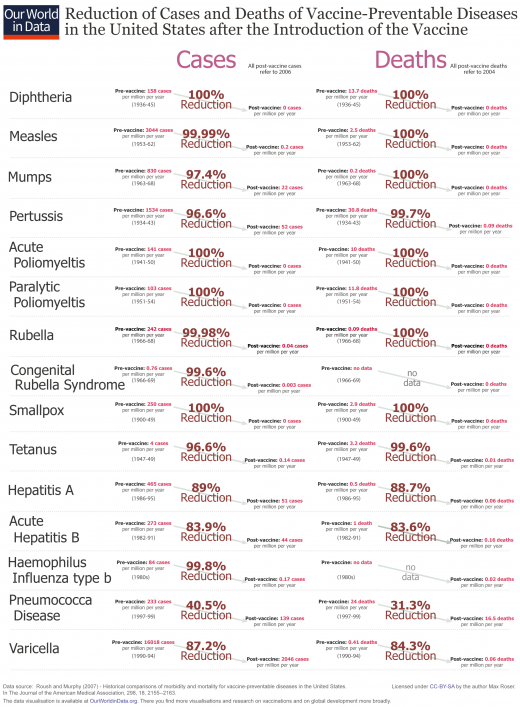
What does it look like when a public health campaign leads to improved health?

Vaccination has provided spectacular gains. There have been dramatic reductions in both cases of disease and deaths from disease.

CAD9DA3A-143F-4B01-AD36-2C34AD6035DE

Vaccination didn’t merely reduce the incidence of vaccine preventable diseases, it often resulted in NO CASES at all. Vaccination didn’t merely reduce the number of deaths from vaccine preventable diseases, in some cases it ELIMINATED them entirely.

It is important to note that these are not theoretical benefits. This is what actually happened when vaccination programs were implemented.

Let’s look at another public health campaign, the effort to reduce lung cancer from tobacco smoking. The results have not been as spectacular, but are impressive nonetheless.

21D96663-C8AB-4271-AF04-3F05DA5C8E79

In the wake of the Surgeon General’s 1964 report warning about the link between smoking and lung cancer, per capita cigarette consumption dropped dramatically. After a lag period, lung cancer deaths began to drop dramatically, too. This is not a theoretical benefit. This is what actually happened.

In the past 25 years we have spent millions of dollars promoting breastfeeding even though the scientific evidence on the benefits is weak, conflicting and riddled with confounding variables.

An entire industry, the breastfeeding industry, has arisen to promote and profit from efforts to increase breastfeeding rates. Lactation consultants did not exist prior to the mid 1980’s. Now they are everywhere, in hospitals, in doctors’ offices and in independent practice.

A private company, Baby Friendly USA, is allowed into hospitals to promote their philosophy. For a fee of more than $10,000, a hospital can to be designated as breastfeeding friendly — but only if it is in lockstep with the practices recommended by the breastfeeding industry.

Breastfeeding initiation rates have risen in response. But the breastfeeding rate appears to have had no impact on the infant mortality rate. The graph below illustrates the steep drop in infant mortality over the course of the 20th Century. I’ve added markers for the breastfeeding rate at various points. As you can see, the precipitous drop in breastfeeding rates did not have an impact on infant mortality and the rising rate of breastfeeding initiation does not seem to have an impact, either.

0E0EDC82-06CD-4F38-90A8-3F8B2FA65075

The only measurable impact has been the reduced incidence of necrotizing enterocolitis among very premature infants, a benefit that was not predicted but was found as breastfeeding rates rose.

There are papers predicting health and spending benefits of breastfeeding, but I haven’t found any evidence of actual benefits, with one exception: the reduced incidence of necrotizing enterocolitis among very premature infants, a benefit that was not predicted but was found as breastfeeding rates rose. If other benefits actually occur, I invite anyone who has seen the evidence to share it with the rest of us. Otherwise, we must conclude that — unlike vaccination efforts and efforts to reduce smoking — the benefits are purely theoretical and therefore probably not real.

Moreover, there is a growing body of evidence that the aggressive promotion of breastfeeding is harming babies through dehydration and starvation due to insufficient breastmilk (affecting up to 15% of first time mothers). Exclusive breastfeeding is now the LEADING risk factor for newborn hospital readmission. It is nothing short of appalling that 1 in 71 breastfeeding newborns will be readmitted to the hospital. That’s tens of thousands of hospitalizations per year at a cost of hundreds of millions of dollars.

That doesn’t mean that breastfeeding is a bad thing. It’s a good thing, but the benefits for term babies in first world countries are trivial. If those benefits were anything other than trivial, we should have seen a dramatic impact on infant health and pediatric care expenditure by now, but we haven’t seen anything of the kind.

No doubt the lactation industry has benefited. The number of lactation consultants in the US has increased from 0 in 1980 to approximately 14,000 lactation consultants in 2013.

What do the rest of us have to show for it?

Nothing.

Unless, of course, you count the soul searing guilt and feelings of inadequacy among women who can’t or choose not to breastfeed.

It’s World Breastfeeding Week 2019 and it’s time to admit that breastfeeding promotion has been an expensive failure.

Going forward we should dramatically scale back spending on breastfeeding promotion. In an era of scarce healthcare dollars, we can’t afford to waste millions on public health campaigns that produce no discernible return on investment.

It’s time to end the fiction that breastfeeding has a public health benefit. It’s a personal choice, no more, no less. There is no reason — scientific or economic — to spend millions promoting it.

Breastfeeding and the embrace of victimhood

9E26F4B9-8C6F-4A03-9D62-73FE6B484FF0

If I offer support to the victims of an earthquake in South America does that mean I can’t offer support the victims of a typhoon in South East Asia, too?

If I express support for those who lost their homes in a hurricane does that mean I can’t express support for those who lost their homes in a wildfire, too?

[pullquote align=”right” cite=”” link=”” color=”” class=”” size=””]Support is not a zero sum game.[/pullquote]

If I support women who have breast cancer, does that mean I can’t support women who have ovarian cancer, too?

Sounds ridiculous, right?

So why can’t I support formula feeding mothers AND support breastfeeding mothers?

Because lactivism embraces victimhood as central to its understanding of breastfeeding and the women who choose it.

This Facebook comment is a perfect example:

4DC262CF-B77C-42A5-981C-10E32BD18187

“Don’t shame me for formula feeding by saying breast is best but I’ll downplay your accomplishment of breastfeeding by saying fed is best” That’s all I’m hearing from you.

In the world of lactivism, support is a zero sum game and any support offered to women who choose formula feeding is viewed as support that is stolen from breastfeeding mothers.

The celebration of their victimization serves several important roles in the lactivist cosmology. First, and foremost, it guarantees moral superiority. As Sommer and Baumeister explained in the book The human quest for meaning:

…[C]laiming the victim status provides a sort of moral immunity. The victim role carries with it the advantage of receiving sympathy from others and thereby prevents [one’s own behavior] from impugning one’s character…

Never mind that women who try breastfeeding represent the overwhelming majority of women, lactivists insist breastfeeders are a tiny minority, oppressed by the formula industry, and ceaselessly harassed by formula feeders. They’re victims dammit and that means that nothing they do to promote breastfeeding is ever wrong.

Second, the insistence on victimization serves to simplify the world by creating a false dichotomy. For lactivists, the world is divided into diametrically opposed camps of breastfeeders and formula feeders. It seems never to have occurred to them that combining breastfeeding and formula feeding is not merely possible, but common. Since the world is divided into diametrically opposed camps, in the lactivist cosmology everyone is either with them or against them.

When you are a breastfeeding victim, the fact that others don’t agree with you, or at least validate your feelings of victimization, is viewed as a form of re-victimization.

Other women choose formula? They are victimizing you by refusing to mirror your choice back to you.

Formula feeders want to choose formula without being harassed by hospital lactation consultants, vilified by breastfeeders, or told that they aren’t “baby friendly”? They’re victimizing you.

What if I (or anyone else) point out that the benefits of breastfeeding in the industrialized world have been massively exaggerated and are, in reality, limited to a few less infant colds and episodes of diarrheal illness in the first year? I am supposedly victimizing you. Lactivists insist I hate breastfeeding, and imagine I bathe daily in Similac, drying off using hundred dollar bills sent by Nestle as payment for services rendered.

Third, their status as self-proclaimed victims has been instrumental in allowing lactivists (particularly professional lactivists like La Leche League) to take control of public health messages and discussion in the public sphere. Breastfeeding rates were low purportedly because of the victimization of breastfeeders. That was the justification behind massive public and private initiatives to support breastfeeders and thereby promote breastfeeding. How has it worked out?

As a society, we have spent tens of millions of dollars promoting breastfeeding in order to improve child health and save on medical costs. Where’s our return on investment? Where is the evidence that overall infant health has improved as a result of breastfeeding rates nearly quadrupling in the past 50 years? There isn’t any. Where are the billions of dollars in healthcare savings we were promised as a result of increasing breastfeeding rates? No one can find them.

Yet lactivists continue promoting these programs and initiatives on the grounds that breastfeeding mothers are being victimized.

Interestingly, the goalposts of lactivist victimization are always moving. Fifty years ago the evidence of breastfeeders’ victimization was that hospitals did not support their efforts. In 2019, when hospitals do everything humanly (and inhumanely) possible to increase breastfeeding rates and when even cans of formula proclaim “breast is best,” failure to wholeheartedly embrace and praise public breastfeeding is viewed as … you guessed it … victimization.

Indeed, the goalposts have moved so far, basic civility to women who choose formula feeding as best for their babies is routinely cited —as in the Facebook comment above — as victimization of women who breastfeed.

It’s time for lactivists to grow up and stop bleating endlessly about their victimization. Breastfeeding is just one of two excellent ways to nourish an infant, nothing more and nothing less. Breastfeeders aren’t morally superior, aren’t better mothers, and certainly aren’t being victimized. They’re no different from formula feeding mothers, both trying to do what is best for their babies, their families and themselves.

Support is not a zero sum game.

We can support women who breastfeed AND women who formula feed. We don’t have to choose between them … no matter how much lactivists insist that we do.

Are midwives and doulas sadists?

09A1B82D-E79D-437A-9FBD-FF4B5CE1CAE8

It’s the best piece I ever read about natural childbirth. Published on the website Feminist Current, Eve’s punishment rebooted: The ideology of natural birth by C.K. Egbert is a powerful, thought provoking essay.

There’s something pornographic about the way we depict childbirth. A woman’s agony becomes either the brunt of a joke, or else it is discussed as an awesome spiritual experience… [W]e talk about the pain of childbirth — with few exceptions, the most excruciating, exhausting, and dangerous ordeal within human experience — as valuable in and of itself. Hurting women is sexy.

[pullquote align=”right” cite=”” link=”” color=”” class=”” size=””]”Hurting women is sexy.”[/pullquote]

The euphemistically termed “natural childbirth” is often justified on the basis that it is a woman’s choice, that pregnancy and birth is a “natural process,” and that it is best for the woman and baby (both for medical reasons, and because a woman won’t feel attached to her child otherwise). Put into context, these arguments ultimately boil down to “women’s suffering is good.” …

When people tout “natural birth” as an “empowering choice” (sound familiar?), they conveniently ignore all the women who have been harmed by these practices and for whom giving birth was (completely understandably and legitimately) one of the worst experiences of their lives. Natural birth advocates, just like many in the pro-sex movement, don’t seem to be concerned about the harm that women suffer through this practice or finding ways of preventing this harm from occurring. Women can choose, as long as they choose to suffer and see themselves as liberated through suffering.

Egbert is brutally honest about the philosophy of natural childbirth. Responding to the claim that natural childbirth is “better,” she notes:

What about the argument for women’s health? We probably wouldn’t give much credit to an argument that we should strap patients to the operating table and refuse them anesthetic during surgery, even though general anesthetic is usually the most dangerous part of surgery. Rather than eliminating palliative care, we seek safer and more effective means of performing surgeries and administering anesthetic. Natural birth advocates are not concerned with women’s welfare, because they are not advocating for safer and more effective forms of pain management; they argue they should be eliminated, because women’s suffering is itself a good. And while feminists applaud efforts to give women support and comfort during the birth process (e.g., emotional support, more home-like birthing environments, etc.), this is compatible with providing women pain medication. Once again, the danger of anesthetic only becomes an issue — rather than a normalized part of medical treatment — only when and because it can be used to hurt women. (my emphasis)

Not surprisingly, there was tremendous denial from natural childbirth advocates, but Egbert skillfully defended her thesis in the comments section.

But this isn’t about the best way to give birth. It’s about what significance we give to women’s suffering and pain, and how that relates to women’s subordination in general.

Exactly, and in the world of natural childbirth advocacy, women’s pain and suffering is “sexy” and “empowering.”

That’s not surprising when you consider that the philosophy of natural childbirth was created by old, white men who tried to convince women that the pain of childbirth was in their heads, not their bodies. And the philosophy of natural childbirth has been perpetuated by white women (midwives, doulas and childbirth educators) who enjoy wielding power over other women and glory in humiliating them for failing to mirror their own choices back to them. The tragedy is that many women are complicit in their own subjugation and claim to be “empowered” by it, because they are so used to being judged and bullied that they believe it is for their own good.

Simply put, the philosophy of natural childbirth is deeply retrograde and profoundly anti-feminist.

I’ll even go a step further. The philosophy of natural childbirth is sadistic in that its promoters derive pleasure from convincing others to needlessly endure pain.

The originators of the philosophy of natural childbirth were sadists when it came to women’s pain. They felt that it was irrelevant, unworthy of treatment, and annoying to doctors. The philosophy of natural childbirth could best be encapsulated as, “Shut up and give birth without bothering us.”

The contemporary avatars of the philosophy of natural childbirth are often sadists when it comes to women’s pain. They consider it irrelevant, unworthy of treatment, and demonize effective pain relief as “weakness” and “unhealthy,” when it is neither.

The midwives and doulas who chivvy women into refusing pain relief, who delay calling the anesthesiologist when a woman requests an epidural, who promote inadequate forms of pain relief and praise women as warrior mamas (i.e. “good girls”) for enduring labor without pain relief are sadists. They believe that women’s pain and suffering aren’t worthy of their compassion and concern. They believe that women are improved by agonizing pain and diminished by relief.

The philosophy of natural childbirth is not based on science; it is based on fundamental beliefs about the unimportance of women’s suffering. It is based on beliefs about the ways that women “should” use their bodies. And not coincidentally, it is based on the value that midwives and doulas place on their own autonomy, in addition to the satisfaction they gain from having their personal choices mirrored back to them.

The philosophy of natural childbirth is about embracing and enjoying women’s agony and that, of course, is sadism.

“Formula shill”: a variation on testimonial silencing

839C9E25-C50A-48E9-A569-22306C6D4932

I have been called a shill for the formula industry more times than I can count. Any medical professional who dares question the perfection of breastfeeding is typically subjected to the same treatment.

What’s it like to be called a formula shill?

Imagine Sue is allergic to strawberries. Joe insists that Sue is only saying that because she hates the taste of strawberries.

[pullquote align=”right” cite=”” link=”” color=”” class=”” size=””]Accusing a medical professional who cares for babies of being a formula shill is like accusing an allergist of being an EpiPen shill.[/pullquote]

When Joe is asked whether Sue might actually be allergic to strawberries, he denies the possibility since he loves strawberries and eats them all the time without any side effects. In his view, since strawberries are harmless for him, they must be harmless for everyone.

Joe believes claiming a strawberry allergy is therefore proof of hating strawberries.

Now imagine that Joe is confronted by Sue’s doctor. With Sue’s permission he confirms her allergy, offers details and explains the physiology. How does Joe react? He accuses the doctor of being a shill for the EpiPen industry.

Now not only can he ignore Sue’s lived experience of allergy, he can ignore the doctor’s lived experience of treating that allergy.

That’s what it’s like to be called a formula shill.

Those familiar with the fundamentals of logical argument will recognize the shill gambit as a fallacious argument. But I believe it is also a variation on the pernicious practice of testimonial silencing, denying the lived experience of medical professionals who confirm the harms of aggressive breastfeeding promotion.

The shill gambit has been described as an ad hominem attack, a form of poisoning the well. It is designed to undermine a claim by discrediting the person making the claim instead of addressing the claim itself:

[It]occurs when one party dismisses another party’s arguments by proclaiming them to be on the payroll of some agency…

Of course, it is possible for medical professionals to be on the payroll of formula companies. But it’s a gambit when there is no evidence that such a relationship exists.

[W]hen a shill gambit is used fallaciously the only “evidence” given of such a connection to a big company or government is that someone endorses a particular position—and therefore they must hold that position only because they’re being paid or receiving some other deal-sweetener.

The shill gambit is typically invoked when someone cannot address the claim under discussion: I point out that exclusive breastfeeding is currently responsible for tens of thousands of preventable newborn hospital admissions each year. Any lactivist who tries to deny it will lose the argument because there is copious evidence. Therefore, lactivists derail the discussion by insisting that the fact that I made the claim is “proof” I am on the payroll of formula manufacturers; anything I say can be ignored. The claim itself is never addressed, let alone rebutted.

But the formula shill gambit is more for lactivists than merely a way to forestall losing an argument. It is an opportunity to deny the lived experience of professionals who address the harms of aggressive breastfeeding promotion. It is a form of testimonial silencing.

Last week I wrote about how lactation professionals use testimonial silencing to deny the lived experience of women with breastfeeding complications.

I noted:

[T]estimonial injustice occurs when someone’s knowledge is ignored or not believed because that person is the member of a particular social group …

Tactics of testimonial silencing include: erasure from breastfeeding literature, refusal to believe, pathologizing, claiming “lack of support,” disparaging women’s stories and banning from social media feeds.

We have a word for that type of behavior and the word is “cruelty.” Sue is a victim of Joe’s cruelty in denying her lived experience of strawberry allergy. Similarly, women who struggle with breastfeeding complications are victims of lactation professionals’ cruelty. Nothing can convince lactation professionals of the reality of breastfeeding complications since they have already justified their decision to ignore the sufferers.

It’s one thing to ignore the experience of sufferers, but it is another thing entirely to ignore the medical professionals who treat the sufferers. There’s a growing body of scientific literature attesting to the harms of aggressive breastfeeding promotion. An increasing number of physicians and nurses are writing about the harms of breastfeeding promotion, harms that they have witnessed professionally and can explain physiologically.

The tactics used by lactation professionals in response mirror those used against women who suffer breastfeeding complications — erasure from the professional literature by refusing to publish their papers, refusing to believe them, claiming they “hate” breastfeeding (even though many of them actually breastfed) and banning them from social media feeds. But nothing beats accusing them of shilling for formula companies.

Could doctors be formula shills? Of course they could, but serious accusations ought to require actual proof. To my knowledge, no medical professional accused of shilling for the formula industry has ever been shown to be receiving payments from them.

It doesn’t matter, though, since the point of the accusation is not to establish the truth, but to smear anyone who questions the perfection of breastfeeding. The tactic has been working, but as ever more professionals are coming forward to detail the growing harms of aggressive breastfeeding promotion — the hospitalizations, the permanent brain injuries and the deaths — it is a tactic that won’t work for much longer.

The British Medical Journal publishes a blistering critique of UK maternity care

3989785E-BA0A-4FFC-AAF9-92EE20EEC1E6

Childbirth in the UK—it’s time to be honest about what the NHS can deliver is the title of a powerful piece in the BMJ. It’s written by Dr. Laura Downey. In her day job, she “provides assistance to governments … for health system strengthening and improving the value for money of healthcare investments…”

She writes:

[pullquote align=”right” cite=”” link=”” color=”” class=”” size=””]Maternity care should be patient-centered, not midwife-centered.[/pullquote]

I gave birth to my daughter at an NHS hospital in London three weeks ago. As a public health professional … I consider myself fairly well informed about how the system should work. I understood the information and advocacy tools available to me and knew I could use them to inform my decisions throughout pregnancy and childbirth.

It turned out, however, that like so many other women who give birth in NHS care across the country, I was misinformed.

How?

The publicly available national clinical guidelines and myriad information leaflets handed to me throughout my pregnancy led me to believe that I had some agency in my own “birth experience,” such as choice of pain relief or mode of delivery. I did not.

What happened instead?

Antenatal care clinics run by midwives actively shepherd women towards giving birth “naturally” in their local birthing centre, where there is no access to epidural pain relief or obstetric care. This push for a “natural” or “normal” birth also precludes women from undergoing a caesarean section delivery under any circumstances other than a medical necessity. While such practice is not in line with NICE guidance, it is common across the NHS for hospitals to put in place local procedures that do not allow maternal requests for caesarean sections, even where a woman has asked for one because of a previous traumatic birth, an underlying medical condition, or because they’ve experienced past sexual trauma. Furthermore, in circumstances where women choose to leave the birth centre in favour of an epidural, many are denied their request for this mode of pain relief.

Midwives substitute their personal beliefs for patients’ needs and requests, even when that conflicts with official policy.

Moreover:

The language around birth and persistent use of the words “natural” and “normal” in the UK belittles the birth experience of many women and is both socially harmful and offensive. There is no shame in pain relief and mode of delivery bares no reflection on a woman’s worth… It is crucial for women to be supported by the health system to feel that they have agency over their own body and what happens to it during birth, especially if the alarming statistics about birth trauma and PTSD in the UK are to be addressed.

The only thing that surprises me about Dr. Downey’s observations is that it took so long for someone in a position of authority to recognize what thousands of women have been suffering for decades. I’m not sure why anyone expected anything different from the longstanding Royal College of Midwives “Campaign for Normal Birth.”

Promoting normal birth is about promoting midwives at the expense of patients.

You won’t find any real medical professional who insists that he or she “promotes” one treatment over another. Ethical medical professionals promote health and safety, not the opportunity to line one’s pockets or increase professional autonomy.

Normal birth has nothing to do with normal and nothing to do with birth. The definition of normal birth is simple and straightforward: If a midwife can do it, she calls it normal. If she lacks the skill to provide the needed care, she insists that the birth is not normal even if it results in a healthy mother and a healthy baby. “Normal birth” is nothing more than a marketing term for promoting midwives.

Most women don’t fall for it. British women resent the fact that access to obstetricians is severely curtailed. They despise the fact that such practices have led to the needs and desires of mothers being ignored. They are not alone. Dutch women go to other countries to give birth rather than settle for midwife led care; there has been a precipitous drop in homebirth, now down to only 13%. And the majority of American women, regardless of the availability of midwives, choose obstetricians. Indeed, there are not enough practicing obstetricians to accommodate all the patients who want them.

Here’s what Downey recommends:

A logical starting point towards improving women’s experience of childbirth in the UK would be to redress the imbalance in patient information and clinical reality to close the gap between what is promised and what is delivered. Transparency is key to empowering women to make their own evidence based choices about childbirth and what is right for them and their unborn child. However, information is meaningless unless women are kept fully informed about what they can reasonably expect. If the level of clinical care promised to expectant mothers deviates in any way from publicly accessible national or local guidance, women need to be made aware of this from the outset so that they are informed and prepared, and care providers can be held accountable.

I have a better idea:

Make maternity care patient-centered, not midwife-centered. Re-integrate midwives into the healthcare system: have obstetricians supervise midwives instead of letting midwives run their own private fiefdom for their own benefit. Midwives have been allowed to run patient care and patients have suffered as a result.

In other words, put obstetricians — not midwives — in charge of maternity care.

Criticizing breastmilk pumping is the latest front in the effort to re-domesticate women

7C632DC0-FC44-457A-AABF-855AF29B0E14

If the mind of the mother be withdrawn from her child to other pleasures, her milk will be less nutritious and less in quantity. — Dr. Richard Kissam, The Nurse’s Manual and Young Mother’s Guide(1834)

…[P]umping … is not equivalent to direct nursing … The microbiome of expressed breast milk is different, for one. — Annie Lowrey, The Atlantic (2019)

A new piece in the Atlantic, Pumping Milk and Nursing Are Not the Same, by Annie Lowrey inadvertently gets to the heart of contemporary efforts at breastfeeding promotion. It has never been about what’s good for babies; the purpose has always been to re-domesticate women.

Central to that task is convincing mothers that having a job, a career or even interests apart from caring from children is harmful to their babies.

[pullquote align=”right” cite=”” link=”” color=”” class=”” size=””]“Good mothers” provide breastmilk straight from the tap.
[/pullquote]

Although La Leche League has carefully scrubbed their website of the fact, it was a religion inflected organization originally founded in 1956 by seven traditionalist Catholic women. The goal was keeping mothers out of the workforce by convincing them to breastfeed.

In the book La Leche League: At the Crossroads of Medicine, Feminism, and Religion, Jule DeJager Ward explains:

[A] central characteristic of La Leche League’s ideology is that it was born of Catholic moral discourse on family life … The League has very strong convictions about the needs of families. These convictions are the normative heart of its narrative… The League’s presentations and literature carry a strong suggestion that breast feeding is obligatory. Their message is simple: Nature intended mothers to nurse their babies; therefore, mothers ought to nurse …

Breastfeeding professionals and researchers have fully embraced the task of re-domesticating women, creating new “benefits” of breastfeeding as fast as the old “benefits” are debunked. They’ve demonized formula, ignoring the fact that it was created for a variety of important reasons: insufficient breastmilk is common and many women want to utilize their minds in fulfilling work instead of being tied to the home by the need to breastfeed. And, of course, advocates claim that anything other than exclusive breastfeeding “interferes” with maternal-infant bonding.

Though natural mothering advocates decry medicalization of childbirth, they adore medicalization of breastfeeding — from pumps, to breastmilk banks, to the off-label use of powerful medications with the goal of boosting milk supply. While they initially sought to make breastfeeding compatible with work outside the home, the Atlantic article about pumping represents the newest front in re-domesticating women: convincing them that they must stay home because “good mothers” provide breastmilk straight from the tap.

Lowrey writes:

The number seems small, but gets larger and larger as you contemplate it: 6 percent. That is the estimated share of breastfeeding mothers who exclusively pump and bottle their milk for their infants, never directly nursing. It is a number that was functionally zero less than a generation ago. And it is a subset of a much larger figure, the 85 percent of breastfeeding mothers who use a pump at least some of the time…

Maybe this is a good thing, if pumping helps babies receive more breast milk, or if it enables mother and child to sustain a desired, direct breastfeeding relationship for longer. Maybe pumping helps women have it all—a full-time career and a breastfed baby.

But breastfeeding promotion is NOT about women having it all; it’s about convincing mothers that babies need breastmilk breastfeeding more than women need … anything.

The “research” such as it is, is surprisingly weak. No one knows what the normal infant gut microbiome is supposed to contain. No one knows whether deviations represent problems or merely individual variations. No one knows whether the infant gut microbiome has any impact on infant health or anything else. No one cares. It is a convenient cudgel with which to discipline women who dare to work.

If that were your goal, could you possibly do better than scaring women with this?

But while pumping might support direct nursing, it is not equivalent to direct nursing, researchers have found. The microbiome of expressed breast milk is different, for one. “Indirect breastfeeding” is associated with a greater prevalence of pathogens, which “could pose a risk of respiratory infection in the infant, potentially explaining why infants fed pumped milk are at increased risk for pediatric asthma,” according to Shirin Moossavi of the University of Manitoba. Plus, breast milk degrades when it is cooled, as it often is when stored for bottle-feeding. There is also the risk of contamination, given that dangerous bacteria flourish on pump parts.

“is associated,” “could,” “potentially” — weasel words all, but perfect for manipulating women.

And why stop there? Just tell women that their babies won’t love them as much if they bottlefeed, even when breastmilk is in the bottle.

Researchers also sense that the experience of breastfeeding—the eye-gazing, the cuddling—is a big part of the benefit of breastfeeding for the baby, and a big part of the joy of breastfeeding for the mother. How does bottle-feeding change the equation?

That — to use a technical term — is bullshit!

No matter. In the effort to re-domesticate women through breastfeeding, no tactic is too cruel. It is imperative to convince women that any time they spend away from their babies will harm those babies.

Lowrey concludes:

But however they pump, for whatever reason, they do it in a vacuum: with a thin body of knowledge and little social support. Alas, it sucks.

There is precisely ZERO clinical evidence (as opposed to laboratory experiments) that formula feeding harms term babies. There is even LESS evidence that feeding expressed breastmilk harms babies. But the truth doesn’t matter when you are trying to re-immure women back into the home.

That’s what sucks!