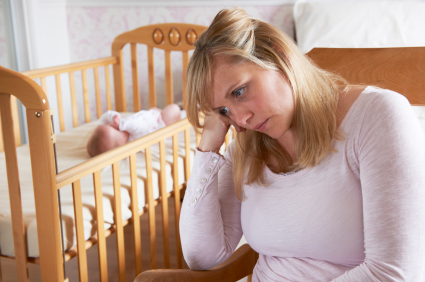
Your body was meant to have a vaginal birth? Says who?

And B and I got that news on Wednesday and B and I and the midwife cried together in her office.

We cried for the loss of something that I had hoped for since the day that G was born. And the thing we talked about and read about and learned all about for 9 months. We cried about the potential I had to deal with postpartum depression again after a disappointment like this. Because in all likely hood, a VBAC now just wasn’t in the cards for me.

And I’ve been mourning this loss now since yesterday and really struggling with coming to grips with never having a birth like my body was meant to. And never having that experience that was so important to me…to feel like my body isn’t broken and it can’t do what it’s meant to.

That’s what Amanda Domergue wrote several days ago on her blog MODG (The hand we’ve been dealt and the struggle to accept it.)

What accounts for disappointment grossly out of proportion to the loss?

It isn’t that women expect their bodies to always perform according to the population average.

Consider:

My husband and I got that news on Wednesday and he and I and the optometrist cried together in her office.

We cried for the loss of something that I had hoped for since the day that I first put on glasses. And the thing we talked about and read about and learned all about for 9 months. We cried about the potential I had to deal with depression again after a disappointment like this. Because in all likelihood, getting by without glasses or contacts just wasn’t in the cards for me.

And I’ve been mourning this loss now since yesterday and really struggling with coming to grips with never seeing 20/20 without glasses or contacts like my body was meant to. And never having that experience that was so important to me…to feel like my body isn’t broken and it can’t do what it’s meant to.

Or:

My husband and I got that news on Wednesday and he and I and the nurse practitioner cried together in her office.

We cried for the loss of something that I had hoped for since the day that I found out I have high blood pressure. And the thing we talked about and read about and learned all about for 9 months (not to mention the weight I lost and the exercise I have been doing. We cried about the potential I had to deal with depression again after a disappointment like this. Because in all likelihood, normal blood pressure without medication just wasn’t in the cards for me.

And I’ve been mourning this loss now since yesterday and really struggling with coming to grips with never having normal blood pressure like my body was meant to. And never having that experience that was so important to me … to feel like my body isn’t broken and it can’t do what it’s meant to.

In each case, women are capable of differentiating between the general and the specific. Expecting to have perfect vision because the average person does not need vision correction is like expecting to be right handed because the average person is right handed. You are no more “broken” for being left handed than you are for needing glasses or having high blood pressure.

And the reason for the disproportionate response is not because it is a universal human value.

The idea that a C-section represents being “broken” is restricted to incredibly privileged individuals in incredibly privileged cultures. In “average” cultures, women aren’t even expected to necessarily survive childbirth, let alone have a specific type of experience.

The idea that women’s bodies are “perfectly” designed for childbirth is a foreign to the average woman in a developing country as the idea that vegetables are “meant” to come from the supermarket. Both ideas would strike women in developing countries as absurd.

So if no one expects every bodily function to operate perfectly, if no one expects that everyone is average, and if the majority of women who have ever existed or currently exist don’t even expect women to survive childbirth, where did Amanda get the idea that her body was “meant” to give birth vaginally?

She read it in a book (or on the web or on an internet message board).

In other words, she was indoctrinated into believing it, in contrast to everything we know about how human bodies actually work. She was indoctrinated by a philosophy, biological essentialism, that reduces women to the function of their vaginas, uteri and breasts, and implies that anything other than average is “broken.”

Natural childbirth philosophy is responsible for the senseless, immature response to being different from the average. NCB philosophy is responsible for the bizarre notion that the human body must conform to the average and anyone who isn’t average is entitled to feel very, very sorry for herself.  NCB philosophy is responsible for privileged women wallowing in self pity because they had a C-section and all they got was a healthy baby.

And what’s her midwife’s excuse? Can you imagine an optician crying with a patient because of glasses? Can you imagine a nurse practitioner crying with a patient because that patient needs blood pressure medication? No, you can’t, because we expect professionals to have boundaries, and to help patients gain perspective. Midwives indoctrinated in NCB are just as invested as their patients in biological essentialism and entitlement.

Years ago, parents and educators believed that everyone was “meant” to be right handed, and a child who favored his left hand should be ridiculed, forced or even beaten into using his right. Now we view such as a response as cruel and ignorant. Yet today, women who should know better, encourage a similarly cruel and ignorant view of birth. Women who are both incredibly privileged and ought to understand that human bodies are not perfect, are pretending that they are “designed” to have a vaginal birth and they have every right to feel dreadfully sorry for themselves if they do not.

Evidently baby Domergue is scheduled to be born today. Let us hope that her mother has an easy uncomplicated delivery (vaginal or C-section) and a quick recovery. Let us also hope that the baby’s mother appreciates the miracle of her new baby, stops obsessing about whether that baby passed through her vagina, and stops whining that she was entitled to a specific experience.


The baby died at homebirth but that was just a coincidence

It’s remarkable really. Homebirth had nothing to do with the fact that the baby died. It’s just an amazing coincidence.

Yes, I know that my obstetrician, my mother-in-law and my best friend warned me that the baby could die at homebirth, but that has absolutely nothing to do with the fact that the baby did die. It was just a coincidence.

You know what’s really amazing? Those naysayers who predict that homebirth might lead to the death of the baby often cite specific causes of death. Sure, that’s exactly how the baby ultimately died, but it was just a coincidence.

It’s kind of eerie, when you think about it.

The naysayers insist that women shouldn’t attempt a VBAC at home because the uterus might rupture and then the baby will die. And lo and behold, the uterus ruptures and the baby dies. Fortunately, we know that was nothing more than a coincidence.

The naysayers claim that a single footling breech might have a cord prolapse and die. What do you know, the cord prolapses and the baby dies. But that was just a coincidence.

The naysayers like to scare women by claiming that if you had a shoulder dystocia in the past, the same thing may happen again in the next pregnancy. Amazingly, the baby dies at home of shoulder dystocia. Who could have seen that coming?

The naysayers don’t understand that breech is just a variation of normal. They say that the baby is at risk for head entrapment and death. Then, almost as if they predicted it, the baby’s head is trapped and the baby dies. What a coincidence.

The naysayers believe that listening to the baby’s heart rate instead of monitoring it with continuous electronic fetal monitoring will put the baby at risk for developing fetal distress without anyone realizing. Now, just because the baby unexpectedly fell out dead into my midwife’s hands, they want to blame the death on homebirth when it was nothing more than a coincidence.

The naysayers think that it isn’t enough that my midwife carries the same, the very same, the exact same resuscitation equipment at the hospital. They warn that the baby may die for lack of an expert to perform a resuscitation. Sure that’s exactly what happened, but we all know that’s a coincidence.

It’s remarkable really. Coincidence upon coincidence.

Wait, what? You think it wasn’t a coincidence that the baby died of the exact same thing that the naysayers warned against.

You are mean!

You are disgusting!

Just because they wrote their stories on blogs and message board available to hundreds of millions of people doesn’t mean that the story isn’t deeply private.

These women are grieving!

You know what? You remind me of that judge who refused to show clemency to the man who murdered his parents. The guy was an orphan! If that doesn’t deserve sympathy I don’t know what does.

How do I know these were just coincidences?

I spent years educating myself by reading everything that other laypeople have written about childbirth. I’m not like those ignorant sheeple who think that just because an obstetrician went to college (you don’t need a degree to catch a baby), and went to medical school (where they learn mostly stuff that doesn’t have to do with birth) and delivered thousand of babies (but not even one totally naturally, outdoors, in the ocean, with dolphins), they might actually know more than me.

Oh, and don’t forget:

Babies die in the hospital, too. In fact MORE babies die in the hospital than at home. And interventions kill babies, and it is much safer for a woman who had 3 previous C-sections to rupture her uterus at home while trying to deliver a 10 pound single footling breech without continuous fetal monitoring and end up with a hysterectomy and 10 transfusions than to have an elective repeat C-section!

Sure the baby died in that case, too, but that was just a coincidence.

Gene Declercq bemoans the lack of debate on homebirth. I’m ready, Dr. Declercq; bring it on.

In the latest issue of Birth: Issues in Perinatal Care (the journal that purports to be objective, but is actually sponsored by Lamaze International), Gene Declercq writes about The Politics of Home Birth in the United States.

According to Declercq:

… [T]he debates over home birth have increasingly begun to parallel current partisan battles in their emotion and intensity with the related gridlock and reluctance to consider compromises that are often necessary to achieve policy goals. This essay calls for a greater willingness for all sides to approach home birth less as an ideological mission and more as a health policy challenge to support consumers interested in an integrated system of care.

Who is Dr. Declercq and why he is involved with this issue?

Gene Declercq combines formal training in political science with almost twenty years of experience as a certified childbirth educator to examine policy and practice related to childbirth in the US and abroad…

He is a Professor of Community Health Science and Boston University School of Health and his work involves

social and behavioral sciences that focuses on identifying and analyzing the social determinants and behavioral risk factors that are associated with public health problems, and using this knowledge to understand and promote healthy behavior within communities.

Contemporary public health issues addressed by the social and behavioral sciences include the prevention and treatment of alcohol and drug abuse, tobacco control, injury control, mental health, domestic violence, prevention of sexually transmitted diseases and HIV, adolescent health, communications, and grassroots political and community organizing.

He served as an advisor to Ricki Lake’s The Business of Being Born and is a partisan of certified professional midwives and the Midwives Alliance of North America.

He is not a scientist, and has no training in medicine, midwifery or basic science.

Dr. Declercq is surprisingly candid about the reality of homebirth advocacy in the US.

The ideological fight over home birth is not between political liberals and conservatives, but rather, over differing perspectives on birth. The gulf between opposing sides in the home birth debate is every bit as wide as the political divide between Tea Party members and MoveOn.org, and this division has regrettably led to adoption of some of the tactics used in those political disputes. Contemporary public debate is characterized by neither side feeling that they can be candid about any weaknesses in their position. The focus is essentially on “spin,” with each side coloring their opponent’s positions (or the opponents themselves in more vitriolic conflicts) as devoid of any merit and emphasizing only the most positive aspects of their own position. Calling such confrontations a “debate” is a misnomer, because the two sides invariably do not engage in the exchange of ideas. Rather, the disputants will talk past each other, focusing on either rallying their own core supporters or sending targeted messages to selected subgroups in the larger public. In the larger political context, such views get reinforced with the growth of increasingly narrow media and Internet sources allowing one to avoid contact with any views that conflict with their own…

Unfortunately, Dr. Declercq seems to think that obstetricians behave like homebirth advocates and they do not.

First of all, since homebirth is a fringe issue, most obstetricians don’t care about it, most journals rarely report on it, and there is virtually no one within the obstetrics community who will participate in it.

Second, obstetricians debate with each other all the time, both at conferences and in the pages of obstetric journals. They would be happy to debate professional homebirth advocates, but homebirth advocates won’t debate.

Declercq’s position is reminiscent of anti-vaccine advocates who also complain that scientists won’t “debate” them and that scientists collude to support pre-approved positions.

How often do medical and obstetric society members actually engage with the home birth or the larger birth advocacy communities? Likewise, how often are home birth advocates invited to speak to a medical society, serve on a study group, or participate in the writing of a position statement? This insularity on each side fosters stereotyping of opponents, for example, the repeated referral by home birth opponents to certified professional midwives as “lay midwives.”

To understand the problem with these claims, substitute homebirth advocates anti-vax advocates.

How often do medical and immunology society members actually engage with the anti-vax communities? Likewise, how often are anti-vax advocates invited to speak to a medical society, serve on a study group, or participate in the writing of a position statement? This insularity on each side fosters stereotyping of opponents, for example, the repeated referral by anti-vax opponents to anti-vax alternative practitioners as “quacks.”

Dr. Declercq views might also be more persuasive if he were intellectually honest.

  • Dr. Declercq knows as well as I do that the Midwives Alliance of North America is hiding their own death rates because they are hideous.
  • Dr. Declercq knows as well as I do that state homebirth statistics show astoundingly high death rates.
  • Dr. Declercq flogs the same tired homebirth tropes as other homebirth advocates do. This very paper mentions the Wax study but none of the many studies that demonstrate the increased death rate of homebirth.
  • Dr. Declercq provides intellectual cover for irresponsible homebirth advocates like Ricki Lake and Ina May Gaskin.

Be that as it may, I’m not afraid to debate Dr. Declercq on this issue (or Henci Goer, or Ina May Gaskin, or Jennifer Block, or Ricki Lake or any other celebrity homebirth advocate). We could have a written debate or a live debate in just about any setting he is willing to propose.

The problem with homebirth is not the politics, it is the fact that it leads to preventable perinatal death. Let’s debate the mortality statistics of American homebirth, the woefully inadequate training of certified professional midwives, and the fact that the homebirth movement is led by people with no training in midwifery, obstetrics, science or statistics.

How about it Dr. Declercq?

You heard it here first: new paper opposing homebirth is poorly researched, relies on bad studies and is woefully paternalistic

The American Journal of Obstetrics and Gynecology has just published a new position paper opposing homebirth and it is deeply disappointing.

It is easy to make a well researched case about the dangers of homebirth, relying on high quality research papers, copious state, national and international statistics and appropriately mindful of women’s right to bodily autonomy. Instead, the AJOG paper is poorly researched, relies on bad studies and is woefully paternalistic.

The paper is Planned home birth: the professional responsibility response by Chervenak et al. Dr. Chervenak is Given Foundation Professor and Chairman of the Department of Obstetrics and Gynecology at Cornell Medical School. He is also the ethics advisor to AJOG, although as far as I can determine, he has no formal training in ethics … and it shows.

Here’s what the authors claim:

This article addresses the recrudescence of and new support for midwife-supervised planned home birth in the United States and the other developed countries in the context of professional responsibility. Advocates of planned home birth have emphasized patient safety, patient satisfaction, cost effectiveness, and respect for women’s rights. We provide a critical evaluation of each of these claims and identify professionally appropriate responses of obstetricians and other concerned physicians to planned home birth. We start with patient safety and show that planned home birth has unnecessary, preventable, irremediable increased risk of harm for pregnant, fetal, and neonatal patients. We document that the persistently high rates of emergency transport undermines patient safety and satisfaction, the raison d’etre of planned home birth, and that a comprehensive analysis undermines claims about the cost-effectiveness of planned home birth. We then argue that obstetricians and other concerned physicians should understand, identify, and correct the root causes of the recrudescence of planned home birth; respond to expressions of interest in planned home birth by women with evidence-based recommendations against it; refuse to participate in planned home birth; but still provide excellent and compassionate emergency obstetric care to women transported from planned home birth. We explain why obstetricians should not participate in or refer to randomized clinical trials of planned home vs planned hospital birth. We call on obstetricians, other concerned physicians, midwives and other obstetric providers, and their professional associations not to support planned home birth when there are safe and compassionate hospital-based alternatives and to advocate for a safe home-birth-like experience in the hospital.

Here’s what I see as the glaring deficiencies of the paper:

1. In a monumental oversight, the authors never address the fact that there are two types of midwives in the US with very different education, training and outcomes.

Since this is absolutely critical to addressing the issue of homebirth in the US, the only plausible reason why the authors left this out is that they are unaware it. That does not bode well for their understanding of the issue.

2. Despite the existence of many high quality studies demonstrating that homebirth increases the risk of perinatal death, as well as copious state, national and international statistics, the authors choose to rely on low quality studies that have already been amply and accurately criticized.

The Wax study is a poor quality study. It relies in large part on outdated research, tiny studies, and studies that did not discriminate between planned and unplanned homebirth. The Kennare study in Australia is similarly inadequate.

Where is the CDC data on homebirth? Where is the Malloy paper demonstrating that homebirth with a CNM increases the risk of neonatal death? Where is the Evers paper that shows that low risk birth with a Dutch midwife has a higher perinatal mortality rate than high risk birth with a Dutch obstetrician? They, and other similar sources of data are missing. Again, the only plausible reason I can come up with for their absence is that the authors are not well versed in the homebirth literature.

3. The authors simply leave out papers that don’t prove their point.

Any good scientific paper MUST address contradictory data. The authors had an obligation to include and address the deJonge paper from the Netherlands and the 2009 Janssen study from Canada; both are high quality studies that purport to demonstrate the safety of homebirth.

The above problems, while important, are eclipsed by a far more serious problem, the woefully paternalistic attitude of the authors.

For example:

4. The authors are inappropriately dismissive of the repeated finding that women who choose homebirth report higher patient satisfaction. This is a well-established, rock solid finding and the authors give it the back of their hand.

The high rates of transport undercut the raison d’etre of planned home birth.

No, the high rates of transport do not undercut the finding that women who choose homebirth report higher patient satisfaction. There is no evidence that I am aware of that women who are ultimately transferred to the hospital are unsatisfied with their experience at home. When first time mothers are appropriately counseled, they know that the chance of transfer in labor is high, yet choose homebirth anyway. And women who have had previous vaginal deliveries are not transferred in high numbers.

5. The authors’ argument on the ethics of homebirth does not withstand scrutiny.

I have written about Dr. Chervenak’s views before. He takes a position on women’s autonomy that is not shared by non-religious professional ethicists. He presents maternal autonomy and fetal beneficence as equivalent ethical interests, but they are not equivalent. Maternal autonomy trumps fetal beneficence in almost all situations. He insists that women are ethically obligated to choose interventions that will benefit her fetus. That is the Catholic religious position on maternal autonomy and fetal beneficence.

Chervenak is presenting a personal, religious philosophy on maternal autonomy and fetal beneficence and it would have been appropriate for him and his colleagues to acknowledge that their views are not supported by the mainstream medical ethics community. Simply put, in light of American law, and non-religious moral ethics, Chervenak et al. are wrong about the extent of women’s autonomy and women’s ethical obligations toward their unborn children.

6. The authors’ claims about physician responsibilities do not withstand scrutiny. They claim:

Planned home birth should not be considered medically reasonable in professional clinical judgment.

That is both inappropriate and bizarre. It is inappropriate because it is up to the individual clinical to determine what he or she thinks is medically reasonable for a specific patient, and it is bizarre because literally thousands of practicing physicians in the UK, the Netherlands, Canada and Australia have already determined that homebirth is a medically reasonable option for low risk women.

7. The authors proscription of randomized, controlled trials of homebirth is insupportable. They write:

… [A] controlled randomized, controlled clinical trial with home birth as one arm would subject pregnant, fetal, and neonatal patients to preventable, unnecessary risk of mortality, morbidity, and disability when compared with hospital delivery.

Even if you accept, as I do, that homebirth increases the risk of perinatal death and disability, the absolute risk is still small. Therefore, a randomized, controlled clinical trial (assuming that you could get women to participate in it) would be entirely ethical provided that women were informed of the possibility of increased risk.

8. The regrettable paternalism reaches an acme in the concluding words:

We urge obstetricians, other concerned physicians, midwives, and other obstetric providers, and their professional associations to eschew rights-based reductionism in the ethics of planned home birth and replace rights-based reductionism with an ethics based on professional responsibility.

Women’s well established right to medical autonomy is not “rights-based reductionism”; it is a foundation of medical ethics. Professional responsibility never involves forcing patients into doing what you recommend or harranging them for failing to follow your recommendations. Professional responsibility requires informed consent, nothing less and most certainly, nothing more.

Professor asks: is it ethical to promote normal birth?

Kudos to bioethicist Anne Drapkin Lyerly for the natural childbirth version of speaking truth to power.

Lyerly is is Associate Professor of Social Medicine and Associate Director of the Center for Bioethics at the University of North Carolina, Chapel Hill. She writes about social and moral issues in women’s health and reproductive medicine. She’s also on the Editorial Board of the journal Birth: Issues in Perinatal Care, published by Lamaze International. She has dared to question the ethics of “normal birth” within the pages of the premier journal of the normal birth industry.

The abstract succinctly summarizes her argument.

The concept of “normal birth” has been promoted as ideal by several international organizations, although debate about its meaning is ongoing. In this article, I examine the concept of normalcy to explore its ethical implications and raise a trio of concerns. First, in its emphasis on nonuse of technology as a goal, the concept of normalcy may marginalize women for whom medical intervention is necessary or beneficial. Second, in its emphasis on birth as a socially meaningful event, the mantra of normalcy may unintentionally avert attention to meaning in medically complicated births. Third, the emphasis on birth as a normal and healthy event may be a contributor to the long-standing tolerance for the dearth of evidence guiding the treatment of illness during pregnancy and the failure to responsibly and productively engage pregnant women in health research. Given these concerns, it is worth debating not just what “normal birth” means, but whether the term as an ideal earns its keep.

Lyerly explains the problem:

… [I]n its emphasis on birth as a physiological but not pathological or “medical” process, the concept of normal birth has served to highlight the harms of unreflective and routine medical intervention, and promote access to low intervention or what some have termed “natural” birth for women who desire it. Second, in its emphasis on birth as a social process, the concept of normal birth has helpfully promoted an understanding of birth as meaning imbued… [E]thically speaking, as an organizing principle for the good, the notion of normalcy raises a trio of concerns.

Specifically:

1. Not all women need or want a “normal” birth, and therefore, it is wrong to suggest that this type of birth is “normal.”

… “normal” indicates something that is normative or morally preferable—a state we ought to strive for. The result is a “fundamental tension” between normal as an “ordinary healthy state” and a “state of perfection toward which communities can strive.” In this way, the “normal” birth becomes (in hearts and minds) the good birth, potentially leaving women who use technology to conclude that they have somehow failed or missed out during their entrée to motherhood.

2. Why should avoiding technology be a goal when many women don’t want to avoid technology?

… [M]edical interventions— pharmacological or epidural analgesia, for example—can improve the experience of birth for women who desire them. In both cases, normalcy as a goal for populations does not track well with normalcy as an ideal for particular women. An unintentional and untoward consequence is that women who use and benefit from technology may nevertheless conclude that their births are somehow less than ideal, at a distance from a notion of the “good” that was either out of reach or inconsistent with their values and preferences.

3. The emphasis on “normal” birth as a socially meaningful experience misses the point:

… [A]re not all births, whatever the degree of intervention, socially meaningful? … Among the approaches {Diony Young, Editor of Birth] lists are respectful care, antenatal education, support in labor, informed choice and consent, supportive environment, evidence-based information and practice, mother baby togetherness, and availability of midwives for
one-to-one care… [N]one is specific to normal birth—that most if not all would be beneficial to a childbearing woman regardless of how medically complicated or involved her delivery.

… [N]ormalcy raises particular problems from the standpoint of justice, to the extent that it fails to attend to the needs of those who are disadvantaged, physiologically or otherwise. Some
prominent theories of justice require attention to, in some cases priority for, the interests of the least well-off. My concern is that the linking of social and psychological meaning and the nonuse of technology under the umbrella of normalcy implies that in complicated pregnancies, the social aspects of birth are somehow less relevant. Of course, they are not; indeed, women who face birth and illness together feel perhaps more pressingly the need for supportive, respectful care.

4. Many women experience pregnancies that are not normal. Natural childbirth advocates simply ignore these women, reinforcing the tendency of researchers to ignore these women.

… [I]n a 2010 Research Forum held at the National Institutes of Health entitled “Issues in Clinical Research: Enrolling Pregnant Women,” the tag-line read “Pregnant Women Get Sick, Sick Women Get Pregnant.” Of course they do—but that it was an extremely effective phrase was a telling reminder of our myopia when it comes to illness and pregnancy.

Lyerly’s critique, while measured and understated, is nonetheless devastating. It’s especially powerful because Lyerly takes NCB advocates at their word that they are acting on behalf of women and demonstrates that it’s fatuous to claim to be acting on behalf of women when you ignore, marginalize and denigrate a substantial proportion of them.

I agree with Lyerly that the promotion of “normal” birth is ethically suspect. However, the reason is simpler than Lyerly supposes. It’s money.

Midwives, doulas and childbirth educators can only make money from births that involve minimal or no technology. Therefore, they have idealized the births that represent their profits. The promotion of “normal” birth is a marketing strategy, no more and no less. Like Mitt Romney and the 47%, NCB advocates they believe that it is “not their job to worry about those people” who want services other than those that midwives, doulas and childbirth educators can provide.

NCB advocates recognize that increasing their profits involves creating a demand for their product. They are no different from the myriad of other purveyors in the marketplace who imply that their products will lead to social success and approbation. “Buy PearlyWhite toothpaste and you will get the girl!” translates to “Have a normal birth and you will be happier, empowered and have healthier children!”

Lyerly is clearly a less cynical person than I am. That makes her critique all the more powerful. She takes NCB advocates at their word and finds their word to be ethically suspect.

15th and 16th homebirth deaths I have reported on this year

An quick review of my blog posts so far in 2012 shows that I have written about 14 separate confirmed homebirth deaths attended by American homebirth midwives this year.  That doesn’t include additional homebirth deaths that I have been told about but have not yet been able to confirm.

To put it in perspective, American homebirth midwives (non-nurse midwives) attend approximately 10,000 homebirths each year. The death rate for comparable risk birth in a hospital is 0.4/1000, which means we should expect approximately 4 deaths each year. Today I’m reporting on the 15th and 16th homebirth deaths. The year is not over and already the homebirth death toll is 300% higher than it should be.

Death #15

Michael’s birth and death

Background:

Both of my previous pregnancies had been cesarean deliveries and not experiencing natural labor was something that left me feeling like I was missing something. It is very hard to explain to someone who hasn’t missed out on labor and delivery but it was upsetting to me to feel that I missed out on such a beautiful, natural experience. I wanted to be the first person to touch my baby, I wanted him immediately bought up to my chest so I could take in all of his beautiful features, I wanted to be able to nurse as soon as the baby was ready, I wanted my baby’s cord to have a chance to stop pulsating before being clamped to be cut, I didn’t want to be pressured into unnecessary procedures, I wanted a peaceful, lovely birth experience and I felt that the only way to get that was to have a home birth…

In March, I met with a wonderful midwife, Jen, who had shared my belief in my body’s ability to naturally birth my baby and we agreed that I was a great candidate for a successful hba2c*…

Birth:

At around 12:50, Jen had asked if I had wanted her to check me. I said yes and she told me I was now 100% effaced and 9.5 cm dilated and my water bag was still intact and bulging. Since I was so far along, she had asked if I wanted her to rupture my waters. She went over the benefits and risks and I decided that after I got through a few more contractions, I did want her to. When she had ruptured the water bag, she let me know that the amniotic fluid had meconium in it and that we would start to monitor the baby more closely. She immediately checked his heart rate and it was in the 130 range, just as it had been during the entire pregnancy and labor. A few minutes later she had checked it again and had a hard time getting a good reading (I think it was in the 90’s). My husband had gotten me 2 glasses of fruit juice in hopes that getting some fluid in would help us get a better reading. After Jen checked again and didn’t get a good reading, she had told me that it was time to transfer to the hospital…

At around 4:30, I was finally wheeled into the OR to prepare for surgery. It was so hard to stay still while the spinal was placed since I was still having back to back contractions but once it was in, my whole body seemed to relax and I just began to focus on the excitement of seeing my sweet boy. They bought my husband in once things were ready for the section and we talked about everything that had happened up until that point. I noticed almost immediately that things were very different this time compared to my previous two C-sections but I had attributed it to the fact that they were planned and this one was an emergency. With my first 2 sections, they had the baby out within just a few minutes of making the cut. This time, it took almost a half hour for them to deliver Michael, at 5:01 PM…

With the first 2, they had told my husband to stand up and look as they were pulling out the baby. This time, he wasn’t given the go ahead to stand up and look at all. The first 2 times, I had heard my babies begin to cry almost immediately of being pulled out. This time, I heard no noise at all. I had mentioned to my husband that I was worried that I hadn’t heard the baby and I had asked those working around me why he wasn’t crying and if he was okay but no one was giving me any answers. My husband had looked down under the operating table and said “oh wow, there is a lot of blood.” Right after this, someone had come up to him and told him that he needed to go and wait in the waiting room.

Instantly, panic had taken over and all I could think about and say over and over to myself was “oh my baby, what is wrong with my baby?” I knew I was having complications but my only concern was my baby and his health. I didn’t realize the seriousness of what was going on with me until I overheard the Dr mention “uterus rupture” and “full hysterectomy” several times…

Once they had finished with me and I had asked about my baby, they had told me that Michael had breathed in meconium and he needed help breathing on his own. They were going to need to transfer him to Danville NICU, a town 2 hours away from our home, because they were better able to give him the treatment he had needed.

Michael’s treatment:

Just before 1 AM, I was awoken by the nurse. She let me know that the NICU was trying to get in touch with me to give me an update on the baby. I had spoken to the nurses taking care of Michael several times before this point and I knew that it had to be serious for them to be trying to get in touch with me in the middle of the night. I called them back and the nurse had asked if my husband was with me. Immediately, I knew that I was about to get devastating news. I said “no, he went home with the 2 kids tonight.” Then she asked if any family member was there with me. When I said no, she asked if a nurse was there. I said yes, there is a nurse here and she had told me that it would be a good idea to get there as soon as possible. Michael had coded two times and he wasn’t doing well, he might not make it to the morning. At that moment, I could not breathe. They must be wrong. My baby would be fine, all this time I was told that he was very sick and he would get worse before he got better but never had the thought of my baby dying crossed my mind.

…We spent the hour and a half ride praying that our baby would hang on until we got there to say goodbye to him. We did a lot of crying and thinking about how we would possibly be able to explain to our two children where the little brother they waited and looked forward to for 10 months had gone. We asked God why this was happening to us and tried to imagine how we could possibly breathe one breath, live one moment without our Michael…

This was the first time since he was born that either one of us had the chance to actually see our son for more than a moment or two. As soon as I saw my little angel, I began sobbing. Michael looked so sick. He was swollen, hooked up to so many machines and on so many medications. The two nurses who were working with him that night were incredibly helpful and explained our baby’s condition the best they could. They had given us a picture of when Michael was baptized and asked if we had wanted anymore taken.

Shortly thereafter, Michael died … a needless death of terrible suffering that could easily have been prevented by an elective C-section.

Death #16

Kaiya’s birth and death

At 7pm the contractions were regular and beginning to get intense so we called the midwife. Bryan filled the birth pool and I did the majority of my labor in there from that point. I would strongly recommend a water birth. You don’t have to give birth in the pool, but the water feels AMAZING, it eases the pain of the contractions and makes them more bearable)…

Kate, our midwife, arrived shortly after we called her and she was also amazing. I wouldn’t have wanted to go through this process with anyone else. She made all the right decisions and we are both so very grateful we had her… She checked Kaiya’s heart tones every hour and then around midnight called her student, Michelle, to come because we all thought birth was soon, I had finished transition.

Around 3am I got out of the pool for a bathroom break and was sitting in there through a contraction when Kate came in because it was time to check heart tones. That’s when they were gone, and Kate rushed me into bed to check from a different position.

She couldn’t get a read at all and called Bryan and Michelle in. She had Bryan call 911 and Michelle assist her with me. I could sense her panic but she was incredible. I can’t describe her demeanor from this point on. It was urgent but never led me believe it was over. I couldn’t have made it through had I known that. She told me to start pushing and had her hands on Kaiya’s head the whole time we waited for the ambulance to arrive, that’s how close she was. Michelle was straddling me from the top, pushing down on my belly to try to help push her out. I pushed with and without contractions. It was the most exhausting thing I’ve ever done…

The hospital is 10 minutes from our house without the advantage of an ambulance. I’m sure we made excellent time because we were in an ambulance and it was 3am, so no traffic…

We got into the room and God must have cleared their floor for me because there were about seven people working in my room. Now, a big reason I chose a home birth was because I believe that God designed your body to give birth. So many things about pregnancy, labor, and birth are miraculous and all the systems He put in place are amazing and can be trusted. I still believe that. In contrast, I believed that hospitals are if something goes wrong. They are if you are sick, injured or dying, and pregnancy doesn’t fit into any of those categories. Then, at the end of my pregnancy when I realized the hospital was a real option I became aware that I was terrified of hospitals. That’s the last place I’d ever want to be for giving birth! I was afraid they’d make me take petocin and stress the baby, that they would push pain medicine which I hate and absolutely didn’t want in my child’s system, and they would be cold and factory like in their treatment of my family and I. I did not want to go to the hospital. Aside from a c-section, the hospital experience in itself was my biggest fear of pregnancy and it came on so strong in the last few weeks it was overwhelming.

Fortunately, my experience at the hospital was the exact opposite of my expectations. The Labor and Delivery staff at Genesys Regional Medical Center, every single person we met, was amazing. I am so grateful for everyone that God put in our lives to help us through this. Because of this experience, I will never look at the hospital in the same way again. The compassion, love, and care we were given was honorable and necessary for not only my physical health, but also my mental health. I still cannot get over the sweetness and humanity of the staff.

The first doctor came in and checked for Kaiya’s heart tones and couldn’t find anything but decided to call another doctor to check. So for the second time, I knew it wasn’t over. I just knew that she was fine, all I had to do was get her out. It was that simple. The second doctor came in and checked and also couldn’t find anything. I was more concerned at that point, but again was certain that she was fine. I asked him if she came out and her heart really had stopped if they could fix it. He shook his head but I didn’t believe him. I KNEW she was fine, all I had to do was get her out. If I didn’t have that mental state, there is no way I could have continued…

Finally, after what seemed like awhile her head came out and I saw her for the first time, and that’s when it finally hit me that I was wrong and everyone else was right. It was the worst moment of my life…

Kaiya also died a needless, senseless, preventable death, but her mother is clinging to denial.

What happened with Kaiya could not have been prevented, even if I had chosen the hospital route from the very beginning. Nothing about this was due to the home birth setting…

It had everything to do with the birth setting and the incompetent midwife. Electronic fetal monitoring almost certainly would have picked up the baby’s distress long before the baby’s heart stopped. Even remotely competent auscultation might have prevented this disaster. Checking the heart rate once an hour is malpractice, even by the lax standards of homebirth midwifery. And immediate C-section could have saved this baby’s life, but the decision to give birth at home, the decision to employ a poorly educated poorly trained homebirth midwife, and the transfer time to the hospital was the equivalent of a death sentence. Kaiya died though she easily could have been saved.


*This is an oxymoron. There is no such thing as a great candidate for an HBA2C. Any attempt at VBAC after 2 C-sections should ONLY occur in a hospital.

What natural childbirth advocates can learn from the election results

Conservatives were utterly shocked by the 2012 election results. It wasn’t just that their candidates and issues lost, but that they didn’t anticipate that they would lose. It is a wake up call for conservatives who live in their own insular online, television and print world, where conservative bloggers affirm their conservative beliefs, where Fox News tells them what they want to hear and where conservative publishing houses produce an unending stream of vitriolic conservative books. It is also a wake up call for others who live in their own insular online communities, like NCB and homebirth advocates.

Consider the following predictions about election results published on the stalwart conservative National Review Online:

From Robert Alt, president of Ohio’s Buckeye Institute:

Governor Romney will pull out the win in Ohio — although I am less sure that this will be final on election night. Polls showing independents breaking two-to-one for Romney, a higher percentage of self-identified Democrats voting for Republicans than vice versa, and Republican voters showing greater enthusiasm as seen in the admittedly less-than-scientific examples of turnout to events — these all point to enough momentum to push Romney over the top.

Actual result: Obama won Ohio by more than 100,000 votes.

From Brian S. Brown, president of the National Organization for Marriage:

Romney wins the Electoral College with room to spare — somewhere around 300 electors. All four marriage votes in the deepest of blue states (Washington, Maryland, Minnesota, and Maine) will be won by traditional-marriage supporters.

Actual result: Obama won with 303 electoral votes to Romney’s 206. All four marriage votes lost.

From Mark Goldblatt, the author of Bumper Sticker Liberalism:

Mitt Romney’s greatest hope in Tuesday’s election may be the inability of many would-be Obama voters to follow Green Eggs and Ham–level ballot instructions. The question is whether there are enough double votes, hanging chads, and “I wonder what this touch screen tastes like”s to put Romney over the top…

Serious prediction:Obama loses the popular vote but carries the Electoral College 280–258.

Actual result: Democrats had no trouble figuring out how to vote for Obama. Obama won the popular vote as well as the Electoral College.

From Kristan Hawkins, president of Students for Life.

I think the Democratic party is going to be surprised to learn that women aren’t a single-issue voting bloc and can see through the manipulative games played this election. I think they may be surprised to find out that millions of women resent being told they should vote for the candidate who is promising them the most free stuff, at the expense of their children’s futures. Tomorrow, the question for many middle-class, working, Walmart moms like myself will be: “Which presidential candidate will help me make sure I can provide for my family?” Not: “Which candidate will guarantee me free birth control, even though I can get some at Target for nine bucks?”

Actual result: Obama crushed Romney among women 55-43%. Due to strong support from women 4 Democratic women were elected to the Senate. Both Republican candidates who offered their views on rape were soundly defeated.

Hugh Hewitt, host of The Hugh Hewitt Show:

Romney is the president-elect on Wednesday, with Pennsylvania, Ohio, Wisconsin, New Hampshire, Iowa, and Colorado.

Actual result: Romney lost every single one of those states.

From Quin Hillyer, senior fellow at the Center for Individual Freedom:

The Senate will be tied at 50–50.

Actual result: Democrats 53, Republicans 45 (as well as two Independents who will likely caucus with the Democrats).

There were additional predictions from other conservative luminaries and they were wrong, too.

How could so many people be so spectacularly wrong? It isn’t because of lack of intelligence; many are extremely smart people. And it isn’t because of lack of data; the polls were clear that Obama would win, that women and Latinos would be extremely important voting blocks and that many people had been deeply offended by Tea Party candidates and their talk of “legitimate rape.”

They were spectacularly wrong for a very simple reason: they live in the echo chamber of the conservative blogosphere and they believed what they told each other. As liberal pundit Andrew Leonard explains:

I suspect that … a good many conservatives are facing up to the same bleak sense of hornswoggled dismay. Some of them won’t admit it, but in their heart of hearts, they’ve got be wondering what the hell just happened. Indeed, judging by the tone of the conservative info-sphere in the weeks leading up to the election, and combined with the data we have already accumulated with respect to how insular and self-reinforcing the conservative echo chamber is, it could be that this morning delivered an ever deeper sucker punch to the gut to the right than the left endured in 2004.

Conservative pundits were not the only ones who surprised. Conservative voters were also shocked.

But they were also repeating what they were being told by their bloggers, their pundits and, most of all, their TV news network. Taken together, they’ve built the most powerful force for self-delusion the U.S. has ever seen.

In other words, conservatives were completely out of touch with reality because they believed what their luminaries told them. And many of their luminaries sincerely believed their delusional predictions because they had chosen to ignore the evidence that was all around them.

The parallels with the natural childbirth and homebirth communities are obvious. Natural childbirth books, websites, blogs, and message boards are echo chambers. Indeed, just about every NCB website is strictly moderated to remove dissenting opinions or even facts that don’t fit into the NCB narrative. NCB and homebirth advocates are completely out of touch with the reality of childbirth, modern obstetrics and scientific evidence, because they believe what their luminaries told them. And many of their luminaries sincerely believe their delusional claims because they have chosen to ignore the scientific evidence that is all around them.

It was essentially impossible for conservatives to educate themselves on what voters wanted because refused to leave their echo chambers … and look what happened to them. Similarly, it is impossible for NCB and homebirth advocates to “educate” themselves by reading NCB and homebirth books, websites, blogs and message boards. They end up every bit as out of touch with the reality of childbirth, as conservatives were out of touch with the reality of America in 2012.

Acceptance speeches you will never hear

1. At the Academy Awards

I’d like to thank the director for creating such a wonderful film, the producer for offering me the greatest part of my career, my agent who never stopped believing in me and my mom for refusing to have an epidural during my birth.


2. At a high school graduation:

I am proud and honored to be your valedictorian. Of course, no one achieves this alone. I’d like to thank my teachers, my friends and most of all, my mother who never let a bottle of formula touch my lips.


3. At the Nobel Awards ceremony

I owe my career to my father who encouraged me to pursue my obsessive interest in dinosaurs up to and through a degree in paleontology and to my mother who trusted birth.


4. At the Superbowl

I’m proud to be named MVP, but I owe it all to God, my teammates, my coach and my mother who “wore” me on her chest until I was 3 years old.


5. At the Olympics.

I dedicate my gold medal to my mom, who had painful sex for the rest of her life because of the 4th degree vaginal tear she sustained at my birth after refusing a C-section and pushing for 5 hours.


Why won’t you ever hear them? Because the “achievements” that loom so large in the minds of mothers of newborns are entirely irrelevant to children. They don’t have any meaningful impact on children’s lives and children don’t care about them.

In contrast, when the pursuit of those “achievements” goes wrong, the results can be devastating. Here are a few more statements that will never be made, at an awards ceremony or anywhere else.


6. From an adult who sustained an Erb’s palsy.

I really don’t mind that my right arm is partially paralyzed and that I have struggled my whole life to use my left arm instead, all because my mother insisted on a homebirth midwife who had never handled a shoulder dystocia.


7. From a woman who lost her identical second twin to an abruption at birth.

Thanks, mom, for refusing to listen to the doctor who played the “dead baby card” and for insisting on giving birth to twins at home.


8. From a wheelchair bound man with severe cerebral palsy.

It’s okay that you insisted on a vaginal breech birth instead of a C-section and my head got stuck and I was deprived of oxygen. After all, it was far more important for you to have a vaginal birth than for me to be able to walk.


9. From a woman profoundly brain injured when her mother’s uterus ruptured during an attempted VBAC.

You don’t hear anything intelligible because she cannot speak.


10. From someone who contracted group B strep sepsis because her mother put garlic in her vagina to “treat it” instead of taking antibiotics.

Silence, because she’s dead.

Robbed of my perfect parenting experience

If women can be traumatized by not having their perfect birth experience, how much more traumatized could they be by not having the perfect parenting experience. Consider the following.

Grieving My Son

When I was pregnant, I had my perfect parenting experience all laid out. I wanted the experience of parenting a daughter. My mom and my sister had daughters and I knew that my body was meant to produce daughters.

Then, to my shock and dismay, I had a son.

My recovery from the shock brought its own set of complications. In the hospital I had no desire to nurse. I wasn’t consciously trying to starve him (my milk hadn’t even come in yet) but I didn’t feel any desire to nurse. It was difficult because I could never really find a comfortable way of feeding him unless I was at home with my stack of pillows. Not being able to feed him comfortably in public made me feel like such an outcast. When Boy was about 2 weeks old we were at my sister-in-laws for a family gathering I was having so much trouble feeding him under a blanket that I gave up and went to her bedroom to feed. I felt like I was banished to the naughty corner when what I needed most was other human interaction. I cried that night (I’m crying while typing this too). I stopped nursing when Boy was about 3 weeks old and switched to formula. I had to. I resented him more and more with each feeding and I knew that would not help me heal emotionally. In most regards I am glad that I switched but I still feel a bit of mommy guilt for not trying to stick with nursing longer.

Another complication was bonding with Boy. There are days where I don’t feel any connection with him. They happen less frequently than they used to but they still happen. The biggest thing I am trying to come to terms with is having a child of the wrong sex. I know he is my son. I know that he loves me. I know that the days will get better. I know that I need to find ways to move past this.

I was REALLY looking forward to parenting a daughter. I was looking forward to the frilly dresses, the rhumba tights, the tiny patent leather Mary-janes. I was looking forward to the thrill of achieving my desire, her first ballet lessons, her first prom, crying tears of joy and feeling the thrill of planning her wedding. I didn’t get any of this.

I was robbed.

I was robbed of shopping for girl clothes.

I was robbed of dressing her the way my mother dressed me.

I was robbed of seeing the look on my husbands face when he took her trick or treating as a princess.

I was robbed of my perfect family.

I was robbed of the experience of bonding with a daughter.

I was robbed of the experience of nursing a daughter.

I was robbed of my hopes and dreams.

Most of people that I talk to about this say “at least you have a healthy boy”. Yes, I am grateful to have a healthy son but I feel that my grieving is valid and it almost seems that by saying that to me it makes my feelings invalid.

I was robbed of my perfect parenting experience and I am traumatized as a result.*

*****

How sympathetic would we be to a woman who thought she was entitled to a parenting experience of her dreams? How sympathetic would we be to someone who staked her happiness on having a specific type of child rather than preparing to parent whichever gender child she had? How sympathetic would we be to a mother whose relationship with her child depending on the ability of the child to fulfill the mother’s needs and desires?

I suspect not very. Then why should we be sympathetic to someone who is “traumatized” by not having the birth experience of her dreams?

Modified from an actual post that appeared on the Web. Modified by substituting “Boy” for “C-section.”

5 babies are dead, but Lisa Barrett thinks she’s the martyr

The beauty of narcissism is that no matter what happens, it’s all about the narcissist. That’s why, in the wake of 5 babies who died completely preventable deaths at homebirth, Lisa Barrett thinks it’s all about her.

Tate Spencer-Koch, Jahli Jean Hobbs, Sam, Tully Kavanaugh and Ian are dead because Lisa Barrett minimized the risks of homebirth when counseling their mothers, all of whom were at high risk for complications. They died because Lisa Barrett could not handle the complications that were predicted. They died because their mothers did not have the Cesareans that would have saved the babies lives.

The Coroner who reviewed 4 of the 5 deaths was scathing in his point by point assessment of Barrett:

  • idiosyncratic views as to risk.
  • the seemingly unshakeable dogma that an adverse outcome in the homebirth setting would inevitably have occurred in a hospital setting in any event and that the professional services that are available within a hospital would not have altered the outcome.
  • Ms Barrett’s tendency to contradict or deny established evidence-based opinion.
  • Ms Barrett’s general position [on macrosomia] is at odds with the written material that Ms Barrett herself produced in evidence.
  • Much of Ms Barrett’s evidence about the desirability or otherwise of a vaginal delivery of a breech birth in the home setting was premised on a number of questionable views that she steadfastly appears to hold.
  • Neither this article [the PREMODA breech study cited by Barrett] nor any other literature that has been tendered suggests that planned vaginal delivery for a singleton foetus in the breech presentation at term ought appropriately be undertaken in the home. On the contrary, the conclusion reached in the article to which I have referred suggests that in vaginal deliveries, rigorous compliance with conditions before enduring labour is a prerequisite.
  • Ms Hughes asserts that Ms Barrett told her that breech was ‘just a variation of normal.’
  • Ms Barrett holds the view that ‘there’s just as much risk surrounding an elective caesarean for a breech as there is surrounding a vaginal birth for a breech’.
  • Ms Barrett went so far as to say that it would be impossible to tell whether a planned caesarean section would have resulted in the child being born alive. She goes so far as to suggest that the risks associated with caesarean section are higher than the risks of vaginal birth and that the risk associated with caesarean section and the morbidity and mortality of breech is the same in vaginal birth and caesarean section … This opinion is simply manifestly incorrect. It causes me to doubt the genuineness of other assertions made by Ms Barrett …

Now, in an interviewed with the Australian publication InDaily, Barrett breaks her silence.

She would not directly talk about the cases involved in the Coroner’s Court, instead revealing how it has affected her.

… I didn’t want people to think I was dangerous, or a maverick or whatever they think that I am, but it was thrust on me because I really believe in a woman’s right to choose.”

The quote is reminiscent of a line from Shakespeare’s Twelfth Night:

[B]e not afraid of greatness: some are born great, some achieve greatness, and some have greatness thrust upon them.

Any reference to the Shakespeare quote is more apt that Barrett realizes. The quote leads an arrogant character to take on a series of bizarre tasks in an effort to prove his own greatness. Similarly, Barrett, an arrogant midwife took on a series of high risk homebirths in an effort to demonstrate her own greatness as a defender of women’s “autonomy.” But how, exactly, does a woman exercise her autonomy if she is counseled by an arrogant midwife spewing the nonsense that the coroner noted?

So far Barrett has paid dearly for her choices. She has suffered financially and almost faced jail for contempt of court after refusing to speak on a case and break her client’s trust.

But Barrett said she is now “taking a rest” and that she would do it all again.

“It’s hard because I don’t want to make excuses for myself and I don’t want people to feel sorry for me, because I don’t feel sorry for me.

“I did everything with my eyes open, unfortunately, and I really believe that if no one is fighting for bodily autonomy than we are not going to have any left.”

Don’t worry, Lisa, I don’t feel sorry for you. I feel sorry for the babies who died unnecessarily and the women who lost their children because they believed the garbage you fed them.

You are a contemptible human being who doesn’t express even a scintilla of remorse or regret for 5 dead babies who didn’t have to die. That’s not surprising since you got what you wanted: attention, and an opportunity to portray yourself as a martyr. The mothers ended up with a grief that will never leave them and the babies end up robbed of life itself.

You’re not a martyr or a hero or a defender of women’s autonomy. You’re just another pathetic narcissist who doesn’t care who gets hurt as long as your voracious need for attention and validation is met.

Dr. Amy