A question for my readers

Lots of women read this blog for lots of different reasons.

There are some who have learned in the hardest way possible that homebirth and “natural” childbirth advocates have no idea what they are talking about. There are true believers who post to demonstrate their (pseudo-)knowledge. There are women who came to the site prepared to “teach” me about homebirth and “natural” childbirth and instead found themselves learning information that changed everything. And, of course, there are loyal readers who are distressed by the spread of pseudoscientific nonsense and wish to discuss the scientific facts.

I have a question for all my readers, or rather a question with many variations, each directed toward a specific group.

To those who suffered a tragedy and thereby learned that most of what they thought they “knew” about childbirth was not true:

Is there anything that I could have told you beforehand that might have swayed you from your belief in homebirth and natural childbirth?

To those who are still true believers:

What information could I supply to you to help you realize that the foundations of homebirth and natural childbirth advocacy are pseudoscience and that most of it is directly contradicted by copious existing scientific research?

To those who changed their minds after reading the posts and engaging with me and other commenters:

What made you realize that what you had been told by homebirth and natural childbirth advocates was not true?

To those who already know that science does not support most of the claims of homebirth and natural childbirth advocates:

What do you think we should say, and what information should we offer, to open the eyes of homebirth and natural childbirth advocates who have no idea that most of what they believe is factually false?

I, of course, have some thoughts on the answer. It seems to me that there are three particularly powerful arguments that seem to resonate most with homebirth and natural childbirth advocates:

1. The Midwives Alliance of North America (MANA) is hiding their own safety data.

As the old adage goes, “it’s not the crime, but the cover up.” Paradoxically, what appears to be the most damning fact is not that homebirth has been shown, in every scientific study and existing state and national statistics, to triple the rate of neonatal death, but that MANA refuses to release their own statistics on the neonatal death rate of homebirth midwives. Even the most committed homebirth and natural childbirth advocates know that MANA would be shouting good results from the rooftops and that their strenuous efforts to withhold the neonatal death rates from the more than 18,000 certified midwife homebirth is a virtual admission that homebirth increases the neonatal death rate.

2. American homebirth midwives do not meet the licensing requirements for ANY first world country.

The first surprise for committed homebirth and natural childbirth advocates is realizing that there are TWO types of midwife in the US. Homebirth midwives have done their utmost to confuse women on this point, changing their name from direct entry midwives (DEMs) to certified professional midwives (CPMs) so as to be nearly indistinguishable from certified nurse midwives (CNMs). The second surprise is learning that American homebirth midwives are considered undereducated and undertrained by all other first world countries and would be ineligible for licensure in the UK, the Netherlands, Canada and Australia.

3. Childbirth is and has always been, in every time, place and culture, one of the leading causes of death of young women, and the day of birth is the single most dangerous day in the entire 18 years of childhood.

Homebirth and natural childbirth advocates think childbirth is inherently safe because the current rates of neonatal and maternal mortality are quite low. They don’t realize that this is product of modern obstetrics. They are often shocked to learn that in the past 100 years, modern obstetrics has lowered neonatal mortality by 90% and maternal mortality by 99%. Impressive as these figures are, however, the statistic that seems to have the most impact is one that most women know but did not consider: the natural miscarriage rate is 20%. Obviously, pregnancy is not inherently safe since such a large proportion of pregnancies end in the death of the embryo. Once that is acknowledged, it is hardly an intellectual leap to accept that childbirth in nature has very high rates of neonatal and maternal mortality.

These are just my impressions, of course. That’s why I’m asking you my readers. What would make homebirth and natural childbirth advocates realize, once and for all, that most of what they think they “know” isn’t even true?

What do terrorism and vaccination have in common?

Do political threats influence the way we view medical threats? That’s the conjecture of those who claim that the primary political threats of a generation define the identity of the medical threats that command the attention of the general public. According to the theory, the primary political threat of the early 20th Century was war, an attack on the self by others, and the medical threat that captured our attention was infectious disease, an attack on the body by external pathogens. In the late 20th Century we were preoccupied by the threat of internal dissension, fear of Communist spies and others of insufficient loyalty undermining the country from within. Cancer became our medical preoccupation, a disease of internal betrayal.

What is the political preoccupation of the early 21st Century and how does it affect our medical preoccupations? I would argue that Americans perceive the primary political threat to be terrorism, an insidious, uncontrollable threat, launched by others for their own purposes. Our medical preoccupation, not surprisingly, is the threat of environmental “toxins.”

I wrote about our preoccupation with toxins last year:

They are invisible, but all around us. They constantly threaten people, often people who unaware of their very existence… [I]t is axiomatic that they have be released into our environment by “evil” corporations.

Like many other purveyors of alternative health quackery, vaccine rejectionists are obsessed with the notion that they are secretly being poisoned by big corporations. In other words, vaccination is feared as corporate terrorism.

Consider why terrorism inspires so much fear. Terrorism is a catastrophe caused by deliberate action of others as opposed to mere chance. Although a person is far more likely to be killed by an auto accident than by terrorism, people routinely dismiss that risk by adopting an attitude of fatalism. Since accidents are supposedly random there’s no point in worrying about them.

Terrorists can concoct their nefarious plans while living unrecognized among us. As a society we have become obsessed with terrorists “threats” that are presumed to be invisible yet always among us. We have adopted an ever growing list of measures to prevent terrorism, most of which are largely ineffective (airport screening) and some of which are down right ludicrous (inspection of car trunks before being allowed into parking garages).

In a curious way, terrorism is viewed as a technological threat, while random causes of death (even if they involve technology) are viewed as “natural” and therefore better. Terrorism often takes the form of exploding devices, ranging in sophistication from those that spread shrapnel, to those that spread deadly chemicals to the ultimate threat of “dirty bombs” that spread radiation. You are every bit as dead if you fall into the ocean and drown, but people do not spend a lot of time worrying about being a victim of drowning even though it is far more likely than being a victim of terrorism.

Fear of vaccination mirrors the fear of terrorism. Vaccine injury is the product of a deliberate action (receiving the vaccine) as opposed to injury from the infectious agent itself. Although the odds of dying from a vaccine preventable illness are approximately 1,000 times higher than the odds of dying from the vaccine, vaccine rejectionists routinely ignore that risk by adopting an attitude of fatalism. Since diseases are supposedly random, there’s no point in worrying about them.

Perhaps the scariest thing for vaccine rejectionists is the notion that vaccinations contain unrecognized threats that are free to circulate among us because of government mandated vaccination. Vaccines are viewed as a form of corporate “terrorism”, where unsuspecting individuals are unwittingly poisoned by being tricked into accepting vaccination for their own “good.” Because we don’t recognize the threat, we cannot protect ourselves against the threat.

Finally, vaccines represent technology (difficult to understand technology, no less) and diseases are “natural.” There are vaccine rejectionists who proclaim with a straight face that it is better to acquire “natural” immunity to an infectious disease by actually contracting the disease than to acquire purportedly unnatural immunity through vaccination. Of course acquiring “natural” immunity requires that you survive the infectious disease, a critical fact often overlooked by vaccine rejectionists.

Obviously the analogy between political fears and medical fears is imperfect, but it is worth pondering whether the fears of vaccine rejectionists are shaped by current political preoccupations. At the very least, it may suggest new avenues for public health education, combining basic education in immunology and science with careful attention to the unarticulated fears of vaccine rejectionists.

How do homebirth midwives handle mistakes?

How do homebirth midwives handle mistakes? They bury them, of course.

They literally bury the babies who die under their care in achingly tiny white coffins. But that isn’t enough. They completely obliterate their existence by refusing to report the neonatal death rates at homebirth.

Finally, an official body has noted that homebirth midwives, organized as Midwives Alliance of North America (MANA), have refused to release their own data on babies who have died at homebirth.

The state of Oregon is currently considering enlarging the scope of practice of direct entry midwives. This is occurring despite the fact that there is no data demonstrating that direct entry midwives are safe practitioners with the limitations currently in place. Apparently, when this data was sought, some midwifery advocates suggested relying on the safety data collected by MANA over the past decade, which, remains hidden. The hearing officer pointedly noted MANA’s conflict of interest (Summary of Public Hearing Testimony and Written Comments, With Recommendations of Hearings Offucer: October 28, 2010).

… [T]he Hearings Officers has reservations about the Agency relying on the Midwives Alliance of North America (MANA), a private organization with a stated goal of promoting midwifery, with the task of receiving, reviewing, archiving, and disseminating data…

From the legal perspective, the Hearings Officer also has concerns that having the State rely upon a private organization to archive data could run afoul of the State’s public records laws…

In addition, though the report does not mention it, the Director of the state’s Board of Midwifery is Melissa Cheyney, the same person who is hiding the MANA data (Homebirth midwife Melissa Cheyney has a conflict of interest).

The hearing officer also notes that MANA has withheld its data from the public, put insurmountable barriers in the way of researchers attempting to gain access to the data, and has insisted that the data could be used only in ways in which MANA approves.

… MANA appears to make data available to researchers in the context of an application and payment of an application fee. The application process appears to rely on committees which examine the structure and nature of the proposed research. In addition, persons desiring access to data must agree to agree to conduct their study in accordance with a Community-Based Participatory Research model in which MANA would be entitled to have a participatory role in the research. MANA also charges a fee of $250 for individuals and $1000 to institutions for access to the data base…

It’s not really surprisingly that MANA is withholding their data. Colorado licensed midwives are required to submit their outcome data directly to the state and the death rate is appalling (Inexcusable homebirth death toll in Colorado keeps rising).

… In 2009 Colorado licensed midwives provided care for 799 women. Nine (9) babies died for a homebirth death rate of 11.3/1000! That is nearly double the perinatal death rate of 6.3/1000 for the entire state (including all pregnancy complications and premature births).

The data is conveniently broken down by type of death and place of death. For example, there were three intrapartum deaths for an intrapartum death rate of 3.8/1000, more than ten times higher than the intrapartum death rate commonly experienced in hospitals. There were 4 neonatal deaths for a neonatal death rate of 5/1000. That’s ten times higher than the national neonatal mortality rate for low risk hospital birth with a CNM (certified nurse midwife)…

And the homebirth death toll in Oregon will include stories like this one reported in the Register Guardian:

The call to paramedics came at 8:10 p.m., the instant midwife Anita Rojas realized the head of the breech baby she was delivering was stuck.

Twenty-one-year-old Kelsie Koberstein was swept up by medics in a blur of pain and fear.

Rojas rode in the front of the ambulance, with Koberstein’s mother and best friend rushing behind in their car…

On her back, her legs pushed up as high as they could go, she clutched the hand of a paramedic as if he were her only anchor to reality…

At Sacred Heart Medical Center, the on-call emergency room obstetrician-gynecologists, Drs. Elizabeth McCorkle and Brant Cooper, wasted no time.

As they instructed paramedics over the hospital radio, they learned this birth was going to be as difficult as they come: It wasn’t just a breech birth, but a “footling” – where a foot emerges first.

Just a few centimeters in width, a tiny foot might not open the cervix wide enough to allow the baby’s head and umbilical cord to pass through. If the head becomes trapped, the baby could quickly suffocate.

When medics pulled up to the doors, the doctors leapt into the back, refusing to squander precious seconds bringing Koberstein inside. The doctors had to turn Lucian’s head 180 degrees in order to free him, a move that took at least 20 minutes.

By then it was too late.

The infant was dead.

It’s about time that those charged with regulating direct entry midwifery have noted that homebirth midwives are hiding their own safety statistics. It doesn’t take a rocket scientist to imagine that MANA’s own data shows that homebirth with direct entry midwife dramatically increases the risk of neonatal death. Now it is time that those charged with regulating direct entry midwifery demand that MANA hand over that data. It is always possible that, as detailed in the report, MANA may manipulate the data in ways that will hide the true dangers, but at least the data itself will be a start in the right direction.

Is electronic fetal monitoring a failure?

The latest edition of the journal Obstetrics and Gynecology contains a commentary destined to make a splash: Electronic Fetal Monitoring as a Public Health Screening Program; The Arithmetic of Failure by Drs. David Grimes and Jeffrey Piepert. The article makes a bold claim:

Electronic fetal monitoring has failed as a public health screening program… Because of low-prevalence target conditions and mediocre validity, the positive predictive value of electronic fetal monitoring for fetal death in labor or cerebral palsy is near zero. Stated alternatively, almost every positive test result is wrong…

It is critical to note that the authors are not claiming that fetal monitoring is a failure, merely that electronic fetal monitoring fails to provide additional benefits over monitoring by intermittently listening to the fetal heart rate. The authors provide a breathless analysis of the causes for this purported failure, implying that basic statistical analysis made this failure easily predictable.

In my judgment, the authors commit two serious, and inexplicable, errors.

1. Although, the authors provide a detailed statistical analysis of the limited ability of electronic fetal monitoring (EFM) to detect fetal death (stillbirth), such an analysis utterly misses the point. The purpose of electronic fetal monitoring is not to detect fetal death, but to prevent it. The primary purpose of fetal monitoring (whether by auscultation or electronic) is to diagnose fetal distress in progress, not to diagnose death, the end point of severe fetal distress. Curiously, the authors give short shrift to this. And since the authors virtually ignore the primary purpose of the test, their analysis, while sure to garner headlines, is not particularly compelling.

2. The authors complain that screening for rare events leads to tests with poor predictive value. Fortunately, adverse outcomes in labor are relatively rare. That’s why neonatal deaths are expressed per 1,000 births. Therefore, it is not a surprise that screening for poor fetal outcomes has a poor predictive value. But if are goal is to prevent rare events, that is virtually inevitable.

The authors explain the nature of screening tests and the measurements that determine the validity of a screening test, including positive predictive value, negative predictive value and the impact of prevalence. I performed a similar analysis in a post written 2 years ago (Sensitivity, specificity and fetal monitoring). I used round numbers to illustrate the concept and it may helpful to read my post before reading the actual paper.

The key finding of the Grimes, Piepert paper is this:

Here, electronic fetal monitoring is assumed to have a sensitivity of 57% and specificity of 69%,7 and the prevalence of fetal death is low: 50 per 100,000… [T]he predictive value of a positive electronic fetal monitoring screen [is] 29/31,013, which rounds off to zero percent. Because of poor test specificity, more than 30,000 false-positive tests … overwhelm fewer than 30 true-positive results … Given a worrisome tracing, the probability of fetal death is, rounded to percent, nil.

In other words, if EFM is used to predict which babies will definitely die, only 1/1000 will actually die. That seems compelling until you consider that EFM is not used to identify babies who will definitely die, it is used to identify babies who are not getting enough oxygen and therefore may suffer permanent brain damage or die. As the authors briefly acknowledge in what is virtually an aside, EFM performs very differently in that situation.

More common but less serious, fetal acidemia at birth [as a result of low oxygen in labor] may provide the most charitable assessment of electronic fetal monitoring. In a large randomized controlled trial with a frequency of fetal acidemia at birth (umbilical cord artery pH less than 7.15) of 10%, nonreassuring fetal heart rate patterns had a positive predictive value of 37%.13 Even for this common outcome, most positive tests were wrong.

Yes, the majority of babies identified as suffering from oxygen deprivation turn out to be fine, but 37 out of 100 (more than 1/3) are suffering from oxygen deprivation so severe that it may result in brain damage or death. That’s a number too large to ignore.

For perspective, it helps to consider a real world example, like mammography. The positive predictive value of mammograms is low. Most abnormal findings on mammography turn out to be benign. The positive predictive value for screening mammography in detecting breast cancer is in the range of 10%, considerably less that the PPV for electronic fetal monitoring in detecting oxygen deprivation (37%).

Moreover, routine mammographic screening of women under 50 saves only 1 life per 1400 women screened. That’s a PPV for preventing death of 0.07%, nearly zero using the methodology that Grimes and Piepert applied to EFM. Nonetheless, the recent recommendation to suspend routine screening of women under 50 met with a firestorm of protest.

The bottom line is that obstetricians are well aware of the serious limitations of electronic fetal monitoring. For every neonatal life saved, for every case of brain damage averted, hundreds if not thousands of monitoring strips falsely predict fetal oxygen deprivation. The issue is not whether fetal monitoring is a good screening test; everyone knows that it is a bad screening test. The problem is that there is no screening test that’s better.

The question we face is not whether EFM is highly effective, the question is whether EFM is worth it. That’s an ethical issue, not an arithmetic one.

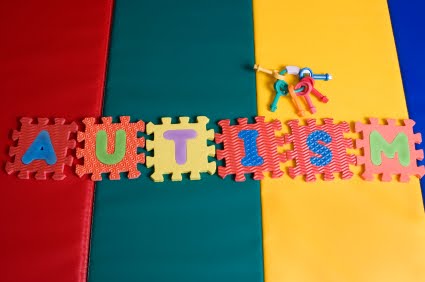
Autism and mother-blame

On the surface, the old idea of the “refrigerator mother” causing autism and the new quack idea of vaccines causing autism might appear to have little in common. However, as Dr. Michael Fitzpatrick notes, they both rest on the same deeply flawed belief: it is the mother (through her emotional response or her actions) who causes autism in her child and it is the mother (through her emotional response or her actions) who has the power to prevent autism.

Fitzpatrick is the author of Defeating Autism: A Damaging Delusion, a physician and the parent of an autistic child. He writes bitingly about the quackery in the “crusade against autism.” Jenny McCarthy is an obvious target:

In the foreword to Louder Than Words: A Mother’s Journey Into Healing Autism, Jenny McCarthy is described as the ‘polar opposite’ of the ‘refrigerator mom’, the quasi-demonic figure blamed by a generation of postwar American psychotherapists for causing autism.

Yet the concept of the ‘warrior mom’, as McCarthy presents herself in her latest book, is not so much the polar opposite of the ‘refrigerator mother’ as a distorted mirror image. The ‘warrior mom’ is yet another reflection of the culture of mother-blaming and a manifestation of the burden of guilt carried by parents as a result of the influence of pseudoscientific speculations about the causes of autism.

Fitzpatrick elaborates:

The ‘refrigerator mother’ and the ‘warrior mom’ are linked through the decades by feelings of guilt, anger and blame. In Mother Warriors, McCarthy tells of a cathartic moment when her therapist tells her that ‘you have never dealt with the fact that you feel guilty for Evan’s autism’… When the guilt subsides, the rage takes over. Drying her tears, as she puts it, ‘I decided I had to go and kick some ass in the paediatric world’. Blaming themselves, blaming their doctors, blaming the world, ‘warrior moms’ carry the burden of both causing and curing their children’s autism.

The idea that mother’s are responsible for causing autism and curing it share important themes. First, it rests on the notion that the cause of autism is environmental and therefore easily modified. The role of genetics, which is almost certainly the primary cause of autism, is ignored:

Then it was toxic parents; today it is alleged environmental toxins (such as vaccines containing traces of mercury or MMR) to which parents have exposed their children. These theories also have the common features that they are entirely speculative and lacking in scientific support.

Second, autism, rather than being recognized as a feature of the child, is portrayed as something that attacks, hides or traps the “true” child.

The Empty Fortress was the title of [psychotherapist Bruno] Bettelheim’s book and his characterisation of the imprisoned self of the autistic child (notoriously compared with a prisoner in a concentration camp) that had to be liberated through psychotherapy. ‘My son is trapped inside this label called autism, and I’m gonna get him out’, declares McCarthy in Mother Warriors…

The concept that autism is an intrinsic feature of the child is rejected for the more acceptable fantasy that autism is something that happened to the “real” child, and can therefore be prevented or reversed by simple modifications of the environment.

This fantasy dovetails nicely with the dominant contemporary mothering ideology that positions mothers as risk managers who “educate” themselves (about pregnancy, birth, vaccination, food, etc.) for the project of creating the perfect child. The child thus produced simultaneously reflects the mother’s competence, and advertises the mother’s superiority among her peers.

The autistic child, in many ways viewed by our society as the ultimate imperfect child, is a visible sign of parental failure. The desperation to avoid the stigma of this failure leaves mothers of autistic children particularly vulnerable to quacks and charlatans (like Jenny McCarthy) peddling pseudo-scientific theories of autism’s cause, its prevention and its treatment.

Autism almost certainly has a genetic basis and discovery of that basis should prove liberating for both autistic children and their mothers. Purveyors of the faulty idea of the “refrigerator mother” taught women to blame themselves for their children’s autism. Charlatans like Jenny McCarthy continue to encourage mothers of autistic children to blame themselves, not for their purported emotional frigidity, but for their purported negligence in failing to “educate” themselves about vaccination and failing to “protect” their children from vaccinations.

This mother-blame has got to stop. There are more than enough things for mothers to feel guilty about. Autism should not be one of them.

Midwives Angling for Money Again (MAMA)

What do you do when no one will pay you the money that you want? You get your favorite Congresswomen to pass a law.

That’s what the homebirth midwives of America are trying to do; in collaboration with the MAMA Campaign (Mothers and Midwives in Action) Congresswoman Chellie Pingree plans to introduce a law forcing payment to substandard practitioners who insurance companies consider unqualified to provide medical care in childbirth.

So what if no one thinks their “skills” are valuable? Who cares if people don’t think they are a safe practitioners? They want money and dammit, others should be forced to pay. So much for the free market.

That’s the problem facing certified professional midwives (CPMs), member of a second, inferior class of midwife that exists nowhere else but in the US. They have less education and training than midwives in ANY first world county and would not be eligible for licensure in the UK, the Netherlands, Canada or Australia. Since they hare banned from hospitals as unqualified, they are restricted to attending homebirths. All the existing studies to date, as well as state and national statistics show that homebirth with an American homebirth midwife (as opposed to a certified nurse midwife) is the most dangerous form of planned birth in the US.

Actually, some people do want to pay them. A tiny percentage of women who think that homebirth with a high school graduate supervising is just dandy would be very happy to pay the thousands they think they deserve. One problem, though. Those patients don’t have the money. That’s why the large corporations who insure them must be pressured to pay for services that they don’t want, don’t trust, and don’t consider safe.

Birth junkies unite! Why should you be forced to get a college degree? That’s too hard. Why bother to learn about pregnancy complications? That’s too much of a downer. Just get together, give yourself a pretend degree and start collecting cash. Oh, wait. You already did that. You called the degree the CPM (to deliberately create confusion with the real degree, the CNM). But alas, no one wants to pay you to be a birth voyeur.

Enter Congresswoman Chellie Pingree and the MAMA Campaign. MAMA is supposed to stand for Mothers and Midwives in Action. The name is misleading on its face since it is sponsored by homebirth midwives with nary a mother in sight. According to their website:

Midwives & Mothers in Action, or MAMA, is a collaborative effort by the National Association of Certified Professional Midwives (NACPM), Midwives Alliance of North America (MANA), Citizens for Midwifery (CfM), International Center for Traditional Childbearing (ICTC), North American Registry of Midwives (NARM), and the Midwifery Education Accreditation Council

MANA, NACPM, NARM and MEAC and ICTC are organizations by and for homebirth midwives; indeed, MANA, NARM and MEAC are just branches of the same organization, Ina May Gaskin’s self created empire. Citizens for Midwifery is arguably the only organization among the 6 that is composed of mothers, but its only purpose is to promote homebirth midwifery. A more accurate name for the MAMA Campaign would reflect who runs it and why. That’s why I propose Midwives Angling for Money Again (MAMA), since that is its real purpose.

What is a CPM anyway? The CPM is a second, inferior class of midwife that exists in addition to the more highly trained nurse midwife CNM. In all other first world countries, a midwife has a four year university degree that includes in-hospital training. Certified nurse midwives in the US have a nursing degree and a master’s degree in midwifery. CPMs in contrast have a post high school certificate with no in-hospital training in preventing, diagnosing and managing childbirth complications. Real midwifery training was simply too hard, so a group got together and created a pretend credential to fool unsuspecting pregnant women. And who created that credential? MANA, NARM, MEAC and CfM, of course.

The MAMA Campaign claims to be:

Advocating for CPMs as a high-value option for quality cost effective maternity care.

Curiously, the slogan does not mention the safety of CPM care. That’s probably because every study done to date (even those that claim to show that homebirth with a CPM is safe) and state and national statistics show that homebirth with a CPM triples the neonatal mortality rate. Indeed, homebirth with an American homebirth midwife is the most dangerous form of planned birth in the US (See Homebirth kills babies, Homebirth with a direct entry midwife is th most dangerous form of planned birth, and Inexcusable homebirth death toll in Colorado keeps rising).

And it’s not clear that certified professional midwives provide care that is either high value or cost effective. Indeed, Canada, which used to have a similar class of midwives, has banned them from practice. Now all midwives in Canada must have a four year university degree.

Ironically if CPM care were safe, high value or cost effective, the insurance companies would probably be first on the bandwagon to pay CPMs and promote their use over the more highly trained (and more highly compensated) certified nurse midwives. Yet most insurance companies do not accept the CPM credential. The cost for a CPM attended delivery may be cheaper, but when you add the cost for hospital transfers, NICU stays, and handicapped infants suffering brain damage from lack of oxygen in childbirth, it no longer seems like a cost effective alternative.

The bottom line is simple. If you want to practice midwifery, you should be required to have a real midwifery education and real midwifery training, comparable to that anywhere else in the first world. If that’s too hard, you can award yourself a pretend credential (the CPM), but don’t expect the rest of us to pay you to live out your fantasy. The law promoted by the MAMA Campaign is nothing more than a special interest lobbying effort. It exists for one reason, and one reason only, to force insurers to pay practitioners who are undereducated, undertrained and unsafe: Midwives Angling for Money Again (MAMA).

Parental tribalism

Imagine a cocktail party where everyone introduced him or herself with reference to a car.

Hi, I’m Debbie and I drive a Ford Explorer.

Nice, to meet you Debbie. I’m Karen and I drive a Lexus RX350. Let me introduce Kathy; she drives a Subaru. And here’s Margie. She drives a Ford Explorer just like you.

Hi, Margie. I’m so glad to meet someone else who drives a Ford Explorer. It can be tough to be a Ford driver in this culture when no one else cares enough about their country to buy American cars.

What might we conclude from this brief exchange? First, it is clear that the people in this group have constructed their identity around car ownership, not simply differentiating between those who own cars and those who don’t, but tying identity directly to specific brands. Second, even in this short exchange, we can see that identity creation through brand choice leads to a form of security, through a sense of belonging to a self-chosen group. Third, although the car appears to be central, this is not about cars at all; it is really about self-definition.

Sounds ludicrous to create an identity around car brands, doesn’t it? Yet is strikingly similar to the current penchant for creating identity around specific parenting choices, also known as parental tribalism. According to Jan Macvarish:

The idea of ‘parental tribalism’ … [is] descriptive of a tendency among individuals to form their identities through the way they parent, or perhaps more precisely, through differentiating themselves from the way some parents parent and identifying with others …

Macvarish is a scholar in the relatively new field of “parenting culture.” She is a member of the Centre for Parenting Culture Studies. The Centre’s key areas of research are common topics for discussion on this blog, including (among others): risk consciousness and parenting culture; the management of emotion and the sacralisation of ‘bonding’; the policing of pregnancy (including diet, alcohol consumption, smoking); the moralization of infant feeding (including breast and formula feeding, weaning); and The experience of the culture of advice/’parenting support’. Each of these topics is also a basis for parental tribalism.

Parental tribalism involves constructing an identity around parental choices, or rather constructing an identity centered on differentiating themselves from parents who make different choices. It is perhaps not coincidental that Mothering.com, the leading publication in the “natural” parenting community, refers to its individual message boards, each denoting a different parenting choice, as “tribes”, thereby highlighting differences and encouraging the construction of maternal identity around these differences.

Strikingly, many of these choices, although they appear to concern the well being of children, are really about the self image of parents. As Macvarish explains:

…[T]the focus on identities reflects adult needs for security and belonging and, although the child appears to be symbolically central, in fact ‘the cultural politics of parents’ self-definition have eclipsed a concern with the needs of children.

I have often said that homebirth, for example, is not about babies, and it is not even about birth. Homebirth is about mothers, their experiences, their needs and their desires.

As with all forms of tribalism, parental tribalism leads to conflicts:

[T]there is a frailty and sometimes hostility in real or imagined encounters between parents, where the parenting behaviour of one can either reinforce or threaten the identity of another. What is noticeable in contemporary mothers’ descriptions of their parenting experiences is that many feel stigmatised or assume a defensive stance about their parenting choices, even those apparently making officially sanctioned choices. For example, some breastfeeding mothers express the view that society still sees breastfeeding as abnormal, despite the fact that they are very much swimming with the tide of official advice …

Websites and publications concerned with attachment parenting, natural childbirth, homebirth and lactivism emphasize and encourage this hostility. There is an almost paranoid certainty that other mothers are watching and criticizing. The resultant defensiveness is the true source of the hostility. By aggressively promoting their own choices, aggressively demeaning the choices of other mothers, and aggressively insisting that anyone who makes different choices is implicitly criticizing them, advocates of attachment parenting, homebirth, lactivism, etc. encourage the very conflicts that they claim to deplore.

These conflicts do not benefit children, anyone’s children, in any way. That’s not surprising since it’s not about children, but about parental self image. Indeed, constructing identity around parenting choices has the potential to harm children, by ignoring the actual needs of children in favor of promoting the mother’s sense of security and belonging.

Attachment parenting causes autism

image

It is perhaps the ultimate irony that advocates of attachment parenting who reject vaccination because of fear of autism have ignored the possibility that it is attachment parenting itself that causes autism.

Consider the ever growing body of evidence:

1. Both autism and attachment parenting have increased dramatically in the past two decades. The origin of the attachment parenting is credited to Dr. William Sears, who first mentioned it in his book in 1988. Studies show that in the VERY SAME YEAR, the incidence of autism began to rise dramatically. (Environ. Sci. Technol., 2010, 44 (6), pp 2112–2118).

2. Regardless of who practices attachment parenting or how they define it, no one can deny that the practice of attachment parenting ALWAYS precedes the diagnosis. There are no known cases in which attachment parenting practices began after autism was diagnosed.

3. The purported mechanism is thought to be the sensory deprivation caused by baby wearing and extended breastfeeding. During the critical early months and years, when babies should be learning about the world and making millions of neuronal connections, babies exposed to AP are deprived of contact with the outside world (many are constantly carried in a position where they can see nothing but the surface of the mother’s clothing) and their exposure to other individuals such as fathers, grandparents and childcare workers is severely limited.

4. No one has EVER shown that attachment parenting does not cause autism.

5. Even those who strongly reject the notion that attachment parenting causes autism acknowledge that there are MANY children raised with attachment parenting who are subsequently diagnosed with autism.

6. Many of those who deny a link between attachment parenting and autism stand to lose money if attachment parenting is shown to be harmful. Authors, lactation consultants, and sling manufacturers, among others, have a strong economic motivation for discouraging investigation of this link.

It is time to launch a comprehensive investigation of the harmful side effects of attachment parenting in general, and the relationship between attachment parenting and autism in particular. It’s hardly coincidental that the same people who make money from attachment parenting have NEVER bothered to study these harmful effects. They insist that attachment parenting is beneficial, but there is no way they can know for sure.

****

Those who have read this far have probably figured out that this is a satire. I’m satirizing the “thinking” of vaccine rejectionists on the purported relationship between vaccines and autism. The purpose of the satire is to demonstrate that what seems to vaccine rejectionists to be compelling “reasoning” is nothing more than nonsense, and logical fallacies.

I’ve tried to highlight the major rhetorical gambits of vaccine rejectionists. Number 1 is the claim that because both vaccination and autism have risen in recent decades, vaccines must cause autism. That claim is foolish as can be seen when the same observation is made about attachment parenting and autism. Just because the incidence of two phenomena rise at the same time does not mean that one caused the other. And that doesn’t even take into account the fact that rates of vaccination have actually been FALLING while rates of autism have been rising.

Number 2 is the temporal connection. Early childhood vaccination precedes the observation of autistic symptoms, but a lot of things precede the observation of autistic symptoms. That’s because those symptoms typically do not appear until the early toddler years and anything that takes place during infancy (like attachment parenting practices) will precede the observation of symptoms.

Number 3 invokes a spurious mechanism of action. It is certainly plausible, but no evidence is presented that it actually occurs. Vaccine rejectionists play the same tricks with claims about the deleterious effects of “toxins” in vaccines.

Number 4 is the “argument from ignorance.” The argument from ignorance dares the opponent to prove a negative and when a negative cannot be proven (since that is a logical impossibility in most cases), the conclusion is proclaimed that this “shows” that vaccines cause autism.

Number 5 is the “fallacy of the lonely fact.” Since some children have developed autism after their parents practiced attachment parenting, the conclusion is drawn that large numbers of children will develop autism after their parents practice attachment parenting.

Number 6 is the conspiracy theory that undergirds almost every attempt to defend vaccine rejectionism. But when the same “reasoning” is applied to attachment parenting, it is easy to see that the conspiracy theory does not have much explanatory power. There is ALWAYS someone who stands to benefit from any recommendation or practice. That does not mean that those who benefit are actively hiding information on harms and risks from everyone else.

The concluding paragraph is the seemingly innocuous call for “more research.” But we cannot and should not waste time “researching” connections that have no basis in science. If we did, we could spend a lot of time “researching” whether the moon is made of green cheese or whether clouds are made of marshmallows. The call for “more research” is just away to add gravitas to what are often ridiculous claims. We do not need to “research” every wacky idea that vaccine rejectionists devise and our refusal to “research” those ideas without basis in science or logic is not a sign that someone is hiding something.

The key point is that what passes for “reasoning” among vaccine rejectionists is not reasoning at all. It is nothing more than wild accusations, logical fallacies and conspiracy theories. There is no more reason to take seriously the idea that vaccines cause autism than there is to take seriously the idea that attachment parenting causes autism.

Vaccine conspiracies abound; why not antibiotic conspiracies?

healthcare costs

They utterly changed the nature of infectious disease. Communicable diseases that had previously wiped out wide swathes of the population could be controlled with simple injections. Deaths dropped dramatically.

They became ubiquitous and virtually mandatory. The companies that manufactured them became extraordinarily wealthy and developed into large multinational conglomerates.

But there were side effects. Some recipients suffered serious medical consequences. Some even died. Yet despite these dire consequences, they have remained a cornerstone of medical practice.

What are they?

If you thought I was talking about vaccines you are mistaken. I am referring to antibiotics. And I want to talk about a curious paradox. Antibiotics and vaccines are the two most powerful and effective weapons against infectious diseases. Yet antibiotics are accepted without a demur and vaccines are the subject of a variety of conspiracy theories. Why should they be viewed so differently?

Both are highly effective. Both are delivered by injection (though they can be delivered in other ways). Both have serious side effects including death. Both are manufactured by large multinational corporations who profit from their sale. So why are vaccines the subject of hysterical pseudo-scientific conspiracy theories, while antibiotics are not merely accepted as necessary, but actively sought, sometimes even when they are not needed?

There are three critical differences and those differences shed light on the nature of pseudo-scientific conspiracy theories. The differences tell us why certain conspiracy theories flourish and others are rejected out of hand.

The first difference is the ease of explanation. The workings of antibiotics are, on their face, easy to understand. Antibiotics kill bacteria by poisoning them. Everyone understands what a poison is and how it can be effective. We routinely poison weeds in our lawns, and mice in our homes. Poisons figure prominently in crime shows and detective novels. When patients are told that antibiotics will cure them by poisoning the bacteria that are making them sick, patients have no trouble understanding or envisioning how the antibiotics will do the job.

In contrast, the explanation of how vaccines work is rather complex. It requires familiarity with the notion of the immune system in general and antibodies in particular, how antibodies function in the body, and how they are created. This is not information that can be acquired in the course of every day life. We have no direct experience with eliciting antibodies to fight disease. Antibodies are certainly not subjects for TV shows or novels. Understanding vaccination, therefore, requires specialized knowledge not easily obtained.

The second difference is the time scale. Antibiotics work quickly, in hours or days at the most. We are sick, we take antibiotics, we get well. It is easy to credit the role of antibiotics in curing illness because they are temporally connected. Cure reliably follows the administration of antibiotics. It is easy to believe that the antibiotics cause the cure.

In contrast, vaccines act over long periods time. Pertussis vaccine is give in infancy. Years go by and those infants become young children who never develop pertussis. The connection between vaccination and wellness is not directly apparent.

Third, there is something fundamentally different between curing a disease and preventing it. Curing a disease allows for certainty on the part of the person being cured. Connecting the absence of a disease with a maneuver designed to prevent it is not apparent to most people. There are other possible explanations besides vaccination for why a child does not get pertussis. He or she may never have been exposed. Some children who are exposed do not get the disease, even if they haven’t been vaccinated.

Fourth, there is a difference in apparent effectiveness. The reality is that a given antibiotic will never be 100% effective, but there are almost always alternatives. If penicillin does not due the trick, another antibiotic may be more effective. Ultimately, though, the patient is cured by antibiotics, whether it is the initial antibiotic, a subsequent antibiotic or a combination of antibiotics.

No vaccination is 100% effective, either, but there is usually one and only one vaccine for a particular disease. If the vaccine fails, the person gets the disease and there is no other vaccine that can be administered to prevent it.

These differences can be readily summarized: it is easy for lay people to believe that antibiotics work, but it requires specialized knowledge to understand that vaccines work. That’s why it’s not a coincidence that vaccine conspiracies flourish among those who lack basic knowledge of science, immunology and statistics. They literally cannot understand the issues involved. And if the can’t understand it, there is lots of room to disbelieve it and to substitute conspiracy theories for the truth.

Eat your placenta and show just how gullible you are

08134875-893C-4B88-AFBC-5262FFD35AE7

When it comes to nonsense, it’s tough to beat homebirth advocates. They fabricate transgressive practices, label them “natural”, pretend that indigenous cultures around the world have practiced them, make up all sorts of faux benefits, and even invent “scientific” explanations which are nothing more than figments of their own, uneducated imaginations.

I’ve written about waterbirth in the past. In contrast to the claims of its advocates, waterbirth is not natural (no primates give birth in water), has not been practiced by indigenous cultures around the world (not surprisingly, since it’s not natural), provides poor pain relief, and can lead to drowning and death of the baby. Explanations of why waterbirth is supposedly safe are nothing more than mumbo-jumbo that demonstrate a profound ignorance of human physiology.

For wackiness, though, it’s tough to beat placentophagia. That’s the scientific term for eating the placenta. Yup, eating the bloody, rubbery placenta. You can eat it raw, and some proponents insist that this provides the most “benefits.” But for those who are more fastidious, you can dry it and put it in capsules to eat later.

Why would you do that? Because you are gullible, of course.

Placenta Benefits.info provides supplies and services to help you prepare your baby’s placenta. (Wacky childbirth practices almost always cost money and are a source of income for childbirth “professionals.”) What are these purported benefits that Placenta Benefits is extolling?

Why should I take placenta capsules?
Your baby’s placenta, contained in capsule form, is believed to:

*contain your own natural hormones
*be perfectly made for you
*balance your system
*replenish depleted iron
*give you more energy
*lessen bleeding postnatally
*been shown to increase milk production
*help you have a happier postpartum period
*hasten return of uterus to pre-pregnancy state
*be helpful during menopause

Now that you’ve read the fantasy, let’s look at the reality.

Is eating the placenta natural?

Sure … if you are a rat, and maybe even if you are a lemur. But how about if you are higher order primate, or a human being? Eating the placenta is variable among higher order primates, and virtually never occurs among humans.

Indeed, the anthropological literature dates the first sighting to an indigenous group of California homebirth advocates (I kid you not). In Consuming the inedible: neglected dimensions of food choice, MacClancy and colleagues report:

… In association with the natural childbirh movement from the 1960’s placentophagia was taken up in some ‘Western’ societies, especially in California, on the basis that it was ‘natural’, as ‘all’ mammalian species eat the placenta. The problem with this is that not all mammals are regularly placentophagous and our closest primate relatives also are not placentophagous… [M]odern placentophagia is based on an inaccurate idea of making the human birthing process more ‘natural’.

In other words, eating the human placenta is not natural and it is an affectation dreamed up by California hippies.

Can eating the placenta replenish depleted iron and give you more energy?

In the world of cooking, the placenta would be considered an “organ meat” and could theoretically improve iron levels. In fact, it may do so in species that are regularly placentophagous. Of course, eating any part of any human being could probably do the same. And though it is theoretically possible, there are no studies that have shown that it occurs.

Can the placenta decrease postpartum bleeding?

In other words, does the placenta contain utero-tonic substances like oxytocin? There’s no reason to believe it does and considerable reason to believe it does not.

The purpose of the placenta is to interface with the mother’s circulation and thereby transfer oxygen and nutrients. Contractions of the uterus interfere with that function (when the uterus contracts, exchange cannot take place) and may cause the placenta to shear away from the wall of the uterus (an abruption). There is precisely ZERO reason to believe that eating the placenta will prevent postpartum bleeding. In fact, Placenta Benefits.info, which has a full page of bibliography salad masquerading as supporting research, can’t manage to find even a single paper on the purported utero-tonic effects of placenta.

Can eating the placenta increase milk production?

In other words, is the placenta a galactagogue? I could find only two papers on the subject. One was published in the BMJ … in 1917. The other, quoted by Placenta Benefits.info is Placenta as Lactagagon published in 1954 by Soykova-Pachnerova in the journal Gynaecologia. The study is poorly done and has never been replicated.

The bottom line is that there is no evidence that eating the placenta increases milk production.

Can eating the placenta prevent postpartum depression?

No. According to Pec Indman, a psychotherapist who specializes in postpartum mood disorders:

Although there has not been one study (not even poorly done) about the effects in humans on placental ingestion, the claims are that it prevents the blues and PPD …which contributes the spread of misinformation about perinatal mood and anxiety disorders. There is no evidence that the freeze drying processing of placental tissues maintains the integrity of the hormones, protein, and iron. There is no evidence about any part of this process to warrant a recommendation.

Indman’s comment about the integrity of placental components highlights another important issue. There is no evidence that the placenta contains hormones that are biologically active in increasing milk supply, decreasing postpartum bleeding or improving postpartum mood. But even if the placenta did contain such hormones, you’d still have to show that they survived biologically intact, did not get destroyed by the acid in the stomach, existed in a form that could be absorbed in the intestine, and are absorbed in a form that could be utilized by human cells.

When it comes to placentophagia, homebirth advocates are batting zero, as usual. Eating the placenta is NOT a natural process for humans. Indigenous peoples around the world did NOT eat the placenta. There is NO evidence that eating the placenta improves iron stores. There is NO evidence that eating the placenta prevents postpartum bleeding. There is NO evidence that eating the placenta improves milk supply. And there is NO evidence that eating the placenta prevents or treats postpartum depression.

There is one thing that eating the placenta reliably does, though. It does highlight the fact that homebirth advocates are gullible and woefully uneducated about human childbirth.

Dr. Amy