Bullying as science; a cautionary tale

Anxious woman judged by different people

Its leaders have always felt that they are using science to improve society. Nature is a brilliant arbiter in ordering the natural world and can rarely be improved upon. It should, however, be supported by policies that give deference to the natural.

Defenders claims that it’s not matter of ideology. Countless studies have shown the dangers, and many of the current ills of society almost certainly stem from interfering with nature’s plan, a plan crafted by hundreds of thousands of years of evolution. Why would we ignore the processes that nature has created? Why would we put ourselves at risk with beliefs that these choices don’t matter or, worse yet, that we should protect everyone’s feelings by pretending that all choices are equal?

[pullquote align=”right” cite=”” link=”” color=”” class=”” size=””]Natural childbirth and lactivism are based on science in the same way that eugenics is based on science.[/pullquote]

In order to prevent a future that is even worse than the present, professional societies have been created, books and journals are published, courses are taught, conferences are held and policies are promulgated. Do these policies make some people uncomfortable? Yes, they do. Do they mean pain and suffering of some individuals? Yes, but the suffering is brief and the benefits are more than worth the effort. But above all else, it must be emphasized that this is what science tells us we should do.

Think I’m talking about natural mothering — natural childbirth, breastfeeding and attachment parenting? Think again.

I’m talking about the eugenics movement. The parallels of the natural mothering movement to the eugenics movement are striking.

  • Both were undertaken by those whose traditional hold on power was being threatened.
  • Both reinscribe (eugenics) traditionally held power or returned it (natural childbirth and lactivism) to its “rightful” holders.
  • Both are appeals to nature and rely on the naturalistic fallacy.
  • Both insist that evolution has created the best possible outcome.
  • Both berate those who believe differently as inferior and defective.
  • Both were or are embraced by academia.

Adam S. Cohen explains the prominent role of Harvard University in the eugenics movement:

In August 1912, Harvard president emeritus Charles William Eliot addressed the Harvard Club of San Francisco on a subject close to his heart: racial purity. It was being threatened, he declared, by immigration…

The former Harvard president was an outspoken supporter of another major eugenic cause of his time: forced sterilization of people declared to be “feebleminded,” physically disabled, “criminalistic,” or otherwise flawed…

He also lent his considerable prestige to the campaign to build a global eugenics movement…

None of these actions created problems for Eliot at Harvard, for a simple reason: they were well within the intellectual mainstream at the University. Harvard administrators, faculty members, and alumni were at the forefront of American eugenics—founding eugenics organizations, writing academic and popular eugenics articles, and lobbying government to enact eugenics laws.

Similarly, natural mothering advocates deeply believe that childbirth, breastfeeding and mothering itself are being threatened by lazy women and greedy doctors who would rather use technology than respect the natural order.

The case for eugenics, as its supporters understood it, was remarkably simple. Nature had created a world in which Anglo-Saxon Protestant white males had achieved dominance over other races. That must be what nature intended.

Frank W. Taussig, whose 1911 Principles of Economics was one of the most widely adopted economics textbooks of its time, called for sterilizing unworthy individuals, with a particular focus on the lower classes. “The human race could be immensely improved in quality, and its capacity for happy living immensely increased, if those of poor physical and mental endowment were prevented from multiplying,” he wrote. “Certain types of criminals and paupers breed only their kind, and society has a right and a duty to protect its members from the repeated burden of maintaining and guarding such parasites.”

The case for natural mothering is remarkably simple, too. Nature has created a world in which women suffer agony in childbirth, babies die of insufficient breastmilk, and women are denied access to the wider world by being relegated to childcare. That must be what nature intended.

Supporters of eugenics insisted it was based on science, but eugenics is merely bullying masquerading as science.  Most of the scientific evidence touted by its supporters was “discovered” by eugenicists themselves.

One of Harvard’s most prominent psychology professors was a eugenicist who pioneered the use of questionable intelligence testing. Robert M. Yerkes, A.B. 1898, Ph.D. ’02 … developed a now-infamous intelligence test that was administered to 1.75 million U.S. Army enlistees in 1917. The test purported to find that more than 47 percent of the white test-takers, and even more of the black ones, were feebleminded. Some of Yerkes’s questions were straightforward language and math problems, but others were more like tests of familiarity with the dominant culture: one asked, “Christy Mathewson is famous as a: writer, artist, baseball player, comedian.”

In other words, the studies were poorly done, deeply biased and designed to arrive at a pre-determined conclusion … just like most of the literature on natural childbirth and breastfeeding.

It’s pretty obvious to us that the supporters of eugenics were merely seeking to consolidate their hold on the levers of power and the perquisites of wealth, but it wasn’t obvious to many at the time. It ought to be obvious to us that the supporters of natural childbirth, lactivism and attachment parenting are seeking to bolster their power, employment opportunities and self esteem but, sadly, it still has the imprimatur of science.

Ultimately, most supporters of eugenics realized their spectacular error.

Today, the American eugenics movement is often thought of as an episode of national folly—like 1920s dance marathons or Prohibition—with little harm done …

The truth is that eugenics caused tremendous harm through forced sterilization of “mental defectives” and immigration quotas crafted to keep out “undesirables.”

A few years ago, correspondence was discovered from 1941 in which Otto Frank pleaded with the U.S. State Department for visas for himself, his wife, and his daughters Margot and Anne. It is understood today that Anne Frank died because the Nazis considered her a member of an inferior race, but few appreciate that her death was also due, in part, to the fact that many in the U.S. Congress felt the same way.

It’s hardly surprising that eugenics was harmful; it was bullying masquerading as science.

The harm caused by the natural mothering movement is less serious, but more pervasive. Women who choose epidurals or undergo C-sections have been convinced that they are “defective”; women who can’t breastfeed (or choose not to) are derided as lazy; and women who dare to imagine a life beyond childrearing are jeered as “unnatural.”

The next time someone tells you that natural childbirth, lactivism and attachment parenting are “based on science,” remember: people used to believe that eugenics was based on science, too.

Save money on care for newborns in opioid withdrawal by forcing their addict mothers to provide it!

block word in concrete

Pardon my profanity, but what the fuck is wrong with people?

That was my thought when I read a paper published yesterday in JAMA Pediatrics. The paper is Association of Rooming-in With Outcomes for Neonatal Abstinence Syndrome; A Systematic Review and Meta-analysis by MacMillan et al.

[pullquote align=”right” cite=”” link=”” color=”” class=”” size=””]It sounds like a particularly ghastly joke, but sadly it isn’t.[/pullquote]

In this systematic review and meta-analysis of 6 studies comprising 549 patients, rooming-in was associated with a reduction in the need for pharmacologic treatment and a shorter hospital stay when rooming-in was compared with standard neonatal intensive care unit admission for neonatal abstinence syndrome.

Wait, what? We can save money on the care of drug addicted newborns by forcing their mothers — mothers who may lose custody — to room in with them and take care of them? Do the authors of the paper, and the people who reviewed and published it have any idea just how screwed up that is?

Consider the problem:

Neonatal abstinence syndrome (NAS) is a collection of signs and symptoms of newborn opioid withdrawal after intrauterine exposure. Other descriptions of the syndrome include neonatal opioid withdrawal syndrome and neonatal withdrawal syndrome. Neonatal abstinence syndrome manifests 24 to 96 hours after delivery with increased muscle tone, tremors, sweating, vomiting, diarrhea, and other symptoms. Between 1999 and 2013, the incidence of NAS in the United States increased from 1.5 to 6.0 cases per 1000 births,3 with a mean cost in 2012 of $93 400 per newborn stay.

So let me see if I get this straight: Opioid addicted newborns cost a lot of money because they need specialized care for their suffering: increased muscle tone, tremors, sweating, vomiting and diarrhea. The incidence of newborn abstinence syndrome is rising because the incidence of maternal opioid addiction is rising.

There are lots of ways we could address this issue. We could provide greater oversight of the pharmaceutical industry to prevent opioid addiction; we could provide better care for those addicted to opioids; we could provide specialized treatment programs for pregnant opioid addicts. Those measures would work by decreasing the number of infants forced to endure opioid withdrawal after birth. Apparently that’s too hard. The “solution” the researchers offer is to force opioid addicted the mothers — the same people who made their children deathly ill because they couldn’t pry themselves from the grip of addiction — to provide the highly specialized care their babies need despite the fact that they themselves are still recovering from childbirth.

It sounds like an particularly ghastly joke, but it isn’t.

Opioid-exposed newborns are typically cared for in neonatal intensive care units (NICUs), and standardized scoring systems, such as the modified Finnegan system, are used to quantify NAS symptoms and to adjust medications used in treatment. Paradoxically, studies have found that opioid-exposed newborns in NICUs experience more severe withdrawal, longer length of stay (LOS), and increased pharmacotherapy compared with newborns who room in. In rooming-in care, infant and mother remain together 24 hours a day unless separation is indicated for medical reasons or safety concerns. More maternal time at the infant bedside improves NAS outcomes but is harder to accomplish in a typical NICU. Neonatal intensive care units may be poor settings for newborns with NAS because of increased sensitivity to high clinical activity levels…

The excessive sensory stimuli present in a busy NICU is especially jarring for newborns withdrawing from opioids? You don’t say! We could provide one-on-one care is a quieter setting off the main NICU but that would be even more expensive.

Hey, I know how we could provide one-on-one care in a quieter setting and save money, too. Just let their addicted mothers take care of them in the privacy of their own rooms while they are recovering the the exhaustion and agony of childbirth!

While rooming-in may be effective for NAS, potential risks include unintentional suffocation, falling from an adult bed, or undertreated NAS after hospital discharge.

No fooling!

What did the authors find in their literature review?

This systematic review and meta-analysis demonstrates that rooming-in is associated with decreased need for pharmacologic treatment of NAS and shorter LOS. The results of several included studies suggest that rooming-in is associated with reduced hospital costs, but the significant heterogeneity across studies precluded quantitative analysis. Because of variable reporting, we were unable to draw formal conclusions about the role of rooming-in on other secondary outcomes of interest. The findings of 2 studies suggested that breastfeeding increases with rooming-in. There was no evidence that rooming-in for NAS was associated with a significant increase in hospital readmission. Reporting of adverse events was insufficient to draw any conclusions about an association between rooming-in and these outcomes.

In other words, the studies showed a decreased use of pharmacologic treatement that the authors interpreted to mean a decreased need for treatment and a shorter length of stay. The authors couldn’t tell if any money was saved and the study was too small to draw conclusions about adverse events.

It seems never to have occurred to the authors that the Dickensian premise of the study — that opioid addicted mothers should be employed for free to care for their suffering opioid addicted newborns so we can save money on skilled caregivers — is absolutely grotesque.

What was the impact on the mothers themselves? Surely you jest. It never occurred to anyone to check because no one cares.

Whatever happened to basic human compassion? It’s apparently less important than the drive to save money.

Midwives horrified to find 39 week inductions reduce C-sections and improve outcomes

65DCC304-8260-4C22-845A-C9133F05A921

Midwives are panicking over a new study.

According to the Society for Maternal Fetal Medicine, where the data was presented last week:

[pullquote align=”right” cite=”” link=”” color=”” class=”” size=””]Interventions improve birth outcomes and letting nature take its course in pregnancy is far from the best decision.[/pullquote]

In a study with more than 6,100 pregnant women across the country, researchers randomly assigned half of the women to an expectant management group (waiting for labor to begin on its own and intervening only if problems occur) and the other half to a group that would undergo an elective induction (inducing labor without a medical reason) at 39 weeks of gestation. Results include:

• Lower rates of cesarean birth among the elective induction group (19%) as compared to the expectant management group (22%)
• Lower rates of preeclampsia and gestational hypertension in the elective induction group (9%) as compared to the expectant management group (14%)
• Lower rates of respiratory support among newborns in the induction group (3%) as compared to the expectant management group (4%)

“Safe reduction of the primary cesarean is an important strategy in improving birth outcomes,” said William Grobman, MD, MBA, who presented today’s findings and is professor in obstetrics and gynecology at Northwestern University’s Feinberg School of Medicine. The research presented is part of, “A Randomized Trial of Induction Versus Expectant Management,” more commonly referred to as the ARRIVE Trial, which was funded by the Eunice Kennedy Shriver National Institute of Child Health and Human Development (NICHD).

You can read the brief presentation here:

…Women in the IOL [induction of labor] group delivered significantly earlier than those in the EM [expectant management] group (39.3 weeks (IQR 39.1 – 39.6) vs. 40.0 weeks (IQR 39.3 – 40.7), p<.001). The primary perinatal outcome occurred in 4.4% of the IOL group and 5.4% of the EM group (RR 0.81, 95% CI 0.64 – 1.01; p = .06). Need for neonatal respiratory support was significantly less frequent in the IOL group (Table). The frequency of CD was significantly lower in the IOL group (18.6% vs. 22.2%, RR 0.84, 95% CI 0.76 – 0.93), as was preeclampsia/gestational hypertension (Table). A priori baseline subgroup analyses showed no differences by race/ethnicity, maternal age > 34 years, BMI > 30 kg/m2, or modified Bishop score < 5 (all P-values for interaction > .05) for either the primary perinatal outcome or CD. IOL at 39 weeks in low-risk nulliparous women results in a lower frequency of CD without a statistically significant change in the frequency of a composite of adverse perinatal outcomes.

This is not surprising. It confirms a variety of studies that have been published in the last 6 years. The central reality of the timing of labor is this, which graphs the risk of stillbirth against the length of pregnancy.

4E9281DB-D380-41EB-9E58-E49526B81B43

Contrary to the claims of natural childbirth advocates that babies are “not library books due on a certain date,” there is an optimal time to be born and the death rate rises on both sides of that optimal time.

We’ve known that elective induction decreases perinatal mortality:

Stock, Sarah J., Evelyn Ferguson, Andrew Duffy, Ian Ford, James Chalmers, and Jane E. Norman. “Outcomes of elective induction of labour compared with expectant management: population based study.” BMJ 344 (2012): e2838.

Induction improves maternal and neonatal outcomes:

Gibson, Kelly S., Thaddeus P. Waters, and Jennifer L. Bailit. “Maternal and neonatal outcomes in electively induced low-risk term pregnancies.” American Journal of Obstetrics & Gynecology 211, no. 3 (2014): 249-e1.

Induction lowers the risk of C-section:

Mishanina, Ekaterina, Ewelina Rogozinska, Tej Thatthi, Rehan Uddin-Khan, Khalid S. Khan, and Catherine Meads. “Use of labour induction and risk of cesarean delivery: a systematic review and meta-analysis.” Canadian Medical Association Journal 186, no. 9 (2014): 665-673.

Obstetricians have been discussing the wisdom of recommending routine 39 week inductions for years. The issue was debated at the 2016 ACOG annual meeting, with Dr. Errol Norwitz recommending routine induction:

“Nature is a terrible obstetrician,” he said, referring to the “continuum” of pregnancy and birth: the large number of zygotes that never implant, the 75 percent lost before 20 weeks, and stillbirth.

And, he said, the risk of stillbirth and neurological injuries rises after 39 weeks. “Stillbirth is a hugely underappreciated problem,” he said. “There are anywhere between 25,000 to 30,000 stillbirths a year in the United States.”

And Dr. Grobman himself explored the issue in a 2016 commentary in The New England Journal of Medicine.

In this issue of the Journal, Walker et al. … report the results of a trial in which more than 600 women who were at least 35 years of age were randomly assigned to labor induction between 39 weeks 0 days and 39 weeks 6 days of gestation or to expectant management. This study was powered to detect at least a 36% relative difference between the two groups in the frequency of cesarean delivery. A total of 32% of the women assigned to the induction group, as compared with 33% of the women assigned to the expectant-management group, underwent a cesarean delivery (relative risk, 0.99; 95% confidence interval, 0.87 to 1.14). There were no significant differences between the groups in other adverse maternal or perinatal outcomes, but such outcomes were uncommon…

The authors note the need for “a larger trial to test the effects of induction on stillbirth and uncommon adverse neonatal outcomes.” I am the principal investigator of such a trial (ClinicalTrials.gov number, NCT01990612), which is currently under way …

It is this study that is being reported now.

Midwives are appalled and nurse midwives have rushed to reaffirm their support of “normal physiologic birth”:

ACNM President Lisa Kane Low, PhD, CNM, FACNM, FAAN cautioned against any rush to change practice … “ACNM has consistently noted there are a number of potentially negative implications when we disrupt the normal physiological processes of labor and birth,” Kane Low said. Research related to the longer-term effects of induction of labor is emerging, but is still insufficient to determine its full impact. Additionally, spontaneous labor offers substantial benefits to the mother and her infant, as ACNM has affirmed in its Consensus Statement on Physiological Birth.

She wrote on Facebook:

What’s missing is the focus on process …

9649C859-329C-402D-A76A-66F2A1842FCC

Wait, what? Induction at 39 weeks improves multiple outcomes — lowers the C-section rate, lowers the rate of pre-eclampsia, lowers the need for newborn respiratory support — and Kane Low thinks we should focus on process instead of outcomes? Really?

I’m not surprised midwives are panicking about this study. It undermines the entire raison d’etre of contemporary midwifery theory, the belief that birth in nature is better than birth with interventions. This study shows in the clearest way possible that interventions improve birth outcomes and letting nature take its course in pregnancy is far from the best decision.

Of course, everyone except contemporary midwives have known that since the beginning of recorded history. Midwives were in charge of childbirth for more than 1,000 generations and the perinatal and maternal mortality rates were hideous throughout. It took modern obstetrics only 3 generations to drop the neonatal mortality rate by 90% and the maternal mortality rate by more than 90%.

Midwives did a terrible job when childbirth was midwife-led and childbirth is just as dangerous as it has ever been. Indeed, in every time, place and culture, childbirth has been a leading cause of death of young women and THE leading cause of death in the 18 years of childhood. No matter. Contemporary midwives believe that increasing their market share and profits depends of pretending that childbirth is safe and that obstetricians (the folks who reduced neonatal and maternal mortality by 90%) are the ones who made it dangerous. Many of them even believe it.

Midwives have proceeded to whip up a moral panic over the issue of C-sections and interventions. As I noted last week:

A moral panic is a widespread fear, most often an irrational one, that someone or something is a threat to the values, safety, and interests of a community or society at large…

This moral panic serves to reinforce and strengthen the social authority of midwives. They fear they are losing control of childbirth and they are desperate to gain it back.

It is too soon to change clinical practice based on these findings; we haven’t yet seem the complete paper. Moreover, extraordinary claims require extraordinary evidence.

I suspect that evidence will be forth coming. It makes sense considering what we know about pregnancy and about C-sections. The most common indications for a first C-section are a baby too big to fit or possible fetal distress. Babies are smaller at 39 weeks than anytime thereafter (they gain approximately a half pound a week at this stage) and the placenta is usually in optimal condition. It’s hardly surprising that babies are more likely to fit and less likely to experience fetal distress.

Given the amount of evidence that already exists, we should share this information with pregnant women so they can decide for themselves if they wish to be induced at 39 weeks. Medical ethics demands that we share what we know with our patients, not withhold the information in order to pressure women into a decision the provider might prefer. That goes for midwives as well as obstetricians.

I predict that going forward we will hear a lot from midwives about “nuance” and putting the findings “in perspective.” They are going to do everything they can to ignore the scientific evidence for as long as they can. Their profits depend on it, but more importantly, their fundamental beliefs depend on it and most people don’t give those up without a tremendous fight.

Lactivist Prof. Amy Brown tries to euphemize lactivist bullying

Stop Bullying

In a brilliant deduction, lactivist Prof. Amy Brown has come to the amazing conclusion that women who are bullied by lactivists are harmed by the bullying.

There’s a simple solution to the problem: lactivists could stop using lies about breastfeeding — specifically the claim that insufficient breastmilk is rare and the massively exaggerated claims of benefits — to bully new mothers.

[pullquote align=”right” cite=”” link=”” color=”” class=”” size=””]It is the breastfeeding industry that is bullying women and the breastfeeding industry that must stop.[/pullquote]

Nah. That might require someone like Brown to take responsibility for her own bullying and she enjoys it too much to much to stop. Instead she has euphemized bullying, turning it into “breastfeeding trauma.” And I’ll give you three guesses what she thinks is the cure.

Good for you, you got it on one: that’s right, more breastfeeding support from breastfeeding professionals.

Brown is now traveling the world with a new lecture series. The title betrays her bias at the outset: “Breastfeeding Trauma? How can we recognize and support women who were unable to meet their goals?”

1FC045D3-30A4-46AC-B4A0-38FF1603D420

The real question is: how can we stop lactivists from bullying new mothers? But that would require taking responsibility for bullying tactics. Brown would prefer to dump responsibility on new mothers for feeling bad about inability to meet “their breastfeeding goals,” when it is the breastfeeding industry that has created and relentlessly promoted those goals.

Brown displays her dogmatism at the outset:

5135462E-B0D1-4AFA-8442-F58C127E9044

The goal is not the preservation of infant health, nor the preservation of women’s mental health. The goal is always and only to promote breastfeeding.

Brown’s research is spot on when it comes to identifying the feelings of women who could not meet relentless lactivist pressure to breastfeed:

7B708BDB-EC9E-4F3C-A1FB-6CCAC35FEFF5

Who’s to blame for these feelings of guilt, failure and shame? Everybody in the universe except the lactivists that applied the outsize pressure in the first place, grossly exaggerating the benefits, and lying about the the nearly 15% incidence of insufficient breastmilk among first time mothers.

It’s the patriarchy!

7B349F35-E910-41EA-AAC5-B22784CEDECE

It’s capitalism!

CE35B1DC-E420-4EE8-B53C-1EC18F79C1D8

It’s society!

DE1795E6-8E6F-4C41-AD40-9FC8DD7E2C30

It’s the formula industry!

8B394144-60B7-45CF-833B-AF16AD010659

But those can’t be the causes because breastfeeding “trauma” is new and the patriarchy, capitalism, society and the formula industry have been around for hundreds of years.

What has changed? The emergence of a profession that monetizes breastfeeding and applies tremendous pressure to breastfeed while simultaneously lying about the failure rate and exaggerating the benefits. It is the breastfeeding industry that is bullying women and the breastfeeding industry that must stop.

In my view, this is the most important slide in Brown’s deck:

2675AF40-DB4D-46FC-BFB3-4A6BF55DAAB1

It is meant to illustrate the failure of British women to meet breastfeeding goals, but it inadvertently shows something else: that lactivists exaggerate the benefits of breastfeeding to bully women.

Ghana is the country with the best breastfeeding record. In 2015 the infant mortality rate of those breastfed babies was 43.1/1000. The UK is the country with the worst breastfeeding rate. The infant mortality rate of those formula fed babies was 3.6/1000. The country with the best breastfeeding rate had an infant mortality rate 1000% HIGHER than the country with the worst breastfeeding rate. In other words, breastfeeding has virtually nothing to do with infant health.

If Amy Brown really wanted to reduce breastfeeding trauma, she would share that information with new mothers, but that will never happen. The truth is that in industrialized countries it doesn’t really matter to your baby whether or not you breastfeed; it only matters to the breastfeeding industry.

Childbirth, breastfeeding and moral panic

Scared shocked woman isolated on gray background

O tempora, O mores!

Oh, the times! Oh, the customs!

Cicero famously wrote these words more than 2000 years ago to deplore the breakdown of traditional values. He was referring to the political corruption of his day, but it has been used repeatedly since then to deplore any departure from the supposedly “good old days.”

[pullquote align=”right” cite=”” link=”” color=”” class=”” size=””]The discourse of natural mothering reflects moral panic at the possibility that women could control their own destinies.[/pullquote]

It could serve equally well as the motto of the present day natural parenting movement that is forever bemoaning the loss of traditional mothering values. Those are the values that characterized the “good old days” when women were immured in the home, restricted to reproduction and child rearing, unable to use their intellects and talents, and forcibly deprived of political and economic power.

I would argue that contemporary discussions of mothering is a moral panic. It is the emodiment of horror at the possibility that women can control their own destinies.

What is a moral panic?

A moral panic is a widespread fear, most often an irrational one, that someone or something is a threat to the values, safety, and interests of a community or society at large. Typically, a moral panic is perpetuated by news media, fueled by politicians, and often results in the passage of new laws or policies that target the source of the panic. In this way, moral panic can foster increased social control.

Moral panics are often centered on people who are marginalized in society due to their race or ethnicity, class, sexuality, nationality, or religion. As such, a moral panic often draws on known stereotypes and reinforces them…

Women were at the center of the most famous moral panic in American history, the Salem Witch Trials.

Accusations of witchcraft were directed first at women who were social outcasts of the society after a couple of local girls were afflicted with unexplained fits. After the initial arrests, accusations spread to other women in the community who expressed doubt about the accusations or who behaved in ways that did not seem supportive of guilt.

This particular moral panic served to reinforce and strengthen the social authority of local religious leaders, since witchcraft was perceived as a violation of and threat to Christian values, laws, and order.

A moral panic involves a target group that is vilified for ignoring social norms, authority figures that are threatened by the deviation and attempt to reassert control, a compliant media that amplifies the concerns of the threatened authority figures, and a political system willing to encode the authority figures’ wishes in policy positions and laws.

In the case of natural mothering, the target group is women who dare to pursue a life beyond exclusive child rearing, and the authority figures are both general and particular. The general authority figures are the keepers of “traditional” values such as religious figures and the particular authority figures are those who used to control social norms around childbirth, breastfeeding and parenting. Both can only regain their authority by browbeating women back into the home, reduced to obsessing the minutia of childbearing and rearing, instead of engaging with the wider world.

It is not an accident that the philosophies of natural childbirth and lactivism were created in response to religious concerns.

The philosophy of natural childbirth arose from the moral panic instigated by Grantly Dick-Read and his peers, who feared “race suicide” as Christian, white people of the “better” classes were engulfed in a tide of black and brown people who reproduced at a faster rate. He believed that the key to preserving the white race was to convince white women to have more children. They weren’t cooperating because they feared the pain of childbirth so he told them the pain was all in their heads; they weren’t cooperating because they thought there was more to life than childbearing and rearing so they needed to be re-educated.

He famously wrote:

The mother is the factory, and by education and care she can be made more efficient in the art of motherhood.

And, in case you didn’t get the point:

Woman fails when she ceases to desire the children for which she was primarily made. Her true emancipation lies in freedom to fulfil her biological purposes.

The language has changed, but the moral panic behind natural childbirth advocacy has not.

According to this position statement in the Journal of Perinatal Education, a Lamaze publication:

… The use of obstetric interventions in labor and birth has become the norm in the United States. More than half of all pregnant women receive synthetic oxytocin to induce or augment labor, which demands additional interventions to monitor, prevent, or treat side effects. Nationally, one third of women deliver their babies via cesarean, a major abdominal surgery with potential for serious short- and long-term health consequences. For the mothers these consequences include, but are not limited to, postoperative infections, chronic pain, future cesarean births, and placental complications that can lead to hemorrhage, hysterectomy, and rarely, death. Infant risks include respiratory distress, and in subsequent pregnancies maternal risks include increased likelihood of preterm birth and associated morbidity and mortality.

O tempora, O mores!

Never mind that these interventions save the lives of thousands of mothers and tens of thousands of babies each year in the US alone. The interventions threaten the authority of midwives (who can’t perform many of them) and they sever the link between childbearing and the excruciating pain that is deemed to be women’s punishment. When midwives insist that we must “preserve” physiologic birth they mean we must preserve their traditional authority.

Midwives and natural childbirth professionals like doulas and childbirth educators subvert science to reinforce the sense of moral panic, insisting that physiologic birth is better, healthier and safer when it is none of those things. There is no limit to what they will say to demonize C-sections and epidurals so they can maintain their power and authority over birth.

Similarly, the founders of La Leche League were religious fundamentalists who were in a moral panic about mothers of small children returning to the workforce. In the book La Leche League: At the Crossroads of Medicine, Feminism, and Religion, Jule DeJager Ward explains that the La Leche League was founded in 1956:

… by a group of Catholic mothers who sought to mediate in a comprehensive way between the family and the world of modern technological medicine. . . . [A] central characteristic of La Leche League’s ideology is that it was born of Catholic moral discourse on family life. . . . The League has very strong convictions about the needs of families. The League’s presentations and literature carry a strong suggestion that breast feeding is obligatory. Their message is simple: Nature intended mothers to nurse their babies; therefore, mothers ought to nurse.

La Leche League reflected traditional Catholic family values about the subservient role of women and their relegation to the home.

While the language of lactivism has changed, the moral panic has not.

Consider these tenets of contemporary LLL philosophy:

Mothering through breastfeeding is the most natural and effective way of understanding and satisfying the needs of the baby.

Mother and baby need to be together early and often to establish a satisfying relationship and an adequate milk supply.

In the early years the baby has an intense need to be with his mother which is as basic as his need for food…

The message is hardly subtle: the woman who leaves her baby to work is an inferior mother.

Lactivists have recruited the media to their moral panic:

No country in the world supports breastfeeding moms like they should, according to a new report released Tuesday by the World Health Organization (WHO) and the United Nations Children’s Fund (UNICEF).

WHO and UNICEF recommend mothers breastfeed infants within the first hour of birth, exclusively for six months and continue breastfeeding, while adding complementary foods, until the child is at least 2-years-old. Breastfeeding has a host of health benefits, most notably improving a baby’s immunity…

By comparing breastfeeding rates around the world, the groups found rates nowhere near 100% in its Global Breastfeeding Scorecard, released at the start of World Breastfeeding Week.

O tempora, O mores!

Why do women “fail” to meet the WHO guidelines?

The “key reason” is the need to return to work away from their babies, the report says.

There it is again, the demonization of mothers who work outside the home.

Just give the lactivists more money and authority and they will put women back into their place:

The groups are asking for lower and middle-income countries to invest $4.70 per newborn ($5.7 billion) in initiatives, such as access to breastfeeding counseling and improving breastfeeding practices in hospitals, to increase the global rate of 6-month exclusive breastfeeding to 50% by 2025.

Of course the $5.7 billion could be used to extend maternity leave, but that wouldn’t shore up the power and authority of the breastfeeding industry.

The moral panic around contemporary childbirth and breastfeeding practices are no that different from the Salem Witch Trials. The driving force behind both is desperation to return to a subservient role for women and to bolster the authority of the avatars of traditional mothering values.

And that puts me in mind of a another foreign language phrase: plus ça change, plus c’est la même chose.

The more things change, the more they stay the same.

Who wants to live in Quackistan?

66B581CD-82C6-4641-9FE7-C299566500BA

What if we created a special geographic area, a new state, for those who don’t want to vaccinate? We could carve out a piece of an existing state with low population like Wyoming or Idaho and call it Quackistan!

I can see the real estate brochures now:

[pullquote align=”right” cite=”” link=”” color=”” class=”” size=””]What happens in Quackistan stays in Quackistan.[/pullquote]

Come live in an unspoiled wilderness — with soaring mountains, pristine lakes and abundant wildlife — together with those who share your philosophy that natural is best! Never again worry about government intrusion into healthcare decisions. There are no vaccinations in Quackistan, no “allopathic” doctors; you can have a homebirth (it’s actually your only choice), breastfeed freely anywhere and everywhere and homeschool every child who survives. Reject technology for an all natural lifestyle!

Best of all, the cost of living is in Quackistan is extremely low. Home prices start at only $10,000 for a family of 6. How can they keep prices so affordable? It’s easy: there’s no central heating (build a fire in your hearth), no running water (fetch it from the pristine lakes), no toilets (outhouse in the back yard) and a single bedroom for your family bed.

There’s no need to buy costly health insurance because there are no hospitals in Quackistan; our ancestors lived for tens of thousands of years and we are still here! Obviously hospitals are unnecessary. There are also no pharmaceuticals; you can grow your own healing herbs. Best of all, detoxing is free. Just drink the water from the pristine lakes and streams and the vomiting and diarrhea from giardia will clean you out in no time.

Quackistan is so healthy because toxins and GMOs are banned from supermarkets. In fact, supermarkets themselves are banned. Grow your own food or shoot it on the hoof! It’s up to you; you — not the government — are the boss in Quackistan.

Of course, whatever happens in Quackistan — whether it’s diphtheria, hemorrhage in childbirth or a stroke from untreated high blood pressure — stays in Quackistan. The surrounding states are refusing to treat the residents of Quackistan because they have no health insurance, but we don’t need to worry since everyone is going to be healthy all the time just like our Paleolithic ancestors. And if they’re not, remember that only the fittest survive!

The folks in Quackistan will elect their own officials, but it seems to me that Gwyneth Paltrow would make a great choice for governor. Joe Mercola would be an excellent director of Health and Human Services, Aviva Romm could be in charge of Maternal and Child Health and Kelly Brogan could run all the mental health facilities. They’re quacks already! Obviously they would have to repudiate their medical degrees and licenses first but I for one can’t wait to see how they keep the state’s inhabitants healthy with their positive thinking and rejection of conventional medicine. There will be no more cancer or heart disease, no newborn or maternal deaths, and no mental illness, either!

The greatest innovation of course will be the complete absence of vaccines. What about whooping cough, measles and tetanus? There won’t be any because everyone knows they were all disappearing long before the advent of vaccines. When was the last time anyone saw a case of tetanus in the general population? It has become so rare in modern times with great nutrition that there’s no need to worry about it.

So how about it folks? Who wants to live in Quackistan? Surely all the anti-vaxxers, homebirth advocates and GMO opponents will be rushing to move there, finally free to live their most cherished values.

Wait, what? No one wants to move there because they depend on the herd immunity of the people who do vaccinate? No one wants to move there because they rely on hospitals to rescue them from homebirths? No one wants to move there because they don’t want to live like our Paleolithic ancestors who died in droves and had an average life expectancy of 35 years?

I don’t believe it. They would never pass up the chance to inscribe their most cherished motto on the license plates of their bicycles and electric cars: Live Unvaxxed or Die!

Stop mansplainin’ women’s incontinence and sexual dysfunction!

1DBC5909-8791-4381-AA13-72A186DF4F50

We get it, men. You think C-sections are “bad” and you think it is your responsibility to protect us silly women from — heaven forefend — actually choosing to have one. That’s paternalistic enough, but you really cross a line when you start mansplainin’ urinary incontinence and sexual dysfunction to the women who endure them.

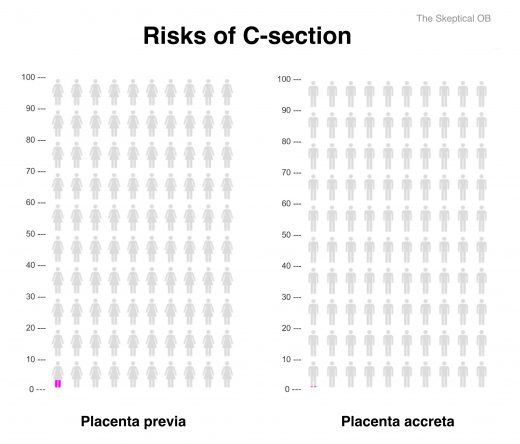
The recent outburst of mansplainin’ was precipitated by publication of the paper Long-term risks and benefits associated with cesarean delivery for mother, baby, and subsequent pregnancies: Systematic review and meta-analysis. Note that the paper is only concerned with long term risks and does not consider short term risks and benefits. The principal finding of the paper is that the long term risks of vaginal birth (pelvic organ prolapse and urinary incontinence) dwarf the potentially deadly long term risks of C-section. For example, the risk of pelvic organ prolapse is 10,000% (yes 10,000%) higher than the risk of placenta accreta in a subsequent pregnancy.

[pullquote align=”right” cite=”” link=”” color=”” class=”” size=””]Can you imagine a male physician telling a man that incontinence and impotence are no big deal?[/pullquote]

In reviewing the paper, Swedish obstetrician and professor Stefan Hansson had the temerity to write, and The Conversation had the audacity to publish, this:

Women are well aware of the discomfort and embarrassment associated with urinary incontinence and have an understandable fear of sexual dysfunction. But despite the reported findings that suggest decreased risk with a caesarean delivery, these problems are manageable, treatable and, importantly, not life threatening.

Pardon my language but WTF??!!

Can you imagine a physician telling a man facing treatment for prostate cancer that incontinence and impotence are no big deal?

The reason it’s called incontinence is precisely because it ISN’T manageable. Urine spurts out when you cough or sneeze because childbirth has damaged the muscles of the pelvic floor, the muscles that hold the bladder and uterus in alignment to each other.

When these muscles are damaged, the pelvic organs can slip through the middle of the pelvic floor. This is known as prolapse. When a pelvic organ like the bladder prolapses, it distorts the relationship between the sphincter that controls release of urine from the bladder into the urethra. Although the sphincter itself has not been damaged, it nonetheless prevents the woman from “holding” urine. It works well enough that urine doesn’t constantly dribble out of the urethra, but when the intra-abdominal pressure is dramatically increased as occurs during coughing and sneezing, urine squirts out (stress urinary incontinence).

When the muscles of the pelvic floor are damaged, the uterus can prolapse into the vagina or even through it to protrude outside the vagina. That can make sexual intercourse difficult and painful

In both cases, the damage may not be immediately apparent. It may not appear until menopause when ligaments are weakened by the lack of estrogen and the pelvic organs begin to drop between the muscles. A woman who has had no problem for 20+ years after the births of her children may gradually develop uterine prolapse and/or incontinence as she enters menopause. And both will last for the rest of her life which is typically decades more.

What does Dr. Hansson mean when he says that urinary incontinence and uterine prolapse can be “managed”? He means they can be camouflaged by various measures including wearing bulky incontinence pads or putting a pessary (similar to a very large diaphragm) into the vagina to literally hold the uterus up though obviously that can’t be done during intercourse. He means that women can make it a point to immediately identify the location of the ladies room wherever they go and position themselves near it. He means that women can undergo painful surgery (generally including hysterectomy) to return the bladder to natural function.

Hansson continues:

There are, however, life-threatening risks associated with a caesarean delivery on subsequent pregnancies, including increased risk of miscarriage, stillbirth and problems with the placenta – such as placenta praevia (the placenta covering the birth canal), placenta accreta (when the placenta grows too deep into the wall of the uterus) and placental abruption (where the placenta partially or completely separates from the womb before the baby is born).

Yes, the consequences of a C-section for subsequent pregnancies can be life threatening, but women are entitled to know and entitled to base decisions on the fact that the risks of pelvic organ prolapse and incontinence dwarf the risk of deadly outcomes in subsequent pregnancies.

BBE755A3-EF12-4B69-AC66-92D58A29B9F4

Hansson isn’t the only man to fail to mention the relative risk of pelvic organ prolapse to accreta in a subsequent pregnancy. Neel Shah, MD offered his thoughts in a long Twitter thread, including:

The most compelling long-term risks of cesareans have a common mechanism–uterine scarring–which can cause some uteri to rupture and others to hemorrhage uncontrollably in future pregnancies with deadly consequences.

And:

This worries me in the U.S. where … placental disorders caused by uterine scarring are “one of the most morbid obstetricians will encounter” and we are seeing “dramatically increased incidence”

But here’s the issue, Dr. Shah. I doesn’t really matter what you are worried about. Women are fully functional human beings perfectly capable of and completely entitled to weighing the risks and benefits for themselves … and choosing maternal request C-section if that’s what they prefer.

Perhaps most offensive example of mansplainin’ came when Dutch obstetrician Jos H.A. Vollenbergh reached out to me on Twitter to share his thoughts about my icon array illustrated above:

3A2063F8-918F-4E9C-9966-ECD1C82A0799

This sounds like a ‘Keep Your Love Tract Honeymoon Fresh – Have A Caesarean’ tract.
Not really my favourite…

Way to mansplain’ women’s sexual dysfunction to women, Dr. Vollenbergh! You should be ashamed of that remark and you should have apologized when I called you on it.

I have no particular love for maternal request C-sections. I never had one, wouldn’t want one and did virtually none when I was practicing. But it’s NOT my decision; the decision belongs to each woman choosing for herself.

Urinary incontinence and sexual dysfunction are life altering complications of vaginal birth. They are not easily manageable and for most women the only truly effective treatment is surgery. It is only right that the woman whose life will be altered gets to decide how.

And we definitely don’t need men deciding for us based on what they think is best.

Lactivism is fake news

Fact or Fake concept, Hand flip wood cube change the word, April fools day

If the last few days on my Facebook page are any indication, we have a big problem with reasoning in this country. The page has been swarmed by tens of thousands of lactivists, and to say that their knowledge base and reasoning skills are poor dramatically understates the case.

They have trouble with basic reading comprehension:

I write “the benefits of breastfeeding are trivial.” They insist I wrote “formula is better than breastfeeding.”

[pullquote align=”right” cite=”” link=”” color=”” class=”” size=””]Lactivism is the latest iteration of the effort to replace objective truth with self-serving opinion.[/pullquote]

I write “insufficient breastmilk is common.” They insist I wrote “no woman is ever able to produce enough breastmilk.”

I write “cluster feeding is a warning sign of infant starvation.” They insist I wrote “every baby who cluster feeds is starving to death.”

I write “her baby, her body, her breasts her choice.” They insist I wrote “no one should ever breastfeed.”

Their knowledge of the scientific evidence is pathetic. They copy and paste scientific studies that they have never read and wouldn’t understand if they read them.

They seem to think that science is some sort of democracy: That if enough of them parachute in to “vote” their beliefs and outrage, I will change my mind about what the scientific evidence shows. No chance of that.

Most startling of all, they imagine I care about their poorly informed opinions. (Perhaps readers can help me out with this. What did I do that gave them the impression I care about what they think?)

Sadly, lactivism has become fake news.

The term “fake news” has been used and abused a lot lately. An Op-Ed in yesterday’s New York Times got me thinking about the way that contemporary lactivism embodies fake news.

It starts by asking the question:

How should we explain the fact that President Trump got away with making 2,140 false or misleading claims during his initial year in office?

The comparable questions for lactivism are these:

How do lactivists get away with claiming major benefits for breastfeeding when most of the research on which those benefits are based has been thoroughly debunked?

How do lactivists get away with claiming major benefits for breastfeeding when countries with the highest breastfeeding rates have the highest infant mortality rates and countries with the lowest breastfeeding rates have the lowest infant mortality rates?

How do lactivists get away with claiming major benefits for breastfeeding when the breastfeeding rate has tripled in the past 40 years and we can’t find a single term baby or healthcare dollar that has been saved?

Are professional lactivists lying to their followers or are they ignorant, too? The op-ed suggests a third possibility for those who endlessly repeat falsehoods; they are “post truth.”

“Users of post-truth see themselves as expressing their opinions, but opinions that call for no verification, and in being their opinions, are on a par with anyone else’s opinions,” Prado writes in a forthcoming book, “The New Subjectivism.”

For professional lactivists this means that they don’t actually have to demonstrate any real world benefits of breastfeeding. They “know” that breastfeeding has massive benefits — they’ve staked their careers and incomes on it — so it must be true.

For lay lactivists, they “know” that breastfeeding has massive benefits — they’ve staked their self-esteem on the notion that breastfeeding makes them superior to other mothers — so it must be true.

Both feel free to ignore the mounting number of brain injuries and deaths that are the result of a breastfeeding policy that grossly exaggerates benefits while simultaneously refusing to provide women with accurate information about risks. A new study published in the past few days showed that breastfeeding increases the risk of hospital readmission by 100%. Extrapolated to the entire country it would mean that we have 60,000 excess newborn hospital admissions each year at a cost of a quarter of a BILLION dollars per year. This is not a minor problem; it’s a major scandal.

Why has this disaster been allowed to occur? The answer is tribalism, an obvious defect of our contemporary politics and a less obvious defect of our contemporary breastfeeding policy.

According to Stephen Pinker:

The answer lies in raw tribalism: when someone is perceived as a champion of one’s coalition, all is forgiven. The same is true for opinions: a particular issue can become a sacred value, shibboleth, or affirmation of allegiance to one’s team, and its content no longer matters…

Lactivists feel duty bound to believe whatever other lactivists tell them, regardless of whether or not it is true.

And once tribalism takes the place of scientific reasoning:

the full ingenuity of human cognition is recruited to valorize the champion and shore up the sacred beliefs. You can always dismiss criticism as being motivated by the bias of one’s enemies. Our cognitive and linguistic faculties are endlessly creative — that’s what makes our species so smart — and that creativity can be always deployed to reframe issues in congenial or invidious terms.

Of the more than 120,000 people who have dropped into my Facebook page so far, and the hundreds who have left comments, not a single one tried to engage with the actual scientific evidence that I presented. Their full ingenuity — such as it is — was dedicated to dismissing the evidence as motivated by bias, cricizing my credentials, and calling me names.

If tribalism has begun to supplant traditional partisanship, their argument suggests, lying in politics will metastasize as traditional constraints continue to fall by the wayside…

Tribalism has already begun to supplant scientific reasoning when it comes to contentious issues. Creationism is nothing but a lie, climate denial is a lie, anti-vaccine advocacy is based almost entirely on lies. Lactivism is just the latest iteration of the effort to replace objective truth with self-serving opinion.

When it comes to lactivism, this is not an academic issue; it is a matter of life and death. The only question remaining is this:

How many newborn brain injuries and deaths are we prepared to allow so that lactation professionals can make money and lactivists can bolster their fragile self-esteem?

The anthropological case for infant formula

baby milk bottle

Is there anything more hypocritical than an individual dressed in clothes, sitting at a computer inside a climate controlled building, using the internet to insist that breastfeeding is best because it is natural?

That was my thought when I read Breastfeeding No Option? Women Need Remedies, Not Bullying by Robert D. Martin PhD, Emeritus Curator of Biological Anthropology at the Field Museum in Chicago.

[pullquote align=”right” cite=”” link=”” color=”” class=”” size=””]Technology makes us human and formula is technology.[/pullquote]

The article is a poor attempt to critique Courtney Jung’s book Lactivism.

Substantial evidence indicates that breastfeeding benefits the health of both mothers and babies. For biologists, this is only to be expected. Mammals, after all, are named after the Latin mamma for teat. Suckling originated in ancestral mammals around 200 million years ago and natural selection has honed it ever since. Female mammals became adapted not only for milk secretion and suckling but also for close mother-infant contact. Health authorities acted on evidence for natural advantages of breastfeeding by encouraging mothers to suckle babies as far as possible…

Actually substantial evidence indicates that the benefits of breastfeeding in industrialized countries are trivial and on this blog I’ve repeatedly eviscerated most of the scientific claims that Prof. Martin makes in his piece. I won’t repeat that here. I’d rather address his anthropological argument.

Martin’s argument is bizarre on several levels.

Lactivism’s core weakness is that Jung fails to mention biology or evolution. Witness her absurd statement that “there has never been a time when all women breastfed”. If for any substantial period, breastfeeding had been eliminated to the extent seen today, our species would not exist. Suckling in mammals is universal and has that 200-million-year evolutionary history, so how likely is it that we can simply substitute formula for breastfeeding with no downside? No evolutionary biologist would defend this view.

1.It’s bizarre because it implies that breastfeeding is perfect and no biological process is perfect.

All reproduction, plant and animal, has an extraordinary high rate of wastage and humans are no different. Women are born with millions of eggs that will never be fertilized; men produce billions of sperm that will never get near an egg; 20% of established pregnancies end in miscarriage. We are still here because massive amounts of wastage are entirely compatible with population growth.

Breastfeeding is no different from any other aspect of reproduction; it also has a high failure rate. Babies whose mothers can’t make enough milk to support them simply die, and that happens in up to 15% of first time mothers. Evolution leads to survival of the fittest, which means that lots of death is inevitable. Our ability to breastfeed now is no better or worse that it was in prehistory. The only thing that has changed is that we are much less tolerant of dead babies.

2. It’s bizarre because it implies that using breastmilk substitutes (cow’s milk, goat’s milk, pap) is the equivalent of “eliminating” breastfeeding.

Jung’s claim is that women have always employed breastmilk substitutes either because they couldn’t produce enough breastmilk, because pain/infections/inconvenience led them to avoid breastfeeding, or to feed the babies of other women who died in childbirth. That’s incontrovertible. Controlling biological processes or even stopping them altogether does NOT lead the human species to die out.

Consider birth control. There has never been a time in human history when so many women are controlling their fertility yet the population is growing faster than it ever has before. How can that be? Because population growth depends on the ratio of births to deaths, not on the number of births. A woman who controls her fertility and gives birth to three children all of whom survive is evolutionarily more success than a woman who has no access to birth control and gives birth to five children only two of whom survive.

Formula works the same way. A woman who formula feeds three children who survive to adulthood is evolutionarily more successful than a woman who breastfeeds five children only two of whom survive. It has nothing to do with the feeding method and everything to do with the ratio of births to deaths.

Except in the case of extremely premature infants, there is no evidence that breastfeeding improves survival rates. In fact, it is easy access to formula that improves survival rates. For example, the UK has one of the lowest, if not the lowest, breastfeeding rates in the entire world and also has one of the lowest infant mortality rates in the entire world.

Nonetheless, Martin insists:

But the elephant in the room is this: Few people today breastfeed to the extent that prevailed for hundreds of thousands of years before our species domesticated milk-yielding mammals around ten millennia ago. Multiple lines of evidence indicate that our hunting-and-gathering ancestors breastfed babies for at least three years, exclusively for the first six months or so and then combined with complementary feeding until weaning. Few mothers today come anywhere near that original pattern…

So what? Who cares?

Few people today live in caves to the extent that prevailed hundreds of thousands of years ago.

Few people today eat meat raw to the extent that prevailed hundreds of thousands of years ago.

Few people today are killed by wild animals to the extent that prevailed hundreds of thousands of years ago.

Hundreds of thousands of years ago infant mortality was astronomical and average life expectancy was 35 years. Why would we want to copy that?

Which leads us to the most bizarre aspect of Martin’s piece. Martin seems to think that mammary glands are the hallmark of human beings. But the hallmark of human beings — what distinguishes us from all other animals and is responsible for our astounding evolutionary success — is our technology.

3. The key to evolutionary succes is technology and  technology allows us to adapt to our environment faster than our genes alone allow.

Human beings dominate our planet in a way that no other higher order animal has ever done. We have spread to every climate and we outnumber all other large mammal species to an extraordinary extent. Why? Because we have used technology to adapt. You don’t need to have a degree in evolutionary biology to understand that many other species and every other human species has become extinct because they couldn’t adapt fast enough.

Technology makes us who we are today and formula is technology. Claiming formula must be inferior is like claiming central heating must be inferior because it is technology. It’s like claiming that agriculture muse be inferior because involves technology. It’s like claiming that medicine, air travel and communicating through the Internet are bad because they are technology, too. It is a facile argument that falls apart on even cursory examination.

Sure breasts make us mammals. But it is technology that makes us human and formula is technology.

Comparing long term risks of vaginal birth and C-section

RISK versus REWARD directional signs

A new paper published yesterday in PLOS compares the long term risks of vaginal birth and C-section.

The paper is Long-term risks and benefits associated with cesarean delivery for mother, baby, and subsequent pregnancies: Systematic review and meta-analysis. In addition to the comparison, it offers an object lesson in the way that researchers frame results in order to lead to a preferred conclusion.

[perfectpullquote align=”right” cite=”” link=”” color=”” class=”” size=””]The risk of urinary incontinence from vaginal birth is 10,000% higher than the risk of subsequent accreta.[/perfectpullquote]

The authors start with the assumption that C-sections are “bad”:

Rates of cesarean delivery continue to rise worldwide, with recent (2016) reported rates of 24.5% in Western Europe, 32% in North America, and 41% in South America. In the presence of maternal or fetal complications, cesarean delivery can effectively reduce maternal and perinatal mortality and morbidity; however, an increasing proportion of babies are delivered by cesarean when there is no medical or obstetric indication. The short-term adverse associations of cesarean delivery for the mother, such as infection, haemorrhage, visceral injury, and venous thromboembolism, have been minimized to the point that cesarean delivery is considered as safe as vaginal delivery in high-income countries … This notwithstanding, the long-term risks and benefits of cesarean delivery for mother, baby, and subsequent pregnancies are less frequently discussed with women …

The “worst” C-sections are those done without medical indication simply because the mother requested it:

Maternal preferences are an important influence on decisions about mode of delivery. At present, evidence of longer-term complications of cesarean delivery has not been adequately synthesized to allow fully informed decisions about mode of delivery to be made…

Women typically choose maternal request C-sections in an effort to avoid perineal damage leading to pelvic organ prolapse and urinary incontinence. These poor, benighted women apparently aren’t fully informed, though there is no indication that they are any more or less informed than women who choose vaginal birth. No matter!

Here’s how the authors framed their results:

When compared with vaginal delivery, cesarean delivery is associated with a reduced rate of urinary incontinence and pelvic organ prolapse, but this should be weighed against the association with increased risks for fertility, future pregnancy, and long-term childhood outcomes.

The authors imply that the risks for future pregnancy outcomes are comparable to the decrease in urinary incontinence and pelvic organ prolapse. They’re not.

Let’s look at the four most important long risks of vaginal birth and C-sections: pelvic organ prolapse and urinary incontinence vs. subsequent placenta previa or accreta (the most dread complication of all).

One RCT and 79 cohort studies (all from high income countries) were included, involving 29,928,274 participants. Compared to vaginal delivery, cesarean delivery was associated with decreased risk of urinary incontinence, odds ratio (OR) 0.56 (95% CI 0.47 to 0.66; n = 58,900; 8 studies) and pelvic organ prolapse (OR 0.29, 0.17 to 0.51; n = 39,208; 2 studies)… Pregnancy following cesarean delivery was associated with increased risk of placenta previa (OR 1.74, 1.62 to 1.87; n = 7,101,692; 10 studies), placenta accreta (OR 2.95, 1.32 to 6.60; n = 705,108; 3 studies) …

In other words, C-section halves the risk of urinary incontinence, and cuts the risk of pelvic organ prolapse by 70%. However, C-section almost doubles the risk of placenta previa in a subsequent pregnancy and increases the risk of accreta by nearly 200%. Those results seem very impressive until you look at the absolute risk.

Using the numbers provided in the paper, I created these icon arrays to demonstrate the absolute risk of various bad outcomes.

Here are the long term risks of vaginal birth:

E3D2803D-8363-42D6-8400-76E79E77E166

Here are the long term risks of C-section:

F683E479-B449-4B31-A25E-1B6B9F9FC8DE

Displaying the data as icon arrays makes it clear that the long term risks of vaginal birth and C-section are not remotely comparable.

The risk of pelvic organ prolapse from vaginal birth dwarfs the risk of accreta from C-section. Indeed, the risk of urinary incontinence from vaginal birth is 10,000% higher than the risk of subsequent accreta. Yes, you read that right, fully 10,000% higher. And the risk of pelvic organ prolapse, while not as great, is still 1000% higher after vaginal birth.

Should we be concerned about placenta accreta as a long term risk of C-section? Of course we should, but we should also put it into perspective. Accreta is a potentially life threatening outcome and every woman should be informed about the possibility before she consents to a C-section. However, the risk is minuscule compared to the life altering risks of pelvic organ prolapse and urinary incontinence.

The authors note:

Although we cannot conclude that cesarean delivery causes certain outcomes, patients and clinicians should be aware that cesarean delivery is associated with long-term risks … for subsequent pregnancies and a reduced risk of urinary incontinence and pelvic organ prolapse for the mother. The significance that women attribute to these individual risks is likely to vary, but it is imperative that clinicians take care to ensure that women are made aware of any risk that they are likely to attach significance to. Women and clinicians thus should be aware of both the short- and long-term risks and benefits of cesarean delivery and discuss these when deciding on mode of delivery.

It would have been more accurate to conclude thus:

Although we must be mindful of potentially catastrophic long term complications from C-section, the risk is dwarfed by the risk of life alterning long term complications from vaginal birth. Since the risk of urinary incontinence from vaginal birth is 10,000% higher than the risk of subsequent accreta from C-section, the choice of maternal request C-section is eminently sensible.


Edited to correct the juxtaposition of the absolute values for urinary incontinence and pelvic organ prolapse.

Dr. Amy