Vaccine immunity is dramatically superior to natural immunity

IMG_2625

When I was in elementary school, this was a popular riddle:

A plane crashed on the exact border between the US and Canada. Where did they bury the survivors?

Much hilarity ensued after various guesses since you don’t bury survivors. Only those who died are buried.

I am reminded of that riddle when I read quack claims about the “superiority” of natural immunity.

[pullquote align=”right” cite=”” link=”” color=”” class=”” size=””]Vaccine immunity is superior to natural immunity because there are dramatically more survivors of the disease itself.[/pullquote]

Why?

It is axiomatic among anti-vax quacks that natural immunity is superior to vaccine produced immunity.

Quaxpert Andrew Wakefield insists in regard to measles:

Measles vaccine has destroyed natural Herd Immunity and replaced it with a temporary and inadequate quasi Herd Immunity that necessitates a dependence on vaccination …

According to NaturalNews clown Mike Adams:

There is only one kind of immunity and that is natural immunity which is achieved by battling the infectious diseases itself. Vaccination is merely the artificial triggering of temporary responses to manmade pathogens…

Both Wakefield and Adams seem to think that the relevant issue is what happens to survivors. Indeed, in some cases, natural immunity among survivors can be more robust that vaccine induced immunity. If faced with a second outbreak of the disease, those who got the disease the first time may have superior immunity to those who were vaccinated against it and therefore missed it entirely. That is supposed to “prove” the purported superiority of natural immunity.

But just like the question about burial is the red herring in the elementary school riddle, the focus on post disease immunity is a red herring in the quack claims. Highlighting the immune status of survivors deliberately misses the point. Vaccine immunity is  superior to natural immunity because there are dramatically more survivors of the disease itself.

History offers many examples of this basic fact. Approximately one third of the Eurasian population (75-200 million) succumbed to the Black Death in the mid 1300’s. No doubt the survivors had robust immunity to the particular strain of Yersinia pestis that was circulating at the time. A vaccine against plague, had it existed, might have resulted in less robust immunity among survivors but there would have been tens of millions of more survivors.

More recently, the Spanish flu epidemic in 1918 afflicted approximately 500 million people and killed 50-100 million of them. Perhaps the people who survived had more robust immunity to the particular strain of influenza thereafter than a vaccine, had it existed, would have provided. But if a vaccine had existed, a substantial proportion of the 50-100 million who died would have survived.

Our experience with vaccinations makes the point even more dramatically.

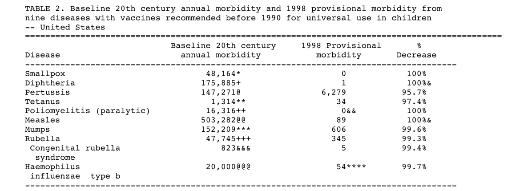
Consider this CDC chart created in the early years of the anti-vax movement:
IMG_1553

The results are extraordinary:

Vaccine immunity led to the extinction of smallpox, a feat that natural immunity never even approached.

Cases of such “mild” childhood diseases as pertussis dropped from more than 147,000 per year to less than 7,000. Annual measles cases dropped from more than 503,000 to less than 100. Diphtheria, polio and congenital rubella nearly disappeared. And if you don’t get the diseases, you can’t die from the diseases, can’t be rendered paralyzed, blind or deaf by the diseases.

The difference between vaccine immunity is the difference between prevention and treatment … and prevention is always superior.

Insisting that the purported superiority of natural immunity among survivors means that vaccines are unnecessary makes as much sense as insisting that diet and exercise are unnecessary to prevent heart disease because most survivors won’t go on to have a second heart attack. You have to survive the first attack for any concerns about a second heart attack to be relevant. Similarly, you have to survive pertussis, measles, polio, diphtheria or smallpox in order for your immune status thereafter to be relevant.

There is no question that vaccine immunity is superior because vaccine immunity saves millions of lives that cannot be saved by natural immunity. And that would be obvious if anti-vax quacks and charlatans weren’t so effective at distracting lay people with red herrings like the immune status of survivors.


Natural pregnancy: because what you don’t know can’t hurt you, right?

IMG_2599

Kate Tietje, Modern Alternative Mama, is expecting her sixth child and planning a natural pregnancy. A natural pregnancy is an ignorant pregnancy … literally.

Nearly every single aspect of modern obstetrics is preventive medicine. Nearly every test is a screening test designed to provide women with information they can use to improve their health and the health of their babies. Nearly every intervention is a preventive intervention, designed to prevent poor outcomes for babies and mothers. Natural pregnancy means forgoing information, rejecting preventive efforts and winging it while hoping for the best. If it works out fine, you’re a warrior mama (though the whole point is that you didn’t do a damn thing), and if it works out badly, tough luck for you.

[pullquote align=”right” cite=”” link=”” color=”” class=”” size=””]A natural pregnancy is an ignorant pregnancy.[/pullquote]

Here’s Kate’s strategy for a natural pregnancy:

  • No Doppler use
  • No ultrasounds
  • No blood tests
  • No internal exams
  • Few (if any) prenatal visits
  • No GD test
  • No GBS test

Because what you don’t know can’t hurt you, right?

Wrong.

Here’s Kate’s explanation of the advantages of ignorance.

Most of these tests are intended to check to make sure the pregnancy is progressing normally. In most cases, the answer will be yes. The tests don’t actually prevent issues from occurring; they only detect them. Some of the tests come with their own set of risks (from false positives to much more serious risks), and I don’t think that the risk of further intervention is worth “checking on” in a pregnancy that appears to be going fine.

In most cases the answer will be yes, the pregnancy is progressing normally? Duh! In most cases the pregnancy is progressing normally. But what if it’s not? Tough luck for the baby and maybe tough luck for the mother.

What about the risk of false positives? It’s very real risk, but Kate does not mention that there are ways to reduce that risk. Screening tests done on low risk populations have high false positive rates, but when applied to high risk populations they have far lower false positive rates.

For example:

If you were to give everyone (men and women, all ages) a pregnancy test, there would be false positives among the men, children and elderly who couldn’t be pregnant under any circumstances.

If you were to restrict pregnancy tests to all women of reproductive age, there would be far fewer false positives, and you would almost certainly diagnose pregnancies in women who weren’t aware they were pregnant.

If you were to restrict pregnancy tests to all women of reproductive age who have missed a period, have morning nausea and breast tenderness, false positives would be rare.

It is always the case that for those at high risk for a condition, the rate of false positives is lowest.

So when Kate implies that there is a significant false positive rate for low risk women for the 1 hour glucola test for gestational diabetes, she is correct. But for women who have had gestational diabetes in the past or given birth to a very large baby, the risk of a false positive result is far lower.

What is the downside to a false positive test for gestational diabetes? Very little, just a further test with a very low false positive rate. What is the downside to missing gestational diabetes? It could result in the death of the baby. In other words, the downside of a false positive is far less serious than the downside of ignorance.

Each specific test has a different calculus of risks and benefits for each individual. Therefore, lumping all possible tests and interventions together as a “natural pregnancy” makes no sense. Every woman should take into account her specific circumstances in order to make individual decisions about individual tests.

In contrast, Kate’s view is that ignorance is a better strategy than risking any type of false positive test result. It’s like claiming that no one should ever have their blood pressure checked because it’s better not to know than to unnecessarily treat high blood pressure. It’s like claiming that there’s no need to buckle babies into car seats since the overwhelming majority of car trips involve no accidents.

So ignorance can often be dangerous, but knowledge can be valuable even if it doesn’t change outcomes.

Consider the use of ultrasound in pregnancy.

According to Kate:

There is no evidence that routine ultrasounds improve outcomes in low-risk pregnancies.

But they do improve knowledge, providing evidence on congenital anomalies (including some that can be treated in utero or immediately after birth), twins or higher order multiples and placental problems.

Obviously the knowledge of congenital anomalies is important for those who would terminate the pregnancy in such situations, but it is important even when termination would never be considered. Advanced planning for the birth of a baby with severe anomalies can be the difference between life and death. And many people find the knowledge of congenital anomalies or multiple pregnancy valuable even when it isn’t a matter of life and death.

What’s the value of ignorance in these situations? Kate doesn’t offer any examples.

Kate makes a big deal of the potential risks of ultrasound, but there’s no evidence that those risks actually occur or affect babies in any way.

As an aside, my favorite part of Kate’s ultrasound post is this:

Since obstetrics is unfortunately a very non-evidence-based field, it’s important to look beyond what’s “commonly done” and really dive into the evidence.

The claim is simply false based, on a deliberate distortion of one paper, but it’s also hilarious for two reasons.

First, Kate claims that obstetrics isn’t evidence based and then exhorts everyone to look at the obstetric evidence. Which is it? Do obstetricians ignore the existing scientific evidence? Kate provides no examples, not surprisingly, since it isn’t true.

Second, the field of “natural pregnancy” routinely ignores scientific evidence in favor of intuition based on no evidence at all.

Kate tell us that as for herself:

I haven’t had any ultrasounds with my last three babies, and don’t plan to this time, either. I also refuse the use of the Doppler entirely.

What’s the benefit of that? Bragging rights, of course!

I personally see nothing admirable about deliberate, willful ignorance, but, hey, to each her own.

Lactivists forced to acknowledge the basic tenets of Fed Is Best

White flag

“Now this is not the end. It is not even the beginning of the end. But it is, perhaps, the end of the beginning.”

These were Winston Churchill’s words in November 1940 after a seemingly endless series of defeats fighting the Germans in WWII was succeeded by a victory. There were still four years of bloody fighting and countless deaths ahead, but the first glimmers of eventual triumph could finally be discerned.

[pullquote align=”right” cite=”” link=”” color=”” class=”” size=””]This is not the end of the tyranny of “breast is best.” It is not even the beginning of the end. But it is, perhaps, the end of the beginning.[/pullquote]

That’s how I feel about the fact that even the most ardent lactivists have been forced to acknowledge the fundamental tenets of the Fed Is Best Foundation. No matter that the lactivists themselves don’t realize that they are now on the defensive and actually think that they are still fighting against the idea that fed is best. The first glimmers of eventual triumph of sane breastfeeding policy are coming into view.

What are the central tenets of the Fed Is Best philosophy? In my view they are:

  • Breastfeeding is just one of two excellent ways to feed a baby.
  • It is more important for a baby to be fully fed with formula than underfed with breastmilk.
  • Inadequate breastmilk is common, not rare, especially in the first few days after birth.
  • Mothers should be taught the signs of infant starvation.
  • Healthcare providers to rule out potentially deadly complications of exclusive breastfeeding INSTEAD of offering only reassurance.

These tenets are in direct contrast to the false claims made by lactivists that formula is substandard, inadequate breastmilk is vanishingly rare, infant starvation never happens, and the only thing a new breastfeeding mother needs is reassurance to continue breastfeeding exclusively no matter what happens to her baby.

Meg Nagle, the Milk Meg, who almost certainly doesn’t recognize that she is now falling back, has begun to fall back. Consider the blog post Cluster feeding…when is it normal? When is it not?.

What is cluster feeding? It’s the habit that some babies have of nursing multiple times over a few hours in preparation for an extended period of sleep. How can we tell the difference between true cluster feeding and a desperately hungry infant feeding in clusters then falling asleep due to exhaustion despite still being hungry? Sometimes it’s not easy, but it is very important because an infant feeding in clusters is at great risk for dehydration, brain injury and even death.

Even the title of Nagle’s piece is a fallback position. It was not long ago that lactivists refused to acknowledge (and some still refuse to acknowledge) that there are many women who can’t produce enough breastmilk to adequately nourish an infant, especially in the first few days after birth. For an extreme lactivist like Nagle to even acknowledge that inadequate breastmilk production is a real possibility is a victory for the Fed Is Best campaign.

The truth of the matter is that in MOST cases (statistically speaking) a baby who is unsettled and looks for the boob immediately upon putting them down (even if they just breastfed), is actually just a baby who wants to be cuddled and breastfed, not a baby who is starving. On the flip side of that, a baby who is at the breast constantly on and off all day and night and rarely doing anything but crying whether you’re holding them or not, is not normal.

Nagle goes on to describe accurate signs of a baby who is underfed:

An unsettled baby who is crying even right after being fed and immediately looking for another breastfeed, after MOST feeds…

Not having periods of awake times and sleep times as expected…

A baby who is breastfeeding for up to an hour or more at EVERY or MOST feeds, 24/7…

Of course Nagle can’t help but offer a dig at the Fed Is Best Foundation:

There are people who will state that cluster feeding is not normal (false) … The truth … is about LOOKING AT THE WHOLE PICTURE when assessing the situation.

The issue here is semantics. The term “cluster feeding” is imprecise and open to deadly misinterpretation. The average person on hearing the term “cluster feeding” is likely to assume that it means a baby who is feeding repeatedly in a short period of time. As Nagle notes, the whole picture must be taken into account when assessing cluster feeding so a term that reflects that fact would be far better. Until lactivists figure out what that term might be it makes sense to warn mothers that cluster feeding may be a sign of starvation.

Kate Tietje of Modern Alternative Mama just wrote a piece that while ostensibly criticizing the Fed Is Best Movement actually capitulates to almost every single major tenet. It’s titled Why “Fed Is Best” is the wrong approach but it actually confirms that fed is best is the right approach.

First the whining:

… At its core, “fed is best” is simply the wrong message. The bottom line for them is, not starving a baby is the most important thing. Therefore, ‘fed’ is the ‘best.’

Duh!

But fed isn’t “best.” Fed is a minimum requirement for having a child. No one, anywhere, is suggesting that a child not get fed if breastfeeding isn’t possible. What they’re suggesting — what I’m suggesting — is that yes, it does matter what you feed your child.

That’s a straw man. No one is suggesting that it doesn’t matter what you feed your baby. Fed Is Best does NOT mean that goat’s milk or homemade formula is acceptable, let alone chicken McNuggets and cola. Fed Is Best means that it is more important to prevent starvation with formula than to let a baby starve on breastmilk. That’s a mouthful; summarizing it as Fed Is Best puts the point across to everyone but the willfully obtuse.

What do I mean when I say that Tietje capitulates?

Consider this:

Biologically speaking, breast milk is the optimal food for all newborns. This does not mean it is always optimal for other reasons. Some mothers are unable to breastfeed. Some babies struggle to breastfeed or are unable. Some mothers can breastfeed, but do not produce enough. Some mothers are struggling with PPD or with a history of sexual abuse.

Or this:

Fed is Best is missing the difference between “cluster feeding” and “frequent, unsatisfied feeding.” These are different!

No fooling! If the difference is so subtle that otherwise intelligent people are confused it’s a sign that the term cluster feeding is inappropriate, not that there’s anything wrong with the folks at Fed Is Best.

Or this:

When women or babies are not healthy (if baby needs to be in the NICU for any reason; if mom had a c-section and isn’t recovering well, etc.) then these mothers are at risk for lower milk supply and should be watched more closely… And of course, if it is discovered that they are struggling to produce, baby should be offered supplements so that s/he receives adequate nutrition.

Of course!

These quotes reflect the truth of the central tenets of Fed Is Best that I listed above.

So if Tietje agrees with the central tenets, then she agrees with Fed Is Best, right? She doesn’t think so:

They are attempting to explain away why some women have difficulties by saying that it essentially doesn’t matter if women breastfeed or not, and that breastfeeding can even be ‘bad’ or ‘dangerous’ for some mothers and babies.

Well actually it doesn’t matter whether women breastfeed or not; it’s a personal choice with benefits and risks to each option. Tietje has already acknowledged that breastfeeding can be bad or dangerous for some mothers and babies so there’s no pointing in denying that now.

What’s really bothering Tietje?

This is going to have the effect of convincing women who can and want to breastfeed, not to because it seems “too hard” or because they are worried about starving their babies.

That makes no sense. The vast majority of women DO try breastfeeding. They stop because it doesn’t work for them or for their babies. On consideration, the risks (or drawbacks) of breastfeeding outweigh the benefits for them. Tietje may not like it, but that’s her problem, not our problem.

It may seems that extreme lactivists like Nagle and Tietje are only taking baby steps, but having written about this issue for more than a decade, I can assure you that even baby steps are a momentous occurrence.

Obviously this is not the end of the tyranny of “breast is best” or the end of the Baby Friendly Hospital Initiative. It is not even the beginning of the end. but it is, perhaps, the end of the beginning of the fight to establish once and for all that Fed Is Best.

The Breastfeeding Hunger Games

IMG_2583

I read and loved The Hunger Games series of books. For those who haven’t read them or seen the movies, The Hunger Games describes a dystopian society forced each year to send some of their youngest members to the “games” that are a literally fight to the death. The leaders of the dystopian society view the games as a tool to bind society together through fear, desperation and spectacle.

I was reminded of that when I read the JAMA piece, The Hunger Games, written by pediatrician Rebecca E. MacDonell-Yilmaz, MD, MPH. Her pain is palpable:

[pullquote align=”right” cite=”” link=”” color=”” class=”” size=””]Promoting exclusive breastfeeding and hoping that the odds of timely access to sufficient milk are in the baby’s favor is immoral.[/pullquote]

I cried the first time I fed formula to my infant son.

Many of my friends and colleagues did as well. One banished visiting family members—including her husband—from the hospital room, apologizing to her days-old little boy as she brought a bottle of premixed formula to his lips. Another had trouble latching her child but pumped doggedly for the year following his birth. When feeding him bottles of expressed milk in public, she found herself explaining to strangers—strangers who had neither asked nor even looked at her askance—that it was, in fact, breast milk, not formula. Heaven forbid they think she was giving her child anything less than the best.

She had assumed that she would never let a drop of formula pass his lips:

As a physician and as a member of a family that has largely breastfed its infants, I had no doubts that I would breastfeed any and all babies that I bore. During my residency in pediatrics, I viewed formula as an expensive and unnecessary crutch that hinted at a mother’s lack of dedication to her child. Mothers whose milk “hadn’t come in,” who struggled to achieve a latch, who began by giving small feedings of formula then tumbled face-first down the slippery slope into exclusive formula use were simply uninformed, disengaged, or even lazy.

But she realized that her son was becoming dehydrated since her milk had not yet come in:

We started with syringe feedings, unsure of how much to offer and how he would react. He slurped it voraciously, halting his crying to root in the air for more, drawing out my tears faster and faster as my guilt at giving formula titrated to guilt at having starved my son.

Formula supplementation is anathema to lactivists, both lay and professional; they insist that it interferes with breastfeeding. Yet the research shows the opposite: early judicious formula supplementation improves the chances for an extended breastfeeding relationship. Indeed, the author went on to breastfeed he son for more than a year.

Dr. MacDonell-Yilmaz, like many new mothers, had been forced to play the Breastfeeding Hunger Games for the benefits of “society.” Lactation professionals have decreed that relentless promotion of breastfeeding is the order of the day and it doesn’t matter how many babies and mothers are hurt in the process.

Those who stand by as babies suffer hunger, dehydration, starvation and occasionally death reassure themeselves that they are promoting public health though the health of individual babies may suffer in the process. The dystopian leaders in The Hunger Games also insisted that they were promoting the public good even as individuals suffered and died. But the promotion of the “public good” NEVER justifies letting individuals suffer when that suffering can easily be prevented.

The focus of hospitals on attaining Baby-Friendly status begins with laudable efforts to support mothers and babies as they learn this skill … But the moratorium on feeding babies formula “unless medically indicated” diverges into territory that I fear trades support and encouragement for guilt and shame…

Because lactation professionals have utterly lost sight of the fundamental truth of healthcare practice: a good outcome (healthy baby, healthy mother) is ALWAYS more important than the value of any biological process, no matter how much it is idealized and idolized. Fed is ALWAYS best! Starving a baby is NEVER justified. Promoting exclusive breastfeeding and hoping that the odds of timely access to sufficient milk are in the baby’s favor is immoral and inexcusable!

And it’s not just the wellbeing of the baby that counts. The mother counts, too.

Ultimately, maintaining the mental health of the mother such that she is able not only to feed but to bond with and nurture her infant should trump any debate over which combination of nutrients she provides.

There is no benefit of breastfeeding worth letting a baby starve, even temporarily. There is no benefit of breastfeeding worth letting a baby’s brain bathe in the neurotoxins of high salt (dehydration) or high bilirubin (jaundice). There is no benefit of breastfeeding worth depriving a baby’s brain of the fuel to continue working properly (hypoglycemia). There is no benefit to breastfeeding worth risking maternal self-loathing, let alone risking or exacerbating pospartum depression.

In other words, there is no benefit to society that justifies forcing babies and mothers into the Breastfeeding Hunger Games.

We must end the relentless promotion of exclusive breastfeeding. Our motto should be: her baby, her body, her breasts, her choice.

We must end the Baby Friendly Hospital Initiative immediately. It moralistic, unscientific and harmful.

And we must acknowledge the incontrovertible truth: Fed Is Best!

On breastfeeding: don’t listen to what pediatricians say, watch what they do

IMG_2578

It’s an oft stated and remarkably valuable aphorism: “Don’t listen to what people say; watch what they do.”

In other words, though people may give lip service to a variety of morally elevating thoughts, their personal beliefs are reflected not in their words, but in their behavior.

[pullquote align=”right” cite=”” link=”” color=”” class=”” size=””]Don’t listen to what Dr. Klass says about the importance of breastfeeding, follow what she did.[/pullquote]

Perri Klass has a piece about breastfeeding in today’s New York Times and it is an excellent illustration of the aphorism.

In Practicing What I Preached About Breast-Feeding, Klass acknowledges that she didn’t always do what she counseled the mothers in her practice to do.

I had not managed [exclusive breastfeeding] with my first two children, one born while I was in medical school, the second right at the end of my residency. I had breast-fed them both, but relied on formula to get through day care days, and the breast-feeding had ended altogether by seven or eight months.

But with my third, since I was a full-fledged practicing pediatrician, I felt a moral obligation to follow the recommendations that I had been earnestly dispensing…

Like most pediatricians, I am a true believer in the benefits of breast-feeding, though I myself was bottle-fed, along with many in my cohort (what can I say, I was born in the 1950s)…

In other words, Klass felt obliged to follow the recommendations of the WHO and AAP though she doesn’t think not following them harmed her two older children. After all, she herself was bottle fed, and it didn’t seem to harm her.

But my own decision was mostly about that feeling that I had to un-hypocrite myself.

Though Klass proclaims herself a true believer in the benefits of breast-feeding, she does not present her decision to follow the standard recommendations as an effort to keep her baby healthier than her older children, or because she thinks she will thereby be a better mother. She does it so she won’t feel so guilty about being a hypocrite.

I appreciate her honesty, but it might have been better for her patients if she resolved her cognitive dissonance in the opposite way. Instead of attempting to follow recommendations that she apparently doesn’t believe to be truly necessary, she could have acknowledged that she doesn’t think that following the WHO and AAP recommendations makes for better mothers or healthier babies.

Klass doesn’t mention most of the (spurious) benefits of breastfeeding quoted by professional lactivists and she does highlight the fact that the benefits of breastfeeding in industrialized countries are far less than in countries without access to clean water.

She quotes Dr. Michael Kramer, the lead investigator in the Probit Studies that found that the benefits of breastfeeding are limited to approximately 8% fewer ear infections and 8% fewer episodes of diarrheal illness across the entire population in infants in the first year. To put that into perspective: the vast majority of breastfed infants will experience no discernible health benefit from breastfeeding.

But Dr. Kramer thinks there is a neurocognitive benefit.

For parents in a developed country, one of the main motivators is neurocognitive development, accelerated brain development,” he said.

“We really don’t know what it is about breast-feeding, whether it’s something in the milk, whether it has to do with increased physical contact between lactating mother and nursing baby, or if just the time it takes to breast-feed means increased opportunities for verbal exchange between mother and baby,” Dr. Kramer said. “I think that is an interesting topic for future research.”

The truth is that we really don’t know IF the association between breastfeeding and neurocognitive development even exists. Curiously neither Dr. Klass nor Dr. Kramer discuss the more recent and more comprehensive Colen study that found NO association between breastfeeding and neurocognitive development. That study, Is Breast Truly Best? Estimating the Effects of Breastfeeding on Long-term Child Health and Wellbeing in the United States Using Sibling Comparisons compared the association between breastfeeding and a variety of purported benefits between babies, between families, and between babies within families.

There were differences between breastfed and bottle fed children in 10 of the 11 measured variables when looking at the overall group. Those differences persisted when comparing families in which all the children were breastfed to families where all the children were bottlefed. But when the authors looked within families, there was no significant difference between breastfed and bottle fed children. That indicates that most of the purported benefits of breastfeeding are the result of socio-economic status, maternal education level, and access to healthcare, NOT due to breastfeeding.

Perri Klass is hardly alone among female physicians:

Dr. Maryam Sattari, an associate professor of medicine at the University of Florida, was the lead author of a 2016 study on the breast-feeding intentions and practices of 72 internal medicine physicians. The study found that 78 percent of the babies were exclusively breast-fed at birth and 40 percent of them at 12 months, though 63 percent of the mothers had planned to go to a year…

Nearly a quarter of the female internists in the study didn’t even bother with exclusive breastfeeding and the majority did not follow the WHO and AAP recommendations. That’s hardly more than the general population.

While breast-feeding overall is on the rise, the numbers show that many mothers in this country are not following the A.A.P. recommendations. Compared to 2003, more women in 2013 were initiating breast-feeding (81 percent, up from 73 percent), and still breast-feeding at a year (31 percent, up from 20 percent).

That suggests to me that they didn’t believe the purported benefits were worth the inconvenience. The truth, which physicians know better than anyone else, is that the benefits of breastfeeding in industrialized countries are trivial and almost certainly don’t involve improvements in neurocognitive development.

Klass reports:

With my own third child, I made it to six months exclusively, me and my trusty electric breast pump. At times I felt I had gone a little off the deep end in my intense curation of those bags of frozen breast milk, carefully ferried to the day care center every day. It was a great relief when my son began avidly eating other foods, and it was then easier to go on breast-feeding him, evenings and weekends and whenever it made sense. We kept going till he was a little over a year old.

But at no point does she indicate that she thinks her third child is healthier or smarter or that her first two children suffered in any way from not being exclusively breastfed.

The shameful truth is that the WHO and AAP recommendations of exclusive breastfeeding for 6 months and continued breastfeeding for one to two years are based on little more than ‘white hat bias,’ the misrepresentation of evidence for what are believed to be righteous ends.

As Cope and Allison who first defined white hat bias note:

Certain postulated causes have come to be demonized (… formula feeding of infants) and certain postulated palliatives seem to have been sanctified. Such demonization and sanctification may come at a cost …

That cost is the mental health of mothers who have been shamed and bullied into believing that breastfeeding is far superior to formula feeding as a result of righteous indignation against the immoral activities of formula manufacturers in underdeveloped countries during the 1970’s. Yes, Nestle and other companies have blood on their hands for convincing women to switch to formula even though they did not have access to clean water. But that doesn’t mean that there is anything wrong with formula itself.

Though Klass dutifully gives lip service to the WHO and AAP recommendations, she only followed them when it was finally convenient to do so. She, like many female physicians, doesn’t really believe that bottle feeding is harmful. Therefore, my advice to new mothers is this:

Don’t listen to what Dr. Klass says about the importance of breastfeeding, follow what she did.

Guest post: A Canadian perspective on breastfeeding support

flag of Canada

Shared anonymously by a reader.

Before my son was born, I decided it would be unwise to be narrow-minded in my parenting choices. This decision was based on anecdotes I heard from friends and family who cautioned that each infant is unique and that the ways in which we meet each child’s needs are situationally-dependent. While I had every intention of exclusively breastfeeding in the first six months of my baby’s life, I was also open to the possibility of having to supplement with formula or to exclusively formula feed in the event there were variables outside my control such as low milk production or the inability of my baby to latch.

[pullquote align=”right” cite=”” link=”” color=”” class=”” size=””]”I am asking the Ottawa health community to practice sensitivity in dealing with postpartum mothers when it comes to infant feeding.”[/pullquote]

My husband and I were at peace with that decision, thinking that nourishing our child was paramount to any marginal benefits associated with exclusive breastfeeding.

While still pregnant, I had attended a public health information session on breastfeeding. I left the session disappointed. The speaker clearly demonstrated a bias in favour of epidural-free births conducted in homes or birthing centres rather than in hospitals, and she barely entertained the notion that some women might not be able to breastfeed. When I asked about the possibility of combining formula feeding with nursing, I was told that “we’re unsure what happens to the gut when formula is introduced” and that if we have issues with nursing, we “can’t say there isn’t any support out there” given the innumerable clinics and individuals that offer lactation assistance in the Ottawa area.

I discovered that this was at least partially true: there is a lot of support out there for women experiencing difficulty with nursing, but the quality of that support varies wildly.

My son was born a healthy weight at 8 lbs 7 ounces. He latched immediately, and nurses declared that it was perfect. I was also producing colostrum, the first type of milk a mother produces in the early days of their child’s life. While he lost almost 10 percent of his weight in the first few days, he quickly regained a substantial portion of that weight once my milk fully came in. At his five-day check-up, I asked a nurse about potentially needing to supplement with formula, and she responded that there would be absolutely no need given his great gains over the past couple days.

However, days passed, and my anxiety began to creep as he cluster fed regularly. I soon discovered, after weighing him on a kitchen scale and then promptly bringing him to my doctor’s office, that he was failing to gain grams on a day-to-day basis. By two weeks of age, he was not yet at his original birth weight.

Distraught, I visited my doctor’s office numerous times, only to be told that given my baby was not losing weight and did not appear languid, that it was not a cause for concern. My doctor did suggest that if I was still worried, to mix some powdered formula in with pumped breast milk, although the goal would be to stop any type of formula supplementation once we were satisfied with his weight gain.

I also received advice from three different lactation consultants, all of whom gave me differing opinions:

One stated that there was no need to worry given he otherwise appeared healthy and cautioned against feeding him “garbage formula.”

Another told me that he needed to gain weight but vehemently opposed giving him formula, stating my only viable options were pumped breast milk or donor milk.

Another was far less judgmental, suggesting I bottle feed him pumped milk four times a day in addition to nursing, but that formula was an option if I was struggling. She also suggested that my son’s tongue-tie be released, as it was likely impeding his ability to nurse effectively.

Others, including my doctor, opposed the procedure, unconvinced that it was the culprit. In the end, my husband and I opted for it as we thought it was for the best. We’re still unsure if it was the right decision given the discomfort our son endured. We’re also unclear as to whether it truly had a positive impact on his ability to nurse effectively.

Despite having originally been open to formula feeding, I suddenly found myself confused by the varying opinions, and began to feel guilty that I was letting my son down by not giving him “the best start in life.” The rational side of me was overtaken by anxious thoughts, fueled by the fear-mongering on the internet that suggested formula was anathema and would render my child deficient. These feelings were compounded by both the subtle and overt comments made by healthcare professionals whose advice I sought.

It was only after a particularly distressing visit to the doctor’s office where my son lay screaming in hunger as we tried to weigh him that I broke down. After discussing it with my husband, who saw me struggle with pumping multiple times a day and witnessed a particularly nasty spell of engorgement, we decided that supplementing with formula was completely reasonable and that, as supported by scientifically-based studies, our son would be fine. More importantly, it relieved an enormous pressure I had felt since the feeding issues began.

I came full circle to my original intention; however what I had truly been ill prepared for was the emotional strain of external factors, namely the judgment of healthcare workers who professed to support, but in fact undermined my confidence as a parent.

I have heard countless stories from women in the Ottawa area about their struggles with the lactation support community. One woman had virtually no milk and despite “trying her hardest,” couldn’t produce enough for her child to thrive. Another friend felt shamed and patronized by a lactation consultant after a very traumatic birth experience in which her child was placed in the neonatal intensive care unit and she was expected to pump despite her terrible ordeal. Another spoke about her prenatal class in which the instructor informed them that she would not be covering formula feeding in the course and passed out “statistics” regarding the cost savings associated with breastfeeding versus formula. This instructor clearly never took into account the possibility of having to rent a breast pump for 6 months, hire in-home sessions with lactation consultants, not to mention the various costs associated with maternal mental health deterioration.

After reading the scientific literature and consulting the data, I am certain there are benefits to breastfeeding, but that those benefits are marginal and should not trump a woman’s reasons for wanting to use formula whether it’s because she must or because she wants to. What is most important for a healthy, thriving baby is a healthy, thriving mother who feels empowered to make choices and be supported in those choices.

I am still nursing my son who is now a happy eight month old. I also still supplement with formula when I sense he needs it. We still don’t know why he wasn’t able to nurse effectively in those first few weeks, but at the end of the day, it doesn’t really matter why. What matters is that he’s properly fed and cared for by his loving parents.

There was a time I was so discouraged with breastfeeding that I contemplated switching exclusively to formula. I’m glad I was able to continue to breastfeed, but it’s not because I think my son is better off than his formula fed peers; it’s because I was able to make a conscious choice to continue to breastfeed based on my son’s needs and mine.

In writing this piece, I am asking the Ottawa health community to practice sensitivity in dealing with postpartum mothers when it comes to infant feeding. While breastfeeding should absolutely be encouraged and supported, this should not come at the expense of shaming women who are struggling or who elect to use formula either as supplementation or exclusively. There are many paths to being a good parent. What matters most is the outcome.

In the end, I can say that my son is happy, thriving, and well-nourished and that I am enjoying motherhood. Before doling out advice on feeding methods to vulnerable new mothers, it might be worth asking oneself whether that advice will lead to the outcome I am now grateful to experience.

The deadly breastfeeding sophistry of Dr. Jack Newman

IMG_2548

The Fed Is Best Foundation has accomplished so much in such a short time that professional lactivists, who ignored just about everyone and everything that did not support their preferred narrative, have been forced to take it into account.

The most prominent example to date has been Dr. Alison Stuebe of the Academy of Breastfeeding Medicine. Dr. Stuebe has publicly acknowledged that for years she promoted a lactivist lie:

[pullquote align=”right” cite=”” link=”” color=”” class=”” size=””]There is no benefit of breastmilk that is worth allowing your new baby’s brain to bathe in a neurotoxin.[/pullquote]

Six years ago, I wrote a blog reflecting on Diane Wiessinger’s seminal essay, “Watch your language.” “There are no benefits of breastfeeding,” I wrote. “There are risks of formula feeding.”

Likely spurred by the incredible success of the Fed Is Best movement and the seemingly never ending maternal accounts of starving, injured and even dead babies, Dr. Stuebe did what few have the strength and character to do; she admitted she was wrong:

… a substantial proportion of infants born in the US require supplementation. Delayed onset of lactogenesis is common, affecting 44% of first-time mothers in one study, and 1/3 of these infants lost >10% of their birth weight. This suggests that 15% of infants — about 1 in 7 breastfed babies — will have an indication for supplementation.

That’s the essence of good medical practice. When you become aware of new data, new research or new innovations, you change your advice accordingly.

Sadly, Dr. Jack Newman has done the exact opposite. When faced with evidence that his advice is leading to iatrogenic injuries to babies, he’s doubling down. As it has become increasingly clear that relentless pressure to breastfeed is leading to serious, potentially life threatening weight loss, he casually (and without any scientific evidence) dismissed the accuracy and value of newborn weights.

That was bad enough, but now he’s using sophistry to minimize the deadly impact of both neonatal jaundice (hyperbilirubinemia) and low blood sugar (hypoglycemia).

What’s sophistry?

[It’s] the use of reasoning or arguments that sound correct but are actually false.

Why does Dr. Newman engage in sophistry? It appears that he thinks the process of breastfeeding is more important than the outcome of a heathy baby. But no process is more important than whether a baby lives or dies. No process is more important than preventable brain injuries and death.

Consider Dr. Newman’s inexcusable approach to hyperbilirubinemia that appears on the website for his International Breastfeeding Centre.

It is usual and normal for babies to become jaundiced in the days after birth. But the bilirubin that causes the yellow colour of the baby’s skin is protective (it’s an antioxidant) and too often we treat higher than average bilirubin levels in a sort of panic state. Hardly ever does anyone routinely take time to watch babies drinking at the breast right after birth and before they become jaundiced. Once the jaundice becomes a worry for the staff on the ward, the solution always becomes phototherapy which misses the real issue …

Bilirubin is protective? That’s sophistry. Bilirubin in “high normal” amounts is an anti-oxidant but no one has demonstrated that it has any protective effect in neonates. Above high normal rates, bilirubin is a NEUROTOXIN.

As the paper Bilirubin-induced neurologic dysfunction explains:

Bilirubin is a beneficial antioxidant at low levels, but a neurotoxin at higher levels, where it can impair the normal developmental maturation of the neonatal brain. This “silent toxin” can have a deleterious impact that is further exacerbated by co-morbidities such as inflammation/sepsis, oxidative stress, prematurity, and even sociocultural environmental factors. Failure to recognize or identify infants at high risk for developing extreme hyperbilirubinemia can lead to severe neurologic sequelae, which include athetoid cerebral palsy (CP) or kernicterus to a range of subtle cellular damage or clinical dysfunction …

A high normal levels of bilirubin in the first week of life is common, so common that it is known as “physiologic jaundice.” No pediatrician or neonatologist worries about physiologic jaundice. In contrast, high levels of bilirubin can lead to cerebral palsy or brain damage (kernicterus, literally “yellow brain”). Dr. Newman casually dismisses the bilirubin in hyperbilirubenemia as an “innocent bystander.”

The problem is not the bilirubin, the problem is inadequate feeding. The bilirubin is an “innocent bystander”, blamed for brain damage when it is the dehydration, acidosis and other metabolic abnormalities that are the problem in severe cases of poor breastfeeding. Phototherapy may bring down the bilirubin, but it doesn’t fix the problem, which is that the baby is not breastfeeding well. Fix the breastfeeding before the situation deteriorates and phototherapy and supplementation would not be necessary most of the time.

That’s deadly sophistry. The problem in hyperbilirubinemia is not that the baby isn’t breastfeeding well; that’s the CAUSE of the hyperbilirubinemia. Indeed, the baby may be breastfeeding just fine; as Dr. Stuebe noted, delayed onsent of lactation is common. The problem is that the baby is not getting enough milk and that can easily be fixed by supplementing with formula.

There is simply no benefit of breastmilk that is worth allowing your new baby’s brain to bathe in a neurotoxin. Dr. Newman’s effort to minimize a deadly problem is simply inexcusable. It’s almost as if he thinks breastfeeding is more important than infant health and wellbeing.

He takes the same absurd approach to neonatal hypoglycemia (low blood sugar).

Hypoglycemia (low blood sugar) is one of the commonest reasons for formula supplementation in the first few days after birth. But most babies are tested for low blood sugar for no good reason, and most babies get formula by bottle also unnecessarily.

No good reason? That’s not what the scientific evidence shows.

Neonatal hypoglycemia, defined as a plasma glucose level of less than 30 mg/dL (1.65 mmol/L) in the first 24 hours of life and less than 45 mg/dL (2.5 mmol/L) thereafter, is the most common metabolic problem in newborns. Major long-term sequelae include neurologic damage resulting in mental retardation, recurrent seizure activity, developmental delay, and personality disorders…

Hypoglycemia should be treated as soon as possible to prevent complications of neurologic damage.

But not according to Dr. Newman:

There is a lot of hysteroglycemia [sic] out there and the “treatment” of it is causing many babies to be unnecessarily supplemented with formula often with bottles.

It’s almost as if he thinks it’s more important to avoid supplementation with formula than to avoid neonatal brain damage. But no process is more important than whether a baby lives or dies. No process is more important than preventable brain injuries.

Dr. Newman appears to be engaged in a battle to promote breastfeeding when he really should be promoting infant health and well being. Dr. Newman and other professional lactivists have been losing ground in their efforts to protect breastfeeding above infant health.

Their original position was that breastfeeding (unlike all other physiological functions) is always perfect and all women will produce enough milk before the baby begins to suffer.

The first fallback position was that, yes, some woman might have delayed lactation or insufficient lactation in the early days, but babies are “designed” to withstand that.

The next fallback position was that, yes, some babies lose an excessive amount of weight, but weights aren’t accurate or meaningful and anyway, so long as the baby doesn’t develop complications of weight loss and dehydration (like hyperbilirubinemia and hypoglycemia) it doesn’t matter.

Now Dr. Newman appears to be falling back to the preposterous and deadly position that hyperbilirubinemia and hypoglycemia aren’t problems (bilirubin is an anti-oxidant!) and we shouldn’t become hysterical (hysteroglycemia!) about it.

What’s next Dr. Newman, better dead than formula fed?

Dr. Newman has lost sight of the ethical imperative of all physicians, to place patient welfare first. The physician’s job is never to promote a process above the best possible outcome. Sadly, Dr. Newman seems to have forgotten that … or perhaps he never knew.

We mothering vs. me mothering: neoliberalism, paranoia and vaccination

Medical vials and Syringe, Isolated on Blue background

Earlier this week I wrote about the closing of well baby nurseries as an expression of neoliberal philosophy:

Neoliberalism places a premium on individual responsibility and minimizes the value of collective action. We see this in contemporary political philosophies that venerate private industry and derogate goverment support. But we also see its impact in mothering philosophies that place a premium on individual maternal action and ignore the impact of the family and “the village.”

[pullquote align=”right” cite=”” link=”” color=”” class=”” size=””]There’s no better example of the triumph of ‘me mothering’ than the anti-vaccination movement.[/pullquote]

The closing of hospital well baby nurseries is a paradigmatic expression of neoliberal philosophy. In order to “promote breastfeeding,” new mothers are being forced to room in 24/7 with their newborns. It doesn’t matter that these women are exhausted, in pain and often taking sedating medications. Promoting breastfeeding is considered to be more important and neoliberal philosophy places responsibility squarely on the mother.

In other words, neoliberalism ignores our cultural history of ‘we mothering’ in favor of ‘me mothering.’ For example when lactivists offer breastfeeding “support” they aren’t offering to share women’s mothering burdens; they are hectoring women to assume individual responsibility.

Moreover neoliberalism doesn’t merely pressure women to take on the entire burden of children’s health, wellbeing, brain function and future economic prowess; it actively attempts to discredit the value and possibility of collective action to improve children’s health. Vaccination is the archetypical example of the triumph of ‘we mothering.’ And there’s no better example of the triumph of ‘me mothering’ than the anti-vaccination movement.

Vaccination works through collective action. We cannot vaccinate 100% of the population since some are allergic or immunocompromised and infants are too young for some vaccinations. Vaccination works through herd immunity. Vaccines dramatically reducing the chance that an infected person will encounter an unprotected person.

Imagine that little Ainsley comes in close contact with 10 children per day. Now imagine that Ainsley develops diphtheria. Who is likely to catch diphtheria from Ainsley? If 99% of children are vaccinated and the vaccine is 95% effective, the odds are low that any of the 10 children she comes in contract with could get diphtheria. Thus, the outbreak of diphtheria ends with Ainsley (though it may end poor Ainsley’s life).

Now imagine that only 50% of children are vaccinated against diphtheria. That means that half the children are likely to be susceptible, and therefore diphtheria is almost certain to be transmitted. And since the children who catch diphtheria from Ainsley are going to expose additional children who aren’t vaccinated, the disease begins to spread like wild fire.

The effectiveness of vaccines depends on collective action, precisely the kind of action that is devalued in neoliberal philosophy.

But vaccines have been a spectacular success. How could anyone doubt their efficacy and safety?

To privilege individual over collective action, neoliberalism takes advantage of the paranoid style in American thinking, the belief that bad things are caused by conspiracies. Rather than acknowledge the role of chance, misunderstanding and just plain stupidity in government or industry blunders, the paranoid style leads people to believe that there is no such thing as mistakes, only deliberate, nefarious plots.

An irreducible tiny fraction of children will be harmed by vaccines. Indeed, vaccine consent forms inform parents of the rare risk of brain injury or death. Those afflicted with the paranoid style imagine that pharmaceutical companies deliberately allow injuries that could easily be prevented and have hidden the scale of those injuries. In addition, there are children who suffer from conditions, like autism, whose cause is still unknown. Those afflicted with the paranoid style look for someone to blame and vaccines, because of their ubiquity, are easy to blame.

It is hardly surprising then that neoliberal thinking, which places all responsibility for children’s health and wellbeing on individual parents, has led to the vaccination movement, which venerates individual action, especially action in defiance of authority. From the anti-vaxxer’s viewpoint, ‘we mothering’ has given us vaccine “injuries” and only ‘me mothering’ can prevent them.

Ironically, the same people who are quick to see nefarious economic motives to ‘we mothering’ projects like vaccination, are willfully blind to the economic motives of those who promote ‘me mothering.” Anti-vax is nothing if not a money making enterprise; profits are high because unlike pharmaceutical companies that have to demonstate efficacy and safety, anti-vaxxers simply monetize nonsense — books, websites, supplements, immune “boosters” and detoxes.

Anti-vax flourishes not because children are being injured by vaccines; they aren’t. It flourishes because the neoliberal mothering project derides the possibility of collection action to promote health, lays complete responsibility for child health and wellbeing on individual parents, and promotes a paranoid style of thinking.

Anti-vax advocacy dismisses ‘we mothering’ in favor of ‘me mothering.’ As a result children die, parents arrogantly trumpet ignorance and ‘me mothering’ advocates laugh all the way to the bank.

No, new study does NOT show tiny amounts of alcohol in pregnancy affect baby’s face

Close Up Of Pregnant Woman Drinking Red Wine

We have a terrible problem in contemporary scientific research. Or it would be more accurate to say we have two terrible problems.

First, a great deal of published research is junk, generally because of spurious statistical analysis.

Second, the media credulously publishes any press release, the more irresponsible the better.

[pullquote align=”right” cite=”” link=”” color=”” class=”” size=””]It doesn’t matter what the paper showed because the results are NOT statistically significant.[/pullquote]

Consider this story in STATNews, usually a reliable outlet for medical news. Entitled Babies’ face scans detect exposure to low amounts of alcohol in utero, it is remarkably injudicious. Why? Because by the authors’ own admission, their results AREN’T statistically significant.

Here’s a simple explanation of statistical significance:

When a statistic is significant, it simply means that you are very sure that the statistic is reliable.

So when results aren’t statistically significant, it means that the results are NOT reliable. In other words, the paper does NOT show what it claims to show.

STATNews reported:

…[C]an a small amount of drinking by an expectant mother show itself on her child’s face?

To answer that question, researchers in Australia analyzed three-dimensional images of over 400 children’s faces and heads around their first birthday. An algorithm … looked for any substantial deviations from a standardized template made from all of the children’s scans. The children’s mothers also answered surveys about their alcohol intake several times before giving birth — data that researchers used to separate them out into groups based on when and how much they drank…

So far, so good.

3-D facial scanning picked up some differences … It also picked up on one otherwise difficult-to-measure change called mid-facial hypoplasia, in which the center of the face develops more slowly than the eyes, forehead, and lower jaw. Perhaps most notably, there seemed to be slight differences in the mid-face and at the tip of nose even in the children of women who had only had a little to drink and only in the first trimester of their pregnancy. (However, almost no overall changes were statistically significant.)

The fact that the overall results weren’t statistically significant is not a minor issue that merits only a comment in parentheses. It is the most important thing about the study. In truth, the authors’ data shows that tiny amounts of alcohol do NOT affect a baby’s face. The people at STATNews should never have repeated the claim and certainly not titled their article based based on the erroneous claim.

No matter how they sliced and diced the data (by level of drinking or by trimester), the results are not statistically significant.

IMG_2534

It’s notoriously difficult to get negative results published. Perhaps this is why the authors kept slicing and dicing. They came up with this:

IMG_2536

The authors looked at whether the results sliced on the basis of how a mother FELT after drinking. Did she feel the effects of alcohol as usual or more quickly than usual? When the mother reported feeling the effects of alcohol as usual, there was still no difference in facial structure based on alcohol exposure. But when the mothers reported feeling the effects of alcohol more quickly than usual, two out of nine variables were statistically significant.

In what way is the mothers’ perception of alcohol effects relevant? I can’t think of any plausible reason to analyze the data that way besides p-hacking, aka data dredging.

What is p-hacking?

Data dredging (also data fishing, data snooping, and p-hacking) is the use of data mining to uncover patterns in data that can be presented as statistically significant, without first devising a specific hypothesis as to the underlying causality.

The process of data dredging involves automatically testing huge numbers of hypotheses about a single data set by exhaustively searching — perhaps for combinations of variables that might show a correlation, and perhaps for groups of cases or observations that show differences in their mean or in their breakdown by some other variable.

P-hacking occurs in a desperate effort to find something, anything, that is statistically significant in the data. If you engage in p-hacking you will almost always find something that is statistically significant because tests of statistical significance produce some false positives by definition.

When large numbers of tests are performed, some produce false results … hence 5% of randomly chosen hypotheses turn out to be significant at the 5% level, 1% turn out to be significant at the 1% significance level, and so on, by chance alone.

P-hacking leads to testing hypotheses suggested by the data and that is invalid:

If one looks long enough and in enough different places, eventually data can be found to support any hypothesis. Yet, these positive data do not by themselves constitute evidence that the hypothesis is correct. The negative test data that were thrown out are just as important, because they give one an idea of how common the positive results are compared to chance. Running an experiment, seeing a pattern in the data, proposing a hypothesis from that pattern, then using the same experimental data as evidence for the new hypothesis is extremely suspect, because data from all other experiments, completed or potential, has essentially been “thrown out” by choosing to look only at the experiments that suggested the new hypothesis in the first place.

When interviewing the mothers, the authors presumably asked a variety of questions. Then they apparently exhaustively searched for combinations of variables that might show statistical significance. When they found a few variables that were statistically significant if they sliced the data based on mothers’ perception of alcohol effect, they created a new hypothesis — even small amounts of alcohol affect the facial structure of children so long as the mothers feel the effects of alcohol sooner than they expected —- and use the data that generated the new hypothesis to “prove” the new hypothesis.

In other words, instead of acknowledging these few results, though statistically significant, are meaningless, the authors blithely ignore what they are required to take into account and brazenly conclude:

The results of this study suggest that even low levels of alcohol consumption can influence craniofacial development of the fetus and confirm that the first trimester is a critical period.

The truth is that their results confirm the EXACT OPPOSITE; there is no evidence that alcohol ingestion had any impact on facial structure no matter how desperately the authors wish to claim it.

The folks at STATNews should have understood that and should have debunked the paper, not compounded the problem of junk science by repeating the spurious claims.

Closing newborn nurseries: what if we’re doing postpartum breastfeeding support all wrong?

Dressing baby dolls

The central conceit of organized efforts at breastfeeding promotion such as the Baby Friendly Hospital Initiative (BFHI) is that we can best support breastfeeding by recapitulating the experience of our ancestors. The most obvious difference is technology. Hence lactivists have focused their efforts on depriving women of access to technological innovations like formula supplementation, pacifiers and well baby nurseries. Remove these “unnatural” additions, so the reasoning goes, and women will be inspired/pressured to make breastfeeding work.

But what if the obvious difference isn’t the most important one? What if we’re doing postpartum breastfeeding support all wrong because the critical difference is in our philosophy, not our technology?

[perfectpullquote align=”right” cite=”” link=”” color=”” class=”” size=””]A defining feature of postpartum care in nearly all other cultures is that mothers are NOT expected to exclusively care for their infants.[/perfectpullquote]

We live embedded in a neoliberal society. Neoliberalism is primarily an economic philosophy but it has important implications for the way that we think about families and individuals.

According to We Need to Talk about Family: Essays on Neoliberalism, the Family and Popular Culture:

Neoliberalism is usually defined as the expansion of economic thinking in all spheres of human activity, including the family, with emphasis on individualism and practices of extending and disseminating market policies to all institutions and forms of social action…

The individualistic conception of selfhood central to neoliberalism accepts that an individual is both an ideal locus of sovereignty and a site of governmental intervention. The individual is a rational, calculating unit, looking after her or his own needs. Moral responsibility is equated to rational action…

Neoliberalism places a premium on individual responsibility and minimizes the value of collective action. We see this in contemporary political philosophies that venerate private industry and derogate goverment support. But we also see its impact in mothering philosophies that place a premium on individual maternal action and ignore the impact of the family and “the village.”

In many ways, the philosophy of intensive parenting, aka attachment parenting, is an expression of neoliberal values.

Intensive parenting refers to a style of parenting defined by tremendous energy, time, money and financial resources being devoted to children and rationalised through the discourse of acting “in the best interest of the child.”

Although theoretically either parent can undertake intensive parenting, in practice it is nearly always the mother. Intensive mothering minimizes or ignores the value of grandparents, aunts, friends and neighbors. It is assumed that ONLY a mother working alone can meet a child’s needs. Because we live immersed in neoliberal culture, we forget that it is a relatively new philosophy that differs dramatically from the traditional philosophy that “it takes a village to raise a child.”

The closing of hospital well baby nurseries is a paradigmatic expression of neoliberal philosophy. In order to “promote breastfeeding,” new mothers are being forced to room in 24/7 with their newborns. It doesn’t matter that these women are exhausted, in pain and often taking sedating medications. Promoting breastfeeding is considered to be more important and neoliberal philosophy places responsibility squarely on the mother.

The results, not surprisingly, are deadly. Interventions Intended to Support Breastfeeding Updated Assessment of Benefits and Harms and in Unintended Consequences of Current Breastfeeding Initiatives, both published in JAMA in October 2016, attest to the growing number of preventable injuries and deaths that occur because babies, instead of being in the well baby nursery, are being smothered in and falling from their mothers hospital beds.

Moreover, the insistence of immediately placing full responsibility for childcare on postpartum mothers is in direct contradiction to everything we know about postpartum practices in other societies.

According to Traditional postpartum practices and rituals: a qualitative systematic review:

Organized support, usually in the form of family members caring for the new mother and her infant for a specified period of time, is almost universally provided in the early postpartum period by the mother, mother-in-law, other female relatives or husband. Respected elder female community members, traditional birth attendants or young women from the community may also be involved in providing care for the mother. The support often includes practical assistance (e.g., household chores or cooking), as well as information for the mother regarding how to care for herself and the infant…

Organized support typically corresponds to a prescribed period of rest, during which the mother is prohibited from performing her usual household chores. In most cultures, the rest period spans between 21 days and 5 weeks, and is considered a period of vulnerability for future illness.

In other words, a defining feature of postpartum care in nearly all other cultures is that mothers are NOT expected to exclusively care for their infants and are assumed to need assistance for WEEKS. New mothers can rest when and as often as they need to because others are there are always others available to care for the baby. In a very real sense, we’ve missed the critical difference between our ancient foremothers and contemporary mothers; the difference is not technology, it is support.

It’s very similar to the bizarre BFHI policy banning formula supplementation. As I’ve written previously, the practice of prelacteal feeding spans time and culture. Odds are high that it reflects the fact that 5-15% of women (or more) have insufficient or delayed production of breastmilk. Without supplements, those babies would have died of dehydration. With pre-lacteal feeds, babies lived who would otherwise have died. We’ve ignored those insights about supplementation, ascribing them to ignorance, in favor of our preferred belief that women in indigenous cultures breastfeed early and exclusively. Once again we’ve missed the critical difference between our indigenous foremothers and ourselves. Early supplementation of breastfeeding itself is not harmful; it only looks harmful when the only available prelacteal feeds are contaminated with bacteria.

In a very real sense, the BFHI is cargo cult science.

Physicist Richard Feynman coined the expression in his 1974 commencement address at CalTech.

…In the South Seas there is a cargo cult of people. During the war they saw airplanes land with lots of good materials, and they want the same thing to happen now. So they’ve arranged to imitate things like runways, to put fires along the sides of the runways, to make a wooden hut for a man to sit in, with two wooden pieces on his head like headphones and bars of bamboo sticking out like antennas –he’s the controller– and they wait for the airplanes to land… So I call these things cargo cult science, because they follow all the apparent precepts and forms of scientific investigation, but they’re missing something essential, because the planes don’t land.

Lactivists know that our ancient foremothers breastfed exclusively. They want the same thing to happen now. So they’ve arranged to imitate the lack of technology and they wait for women to breastfeeding exclusively. It’s cargo cult science because they follow what they think are the precepts and forms of ancient breastfeeding support, but they are missing the most essential insight since the BFHI doesn’t appear to increase breastfeeding rates.

The most essential insight is that supporting breastfeeding does not require banning technology; it requires providing care. In closing well baby nurseries, lactivists imagine they are copying nature but they’re doing the exact opposite!

Lactivists don’t understand this because they are prisoners of neoliberal philosophy that places all responsibility for outcomes on mothers and accuses them of moral laxity for failing to comply with breastfeeding injunctions.

If lactivists really want to increase breastfeeding rates they’d stop trying to recapitulate the absence of technology in nature and concentrate on recapitulating the different philosophy in nature: it takes a village offering a tremendous amount of support to raise a child. Instead of closing well baby nurseries, they’d be demanding that they stay open.

Dr. Amy