My baby, my body, my breast, my choice.

Here’s what they saying in support of New York City Mayor Michael Bloomberg’s mandate to encourage breastfeeding by putting formula under lock and key:

  • Additional information can help the mother make a fully informed decision.
  • This plan does not change a woman’s ability to make her own choice.
  • This program is a victory for women and their newborn babies. We thank the Mayor for his work to ensure that women have all the facts.
  • Doctors know that breastfeeding is best for babies. Women considering how to feed their infants should be just as informed as doctors.

Wait a second. Did I just write that these comments were made in support of Bloomberg’s Latch on NYC program? Sorry, I got confused. These comments were made in support of the Virginia law that would have mandated vaginal ultrasounds as a condition for terminating a pregnancy. It’s not surprising that I confused the two since both are programs that are punitive, vindictive and actually designed to harass women who make the “wrong” choice.

I mentioned the deeply unfortunate similarities between the two plans during a round table conversation on HuffPost Live 321, the new video section of the Huffington Post. The subject under discussion was “Bloomberg Know Breast” and participants included Deborah Kaplan, MPH, R-PA, Assistant Commissioner of the NYC Bureau of Maternal, Infant and Reproductive Health. The video will be posted sometime today.

As I wrote last week, Bloomberg’s plan to lock up infant formula is completely indefensible.

How on earth could he imagine that treating infant formula like prescription medication is a remotely defensible use of government power? Perhaps he’s been spending too much time in lactivist-land, that fantastical alternate world where breastfeeding is easy, cost free and only undermined by imaginary social and cultural pressures.

But Ms. Kaplan was passionate in her defense of the program. I appreciate her sincerity and I don’t doubt for a moment her commitment to the health and well being of the newborns of New York City. Then again, I don’t doubt the commitment of the anti-abortion community to the well being of unborn babies. In both cases, people in positions of authority want to mandate what they think is best for babies. But in both cases, they grossly overstep the bounds of government authority and trample on the rights of women in the process.

And both groups offer the same defense of forcing women to jump through hoops to access something they already decided they wanted.

1. Additional information can help the mother make a fully informed decision.

Who could oppose additional information? The anti-abortion forces are entirely disingenuous when they insist that the information provided by a vaginal ultrasound will help women make an informed decision. There is not a single woman who isn’t aware that abortion prevents the eventual birth or a baby. The lactivists aren’t being disingenuous. They actually do believe that more women would breastfeed if they had additional information. The problem is that there is no evidence that additional information would improve breastfeeding rates. Lactivists simply prefer that explanation for bottle feeding instead of the real reason, that breastfeeding can be difficult, painful and very inconvenient.

2. This plan does not change a woman’s ability to make her own choice.

Ms. Kaplan was emphatic on this point, but her assurances are as hollow sounding as those of anti-abortion activists who insist that a mandatory vaginal ultrasound does not change a woman’s ability to make her own choice about terminating her pregnancy.

Here’s the problem that Ms. Kaplan refuses to acknowledge. Women who ask for formula have made their choice already. The Bloomberg plan deliberately puts obstacles in the path of women who have already made a choice in the exact same way that mandating vaginal ultrasound puts an obstacle in the path of women who have already decided on termination. In both cases, the government is intervening to pressure women into changing a decision into one that activists approve.

3. This program is a victory for women and their newborn babies.

The reality is that coercive programs like these are victories for activists, not for anyone else.

4. Doctors know that breastfeeding is best for babies. Women considering how to feed their infants should be just as informed as doctors.

This is just a variation on the information gambit. There is hardly a woman alive who is not aware that breastfeeding is considered best, so there is no demonstrable need for them to be informed of this fact every time they try to access formula.

The dangerous similarity between the rhetoric of anti-abortion activists and lactivists should serve as a wake up call to lactivists, to Ms. Kaplan and to the Mayor himself. Most lactivists recognize the tactics of anti-abortionists for what they are: indefensible hoops that women must jump through to access a choice they already made.

To the lactivists behind Mayor Bloomberg’s plan: “Pot meet kettle.”

You are doing exactly the same thing that anti-choice activists do: putting obstacles in the way of women who make choices different from yours. It is wrong for anti-choice activists and it is just as wrong for you.

addendum: I’ve created a Facebook page where we can let Mayor Bloomberg know how we feel.

Surprise! WIC program doesn’t increase breastfeeding rates.

img_1564

When my youngest son was small, his preschool decided to introduce a program designed to prevent molestation. Looking over the literature for the program, I couldn’t find any evidence that it had been shown to work. I pointed this out to the principal, who responded: “Amy, education isn’t like medicine. We don’t have to prove that it works before we implement it.”

I’m reminded of that incident when contemplating the WIC program designed to improve breastfeeding rates. I consider the program to be punitive, vindictive and unlikely to accomplish its aims. Moreover, just like the preschool program on molestation, no one bothered to show that it would work before they implemented it.

Now, three years into the program, a paper analyzing the effects of the special WIC rewards for breastfeeding mothers has finally been published. The result: the WIC program is utterly ineffective at increasing breastfeeding rates.

The paper Food-package assignments and breastfeeding initiation before and after a change in the Special Supplemental Nutrition Program for Women, Infants, and Children was published online on July 25, 2012.

There were changes in WIC food-package assignments and infant formula amounts but no change in breastfeeding initiation…

After the change, fewer WIC mothers of new infants received the partial breastfeeding package. More WIC mothers received the full breastfeeding package, but more mothers also received the full formula package.

In fact, the amount of formula used increased significantly:

… When measured as a continuous variable in dyads with infants in the birth month, the mean formula amount increased significantly from 546.8 fluid oz (16,171 mL) before implementation to 559.6 fluid oz (16,549 mL) after implementation (t = 4.36, P > 0.001).

There was no increase in the rate of breastfeeding initiation:

As measured in administrative records, the breastfeeding initiation rate for WIC participants was essentially unchanged at 65.5% (preimplementation) and 65.1% (postimplementation). Overall rates of breastfeeding initiation appeared quite stable even as WIC package assignments changed.

Ironically, the program cost more AND made full formula feeding more economically rewarding than partial breastfeeding :

Before implementation, the estimated average market value was $668 for the full breastfeeding package, $1669 for the partial breastfeeding package, and $1380 for the full formula package; hence, the partial breastfeeding package had the highest value. After implementation, the estimated average market value was $1028 for the full breastfeeding package, $1130 for the partial breastfeeding package, and $1345 for the full formula package; hence, the full formula package had the highest value.

I’m glad that the data demonstrates incontrovertibly that the program is completely ineffective, but I could have told them that before they implemented it. It is hardly surprising that it doesn’t work since it was predicated on assumptions that have no basis in fact. The fundamental erroneous assumption, beloved of lactivists, is that the decision to bottle feed is the result of ignorance and cultural pressure.

Lactivists prefer fantasizing about why women bottle feed instead of acknowledging the real reasons. Breastfeeding is hard, often painful (particularly during initiation) and inconvenient.

Faced with the complete failure of the program, it finally occurs to the authors that there was always a very real chance that the program would not work:

An objective of the policy changes was to encourage adoption of the full breastfeeding package and to promote breastfeeding. However, the changes in package options could, in principle, have multiple effects. First, even if infant feeding choices are predetermined or fixed, the policy change could have a reclassification effect that leads fewer cases to be assigned partial breastfeeding status and more cases to be assigned full formula status, without greatly influencing actual breastfeeding behaviors in either direction. A mother who relies principally on infant formula, supplemented by breastfeeding, could have been classified as partial breastfeeding before implementation and full formula after implementation. In this case, there would have been a change in package assignments without large effects on
breastfeeding outcomes…

In other words, the new program simply forced women to commit to full bottle feeding or full breastfeeding and reduced the number of women trying to do both.

Unfortunately, the authors appeared to have learned nothing from their own study. They are still clinging to the cherished lactivist fantasy that they can manipulate women into higher breastfeeding rates through greater “rewards” and more “education”:

A first option is to investigate an additional increase in the economic value of the full breastfeeding and partial breastfeeding packages relative to the full formula package…

A second option is to assess additional improvements in staff training and efforts of breastfeeding promotion … Besides educating mothers about the package changes, an expansion of breastfeeding education programs may offer another approach to breastfeeding promotion. Such programs cover the benefits of exclusive breastfeeding, especially during the first month postpartum.

So let’s see if I get this straight:

The WIC program designed to increase breastfeeding rates by “rewarding” and “educating” women was a complete failure, but the authors think that the next step should be to try higher rewards and more education?

What evidence is there that those steps would work? No evidence, of course, but lactivists would rather cling to their fantasy reasons for not breastfeeding rather than investigate the real ones.

Here’s a thought:

Stop assuming that women in the WIC program are like dogs who can be trained to perform tricks and rewarded with treats.

They are people. Treat them like people! If you want to know why women don’t breastfeed, ASK THEM!

You aren’t going to like the answer, but at least you’ll stop wasting taxpayer dollars on failing programs that rely on demeaning assumptions.

Why not simply brand bottlefeeding mothers with a scarlet B?

Has Mayor Bloomberg lost his mind?

Mayor Bloomberg is pushing hospitals to hide their baby formula behind locked doors so more new mothers will breast-feed.

Starting Sept. 3, the city will keep tabs on the number of bottles that participating hospitals stock and use — the most restrictive pro-breast-milk program in the nation.

How on earth could he imagine that treating infant formula like prescription medication is a remotely defensible use of government power? Perhaps he’s been spending too much time in lactivist-land, that fantastical alternate world where breastfeeding is easy, cost free and only undermined by imaginary social and cultural pressures.

If so, he’s not alone. All too many, Western, white women, relatively well off women have elevated their personal preferences into a standard to which all other women should aspire. And if they don’t aspire to emulate Western, white women? They should be regulated and punished into doing so, of course.

The dirty little secret about the latest efforts to promote breastfeeding (prohibiting formula gift bags, denying bottle feeding WIC mothers the same benefits as breastfeeding mothers, hiding formula in hospitals) is that they are purposely punitive, vindictive and serve only to bolster the self image of those implementing them. I suspect if lactivists thought they could get away with it, they’d propose branding bottlefeeding mothers with a scarlet “B”.

I’m not the first person to have noted the self-serving, moralizing that undergirds current attempts to promote breastfeeding. As Amy Romagnoli and Glenda Wall write in a new paper, ‘I know I’m a good mom’: Young, low-income mothers’ experiences with risk perception, intensive parenting ideology and parenting education programmes:

… Teen/young mothers and their children are generally accepted by professionals and society as an ‘at risk’ social group in need of surveillance and intervention. Macvarish (2010) outlines how the ‘discourse of risk’ has replaced the former overt moralisation of the ‘unwed mother’, yet functions to maintain society’s view of teen motherhood as a social threat by casting the young mother as lacking necessary rationality to manage risk. The resulting ‘social problem’ of teen motherhood is a construction based on white middle-class ideals and rooted in politically and historically specific understandings of female sexuality, education and occupational attainment…

… [T]he assumption made … is that older mothers always bond with, stay at home with, and feel no ambivalence about their children. This in turn serves to legitimate intervention on the mothering practices of the young, and parenting classes are often seen as an essential component of such intervention

The latest efforts to regulate infant feeding aren’t merely restricted to punishing the behavior of young, unmarried women. Contemporary lactivists want to punish anyone who doesn’t emulate them. It would be more accurate to state:

The ‘social problem’ of bottle feeding is a construction based on white middle-class ideals and rooted in politically and historically specific understandings of female sexuality, education and occupational attainment…

The assumption made is that Western, white, relatively well off good mothers always bond with, stay at home with, and feel no ambivalence about their children. Therefore, it is legitimate to regulate the mothering practices of anyone who does not emulate them.

These attempts at regulating infant feeding choices are wrong and a blatant misuse of government power. The benefits of breastfeeding are too small, the costs of breastfeeding are too high, and the utter lack of evidence that such efforts are effective combine to reveal these practices for what they really are: the contemporary effort of “good” mothers to shame and punish those who are “bad” mothers, “bad” only because they don’t copy their “betters.”

Birth luddites

Natural childbirth advocates are neo-Luddites.

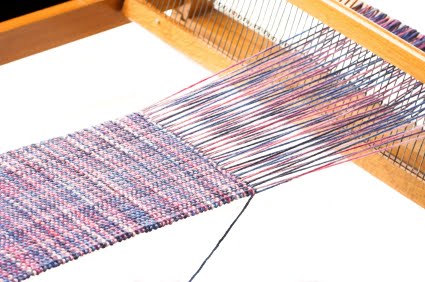
The original Luddites appeared during the Industrial Revolution and were weavers who were replaced by mechanized weaving, which produced high quality cloth faster and for less money, not incidentally depriving them of the job and lifestyle they desired.

I was reminded of the Luddites when I read the Science and Sensibility post on the consensus statement produced by three midwifery organizations, Supporting Healthy and Normal Physiologic Childbirth; A Consensus Statement by ACNM, MANA and NACPM. It’s the classic manifesto of a neo-Luddite movement, protesting technology because it threatens their jobs and their way of life.

Who are neo-Luddites? According to Wikipedia:

Neo-Luddism conjures pre-technological life as the best post-technological prospect … or as Robin and Webster put it, “a return to nature and what are imagined as more natural communities” …

Neo-Luddism expresses significant doubts about the nature of benefits from uncritically embracing new …technology. Neo-Luddism holds the belief that we were better off before its advent …

Neo-Luddites are:

… a diverse group that includes writers, academics, students, families, Amish, Mennonites, Quakers, environmentalists, “fallen-away yuppies,” “ageing flower children” and “young idealists seeking a technology-free environment”…

Moreover:

Neo-Luddites use technologies despite viewing them as the enemy. Some even use e-mail, … [and] the World Wide Web to to disseminate neo-Luddite propaganda… Sale describes neo-Luddites’ use of technologies as “a contradiction and a compromise, however, that sits easily with no one and is justified only in the name of the urgency of the cause and the need to spread its message as wide as possible”.

Sound familiar?

Supporting Healthy and Normal Physiologic Childbirth; A Consensus Statement by ACNM, MANA and NACPM is a classic neo-Luddite cri de coeur:

A normal physiologic labor and birth is one that is powered by the innate human capacity of the woman and fetus. This birth is more likely to be safe and healthy because there is no unnecessary intervention that disrupts normal physiologic processes . Some women and/or fetuses will develop complications that warrant medical attention to assure safe and healthy outcomes. However, supporting the normal physiologic processes of labor and birth, even in the presence of such complications, has the potential to enhance best outcomes for the mother and infant.

Let me perform the English to English translation to make the Luddism clear:

A normal physiologic labor and birth is one that is powered by the innate human capacity of the woman and fetus attended by midwives.

This birth is more likely to be safe and healthy good for midwives because there is no unnecessary intervention that disrupts normal physiologic processes intervention that cannot be provided by midwives without the assistance of a doctor.

Some inferior women and/or fetuses will develop complications that warrant medical attention to assure safe and healthy outcomes.

However, supporting the normal physiologic processes of labor and birth, even in the presence of such complications, has the potential to enhance best outcomes for the mother and infant midwife income.

Ahh, that’s better, because that’s what this is really about.

The original Luddites protested the introduction of technology because they did not know how to use it, so it replaced them and threatened their way of life. That the new technology produced higher quality cloth quickly and cheaply, and therefore benefited everyone was irrelevant to them. Not surprisingly (since their incomes were on the line), they valued process above outcome.

Similarly, birth luddites protest the introduction of technology into childbirth because they are not capable of using it, so obstetricians (who do know how to use technology) replace them and their way of life is threatened. That the new technology produces better outcomes for mothers and babies and therefore benefits everyone is irrelevant to them. Not surprisingly (since their incomes are on the line), they value process above outcome.

The original Luddites lost, of course. People bought the cloth woven on machines because they valued the outcome: less expensive, more accessible cloth. Although they don’t realize it, birth luddites have already lost the battle and the war. Women value the outcome of interventions in childbirth: less pain, dramatically fewer neonatal deaths and dramatically fewer maternal deaths.

Birth luddites should learn from the experience of the weavers. You can’t stop technology when it improves outcomes.

Hey, WIC, let’s force poor women to grow their own vegetables

I have a great idea.

It’s well known that poor children often have poor diets. Food stamps* can be used to buy any type of food; poor mothers often buy processed foods that are cheap and easy to prepare instead of fresh vegetables and fruits that are more nutritious. Here’s my idea: let’s take away food stamps and force poor women to grow their own food. They can set up small plots at community gardens and grow healthful fruits and vegetables. Maybe they can even get a few chickens so their children can have fresh eggs daily and roast chicken for special occasions.

Wait, what? You think that is punitive, vindictive and more likely to result in starving children than in children getting their daily supply of vitamins and minerals? But how can that be? I’m simply copying the WIC policy designed to encourage breastfeeding.

Yes that’s right. WIC has insituted policies that will supposedly discourage formula feeding.

Fully breastfeeding food packages are for mothers and their babies who do not receive formula from WIC and are considered to be breastfeeding exclusively. Mothers and infants may receive this package until the infant is 12 months of age. For mothers, this package provides the largest quantity and variety of foods. For infants, this package provides twice the amount of infant food fruits and vegetables as the package for infants who receive formula, and also provides infant food meat.

So let’s see. If you breastfeed your infant, he or she won’t merely get breast milk. Your baby will actually get extra food: double the amount of fruits and vegetables and he or she will get infant meat. That’ll teach those lazy good-for-nothing mothers; their babies will go hungry.

And that’s not all:

Fully breastfeeding food packages are for mothers and their babies who do not receive formula from WIC and are considered to be breastfeeding exclusively. Mothers and infants may receive this package until the infant is 12 months of age…

Women who are not breastfeeding or only breastfeeding a minimal amount receive a WIC basic food package. Minimally breastfeeding women whose infants greater than 6 months of age receive more formula from WIC than is allowed for a partially breastfeeding infant do not receive a food package.

Not just less food, but NO food for you if you aren’t breastfeeding after 6 months. After all, if you aren’t breastfeeding, you can get a job. Who will care for the baby? That is apparently your problem.

Want to breastfeed and supplement? Too bad for you:

Routine issuance of infant formula in the first month is not authorized to partially breastfeeding mothers to allow the establishment of successful breastfeeding.

By making it harder for new mothers to obtain formula and by rewarding those who breastfeed with extra food allowances, the nice upper middle class, highly educated folks who run WIC plan to increase the breastfeeding rate among WIC mothers.

Of course, a policy of making it more difficult to obtain formula and giving extra benefits to women who breastfeed is probably no more likely to improve conditions for poor children than a policy of forcing their mothers to grow their own food. Why? Because breastfeeding, like growing your own food, is difficult, often painful and very inconvenient. And people who live in poverty, and often have other children, little emotional support and chaotic lives are unlikely to be able to scrape together the emotional and physical resources necessary to do either.

Who are these policies really designed for? They aren’t designed to help poor children since the difficulties they face aren’t going to be ameliorated by beastfeeding. Breastfeeding won’t provide a home for those living in their cars or on the street. Breastfeeding won’t provide food for siblings who are too old to nurse. Breastfeeding won’t improve access to health care or provide better neighborhoods, or reduce parental substance abuse or any of the myriad other difficulties faced by poor children. So who will these policies benefit? Lactivists, of course, by allowing them to pretend that taking things away from poor women burnishes their own reputations as superior mothers.

Who cares that there’s no evidence that these policies work? Lactivists can feel good about such programs whether they increase breastfeeding or not. Who cares whether these policies might inadvertently result in babies being underfed because we’ve made it harder for their mothers to access formula? and baby food. Lactivists can feel good about such programs whether babies thrive or starve. Who cares that no one has even bothered to ask women how they might feel about such programs? Lactivists “know” that there are no legitimate reasons for not breastfeeding, so there’s no point in worrying how formula feeding mothers think and feel.

Wait, what? These policies are not punitive and vindictive because WIC mothers will be able to obtain formula if they really want it? Sure! Just like policies that mandate ultrasounds before abortions aren’t punitive and vindictive since women who really want abortions will be able to get abortions if they really want them.

Since when does a woman’s right to control her own body apply only below the waist? No women, and that includes women who receive public assistance, should have to justify her decision not to breastfeed. Her breasts, her body, her baby: her decison. Why is that so hard for lactivists to understand?

*I originally wrote that WIC benefits can be used to buy any type of food. That is not true; I’ve replace that with food stamps, which can be used to buy processed foods.

Latest paper on delayed cord clamping shows no benefit for premature babies

I’ve written before that delayed cord clamping has been found to have no clinical benefits in term infants, but there has been some evidence that it is beneficial for premature babies because it reduces the need for blood transfusions in babies who are likely to develop anemial of prematurity. The latest paper on the topic puts even that claim in doubt.

Delayed Umbilical Cord Clamping in Premature Neonates will appear in the August issue of Obstetrics and Gynecology. The authors explain:

This was a before–after investigation com- paring early umbilical cord clamping with delayed um- bilical cord clamping (45 seconds) in two groups of singleton neonates, very low birth weight (VLBW) (401– 1,500 g) and low birth weight (LBW) (greater than 1,500 g but less than 35 weeks gestation). Neonates were excluded from delayed umbilical cord clamping if they needed immediate major resuscitation. Primary out- comes were provision of delivery room resuscitation, hematocrit, red cell transfusions, and the principle Vermont Oxford Network outcomes.

What did they find?

All neonates had a hematocrit determination (largely peripheral venous) 30 – 60 minutes after birth… VLBW and LBW neonates who underwent delayed umbilical cord clamping had a significantly higher hematocrit, but delayed umbilical cord clamping did not significantly lower the overall NICU red blood cell transfusion rate. Delayed cord clamping was associated with higher mean systolic and diastolic blood pressures in neonates with LBW. Highest measured total bilirubin concentration and use of phototherapy were not significantly different between the early umbilical cord clamping and delayed umbilical cord clamping groups… [W]e observed no significant differences in any of the principle Vermont Oxford Network VLBW morbidities, mor- tality, growth rates, or length of stay …

Delayed cord clamping made no difference in the incidence of chronic lung disease, retinopathy of prematurity, intraventricular hemorrhage, necrotizing enterocolitis, infection, weight gain or length of stay. Obviously, the intitial hematocrit was higher in infants who underwent delayed cord clamping, but it resulted in no appreciable benefits.

The authors do point to one benefit, but fail to realize that it is a direct result of study design, not delayed cord clamping.

… [T]he overall provision of any delivery room resuscitation intervention was signifi- cantly less in the VLBW delayed umbilical cord clamping group (61% compared with 79%, P=.01) but not different between the LBW groups (30% compared with 27%, P=.55). Delayed umbilical cord clamping was associated with higher Apgar scores at 1 minute in VLBW neonates but no significant differ- ences in neonates with LBW….

That was only to be expected because:

… eligible neonates born in the second era did not have delayed umbilical cord clamping because the health care providers felt the neonate needed immediate major resuscitation. These six neonates had a mean postmenstrual age of 31 0/7 weeks, mean birth weight 1,618 g, Apgar score at 1 minute ranged from 0 to 5, Apgar score at 5 minutes ranged from 2 to 7, and all survived…

In other words, infants with the greatest need for resusciation were autonomatically excluded from the deleyed cord clamping group, but not the early cord clamping group. It’s hardly surprising then, that the delayed cord clamping group had fewer infants in need of resuscitation.

The authors conclude:

Delayed umbilical cord clamping can safely be performed in singleton premature neonates and is associated with a higher hematocrit, less delivery room resuscitation, and no significant changes in neonatal morbidities.

Even that tepid endorsement overstates the case. Obviously the hematocrit was initially higher in the delayed cord clamping group; delayed cord clamping inevitably increases the hematocrit initially. Obviously there was less need for resuscitation in the delayed cord clamping group since the infants with the greatest need for resuscitation had been removed from the group.

The bottom line is that delayed cord clamping provided no benefit of any kind.

This week in homebirth deaths

During the past week I learned of three separate homebirth deaths:

1. Coos County Oregon District Attorney has indicted lay midwife Marcene Rebeck for second-degree manslaughter and criminally negligent homicide in the death of a baby she delivered last year. According to the local newpaper:

The infant who died was a daughter born about a year ago to Bethany Reed of Riverton, who runs Abba Farms with her mother Linda Cummins. The infant died after a long labor and home birth when it was a few days old. The cause of death was listed as septis [sic], an illness in which the body has a severe response to bacteria or other germs.Rebeck, who also owns the Espresso Factory in Bandon, runs a local Montessori-based school and teaches Jazzercise classes, said she has delivered 300 babies during her career, with only one death and no other major incidents.

So now she’s had 2 deaths in only 300 babies for a whopping death rate of 6.6 deaths/1000, more than 15 times higher than the death rate for comparable risk women in the hospital.

2. I learned about this homebirth death in connection with a public petition drive complaining about the King’s County Coronor’s Office:

On April 28, 2012, my son Gianni Bradshaw was a stillbirth during a home delivery. He was accepted into Kings County Hospital where he was autopsied… I spoke with Dr. Lange … at which time she shared autopsy findings. She indicated that Gianni was a healthy infant and that my placenta had an abnormal insertion called sporadic velamentous cord, that may have caused my heavy bleeding/hemmoraging…

A velamentous cord means that the blood vessels of the umblical cord, instead of inserting directly into the placenta, travel across the amniotic membrane. When the membranes rupture, one or more of the blood vessels can be severed and the baby will bleed to death in a matter of minutes. That is apparently what happened here.

3. The homebirth midwives posted about the death of this baby. They apparently believe it is unrelated to birth at a free standing birth center, although that is yet to be determined:

Our community has been touched by tragedy. Jude Declan Zeliff, born at Trillium on July 13th, passed away at home in his mother’s arms [July 15th]. In the face of such tragedy, we cannot help but ask “Why?” and at this time there is no answer to that question. Until moments before his death, Jude gave every indication of health and normalcy…

Possible causes include group B strep sepsis, undiagnosed cardiac defect, and sudden infant death syndrome, among others.

Colorado homebirth midwives are shockingly unethical

Imagine the following scenario:

The drug company Profits-R-Us introduced a new medication to treat the common cold, Sneeze-Ease. Shortly after its introduction, doctors beginning noticing a number of unexpected deaths of people who were previously well. The only thing that connected these deaths was the fact that all the people who died unexpected had ingested Sneeze-Ease within 48 hours of their deaths. The FDA demanded that Profits-R-Us reanalyze their data to determine if the new medication was responsible.

The marketing department of Profits-R-Us sent out the following press release:

Profits-R-US (PRU) collects post marketing information on all its medications. In 2006, shortly after the introduction of Sneeze-Ease PRU received reports of 5 deaths associated with Sneeze-Ease; in 2007 it received reports of 5 deaths; in 2008 it received reports of 7; and in 2009 it received reports of 9.

PRU collected brief stories about the situations surrounding the demises. Based on the information provided, these data suggest that Sneeze-Ease can be ruled out as a causative factor in the death in all but one of these deaths, although even with this one it is not clear whether the hospital would have been able to save the patient if he had gotten there in time.

The mission of Profits-R-US is to provide safe and effective medication. PRU declares and affirms that Sneeze-Ease continues to be a safe and viable choice for treating colds.

Now imagine that you learn that PRU has been withholding some additional information. In 2010, 15 patients died after ingesting Sneeze-Ease, and in 2010 14 more people died.

So at the exact same time that PRU is publicly affirming the safety Sneeze-Ease it is in possession of new information that is even more damning than the original information.

Were a drug company found to be behaving like that, we would be disgusted by the duplicity and unethical behavior of it’s executives.

We should be equally disgusted by the duplicity and unethical behavior of the Colorado Midwives Association (CMA) because it is just performed the exact same stunt, trying to explain away their appalling death rates.

Stung by my persistent criticism of the extraordinary death rates for planned homebirths attended by Colorado licensed midwives, the organization is attempting to protect its “product,” at the expense of the safety of babies and mothers.

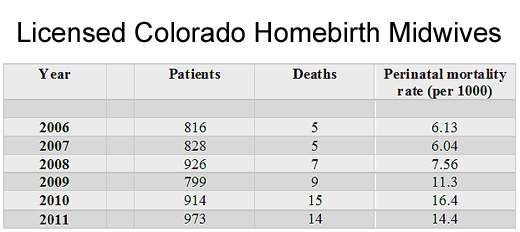
The above chart shows the death rates for planned homebirths attended by licensed Colorado homebirth midwives from 2006-2011.

In violation of Colorado state law, the homebirth midwives did not release their 2010 and 2011 statistics. They were obtained by filing a Colorado Open Records Request, forcing the midwives to release them. I wrote about the 2010 data a few weeks ago. This post marks the first public disclosure of the 2011 data.

On their website, under the title Homebirth Safety in Colorado, issued almost exactly the same statement as above.

The Colorado Department of Regulatory Agencies (DORA) Office of Direct-Entry Midwifery Registration collects this information via a survey administered each year to midwives seeking renewal… In 2006, the survey reported 5 perinatal deaths; in 2007 it reported 5; in 2008 it reported 7; and in 2009 it reported 9. Over the last 6 years, Colorado has averaged between 40 and 60 Direct-Entry Midwives attending between 500 and 700 homebirths per year.

Based on the information provided, these data suggest that planning a home birth can be ruled out as a causative factor in the death in all but one stillbirth during labor, although even with this one it is not clear whether intervention such as a Cesarean section would have saved the baby …

The mission of the Colorado Midwives Association is to support and promote the option of homebirth for childbearing families in the state of Colorado. The Colorado Midwives Association declares and affirms that homebirth continues to be a safe and viable choice for women with healthy, low-risk pregnancies when attended by a Colorado Registered Midwife.

It is deceptive:

* By failing to provide a comparison rate for comparable risk women giving birth in the hospital, the Colorado Midwives Association makes it impossible to determine whether the death rates are acceptable. The CMA does not disclose that the overall perinatal mortality rate for the entire state of Colorado (all races, all gestational ages, all pregnancy complications, all pre-existing medical conditions) of 6.3/1000. So the homebirth death rate is extraordinarily high.

It is unethical:

*The CMA fails to disclose the information for 2010 and 2011, showing that the appalling death rate has risen even higher than they acknowledge.

It is disgusting:

* It is indicative of the mendaciousness of homebirth midwives who are more concerned with promoting their “product” than whether babies live or die.

Colorado homebirth midwives are no different from the theoretical executives of Profits-R-Us. They will say whatever it takes, hide whatever it takes and tell whatever falsehoods it takes to continue making money despite the fact that patients are dying.

Dr. Bartick, who’s really fueling the mommy wars?

Dr. Melissa Bartick is one of the premier exponents of the health benefits of breastfeeding and chair of the Massachusetts Breastfeeding Coalition, the prime mover behind the Massachusetts ban on formula gift bags. I am thrilled that she has chosen to enter the discussion in the comments section of yesterday’s post.

Here’s an excerpt of her comment:

Dr. Tuteur, I heard you interview on WBUR and your statements were fraught with inaccuracies and frankly your understanding of the medical literature around breastfeeding is not current. You also seemed more concerned with fueling the mommy wars than with the issue at hand

You seem unfamiliar with the AHRQ report of 2007 — detailing all available evidence about maternal and child health around breastfeeding. You are mistaken when you claim that no child in the US has ever been harmed or died from formula. My own study published in Pediatrics in 2010 showed that there are 911 excess child deaths per year in the US due to formula feeding. This study, which also found that suboptimal breastfeeding costs the US economy $13 billion a year to our economy…

I have bolded 3 claims that I’d like to address.

1. The AHRQ report of 2007

The Agency for Healthcare Research and Quality published Breastfeeding and Maternal and Infant Health Outcomes in Developed Countries in April 2007. The 415 page report is often cited by lactivists in support of efforts to increase breastfeeding rates. I’m not sure why Dr. Bartick thinks I am unfamiliar with it since I had it in mind when I pointed out multiple times during the radio program that the benefits of breastfeeding, while real, are small and most of the data is weak, conflicting and plagued by confounders.

The authors of the ARHQ report acknowledge this fact right at the outstart of their report, in the abstract:

A history of breastfeeding is associated with a reduced risk of many diseases in infants and mothers from developed countries. Because almost all the data in this review were gathered from observational studies, one should not infer causality based on these findings…

The authors could not have made it plainer. No one should use their study or the data in their study to claim that breastfeeding causes the improved outcomes they discuss in the report. In other words, the report supports MY contention, not hers.

2. Dr. Bartick’s study

I reviewed Dr. Bartick’s study, The Burden of Suboptimal Breastfeeding in the United States: A Pediatric Cost Analysis, when it was published in 2010. My assessment?

…Using highly fanciful methods, Bartick and Reinhold “estimate” that the US could save 900 infant lives and $13 billion if 90% of US women breastfed. These numbers are grossly misleading since not even a single US infant death (let alone 900 per year) has ever been attributed to not breastfeeding and since the purported savings are primarily the “lost wages” of the 900 dead infants…

Bartick and Reinhold’s argument is only theoretical anyway because, as the ARHQ report on breastfeeding found, “one should not infer causality” between breastfeeding and improved health outcomes. Indeed Bartick and Reinhold’s paper is just another weak paper based on research plagued by confounders.

3. Fueling the mommy wars

I almost laughed out loud when I read this since it is lactivists like Dr. Bartick who are fueling any mommy wars about breastfeeding, not me.

What are mommy wars? They generally refer to conflicts between working mothers and stay at home mothers about which is better for children. In other words, both sides insist that THEIR choices are better for children and therefore imply that those who do what they do are better mothers. They often insinuate that if other mothers made the same choice that THEY made, those women’s children would also benefit.

When it comes to lactivists, they DO insist that their choice to breastfeed is better for babies and they do imply that women who breastfeed are better mothers because they are giving their babies the “best.” Moreover, the banning of formula gift bags is a direct expression of their belief that, not only would other women’s children benefit if their mothers made the same choice to breastfeed that THEY made, but that other mothers must be cajoled and manipulated to make the same choice to breastfeed that THEY made.

If I were trying to fuel the mommy wars, therefore, I would be a formula feeder, and, more importantly, I would insist that formula feeding is “best,” and that formula feeders are better mothers. In addition, I would be working to enact a ban on free gift bags containing breast pads and breast cream in an effort to discourage breastfeeding. Obviously I am doing nothing of the kind.

I DID breastfeed my children. I DO promote breastfeeding. I ACKNOWLEDGE that it has real, though small benefits over formula feeding. So I am hardly promoting MY choices.

I’m certainly not claiming that bottle feeding is “best” or that mothers who bottle feed are better mothers. The essence of my claims is that there is no feeding method that is best for everyone and that NEITHER method of infant feeding makes one a better mother.

So who’s really fueling the mommy wars, Dr. Bartick? You, who are insisting breastfeeding is best, that “good mothers” want what is best for babies and therefore breastfeed, and that women should be cajoled and manipulated into following YOUR choice? Or me for pointing out that both feeding methods are equally valid, equally safe, and that women should be supplied with information and be supported in making whatever choice works best for themselves and their families?

Please don’t try to imply that “if you’re not with me, you’re against me.” Please don’t ignore the voices of women who make different choices or demean those choices. And please don’t pat yourself on the back for the formula gift ban. There’s nothing admirable about women who would never use formula, taking formula away from those who would.

Addendum: If Dr. Bartick wishes to write a reply, I would be happy to publish it, unedited, in its entirety, as a companion piece.

Dr. Amy in breastfeeding debate on WBUR

Breastfeeding activists in my state, Massachusetts, are celebrating a ban on formula gift bags for new mothers.

That’s right: a group of women who will never use formula are patting themselves on the back for taking away a gift of free formula from women who might use it. And what do those who might use the formula think of the ban? Don’t be silly! No one asked them.

Who cares what those women think? Apparently women who aren’t wholeheartedly committed to exclusive breastfeeding aren’t even worthy of being included in the conversation. The fact that the lactivists are almost exclusively Western, white, privileged women and the women who they have deprived of free formula are much more likely to be women of color or poor women is simply an unfortunate coincidence.

No one asked those women, but I tried to speak for them when I participated in a debate on WBUR, the local National Public Radio affiliate. Dr. Bobbi Philipp, professor of pediatrics at director of the newborn nursery at Boston University School of Medicine, and one of the activists behind the ban.

You can listen to the debate below.

In preparation for the radio show I reviewed the meager existing literature on banning formula gift bags and didn’t find any evidence that it actually increases rates of breastfeeding. I did find, remarkably, that not a single study asked women whether the gift bags influence in any way their decision to breastfeed. This is consistent with a deeply disturbing set of assumptions that seems to be taken for granted among lactivists:

1. Women who have not committed to exclusive breastfeeding in advance must be manipulated to embark upon exclusive breastfeeding.

2. Women are not reflective individuals capable of making life decisions on their own.

3. Women are so shallow that they will be swayed in one direction or another by a free gift; therefore, their “betters” must make sure that they aren’t corrupted by free gifts.

4. Women’s opinions and desires are irrelevant so there is no point in asking those who are affected by a ban what they think of the ban.

5. These is no reason to ask women whether they want to breastfeed because there is no legitimate reason for not wanting to breastfeed.

6. Women are treated merely as instrumental. How breastfeeding impacts them as individuals with individual needs, desires and constraints is irrelevant.

I don’t think of myself as a naive person, but I still shocked that a group of privileged relatively well off white women have such obviously demeaning views of women other than themselves. Although I am an enthusiastic proponent of breastfeeding, and enthusiastically embraced breastfeeding my own children, I recognize that what worked for me and my family is not necessarily right for all other women and their families.

Rather than patting themselves on the back for engineering a ban on formula gifts bags, Massachusetts lactivists should be embarrassed by their modern day version of noblesse oblige. They are not the nobility of the mothering world and they are not obliged (or even entitled) to manipulate other women into making the “right” decision on infant feeding.

Dr. Amy