How midwives market homebirth

On Friday I wrote about midwives and the commodofication of birth. In order to create a perceived “need” for their services, midwives must convince women that a safe birth in the hospital attended by highly knowledgeable, highly trained providers is not enough. They attempt to create that need by selling the “birth experience.”

In Great Expectations: Emotion as Central to the Experiential Consumption of Birth by Markella Rutherford and Selina Gallo-Cruz deconstruct midwives’ websites to examine the 5 components of the midwifery marketing plan.

1. Safety

Here homebirth midwives* find themselves with a problem. Homebirth increases the risk of neonatal death. American homebirth midwives are grossly undereducated and grossly undertrained. Indeed, they have less education and training than midwives in ANY other first world country. Faced with this dismal reality, midwives do something simple and straightforward: they lie.

… [M]idwives deal with potential clients’ anxieties and fears about the safety of birth in two ways: they attempt to convince them both that midwifery care is competent and safe and that hospital care is risky and suspect, at least for most healthy women.

Those overarching lies rest on a variety of other, smaller lies of omission and commission:

… [Midwives] point out that many complications in birth often arise because of hospital practices and procedures. Midwives describe the increased likelihood that hospital births will result in stalled labor and unnecessary cesarean sections, expose mothers and babies to infections, and cause respiratory distress in newborns. In addressing safety concerns midwives attempt to shift anxieties about the risks of birth in general to a fear of the often-cascading interventions of hospital birth.

2. Fear of pain

Homebirth midwives have yet another problem; they cannot dispense the only truly effective relief for labor pain, the epidural. Therefore, midwives work to discount the reality of labor pain. That involves a variety of marketing strategies: minimizing the actual pain, grossly exaggerating the effectiveness of non-pharmacologic methods, and glorifying the pain itself.

… [Midwives] recommend using visualization, hypnotherapy, affirmation, and psychological empowerment to approach labor as a positive experience that does not have to be painful. A sense of empowerment to overcome pain is a notable feature of the narrative of natural birth … [T]hese websites reinforce the narrative themes of empowerment and the natural ability of women to give birth by including graphic pictures of women in labor. By depicting women’s laboring bodies and their facial expressions of strength, determination, and joy, these websites reinforce the idea that giving birth [should be] embraced and celebrated as an empowering experience.

3. Choice

Choice is portrayed as the sine qua non of the “birth experience.” Certain choices are portrayed as superior (particularly those that are transgressive) and defying medical advice is framed as being “educated.” This is integral to the overall project of creating a specific self image.

A major selling point of non-medical birth services is women’s desire to experience the personal autonomy fostered by a view of the woman as active agent and rational consumer…. One of the ways that midwives encourage this sense of control is through their promotion of knowledge and education … In general, limited choice is an affront in consumer culture; midwives construe hospital birth as limiting the birthing woman’s choices and diminishing her autonomy. Instead midwives promise to offer a wide range of choice and to hand over control to the consumer…

Moreover:

As marginal providers of a commodified experience, midwives specializing in alternative birth cannot afford to overlook their clients’ satisfaction, which is often based more upon a romantic idealization of the birth experience than upon a rational calculus… [M]idwives … claim that women who birth outside of the hospitalized, medical model are more satisfied with the experience of giving birth…”

4. Intimacy

Emotional intimacy with the midwife is deemed critical to the “birth experience.”

… Intimacy between midwife and client begins to develop before birth through time spent together in prenatal visits that may last up to an hour or more. In these visits, midwives not only attend to the physical health of the pregnant woman, they also spend time talking with her about her anxieties, concerns, desires, and expectations…

But emotional intimacy is also critical to homebirth midwifery in a way that midwives never discuss. It is critical to the midwives themselves to forge an intimate emotional connection. That is why homebirth midwives feel free to turn down clients who do not share the midwives’ view on approved choices. The midwife needs to feel validatation and emotional fulfillment produced by rendering the client as an intimate friend.

5. Symbolic Meaning and the Idealization of the Birth Experience

This is really what homebirth midwives are selling: the creation of “meaning.”

The alternative birth is an idealized experiential commodity… [I]t is the idealization of birth that transforms the experience itself into a desired consumer experience. Midwives encourage the idealization of the alternative birth experience through the emphasis they place on emotions, symbolic meaning, imagination, and planning.

Homebirth is not about birth, and it is certainly not about the baby. It’s all about creating a desired consumer experience, an experience (midwives encourage clients to believe) that defines them as women and as mothers.

The idealization of birth emphasizes its symbolic meaning and enchants the experience through a romantic ethic… Midwives refer to birth as a spiritual, sacred, and miraculous event. Giving birth is described as “an opportunity for spiritual and emotional transformation”, “a peak human experience”, “a sacred rite of passage”, and “a magical, transformative, and truly empowering experience”…

In their concluding remarks Rutherford and Gallo-Cruz once again stress the similarity to weddings:

In conceptualizing natural birthing as an emotional and idealized consumption experience, we see that birth has come to mirror aspects of the wedding, another heavily commodified rite of passage… [W]e see that the woman planning for alternative birth also exercises calm control, rational decision making, and has the illusion of autonomy over her choices at the same time that she is a romantic fantasizer hoping for wish fulfillment… the idealization of the birth experience offers a legitimate opportunity to orchestrate another emotional consumer experience in which the bride-now-turned-mother produces, directs, and
plays the starring role.

In marketing her services, the midwife portrays herself as crucial to creating the “experience”:

With a midwife’s guidance and through her own idealization of the birth experience, the birthing mother is both a producer and a consumer of the birth experience. Not only is her physical labor a productive activity, but she also produces her emotional response to the experience. Furthermore, as with other extraordinary experiences, consumption of a birth experience is an active form of symbolic identity construction through which women give coherence to their own sense of self. The mother who selects an alternative birth outside of the medical model consumes her birth experience for the purpose of producing her own self-image and her family’s lifestyle.

Homebirth midwives are no different than wedding purveyors, or even certain drug manufacturers. They are hawking a product that no one really needs.

You can have a wedding without all the expensive trappings, save thousands of dollars, and be just as married. Drug manufacturers often find themselves with products that aren’t needed, so they set out to create a new “condition” that requires treatment with the otherwise useless drug. Homebirth midwives are not as knowledgeable as other medical providers, are terribly unskilled, and add no real value to childbirth. You can have a baby in a hospital, pay only a copay and get a healthy baby, which is presumably the goal of pregnancy.

Since homebirth midwives add no value to birth, they have created the “birth experience” with themselves as guides. Women are encouraged to believe that the “meaning” of childbirth does not rest in the baby, but rather in the mother’s emotional connection to her caregiver, the mother’s ability to exercise autonomy and, above all, the mother’s creation of a specific self-image. She may no longer be the princess at her own wedding, but now she is the queen at her own child’s birth.

*American midwives who hold a post high school certificate (CPMs and LMs), as opposed to American certified nurse midwives and European, Canadian and Australian midwives who have university degrees

Midwives and the commodification of birth

… [W]hen selecting alternative providers of birthing services, women are not simply purchasing health care, they are choosing and purchasing guides for and co-creating an event that is idealized and emotionally charged.

The above quote comes from Great Expectations: Emotion as Central to the Experiential Consumption of Birth by Markella Rutherford and Selina Gallo-Cruz. They offer a unique perspective on homebirth midwifery from outside both the midwifery and medical communities. Rutherford and Gallo-Cruz draw attention to an aspect of homebirth midwifery that we are all aware of but rarely mention. Homebirth is a product and homebirth midwives, like any product manufacturers, are heavily engaged in marketing that product to consumers.

In fact, the foundational philosophy of midwifery, the “midwifery model of care,” serves as one of its key marketing emphases. A crucial component of midwives’ care work is what Hochschild calls emotional labor: “the emotional style of offering the service is part of the service itself.” … [In] theorizing … emotional labor as a commodity to be sold, we ask how we might conceptualize the emotional aspects of the experiences offered in this transaction as a commodity to be consumed.

What are homebirth midwives offering? Their product is the idealized birth experience.

Midwifery is not simply a service to be purchased, but is also an embodiment of cultural meaning; through its consumption women make the ordinary experience of childbirth a symbolically charged and extraordinary experience of “meaning transfer.” … [Campbell] argues that “the essential activity of consumption is…not the actual selection, purchase or use of the products, but the imaginative pleasure seeking to which the product image lends itself …

In marketing homebirth, midwives unconsciously copy the wedding industry.

… [T]he wedding industry … commodifies the wedding experience by constructing the bride as the “heroic creator of her big day.” [Similarly], births are increasingly embellished with the advertised opportunities for luxury and amenities as well as the gendered conceptualization of femininity associated with the transition. [This] work raises important questions … about the role of anticipation and imagination in the birth experience. In particular … the creator of such a rite of passage must negotiate between romantic or hedonic fantasies and rationally planning the event…

Like any manufacturer, midwives strive to create a “need” for their product within the mind of the consumer:

… [T]he midwife’s role is critical … because she is fluent in the alternative symbolic orientations to and understandings of natural birth … [She] also provides her association and emotional support either by sharing beliefs about the experience or by affirming the woman’s right to assign her own unique beliefs to birthing. This seemingly simple service of association and presence is a critical social need in the context of extraordinary experiences and rites of passage that depend a shared cultural consensus for their significance.

Rutherford and Gallo-Cruz point out the striking similarities with the marketing tactics of the wedding industry.

In conceptualizing natural birthing as an emotional and idealized consumption experience, we see that birth has come to mirror aspects of the wedding, another heavily commodified rite of passage. Drawing on [the] insight that the bridal role involves a rational-romantic duality, we see that the woman planning for alternative birth also exercises calm control, rational decision making, and has the illusion of autonomy over her choices at the same time that she is a romantic fantasizer hoping for wish fulfillment.

Indeed:

… [T]he idealization of the birth experience offers a legitimate opportunity to orchestrate another emotional consumer experience in which the bride-now-turned-mother produces, directs, and plays the starring role. Thus commodified birth experiences play an important role in consumer society by continuing the trajectory of pivotal consumption events across the family life course.

Homebirth is not about the baby, and it isn’t really about birth.

… [C]onsumption of a birth experience is an active form of symbolic identity construction through which women give coherence to their own sense of self. The mother who selects an alternative birth outside of the medical model consumes her birth experience for the purpose of producing her own self-image …

That’s what homebirth midwives are selling.

WA: 20-fold increase in hypoxic deaths at homebirth

Another day, another database showing an appalling homebirth death rate.

The latest evidence comes from The 13th Report of the Perinatal and Infant Mortality Committee of Western Australia for Deaths in the Triennium 2005–07 full report (here). This report includes the most comprehensive analysis of homebirths yet in Western Australia. In the wake of the 12th report, which showed that homebirth in WA had triple the perinatal death rate of hospital birth, the Perinatal and Infant Mortality Committee was charged with more than identifying homebirth deaths. The Committee was charged investigating the cause of preventibility of homebirth deaths.

The results are truly appalling AND entirely consistent with the terrible homebirth death rate in the US. The major finding is that homebirth QUADRUPLED the risk of perinatal death compared to hospital birth. Indeed, homebirth dramatically increased the risk of death at every level, from stillbirth to infant death.

Keep in mind these statistics UNDERCOUNT the risk of death. That’s because there may have been deaths that occurred in the hospital that actually belong in the homebirth group. Moreover, the comparison is between homebirth and all hospital births (including high risk and premature births). To understand the full magnitude of the problem, homebirth deaths should be compared to low risk hospital birth, not all risk hospital birth.

In the wake of the 12th annual report that showed homebirth tripled the perinatal death rate, the Committee was charged with determining the causes of perinatal deaths at homebirth, and whether the deaths were preventable. Once again, the results are nothing short of appalling:

The greatest discrepancy in mortality risks for planned home births compared to planned hospital births was in deaths due to peripartum hypoxia. There were 28 perinatal deaths attributed to hypoxic peripartum insult in the 2005-07 triennium (24 in planned hospital births and 4 in planned homebirths). The risk ratio for stillbirth attributed to peripartum asphyxia was 21.5 times higher for the planned home birth group compared to the planned hospital group. The risk ratio for infant death due to peripartum asphyxia was 18.2 times higher for the planned home births compared with planned hospital births…

The Committee also assessed whether the homebirth deaths were preventable. Of the 7 homebirth deaths:

Four of these cases were coded as ‘hypoxic peripartum deaths’ … They occurred in term or post term pregnancies. These four cases had preventable medical factors (preventability scores >=2) and three were considered potentially avoidable deaths (preventability scores >=4). The proportion of deaths in planned home births with preventability scores >=2 was 57.1%, which was higher than the proportion of 10.3% of all investigated deaths with preventability scores >=2. The proportion of potentially avoidable deaths with preventability scores >=4 was 42.9% in planned home births and 2.4% of all investigated deaths.

To summarize, the WA data show that the risk of perinatal death at homebirth is quadruple that of hospital birth; the risk of perinatal death at homebirth due to hypoxia is approximately 20-fold higher than hospital birth; and, 51.7% of the homebirth deaths were potentially preventable compared to 10.3% of the hospital deaths.

The Committee made the following recommendations:

a) Home births are associated with preventable stillbirths and infant deaths. Midwives offering home birth services should obtain informed consent from women to acknowledge that they have been informed of the increased risks of perinatal death associated with home birth.

b) A formal independent audit of implementation of the Recommendations of the Review into Homebirths should be performed. This audit of practice should encompass all home births, whether the midwife is under the auspices of the Community Midwifery Program (CMP) or is independent.

c) There are insufficient data about morbidity associated with homebirth in WA. A prospective cohort study to assess mortality and morbidity outcomes for women with planned home births in WA should be arranged as a priority. This cohort study should be performed by an independent group of researchers.

This is yet another stream to add to the growing flood of information on the dramatically increased risk of perinatal death at homebirth. In addition, this data confirms that the primary cause of homebirth deaths is hypoxia (lack of oxygen) and that most of these deaths are preventable.

The strength of this data lies in the fact that the deaths themselves were analyzed, both for cause and for preventablity. Does similar data exist for American homebirth? Indeed it does. The Midwives Alliance of North America (MANA) the group that represents American homebirth midwives, has assembled a data collection far larger than that of Western Australia. The MANA database contains 18,000 homebirths and has been analyzed for cause of death. What does it show?

We don’t know because MANA is hiding that data. MANA performed an analysis similar to that of Perinatal and Infant Mortality Committee of Western Australia and almost certainly obtained a similar (or possibly far worse) result. The state of Western Australia made their results public in an effort to reduce the death rate from homebirth. MANA refuses to make their results because in an effort to hide the death rate from homebirth. The WA Committee is concerned with the health and well being of newborns; MANA is concerned only with its own reputation.

Infant dies after craniosacral “therapy”

Craniosacral “therapy” (chiropractic) is another one of those pseudoscientific disciplines marketed to the gullible that claims cures for just about every ailment under the sun. How does it supposedly work? According to Biodynamic Craniosacral Therapy Association of North America:

… [A]ll healthy, living tissues subtly “breathe” with the motion of life – a phenomenon that produces rhythmic impulses which can be palpated by sensitive hands. The presence of these subtle rhythms in the body was discovered by osteopath Dr William Sutherland over 100 years ago, after he had a remarkable insight … that cranial sutures were, in fact, designed to express small degrees of motion. He … eventually concluded it is essentially produced by the body’s inherent life force, which he referred to as the “Breath of Life.” Furthermore, … the motion of cranial bones he first discovered is closely connected to subtle movements that involve a network of interrelated tissues and fluids at the core of the body; including cerebrospinal fluid (the ‘sap in the tree’), the central nervous system, the membranes that surround the central nervous system and the sacrum.

Gobbledygook to English translation: disease can be treated by manipulating bones. That’s obviously ludicrous, but what’s the harm? Plenty as it turns out.

The Dutch Medical Journal reported on a case of infant death at craniosacral therapy.

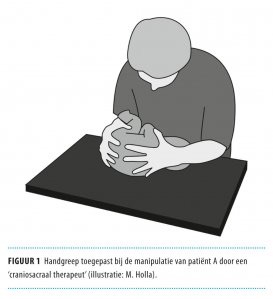
Patient A was a three-month-old, healthy girl. Because their child exhibited mild motor unrest, the parents contacted a so-called “craniosacral” therapist who, after a short introductory interview, started administering the craniosacral therapy. He placed the child on her back on a changing mat, after which he palpated the neck and the skull. The patient cried vehemently at this. Then she was turned to her right side and a deep bending of the vertebral column was applied at which the chin touched the chest…

image

After the vertebral column was bent deeply in this manner during several minutes, the child lost faeces and several loud intakes of breath were clearly audible. The therapist interpreted this as a deep sleep, which he said was normal during the treatment. After about 10 minutes the girl was placed on her back and blue discolouration of the lips was apparent. The child was limp now and did not react to touching. The father started mouth-to-mouth resuscitation. Alerted ambulance personnel on arrival saw a deceased infant with asystolia…

The infant was resuscitated but removed from life support 12 hours later after testing revealed catastrophic brain injury.

A brief review of the literature reveals that this is not the first such tragedy. According to Adverse Events Associated With Pediatric Spinal Manipulation: A Systematic Review published in the journal Pediatrics, there have been at least two other infant catastrophic injures, a 3 month old boy who died as a result of a subarachnoid brain hemorrhage, and a 4 month old boy render quadriplegic after treatment for what turned out to be a spinal tumor.

It seems obvious to me, looking at the picture above, that craniosacral “therapy” cannot possibly be therapeutic and has tremendous potential to create catastrophic injuries. Parents should be very wary of practitioners offering to bend an infant’s spine as a form of therapy. Not only is craniosacral “therapy” absurd; it can kill.

Ten illogical arguments

In addition to the problem of possessing inaccurate information, homebirth advocates have another, more serious problem, the tendency to construct illogical arguments. It is apparently such a pervasive problem that a brief review of these arguments is in order.

Let’s look at the various types of illogical argument constructed against my core claim “the death rate at homebirth is higher than the death rate at low risk hospital birth.” To make this exercise easier to understand, lets substitute a claim of the same form that is obviously true, so we will not get sidestepped by issues of truth or falsity and can focus only on whether an argument is logical or illogical. This is important because illogical arguments are automatically invalid arguments. We’ll use the claim “there are more black cars in the US than lime green cars.”

I say: There are more black cars in the US than lime green cars.

Don’t say:

I saw a lime green car. – Can you understand how the fact that you personally saw a lime green car tells us nothing about the relative number of black cars and lime green cars in the US? That you saw a lime green car is perfectly consistent with black cars outstripping lime green cars 100 to 1, or even 1,00,000 to 1? Similarly, the fact that babies die in the hospital tells us nothing about whether the death rate is greater at homebirth.

I know ten people and not one of them has a black car. – This is an illogical claim based on an unstated assumption. The assumption is that the small slice you observe accurately represents the whole. However, tiny samples are often unrepresentative. Knowing 10 people who own black cars is perfectly consistent with the number of black cars exceeding lime green cars, BUT it is also perfectly consistent with lime green cars exceeding black cars, so it can’t be used to support a specific claim. Similarly, the fact that you know ten women who had homebirths and not a single baby died tells us nothing about whether the homebirth neonatal death rate exceeds the low risk hospital death rate.

Lime green cars are prettier than black cars. – I hope it is obvious why value judgments about lime green cars tell us nothing about whether there are more or less black cars than lime green cars. Therefore, it should be obvious that claiming that women are more satisfied with homebirth tell us nothing about homebirth death rates.

You say that because you sell black cars. – Whether or not I sell black cars is immaterial; it has absolutely no effect on the number of black cars or lime green cars. This is essentially an accusation that I am lying and offering as “proof” the fact that I have a reason to lie, but a reason to lie is not proof of lying. So don’t tell me that the fact that I am an obstetrician means that I am lying about neonatal death rates.

The people who make black cars have oppressed the people who make lime green cars. – Maybe yes, maybe no, but in either case, it does not affect how many black and lime green cars are on the road. Similarly, whether doctors have oppressed midwives has no bearing on whether the neonatal death rate at midwife attended homebirths is higher than hospital births.

There is a conspiracy against lime green cars. – We are supposed to believe that the number of lime green cars would equal black cars except for a public relations campaign designed to make lime green cars less desirable. It is theoretically possible that there is a conspiracy against lime green cars, but it is far more likely that other factors account for the difference in numbers. And in any case, it doesn’t tell us anything about the relative numbers of black and lime green cars. So when confronted with the fact that homebirth death rates exceed hospital rates, it is illogical to counter with a claim that a conspiracy against homebirth exists.

There would be more lime green cars if the makers of black cars helped out. – That might be true, or it might not. In either case, it tells us nothing about the truth of the claim that black cars exceed lime green cars. And while it might be true that the death rate from midwife attended homebirth would be lower if doctors were more supportive of midwives, it doesn’t change the reality of the current situation.

The Association of Lime Green Car Makers say that there are more green cars than black cars. – Cherry picking certain claims and ignoring all others is likely to lead people to the wrong conclusion. A lobbying group that disagrees with almost everyone else is not a reliable source of information. Similarly, professional NCB advocates and organizations are not reliable sources of information when they disagree with the bulk of the scientific evidence.

The color of cars is influenced by culture. – That is a non sequitur. It does not oppose the claim; it simply attempts to pin responsibility somewhere else and it is irrelevant. That’s why the claim that hospital birth is culturally favored is irrelevant to any argument about homebirth death rates.

There are more important things about cars than the color. – That is what is known as “reframing the debate“. It is a tacit acknowledgment that there are more black cars than lime green cars and a barely concealed effort to divert everyone’s attention. That’s why when someone announces that there are more important things than whether babies live or die, I know they have accepted the fact that homebirth leads to preventable neonatal deaths.

Natural childbirth and information naivete

Most of what natural childbirth advocates think they “know” is factually false. How did that happen?

The proximal cause is easy to identify: the world of natural childbirth advocacy is an echo chamber where almost all information is acquired from celebrity natural childbirth advocates who broadcasts it through websites, books and conferences. Most of these celebrity natural childbirth advocates have minimal or no training in science, so a great deal of their “information” is factually false, disingenuous or deliberately misleading. This misinformation is bounced back and forth, primarily through websites run by lay people, amplified and never corrected.

There is a deeper cause as well: natural childbirth advocates, like most devotees of pseudoscience, suffer from “information naivete.”

As Prof. Roberta Brody explains in The problem of information naivete:

Information naïveté … is the belief held by an individual or a group that information designed, created, obtained, or stored is comprehensive and where this belief is without a grounding or understanding of the situation of that information within its own contexts.

In other words, information naivite is the inability to tell the difference between comprehensive, accurate information and limited, cherry picked, non-representative information.

Brody points out that it is easy to mistake information naivete as “ignorance or carelessness in the handling of [knowledge] perhaps solved or mitigated with an improvement in information literacy.” But information naivete is a product of, and often deliberately created by, media bias, limited context as well as limited ability.

Natural childbirth websites, publications and conferences do not even pretend to be unbiased. There is no effort to present both sides of an issue, and no effort to transmit information that does not support the core tenets of natural childbirth. On websites run by professionals as well lay people, comments that attempt to present other information are not merely discouraged, but literally deleted. Lay people looking for information about natural childbirth are not alert to this bias.

Brody addresses the issue of limited context:

… the circumstances and conditions of information naïveté predate the emergence of electronic information, though perhaps current contexts seem to make some aspects and implications more apparent. The space between knowing of and knowing about may be widened by electronic contexts. That is, the electronic information environment encourages the delivery of bits of information that have been removed from their native contexts.

For example, the web has made it easier than ever to access health information,

… but it does not mean that the user understands how the content of the results is shaped within larger contexts and what, consequently, may be emphasized, distorted, or missing.

Virtually every natural childbirth website or publication misrepresents scientific evidence by emphasizing favored pieces of evidence, distorting the full breadth of the evidence and deliberately omitting the copious evidence that does not support the tenets of natural childbirth.

The major limitations of those who consume natural childbirth information are information deficits and incompetence at recognizing the information deficit:

In what they refer to as the “double curse of incompetence,” Dunning, Heath, and Suls explained that

in many significant social and intellectual domains, the skills necessary to recognize competence are extremely close if not identical to those needed to produce competent responses… Thus incompetent individuals suffer a double curse: their deficits cause them to make errors and also prevent them from gaining insight into their errors.

That’s true in natural childbirth advocacy and well as ever other area of pseudoscience. The skills necessary to recognize an accurate understanding of the scientific literature are almost identical to the skills necessary to acquire an accurate understanding of the scientific literature. That’s why the claims of natural childbirth advocates to being “educated” are both poignant and ridiculous. Natural childbirth advocates know so little about childbirth, science and statistics that they have literally no idea how little they know.

What’s the difference between information naivete and simple ignorance?

… [I]gnorance has at least the potential to be corrected whereas information naïveté may contain in it the arrogance of prejudice — that is, the perception that there is nothing more to know … Just as one may read with comprehension but without judgment, so may one create and use information that appears to be satisfactory while still remaining naïve about the underlying processes that shape the results and its resultant flaws.

That accurately sums up the state of “knowledge” within the natural childbirth movement. Natural childbirth advocates, both professionals and laypeople, suffer from the arrogance of ignorance. They think they know everything there is to know about the topic and have no understanding that they know only a tiny, non-representative fraction of the information available on the topic.

Brody concludes with a general claim that accurately describes the specific situation of natural childbirth advocacy:

… [I]t would appear that while there are information users seeking information who are … struggling to bridge gaps in their understanding, there also are the information naïve who are unaware of such gaps, uninterested in bridging them, or intentionally exploiting them.

The pathetic narcissism of live blogging a homebirth

Women of the world rejoice! Gina Crossly-Corcoran, The Feminist Breeder, is planning to live blog her homebirth for your edification. I know, I know; you’re overcome with gratitude that a self important person like Gina has arranged to exploit share what ought to be an private, intimate and deeply personal experience with everyone in the whole world in order to publicize herself homebirth.

Gina has thoughtfully ensured that no one will miss a moment!

… I will have a widget embedded directly into my blog on a special page sponsored by Brio Birth where my Documentarian … can post LIVE updates, pictures, video clips, and audio clips of my entire birth experience as it is happening. They even have a nifty iPhone app that allows her to shoot video/pictures/sound on her phone and upload it immediately for everyone’s viewing pleasure. The great thing about that is that we’ll be mobile, so if we want to go walk in the woods, she can follow us there and still post updates…

… When I start labor, readers will be notified and can start following along. You can even submit comments or questions through this widget, and my Documentarian, Erica, will answer and publish anything she deems appropriate.

Thank goodness Gina has thought of everything. I’d be awfully disappointed to miss audio of Gina’s grunts of pain, pictures of vomit during transition and actual video of fecal contamination of the birth pool. Who wouldn’t?!

Why is she doing this? For you, dear reader. Three of the four reasons Gina gives for live blogging “her” birth are all about YOU including:

I have a platform and an opportunity to educate…
To show that it doesn’t have to be perfect…
I know many of my readers will be excited to follow along…

Silly me. I though birth was about having a baby. Evidently not. Gina’s baby is not mentioned even once. It’s about Gina and her willingness to graciously educate YOU, show YOU that birth doesn’t have to be perfect, and because YOU are so excited that you can’t imagine anything better to do with your time than follow every moment of stranger’s labor.

You probably can’t tell from what I’ve written, but I’m just a teeny, tiny bit cynical about Gina’s motivation. Here’s what I suspect Gina’s reasons are for live blogging “her” birth.

1. She’s a narcissist.
2. She thinks childbirth is a piece of performance art, and like all performance requires an audience.
3. She thinks she is the star; the baby isn’t even mentioned as supporting cast.
4. She’s jealous of the attention showered on the British woman who tweeted her birth and hopes to get some for herself.
And most importantly:
5. She’s a narcissist.

In case you are wonder if she is a narcissist, consider this charming paragraph:

I really wish that I could say that I made this decision as a reaction to that horrible new Lifetime TV show, but honestly, this has been in the works for a month. I brought the idea up to my husband and he thought it was one of the best ideas I’ve ever had… And then I asked Brio Birth if they wanted to sponsor the page to help me offset the cost, to which they immediately agreed…

This is one of the best ideas she ever had?

I’m surprised that Gina didn’t approach Fox; they are famous for shows that feature ordinary people so pathetically desperate for attention that they will do anything and flaunt everything for their 15 minutes of fame. No doubt she’s disappointed that she can’t get herself on TV, but at least she has a sponsor!

Don’t think that this is only about her. She cares about the baby you, too.

I imagine that people will have questions about this, so I’m happy to field them in the comments section. Let me know what you want to know!

Okay, Gina, here’s what I want to know:

Does birth have anything to do with the baby, or is it all about you?

addendum: Gina has tried to block my link to her site, but apparently she doesn’t realize that I can simply link to the cached version. You can find it here. And I guess she also doesn’t realize that you can can access the post directly by putting http://thefeministbreeder.com/the-big-fat-announcement-im-live-blogging-my-homebirth/ into your browser. She apparently thinks that my readers will not be able to access her site, but, of course they still can.

Delegitimizing women’s need for pain relief in labor

Barely 2 weeks after I wrote the post about the invisibility of women’s needs, Science and Sensibility features guest blogger Dr. Michael Klein who has written a post about epidural anesthesia that entirely leaves out the most important benefit of epidurals, its ability to relieve the agonizing pain of childbirth.

I’ve mentioned Canadian family practice physician Michael Klein before. I wrote about Dr. Klein’s personal opinion that “a few” preventable perinatal deaths are worth it in order to lower the C-section rate.

Now Dr. Klein attempts to explain Epidural Analgesia—a delicate dance between its positive role and unwanted side effects, while rendering women’s need for pain relief utterly invisible. In a 1200 word post, Dr. Klein utterly fails to mention the excruciating pain of childbirth. There is not a single word about how women feel about pain and pain relief in labor.

He does manage to hit all the high points of the NCB campaign to render women’s pain invisible.

The “risks” of epidural anesthesia are accorded a prominent place, but apparently there was no room to include just how often these “risks” occur, thereby depriving readers of any context to evaluate these risks. He’s so desperate to vilify epidurals that he actually includes inadequate pain relief as a “risk.” There’s no mention of the fact that approximately 98.5% of women have excellent pain relief from an epidural, but we’re supposed to consider the 1.5% failure rate a reason to avoid the 98.5% chance of outstanding pain relief?

As I said above, there is not even one word devoted to how women want to manage their own pain, but Dr. Klein has plenty of words about what women should want. Apparently, Dr. Klein thinks the days before adequate pain relief were just dandy:

Prior to the ready availability of epidural analgesia in labour and delivery departments, maternity nurses used their skills to reassure, massage, breathe with the woman through contractions, and employ a range of other methods to handle labour pain.

And:

Prior to the availability of epidural analgesia, the childbirth education movement utilized a variety of techniques that were physiologically and psychologically helpful to reduce pain, such as breathing and imagery. These methods began to take hold in the culture in the 1950s and 1960s but today are less prominent in many childbirth education classes. Some classes are more focused on teaching women compliance with particular hospital technological methods and approaches, routines and policies, rather than on teaching women coping skills.

Imagine that. Childbirth classes teach women what to expect in labor instead of how to have the labor that Dr. Klein approves. And let’s not forget one of the conspiracy theories to which NCB advocates appear addicted: childbirth classes indoctrinate women to comply with hospital policies.

What kind of labor does Dr. Klein in his wisdom approve?

Backed by randomized studies, it has become apparent that this emotional and physical continuous supportfrom a doula gives a woman more confidence and ability to work with her labour.

More confidence? To work with her labor? Sure, when women’s need for pain relief is invisible, there’s no reason to worry about whether doulas relieve pain.

Dr. Klein in his wisdom frowns upon epidurals but loves other methods of pain relief, no matter how unnatural they are:

Pain moderation by transcutaneous nerve stimulation (TNS) or intradermal water injections can be very helpful … Other non-pharmacological methods like water baths or showers or movement, including the use of birth balls, are also helpful for many women who find that partial pain relief is sufficient to help them through contractions.

That’s really funny. It’s okay to put a needle in your back and inject something that won’t provide adequate pain relief (water), but it’s not okay to inject local anesthetic that will provide complete pain relief.

Dr. Klein, I have a simple question for you: How dare you?

How dare you write a piece about epidural anesthesia that includes not one word devoted the agony of labor pain?

How dare you write a piece about epidural anesthesia that includes not one word about what women think about pain and pain relief in labor?

In short, how dare you render women’s need for pain relief in labor utterly invisble?

Is the Childbirth Connection qualified to give medical advice?

The Childbirth Connection is the leading lobbying group for natural childbirth advocacy. As their website explains:

… [O]ur organization has … carried out media outreach, and developed a broad range of clinical, educational and advocacy programs; dozens of consumer and professional publications; many conferences and symposia; and numerous surveys and program evaluations…

No doubt they are qualified to lobby on behalf of their personal beliefs, but are they really qualified to offer medical advice to pregnant women?

They claim to be deeply concerned about offering accurate summaries and interpretations of the scientific evidence on which modern obstetrics is based. Among their stated goals:

* To exercise their legal right to informed consent and informed refusal, women need access to full and accurate information based on the best available research about all options for care from early in pregnancy through the postpartum period…

* Caregivers and institutions have the responsibility to provide evidence-based care that respects and supports the innate physiology of pregnancy, labor and birth, and the mother/baby connection, and addresses the family’s needs, values and preferences.

I can’t disagree with those goals. But is the Childbirth Connection capable of accurate assessing the obstetric scientific evidence in order to provide accurate information?

Considering that we are discussing the massive scientific literature of obstetrics, you might think that the Childbirth Connection would have obstetricians among its reviewers, but you’d be wrong. There is not a single obstetrician on the Board or staff of the organization.

In fact, there is no one who has an MD and no one who has a PhD in a scientific field. Therefore, the Childbirth Connection has no way of vetting their publications to be sure that they accurately represent the current state of obstetrics and obstetric research. And that failure to appropriate vet their medical and scientific claims is glaringly obvious to anyone who DOES routinely read the scientific literature.

Consider the issue of labor induction. Amy Romano, previously of Lamaze International and now working for the Childbirth Connection, describes information purported to be the “best evidence” on labor induction as “a systematic review of the highest quality research.” It is nothing of the kind.

An obstetrician would start a review of the literature on induction by reading a chapter in an obstetrics text that provides an overview. “Induction in Labor” in Williams Obstetrics is a relatively short chapter (6 pages) and reviews more than 100 scientific papers on the topic. Then an obstetrician would proceed to a literature search to review the scientific papers submitted in the last 1-3 years since the textbook was published. In the last two years alone several hundred papers have been published on labor induction

In contrast, the Childbirth Connection reviewed only 4 scientific papers on the topic! Not only does this fail to meet the criteria of a systematic review, it barely skims the surface. So if the Childbirth Connection failed to review the majority of the literature on labor induction, what did they do? They cherry picked a few papers that reached conclusions that they liked and IGNORED everything else.

And what does the Childbirth Connection’s “evidence” purportedly show?

They acknowledge that induction has definitely been shown to improve outcomes in the three most common medical indications for induction:

* Pregnancy lasting beyond 41 weeks [note: outcomes improve at 41 weeks a week before the traditional cutoff of 42 weeks]

* Prelabor rupture of membranes (PROM) at term (37-42 weeks)

* Increased blood pressure near the end of pregnancy

Then there are medical indications where the medical evidence is not as strong, primarily because there have not been enough studies done yet. The Childbirth Connection mentions them and misrepresents the scientific evidence about them.

Preterm prelabor rupture of the membranes (PPROM)- Here the Childbirth Connection misrepresents current obstetrical practice. In premature rupture of membranes, the benefit to the baby of more time in the uterus outweighs the risk of infection, so the recommendation is NOT to induce unless an infection develops.

Gestational diabetes requiring insulin – Again the Childbirth Connection misrepresents the situation. First they fail to mention Type 1 (insulin dependent diabetes) at all, despite the fact that it is a major medical indication for labor induction. The stillbirth rate in insulin dependent diabetes is more than triple the rare for non-diabetic mothers. Insulin dependent GESTATIONAL diabetes is a much less common phenomenon, and therefore, as the Mozurkewich paper acknowledges, there is little evidence available on induction in that setting. However, it is hardly unreasonable to assume that insulin dependent gestational diabetes poses the same harms to babies and to proceed under that assumption until further data is available.

Intrauterine growth restriction (IUGR) at term – Yet another misrepresentation. The Childbirth Connection claims that “more and better studies” are needed to determine if induction improves outcomes in IUGR. But IUGR is KNOWN to be responsible for a significant proportion of stillbirths. There is no treatment for IUGR, so the best hope for preventing stillbirth is to deliver the baby.

How does the Childbirth Connection summarize the medical indications awaiting more studies?

What common “reasons” for induction are not supported by rigorous research?

For a surprising number of conditions, the effectiveness of induction has not been proven (Mozurkewich and colleagues 2009, a systematic review). Yet many women have induced labor with the understanding that they or their babies will benefit. More or larger studies are needed to confirm the benefits and harms of induction in these situations.

In other words, they imply that these are not “reasons” for induction, that they will produce no benefit, and therefore we should wait for more evidence. But we KNOW that insulin dependent diabetes increases the risk of stillbirth and we KNOW that IUGR increases the risk of stillbirth. No obstetrician is misrepresenting the evidence when he or she recommends induction to prevent stillbirth in this situation. And no one is recommending induction for preterm rupture of membranes so it’s ucclear why this was included among spurious “reasons” for induction.

What might the average woman take away from this Childbirth Connection publication?

It seems to me that they are supposed to take away the following impressions:

Inductions are bad.
Don’t trust your obstetrician.
Obstetricians ignore scientific evidence.
There is no reason to induce for insulin gestational diabetes or IUGR.

And all four are wrong.

They really have nerve to represent this as “best evidence.” It isn’t a complete review of the evidence. It isn’t the best evidence. And even the minimal evidence that has been presented has been misrepresented by the Childbirth Connection.

They have no business giving medical advice to women. They lack the qualifications, and based on this piece and others like it, they lack the ability to review the massive scientific literature of modern obstetrics.

They are certainly entitled to promote their personal agenda, but they are not entitled to give erroneous “medical advice” to do so.

What do they know and when did they know it?

The Midwives Alliance of North America (MANA) is aware and has been aware for some time that homebirth has an unacceptably high rate of neonatal death. Their own data makes that clear and that’s why they are hiding it. In fact, there now trying to “reframe the conversation,” a classic public relations ploy designed to conceal an unpalatable truth.

I have been pounding away at this point for more than four years. I first wrote about it in January 2007 (Why is MANA hiding its data?):

… The [Johnson and Daviss BMJ 2005 study] included data from the year 2000 only, but MANA (Midwives Alliance of North America) has continued the collections of statistics. This could be a valuable resource for women wondering about the safety of homebirth. There’s a problem, though. No one is allowed to see those statistics. Well, that’s not quite right. You can have access to the statistics only if you “use the data for the advancement of midwifery”.

In fact, as early as summer 2006, MANA had already instituted elaborate procedures to hide the neonatal death rate of homebirth, including a non-disclosure agreement with legal penalties for anyone allowed to see the data prohibiting them from letting anyone else see the results.

In July 2008, MANA President Geradine Simkins explained the database:

Data collection includes “evaluation of all aspects of midwifery care in terms of safety, optimal maternal, fetal, and family outcomes,and cost effectiveness.

Data collection “uses a very extensive data form! ~360 questions.”

MANA estimates approximately 20,000 cases will be in the database by the end of 2008.

It does not take a rocket scientist to speculate that MANA is hiding its own safety data because that data shows that homebirth increases the risk of neonatal death. Indeed, MANA has made it clear that it has no intention of ever releasing homebirth death rates to the public, and has attempted to justify this by invoking, then twisting the meaning of “community based research.”

From the MANA Handbook for Researchers Interested in Obtaining Access to the MANASTATS Database:

The MANA DOR endorses the principles of Community-Based Participatory Research (CBPR), … a collaborative approach in which research takes place in community settings and involves community members in the design and implementation of research projects… The MANA DOR is responsible for representing the midwifery community in its relationship with investigators… Therefore the MANA DOR expects all investigators interested in collaboration with this community to consider how they can cooperate with these principles, and to describe how they intend to do so in their request for data access.

But community based participatory research is designed to protect the PATIENTS not the providers. And patients deserve to know how many babies died at the hands of homebirth midwives in the past decade.

I have been hammering away at this issue in the past 4 years in every possible forum and with every professional homebirth advocate I could find … and the silence has been deafening. I’m not surprised about the silence from MANA. It would serve no purpose for them to openly acknowledge that they are hiding the homebirth death rate, and there is no way they could deny that they are hiding it. I am, however, a bit surprised by the silence of professional homebirth advocates.

At first I thought that professional homebirth advocates were silent because they did not know the truth, but after 4 years and a myriad of on-line encounters, I’ve begun to wonder if many professional homebirth advocates have confirmed that MANA has found the homebirth death rate to be unacceptably high, and they have joined in the effort to hide that information.

Ina May Gaskin is the founder of MANA and is a very active professional homebirth advocate. I’ve asked her repeatedly, in a variety of different forums, why MANA is hiding the homebirth death rate and whether she thinks it is ethical for MANA to hide the homebirth death rate. She has never even acknowledged the question.

Amy Romano offered this disingenuous attempt to justify MANA’s behavior:

I’m irritated that you don’t seem to have read or tried to understand my post and have just shown up to copy and paste the same comment you’ve been leaving around the web. But I will go ahead and respond just to say that I have no affiliation with MANA other than that when I was practicing I contributed data to the MANAStats database… I have read their policies and procedures governing access to MANAStats data and … I see a pretty straightforward process that … the research benefit the community. In general I am an advocate of open access to data on the principle that it accelerates the pace of scientific discovery. But I don’t see, from my interpretation of their policies, anything that puts up unnecessary barriers.

As a contributor to the database, Romano actually qualifies for access. Yet she does not seem to have taken advantage of that access. Apparently, she doesn’t care about the MANA homebirth death rates, which is inexcusable since she is all over the web claiming that homebirth is safe.

But when it comes to nerve, no one tops Amie Newman of RH Reality Check. When confronted with the fact that MANA is hiding their neonatal death rate, she had this to say:

I 100% believe that women deserve the right to know how safe planned homebirth is with a Certified Professional Midwife. I also 100% believe that we have that information currently.

In other words, it supposedly makes no difference that MANA is hiding their death rates for 18,000 homebirths, because we already know all we need to know.

Curiously, not a single professional homebirth advocate has offered to question MANA about their neonatal death rate, or issued a public plea for MANA to reveal their death rate. Which makes me wonder … how many of them already know the truth? How many professional homebirth advocates are aware of exactly how many of those 18,000 babies died at the hands of homebirth midwives, and are colluding in hiding that data from the public?

When it comes to the people at MANA, like Melissa Cheyney and Geradine Simkins, I don’t know how they can live with themselves. They know that homebirth kills babies and they are working very hard to make sure that American women do not find out the truth. But how about the rest of the professional homebirth advocates? How can they live with themselves, continuing to tout the safety of homebirth, while knowing all along that the single largest database of American homebirth shows precisely the opposite?

Dr. Amy