All posts by Amy Tuteur, MD

Both natural parenting and religious fundamentalism reflect fear of women’s emancipation

image

Arguably the greatest civil rights achievement of the 20th Century was the emancipation of women. For all of human existence, women had been relegated to secondary, nearly subservient, status. For the first time ever, some women in some societies were able to take their place alongside men, finally achieving political, intellectual and legal equality.

I lived through the culmination of the emancipation wrought by the “women’s liberation” movement. Even though it was the tail end of more nearly 100 years of advances, it is difficult to exaggerate the profound changes that took place between the 1960’s, when as a child I was told that women could not be doctors, through the 1970’s when as a high school athlete I was told that women did not merit uniforms or equipment, to the 1980’s when I entered medical school. Don’t get me wrong, gender discrimination did not disappear, but it became widely acknowledged as a bad thing, not an inevitability.

Profound social change does not occur without opposition or fear. In my view, both the rise of natural parenting and the rise of religious fundamentalism are due in part to backlash against the emancipation of women. And both function, explicitly or implicitly, to keep women in the home.

The natural childbirth movement was created explicitly in response to women’s emancipation. As I have detailed many times, most recently a few days ago, Grantly Dick-Read was painfully honest that he created the philosophy of natural childbirth as a way to keep women at home; only there could they find true happiness by fulfilling their biologic destiny, and then they would stop agitating for political, legal and economic equality.

While doing research for my forthcoming book I learned, to my surprise, that La Leche League and the lactivist movement were founded for similar reasons. In the book La Leche League:At the Crossroads of Medicine, Feminism, and Religion, Jule DeJager Ward explains that the La Leche League was:

…founded in 1956 by a group of Catholic mothers who sought to mediate in a comprehensive way between the family and the world of modern technological medicine…

[A] central characteristic of La Leche League’s ideology is that it was born of Catholic moral discourse on family life … The League has very strong convictions about the needs of families. These convictions are the normative heart of its narrative… The League’s presentations and literature carry a strong suggestion that breast feeding is obligatory. Their message is simple: Nature intended mothers to nurse their babies; therefore, mothers ought to nurse…

The idealization of motherhood reflects the place of Mary in Catholic popular devotion…

The League’s answer to the question “What should mothers do” is grounded in … the original faith community of its founders.

For those women, the contents of their Catholic faith and the existential question of motherhood are interdependent…

Just as Grantly Dick-Read created natural childbirth in opposition to women’s demands for emancipation, LLL channeled the Catholic Church’s opposition to women’s emancipation, in particular women’s desire to work for their own economic freedom. Breastfeeding, therefore, came to be viewed as part of the Catholic mother’s obligation to remain at home with her children.

Indeed, the founders of LLL were aware of the complementarity of their views and those of natural childbirth. In one of their first major meetings, in 1957, Grantly Dick-Read himself was the featured speaker.

Attachment parenting is a product of similar beliefs about women and families. Dr. William Sears, a religious fundamentalist and father of eight, is widely credited with creating attachment parenting. He certainly popularized it, but attachment parenting had its inception with The La Leche League.

But according to Peggy O’Mara, Editor of the defunct Mothering Magazine (now a website and message board):

Sears published his book, The Fussy Baby, with La Leche League in 1985, at a time when he was the most well known of LLL’s physician supporters. He is widely credited with coining the term attachment parenting and wrote a book on the subject in 2001. But, Dr. Sears did not invent attachment parenting.

Two young La Leche Leaders, Barbara Nicholson and Lysa Parker, were influenced by Dr. Sears and fascinated with attachment theory…

As Nicholson and Parker became increasingly steeped in research on the critical attachment period, they wanted to educate others, and, in 1995 they formed Attachment Parenting International.

So all three major components of natural parenting (natural childbirth, lactivism and attachment parenting) were created in direct response to women’s emancipation and their refusal to remain at home content with the traditional role of a mother.

It is not a coincidence, therefore, that natural parenting requires tremendous sacrifice on the part of the mother and only the mother. Indeed every element of natural parenting, extending to vaccine rejection and organic food, makes more work for mothers. Moreover, it is hardly a coincidence that the home is the heart of natural parenting. From homebirth to homeschooling, the natural mother never has to leave the house and certainly should never be employed outside the house when her children are small.

In my judgment, it is also not a coincidence that religious fundamentalism experienced a renaissance in the US in the wake of the “women’s liberation movement.” Religious fundamentalists root their opposition to women’s emancipation in their reading of the Bible. Many embrace the tenets of natural parenting. They cite religion as the reason why women must be subservient to their husbands and occupied entirely with their children, but the end result is that same: more work for mothers and no opportunity for women in the larger world.

That’s not to say that every woman who embraces the tenets of natural parenting is committed to perpetuating a patriarchal society, the type of society embraced by the founders of natural childbirth, lactivism and attachment parenting. Individual women make individual choices based on the needs of their families and their own desires. A woman can be a natural parenting advocate and a feminist, but it is important to understand that natural parenting was created, and is often promoted in direct opposition to feminism.

It’s not an accident that much of natural parenting, from home birth to home schooling, is centered on the home. Natural parenting, like religious fundamentalism, has at its heart the imperative to keep women at home and to promote the patriarchal status quo.

It’s time for a new paradigm: the materna-centered model of care

image

The 20th Century was a golden age for maternity care. With the advent of modern obstetrics, childbirth went from a routinely deadly event to a rarely deadly advent. A myriad of interventions, from antibiotics to blood banking, from safer anethestia to safer C-sections, from neonatal ventilators to surfactant led to a 99% drop in maternal mortality and a 90% drop in neonatal mortality. The medico-technocratic model of maternity care has been a stunning success.

But the medico-technocratic model of care placed the the convenience of physicians ahead of maternal autonomy, and the midwifery model of care was advanced as a corrective. The midwife model of care put the focus back on women’s experience. Once childbirth was routinely safe, it made sense to focus on more than whether the mother and baby survived the experience. The midwife model of care acknowledged that many practices existed merely for physician convenience and offered no benefit for women and perhaps harmed them, or at the very least was cold and impersonal. Making sure that mothers are awake and aware for the birth of their children, inviting partners and other family members in for the birth, and rigorous investigation of routine maternity practice dramatically improved women’s experience.

Although the midwife model of care has brought improvements, it suffers from a similar problem as the medico-technocratic model of care. It still puts the provider at the center of care. The midwife model takes the core beliefs of midwives as incontrovertible fact, specifically the idea that there is a “best” way to give birth and that best way involves as little technology as can possibly be used. Midwives start with the bedrock assumption that unmedicated vaginal birth is the ideal and anything else represents a deviation from ideal. It uses midwives beliefs as its starting point, and that’s the wrong place to start.

I propose a new model of childbirth care for the 21st Century: a materna-centric model of care. A materna-centric model would take the best features of the two previous models, the dramatic improvement in safety wrought by the medico-technocratic model, and the focus on experience provided by the midwife model, but it would locate mothers at the heart of maternity care, their views, their values, their desires. The materna-centric model of care would have as its fundamental premise the idea that birth experiences are contingent on maternal culture, values and personal experiences. When you place the mothers values at the center, it is obvious that there is no best way to give birth; there is only what the mother prefers.

There is no need to glorify vaginal birth, and no reason to valorize refusing pain relief. The model is both culturally sensitive and personally sensitive. What constitutes a good birth is going to be different for a woman from Southeast Asia than for a woman from the US Southeast. What constitutes a good birth for a woman from a fundamentalist religious sect is going to be different from a good birth for a woman who works in the tech industry. Nobody is wrong. And, most importantly, no one’s birth choices make her superior to anyone else.

It may be helpful (albeit imperfect) to draw an analogy between maternity providers and interior decorators. Obstetricians can be understood as decorators who limit their designs to spare and functional choices. They decorate houses with every piece of furniture you need, but much of it is drab, and some of it is not comfortable. Midwives go beyond obstetricians in that their designs are colorful and comfortable. There’s just one problem; they only decorate in their preferred style, shabby chic. The equivalent of the new maternity provider (doctor or midwife) would be a decorator who decorates in the style that the client prefers, not the style that is most convenient for the decorator or most pleasing to the decorator.

The midwife model of care is outdated because it places the midwife at the heart of maternity care. As a result, it serves the needs of midwives, but leads to unnecessary suffering and tremendous guilt on the part of mothers. We need a model of maternity care that places mothers squarely at the center of care, and uses their values as the touchstone for decisions, not the provider’s values.

In other words, we need a materna-centered model of care.

Natural childbirth has always been about keeping women in their place

iStock_000015897241_Small

Yesterday I wrote about Sheila Kitzinger’s acknowledgment that many feminists consider natural childbirth to be deeply anti-feminist because of its baseline assumption that agonizing pain is good for women, and its glorification of women’s reproductive organs ahead of their minds, talents and characters.

It’s hardly surprising that natural childbirth is deeply retrograde and anti-feminist. The philosophy of natural childbirth is and has always been about keeping women in “their place,” pregnant, at home and restricted to the domestic sphere.

Grantly Dick-Read, the creator of the philosophy was explicit about his sexism.

According to Dick-Read:

Woman fails when she ceases to desire the children for which she was primarily made. Her true emancipation lies in freedom to fulfil her biological purposes…

And:

…[T]he mother is the factory, and by education and care she can be made more efficient in the art of motherhood.

Grantly Dick-Read’s theory of natural childbirth grew out of his belief in eugenics. He was concerned that “inferior” people were having more children than their “betters” portending “race suicide” of the white middle and upper classes. Dick-Read believed that women’s emancipation led them away from the natural profession of motherhood toward totally unsuitable activities. Since their fear of pain in childbirth might also be discouraging them, they must be taught that the pain was due to their false cultural beliefs. In this way, women could be educated to have more children.

Pain in childbirth served a very important function in this sexist discourse: it was the punishment that befell women who became too educated, too independent and left the home. The idea that “primitive” women had painless childbirth was fabricated to contrast with the painful childbirth of “overcivilized” women.

In other words, the philosophy of natural childbirth was created in reaction to early feminist victories in acquiring political, legal and economic rights.

As I wrote yesterday, women like Kitzinger decided to make a virtue of necessity. If they were going to be judged by the function of their reproductive organs, then they would glorify those organs and concomitantly demonize technology which was, in their minds, a product of men. No longer would the purpose of childbirth be to produce children; its purpose was expanded to produce birth “experiences” that validated women for placing the function of their reproductive organs at the heart of their self-image.

The philosophy of natural childbirth locates a woman’s virtue in her vagina, and exults in her agony.

Hence Kitzinger wrote:

Birth isn’t something we suffer, but something we actively do, and exalt in!

And:

In achieving the depersonalization of childbirth and at the same time solving the problem of pain, our society may have lost more than it has gained. We are left with the physical husk; the transcending significance has been drained away. In doing so, we have reached the goal which perhaps is implicit in all highly developed technological cultures, mechanized control of the human body and the complete obliteration of all disturbing sensation.

And:

In most societies birth has been an experience in which women draw together to help each other and reinforce bonds in the community. Now that eradication of pain with effective anesthesia is often the only issue in any discussion of birth the sacramental and social elements which used to be central to women’s experience of birth seem, for an increasing proportion of women, to be completely irrelevant.

Feminist philosopher Katherine Beckett, in Choosing Cesarean: Feminism and the politics of childbirth in the United States explains the feminist critique of natural childbirth:

The idea that women do (or should) savour, enjoy, or feel empowered by the experience of labour and delivery … romanticizes women’s roles as lifebearers and mothers, and assumes an emotional and physical reality (or posits an emotional and physical norm) that does not exist for many…

In short, some feminists perceive the alternative birth movement as rigid and moralistic, insistent that giving birth ‘naturally’ is superior and, indeed, is a measure of a ‘good mother’…

In other words, Kitzinger’s view of natural childbirth functioned to keep women in their place acknowledging that women are restricted to a certain role, romanticizing that role, and utterly ignoring the suffering that women endured because they were restricted to that role.

Pain in childbirth has always been about who holds power.

Men had the power to insist, through religion, that women’s pain in childbirth was a form of divine punishment for their sins. They could and did withhold anesthesia from laboring women.

Then came a woman who was more powerful than all the clerics and doctors, Queen Victoria.

In her role as Head of the Anglican Church, she had the power to declare that childbirth anesthesia did not violate a divine plan for female punishment. She used anesthesia in childbirth and she liked it.

Queen Victoria was not a feminist, but the early feminists who followed in her wake a few decades later considered that easy access to childbirth pain relief was a political issue. Increasing access to pain relief in labor reflected women’s growing political power. That is precisely what Grantly Dick-Read feared.

But it was not just pain relief that liberated women from “their place.” Technology of all kinds, from antibiotics to blood banking to safer C-sections liberated women from the fear of death in childbirth. And the benefits of technology were not limited to childbirth itself, but extended to infant formula that liberated women from breastfeeding if they wished it, and the oral contraceptive pill that liberated women from endless unwanted pregnancies that sapped their health and prevented them from taking their place in the larger world along side men.

The philosophy of natural childbirth makes women slaves to their biology and therefore renders them merely handmaidens to men, unable to take the reins of political, legal and economic power. Natural childbirth keeps women in their place, pregnant, at home and restricted to the domestic sphere. True, it glorifies their slavery, but it remains slavery nonetheless.

Sheila Kitzinger was right about childbirth and feminism

Woman Screaming In Horror

Sheila Kitzinger was a brilliant and incisive cultural anthropologist and remained so until the very end.

Her last piece, an excerpt from her final book, printed in today’s Daily Mail under the title Why feminists HATE natural childbirth …, is an unwitting acknowledgement of what I have been writing for years: Natural childbirth is deeply anti-feminist.

To my surprise, it wasn’t just obstetricians who dismissed what I had to say. I also found myself in conflict with feminists, who saw birth in very simplistic terms.

Why? Because they claimed it was every woman’s right to give birth painlessly.

…Polly Toynbee, writing in The Guardian, was particularly virulent, dismissing me as a lentil-eating earth goddess.

‘How extraordinary,’ she said, ‘that those who call themselves feminists fight for women’s right to suffer and, in the process, inflict so much unnecessary suffering on women. The right to safe local anaesthetics, properly administered by experienced obstetric anaesthetists, should come first.’

For most of human existence, women’s worth was judged by the function of vagina, uterus and breasts. In other words, women’s worth was determined entirely by their biology. Kitzinger (like her colleague Ina May Gaskin) came of age when women were not valued for their intellect, talents of character. So they made a virtue of necessity. If they were going to be judged by their biology, they would glorify their biology. Kitzinger was probably the premier biological essentialist in the natural childbirth movement. Biological essentialism is the belief that all women have a biological essence and can only find true fulfillment through having children “as nature intended.”

Kitzinger took the intellectual legacy of the profoundly sexist men who created the philosophy of natural childbirth (Grantly Dick-Read) and Lamaze, and went them one better. It wasn’t merely women’s purpose to utilize their vaginas, uteri and breasts to bear and raise children, it was their glory.

Life had handed them lemons, so they made lemonade.

Kitzinger, as astute as she was, failed to recognize that natural childbirth was and remains a philosophy rooted in profound sexism. Women are no longer restricted to lemons. It is hardly surprising, then, that contemporary women no longer feel any need to pretend that lemonade tastes best or tastes good at all.

There is no more of a need for women to glory in unmedicated childbirth than there is to glory in unmedicated painful periods. Women have replace faux achievements with real achievements in every area of human endeavor from the universities, to the concert halls to outer space.

Kitzinger never made the leap. Indeed the excerpt of her book has her still squeezing those lemons and adding as much sugar as she can:

YOU CAN DANCE THROUGH A DELIVERY

A woman who’s enjoying her labour will swing into the rhythm of contractions as if birth-giving were a powerful dance. As the mother of five children, I’ve not only experienced this myself but seen it happen time and time again…

If you really want to help a woman in labour, try not to manage, conduct or coach. What she needs far more is someone to help boost her strength and confidence

Once we were alone, I lifted the woman off the bed. Holding her lightly, I started to rock and circle my pelvis. As each contraction ebbed away, I gave a long breath out and was still; when I sensed another was coming, I danced and breathed my way through it with her.

After about half an hour, a midwife came in to do a pelvic exam. The woman was fully dilated. We laughed and hugged each other.

Kitzinger is still so embedded within the sexist paradigm of judging women through the function of their reproductive organs that she never acknowledges that most women don’t want to dance through excruciating pain, they want to abolish the pain.

The full title of the Daily Mail piece is “Why feminists HATE natural childbirth… and why their prejudice can harm mothers AND their babies, by the woman who taught a generation how to give birth” but the real title ought to be “Why feminists HATE natural childbirth… and why their views can harm ME and MY PHILOSOPHY”.

Sheila Kitzinger and other early advocates of natural childbirth profoundly changed contemporary childbirth for the better by insisting that women want to remain awake, want to make their own medical decisions and want to be accompanied by their partners. But they lost their way when they embraced the belief that women’s worth is restricted to the function of their reproductive organs.

Kitzinger improved the lives of many women by taking the lemons she was given and making lemonade. She glorified childbirth in an era when women were restricted to childbirth. She never took the next step, the one that contemporary feminists took, demanding to leave the domestic sphere and take their places every field of intellectual and creative endeavor.

It is unfortunate that she failed to recognize that in 2015 women are entitled to drink whatever they want, and are no longer restricted to lemonade.

Why natural childbirth advocates think other women’s births are their business: Duchess of Cambridge edition

Duchess princess

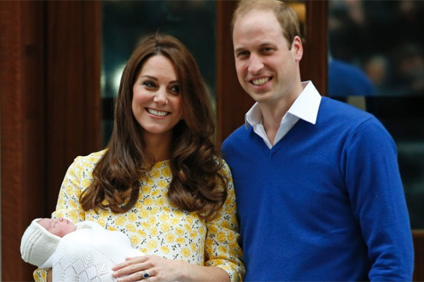
Oooh, oooh, oooh, have you heard that the Duchess of Cambridge labored at home for hours? Have you heard that she didn’t have an epidural? Have you heard that she “bonded” with her midwives?

Let’s leave aside for the moment the fact that the famously private Duchess is unlikely to share the intimate details of ANY aspect of her life with the press (a future British queen “bonded” with her midwives? seriously?), and examine who cares about these details and why.

As I’ve written many times, natural childbirth is not about birth and it’s not about babies. It’s an opportunity for some mothers to judge other mothers and thereby feel superior to the crowd. They have such low self-esteem and are so desperate for validation of their own beliefs, they have resorted to pretending that the Duchess mirrored their own birth choices.

For all we know, the Duchess ruptured membranes at home, drove to the hospital for an induction with Pitocin, received an epidural and had her baby in hours.

If so, the birth of the new princess would have been similar to the births of many other women, yet apparently those women don’t feel any need to speculate about the Duchess’ birth. I haven’t seen any women fantasizing that the Duchess had an epidural like they did, or was induced like they were, or gave birth in a hospital like they did. Most women don’t need anyone, not even a Duchess, to validate the choices they made during the births of their own children.

Which makes it even more remarkable that natural childbirth advocates apparently need everyone to do so.

It started as soon as the pregnancy was announced. Twitter was full of homebirth advocates fantasizing the the Duchess would have a homebirth. That was never in the cards. The Duchess, like any mother anxious to get the best possible care for herself and her child, gave birth in a hospital, with obstetricians supervising her care. Midwives may or may not have caught the baby, but it was hardly midwife-led care. That’s because when it’s REALLY important to ensure the survival of mother and baby (because they are part of the royal family), midwife-led care is viewed as unacceptably second rate.

It is unfortunate that non-royals do not have the same easy access to obstetrician led care, the safest form of care. Midwife-led care predominates in the UK National Health Service (NHS) because it is cheaper. As always, you get what you pay for and those who can pay more choose obstetricians.

No doubt the Duchess was attended by nurses, but you don’t see nurses framing that as a validation of nursing. Assuredly her room was cleaned by the hospital cleaning staff, but you don’t notice them framing that as a validation of cleaning.

Yet midwives and their advocates are gleefully proclaiming that midwives delivered the princess, in order to validate midwifery and natural childbirth. This, in spite of the fact that they are usually whining that women deliver their own babies, not attendants. In this case, to validate themselves, they are willing to make an exception.

I have no idea how the Duchess of Cambridge gave birth and it’s none of my business. It’s not the business of natural childbirth advocates, either, but they can’t help speculating on other women’s intimate moments. They need to know because they need to compare themselves.

The truth is that for most women the baby was the most important product of the birth day, not the bragging rights.

So keep in mind that every time you see an article from a natural childbirth advocate praising the Duchess for her presumed choices, you’re viewing her insecurity on display.

Food, sex and the American obsession with purity

iStock_000000915859_Small

Is food the new sex?

That’s the question that Mary Eberstadt asked in her 2009 paper in Policy Review. Today, when sexual license is embraced and even glorified, eating is becoming encumbered with ever more rules. Or as Eberstadt notes, our society has gone from sexually puritanical and licentious about food, to sexually licentious and puritanical about food.

For example:

…[L]et us imagine some broad features of the world seen through two different sets of eyes: a hypothetical 30-year-old housewife from 1958 named Betty, and her hypothetical granddaughter Jennifer, of the same age, today.

Betty is the stereotypical late 1950’s housewife. She cooks from cans, jars, and even serves frozen dinners. The only fresh vegetable that she serves is baked potato. Betty also has stereotypical moral views. Sex is appropriate only within marriage, and she believes strongly in the religious and social sanctions that penalize those who digress from that value.

The contrast with her granddaughter is remarkable:

… Jennifer is adamantly opposed to eating red meat or endangered fish… She also buys “organic” in the belief that it is better both for her and for the animals raised in that way, even though the products are markedly more expensive than those from the local grocery store…

Most important of all, however, is the difference in moral attitude separating Betty and Jennifer on the matter of food. Jennifer feels that there is a right and wrong about these options that transcends her exercise of choice as a consumer. She does not exactly condemn those who believe otherwise, but she doesn’t understand why they do, either. And she certainly thinks the world would be a better place if more people evaluated their food choices as she does. She even proselytizes on occasion when she can.

Jennifer’s view of sex is also radically different from that of her grandmother:

Jennifer, unlike Betty, thinks that falling in love creates its own demands and generally trumps other considerations …  A consistent thinker in this respect, she also accepts the consequences of her libertarian convictions about sex. She is … agnostic on the question of whether any particular parental arrangements seem best for children…

Most important, once again, is the difference in moral attitude between the two women on this subject of sex. Betty feels that there is a right and wrong about sexual choices that transcends any individual act, and Jennifer … does not…

Have we transmuted Betty’s convictions about sexual purity to Jennifer’s convictions about food purity?

The parallels extend further. Just as moral purity was viewed as a key to deeply longed for religious salvation, food purity is viewed as the key to our contemporary longed for salvation, a long life free of disease.

There have always been rules around food purity, of course, from religious restrictions to vegetarianism, but those rules have multiplied to embrace organic food, to include fears of genetically modified food (GMOs) and to insisting that the cure to various unexplained ills like autism lie in ever more bizarre restriction diets.

Simply put, many people believe that they can eat their way to preventing and curing disease. And our obsession with purity goes beyond what adults eat to a near religious conviction that breast milk is both preventive and curative for diseases ranging from whooping cough to cancer and everything in between.

The American obsession with purity has expanded to an obsession with purity of the entire body (with the notable exception of sexual purity). Just as religious acolytes in earlier time purified their bodies for worship by asceticism, fasting and scourging, contemporary Americans “purify” their bodies with unmedicated childbirth, vaccine refusal, and cleanses that purportedly remove the “toxins” from their bloodstreams.

The irony is two-fold.

First, much of what is viewed as “pure” is actually contaminated or flat out dangerous.

Anti-vaxxers are obsessed with avoiding the “contaminants” in vaccines and thereby leave themselves wide open to infection with deadly microorganisms.

Natural childbirth advocates are obsessed with the purity of birth “unhindered” by interventions, thereby leaving their babies and themselves open to the far greater risk of death from childbirth itself.

And the only thing toxic in the bodies of most “cleanse” devotees is their gullibility and lack of basic knowledge of human physiology.

The second irony is even more trenchant.

It seems that environmental purity may lead to more disease, not less. A certain amount of “contamination” appears to be necessary for proper functioning of the immune system. Purity may, paradoxically, trigger auto-immune diseases.

Our society has gone from sexually puritanical and licentious about food, to sexually licentious and puritanical about food. That’s not a moral or a health advance. It simply reflects our desperate need for “rules” that supposedly protect us from dangers posed by life itself.

The extraordinary conceit of being an anti-vaxxer

Arrogant man

In the past week readers of this blog have been treated to a display of mindblowing egotism on the part of anti-vaxxers.

A comment thread on a post dating back to 2009 blew up (1800 comments and counting) when anti-vaxxers invaded, and it’s hard to imagine a crew of people displaying a greater level of stupidity and ignorance than those who have parachuted in to share their “wisdom” with the rest of us.

That led me to the following reflection:

When it comes to anti-vax advocacy, I understand the lack of basic knowledge of immunology, science and statistics.

I understand the impact of the Dunning Kruger effect whereby the incompetent are unable to recognize their own incompetence.

I even understand the outsize fear of corporate terrorism.

But what I don’t understand it the gargantuan conceit of people who imagine they know more than all the immunologists, pediatricians and public health officials in THE WORLD.

When it comes to the benefits of vaccination, there is rare unanimity across scientific disciplines and across national borders. Nearly every immunologist in every country promotes vaccination as life saving and safe; nearly every pediatrician in every country recommends vaccination as the best, most effective form of preventive care in existence; nearly every epidemiologist in every government and health organization views vaccination as one of the greatest public health victories of all time.

How conceited do you have to be to imagine that you, a lay antivaxxer, know better?

Very, very, very conceited.

Let’s review the history of laypeople making great scientific discoveries that overturn existing knowledge.

How many times has that happened in the 20th and 21st Centuries? Zero, zip, nada. As far as I know, there has never been even a single incidence of a layperson overturning widely accepted scientific consensus.

Let’s review the history of laypeople negating the discovery of a Nobel prize winner?

That’s never happened, either.

Let’s review the 200+ year history of anti-vaccine advocacy.

Anti-vaxxers have a perfect record! They’ve never been correct even once.

How arrogant do you have to be imagine that, despite the fact that you and your anti-vax colleagues have never been right about anything, suddenly you’re right about vaccine additives, or purported lack of benefits, or purported side effects.

Very, very arrogant indeed.

I’ve written before about the egotism of anti-vaxxers:

This is what is comes down to for most anti-vax parents: it’s a source of self-esteem for them. In their minds, they have “educated” themselves. How do they know they are “educated”? Because they’ve chosen to disregard experts (who appear to them as authority figures) in favor of quacks and charlatans, whom they admire for their own defiance of authority. The combination of self-education and defiance of authority is viewed by anti-vax parents as an empowering form of rugged individualism, marking out their own superiority from those pathetic “sheeple” who aren’t self-educated and who follow authority.

But it’s one thing to imagine that you’re smarter than other parents; it’s another thing entirely to imagine that you’re smarter than MDs and PhDs. The former is narcissistic but possible; the latter is so egotistical as to defy belief.

I have a pro-tip for anti-vaxxers:

I am a medical professional. I have a college degree in biochemistry, a medical degree, have completed 4 years of internship and residency and cared for thousands of patients. Yet when I don’t understand a medical recommendation outside my specialty, my first assumption is that it is my understanding that is faulty, not the recommendation. I search the primary scientific literature for the latest studies and scour the relevant textbooks and professional society guidelines for the rationale. Invariably my understanding of the subject is deepened. I learn something new.

That goes double for you.

When you don’t understand a medical recommendation, it’s YOUR understanding that’s faulty, not the medical recommendation.

To imagine otherwise is to display stupendous conceit.

How the irrational fear of corporate terrorism leads the privileged to betray the less privileged

Let them eat cake

Many of us are extraordinarily privileged.

We live in wealthy country, enjoy the fruits of technology, and live longer and healthier than ever. Unlike the less privileged, most of us don’t have to fear lack of food, lack of clean water, lack of access to healthcare. Perhaps there is a need for human beings to fear something, because the privileged, who have almost nothing to fear, are incredibly fearful, and that is reflected in the popularity of “natural” health.

Almost all of “natural” health, from refusing vaccination, to gobbling supplements, to belief in nonsense like homeopathy and chiropractic, to horror of genetically modified food (GMOs) is based on unreasoning fear of corporate terrorism.

Simply put, many privileged Americans are irrationally afraid that corporations are out to kill them. And as a result, they obsess over their privileged worries while letting the less privileged go without adequate food, clean water and access to health care that the same corporations can and do provide.

That’s not to deny that there have been instances in which large corporations cheerfully put profit before human lives. The auto industry provides numerous examples (from the exploding Pinto of the 1970’s to the contemporary willingness of General Motors to allow faulty ignition switches in their cars) of deadly corporate greed, deciding that it was “too expensive” to fix fatal errors and letting innocent people die as a result.

And who can forget Big Tobacco that to this day sells a product that kills millions, and for many years tried hide the fact that their product is deadly.

However, among the privileged, the cynicism over egregious episodes of corporate malfeasance has metastasized to an unreasoning belief that anything produced by corporations is harmful, accompanied by an extraordinary credulousness in accepting nonsense peddled by those who vilify corporations.

Unfortunately, as is often the case, the obsessions of the privileged harm the less privileged.

Vaccine refusal is an obvious example. The privileged depend on the vaccinated to protect them, while posing a deadly threat to children who are too small or too sick to be vaccinated.

Many anti-vax activists are quite forthright in their absurd belief that Big Government and Big Pharma have joined forces to create an autism epidemic. Even more distastefully, they are brutally honest about their willingness to sacrifice other people’s children to deadly diseases in order to ease their prodigious fear of pharmaceutical companies.

The opposition to GMOs is a more far reaching example. You don’t have to be a population scientist to know that around the world, too many people are starving to death for lack of food, or suffering profound effects from lack of important nutrients. GMOs offer the chance for greater harvest yields, as well as nutritionally superior products that can combat nutritional deficiencies. Those of us who have more than enough food should welcome these products for the immense benefits they offer to those who currently starve.

Instead, the privileged, motivated by unreasoning fears of corporate terrorism, are attempting to place restrictions on GMOs that will reduce the ability of the poor and destitute to grow these products to feed their own children, and to sell the products worldwide to alleviate their desperate poverty.

Similarly, lactivists have turned their disgust with formula companies who have promoted formula in countries that lack clean water supplies into an unreasoning fear of formula. The original boycotts of formula manufacturers may have limited their marketing in underdeveloped countries, but it did nothing to improve the water supply (which was the real problem) and nothing to help malnourished women who can’t produce enough breastmilk. They have transmuted their disapproval of formula manufacturers into disapproval of formula, a product that has saved countless infant lives in the past and continue to do so to this very day, while simultaneously ignoring the structural barriers to breastfeeding among the poor.

It’s hardly surprising that the preoccupations of the privileged become the preoccupations of society. Who is more likely to get the attention of the powers that be: a wealthy white suburban mother with a college degree and irrational fear of corporate terrorism, or a poor woman of color who is being torn apart by watching her babies die from malnutrition or vaccine preventable diseases?

So the preoccupations of the privileged (“There’s no pumpkin in pumpkin spice latte!”; “Vaccines are harmful; I read it on the internet so it must be true!”) take center stage while the under privileged are left to starve, suffer easily preventable diseases and die, and no one lifts a finger.

Money talks and the money of privileged Americans speaks much louder than cries of the bereaved destitute.

It has ever been thus. And it has ever been selfish, self-serving and unethical.

Lactivism: socially sanctioned mother-on-mother bullying?

Accusation

Wouldn’t it be great to know that you are a better mother than other mothers?

Wouldn’t it be even greater to tell those mothers to their face that you are an awesome mother and they are mothering failures?

In most times and places that would be considered unspeakably rude, even if it were true. But the rules of social propriety go right out the window when the subject is breastfeeding. Not only is mother-on-mother bullying socially sanctioned, it is actually institutionalized in programs like the Baby Friendly Hospital Initiative.

Think I’m exaggerating?

Consider Ashleigh’s story, “Breastfeeding destroyed me psychologically.” featured on The Fearless Formula Feeder’s blog. Her eloquent description of the psychological agony she endured is difficult to read:

Breastfeeding took my happiness

Breastfeeding destroyed me psychologically. Destroyed me. It took my happiness, it took my feeling of worthiness, it prevented me from fully bonding with my child, it contributed deeply to my postpartum depression, and it made me want to die. I no longer wanted to live, and that is terrible. Even today, on the days I forget to take my medication, I find myself in fits of tears over the loss of what should have been, but wasn’t, because of my broken body. I shouldn’t feel broken, but I do. I shouldn’t feel unworthy of motherhood, but I do. I shouldn’t feel like I failure, but I do. I shouldn’t fall into spells of depression and self-loathing all from seeing a photo of a friend breastfeeding, but I do. I shouldn’t feel a deep despair simply from noticing another woman’s breasts grew during pregnancy, but I do. Breast will never be best when it makes a mother feel like that… when it makes a person feel the way I did, the way I still do. My identity has become reliant on my lack of ability to breast feed, and it shouldn’t. I am a good mom, even if I did formula feed. Every day for the rest of my life I will struggle with the feelings of guilt and shame, and I hate that. But as long as there are lactivists who shame and humiliate formula feeding mothers, there will always be that feeling of incompetence in my heart- and its truly not fair.

There was a biological reason why Ashleigh had so much difficulty breastfeeding. She suffered from IGT, insufficient glandular breast tissue. That’s different from small breasts. Typically small breasts reflect a lack of fatty tissue surrounding the milk glands. In Ashleigh’s case, she literally did not have enough milk glands to make the milk her daughter needed.

Suzie Barston, the Fearless Formula Feeder, responded:

I’m sorry things haven’t changed. I’m sorry that this situation gets more ridiculous by the day. I’m sorry we are arguing over the perceived dangers of formula advertising in resource-rich countries when we could be focusing that attention on the very real dangers of postpartum depression. I’m sorry feminism – or, rather, those who dwell at the intersection of feminism and motherhood – has failed to see the full scope of the infant feeding issue, essentially turning its (their) back on women for whom the Patriarchy is not a formula company, but rather those who insist on reducing women to biological functions. I’m sorry I haven’t made a dent in this fucked up discourse. I’m sorry you are hurting. I’m sorry. I’m just so damn sorry.

I wouldn’t say you haven’t made a dent, Suzie. You have accomplished a tremendous amount, but the problem is so large that it is going to take many people working together to get this insanity under control.

We need to recognize and acknowledge that lactivism as it is practiced in first world countries has nothing to do with health; it is just a form of socially sanctioned mother-on-mother bullying.

That type of bullying has existed since the beginning of time (“He’s 4 months old and not sitting up yet? So sad that he’ll never be a great hunter-gatherer.”) But I suspect that even in pre-history such obnoxious behavior was deemed socially unacceptable.

What’s the difference with contemporary breastfeeding in first world countries?

The bullies justify their bullying by invoking “Science.” As Charlotte Faircloth explains in ‘What Science Says is Best’: Parenting Practices, Scientific Authority and Maternal Identity:

The scientific benefits of breastfeeding … serve as a (seemingly) morally neutral cannon about which mothers can defend their mothering choices and ‘spread the word’ about appropriate parenting. I noticed that for some particular women, sharing ‘information’ with other mothers.

Science is used as a cudgel to beat other mothers, and not merely by individual lactivists, but by institutions created by lactivists:

… [U]nder the assumption that science contains ‘no emotional content’, a wealth of agencies with an interest in parenting – from policy makers and ‘experts’ to groups of parents themselves – now have a language by which to make what might better be termed moral judgements about appropriate childcare practices…

Science actually shows that while breast is theoretically “best,” its benefits in first world countries are trivial. Therefore, the decision to moralize infant feeding, which is what lactivism has become, is not based on science; it’s based on an abuse of science for the self-aggrandizement of lactivists.

Why are we spending society’s time and money to promote breastfeeding when the science does not justify the tremendous effort and expense?

Because some women enjoy the fact that lactivism is socially sanctioned bullying. The Orwellian Baby Friendly Hospital Initiative is emblematic of the misuse of institutional and government authority to enable mother-on-mother bullying.

The greatest threats to babies are vaccine preventable diseases and unintentional injuries. A truly “baby friendly” hospital initiative would educate women about the benefits of vaccination and about keeping their babies safe in cars, and from household poisons and other threats. Breastfeeding would be extremely low on the list of safety initiatives.

But lactivism was never about babies. It was always about mothers and their need to not merely feel superior to other mothers, but to blare their own superiority to everyone else.

Let’s get a grip. Several entire generations of Americans were raised nearly exclusively on formula and all possible health parameters continued to improve. There’s no reason to expect that lactivism is going to have any impact on infant health, and plenty of evidence that it is having a harmful effect on women’s mental health.

That’s got to stop.