All posts by Amy Tuteur, MD

The uterus isn’t the only pelvic organ that can prolapse

Yesterday I wrote about uterine prolapse. When the muscles of the pelvic floor are are stretched or torn by childbirth, the uterus can slip down into the vagina. This can distort the relationship between the sphincter that controls release of urine from the bladder into the urethra leading to stress urinary incontinence.

But the uterus isn’t the only organ that can fall through the pelvic floor. As the image above demonstrates, the bladder or the rectum can also fall through.

When the bladder falls through it is called a cystocele.

As the Urology Care Foundation explains:

Under normal conditions in women, the bladder is held in place by a “hammock” of supportive pelvic floor muscles and tissue. When these tissues are stretched and/or become weak, the bladder can drop and bulge through this layer and into the vagina. This results in bladder prolapse, also called cystocele. In severe cases, the prolapsed bladder can appear at the opening of the vagina. Sometimes it can even protrude (drop) through the vaginal opening…

A cystocele is often referred to as an anterior vaginal wall prolapse.

Symptoms include:

– a vaginal bulge…
– frequent voiding or the urge to pass urine
– urinary incontinence (unwanted loss of urine)
– not feeling relief right after voiding
– frequent urinary tract infections …
– sex that is painful …

Not surprisingly a cystocele can distort the relationship between the sphincter that controls release of urine from the bladder into the urethra. Although the sphincter itself has not been damaged, it nonetheless prevents the woman from “holding” urine. The sphincter works well enough that urine doesn’t constantly dribble out of the urethra, but when the intra-abdominal pressure is dramatically increased as occurs during coughing and sneezing, urine squirts out (stress urinary incontinence).

Although it is possible for the bladder alone to prolapse, it is more commonly accompanied by (or even caused by) uterine prolapse.

Just as the bladder can prolapse anteriorly, the rectum can prolapse posteriorly. This is known as a rectocele.

Symptoms include:

– A sensation of pressure or fullness in your rectum or vagina.
– A soft bulge of tissue …
– Feeling that your rectum hasn’t completely emptied after pooping.
– Having the urge to poop several times a day.
– Experiencing discomfort during intercourse …
– Having to press your fingers on the bulge in your vagina to push out a stool during a bowel movement …

Voices for Pelvic Floor Disorders publishes a fantastic fact sheet about prolapse.

What are the risk factors for pelvic organ prolapse?

-Pregnancy and childbirth: One in three women who gave birth has prolapse. Being pregnant and having a vaginal delivery can damage the pelvic muscles and nerves, allowing the organs to drop. This is particularly true of women who had a large baby, needed forceps to deliver, or had many babies.

– Aging and menopause: Loss of estrogen with menopause, along with other changes with aging, can weaken the pelvic floor. POP becomes more likely with age.

– Certain health conditions: Health problems that involve repeated straining, such as obesity, chronic cough, and constipation, can injure the pelvic floor over time.

– Heavy lifting: Extreme weight lifting or picking up heavy items on a repeated basis can increase POP risk. • Genetics: Genes help determine the strength of the connective tissue, so if your mother had POP, you are more likely to develop POP.

Very few of these are modifiable risk factors but:

You can try to prevent the prolapse worsening by making lifestyle and behavior changes. For example, to prevent the prolapse from worsening, eliminate constipation and do not strain with bowel movements. Plus, stop extreme weight lifting activities and avoid repeated heavy lifting. Keep your weight in a normal range and lose weight, if you are overweight. Lastly, quit smoking-tobacco use doubles your risk for pelvic floor disorders, such as POP.

In a future post we’ll review treatments for pelvic organ prolapse.

Uterine Prolapse: How It Happens & What It Causes.

FullSizeRender

We need to speak more honestly about the risks of childbirth. Vaginal birth can lead to a lifetime of serious, embarrassing and life altering problems. Uterine prolapse, with or without incontinence, is an entirely natural consequence of an entirely natural vaginal birth.

What is uterine prolapse? As the animation above demonstrates, uterine prolapse is when the uterus falls down the vagina. It is described in terms of degrees. The animation shows a grade 3 prolapse where the cervix hangs out the vagina but the rest of the uterus stays inside.

To understand why these problems develop we need to understand how the pelvic organs are held in place. Why doesn’t the uterus fall down through the vagina before childbirth? It’s partly because of ligaments that hold it in place in the pelvis, but it’s mostly because of the muscles of the pelvic floor form a sling to hold the organs up.

Multiple muscles form a sling perforated by three tubes: the urethra, which carries urine from the bladder to the outside, the vagina, and the rectum.

Imagine a baby’s head, 10 centimeters in diameter, passing through this sling. It’s obvious that the fetal head is going to dramatically stretch, distort and possibly tear the muscles that surround the vagina. They will literally never be the same again. Where once the space between the muscles of the pelvic floor was only large enough to accommodate three relatively small tubes, now that space has been stretched tremendously.

Keep in mind that we are talking about internal muscles, not the tears in the vagina that occur externally (1st, 2nd, 3rd and 4th degree tears). External tears produce visible external damage. Internal injuries to muscles do not.

The most common injury to these muscles is stretching and kegel exercises are designed to strengthen the muscles and thereby tighten them. But the injuries can be more severe than stretching. The muscles themselves can be torn away from the pelvic bones.

No amount of kegel exercises can repair pelvic muscles that are torn. When these muscles are torn, the uterus can slip through the middle of the pelvic floor. This is uterine prolapse.

The damage to the internal muscles may not be immediately apparent. It may not become obvious until menopause when ligaments are weakened by the lack of estrogen and the uterus begin to drop between the muscles. A woman who has had no problem for 20+ years after the births of her children may gradually develop uterine prolapse and/or incontinence as she enters menopause.

When the uterus prolapses it can cause a feeling of heaviness or fullness, bulging in the vagina, lower-back pain and painful intercourse.

When the uterus prolapses, it can distort the relationship between the sphincter that controls release of urine from the bladder into the urethra. Although the sphincter itself has not been damaged, it nonetheless prevents the woman from “holding” urine. The sphincter works well enough that urine doesn’t constantly dribble out of the urethra, but when the intra-abdominal pressure is dramatically increased as occurs during coughing and sneezing, urine squirts out (stress urinary incontinence).

How often does damage to the pelvic floor occur? Research suggests that up to 75% of women who have a vaginal birth will end up with some permanent damage to the muscles. The likelihood of damage rises dramatically with the use of forceps for obvious reasons. Putting forceps into the vagina and around the baby’s head creates a larger diameter than the baby’s head alone.

Uterine prolapse and its associated symptoms like painful sex and incontinence are not trivial problems. They can be life altering and it’s hardly surprising that many women want to avoid them by having a maternal request C-section.

It’s deeply unfortunate that in a society like ours, where vaginal birth is valued more than C-sections, no one warns women that eventual uterine prolapse and urinary incontinence can occur as a result of vaginal birth.

The REAL reason why breastfeeding hurts

Despite ubiquitous recommendations to breastfeed and notwithstanding sincere intention to breastfeed, women often quit for two common reasons: not enough breastmilk and too much pain while breastfeeding.

For decades we’ve done nothing about either problem for the simple reason that lactation professionals have engaged in a massive campaign of denial.

The most cherished article of faith among breastfeeding professionals is that breastfeeding — unlike all other bodily processes — is perfect.

Therefore any difficulties are blamed on:

1. Mothers breastfeeding “wrong” as a result of the twin evils of formula advertising and cultural brain washing.
OR
2. “Broken” babies, victims of the twin evils of formula supplementation or tongue ties that must be surgically severed.

Recently, in large part due to the efforts of the Fed Is Best Foundation, breastfeeding professionals have finally acknowledged that insufficient breastmilk is common, not the result of poor commitment, affecting up to 15% of mothers, especially in the early days after birth.

Now comes evidence that pain is also common, and NOT the result of poor breastfeeding technique or infant tongues ties.

The paper Re-thinking lactation-related nipple pain and damage by physician Pamela Douglas lays the issues out clearly and concisely.

She notes — as I have done repeatedly in the past — that breastfeeding has paradoxically been over-medicalized.

…[O]vermedicalization and overtreatment is widespread in the care of breastfeeding women and their babies when inflammation, pain, and visible damage of the nipple–areolar complex emerge

What is the REAL reason women have breastfeeding pain?

Lactation-related nipple pain is most commonly a symptom of inflammation due to repetitive application of excessive mechanical stretching and deformational forces to nipple epidermis, dermis and stroma during milk removal. Keratinocytes lock together when mechanical forces exceed desmosome yield points, but if mechanical loads continue to increase, desmosomes may rupture, resulting in inflammation and epithelial fracture. Mechanical stretching and deformation forces may cause stromal micro-haemorrhage and inflammation. Although the environment of the skin of the nipple–areolar complex is uniquely conducive to wound healing, it is also uniquely exposed to environmental risks.

In other words, the nipple-areolar complex is damaged by the mechanical forces of the infant’s mouth and obvious wounds often result:

If epithelium can no longer adapt to the mechanical strain … epithelium ruptures … [T]he weakest part of the nipple–areolar complex epithelium, or the part placed under the most constant and severe elastic tension in the baby’s mouth, breaks apart. This results in visible trauma, including cracks, grazes, and ulcers, with associated pain and inflammation. Blisters result when horizontal shearing forces cause partial fracture and inflammatory serum collects in a pocket of fluid between layers of skin. Bruising results from vascular damage and haemorrhage.

Douglas addresses and discards the traditional reasons offered for breastfeeding pain.

It is NOT the result of an abnormal infant tongue:

The hypothesis that maternal nipple pain and damage results from abnormal tongue movement which pinches or rubs the nipple against the palate or upper alveolar ridge has resulted in widespread overtreatment of breastfeeding infants with frenotomy and bodywork exercises. This hypothesis is not supported by ultrasound or magnetic resonance imaging of the biomechanics of infant suckling, nor anatomic dissection of the infant floor of mouth fascia.

It is NOT the result of pacifiers or artificial nipples:

Similarly, clinicians and researchers have hypothesized that pacifiers and bottle teats alter neural pathways coordinating tongue movement and sucking patterns, resulting in nipple pain. But this theory is based on misconceptions about the role of tongue in milk transfer. A 2015 systematic review of 14 articles found little evidence of a causal relationship between pacifier and bottle teat use, and nipple confusion.

It is NOT the result of low maternal pain threshold:

…[U]ltrasound and vacuum studies of women experiencing nipple pain corroborate the mechanobiological model of lactation-related nipple pain.

Lactation professionals’ teaching about positioning may make things WORSE not better:

Commonly taught approaches to fit and hold when problems emerge rely upon outdated biomechanical models of infant suck. Much of what is offered women with breastfeeding difficulty, including interventions for fit and hold, is based upon experience or opinion…

The failure of current approaches to fit and hold to effectively resolve repetitive biomechanical micro-trauma during breastfeeding leads to widespread overmedicalization and overtreatment of both breastfeeding women and their babies, risking unintended outcomes.

The insistence on blaming women and babies for breastfeeding pain harms them both because lactation professionals’ diagnoses and recommendations:

– Invalidate her lived experience, which is that suckling or mechanical milk removal causes her pain and that if she were to cease this altogether, her pain would rapidly resolve;

– Disempower her, since she is not helped to resolve the pain herself … but is advised that she requires pharmaceutical intervention and multi-disciplinary teams;

– Re-traumatize her if she is a sexual abuse survivor by taking a sexual trauma history in a breastfeeding consultation, then proposing that persistent nipple pain is linked to sexual trauma and associated nociplastic effects;

– Place her at risk of side-effects of pharmaceutical interventions without evidence of benefit; and

– Result in financial burden of treatments without evidence of benefit.

The bottom line is that breastfeeding pain is real.

It is not the result of maternal mistakes or “broken” baby tongues.

Much of what lactation professionals believe about breastfeeding pain is wrong; therefore their approach often causes more harm than good.

The large number of women who quit breastfeeding because of persistent pain is testament to the lactation profession’s failure to understand it.

The Faustian bargain between UK midwives and the NHS

Today comes news that Sheffield maternity services have been rated as inadequate. This follows on the heels of the Ockenden Report that revealed the preventable deaths of hundreds of babies, and comes nearly seven years after the Morecambe Bay Report about the preventable deaths of babies and mothers.

How did this happen? The proximate cause is the midwifery cult of normal birth wherein midwives teach each other that the process of birth is more important than the outcome.

Yet that begs the question, why did the National Health Service allow an unscientific cult to take root across its maternity services?

Because they were told it would allow them to spend less on maternity care.

As MP Alicia Kearns notes:

There is a constant expectation that women’s services and care can be done on the cheap, or that because women have given birth for generations and generations they don’t deserve the support they need.

The National Health Service made a Faustian bargain with UK midwives allowing them to do whatever they wanted so long as they promised it would cost less:

– Midwives promote themselves as less expensive than obstetricians.
– They promote normal birth as less expensive than birth with technology.
– They promote vaginal birth as less expensive than C-sections.
– They promote unmedicated birth as less expensive than epidurals.
– They promote homebirth as less expensive than hospital birth.

And they may even believe it.

But what is touted to women as an ethic of care — a midwifery philosophy that empowers women and respects their choices — is embraced by the NHS as an ethic of “efficiency” — saving money by ignoring women’s choices and depriving them of pain sparing and life saving technologies.

Thus was born the Campaign for Normal Birth, promoting a single practice performed by a normative body as objective and good … and explicitly or implicitly ignoring women’s desires for more technological approaches which are framed as both unhealthy and expensive.

There are two tragic ironies embedded in the aggressive promotion of normal birth. First, although midwives sell normal birth as less expensive and therefore more efficient, it is actually more expensive because of the massive liability costs. At this point fully 20% of the UK maternity budget is spent on paying out claims for injuries and deaths.

The other irony is even more bitter. Midwives have fallen prey to the very sins they condemned in doctors. By relentlessly promoting a one-size fits all approach to birth, they have turned birthing women into widgets on an assembly line. They justify this with an overweening paternalism that imagines that midwives know better than women themselves what is good for them.

Dead babies, grieving mothers, massive liability payments. It’s hard to view the cult of normal birth as anything other than the monstrous failure of a Faustian bargain.

Midwife Caroline Flint, avatar of the UK cult of normal birth

UK midwifery is a cult.

Don’t believe me? Consider Caroline Flint, former President of the Royal College of Midwives, previously found guilty of serious professional misconduct.

A FORMER president of the Royal College of Midwives was found guilty of serious professional misconduct yesterday after she mishandled the delivery of a breech birth which left the baby girl dead and the mother collapsed and bleeding on the floor.

What happened?

The three-day hearing was told that when the baby’s mother, Mrs A, went into labour on 7 November 1995, Ms Flint drove her to the Chelsea and Westminster Hospital where she spent three hours in a birthing pool. Although she asked Ms Flint repeatedly whether she should have a Caesarian because the baby was in the breech position she was reassured that everything was all right.

As Mrs A went into the second and third stages of labour a doctor came in but Ms Flint sent him away, saying he was not needed yet. When the delivery came it was very quick and the baby was whisked away for resuscitation.

Flint apparently learned nothing from that death. She has maintained her unswerving dedication to the cult of normal birth.

Flint is the lead signatory of an open letter from the Association of Radical Midwives (to which she’s belonged since 1976) calling for the resignation of the the current CEO and the entire board of the RCM.

Why is she calling for their resignation? NOT because of the preventable deaths of hundreds of babies on the altar of normal birth ideology as detailed in the recently released Ockenden Report. She’s calling for their resignation because they APOLOGIZED for those deaths.

The RCM has undermined and misrepresented the evidence regarding physiological birth and has allowed itself to indulge in the demonisation of the profession it was formerly presumed to represent. The failures noted by the recent reports in maternity services are complex, institutional and systemic and should not be laid upon individuals and professional groups. There is no evidence that wholesale increases in levels of medical intervention in labour and birth will reduce rates of stillbirth and intrauterine death.

The 600+ word screed is notable for the fact that it doesn’t mention either babies or safety even once.

I first wrote about Ms. Flint in 2018 in regard to her asinine comments at a midwifery festival. In a question and answer session bemoaning the low UK breastfeeding (while ignoring the fact that it has one of the lowest infant mortality rates in the world), Flint trumpets the radical beliefs at the heart of the cult of normal birth, claiming:

Their physiologic processes and being messed about and that’s to do with the fact that there are too many obstetricians and the fact that we are dominated by obstetric practice…

Get rid of half the obstetricians. That money could actually produce zillions of midwives and it would be safer for God’s sakes!

She continues:

Doctors are hopeless at childbirth! They are surgeons …

The from a midwife found responsible for letting a baby die because she was more concerned with promoting normal birth than with safety.

UK midwifery is a failed and deadly cult. Any solution to the epidemic of preventable neonatal deaths and injuries involves banishing cult members from the leadership of UK midwives.

Unless and until that is accomplished radical midwives like Caroline Flint will be continue to stymie safety efforts … and babies and mothers will continue to die preventable deaths.

When UK midwives pose as guardians of normal birth, babies die

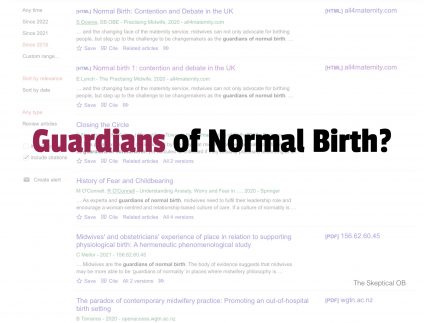
UK midwives love to claim they are the “guardians of normal birth.”

Type “guardians of normal birth” into Google and you get page after page of midwives declaring their commitment to a specific vision of birth.

I’m not sure why they boast because it’s actually an unwitting indictment of the moral rot at the heart of UK midwifery. It’s also the root cause of yet another midwifery scandal roiling the UK, this time as a result of the Ockenden Report.

It is fundamentally unethical for any health provider to pose as a guardian of a procedure. It would be wrong for a surgeon to pose as a guardian of appendectomy; it would call into question his or her ability to successfully and ethically treat abdominal pain when he had a clear bias toward removing appendices. It doesn’t matter that the surgeon believes appendectomy is always the appropriate treatment for abdominal pain, and we would quite rightly suspect that the surgeon has his own self-interest (the surgical fee, the opportunity to hone skills, the enjoyment of performing surgery) at heart.

Similarly, if a dermatologist claimed that she was a guardian of Botox, it would call into question her ability to recommend appropriate treatment for her patients. It doesn’t matter if the dermatologist believes that every patient could benefit from an injection of Botox. We would quite rightly suspect that the dermatologist had her own self-interest (her fee, gifts from the drug company, opportunity to serve as a paid consultant for Botox)at heart.

When a midwife claims to be a guardian of normal birth, it calls into question her ability to successfully and ethically care for pregnant women. It doesn’t matter if the midwife believes that normal birth is beneficial for nearly every women. We would quite rightly suspect that she had her own self-interest (her fee, professional autonomy, the enjoyment of assisting an unmedicated vaginal delivery) at heart.

Midwives’ commitment to unmedicated vaginal birth means that complications are more likely to be ignored or denied. Treatment options are rated by whether or not they are “promote normality,” not based on their likelihood of ensuring the health of mothers and babies. A particularly distasteful consequence of privileging unmedicated vaginal birth is the failure to investigate injuries and deaths. Instead of root cause analysis, midwives “guarding” normal birth may supress investigations and ban questioning.

UK midwives need to take a long hard look at the moral rot of a philosophy that privileges birth process over healthy mothers and healthy babies. Rather than patting themselves on the back for being guardians of normal birth, they should be ashamed to be caught out promoting a philosophy that places how a baby is born on an equal or greater footing than whether that baby lives or dies.

If you want to understand what went wrong with UK midwifery, read what midwives have written

Ideas have consequences.

Bad ideas about childbirth have deadly consequences.

If you want to understand what went wrong with UK midwifery, read what midwives have written and said:

1. Royal College of Midwives (2006):

“Louise Silverton, the RCM’s deputy general secretary, said it was the responsibility of midwives to encourage women to have a more natural birth.

“Epidurals provide effective pain relief but, where there is no clinical indication that they are necessary, they can significantly raise the likelihood of other interventions such as instrumental deliveries or Caesarean sections occurring,” she said.

“The United Kingdom already has an extremely high Caesarean rate and, as the acknowledged experts in normal pregnancy, labour and birth, we midwives need to debate ways in which we might help to bring this rate down.””

2. Royal College of Midwives 2007/2008:

“Care based on robust evidence probably has the highest profile it has ever had within midwifery. However, if policies, protocols, guidelines and pathways of care are too rigid and are unable to be applied flexibly, then there is a risk that midwives are unable to feel empowered to practice the art of midwifery. They need to use the intuition that experience and knowledge brings, to sense when a problem may or may not be occurring.”

3. Including the nonrational is sensible midwifery (2008)

“ We expose the limitations of pure rationality in the context of childbirth and use the concept of safety to exemplify the limitations that pure rationality imposes. The paper draws on philosophical and spiritual theory to present an analysis of ideas about mind, body, soul and spirit… This revised conceptualisation provides a theoretical basis that allows for and promotes more possibilities and thus more holistic ways of knowing in midwifery.”

4. Including the nonrational is sensible midwifery (2008):

“For example, when a woman and midwife have agreed to use expectant management of third stage, but bleeding begins unexpectedly, the expert midwife will respond with either or both rational and nonrational ways of thinking. Depending upon all the particularities of the situation the midwife may focus on supporting love between the woman and her baby; she may call the woman back to her body; and/or she may change to active management of third stage.”

5. Normal Childbirth: Evidence and Debate by Soo Downe (2008):

“The implication of the new subatomic physics was that certainty was replaced by probability, or the notion of tendencies rather than absolutes: ‘we can never predict an atomic event with certainty; we can only predict the likelihood of its happening’… This directly contradicts the mechanistic model we explored above, and it implies that a subject such as normal birth needs to be looked at as a whole rather than its parts…”

6. Promoting Normal Birth – Research, Reflections and Guidelines (2011)

“ You may have wondered, on first seeing this book, why the title includes the word ‘promoting.’ Why should normal birth be promoted particularly? The answer is simple. Other forms of birth — those involving plenty of interventions, especially cesareans — get plenty of promotion, simply because they may appear to be the easiest option for caregivers or the least frightening ones for pregnant women…”

7. Critical realism: an important theoretical perspective for midwifery research (2014)

“The methods utilised in these studies [of dystocia] have been randomised controlled trials … [which] promises certainty in addressing the condition, based as they are on a positivist epistemology (knowledge that is always true and generalisable) … However, the incidence of dystocia and its negative consequences for women continues to rise. If researchers had grasped the limitations of their research methods by critiquing their ontological and epistemological underpinning, they might have asked different questions about the aetiology of dystocia, researched different interventions to manage it and ultimately had a greater impact on women’s outcomes and experience.”

8. Royal College of Midwives (2015):

“This is part of the intent of the RCM Better Births Initiative, which has three themes, including: The promotion of normal births for majority of the women and normalisation for all women”

9. Cathy Warwick, Royal College of Midwives (2017):

“If women and babies are to be kept safe it is important that their birth, whether straightforward or complex, is kept as normal – or physiological or straightforward or optimal – as possible.”

10. Advocating for evidence in birth: Proving cause, effecting outcomes, and the case for ‘curers’ (2019):

“…[W]hat if evidentiary practice were expanded to include the non-rational? Stengers also has a category into which midwives who do not seek belonging via rationality might fall, a third category of ‘curers’ who ‘are not haunted by the idea of being able to disqualify others, but rather who have cultivated an “influencing practice”’ Such curers are not concerned with being rational … much less with proving (as a doctor-scientist is)…”

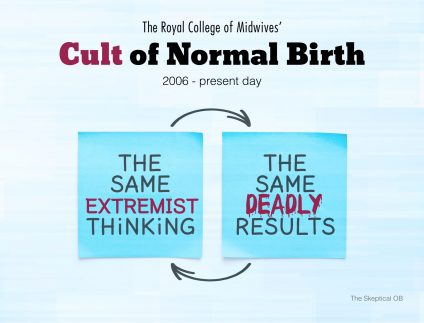
Over and over again the UK midwives trumpet the same extremist thinking and than are shocked to find that babies and mothers suffer the same deadly results.
It’s time to end — once and for all — midwifery allegiance to the cult of normal birth.

I reject both gender fundamentalism and gender anarchism

Transgender individuals make up less than 1% of the population but they’ve been inspiring a lot of fear and anger.

In my view that’s the result of inappropriately conflating gender and genotype.

Gender fundamentalists insist that genotype (chromosomes) and gender (identity) are ALWAYS the same. They believe that this justifies excluding both trans women and trans men from women only spaces. They adamantly oppose the inclusion of trans woman Lia Thomas from women’s sports and adamantly oppose the use of gender neutral language such as “birthing person.” They are often derided as TERFs (trans exclusionary radical feminists).

Gender fundamentalists are biological essentialists and they assert that respecting the gender identity of trans individuals is profoundly disrespectful of women.

Gender anarchists, on the other hand, insist that genotype is ALWAYS irrelevant; the ONLY thing that matters is gender identity. They believe that merely declaring that you are a woman is all that is necessary to merit inclusion in women only spaces. They imagine that inclusivity is the highest moral value and that the best way to adjudicate between competing desires of any two groups is to give priority to those who experience the most prejudice. They favor the replacement of “breastfeeding” with the inaccurate term “chestfeeding” and insist that “some women have penises.”

Gender anarchists ignore biology, believing that the destruction of biological categories will lead to a more enlightened future. They view anyone who opposes the destruction of biological categories as blighted by irredeemable prejudice.

Over the past year or so I’ve been trying to articulate a third, centrist view of gender and biology and the relationship between the two. The fact that I’m being pilloried by both the gender fundamentalists and the gender anarchists suggests that I am heading in the right direction.

The key tenets of gender centrism are these:

– Gender identity can differ from genotype.
– Gender identity is ALWAYS deserving of respect.
– Genotype STILL matters — and is often dispositive — when considering who should be included in women only spaces.

What does gender centrism mean in practice?

1. Individual respect – each person is entitled to the pronouns of his or her choice. When providing medical care to an individual, he or she is entitled to the use of their preferred terms, e.g. “chestfeeding.”

2. Genotypic males who have transitioned should be able to compete in sports as women, but ONLY against other genotypic men. Anything else will destroy women’s sports. Therefore Lia Thomas should never have been allowed to compete in women’s swimming.

3. Medical language should reflect genotype, NOT gender identity. There are no birthing persons; only women give birth. There are no “persons” with endometriosis; only women suffer from endometriosis.

Gender centrism is a nuanced position, especially as compared to gender fundamentalism and gender anarchism. The fear and anger swirling around issues of transgenderism are inimical to nuance. That’s why my position has angered so many on both sides of the issue. But that doesn’t make a nuanced position wrong.

Trans women are real women and trans men are real men; they merit respect. But genotypic women ALSO merit respect and that that often means genotypic-women only spaces and genotypic-women only language.

Gender identity is real but so is genotype. Gender centrism means that respecting gender identity does NOT necessitate ignoring genotype.

Explosive new report on the UK Campaign for Normal Birth

Earlier this month, Gill Walton, head of the Royal College of Midwives, apologized for the RCM ‘Campaign for Normal Birth’ that has harmed so many babies and mothers.

Why now, more than a decade after grieving families began complaining, billions of dollars after multiple payouts for dead and brain damaged victims, years after multiple reports put the blame squarely on the Campaign for Normal Birth?

Apparently because Walton was aware of a new report, one so damning as to be impossible to ignore. The findings of that report were just released and they are horrific, especially because the report summarizes the toll at only ONE insititution.

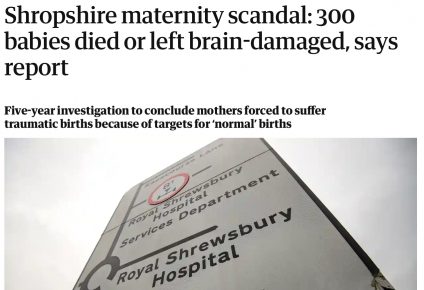
The title of the media report says it all:

Shropshire maternity scandal: 300 babies died or left brain-damaged, says report. Five-year investigation to conclude mothers forced to suffer traumatic births because of targets for ‘normal’ births.”

…[A] five-year investigation will conclude next week that mothers were denied caesarean sections and forced to suffer traumatic births due to an alleged preoccupation with hitting “normal” birth targets.

The inquiry, which analysed the experiences of 1,500 families at Shrewsbury and Telford hospital trust between 2000 and 2019, found that at least 12 mothers died while giving birth, and some families lost more than one child in separate incidents, the newspaper reported…

The Ockenden report is expected to reveal that hundreds of babies were stillborn, died shortly after birth or were left permanently brain-damaged while many had fractured skulls or broken bones, or were left with life-changing disabilities.

The deaths and injuries were only the beginning of the suffering. According to the report’s principle author midwife Donna Ockenden:

“There have been a number of occasions where families tried to be heard over many years and were silenced or ignored.

“We have seen families that have been split apart, families where relationships have been broken, cases of trauma and PTSD that have persisted for years after the event as well as terrible, terrible sadness.

“At times, after meeting families, I went back to my hotel room and I cried.”

Why did so many mothers and babies die at just ONE institution? As the local newspaper reported back in 2011:

Caesarean section birth rates in Shropshire were the lowest in England over the past 12 months, a new NHS report revealed today.

The study for 2010/11, published by the NHS Information Centre, reveals the Shrewsbury and Telford Hospital NHS Trust is bucking the national trend with a c-section rate of just 15.3 per cent…

Health chiefs at the Shrewsbury and Telford Hospital NHS Trust put the success down to having an environment which encourages natural childbirth and using a wide range of strategies to keep caesarean deliveries low.

That “success” was actually down to letting mothers and babies die and everything that has happened since has merely confirmed that hideous reality.

So here’s what I want to know:

When will radical midwifery theorists like midwives Soo Downe and Sheena Byrom and radical natural childbirth advocates like Milli Hill apologize for the death and destruction that they promoted long after the hideous death toll became widely known?

Is natural mothering a religion where “Nature” is God?

Natural mothering is a cultural pre-occupation of both the Right and the Left.

Consider the lifestyle of fundamentalist mothers: every moment of the day consumed with child and family care. From homebirth to homeschooling, from growing her own food to baking her own bread, from extended breastfeeding to rejection of conventional medical care, women are trapped in their own homes by a never ending series of labor intensive tasks. Above all, they are indoctrinated to ignore their own needs in favor of other family members.

Consider the lifestyle of a radical natural mothering advocate: every moment of the day consumed with child and family care. From homebirth to homeschooling, from growing her own food to baking her own bread, from extended breastfeeding to rejection of conventional medical care, women are trapped in their own homes by a never ending series of labor intensive tasks. Above all, they are indoctrinated to ignore their own needs in favor of other family members.

The only difference is that natural mothering advocates on the Right believe that moral authority is vested in God, whereas natural mothering advocates on the Left believe they moral authority is vested in “Nature”.

Is natural mothering a religion that merely replaces God with Nature?

Do women surrender personal agency in the same way they do in religious fundamentalism. Rather than “Let go. Let God.”, natural mothering advocates encourage each other to “Let go. Let Nature.”

I’m not the first person to notice the remarkable similarities, both superficial and deep.

Chris Bobel, in The Paradox of Natural Mothering, notes:

… [W]omen must willingly submit to biology’s shaping of their lives… [I]ts centrality in natural mothering undermines the mother’s claim of personal agency and free will as the impetus for her lifestyle. Natural mothering, it appears, is less a lifestyle fashioned by individual women making hard choices about the best way to parent than a chosen lifestyle represented in essentialist terms.

Furthermore:

Natural mothers … may actively choose to embrace the “nature is best” ideology, but once they become attached to this ideology – buying into it completely and without regret – they surrender their capacity to make choices and in some ways become passive objects. Put differently, the ideology begins to take on hegemonic proportions and transforms women into individuals who surrender their own agency in the interest of family.

What they initially describe to themselves and others as a “choice,” comes to seem like no choice:

…[N]atural mothers claim that they could certainly choose to parent like “everyone else” (i.e., like the majority of conventional, mainstream mothers), but at the same time they speak of choice, they speak of being guided by an intuitive, body-derived source of knowledge, one that is undeniable, one that they can never dispute or reject… Natural mothering is the only real choice.

They’ve surrendered their agency to a “higher power.” Whether the women are controlled by men or religion or some conception of nature, they are still controlled.

They live their lives according to a script:

…[C]onstructing a lifestyle on the basis of a body-derived feeling that can neither be explained nor denied is the action not of an agent, but of an individual who is dutifully following a script. In this case the script was written by biologically determinist and historically gendered ideas about women, mothers, and families.

That’s not reasoning or choice; it’s religion.