Category Archives: Uncategorized

An existential question for homebirth advocates

iStock_000024584695Small copy

More integral to homebirth than a birth pool, delayed cord clamping or a doula is the relentless boasting about it during and afterward.

So I have an existential question for homebirth advocates:

If you give birth in a forest, and there’s no one around to tweet it, video it, live blog it or create birth announcements that proclaim it happened outside the hospital, is it still a homebirth anyway?

Are you an easy mark for a quack?

12583668_s copy

Ever wonder how people fall for get rich quick scams?

I’m talking about the scams like emails that announce you have won a contest that you never entered, ads that claim you can earn $50,000 a month working from home, or expensive seminars that promise to make you a real estate magnate.

Who falls for those things?

It is understood that greedy people fall for these scams, but not most people who are greedy are also wary. The people who fall for these scams aren’t merely greedy; they want something for nothing. The rest of us understand that short of inheriting massive wealth, the only way to make large sums of money is to work for it. We are sadly aware that there is no such thing as “something for nothing.”

The perpetrators of get rich quick scams know that greedy people who want something for nothing are easy marks and tailor their approaches to appeal to people with that specific vulnerability.

Those who fall for science quackery are very similar. They too are greedy and want something for nothing. In their case, though, they aren’t looking for money. Victims of quackery are looking to boost fragile self esteem by claiming expert knowledge without doing the hard work of taking the courses, putting in the training time, and getting the degree. Professional quacks know that those who want to claim expert knowledge without education or training are easy marks and tailor their approaches to appeal to people with that specific vulnerability.

Those who would fight quackery would do well to understand this basic fact. A recent, apparently paradoxical study on anti-vaccination suggests that they don’t understand. The study, Effective Messages in Vaccine Promotion: A Randomized Trial, was published in the journal Pediatrics. The authors of the study started with the assumption that it is ignorance that leads to opposition to vaccines. Based on that assumption, they designed educational interventions:

A Web-based nationally representative 2-wave survey experiment was conducted with 1759 parents age 18 years and older residing in the United States who have children in their household age 17 years or younger (conducted June–July 2011). Parents were randomly assigned to receive 1 of 4 interventions: (1) information explaining the lack of evidence that MMR causes autism from the Centers for Disease Control and Prevention; (2) textual information about the dangers of the diseases prevented by MMR from the Vaccine Information Statement; (3) images of children who have diseases prevented by the MMR vaccine; (4) a dramatic narrative about an infant who almost died of measles from a Centers for Disease Control and Prevention fact sheet; or to a control group.

Much to the surprise of the authors, the attempts at education were completely ineffective at changing parental attitudes.

… Refuting claims of an MMR/autism link successfully reduced misperceptions that vaccines cause autism but nonetheless decreased intent to vaccinate among parents who had the least favorable vaccine attitudes. In addition, images of sick children increased expressed belief in a vaccine/autism link and a dramatic narrative about an infant in danger increased self-reported belief in serious vaccine side effects.

The authors were surprised because they assumed that being uninformed is what rendered parents vulnerable to anti-vax quackery. But most people lack the requisite education in immunology, virology and public health and they vaccinate their children anyway. Those most vulnerable to anti-vax quackery are a subset of the uneducated who are greedy to assert expert knowledge without education.

In other words, those most vulnerable to quackery aren’t the uneducated; they are the uneducated who wish to view themselves as educated without doing the work required.

That’s why educational messages are startlingly ineffective in combating vaccine quackery. Anti-vax is not about children and not about vaccines; it is about parents and how they wish to veiw themselves.

So how can you tell if you are an easy mark for a quack?

  • If you are anxious to view yourself as more educated than others without actually getting the requisite education, you are vulnerable.
  • Do you believe that you can “educate” yourself about medical topics without going to medical school, you are vulnerable.
  • If you believe that “researching” a topic means using Google, you are vulnerable.
  • If you believe that lay people can know more about medical topics than medical experts, you are vulnerable.

But the flip side is that if you understand you are vulnerable, you can take precautions to avoid being scammed. The first step is recognizing that flattery as an inappropriate component of medical information.

Doctors, scientists and public health officials do not sit around flattering each other about their knowledge. When someone tries to flatter you, you know you are in the presence of a quack, not a legitimate medical professional. Run in the opposite direction.

Six red flags you need to recognize to quack-proof yourself

three duckling isolated on white

Americans tend to be pretty savvy about advertising. Put a box around claims, annotate them with the words “paid advertisement” or “sponsored content” and most people approach those claims warily. Unfortunately, the same people who are dubious about advertising claims are remarkably gullible when it comes to quackery.

That’s the bad news. The good news is that it is surprisingly easy to tell quackery apart from real medical information. Quack claims are typically decorated with red flags … if you know what to look for. What follows is a list of some of those red flags.

1. The secret knowledge flag: When someone implies they are sharing secret medical knowledge with you, run in the opposite direction. There is no such thing as secret medical knowledge. In an age where there are literally thousands of competing medical journals, tremendous pressure on researchers to publish papers, and instantaneous dissemination of results on the Internet, nothing about medicine could possibly be secret.

2. The giant conspiracy flag: In the entire history of modern medicine, there has NEVER been a conspiracy to hide lifesaving information among professionals. Sure, an individual company may hide information in order to get a jump on competitors, or to deny harmful effects of their products, but there can never be a large conspiracy because every aspect of the healthcare industry is filled with competitors. Vast conspiracies, encompassing doctors, scientists and public health officials exist only in the minds of quacks.

3. The flattery flag: Quacks invariably try to flatter potential customers by implying that those customers are uncommonly smart, insightful and wary. They portray non-believers as “sheeple” who are content to accept authority figures rather than think for themselves. A real medical professional does not need to flatter you. He or she knows what is true and what isn’t and shares that information whether it makes you happy or is the last thing you want to hear. You can believe it or not.

4. The toxin flag: I’ve written before that toxins are the new evil humors. Toxins serve the same explanatory purpose as evil humours did in the Middle Ages. They are invisible, but all around us. They constantly threaten people, often people who unaware of their very existence. They are no longer viewed as evil in themselves, but it is axiomatic that they have be released into our environment by “evil” corporations. There’s just one problem. “Toxins” are a figment of the imagination, in the exact same way that evil humours and miasmas were figments of the imagination.

5. The “brilliant heretic” flag: The quack often has no training in the relevant discipline, be it obstetrics, immunology or cancer care? No problem. A pervasive theme in quackery is the notion of the brilliant heretic. Believers argue that science is transformed by brilliant heretics whose fabulous theories are initially rejected, but ultimately accepted as the new orthodoxy. The conceit rests on the notion that revolutionary scientific ideas are dreamed up by mavericks, but nothing could be further from the truth. Revolutionary scientific ideas are not dreamed up; they are the inevitable result of massive data collection. Galileo did not dream up the idea of a sun-centered solar system. He collected data with his new telescope, data never before available, and the sun-centered solar system was the only theory consistent with the data he had collected.

6. The “quantum” flag: Quacks love to baffle followers with bullshit, hence the invocation of esoteric scientific theories that they don’t understand. Quantum mechanics and chaos theory are two incredibly abstruse scientific disciplines, heavy on advanced math. If you don’t have a degree in either one, you aren’t qualified to pontificate on them. The same thing applies to new, imperfectly understood areas of science like epigenetics or the microbiome. Both are genuine scientific concepts, but we are in the earliest stages of elucidating them. There is real danger in insisting that they have current practical implications. We should learn from the terrible mistakes that were made when radiation was first discovered and and radioactive compounds were added to everything from water to make up under the false belief that radiation could prevent everything from aging to death.

There is a saying in science that “extraordinary claims require extraordinary evidence.” Quack claims are typically extraordinary, but quacks don’t offer evidence, they raise some or all of the six red flags in an attempt to trick you into buying what they are selling, and they are invariably selling something. When you see one of these red flags, you can be virtually certain that you are in the presence of quackery. Run, don’t walk, in the opposite direction.

Giving birth in the Netherlands: an expat’s story

iStock_000013346403XSmall

The readers of The Skeptical OB are the best, most interesting, most articulate folks on the web. Here’s a guest post from reader and frequent commentor Olga Mecking. Olga is a Polish woman living in the Netherlands with her German husband and three trilingual children. She is a translator, trainer in intercultural communication and writer. She blogs at The European Mama, a blog about her experiences of living and raising children abroad, culture, language and parenting.

For many reasons, the first time I was pregnant, I received care in three different countries, including my native Poland, Germany (where my daughter was ultimately born) and the Netherlands. My first child was born in Germany after a long and grueling 38 hours of labour.

When I got pregnant the second time, I was living in the Netherlands and received my pregnancy care from Dutch midwives. For reasons that made sense to me at that time, I wanted to have a homebirth and felt supported in this decision. I figured that the Netherlands are the perfect place for giving birth outside of the hospital. The idea is that birth isn’t an illness and doesn’t require a special doctor. OBGYNs work in hospitals, and only care for high-risk pregnancies. If a midwife finds out that something is wrong, she will transfer the woman to a doctor.

My second pregnancy went very smoothly, if I forget about the horrible heartburn. The midwives told me it’s normal and so I didn’t get any medicine because I was afraid I’ll hurt my unborn child. However, they did regular urine tests, 3 blood tests and as many ultrasounds.

Al the time, I was scared of having another hard birth. My first daughter weighted 3600 grams. It’s nothing out of the ordinary but for a petite woman like me, she was huge. I felt torn between my desire to have a peaceful, calm homebirth and having immediate access to a C section if it was necessary or I chose to have one. In the end, I went with the homebirth, but when my water broke one day after my due date, the midwife came to check on me and told me that I have to go to the hospital and will be cared for by a second-line midwife- one that works in the hospital and takes on more complicated cases. As we are expats, we didn’t have anyone to take care of our daughter during that birth and we took our big girl with us. No one batted an eyelash though, they gave her a bed and some toys.

My midwife brought us to the hospital and disappeared because she was not allowed to care for me anymore. The new midwife and her assistant monitored my daughter’s heartbeat. I wanted at least to have the freedom to move around and they agreed to insert an internal monitor that was attached to my baby’s head, and it didn’t restrict my movements. During transition, I asked for an epidural- I was in pain and didn’t know it was transition. The midwife said that she’ll get it and disappeared. She only came back after I called her in and told her I needed to push. It would have made a world of a difference if she told me that it’s going to be over soon. But my little girl was born without any problems just a few pushes later. Because there was meconium in the water, they kept us in the hospital for the night.

When we came home, we were visited by a special maternity nurse, called kraamverzorgster in Dutch. While I was skeptical of letting a stranger into my house for 8 hours a day for a whole week, she proved to be a huge help. She cleaned the floor, prepared my favourite tea, made our bed and took care of my big girl while I showered. But above all, she made sure that I and my baby were fine: took our temperatures, checked my uterus, and weighted and bathed the baby. She made sure that breastfeeding was going well. She also run errands for me. While there are many problems with maternity care in the Netherlands, this is where the Dutch really get it right. After 8 days I was on my own again, but felt that her support helped me adjust to the new reality with two children.

Between the time I had my second and my third child, many things changed. For example, with this last pregnancy, I was no longer offered urine tests as they would only do them when elevated blood pressure was present. This time I had my eyes set on a birth clinic that was located in another hospital.

I still had the blood tests and ultrasounds (the midwives do the ultrasounds but for the 20 weeks scan you have to go to a special ultrasound clinic). When I found out that the baby is a boy I was scared that he’ll be big. The midwife told me that I can have a baby of about 4 kilo. This did nothing to alleviate my fears I and wanted to discuss the possibility of an elective C section but they wouldn’t have any of it. The midwife told me there is no medical indication for the operation.

Frustrated by the lack of support, I contacted a doula. We wrote a birth plan and talked about my expectations for this birth. In the end I realized that I didn’t want a certain type of birth, I just wanted my baby to be healthy, and to be healthy myself. On my birth plan, I indicated that I may want to get pain relief but when I called the birth centre to ask what they would do if I wanted pain relief, I was warned than then the birth would become medicalized and I’d have to go to the hospital and they made it sound like that was the worst thing that could happen to me.

My contractions started 9 days before his due date. The day before, my doula gave me a massage and I think that it helped start labour. This time we had friends to take care of the girls while we were in the hospital.

I called everybody: my husband, the midwife and my doula. My husband and midwife arrived almost at the same time and then my water broke. Again, it was thick with meconium. Again, I got transferred to the hospital. I informed my doula of the change of plans and we met at the hospital where again, my midwife told me she had to attend another birth and left me. Luckily, the team I got this time was amazing: this time I had a very friendly OBGYN and equally friendly nurses.

This time, I didn’t want to breathe through contractions: I just wanted to be comfortable. Since I was already in the hospital, I asked for a pethidine shot (I was progressing very quickly and an epidural was out of the question). I got it without any problems. The pethidine took the edge off the contractions, allowing me to relax more. My son was born shortly after that. He swallowed some meconium and was blueish at the beginning but soon pinked up. We went home the same day (although we stayed for dinner at the hospital) and again had an amazing kraamzorg.

I am very lucky that my babies were born alive and healthy. The care I got here was much better than I would have had in my home country, Poland. But it leaves a lot to be desired: for example women’s wishes for pain relief may easily be overridden by her midwife because she can’t administer it (midwives now can give sterile water injections and gas and air, and second line midwives can administer the pethidine shot, but for an epidural, an OBGYN and an anesthesiologist are required). I had to fight a lot for my needs to be met and I wish I didn’t have to.

It’s nice to have a midwife care for you during pregnancy, but if something’s wrong, you need to get transferred to a hospital. This means that the moment you are scared and at your most vulnerable, you have to change care providers, which only adds to your stress.

The system seems to work really well for women who have no problems during pregnancies and expect to have a natural birth. It also works for high-risk women who are taken care of by specialists- for example after previous pregnancy loss. But I guess the most cases fall somewhere in the middle and I wish such women wouldn’t be so pressed to have a natural birth and instead, would be offered more choices.

A healthy baby is not all that matters? Who ever said it was?

iStock_000000320602XSmall

It’s getting ever more difficult for homebirth and natural childbirth advocates to defend safety claims. It’s pretty obvious that hospital birth is safer than homebirth and it’s pretty obvious that unmedicated childbirth is not safer, healthier or better in any way that childbirth with pain relief and interventions.

To camouflage their retreated on the safety issue, homebirth and natural childbirth advocates have conjured a straw man.

[perfectpullquote align=”right” bordertop=”false” cite=”” link=”” color=”” class=”” size=””]There is an entire medical specialty based on the assumption that there is more to childbirth than a healthy baby; it’s called obstetric anesthesia.[/perfectpullquote]

Milli Hill has been leading the charge in the UK. She thinks that she has discovered a deep, important, essential truth about childbirth:

… [A] healthy baby is not ALL that matters.

This article might push your buttons so before we go on I want to ask you to stay calm, grab a cuppa and keep your wig on. I need to be very very clear, because I know from experience that talking about this issue can cause an outcry. So please listen carefully. The following sentence is crucial:

When a woman gives birth, a healthy baby is absolutely completely and utterly the most important thing.

Got that? OK – do not adjust your wig, there’s more…

It is not ALL that matters.

Two things – just to repeat: a healthy baby is the most important thing, AND it is not all that matters.

Duh! Who ever said otherwise.

I own a lot of obstetrics textbooks, and I’ve read thousands of obstetrics papers, and never once have I seen anyone claim that so long as a baby is healthy it is acceptable to treat women shabbily.

Indeed, there is an entire medical specialty based on the assumption that there is more to childbirth than a healthy baby; it’s called obstetric anesthesia. A woman’s experience of pain is critical and attending to her desire for pain relief is a basic requirement for ethical obstetric care.

Oh, wait. According to natural childbirth and homebirth advocates, a woman’s experience of pain IS irrelevant. And that leads to some surprising “reasoning” on the part of proponents of “natural” birth.

Women matter too. When we tell women that a healthy baby is all that matters we often silence them. We say, or at least we very strongly imply, that their feelings do not matter, and that even though the birth may have left them feeling hurt, shocked or even violated, they should not complain because their baby is healthy and this is the only important thing.

Yes, when we tell women, as Grantly Dick-Read did, and as Lamaze and other natural childbirth organizations still do, that their pain is “good” pain, or “pain with a purpose,” we very strongly imply that their pain doesn’t matter. When we tell women as midwifery charlatan Ina May Gaskin claims that the excruciating pain of childbirth isn’t pain at all, just “surges,” we very strongly imply that how they experience childbirth is irrelevant. When we tell them, like quack Debra Pascali-Bonaro does that excruciating pain of childbirth isn’t merely a figment of their imagination, but is actually orgasmic, we very strongly imply not only that their pain is of no concern, but that they are gullible idiots to boot.

It is difficult for me to imagine a practice that more effectively silences women on their experience of childbirth than the entire natural childbirth movement.

According to Hill:

Too often women who say they care about the details of their baby’s birth day are accused of wanting an ‘experience’, as if it is selfish to care about how their baby is born, how they feel or how they are treated. But, as the saying goes, ‘when a baby is born, so is a mother’. If a mother feels broken, dispirited, depressed or traumatised, how will this affect her baby? Is this healthy?

That’s right. Too often women who choose pain relief in labor are made to feel as if they have failed. Too often women are told that if their baby did not transit their vagina, they haven’t really given birth. Too often women who choose C-sections to avoid the potential for vaginal tearing, future sexual difficulties or future incontinence are labeled “too posh to push.”

But Hill and her compatriots could care less about that.

Birth matters. To be respected, to be treated with dignity, to be in control of what happens to our bodies. To really feel the power of bringing a new life into the world – no matter whether in theatre or at home in a birth pool – why is it so wrong for women to want this?

It’s not wrong to want any of it, and no one, least of all obstetricians, ever said it was. What’s wrong is being willing to compromise safety to achieve it. What’s wrong is asserting without any evidence whatsoever that interventions and pain relief in labor hurt women and babies in an effort to chivvy women into opting for natural childbirth. What’s wrong is an entire group of medical professionals, midwives, promoting one form of birth, “normal birth,” above others.

How, pray tell, does discouraging epidurals promote women’s control over what happens to their bodies? How is a midwife delaying calling the anesthesiologist compatible with treating women with dignity? How does the relentless emphasis on unmedicated vaginal birth help women “to really feel the power of bringing a new life into the world – no matter whether in theatre or at home in a birth pool’? It doesn’t, of course.

Hill fails to see the irony when she insists:

What we do know is that many women DO care about what happens to them when they have their baby, but that they find it hard to talk about these feelings in a culture which persistently tells them that they really shouldn’t, and that what goes on in the delivery room is always acceptable as long as everyone survives.

The reality is that women DO care about what happens to them when they have a baby, but they find it hard to talk about these feeling in a natural childbirth culture which persistently tells them that what goes on in the delivery room is always acceptable as long as women refuse interventions, reject pain relief, and push their baby out their vagina.

Hill concludes:

A healthy baby is the most important thing, and it is not all that matters.

Respect, consent, choice, dignity – all that matters too.

If Hill and her compatriots really believe that they’d demand an end to promoting “normal birth.” They’d insist that a timely epidural is the right of every woman in labor. They’d favor giving every woman the option of a Cesarean by choice. And, as an added bonus, they’d stop the relentless campaigns to promote breastfeeding whether it is the right choice for the mother or not.

But that’s not what Hill and other natural childbirth advocates believe. They want respect for THEIR choices, not the choices of women who choose differently.

A healthy baby is not all that matters. Obstetricians have always recognized this. It’s time for natural childbirth and homebirth advocates to recognize that women’s experience of pain in childbirth matters. It’s time for them to recognize that sexual function after childbirth matters. It’s time for them to recognize that preventing incontinence matters.

It’s time for natural childbirth advocates to stop promoting “normal birth” and start promoting whatever women choose, whether they approve those choices or not.

When doctors refuse to supervise midwives, the answer is NOT to dispense with supervision

Time Out

Imagine that you’ve taken a job babysitting 7 year old twins. Each time you’ve babysat, they have been more difficult to supervise. They run riot through the house breaking things and then begging you to fix them before their parents get home. The final straw, though, was when you went to check on them playing quietly in their room and found that they set the bedding on fire with matches they retrieved from their night stand. After you put the fire out (the bedding is a total loss), the twins insist that they are allowed to play with matches.

You confront the parents when they get home; they acknowledge that yes, they did not have the heart to take the matches away from the twins because they really love fire. You announce that you are quitting the job and the parents confide that you are the 4th babysitter to quit in the last few months.

How would you feel if several days later you saw the parents alone at a movie theater and they cheerfully informed you that they left the twins home by themselves, because they begged to be left alone and promised to be good?

That’s exactly how many obstetricians feel when they learn of legislative attempts to dispense with physician supervision of midwives.

The latest effort is taking place in North Carolina:

North Carolina law has required for more than 30 years that certified nurse midwives — the only kind allowed to practice in the state — operate under the supervision of a licensed, practicing obstetrician.

The new law would require that midwives, “consult collaborate with or refer to other providers” if indicated by the health status of the patient. Certified nurse midwives would continue to be allowed to write prescriptions, now without the supervision of a doctor.

“This is huge for us,” said Jan Verhaeghe, a certified nurse-midwife with New Dawn Midwifery in Asheville. “To be considered independent providers, working as colleagues rather than one party having total liability. We may see many more nurse midwives moving to the area without these types of restrictions.

The impetus for the legislation is refusal of obstetricians to back up certified nurse midwives (CNMs) who attend homebirths. Although the newspaper article references a homebirth disaster attended by an uncredentialed “midwife,” the proximate cause is disasters at the hands of CNMs attending homebirths.

The problem erupted in May [2012] when Henry Dorn, MD, a High Point-based obstetrician, informed seven midwives he supervised that he could no longer serve as their licensed physician. Around the same time, another doctor supervising an eighth midwife told her that he could no longer afford the insurance costs.

Dorn’s action came in the wake of a homebirth death at the hands of one of the CNMs he was ostensibly supervising.

Since then CNMs who want to attend homebirths have found it exceedingly difficult to obtain obstetrician supervision. That’s entirely appropriate! No one wants to supervise anyone who is a danger to babies.

The situation is startlingly analogous to the twins who play with matches. The number of deaths at homebirth in North Carolina is astronomical, but the state is like the parents who won’t remove the matches. The only fail-safe has been the requirement for physician supervision, since midwives on their own refuse to recognize the danger.

The midwives insists that they will now bear responsibility for their own outcomes:

Advocates say the law eliminates undue restrictions on qualified practitioners, and “inappropriate liability” for physicians.

That’s as reassuring as the 7 year old twins who promise they will be careful with matches.

In case, the legislators in North Carolina have trouble imagining what happens when unsupervised midwives are responsible for a homebirth death, they can look to Michigan for reference.

Three years after their baby died following a botched breech delivery at an Okemos birthing center, a DeWitt couple has been awarded $5 million in a lawsuit against the midwife in charge of their son’s birth.

Ingham County Circuit Judge Clinton Canady has ordered former nurse midwife Clarice Winkler to pay Sara and Jarad Snyder damages for the death of their son, Magnus, in 2011.

However, it’s unlikely the Snyders will collect any money because Winkler did not carry malpractice insurance, said the couple’s attorney, Brian McKeen.

What happened to Magnus?

Sara went into labor on April 8, 2011. After nearly six hours of pushing, Magnus was born up to the chest, but his head was stuck.

For seven minutes, according to the lawsuit, Winkler attempted to pull Magnus from Sara’s body. He was eventually freed but was born blue and lifeless.

Greenhouse called paramedics four minutes later when their efforts to revive him failed.

Magnus spent 13 days in Sparrow Hospital’s neonatal intensive care unit before passing away from severe brain damage and organ failure.

The only time he opened his eyes, Sara said, was the moment before he died.

How did the midwives who presided over Magnus’ birth take responsibility for his death?

The Snyders originally sued Greenhouse Birth Center and three of the Greenhouse midwives who were present during Magnus’ birth — Winkler, nurse midwife Shelie Ross and a third midwife, Audra Post, who holds a non-nurse credential called certified professional midwife.

The midwives all filed for bankruptcy after the suit was filed.

In attempt to obtain some accountability, the Snyders filed a lawsuit against Winkler, the lead midwife. How did she respond?

She didn’t even bother to show up.

A baby died, and every single midwife involved washed her hands of the situation. Their concern extended only as far as protecting themselves and evading responsibility.

The conclusion is inescapable:

When midwives are so irresponsible and reckless with babies lives that obstetricians refuse to supervise them, only fools could imagine that the solution is to dispense with supervision. This is not a theoretical issue. The obstetricians’ refusal to supervise midwives is a direct consequence of babies who have died preventable deaths.

If this were healthcare, midwives would be drafting new and more stringent requirements both for supervision and to restrict homebirths.

But this is politics, so instead they are lobbying to free themselves of the last restriction on their irresponsible behavior.

The politicians are imagining the votes they might garner. The midwives are imagining the freedom from scrutiny they might obtain.

And no one but the obstetricians gives a damn about the babies who will die as a result.

What if formula killed as many babies as homebirth?

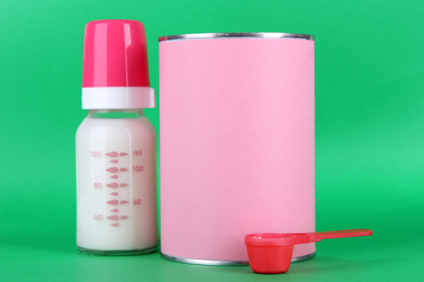
Powdered milk with baby bottle of milk on green background

Whenever homebirth advocates get around to acknowledging the increased death rate at homebirth, they invariably characterize it as “tiny.” They typically say things like: The risk of neonatal death in the hospital is tiny, so even if they homebirth death rate is several multiples higher, several times tiny is still tiny.

To put that “tiny” death rate in perspective, it might be useful to do a thought experiment: what if formula killed as many babies as homebirth?

I’ve chosen to use formula as an example, because homebirth advocates are almost always lactivists as well, fanatically in favor of breastfeeding and remarkably intolerant of women who choose to bottle feed. Indeed, they have pushed governments of first world countries like the US to spend millions of dollars on public health campaigns to convince women to breastfeed when there are only soft benefits (fewer colds) and most of those soft benefits aren’t even proven.

Can you imagine the field day they would have if they could actually point to deaths directly attributable to formula?

Let’s suppose that formula feeding had an excess death rate over breastfeeding similar to Oregon’s excess death rate at homebirth. I’ve chosen Oregon’s data because they are the most comprehensive statistics currently available. In Oregon, hospital birth for low risk women has a neonatal death rate of 0.6/1000 (“tiny”) and a neonatal death rate at homebirth with a licensed midwife of 5.6/1000 (9X “tiny”) for an excess death rate of 5/1000.

There are 4 million babies born in the US each year. It’s not a stretch to assume that 3 million receive formula at some point during their first year. A death rate of 5/1000 translates to 15,000/3,000,000. Spread over a year, that rate would lead to the death of 41 babies who died unexpectedly each and every day simply because their mothers chose bottle feeding over breastfeeding.

Homebirth advocates/lactivists would go nuts. They would push for even greater government spending on breastfeeding promotion and support. They would decry women who found bottle feeding more convenient and in better keeping with working outside the home. They would undoubtedly taunt mothers for literally risking their babies’ lives for no better reason than the mothers’ “experience.”

It would not end there, though. The FDA would be investigating formula manufacturers, pulling products from the market and funding research to make safer formula. There would be extensive evaluation to determine if some formulas were safer than others. If it were found that the excess death rate was due to improper manufacture or testing of formula, fines would be levied and formula executives might even go to jail. Factories that had the highest death rates would almost certainly be closed. Parents would be suing those formula manufacturers and they would be winning large judgments. In short, a “tiny” excess death rate would trigger a massive reaction, because such a death rate would be viewed as appalling and utterly unacceptable.

So here’s my question to homebirth advocates:

What would you think of mothers who chose formula feeding over breastfeeding, knowing that 41 babies would unexpectedly die each and every day for no other reason than their mothers’ refusal to breastfeed?

More importantly:

Why shouldn’t women who choose hospital birth think the same thing about you?

Aviva Romm and the quack attack on Glucola

Fetus copy

Aviva Romm is a quack.

She’s a certified professional midwife (CPM) and an herbalist, both quacks by definition. She got an MD (from Yale!!!) and completed a family practice residency, which apparently taught her a few things. No, it didn’t teach her to give up quackery. It merely taught her to avoid any situation where should could be held accountable for her quackery. Delivering babies was awesome when she planned to take no responsibility. Now that she has an MD, and carries malpractice insurance, it is suddenly too dangerous to do or to even back up.

Dr. Romm has helpfully provided us with an excellent example of the standard quack attack in her most recent post, Gestational Diabetes: Please Don’t Drink the Glucola Without Reading the Label.

All quack attacks rest on two foundational claims:

1. Don’t trust the people who are trained in the specific area under discussion, the people who went to school, undertook an internship and residency in obstetrics, and have provided obstetric care to thousands of women, and stand ready to accept responsibility for the advice that they offer; trust me (who did not do a residency in obstetrics, and chooses not to practice obstetrics, and intends to take no responsibility for her obstetric advice) instead.

2. Obstetricians aren’t simply ignorant, they are actively conspiring to harm your baby with chemicals … AND THEY ARE HIDING THEIR EVIL INTENT.

Sounds stupid, right, but Romm, like all quacks, bets on the stupidity and gullibility of her readers.

In addition, quacks are always selling something, in Romm’s case, her books, her courses, and her services separating the worried well from their money at a high end clinic that caters to the rich and charges exorbitant prices.

Consider the specific claims in Romm’s quack attack on Glucola, the test dose of sugar used in screening pregnant women for gestational diabetes.

I’m a midwife and MD who specializes in the health and wellness of pregnant mommas. While I’m one of the original crunchy mamas, I got the science thing down tight in my medical training at Yale, so I can keep you informed on what’s safe, what’s not, and what are the best alternatives.

Bullshit. She isn’t an obstetrician or an endocrinologist so she DOES NOT specialize in the health of pregnant women. She has no business giving obstetric or endocrinology advice. She went to medical school at Yale. Woop-de-doo! Did they teach anything about Glucola in medical school? I doubt it.

The medical community considers this “drink” harmless though it is well recognized that some women just can’t tolerate it due to digestive system side effects including nausea, vomiting, bloating, and diarrhea, as well as other adverse reactions including headache, dizziness, and fatigue.

But Romm thinks she knows better, despite lacking the requisite training. And Romm thinks she knows that … cue the creepy music … obstetricians are secretly trying to poison your baby!!

… [A]t least one of the glucose test drinks EasyDex, by Aero Med (note that ingredient lists from the test companies are notoriously hard to find online!) contains something called BVO, or brominated vegetable oil. BVO is also found in at least 10% of all soft drinks in the US, and is included to keep the favoring from floating to the top of the beverage.

According to the Center for Science in the Public Interest, “safety questions have been hanging over BVO since 1970, when the FDA removed BVO from its ‘Generally Recognized as Safe’ list of food ingredients.” At that time, the FDA granted BVO ‘interim status’ as a food additive which allowed its use in soft drinks, but it was and remains banned from European and Japanese soft drinks. BVO is patented in the U.S. and overseas as a flame retardant.

Classic quack attack characteristics: isolate one product and let it stand in for all products of that type, insinuate that the product is harmful, list the countries where it is banned (don’t say in what dose or why), imply that because it has other uses, it must be poisonous.

How about proof?

Don’t be foolish. Quacks don’t need any proof. Quacks quote lay people as if they were scientists and blogs as if they were scientific papers.

Vani Hari (aka The Food Babe), a food activist who is bringing fresh attention to the hazards of the chemical additives in our foods, brought the … issue to my attention when we were chatting at a conference. We both agreed that this toxin should not be given to pregnant women!

Romm uses another favored quack source, the product label. As she undoubtedly knows, doctors don’t read the product label to learn about a medication and you shouldn’t either. The product label has more to do with legal protection than with medical knowledge.

Can Aviva Romm point to anyone who has been harmed IN ANY WAY by Glucola? Of course not. Doctors who care for patients need actual data. Quacks just need insinuations.

All the central quack claims are here, rolled into one: don’t trust your doctor, your doctor is trying to poison your baby, read the product label (not the scientific literature), scary insinuations and no actual proof of ANYTHING.

Now that Aviva has filled the heads of her gullible minions with her conspiracy theory, she presses on with phase two of the quack attack: praise those who believe her bullshit as educated and empowered.

As women, many of us were taught to “be nice,” or “be seen and not heard.” As patients, this can translate into accepting tests, procedures, and treatments that we feel we don’t want or need, or that, in this case, might not be safe for us or our babies!

You certainly have the right to read the label on the glucose test drink you are offered before agreeing to the test!

You also have the right not to be screened for GDM, as well as to choose your preferred screening method…

Just what women need, encouragement to be arrogant in their ignorance.

But I have bad news for Romm’s minions, eager to believe that they are learning something that other women don’t know:

Aviva Romm is in the pocket of Big Placebo. Her income rests on tricking women into paying her for her useless (and often harmful) “wisdom,” instead of learning from the people who know the most about obstetrics. She is shilling for her products and her pocketbook.

And if you think she cares about what happens to your baby, I have a bridge for you to buy in Brooklyn.

Aviva Romm KNOWS that homebirth kills babies. That’s why she refused to discuss the MANA data; she KNOWS it shows that homebirth is dangerous. And that’s probably why she refuses to have anything to do with homebirth as a practicing physician. She no longer wants to be responsible for the death and injury that may result.

Romm should be ashamed of herself and her quackery, but she probably has no time; she’s busy making money from fooling unsuspecting women, and potentially harming their babies in the process.

“Because of you I decided to attempt my VBAC in a hospital and for that I am very grateful.”

iStock_000010123353XSmall

People often ask me why I blog about the risks of homebirth and other birth choices. This email from a reader, along with her baby’s story, is one of the many reasons why.

The baby’s mother wrote:

This is the birth story of my sweet baby boy…

Thank you for steering women to make the right choices. Because of you I decided to attempt my VBAC in a hospital and for that I am very grateful.

Here is her story:

This story starts off with the reason I had my first cesarean. With our daughter I suffered a ruptured brain aneurysm. In order for me to receive the medication to prevent me from having a stroke the doctors decided to perform a cesarean section at 34 weeks. I was under general anesthesia and my brain was swelling so I do not remember meeting her until she was two weeks old.

Fast forward to just before I became pregnant with S, I had to be cleared not only by my obstetrician but also my neurosurgeon. All was clear and I was given the doctor’s blessing to try for another child.

With this current pregnancy I sought to have a vaginal birth after cesarean (VBAC) because of the horrible experience I had with my daughter. I wanted to experience labor and be present for his birth. I narrowed it down to a hospital that performed VBAC and I had all of my prenatal care there.

I was considered the perfect candidate.

  1. I had waited 22 months in between pregnancies.
  2. I had double suturing on my old incision
  3. My cesarean was not due to a labor problem (stalling, not descending, etc)
  4. I was young, 25
  5. I was healthy, thin and active.

My pregnancy was uneventful. At my 40 week appointment I had the doctor strip my membranes and it sent me into labor. Overnight I kept cramping so I decided to go to the hospital. (I was told to go in early and I did). When I got there my contractions stopped. I thought to myself “Let’s just have this baby!”

I was checked and was dilated 2 cm, and then an hour later I was 3. They decided to admit me because I was attempting a VBAC. When I got to my room, I asked that the doctor break my water and after that I got the epidural. (I had pitocin at a level 4, then a 2 and the doctor decided to turn it off because I was progressing beautifully. I don’t know if this affected my rupture or not). An hour later I was checked at a 5, and an hour after that I was complete. A lot of people rushed into my room to prepare for delivery.

The doctors told me to push but I couldn’t. I was in such pain in my upper abdomen but no one seemed to notice. The anesthesiologist told me that not all epidurals get rid of the pain.
Meanwhile my baby was having rapid heart decels. They tried turning me on my side and placing an internal monitor. Immediately after placing the internal monitor, the attending physician checked me (residents did deliveries) and called a cesarean. I was also experiencing reverse dilation. My babies heart rate was in the 30s.

They wheeled my immediately into the operating room. The doctor started to cut me open before the sheet was even up and I was not anesthetized properly. Decision to incision was less than 5 minutes. All I remember was the doctor saying “uterine rupture”. My old incision opened up and my baby was in my abdomen.

I screamed as they pulled my baby out, it was very painful. My baby was not crying.

Baby S was born at 8lbs 7.7oz and 22 inches long.

By then the anesthesiologist gave me so much medicine that I couldn’t move or talk. I just lay there. I was in surgery for over an hour and a half, and the doctors were working to save my uterus. I had suffered a placental abruption as well as the uterine rupture. The doctors believe that because my uterus ruptured I had the placental abruption.

My baby was not breathing. Because he needed a complicated procedure that the hospital was not prepared for they took him to Texas Children’s Hospital.

I was in recovery experiencing shock from blood loss and I got transfusions. I was shaking for hours after the surgery. The worst was yet to come, and I had to go to postpartum alone while I heard other babies crying and I did not have mine. My husband was at Texas Children’s Hospital.

In the middle of the night the doctors at Texas Children’s called me for permission to do a blood transfusion for S. I agreed and just wanted to see my son. At the time I did not fully understand what was wrong with him. The hospital released me after just 2 days so I could go see him.

When I got to the S’s hospital the doctors there were asking for consent to perform surgery. They already had him “cooling” on a pad that dropped his temperature very low. My baby felt dead. He was not conscious. The surgery was for an ECMO machine, a last resort machine that is used for life support. They told me our son would die without it so we agreed.

He ended up on life support for 10 days until they felt he would survive on his own. Another week passed and we finally heard his first cry. We stayed at the Ronald McDonald house for most of the time but we also had another child to take care of so we didn’t get to see him every day. That was very hard on our family and week later he came home with us.

While at the hospital he had an MRI done and told us that he had brain damage but they don’t know how extensive it will be until he gets older. That is the hardest part, not knowing. Right now he is a healthy growing boy and we love him. He seems to not have any effects from his birth and is meeting his milestones on time.

I’m writing this to let all women know of the risks of VBAC, because uterine rupture does happen. It’s not talked about very much and it should. Women should be totally aware of the risks before they attempt a VBAC. Please attempt your VBAC in a hospital equipped to do immediate surgery like mine was. While I was aware of the risks, I didn’t think it could happen to me. I was wrong.

I’m so thankful to both hospitals and the doctors that provided me with such great care. I’m just lucky my baby survived.

Artisanal mothering

Artisanal

On Mother’s Day I wrote about my firm belief that love makes a mother, not birth choices.

But apparently, loving your child is no longer enough. Contemporary natural parenting aficionados appear to view their children as status symbols whose birth and feeding serve to proclaim the superiority of their mothers. Just as in certain circles artisanal food proclaims a superior hostess, in parenting circles specific parenting practices, natural childbirth, breastfeeding, family bed, etc. proclaim a superior mother. I think of these parenting practices as artisanal mothering.

What does artisanal mean? According to Dictionary.com:

pertaining to or noting a high-quality or distinctive product made in small quantities, usually by hand or using traditional methods

Traditional, and traditionally labor intensive processes are required to produce artisanal cheese or artisanal bread. The maker takes no shortcuts, and avoid all conveniences in producing artisanal products, and that supposedly makes for a superior product. Greater suffering = higher quality.

In the world of natural parenting, traditional and traditionally painful and inconvenient processes are required to produce artisanal children. The mother takes no shortcuts, and avoids all conveniences and that supposedly makes for superior children. Greater suffering = higher quality.

Personally, I blame Martha Stewart for the obsession with artisanal products. Don’t get me wrong; I love Martha. The foyer of my home is graced by a vase, stenciled over faux painted walls, above a hand made, decoratively shaped shelf. Martha showed me how to do it, told me I was capable, and sent me off to buy stencils, faux painting supplies and a jig saw. I’m proud of how it all came out and how many thousands of dollars I saved in the process. I suffered to produce the vase, painted walls and handmade shelf, but I don’t kid myself; it’s only cheaper than what a professional could have produced, not better. Professionals probably could have done a superior job.

Similarly, artisanal children may be cheaper to raise, and require a great deal more suffering on the part of the mother, but they are not a superior product. Natural childbirth can produce an agonized mother and a cheaper delivery, but not a better baby. Indeed there is considerable evidence that traditional methods of giving birth are more likely to produce a damaged child than hiring a professional. Breastfeeding may take an extraordinary effort and commitment on the part of the mother, and may be cheaper to provide, but it doesn’t make for a better baby. Indeed, in some settings, formula is actually better for babies. The family bed may more inconvenient for the parents and cheaper than a separate crib, but it does not provide a superior baby, either. In the world of mothering, there is no evidence of any kind that traditional methods involving a lot of physical suffering on the part of the mother produce a superior product.

Artisanal mothering (natural childbirth, breastfeeding, baby wearing, co-sleeping) emphasizes process over outcome. But in raising children, it is outcome (happy, healthy children) that matters, not process. Moreover, children should be viewed as ends in themselves, not as means for demonstrating maternal superiority.

Buying in to natural parenting is like buying artisanal cheese. If you like it, and it works for you, go for it! But don’t ever confuse what you like with what is best. Buying artisanal cheese does not mark you as a socially superior person, and buying into natural parenting does not mark you as a better mother.