Category Archives: Uncategorized

Why are lactivists flipping out over breastmilk contamination?

iStock_000012952225XSmall

When I first read about the new study that shows that breastmilk sold through unregulated arrangements has a high rate of contamination, I wondered how lactivists were going to handle the issue. Frankly, I thought they were going to ignore it, since it has nothing to do with breastfeeding one’s own baby.

But I was wrong. They freaked out and the freakout tells us quite a bit about lactivists and their fantastical thinking about breastmilk.

The study, Microbial Contamination of Human Milk Purchased Via the Internet, was published online yesterday by the journal Pediatrics. The authors found:

Most (74%) Internet milk samples were colonized with Gram-negative bacteria or had >104 colony-forming units/mL total aerobic count. They exhibited higher mean total aerobic, total Gram-negative, coliform, and Staphylococcus sp counts than milk bank samples. Growth of most species was positively associated with days in transit, and negatively associated with number of months since the milk was expressed, per simple linear regression. No samples were HIV type 1 RNA-positive; 21% of Internet samples were cytomegalovirus DNA-positive.

CONCLUSIONS: Human milk purchased via the Internet exhibited high overall bacterial growth and frequent contamination with pathogenic bacteria, reflecting poor collection, storage, or shipping practices…

Lactivists could have pointed out the obvious: any time you have an unregulated trade in bodily fluids (think blood, or donor sperm), you run a great risk that the fluid will be contaminated with infectious agents, may pick up bacterial contaminants, and will spoil when not frozen properly. When it happens with blood, we don’t flip out an insist that those who point it out are attempting to smear blood transfusions. When it happens with with donor sperm, we don’t flip out and condemn sperm donation. We simply implement regulations that require testing of the fluid and mandate proper freezing procedures.

So why didn’t lactivists point out the obvious? Why did they freak out instead? As far as I can tell, it’s because they can’t handle the thought that breastmilk isn’t magical.

The reaction of Allison Dixley, self-proclaimed Alpha Parent, is typical of the hysterical response:

The DFFs [Dumb Formula Feeders] are lapping it up. However the study is little more than a red herring. Sure, breast milk contains bacteria (news flash: it’s meant to!) Notice the story says “Some bacteria may not be harmful” and then goes on to say: “but salmonella is among germs that could pose a threat to infants”

To this, I reply:

http://www.ncbi.nlm.nih.gov/pubmed/18171262

Consider that formula is not designed to carry bacteria yet often carries a wide variety of potentially harmful ones.

Consider that formula contains none of the antibodies that help to counterbalance any iffy bacteria content.

Consider that formula is as prone to contamination (if not moreso through human error and longer preparation chain) as breast milk.

Consider also that mother to mother milk sharing (which this ‘study’ warns against) removes control from medical professionals (the very same medical professionals which carried out this study).

This story may be great DFF fodder, but it contributes little to improving the welfare of babies. The infant feeding hierarchy remains: direct breastfeeding from mom > pumped milk from mom > trusted wet nurse > pumped milk from trusted donor > formula.

Hey, Allison, you didn’t include “pumped milk from unknown donors being paid for it,” which is actually what we are talking about.

And Allison, you might want to go back and review your 4th grade math. When discussing the relative risk of bacterial contamination between breastmilk and formula, we must look at RATE. You remember: the number of incidents over the total number of events. Yes, powdered formula can get contaminated with harmful bacteria, too, but the rate of that happening is so low that when it does, a scientific paper is needed to alert people to it. In other words, it is quite rare. In contrast, this breastmilk study found a harmful virus contamination rate of 21%.

Why is Allison so furious? Apparently because it has been pointed out that breastmilk is not magical and is subject to the exact same concerns that apply to any bodily fluid.

Even some medical professionals manage to miss the point. Alison Stuebe, MD, MSc of the Academy of Breastfeeding Medicine reacts as if the truth that breastmilk is a body fluid like any other is some sort of plot to undermine breastfeeding.:

“Breast milk as bacterial brew” pushes lots of cultural buttons — from the “ick factor” to our reliance on mass-produced and marketed substitutes, rather than women, to nourish our children. Let’s stop pressing buttons, and start looking for solutions, so that more families can achieve their infant feeding goals.

Really?

Why are lactivists so quick to assume that pointing out the obvious about breastmilk is an attack on breastfeeding?

Partly it’s because lactivists view anything that doesn’t validate their belief that breastmilk is always superior as an attack on breastfeeding. But mainly, the hysteria comes from the threat to their own self-esteem. If breastmilk (even improperly stored, contaminated breastmilk) is just a bodily fluid subject to the same principles as other bodily fluids, it isn’t magical. I guess they worry that if it isn’t magical, the fact that breastfeeding isn’t the “superpower” they claim, and just another thing that some mothers do and other mothers don’t.

And that goes for the whole idea of milk sharing as well. It boggles my mind that any mother would give her child the unscreened, possibly contaminated bodily fluid of a stranger that she bought on the internet. The reality is that the benefits of breastmilk are trivial and hardly worth the risk. Indeed, there is no evidence of any kind that infants derive any benefit from the frozen breastmilk of strangers. Yet women have been so brainwashed by the fantastical claims of lactivists that they actually believe they are providing something valuable to their infants.

What’s the take away message from the Pediatrics study? The message is “don’t buy unregulated breastmilk over the internet.” That’s it. It has no implications for breastfeeding at all.

What’s the take away message from the lactivist hysteria over the study? The message is that these women cannot think rationally about breastmilk.
A healthy baby isn’t enough?

really - question in letterpress type

Natural childbirth and homebirth advocates go through memes like water. If one ridiculous meme doesn’t work (“obstetricians don’t follow the scientific evidence“), they just try another (“women think childbirth is painful because that’s the way it’s portrayed in the movies or on TV“).

The latest meme is “a healthy baby isn’t enough.” Consider recent pieces like these: A good birth experience is more than the baby being delivered alive, and Saying At ‘Least the Baby Was Born Healthy’ Isn’t Enough When It Comes to Birth.

The centerpiece of the “argument” is this:

But the fact that the mother and baby are still alive isn’t the only thing that matters. Certainly not in 2013, when birth is safer than it’s ever been: today, the risk that either you or your baby won’t make it is minute. So how come we’re still setting such a low bar for our ideas of whether childbirth was successful? And what damage is that doing to our children?

These questions are at the heart of a campaign launching today that calls for a rethink on what matters most in childbirth in the western world in the 21st century. Childbirth charity Birthrights is calling for a reappraisal of how we judge a successful birth: no longer should it be merely about physical health, but about psychological health as well…

I can see the point of the natural childbirth complainers. When birth is viewed as a piece of performance art where the mother is the star, the baby is irrelevant. When the baby is nothing more than a prop, who cares whether it makes it through the birth with all its brain cells intact? It’s certainly not compensation enough for being robbed of the chance to be an enact a romanticized view of the perfect birth.

Before we go any further, let me make one thing absolutely clear. I am not justifying or excusing anything less than respectful treatment of all women and informed consent for everyone. But the people most in need of greater respect and higher quality informed consent are not the privileged young, white, English speaking, relatively well off women who choose natural childbirth. The people most likely to be treated disrespectfully by the existing system are people of color, the poor, those for whom English is not their native language, the mentally handicapped and the elderly. If natural childbirth advocates really care about improving the treatment of patients, that’s where they’d start, not with their personal, trivial disappointments (“Ohmigod, ohmigod, the nurse bathed my baby outside my presence!”).

I’m going to go out on a limb here and suggest that this meme is going to be even less successful than the inane memes that proceeded it. Why? Because this meme exposes the ugly truth about natural childbirth: that’s it’s about process at the expense of outcome. In certain circles (Western, white, relatively well off women from first world countries), natural childbirth is a status symbol no different from a Prada handbag. It is something to wave about to boost fragile self esteem among ones peers.

Once you realize that, you can see exactly where these women are coming from. And you can anticipate exactly how they will react when their performance art is not appreciated or valued in the way that they value it. Criticize a woman for boasting about a Prada handbag, and odds are that she will retort that you are jealous. Criticize a woman for boasting about a natural childbirth and odds are that she, too, will retort that you are jealous. Both will have missed the point entirely.

The meme exposes another truth about natural childbirth advocates. They are implicitly acknowledging that modern obstetrics offers the safest possible birth and that they cannot compete on safety. Therefore, they’ve retreated to insisting that there is more to birth than safety. No doubt there are women who believe that, but they are few. Most women who might be attracted to natural childbirth’s promises that natural birth is a safer birth aren’t going to be impressed with the claim that a good birth experience is more important than safety. Indeed, they are likely to be horrified.

An implicit acknowledgement that modern obstetrics, with its monitoring and interventions, is safer does much to reduce the guilt of women who have a C-section or an epidural. If it’s safer to have a C-section, there’s no reason to feel guilty. If there is no safety advantage to refusing an epidural, there’s no reason to feel guilty about choosing an epidural.

In many ways, the meme that there’s more to childbirth than a healthy baby is an admission of failure on the part of natural childbirth advocates. They’ve given up the high ground of safety, and have settled on a poor defensive position of touting process over outcome. It is an acknowledgement of both of reality and of defeat.

Is The Alpha Parent a parody?

iStock_000026695642XSmall

I’m embarrassed to admit that it took this long for me to figure it out: The Alpha Parent is a parody!

You know, for a while there Allison Dixley had me going. But then I realized no one could really be that obnoxiously sanctimonious about something as trivial as breastfeeding or that exquisitely vicious toward women she claims she wants to support. She’s just satirizing militant lactivists by taking their tactics to absurdity.

Wait, what? What do you mean it’s not a parody? Surely you jest!

Do you mean to tell me that Dixley, who portrays herself in her logo with her breast being suckled and a halo on her head, is so insecure that she publicly pats herself on the head for a basic biological function she is fortunate to have no trouble accomplishing? Is she equally proud of herself for having a pancreas that makes it possible for her to regulate her blood sugar without supplemental insulin?

Are you saying that her cunningly honed viciousness accurately represents the way she feels? But that’s pathological!

You mean the woman spends hours creating text and artwork to deliberately wound other mothers? Remember when she wrote this?

Breastfeeding is like Marriage. You can’t cheat on it and expect it to work.

Do you mean she seriously views women who combo feed as cheating on their babies? Or more accurate, she hopes they view themselves as unfaithful?

Or how about when she depicted a bottle of formula in one of those emergency fire alarm boxes, with the caption “Break Glass in Emergency”? Does she really think formula is only appropriate in emergencies? Or is she simply trying to tear down women who use formula?

Consider today’s gem:

formula feeder excuses

I thought that she was just trying to illustrate the post I wrote earlier today, when I explained:

… Cognitive dissonance makes it impossible for lactivists to contemplate the high frequency of breastfeeding difficulties because, according to their way of thinking, breastfeeding is natural, therefore breastfeeding is good, therefore breastfeeding works perfectly. When confronted with women who have breastfeeding difficulties, lactivists face two choices. Either they can acknowledge that natural is not always best or they can pretend that women who are having problems with a natural function are doing it wrong or not trying hard enough.

I figured she was just trying to help me out by illustrating the absurd belief that there are no legitimate reasons for not breastfeeding. And now you’re telling me that she actually believes it?

Wow, I’m shocked. Apparently Dixley gets her jollies by mentally torturing mothers who make different choices than she does. Apparently her self esteem is so pathetically low that she can only feel good when tearing others down.

But then I guess she’s doing what comes naturally to her … being a jerk.

Everything I like is natural; everything I don’t like is a cultural construct

green natural and bio sign

If there is one thing that natural parenting advocates are sure about, it is that natural is always best. Evolution (or an intelligent designer, if you prefer) has created perfection and the key to happy, healthy children is wholeheartedly embracing that perfection.

Yet the definition of both natural and unnatural are both strangely elastic and there’s a reason for that. Natural no longer means “as occurs in nature”; it is a substitute for the word “good.” In other words, for natural parenting advocates, everything they like is “natural” whether it actually is or not; and everything they don’t like is “unnatural,” involves “chemicals” or is nothing more than a cultural construct.

I’ve written before about goofy unnatural practices that natural parenting advocates insist are natural. These include:

waterbirth
eating the placenta
lotus birth
tandem nursing

None of these practices are found among indigenous human populations, yet they are beloved of natural parenting advocates everywhere. They are not natural at all, they are cultural affectations of early 21st Century industrialized societies. The same thing applies to cranio-sacral therapy, herbal preparations, supplements and birth affirmations.

Conversely, labor pain, breastfeeding difficulties, and mother-infant separation are deemed cultural constructs, when, in fact, they are entirely natural. Natural parenting advocates are downright laughable in their insistence that labor pain is all in women’s heads, that breastfeeding rates are low because women aren’t “educated,” and that letting a baby cry himself to sleep causes brain damage.

The refusal of lactivists to take women’s breastfeeding difficulties seriously is a particularly egregious example of the tendency to ignore reality in favor of personal beliefs. It makes sense, though, once you realize that natural parenting advocates (and natural health advocates, too) have created a strictly dichotomized world where everything is either natural or unnatural, and where natural is always good and unnatural is always bad. Cognitive dissonance makes it impossible for lactivists to contemplate the high frequency of breastfeeding difficulties because, according to their way of thinking, breastfeeding is natural, therefore breastfeeding is good, therefore breastfeeding works perfectly. When confronted with women who have breastfeeding difficulties, lactivists face two choices. Either they can acknowledge that natural is not always best or they can pretend that women who are having problems with a natural function are doing it wrong or not trying hard enough.

This cognitive dissonance is particularly pronounced when considering childbirth. No matter how much evidence you present to natural childbirth advocates about historical and contemporary high rates of neonatal and maternal deaths, they insist that complications and bad outcomes are rare. Either they could acknowledge that natural is not always best, or they can pretend that complications are rare, or that doctors cause complications, or that there are no complications because everything is just a variation of normal. Clearly they’ve picked the latter strategy.

Natural parenting advocates, in creating an artificial dichotomy between nature and culture, fail to appreciate a central reality of human existence: for human beings, culture IS natural. In many ways, the ability to create and transmit culture is the defining feature of the human species. And not just one culture, but many different cultures whose characteristics can vary widely from group to group. Spoken language is both a natural biological function and a cultural construction with a myriad of variations. Written language has become a natural function over time, so natural that we can identify the specific area of the brain that is responsible for it. Yet the ability to create written language is a cultural achievement of the highest order. Moreover, no one has been complaining that reading and writing are unnatural even though they are undoubtedly cultural constructs.

The ultimate irony of natural parenting is that it is entirely cultural. It is a specific set of behaviors and beliefs chosen by Western, white women of first world countries as a means of creating an identity. It is neither especially natural or especially good; it is simply a matter of personal preference.

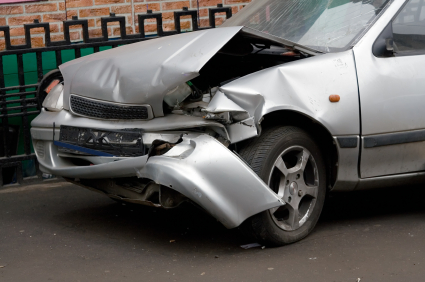
Unassisted brake repair. Supportive comments only. No scaremongering.

Wrecked Car 1

Unassisted brake repair. Supportive comments only. No scaremongering.

Sounds stupid, right?

What conclusions could we draw about an internet forum with that description?

  • The people who created the forum have no interest is hearing anything other than what they already believe.
  • The people who created and use the forum understand that the evidence against their choice is very persuasive, so they won’t allow anyone to present it.
  • The people who created and use the forum know that their choice is very dangerous and that the truth about it is scary.
  • The people who use the forum have doubts about their decision, so they are anxious for “support.”
  • The people who use the forum want to promote their choice and therefore have to suppress the truth about the dangers of their choice.
  • The people who created and use the forum lack the most basic knowledge about brakes and have convinced themselves that nothing can go wrong if they do it themselves.

Simply put, the people who created and use the forum know that their choice is dangerous and unsupported by evidence, but are looking for those who will cheer them on as they blithely risk their lives and those of anyone who drives with them.

The same thing applies to the choices of unassisted childbirth, homebirth and vaccine rejection. That’s why there are so many blogs, forums and message board that cannot manage to support the choices unless they suppress the truth.

So, for example, the Mothering.com forum I’m Not Vaccinating, has the following rule:

I’m Not Vaccinating … [is a] support-only [forum]. Posts to these forums should be out of sincere interest for the forum’s support topic and not to argue or debate, nor to criticize, make fun of, or make negative generalizations about others.

Anyone who violates the rules by posting accurate scientific information, will have the post removed. Repeatedly posting accurate scientific information may lead to a permanent ban.

Many homebirth and unassisted birth forums, message boards and blogs have similar rules.

Even the Midwives Alliance of North America (MANA) has a similar community policy, hastily put into place when it became apparently that not everyone was going to accept the lies that MANA feels are necessary to support homebirth midwifery:

Our goal in launching the blog and all of our online communications is to create a safe space for those who want to discuss evidence-based information about midwifery (and related topics)…

Safe from what? Safe from the truth, of course. More than most homebirth advocates, MANA is well aware that homebirth kills babies, and therefore has to hide their own data and lie about what the scientific actually shows, because homebirth with an American homebirth midwife (CPM) makes about as much sense as unassisted brake repair. It is dangerous; the scientific evidence shows that it is dangerous; and the people who promote and profit from it are uneducated, untrained fools.

There is one good thing to come from these policies: when you see such a policy, you can be sure that the choice being promoted by the forum or blog is both dangerous and scientifically indefensible.

The claim of being “educated” about childbirth is the surest sign of ignorance

Shouting with a megaphone

What does it mean to be educated in a particular discipline?

Whether that discipline is architecture, anthropology, or law, being educated generally means years of study, thousands of hours of experience, and intimate acquaintance with the specialist literature.

Medicine is like that, too. It involves four years of college, four years of medical school, 3-5 years of hands on training for 80+ hours per week, countless textbooks and intimate knowledge of the relevant medical literature. No layperson is educated in medicine. The idea is simply ludicrous. Therefore, when a layperson claims to be “educated” about a particular health topic, like childbirth, or vaccination, or autism, you can be virtually assured that a stream of absolute nonsense will follow.

When a lay person claims to be “educated” about childbirth, she certainly doesn’t mean that she went to medical school, has hands on training caring for pregnant women, or is familiar with the obstetric literature. So what does she mean? When a layperson proudly claims to be “educated” about childbirth she means that she has adopted a cultural construction of “education” that has little if anything to do with actual knowledge of the topic. It means that she has ignored those who have actual education and training and crowd sourced her decisions by reading books, blogs, websites and message boards written by other lay people who are often equally ignorant.

Why have natural childbirth advocates confused defiance for education?

‘Trusting blindly can be the biggest risk of all’: organised resistance to childhood vaccination in the UK (Hobson-West, Sociology of Health & Illness Vol. 29 No. 2 2007, pp. 198–215) explores cultural construction of being “educated.” As the title indicates, the authors focus on vaccine rejectionism, but the principles apply equally to natural childbirth advocacy, autism cures, and any other form of alternative health.

When advocates of vaccine rejection or natural childbirth claim to be “educated,” they are not talking about actual scientific knowledge. Indeed, the scientific data is generally ignored. The claim of being “educated” on vaccine rejection or childbirth simply stands for a refusal to agree with health professionals and refusal to trust them. Agreement with doctors is constructed as a negative and refusal to trust is constructed as a positive cultural attribute. As the authors of the paper explain:

Clear dichotomies are constructed between blind faith and active resistance and uncritical following and critical thinking. Non-vaccinators or those who question aspects of vaccination policy are not described in terms of class, gender, location or politics, but are ‘free thinkers’ who have escaped from the disempowerment that is seen to characterise vaccination…

This characterization of vaccine rejectionists or natural childbirth advocates can be unpacked even further; not surprisingly, vaccine rejectionists and natural childbirth advocates are portrayed as laudatory and other parents are denigrated.

… instead of good and bad parent categories being a function of compliance or non-compliance with vaccination advice … the good parent becomes one who spends the time to become informed and educated about vaccination…

… [vaccine rejectionists] construct trust in others as passive and the easy option. Rather than trust in experts, the alternative scenario is of a parent who becomes the expert themselves, through a difficult process of personal education and empowerment…

When a vaccine rejectionist or natural childbirth advocate claims to be “educated” on a topic they don’t mean that they have any education on the topic at all. They simply mean that they are defying authority. In their world, trusting experts is a mark of credulity, while ignoring expert advice is a sign of independent thinking and self-education. But, of course, since they don’t really know anything about the topic, they are inevitably forced to rely on the advice of propagandists, charlatans and quacks.

The person who proudly claims to be “educated” on vaccination offers as proof the fact that he ignores the expert advice of pediatricians, immunologists and virologists and embraces the teachings of … washed up Playboy Playmate Jennifer McCarthy. In their delusion, vaccine rejectionists fail to appreciate the irony. Far from being “educated,” they are unbelievably credulous.

The woman who claims to be “educated” about childbirth offers as proof the fact that she ignores the advice of obstetricians and pediatricians and embraces the teachings of … washed up talk show host Ricki Lake, or laypeople like Henci Goer or bloggers who’s only claim to “expertise” is that they have personally experienced childbirth a few times. And consistent with the Dunning-Kruger effect (described in the aptly named paper Unskilled and Unaware of It: How Difficulties in Recognizing One’s Own Incompetence Lead to Inflated Self-Assessments), the women who think they know the most, actually know the least.

If the goal of being “educated” isn’t acquiring knowledge, what is it? The ultimate goal is to become “empowered”:

Finally, the moral imperative to become informed is part of a broader shift, evident in the new public health, for which some kind of empowerment, personal responsibility and participation are expressed in highly positive terms.

So natural childbirth, is about the mother and how she would like to see herself, not about childbirth and not about babies. In the socially constructed world of natural childbirth and homebirth advocates, parents are divided into those (inferior) “sheeple” who are passive and blindly trust authority figures and (superior) rejectionists who are “educated” and “empowered” by taking “personal responsibility”.

A lay person’s claims to be “educated” about a health topic is really a claim of defiance. The person is proudly defying the recommendations of health experts with years of education and years of training in order to credulously accept the bizarre conspiracy theories of people who have little or no education and training in the relevant discipline. When a natural childbirth advocate claims to be “educated,” she means that she has thoroughly read and blindly accepted the propaganda of other people who are equally uneducated.

When someone tells you she is “educated” about childbirth, beware! There is no surer mark of ignorance on the topic than the proud claim of being “educated.”


Adapted from a piece that first appeared in August 2009.

Don’t blame yourself, blame your homebirth midwife

who is to blame question

Dear Katie,

You may have seen that I wrote about you and your daughter Natalie recently. I wrote about you and Natalie because she died due to the indefensible decisions of a homebirth midwife.

I see that have now entered the emotionally wrenching stage of determining why your daughter died when she easily could have been saved. You are now blaming yourself for Natalie’s death, reasoning that if you had shared certain information, she would still be alive today.

Then I think back to 2009 when I fell on the stairs and had the worst pain of my life. I never got it checked out because falls happen. It was pretty painful for a few months. So I look up vaginal birth with broken tailbone and read what others say. Some say their doctors recommend c-sections, others say they tried vaginal and it felt like it was being broken again…

But then I think, what if this IS the answer? I grew a perfectly wonderful person inside of me, researched about home birth and took baby classes and got prepared, but I failed to mention my broken tailbone. How could I be so irresponsible? I didn’t know that was going to be an issue, but I should have known. Why wasn’t that question asked to me? Would it have been asked or found out if I did a hospital birth?

The guilt is crushing:

Other mothers on here have reasons for their stillborns like it was an infection or something they couldn’t control with their placenta or the cord. Their problems were out of their control. My problem was in my control. I would have my daughter right now if I just thought of it…

I always thought that maybe finding out the reason would give me an understanding and some peace. But if this is the reason, I only feel more guilt and sadness because it could have been prevented.

But, Katie, a previously broken tailbone is NOT why Natalie died. She died because the evidence that she was experiencing significant distress was ignored. It was ignored by the very person whom you paid to pay attention, your homebirth midwife. You are right about one thing, though. Natalie did not have to die.

Why did she die? Let’s count the many reasons, direct and indirect:

You wrote in your original post on BabyCenter:

After 6 hours of pushing, not only was I in pain and tired but she hadn’t moved and there was meconium running down my leg which indicated that she was in stress…

1. You should NEVER, EVER, under any circumstances have pushed for 6 hours anywhere, but especially outside the hospital where there was no access to emergency care. Your homebirth midwife should have transferred you to the hospital after 2-3 hours of pushing, at the most.

2. Meconium running down your leg indicated the high likelihood that Natalie was severed stressed. Your homebirth midwife ignored that very obvious sign.

3. Your homebirth midwife was either stupid or a liar. You wrote back in March:

My midwife said that these “complications” can be foreseen way in advance and can be fixed as long as the signs are noticed.

That is a lie. If a healthcare provider doesn’t tell the truth, either because she is so uneducated that she doesn’t know it, or because she deliberately wants to keep the truth from you, you should run as fast as possible in another direction.

4. Homebirth midwives are grossly undereducated and undertrained. They aren’t real midwives; they are lay people pretending to be midwives and would not be eligible for licensure in any other first world country.

So the proximate reasons why Natalie died are because you hired an unqualified provider, who either didn’t know or didn’t tell you the truth about complications, and ignored the two major complications that you experienced (vastly prolonged pushing phase, and meconium).

There are indirect reasons, too.

5. The organization that represents homebirth midwives, the Midwives Alliance of North America, is hiding their own death rates. They KNOW that homebirth kills babies, but they are doing everything in their power to make sure that American women don’t find out. But the truth is coming out anyway. On the very thread where you are blaming yourself, two other women reveal that their babies died of preventable causes at homebirth.

6. Homebirth midwives and homebirth advocates LIE about what the scientific research actually shows. There has only been ONE scientific paper in the past two decades that look specifically at the death rates at the hands of homebirth midwives (Johnson and Daviss, 2005). Although the authors claimed that it showed that homebirth with a homebirth midwife is safe, it only looks that way because of a trick. The paper actually showed that homebirth with a homebirth midwife had a nearly 3X higher rate of death.

7. You weren’t told that the CDC statistics show that homebirth with a non-nurse midwife has a death rate anywhere from 3-7X higher than comparable risk hospital birth.

8. You weren’t told that in the states that have kept the best statistics, Colorado and Oregon, homebirth had a dramatically higher death rate. In the case of Oregon, homebirth with a homebirth midwife has a death rate 800% higher than comparable risk hospital birth.

9. You spent a lot of time on BabyCenter surrounded by ignorant homebirth advocates who didn’t know these things either. For the life of me, I can’t understand why women crowd-source a life or death decision like homebirth. The women on BabyCenter are just laypeople who have limited or no knowledge of what science actually shows about homebirth. Yes, I realize that they believe that they are knowledgeable, but they know so little that they have no idea that they are basically ignorant on the topic.

Ultimately, of course, it was your decision that led to Natalie’s death, but it had nothing to do with whether you remembered the possibility that you may have had a broken tailbone in the past. It was your decision to hire an incompetent provider, a lay person pretending to be a midwife, who ignored the signs that your daughter was dying before her eyes. But, in your defense, you probably had no idea that your provider was just a lay person pretending to be a midwife, that all the existing research shows that homebirth leads to preventable deaths, or that the organization that represents providers like yours is desperately hiding what they know about the increased death rate at homebirth.

Tragically, nothing can bring Natalie back. However, there may come a time when you find that keeping someone else from enduring the preventable death of their baby may give you some comfort. In that case, there are several things that you can do.

1. For support you may wish to join the private Facebook group of homebirth loss mothers. If so, you can email me or friend me on Facebook and I will connect you with the group.

2. You can speak out every chance you get about what happened to Natalie, and how homebirth leads to preventable deaths like Natalie’s.

3. You can lobby your state legislator to restrict the practice of homebirth midwives.

4. You (and your family and friends) can sign the petition to force MANA to release the death rates of the 27,000+ homebirths in their database. I suspect that you would have thought twice about homebirth if you had known just how high the death rate at homebirth really is.

I am so sorry about what happened to Natalie and to you. The fact that it didn’t have to happen just compounds the tragedy.

What’s going to happen to attachment parents when their children grow up?

Mature mother asks for forgiveness from daughter

Attachment parenting has evolved from a parenting philosophy to a parenting identity.

What do I mean by that? I mean that the specific parenting choices associated with attachment parenting — natural childbirth, extended breastfeeding, babywearing — have become the greater part of the identity of many women. Consider Allison of The Alpha Parent, Tracy of Evolutionary Parenting, January of Birth Without Fear and other women who blog incessantly about why their parenting choices are better than yours. They have constructed their identity not simply around their children, but around the specific choices they have made in raising their small children to school age.

When your identity revolves around parenting choices for babies and small children, what happens when those children grow up, and, inevitably, away from their mothers? In other words, what happens to an attachment mother when her children no longer want to be attached? I worry about those mothers and, even more, I worry about those children.

Of course, attachment mothers can stave off the day when their children no longer want to be attached by having more children, and by homeschooling the ones they have, but eventually even that has to end. What then?

The central task of parenting, and one of the most difficult aspects of it, is to teach children to be independent adults. That means gradually withdrawing to the background and letting your child negotiate daily life with friends, teachers, and coaches. It means letting your child solve his or her own problems, even if you think you could do it better and more expeditiously. It means letting your child accept the consequences of his or her actions, even if you could erase those consequences through your intervention. It means letting your child face emotional hurt and disappointment, even when it is incredibly painful for you as a parent to do so.

How are attachment mothers going to handle these transitions when they have convinced themselves that letting a baby cry herself to sleep will cause brain damage, or that a family bed is an appropriate place to welcome a child on a nightly basis. Will they let their children grow up? Will they let them become independent? Will they let them “detach?” And if they do, what becomes of these women who have defined themselves by their parenting choices? Will they have any identity at all when their children become independent or will they resent that independence and attempt to stifle it?

I don’t know the answers to these questions. We’re living in the midst of it right now, and most attachment mothers are years away from these milestones. We know that in the past many women experienced sadness and depression around the “empty nest” because their primary identity was “mother,” and although they are still mothers, there is no one present to actively mother. I suspect it is going to be much worse for attachment mothers, not because they have chosen attachment parenting as a way to raise children, but because they have chosen attachment parenting as a way to define themselves.

Who is an attachment mother when her children have “detached”? Can she let them detach? Or will we have raised a generation of children incapable of independent existence because their mothers are incapable of defining themselves except with reference to their children?

Lamaze promotes misinformation about C-sections; is it deliberate?

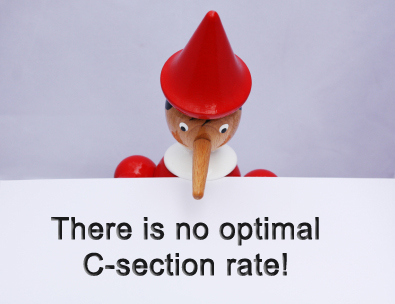
No optimal C-section rate

I realize that it is difficult to keep up with the obstetric literature, but I don’t think it is too much to ask that an organization that boasts about being evidence based should at least check to see that their recommendations are based on CURRENT evidence. There’s really no excuse for Lamaze International to promote an optimal C-section rate that has been withdrawn and discredited. That raises the question: is Lamaze promoting misinformation because they are so out of touch with what the scientific evidence shows, or are they promoting misinformation deliberately because they’d prefer misinformation that they like to accurate information that doesn’t serve their agenda?

I’m referring to the infographic promoted by Lamaze in today’s post on Science and Sensibility:

Lamaze Infographic highlighted small

I used the magnifying glass to highlight the untrue claim:

“DOUBLE what UNICEF and the World Health Organization recommend.”

There’s just one teensy, weensy problem; actually it’s a very big problem. The World Health Organization (which UNICEF relied on) WITHDREW that recommendation 4 years ago, acknowledging that there was NEVER any data to support it.

In Monitoring emergency obstetric care; a handbook, published in 2009, the WHO admitted:

Earlier editions of this handbook set a minimum (5%) and a maximum (15%) acceptable level for caesarean section. Although WHO has recommended since 1985 that the rate not exceed 10–15%, there is no empirical evidence for an optimum percentage or range of percentages …

Where did that “optimal range” come from. It appears that Marsden Wagner, MD, a former WHO official, simply made it up. Wagner essentially admitted that there was no evidence when he published a paper in 2007 that claimed to be the first time anyone had attempted to correlate international C-section rates with outcomes.

The bottom line is that Lamaze International is aggressively promoting misinformation. The only question is whether Lamaze touts misinformation out of ignorance or as a deliberate attempt to mislead women.

In either case, it highlights that Lamaze International, far from recommending evidenced based practices, either doesn’t keep up with the evidence or chooses to misrepresent it. If you can’t belive Lamaze on a basic issue like this, how can you possibly believe anything else they have to say?

“Reading your site made me feel more empowered than I had ever felt before.”

iStock_000015134173XSmall

Readers don’t see it, but I get a lot of email thanking me for helping women feel better about the choices they know are best for them. I suspect that this letter,  from a reader who prefers to remain anonymous, may resonate with a lot of women.

I had my son when I was 22, did not have many friends who also had children, and was fairly clueless as what I should expect when it came to birth and child care. I almost exclusively relied on BabyCenter as my go-to reference for all things baby related. I was certainly not prepared for the pain I would experience during birth (who is) as I had a failed epidural, partly related to a skin condition I have which makes me resistant to local anaesthetics.

After my son was born, I did not cry tears of joy, I did not count to make sure if he had 10 fingers and toes. I felt like I had been completely run over. He had meconium present when my water broken so he was not able to be placed on my chest. I stared across the room at him, thankful for it all to be over, but not really able to experience the joy of the moment.

I had planned on breastfeeding with no concern as to whether it would be an issue for me. It was an issue. I fed and fed and fed. I had lactation consultants that told me it was “normal” for him to feed for hours on end. I asked for him to be taken to the nursery so I could sleep, but I might as well have kept him in the room as he was always hungry. I refused to use formula. On my last day, I expressed frustration and one nurse of all the medical professionals I had encountered looked at me and said, “it can be horrible, and painful, and it’s not easy. I breastfed all my kids but don’t let anyone tell you it’s easy.”

When I got home it only took a day or so to figure out something wasn’t working. He cried constantly, and never seemed to be satisfied after eating. My husband convinced me to give him some formula and he ate a 2 oz bottle in under 5 minutes at only a few days old, which he promptly threw up. I cried because I didn’t recognize how hungry he was, I cried because I was defective.

I went to see hospital lactation consultants (free at the time) who were shocked that my breasts had no heft, produced nothing when squeezed, and were soft. They were actually very helpful and recognized that I had a legitimate issue. I was given the Medela supplemental nursing system and things were much better (other than trying to tape down a tiny tube to my nipples at 1 am while avoiding kinks and clogs.) I abandoned it after a week as my breasts had not changed, were never in pain, and when I tried pumping got literally 2 drops.

A friend had also given me “BabyWise” in the middle of all of this and told me it was her bible. I attempted to use it in some meaningful way but gave up on that too, as it felt too stiff but also contained stories of the horrors that would befall parents and children when hyper-scheduling wasn’t utilized. It was a confusing and contradictory time. There was always a part of me that felt I had cheated my son or had hurt our bond in some way.

Fast forward 6 years and I was pregnant with my daughter. Again, I frequented BabyCenter, and someone posted a link to, “The Business of Being Born.” I watched it and was shocked. How could this not be mainstream information? I became indignant about the “birth industry,” c-sections, and lack of information about breastfeeding. I began to feel even more awful about my son’s birth: receiving an epidural, not having him placed on my chest, sending him to the nursery, not breastfeeding for longer than 2 weeks. What had I done to him?! I considered forgoing an epidural altogether this time. I vowed I would MAKE BREASTFEEDING WORK!

All of this changed when I was told my daughter was breech and would require a C-section. I was terrified and sobbing, not only for the loss of autonomy in birth, but I had never had such a procedure and wasn’t certain how well my skin would heal considering my condition (classical Ehlers-danlos syndrome.) I expressed my fears to my OB and gave her the number of another physician to consult about performing surgery on my skin who is an expert on my condition.

I obsessively read on “Spinning Babies.” I laid ironing boards on my couch to the floor and laid upside down on them. I used flashlights and bags of frozen peas,ANYTHING to get her to flip. Someone really should have taken a picture, it was hilarious. At various times I came across women that would post the contact information of OB’s and midwives that delivered breech babies. They would tell other women, “if all else fails, you can contact these people and they will help you deliver!” while espousing the “variation of normal” theme.

At some point, and I can’t recall when or where, I stumbled on your site before my scheduled C-section. I immediately related to the stories of feelings of inadequacy that women feel surrounding their births. I also related to how those feelings were often taken advantage of to advance an agenda of, “natural is always better.” Women can talk all they want about birth being empowering, but reading your site made me feel more empowered than I had ever felt before regarding childbirth and breastfeeding.

When I went in for my C-Section, my OB had informed me she had done the phone consult and was going to be using a subcuticular stapler on me adding lots of extra stitching and tape. She had humbled herself to asking someone for a second opinion in an effort to provide me the best care possible and make me feel at ease.

During the procedure the doctors had music playing, everyone was chatting happily, the feeling in the room was amazingly positive and not chaotic at all. After my daughter was born I heard her cry and I just sobbed tears of joy. My husband held her for the first time and brought her over to me. I know it was a special moment for him.

I breastfed as soon as I could, but as the day progressed I noticed the familiar pattern of hunger I experienced with my son. Because of your site, I felt confident to ask a nurse for the SNS, although she said she’d have to speak with the lactation consultant first. This was a much harsher approach than when I had my son just 6 years prior. The LC came in and man-handled my breasts and told me everything looked great. I told her I would feed my daughter and call her back in 45 minutes. She showed up an hour and a half later (I had been feeding since she left the room.) I removed my daughter from my breast and she SCREAMED in hunger incessantly. I was promptly given the SNS.

I also gave my daughter to the nursery when I needed to sleep as my husband was home with our son. I had no qualms with her being fed formula. I actually combo fed for a whole month, and I was very proud of myself that I lasted that long! I did not experience in any way shape or form the type of guilt I had with my son’s birth. I owe a debt to you in helping relieve that burden for me and allowing me to examine the situation for what is truly was; being young, unprepared, impressionable, vulnerable. I consider myself a “skeptical” individual. I take most claims with a grain of salt, consider the sources, and try to think critically. But I still managed to (almost) fall down the rabbit hole of WOO. I’m actually really interested in cults and can now somewhat relate as to how one initially is attracted to them…

Anyway, this is extremely long winded … but I wanted to share my experiences and express my appreciation for the work you do.