Category Archives: Uncategorized

Another sanctimommy suffering from “sadness”

iStock_000018555533XSmall

The internet is filled with sanctimommies. You know the type:

The best part about sanctimommy is that she is always ready to share her wisdom with the rest of us. She doesn’t hesitate to point out the deficiencies of your parenting practices (in other words, how your parenting choices differ from hers). She doesn’t hesitate to make dire predictions about what the future holds for your children (“You give him a pacifier? You know he’s never going to be able to …”). She never hesitates to bemoan your lack of understanding of the key issues of childrearing, letting you know that you are not as “educated” as she is.

Apparently the chief occupational hazard of being a santimommy is feeling very, very, very sad:

My personal observation on the behavior of sanctimommies in their natural habitat is that they tend to suffer from overwhelmingly from ostentatious “sadness”. They are so “sad” for you that you don’t do everything their way. They are so “sad” for your children that you are not parenting the way they prescribe. They are just so “sad” that everyone in the world does not recognize their incredible superiority and their expert status on every aspect of parenting at every age.

I was reminded of this when I read the post I’m Sorry We Failed by Tracy G. Cassels on Evolutionary Parenting. What is evolutionary parenting? It’s a the paleo-fantasy version of parenting:

… The goal is to help parents be better parents for their babies by focusing on parenting as it has evolved for millions of years (not the drastic changes we have made to parenting in the last couple hundred years), for which human infants are adapted.

Because for millions of years human beings learned parenting by turning to the blitherings of sanctimommies on the internet.

And those sanctimommies are sooooooo sad.

To the mother who felt like a bystander during the birth of her child, I’m sorry. We failed to make sure you knew that this was your birth, not theirs …

Or:

To the mother whose baby was taken away after birth and kept in a hospital nursery, I’m sorry. We failed to make sure all hospitals have in-room boarding which is best for mother, baby, and family.

And:

To the parents who left their baby to cry to sleep because they wanted to teach their child to self-soothe, I’m sorry. We failed to make it better known doing this actually disrupts the process by which your baby learns to regulate emotions and that your little one is still highly stressed even when he or she is no longer crying.

But my personal favorite is this:

To the parents who brought out the baby training books and treated them as gospel, I’m sorry. We failed to make sure you felt confident enough in your own abilities as a parent that you had to turn to someone who has never met your child and never will, all while ignoring your own thoughts and beliefs.

Instead of reading parenting books, you should be following the advice of sanctimommy Tracy who has never met your child and never will, but feels perfectly justified in providing you with her parenting “insights” that you should treat as gospel.

Apparently Tracy doesn’t do irony.

I don’t know whether Tracy is sorry or not, but I do know this: she is definitely obnoxious, and like most santimommies, her advice has very little to do with children. It is mostly about her, and her need for validation by convincing others to mirror her parenting choices.

Childbirth Without Guilt

Pregnancy

I’ve finally gotten my act together to produce a book, entitled Childbirth Without Guilt. While it mentions homebirth, it is mainly about the feelings of guilt engendered by the natural childbirth, lactivist and attachment parenting movements. There is simply no reason why these movements should leave any woman feeling guilty.

The book’s publication is at least several months away, but as an adjunct, I’ve created a site by the same name with an innovative format.

I’ve always felt that you, my readers and commentor,s are an amazing resource and have wanted to find a way to showcase you. Childbirth Without Guilt is an innovative blog where YOU are the author, as well as a supportive community for women to discuss their feelings of guilt about epidurals, C-sections, bottle feeding and other choices that may work well for you and your family, but engender scorn from advocates of natural parenting.

You can submit your story about battling feelings of guilt or of overcoming them. After review, it will become a blog post complete with your byline (your real name or a screen name if you prefer). Others can offer advice and support in the comment section.

Stop feeling bad about your birth and start reaching out to others. You may be surprised to find that you are not alone.

I’d love your feedback (and participation!).

MANA response to AAP: homebirth advocates are morons and will believe anything we say

gullible

The Midwives Alliance of North America (MANA) has to say something. After all, the American Academy of Pediatrics has declared that they don’t meet the minimum standards for providing safe homebirth.

Fortunately for them, they think their own followers are morons, easily tricked by mistruths, half truths and outright lies. It’s been working for them so far.

MANA routinely bandies about the high US infant mortality rate, assuming (correctly) that clueless homebirth advocates have no idea that infant mortality is the wrong statistic. Perinatal mortality is the correct measure of obstetric care and that the US has one of the lowest rates in the world.

MANA routinely compares its members to midwives from other countries, assuming (correctly) that homebirth advocates aren’t smart enough to research and learn that homebirth midwives don’t meet the midwifery standards of ANY first world country.

MANA routinely fobs off the fact that it hasn’t published the death rates from the 27,000 homebirth in its own database, assuming (correctly) that homebirth advocates are so gullible that they will believe that the death rates are going to be published “next year.”

So when basically outed by the AAP as unsafe practitioners, MANA has doubled down on its policy of relying on what it presumes to be the stupidity of homebirth advocates.

As detailed on the Science and Sensibility blog post MANA Response to Recent AAP Home Birth Statement: High-quality out-of-hospital newborn and postpartum care is standard for midwives, MANA thinks it can fool homebirth advocates with this gem:

CPMs are knowledgeable, expert and independent midwifery practitioners who have met the standards for certification set by the North American Registry of Midwives (NARM). NARM is accredited by the National Commission for Certifying Agencies (NCCA) to issue the professional credential of Certified Professional Midwife, which is the same agency that accredits the American Midwifery Certification Board to issue the professional credentials of Certified-Nurse Midwife, and Certified Midwife.

Read it quickly and it sounds as though the NCCA has passed judgment on the CPM credential and found it adequate. But that’s not what it means, because the NCCA does not certify credentials; it certifies the EXAMS used to award those credentials.

According to their website:

The NCCA Standards are comprehensive and cover all aspects of the certification program(s), including administration, assessment development and recertification. NCCA standards are consistent with The Standards for Educational and Psychological Testing… (my emphasis)

So, for example, the NCCA certifies the EXAMS administered by the Crane Institute of America required to become a industrial crane operator. Specifically, the exams for:

Certified Crane Operator, Large Telescoping Boom Crane Over 75 Tons
Certified Crane Operator, Lattice Boom Carrier 1 to 350 tons and over 350 tons
Certified Crane Operator, Medium Telescoping Boom Crane 21 to 75 Tons
Certified Crane Operator, Small Telescoping Boom Crane under 21 tons
Qualified Rigger & Signalperson Certification

It does not determine whether certified crane operators are competent. It merely determines whether the EXAM is appropriate to evaluate the skills and knowledge deemed relevant by the credentialing organization.

Similarly, the NCCA does NOT determine whether CPMs are competent. It merely determines whether the EXAM is appropriate to evaluate the skills and knowledge deemed relevant by MANA and its sister organization NARM (North American Registry of Midwives).

Apparently the folks at MANA figure that if their supporters are so clueless that they can be fooled by the deliberate use of the wrong mortality statistic, so ignorant that they don’t know that CPMs don’t meet the same standards as European midwives, and so gullible that even after several years, they still believe that MANA is going to publish its death rates “next year,” they are stupid enough to believe that the NCCA, which certifies EXAMS, has certified the CPM.

So tell me, homebirth advocates, are you as ignorant and gullible as MANA believes you to be?

Lawsuit update 4: the Electronic Frontier Foundation and the Harvard Law School Digital Media Project file to submit an amicus brief in support of my claim

iStock_000006938226XSmall

In my last update, I reported:

… [The judge] questioned whether I am entitled to sue Gina for DMCA abuse and tortious interference with Bluehost over one DMCA notice.

It is unclear why the judge made no mention of the DMCA notices sent to my second host or the fact that Gina was soliciting others to file DMCA notices with the express purposes of pushing my site off the web. We will be reminding the judge of this in our response and expect that it will then be clear that I am entitled to sue Gina for what she did.

We submitted that reminder today and I am gratified to report that we are not the only ones who think that my case should proceed. The Electronic Frontier Foundation and the Digital Media Project of the Berkman Center for Internet & Society at Harvard Law School have submitted a motion for permission to file an amicus curiae (“friend of the court”) brief in support of my claim, asserting that “The Court’s ruling on this claim will have significance well beyond the parties in this case.” The amicus brief is attached to the motion.

Of note, the EFF is representing Stephanie Lenz in the leading DMCA case currently making its way through the courts, Lenz v. Universal Music Corp., 5:07-cv-03783 JF (N.D. Cal.).

As they explain:

On the facts alleged, it appears that this case involves exactly the kind of DMCA abuseSection 512(f) was meant to deter. This is not a case about the tone of debate in the parties’ blogs or about the merits of their respective views about childbirth. This is a case about defendant Crosley-Corcoran’s alleged use of the DMCA’s takedown procedure to silence a critic.

This is an important public policy issue:

… In the week of March 5, 2013, Google alone received over four million notices, a ten-fold increase over the previous year. Copyright Removal Requests, Google Transparency Report, https://www.google.com/transparencyreport/removals/copyright/. If even a small percentage of DMCA takedown notices are improper, then thousands of persons will have their lawful speech censored. Congress enacted Section 512(f) precisely to prevent such abuse and help compensate for the lack of prior judicial approval to protect the “end-users legitimate interests.”

They view the key argument as follows:

C. Dismissal of Section 512(f) claims based on fair uses at the pleading stage could open the floodgates to private censorship.

Dismissal of Tuteur’s claim, particularly at this stage, would send a dangerous signal to copyright owners and end users that copyright owners need not actually consider whether a given use is authorized by law before sending a takedown. As the Supreme Court has stated, fair use is a critical “First Amendment safeguard” that helps ensure “copyright’s limited monopolies [will remain] compatible with free speech principles.” Eldred v. Ashcroft, 537 U.S. 186, 219-20 (2003). Fair use is particularly important where, as here, an individual wants to respond to a critic. This is because writers—whether they wish to criticize, parody, or praise the work of another—need to quote the original to make their point effectively. See Campbell v. Acuff-Rose Music, Inc., 510 U.S. 569, 580 (1994).

If a copyright owner is not required to consider fair use when sending a DMCA takedown notice, the DMCA becomes an easy tool for censoring internet criticism: any person quoted by a critic could get the critic’s speech quickly removed from the Internet. For example, an author could cause the takedown of a negative book review simply on the basis of the quotation of a few words. Such a reading cannot be reconciled with either the text or the policy of Section 512,which was intended to facilitate the growth of the Internet as a platform for free speech.

You can find the reply brief that my lawyers submitted here:

https://dl.dropboxusercontent.com/u/27713670/Tuteur-20130501_Show_Cause_on_DMCA_violation_%26_jurisdiction_-_as_filed.pdf

The motion filed by the Electronic Frontier Foundation and the Digital Media Project of the Berkman Center for Internet & Society at Harvard Law School is here:

https://dl.dropboxusercontent.com/u/27713670/Tuteur-20130501_EFF%27s_Motion_for_Leave_to_file_Amicus_Brief.pdf

Addendum:

Gina’s response
https://dl.dropboxusercontent.com/u/27713670/Tuteur-20130501_Defendant%27s_Opposition_to_EFF%27s_Mtn_to_File_Amicus_Curiae_Brief.pdf

Judith Rooks speaks out on homebirth midwives (CPMs)

Rooks quote

Sara Snyder, of Safer Midwifery for Michigan, has produced an excellent series on the education of homebirth midwives around the world. Part 3 was published on Monday and is especially timely.

Sara invited Judith Rooks, CNM, MPH, who recently reported on the hideous death rates of licensed Oregon homebirth midwives, to share her thoughts about the CPM credential. Those thoughts are eye opening.

On the education of homebirth midwives (CPMs):

… the PEP [portfolio process] route to certification as a “professional” midwife isn’t deep enough educationally. The floor is too low, some of them are dangerous …

The PEP route to becoming a CPM seemed reasonable when it was started, but I thought it would only be used to provide an opportunity for very experienced OOH birth attendants, and that new educational programs along the lines of the Seattle Midwifery School—a direct-entry professional midwifery school based on the curriculum used in The Netherlands, would be started to provide educational opportunities for young women who wanted to start preparing themselves as midwives from scratch…

To my great disappointment, many young women who want to become midwives seem to think it is too much bother, time or money to complete an actual midwifery curriculum and think it is enough to just apprentice themselves to someone for a minimal number of births, study to pass a few tests, and become a CPM that way. (emphasis in the original)

On the licensing of CPMs:

… [M]any have inadequate knowledgeable, manual skills and clinical judgment. Some DEMs/CPMs say that it is the responsibility of a pregnant pregnant woman to choose her midwife wisely, but that is very hard to do.

I count on the state to not license inadequately trained health care providers. I can’t assess the skills of every professional I use. I would not hire an electrician to change the wiring in my house without someone knowledgeable exercising due diligence to assure me that the person I hire has achieved some minimal level of relevant education and prior experience (an apprenticeship). Attending lectures or reading some books isn’t enough…

On the credential itself:

The International educational standards should be the long term goal…

I thought the CPM would be short-term; we have lived with it now for a long time. The data from Oregon, shows that it’s not working. The CPM credential was a stop-gap measure from the next-to-the last decade of the 20th Century. We are now in the 2nd decade of the 21st Century.

Rooks gets to the heart of the matter:

The lingering questions then become why are the minimum standards so low, especially in comparison to counterparts around the world? Why is it acceptable for midwives to aim for the cheapest, quickest route instead of striving to be their best? Why are the “certifying” bodies (ie NARM/MANA) keeping the bar so low…as in only requiring a high school diploma as of 2012 instead of requiring a college level education to deliver our babies?

Why are the minimum standards so low? Because the CPM isn’t an academic credential; it’s a public relations ploy designed to falsely reassure women that CPMs meet the same international standards as midwives in the Netherlands, the UK, Canada, Australia and all other first world countries. It’s been an incredible success as a public relations ploy, but it is been a horrific failure by the measure that really counts: safety. CPMs have presided over so many preventable perinatal deaths that their own organization (MANA, the Midwives Alliance of North America) refuses to release their own death rates.

This has been known for a long time in both obstetrics and nurse-midwifery. Obstetricians have been speaking out about preventable deaths at homebirth for years; Ms. Rooks is to be commended for bravely doing the same.

AAP to homebirth advocates: don’t trust birth!

iStock_000016587333XSmall

The American Academy of Pediatrics has issued a policy statement on homebirth. It has been getting a lot of press, but most mainstream media sources seemed to have missed its true significance. NBCnews.com, Time, The Huffington Post and The Atlantic, among others, have highlighted the fact that the AAP issued guidelines at all, and haven’t noticed that most American homebirths fail to meet virtually all the guidelines. Rather than supporting homebirth as it currently exists, the AAP is actually condemning it.

The policy statement starts by stating the obvious: the homebirth is not as safe as hospital birth.

The American Academy of Pediatrics concurs with the recent statement of the American College of Obstetricians and Gynecologists affirming that hospitals and birthing centers are the safest settings for birth in the United States …

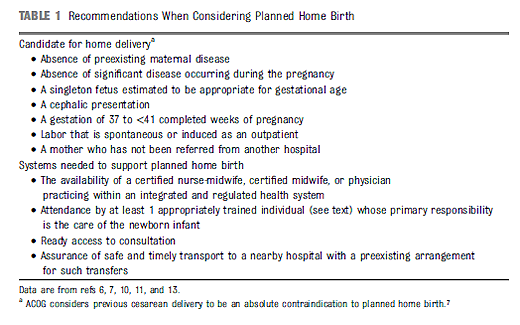
But for those women who would rather choose the less safe option, the AAP offers guidelines to minimized the increased risk, summarized in the following chart.

AAP contraindications to homebirth

They can be summarized as follows:

No homebirth midwives (only certified nurse midwives are safe practitioners.)
No twins.
No breech.
No VBAC.
No postdates.
No macrosomic babies.
No pregnancy complications of any kind.

Contrary to the prattling of homebirth midwives, NONE of those issues are variations of normal; ALL are complications.

Once all complications are excluded, there are still additional safety steps that should be taken:

The midwife must be practicing within the medical system.
A second midwife (or pediatrician) must be available to care for only the baby.
Physician backup.
A PRE-EXISTING arrangement with a hospital for transfer.

In other words:

Don’t undertake homebirth when there is ANY increased risk of complications. Don’t undertake homebirth without 2 midwives, integrated into the health care system, who have physician back up and a pre-existing transfer arrangement with a nearby hospital.

The AAP recognizes that childbirth is dangerous, complications are common, any risk factors mean that the mother is not an appropriate candidate, and systems must be in place for the additional complications that will inevitably occur.

The AAP guidelines can be summed up very simply:

Don’t trust birth!

Even leaving aside their inadequate education and training, American homebirth midwives (CPMs, LMs, DEMS and lay midwives) routinely violate every guideline set forth by the AAP. That’s why they are unsafe practitioners and why the CPM credential must be abolished.

Mainstream media sources seemed to have missed the central point of the AAP guidelines, homebirth as it is currently practiced in the US not merely less safe than the hospital, it is unsafe.

Another homebirth, another brain injured baby, but the midwife was awesome

image

How many times have we heard this story before?

Awesome homebirth midwife? Check.

I met the woman who was to become my midwife a week before I knew I was pregnant…

She brought so much joy to the pregnancy process and cheered us on in so many more areas of life. I had a great pregnancy and loved *almost* every minute…

Ignoring risk factors? Check.

But 42 weeks came and went, and though I was determined to let my LO come naturally … My midwife wasn’t concerned because I was a very low risk pregnancy, my water level was still great, and stress test results were just fine. Finally, on the eve of 42w+1 (or 42w+4 – I had 2 potential due dates), my waters broke …

Midwife with no idea until the moment of birth that the baby was in distress? Check.

My little boy wasn’t breathing. I held him as my midwife suctioned him, then laid him on the bed as she gave him breathes and started CPR. There was a heartbeat, but no breath…

High tech, extraordinarily expensive treatment to prevent further brain damage? Check.

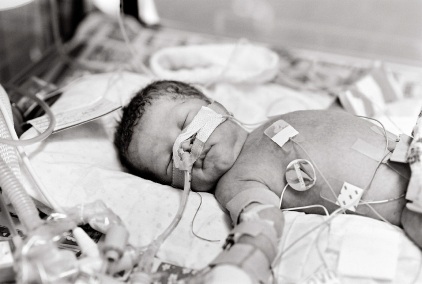
The doc said 1 in 1,000 births result in birth asphyxia for unknown reasons (and the lack of immediate availability of resuscitation devices is why she doesn’t recommend home birth – something to consider) and that earned him the diagnosis of HIE (hypoxic-ischemic encephalopathy). He underwent an incredible treatment that put him brain into a hypothermic state for 72 hours in effort to stop brain cell death (from the lack of oxygen). He had had some seizures, so he was placed on two meds, one of which made him essentially comatose to the extent that they had to intubate him to keep him breathing…

Permanent brain injury? Check.

… The EEG came back clear and the MRI showed slight brain damage in the motor sensory areas of the brain. The neurologist explained that she has [no] of way of predicting how/if the damage will affect him longterm…

The result:

With the EEG clear, they took him off the sedating seizure med and were able to extubate him. Since he took well to my milk (given through a tube), we began to breastfeed on day 5 in the NICU. It took some work, but he started feeding well, and by day 8 we were headed home!

Just another gentle, no intervention, inexpensive homebirth.

A history of homebirth in North Carolina, minus the dead babies, of course

Got ethics?

A big shout out to Kirsti Kreutzer, Anna Van Wagoner and Maria Radonicich of “Where’s My Midwife? “a grassroots organization seeking to increase access to midwives in hospitals, free-standing birth centers and at home through education and advocacy.”

It is people like them who make my job of exposing the ignorance, stupidity and heartlessness of homebirth advocates so much easier. They have helpfully written a history of homebirth in North Carolina that leaves out the many dead babies. Supposedly Van Wagoner “loves using creativity to explore birth issues.” You can’t get much more creative than pretending that homebirth in North Carolina is safe.

To illustrate what I mean, I offer an example from their “history, ” but with the dead babies (in bold) added back. This excerpt covers a period of less than 2 years:

February 2011

A Certified Professional Midwife is arrested and charged with practicing midwifery without a license, and with providing prenatal care in a second case.

A baby was left with major brain damage after a homebirth presided over by Amy Medwin, CPM, who subsequently pleaded guilty to the charges. This isn’t the first time Medwin was arrested. According to the Charlotte News and Observer, she was arrested in the wake of another poor homebirth outcome in 1998.

March 2011

The largest rally regarding midwifery issues that has ever taken place in the United States is at the North Carolina General Assembly, when 650 people come to demonstrate their support of licensing Certified Professional Midwives. At that time, NCFOM has two bills in limbo—both of which end up languishing in Health Committee in both chambers.

You might think that this would be an opportunity for soul searching in the North Carolina homebirth community, but you’d be wrong. The North Carolina Friends of Midwives viewed this as an opportunity to promote the interests of CPMs. No one knew whether the baby would live or die, but homebirth advocates “moved on” to the really important issue, the fate of the midwife.

To my knowledge, there was never any investigation of Medwin by any midwifery organization.

May 2011

Prior to the homebirth VBA2C (vaginal birth after 2 C-sections), the mother wrote:

… I told DH that we’d be having no more babies unless I was able to plan a homebirth for the next one. I’m full-term with baby #3 and hoping to have an awesome HBA2C story in the next month! No matter how the birth turns out, I appreciate having a care provider who understands that each pregnant mother is an individual who is capable of researching and making her own decisions about “HER” body and child…

The mother got “HER” homebirth, with al midwife:

The mother began labor spontaneously at 41 1/2 weeks, labored for 24 hours and apparently delivered vaginally the day before yesterday.. The baby was born not breathing. Subsequent evaluation revealed meconium aspiration and catastrophic brain damage due to lack of oxygen. The decision was made to take the baby off life support.

August 2011

The mother is a diabetic (not gestational) who labored at home and ultimately transferred to the hospital after pushing for many hours. The baby was born by C-section, asphyxiated and brain dead, as well as suffering from overwhelming group B strep sepsis. The baby was taken off life support the next day.

December 2011

Two deaths!

First:

The mother is a doula and had a waterbirth. The baby was a breech with a trapped head. The mother transferred to the hospital with the breech suspended from her vagina. By the time doctors could extricate the baby, she was dead.

Second:

According to the Charlotte Observer:

Just before 8 p.m. Dec. 16, police and paramedics were called to a home on Seamill Road, in a neighborhood near the Catawba River. They discovered the newborn unresponsive.

Charlotte-Mecklenburg police said it appeared complications had occurred after the baby’s mother participated in a water birth – a method of giving birth in a tub of warm water.

Paramedics performed CPR and then took the baby to Carolinas Medical Center, but the infant soon died.

Homicide detectives, who respond to all infant deaths, said they began investigating and determined that two women were in the home at the time of the birth. Police said they were practicing midwifery but did not have the proper license required by state law. Police arrested Mary Stewart Barhite, 43, of Charlotte, and Jacqueline Lynn Proffit, 45, of Indian Trail, on Friday. They are charged with practicing midwifery without a license – a misdemeanor.

This brings the confirmed homebirth death rate in North Carolina in 2011 to an extraordinary 12X times the expected death rate for comparable risk hospital birth.

February 2012

A direct-entry midwife and her doula are arrested and charged with practicing midwifery without a license. Charges are eventually dropped.

May 2012

I’m a police officer and just went to a call involving a family doing a home birth. There were complications so the family called 911. I was the first on scene and started doing compressions on the baby. EMS arrived a few minutes after and took over. I sat and watched, feeling helpless. I have a 9 month old at home and all I could think of was my little girl.

June 2012

A homebirth death occurred in Wilmington in late May/early June. It was the result of a shoulder dystocia at an attempted HBAC (homebirth after cearean).

July 2012

The baby boy died on July 23, 2012. The attendant was Rowan Bailey- a follower of The Matrona and Whapio Diane Bartlett, in Asheville NC. Bailey claims a holistic, non-interference approach, and she lived up to that reputation. She became annoyed at phone calls and doubts from family and the father.

After 4 days of labor, she finally admitted she did not know how to “get the baby out” at home. At the hospital they could not find the baby’s heartbeat. The stillborn baby was born that afternoon.

Summer 2012

A series of bad outcomes (dead babies) comes to the attention of the Midwifery Joint Committee (involving direct-entry midwife Rowan Bailey in July (mentioned above), and a Certified Professional Midwife and two Certified Nurse Midwives around the same time [additional deaths, not mentioned above]). A cease and desist order is filed against both Rowan and the Certified Professional Midwife.

During testimony by one of the Certified Nurse Midwives, she mentions that the obstetrician who signed her permit to practice is also providing supervision for approximately eleven other Certified Nurse Midwives serving families across the state. This obstetrician is called into a closed-door session before the Board of Medicine, immediately after which he notifies each of the eleven midwives that he will no longer serve as their supervising physician. [In the wake of finding himself responsible for the death at the hands of the midwife.]

This leaves hundreds of families planning legal, professionally assisted home births with no care and very few options. There are not enough practicing Certified Professional Midwives, whose numbers have been thinned by fear of arrest, to attend all of these births.

The MJC issues a temporary 75-day license to the Certified Nurse Midwives to cover the gap in physician supervision, but most are unable to find a doctor willing to buck the establishment [and take responsibility for the appalling number of deaths at the hand of homebirth midwives] and allow them legal status. Today, only four Certified Nurse Midwife home birth practices are left in the state.

During the time period in question, at least 8 babies died at the hands of North Carolina midwives and possibly 10 or more for a death rate than is more than 10 X higher than term hospital birth. To my knowledge, not a single one of the midwives involved in these deaths was ever investigated by any homebirth midwifery organization, either in North Carolina or nationally.

When I read alternative “histories” like this I am put in mind of a declaration by Professor Higgins in My Fair Lady:

What a heartless, wicked, brainless thing to do.

That’s why I’m grateful to to folks of “Where’s My Midwife?” I am constantly trying to highlight the lack of education, lack of training, hideous outcomes and the utter contempt for any concept of accountability on the part of homebirth midwives. They’re doing my job for me.

Now I have a question for them:

How can you be so heartless, wicked and brainless as to whitewash the unending procession of preventable deaths that occur at homebirth?

Inquiring minds want to know.

Homebirth and conspiracy theories

iStock_000001586404XSmall

Just last month an independent investigator released data on Oregon homebirth deaths. The death rate for planned homebirth with a direct-entry midwife in 2012 was more than 800% higher than term hospital birth.

This is cold, hard, in your face data; what are Oregon homebirth midwives and advocates doing about it? They are NOT attempting to improve standards for Oregon’s self-proclaimed “midwives.” Rather they are spinning conspiracy theories about the data and, worst of all, about Judith Rooks, the certified nurse midwife epidemiologist who presented them.

Coincidentally, I read an interview in Salon yesterday about conspiracy theories and it has a great deal of relevance for Oregon homebirth midwives and homebirth advocates. The article, aptly titled Why People Believe in Conspiracy Theories is an interview with Professor Stephan Lewandowsky, a cognitive scientist at the University of Western Australia, known for her work on climate denial. Just about everything he says in regards to climate denialists applies to Oregon homebirth midwives and their supporters.

First of all, why do people believe conspiracy theories?

There are number of factors, but probably one of the most important ones in this instance is that, paradoxically, it gives people a sense of control. People hate randomness, they dread the sort of random occurrences that can destroy their lives, so as a mechanism against that dread, it turns out that it’s much easier to believe in a conspiracy…

Homebirth advocacy give women a sense of control over pregnancy and childbirth. By pretending that “trusting” birth, eating right and having long prenatal appointments can prevent devastating complications, women feel a false sense of control over pregnancy outcomes.

Homebirth midwives and their supporters invoke a wide variety of conspiracy theories, including the purported conspiracy of obstetricians to ruin your birth experience, the purported conspiracy of doctors who fear a financial threat from homebirth midwives, and the conspiracy of organized medicine to ignore the safety of homebirth.

One aspect of conspiracy belief seemed particularly relevant to Oregon homebirth midwives and their supporters:

Another common trait is the need to constantly expand the conspiracy as new evidence comes to light. For instance, with the so-called Climategate scandal, there were something like nine different investigations, all of which have exonerated the scientists involved. But the response from the people who held this notion was to say that all of those investigations were a whitewash. So it started with the scientists being corrupt and now not only is it them, but it’s also all the major scientific organizations of the world that investigated them and the governments of the U.S. and the U.K., etc., etc…

Hence the need to add Judith Rooks to the conspiracy. Do the hideous death rates show that homebirth with an Oregon homebirth midwife is dangerous. Of course they do, unless you are a conspiracy theorist. Homebirth conspiracy theorists can ignore the data right in front of them by insisting that Judith Rooks is part of the conspiracy, too.

Everyone is prone to some degree of bias and motivated reasoning — where do you draw the line, if there is one?

The crucial difference between having a preconceived notion — we all do that, of course — and conspiratorial thinking is when you get into that self-sealing reasoning and ignore every piece of evidence that is pointing the other way, when you’re starting to broaden the circle of conspirators …

The evidence doesn’t matter to homebirth midwives and their supporters, because they can blithely ignore any evidence that they don’t like. From mind bogglingly stupid pronouncements like that of author and advocate Jennifer Margulis: “Oregon has some of the safest best homebirth stats in the country IF YOU DON’T COUNT PORTLAND…” to the ugly insinuations that Judith Rooks is part of the conspiracy, homebirth advocates reach for their conspiracy theories to justify their refusal to look at the evidence.

There’s nothing we can do about the conspiracy theorists, but we can educate the public to the fact that homebirth advocates are deliberately ignoring the scientific evidence.

And we can point to something else: We can point out that Oregon homebirth midwives KNOW that the data is hideous. That’s why they refused to release the MANA statistics for Oregon, and that’s why they are not publicly announcing a major investigation into the data. The leadership of Oregon homebirth midwives, including Melissa Cheyney and Silke Anderson, are engaged in an ongoing effort to hide the truth about Oregon homebirth. Dead babies are just collateral damage in their effort to support lay birth junkies in pretending they are “midwives.” People who are unafraid of the truth launch investigations; people who are afraid of the truth launch conspiracy theories, instead.

Even an insurance executive can be hoodwinked by homebirth midwives

iStock_000019416516XSmall

I’ve written a great deal about the way that homebirth midwives trick lay people into believing that they are exactly the same as midwives in the rest of the world. They’re so good at confusing people that an insurance executive was hoodwinked to the extent that he posted a paean to birth at a birth center on a health economics website without ever realizing that the birth center was unaccredited, the midwives weren’t real midwives, and they were essentially having a homebirth in someone else’s house.

David Overton wrote A Tale of Two Births for The Health Care Blog. It is a typical rhapsody on the joys of a non-medical (second) birth as compared to the medical annoyances of a previous (first) birth:

I have two sons, both healthy happy boys, both brought into this world in very different ways. I work in healthcare and like many readers of THCB, the business of healthcare is often viewed through the business lens. When we become the healthcare consumer, and are knee deep in the conundrum that is our healthcare system, the perspective changes dramatically.

Overton and his wife had planned a natural birth for their first child, but they were getting their care through the military and had to put up with evil medical interventions like a postdates induction:

The induction was the beginning of the end of my wife’s “natural” experience. The induction led to administration of Fentanyl, which led to an epidural, which led to Oxytocin, which led to contractions so powerful they resulted in fourth degree perineal tears and ultimately the arrival of Ezra…

Of course everything was so much better for baby number 2 born in a “birth center”:

By now, we were out of the military and my wife welcomed the idea of having her real “granola birth” experience. We went out of our network insurance to use a birthing center that was staffed by Licensed Midwives. We paid $4,000 out of pocket because our insurance would not cover due to “liability concerns”. Given that I work for the company that is also the insurer (yes, I work for an insurer), I was able to discover how much a delivery would cost at a hospital in our market; $7,500.

Each visit with the midwife lasted between 45 minutes and an hour. The assessments were very thorough, our questions were answered, and Ezra accompanied us on the visits. We were introduced to a new world of naturopathic healing (this was new to me) for headaches, backaches, and sleeplessness. We had options where we wanted to have the delivery, at home, the birth center, in a warm tub. Birthing positions and techniques were reviewed (on your back with feet in the air was not on the list of suggestions). We were given choices of what vaccinations we wanted, literature was shared on what research has shown on the risk of exposure to group B strep, and we made the decision on how we wanted to proceed. Only two ultrasounds were done, 6 weeks and 24 weeks cutting down on utilization. Emergency procedures were reviewed in case something went wrong, the on call physician would be notified or we would go to the emergency room.

Cue the “uneducated” friends:

40 weeks approached and my wife became concerned, friends and co-workers admonished her for putting her baby at risk. “It’s dangerous” they would say, “this is not good for your baby”. The midwife was never concerned, “your baby will come when he is ready”. We went to 42 weeks before Silas arrived…

The birth was everything they had wanted:

My wife labored for 4 hours with the gentle guidance of the midwife and no medications. She stood up, she lay down, she lay on her side, she walked around, and she was never tied to an IV, nor confined to a bed or birth monitor. At 4:00 am a bathtub was filled with warm water which eased the intensity of the contractions and at 4:30, Silas was born. We had previously decided that the newborn screening and Erythromycin eye ointment were all we wanted him exposed to, vaccinations could wait. By 10:00 am, we were home with the second addition to our family.

What did Overton learn from this experience:

Our healthcare system is broken but it is our own behavior as providers, payers, and consumers that have allowed it to happen. Why would any provider want to induce a mother at or prior to 36 weeks? Who decided elective Cesareans were a good idea? Since when did uncomplicated child birth have to take place in the hospital? Why don’t payers reimburse care that is delivered by mid-levels in a safe environment at a lower cost? I don’t claim to have the answers to these problems, but I do know that until we change our own behavior, we will continue to see the same results.

There’s just one teensy, weensy problem. Overton is clueless that his wife was not receiving care delivered by mid-levels in a safe environment. His wife received care from a lay person with a made up credential, not a midwife; it was not a safe environment because it was simply someone else’s house not an accredited birth center and because homebirth midwives have hideous death rates; and it costs less because it always costs less when you dispense with educated providers and life saving equipment.

Overton and his wife, both nurses, apparently had no clue that this is what they had chosen.

After a great deal of back and forth between Overton and myself in the comments section, he had this to say:

I have enjoyed the commentary on our choice to use a midwife. I am not impervious to fact and it has given me a lot to think about. With that in mind, I will concede to the assertion that it might not have been the safest choice. Touche! We chose to see a midwife because we chose NOT to experience what happened with our first son. Right or wrong from a scientific point of view, it was what was right for our family.

There’s nothing right or wrong with their choice to use a pretend “midwife” and have a homebirth at someone else’s house if that is truly what Overton and his wife were choosing. The problem is that two nurses, one of whom works for a health insurer, had literally no idea they were choosing a second, inferior class of midwife that wouldn’t be considered qualified in any other first world country; they had no idea that they weren’t in a real (accredited) birth center; and they had no idea that in the event of a life threatening emergency, their baby may well have died.

The ultimate irony of the piece is that in attempting to “educate” the rest of us, Overton got a lesson in how truly uneducated he was about homebirth midwifery. If he can be hoodwinked by homebirth midwives, anyone can.