Midwife Sheena Byrom proverbially shits all over a loss parent

sheena byrom silence copy

UK midwives have no shame.

First their negligence kills a man’s son. Then they proverbially shit all over him when he seeks to hold them accountable.

[pullquote align=”right” color=”#dc4c2a”]What’s compassionate about insinuating that a loss father is a liar, Sheena?[/pullquote]

What is wrong with the NHS that they allow patients to be publicly treated with the utmost contempt?

What is wrong with Sheila Byrom, a midwifery “leader” no less, that she is now publicly questioning the truth of James Titcombe’s book about his late son Joshua?

In a remarkable testament to the veracity of James’ new book Joshua’s Story, detailing the preventable death of his newborn son and the subsequent cover up, Jeremy Hunt, the UK Secretary of Health, publicly promoted it on Twitter.

Byrom retweet

In response, one woman accused James of making it up:

no doubt sensationalized out of all recognition of the truth to suit

That’s not surprising. Twitter is full of heartless trolls whose idea of a good time is calling other people liars.

What’s surprising is that midwifery leader Sheila Byrom retweeted the hateful words and “liked” it to boot. She was joined by her daughter Anna Byrom, also a midwife.

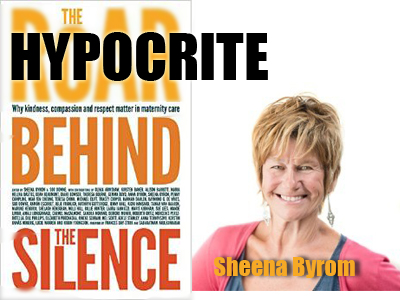
Ironically, Byrom is the author of the book The Roar Behind the Silence: Why kindness, compassion and respect matter in maternity care.

What’s compassionate about insinuating that a loss father is a liar, Sheena?

This is not the first time that Sheena Byrom has publicly treated Titcombe with contempt as he tries to prevent others from enduring the searing loss that he and his wife were forced to endure.

Sheena Byrom 1

Highlights include:

oh James-don’t let’s get on that roll again …

and:

getting out of bed in the morning has risks

Yes, James, how could you be so tiresome, always going on about the risks of childbirth and the babies who die as a result? Sheena is so over that.

Byrom ought to be ashamed of herself for the chilling way that she dismissed the father of a baby who died as a result of midwifery incompetence. But that would involve insight, compassion and a sense of responsibility, something in woefully short supply among UK midwives in general and Byrom in particular.

In the book, James writes movingly about the hours after Joshua’s death at 9 days old:

We take it in turns to hold him, kiss him, tell him how much we love him and how sorry we are. And then we have to say goodbye. In the nicest possible way, the nurses tell us that Joshua has to be moved out of the room and we understand. Other babies need to be cared for and staff need to do their best and carry on with their jobs. We talk about the practicalities – where Joshua’s body would be sent. We are given the option of taking Joshua’s body away with us back to Cumbria by car. This we simply can’t face; Joshua is taken to the mortuary…

We get to the hotel later that evening. The night is spent in tears, desolate and empty. The next day my parents take Emily in their car. It takes some time to get Hoa into our car. She doesn’t want to move. On the way back home Hoa tries to jump out of the moving car twice. Each time I have to swerve and stop violently.

My wife simply doesn’t want to live…

How can Byrom read something like that and treat that father so viciously?

Byrom has proverbially publicly shit all over a loss parent, more than once, and has been allowed to get away with it.

WHY?

Sheena Byrom should publicly apologize to James Titcombe and acknowledge that her contemptuous treatment has no place in contemporary midwifery.

Joshua’s Story

image

Earlier this month, after 7 years, dozens of deaths, and an extraordinary, massive cover-up effort, Cathy Warwick of the Royal College of Midwives finally acknowledged the truth:

Failures that led to a major baby death scandal could be being repeated elsewhere because midwives are not challenging poor care, the country’s most senior midwife has said.

Eleven babies and one mother died amid a “lethal mix” of failures in Morecambe Bay maternity services between 2004 and 2013, an inquiry found earlier this year.

[pullquote align=”right” color=”#333333″]The years went by, the lies mounted, but James did not give up.[/pullquote]

The report by health official Dr Bill Kirkup found a “dysfunctional” maternity unit giving substandard care, with midwives at Furness General Hospital who dubbed themselves “the musketeers” pursuing natural childbirth “at any cost”.

Yesterday the general secretary of the Royal College of Midwives (RCM) raised fears that similar failings could be going on elsewhere, without the public knowing.

Cathy Warwick told its annual conference: “The terrible truth is right now everything Dr Bill Kirkup found could be happening elsewhere and will continue to happen unless we (midwives), not just others, do something about it.”

That Warwick finally acknowledged the terrible truth is due, in no small measure, to the efforts of one man, James Titcombe, who relentlessly pursued efforts to hold providers responsible for the entirely preventable death of his only son, Joshua. James’ book, Joshua’s Story goes on sale later this week and is already sold out of AmazonUK.

image

The text is spare and beautiful, but it is a difficult story to read. The story of Joshua’s short life is agonizing not least because it is apparent from the very beginning that the midwives involved in his mother Hoa’s care were more concerned about maintaining control of patients than about providing lifesaving care.

The facts are brutal. Hoa arrived at Furness General Hospital deeply concerned that she had been quite ill, including a sore throat, in the days prior to starting labor. She had also been sent home with ruptured membranes 2 days prior to starting labor.* The midwives involved in her care dismissed her illness as “a virus,” but when she developed a high fever, they started antibiotics for her. Despite that, and despite the fact that Hoa and James repeatedly asked for antibiotics for Joshua and repeatedly complained that he did not seem well, and critically, despite the fact that Joshua’s temperature was profoundly below normal, the equivalent of a high fever in an infant, the midwives did not call for a pediatric evaluation.

I ask the midwives whether or not there was any risk that Joshua might also need antibiotics. The response I get back is clear and absolute.

“Joshua is absolutely fine. It’s your wife you need to be concerned about.’

‘My wife needs antibiotics, why doesn’t Joshua?’

‘The infection in Hoa is in a different system. We know Joshua is fine just by looking at him.”

When Joshua collapsed shortly before being discharged from the hospital, he was transferred to a children’s hospital where the staff fought to save his life for 8 days before he succumbed. Joshua died of Pneumococcal pneumonia, which he almost certainly caught from his mother, and which could have been easily treated with antibiotics.

After the funeral, James began the search for answers. He had no medical training, and little knowledge of the National Health Service, but he did have his training as a nuclear safety professional. He assumed, incorrectly as it turned out, that hospitals must have safety procedures just like nuclear power plants to prevent accidents from happening more than once.

He met a wall of resistance extending from the midwives themselves, through the organizations designed to supervise midwives and hospitals, right through the organizations designed to serve as guardians for patient safety. It was coordinated resistance, with multiple people and multiple organizations collaborating to whitewash not merely Joshua’s death, but, as James came to learn, many other deaths that happened both before and after Joshua’s.

At times it was Kafka-esque. The most important part of Joshua’s medical record, the temperature chart that showed his profoundly abnormal temperatures, was noted to be missing from his chart nearly immediately. This extraordinary fact was cited repeatedly by multiple organizations, not as reason to investigae Joshua’s death further, but as reason to justify NOT invesigating it since critical information was missing.

The years went by, the lies mounted, but James did not give up. He was supported along the way by the other families whose babies or wives had died and he was helped ultimately by a sympathetic few, mostly outside of the medical system, and the pressure they brought to bear led to a Coroner’s inquest.

The Coroner’s findings were shocking. He found that the midwives’ testimony was both unbelievable and the result of collusion in creating answers; that it was likely that the missing temperature information was destroyed; that there was no evidence to corroborate the midwives’ testimony that Joshua’s condition had been discussed with and dismissed by a pediatrician.

The damning conclusions generated the publicity that ultimately led to the Morecambe Bay report that looked at all the deaths that had taken place at the maternity unit. The findings were scathing:

“Our conclusion is that these events represent a major failure at almost every level. There were clinical failures, including failures of knowledge, team-working and approach to risk. There were investigatory failures, so that problems were not recognised and the same mistakes were needlessly repeated. There were failures, by both Maternity Unit staff and senior Trust staff, to escalate clear concerns that posed a threat to safety. There were repeated failures to be honest and open with “patients, relatives and others raising concerns. The Trust was not honest and open with external bodies or the public. There was significant organisational failure on the part of the CQC, which left it unable to respond effectively to evidence of problems. The NWSHA and the PHSO failed to take opportunities that could have brought the problems to light sooner, and the DH was reliant on misleadingly optimistic assessments from the NWSHA. All of these organisations failed to work together effectively “and the result was mutual reassurance concerning the Trust that was based on no substance.

Joshua’s Story will make you cry and will make you very angry. It is a testament to the power of a father’s love in the face of official negligence and massive stonewalling. Warwick’s acknowledgement that midwives bear responsibility for these and other deaths shows that James’ efforts were successful.

Nonetheless, as far as I can determine, very few if any of the many individuals involved in providing substandard care and then covering it up have been punished. Most are still working within the system despite their appalling failures. Cathy Warwick has been forced to acknowledge substandard midwifery care, but she has shown no sign that the Royal College of Midwives has taken any concrete steps to prevent tragedies like Joshua’s from ever happening again.


*Edited 11/29/15 4:20 PM.
Dr. Becky is a bully

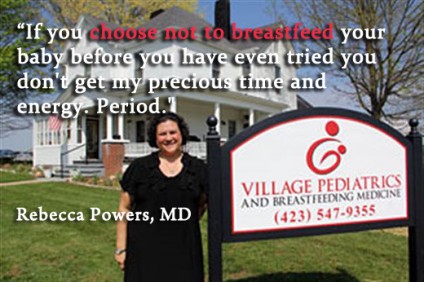
Powers choose not to breastfeed

We are all anti-bullying now.

We recognize that bullying based on race is wrong; bullying based on religion is wrong; bullying based on gender is wrong; bullying based on sexual orientation is wrong. In fact, there’s only one group that it is still acceptable to bully: new mothers.

[pullquote align=”right” cite=”” link=”” color=”” class=”” size=””]Dr. Becky: “All I can say is that if I am a breastfeeding bully I am proud of it.”[/pullquote]

Dr. Rebecca Powers is one such bully.

The same day I wrote about post about the bullying tactics of the United States Breastfeeding Committee, a lactation consultant alerted me to this post by Dr. Becky from Village Pediatrics and Breastfeeding Medicine in Tennessee:

The full post is here (cached version).

Here are some excerpts”

… 1) It is NOT my stated objective to make everyone happy… 2) This is my practice. It is just me. I don’t play well with others, so I quit and went where I could do things the way I wanted to without having to make what felt like soul withering compromises. I make the rules about where I spend my time and energy. If you don’t like my rules, I am not the pediatrician for you. I will tell you this as gently as I can, but I WILL tell you. And I will not apologize for it. 3) I do not kick people out of this practice because they cannot breastfeed… This practice is made up of women who breastfeed, women who gave it a real, honest try and women who would be breastfeeding if it were a real option for them. If you choose not to breastfeed your baby before you have even tried you don’t get my precious time and energy. Period.

If you choose to lie to yourself by coming into my office and believing I will somehow relax my policies for you and your child, you are wrong. And you will leave crying or disappointed. And this is America, you are welcome to spread your disappointment all over the internet. But, if you think it is going to hurt me, it isn’t. I do what I do and I do it well… I am not Mother Theresa(although I do strive to emulate some of her qualities). When I have chosen not to help you, it is because I firmly believe it is not going to be the best use of my time and resources. Am I going to feel bad about it? Nope (okay, well maybe a little. but I will go to sleep just fine.)

Don’t worry, Dr. Becky, no one is going to confuse you with Mother Theresa. I don’t know much about her but I doubt she set conditions on who was allowed to benefit from her “precious time and energy.”

When someone left a comment on her page about her inappropriate behavior, she wrote a post in response:

Bully proud of it highlighted

… All I can say is that if I am a breastfeeding bully I am proud of it…

Let’s leave aside for the minute the fact that breastfeeding is closely associated with race, class and education level, meaning that Dr. Becky’s bullying is disproportionately felt by women of color, poor women and women who don’t have college degrees. Bullying patients for their personal choices is unethical. First, the burden falls on the child, someone who had no say in the decision at all. Second, refusing to care for a child because his mother didn’t conform to your beliefs about how women should use their body parts is grossly inappropriate.

Refusing to care for children whose mothers choose to bottlefeed is as inappropriate as refusing to care for children whose mother had an abortion. Her baby, her body, her choice!

Dr. Becky is well aware that her behavior is indefensible.

Apparently she complained to Facebook and had them remove a post on The Skeptical OB Facebook page that discussed her behavior. That’s consciousness of guilt.

No doubt she thought that would be the end of it. She doesn’t know me very well, does she?

Instead, I’ve written about her here, a page that gets much more traffic and is beyond the reach of her whining.

I would be surprised if Dr. Becky’s policy is illegal, but, in my view, it is immoral.

Unfortunately, lactivism is a vehicle for socially sanctioned bullying. By gleefully refusing to care for the children of women who don’t breastfeed Dr. Becky demonstrates that she is a bully.

By trying to remove public mention of her bullying, she demonstrates that she wants to be free to continue her contemptuous behavior toward vulnerable women without being held to account.

Everything wrong with breastfeeding advocacy in a simple hashtag #TheHungerGames

42523043_s

Talk about having a tin ear.

On the same day that Courtney Jung’s book Lactivism was published, taking the breastfeeding industry to task for grossly exaggerating the benefits of breastfeeding and the fear mongering used to promote it, The United States Committee on Breastfeeding rushes to prove her point with a new campaign built around infringement of the hashtag #TheHungerGames.

The histrionics are par for the course and their growing shrillness reflects lactivists’ fears that their clumsy attempts to manipulate women into fighting with each other are being revealed for what they are: attempts to shame women into breastfeeding.

[pullquote align=”right” color=”#b57e5f”]Shaming women who don’t breastfeed exclusively is what they do and they are going to fight fiercely against any attempt to hold them accountable for it.[/pullquote]

Give them an A+ for hypocrisy!

Recent media and social media conversations around breastfeeding—including campaigns launched by formula companies calling to “End the Mommy Wars” — reduce the complexity of parenting in our society to a series of singular, isolated decisions.

That’s right. The folks who think there is only OMG, OMG ONLY ONE BEST WAY to feed a baby, are condemning others for reducing the complexity of parenting to an isolated decision!

Talk about chutzpah. But wait! There’s more:

This thought pattern perpetuates stereotypes that breastfeeding mothers and advocates zealously judge formula feeding mothers. But when we focus only on individual moms’ choices and avoid deeper dialogue for fear of perpetuating “wars,” this deters honest conversations about why families feel so much pressure around their parenting decisions.

Breastfeeding advocates DO judge formula feeding mothers. It’s about 20 years too late to deny it. And just in case you thought otherwise, the USCB mobilized the use of the hashtag #TheHungerGames to drive the point home that shaming women is a major marketing tactic.

I left a comment on their Facebook page:

USBC

You should stop using this hashtag immediately. Bottle fed babies don’t go hungry and it is UGLY to imply that they do.

They responded:

We are sorry you think we are implying that, that is not the intention. Please take the time to learn about the campaign and take action to support mothers www.usbreastfeeding.org/hunger-games

I will not let them off the hook:

It’s obviously the intention. What other “hunger” could you possibly be referring to?

It is this kind of shaming that makes it clear that lactivist campaigns are not about science, but about some women feeling superior to other women.

Not surprisingly, they couldn’t think of an answer.

The hashtag campaign’s attempt at melodrama is laughable:

The Hunger Games: Mockingjay, Part 2 movie opened in cinemas on Friday, November 20, featuring a dystopian world in which teenagers and young adults are randomly chosen and forced to participate in a televised death match. Sadly, many families can attest that this is a powerful metaphor for the parenting experience in the United States.

Families do their best every day with the information and support available to them. Parenting shouldn’t feel like The Hunger Games, where only the privileged survive. We believe that every family should have the opportunity to make informed choices and benefit from a “landscape of support” for those choices. Spreading fear of dialogue is not the solution our nation’s families need to make this a reality.

A dystopian world? You mean the world where some women think it is their business how other women feed their babies?

Fear of dialogue? The only people who fear dialogue are lactivists; they know that truth is not on their side and they know they have spent years shaming women who don’t choose exclusive breastfeeding.

Their tactics are being exposed, they are being called to account and they don’t like it one little bit.

It started with the Similac video The Sisterhood of Motherhood, and it has ratcheted up a notch with the publication of Lactivism and the public discussion that it has engendered.

I have bad news for them. It’s going to get worse. My book, PUSH BACK: Guilt in the Age of Natural Parenting goes beyond Jung’s book (which revealed that lactivism is an industry that exaggerates the benefits of breastfeeding in order to scare women and profit from their fear) is set for publication this spring.

Push Back cover

I just submitted the manuscript for final editing: 412 pages, 90,000 words, 285 footnotes.

It explains not merely the science (or lack of it) behind lactivism as well as natural childbirth and attachment parenting, and not merely the billion dollar businesses that they represent, but it reveals that they are all linked by one overriding imperative: to relegate women to the home. The book is a full throated exhortation to push back against the guilt that is heaped on new mothers in an attempt to profit from them and to divert them into fighting with each other instead of taking their place in the wider world.

The Push Back chapters on lactivism can be summed up in one sentence:

The moralization of breastfeeding has paralleled the monetization of breastfeeding.

Case in point, nearly the entire Board of USBC is made up of lactation consultants, the people who profit by promoting breastfeeding.

Lactivists deployed guilt to make money and now they are horrified to find that the weapon they used to get women to mirror their own feeding choices back to them is being taken away. Shaming women who don’t breastfeed exclusively is what they do and they are going to fight fiercely against any attempt to hold them accountable for it.

Orgasm for pain relief in childbirth?

Empress new orgasm

I am not making this up … a bunch of natural childbirth advocates are making it up.

I’ve finally been able to stop laughing and catch my breath after reading this nonsense and I thought my readers might get a good laugh out of it, too.

The paper is ‘Birthgasm’: A Literary Review of Orgasm as an Alternative Mode of Pain Relief in Childbirth, published this month in the Journal of Holistic Nursing. It really should be titled “The Empress’s New Orgasm.”

[pullquote align=”right” color=”#ff95d5″]So now orgasm in childbirth isn’t simply a form of pain relief, but it promotes bonding, too. Who could have seen that coming?[/pullquote]

You simply cannot make this stuff up:

Current thinking supports the view that labor and childbirth are perceived to be physically painful events, and more women are relying on medical interventions for pain relief in labor.

Current thinking? Current thinking??!! Have these women never read a Bible?

They go on to spew napalm grade stupidity.

This review explores the potential of orgasm as a mode of pain relief in childbirth and outlines the physiological explanations for its occurrence… While there are indications of widespread use of complementary and alternative therapies such as hydrotherapy, herbal remedies, and breathing techniques for pain relief in childbirth, orgasm was not among those mentioned. Lack of recognition of the sexuality of childbirth, despite findings that orgasm can attenuate the effects of labor pain, suggests the need for greater awareness among expectant parents, educators, and health professionals of the potential of orgasm as a means of pain relief in childbirth.

How is exactly is orgasm supposed to serve as a mode of pain relief? Are women supposed to have orgasms every two minutes for hours?

The authors don’t say. What they do say is ridiculous enough.

While it is understandable, in light of the aforementioned theory, how sexuality and childbirth may be viewed as separate entities, Harel (2007) argues that sexual pleasure and arousal during childbirth should be better recognized as a possibility, given that a woman’s sexual organs are stimulated …

If that’s the case, then men should have orgasms from being kicked in the crotch since their sexual organs are stimulated.

How many women note orgasm during childbirth?

… Gaskin (2003) and other researchers have observed that some women in the midst of labor and when birth is imminent, look and behave in a manner that is similar to women experiencing an orgasm. While numerous women have described the birth of their child in pleasurable terms, others have confirmed actually experiencing orgasm/s during labor and just before delivery (Baker, 2001; Gaskin, 2002, 2003; Harel, 2007; Shanley, 2008. Qualitative research by Harel (2007) revealed some women experienced “unexpected” orgasms while giving birth, that is, with no conscious stimulation. Harel refers to this phenomenon as a ‘birthgasm’. There were also reports of other women who experienced ‘passionate’ orgasms, that is, a woman, with or without her partner, stimulates herself to orgasm during the birthing process with the hope of relieving labor pain (Harel, 2007).

Surprise, suprise! The only people who have noted this phenomenon are well off white women who have read the natural childbirth literature. What a coincidence!

You want to know an another amazing coincidence? The phenomenon seems to be described only at out of hospital birth. The authors ponder this phenomenon:

The greater number of women experiencing orgasmic births in the comfort of their own homes or birthing centers may also point to how comfortable women are in the environment they choose to give birth in (Buckley, 2003; Gaskin, 2003; Hotelling, 2009). Gaskin (2003) refers to ‘sphincter law’ and explains that sphincters such as the cervix and vagina are involuntary muscles that can be “shy” and function best when a sense of privacy is ensured.

But Gaskin fabricated the “sphincter law” from whole cloth. There is no evidence that exists anywhere but in her fevered imagination.

The authors impress themselves with pages of scientific sounding terms but never demonstrate that what they write has any connection to reality. But that doesn’t stop them from making stuff up:

The above-mentioned findings have generated speculation that the combination of pleasurable sensations from VCS [vaginal cervical stimulation] together with its apparent pain relieving properties may assist childbirth by attenuating labor pain, thus promoting increased bonding between women, their partners, and newborn infants …

So now orgasm in childbirth isn’t simply a form of pain relief, but it promotes bonding, too. Who could have seen that coming?

The authors conclude:

The likelihood of orgasm as an alternative mode of pain relief in childbirth is a possibility… [But]there appears to be a paucity of information with regard to promoting orgasm as an alternative means of pain relief in childbirth.

Why doesn’t it happen more and why is there no actual scientific evidence about orgasm as a method of pain relief in childbirth? The most obvious explanation — that a bunch of natural childbirth advocates made it up — seems never to have crossed the authors’ minds.

Instead they blame it on hospitals. Who could have seen that coming?

There is speculation that perhaps hierarchical and time constraints within the hospital system along with deeply held cultural beliefs about sexuality may infringe on ability of hospital staff to encourage intimacy between birthing couples …

It’s the hospital’s fault! That’s why we no longer have the birthgasms described in every ancient literature around the planet.

Wait, what? No ancient literature from any other country or culture describes birthgasms?

It must have been an oversight.

How does treating new mothers as breastmilk dispensers impact women?

iStock_000033791714_Small

One of the most pernicious results of our unthinking embrace of lactivism is the impact on women’s mental health.

My email inbox is filled with messages from women who hate themselves, blame themselves and are nearly incapacitated by guilt at being unable to breastfeed exclusively. Why? It’s certainly not because breastfeeding in industrialized countries is so beneficial for babies that it has any measurable impact on mortality rates, life expectancy or IQ. Walk into any kindergarten classroom and it is impossible to tell which children were breastfed and which were not.

It’s because in the past 30 years we have seen the rise and professionalization of a movement, lactivism, thats benefit from viewing new mothers in one dimension: as breastmilk dispensers.

[pullquote align=”right” color=”#555555″]Regardless of the difficulty, the lactivist prescription is always the same: “Breastfeed harder.”[/pullquote]

Consider:

The concept of choice simply doesn’t exist among lactivists. There is only one acceptable choice and that is the choice to breastfeed. They will go to great lengths to help women who make that choice, but they will do nothing for women who bottlefeed.

A mother’s pain is irrelevant. For lactivists, just because a mother has cracked and bleeding nipples is no excuse for her to avoid being a breastmilk dispenser.

A baby’s hunger is irrelevant. For lactivists, just because a baby is screaming in hunger is no excuse for his mother to provide milk from any other source than herself or another mother breastmilk dispenser.

Breastfeeding difficulties are irrelevant. Regardless of the difficulty (poor latch, flat nipples, poor suck, insufficient breastmilk) and regardless of the severity of the difficulty the lactivist prescription is always the same: “Breastfeed harder.”

A mother’s need for sleep is irrelevant. She is supposed to dispense breastmilk 24/7/365. What else could be more important than being a breastmilk dispenser?

A mother’s need to control her own body is irrelevant. If breastfeeding makes her psychologically uncomfortable, she’s supposed to get over it.

A mother’s mental health is irrelevant. Lactivists are much more concerned with whether treatments for postpartum depression are compatible with breastfeeding than with whether they are the best possible treatment for the mother’s psychological condition. The mother must continue dispensing breastmilk even if she is inexorably approaching psychological collapse.

The connection between breastfeeding and postpartum depression has been noted, but lactivists have chosen to spin it as evidence that successful breastfeeding prevents postpartum depression when the reality is more likely to be that pressuring women to breastfeed when they can’t or don’t want to do so is a contributing factor to postpartum depression.

Treating women as breastmilk dispensers has a corollary in pregnancy and childbirth and that corollary has been emphatically rejected by most women. The corollary is treating pregnant women as walking wombs, evaluating every decision they make by asking whether it is good for the baby. Ironically, many of the same people who would be horrified by reducing pregnant women to baby incubators, have no problem reducing new mothers to breastmilk dispensers.

Why?

It is because we have moralized breastfeeding far, far beyond any actual benefits. And it hasn’t merely become a signifier of social status and an emblem of maternal superiority, it has become a requirement for being a “good” mother.

As a result we treat new mothers as if they were cows and there only reason for being is to dispense breastmilk. Even if breastmilk were “the elixir of life” as some lactivists pretend, that would not justify this cavalier treatment of women. Since the benefits of breastmilk are in reality trivial, treating women as breastmilk dispensers isn’t merely unjustified, it’s gratuitously cruel.

Every women is capable of looking at the scientific evidence about breastfeeding in industrialized countries (the real evidence, not the wildly exaggerated benefits) and making her own considered decision of how she wants to feed her infant. Insisting that it is anyone else’s business but hers deprives a woman of autonomy and renders her nothing more than a breastmilk dispenser.

Midwives think it is more important to rescue women from technology than to rescue babies from death

Got ethics?  Vintage wood type.

I don’t think I’ve ever read anything as heartless, coldblooded and self-interested as this anywhere else in the scientific literature.

Midwives have a pesky problem. Many people think that having a live baby is more important than having an unhindered birth. That’s especially true for the medical professional that has the thoroughly annoying habit of insisting that dead babies are unacceptable.

Never fear. Marie Hastings-Tolsma, PhD, CNM, FACNM, Professor, Nurse Midwifery, and Anna G.W. Nolte, PhD, RMc, Professor, Midwifery have come to their rescue with a philosophical “justification” for letting babies die in childbirth. Their piece in the journal Midwifery, Reconceptualising failure to rescue in midwifery: A concept analysis is a paean to the moral bankruptcy of contemporary midwifery in placing the avoidance of technology ABOVE saving babies’ lives.

The authors lay out the problem:

[pullquote align=”right” color=”#d78e3e” ]Obstetricians rescue women from dead babies and midwives rescue women from interference in the birth process.[/pullquote]

Failure to rescue was developed by Silber et al. (1992) who suggested the term as an indicator of quality of care with focus on surgical patients in the inpatient setting though others have since suggested including medical patients. Failure to rescue was originally conceptualised as management of complications or preventing death after a complication and was operationalised to mean the number of patients that health care providers failed to save after developing surgical complications that were life-threatening. The original concept focused on recognition of unexpected though preventable events that influenced mortality. Subsequent effort has centred on the identification of interventions to reduce events through early recognition and the skills required to do so.

Therefore, the concept of “failure to rescue” in midwifery OUGHT to mean failure to prevent death after a complication, employing early recognition of complications and the technology to treat them. But midwives don’t like technology. That leaves them open to the charge of letting babies die by refusing to use the technology that would save their lives. You or I might imagine that dead babies would cause midwives to reassess their aversion to technology. Instead it has caused them to reassess their aversion to dead babies.

How? By insisting that failure to rescue women from technology is a greater calamity than failure to rescue babies from death, or even worse:

Failure to rescue as applied to labouring women likely undermines confidence in the ability to birth spontaneously and denies women access to normal birth. Such values have been purported to be of central concern to midwives worldwide

What’s a pile of tiny dead bodies compared to women’s confidence in their ability to birth spontaneously? Not worthy of concern, apparently.

Environments with high intensity of services may have short-term value for decreasing mortality for select patients with medical complication but at what cost when applied to those who are not with risk requiring continuous monitoring?

Sure, modern obstetrics may have short term value in preventing dead babies, but at what cost to unhindered birth?

Midwives believe that there is much more at stake than the lives of a bunch of babies. They can “rescue” women from technology! They offer:

…the unique contribution of midwifery surveillance in prevention of failure to rescue from unnecessary interventions during childbirth …

See! They’ve squared the circle! Midwives rescue, too. They just rescue women from different things. Obstetricians rescue women from dead babies and midwives rescue women from interference in the birth process.

Several organisations have been instrumental in calling attention to the quality and safety of hospitalised patients (e.g., Institute of Medicine, Agency for Healthcare Policy and Research and National Quality Forum) and concerns about iatrogenic harm as a result of care processes. For the perinatal patient, such harm has centred primarily on mortality, surgical intervention rates, admission to the intensive care unit, length of stay, readmissions, and trauma (Mann et al., 2006). Midwifery data for these quality indicators is often absent or data are provided for the same outcome measures, failing to differentiate them from physician-led care. Although midwifery data for these outcomes are crucial in detailing the quality, safety and cost of care, what is conspicuously absent are data which provide support for how the midwife has maintained normative birth processes.

But the Institute of Medicine, the Agency for Healthcare Policy and the National Quality Forum naively imagine that mortality is an indicator of quality and safety. Midwives know better:

Patients may need to be rescued from the health care system and midwives are challenged to so do. The importance of addressing maternal psychosocial and physical needs during birth is crucial, potentially preventing unnecessary physical and emotional suffering where birth is perceived as traumatic.

Because everyone knows that a dead baby is less traumatic that failing to prevent emotional suffering!

But wait! There’s more!

For conceptual fit with the midwifery philosophy of care, failure to rescue needs to be refocused as not only an outcome measure, but also as a process measure.

It’s almost as if they read my writing on midwives privileging process over outcome (a deep ethical and legal failure for any healthcare provider) and embraced it.

The process involved in midwifery care is the important phenomenon when assessing promotion of normal physiologic birth rather than the actual outcome… A successful rescue process means rescue from unnecessary interventions.

I couldn’t have said it better myself. There’s no truer evidence of the chilling moral bankruptcy of contemporary midwifery than that statement.

The authors recommend their reconceptualization:

Failure to rescue is a crucial phenomenon in midwifery care and is central in the protection and promotion of normal birth. At a time when few experience totally physiologic birth and with evidence that interference with normal processes increases the risk for complication, midwives are challenged to consider the need to rescue women from the health care system.

I’m prepared to go one step further:

Failure to rescue babies and mothers from death is an immoral, unethical phenomenon in contemporary midwifery and is central in the protection and promotion of THEMSELVES. Going forward, obstetricians are challenged to rescue women from MIDWIVES who place their professional concerns above the lives and health of babies and mothers.

It all worked so perfectly … except for the part where the baby couldn’t breathe

image

Which came first, the homebirth or the narcissism?


image

[pullquote align=”right” color=”#E4A4B2″]Still in amazement that this lovely bonnie girl came out of my vagina! [/pullquote]

My HBAC this morning was at 42+1 and my little girl’s placenta was giant and healthy, zero calcifications or signs of age.


Too bad her baby was giant, but NOT healthy.


image


Please keep my little daughter … in your thoughts and prayers. Two hours after an amazing homebirth this morning @42+1, my very bonnie 9.8 lb little girl suddenly developed breasthing problems and MW had to call an ambulance and we raced to the city hospital. She’s being well looked after in NICU (and looking like the most enormous baby surrounded by tiny prems), but we still don’t know what’s causing her very laboured breathing 🙁


image


She’s doing OK, looks like she got fluid (may have been from her overly vigorous but slightly uncoordinated first breastfeed) on her lungs or possibly and infection. Just cuddled her and rocked her to sleep, and expressed her some colostrum…

Still in amazement that this lovely bonnie girl came out of my vagina! And I didn’t need stitches! It all worked so perfectly.


On what planet is a birth that ends with the baby in the NICU struggling to breathe and possibly suffering from pneumonia perfect?

Oh, right, on Planet Narcissist where the mother’s experience is more important than whether the baby can draw breath.

How perfect would the birth have been if the mother ended up in the ICU struggling to breathe? I’m going to go out on a limb and suggest that the mother would not have found it so perfect at all, despite marvelling about the fact that a baby transited her vagina. But what’s a little trouble getting oxygen to your brain when it merely happens to the baby? No need to feel bad about that; she was just a prop in her mother’s festival of narcissism known as high risk homebirth.

The homebirth went perfectly … for the mother, and apparently that’s the only thing that matters.

Birth plans, birth trauma and Birthzilla

iStock_000003189573XSmall

I have written before that birth plans are worse than useless and a new study lends credence to that view.

Birth plans engender hostility from the staff, are usually filled with outdated and irrelevant preferences, and create unrealistic expectations among expectant mothers. But the worst thing about birth plans is they don’t work. They don’t accomplish their purported purpose, make no difference in birth outcomes, and, ironically, predispose women to be less happy with the birth than women who didn’t have birth plans.

[pullquote align=”right” color=”#603b35″]The key to a safe, satisfying birth is to ditch the birth plan.[/pullquote]

For example, in Is the Childbirth Experience Improved by a Birth Plan?, Lundgren et al. were surprised to find:

… A questionnaire at the end of pregnancy, followed by a birth plan, was not effective in improving women’s experiences of childbirth. In the birth plan group, women gave significantly lower scores for the relationship to the first midwife they met during delivery, with respect to listening and paying attention to needs and desires, support, guiding, and respect.

The new study is Birth Experience Satisfaction Among Birth Plan Mothers. It was a prospective controlled trial comparing women with and without birth plans.

Three hundred two women met criteria -145 had a birth plan and 109 birth plans were collected. We established 23 common requests. The most common requests were: no intravenous medications (82%), exclusive breastfeeding (74%), and no epidural (73%). The requests most fulfilled were avoidance of episiotomy (100%), erythromycin (82%), and rupture of membranes (79%)… A greater number of requests correlated with meeting expectations less (P=.04) and feeling less in control (P=.04). Having a higher percentage of requests met correlated with having expectations met more (P=.03) and feeling more in control (P=.03).

The greater the number of requests by the mother, the greater the chance that she had a negative birth experience. In other words, it isn’t birth trauma that causes bad birth experiences, it is Birthzillas.

Who’s Birthzilla?

As I’ve written before:

We’ve all heard about bridezillas, the women who are so obsessed with having the perfect wedding that they become tyrants toward everyone else. There’s an argument to be made that many homebirth and natural childbirth advocates are “birthzillas” who justify their hypersensitivity, obsessive need for control, and rudeness to everyone else with the all purpose excuse “It’s my special day.”

Consider:

Obsessive need for control – It’s difficult to imagine anything more obsessive than birth plans. Birth plans, in addition to being useless for their stated purpose of improving the birth, are attempts to plan the unplannable. You might as well have a “weather plan” for the day of birth for all the good it’s going to do you. Birth plans, like obsessive wedding plans, have the added drawback of irritating everyone around you. The need to ruminate on every aspect of the day, and share those ruminations with everyone else is boring at best and narcissistic at worst.

Hyersensitivity – Homebirth and natural childbirth advocates spend a lot of time being angry. The birth is not going according to plan. The hospital staff are not taking their desires as seriously as they take them. The hospital staff are not behaving as instructed. Everything is a slight. Offered an epidural? Have a fit. Labor support not exactly as desired? Accuse the nurses of evil intentions. Baby needs something different than the pre-approved birth plan? Who does that baby think he is? After all, birth is not about the baby. It’s all about, exclusively concerned with, revolving only around Birthzilla.

Outsize feelings of disappointment – Birthzillas are psychologically very fragile and make no apologies for their fragility. Baby needs resuscitation before being placed skin to skin with Birthzilla? The birth is ruined. C-section needed to deliver a healthy baby? That no longer qualifies as a birth at all!

Birthzillas have an outsize view of their own importance, a hypersensitivity to slights, a feeling of being persecuted when the birth does not go as planned, and an imperiousness and insensitivity to others who work with or for them.

Instead of integrating the inevitable disappointments associated with a birth, they get psychologically “stuck.” They experience their disappointments as narcissistic injuries and respond with rage and accusations of persecution. They have no time for and no interest in the feelings of others, and feel entitled to use other people for their own ends.

The ultimate irony is that the behavior of birthzillas often fails to produce the perfect birth. Because of their psychological neediness and fragility, they are unable to appreciate that every change in plan is not the “fault” of someone, unable to accept that unwillingness of providers to follow commands is not a sign of persecution and, worst of all, unable to enjoy what they have.

The key to a safe, satisfying birth is to ditch the birth plan and concentrate on the baby, not the creation of the perfect experience.

Oregon dramatically tightens homebirth coverage requirements

Homebirth insurance claim

In a tremendous victory for the mother and babies of Oregon, and a tremendous repudiation of homebirth midwives, Oregon has dramatically tightened the requirements for coverage of homebirth.

In many ways, homebirth midwives led by Melissa Cheyney, brought this on themselves. Their utter contempt for safety requirements of any kind led to their marginalization. Four years ago they were dragging their feet on even obtaining consent for homebirth, now it has been entirely removed from their hands.

Here is the document that sets out the new coverage regulations Health Evidence Review Commission (HERC) Coverage Guidance: Planned Out-of-Hospital Birth.

[pullquote align=”right” color=”#bfad74″]Oregon Medicaid won’t pay for homebirth of breech, twins, VBAC, prolonged rupture of membranes and other conditions that homebirth midwives pretend are “variations of normal.”[/pullquote]

It is a 100 page review that carefully documents the conclusion that homebirth is only appropriate in a restricted set of circumstances.

As a result, Oregon Medicaid will no longer pay for homebirth in the case of breech, twins, VBAC, prolonged rupture of membranes and a whole host of other conditions that homebirth midwives chose to pretend were “variations of normal.”

Why won’t Oregon Medicaid pay for homebirth in those circumstances? Because they dramatically increase the risk of perinatal death. Judith Rooks CNM MPH analyzed the 2012 Oregon homebirth statistics  and found that the death rate at planned homebirth with a licensed homebirth midwife was 800% higher than comparable risk hospital birth. Moreover, 6 of the 8 deaths in the homebirth group occurred in women that did not meet the criteria for low risk.

What is especially interesting about the HERC document is that it details an extensive review of the literature … a real review, not the cherry picking of papers and misrepresentation of findings that characterize homebirth advocates’ review of the literature.

The authors also call into question the validity of assessing homebirth safety in the US by citing studies from other countries. The note the differences in midwifery training:

The Netherlands

“The midwifery training is a four year fulltime direct entry education, which eventually leads to a Bachelor’s degree. The total study load is 240 ECTS and equals nearly 6,800 hours of education. Altogether, there are two years of theory, one year of primary care internships, and one year of secondary and tertiary care internships. The internships are spread equally over these four years… They have had an extensive assessment, which selects the best candidates. Around
three times more candidates apply for the course than places are available.”

Canada

British Columbia
“All current CMBC approved programs are Canadian four year direct‐entry education programs leading
to a university degree, or bridging programs leading to equivalency.”

Ontario
“1. The applicant must have at least one of the following:
A baccalaureate degree in health sciences (midwifery) from a university in Ontario.

2. The applicant must:
Have current clinical experience consisting of active practice for at least two years out of the
four years immediately before the date of the application, and
Have attended at least 60 births, of which at least:

  • 40 were attended as primary midwife
  • 30 were attended as part of the care provided to a woman in accordance with the
    principles of continuity of care
  • 10 were attended in hospital, of which at least five were attended as primary midwife,
    and
  • 10 were attended in a residence or remote clinic or remote birth centre, of which at
    least five were attended as primary midwife

3. The applicant must have successfully completed the qualifying examination that was set or approved
by the Registration Committee at the time the applicant took the examination.”

As compared to:

North American Registry of Midwives [CPM certification]

There are multiple routes to certification by the NARM, but in general they include a written test, a skills
assessment test, and the following experience requirements:

  • Phase 1: Births as an Observer
    Ten births in any setting, in any capacity
  • Phase 2: Clinicals as Assistant under Supervision
    Twenty births, 25 prenatal exams, 20 newborn exams, 10 postpartum visits
  • Phase 3: Clinicals as Primary under Supervision
    Twenty births, 75 prenatal visits, 20 newborn exams, and 40 postpartum exams

There are other difference as well:

Good outcomes for planned out-of-hospital birth have been demonstrated in several countries. However, these settings have system characteristics that help to maximize safety. Chief among these is a robust system of consultation and referral/transfer that can assure seamless care for the woman and her newborn when transfer is needed. In addition, these systems include thorough education (informed consent) of women and families about the potential need for consultation/referral/transfer and the potential risks associated with having a delay to receipt of emergency obstetric and neonatal care.

Consideration of distance and time from a hospital able to provide emergency obstetric and neonatal services is important in managing intrapartum complications and in providing fully informed consent. Another characteristic is written agreements that cover consultation/referral/transfer and a welldefined and practiced system of transfer. Out-of-hospital birth attendants in these systems are appropriately trained and experienced in the identification and management of obstetric and neonatal emergencies, and are also licensed and certified. These providers should be capable of initiating appropriate newborn resuscitation, and be able to provide standard newborn care in addition to the routine postpartum care of women. Certification requirements for the practice of midwifery can vary significantly between the U.S. and other countries, with U.S. requirements for midwives, other than CNM/CMs, generally being less rigorous with regard to both years of formal education and experience.

These new restrictions are just the first shot across the bow. Even NARM and MANA can see the handwriting on the wall: the CPM certification is going to be phased out. As a result, they have created the Midwifery Bridge Certificate.

NARM is planning for the day when the CPM certification will no longer be enough:

Opposition to the licensure of CPMs has centered on the lack of a requirement for an accredited education. Work among the seven US MERA organizations in 2015 created a joint statement of support for licensure legislation on the condition that it include a requirement for a graduation from a MEAC accredited program or the Midwifery Bridge Certificate.

Both the HERC regulations and the NARM Bridge Certificate represent an extraordinary victory for homebirth safety and a tremendous vindication for those who have been arguing for years that American homebirth midwifery is both substandard and unsafe.

We have been heard!

Dr. Amy