A fine Cesarean whine

image

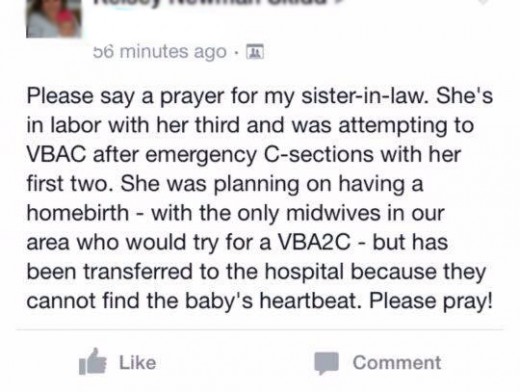
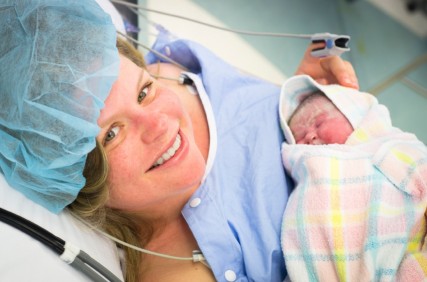
I guess this woman didn’t get the message that I have declared April to be Cesarean Appreciation Month.

image

This will ruffle feathers, it’s okay. I do not get celebrating c-sections. I’ve had two. They were awful. Neither of my children’s births were beautiful. They were horribly traumatic for them, and for me. I’m a full on attachment parenting, unschooling mom. You cannot be these things without celebrating your children everyday of their lives, and offering gratitude for them nearly every moment of everyday. Celebrating their assault while entering this world? Never.

Note: I am referring to the act of celebrating c-sections in general, not a particular one or ones.

She doesn’t appreciate her C-sections, does she?

I left a comment:

“Disappointed in your C-sections? Blame the industry that set you up for disappointment, the natural childbirth industry. That’s the industry that encourage women to value process over outcome.

In the chapter The Dialectics of Disruption: Paradoxes of Nature and Professionalism in Contemporary American Childbearing, anthropologists Caroline Bledsoe and Rachel Scherrer examine why meaning-making is so important within the culture of natural childbirth advocacy.

Their description of the current situation:

‘… Birthing is depicted culturally as an individual achievement, one in which a woman should be in control of her actions. For this, women attempt to present themselves as professionals, medical as well as legal: as close as they can come to being equals with their medical peer doctors, informed and trained to evaluate their qualifications.’

Bledsoe and Scherrer recognize that meanings and meaning-making are luxuries of a society in which childbirth is so safe that women have forgotten that in reality it is inherently dangerous:

‘… As childbearing became safer and more benign visions of nature arose, undesired outcomes of birth for women came to consist of a bad experience and psychological damage from missed bonding opportunities. Today, with safety taken for granted, the new goal has become in some sense the process itself: the experience of childbirth…’

Their critical insight:

‘… But with *control* being such a crucial issue in cultural ideals of childbearing, the greater the expectations that a scripted birth plan creates, the greater the surety that the woman will fall short of her ideal. Some elements will go wrong, and with them the hope of remaining the equal of the professionals who deals with her birth. This relegates obstetricians, who have the power to disrupt a naturalism but also to save lives if something goes wrong, to being the inevitable targets of opposition.’

Specifically:

‘If nature is defined as whatever obstetricians do not do, then the degree to which a birth can be called natural is inversely proportional to the degree to which an obstetrician appears to play a role. The answer to why obstetricians are described with such antipathy thus lies not in the substance of what obstetricians do that is unnatural – whether the use of sharp incision. forceps, and medications that blunt sensation. or anything else- but in the fact that obstetricians represent a woman’s loss of control over the birth event. Obstetricians are thus perceived as the chief source of disruption in the birth event, backed by the licensing power of medicine and the law. And yet it is not what obstetricians do that women find problematic but the fact that they are the people who step in when the woman is seen to have failed.’

If the goal of childbirth is seen as a healthy baby, there’s no reason to be disappointed with a C-section. But if the goal is a carefully scripted, NCB approved birth “experience,” it’s no wonder that you are disappointed. The problem is that you blame the C-sections when you should be blaming the natural childbirth industry.”

She immediately deleted the comment. It was not offensive in the least, but I guess she couldn’t stand the cognitive dissonance of acknowledging that she had been set up for disappointment by the natural childbirth movement.

Or maybe she was just enjoying feeling sorry for herself and didn’t want anything to detract from her fine Cesarean whine.

April is Cesarean Appreciation Month

image

The natural childbirth industry is second to none in its mastery of marketing. Several years ago, ICAN (International Cesarean Awareness Network) designated April as Cesarean Awareness month (CAM). That sounds ever so much better than Cesarean Defamation Month, which would be far more accurate.

As a result, we will be treated with a month of posts from the natural childbirth industry bemoaning the C-section rate, bewailing a “crisis” in maternity care, and aggressively decrying the rare complications of C-section while ignoring the major benefits. The natural childbirth industry promotes awareness of the risks of C-sections, and utterly ignores the benefits that dramatically outweigh those risks.

The truth is that C-sections have saved literally millions of lives and continue to save tens of thousands of mothers and babies in the US alone each and every year. Therefore, I am designating April Cesarean Appreciation Month in honor of the incredible benefits of C-sections.

In 2006 Dr. Atul Gawande wrote a piece for The New Yorker, The Score, that uses the Apgar score as a focus for a review of the history of contemporary obstetric care.

Gawande starts by acknowledging that for most of human existence, childbirth was the leading cause of death of young women and the leading cause of death of babies. The risks are legion, from hemorrhage, to infection to obstructed labor, when a baby is too big to fit through the maternal pelvis.

The natural childbirth industry would have you believe that these complications are rare, but in fact, they are so common that midwives and doctors invented tools to cope with them.

The first reliably life-saving invention for mothers was called a crochet, or, in another variation, a cranioclast: a sharp-pointed instrument, often with clawlike hooks, which birth attendants used in desperate situations to perforate and crush a fetus’s skull, extract the fetus, and save the mother’s life.

If only the baby could be removed healthy and whole from the mother’s uterus:

But Cesarean section on a living mother was considered criminal for much of history, because it almost always killed the mother—through hemorrhage and infection—and her life took precedence over that of the child… Only after the development of anesthesia and antisepsis, in the nineteenth century, and, in the early twentieth century, of a double-layer suturing technique that could stop an opened uterus from hemorrhaging, did Cesarean section become a tenable option.

The C-section was part of the transformation of modern obstetrics:

In the United States today, a full-term baby dies in just one out of five hundred childbirths, and a mother dies in one in ten thousand. If the statistics of 1940 had persisted, fifteen thousand mothers would have died last year (instead of fewer than five hundred)—and a hundred and twenty thousand newborns (instead of one-sixth that number).

And the statistics from the 1940’s were far better than those that occur in nature. If the statistics of pre-history had persisted, 40,000 mothers and 280,000 babies would have died last year.

As Gawande notes:

… [A]lmost nothing else in medicine has saved lives on the scale that obstetrics has.

In large part, that’s a result of the liberal use of C-sections.

A measure of how safe Cesareans have become is that there is ferocious but genuine debate about whether a mother in the thirty-ninth week of pregnancy with no special risks should be offered a Cesarean delivery as an alternative to waiting for labor…

…Many argue that the results for mothers are safe, too. Scheduled C-sections are certainly far less risky than emergency C-sections-procedures done quickly, in dire circumstances, for mothers and babies already in distress. One recent American study has raised concerns about the safety of scheduled C-sections, but two studies, one in Britain and one in Israel, actually found scheduled C-sections to have lower maternal mortality than vaginal delivery. Mothers who undergo planned C-sections may also (though this remains largely speculation) have fewer problems later in life with incontinence and uterine prolapse.

Of course, C-sections, like any surgical procedure, have complications. These include infection, bleeding, need for future C-sections, and risk of rare complications in future pregnancies like placenta accreta, where the placenta grows into the wall of the uterus at the location of the scar. Accreta is dangerous and can lead to hysterectomy and even death of the mother.

On balance, though, the benefits of C-sections dramatically outweigh the risks. That’s why April should be Cesarean Appreciation Month, in acknowledgement of the many millions of lives save by this simple surgery. It has transformed childbirth from an opportunity for women to make their wills and prepare for possible death into an opportunity to complain about having a C-section.

Midwives need to stop pledging allegiance to normal birth and start protecting babies

image

A British mother and child have won a record payment of £14.6 million in a case of midwifery incomptence. Coming hard of the heels of the release of the Morecambe Bay report, a stunning indictment of UK midwives’ lack of clinical skills and obsession with “normal” (unmedicated, vaginal) birth, it is yet another example of the failure of midwife led care.

According to The Mail Online:

A mother whose son suffered severe brain damage during birth is set to receive potentially the biggest medical negligence payout in history.

The High Court ruled today that United Lincolnshire Hospitals NHS Trust must pay in excess of £14.6 million for birth injuries, after failing to carry out a Caesarean section on Suzanne Adams and properly monitor her during labour.

The hospital’s negligence led to her son James Robshaw, now 12, being born with cerebral palsy.

The decision, believed to be one of the most significant in a case of medical negligence and the largest ever such court-ordered award for birth injury, reflects the lifetime care that James needs…

What happened?

Ms Adams was in labour when she was admitted to Lincoln County hospital in 2002.

Although her baby’s heart was monitored after her arrival, midwives either ignored or could not interpret the CTG trace – which detects foetal heart rate – correctly…

The confusion about CTG interpretation and the additional failure to carry out a timely Caesarean section meant there was a delay in delivering James.

Resuscitation procedures were then carried out in the delivery room before he was transferred to the Special Care Baby Unit.

Just as at Morecambe Bay, midwives either didn’t understand or ignored evidence that a baby was in distress.

More stomach churning allegations of midwifery incompetence at Morecambe Bay continue to emerge. The Nursing and Midwifery Council will hold hearings later this month about a midwife, alleging:

That you, whilst employed as a Band 7 Midwife at Furness General Hospital (“the Hospital”) by University Hospitals of Morecambe Bay NHS Foundation Trust (“the Trust”) between 15 February 2004 and 10 September 2013:

1) On 25 February 2004 an in relation to Patient A

1.1 Failed to and/or failed to ensure that the fetal heart rate was adequately monitored after 20:15 and up until the time that Patient A’s baby was delivered.

1.2 Failed to request assistance from a Doctor and/or any other suitably qualified medical professional when you had difficulty auscultating the fetal heart.

1.3 Caused distress to Patient A by inappropriately placing Patient A’s baby by her side

1.4 Your conduct contributed to the death of Patient A’s baby and/or caused Patient A’s baby to lose a significant chance of survival.

2) On 6 September 2008 in relation to Patient B

2.1 In relation to Patient B’s pain relief;

i) Advised Patient B that she could not have an epidural
ii) Failed to document your discussions with Patient B regarding pain

2.2 Failed to and/or failed to ensure that the fetal heart rate was monitored at 15-30 minute intervals during the first stage of labour …

i) Failed to and/or failed to ensure that continuous electronic fetal monitoring was in place and/or

ii) Failed to and/or failed to ensure that the fetal heart rate was auscultated every 5 minutes …

2.5 Failed to adequately escalate the delay in the second stage of labour to an obstetrician at approximately 20:45

2.6 Your conduct contributed to the death of Patient B’s baby and/or caused Patient B’s baby to lose a significant chance of survival

These are just the most egregious of 15 separate allegations against the midwife.

Both these case are part of a disturbing pattern of injuries to and deaths of babies, questionable midwifery competence, and failure to call for interventions.

UK midwives need to stop pledging allegiance to normal birth and start protecting babies.

Nature thinks babies are expendable

image

Two of the central conceits of the natural childbirth and homebirth industries is that women are “perfectly designed to give birth,” and “babies know how to be born.”

They are conceits not merely because they are untrue, but also because advocates imagine human beings as somehow immune to the forces and exigencies that rule birth among all other animals. The truth is that Nature thinks babies are expendable, and, to a lesser extent, mothers are expendable, too.

One of the main characteristics of reproduction in the animal kingdom (and the plant kingdom) is massive wastage. The chance of any individual organism surviving to adulthood is very small; therefore, massive amounts of offspring must be produced, because most of them are naturally going to die.

Think about how many seeds are produced by an individual plant. Think about how many larvae are produced by one insect. Think about how many eggs are produced by an individual fish. Then think about how many of those survive to become the adult form: only a vanishingly small proportion.

The classic example is the thousands of baby turtles who all hatch on a single night and immediately begin clambering across the beach to safety in the sea. Along the way they must travel a gaunlet of predators and most will not survive.

Of course plants, insects, fish and turtles don’t generally care for their offspring. Their investment in the next generation ends with birth, or even before.

How about those animals that invest time in brooding or gestating their young? For them, parental energy expenditure is much greater and the the proportion of offspring that are lost before adulthood is consequently much lower. It is still relatively high, which is why most animals reproduce every year or every other year.

Not surprisingly, there appears to be a correlation between the amount of parental time and energy invested in offsrpring and the proportion of those offspring that survive. Even when the parental contribution is enormous, however, such as in larger animals, death rates are extraordinarily high. For example, it is estimated that one out of two lion cubs will not survive its first year.

Human beings devote the most time and energy to raising the next generation. Pregnancy is 9 months long, infancy is nearly 2 years, and childhood lasts for up to 18 years. This intensive investment ensures that a high proportion of babies will survive to adulthood, but it is entirely compatible with losing 10%, 20% or even more children.

When you take the long view, the proportion of survivors is even smaller. Human females are born with millions of eggs, and human males produce billions of sperm. Most will never even be used in reproduction. Even when sperm meets egg, fertilization can fail; cell division can fail; uterine implantation can fail. For successfully established human pregnancies, the miscarriage rate is one in five (20%). These are all natural occurrences. How can anyone claim that women are perfectly designed (or evolved) to give birth when they can’t even sustain 20% of all pregnancies?

Obviously, they are not perfectly designed (or evolved). That’s not surprising since nature doesn’t “do” perfect; it only does good enough. In every generation, only the fittest survive. That means that the less fit will die.

This applies to childbirth as to any other aspect of human existence. Only the fittest babies will survive childbirth and only the fittest mothers. Fittest in this sense does not mean physically fit; it means having the characteristics that are most suitable in the specific setting. Hence very big babies are in danger of dying (and killing their mothers) during childbirth. They may be robust and strapping, but if their heads are too large to negotiate the maternal pelvis, they will die and their mothers will die, too. They weren’t fittest for the particular environment in which they existed.

Nature thinks that human babies and human mothers are expendable, subject to the exact same natural forces that kill babies of other species. The difference between humans and all other animals is NOT that humans are perfectly designed for nearly 100% survival in birth. The difference is that we can change our environment in ways that ensure that babies who would otherwise die will live instead.

Technology is our secret weapon.

Consider that human beings have come to inhabit nearly every climate on the globe. We have been successful in frigid climates NOT because the air got warmer, but because of our technology: clothes, houses, and heating. No one would suggest that we are “overusing” or should give up any of those technologies in order to return to our paleolithic past. Nor would anyone suggest that since were were “meant” to live in Africa, we should all return there so that clothes, houses and heating would no longer be necessary.

Technology also allows the same baby whose head is too big to fit through his mother’s pelvis to be delivered instead through a C-section incision. The baby will survive and the mother will survive, too. Neither will be compromised in the slightest by the surgery. Yet natural childbirth and homebirth advocates insist that we are overusing technology in childbirth and that we should give it up. The babies who die without access to that technology are dismissed as “meant” to die.

The facts of reproduction are no different for human beings than for any other animals. Women are NOT designed to give birth perfectly and babies are NOT designed to survive birth. The difference between human beings and all other animals is this: Our technology is perfectly designed to help women give birth safely. Our technology is perfectly designed to help every baby possible survive birth.

Natural childbirth and homebirth advocates who prattle that women are perfectly designed to give birth and babies are perfectly designed to be born suffer from the conceit that humans aren’t subject to the same natural forces as all other animals. They live in a fantasy world made possible by the liberal use of the technologies that they deplore. Childbirth isn’t safe; it only appears that way because technology is used.

That fantasy world shatters in the face of the reality of childbirth: it is dangerous and many mothers and babies aren’t perfectly designed to survive it. Fortunately, most women are smart enough and astute enough to avail themselves of the technology that allows them to survive despite imperfection.

Yet another mother dies at homebirth

image

At the end of December I wrote about 22 children left motherless when 7 different women died at homebirth. I wasn’t aware that an additional 2 mothers died in December leaving 11 more children motherless.

Two weeks ago, I wrote about one of the maternal deaths. A mother in Texas died after a postpartum transfer from homebirth. The baby was born lifeless but surived after cooling therapy to mitigate brain damage from lack of oxygen at birth. The mother died despite days of heroic efforts to save her life at the hospital.

Yesterday I learned about another mother, also from Texas, who died 9 days before the first death.

According to her husband:

Dec 11th 2014 my wife texted me and said that it was time for me to come home for the birth of our 8th child. This was our 7th homebirth, the other 6 an amazing success.

She had no reason to suspect that she would suffer a life threatening complication, amniotic fluid embolus, but she did. Her labor was proceeding normally, and then.

The midwife checked her and the baby and it was time to get her to push. As the pain got worse she looked at me and said it was so hard. I tried to comfort her as best I could. Then she passed out in the tub.

When seconds counted, they were many minutes away from help.

We called 911 and got her out of the tub onto the bed. We could see that she wasn’t breathing so we tried CPR. She kind of came to a little bit and was trying to push the baby out with all she had while not being able to breath. She then passed out again never to awaken.

On arrival at the hospital:

…[They] did an emergency C section in the ER. They then struggled to keep her alive as I sat outside the curtain more afraid than I had ever been in my entire life before. They took Lilly to the NICU to try to save her but to no avail.

The mother never recovered despite intensive treatment.

After 5 grueling weeks of watching her almost bite through her lip when she would have seizure like episodes and seeing her kept alive by machines, she died on my 6 year old’s birthday Jan 17th.

Would she have survived had she been in a hospital? That’s hard to say because amniotic fluid embolus has a 50% mortality rate. But we can be sure that she would have had a better chance at survival and the baby would have had a much better chance with an immediate C-section.

I’m not sure if things would have been different if we would have had a hospital birth, but there is a chance I would be holding a sweet little girl and perhaps snuggled next to my wife if we would have known more about AFE. This is why we are all posting our stories, donating our time, and money. Lord willing we might be able to save one baby or one momma and it will all be worth it.

Now 33 children have been left motherless by the deaths of 9 different mothers at homebirth.

Thinking about homebirth? Think again.

Think about leaving your children motherless and their father struggling to cope.

This father is warning you. Don’t ignore his plea.

Midwives are the guardians of normal birth; obstetricians are the guardians of mothers’ and babies’ lives.

image

Midwives love to claim they are the “guardians of normal birth.”

Type “guardians of normal birth” into Google and you get page after page of midwives declaring their commitment to a specific vision of birth.

I’m not sure why they’re boasting because it’s actually an unwitting indictment of the moral rot at the heart of contemporary midwifery theory. It highlights the difference in ethics between midwives and obstetricians. Midwives are the “guardians of normal birth,” while obstetrians are the guardians of the health and lives of mothers and babies.

It is fundamentally unethical for any health provider to pose as a guardian of a procedure. It would be wrong for a surgeon to pose as a guardian of appendectomy; it would call into question his or her ability to successfully and ethically treat abdominal pain when he had a clear bias toward removing appendices. It wouldn’t matter if the surgeon claimed to believe that appendectomy was the appropriate treatment for abdominal pain, and we would quite rightly suspect that the surgeon has his own self-interest (the surgical fee, the opportunity to hone skills, the enjoyment of performing surgery) at heart.

Similarly, if a dermatologist claimed that she was a guardian of Botox, it would call into question his her ability to recommend appropriate treatment for her patients. It wouldn’t matter if the dermatologist claimed to believe that every patient could benefit from an injection of Botox. We would quite rightly suspect that the dermatologist had her own self-interest (her fee, gifts from the drug company, opportunity to serve as a paid consultant for Botox)at heart.

When a midwife claims to be a guardian of normal birth, it calls into question her ability to successfully and ethically care for pregnant women. It doesn’t matter if the midwife claims to believe that normal birth is beneficial for nearly every women. We would quite rightly suspect that she had her own self-interest (her fee, professional autonomy, the enjoyment of assisting an unmedicated vaginal delivery) at heart.

Obstetricians, in contrast, are the guardians of the health and lives of mothers and babies. Their commitment is to the patients they treat, not to a particular method of treatment. Their commitment is to delivering healthy babies to healthy mothers, regardless of what it takes to make that happen. Their commitment is to people, not process.

Over the past few decades we have come to understand the pernicious influence that outside forces can exert on providers. Even something as simple and trivial as small gifts to doctors from pharmaceutical companies can affect a doctor’s choice of therapy (which is why pharmaceutical companies engage in the practice in the first place). Ideology is a far more powerful source of influence than pens and calendars. It, too, can sway a provider’s judgment to use decision making criteria other than the best interest of the patient. That’s why ideology has no place in medical care.

The central questions in caring for pregnant women should be: how can I help each individual women to remain healthy during pregnancy and childbirth and what can I do to ensure the health of her baby?

Midwives, as guardians of normal birth, view the central question as: what can I do to make this woman’s birth conform to my ideal of unmedicated vaginal delivery?

Not surprisingly the different approaches lead to different responses in the event of complications. Since the obstetrician is committed to health, complications are acknowledged, treatments instituted based on specific circumstances, with all options avaiable to achieve the desired outcome.

Midwives’ commitment to unmedicated vaginal birth means that complications are more likely to be ignored or denied (a “variation of normal). Treatment options are rated by whether or not they are compatible with normal birth, not based on their likelihood of ensuring the health of mothers and babies. A particularly distasteful consequence of privileging unmedicated vaginal birth is that failure to achieve a live baby is often unacknowledged, dismissed with the callous words “some babies are meant to die.” Instead of investigation, root cause analysis and questioning of the approach taken, midwives committed to normal birth may supress investigations and root cause analysis and to ban questioning of the approach taken since that would call the commitment to normal birth into question, which is intolerable.

Midwives need to take a long hard look at the moral rot of a philosophy that privileges birth process over healthy mothers and healthy babies. Rather than patting themselves on the back for being guardians of normal birth, they should be embarrassed to be caught out promoting a philosophy that places how a baby is born on an equal or greater footing than whether that baby lives or dies.

Dear daughter, here’s why I work (at ending the mommy wars)

Mommy wars

Dear Daughter,

Why do mothers pummel each other over whether or not they work for pay outside the home? Why do so many women eagerly enlist on one side or another in the Mommy Wars?

Why did Lydia Lovric write Dear Daughter, Here’s Why I Don’t Work? Or, more to the point, why did Lovric publish a letter that was ostensibly written to her daughter, including such gems as:

My “job” is to take the best care possible of you and your younger brothers…

Other people may dismiss babies as simply blobs. But we both know better.

And:

I stay home because although I did love my job very much, I love you more.

I stay home because although writing and radio did make me extremely happy, I knew that you seemed happier when I was around. And your happiness was more important to me than my own. And making you happy also made me happy.

I stay home because I want you to learn that family and love are more important than material possessions. A large home or fancy sneakers will not make up for an absent mother.

I stay home because I want you and your brothers to be proud of me because I gave up something I truly loved in order to put you first.

And especially:

The feminists may not like it, dear daughter, but even if I made it to the very top of my profession, even if I drove a fancy company car and went on a slew of business trips, I would feel like an utter failure if any of my kids felt the need to ask me if I loved work more than I loved them.

I ponder these questions because I’m a feminist. I was a feminist even as a child, before I had ever heard the word and before the feminist movement profoundly improved the world for all women.

I’m proud that you are a feminist, too.

I ponder these questions because I was a stay at home mother, too, and I am all too familiar with the way that women bash each other about their choices, as if their worth as mothers and as human beings depends on belittling those who make different choices.

I suspect that it was your feminism that led you to ask me years ago why I no longer worked outside the home, specifically, “Don’t you feel bad that you are not an important person?” We talked about it when you asked me, and I’ve thought a lot about over the years.

I understood that what you were asking about was not that mothers aren’t important; you were curious whether an ambitious person can be happy if she does not have professional success to point to, and if no one is paying her for the work that she does. The answer is yes.

I stayed home because I am a feminist and feminism is about women being free to make the choices that are right for them, without external limitations imposed by societal beliefs about women. Feminism is a remarkably simple belief: women are morally, intellectually, and politically equal to men. That’s it.

That’s why Lovric’s dig “The feminists may not like it, dear daughter, but … I would feel like an utter failure if any of my kids felt the need to ask me if I loved work more than I loved them.” is hard for me to fathom.

Dear daughter, as a feminist yourself, you know that feminists don’t care that Ms. Lovric chooses not to work. And you’ve probably figured out that the fact that she imagines they care tells us more about her and her misunderstanding of feminism than anything else.

As you know, and as we have discussed at length, feminism requires that women not be constrained by societal prejudices. It does NOT demand that women work or emulate men in their choices. While Ms. Lovric feels driven to flaunt her choice to prove her supposed maternal superiority, the rest of the world is going about its business.

Or they should be.

Sadly, there is no lack of enlistees in the mommy wars. They imagine that motherhood is a zero sum game with a limited amount of child happiness, parental success, and personal self-worth to be doled out among the mothers of the world. They envision an “I win; she loses” world. I hope you never view motherhood that way.

The truth is very different. As I’ve written in the past, two women making opposite choices can BOTH raise happy children … or not. Two women making opposite choices can both point to the same parenting success … or not. Two women making opposite choices can both be proud of what they have done … so long as they aren’t always judging themselves by what others are doing.

And that’s why I work, not at paid work, but at defying the invective, defusing the guilt and decrying viciousness of the mommy wars. I concentrate on childbirth, infant feeding and attachment parenting, which some women have turned into fights to the death about unmedicated childbirth vs. epidurals, breastfeeding vs. bottlefeeding, and baby-wearing vs. sleep training, but I’m well aware of other battles like “stay at home vs. working” mothers.

I stayed home with you and your brothers because I love you beyond reason, but I don’t think, even for a moment, that other women who made different choices love their children any less.

I’m so glad, dear daughter, that you’ve had the opportunity to know my friends, highly educated, talented, powerful women who have made a range of different choices and whose profound love for and devotion to their children has not been bounded in any way by those choices.

As a feminist, I want every choice to be open to you, including the choice to be child-free (though I am not so secretly desperate to be grandmother). But if you do have children, I fervently hope that what I’ve tried to teach you, and endeavored to model for you will lead you away from the mommy wars and toward making the choices that are right for you and your family, without any reference to what other women are choosing.

And no matter what, I will always love you and your brothers more than life itself.
Your Mom

Update on one March homebirth death and report of a second death

Homebirth Russian Roulette

Homebirth advocates exult that the proportion of planned homebirths in the US has been rising from miniscule to slightly more than miniscule. Too bad they never point out the endless stream of preventable homebirth deaths that result.

I noted earlier this month that there are so many homebirth deaths that I can barely keep track. There was an additional homebirth death just this past weekend.

First, though, I’d like to update the information on a death that I mentioned in the above post:

A baby who died in Phoenix last week whose mother, a doula, had a previous HBAC. I have not been able to establish whether the caregiver knew that the baby was dead before birth or was not expecting it.

It turns out that I had written about the mother before. She runs the Big Baby Project, which I wrote about here.

In a bio for a this piece and the follow up piece she wrote for a birth website, Cherise Sant is described as:

…Mother, Doula, Childbirth Educator, Placenta Crafter, and Creator of the marvelous “Big Baby Project” (a website full of empowering vaginal births of babies 9 lbs and over).

Sant is a purveyor of the standard homebirth trope.

Disappointment with her first birth:

I had resisted an induction but eventually caved to the pressure I was receiving from my obstetrician. The ultimate result was a healthy baby boy born via cesarean and my broken heart and body.

A successful hospital VBAC:

My second birth was an empowering vaginal birth in the hospital, but I was met with mistrust, abandonment and even violence though I had carefully chosen my provider and a “natural birth friendly” hospital.

Then the successful HBAC and total lack of awareness that the baby was possibly borderline IUGR:

We had a boy! As I’d pulled him up, I immediately could tell that he was little!! My smallest baby for sure, and yes he weighed in at 5 pounds, 15.9 oz. Later I would marvel that I changed course on a path to VBAC and didn’t have planned cesareans at 39 weeks. I couldn’t imagine how small and fragile he would have been 2 ½ weeks prior.

But if he was IUGR, he was not getting stronger in the two weeks after 39 weeks. He was struggling to survive despite a placenta that was depriving him of adequate oxygen and nutrients.

Sant had dodged a bullet, but she didn’t realize it.

This time around she was not so lucky. This baby was stillborn.

According to a post left on the Big Baby Project Facebook page, the baby died during labor:

This wonderful woman, Cherise Sant, who has been a support and strength to many, including this community, recently lost her sweet babe during childbirth. Please help them if you can. Look at her photos and let their story touch you. Spread the love!

Cherise Sant is a doula who headed up the Big Baby Project though she hadn’t had a big baby herself, she spent countless hours helping all women to have a wonderful birthing experience, no matter how big their baby was measuring.

She is very involved in the birthing and natural living communities.

She has been a strength and inspiration. I hope we can reach out to her now!

In other words, she inspired other women to play Russian Roulette by holding a figurative gun to their babies’ heads just like she did.

Inevitably, there is the obligatory plea for money accompanied by a heartbreakingly beautiful picture of a stillborn baby.

This baby lost his mother’s game of Russian Roulette. Perhaps his death may serve as an inspiration to women contemplating homebirth not to play Russian roulette with their babies’ lives.

*****

But, tragically that’s not all for March.

A Connecticut mother played Russian Roulette and her baby lost, too.

March homebirth death CT

She was laboring at home at 41 1/2 weeks.

Her uterus ruptured and the baby died. The mother survived.

Her “midwives” are a CPM and a lay midwife.

This will be yet another opportunity for CPMs to practice “letting go.” It couldn’t be letting go of babies lives could it? It could.

As Lana Muniz writes:

Homebirth midwives “value the art of letting go.” Letting go of what, exactly? The lives of babies born at homebirths.

We know this because it’s written in the MANA Statement of Values and Ethics right on their website,

“… We value the art of letting go and acknowledge death and loss as possible outcomes of pregnancy and birth.”

It’s a disturbing statement coming from an organization that claims homebirth is safe, even though it’s 4 times more deadly than hospital birth.

Muniz provided chilling quotes from Professional Ethics in Midwifery Practice by Illysa Foster and Jon Lasser:

We value the acceptance of death as a possible outcome of birth. We value our focus as supporting life rather than avoiding death…

We place the emphasis of our care on supporting life (preventive measures, good nutrition, emotional health, etc.) and not pathology, diagnosis, treatment of problems, and heroic solutions in an attempt to preserve life at any cost of quality.

In other words, they place the emphasis on what they can provide (and bill for) and NOT diagnosis, NOT treatment of problems, NOT heroic solutions (all things they cannot provide and therefore cannot profit from).

They can provide preventive measures for playing Russian Roulette (nutrition, emotional health), but if you’re the unlucky mother with a bullet in the chamber when she figuratively fires into her baby, they not only can’t fix it, but, apparently, they don’t even think it is worth trying.

This is what “ethics” looks like in the world of homebirth midwifery. It’s a farce, just as their education and training is a farce.

*****

If you’re a mother thinking about homebirth, think again.

Do you really want to play Russian Roulette with your baby’s life? No doubt you think this couldn’t happen to you, but, then these mothers thought that too and now they are burying their babies.

Cathy Warwick, Sheena Byrom and other UK midwives give a master class on shirking responsibility

iStock_000015892112XSmall copy

It looks like I’m not the only one shocked by the response of UK midwives to the Morecambe Bay Report that places the blame for the preventable deaths of 11 babies and 1 mother squarely on midwives and their pursuit of “normal birth.”

According to the author of the report, Dr. Bill Kirkup:

All showed evidence of the same problems of poor clinical competence, insufficient recognition of risk, inappropriate pursuit of normal childbirth and failures of team-working.

In fact:

The midwives at Furness general were so cavalier they became known as “the musketeers”.

In an interview with reporter Shaun Lintern in yesterday’s Health Service Journal, Dr. Kirkup expressed his disappointment with the response (or, more accurately, the lack of response) from professional bodies. He singled out midwives in particular:

…[He] had also been “concerned” by some comments online which he described as “defensive.”

This included blogs by midwives suggesting the report was anti-midwives or against normal birth, while on social media relatives of those who suffered poor care at Morecambe Bay had been accused of “midwife bashing” and “retrospective negativity.”

This is a direct reference to last weeks’ Twitter chat held by WeMidwives that I wrote about in Being a UK midwife means you never have to say you’re sorry.

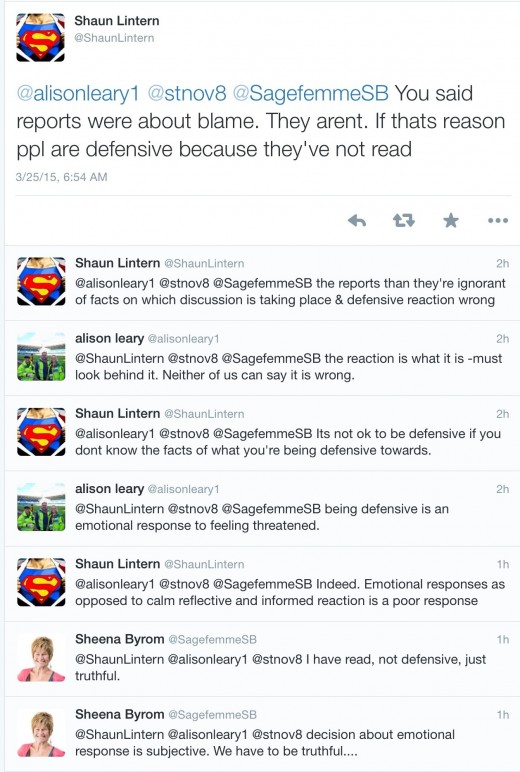
Indeed, midwifery leaders like Cathy Warwick and Sheena Byrom and their colleagues have been holding an impromptu master class on shirking responsibility, such as the Twitter response when Lintern tweeted highlights of the Kirkup interview and Sheena Byrom disparaged them as concerned with “blame.”

image

But Byrom is hardly alone in her desperate efforts to avoid accountability both for the specific tragedies at Morecambe Bay and for the midwifery philosophy of promoting normal birth that led to these tragedies (and others).

What methods have UK midwives used?

1. Ignoring the report

The report has been greeted in the midwifery community with the sound of silence. Cathy Warwick of the Royal College of Midwives has perfected the art of using a lot of words to say absolutely nothing. In  posts on her blog, such as this, she has issued meaningless platitudes and resolutely refused to discuss the core issues in the report.

2. Self-pity

Monday’s piece by an anonymous midwife in The Guardian (I loved being a midwife but bullying, stress and fear made me resign) is a sickening example of how midwives think everything is about themselves and their feelings, patients be damned. See the midwife turn the poor outcome* of a baby at her hands because she failed to recognize the severity of fetal distress into a tale of HER suffering:

The fetal heart is bad – but not bad enough to act. You continue this dance for hours until suddenly the heart trace is terrible – this baby is in real trouble. You press the emergency bell and the world runs into the room. You roll the woman this way and that, attach name bands and tape up earrings, you hold her hand as she is anaesthetised and whisper that the baby will be out soon. You knew something was wrong, but you didn’t have the words and no one listened.

Apparently the fetal heart rate was bad enough to act, but the midwife lacked the clinical competence to recognize it. She “didn’t have the words”??!! What does that even mean? How hard is it tell someone, ” the fetal heart rate indicates this baby is in distress”? Not hard at all, but the midwife didn’t do it.

3. Decrying a culture of “fear”

This is the meme of the moment in midwifery. Midwives are wailing about being held to standards, subject to scrutiny, and forced to use checklists.  What fear are they fighting. They’re fighting the fear of preventable maternal and neonatal deaths, the very things that these measures are designed to prevent.

This stunningly immoral and reflects a preoccupation with midwives’ “experience” over patients health and wellbeing.

4. Insisting that it is critical to “avoid blame”

This is the classic maneuver of anyone who fears accountability, but there are some situations in which blame is not merely appropriate, but absolutely necessary for the well being of all.

Imagine a drunk driver who killed a small child in an accident that occurred precisely because he was drunk. What if he told the judge that he should be allowed to go on his merry way because he didn’t intend the child should die, and therefore it is critical to “avoid blame”? We’d be rightly appalled.

The same principle applies to midwives who didn’t mean for babies and mothers to die preventable deaths because they were too committed to “normal birth” to call for interventions. They were to blame. Their philosophy of promoting “normal birth” is deadly and it is appropriate that we blame it and change it.

5. Insisting that problems can only be solved by “positivity” not negativity

That is just stupidity.

6. Banishing the deaths at Morecambe Bay to the “past”

Deaths due to drunk driving, faulty pharmaceuticals, and even intentional murder are all in the past, too. That doesn’t mean would shouldn’t look at them, learn from them, and hold those responsible for them to account.

7. Bullying on social media

Dr. Kirkup specifically noted the bullying that James Titcombe has been subjected to by midwives who think their professional autonomy is more important than whether other people’s babies live or die. He may not even be aware that WeMidwives chose to forward their “concerns” to his employer, the Care Quality Commission. What were they “concerned” about? He quoted me, whom they despise and fear (rightly so, since I intend to hold them to account). It is obviously pointless to bully me, so they tried to bully him.

and, most importantly,

8. Refusing to apologize

How hard is it to say, “We’re sorry. We allowed our preference for ‘normal birth’ to interfere with our ethical obligation to protect the health and well being of mothers and babies.”?

Apparently it’s very hard because it would require acknowledging the central moral and empirical defect at the heart of contemporary midwifery culture, the obsession with “normal birth.” Midwives have convinced themselves that normal birth isn’t merely better for them, it’s better for their patients. Acknowledging the many preventable deaths that followed ineluctably from this deadly philosophy would mean a wholesale attitude readjustment. Instead of viewing themselves as “guardians of normal birth” they’d be relegated to what they are in reality, mid-level maternity providers who are legally and ethical required to call high level providers like obstetricians, pediatricians and anesthesiologists even when it means sacrificing autonomy.

Unfortunately, for midwives, self-justification and preservation of their own autonomy takes precedence.

I consider myself a very cynical person, but even I am shocked by the brazen behavior of UK midwives. Not only do they feel no remorse for the preventable deaths at the hands of their colleagues, they feel free to flaunt their lack of remorse on social media. Not only do they refuse to be held accountable, they feel free to criticize anyone who dares hold them accountable. Not only do they refuse to recognize the full breadth of human suffering that took place at Morecambe Bay, they feel free to compound that suffering by chastising and bullying the sufferers.

To Cathy Warwick, Sheena Byrom and other UK midwifery leaders I say this:

Have you no shame??!!

*Edited 3/25/15 10 PM from “died” to “poor outcome” to reflect the fact that the midwife does not disclose what happened to the baby.

Pressure to exclusively breastfeed is causing neonatal starvation; what will be the long term effects?

Newborn

Everyone knows that breastfeeding provides benefits to babies. That’s true even in first world countries where the threat of pathogen contamination of the water used to prepare formula is nearly nonexistent.

Those benefits are so small, however, that they are measured in individual IQ points, and fewer episodes of mild neonatal illness like colds and diarrhea.

Nonetheless,among ambitious privilege parents in first world societies, incredible social pressure is brought to bear to force exclusive breastfeeding in the first six months. This pressure has been stimulated in large part by the efforts of lactivists (breastfeeding activists) and the breastfeeding industry, comprised of lactation consultants, and hospital credentialing agencies like the oxymoronically named Baby-Friendly Hospital initiative.

As a result, many infants are starving. Stories of breastfeeding failure abound and countless women are tormenting themselves and their babies, taking herbs, supplements, pumping around the clock, and refusing to supplement with formula in an effort achieve and maintain exclusive breastfeeding.

Which raises the question:

What are the long term consequences in brain function and other areas for babies whose mothers do not produce adequate milk and who, therefore, starve for weeks at a time?

The answer to that question, to my knowledge, is unknown.

We know that dehydration as a result of inadequate breastmilk can cause serious health problems in neonates.

Neonatal hypernatremic dehydration associated with breast-feeding malnutrition: a retrospective survey:

Hypernatremic dehydration in neonates is a potentially devastating condition. Recent reports have identified breast-feeding malnutrition as a key factor in its pathophysiology.

Breastfeeding-Associated Hypernatremia: Are We Missing the Diagnosis?:

The incidence of breastfeeding-associated hypernatremic dehydration among 3718 consecutive term and near-term hospitalized neonates was 1.9%, occurring for 70 infants…

Conclusion. Hypernatremic dehydration requiring hospitalization is common among breastfed neonates…

Fatal Hypernatremic Dehydration in Exclusively Breast-Fed Newborn Infants Due To Maternal Lactation Failure

In this case report, we describe unrecognized fatal hypernatremic dehydration in two exclusively breast-fed neonates due solely to failure of maternal lactation. We further describe epidemiologic and etiologic features of such deaths …

Fortunately, severe complications like death, seizures and permanent disability are relatively uncommon in first world countries, because most mothers will ultimately offer formula supplementation or will seek medical care and a pediatrician will strongly recommend formula supplementation.

The overwhelming number of babies who are getting inadequate breast milk will ultimately survive to get formula supplementation, but they (and their mothers) suffer greatly in the meantime.

I wrote last week about the mother who ultimately resorted to using her friend as a wet nurse after her baby languished for nearly a month without adequate food.

She wrote:

… I tried to be cheerful, but when we were alone, I wept, lashed out at my husband, and spiralled into exhausted, muddy irrationality, panicked about failing the precious boy we had only just met. There was very little distinction between day and night. Time took on a strange new cast. I nursed and pumped and nursed and pumped and nursed some more. I remember my husband singing to our crying son while I soaked my breasts in bowls of warm, salty water. I remember cooling my breasts with cabbage leaves, drinking herbal tinctures, pumping and pumping and pumping. I remember hoping each new lactation consultant was going to be The One. I remember hoping the midwife would drop by, or at least return a call. The baby was wetting nappies, but he needed to nurse constantly, and never got a full belly on which he (and I) could rest for a few hours.

Today on Gawker, another mother writes:

… I’d existed practically shirtless from the moment the baby was born, nursing her every time she whimpered or stirred. I gave her the smallest amount of formula I could soothe her with at a given time, having read that every ounce of formula I gave would be an ounce my body wouldn’t make. I was taking all the herbs all of the other lactation consultants had prescribed, pumping every time I had a spare moment. I was doing everything anyone had ever suggested might help. I was desperate to feed her. I was more determined to figure this out than I had ever been about anything in my life…

But my baby was hungry all the time. And very thin.

What happens to infant brains as a result of short term starvation?

It’s shocking that, as far as I know, there is no research on this question. We devote reams of scientific journals and endless pages of parenting websites to debating the subtle value of the additional antibodies in breastmilk, or the possible existence of unknown long chain fatty acids that may promote brain development in the critical early weeks of the neonatal period, but we devote no effort to determining the effect of the tremendous metabolic insult of starvation — lack of calories, lack of fluid, increased serum sodium, etc. — that occurs in those same critical early weeks of the neonatal period in a significant portion of infants whose mothers are attempting to breastfeed them exclusively.

We know that a significant proportion of women (5% or more) cannot produce enough breastmilk to fully nourish an infant. We know that, as a result, a significant proportion of babies spend days, or even weeks, starving, losing weight, hungry (and screaming) for hours at time, unable to settle or sleep.

That cannot be good for the developing neonatal brain.

Does it impede neonatal brain development? Do these infants lose IQ points?

We have no idea.

So why are we pressuring women into exclusive breastfeeding when have no clue whether we are consigning a significant proportion of infants not merely to weeks of misery but possibly a lifetime of subtle (or not so subtle) cognitive effects?

Dr. Amy