No, you are not entitled to your own opinion about the safety of homebirth … or vaccines … or detoxes, etc. etc. etc.

iStock_000054408438Small

Here at The Skeptical OB, we are treated to a steady stream of natural childbirth, homebirth and breastfeeding advocates parachuting in to “educate” everyone else. Sadly for them, they usually end by flouncing off after only a day or two. It’s almost as if they read Skeptico’s The Woo Handbook and are putting its principles into practice [with my comments in brackets]:

  • Start by telling skeptics you want to “educate them on the facts”…
  • When the skeptic comes back with demands for “evidence” (they love that word) for your claims, you should say the skeptic is being “defensive”. Alternatively you could try a passive aggressive approach and say the skeptic is “attacking”…
  • Remember, your personal experience is always more valid than their scientific studies (or your lack of them). Anecdotes will convince more people you’re right than any number of “studies” …
  • Question the skeptic’s experience or qualifications… [i.e. point out that Dr. Amy is retired as if this is a big secret that isn’t featured in the sidebar of the blog] …
  • Question the motives of everyone [except for the people who agree with you] …
  • After the debate has been going for a while you should say you’ve provided studies to support your position, even though you haven’t. [Or, alternatively, insist that you “don’t have time” to provide citations for the “many” studies that support your position]
  • … [W]hen you’ve used up all the above tactics, say you’re not going to waste any more time with the skeptics you’ve been debating because they’re too sad, stupid, closed-minded, ______ (insert other flaw the skeptic has) to understand your brilliant arguments…

Finally, when all else fails, insist that you are entitled to your own opinion.

Except that you are not. As Philosophy Professor Patrick Stokes explains:

You are not entitled to your opinion. You are only entitled to what you can argue for.

Why?

The problem with “I’m entitled to my opinion” is that, all too often, it’s used to shelter beliefs that should have been abandoned. It becomes shorthand for “I can say or think whatever I like” – and by extension, continuing to argue is somehow disrespectful. And this attitude feeds, I suggest, into the false equivalence between experts and non-experts that is an increasingly pernicious feature of our public discourse.

What’s an opinion?

Plato distinguished between opinion or common belief (doxa) and certain knowledge, and that’s still a workable distinction today: unlike “1+1=2” or “there are no square circles,” an opinion has a degree of subjectivity and uncertainty to it. But “opinion” ranges from tastes or preferences, through views about questions that concern most people such as prudence or politics, to views grounded in technical expertise, such as legal or scientific opinions.

You can’t really argue about the first kind of opinion. I’d be silly to insist that you’re wrong to think strawberry ice cream is better than chocolate. The problem is that sometimes we implicitly seem to take opinions of the second and even the third sort to be unarguable in the way questions of taste are. Perhaps that’s one reason (no doubt there are others) why enthusiastic amateurs think they’re entitled to disagree with climate scientists and immunologists and have their views “respected.”

Here’s the money quote:

If “Everyone’s entitled to their opinion” just means no-one has the right to stop people thinking and saying whatever they want, then the statement is true, but fairly trivial. No one can stop you saying that vaccines cause autism, no matter how many times that claim has been disproven.

But if ‘entitled to an opinion’ means ‘entitled to have your views treated as serious candidates for the truth’ then it’s pretty clearly false. And this too is a distinction that tends to get blurred.

What does that mean for those who parachute in to “educate” us about homebirth, or any other aspect of pseudoscience?

It means that while you are entitled to have whatever beliefs you wish about these subjects, but you aren’t entitled to have your beliefs taken as serious candidates for discussion unless you can defend them logically and with citations to appropriate scientific papers (papers that you have actually read and understood).

Otherwise, you might as well skip directly to Skeptico’s last principle:

Announce that you’re not going to waste any more time with the commentors on The Skeptical OB because they’re too sad, stupid, closed-minded, ______ (insert other flaw the skeptic has) to understand your brilliant arguments

Be sure to stick the flounce and don’t be tempted to come back within the hour to keep making the same absurd “arguments” again.

She trusted birth … and it killed her. Now her children will pay the price.

iStock_000000453531Small

Thinking about homebirth?

Have you considered the potential impact on your older children and the baby of leaving them motherless? Neither did the mothers of these 22 children who experienced the ultimate catastrophe, all because their mothers wanted a specific birth experience.

Florida woman Stephanie left 6 small children motherless, including her newborn, after choosing homebirth.

Australian woman Caroline Lovell left 2 small children, including her newborn, motherless after bleeding to death in front of her clueless homebirth midwives.

This young American woman left 4 small children motherless, including newborn twins after bleeding to death at homebirth.

This 24 year old American woman left her newborn motherless after bleeding to death at homebirth.

British woman Joanne Whale left her newborn motherless after bleeding to death from a uterine eversion at homebirth. Her midwife did not know how to start an IV that might have saved her life.

British woman Claire Teague left two children motherless, including her newborn, after bleeding to death from a retained placenta at homebirth. Her midwife claimed in her defense that Claire “had a really lovely spontaneous birth at home and I hope Simon [her husband] in time will remember that.”

Now comes word that Maria Zain, a prominent Malaysian-British advocate for unassisted homebirth, has left 6 children motherless, including her newborn, after her 4th unassisted homebirth.

From the Facebook page of ICAN of Malaysia (International Cesarean Awareness Network):

One of the Malaysian ICAN leaders, Maria Zain, passed away on 28th December.

A mother of 6 children, her first two births were cesarean births.

She was and still is through her writings one of the strongest voices in childbirth advocacy in Malaysia. She was extremely passionate in lending support to all mothers especially those with past multiple cesarean history…

Originally from Malaysia, Maria Zain was a freelance writer based in Nottingham, United Kindgom …

Maria was also a certified Childbirth Educator (AMANI Birth Institute), and a home-educating Muslim mother of five children, ages 9 and under – her sixth child, a son, birthed as she returned to Allah subhanahu wa ta’ala, on 28 December 2014.

Maria often found herself writing about natural birth and parenting, and had a passion for homeschooling and autonomous learning. “Unfortunately, there aren’t any images of strong and powerful women bringing their babies earth side in a calm and peaceful manner, surrounded by people who love and support her unconditionally.”

According to a colleague of hers at AMANI Birth Institute, Zain died at an unassisted homebirth:

Unasisted home birth. As were her previous three. No word yet on what happened. I’d imagine a postpartum haemorrhage, but don’t know…

No medical professional (no midwife, no doctor)…I assume just her husband and kids were there. I don’t have the details but most likely no one else.

Zain was a talented woman and loving mother, but when it came to the subject of homebirth, she airily ignored the risks. It is chilling reading her perspective in Is Home Birth Safe? Know The Pros And Cons, only a little more than a year ago. The article was written in response to the experience of a new mother who bled to death at a homebirth in Malaysia:

Certified childbirth educator from AMANI Birth Maria Zain said, mothers who decide on unassisted home birth vary in reasons. Some have been exposed to positive homebirth stories while others have had poor hospital experiences…

As a childbirth educator, we usually talk about the process of natural birth and how the female form has already been designed to birth. We do not shun medical intervention, but we encourage expectant parents to fully understand the benefits and risks of each intervention and encourage them to either give informed consent refusal. It’s their right, either way…

Maria, who had home birthed three children after two prior hospital births, said home birth is not new in Malaysia and was a norm before the advent of hospital birth-normalcy.

In Maria Zain on the The Birth-Faith Irony: Who Are We Really Relying On?, Zain wrote:

While for many, medicalised births seem the way to go. Why would anyone want to avoid medical interventions, when they are supposedly there to save lives? And why on earth would anyone have their babies at home when there are machines at hospitals that can gauge progress and complications? Contrary to this popular belief, there is plenty of statistical data that proves that even the minute intervention, including monitoring, causes the birth process to become jagged and disturbed, leading to a cascade of interventions that cause potential harm to both mothers and babies…

In private practice, where the underlying motive for the birth industry is profits, medical intervention is the cultural norm, with inductions being scheduled even weeks before the infamous EDD, regardless of the health of the mother and baby. Scare tactics also run high, as do non-emergency and elective Caesarean sections (c-sections).

In a piece for Hypnobirthing Malaysia,Zain explained her response at a birth where she served as doula:

… I needed to shed tears for mothers who didn’t know that it was that simple, who felt their births were torturous, dangerous, frightening and stressful, and that they needed to be in a place with interventions and drugs. I know there are cases where doctors save lives, but when they step back and be the emotional support that they should be, most mothers would flourish too, bringing their newborns into their arms like it was the most primal act of the female design. Birth can be empowering, natural, beautiful and a spiritual journey for a mother and I wanted to cry for those were short-changed of this experience.

Zain was shedding tears for women deprived of the “birth experience” she thought was their right. Now her 6 children will shed oceans of tears over her death, which was almost certainly preventable. Who will care for her 6 children now with the love and passion she brought to her mothering? Who will homeschool them now that she is gone? To whom will they run to confide their joys and fears, triumphs and disappointments? Their lives will never be the same.

Which was ultimately more important, her birth experience or their need for their mother?

Consider what your death would do to your children the next time you are considering homebirth.

Fed up with midwifesplainin’

IMG_0143

Over the weekend we were treated to the spectacle of not one, but two separate midwives actively engaged in midwifesplainin’.

What’s midwifesplainin’? It’s when a midwife tells women whether they are or are not in pain, whether they do or do not “need” pain relief, whether their own assessment of their pain level and tolerance is real or the result of brainwashing, and how their babies should be fed.

People say that doctors are condescending, but we’ve got nothing on midwives. Doctors may condescend to patients when explaining medical conditions or treatments, but these are objective phenomenon. Midwives bring paternalism to a whole new level when they substitute their subjective assessment of a patient’s experience of pain with the patient’s actual, stated experience.

Before delving into the phenomenon of midwifesplainin’, I want to make it clear that this was something I never saw in the many years I worked with certified nurse midwives. The CNMs I worked with were highly trained, deeply compassionate, and although they may held strong views on what a “good birth” meant for them personally, I never saw them substitute their beliefs for a laboring woman’s own experience. Apparently in the last 20 years, midwifery has been thoroughly radicalized, particularly in the UK and Australia. And it would be hard to find better examples of that than our visitors, Rob, a midwifery student (or aspiring student) from the UK, and Katie, a midwife from Australia, .

They are both masters of midwifesplainin’!

Rob, a midwifery student, parachuted in to “educate” me and the commentors, who between us have literally 100+ years of actually caring for laboring women, and many of whom have actually given birth. If that’s not chutzpah, I don’t know what it is. According to Rob, I am “woefully misinformed” so he has patiently midwifesplained the facts of birth:

Natural childbirth is better…. it is healthier, more empowering, superior and it’s far better for mum and baby. It may not be safer, but thankfully we have skilled midwives and behind those skilled OBS who are there as backup when complications do arise, or to manage high risk cases…

But what if women don’t feel that unmedicated vaginal birth is better for them and their babies? Too bad. Rob midwifesplained why what he thinks trumps their personal experiences.

When it was explained to Rob by a number of different commentors, most of them women, that women WANT epidurals, Rob midwifesplained why we can’t trust women to evaluate their own pain; obviously women who want relief must have been brainwashed. Rob doesn’t think that women can be trusted to assess their own pain.

Most people want them? Haha… only in America 😉 I blame the media for that. Most people in the USA believe giving birth means lying down on their back in a hospital… that is simply wrong and not the way. Media and medicalised models have not helped. We’re coming at this from entirely different models of midwifery from two entirely separate countries but I know which I’d prefer to give birth in (if I were a woman of course).

Rob midwifesplains that what HE thinks is far more important than what women think:

Normalising elective cs (and to some extent epidurals) in the minds of the public just doesn’t feel right to me.

Poor Rob! It doesn’t feel right to him.

Like most practitioners of midwifesplainin’, Rob is very censorious:

Amy you should be very ashamed of yourself. You are totally devoid of compassion and have a very biased view which you put across in the most unprofessional and vile way. I dare say lots of women are glad you no longer practice. You do not come across as any kind of advocate for women. The whole tone of this site, your attitude and that of some other commentators here depict people who have home-births as baby murders along with their midwives. You thrive on scaremongering and twisting facts to suit your own aims with no thought for others or even women’s rights.

A few people will be glad that I will not grace your website ever again, but none more so than me. Reader beware…. this website is pure poison.

He must think his poison remark is pure brilliance, he repeated less than 24 hour after he said it the first time.

Actually, I think Rob ought to be ashamed, ashamed that he thinks women should not be trusted to evaluate their own pain and determine whether and how they want to treat it. That’s the mind boggling paternalism of midwifesplainin’ is all its glory.

Katie from Australia is a practicing midwife, and, as such, an expert in midwifesplainin’:

Why is there no mention in this discussion about the negative effect of birth interventions on the mother and babies’ ability to breastfeed? Sure some interventions are necessary but we need more research on how we can ameliorate the negative effect they can have on breastfeeding.

That would probably be because birth interventions DON’T have any impact on women’s ability to breastfeed.

But midwifesplainers are always undaunted by actual scientific evidence. And they are undaunted by the fact that they haven’t bothered to read the scientific literature that we are discussing. When asked for references to support her claims, Katie says:

My time is limited to explain.

Poor Katie; how sad that she has so little time to devote to us that she can’t bother to read the literature that she is busily midwifesplainin’ to us.

I am not saying that epidurals and C/Sections don’t have their place. Women may want epidurals and C/Sections are sometimes necessary, but they also want to breastfeed…

This may include a sleepy baby who doesn’t initiate or has dampened breast seeking behaviour, inflated baby weight and severely engorged breasts.

Awww, how generous of Katie to concede that epidurals “have their place,” as if it is up to the midwife to decide whether a patient “needs” an epidural.

Katie, too, is censorious. It seems to be an occupational hazard for midwifesplainers:

I was presenting a different point of few not trying to educate anyone. Group think seems to be the norm here and if they don’t like the message, some here attack the messenger. I have no time for that kind of nonsense…

But, like Rob, she’s having trouble sticking the flounce. She too has continued her midwifesplainin’ days after she threatened to leave.

I wish I could report that Rob and Katie have had their eyes opened by the discussions here, but midwifesplainers never listen to anyone but themselves and the colleagues who agree with them. But let’s see if I can convey to them and their midwifesplainin’ colleagues the depth and breadth of their obnoxiousness.

Rob and Katie, it is not your right, your prerogative or your job to substitute what YOU think women are feeling from what THEY are actually feeling. It is unethical to imagine, as you clearly do, that you are a gatekeeper for access to pain relief. How dare you pretend that you know better than women themselves what they are experiencing? Who, exactly, do you think you are??!!

Oh, right. You are midwives, so you think that entitles you to midwifesplain’ obstetrics to obstetricians, breastfeeding to people who have actually read the scientific literature that you can’t be bothered to read, and women’s pain levels to the women themselves. If anyone should be ashamed, it is you.

Medicalizing birth was the best thing that ever happened to women

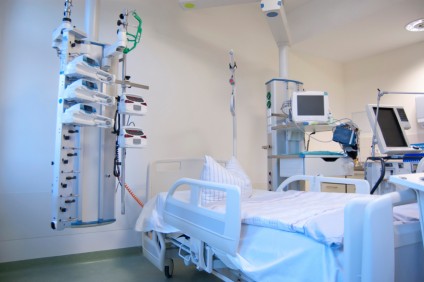
Intensive care unit with monitors

Childbirth is a reproductive rights issue.

Every woman deserves access to high quality obstetric care, and every woman deserves access to state of the art pain relief. That’s because medicalizing birth was the best thing that ever happened to women and all women should be able to share in its benefits.

Childbirth, in every time, place and culture, is a leading cause of death of young women and the leading cause of death of babies. As historian Judith Walzer Leavitt has noted in Under the Shadow of Maternity: American Women’s Responses to Death and Debility Fears in Nineteenth-Century Childbirth, until the last 100 years:

A possible death sentence came with every pregnancy.

Visit any cemetery, from any century, in any country, and you will find the gravestones of the countless young women who died in childbirth, many after days of horrific agony.

Maternity, the creation of new life, carried with it the ever-present possibility of death. The shadow that followed women through life was the fear of the ultimate physical risk of bearing children. Young women perceived that their bodies, even when healthy and vigorous, could yield up a dead infant or could carry the seeds of their own destruction… Nine months’ gestation could mean nine months to prepare for death.

The very real possibility of death during childbirth shaped women’s lives and relationships:

Perhaps more valuable to our understanding of the reality of maternal death is the observation that most women seemed to know or know of other women who had died in childbirth. One woman, for example, wrote that her friend “died as she has expected to” as a result of childbirth as had six other of their childhood friends. Early in the twentieth century approximately 1 mother died for each 154 live births. If women delivered, let us estimate, an average of five live babies, these statistics can mean that over their reproductive years, one of every thirty women might be expected to die in childbirth. In another early-twentieth century calculation, one of every seventeen men claimed they had a mother or sister who had died as the immediate results of childbirth.

Medicalizing childbirth changed that. Now no woman with access to medicalized birth expects to die during pregnancy.

But living through the birth was only the first hurdle for many women. Some sustained injuries that affected them for the rest of their lives:

In the past, the shadow of maternity extended beyond the possibility and fear of death. Women knew that if procreation did not kill them or their babies, it could maim them for life. Postpartum gynecological problems – some great enough to force women to bed for the rest of their lives, others causing milder disabilities – hounded the women who did not succumb to their labor and delivery. For some women, the fears of future debility were more disturbing than fears of death. Vesicovaginal and rectovaginal fistulas .., which brought incontinence and constant irritation to sufferers; unsutured perineal tears of lesser degree, which may have caused significant daily discomforts; major infections; and general weakness and failure to return to prepregnant physical vigor threatened young women in the prime of life.

Medicalizing childbirth changed that. Now no woman with access to medicalized birth expects to become permanently incontinent of urine and feces as a result of childbirth.

Women viewed childbirth not as the empowering fantasy so beloved of midwives and natural childbirth advocates, but as a specter of unremitting agony:

Apart from their concern about resulting death and physical debility, women feared pain and suffering during the confinement itself. They worried about how they would bear up under the pain and stress, how long the confinement might last, and whether trusted people would accompany them through the ordeal. The short hours between being a pregnant woman and becoming a mother seemed, in anticipation, to be interminably long, and they occupied the thoughts and defined the worries of multitudes of women. Women’s descriptions of their confinement experiences foretold the horrors of the ordeal.

The voices of these women have the power to move us profoundly more than one hundred years later:

Josephine Preston Peabody wrote in her diary of the “most terrible day of [her] life,” when she delivered her firstborn, the “almost inconceivable agony” she lived through during her “day-long battle with a thousand tortures and thunders and ruins.” Her second confinement brought “great bodily suffering,” and her third, “the nethermost hell of bodily pain and mental blankness. . . . The will to live had been massacred out of me, and I couldn’t see why I had to. Another woman remembered “stark terror was what I felt most.”

“Between oceans of pain,” wrote one woman of her third birth in 1885, “there stretched continents of fear; fear of death and dread of suffering beyond bearing.” Surviving a childbirth did not allow women to forget its horrors. Lillie M. Jackson, recalling her 1905 confinement, wrote: “While carrying my baby, I was so miserable… I went down to death’s door to bring my son into the world, and I’ve never forgotten. Some folks say one forgets, and can have them right over again, but today I’ve not forgotten, and that baby is 36 years old.” Too many women shared with Hallie Nelson her feelings upon her first birth: “I began to look forward to the event with dread-if not actual horror.” Even after Nelson’s successful birth, she “did not forget those awful hours spent in labor…”

Medicalizing childbirth changed that. Now no woman with access to medicalized birth expects to suffer severe, unremitting pain from the beginning of labor to the end. She can request and receive an epidural and simply rest and sleep through hours of contractions.

Indeed, so confident of excellent pain relief are women who have access to medicalized childbirth that some women actually think they’ve “achieved” something by refusing it.

One of the great deceptions of contemporary midwifery involves midwives fooling themselves and others that the philosophy of natural childbirth reverts back to unmedicalized birth. Nothing could be further from the truth. Natural childbirth is a philosophy of privilege, specifically the privilege of having easy access to medicalized childbirth. An “unmedicalized” birth can only be safe when embedded firmly within a society to provides unlimited access to the ability of obstetricians to rescue women from their own folly. A midwife without an obstetrician is better than nothing at preventing death in certain limited circumstances, but virtually useless when it comes to saving lives in most emergencies. Without the ability to perform a C-section, midwives, like their ancient counterparts, are helpless in the face of everything from life threatening crises to simple failures of the baby to fit through the maternal pelvis. Without the ability to end a protracted labor by means of forceps or C-section, midwives are helpless to prevent obstetric fistula. Without the ability to offer epidurals, midwives are reduced to pretending that ineffective measures are effective, or, bizarrely, that labor pain is beneficial.

Childbirth is a reproductive rights issue.

Every woman deserves access to high quality obstetric care, and every woman deserves access to state of the art pain relief. Those are only available in a system that medicalizes birth.

My father died 25 years ago today

image

My father died 25 years ago today.

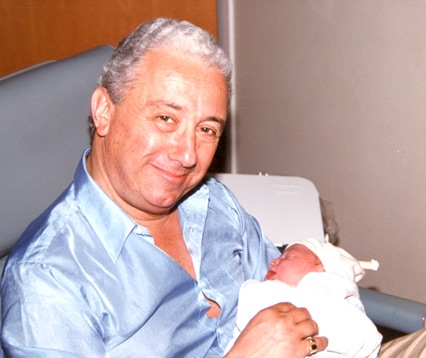
In the picture above, he’s 60 years old, holding my second son less than an hour after his birth. That baby just graduated from law school and is engaged to be married. My father missed it all. He was dead less than 5 months after this picture was taken, although we had no idea at the time that the cancer that would kill him was growing wildly in his chest and had been for months.

Any illusions that I had about the practice of medicine died with him.

Many people confuse my condemnation of the pseudoscience of natural childbirth, lactivism and attachment parenting with blind support of the medical profession. Nothing could be further from the truth. I’ve seen the glaring deficiencies of medical practice up close. My father died at the hospital where I had trained, where I was on the staff, where I had convinced him to switch his medical care. He died after a major medical mistake and, but for my aggressive intervention, would have died in agony while my colleagues looked on as if there was nothing they could do to ease his suffering.

I know what bad medical care looks like, and I know how common it is.

My father had a chest X-ray on November 1, 3 months after the photo was taken, and the day after he first coughed up blood. He had a fist size cancer in the middle of his chest. I got the message as I was finishing up in the operating room and hurried to meet him at the office of the chest surgeon. I didn’t have to go very far; I simply took the elevator.

During the appointment, I listened as the surgeon explained the various grim possibilities: lung cancer, lymphoma, etc. They scheduled a biopsy procedure for two days later and the surgeon asked if my father had any questions. He had only one: How could he have a fist sized tumor in his chest if only a few months before (March) he had been in this same hospital to have bladder stones removed, and his pre-op chest X-ray had been normal? The surgeon was sympathetic; sometimes tumors could grow so fast that it they could be too small to detect even a few months previously.

The biopsy revealed adenocarcinoma with an unknown primary. In other word, the cancer was so aggressive that it had lost all the features of the organ where it originated; it might have been lung cancer, but it easily could have been a metastasis from prostate cancer, or indeed any other cancer.

At some point during those days, I thought to look at the original chest X-ray, the one that had been done routinely in March. I wanted to see if, knowing what we knew now, the cancer could be detected in its earliest stages. I went down to the radiology department and requested the film. I was an attending physician at the hospital and had worked there for years. They handed over the film without question.

It is difficult to capture the sense of shock and horror that I experienced on looking at the X-ray. The cancer had been diagnosed on the pre-op film. Ironically, the diagnosis had been very skilled. The cancer was small and indistinct on the original x-ray, but the radiologist had found it anyway and prominently noted it in the written report. I immediately called my father’s primary care doctor to ask if he was aware of this. He admitted that he had known since November 1, as had the chest surgeon. The surgeon had simply lied when he had he led my father (and me) to believe that the original chest X-ray was clear.

Why had they failed to tell my father of the cancer on his original X-ray? Every doctor had thought that the job of telling the patient belonged to someone else. The radiologist thought that the urologist would tell my father, since the urologist had ordered the x-ray. The urologist thought that the radiologist would alert my father if there were anything abnormal on the x-ray. The anesthesiologist was aware that the chest x-ray showed a small cancer, but assumed that either the urologist or the radiologist had told my father. The radiologist actually sent the urologist the x-ray report, which mentioned the cancer, but the as the urologist admitted at trial years later, he had never looked at it.

Why did the doctors lie about it? When I confronted the primary care doctor he claimed that they did it to protect my father. They didn’t want to “lower his morale.” Obviously it was because no one wanted to admit what had happened, and because they wanted to protect each other. I can’t imagine how they thought they would keep it a secret. I worked at the same hospital. I had complete access to all the records, including the X-ray, yet somehow they convinced themselves I would never look.

Despite multiple types of aggressive chemotherapy, my father died 8 weeks to the day after the diagnosis. I wish I could tell you that his last day was a revelatory experience, that I had never realized how poorly dying patients were treated. Unfortunately, I knew better, and therefore was prepared to fight on his behalf.

Oh Christmas evening my mother called me at home to tell me that my father was in agony and no one would help him. I nursed my infant son to sleep and headed for the hospital, my hospital. When I saw my father, I was appalled. He was sitting bolt upright in bed, gasping for air, and clutching his chest.

I paged the intern myself and demanded his presence. The intern, to his credit, was abashed. He acknowledged that my father was clearly in terrible distress, and we agreed that morphine would ease his agony, but the intern refused to order the morphine because it “might hasten” his death.

My father was dying. Every treatment had failed and there was nothing left to try. There was no hope of recovery. And we were going to withhold pain medication … why? To prolong his death?

As you might imagine, I did not take “no” for an answer.

It was well after midnight at this point when the intern woke up his resident. I could hear that the resident was unwilling to order the pain medication, and I grabbed the phone. The resident insisted that he didn’t have the authority, only the oncology fellow could decide.

So I called the oncology fellow myself and woke him up. He couldn’t possibly order pain medication in this setting, because it might slow my father’s breathing and thereby hasten his death. Only the attending physician on call had the authority to issue that order.

Then I called the attending at home and woke him up. He listened and replied, “Look, Amy, I know you’re upset, but it’s the middle of the night. Why don’t we wait until morning when your father’s own doctor will be back and he can make the decision?”

By this point, I may, possibly, have raised my voice a bit, and a crowd of nurses and support personnel had gathered to watch from a discreet distance. I demanded that he appear in person to tell me to my face that he would not order the pain medication.

He relented and I handed the phone to the nurse so she could record the order. I started to relax.

The nurse hung up the phone and I looked at her expectantly.

“I can’t give that morphine,” she said. “I’m not comfortable with giving medication to a patient so near death.”

“You’re not comfortable?” I may, possibly, have yelled. “Not comfortable? Do I look like I care about your comfort?”

I threatened to break into the narcotics cabinet myself and get it, and then report her to the hospital administration for failing to follow an order.

She, too, relented and hung a morphine drip. Within 5 minutes my father began to ease back against the pillows. After 10 minutes, he looked at me and smiled. “I feel great!” he said. “I haven’t felt this good in months. This is terrific.”

He died less than 24 hours later. Throughout the day, he kept telling everyone how wonderful he felt. The rest of my family kept thanking me for demanding what I should not have had to demand: adequate pain relief for a dying man.

And so my beloved father died in the hospital where they had made a dreadful mistake and where they nearly got away with denying him the pain relief that was the only thing they had left to give … my hospital.

It’s been 25 years and I miss him every day. Believe me, I have no illusions about the state of contemporary medicine.

Top 10 posts of 2014

image

These are the top ten most read posts of the year on The Skeptical OB.

The topics vary widely from Rhogam to vaginal tears, from stories of babies who died unnecesarily at homebirth to the hideous statistics of homebirth deaths in the US, from the ridiculous to the sublime.

Without further ado, here they are:

10. What is Rhogam?

9. Hold the guilt! New study finds benefits of breastfeeding dramatically overstated.

8. Jan Tritten crowd sources a life or death decision and the baby ends up dead

7. In memory of a baby boy who did not have to die

6. Vaginal weight lifting

5. Six red flags you need to recognize to quack-proof yourself

4. The best method for getting pregnant? Have sex.

3. Baby Jacob: a victim of the 39 week rule

2. Vaginal tears

1. Homebirth midwives reveal death rate 450% higher than hospital birth, announce that it shows homebirth is safe

My personal favorite post of the year is: Dr. Amy’s Plan for a safe, sane, satisfying birth.

What was your favorite?

The alarming inaccuracy of Slate’s piece on prenatal testing

iStock_000035509214Small

Americans’ public understanding of science is woefully inadequate. We are remarkably ill informed on issues as wide ranging as evolution and climate change, rendering us uniquely vulnerable to manipulation by special interest groups and startlingly gullible when it comes to the peddling of pseudoscience “cures” by quacks and charlatans.

That’s why it is especially disappointing to see a mainstream publication featuring a piece that actually increases public misunderstanding of science instead of ameliorating it. Unfortunately, Libby Copeland’s article The Alarming Inaccuracy of Prenatal Testing displays  a remarkable lack of understanding of science, explaining nothing, confusing everything, and creating unnecessary fear for pregnant women.

According to Copeland:

The New England Center for Investigative Reporting has a story out that should alarm every woman who’s recently had blood drawn for a prenatal screening. Beth Daley reports that, “sparked by the sequencing of the human genome a decade ago, a new generation of prenatal screening tests…has exploded onto the market in the past three years. The unregulated screens claim to detect with near-perfect accuracy the risk that a fetus may have Down or Edwards syndromes, and a growing list of other chromosomal abnormalities.”

The problem is, they don’t.

Copeland’s central claim is utterly false.

Copeland, who is generally an excellent writer, falls into a common trap that afflicts the unwary. She fails to recognize the difference between the colloquial meaning of words and the meaning within scientific discourse. Because she utterly misunderstands the use of words like “screening,” “accuracy” and “predictive,” she has produced a breathless piece of baseless fear mongering.

Before we can understand what’s wrong with Copeland’s piece, we need to understanding the meaning of those words in scientific discourse. Let’s start by framing the problem.

Most expectant parents want to know if their unborn child is afflicted with a serious genetic problem. With the information in hand, they may choose to terminate the pregnancy or to consult with appropriate specialists to prepare for the birth of the child. Amniocentesis (putting a needle into the uterus and drawing off amniotic fluid for analysis) can provide a nearly 100% accurate diagnosis of the major genetic problems of interest such as Down’s syndrome.

Amniocentesis is a diagnostic test, because it provides a diagnosis. The problem with amniocentesis is that it is invasive, expensive and increases the risk of miscarriage. If all 4 million pregnant women had amniocentesis each year, there would be hundreds of miscarriages and the cost would be astronomical. Obviously we don’t want to do that. What we’d like to do is restrict the use of amniocentesis only to those women at high risk of carrying a baby with a serious genetic problem.

How do we find out who is at high risk? We offer all 4 million pregnant women a screening test.

The critical difference between a diagnostic test and a screening test is this:

A screening test can never provide a diagnosis.

Never!

What do we mean then when we talk about the accuracy of a screening test if a screening test, by definition, can NEVER give us a diagnosis?

The perfect screening test would mean that everyone who has a positive test result actually is at high risk (positive predictive value = 100%) and everyone who has a negative result is actually at low risk (negative predictive value = 100%). However, and this is the critical point, even a perfect test with 100% positive predictive value and 100% negative predictive value could NEVER tells us which child has Down’s syndrome or any other major genetic problem. It can ONLY tell us who ought to have amniocentesis; that’s it, nothing more.

Copeland clearly does not understand this when she writes:

… [W]hile these non-invasive prenatal tests are more accurate than the combination of blood test and ultrasound … they nevertheless can lead to false alarms as much as half the time. The rarer the condition, the greater the risk of false alarm. And yet they promise things like “99% Accurate, Simple & Trusted.”

The test promises that is is 99% accurate AT IDENTIFYING WOMEN AT RISK, not at diagnosing major chromosomal problems.

Copeland concludes her piece with a bit of information that she believes is a scathing indictment of the test, but it actually a scathing indictment of her understanding:

Three of the labs returned results indicating that the women were pregnant with healthy female fetuses.

The catch? The women who gave their blood samples weren’t pregnant at all.

That’s only to be expected from a screening test. A false positive means that the test indicates high risk for a major genetic problem when no major genetic problem exists. Therefore, a non-pregnant woman could have a false positive test. This is not news to people who understanding screening tests.

Copeland had a perfect opportunity to educate people about what screening tests can and cannot do, and she blew it. But she could redeem herself and her piece. Copeland could write a revision explaining her error and why expectant parents shouldn’t make the same error that she did. That would increase the public understand of this specific area of science, which, presumably was the reason for writing the piece in the first place.

Phil Plait, supporting Mayim Bialik to promote science is like supporting Bill Cosby to promote education

Bialik

I love, love, love Phil Plait of Bad Astronomy. I’m especially fond of his full throated condemnation of anti-vaxx pseudoscience.

And I’m deeply sympathetic to the position he’s found himself in. I, too, have written about specific issues and found myself attacked for a tangent that had little to do with the main point. Unfortunately, I can’t agree with his defense of his error in promoting Mayim Bialik as an actress with a passion for science. Bialik, is a fierce proponent of attachment parenting, and especially its pseudoscience offshoots. She is a leading avatar for homebirth, anti-vaxx and homeopathy. Yes, she does have a PhD in neuroscience and she plays a scientist on TV, but that makes her more dangerous not less.

What did Plait do?

A while back I was skimming my Twitter stream, and saw .. a fun graphic created by Elise Andrew of I F’ing Love Science …

The picture is titled “Actresses with a passion for science” and shows five such women: Hedy Lamarr, Lisa Kudrow, Mayim Bialik, Natalie Portman, and Danica McKellar. I know how important it is to have good role models for kids, and how girls need more support in getting into STEM (Science, Technology, Engineering, and Math) fields. Like it or not, actors and other famous people bear weight, so showing famous actresses who love STEM in my opinion is a pretty good thing.

So I retweeted the picture, adding “Love this” to it.

Then things got interesting.

Within minutes I started seeing responses about Dr. Bialik. Yes, “doctor”; she has a PhD in neuroscience. The thing is, she also holds a number of beliefs with which I and many others disagree, some of them very strongly. For example, she’s a spokesperson for a group called Holistic Moms—they support homeopathy, a provably worthless and arguably dangerous bit of “alternative medicine”. They are also strongly anti-vaccination, and Bialik herself supports anti-vaxxers (she has stated she has not vaccinated her own children, a position I am strongly opposed to).

I knew all this when I retweeted the picture. I’ll admit, I hesitated before doing so, specifically because of this. Is promoting this picture also promoting anti-science beliefs? Looking at the responses on Twitter, a lot of people think so. I see their point, but I also don’t think this is quite so black-and-white.

Why not?

Clearly, she can be a positive role model for science. However, we must have a care. The same people who might be inspired by her pro-science message might look into her more and find that she holds some less-supported beliefs, some that are anti-science.

So is using her in that montage of pictures a good thing or a bad thing? I would argue it’s neither, but the good outweighs the bad. The facts are that she is a scientist, she is an actress, and the picture was about actresses who are scientists. In point of fact, celebrities can be influential, and it’s a good thing that people see science supported by celebrity.

I disagree, but that’s a matter of opinion.

Here, though, is where Plait went off the rails:

But of course we should also be careful not to put celebrities on too high a pedestal. Yes, Bialik has beliefs unsupported by science. But so does everyone…

I doubt that claim is even true, but that’s not the worst part. Many celebrities may have beliefs unsupported by science, but, in my view, they cross a very bright line when they profit from promoting pseudoscience. Simply put, Mayim Bialik shills for Big Placebo. She’s very far over that bright line.

When anyone (especially a celebrity) profits from promoting pseudoscience, the bad emphatically outweighs the good.

Plait claims:

Bialik has done a lot to raise awareness of science and women’s contributions to it. Celebrating her (and the other four actresses) for that is great, and that was the sole purpose of the picture, and it’s appropriate to praise her there.

No one could be more committed to women in science than I am, but women aren’t in such desperate straits that we should be reduced to praising pseudoscience shills. Moreover, including a shill like Bialik insults the intelligence of young women thinking about careers in science. If you wouldn’t use Dr. Oz, another celebrity shill for Big Placebo, to promote a career in medicine, you shouldn’t be using Mayim Bialik to promote women’s careers in science. The graphic would have been equally powerful, indeed more powerful, if Bialik had been left out.

Plait concludes:

That’s what I meant about this not being black-and-white. We’re all shades of grey, and if you really only want to praise someone who is absolutely the perfect icon of science in every way, well, good luck finding them. You’ll be looking a long time.

As for me, I will continue to support science the best I can, and also support women in science. That’s the bigger picture here, and one we should all bear in mind.

But supporting a woman who shills for Big Placebo is not supporting women in science. It’s like saying its still okay to support Bill Cosby as a role model for young men because he’s a celebrity who got a PhD in education.

This is not about supporting science. This is about appropriate role models, and Mayim Bialik is not an appropriate role model for women in science. To insist that she is demeans both science and women.

What’s an ethical response to homebirth, Dr. Burcher? Start by telling the truth.

Got ethics ?

Homebirth advocates have been praising and sharing a recent piece by obstetrician Paul Burcher entitled What’s an Ethical Response to Home Birth?

Unfortunately, in offering an answer to the question, Dr. Burcher fails in his most important ethical responsibility. He hasn’t told the whole truth. Since he has held back (or, less likely, is unaware of) important facts, his answer is deeply misleading.

Who is Dr. Burcher ?He is an Associate Professor of Bioethics and Obstetrics and Gynecology at Alden March Bioethics Institute at Albany Medical College.

He previously worked as an obstetrician-gynecologist in Eugene, Oregon, where served as the back up physician for Melissa Cheyney, CPM. Cheyney, as you may recall, had some ethical challenges of her own. She was an embodiment of the ethical problem of “conflict of interest” while she held simultaneous positions as Director of Research of the Midwives Alliance of North America (MANA), the trade organization of homebirth midwives and Chair of the Oregon Board of Direct Entry Midwifery. In her first position she was privy to a large amount of data showing the disastrous outcomes of homebirth in Oregon, which she deliberately refused to share with the state of Oregon.

Burcher collaborated with Cheyney on a commentary in Birth:Issues in Perinatal Care (a journal published on behalf of Lamaze International), A Crusade Against Home Birth that encapsulating in a few words the self-pity, conspiracy theories and mendacity that are at the heart of homebirth midwifery.

Dr. Burcher bases his own piece on a nifty bit of mendacity.

An observational study from The Netherlands that evaluated more than 500,000 births in homes and in hospitals showed no increase in adverse outcomes of any kind with home birth in low-risk women.5 So home birth, in ideal conditions where midwives and physicians work together as a team and where transport to hospitals in an emergency is highly efficient, appears as safe as hospital birth…

But as Dr. Burcher knows (or ought to know if he is keeping up with the scientific literature), that’s not what the paper shows at all. Dr. Burcher neglects to mention two critical pieces of information.

1. The Netherlands, the country with the highest rate of homebirth in the industrialized world, has one of the worst perinatal mortality rates in Europe.

2. The perinatal mortality rates for Dutch midwives caring for low risk women (home or hospital) is HIGHER than that for Dutch obstetricians caring for HIGH risk women. That is a scathing indictment of midwifery in the Netherlands. The paper that Burcher cites doesn’t show that homebirth is safe; it shows that midwives are dangerous.

Dr. Burcher does acknowledge that homebirth in the US has a higher death rate than comparable risk hospital birth:

I would agree … that home birth in America probably incurs a small increase in absolute risk of poor outcomes for newborns delivered at home.

Notably, Dr. Burcher doesn’t dare cite  Outcomes of Care for 16,924 Planned Home Births in the United States: The Midwives Alliance of North America Statistics Project, 2004 to 2009 by Cheyney and MANA purporting to show the safety of American homebirth. Apparently, even he knows that it actually shows that homebirth increases the risk of perinatal death.

The heart of Burcher’s argument is this:

What, then, are our professional obligations as obstetricians working in hospital settings to women who choose to stay home with a midwife for their birth? At the risk of sounding glib by answering a question with a question, do we enhance the safety of childbirth for all women by shunning home birth or by treating midwives collegially? I believe the correct answer is the latter, and since maternal-child safety was one of the founding reasons for ACOG’s existence, I believe we have an ethical obligation at a minimum to accept transports from home with the respect and professional dialogue we afford our colleagues …

That, of course, tells us nothing. Physicians already have an ethical responsibility to care for all patients regardless of how they end up in the emergency room. Dr. Burcher’s glibness is not in answering a question with a question, but rather in the choice of the question he asks.

The real question is “What is an ethical response to a group of laypeople with inadequate education and training, masquerading as midwives behind a fake credential, who have hideous perinatal death rates?”

I would argue that physicians’ ethical obligations are exactly the same as when we are presented with patients who have been harmed by other quacks and charlatans, whether they are peddling cancer “cures,” homeopathy, or cut rate plastic surgery. First, we care for the victims of their incompetence. When patients who have end stage cancer presents after avoiding conventional treatment that might have saved them, we treat them with every ounce of compassion and skill we have at our disposal. But that doesn’t stop us from going after the cure peddlers, or refusing to serve as their regular back up. Failure to put dangerous providers out of business is an ethical lapse, not a virtue. Similarly, when patients who have horrific infections from cut rate plastic surgery present in the emergency room, we treat them with every ounce of compassion and skill we have at our disposal. But that doesn’t stop us from reporting the cut-rate unlicensed providers to the police and regulating agencies or refusing to serve as regular back up for those who prey on the hopes and fears of other human beings. Failure to put dangerous providers out of business is an ethical lapse, not a virtue.

The ethical response of physicians to homebirth ought to be exactly the same. When a patient is transferred into the emergency room from a homebirth, obstetricians are ethically obligated to treat her with every ounce of compassion and skill we have at our disposal. But that shouldn’t stop us from going after these fake “midwives”,” reporting them to the authorities, and demanding strict regulation and harsh penalties for violating those regulations. Failure to put dangerous providers like homebirth midwives out of business is an ethical lapse, not a virtue.

Dr. Burcher, however, reaches a different conclusion:

…[I]t is my assertion that our professional responsibility must include supporting all of the birth options women have and to make each as safe as possible. The Netherlands has shown that safety comparable to a hospital is achievable. We should strive to replicate their results.

Not exactly.

Maybe Dr. Burcher wants to replicate the terrible perinatal outcomes in the Netherlands, but most obstetricians, myself included, do not.

How natural childbirth advocates justify shaming other mothers

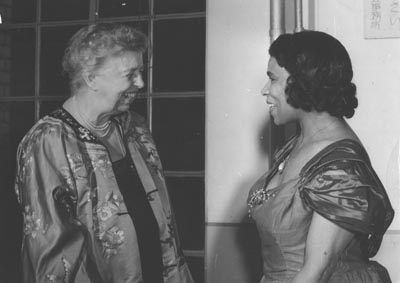
eleanor roosevelt marian anderson

Shame is integral to contemporary natural childbirth advocacy.

It’s based on an entirely arbitrary standard devised by racist, sexist old white men, and perpetuated by well off Western, white women who have enshrined their privilege by making their personal preferences normative.

I’ve often satirized the passive-aggressive shaming that is so beloved of natural childbirth advocates (I’m so not judging you), but today I’d like to address it head on. Blogger Mama Birth has provided the perfect opportunity with her recent post passive-aggressively justifying passive-aggressive shaming in I Can’t Make You Feel Ashamed of Your Birth (Unless You Really Are Ashamed of It).

Fair’s fair, so I should acknowledge excellence when I see it: Mama Birth’s piece is a truly exquisite example of the genre, kind of like a double back flip in diving, simultaneously shaming women who don’t have unmedicated vaginal births AND blaming them for feeling ashamed!

Mama Birth recognizes that criticism of natural childbirth shaming is gaining traction:

Shaming is a hot topic in the birth world though, isn’t it? If you are dumb enough to have an opinion and share it then you are undoubtedly going to be accused of shaming somebody who did otherwise. If you state that formula is a poor substitute for breast-milk or mention that the cesarean section is a perverse form of birth control … or (gasp) talk about how much you loved your natural birth, then stand back. Because what happens next is you will be accused of shaming people.

But Mama Birth refuses to take responsibility for shaming others since it is THEIR FAULT if they feel ashamed, not hers:

Never-mind that the people who you have forced into feeling guilty because you had an opinion are full fledged adults who you have never actually met—never mind that! You got in their head, you twisted their emotions, you are now in charge of their brain…

Sure, it would be really nice and convenient if every time we felt bad it was actually somebody else’s fault. Then nothing would be our fault. And if we did screw up, the bad feelings that went along with it would not be our responsibility.

See, it’s not Mama Birth’s fault that you feel ashamed when she shames you. Your bad feelings are not her responsibility.

Let’s extrapolate to some real world situations:

If everyone took Mama Birth’s advice, people of color should blame themselves for feeling bad about being subjected to racist treatment. It’s not racists’ fault that African-Americans feel victimized by racist taunts; it’s their fault for taking those racist slurs to heart.

And:

No one should be criticizing homophobia, since, according to Mama Birth, no one can make you feel ashamed for your sexual orientation unless you are really ashamed of it.

And:

We could be free once again to refer to the developmentally disabled as “retards.” Sure they and those who love them might be offended, but objecting to the epithet “retard” just shows that those people are ashamed that they or their loved ones are retards.

Isn’t that convenient? Racists don’t have to feel bad about their racism, homophobes are free to feel good about their homophobia and natural childbirth advocates can continue to revel in shaming other mothers. Don’t blame the racists, homophobes or Mama Birth. It’s all the fault of the victims!!

Mama Birth quotes Eleanor Roosevelt in support of her creative interpretation of shaming. Roosevelt said:

No one can make you feel inferior without your consent.

It’s a rather ironic quotation for two reasons. First, all her biographers, as well as many who knew her while alive, would argue that Eleanor Roosevelt was oppressed for most of her life by a deep and abiding sense of inferiority, having been constantly shamed by those she loved most.

Second, Roosevelt was NOT excusing those who shamed others. When in 1939 African American contralto Marian Anderson, one of the most celebrated opera singers of her generation, was denied permission by the Daughters of the American Revolution (DAR) to use its Constitution Hall for a concert, Mrs. Roosevelt did not advise Ms. Anderson that “no one can make you feel ashamed of your race unless you really are ashamed of it.”

What did she do?

On February 26, 1939, Mrs. Roosevelt submitted her letter of resignation to the DAR president …

On February 27, Mrs. Roosevelt addressed the issue in her My Day column, published in newspapers across the country. Without mentioning the DAR or Anderson by name, Mrs. Roosevelt couched her decision in terms everyone could understand: whether one should resign from an organization you disagree with or remain and try to change it from within. Mrs. Roosevelt told her readers that in this situation, “To remain as a member implies approval of that action, therefore I am resigning.”

Mrs. Roosevelt’s resignation thrust the Marian Anderson concert, the DAR, and the subject of racism to the center of national attention. As word of her resignation spread, Mrs. Roosevelt and others quietly worked behind the scenes promoting the idea for an outdoor concert at the Lincoln Memorial, a symbolic site on the National Mall overseen by the Department of the Interior…

On April 9th, seventy-five thousand people, including dignitaries and average citizens, attended the outdoor concert. It was as diverse a crowd as anyone had seen—black, white, old, and young—dressed in their Sunday finest. Hundreds of thousands more heard the concert over the radio. After being introduced by Secretary Ickes who declared that “Genius knows no color line,” Ms. Anderson opened her concert with America. The operatic first half of the program concluded with Ave Maria. After a short intermission, she then sang a selection of spirituals familiar to the African American members of her audience. And with tears in her eyes, Marian Anderson closed the concert with an encore, Nobody Knows the Trouble I’ve Seen.

The DAR’s refusal to grant Marian Anderson the use of Constitution Hall, Eleanor Roosevelt’s resignation from the DAR in protest, and the resulting concert at the Lincoln Memorial combined into a watershed moment in civil rights history, bringing national attention to the country’s color barrier as no other event had previously done.

The natural childbirth movement is approaching a cross-roads. The culture of shame that they perpetuate is being revealed in all it’s ugliness. Natural childbirth advocates can respond like Eleanor Roosevelt and provide powerful examples rejecting the use of shame in promoting their message …

… or they can follow the lead of Mama Birth and blame the shamed for their own shame.

Dr. Amy