Elective induction IMPROVES maternal and neonatal outcomes

Better way road sign

Sometimes I almost feel sorry for natural childbirth advocates. Just about everything they think they know is factually false.

Elective induction is a case in point.

Judith Lothian explained in Saying “No” to Induction:

Saying “no” to induction and to other interventions that are becoming routine takes courage and confidence, as well as the knowledge that women have the right to informed refusal. What women learn from you about nature’s plan for labor and birth, including the beauty of waiting for labor to start on its own and the risks of interfering without clear medical indication, will insure that the women you teach will have the information they need to confidently say “no” to routine induction.

Except that study after study shows that saying “YES” to elective inductions IMPROVES both maternal and neonatal outcomes. A new study, Maternal and neonatal outcomes in electively induced low-risk term pregnancies, comprising 131,243 low-risk births is merely the latest example. As the authors explain:

Several studies have presented information refuting the association of induction with increased cesarean delivery. Two large prospective multicenter studies of late term (41 weeks’ gestational age) pregnancies found no difference or a decreased rate of cesarean delivery in elective inductions vs expectant management. A metaanalysis reported an absolute risk reduction in cesarean delivery rate with elective induction of 1.9% (95% confidence interval [CI], 0.2-3.7%) for late term and post term pregnancies. Similar findings have been reported across different obstetric cohorts, including those with hypertensive disease, fetal growth restriction, and diabetes.

Three recent retrospective analyses found no increase in operative delivery with induction of labor and a decrease in the cesarean delivery rate among nulliparous women delivering at 39-42 weeks’ gestational age and all women delivering in the term period (37-40 weeks). Cheng et al also reported improvement in other associated neonatal morbidities including meconium aspiration, 5-minute Apgar <7, infection, ventilator use, composite morbidity, and neonatal intensive care unit (ICU) admission with induction at 39 weeks’ gestation. Using discharge and birth certificate data, Darney et al also recently found a reduction in cesarean deliveries with induction of labor compared to expectant management at 37, 38, 39, and 40 weeks of gestation. Importantly, Darney et al also reported no increase in neonatal ICU admission or respiratory distress with elective induction of labor, including those performed at 37 and 38 weeks of pregnancy.

The new study confirms these previous studies:

Of 131,243 low-risk deliveries, 13,242 (10.1%) were electively induced. The risk of cesarean delivery was lower at each week of gestation with elective induction vs expectant management regardless of parity and modified Bishop score (for unfavorable nulliparous patients at: 37 weeks = 18.6% vs 34.2%, adjusted odds ratio, 0.40; [95% confidence interval, 0.18-0.88]; 38 weeks = 28.4% vs 35.4%, 0.65 [0.49-0.85]; 39 weeks = 23.6% vs 38.5%, 0.47 [0.38-0.57]; 40 weeks = 32.3% vs 42.3%, 0.70 [0.59-0.81]). Maternal infections were significantly lower with elective inductions. Major, minor, and respiratory neonatal morbidity composites were lower with elective inductions at ≥38 weeks (for nulliparous patients at: 38 weeks = adjusted odds ratio, 0.43; [95% confidence interval, 0.26-0.72]; 39 weeks = 0.75 [0.61-0.92]; 40 weeks = 0.65 [0.54-0.80]).

The authors note:

Using a cohort of low-risk pregnancies within the Consortium on Safe Labor database, we examined maternal and neonatal outcomes for women who were electively induced compared to those expectantly managed at each week of term gestation. For our primary outcome of mode of delivery, we observed a reduction in cesarean section with elective induction, regardless of week of gestation, parity, or cervical examination. For secondary outcomes including maternal and neonatal morbidity, no outcome was shown to be worse with elective induction. Conversely, several maternal outcomes including infectious morbidity, obstetrical lacerations, and shoulder dystocia were reduced with induction of labor. For those electively induced, we observed a reduction in composite neonatal morbidities with induction of labor at 38, 39, and 40 weeks’ gestation. (my emphasis)

How did natural childbirth advocates get it so wrong? They relied on studies that compared induced labor at specific gestational ages with spontaneous labor at the same gestational ages. The correct comparison is induced labor at specific gestational ages vs. waiting (expectant management).

The authors include an important caveat:

These data do not attempt to define what the best gestational age is for delivery at term. Rather, we submit that our results demonstrate that when maternal and newborn outcomes are analyzed through the prism of the true clinical alternatives of induction or waiting, the findings may be drastically different than what has been reported previously. Clearly, these data suggest that outcomes for mom and baby are complex with competing interests. Evaluations that only consider differences in observed neonatal morbidities by week of delivery paint an incomplete picture as they do not account for the risks of waiting… (emphasis in original)

Poor natural childbirth advocates. Yet again nature does not know best. Mothers who choose inductions for “convenience,” far from increasing their risk of C-section, maternal complications or neonatal complications, may actually be making the safer decision.

Microbirth: an object lesson in the ignorance, gullibility and desperation of natural childbirth advocates

image

Any major field of pseudoscience worth its salt creates an alternative world of internal legitimacy. It doesn’t matter whether it is deadly antivaxx activism, naturopathy, or natural childbirth. They all do it to hide the fact that mainstream science and medicine look upon them as ignorant fools.

What’s an alternate world of internal legitimacy?

[They]have built an alternative world of internal legitimacy that mimics all the features of the mainstream research world — the journals, the conferences, the publications, the letters after the names — and some leaders have gained access to policy-making positions. Mixing an environmentally inflected critique of [obstetrics] and Big Pharma with a libertarian individualist account of health has been a resonant formulation for some years now, with support flowing in from both the Left and the Right.

This is a description of vaccine rejectionists, paraphrased from the paper The Legitimacy of Vaccine Critics: What Is Left after the Autism Hypothesis? by Anna Kirkland, published in Journal of Health Politics, Policy and Law in October 2011. It applies equally well to natural childbirth and homebirth advocates.

The latest addition to the alternate world of natural childbirth advocacy is the film Microbirth, conceived, produced, and funded by natural childbirth advocates desperate to demonize C-sections. Its thesis?

…We believe “seeding of the baby’s microbiome” should be on every birth plan – for even if vaginal birth isn’t possible, immediate skin-to-skin contact and breastfeeding can still help to provide bacteria crucial to the development of the baby’s immune system. In the scientists’ view, if we can get the seeding of the baby’s microbiome right at birth, this could make a massive difference to the baby’s health for the rest of its life. Consequently, we believe that “Microbirth” is of extreme importance for global health and potentially, for the future of mankind!

Let’s leave aside the breathless hyperbole for the moment and ask some simple questions. Who do is the “we” when the producers of Microbirth announce “we believe”? It’s not microbiologists since there is NO scientific consensus on the composition of the neonatal microbiome, let alone what it ought to be. Microbiologists do not yet understand how much of the tremendous variation from individual to individual reflects anything other than the fact that individuals differ in a myriad number of ways. Microbiologists do not yet understand the short term impact of the neonatal microbiome, let alone the long term impact. Microbiologists do not yet understand how the micro-virome (the viruses that normally live inside human beings) impacts the microbiome.

It’s not neonatalogists and pediatricians since they aren’t going to “believe” anything about the microbiome that isn’t established by microbiologists. That goes for obstetricians, too. So the ONLY people who “believe” that the neonatal microbiome is crucial to the development of the health and future wellbeing of infants … the only people who believe that vaginal birth is necessary to create the proper neonatal microbiome … the only people who “believe” that C-section deprives babies of the necessary microbiome are ideologues committed to unmedicated vaginal birth and strongly opposed to C-sections.

The movie Microbirth, therefore, is yet another attempt to bolster the alternative world of internal legitimacy that characterizes NCB advocacy. It was produced by, about, and for natural childbirth advocates, and is designed to convince the gullible who are ignorant of basic microbiology and desperate to demonize C-sections.

My questions for the midwives, doulas and natural childbirth advocates waxing rhapsodic about Microbirth are these:

1. How can you be so oblivious as to fail to notice that the only people promoting Microbirth are people with no expertise in microbiology?

2. Are you so ignorant and naive that you would actually believe a movie about microbiology made by people who have no expert knowledge of microbiology?

3. Why are you foolish enough to imagine that natural childbirth advocates either know or care more about the wellbeing of infants than neonatologists and pediatricians?

4. Can’t you see that you are being manipulated?

5. Or are you just so desperate to believe that you simply don’t care?

Inquiring minds want to know.

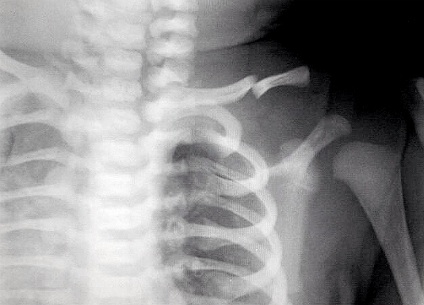
My mom got her HBAC and all I got was a fractured clavicle

image

Another day, another example of the homebirth trifecta.

The homebirth trifecta is the ugly combination of ignorance, narcissism and contempt for the wellbeing of babies that characterizes many homebirth advocates.

This one is a classic of the genre: The Complicated Home Birth (HBAC) of Harlow Taylor…and Why I’m Glad I Wasn’t At A Hospital.

Harlow’s birth was wonderful (albeit very painful) and therapeutic and redemptive. It was everything I hoped it would be.

Was it therapeutic and redemptive for Harlow? Not so much.

Once Harlow’s head was born and her shoulders didn’t come with the next contraction, my midwife became very firm and serious with me. She instructed me to PUSH AS HARD AS YOU CAN AND GET THIS BABY OUT. She immediately had me turn over on all fours. I’d like for you to imagine trying to go from laying on your back to turning over on your hands and knees with a babies head hanging out of your body. It was interesting to say the least, but adrenaline kicked in and as my doula recounted to me, “You turned over like a cat! I’d never seen a pregnant woman turn over so fast!” Once I was on all fours I continued to push with all of my might, but Harlow still was not coming out. She then told me to turn back over, and once I did she was able to manipulate her just enough where she came down and out.

The result?

Thankfully, and by the sheer grace of God, Harlow was born healthy, albeit with some bruising and a small clavicle fracture. Also, I had no tearing whatsoever.

It is staggering to contemplate the immaturity, self-absorption and narcissism required to formulate a sentence like that, let alone publish it to the whole world.

But wait! Let’s not overlook the napalm grade stupidity required by this claim:

Now, some of you may be thinking to yourselves, “You should have been in a hospital.” or, “This could have been avoided had you been with a doctor.” To that I say, absolutely NOT. Heres why:

Because I was under the care of a midwife, I was under the care of someone who handles birth like the natural life process that it truly is instead of like something to be treated for. Because of this, she knows how to also handle all manner of complications during delivery as they may arise, and sometimes do…

[She] sprung into action with me when the need presented itself because THIS HAPPENS SOMETIMES. I’m so thankful that I was under the care of a skilled midwife who knew how to handle it in the least invasive way that was possible for my birth. At the end of the day, everyone was safe, healthy, and alive, and I didn’t have to add an additional 2 weeks recovery time. That I’m thankful for!

Earth to Lauren! Earthy to Lauren! Everyone was not safe and healthy. Since when is a fractured clavicle, with the attendant severe pain and possible associated nerve damage healthy? It isn’t, but who really cares since it is only the baby who has to suffer? Evidently Harlow’s agonizing pain is a small price to pay in exchange for Lauren’s pristine vagina.

Earth to Lauren! Your midwife did NOT handle the situation well. The baby is injured, and possibly permanently impaired, because she did not handle it well enough to keep the baby’s bones intact. The fractured clavicle might have been unavoidable but it might not. With an episiotomy, a competent provider and an assistant to apply supra-public pressure, Harlow might have been delivered without breaking any of her bones. After all, at 7 lb 9oz, she was hardly a large baby.

Of course the dangerous situation could have been avoided entirely by an elective repeat C-section, but that wouldn’t have involved Lauren’s redemption and what could possibly be more important than that?

Thanks, Lauren, for illustrating so clearly the self absorption and narcissism that leads awoman to value a pristine vagina above a baby’s pain and potential disability. Thanks for illustrating the stunning ignorance and massive denial that leads you to imagine that a fractured clavicle is a good outcome and to pretend that others with more skill wouldn’t have gotten a better result.

In other words, thanks for demonstrating the homebirth trifecta that leads so many homebirth advocates to feel proud of themselves for putting their dreams ahead of their babies’ health and wellbeing.

Microbirth: Doctors present at medical conferences, natural childbirth advocates make a movie

image

The midwifery and natural childbirth communities are abuzz with news of the premiere of Microbirth, a movie based on purported new medical discoveries about childbirth and the microbiome, the bacteria that normally live within the human intestines.

Microbirth supposedly presents:

…brand new science investigating crucial microscopic events that occur during and immediately after birth.

And, more importantly, what happens when the natural processes of childbirth are interfered with or bypassed completely …

[I]ncreased medicalization of childbirth may be having severe consequences on the life-long health of our children.

What’s more, it could be having a devastating effect on the future of our entire species.

Specifically:

The purpose of the documentary is to raise public awareness of the importance of “seeding the baby’s microbiome” at birth with the mother’s own bacteria – this bacteria helps train the immune system to recognise what is “friend” and what is “foe”. We believe “seeding of the baby’s microbiome” should be on every birth plan – for even if vaginal birth isn’t possible, immediate skin-to-skin contact and breastfeeding can still help to provide bacteria crucial to the development of the baby’s immune system. In the scientists’ view, if we can get the seeding of the baby’s microbiome right at birth, this could make a massive difference to the baby’s health for the rest of its life. Consequently, we believe that “Microbirth” is of extreme importance for global health and potentially, for the future of mankind!

We can predict with near certainty that the movie is going to be a bunch of crap. How do we know? Real medical discoveries aren’t introduced in movies for laypeople.

Imagine if the tobacco industry created a movie for laypeople to present the scientific evidence about the “risks” of quitting smoking. How about if the coal industry produced a movie for laypeople on the “dangers” of solar power? What would you think of the chemical manufacturers banding together to produce a movie about the “benefits” of dumping industrial waste into lakes and streams?

Most of us would recognize these as deeply cynical efforts on the part of industries to bypass real scientists, who would laugh at and eviscerate their specious, self-serving claims, in favor of presenting marketing propaganda directly to laypeople incapable of telling the difference between the two. Microbirth is a similar cynical attempt by the natural childbirth industry (“Big Birth”) to bypass real scientists, who would laugh at and eviscerate their specious, self-serving claims in favor of presenting marketing propaganda directly to laypeople.

Big Birth has a big problem. The scientific evidence does not support their claims. Natural childbirth isn’t safer and hombirth isn’t safe at all. You might think that would cause Big Birth to re-evaluate its core beliefs, but you’d be wrong. Natural childbirth and homebirth are cults, and their core beliefs are non-falsifiable. Therefore, they must abandon their original claims that natural childbirth and homebirth are visibly safer. No problem! Natural childbirth and homebirth are safer on the microscopic scale!

The truth is that the microbiome is extremely complex and interacts with the body and with both helpful and pathogenic bacteria in ways that we do not yet comprehend. That’s why any contemporary claims about the microbiome, including claims about possible differences in the microbiome of babies born by C-section vs. babies born by vaginal delivery are just wishful thinking on the part of Big Birth. We are dealing with something powerful, but we don’t know enough about it yet to make ANY recommendations since we have no idea of what the optimal microbiome looks like, how the virome (viruses that live inside humans) and the microbiome interact, how the body uses the virome to manage the microbiome, whether individual differencess in the microbiome are clinically meaningful, and the long term effects of attempting to manipulate the microbiome.

The movie Microbirth involves a microscopic amount of actual scientific evidence and a massive amount of propaganda. You’d be a fool to believe any claims it makes in the same way you’d be a fool to believe any scientific claim made directly to laypeople by any industry with a major financial stake in the claim.

But, of course a lot of natural childbirth advocates and a fair amount of midwives are fools. The rush to embrace Microbirth merely proves it.

Do midwives put their needs ahead of their patients?

image

Yesterday I asked whether promoting unmedicated vaginal birth is unethical. Today I’d like to ask a corollary: do midwives put their own needs ahead of the needs of their patients. I’m not the first to wonder whether this has compromised the care that midwives provide to women.

Canadian midwife Mary Sharpe and colleagues have written about the situation in Ontario in Essentialism as a Contributing Factor in Ideological Resonance and Dissonance Between Women and Their Midwives in Ontario, Canada. Sharpe starts with a definition of essentialism:

Essentialism is understood as the tendency to view entities according to a set of distinct and limiting characteristics, or essences. Furthermore, an essentialist approach regards these characteristics or essences as inherently true or correct…

Sharpe details how essentialism is expressed in the foundational documents of Ontario midwives:

While the values embedded within the document, when viewed pragmatically, simply set ideals for practice, they also tend to support the culture of essentialism within the midwifery community by making certain assumptions about the meaning of midwifery care, the women who seek midwifery care and the nature of the woman-midwife relationship…

But those beliefs and assumptions are not shared by a large proportion of women. Instead of acknowledging that essentialist beliefs are not held by all women, the Ontario midwives react with disdain and an unwillingess to care for women who have different beliefs.

While some midwives interviewed stated that they were delighted to be able to provide care for the more diverse group of women seeking midwifery care … they nevertheless noted that they remained wary of those who do not overtly behave in ways that correspond to Ontario midwifery’s stated values and philosophies… Some Ontario midwives indicated that they felt there are “ideal” or “peak” midwifery clients and that certain women are therefore particularly “deserving” of midwifery…

As midwife Vicki Van Wagner explains:

There is a real tension in the midwifery community between narrow essentialist views of women, midwives and birth, connected with the lure of the “natural” and other concepts such as choice and diversity… In a countercultural movement such as midwifery, the need for strength to combat outer forces can create narrow views, dogmatism and a fear of diversity…

Sociologist Helen Lenskyj notes:

It does not serve women’s interests well for midwifery supporters to essentialize women as either mothers or midwives… Where does this leave the non-conforming mother who does not view the midwife as her best friend … One [also] needs to consider the messages that [such] rhetoric convey[s] to a woman who has no … regrets about her conventional medicalized birth experience. Is she less female/ feminine/ feminist because she does not … reflect on [her] birth experiences with feelings of anger, regret, mourning and loss?

Ultimately:

Ontario’s model of midwifery care reflects the essentialist tendencies of the feminist movements of the 1970s and 1980s that led to the legislation of midwifery in Ontario… The essentialist tendencies revealed by midwives and women in Sharpe’s study tend to pose dilemmas for midwives in the manner in which care is provided, the manner in which women are selected for care and the ways in which the philosophy of midwifery care is upheld.

Helen Lenskyj offers midwives advice that they should take to heart:

It is not productive for midwifery’s advocates to cling to exclusory or essentialist notions of woman and midwife. Rather, it is important to respect the feminist principle of choice … and to allow for diversity and difference among women, both midwives and clients.

What I find most intriguing about the views expressed in this paper is that they highlight the fact that midwifery has become obsessed with the feelings of midwives to the detriment of patients. It suits certain midwives and virtually all midwifery theorists to claim that “the natural” represents the pure essence of what women should want and how women should behave.

The profession of midwifery has been led astray from the values that have preserved midwifery across time, place and cultures. Those values were to minimize the risk of death to baby and mother by observing the ways that treatments and preventive measures could improve outcome. In contrast, contemporary midwifery often seems devoted to a stylized piece of performance art where the process is viewed as more important than the outcome. It is ironic that a profession that proposed in the mid-twentieth century to offer women more choices has devolved into a profession that insists that only one choice is acceptable.

A version of this piece first appeared in December 2010.

Is promoting unmedicated vaginal birth unethical?

iStock_000014555092XSmall copy up

Years ago when I first read the phrase “promoting normal birth” I was confused. Why would a healthcare professional be promoting any set of procedures or any particular approach to a health issue? I thought it was the job of health professionals to promote safety.

It is unethical for a medical professional to promotes one procedure over another when both are equally effective in dealing with the issue at hand. An ethical medical professional recommends whatever is safest for the patient, not whatever is most pleasing to or most lucrative for him or herself. There are no real medical publications claiming to promote one form of treatment or even one philosophy over another. Real medical publications promote health and promote safety, not the opportunity to confirm one’s prejudices or line one’s pockets.

In contrast, many midwives unabashedly promote one form of birth over another, ineffective pain relief measures over effective pain relief, and rejecting technology in favor of “unhindered” birth. Indeed, the entire midwifery corp of the UK is strictly committed to unmedicated vaginal birth, going to far as developing and maintaining the Royal College of Midwives “Campaign for Normal Birth.”

So I have a question for natural childbirth advocates, midwives and other birth workers: isn’t that unethical? Or more to the point: how can it possibly be ethical to promote one way of giving birth over any other?

Furthermore, aren’t attempts to promote unmedicated vaginal birth an abuse of midwives’ power over patients? Shouldn’t they be providing accurate, value-free medical information to patients and then honoring whatever decisions patients make? How can they justify promoting their own beliefs about birth over their patients desires?

I ask these questions because I’m anxious to see whether any natural childbirth advocates are willing to grapple with the ethical implications of their efforts to promote unhindered, unmedicated vaginal birth. I suspect that no one will.

What’s the main difference between Dr. Amy and The Alpha Parent

Psychology, Self Confidence Coaching

Allison Dixley, self proclaimed “Alpha Parent,” is in a snit. Several women have dared to write books about new motherhood that attempt to soothe the hysteria over breastfeeding. Apparently these writers point out that in first world countries the benefits of breastfeeding are small, many women find breastfeeding painful and difficult, and not all babies can get enough nutrition from exclusive breastfeeding. Dixley is incensed and attempts to rip them to shreds. In doing so, she exposes the principal difference between herself and me: no, not the fact that I have years of scientific and medical education, and Allison has none, although that is indeed a major difference. The principal difference is that Dixley’s self-image rests largely on whether or not she is right about the value of breastfeeding; mine does not.

I’m not emotionally invested in determining the magnitude of the benefits and hardships of breastfeeding because I’ve already done it quite successfully. I breastfed 4 children, despite working ridiculous hours, until each weaned him or herself. I had very few difficulties, a booming milk supply, and babies who fed easily and avidly, although I did have several serious bouts of mastitis (temp of 104, shaking chills, etc). In Allison Dixley’s world I’m a goddess! My breastfeeding “accomplishments” far exceeding hers and most the women she profiles. However, I understood even then that it was largely a matter of good luck on my part, in addition to my commitment. My children are grown now and it is easy to see that breastfeeding didn’t have any impact on how they turned out. My self esteem never rested on breastfeeding success, even though I achieved breastfeeding success.

Dixley would have you believe that she is a better parent than women who couldn’t breastfeed, had insurmountable difficulties breastfeeding, or simply didn’t want to breastfeed. And since her self esteem appears to be directly proportional to the benefits she attributes to breastfeeding, she is deeply emotionally (not to mention professionally) invested in shaming women who don’t copy her. I, on the other hand, devote tremendous effort battling the shame, blame and soul-sucking criticism that Dixley and her lactivist sisters heap on women who don’t mirror their own choices back to them.

Simply put, Allison Dixley NEEDS breastfeeding to be critical to child wellbeing because if it isn’t, she’s just another mother, no better than the rest of us. She cannot look objectively at the scientific evidence about breastfeeding since if it isn’t as important as she maintains it is, she loses her self-awarded designation of “alpha parent.” In contrast, it makes no difference to me. I did it. I have everything to gain and nothing to lose by beating women over the head with my “achievement,” but I don’t do it because I know the scientific evidence simply doesn’t support such preening.

Unfortunately, new mothers are exquisitely vulnerable to the efforts of Dixley and her lactivist sisters to boost their own self-esteem by battering the self-esteem of others. Dixley is thoroughly untrustworthy on the subject of breastfeeding because her critical thinking skills are immobilized by her emotionally neediness. In contrast, there is no downside for me in telling the truth that the scientific evidence shows that while breastfeeding has real benefits in first world countries, those benefits are trivial; therefore, breastfeeding is not the holy grail of new motherhood, merely one of two ways to completely and successfully nourish a baby.

Who is more likely to provide you with accurate information about breastfeeding? Allison Dixley who can only be an alpha parent if breastfeeding is absolutely critical to infant wellbeing? Or me, medically trained, fully apprised of the scientific literature and able to understand it, as well as a woman who successfully breastfed 4 children and doesn’t think it makes me a better mother than anyone else? It’s up to you to decide.

The Alpha Parent is caught lying

Alpha Parent liar

I’m sure you will be shocked, shocked to learn that The Alpha Parent has been caught lying.

Who would have thought that Allison Dixley, Kommandant of the Breastapo, would lie outright in her efforts to promote her personal brand of parenting? Sure she habitually spews mistruths, half truths and lies about breastfeeding. I guess she’s been getting away with it for so long that she figured she could extend the lying to C-sections.

What did she do? She posted this:

Alpha Parent Cesarean large

Given the wording, you might have thought that the ugly scar depicted in the image is a C-section scar. You would be wrong. It’s an abdominoplasty (tummy tuck) scar. How do I know? Aside from the fact that the original image described it as an abdominoplasty, you can tell because it is approximately 3X longer, extending from hip bone to hip bone, it involves tremendous bruising, and it is clearly not the fresh incision of a recently pregnant woman since her abdomen is flat.

Allison was caught out by her followers and everyone else. It was the perfect visual representation of the fundamental dishonesty of the typical crap that she spews about breastfeeding and formula feeding.

Allison doesn’t deny that she illustrated her message about C-sections with a picture of an entirely different, far more extensive surgery. How does she she justify the deception? It’s dramatic license! Excuse me while I pick myself up off the floor where I fell when laughing uncontrollably.

For those getting their thong trapped, remember this cosleeping ad? It wasn’t suggesting that babies actually sleep with knives. It’s called dramatic licence. Move on.

Alpha Parent excuse

Good to know, Allison. So that means that the image heading this post where I slap the label “LIAR!” on your logo is just dramatic license, too.

Bad news, Allison, your image does not represent dramatic license. It represents lying with images. As you so accurately point out, no one would look at the co-sleeping ad and imagine that it represents reality. It is a graphical analogy. You weren’t making an analogy with your image; you were simply telling a lie, trying to pass off an abdominoplasty incision AS a C-section incision.

No matter. What I love about people like Allison is that they make my job so much easier. I could tell you that Allison lies when it suits her purposes, but it’s far more powerful when she demonstrates her utter disregard for the truth. You can’t believe a word that woman says about breastfeeding, about C-sections or about anything else. She lies, and she thinks it’s okay to lie. You’d be a fool to take anything she writes seriously.

Awesome! Dutch midwives kill just as many babies in the hospital as at home!

iStock_000021620210Small copy

Talk about making lemonade out of lemons! Only a Dutch midwife could take the fact that the Netherlands has one of the highest perinatal mortality rates in Western Europe and the fact Dutch midwives caring for low risk women (home or hospital) have a higher perinatal death rate than Dutch obstetricians caring for HIGH risk women and turn it into a defense of homebirth.

But those facts are not a defense of homebirth; they are a scathing indictment of Dutch midwifery. Ank de Jonge’s new paper in BJOG tells us the same thing most of her old papers tell us: Dutch midwives provide substandard care.

This is the fourth paper that I know of where de Jonge presents misleading information in an effort to promote homebirth. I could almost feel sorry for her since her efforts serve only to highlight the deficiencies of Dutch midwives.

de Jonge thought that she had succeeded in showing that homebirth in the Netherlands is safe. She was the lead author on the paper Perinatal mortality and morbidity in a nationwide cohort of 529 688 low-risk planned home and hospital births back in 2009. The study showed that homebirth with a midwife in the Netherlands is as safe as hospital birth with a midwife. That triumph was very short lived.

A subsequent study, Perinatal mortality and severe morbidity in low and high risk term pregnancies in the Netherlands: prospective cohort study, was a stunning indictment of Dutch midwives. The study was undertaken to determine why the Netherlands has one of the worst perinatal mortality rates in Western Europe and the results were unexpected, to say the least.

We found that delivery related perinatal death was significantly higher among low risk pregnancies in midwife supervised primary care than among high risk pregnancies in obstetrician supervised secondary care.

In 2013 de Jonge in a paper in the journal Midwifery Perinatal mortality rate in the Netherlands compared to other European countries: A secondary analysis of Euro-PERISTAT data that attempted to absolve Dutch midwives, but actually CONFIRMED their poor mortality statistics

Later in 2013 de Jonge published Severe adverse maternal outcomes among low risk women with planned home versus hospital births in the Netherlands: nationwide cohort study. de Jonge found that there were fewer serious maternal complications at homebirth than hospital birth. There was just one teensy, weensy problem. de Jonge left out the mortality rates. Severe maternal morbidity is an appropriate measure of safely ONLY when death rate is zero or nearly zero. If the death rate is not zero, that MUST be taken into account in assessing safety. It was subsequently revealed that the homebirth group had a potentially preventable maternal death while the hospital group had none.

de Jonge’s latest paper is Perinatal mortality and morbidity up to 28 days after birth among 743 070 low-risk planned home and hospital births: a cohort study based on three merged national perinatal databases,  She found:

Of the total of 814 979 women, 466 112 had a planned home birth and 276 958 had a planned hospital birth. For 71 909 women, their planned place of birth was unknown. The combined intrapartum and neonatal death rates up to 28 days after birth, including cases with discrepancies in the registration of the moment of death, were: for nulliparous women, 1.02‰ for planned home births versus 1.09‰ for planned hospital births, adjusted odds ratio (aOR) 0.99, 95% confidence interval (95% CI) 0.79–1.24; and for parous women, 0.59‰ versus 0.58‰, aOR 1.16, 95% CI 0.87–1.55.

And concluded:

We found no increased risk of adverse perinatal outcomes for planned home births among low-risk women. Our results may only apply to regions where home births are well integrated into the maternity care system.

But the combined intrapartum/neonatal death rates for both groups was higher than would be expected for a group of low risk women in midwifery care. Indeed, it is higher than the intpartum/neonatal death rate of 0.74/1000 (nullips) and 0.46 (multips) previously reported for HIGH risk patients under the care of Dutch obstetricians.

de Jonge, of course, was careful to leave out the death rates of Dutch obstetricians, though she does acknowledge that previous studies have shown midwifery mortality rates for babies of low risk women to be higher than those of obstetricians caring for high risk women.

de Jonge concludes:

This study did not show increased risks of intrapartum and neonatal mortality, among low-risk women planning a home birth.

That’s true as far as it goes but a more accurate conclusion would be:

This study did not show increased risks of intrapartum and neonatal mortality among low-risk women planning a home birth with a midwife compared compared to low-risk women planning a hospital birth with a midwife. It does, however show an increased risk of intrapartum and neonatal mortality among low risk women in midwifery care compared to HIGH risk women in obstetrical care.

de Jonge didn’t show that homebirth is safe. She showed that Dutch midwives are dangerous.

Homebirth advocate Milli Hill has a pathetic need for validation

OLYMPUS DIGITAL CAMERA

I could almost feel sorry for homebirth advocates. Their need for validation is so desperate, so pathetic, that they view other women’s birth choices through the prism of their own need.

Blogger Milli Hill is a perfect example. You may remember Hill as the fool who made this ridiculous statement:

If you believe everything you read, then you probably think that childbirth is one of the riskiest activities any human can undertake.

Actually, it isn’t, and statistically you’re massively more likely to meet your maker behind the wheel of your motor.

When it was demonstrated to Hill that she has no idea what she is talking about, that childbirth is far more dangerous that getting in a car, and is a leading cause of death of young women and the single most dangerous day of the entire 18 years of childhood, she petulantly responded with this gem:

I don’t say birth is not risky. Life is risky. Picking your nose is risky…

Hill’s ignorance is exceeded only by her desperation. Homebirth advocates like to claim that they are “empowered” by homebirth, but how empowered can you be if you are constantly seeking validation by having others mirror your choices back to you. In her latest piece “Dear Kate, please have a home birth this time!” Hill explains her need:

“Everybody has to make their own choices”, you find yourself saying, but the problem is, if you’ve had a baby out of hospital yourself, you’ve got this secret slightly unhinged alter ego hopping around in your head singing, “Have a home birth! Have a home birth!”. You know it’s best not say this out loud, but the problem is, home birth is so wonderful it’s almost impossible not to be evangelical about it.

Here, Milli, let me help you with that:

“Everybody has to make their own choices”, you find yourself saying, but the problem is, if you’ve had a baby out of hospital yourself, you’ve got this secret slightly unhinged alter ego hopping around in your head desperate to have your own choices mirrored back to you, “Have a home birth! Have a home birth!”. You know it’s best not say this out loud, but the problem is, you are so obsessed with your pathetic need for validation and your own lack of confidence that you desperately need to be evangelical about it.

Like most homebirth advocates, Hill isn’t merely aggressively ignorant about childbirth, she’s evidence resistant. She now knows and has admitted that childbirth is far more dangerous that she ever understood. No matter, she simply ignores the new facts that she has learned because she prefers fantasy to reality:

As a culture we’re completely terrified of birth, mostly as a result of TV documentaries and soaps that portray having a baby as an agonising emergency bloodbath that happens so quick you don’t even have time to remove your tights…

As things stand at the moment, we’re pretty convinced that birth is dangerous, and that most women can’t do it without a spinal block and a team of medics. Home birth is therefore, “brave”.

No, Milli, no one thinks you are brave; they think you are stupid and self-absorbed, but are just too polite to say so.

There’s nothing brave about risking your child’s life for your birth “experience.” There’s nothing brave about pretending that you are educated when you are actually profoundly ignorant, lacking the most basic knowledge about science and statistics. And there’s certainly nothing brave about begging other women to copy you so you can feel better about yourself.

Is the Duchess of Cambridge a good candidate for homebirth? Does he Duchess of Cambridge have any interest in homebirth? Who cares? This isn’t about Kate and what is safe; this is about Milli and what she needs.

And this is where Kate comes in. For a sea change in attitudes, home birth needs an ambassador, and who better than a style icon adored by the world’s press?

I don’t know about Milli, but women who are really empowered don’t need ANYONE to validate the choices that are best for them and their families. They have enough confidence in themselves that don’t need style icons to mirror their choices back to them. There’s a word for that attitude; it’s called “maturity.”

Grow up Milli Hill, and stop looking to other women to make you feel good about yourself.

Dr. Amy