Breech homebirth leads to genital amputation

iStock_000016415525XSmall

Some days I feel like this blog writes itself. I don’t have to scout for examples of dangerous homebirths or ignorant, deluded homebirth advocates. They are everywhere I look.

Consider The Feminist Breeder’s take on Ruth Fowler’s homebirth that nearly ended in her death:

I love that Ruth’s birth is the textbook perfect example of a safe, planned homebirth wherein the midwives transferred to hospital care at the right time and helped this mother and baby finish out the job safely and happily. THIS is homebirth done right and this is the care that should be available to anyone who wants it.

Sure, just like a massive car accident that results in blood transfusions, surgery, anesthesia and a two day hospitalization is a perfect example of safe drunk driving!

No sooner had I caught my breath from laughing so hard at the entire concept that a homebirth that required blood products, removal of retained placenta, antibiotics for infection, “loads” of fentanyl and a 2 day hospitalization is safe, and before I even had time to wonder what these clowns think is an unsafe homebirth, I came across a perfect example. The comment comes from a homebirth advocate who is a nurse at St. Louis’ Barnes Jewish Hospital:

scrotal necrosis

Apparently, THIS is what passes for an unsafe homebirth:

It’s really hard to defend to my coworkers whose only frame of reference for home birth is (for one example) the patient who had been pushing for 5-6 hours on a not completely dilated cervix with a breech boy effectively in “scrotum” presentation. Thanks to her irresponsible and untrained “lay midwife” it Ended in genitalia amputation because they had necrotized.

I’ll bet it’s hard to defend homebirth when the end result is a necrotic scrotum and total genital amputation.

But you know what? It ought to be hard to defend homebirth even when nothing is amputated and no one dies and the end result is “merely” the near death of the mother.

What is wrong with homebirth advocates that their definition of “safety” includes near death experiences?

I can’t explain it, but this should serve as a cautionary tale to any woman contemplating homebirth:

When a “safe” homebirth includes blood transfusions, removal of retained placenta, antibiotics for infection, “loads” of fentanyl and a 2 day hospitalization, you know that homebirth is not and can never be safe.

Ruth Fowler Iorio shares the “beautiful, messy reality” of nearly bleeding to death at homebirth

Blood transfusion bag

Naricissm and stupidity, it’s a winning combination for homebirth advocates.

Only a homebirth advocate could be impressed with herself for surviving a life threatening homebirth disaster that didn’t have to happen, thank the midwife who nearly killed her, ignore the hospital staff who saved her life AND blare her stupidity and narcissism to the whole world on Twitter.

Of course, Huffington Post, a veritable sewer of alt health nonsense, venerates Ruth Fowler Iorio with a piece entitled New Mom’s Uncensored Photos Reveal The Beautiful, Messy Reality Of Home Birth.

What’s next HuffPo? Drunk Woman’s Uncensored Photos Reveal the Beautiful, Messy Reality of Accidents Cause By Intoxication?

Ruth shared her homebirth disaster in real time, because what’s the point of risking your baby’s life and brain function if you aren’t going to brag about it to the entire world?

This is her “beautiful” homebirth in her own words:

… Nye was occidental [sic] posterior. He flipped to come out but shoulder dystocia ripped me apart. Then the placenta wouldn’t come out – some medical termI don’t know – which basically mean, it tried to detach and ripped more of me out! So I lost over half my blood and got transferred by great emt’s [sic] after the birth.

Felt awful but now recovering in UCLA Santa Monica on a TON of fentany1 (it kicks ass!) and blood transfusions and will be back home with Jared and Nye Soledad Iorio tomorrow. This mad experience Just reiterated how goddamn crazy birth is…

I don’t want to be an ass but this experience has taught me birth is beautiful and primal and mysterious and painful as ****. Thanks to my amazing midwife Racha Tahani Lawler for getting me through that, and her assistant Tanya and my brilliant doula Allegra Hill.*

Birth is goddam crazy? No shit, Sherlock. Any obstetrician could have told Ruth that, but she, like all homebirth advocates, was too full of herself to listen.

So instead Ruth had a “beautiful” homebirth that included a shoulder dystocia, large perineal tear, retained placenta and massive postpartum hemorrhage that would have killed except for the …

doctors
hospital
nurses
intravenous access
blood products
removal of retained placenta
antibiotics for infection
loads of fentanyl (which will appear in her breast milk)
2 day hospitalization

See why it makes perfect sense to give birth at home without IV access, without blood products, without antibiotics, without obstetricians, nurses, anesthesiologists, operating rooms, etc. etc.? See why homebirth is beautiful?

No, I don’t see it, either.


* Extra crunchy bonus points for thanking by name the midwife, assistant, and doula who couldn’t have saved her life, and ignoring the names of the many people who actually did save her life.

When is a hospital like a restaurant?

iStock_000014819000XSmall copy

Here’s a riddle:

When is a hospital like a restaurant?

The riddle came to mind after reading yet another idiotic piece on the festival of stupidity known as Mothering.com. The piece is entitled Breech Birth: Why Can’t Women Have it Their Way?, written by Lauren McClain, “one of the most passionate and knowledgeable breech experts out there”.

Under what rock do the clowns of Mothering.com live where giving birth to a breech baby and reading junk from other lay people makes you one of the most passionate and knowledgeable breech experts out there?

Pro tip for the folks at Mothering.com: In order to be an expert on breech birth, you must:

  • have advanced medical training
  • have delivered hundreds or thousands of babies
  • have delivered breech babies
  • be experienced with the Mariceau-Smellie-Veit maneuver
  • know how to prevent and resolve nuchal arms
  • know how to apply Piper forceps to a trapped after-coming head.

How many of these qualifications does Lauren McClain have? Funny you should ask; she has ZERO. Claiming she is an expert on breech is like claiming that she is an expert on structural engineering because she once crossed a bridge.

Lauren apparently believes that hospitals are like restaurants:

… [I]t’s silly to walk into a McDonald’s and ask for a salad Niçoise, almost as silly as asking for a vaginal breech birth at a major medical center…

In any good restaurant, you can have things a number of different ways. In excellent restaurants, you can even say, “I’m vegetarian, I don’t see anything that strikes me on the menu. Have the chef create something.” They want to serve you, they want to get you the best possible care and nourishment they can, and they care what you think when you leave.

Lauren then proceeds to whine in alliteration, insisting that hospital care of breech babies suffers from impatience, ineptitude, and impersonal care.

According to Lauren:

Though there are certainly exceptional doctors working within the establishment, the general truth is that the choices in childbirth are abysmal. Almost no one does twin or breech births. Few doctors can perform ECV or have much useful knowledge of fetal positioning. They can’t (or won’t) help turn a posterior. Since they make liberal use of sonogram, their ability to palpate the abdomen has gone out the window. Many have never even witnessed a planned un-medicated, un-induced and un-augmented birth, much less an active birth.

How does Lauren know this?

Duh! She knows this the same way all natural childbirth advocates “know” anything. Another equally ignorant natural childbirth advocate made it up and told her.

Lauren wants salad Niçoise (breech vaginal birth). Her local restaurant, Chez Amy, doesn’t serve salad Niçoise. Unbeknownst to Lauren, that’s because improperly prepared salad Niçoise can cause illness and death and Chez Amy doesn’t want to take the chance of killing anyone.

=Chez Amy offers filet mignon, but Lauren doesn’t want that. Lauren wants salad Niçoise. and, dammit, she’s going to get salad Niçoise. Therefore, she heads off to a self-proclaimed “restaurant” in her neighbor’s basement, Wize Wimmen Resterent. I say self-proclaimed because Wize Wimmen Resterent doesn’t adhere to any of the regulations governing restaurants and doesn’t even allow health inspections to ensure that the restaurant is safe, let alone high quality. But that’s okay with Lauren because she’s “done her research” and “knows” that she won’t get sick from improperly prepared salad Niçoise.

For Lauren, that’s the beginning and the end of the analogy. She goes to Wize Wimmen Resterent, gets salad Niçoise and lives happily ever after, empowered by the knowledge that she got what she wanted.

But let’s take Lauren at her word for a moment and extend her restaurant analogy.

Let’s imagine that Lauren eats her salad Niçoise at Wize Wimmen Resterent and gets food poisoning from contaminated tuna in the salad.

What does she do? She does the equivalent of what women do when their breech baby gets stuck at homebirth:

She has one of the wize wimmen drive her to Chez Amy, appears on the doorstep and demands entry. She insists that all other patrons of Chez Amy be ignored while her needs are met first. She demands that the chef at Chez Amy do something to immediately stop her nausea and vomiting, although she has no idea what that might be or if such a treatment even exists. Then she demands that the chef immediately produce a filet mignon since she is hungry because she vomited up her salad Niçoise.

Lauren “knows” that restaurants who care about providing good service would, of course, immediately usher in a patron spewing vomit and diarrhea who had acquired food poisoning elsewhere, prepare a remedy and offer a perfectly cooked filet mignon. And that’s despite the fact that Lauren is planning to sue Chez Amy because 1. the filet mignon was not the exact degree of medium rare that Lauren prefers, and 2. she only got sick because Chez Amy forced her to go to Wize Wimmen Resterent by refusing to carry salad Niçoise on its menu in the first place.

That’s what happens in the world of restaurants, right?

Wrong! As we all know, not only would no restaurant would cater to behavior like that, and no remotely reasonable person would expect them to do so.

We appear to have found the answer to our riddle. When is a hospital like a restaurant?

NEVER, and only a fool would think otherwise.

Abel Andrews, Superhero

Abel small

Please join me in a big round of applause for Abel Andrews, Superhero!!!

Many small children dream of being superheroes, but Abel really is one. Even at his young age, Abel has saved lives and will continue to do so far into the future.

Who is Abel and how did he come to be a superhero?

Abel suffered permanent brain injury due to oxygen deprivation during his out of hospital birth. Abel’s mom Kristine told the story to a local Oregon TV reporter:

On the night her contractions started, Andrews said the licensed midwife with her at the time (Motherwise has a number of midwives on staff) was distracted by her own baby. That midwife sent her home, saying she had a urinary tract infection. Immense pain brought her back to Motherwise clinic that night.

The next day, when Abel was finally born, he wasn’t breathing.

Andrews said the midwives, licensed and unlicensed both, didn’t know what to do with a newborn that wasn’t breathing.

“They just had the look on their face of like trying to remember what they’d read in a book somewhere, like ‘umm, what do we do now?'”

After frantic 911 calls, the baby went to the hospital. Doctors warned, because Abel had gone so long without oxygen during labor, he might be brain damaged. The official diagnosis came a year later: cerebral palsy.

“They didn’t know if he’ll be able to walk, they don’t know if he’ll be able to talk, they don’t know if he’ll be able to sit up, he can’t do that now still.”

It’s a tragic story, all too familiar to those of us who track the increased rate of death and disability due to homebirth.

But it didn’t end there. Abel’s parents, Kristine and Greg, created a foundation, We Are Abel, to “protect and strengthen others” who face brain injury. And they filed a $50 million lawsuit, seeking to hold both midwives and state regulators responsible. They sued the state for failure to use evidence based standards in licensing and regulating homebirth midwives.

Ultimately, the suit against the state was unsuccessful, because the law ensures that most states cannot be sued for reasons like this.

Kristine writes:

November 27th, 2013 I received a phone call from my lawyer to inform me that The State of Oregon has received Sovereign Immunity in Abel’s lawsuit. Two and a half years of isolation, depositions and hope all crashing down around us. I don’t remember what all was said, and I have yet to read the latest manila envelope of neatly typed legal jargon that followed promptly in the mail. When my husband came home I was wailing, surrounded by my half prepped Thanksgiving dishes. Wailing is not crying. It is deeper. Like a scream and a roar from deep in your gut. Primal and raw, normally for the shower where the sound of the water can drowned it all out. But there my husband found me. He held me and I told him what they had said. He sat for a minute and I studied his face watching. Waiting for him to say.. “We were brave. We told the truth. We are RIGHT. They all know it. Abel MATTERS. What happened to our son should be acknowledged. THIS ISN’T FAIR!!!”

It isn’t fair! I’m sorry that Abel didn’t get the financial compensation he needs and deserves, but Kristine and Greg should not think that they didn’t accomplish anything. There’s nothing like a lawsuit, even an unsuccessful lawsuit, to focus a state’s attention. Single-handedly, they and Abel alerted the officials of the state of Oregon in a way that no one else could.

I suspect that everything from Oregon’s decision to collect their own homebirth statistics (which showed an 800% increase in the risk of death at homebirth) to growing scrutiny of homebirth regulations is rooted in the wake up call that the Andrews sent to state officials. Kristine, Greg, and above all Abel PERSONALLY have saved lives, even though they may never know just whose lives they have saved.

But, then, that’s the nature of superheroes. They protect the public with their extraordinary abilities and often are not properly acknowledged for their sacrifice.

So please join me in expressing heartfelt thanks to Kristine and Greg. You are my heroes!

And Abel? Most people never save anyone’s life and Abel has undoubtedly saved many lives and will continue to do so in every year in the future.

Abel is my superhero!!

Ricki Lake, Jennifer Margulis boast about homebirth rate, callously ignore deaths

image

The National Center for Health Statistics published Births: Final Data for 2012 last week and homebirth advocates are crowing about the increased rate of homebirths.

image

From the report:

“Out of hospital deliveries represented 1.4% of births in 2012. Of the more than 50,000 out of hospital births, about two-thirds (65.6%) occurred in a residence (home), and 29.0% occurred in a freestanding birthing center. The number of births occurring at home, 35,184, was the highest since reporting began for this item in 1989.

Jennifer Margulis boasted that Oregon led the nation with the highest percentage of homebirths at 2.4%.

I can’t decide whether these women are clueless or callous or both. There is no cause for smiley faces or pride when an increase in homebirth means an increase in homebirth deaths.

In the last few years, there has been an endless stream of data and scientific papers attesting to the fact that homebirth dramatically increases the risk of newborn death (3-10 fold) and brain damage (18 fold). Nowhere is the scale of the disaster more apparent than in Oregon in 2012 where 5/1000 homebirths ended with babies who died preventable deaths to achieve the nation’s highest percentage of homebirths.

Oregon homebirth death rates 2012

If Oregon is indicative of the toll of homebirth it means that in 2012, approximately 175 babies lost their lives because their mothers were more concerned with where they gave birth than whether their babies lived or died. That doesn’t even count the babies who sustained permanent brain damage or other injuries as a result of their mothers’ decision to give birth far from the medical personnel and equipment that would have saved them.

Let me repeat that: 175 babies DIED and possibly hundreds more were permanent impaired in 2012 alone for no better reason than because their mothers put their desire for a specific birth “experience” ahead of the wellbeing of their babies.

Rather than boasting, Ricki Lake and Jennifer Margulis should be crying tears of shame.

Possibly the worst reason ever for having a baby

image

You can’t make this stuff up.

From Mothering.com comes this post entitled I just want to have another baby so I can have a homebirth by YoginiMomma:

I just want to have a nother baby so I can have a homebirth that I was supposed to have, rather than the horrible traumatic hospital transfer I had (see birth stories). I’m sure this is a common sentiment… right?

Wrong!

When deliberately choosing to have another baby, the overwhelming number of women do so because they want another child to love and nurture. One of the most reprehensible aspects of homebirth, however, is that it has nothing to do with the baby and nothing to do with birth. It’s the mother’s chance to star in her own little piece of performance art. Everyone else, medical personnel, her partner, even the baby are nothing more than bit players at “her” birth.

… I feel like I really just need to have that homebirth to heal this SHIT. The problem is… what if the same thing happens (or worse)? I’m just going to keep having babies in search of the homebirth that will never happen? similar to how people keep having kids to get a girl or boy and end up with four of the same sex before they finally call it quits.

Thank you, YoginiMomma, for illustrating the immaturity, self-absorption and selfishness of so many homebirth mothers!

This is a bit much, even for the folks at Mothering.com. Although there are some supportive comments, most commentors appear to be as appalled as I am.

One commentor wrote:

I do not think that any child should be had for any other reason than parent (s) wanting to have another child to raise and to love. It is not this baby’s job to heal you.

You just had a child. Concentrate on your baby. See a therapist. See an attorney. Do not make rush decisions.

Another mother bravely offered this powerful personal experience:

I would say be wary about putting grand expectations on your child and their birth. I did that to my son and realized how unfair it was that I was expecting an innocent baby and his mode of birth to fix something wrong in me and I was so guilt ridden when he got here via failed vbac that became a lifesaving saving emergency (cord issue). He just wanted t to be born and healthy, he didnt care how it happened and I was so disappointed in his birth not being my healing vbac that I grieved for him that he had a mother that was trying to use him for her own emotional needs right off the bat.

Hundreds of years ago, a great philosopher named Immanuel Kant, made a revolutionary pronouncement, “Always treat people as ends in themselves, never as means to an end.” Kant insisted that each individual has intrinsic moral worth that regardless of whether others might or might not benefit from his existence.

In other words, it is nothing short of immmoral to bring a child into the world to meet your own needs. Children are not props whose primary purpose is to bolster your own self-image.

YoginiMomma should run, not walk, to her nearest therapist. She needs to find out why she believes that a specific birth performance is needed for her personal validation. She needs to learn that having children is about what you can do for them, not what they can do for you. Above all, she needs to get control of her overweening narcissism. Children are separate people, with their own needs and identities. They do not exist to boost the self esteem of their mothers.

And natural childbirth and homebirth advocates need to ask themselves where their philosophical movements went so wrong that women have been convinced that they are worthless unless they have a specific birth performance, and that their children are meaningless except insofar as they can bolster their mothers’ self image.

Risk of anoxic brain injury is more than 18 times higher at homebirth

iStock_000005409208XSmall

I’ve been struck by the number of stories on this blog of homebirths that ended with the baby receiving cooling therapy. The treatment, known as therapeutic hypothermia, is designed to reduce the brain damage of hypoxic ischemic encephalopathy (HIE) that results when a baby is deprived of oxygen before birth. To my knowledge, no one had looked at the association between homebirth and cooling therapy … until now.

The poster entitled Home birth and risk of neonatal hypoxic ischemic encephalopathy, to be presented at the forthcoming February meeting of the Society of Maternal-Fetal Medicine looks at precisely this issue.

The authors, from Weill Cornell Medical Center, explain:

Since 2007 our institution has been a primary referral center in New York City (NYC) for neonates with suspected HIE that undergo therapeutic hypothermia (cooling). A database of all cooling cases from 2007-2011 at our institution was linked to vital records. Four normal controls per case were then selected from the birth certificate data after matching for year of birth, geographic location (community district), and gestational age in weeks. The odds of HIE for home versus hospital birth was assessed via logistic regression.

What did they find?

Of the 69 infants who received cooling therapy, 5 had been born at homebirth. That represents 7.2% of babies who underwent treatment, an extraordinary number consider that homebirth accounts for only 0.5% of births.

Indeed:

Women who delivered at home had 16.9 times the odds of neonatal HIE compared to women who delivered in a hospital (p <0.01). The odds remained significant after controlling for maternal age, ethnicity, education level, primary payer and prepregnancy weight (aOR 18.7, 95% CI 2.02-172.47). After controlling for mode of delivery the odds of HIE increased for home birth compared to hospital birth (aOR 32.9, 95% CI 3.52-307.45).

In other words, homebirth increased the the odds of a baby needing cooling therapy for brain damage due to lack of oxygen by more than 18 fold!

When compared with babies born vaginally in the hospital, babies born at homebirth had a rate of hypoxic brain damage 32 times higher, suggesting that C-sections dramatically decreased the risk of hypoxic brain injury.

The results are appalling, though hardly surprising. All the existing scientific evidence, as well as state and national statistics shows that American homebirth has an increased risk of death of at least 3-9 times higher than comparable risk hospital birth. Since most of these deaths are due to oxygen deprivation in labor, it is not unexpected that the risk brain damage is also dramatically increased.

This is yet another stunning indictment of American homebirth. Far from being safe, homebirth dramatically increases the risk of brain injury as well as death.

Thanks to my readers for another banner year!

iStock_000007632446XSmall

Happy New Year and thanks to my readers for another banner year!

The Skeptical OB had 1.5 million visits this year and 2.9 million page views for an increase of 67% over 2012.

Web traffic 2013 graph

According to WordPress, in 2013, there were 292 new posts, growing the total archive of this blog to 1,215 posts.

The busiest day of the year was June 12th with 27,412 views. The most popular post that day was Would you hire this midwife?.

Jetpack 1


These are the posts that got the most views in 2013 were:

A special thank you to the 5 most active commentors:

  •  The Bofa on the Sofa   1726 comments
  •  KarenJJ                        1349 comments
  •  Bombshellrisa               1277 comments
  •  Dr Kitty                        1164 comments
  •  auntbea                       1014 comments

The most commented on post in 2013 was The narcissism of lactivism with 1103 comments.

As I said last year, I would put The Skeptical OB up against any blog on the Web as having the most articulate, the most intelligent and the most compelling commentors of all.

Thank you also to the many, many people who wrote to me privately, sharing their experiences, questioning my views and offering interesting links. I am especially honored that several professional homebirth advocates have been in private communication, despite the fact that I have criticized them in print and they have criticized me. Even though we disagree, sometimes quite profoundly, they trust that they can seek my opinion about medical issues or aspects of homebirth practice that unsettle them.

I know that many homebirth advocates dismiss what I write without even reading it. To those people I say: you (perhaps especially you) are welcomed to this site with open arms. I am grateful to have the opportunity to inform you about the real risks of homebirth. It’s up to every woman to make her own decision where to give birth, and this blog offers information that you cannot get anywhere else outside the scientific literature.

The blog is not perfect. It is a one person effort, from the writing to the coding, and sometimes that shows. There is no editor and I am terrible at proof reading my own work. I occasionally make math mistakes. I try to correct any mistakes as soon as they are pointed out to me and the mistakes are never an attempt to mislead. I am trying to present the most accurate, most detailed and most up to date information on homebirth and other areas where parenting intersects with pseudoscience, and I fervently hope that I am usually successful in that effort. To the extent that I am not, it is not for lack of trying.

Thank you again to all my readers. Happy New Year!

Sincerely,
Amy

2013: Homebirth papers and statistics

iStock_000000229308XSmall

Homebirth had a perfect record in 2013.

Not a single scientific paper or set of state, national or international statistics showed homebirth to be safe!

And, of course, the Midwives Alliance of North America (MANA), the organization that represents homebirth midwives, continued to hide its own death rates.

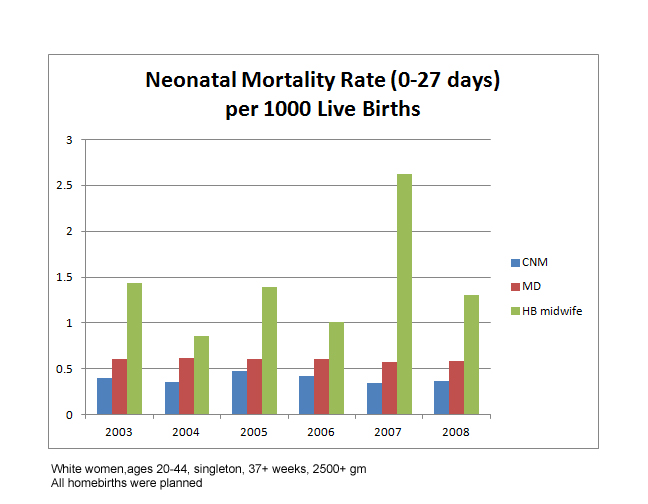
1. New CDC statistics, same old increased homebirth death rate. The dramatic increase in homebirth death rates has been remarkably consistent over the years.

Keep in mind that these statistics dramatically undercount the real rate of homebirth death. Why?

a. All homebirth transfers are included in the MD numbers. That means that any deaths that occurred after the mother was transferred to the hospital are in the MD group and not in the homebirth group where they belong. This is important because we know that many homebirth deaths occur because even being “10 minutes from the hospital” is not close enough to save a baby in a life threatening emergency.

b. Intrapartum deaths are not included in these statistics at all, because those babies don’t get birth certificates. All those homebirths where dead babies drop into the hands of unsuspecting homebirth midwives (“the heart rate was just fine a minute ago”) are not noted here.
CDC statistics homebirth 2003-2008

2. Oregon releases official homebirth death rates, and they are hideous.

You may recall that back in August 2010, Melissa Cheyney, the Director of Research for the Midwives Alliance of North America (MANA) and also the head of the Board of Direct Entry Midwifery, rejected a call by the State of Oregon for access to the MANA homebirth death rates for Oregon. As a result, the State decided to collect the statistics themselves. They turned to Judith Rooks, a certified nurse midwife and midwifery researcher who is known to be a supporter of direct entry midwifery, to analyze the Oregon homebirth statistics for 2012.

Oregon homebirth death rates 2012

As Rooks regretfully acknowledged:

Many women have been told that OOH births are as safe or safer than births in hospitals…

But out-of-hospital births are not as safe as births in hospitals in Oregon, where many of them are attended by birth attendants who have not completed an educational curriculum designed to provide all the knowledge, skills and judgment needed by midwives who practice in any setting.

The death rate is horrific, even AFTER Rooks inappropriately eliminated the death of a baby at homebirth who had congenital anomalies. Since the hospital group contains congenital anomalies, it is not appropriate to remove them the homebirth group.

3. How have professional homebirth advocates responded to the Oregon data. By and large they have ignored it since they can’t refute it or defend it. Jennifer Margulis (whose husband is a lay member of the Oregon Board of Direct Entry Midwifery) did try, however with the stupidest excuse for homebirth deaths ever:

Oregon has some of the safest best homebirth stats in the country IF YOU DON’T COUNT PORTLAND …

Duh. Homebirth is apparently very safe if you just remove the dead babies from your calculations. And what reason does Margulis provide for removing Portland from the calculations? None, of course. She hoping that homebirth advocates are stupid enough to be persuaded by that inane excuse, or, worse still, perhaps she actually believes that it is a valid excuse.

4. New analysis from Arizona shows — yet again — that homebirth triples the neonatal death rate.

What did they find?

Pooled results indicated that homebirths attended by midwives were associated with increased risks for neonatal deaths [pooled OR (95%CI): 3.11 (2.49, 3.89)]. There were no significant differences in outcome of home or hospital births attended by midwives for the other child health measures.

Homebirth increases the risk of neonatal death by a factor of 3 or more.

For mothers, homebirth poses a much lower risk of interventions and the complications that may arise from those interventions. But that advantage is purchased at the price of increased risk of neonatal death, demonstrating yet again that much of obstetrics is preventive medicine, designed to prevent neonatal deaths … and that’s exactly how it works. Give birth at home and you are twice as likely to avoid interventions, but three times as likely to end up with a dead baby as the result.

5. On the international front, the results are much the same. Dutch midwives struggle to avoid accountability for high perinatal death rate.

According to a leading professor of midwifery:

Maternity care in general in The Netherlands has come under scrutiny by governments, media, the public and care providers themselves after two consecutive European Perinatal Statistical Reports ranked The Netherlands among those with the highest rates of perinatal and neonatal mortality compared to other members of the European Union (and Norway) …

… We have learned that infants born to women of low risk whose labour started in primary care with midwives had higher rates of perinatal death associated with delivery compared to those beginning labour in secondary care …

Ank de Jonge, the leading apologist for Dutch midwifery, attempts to avoid responsibility for the high perinatal mortality rate, but actually finds the opposite. After restricting the analysis to term births, de Jonge found that the Netherlands has one of the worst perinatal mortality rates in Western Europe, although now they have the sixth worst rate, instead of the third worst rate.

In other words, de Jonge confirmed that there is a serious problem with perinatal mortality in the Netherlands including the perinatal mortality rate at term. She confirmed that there is significant evidence that Dutch midwives bear responsibility for the Netherlands poor perinatal mortality rate.

De Jonge tried again in another paper that utterly misrepresents her own findings.

6. De Jonge is at it again, slicing and dicing data in yet another unsuccessful attempt to show that homebirth is safe.

De Jonge compared the number of women who SURVIVED severe complications at homebirth to the number of women who SURVIVED severe complications at hospital birth. She didn’t compare the number of women who EXPERIENCED severe complications in each place. And she didn’t compare how many women DIED at each place. Without that information, de Jonge is not entitled to conclude anything.

Severe maternal morbidity is an appropriate measure of safely ONLY when death rate is zero or nearly zero. If the death rate is not zero, that MUST be taken into account in assessing safety. My Letter to the Editor of the BMJ regarding this inexplicable oversight was published the same day. de Jonge and colleagues have responded, and what do you know, the maternal mortality was NOT zero.

Fewer women in the homebirth group experienced severe acute maternal morbidity, but that’s nothing to crow about if one of them died and might have been saved in the hospital.

7. Elsewhere, Australian midwives boast about terrible homebirth death rate.

Setting a new standard for cluelessness, Australian midwives are proudly presented the results of a publicly funded homebirth program, a program that has a homebirth death rate 5X higher that of term hospital birth.

During the 5 years of the study, there were 1807 women who intended, at the start of labor, to give birth at home. 83% had a homebirth, 52% in water (I have no idea why they mention this except to check women’s performances against the midwifery ideal.) The transfer rate was 17%. The C-section rate was 5.4% and the neonatal death rate was 2.2/1000. That’s more than 5X the rate of 0.4/1000 found in a 2009 report on birth in South Australia.In addition, 2 babies suffered hypoxic ischemic encephalopathy (brain damage due to lack of oxygen).

And that probably undercounts the deaths and complications because reporting was voluntary and only 9 of 13 program directors responded.

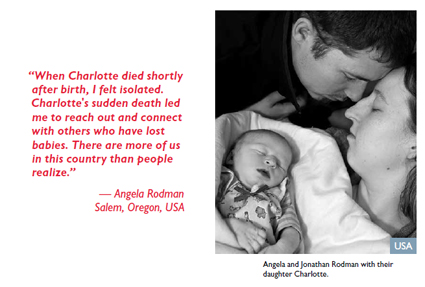
8. Ironically, Save the Children illustrated US neonatal death by using a CPM attended homebirth. The organization (?unwittingly) used a photo that I recognized as a CPM attended homebirth death that was almost certainly preventable.

In other words, the face of first day death in the US is preventable death at homebirth.
Angela Rodman

9. The most important paper on homebirth published in 2013 showed that homebirth increases the risk of a 5 minute Apgar score of zero by nearly 1000%!

Grunebaum et al. found:

Home births (RR 10.55) and births in free-standing birth centers (RR 3.56) attended by midwives had a significantly higher risk of a 5-minute Apgar score of zero (p<.0001) than hospital births attended by physicians or midwives. Home births (RR 3.80) and births in free-standing birth centers attended by midwives (RR 1.88) had a significantly higher risk of neonatal seizures or serious neurologic dysfunction (p<.0001) than hospital births attended by physicians or midwives.

The Grunebaum paper is well done and extremely difficult to undermine. There is simply no question that the data shows that homebirth raises the risk of a 5 minute Apgar score of 0 by nearly 1000%. The authors’ decision to use the 5 minute Apgar score of zero is truly inspired. Other research shows that homebirth has an appalling rate of intrapartum death, and not just any intrapartum death, but totally unexpected (“the heart rate was normal right up until the baby was born”) death. This is almost certainly due to failure to monitor babies appropriately during labor. The decision to use the 5 minute Apgar score of 0 means that we are looking at severe intrapartum compromise, almost certainly resulting in death.

Most professional homebirth advocates have ignored it, but not MANA. They’ve published a “critique” that contains at least one bald face lie and many more untruths.

10. And how about the death rates of MANA’s own members? Melissa Cheyney continues to spews BS to justify hiding them.

On October 24, ahead of the MANA13 national conference, Cheyney claimed that the MANA statistics cannot be released without the approval of an IRB (institutional review board). First, MANA itself has published almost all the data from the database EXCEPT the death rates. Second, while IRB approval could be required for publications based on the data, IRB approval is not required to read and review the data.

As recently as September 29, Wendy Gordon claimed that there were no articles in press, but on October 24, Cheyney suddently announced there are two papers on the MANA statistics that will be published in the Jan/Feb 2014 issue of the Journal of Midwifery and Women’s Health.

I’m sure that Cheyney will do something to hide the hideous death rate at CPM attended homebirth. I’m so sure, in fact, that if I’m wrong, I will publicly apologize to Cheyney and donate $100 to the MANA stats project.

It’s a win-win for me. If I’m wrong, and Cheyney publishes the number of homebirth deaths compared to the total number of attempted homebirths, I’ll finally have access to the data. If I’m right, I’ll save $100 and I’ll be able to say that you heard it here first that MANA would try to hide the many homebirth deaths at the hands of their members.


Be sure to read the companion piece 2013: The year in homebirth deaths and disasters.

2013: The year in homebirth deaths and disasters

Crying woman

As the end of the year approaches, it is time for the grim task of recapping the deaths and disasters from 2013. The toll of homebirth deaths and disasters, almost all presided over by homebirth midwives, is, above all, a shocking indictment of the second, inferior class of American midwives known as CPMs (certified professional midwives).

The list is much too long:

1. Thank goodness I chose homebirth for the shoulder dystocia that nearly killed my baby (UK disaster)

2. Yes the baby died, but my homebirth midwife was awesome

Another homebirth, another dead baby, another loss mother proclaiming that her midwife was really, really nice to her.

In this particular case it is not clear whether the baby would have survived had the mother been under the care of an obstetrician, since the baby may or may not have had congenital anomalies; but there is no question that the baby would have had a much better chance of surviving if her mother had had appropriate care for a postdates pregnancy and an ultrasound that had revealed any potential problems that might have been addressed in a timely fashion.

3. No, homebirth did not save your baby, either

The idea that a homebirth saved this baby’s life is ludicrous on its face. C-section is the life saving treatment for a worrisome velamentous cord insertion because it reduces the risk of perinatal death to near zero, not homebirth, which guarantees the baby’s death if the blood vessel is torn.

4. Another devastated homebirth loss mother

Another homebirth, another shoulder dystocia, another dead baby and another homebirth midwife who will never be held accountable for presiding over the preventable death of a beautiful baby girl.

5. Homebirth baby dies of virus contracted during waterbirth

An infant who died following a home waterbirth into a pool containing her mother’s virally contaminated diarrhea.

6. Actually you did lose your uterus because you chose homebirth

The basic story is very simple and the fault is very clear. She had a history of previous C-section, went against medical advice in choosing homebirth, ruptured her uterus, had her baby’s life save and her life saved by a repeat C-section and lost her uterus and wound up in the ICU on a ventilator having received multiple transfusions.

Does she take responsibility for her decision to choose high risk homebirth? Are you kidding? It’s everyone’s fault but hers.

7. 20 years of presiding over homebirth deaths

Barbara S. Parker, 55, faces three felony counts of practicing midwifery without a license. These charges stem from three August deliveries.

The first was on Aug. 2nd when Parker took a woman to an Auburn hospital when she was having trouble delivering her child. Then on Aug. 3rd Parker helped a woman deliver a baby that wasn’t breathing and had no pulse. That child later died at the hospital. Then a few days later, on Aug. 7th, Parker was helping a mother deliver twins and the second infant was only partially delivered and had to be taken through cesarean section. According to court papers, the second child did not survive.

8. Empty arms, broken heart, another homebirth death

I lost my son … in Feb 2013 at 40 weeks 2 days during delivery, the last pushes killed him official cause was cord prolapse. The hospital staff tried everything possible to revive him for 26 minutes after his birth but he never came back to us. He was 8lb’s 6oz and absolutely perfectly beautiful. I miss him, my arms ache, my heart hurts, my breasts ache every time I am around a baby …

9. Unlicensed midwife arrested for homebirth death AND for prostitution; homebirth advocates hold fundraiser

It’s almost as if homebirth advocates are trying to advertise their moral bankruptcy. They couldn’t care less how many babies die at homebirth, why they die at homebirth and who pretends to be a midwife.

I’m referring of course to the case of Rowan Bailey. She allegedly represented herself as a licensed midwife even though she uncredentialed and unlicensed. She has been jailed for allegedly presiding over an intrapartum death at homebirth … In addition, she was arrested last month for prostitution. What are other homebirth midwives doing in response? They’re raising money to “free” her, of course.

10. Another homebirth, another brain injured baby, but the midwife was awesome

How many times have we heard this story before?

Awesome homebirth midwife? Check.
Ignoring risk factors? Check.
Midwife with no idea until the moment of birth that the baby was in distress? Check.
High tech, extraordinarily expensive treatment to prevent further brain damage? Check.
Permanent brain injury? Check.

11. Homebirth kills mothers, too

My husbands cousin passed away today while giving birth. She was 24, beautiful, had just graduated with her masters in engineering, and was getting married. She was due may 15th. She went into labor today. She had a home birth and midwife. She bled to death on the way to the hospital that was 8 minutes away. Her daughter is alive…

12. Another maternal death: How the quest for the idealized birth experience continues to kill

The story is simple and straightforward. A pregnant woman was facing a C-section because all the obstetricians she consulted advised her that vaginal delivery might result in the death of one of her twins or herself. She decided to ignore their warning and gave birth at home unassisted. She died of a massive postpartum hemorrhage.

13. Mother eating her words; baby fighting for her life

I did have my twins … at home. I wrote a recent post about What would the world be like without hospitals. I had to eat my words this last week because my second baby had prolapse cord and has been in the hospital since birth fighting for her life. [She ultimately died.]

14. Sam, a victim of homebirth

Sam’s parents brought charges against the midwife in the Texas Board of Midwifery. The Board acknowledged that she had failed to immediately transfer Sam’s mother despite evidence of abruption. The punishment? Six months probated suspension.

Sam’s family, including two older sisters, took him home and loved him … and got lots of love in return.

Sam ultimately died due to aspiration. The autopsy ruled that it was directly related to his labor/birth injuries.

15. A mother looks back at her daughter’s postdates death

Our daughter was stillborn at 42 weeks 3 days. She never opened her blue eyes. She never cried. She never nursed at my breast or grabbed her daddy’s finger with her chubby hand, but she was still born, and she deserves to be remembered forever.

Why was she born at 42 weeks and 3 days? Because her mother wanted to avoid another C-section after 2 previous C-sections, so she chose homebirth. [Correction: Not a homebirth death because the mother had planned to deliver in the hospital. Her baby died after two days of intermittent labor at home, before the mother went to the hospital.]

16. On the other hand, maybe the midwife is a monster

The homebirth midwife presided over a neonatal death at homebirth of a VBA3C mother in Utah, administered Cytotec to induce or augment labor, and delivered the baby using a vacuum extractor; in addition a massive postpartum hemorrhage occurred.

17. Homebirth killed my baby; I’m still in favor of it

I actually did have a midwife at my homebirth and sadly my baby died. He was born still. We couldn’t find his heartbeat and then just didn’t get him out fast enough (had to transfer to hospital and have a csec) it was an attempted vbac. Even after that situation, I am still for home birth. (just not for me) If one of my daughters decided to have a HB I would be all for it …

18. Homebirth means never having to say you’re sorry

One week ago I lost heart tones on our little girl at 9 cm. We rushed to the hospital but we weren’t on time and they did a cesarean. Because of a long labor (4 days) and not dilating (transition for 15 hrs) the dr told me I shouldn’t labor again. However, I’m planning on having another baby as soon as I can and would like a home birth.

19. You nearly killed the baby, but you think the NICU abused him?

Took castor oil at 41&2 and had contractions 2-3 min apart starting at 10 pm until I delivered the next day, Friday 7/26, at 5:15 pm. My first labor was only 12 hours, start to finish, so this really shocked us all… Delivered that way [half squat] with my midwife supporting my perenium. It is a boy! He was lifeless & they had to work to get him to pink up. He had apgars of 5/6/8 but swallowed fluid, had retractions in his abdomen, & would stop crying.

He spent several days in the NICU where the mother claims he was “traumatized.”

The NICU traumatized the baby? How about his own mother who nearly killed him for no better reason than bragging rights. She hired a midwife so incompetent that she had no idea she was about to deliver a lifeless baby. She labored at home without adequate monitoring. She let her baby spend hours nearly asphyxiating. She insisted on delivering far from the people and equipment that could have resuscitated the baby faster and possibly prevented a long NICU stay.

20. Classic homebirth screw-ups lead to yet another homebirth death

Another day, another baby who didn’t have to die at homebirth.

According to The Irish Times: “A couple who prepared for what they hoped would be an idyllic home birth by lighting candles and playing soothing sounds on their stereo ended up devastated when their baby was stillborn, an inquest heard today.”

21. Homebirth midwives: bringing third world causes of childbirth death to the first world

South Carolina has suspended the license of a free standing birth center and two of its midwives because of an intrapartum stillbirth.

22. Don’t blame yourself, blame your homebirth midwife

After 6 hours of pushing, not only was I in pain and tired but she hadn’t moved and there was meconium running down my leg which indicated that she was in stress. My midwife was still checking her heartbeat and it was a little slow. They had me lay on one side and have oxygen and that seemed to help her heart but it wasn’t helping anything else. At that time I told my midwife I was done. I couldn’t do it anymore. She tried to lift my spirits and say I COULD do this but I told her I did not want the encouragement. I was tired and I didn’t want to be in pain anymore. I wanted the hospital…

By the time they opened me up, she didn’t have a heartbeat. She was covered in meconium and the umbilical cord was wrapped several times around her neck and body. They tried rescusitating her for 15 minutes but she never made it.

23. But the baby’s heartrate was fine right before it dropped nearly dead into the homebirth midwife’s hands

Yet another baby has been placed at risk of significant brain damage and possible death because the clueless homebirth midwives didn’t understand how to diagnose fetal distress.

*****

Think homebirth is safe? So did the mothers in these 23 accounts.

Think homebirth is safe? Read the 23 stories and think again.


Be sure to read the companion piece 2013: Homebirth papers and statistics.

Dr. Amy