Category Archives: Uncategorized

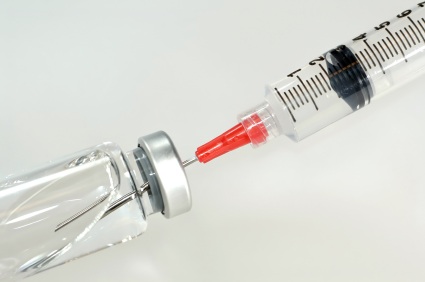
Let’s review: how do vaccines work?

image

On the face of it, suspicion of vaccines is incomprehensible. Vaccination has been one of the biggest lifesavers of the past 200 years. It is the cornerstone of public health, directly responsible for the dramatic drop in infant and child mortality and the dramatic extension of lifespan we have enjoyed over the last century. Despite countless conspiracy theories advanced by vaccine rejectionists in the past 200 years, not a single one has turned out to be true.

True, there are side effects, some serious. However, serious vaccine side effects like brain damage or death are so rare as to be measured per 100,000 people or per 1,000,000 people. There has been no effort to hide these serious side effects. Indeed parents are required to sign consent forms acknowledging the risk of serious side effects, including brain damage and death, before their children can be vaccinated.

So why are people suspicious of vaccines? There are many reasons including the American love for conspiracy theories, the public campaigns led by prominent celebrities, and the desire to assign causes to diseases like autism where the cause remains unknown. The most important cause of the suspicions, though, is one that is very easy to address. Most people don’t know how vaccines work.

To understand how vaccines work, you need to understand how the body defends itself from bacteria and viruses. Just like the body has a dedicated system to digest food (the gastrointestinal tract) or to remove waste products (the kidneys and urinary tract), the body also has a dedicated system to fend off bacteria and viruses; it’s called the immune system.

The body actually has three layers of defense against bacteria and viruses. The first is the physical barrier presented by the skin or the lining (mucous membranes) of interior passages like the mouth and nose. Although we are surrounded at all times by bacteria and viruses, most of them never make it beyond the skin. Of course the integrity of the skin and mucous membranes can be disrupted by a cut or puncture, allowing bacteria or viruses to be introduced directly into the body.

The second line of defense is a non-specific immune response. If bacteria colonize a cut on your hand, your body reacts in a predictable way. There will be swelling, redness, and pain, a response that does not depend on the identity of the threat. Special immune cells will race to the site and engulf the offending bacteria. When they die in the attempt, they accumulate as pus.

Even primitive animals have non-specific immune responses, but higher animals and human beings have an additional, more powerful response. We can produce antibodies. Antibodies are proteins that recognize specific bacteria or viruses and bind to them, thereby signaling to other immune cells that they are targets for swift neutralization. Each antibody binds to a specific site on a specific bacteria or virus.

We’re not born with those antibodies, though. We make them in response to a threat. For example, we are not born with antibodies to the chickenpox (varicella) virus. When exposed to the varicella virus, though, we can learn to make antibodies to it. It takes time, but gradually we can produce enough antibodies to fend off the disease.

Unfortunately, we don’t always get the time we need. We can make antibodies to smallpox, for example, but many individuals are overwhelmed and killed by the virus long before they could make enough antibodies to fend it off. Those who do win the race and manage to produce enough antibodies to survive are now permanently protected. That’s because the immune system retains the ability to make the specific antibodies against the smallpox virus. Whereas it may take days to produce smallpox antibody when first exposed, a second exposure will be met with rapid and massive production of antibody, generally preventing the individual from getting sick at all.

So in order to be protected from the disease, you had to get the disease, and you might die before you were able to make enough antibody to protect yourself. Imagine, though, if you could learn to make the protective antibodies without actually getting sick. That’s the theory behind vaccines.

In order to make antibodies to a virus (or bacterium) the body needs to “see” the virus. In other words, it needs to have direct exposure to the virus, but that virus doesn’t have to be functional, and it doesn’t even have to be whole. A virus can be inactivated (live attenuated) or killed and still produce an immune response. It can also be broken down into its constituent parts and the parts can produce an immune response. Any future exposure to the live virus (though contact with others who have the disease) will be met with rapid and massive production of antibody, preventing the individual from getting sick at all. A vaccine is merely an inactivated or dead form of the virus, letting you learn to make antibody without getting sick in the process.

Vaccines do not produce perfect immunity. The dangerous part of the virus might be the part that evokes the most powerful immune response. Rendering the virus harmless by inactivating it, killing it or breaking it up, may remove that part and the immune response to the less dangerous parts might be weaker. So actually getting the disease may produce a better immune response than the vaccine … but only if you survive the disease.

Successfully fighting off a disease depends on being able to produce enough antibody before the disease kills you. Until vaccines, the only way you could learn to produce antibody was to actually get the disease. Now, instead, you can learn to make antibody by being exposed to a harmless form of the virus or bacterium.

This piece first appeared in October 2009.

The best method for getting pregnant? Have sex.

Sperm Cells Entering Human Egg

I want to have Emily Oster’s publicist. Oster, an economist, recently published the book Expecting Better: Why the Conventional Pregnancy Wisdom Is Wrong-and What You Really Need to Know. Her book has been publicized everywhere, a tribute to her media connections (she has written for The Wall Street Journal) and superb public relations.

I haven’t read the book, yet, but I have been reading Oster’s columns in the online magazine Slate, and have found them to be a somewhat misleading. There are no factual errors, but, as might be expected for an economist writing about obstetrics, she has no clinical judgment, and that dramatically undermines the quality of her advice.

Today’s piece, The Best Method for Getting Pregnant is a good example. Here’s what Oster has to say:

So, how big a deal is it to detect ovulation? Answer: It matters. From very detailed data on couples—including exactly when they had sex and whether they conceived—we know that pregnancy is only possible in the five or six days leading up to and including ovulation. This suggests that you’ve got to get the timing right, and if you do, the odds are pretty good. Pregnancy rates are 30 percent for sex on the day before or day of ovulation, versus 10 percent five days before. No one in the aforementioned study got pregnant having sex more than five days before ovulation.

So should you lay back and leave your pregnancy to chance, or track, measure, and chart? Depends on your time frame, I suppose. But done right, if you want to have the best shot at getting pregnant, shell out for the pee sticks.

Not exactly.

Oster makes a major assumption, one that is untrue. Oster appears to believe that the reason women don’t get pregnant the first month that they try is because they haven’t timed sex to ovulation. That’s wrong. The main reason women don’t get pregnant each month they are trying has nothing to do with ovulation and everything to do with whether the fertilized egg divides properly, implants properly and grows properly.

As a general matter:

50% of women will get pregnant in 4 months of trying
75% will get pregnant in 8 months
90+% will be pregnant within one year

Why doesn’t every woman get pregnant in the first month she tries? Because of the massive wastage inherent in reproduction.

Every woman is born with millions of eggs and each man produces trillions of sperm during a lifetime. Most are never even used. Even when the conditions are right for pregnancy (a sperm meets an ovum) many things can and do go wrong. The ovum could be abnormal, either in function or in its genes, the sperm could be abnormal, either in function or in its genes, or the combination could be genetically abnormal. In any of these cases, the fertilized ovum could fail to divide.

It is possible for the fertilized ovum to divide into the ball of cells known as the blastocyst, but when it gets to the uterus, it fails to implant properly. Or the blastocyst implants, but it dies and is washed out with a menstrual cycle. Or it starts growing and the woman misses her period (and may even have a positive pregnancy test), but then it dies. In that case, she would get her period a few days late. That’s known as a “chemical pregnancy,” meaning a pregnancy that grows to the stage where it releases a tiny amount of pregnancy hormone into the mother’s bloodstream (hence the positive pregnancy test), and then dies.

That doesn’t even take into account that 20% of well established pregnancies will grow for several weeks and then die, resulting in a miscarriage.

So while Oster is technically correct that ovulation predictor kits are the best method for predicting ovulation, she misses two larger points:

1. The timing of sex is rarely the reason why a woman doesn’t get pregnant in a month that she is trying to get pregnant.
2. For women who ovulate regularly, the majority of women, ovulation reliably occurs approximately 14 days before the next period is expected.

Ironically, Oster’s fundamental error, the belief that it is the timing of sex is the reason why a woman doesn’t get pregnant within the first month of trying, is exactly the type of conventional wisdom that she claims she will debunk. But because she fell for the conventional wisdom about fertility, Oster is not reducing anxiety for women, ostensibly the primary motivation for her book; she is raising anxiety. And it points out a fundamental flaw with Oster’s data driven approach.

As anyone who reads this blog knows, I am totally committed to the use of data in making decisions about pregnancy, but data without both a strong foundation in human physiology and excellent clinical judgment can lead people like Oster to make misleading recommendations.

Pregnancy is not a project, requiring micromanagement in order for it to successfully produce a live, healthy baby. Beyond high quality prenatal care, a few basic restrictions (no smoking, no recreational drugs, among others), and hospital birth, there is really not much a woman needs to do, or can do, to reliably produce a healthy baby exactly when she wants one.

What’s the best method for getting pregnant? Have sex regularly, or if not regularly, within the 14-19 days prior to the next expected menstrual period. That’s it.

And if you don’t get pregnant the first month, there is NO NEED to do, or buy or chart anything. Just try again.

Homebirth midwives exploit poor women of color in developing countries

Got ethics ?

The good news is that homebirth midwives are beginning to recognize that being an “expert in normal birth” is meaningless. Any taxi driver can preside over an uncomplicated birth. Women hire birth attendants to prevent, diagnose and manage complications and homebirth midwives have zero experience with that.

The bad news is that homebirth midwives are trying to get that experience by exploiting poor women of color in the developing world.

That’s the explosive charge leveled at Midwife International by The Alliance for Ethical Midwifery Training.

What is Midwife International?

According to its website:

More than 58 countries lack enough qualified midwives to provide timely access to skilled healthcare for mothers and infants. Our solution is to train midwives who are equipped to work in resource-constrained regions where maternal and child mortality is high and the need for professional midwives is greatest.

Not exactly. Midwife International is a midwifery school, charging exorbitant tuition, using poor women of color as a source of complicated cases, and providing nothing in return.

For this privilege, American students are charged $19,000/yr, PLUS books, supplies, travel, insurance, accommodations, and living expenses.

Midwife International managed to corral a who’s who of American homebirth midwifery into supporting this scheme. Board members included Aviva Romm, MD, Jan Tritten, the editor of Midwifery Today, and Robbie Davis-Floyd, among others.

But, according to The Alliance for Ethical Midwifery Training:

The communities MI claimed to be serving were exploited for the benefit of the MI students and the considerable profit of MI, furthermore, host sites and local midwives were taken advantage of and at times blackmailed into compliance.

How?

… MI is alleged to have:

  • Used bribery to undermine the host site Directors and their programs and to de-stabilize the local programs and clinics:
  • Taken back much need supplies and equipment if the host site Director would not comply with MI’s demands;
  • Negotiated secret agreements with host site midwives to give priority to MI students (many of whom are in the first steps of early midwifery training and whose skill level, in some cases, could best be described as elementary) over their own indigenous midwives who are being trained to meet the ICM Millennium skill goals; and
  • Not compensated host sites at the rate initially negotiated, nor reimbursed host sites for modifications made to their programs and sites in order to accommodate the MI program. In addition, the demands made by MI for accommodations and life style issue for the students and preceptors were unreasonable given the realities of the countries in which the MI students and preceptor would be living.

The website contains testimonials from the women who run the clinics for the underserved and they make for very disturbing reading.

The Alliance identifies the key problem with first world laypeople learning midwifery on third world women:

There is a structural violence that occurs when a person from the west attempts to learn on those who have less power and privilege than they do. There is a long history of exploitation of Black and Brown bodies for the purpose of western power and gain. There is also a long history, even within midwifery, of silencing those who speak out about these issues. What has happened here is that an institution has been built based on each of these acts of violence. We refuse to be silenced. We stand together to share the stories of what has occurred…

The behavior of Midwife International, if true, is starkly reminiscent of the behavior of Big Pharma. The rules and regulations for testing new medications on people from industrialized countries are onerous and expensive because the governments of those countries want to protect their citizens from exploitation. The same protections do not exist in many countries of the developing world, so pharmaceutical companies often test their products there.

Similarly, the rules and regulations for midwifery training in first world countries are appropriately onerous for a profession responsible for the lives of babies and mothers. Hence, the certified professional midwife credential (CPM) is considered inadequate by ALL first world countries, and CPM trainees are not allowed in hospitals where to gain clinical experience. The same protections do not exist in many countries of the developing world. How much easier, then, to foist uneducated, untrained laypeople on those countries.

In light of these allegations, several board members, including Aviva Romm, MD, have resigned, but one must question their judgment for signing on in the first place (and ask if financial compensation was paid to them for their board positions).

The fundamental ethical question remains, however. Is it ethical for homebirth midwives, who cannot meet the standards for education and training of any industrialized country, to “practice” on poor women of color in developing countries? It could possibly be ethical if proper safeguards were put in place, but it is not clear if homebirth midwives would be allowed to care for poor women of color in developing countries if proper safeguards were put in place.

The bottom line, as always, is that the CPM credential should be abolished. There is no need for a second, inferior class of midwife in the US, and there is certainly no need, or benefit, to a second, inferior class of midwife who learns about pregnancy complications by preying on underserved poor women of color in developing countries.

I didn’t manage to kill my first baby by withholding vitamin K; maybe I can kill my second

iStock_000010636965XSmall

I’m beginning to wonder if belief in NCB and homebirth pseudoscience will be an example of natural selection in action. The increased death rate of homebirth, the increased rate of death and disability associated with withholding vitamin K, the increased death rate of children who are not vaccinated mean that children whose parents believe in pseudoscience have less chance of surviving to reproductive age, weeding out whatever deficiencies led parents to these poor decisions in the first place.

Don’t believe me? Consider Mandy’s story:

I rouse myself enough to grab a diaper, and pull Ryder towards me. There is a puddle of blood on the bed. His umbilical cord stump fell off when he was just six days old, and it hasn’t stopped oozing since. A drop or two of blood each day. We weren’t worried. Now this? It’s like a wound… Starting to panic, I try to gather my thoughts enough to make a plan. We need to go to the hospital. It’s Sunday. This is a lot of blood.

Be sure to take a look at the picture that is helpfully included, showing the bleeding baby and the pool of blood.

There is the usual whining about the evil people at the hospital, then:

But Ryder’s bleeding times are very, very out of range. We’re going to admit him to the PICU. You’re going to speak to a pediatric hematologist and the pediatric intensivist. He needs a Vitamin K shot and a blood transfusion. I’m sorry.” The bed shook with my sobs. I held Ryder so tightly. They were going to have to start an IV. Another needlestick. They needed to draw more blood. My poor, sweet baby. This isn’t fair. This isn’t fair.

You bet it isn’t fair. Ryder is experiencing this pain because his mother thought she was smarter than pediatric hematologists.

The following morning, we were told that all of Ryder’s follow-up labs came back normal. He was officially given the diagnosis of “hemorrhagic disease of the newborn” which is caused by a vitamin K deficiency, and the reason that nearly all newborns birthed in a hospital are given a shot of vitamin K at birth.

So she’s learned her lesson, right?

Wrong!!!

Mandy had done her “research,” which had left her more ignorant than before, and despite what happened, she still believed it.

We chose not to get a Vit K injection after doing some research on the reasons it IS given. Hemorrhagic disease of the Newborn only occurs in 1 of every 10,000 newborns, and yet it is given to all. The dose given is something like 1000x what is required to prevent the bleeding disorder (forgive me, I can’t recall all of the exact numbers without looking them up again.). Vit k is also associated with increased risks of childhood cancers [Note: There is no evidence to support that claim.] The risk/benefit was high enough for us to decide that the risk felt safer – we trusted ourselves to recognize a problem if one arose.

It was just an amazing coincidence that Ryder didn’t get the vitamin K injection and then hemorrhaged. The real cause was mastitis (??!!).

I was taking large amounts of Vit K via spinach and kale smoothies, which was transferring through breastmilk… We had no issues at all until I got mastitis and was too sick to continue making sure I was elevating MY Vit K levels.

Spinach and kale smoothies? This woman is a walking parody.

And what about the next time?

In the future, I will probably STILL not give a vitamin K shot at birth, but try harder to be sure my own levels are sufficient.

This woman is a fool. She is extraordinarily lucky that her baby bled from his umbilical stump where she could see it. He could just have easily bled into his head and wound up dead or permanently brain injured. Having dodged a bullet, she drew the inane conclusion that she is bullet-proof.

She didn’t manage to kill her first baby, but you know what they say:

If at first you don’t succeed, try, try again.

Belief buddies: a classic sign of pseudoscience

iStock_000009326163XSmall

There are lots of ways to tell the difference between science and pseudoscience. Most involve analyzing empirical claims. There’s an even easier way to tell the difference between websites and message boards that disseminate pseudoscience compared to those that adhere strictly to scientific evidence. Pseudoscience depends in large part on “belief buddies.”

Pigliucci and Boudry, writing in Philosophy of Pseudoscience: Reconsidering the Demarcation Problem, explain:

These groups collect and disseminate information on issues where scientific information and approaches are more or less relevant. They often feel that their views are neglected or stigmatized in society at large. As a result, these belief buddies consciously attempt to affirm contributions that further their agenda; dissent is discouraged lest it lead to a splintering of the group…

[B]elief buddies may not welcome criticism … Their job is to convey information that supports their core project and to reassure beleaguered constituents.

Science, on the other hand, involves critical communities. Their job is to challenge the information that supports their core project and everyone and everything is a target for criticism.

Simply put: pseudoscience takes place in supportive communities, while real science takes place in critical communities.

How can the lay person tell the difference? Sometimes it is obvious; a group of belief buddies may insist that their community will only allow members who support each other in their belief in the core project.

Over the years, for example, Mothering.com has been explicit in promoting its anti-vaccination message boards as places of “support.” In a charmingly Orwellian formulation, the editors explain:

… Though Mothering does not take a pro or anti stand on vaccinations, we will not host threads on the merits of mandatory vaccine, or a purely pro vaccination view point as this is not conducive to the learning process.

Therefore, a layperson can be sure that any community that exists to support a specific belief will be a community of pseudoscience and have nothing to do with science.

But what if the leaders of the community do not helpfully inform you that they have no interest in anything that disagrees with their core beliefs? That’s easy, too. Just look at whether the community allows or bans dissenting opinions.

For example, at every level of homebirth advocacy, from clowns like The Feminist Breeder, through organizations like Lamaze; from self-proclaimed “experts” in obstetrical research like Henci Goer to people with academic credentials like Darcia Narvaez, PhD, the delete button is integral to maintaining control over what people read and think.

As in the case of totalitarian governments, efforts to remove dissent and create the image that dissent never existed are tools to support beliefs that could never be defended in an intellectually honest way. Deleting and banning reflect the desperation felt by those trying to hold onto power that was gained by lying to people in the first place. Most importantly, women (and men) should understand that professional homebirth advocates are terrified of letting people have free access to information. Who knows what might happen if they treated women like intellectually capable human beings instead of like sheep?

When homebirth advocates tell you they have “educated” themselves, and done “research,” they mean that they have visited communities of belief buddies. But belief buddies deal in pseudoscience and that means that members are indoctrinated, not educated.

Your child is brain damaged because you refused vitamin K; how are you going to explain that to him?

iStock_000022633538XSmall

From The Tennesean:

A bleeding disorder in babies so rare that it typically affects fewer than one in 100,000 is becoming more common in Tennessee because parents are refusing vitamin K injections at birth, according to pediatric specialists.

Since February, four babies with no signs of injury or abuse have been sent to Monroe Carell Jr. Children’s Hospital at Vanderbilt with either brain hemorrhages or bleeding in the gastrointestinal tract. Dr. Robert Sidonio Jr., a hematologist, diagnosed them with vitamin K deficiency bleeding.

After discovering that all four had not received the preventive treatment, which doctors have been giving to newborns since the 1960s, he started making inquiries. Pediatricians told him parents are increasingly refusing consent because of concerns based on misinformation or the goal of having natural childbirths.

What happened to the children?

All four children survived, but the three who suffered brain bleeds face challenges.

“These are kids that end up having surgery to remove the large amount of blood out of their head or they would have died,” he said. “It’s early. It’s only since February, but some of the kids have issues with seizure disorders and will have long-term neurological symptoms related to seizures and developmental delays.”

That is about as spectacular a parenting fail as letting your child go through a windshield head first in a car accident because you thought refusing to buckle your child in a car seat made you look “educated.”

Even animals fight tooth and claw to keep their young from harm. Human parents should do no less. Instead, Western, white women thrill to the thought that immature transgressive behavior marks them as independent thinkers. It doesn’t; it marks them as ignorant, gullible and willing to take terrible risks with the lives of their children for no better reason that to preen to themselves and others.

I can only begin to imagine the life of agony that awaits these children and their parents. I’d like to see how the mothers explain to their brain injured children that they didn’t have to bleed into their heads; they didn’t have to sustain permanent neurologic damage; they were born without handicap and the only reason they are disabled now is because their mothers thought their friends on the internet were more knowledgeable about hemorrhagic disease of the newborn (HDN) than actual pediatricians with actual medical training.

What could these women possibly say:

1. Sorry you’re brain damaged but shots scare me and the tradeoff between brain damage and the mild discomfort of an injection seemed perfectly reasonable to me?

2. Sorry you face a life of disability, but the women on Mothering.com assured me that refusing the vitamin K shot was safe, and who wouldn’t believe them?

3. I wish you could walk and talk like all the other kids, but HDN is rare and I figured that pretending it couldn’t happen to you would prevent it from happening to you?

4. I believed that doctors were engaged in a giant conspiracy to inject babies with vitamin K for their own enjoyment and HDN was made up to scare mothers?

5. Hey, don’t blame me. I educated myself on the internet?

6. Shit happens and I’m sorry it happened to you, but you were probably meant to be brain damaged?

Or how about:

7. I am desperately sorry and will be for the rest of my life. In my ignorance and hubris, I thought I was educated when actually I was nothing but a fool?

Yes, that sounds about right.

Some babies are just meant to get eaten

iStock_000008850762XSmall

In a startling discovery sure to change our perceptions of our distant ancestors, researchers announced the finding of ancient cave writing about natural parenting. Ima Frawde CPM of the College of Raw, Orgasmic, Totally Crunchy Homebirth (CROTCH) announced the finding and speculated on its implications. The scrawls on the walls of an ancient African cave appear to date back nearly 500,000 years and be written by a tribal “wise woman.” It took scholars nearly a decade to translate them.

Here for the first time is a complete translation:

Ladies, it is time to take parenting back from the patriarchal men who have filled it with interventions. Things are getting out of control.

I’m speaking, of course, about the fact that nearly 40% of all cave dwellers now make fires at the mouths of their caves every single night. The men say that it protects our infants and small children from predators … as if 40% of all babies would be eaten by predators each night if we slept without fire!

I say its just an opportunity to dazzle us with their technical prowess, and then take credit if our babies are not eaten in the night. If predators were really as dangerous as the men claim, we wouldn’t be here.

I’m not against all technology. I respect that some people feel that their lives are improved by stone tools and that hunters believe they catch more game with spears, but fire is going a step too far. We should be sleeping each night as Nature intended, sheltered in caves, whispering affirmations, safe in the knowledge that if we eat right and exercise our children will not be eaten.

I say: Trust carnivores!

Yes, I recognize that babies are less likely to be snatched if they sleep in caves protected by fire, but there is more to sleep than whether the baby survives the night. It may be true that babies who sleep in caves without fire are 10 times more likely to be prey for carnivores than babies who are protected by fire, but the absolute risk of getting eaten on any given night is really very low.

Moreover, in an emergency develops and a lion or jackal is has one of our babies in its jaws, we can light a torch then to frighten the animal away. There’s plenty of time to do that when the emergency occurs; there is no need to have a fire going each and every time darkness falls.

Plus, and this is something that men simply don’t understand, some babies are meant to get eaten.

Ladies, I encourage you to educate yourself about the risks of fire. Overuse of fire can lead to burned clothes, charred cave walls and even burn injuries to children. These risks are simply unacceptable! The fact that a few extra babies may be saved from tigers is a trivial benefit that pales in comparison to the risks.

You think I’m exaggerating? I doubt it. At this rate it is only a matter of time before 100% of cave dwellers sleep in caves protected by fire.

There must be limits to technology! If we don’t call a halt to parenting interventions like fire, the next thing you know all the men will be insisting that we cook our food with fire. Okay, okay, that’s probably an exaggeration, but let’s face it, technology should be reserved for emergencies. For 99.9% of the time, natural is best.


This piece is satire.

I told you so!

i-told-you-so-400x600

I’ve been at this for quite sometime. I started the predecessor of this blog, Homebirth Debate in 2006. Over the years, I’ve approached the issue from many different angles, but my central contention has never changed: homebirth increases the risk of perinatal death.

And now, yet another player in the homebirth debate has acknowledged the truth of that claim. In an article in today’s Wall Street Journal (in which I’m mentioned), Marian MacDorman of the CDC admits it:

Marian F. MacDorman, a statistician who studies birth trends, said that more families are choosing home birth to avoid what they perceive as unnecessary hospital interventions…

Ms. MacDorman said that planned home births might be somewhat riskier than hospital births, but that “the absolute risks of home birth are very low, no matter how you slice it.”

Apparently those hospital interventions aren’t so “unnecessary” after all.

In other words, homebirth advocates are giving up the lie at the center of homebirth advocacy: the lie that homebirth is as safe as hospital birth, and replacing it with another tactic. Yes, babies die completely preventable deaths at homebirth, but who cares, since the absolute risk of dying is still low.

As far back as November 2011, Hannah Dahlen, spokesperson for the Australian College of Midwives uttered this gem:

When health professionals, and in particular obstetricians, talk about safety in relation to homebirth, they usually are referring to perinatal mortality. While the birth of a live baby is of course a priority, perinatal mortality is in fact a very limited view of safety.

Really? On what planet would that be?

Even the Midwives Alliance of North America, the organization that represents homebirth midwives, and the organization that has hidden the death rates of its members for years is throwing in the towel. MANA executive Wendy Gordon CPM, LM, MPH, MANA Division of Research, Assistant Professor, Bastyr University Dept of Midwifery (and placenta encapsulation specialist!) wrote back in March of this year:

Let’s say that a person’s odds of getting struck by lightning in a heavily populated city are one in a million, and those same odds in a rural area are five in a million. These odds are called your “absolute risk” of being struck by lightning. Another way to look at this is to say that a person’s odds of being struck by lightning are five times higher in a rural area than in a densely-populated area; this is the “relative risk” of a lightning strike in one area over another.

A common approach of anti-homebirth activists is to use the “relative risk” approach and ignore the absolute risk, because it’s much more dramatic and sensationalistic to suggest that the risk of something is “double!” or “triple!” that of something else …

How amusing that Gordon and other homebirth advocates have suddenly discovered the difference between absolute and relative risk. The same people who have been howling about the “dangers” of epidurals (the risk of death from an epidural is less than the risk of being killed by a lightening strike), are suddenly insisting that the risk of death at homebirth, which is anywhere from 100 to 1000 times higher, is actually so small that you should ignore it.

As I wrote back in March, there are two important messages to take away from this:

Homebirth (particularly homebirth at the hands of grossly undereducated and undertrained CPMs) dramatically increases the risk of perinatal death.

More importantly, professional homebirth advocates have steadily and repeatedly lied about the increased risk of perinatal death. They should never have been trusted before, and cannot be trusted now.

Women contemplating homebirth need to ask themselves an important question: why should you trust anything that homebirth advocates have to say when they have been lying to you for years, claiming that homebirth is as safe as hospital birth, while simultaneously hiding data that shows that it leads to preventable perinatal deaths?

And let me point out: I told you so!

This father scares me; am I the only one?

image

Perusing the morning papers, I came across this piece in The New York Times, The Sound (of the Crying Baby) and the Fury (of the Exhausted Parent), written by a man who is a psychiatry resident at Yale. I thought it was going to be about having more compassion for young, new parents who become overwhelmed and lash out at a crying baby. Not exactly.

It is about Dr. Rama himself and his profound anger at his baby daughter.

I don’t think I knew what real anger was until our daughter arrived.

Considering that infants and toddlers scream despite having been fed, changed, walked around, bounced, hugged and kissed, I am amazed by how rarely parents talk about just how furious our young ones can make us. I think about it frequently — during the day. At night, I am too consumed by that anger…

Those angry thoughts flood my mind when her cry suddenly cuts through the quiet of our all-too-short nights. The English translation of that cry is, “Tomorrow your 12-hour workday will be a groggy-eyed waking nightmare.” As her cry shifts into a throaty scream, I have sensed a slowly growing animus bloom inside me. I have felt my lungs fill with air in preparation to yell back at her. To make her feel as terrible as I do.

I understand what it is to spend hours at night trying to soothe a screaming infant, knowing that tomorrow will be a full workday. Nonetheless, I find the depth of this father’s anger to be frightening.

My fear is heightened into alarm by this:

Instead, again perhaps surprisingly, I keep my focus on me.

Before I step into my daughter’s room in the middle of the night during a maddening crying jag, I remind myself that I come first. I love myself first. I realize that these statements are anathema in a world that screams, “Your child comes first!” However, if I can’t love myself in spite of my constant sense that I am failing her, then I can’t really love her either…

I hear my internal alarm bells wringing because a grown man is experiencing extreme anger toward a helpless baby and personalizing that anger in a way that could be dangerous. It feels to me that this father may be perilously close to losing control since he has already lost perspective.

There are only 7 comments on the piece so far, and all have been supportive, praising the father for acknowledging the frustration of many parents. I understand just how frustrating a crying newborn can be, but this doctor’s fury scares me.

Am I the only one?

Hannah Dahlen tries to lie with statistics … again

image

I’ve written many times before about the endless efforts of midwives to demonize interventions in childbirth.

Australian midwife Hannah Dahlen seems to be leading the charge and doesn’t shirk from using deceitful statistics and crappy research to do it.

Dahlen can’t seem to make up her mind about the actual “harms” from interventions. On any given day she might be suggesting that C-section might destroy the infant microbiome, or maybe C-sections might change the epigenetics of neonatal DNA. Today, birth interventions might increase the risk of suicide.

Her central contention is this:

So death from suicide and trauma rises significantly between nine and 12 months after birth; it is nearly four times the rate compared to the first three months following birth.

And:

The women who died had higher rates of intervention in birth, higher rates of early-term births, pregnancy complications and neonatal intensive care admissions. They also tended to have babies who were born with a low birth weight and were ten times more likely than other women to have their baby die.

Her “research” was published in a journal I’ve never heard of, with an impact factor of 2.8. To put that in perspective, high quality journals have impact factors ranging from 30-50.

It’s hardly surprisingly that Dahlen had to resort to publishing in one of the lowest ranked journal in the world. The “research” is crap.

Here is the central claim:

So death from suicide and trauma rises significantly between nine and 12 months after birth; it is nearly four times the rate compared to the first three months following birth.

Sounds impressive until you give it a modicum of thought.

1. Why are suicide and trauma lumped together? There’s a big difference (in cause, effect, a preventive approaches) between dying at your own hand and dying in a car accident. There is no possible justification for including trauma in an analysis like this besides artificially inflating the purported scope of the problem.

2. How does the supposed high suicide rate in the postpartum year compare to the suicide rate for women in the same age group who did not give birth in the past year? Dahlen doesn’t bother to tell us. So we have no idea whether the rate of suicide and trauma is any different following childbirth than it is in women who haven’t given birth. That’s a stunning oversight.

3. Dahlen notes that the suicide rate in the 4th quarter of the postpartum year is more than 3 times higher than the 1st quarter of the postpartum year and implies that this is a dramatic rise. However, it is equally likely that the suicide rate in 3 months after birth drops and then rises again to baseline over the rest of the year. Without the background rate of suicide in women of childbearing years, it is impossible to determine what has actually happened.

4. Dahlen acknowledges that the woman who died of suicide and trauma differed substantially from the rest of the population.

A large proportion of women who died from suicide (73%) had a history of mental illness or substance abuse, or both. Most of the women who died because of accidental injury also had a history of mental illness or substance abuse (or both).

How does that compare to non-postpartum women who commit suicide? Dahlen does’t bother to check. What is the suicide and trauma profile of the other 27% of women? Does it mimic that of women with previous mental illness or substance abuse? Dahlen doesn’t bother to check.

5. Dahlen acknowledges that the neonatal death rates among the women who subsequently died of suicide or trauma were 10 times higher than the death rate of women who did not die of suicide or trauma. Yet she did not ask the glaringly obvious follow up question. Was the purported increase in maternal death from suicide or trauma the result of grief and loss, and not the result of being postpartum.

The bottom line is that Dahlen could not get this paper published in anything other than an extremely low ranking journal because the paper doesn’t show anything. Dahlen waves a bunch of statistics around but fails to investigate whether those isolated statistics mean anything at all, let alone anything about suicide in the postpartum year.

Dahlen’s solution is to provide more “services” to women in the postpartum year. Yet Dahlen utterly failed to show (she didn’t even bother attempt to show) that being postpartum is the relevant risk factor, let alone that more services would decrease the rate of bad outcomes.

If this is what passes for quantitative “research” in Australian midwifery, the solution may not be more services for patients, but better basic math and logic education for midwives.