Category Archives: Uncategorized

The professional homebirth advocate’s most important tool

What’s the most important tool of any professional homebirth advocate? It’s the delete button, of course!

At every level of homebirth advocacy, from clowns like The Feminist Breeder, through organizations like Lamaze; from self-proclaimed “experts” in obstetrical research like Henci Goer to people with academic credentials like Darcia Narvaez, PhD, the delete button is integral to maintaining Orwellian control over what people read and think.

I would have thought someone like Darcia Narvaez had at least a smidgen of academic integrity, but I was disappointed. I left a comment in response to her inane post on Psychology Today entitled Jesus Had a Home Birth.

No, not the obvious comment:

“So did Hitler? What’s your point?”

This comment:

This piece is filled with so many half truths, mistruths and lies that no single comment can address them all. Let’s hit the high points:

“In the USA, home birth used to be the way babies came into the world until the 20th century when increasingly hospital births became the norm.”

True, but since the introduction of hospital birth in the US, the neonatal mortality rate has fallen 90% and the maternal mortality rate has fallen 99%! It has fallen so far, so fast, that people who know nothing about obstetrics mistakenly think that childbirth is inherently safe.

“At the same time unfortunately, the USA has the highest infant and maternal mortality rate in the developed world for the perinatal period.”

A lie, based on a misrepresentation of the data. Infant mortality and perinatal mortality are two different things, as Narvaez ought to know. Infant mortality is a measure of pediatric care (deaths from birth to 1 year). According to the WHO, the best measure of obstetric care is perinatal mortality (stillbirths plus deaths to 28 days of life). According to the WHO, the US has one of the LOWEST rates of perinatal mortality in the world.

Morever, as is widely recognized scientists and physicians, direct international comparisons of mortality rates are INVALID because many countries cheat in calculating both infant and neonatal deaths. They cheat by deliberately excluding very premature babies. In other words, they classify the babies who are most likely to die as stillborn (and therefore not included) even when they are born alive. That’s why the WHO insists on looking at perinatal mortality because it makes it impossible to hide infant deaths by pretending they are stillbirths.

“Despite concern over the safety of home births in the USA, several studies reveal that when planned and appropriately overseen, home birth stands on its own merit as a safe and suitable option.”

A lie. There is not a single study of homebirth in the US that shows it to be safe. Not even one. And the largest study that claims to show that homebirth is safe, the Johnson and Davis BMJ 2005 study actually shows that homebirth has a mortality rate triple that of comparable risk hospital birth. The only way that J&D could make homebirth look safe was to compare it to a bunch of out of date papers extending back to 1969.

Even the papers that Narvaez cites from other countries don’t show what she says they show. She appears to be unaware that Patricia Janssen was forced to publicly retract the claims made in her 2002 paper after acknowledging that the death rate in the homebirth group was HIGHER than than in the hospital group.

So in the first three claims of this post, 1 is a misrepresentation and the other 2 are flatly untrue.

Unfortunately, Narvaez appears to be recycling the mistruths and lies that characterize American homebirth advocacy.

Just how dangerous is homebirth in the US?

According to the latest CDC data, PLANNED homebirth with a non-nurse midwife has a neonatal death rate more than 600% HIGHER than comparable risk hospital birth.

In fact, homebirth is so dangerous that the Midwives Alliance of North America (MANA), the group that represents homebirth midwives, is HIDING their own death rates. They have assembled a database of 27,000 homebirths and have publicly bragged about the C-section rates, the intervention rates and the transfer rates, but they absolutely refuse to disclose how many of those 27,000 babies died.

Even MANA knows that homebirth has an appalling death rate; they just don’t want you to find out.

It was posted, deleted, returned and ultimately permanently deleted nearly 12 hours after it was first received.

Why do professional homebirth advocates reflexively reach for the delete button, and, if available, the ban button, when confronted with dissent? I suspect there are three reasons:

1. It is vital for their advocacy (and I suspect for their fragile self-esteem) to create a space that doesn’t simply reinforce their beliefs, but makes it look like no one believes anything else. Dissent simply cannot be tolerated.

2. They are incapable of addressing the criticism.

Most professional homebirth advocates are aware at a certain level that they don’t have science on their side. They readily vomit up bibliography salad, but they don’t analyze (or, in many cases even read) the citations they offer. For example, Darcia Narvaez, who presumably should know enough to check, was completely unaware that the conclusion of one of her citations was publicly retracted by its lead author who acknowledged that her claim about the safety of homebirth was untenable because the data in the paper itself showed deaths in the homebirth group, and none in the hospital group.

Narvaez could have acknowledged her mistake and corrected it, but that would have required two things she apparently cannot tolerate: actual research into the topic she’s babbling about and intellectual honesty.

3. They are afraid of letting their readers think for themselves.

If they had even a fraction of confidence in their own claims and/or a modicum of respect for the fact that their readers are intellectually capable of drawing their own conclusions, they wouldn’t merely let dissent stand, they would welcome it. By defending their claims against those launched by critics, they could strengthen their case that homebirth is safe. But they are exquisitely aware that they lack the knowledge base and the intellectual ability to defend the safety of homebirth. Most importantly, they are well aware that the dissenters are often right and they are wrong.

What should women conclude from the fact that professional homebirth advocates have a totalitarian approach to dissent?

They should understand that, as in the case of totalitarian governments, efforts to remove dissent and create the image that dissent never existed are tools to force or trick people into beliefs that could never be defended in an intellectually honest way. Deleting and banning reflect the desperation felt by those trying to hold onto power that was gained by lying to people in the first place. Most importantly, women (and men) should understand that professional homebirth advocates are terrified of letting people think for themselves. Who knows what might happen if they treated women like intellectually capable human beings instead of like sheep?

The Orwellian language of natural childbirth advocacy

In the dystopian novel 1984, George Orwell introduced the idea that vocabulary has the power to control thought. In 1984, the government, in an effort to control citizens and force them into submission, perverts the meaning of common words and phrases to promote approved views and stamp out unapproved views. The classic example of this effort is the following quote:

War is peace.
Freedom is slavery.
Ignorance is strength.

This type of language manipulation is also known as “doublespeak,” which Wikipedia defines as:

… [L]anguage that deliberately disguises, distorts, or reverses the meaning of words. Doublespeak may take the form of euphemisms (e.g., “downsizing” for layoffs, “servicing the target” for bombing, making the truth less unpleasant, without denying its nature. It may also be deployed as intentional ambiguity, or reversal of meaning (for example, naming a state of war “peace”). In such cases, doublespeak disguises the nature of the truth, producing a communication bypass.

Natural childbirth advocacy relies to a large extent on doublespeak in its ongoing efforts to wrest legitimacy from modern obstetrics.

This reliance begins with its very name. The philosophy of “natural childbirth” has nothing to do with childbirth in nature. Indeed its creation was launched on an outright lie, the claim that “primitive” women did not feel pain in childbirth. The accoutrements of contemporary natural childbirth advocacy have nothing to do with nature either. Not only was were their no childbirth classes, nutrition counseling and birth affirmations in nature, there were also no bathtubs, birthing balls or hypnosis tapes. There’s precious little about natural childbirth that is natural.

The pattern of doublespeak has numerous analogues cheerfully bandied about by natural childbirth advocates.

For example:

1. Variation of normal actually means abnormal. Natural childbirth claims to concern itself exclusively with low risk, uncomplicated vaginal deliveries. Unfortunately, many births are complicated by minor, major or even life threatening abnormalities. That’s why childbirth has always been — in every time, place and culture, including our own — a leading cause of death of young women and the leading cause of death for babies.

Not to worry, though. Natural childbirth advocates have come up with a way to ignore that reality. They have simply labeled abnormal and high risk situations as “variations of normal.” For example, instead of acknowledging that breech, twins, VBAC and postdates — all of which are known to increase the risk of death for babies and mothers — are high risk, they simply pretend they are “variations” of low risk.

2. Evidence based means based on no evidence at all. Natural childbirth advocates are fond of describing natural childbirth as “evidenced based” and excoriating modern obstetrics as not based on scientific evidence. Let’s leave aside for the moment that most natural childbirth advocates have never read a scientific paper and wouldn’t understand it even if they did, it is indisputable that almost every practice exclusive to natural childbirth is based on no evidence whatsoever.

Consider the “best practices” recommended by Lamaze:

Let labor begin on its own: There is no scientific evidence that a spontaneous labor is better or safer for babies. Indeed, there is copious scientific evidence that the risk of stillbirth begins increasing before 38 weeks and rises steadily with each day that passes. That risk must, of course, be balanced against any risks of induction to the mother, but, even so, it is factually false to claim that spontaneous labor is safer. Indeed, as the rate of induction has risen in the US, the rate of late stillbirth has fallen dramatically.

Walk, move around and change positions throughout labor: There’s no scientific evidence that moving around or changing positions has any impact on labor, let alone a beneficial impact. According to the Cochrane review on position in labor, “There were no differences between groups for other outcomes including length of the second stage of labour, mode of delivery, or other outcomes related to the wellbeing of mothers and babies.”

Avoid interventions that are not medically necessary: In other words, refuse an epidural; yet there is no scientific evidence that childbirth without pain relief is better, safer, healthier or superior in any way to childbirth with pain relief.

Indeed, every single practice exclusive to natural childbirth advocacy was instituted before it was ever tested in clinical practice and, to this day, most of it is unsupported by scientific evidence.

3. Baby friendly and mother friendly means “bears no relationship to what the majority of women and babies need or want, but enhances the self-esteem of advocates.” From harassing women to breastfeed, to removing well baby nurseries, to grossly overstating risks of epidurals and grossly overstating benefits of refusing interventions, most practices promoted as either baby friendly or mother friendly confer little or no benefit and are the opposite of what women choose when their choices are taken into account.

Then there are the euphemisms:

4. Vocalized means screaming in agony.

5. Primal means screaming in agony.

6. Sensations means agony.

I could go on, but I think you get the idea. Natural childbirth advocacy is devoted to and relies on doublespeak for a great deal of its appeal. It sells itself as natural, but bears no relationship to childbirth in nature. It insists it is appropriate for only low risk birth, but then renames high risk situations as variations of normal. It claims to be based on scientific evidence, but generally has no scientific support at all. It claims to be baby and mother friendly, but very few women would choose to follow its recommendations without being shamed into it and there is no evidence that it is beneficial for babies. And the sheer number of euphemisms for agonizing pain make it very clear that there is considerable effort devoted to lying about the pain of childbirth.

I’ll leave you with a final quote from 1984:

Orthodoxy means not thinking–not needing to think. Orthodoxy is unconsciousness.

Natural childbirth advocacy is a form of orthodoxy that deliberately subverts language in an effort to conceal the reality of childbirth and promote a philosophy whose primary goal appears to be enhancing the self-esteem of its advocates at the expense of the majority of mothers and babies.

Why do lactivists think it is okay to let babies scream for hours from hunger?

Last week we heard from a cardiologist who related her experience of being made to suffer in an effort to promote breastfeeding. But how about babies? Aren’t they suffering, too?

It’s ironic when you think about it. Many of the same people who refuse infant eye ointment because the baby might be distressed by blurry vision, who refuse neonatal vitamin K because the injection will hurt the baby for a brief moment, think nothing of letting a baby (yours or theirs) scream for hours in hunger in the face of inadequate breast milk supply.

The promotion of breastfeeding invariably involves discussion of the benefits to babies of breastmilk but no one seems to care about the babies who suffer in an attempt to force them to breastfeed even when the breastfeeding relationship is not working.

Hunger is probably the most elemental of infant drives and, as anyone who has seen an infant scream from hunger would probably agree, is experienced by the baby as suffering. For most mothers, myself included, the sound of their own infant crying is piercing in its intensity and distress. I remember being surprised by this when my first child was born. I had spent my entire professional life surrounded by crying babies and it had never bothered me, yet I found my son’s crying unbearable and always rushed to determine what was wrong and fix it in any way possible. I cannot imagine letting any of my infants cry in hunger for any length of time without feeding them. Indeed I recoil when I read about the infant care manuals of the early 20th Century that advised mothers to feed the baby on a schedule designed for maternal convenience instead of infant needs.

So why do lactivists think it okay to let babies scream for hours at a time because of desperate, all consuming hunger? Why do they advise women whose babies aren’t getting enough milk in the first few days to ignore that crying in an effort to promote breastfeeding? Why do they view supplementation in the first view days as an evil so great that it is preferable to force babies to endure distress?

Why do lactivists think it is okay to ignore an infant who is not gaining weight because of a maternal milk supply that does not match that infants needs? Why do they denigrate women who find their baby soothed and content after a bottle of formula, and chastise them that they should have let the baby scream instead?

Why do lactivists who have children who try to wean before their mothers have planned to stop breastfeeding counsel each other to starve the baby into submission? Why do they tell each other to offer no other source of nourishment until the baby is forced to give up his or her drive for independence and bow to the mother’s will to continue breastfeeding in order to survive?

Why do people who promote attachment parenting, which is supposed to be about meeting infant needs, to ignore their most elemental need, the need for adequate nutrition?

What’s the difference between the pediatricians of the early 20th Century who promoted feeding on schedule because of its supposed long term benefits and contemporary lactivists who ignore infant hunger because of the very small long term benefits that may or may not really exist?

It seems to me that one of the biggest ironies of all is lactivists who promote forced breastfeeding as “baby-friendly.” We already know that “baby friendly” hospital policies are definitely not mother friendly, but I suspect that such policies aren’t even baby friendly.

How could anything that ignores infant suffering be considered baby friendly?

A cardiologist’s experience with a “baby friendly” hospital

A guest post from a practicing cardiologist:

Before getting pregnant, I had never set foot in our L&D ward. My only interaction with OB’s was when they needed ICU beds for their sickest patients (severe preeclampsia, catastrophic bleeding, amniotic fluid embolism, you catch my drift). From treating these patients, I have no illusions whatsoever about the potentially lethal consequences of childbearing. I had never spoken to the midwives at all.

My first glimpse of the ‘natural childbirth culture’ came from a nocturnal cardiology consult. I was called by a young OB resident for a postpartum patient with shortness of breath and low oxygen saturation. I requested a chest CT with intravenous contrast, suspecting pulmonary embolism. I was baffled when the resident refused to do this. When asked to explain, she said the patient should not be given intravenous contrast under any circumstances. This wasn’t for a severe allergy. It was because the patient’s breastfeeding would be disturbed by the IV contrast. Just to be clear, at this point the patient’s opinion in the matter had not yet been asked. And even if it had, I’m very doubtful that the decision-making capacity of a severely hypoxic patient would hold up in court if things didn’t end well.

I was, again, baffled for a few seconds. I had never before heard of a patient’s treatment being determined by any other motive than that patient’s best interest. I replied that this was a critically ill patient being denied the care she obviously needed, and that the resident would have a very hard time getting a dead woman to breastfeed her baby. This dose of reality did the trick, and the patient got the chest CT, heparin drip and ICU admission she needed. I must say I don’t really know how things ended with her breastfeeding, but she left the hospital alive.

Fast forward to my own pregnancy. I’d had a first trimester miscarriage before. When I went in for my 12 week ultrasound, I was pretty nervous about seeing that heartbeat. When the midwife-US tech called us in, I was very anxious to get on that table and see what was going on. First, however, she insisted on giving me an educational lecture about…. breastfeeding. That’s right, before establishing the presence of a live fetus! I politely sat through it, but I still don’t know what I’d have said if it had turned out to be another miscarriage!

My pregnancy was uneventful except for the breech position. My OB is very skilled and experienced in external version, but for various technical reasons I wasn’t a candidate. So an elective CS at 39 weeks was agreed upon. However, just like in critical care, there is no planning in obstetrics.

At 36 weeks, I came to work feeling well, and started my rounds. After the second patient, I had to sit down. I had a headache, a stomachache and was seeing flickering stars. Also, incidentally, I had gained ten pounds in the past 2 weeks. People all around were commenting on how swollen I looked. I myself was firmly in denial of the glaringly obvious diagnosis, and tried to sneak home muttering something about a stomach bug. A collegue with more common sense simply grabbed my sleeve and dragged me to L&D. My OB lost no time in diagnosing pre-ecclampsia and admitting me. Overnight I deteriorated and the next morning I had my c-section. Which was the start of an extreme culture shock…

I had been planning to breastfeed my baby, to the extent that I hadn’t even listed for any bottles or feeding accessories. As the baby was 3 weeks early and I literally hadn’t had a single day of maternity leave before I delivered, I hadn’t read up on breastfeeding practicalities yet. However, the baby-friendly hospital protocol sprung into action, and my little girl was put to my breast before I had been wheeled out of the OR. As I lifted my hospital gown to latch her on, the midwive tsk’ed: “you have extremely flat nipples”.
Never before had my nipples been called deficient in any way, but as soon as my baby tried to latch, I saw the problem. She was slightly premature with a small mouth and a weak suck, and there just wasn’t enough for her to grab. Moreover, for all her enthousiastic attempts, absolutely nothing came out of said nipple.

The following 72 hours we continued in that way, being encouraged and aided by a variety of midwives and lactation consultants. I’ve had at least 10 different perfect strangers manhandling my lady parts. All commented on my apparently severely deficient nipples, as if there was something I could do about them. Silicone prosthetics were called in, but that didn’t get us any milk. For our efforts, I got cracked and blistering nipples and extreme sleep deprivation, and baby got absolutely nothing. She made her displeasure known at ever increasing volumes, until she got so exhausted she stopped trying and slept continuously. I was in the middle of my ‘baby blues’ period and literally hadn’t slept since the c-section as I was told to latch and pump every 3 hours day and night to get my milk in. I cried continuously, and looking back I believe I have never felt so desperate and miserable in my life. I felt like a total failure. I’m an alpha type personality, one of my core beliefs being that hard work can achieve almost anything. Breastfeeding, however, doesn’t work that way.

The pediatrician saw baby’s weight loss and stepped in: she needed formula. Another defeat, and even less sleep as my 8 shifts a day now consisted of a/ latching baby on, b/ giving her bottle and c/pumping (which yielded next to nothing). As befits a baby friendly hospital, mom and baby couldn’t be separated under any circumstances ever, so the midwives stepping in for any of the night feeds was out of the question. There I was, 4 days post laparotomy, not allowed any pain medication to speak of for my grotesquely swollen and extremely painful breasts, and unable to get any REM sleep for over 96 hours. Miserable doesn’t begin to describe it.

In the ICU literature there is a massive load of evidence that sleep deprivation produces undesirable outcomes. Sleep deprived patients have more deliria, worse wound healing, more infections and about any other complication you’d care to name. ICU staff try their very best to get patients to sleep at night. Apparently, none of this is valid or applicable to obstetrics. When I begged the midwives to help me get at least some sleep, they flatly refused. I had to keep on trying breastfeeding, under no circumstances would they consider taking the baby for part of the night or letting me skip the fruitless pumping. Didn’t I want what was best for my baby? And, driven by guilt, I soldiered on.

My husband and family got very worried: I looked terrible. When I look at pictures from those days, I barely recognise that pale, distraught woman with the dark circles under her eyes. My husband begged me to stop the breastfeeding attempts, but I would not take it from him. I was determined to be a good mother. When my husband tried to share his worries with the midwives, they reacted very passive-aggressively: they were not making me do anything, the decision to breastfeed was entirely mine, they only pointed out the best interests of our child. It sounded as if I was considering taking up smoking.

In the end, rescue came from a friend of mine who is a private CNM. She came to visit me in the hospital, saw what was going on and told me to just stop it. Running myself into the ground would not help my baby, she said. It was time for me to start to heal. Coming from her, I could accept this as the truth. I told the hospital midwives that I would stop my attempts at breastfeeding, as my baby was almost entirely formula-fed anyway.

The midwife didn’t say anything, she just removed the pump and all accessories from my room without comment or explanation. 6 hours later, I thought my breasts would explode. I was in terrible pain. No-one had said anything about the need to gradually diminish pumping in order to avoid mastitis. It was as if they had simply dropped me as a patient. I called my CNM friend for advice, and she advised me to ask for the pump back so I could gradually decrease my pumping frequency. The pump was put back grudgingly, without comment or advice. I pumped 2 more times and then went home with a rented pump and the help of my CNM friend.

I handed the baby to my husband, took a good painkiller and slept for 24 hours while he took care of her. I was a different person afterwards.

Looking back, I don’t feel guilty anymore. Just angry. What were they thinking, treating me like that? Did they really believe that by keeping me awake, in physical pain and psychological distress endlessly, somehow the breastfeeding would magically work out? Or were they dumbly following a cookie-cutter protocol, waiting for me to buckle and give up so the responsibility would be mine and not theirs?

And what objective was really being served throughout my hospital stay? It certainly wasn’t my or my baby’s best interest! Shouldn’t ‘first do no harm’ be the first rule of any patient-provider relationship? I feel like they did us a lot of harm. At the very least, they turned the first week with my baby into a purposeless bootcamp. I went through internship, residency and 2 fellowships without ever getting as miserably sleep deprived as I was in that maternity ward. And none of it brought me or my baby any advantage.

It seems like “baby friendly hospital” is really code for “breastfeeding before patients’ interests hospital”.

How did this crooked situation come into being? Whose interests are served by all this? I really don’t know. You tell me!

Will I ever try to breastfeed my next child? Right now I don’t think so. My daughter is a happy, thriving baby and her father and I are equal partners in her care. I don’t see any reason to put myself through all that misery again. My nipples haven’t gotten any less flat, so a repeat of this scenario is very likely. Now that I’m a rational human being again, I don’t see any reason to feel guilty anymore. I’m just happy with what I’ve got, bottles and all.

Pounding the table


Lawyers say:

If you have the facts, pound the facts. If you have the law, pound the law. If you have neither the facts nor the law, pound the table.

I guess the obstetrical equivalent would be:

If you have the experience, pound the experience. If you have the scientific evidence, pound the evidence. If you have neither the experience nor the scientific evidence, pound the table.

Here’s an outstanding example of table pounding:

This One’s For You, “Dr.” Amy

I guess she was hoping that no one would notice that she was afraid to answer the questions.

Thinking about homebirth? You must watch this video.

Over the years, I’ve talked with many people about homebirth and there is one thing that really stands out. The vast majority of people, whether laypeople, journalists or even homebirth advocates themselves, don’t realize that homebirth midwives aren’t real midwives.

They don’t know that homebirth midwives (certified professional midwives or CPMs) are a second, inferior class of midwife that exists in no other country than the US. CPMs lack the education and training required of ALL other midwives in the industrialized world.

Regular readers know that I have written about this over and over again, but I’ve always wished I had the opportunity to explain it face to face. That’s why I made this video. It gives me the opportunity to discuss this issue in a conversational way, raising and addressing the questions that people typically ask.

The video is long, and I’m planning on creating multiple shorter videos to address each of the covered issues separately.

Feel free to share the video, email it or embed it in your own website; and of course, any feedback of suggestions are appreciated.

Addendum:

Here’s the first excerpt. It clocks in a 2:33.

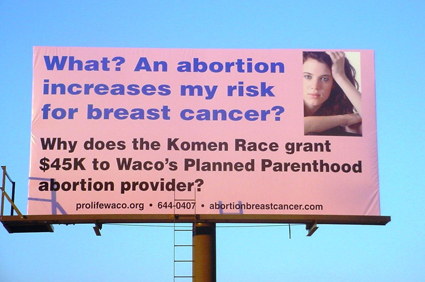
Claiming that epidurals harm babies is like claiming that abortions cause cancer

Earlier this year New Hampshire’s Tea Party controlled House of Representatives passed a bill mandating that doctors inform women that abortion increases the risk of breast cancer.

There’s just one problem: there’s no scientific evidence that this claim is true, and copious evidence that it is not.

According to the Huffington Post:

The bill, sponsored by Rep. Jeanine Notter (R-Merrimack), was immediately condemned by Democratic leaders, who it would require false information to be spread by doctors to patients. There is no proven breast cancer link to abortion, according to the World Health Organization and the American Cancer Society.

The language of the bill is Orwellian in the extreme:

Materials that inform the pregnant woman that there is a direct link between abortion and breast cancer. It is scientifically undisputed that full-term pregnancy reduces a woman’s lifetime risk of breast cancer. It is also undisputed that the earlier a woman has a first full-term pregnancy, the lower her risk of breast cancer becomes, because following a full-term pregnancy the breast tissue exposed to estrogen through the menstrual cycle is more mature and cancer resistant. In fact, for each year that a woman’s first full-term pregnancy is delayed, her risk of breast cancer rises 3.5 percent. The theory that there is a direct link between abortion and breast cancer builds upon this undisputed foundation. During the first and second trimesters of pregnancy the breasts develop merely by duplicating immature tissues. Once a woman passes the thirty-second week of pregnancy (third trimester), the immature cells develop into mature cancer resistant cells. When an abortion ends a normal pregnancy, the woman is left with more immature breast tissue than she had before she was pregnant. In short, the amount of immature breast tissue is increased and this tissue is exposed to significantly greater amounts of estrogen—a known cause of breast cancer. Women facing an abortion decision have a right to know that such medical data exists. At the very least, women must be informed that it is undisputed that pregnancy provides a protective effect against the later development of breast cancer.

The bill essentially acknowledges that there is no direct link between abortion, while simultaneously mandating that doctors tell women there is a link. The bill also acknowledges that there is no scientific evidence to support the claim of a link, merely a theory premised on related information.

It’s easy to recognize what is going on here. In an effort to convince women not to have abortions, anti-choice activists are lying about the risks of abortion.

Natural childbirth advocates practice the same reprehensible technique. In an effort to convince women not to have epidurals for pain relief in labor, natural childbirth advocates claim that epidurals harm babies. Just as in the case of abortion and breast cancer, there is no scientific evidence to support a link and copious scientific evidence that babies experience no harm from epidurals. Indeed, in the past 3 decades literally tens of millions of babies have been born after their mothers received epidurals, but activists cannot point to even a single individual who has been harmed.

Nonetheless, just like the Tea Party in New Hampshire, they continue to push scurrilous theories about the “risks” of epidurals.

Consider this mass of lies from Childbirth Solutions:

Undesired effects on the fetus:

Abnormal heart rate patterns, requiring oxygen to the mother, position changes and possible cesarean delivery.
Increased likelihood of newborn septic workup, IV antibiotics and isolation in the nursery if the mother develops an “epidural fever” that causes fetal tachycardia or newborn fever.
If the fetus is already stressed greater amounts of the medication are “trapped” in the fetal circulation, leading to more pronounced newborn effects (see below).

Undesired effects on the newborn:

Short-term (six weeks or less) subtle neurobehavioral effects, such as irritability and inconsolability and decreased ability to track an object visually or to shut out noise, bright light.4 There are no data on potential long-term effects.
Possible less efficient or less organized initial rooting and suckling behavior. Nurses have reported more difficulties in feeding babies whose mothers had an epidural when compared to unmedicated babies.
Decreased infant responsiveness may lead to long-term consequences for the parent-infant relationship. Parents should be counseled to give their babies time to recover from the birth and medication and should avoid a label of “difficult child” or “incompetent mother.”

Epidurals do NOT cause abnormal heart rate patterns. Decreased blood pressure in the mother might cause a temporary change in fetal heart rate, but that is easily treated by giving the mother additional fluid.
Epidurals are less likely to lead to a newborn septic workup than prolonged rupture of membranes, but natural childbirth advocates think prolonged rupture of membranes is not a reason for concern.
There is no evidence that medication is “trapped” in the fetal circulation leading to newborn effects.
In fact, despite the above lies, there is no evidence that epidurals have any harmful effects on breastfeeding or other newborn behavior.

No matter, in the world of natural childbirth advocacy, as in the world of anti-choice advocacy, the truth is irrelevant.

What’s an expectant mother to think?

If you want to have an epidural, have an epidural. If you don’t want to have an epidural, don’t have an epidural. Just keep in mind that the claim that epidurals harm babies is a bald faced lie on par with the claim that abortions cause breast cancer. It is meant to take away YOUR choice to control your own pain or your own body, and substitute the choice of advocates who have an agenda very different from helping you to make an informed decision.

Are we supposed to be impressed you risked your baby’s life at homebirth?

Homebirth advocates are braggarts.

Perhaps there’s a homebirth advocate who has treated homebirth as an intimate family event, but I haven’t heard of it. The mode of birth is part of the birth announcement, no opportunity to boast about it goes unfulfilled, and, most importantly, video is posted on line so that all 7 billion people in the world can applaud what is apparently the greatest achievement some women will even attain: a baby passed through their vagina.

And of course, the greater the risk they took (risk to the baby, not to themselves), the greater the glory.

Ironically, only a small community of like minded believers is impressed. The vast majority of people recognize these women for what they are, selfish narcissists, recklessly willing to let their own babies die to impress their peeps.

Here’s a perfect example. Are we supposed to be impressed that a woman who had two previous C-sections, a homebirth stillbirth, and 6 miscarriages chose to risk the death of her son by having a homebirth at 44 weeks?

Color me unimpressed, just disgusted.

Waterbirth: do the benefits outweigh the harms?

A review of waterbirth in the Journal of Pediatrics and Child Health succinctly summarizes the current state of knowledge about waterbirth.

Water births and the research required to assess the benefits versus the harms by Mark W. Davies starts by making it clear that there is a big difference between laboring in water and giving birth in water:

There are two separate and distinct aspects to the use of water immersion in labour:

1 the use of immersion for women in labour (without birth into the water); and
2 immersion for women in the second stage of labour with birth into the water – water birth.

This separation must be re-emphasised whenever discussing the use of water immersion in labour.

Davies points out the polarized nature of the discussion on waterbirth:

On the one hand, there are those who cannot imagine why you would want to deliver a baby into water and put them in harm’s way; on the other hand, there are those who believe that immersion in the second stage of labour offers significant benefits to the mother and is safe. However, the questions that must be asked about any health-care intervention are: first, is it useful?; second, does it do any harm?; and third, do any benefits outweigh any harms?…

The threshold question is whether waterbirth has any benefits.

There is some level 2 evidence available. However, there is only one randomised controlled trial (RCT) that has studied women who were randomised to either no immersion (n = 60)
or immersion in the second stage of labour with birth into the water (n = 60). The results … have been included in the Cochrane systematic review by Cluett et al.: It has not been published in full in the peer reviewed literature… The only outcome that showed a statistically significant difference was the subjective outcome of whether the women were satisfied with pushing efforts: There were no significant differences in any objective assessments of benefit.

The other two RCTs allocated women to either no immersion or immersion:Women in the immersion group were able to use immersion in the first or second stage of labour, or both, with or without birth into the water. The study by Woodward and Kelly was undertaken as a feasibility exercise, and was too small and greatly underpowered to assess efficacy… The most recent RCT8 also used either no immersion (n = 53) or immersion in both the first and second stages of labour (n = 53). The results are difficult to interpret as many of the basic CONSORT reporting requirements are missing… [T]he authors report that second-stage duration was the same in both groups, but there was a significant difference in rates of ‘gave birth naturally’ (outcome not defined). All those in the immersion group ‘gave birth naturally’ compared with 79% in the no immersion group. More information than is currently available would be required to assess the validity of this trial…

How about the harms?

The only RCTs available were greatly underpowered to detect any significant differences for any harmful effects to the mother or infant, especially the uncommon outcomes such as
perinatal death…

What is the evidence from case reports?

There are deaths reported directly attributed to water birth and significant morbidity directly attributed to water birth. Morbidity includes near drowning and other respiratory
difficulties including stridor, hyponatraemia and seizures secondary to hyponatraemia, infection such as Legionella pneumonia, hypoxic-ischaemic encephalopathy and avulsion of the umbilical cord.

That’s not surprising given what we know about fetal and newborn physiology.

It should be remembered that unrecognised asphyxia can occur during any delivery, that asphyxiated babies gasp (pre-, intra- and postpartum), and that if gasping occurs in infants born into the water, they will gasp under water and aspirate bath water, further compromising gas exchange and delaying resuscitation. This mechanism is almost certainly the cause for many of the morbidities described above.

Do the benefits outweigh the harms. There’s no evidence that they do.

First, there’s no evidence that there is a benefit to delivering under water (as opposed to laboring in water). Second, although the existing RCTs are underpowered to detect difference in perinatal death rates, there is a large and growing body of case studies of waterbirths that results in deaths and serious injuries to babies. That’s not surprising since, contrary to the claims of waterbirth advocates, it is incontrovertible that born and partially born infants gasp and can and do aspirate the fecally contaminated bath water.

Davies recommends that there should be no waterbirths except as part of randomized controlled trials with informed consent. What would such trials involve?

• Treatment allocation should be randomised – to reduce selection bias
• Treatment allocation should be concealed by a central mechanism such as a central telephone/Internet-based service – to reduce selection bias
• Treatment allocation should occur at the start of second stage – to reduce selection bias and performance bias (especially co-intervention)
• No crossover should be allowed – to reduce performance bias (especially contamination)
• Outcome assessment should be complete – to prevent attrition bias
• Outcome assessors should be blinded to treatment allocation – to prevent detection bias
• Adequate numbers should be enrolled to give the study adequate power to detect important differences in neonatal mortality and morbidity (such a RCT will require at least 3500 women in each group to detect a 100% increase in perinatal death rate (i.e. from 2 to 4 per 1000) with 80% power and an a of 0.05)
• Long-term follow-up of infants to assess long-term neurodevelopmental outcome.

To be adequately generalisable, the trial should only recruit women who are of low risk for complications related to labour and birth, and only recruit women who want a water birth.

As is typical in natural childbirth and homebirth advocacy, a procedure has been put into practice with no evidence that it is either safe or effective and a growing body of evidence that it is neither. That’s not surprising since there is nothing natural about waterbirth.

Questions for The Feminist Breeder

Gina Crosley-Corcoran, The Feminist Breeder, has reached a milestone of sorts. After 2 ½ years working as a doula, she has now attended 20 births.

I’ve had the opportunity to watch nearly two dozen women become mothers, either for the first or the fifth time, and it is always a transformative experience. I’m not only honored to be there for them, but I’m also very good at it. I’m never happier than when I’m with my clients.

But attending these births has certainly changed my perspective on maternity care, providers, settings, and safety.

What has changed? Among other things:

A few years ago, I honestly felt that obstetricians couldn’t be trusted, that midwives were always practicing evidence-based medicine, and that all doulas were 100% supportive of a mother’s choices. Well, color me corrected. My assumptions here have been challenged enough to say that I was wrong…

And:

I do not recommend or advocate for Free Birth… The scariest scenarios I’ve seen involved a severe postpartum hemorrhage. I held these new mothers’ hands while blood poured out of their birth canal like spicket [sic]. All cases were after a completely natural birth and could not have been predicted…

As well as:

Inductions are sometimes necessary, and can be quite beautiful …

In only 20 births some of Gina’s most cherished assumptions about obstetricians, about complications and about inductions have been changed. Why? She gained what she did not have before: experience.

She’s hardly the first to find that when it comes to caring for patients, there is no substitute for experience. More than four years ago, I quoted Barbara Herrera, Navelgazing Midwife, on this topic.

It always annoyed me when I, as a doula or childbirth educator, would be told, “You just haven’t seen enough” when I believed complications were more created than something random. And yet, here I am, many years and many birth experiences later, saying that very thing to women-midwives and natural birth advocates alike who insist it is the provider that creates the difficulties and if left alone, birth would be perfect.

It’s not true.

You know how sometimes you hear your mother’s voice coming out of your mouth? Saying those phrases you swore you’d never say? It is like that.

“You just haven’t seen enough.” “The odds aren’t great, but when you are that 1% it is 100% to you.” “The important thing is a healthy mother, a healthy baby.” I don’t always say such phrases, at least that callously and angrily, but I sure do believe them.

Now that Gina has learned from experience, I have some questions for her, and anyone else who considers herself a “birth activist.”

1. I, too, learned from the first 20 births that I saw, although they occurred during the first week of my obstetric training, not over 2 ½ years. I learned more from the second 20 births, and the third, and the fourth, adding up to hundreds over the course of my training. So Gina, since you’ve already learned so much from 20 births, how much do you think I learned from nearly 50 times as many?

2. You acknowledge that before your experience, you didn’t know that many things that you believed were wrong. Since your experience is still miniscule, has it occurred to you that a lot of what you STILL believe is wrong?

3. You write:

I haven’t yet seen a complication in a hospital that could not have been either avoided or handled by a skilled, trained, and equipped homebirth attendant.

Isn’t the reason for that more likely to be that you have only seen a miniscule number of births, not that serious complications are exceedingly rare?

4. You were impressed at what seemed to you to be a severe postpartum hemorrhage and deeply impressed at how the CNM handled it. It seems not to have occurred to you that the fact that it stopped after only Pitocin or Methergine or Cytotec was not inevitable. A severe postpartum hemorrhage is when it WON’T stop with the use of medications. In severe postpartum hemorrhage the provider has to resort to surgery or interventional radiology or even hysterectomy to stop the bleeding and save the mother’s life.

Keeping that in mind, isn’t it rather foolish to assume that because medication stopped a moderate hemorrhage with medication, a midwife could easily manage a severe postpartum hemorrhage at home?

5. If you’ve already learned that inductions can be necessary, isn’t it possible that other interventions that you have scorned in the past might also be necessary, too?

6. If an induction can lead to a beautiful birth, why can’t a C-section lead to a beautiful birth?

7. Having acquired a tiny amount of experience do you now have greater respect for those who have more experience than you?

And finally:

Gina, has it occurred to you that the main difference between you and me in our approach to birth is NOT our philosophies, but rather our experiences? I have a very different approach to birth because I have a massively greater amount of experience than you. You speak of your own small amount of experience with respect; how about showing a commensurate amount of respect for my and my colleagues vastly more extensive experience?