Sheila Kitzinger was right about childbirth and feminism

Woman Screaming In Horror

Sheila Kitzinger was a brilliant and incisive cultural anthropologist and remained so until the very end.

Her last piece, an excerpt from her final book, printed in today’s Daily Mail under the title Why feminists HATE natural childbirth …, is an unwitting acknowledgement of what I have been writing for years: Natural childbirth is deeply anti-feminist.

To my surprise, it wasn’t just obstetricians who dismissed what I had to say. I also found myself in conflict with feminists, who saw birth in very simplistic terms.

Why? Because they claimed it was every woman’s right to give birth painlessly.

…Polly Toynbee, writing in The Guardian, was particularly virulent, dismissing me as a lentil-eating earth goddess.

‘How extraordinary,’ she said, ‘that those who call themselves feminists fight for women’s right to suffer and, in the process, inflict so much unnecessary suffering on women. The right to safe local anaesthetics, properly administered by experienced obstetric anaesthetists, should come first.’

For most of human existence, women’s worth was judged by the function of vagina, uterus and breasts. In other words, women’s worth was determined entirely by their biology. Kitzinger (like her colleague Ina May Gaskin) came of age when women were not valued for their intellect, talents of character. So they made a virtue of necessity. If they were going to be judged by their biology, they would glorify their biology. Kitzinger was probably the premier biological essentialist in the natural childbirth movement. Biological essentialism is the belief that all women have a biological essence and can only find true fulfillment through having children “as nature intended.”

Kitzinger took the intellectual legacy of the profoundly sexist men who created the philosophy of natural childbirth (Grantly Dick-Read) and Lamaze, and went them one better. It wasn’t merely women’s purpose to utilize their vaginas, uteri and breasts to bear and raise children, it was their glory.

Life had handed them lemons, so they made lemonade.

Kitzinger, as astute as she was, failed to recognize that natural childbirth was and remains a philosophy rooted in profound sexism. Women are no longer restricted to lemons. It is hardly surprising, then, that contemporary women no longer feel any need to pretend that lemonade tastes best or tastes good at all.

There is no more of a need for women to glory in unmedicated childbirth than there is to glory in unmedicated painful periods. Women have replace faux achievements with real achievements in every area of human endeavor from the universities, to the concert halls to outer space.

Kitzinger never made the leap. Indeed the excerpt of her book has her still squeezing those lemons and adding as much sugar as she can:

YOU CAN DANCE THROUGH A DELIVERY

A woman who’s enjoying her labour will swing into the rhythm of contractions as if birth-giving were a powerful dance. As the mother of five children, I’ve not only experienced this myself but seen it happen time and time again…

If you really want to help a woman in labour, try not to manage, conduct or coach. What she needs far more is someone to help boost her strength and confidence

Once we were alone, I lifted the woman off the bed. Holding her lightly, I started to rock and circle my pelvis. As each contraction ebbed away, I gave a long breath out and was still; when I sensed another was coming, I danced and breathed my way through it with her.

After about half an hour, a midwife came in to do a pelvic exam. The woman was fully dilated. We laughed and hugged each other.

Kitzinger is still so embedded within the sexist paradigm of judging women through the function of their reproductive organs that she never acknowledges that most women don’t want to dance through excruciating pain, they want to abolish the pain.

The full title of the Daily Mail piece is “Why feminists HATE natural childbirth… and why their prejudice can harm mothers AND their babies, by the woman who taught a generation how to give birth” but the real title ought to be “Why feminists HATE natural childbirth… and why their views can harm ME and MY PHILOSOPHY”.

Sheila Kitzinger and other early advocates of natural childbirth profoundly changed contemporary childbirth for the better by insisting that women want to remain awake, want to make their own medical decisions and want to be accompanied by their partners. But they lost their way when they embraced the belief that women’s worth is restricted to the function of their reproductive organs.

Kitzinger improved the lives of many women by taking the lemons she was given and making lemonade. She glorified childbirth in an era when women were restricted to childbirth. She never took the next step, the one that contemporary feminists took, demanding to leave the domestic sphere and take their places every field of intellectual and creative endeavor.

It is unfortunate that she failed to recognize that in 2015 women are entitled to drink whatever they want, and are no longer restricted to lemonade.
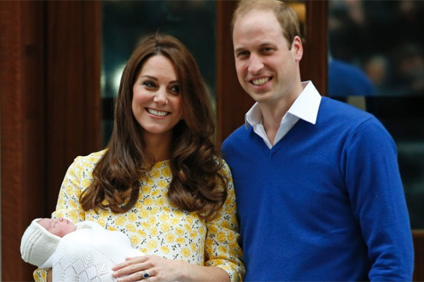
Why natural childbirth advocates think other women’s births are their business: Duchess of Cambridge edition

Duchess princess

Oooh, oooh, oooh, have you heard that the Duchess of Cambridge labored at home for hours? Have you heard that she didn’t have an epidural? Have you heard that she “bonded” with her midwives?

Let’s leave aside for the moment the fact that the famously private Duchess is unlikely to share the intimate details of ANY aspect of her life with the press (a future British queen “bonded” with her midwives? seriously?), and examine who cares about these details and why.

As I’ve written many times, natural childbirth is not about birth and it’s not about babies. It’s an opportunity for some mothers to judge other mothers and thereby feel superior to the crowd. They have such low self-esteem and are so desperate for validation of their own beliefs, they have resorted to pretending that the Duchess mirrored their own birth choices.

For all we know, the Duchess ruptured membranes at home, drove to the hospital for an induction with Pitocin, received an epidural and had her baby in hours.

If so, the birth of the new princess would have been similar to the births of many other women, yet apparently those women don’t feel any need to speculate about the Duchess’ birth. I haven’t seen any women fantasizing that the Duchess had an epidural like they did, or was induced like they were, or gave birth in a hospital like they did. Most women don’t need anyone, not even a Duchess, to validate the choices they made during the births of their own children.

Which makes it even more remarkable that natural childbirth advocates apparently need everyone to do so.

It started as soon as the pregnancy was announced. Twitter was full of homebirth advocates fantasizing the the Duchess would have a homebirth. That was never in the cards. The Duchess, like any mother anxious to get the best possible care for herself and her child, gave birth in a hospital, with obstetricians supervising her care. Midwives may or may not have caught the baby, but it was hardly midwife-led care. That’s because when it’s REALLY important to ensure the survival of mother and baby (because they are part of the royal family), midwife-led care is viewed as unacceptably second rate.

It is unfortunate that non-royals do not have the same easy access to obstetrician led care, the safest form of care. Midwife-led care predominates in the UK National Health Service (NHS) because it is cheaper. As always, you get what you pay for and those who can pay more choose obstetricians.

No doubt the Duchess was attended by nurses, but you don’t see nurses framing that as a validation of nursing. Assuredly her room was cleaned by the hospital cleaning staff, but you don’t notice them framing that as a validation of cleaning.

Yet midwives and their advocates are gleefully proclaiming that midwives delivered the princess, in order to validate midwifery and natural childbirth. This, in spite of the fact that they are usually whining that women deliver their own babies, not attendants. In this case, to validate themselves, they are willing to make an exception.

I have no idea how the Duchess of Cambridge gave birth and it’s none of my business. It’s not the business of natural childbirth advocates, either, but they can’t help speculating on other women’s intimate moments. They need to know because they need to compare themselves.

The truth is that for most women the baby was the most important product of the birth day, not the bragging rights.

So keep in mind that every time you see an article from a natural childbirth advocate praising the Duchess for her presumed choices, you’re viewing her insecurity on display.

Food, sex and the American obsession with purity

iStock_000000915859_Small

Is food the new sex?

That’s the question that Mary Eberstadt asked in her 2009 paper in Policy Review. Today, when sexual license is embraced and even glorified, eating is becoming encumbered with ever more rules. Or as Eberstadt notes, our society has gone from sexually puritanical and licentious about food, to sexually licentious and puritanical about food.

For example:

…[L]et us imagine some broad features of the world seen through two different sets of eyes: a hypothetical 30-year-old housewife from 1958 named Betty, and her hypothetical granddaughter Jennifer, of the same age, today.

Betty is the stereotypical late 1950’s housewife. She cooks from cans, jars, and even serves frozen dinners. The only fresh vegetable that she serves is baked potato. Betty also has stereotypical moral views. Sex is appropriate only within marriage, and she believes strongly in the religious and social sanctions that penalize those who digress from that value.

The contrast with her granddaughter is remarkable:

… Jennifer is adamantly opposed to eating red meat or endangered fish… She also buys “organic” in the belief that it is better both for her and for the animals raised in that way, even though the products are markedly more expensive than those from the local grocery store…

Most important of all, however, is the difference in moral attitude separating Betty and Jennifer on the matter of food. Jennifer feels that there is a right and wrong about these options that transcends her exercise of choice as a consumer. She does not exactly condemn those who believe otherwise, but she doesn’t understand why they do, either. And she certainly thinks the world would be a better place if more people evaluated their food choices as she does. She even proselytizes on occasion when she can.

Jennifer’s view of sex is also radically different from that of her grandmother:

Jennifer, unlike Betty, thinks that falling in love creates its own demands and generally trumps other considerations …  A consistent thinker in this respect, she also accepts the consequences of her libertarian convictions about sex. She is … agnostic on the question of whether any particular parental arrangements seem best for children…

Most important, once again, is the difference in moral attitude between the two women on this subject of sex. Betty feels that there is a right and wrong about sexual choices that transcends any individual act, and Jennifer … does not…

Have we transmuted Betty’s convictions about sexual purity to Jennifer’s convictions about food purity?

The parallels extend further. Just as moral purity was viewed as a key to deeply longed for religious salvation, food purity is viewed as the key to our contemporary longed for salvation, a long life free of disease.

There have always been rules around food purity, of course, from religious restrictions to vegetarianism, but those rules have multiplied to embrace organic food, to include fears of genetically modified food (GMOs) and to insisting that the cure to various unexplained ills like autism lie in ever more bizarre restriction diets.

Simply put, many people believe that they can eat their way to preventing and curing disease. And our obsession with purity goes beyond what adults eat to a near religious conviction that breast milk is both preventive and curative for diseases ranging from whooping cough to cancer and everything in between.

The American obsession with purity has expanded to an obsession with purity of the entire body (with the notable exception of sexual purity). Just as religious acolytes in earlier time purified their bodies for worship by asceticism, fasting and scourging, contemporary Americans “purify” their bodies with unmedicated childbirth, vaccine refusal, and cleanses that purportedly remove the “toxins” from their bloodstreams.

The irony is two-fold.

First, much of what is viewed as “pure” is actually contaminated or flat out dangerous.

Anti-vaxxers are obsessed with avoiding the “contaminants” in vaccines and thereby leave themselves wide open to infection with deadly microorganisms.

Natural childbirth advocates are obsessed with the purity of birth “unhindered” by interventions, thereby leaving their babies and themselves open to the far greater risk of death from childbirth itself.

And the only thing toxic in the bodies of most “cleanse” devotees is their gullibility and lack of basic knowledge of human physiology.

The second irony is even more trenchant.

It seems that environmental purity may lead to more disease, not less. A certain amount of “contamination” appears to be necessary for proper functioning of the immune system. Purity may, paradoxically, trigger auto-immune diseases.

Our society has gone from sexually puritanical and licentious about food, to sexually licentious and puritanical about food. That’s not a moral or a health advance. It simply reflects our desperate need for “rules” that supposedly protect us from dangers posed by life itself.

The extraordinary conceit of being an anti-vaxxer

Arrogant man

In the past week readers of this blog have been treated to a display of mindblowing egotism on the part of anti-vaxxers.

A comment thread on a post dating back to 2009 blew up (1800 comments and counting) when anti-vaxxers invaded, and it’s hard to imagine a crew of people displaying a greater level of stupidity and ignorance than those who have parachuted in to share their “wisdom” with the rest of us.

That led me to the following reflection:

When it comes to anti-vax advocacy, I understand the lack of basic knowledge of immunology, science and statistics.

I understand the impact of the Dunning Kruger effect whereby the incompetent are unable to recognize their own incompetence.

I even understand the outsize fear of corporate terrorism.

But what I don’t understand it the gargantuan conceit of people who imagine they know more than all the immunologists, pediatricians and public health officials in THE WORLD.

When it comes to the benefits of vaccination, there is rare unanimity across scientific disciplines and across national borders. Nearly every immunologist in every country promotes vaccination as life saving and safe; nearly every pediatrician in every country recommends vaccination as the best, most effective form of preventive care in existence; nearly every epidemiologist in every government and health organization views vaccination as one of the greatest public health victories of all time.

How conceited do you have to be to imagine that you, a lay antivaxxer, know better?

Very, very, very conceited.

Let’s review the history of laypeople making great scientific discoveries that overturn existing knowledge.

How many times has that happened in the 20th and 21st Centuries? Zero, zip, nada. As far as I know, there has never been even a single incidence of a layperson overturning widely accepted scientific consensus.

Let’s review the history of laypeople negating the discovery of a Nobel prize winner?

That’s never happened, either.

Let’s review the 200+ year history of anti-vaccine advocacy.

Anti-vaxxers have a perfect record! They’ve never been correct even once.

How arrogant do you have to be imagine that, despite the fact that you and your anti-vax colleagues have never been right about anything, suddenly you’re right about vaccine additives, or purported lack of benefits, or purported side effects.

Very, very arrogant indeed.

I’ve written before about the egotism of anti-vaxxers:

This is what is comes down to for most anti-vax parents: it’s a source of self-esteem for them. In their minds, they have “educated” themselves. How do they know they are “educated”? Because they’ve chosen to disregard experts (who appear to them as authority figures) in favor of quacks and charlatans, whom they admire for their own defiance of authority. The combination of self-education and defiance of authority is viewed by anti-vax parents as an empowering form of rugged individualism, marking out their own superiority from those pathetic “sheeple” who aren’t self-educated and who follow authority.

But it’s one thing to imagine that you’re smarter than other parents; it’s another thing entirely to imagine that you’re smarter than MDs and PhDs. The former is narcissistic but possible; the latter is so egotistical as to defy belief.

I have a pro-tip for anti-vaxxers:

I am a medical professional. I have a college degree in biochemistry, a medical degree, have completed 4 years of internship and residency and cared for thousands of patients. Yet when I don’t understand a medical recommendation outside my specialty, my first assumption is that it is my understanding that is faulty, not the recommendation. I search the primary scientific literature for the latest studies and scour the relevant textbooks and professional society guidelines for the rationale. Invariably my understanding of the subject is deepened. I learn something new.

That goes double for you.

When you don’t understand a medical recommendation, it’s YOUR understanding that’s faulty, not the medical recommendation.

To imagine otherwise is to display stupendous conceit.

How the irrational fear of corporate terrorism leads the privileged to betray the less privileged

Let them eat cake

Many of us are extraordinarily privileged.

We live in wealthy country, enjoy the fruits of technology, and live longer and healthier than ever. Unlike the less privileged, most of us don’t have to fear lack of food, lack of clean water, lack of access to healthcare. Perhaps there is a need for human beings to fear something, because the privileged, who have almost nothing to fear, are incredibly fearful, and that is reflected in the popularity of “natural” health.

Almost all of “natural” health, from refusing vaccination, to gobbling supplements, to belief in nonsense like homeopathy and chiropractic, to horror of genetically modified food (GMOs) is based on unreasoning fear of corporate terrorism.

Simply put, many privileged Americans are irrationally afraid that corporations are out to kill them. And as a result, they obsess over their privileged worries while letting the less privileged go without adequate food, clean water and access to health care that the same corporations can and do provide.

That’s not to deny that there have been instances in which large corporations cheerfully put profit before human lives. The auto industry provides numerous examples (from the exploding Pinto of the 1970’s to the contemporary willingness of General Motors to allow faulty ignition switches in their cars) of deadly corporate greed, deciding that it was “too expensive” to fix fatal errors and letting innocent people die as a result.

And who can forget Big Tobacco that to this day sells a product that kills millions, and for many years tried hide the fact that their product is deadly.

However, among the privileged, the cynicism over egregious episodes of corporate malfeasance has metastasized to an unreasoning belief that anything produced by corporations is harmful, accompanied by an extraordinary credulousness in accepting nonsense peddled by those who vilify corporations.

Unfortunately, as is often the case, the obsessions of the privileged harm the less privileged.

Vaccine refusal is an obvious example. The privileged depend on the vaccinated to protect them, while posing a deadly threat to children who are too small or too sick to be vaccinated.

Many anti-vax activists are quite forthright in their absurd belief that Big Government and Big Pharma have joined forces to create an autism epidemic. Even more distastefully, they are brutally honest about their willingness to sacrifice other people’s children to deadly diseases in order to ease their prodigious fear of pharmaceutical companies.

The opposition to GMOs is a more far reaching example. You don’t have to be a population scientist to know that around the world, too many people are starving to death for lack of food, or suffering profound effects from lack of important nutrients. GMOs offer the chance for greater harvest yields, as well as nutritionally superior products that can combat nutritional deficiencies. Those of us who have more than enough food should welcome these products for the immense benefits they offer to those who currently starve.

Instead, the privileged, motivated by unreasoning fears of corporate terrorism, are attempting to place restrictions on GMOs that will reduce the ability of the poor and destitute to grow these products to feed their own children, and to sell the products worldwide to alleviate their desperate poverty.

Similarly, lactivists have turned their disgust with formula companies who have promoted formula in countries that lack clean water supplies into an unreasoning fear of formula. The original boycotts of formula manufacturers may have limited their marketing in underdeveloped countries, but it did nothing to improve the water supply (which was the real problem) and nothing to help malnourished women who can’t produce enough breastmilk. They have transmuted their disapproval of formula manufacturers into disapproval of formula, a product that has saved countless infant lives in the past and continue to do so to this very day, while simultaneously ignoring the structural barriers to breastfeeding among the poor.

It’s hardly surprising that the preoccupations of the privileged become the preoccupations of society. Who is more likely to get the attention of the powers that be: a wealthy white suburban mother with a college degree and irrational fear of corporate terrorism, or a poor woman of color who is being torn apart by watching her babies die from malnutrition or vaccine preventable diseases?

So the preoccupations of the privileged (“There’s no pumpkin in pumpkin spice latte!”; “Vaccines are harmful; I read it on the internet so it must be true!”) take center stage while the under privileged are left to starve, suffer easily preventable diseases and die, and no one lifts a finger.

Money talks and the money of privileged Americans speaks much louder than cries of the bereaved destitute.

It has ever been thus. And it has ever been selfish, self-serving and unethical.

Lactivism: socially sanctioned mother-on-mother bullying?

Accusation

Wouldn’t it be great to know that you are a better mother than other mothers?

Wouldn’t it be even greater to tell those mothers to their face that you are an awesome mother and they are mothering failures?

In most times and places that would be considered unspeakably rude, even if it were true. But the rules of social propriety go right out the window when the subject is breastfeeding. Not only is mother-on-mother bullying socially sanctioned, it is actually institutionalized in programs like the Baby Friendly Hospital Initiative.

Think I’m exaggerating?

Consider Ashleigh’s story, “Breastfeeding destroyed me psychologically.” featured on The Fearless Formula Feeder’s blog. Her eloquent description of the psychological agony she endured is difficult to read:

Breastfeeding took my happiness

Breastfeeding destroyed me psychologically. Destroyed me. It took my happiness, it took my feeling of worthiness, it prevented me from fully bonding with my child, it contributed deeply to my postpartum depression, and it made me want to die. I no longer wanted to live, and that is terrible. Even today, on the days I forget to take my medication, I find myself in fits of tears over the loss of what should have been, but wasn’t, because of my broken body. I shouldn’t feel broken, but I do. I shouldn’t feel unworthy of motherhood, but I do. I shouldn’t feel like I failure, but I do. I shouldn’t fall into spells of depression and self-loathing all from seeing a photo of a friend breastfeeding, but I do. I shouldn’t feel a deep despair simply from noticing another woman’s breasts grew during pregnancy, but I do. Breast will never be best when it makes a mother feel like that… when it makes a person feel the way I did, the way I still do. My identity has become reliant on my lack of ability to breast feed, and it shouldn’t. I am a good mom, even if I did formula feed. Every day for the rest of my life I will struggle with the feelings of guilt and shame, and I hate that. But as long as there are lactivists who shame and humiliate formula feeding mothers, there will always be that feeling of incompetence in my heart- and its truly not fair.

There was a biological reason why Ashleigh had so much difficulty breastfeeding. She suffered from IGT, insufficient glandular breast tissue. That’s different from small breasts. Typically small breasts reflect a lack of fatty tissue surrounding the milk glands. In Ashleigh’s case, she literally did not have enough milk glands to make the milk her daughter needed.

Suzie Barston, the Fearless Formula Feeder, responded:

I’m sorry things haven’t changed. I’m sorry that this situation gets more ridiculous by the day. I’m sorry we are arguing over the perceived dangers of formula advertising in resource-rich countries when we could be focusing that attention on the very real dangers of postpartum depression. I’m sorry feminism – or, rather, those who dwell at the intersection of feminism and motherhood – has failed to see the full scope of the infant feeding issue, essentially turning its (their) back on women for whom the Patriarchy is not a formula company, but rather those who insist on reducing women to biological functions. I’m sorry I haven’t made a dent in this fucked up discourse. I’m sorry you are hurting. I’m sorry. I’m just so damn sorry.

I wouldn’t say you haven’t made a dent, Suzie. You have accomplished a tremendous amount, but the problem is so large that it is going to take many people working together to get this insanity under control.

We need to recognize and acknowledge that lactivism as it is practiced in first world countries has nothing to do with health; it is just a form of socially sanctioned mother-on-mother bullying.

That type of bullying has existed since the beginning of time (“He’s 4 months old and not sitting up yet? So sad that he’ll never be a great hunter-gatherer.”) But I suspect that even in pre-history such obnoxious behavior was deemed socially unacceptable.

What’s the difference with contemporary breastfeeding in first world countries?

The bullies justify their bullying by invoking “Science.” As Charlotte Faircloth explains in ‘What Science Says is Best’: Parenting Practices, Scientific Authority and Maternal Identity:

The scientific benefits of breastfeeding … serve as a (seemingly) morally neutral cannon about which mothers can defend their mothering choices and ‘spread the word’ about appropriate parenting. I noticed that for some particular women, sharing ‘information’ with other mothers.

Science is used as a cudgel to beat other mothers, and not merely by individual lactivists, but by institutions created by lactivists:

… [U]nder the assumption that science contains ‘no emotional content’, a wealth of agencies with an interest in parenting – from policy makers and ‘experts’ to groups of parents themselves – now have a language by which to make what might better be termed moral judgements about appropriate childcare practices…

Science actually shows that while breast is theoretically “best,” its benefits in first world countries are trivial. Therefore, the decision to moralize infant feeding, which is what lactivism has become, is not based on science; it’s based on an abuse of science for the self-aggrandizement of lactivists.

Why are we spending society’s time and money to promote breastfeeding when the science does not justify the tremendous effort and expense?

Because some women enjoy the fact that lactivism is socially sanctioned bullying. The Orwellian Baby Friendly Hospital Initiative is emblematic of the misuse of institutional and government authority to enable mother-on-mother bullying.

The greatest threats to babies are vaccine preventable diseases and unintentional injuries. A truly “baby friendly” hospital initiative would educate women about the benefits of vaccination and about keeping their babies safe in cars, and from household poisons and other threats. Breastfeeding would be extremely low on the list of safety initiatives.

But lactivism was never about babies. It was always about mothers and their need to not merely feel superior to other mothers, but to blare their own superiority to everyone else.

Let’s get a grip. Several entire generations of Americans were raised nearly exclusively on formula and all possible health parameters continued to improve. There’s no reason to expect that lactivism is going to have any impact on infant health, and plenty of evidence that it is having a harmful effect on women’s mental health.

That’s got to stop.

Vaccine refusal: how privileged mothers leverage their privilege and harm the less fortunate

19216857_s

Is vaccine refusal a function of privilege?

That’s the question that sociologist Jennifer Reich asks and answers in her provocative paper Neoliberal Mothering and Vaccine Refusal: Imagined Gated Communities and the Privilege of Choice published in the October 2014 issue of Gender & Society.

Reich starts by explaining that there are two group of children who are unvaccinated, the poor and the privileged:

On one side, there are undervaccinated children who lack consistent access to medical care. These children are more likely to be Black, live in a household with an income near the poverty line, and have a mother who is younger, unmarried, and does not have a college degree. Children who are unvaccinated because of parental choice, however, look significantly different. They are more likely to be white, have a married, college-educated mother, live in a household with an income over $75,000, and be geographically clustered. Although vaccine refusal is referenced in gender-neutral terms, it is in fact a gendered process in which women are responsible for navigating meanings of health, necessity, risk, and state intervention for their children.

Indeed, Reich notes:

In a striking illustration of this, the state of Colorado, which has among the most liberal legal frameworks for opting out of vaccines, nonetheless sanctions welfare recipients whose children are not fully vaccinated.

In other words, when unmarried women of color on public assistance refuse to vaccinate their children, they are punished, but when white, partnered, economically independent women refuse to vaccinate their children, they are accommodated because of their elite status.

Reich’s description of these privileged women is spot-on:

… Bobel found that the women she termed “natural mothers,” who reject mainstream parenting advice in favor of natural and instinctual mothering practices, believed they “wrested control of their personal lives away from institutions and experts and others who claim to ‘know best’ and returned it to the site of the individual family,” even as they relied on privilege to do so…

Vaccine refusal is the paradigmatic example of the way that privileged women leverage their privilege to protect their own children and ignore everyone else.

As privilege facilitates choice, it also potentially jeopardizes the health and well-being of other children who lack resources or whose families are more constrained in their options… [T]hese women’s “choices” about vaccines carry consequences for other women’s families as well. It is thus important to understand how and why vaccines, touted as one of the greatest accomplishments of medicine and the cornerstone of public health, have been rejected by women privileged enough to do so in the guise of good mothering.

What did Reich find?

First, I show how mothers, seeing themselves as experts on their children, weigh perceived risks of infection against those of vaccines and dismiss claims that vaccines are necessary. Second, I explicate how mothers see their own intensive mothering practices— particularly around feeding, nutrition, and natural living—as an alternate and superior means of supporting their children’s immunity. Third, I show how they attempt to control risk through management of social exposure, as they envision disease risk to lie in “foreign” bodies outside their networks, and, therefore, individually manageable…

In other words, privileged mothers believe that they know better because they are “experts” on their own children; they believe that intensive mothering practices “boost immunity” to disease; they believe that disease comes from the underprivileged, and that they can use their privilege to avoid those people.

As they place their children at the center of their neoliberal mothering practice, the potential consequences their choices carry for others remain invisible, even as they claim a gendered identity of themselves as good mothers and condemn others.

What about other, underprivileged children who are harmed by their choices? They don’t care.

Only a few describe themselves as activists for all children, in which they aim to persuade other parents to also reject vaccines. None mention, for example, issues of food insecurity, even as they tout the importance of organic foods in their homes, nor express concerns about toxic exposure in other children’s neighborhoods, even as they agonize about their own. These women identify problems with healthcare systems that limit physicians’ time with patients, lack of transparency in product labeling, or inadequate emphases on promoting good health and nutrition. Yet, few describe efforts to transform these issues for all children.

Mothers who refuse vaccines claim to be empowered by their decision:

Yet, they do so by claiming their power through dominant feminine tropes of maternal expertise over the family and by mobilizing their privilege in the symbolic gated communities in which they live and parent. They utilize resources that facilitate their choices as informed consumers without feeling compelled to support the health or decision making of other families with fewer resources. They also refuse to acknowledge the role their children play in protecting or undermining systems of public health that aim to stave off infections at a community level.

Inevitably:

As in other mothering projects, women who are able to negotiate with providers, complete paperwork, and move through social worlds without fear of state surveillance are best able to exercise choice. As women aspire to be good mothers, key to their gender identity, and remain disproportionately responsible for defining these family projects, they claim and reify their privilege.

Homebirth mothers, how will you explain it?

cheerful kids with disabilities in rehabilitation center

When you’re pregnant, you’re expecting a baby. It’s easy to forget that you will end up with a child … a child who will eventually ask probing questions.

So, homebirth mothers, how you are going to explain the fact that you put your birth experience ahead of your baby’s health, brain function and even life?

How are you going to explain that first week of baby pictures with your son intubated, sedated, with tubes in every orifice and monitors all around?

How are you going to explain that because you wanted to be “comfortable” in your own home, your let your baby girl be uncomfortable during labor, struggling for oxygen, marinating in meconium, putting her future cognitive abilities at risk?

How are you going to explain that because you wanted to avoid an IV, you refused to give birth in a hospital, and your baby ended up with multiple IV’s, including the one they stuck in his scalp after they ran out of other veins?

It’s hard for me to imagine the pain and the guilt of explaining that because you had your heart set on a vaginal birth, your son can’t play catch with the other kids due to the limited function of his right arm as a result of the shoulder dystocia.

And the discussion with your daughter is likely to be agonizing when you acknowledge that her cerebral palsy will never improve, and she will never walk, let alone run, because you listened to your internet friends who encouraged you to have a VBAC at home, instead of your obstetrician who warned you that if your uterus ruptured at home, it was unlikely that your baby would survive unscathed.

You may be boasting now about how you “rocked” your homebirth, but will you still be proud when you see the pain that you have caused your child? Or will you ignore that, too, like you ignored his safety?

How are you going to explain to your son that his identical twin didn’t survive the homebirth because the second baby’s placenta detached right after the first baby was born?

What are you going to tell your daughter when the other kids in her class make fun of her because of her cognitive disability that almost certainly resulted from the fact that she was born blue and pulseless at home, and your homebirth “midwife” had never performed a resuscitation, had left her oxygen in the car, and was trying to perform CPR on a bed instead of a hard surface?

What are you going to tell your older children when the new baby they were eagerly anticipating dies in front of their eyes because you wanted them to be with you at the moment you triumphantly pushed a baby out of your vagina? Will you tell them some babies just die, or will you tell them the truth, that it was your desire to avoid the hospital that led to the baby’s death? You might be able to get the “some babies just die” story by them when they are small. What will you say when they are adults and they ask you again why they lost a sibling.

What will you tell the baby’s father if the baby dies at the homebirth he didn’t want you to have? Will you apologize to him for the loss of his child? Will you beg forgiveness for suffering he now has to endure?

How will you justify your choice when you see the devastation you have caused?

Or will you spend the rest of your life wondering if the pain, suffering, and even death could have been avoided if you’d put your baby’s health ahead of your own bragging rights?

What kind of mother claims she “rocked” a birth that nearly killed her baby?

Ashley rocks 6

I don’t get it.

I am a mother of four grown children. Their health and safety is so precious to me that I am still kicking myself about the time that I leaned into the backseat to place one of my sons in his carseat and bumped him against the door, cutting him next to his eye. He recovered in moments; I haven’t forgotten in 25 years.

Therefore, I am aghast at the revolting narcissism that leads a mother to proclaim that she “rocked” a birth that nearly killed her baby.

Ashley rocks 1

…I totally rocked by HBAC with my cesarean baby by my side and then about an hour later, my new love began having breathing issues. He has meconium aspiration syndrome and we have been admitted to the nicu. We are likely to be here for a week or more so he can fully recover…

I will share the birth story once we’re home again. It was so amazing and empowering!

Really? REALLY??!! Ashley dares to boast that the birth was empowering when it left her baby like this:

Ashley rocks 2

What’s next, Ashley? You “rocked” your drive to the store even though you accidentally backed over your baby?

Unfortunately, Ashley is not alone in her nauseating selfishness and self-absorption.

Ashley rocks 3
Ashley rocks 4

Shannon:

Meconium has always been a hobby of mine to research, given my son’s birth … My son’s speech issues, muscle tone have always made me wonder which came first, chicken or egg … I was shocked at how many kids with sensory issues had problems with nursing or early speech but had meconium issues in common.

Melissa:

With my vbac last July my little guy also had meconium aspiration syndrom. He spent the first 8 days of his life in the nicu as well… He also had shoulder dystocia and he required full resuscitation.

Selena:

This is what happened to me in Jan. My hbac went perfect, but little man had breathing issue because of meconium, so to the NICU we went for 5 days…

Amanda:

I had my second HBA2C in birth pool on March 24. He aspirated fluid when he was born and we spent his first 4 weeks in the NICU…

And let’s not forget the midwife boasting about how she handled the birth:

Ashley rocks 5

A hypoxic event in utero, Charlie Rae? Ya think? How is it that you had no idea of the hypoxic event until after he was born? It was your responsibility to prevent it.

What is wrong with these women? Who thinks that a baby so sick that he needs to spend days or weeks in the NICU is a reasonable price to pay for a vaginal birth? Only a selfish, self-absorbed narcissist who looks at the world through her vagina, that’s who.

Dr. Amy